
My Lovely Angel (내겐 너무 소중한 너, Lee Chang-won & Kwon Sung-mo, 2021)

“You’ve got to be brutal to survive in this world,” according to a coldhearted gangster remonstrating with down on his luck chancer Jae-sik (Jin Goo) for his seeming inability to be as bad as the world around him in Lee Chang-won & Kwon Sung-mo’s touching drama My Lovely Angel (내겐 너무 소중한 너, Naegen Neomu Sojunghan Neo), “You won’t get anywhere the way you handle stuff.” He might have a point, Jae-sik doesn’t really have the heart to be a heartless gangster but for the moment at least has been driven into cynicism by the futility of his life. 

When one of the women in the small troupe of performers at promotional events he drives round in his van doesn’t turn up for work, Jae-sik is irritated and not really all that remorseful on realising that the reason Ji-young hasn’t arrived is that she died in a freak accident. Like most of the other women, he doesn’t know much about her personal life hearing from the police that her family record only lists a seven-year-old daughter. Investigating her apartment he makes two important discoveries. Firstly, Ji-young’s lease is about to expire and there’s a 70,000 won deposit looking for a new owner. Secondly, Ji-young’s daughter Eun-hae (Jung Seo-Yeon) is still in the apartment though she behaves as if she doesn’t know he’s there and seems to survive on packets of bread her mother had left on the kitchen table. 

It takes Jae-sik quite a while to realise that Eun-hae is deafblind, but in any case he ends up moving into the apartment and superficially looking after her in the hope of claiming that he’s Ji-young’s common law spouse and entitled to the deposit money and anything else Ji-young might have to bequeath. But as he discovers, deafblind people find themselves trapped in an awkward limbo of the contemporary welfare system which recognises only deaf or blind people, leaving those who are unable to see or hear without any kind of support. Jae-sik tries to take Eun-hae to school, but she’s put in a class for blind children which is taught through spoken language that she is obviously unable to hear. Jae-sik complains that the classes are no good for her while she becomes obviously bored and frustrated by them, but the teacher’s only suggestion is that she also take the classes for deaf children which are taught in visual media she obviously can’t see. 

Of course, to begin with Jae-sik only accepts Eun-hae as a means of getting the money, otherwise little interested in what will happen to her now. He tries to ring her estranged birth father, but he rejects all responsibility for her presumably having walked out on the relationship because of his reluctance to care for a child with special needs. Jae-sik tells the landlady, who thinks he’s Eun-hae’s dad, that he’s looking for a nanny because he wouldn’t be able to care for her on his own while working only for the landlady to point out that Ji-young was managing it alright hinting at the patriarchal double standards which still see childcare as an inherently female domain. 

Still despite himself, Jae-sik begins to bond with Eun-hae who is after all completely dependent on him. He begins to communicate with her through teaching her words written in hangul by tracing them on her palm, while she seems to blossom in a new world of sensation when the pair embark on a road trip to the country. Though his past chases him, the further Jae-sik travels from the city the less cynical he seems to become no longer interested solely in money but beginning to care about those around him, not just Eun-hae but those he meets along his journey many of whom are also dealing with their own problems which sometimes echo his own as in a single-mother’s attempts to care for her ageing father as his dementia worsens. Lee & Kwon lend a golden glow to the expanses of the rural farmland where Jae-sik and Eun-hae find themselves taking refuge, Eun-hae in thrall to the natural world cheerfully dancing in the rain, smelling the flowers, and befriending animals even as the city snaps at their heels. Avoiding obvious sentimentality, the film nevertheless tells a poignant story of paternal redemption and the blossoming of a little girl finally finding a means to express herself.


My Lovely Angel screened as part of this year’s London Korean Film Festival.

Original trailer (English subtitles)
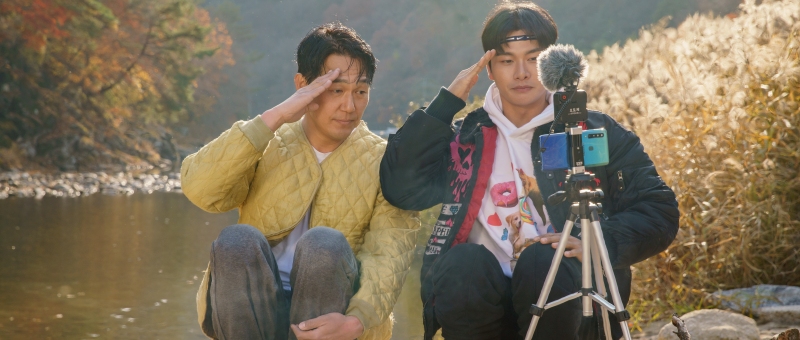
Bear Man (웅남이, Park Sung-kwang, 2023)

According to an ancient legend, bears who eat garlic and mugwort can become human though it’s not exactly clear why they’d want to. The debut film from Park Sung-kwang, Bear Man (웅남이, Woongnami) as its name suggests follows a pair of bear cubs who decide to give things a go in the human world but with wildly differing results as one is adopted by the researcher who allowed them to escape and the other by a vicious gangster who exploits him for his violent capabilities and shows him little love. 

Love is something Woongnam (Park Sung-woong) got a lot of thanks to his devoted mother and though not exactly the sharpest knife in the drawer had forged a promising career as a local policeman before he was let go after falling into a kind of funk on overhearing his father on the phone suggesting that the life expectancy for a regular bear is only 25 so he might not have much time left. Thanks to his nature as a bear man, Woongnam ages much faster than everyone else and already appears to be middle-aged though he is also blessed with immense strength and agility. After agreeing to bend the law by helping his feckless friend Malbong (Lee Yi-kyung) win in at illegal gambling Woognam comes to the attention of a group of police detectives investigating a shady gangster who notice a man looking just like Woongnam taking out a host of bad guys at the harbour. 

There is something quite poignant in the puppy-like existence of Woongbok (also Park Sung-woong) who keeps looking up to his boss as a father figure with a mixture of fear and longing. He gazes enviously at a family crossing the road in front of him and later visits Woognam’s home where Woongnam’s mother thinks that he’s Woognam and tries to feed him his favourite foods while he just looks on silently without expression. Where Woongnam is basically good, not too bright but heart in the right place, Woongbok has been raised as creature of violence by his intimidating father figure and carries a threatening aura with his slick haircut and tailored suit. 

The police want Woongnam to pose as Woongbok so they can take down the gangsters who have not only been trafficking drugs but also dabble in scientific research into viruses and their cures apparently about to unleash an epidemic in China to profit off the drug sales. It’s not all that clear what the scientists who released the bears were actually researching though there is a kind of parallel in the fact the other pair seemingly settled down, adjusted to their new environment and had a few cubs while Woongnam and Woongbok ended up becoming humans with bear-like abilities. Woongnam has to be prevented from entering hibernation and sleeps flat out like a bear but otherwise keeps his true nature secret even while covertly helping the townspeople out getting rid of beehives and freeing trucks stuck in the mud. 

That would be about the extent of “policing” in this kind of small-town where there’s nothing much to do but catch fish in the river and chat to wild boar. Park builds on the surreality of everyday rural life with mounting absurdities such as the parade of teenagers who troop through the convenience store where Woongnam’s live-streaming friend Malbong works each of whom he is largely able to unmask thanks to his keen sense of smell, and the polytunnel that doubles as a gambling den for down on their luck farmers. Woongnam’s biggest regret is losing his position as a police officer and it’s his desire to get it back to make things up to the people who raised him that encourages him to go along with the detectives’ crazy plan even if means he has to undergo weird martial arts training inspired by Drunken Master and take lessons from a strange movement coach in how to walk like a gangster. Yet in the end it’s Woongbok’s innocent desire for familial love that becomes a source of salvation, turning against his gangster brethren to protect the warmth of Woongnam’s family home. Quirky in the extreme and defiantly absurd, the film nevertheless has genuine heart in otherwise strange tale of wandering sons and bears of men.


Bear Man screened as part of this year’s New York Asian Film Festival

Images: © 2023 KIMCHI PICTURES PRODUCTION. ALL Rights Reserved.

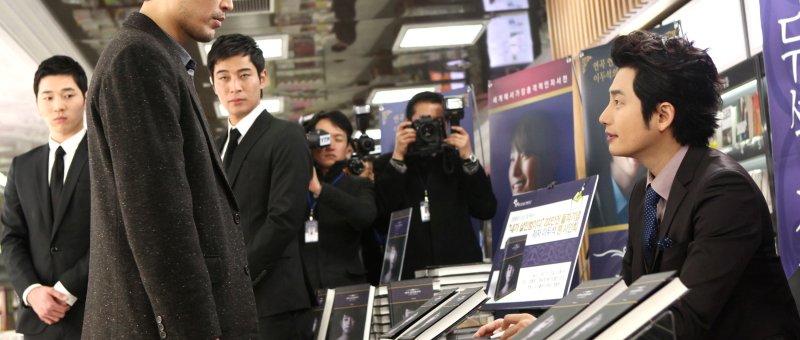
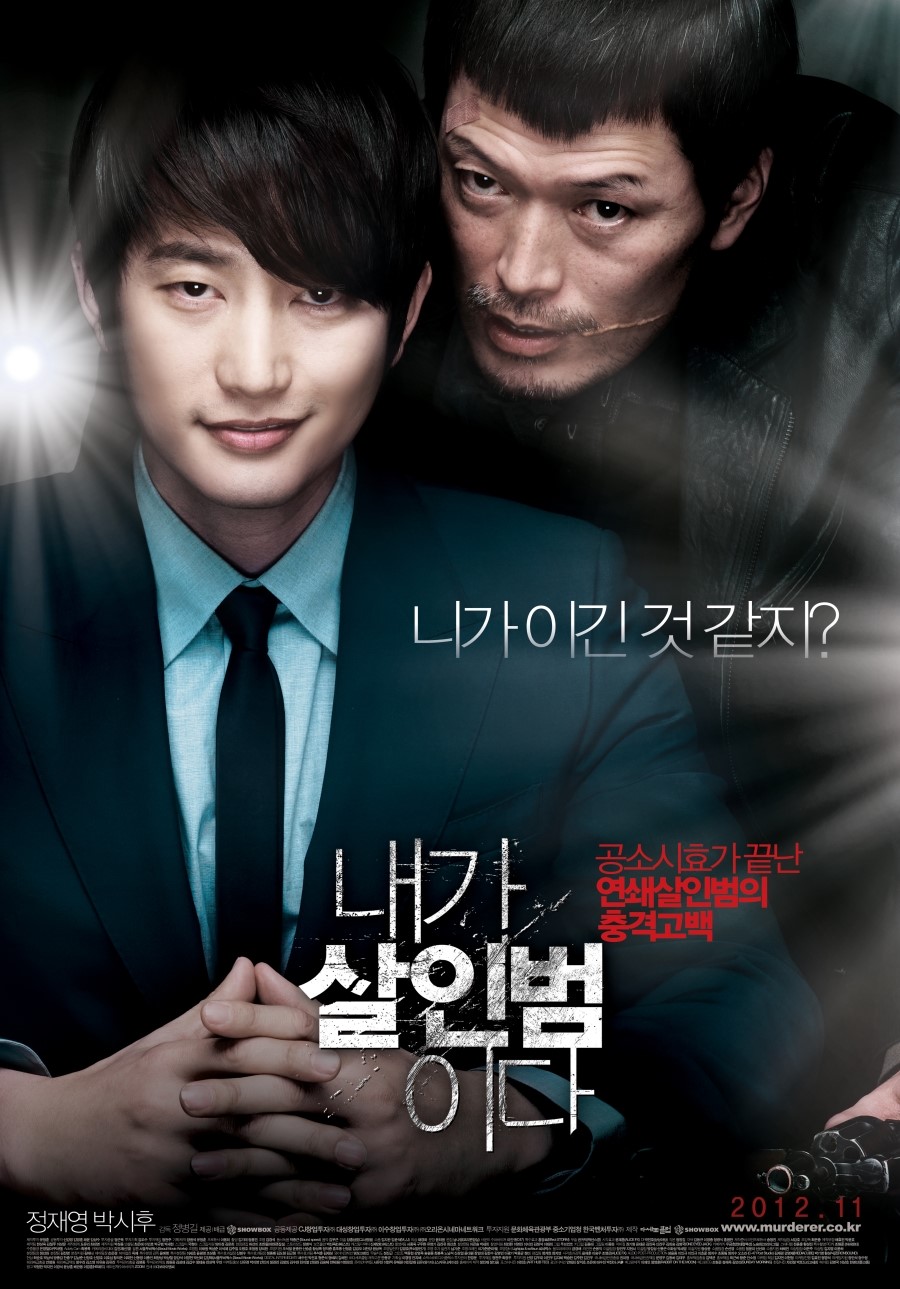
Confession of Murder (내가 살인범이다, Jung Byung-gil, 2012)

Confession of murder posterThe UK does not have a statute of limitations for criminal cases, only for civil ones, so if you want to be certain you’ve got away with murder you’ll need to wait until the very end and offer only a deathbed confession. In Korea, however, the statute of limitations on murder is (or was, at least, in 2012) 15 years so after that time you can even go on TV and tell everyone you’re a serial killer and all that will happen is that you’ll suddenly become a media darling beloved by a hundred giddy schools. Such is the premise behind Jung Byung-gil’s complicated mystery thriller Confession of Murder (내가 살인범이다, Naega Salinbeomida) in which a grizzled detective and the bereaved relatives try to cope with their guilt and desire for revenge by enacting their own kind of justice on a self-confessed serial killer.

15 years ago, Detective Choi (Jung Jae-young) let a serial killer get away with only a scar on his cheek and the killer’s promise of reunion to show for it. 10 women are dead and Choi’s own fiancée missing presumed among the victims, and with the statute of limitations about to expire it appears that the killer will get away with his heinous crimes having successfully outlived justice. On the day the killer is officially off the hook, one of the victim’s sons commits suicide, further adding to Choi’s sense of inadequacy in being unable to bring the killer to justice within the time limit.

Two years on from the limitation passing, a handsome young man steps into the limelight with a book called “Confession of Murder” which claims to be an exposé on his reign of killing. Lee (Park Si-hoo) with his pop idol good looks and suave manner quickly becomes a media sensation despite the discomfort of some that he is profiting from the deaths of his innocent victims whom he has also robbed of justice even if he claims to be remorseful and to have reformed. Detective Choi has his doubts about the killer’s account and particularly about the possible 11th victim whose body has never been found.

Aside from the intrigue surrounding the true identity of the killer (or killers), Confession of Murder has a few difficult questions to ask about the nature of fame and the cult of celebrity. Lee has just confessed to a brutal series of unsolved killings of women, but thanks to his boy band good looks and impressive media marketing campaign he’s already amassed a fan club of adoring young girls including three rowdy high schoolers we first meet in Choi’s prison cells. Having escaped justice, Lee feels secure enough in his legal protections to crow not only about his crimes but in having gotten away with them so skilfully. His book becomes a best seller and his TV appearances hotly anticipated even if the fascination behind them maybe more ghoulish than intellectual or steeped in admiration.

What Lee exposes is a set of judicial double standards in which a man who has not paid for crimes he freely admits committing can be allowed to remain free and even use those same crimes to build a new life for himself by exploiting them for financial and social gains. The families of the bereaved, denied justice, seek their own – as does Choi even if he does it as a serving law enforcement officer. The lines between justice and revenge become ever blurred as the killer subverts the protections of the law as weapons against those who would seek to see that his crimes are properly served by it.

Meanwhile, Jung veers wildly between taught psychological thriller and absurd action drama in which an attempt to kidnap the killer is made by throwing poisonous snakes at him and then stealing him away in a fake ambulance which soon gives way to a lengthy motorway chase. The action sequences, often unexpected, are brilliantly choreographed set pieces of frenzied attack and retreat in which the outcome is perpetually uncertain. Uncertainty is certainly something Jung is adept at using as his narrative becomes ever more convoluted and intentions increasingly cloudy.

As much fun as it all is, Confession of Murder also has its degrees of poignancy in insisting on a need to deal with the unresolved past head on. Buried truths begin to fester and no amount of wilful forgetting will cure them, only the truth will do. Detective Choi faces a serious dilemma when faced with the limitations of a system to which he has devoted his life and which has already taken so much from him. If he transgresses, he will be judged by that same system but the judgement itself will also be a kind of affirmation that justice has finally been done and the case firmly closed.


Original trailer (English subtitles)
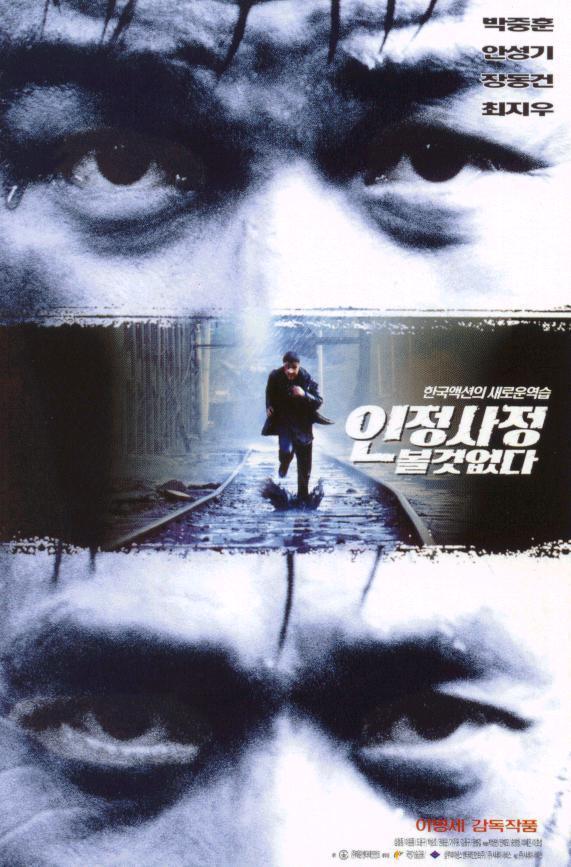
Nowhere to Hide (인정사정 볼 것 없다, Lee Myung-se, 1999)

Nowhere to hide poster

One of Korea’s foremost visual stylists, Lee Myung-se’s work has often been under appreciated at the time of its release. His desire to experiment finds fertile ground in the intensely kinetic ode to the police procedural, Nowhere to Hide (인정사정 볼 것 없다, Injeongsajeong bol Geos Eobsda). A tale of cops and robbers, Nowhere to Hide follows a cop who talks too much on the trail of a silent assassin who is, in fact, an expert at hiding in plain sight through the art of disguise. Moving quickly from one intense, beautifully choreographed set piece to the next, Lee draws inspiration from the crime-tinged tragedies of old Hollywood and beyond whilst embracing those of his home nation in the classic twin pairing of actors Ahn Sung-ki as the enigmatic assassin, and Park Joong-hoon as the bullheaded cop hot on his trail.

Lee opens in black and white with Inspector Woo (Park Joong-hoon) in full on gangster mode as he wanders through a ruined landscape, pausing only to tie his shoelace while the pulsing, punkish music continues in the background, before he walks in on an entire room of besuited gangsters and calmly sits down to introduce himself. Sometime later, Sungmin (Ahn Sung-ki), in sunshades and trench coat, patiently bides his time before committing a dramatic murder and making off with a mysterious briefcase.

What follows then is a game of cat and mouse as Woo chases the ghost of Sungmin through dingy back allies and neighbourhood dive bars, taking his more serious partner, Kim (Jang Dong-kun), whose more primary motivations include his family or more particularly his little girl, along for the ride. Woo lives only for his work, drawing more thrill from the chase than he is likely to admit. Through his pursuit of Sungmin, Woo draws closer to a side of himself he hoped to avoid, burying his natural rebelliousness in service of the law. We see him brutally interrogate suspects, even at one point trussing one up like a prize pig and suspending him between two desks in the middle of the police station. It is, in this sense, Woo who is left with “nowhere to hide”. As a young man, he had a violent streak which might well have led him into crime if his father had not pointed him towards the police, but he can no longer claim to be very much different than the quarry he pursues. His true nature has been laid bare by his opposing number.

Woo’s rage and unpredictable energy are tempered by Kim’s evenhandedness, but after a job goes wrong and Kim kills a suspect by mistake he starts to fall apart. Suddenly Woo cannot rely on Kim to save him from himself and then tragically fails to save Kim during another operation, leaving him open to serious injury. His quest is now as much one of vengeance and personal feeling as it is of justice.

Sungmin, by contrast, says not one word in the entirety of the film. A felt presence more than a seen one, he slips in and out of personas, escaping from the scene in various disguises as a figure more of legend than of reality. A close relationship with a bar hostess girlfriend is Woo’s way in to Sungmin’s world, correctly identifying a weakness and pressing it, pursuing a more concrete route to the centre of Sungmin’s existence than simply tracking him through the shady netherworld in which he lives.

The two men run from and mirror each other as pictures of action and stillness, resistance and urgency. Through a relentless pursuit of capture or escape, neither can evade the shadow of himself, each moving closer to their true selves as repressed elements surface and threaten to destroy the whole. Woo and Sungmin are each on a mutually destructive pursuit of the self as much as they are for their own, self defined goals.

Lee frames all of this within his characteristically ironic world view, painting the drama as comedy imbued with its own kind of cartoonish slapstick. Throwing in cinematic homages from a brief nod to Battleship Potemkin to an ending plucked straight out of The Third Man, Lee mixes freeze frames with an odd jump dissolve technique which lends his intensely beautiful choreography an impressionistic, fleeting quality. Two men chase the shadow of the other, engaged in a desperate game of hide and seek, but when the game is up neither may like what they see.


Screened at London Korean Film Festival 2017.

Robbery sequence (dialogue free)

Pandora (판도라, Park Jung-woo, 2016)

pandora (korean) posterIn a time of crisis, the populace looks to the government to take action and save the innocent from danger. A government, however, is often forced to consider the problem from a different angle – not simply saving lives but how their success or failure, decision-making process, and ability to handle the situation will be viewed by the electorate the next time they are asked who best deserves their faith and respect. Pandora (판도라) arrives at a time of particularly strained relations between the state and its people during which faith in the ruling elite is at an all time low following a tragic disaster badly mishandled and seemingly aided by the government’s failure to ensure public safety. Faced with an encroaching nuclear disaster to which their own failure to heed the warnings has played no small part, Pandora’s officials are left in a difficult position tasked with the dilemma of sacrificing a small town to save a nation or accepting their responsibility to their citizens as named individuals. Unsurprisingly, they are far from united in their final decision.

As the film opens, a group of children marvel at the towers of the new nuclear plant which has just been completed in their previously run down rural town. Not quite understanding what the plant is, they repeat snippets they’ve heard in their parents’ conversations – that the plant is a “rice cooker” that’s going to make them all rich, or it’s a “Pandora’s box” which may unleash untold horrors. Still, they seem excited about this new and futuristic arrival in their dull little village.

Flashforward fifteen years or so and one way or another all the kids now work at the plant, like it or not, because there are no other jobs available. Kang Jae-hyuk (Kim Nam-Gil) is one such conflicted soul who doesn’t disapprove of the plant in itself but has good reason to fear that the powers that be are not taking good enough care seeing that both his father and older brother were killed during a previous incident at the plant some years previously. Jae-hyuk lives with his widowed mother (Kim Young-ae), sister-in-law (Moon Jeong-Hee), and nephew (Bae Gang-Yoo) but is reluctant to marry his long-term girlfriend Yeon-ju (Kim Joo-Hyun) due to his lack of financial stability and growing disillusionment with small town life.

Meanwhile, the wife of the Korean president has been passed a file by a whistle-blower hoping to bypass the corrupt bureaucracy and go directly to the top. The file, compiled by a worried engineer, details all of the many failings at the recently reconfigured plant which has been recklessly rushed into completion without the proper safety checks and required maintenance procedures. Unfortunately the president does not have time to read the report before a 6.1 magnitude earthquake strikes and destabilises the plant to the extent that it edges towards meltdown.

Unusually, in a sense, the president is a good man who genuinely wants to do the best for his people even if he sometimes ignores sensible advice out of a desire to protect those on the ground. Unfortunately, he is at the mercy of a corrupt cabinet headed by a scheming prime minister intent on withholding information in order to push the president into cynical decision-making models predicated on the idea of the needs of the many outweighing the needs of the few but which mainly relate to the needs of the prime minister and his cronies in the nuclear industry.

The man in charge of the plant has only been there a few weeks and has no nuclear industry experience. His second in command is a company man and his loyalty lies with his employers – he needs to keep everything functioning and ensure the plant will not be decommissioned. The only voice of reason is coming from the chief engineer who wrote the whistle blowing report and nobly remains on site throughout the disaster putting himself at grave personal risk trying to ensure the plant does not pose a greater danger to those in the immediate vicinity.

Claiming a desire to avoid mass panic, the government attempts to order a media blackout, giving little or no information to civilians stranded in the town and fitting communications jammers to prevent the spread of information. The town is eventually given an evacuation order and orderly transportation to a shelter but once there the townspeople are kept entirely in the dark. When they become aware of the full implications of the disaster and try to leave independently, they are locked in while officials flee and leave them behind.

Conversely, the emergency services are hemmed in by regulations which state they cannot act because they would be putting themselves at unacceptable risk. Kang Jae-hyuk, despite his earlier irritation with his place of work, abandons his own cynicism to walk back into the disaster zone to help his friends still trapped inside. The president nobly refuses to order anyone to tackle the disaster directly knowing that it would mean certain death but opts to appeal for volunteers willing to sacrifice themselves for the greater good. Unexpectedly, he finds them. The president is well-meaning but ineffectual, the government is corrupt, and the emergency services apparently overburdened with regulation while under-regulated commercial enterprises put lives in danger. The only force which will save the Korean people is the Korean people and its willingness to sacrifice itself for the common good even in the face of such cynical, self-interested greed.

Despite the scale of the disaster, Pandora takes its time, eschewing the kind of black humour which typifies Korean cinema disaster or otherwise. Serious rigour, however, goes out of the window in favour of overwrought melodrama, undermining the underlying messages of widespread societal corruption from corporations cutting corners with no regard for the consequences to politicians playing games with people’s lives. The powers that be have opened Pandora’s Box, but the only thing still trapped inside is men like Kang Jae-hyuk whose disillusioned malaise soon gives way to untempered altruism and eventually offers the only source of hope for his betrayed people.


Original trailer (English subtitles available from menu)