Sesang (세상, Jules Suo, 2019)

“Our life’s journey consists of both positive and negative. It teaches us to move forward and fulfil your dreams” according to Han-chul (Han Jong-hoon), a digital nomad waxing philosophical about the benefits of the unencumbered life. “Sesang” (세상) in one sense just means the world, but it can also mean “a life” or even a life’s journey, a passage through the world both a part of it and not. Han-chul, however, by the film’s conclusion is perhaps beginning to wonder if there are also costs involved in a life without connection, unanchored by his floating existence and imbued with a sense of existential loneliness as the world changes around him while he changes with it but perhaps not quite in step. 

The film opens in New York with aspiring actress Nari (Kim Jin-young) travelling to the airport to meet Han-chul, her long-distance boyfriend, at the airport. Han-chul has been working on a documentary in Japan about a divorcee who relocated there and is seemingly visiting Nari while waiting for another opportunity. Nari’s barbed comment that she isn’t sure they “share the same dreams” when Han-chul remarks on the similarity of her upcoming project about a long-distance couple to their real lives perhaps signals that she’s not entirely satisfied with their relationship, eventually sparking an argument that leads to a break-up when Han-chul reveals he’s been offered a job in Berlin annoyed with him for once again abruptly changing his plans, both in his abandonment of her and of his complete lack of consideration for the inconvenience he may cause her through breezing in and out of her life. 

Then again both Nari and Han-chul appear to be fairly self-contained. Each of them find themselves spending a lot of time home alone while living with roommates who are generally out. Nari’s New York life is spent largely within the Korean ex-pat community, often working on Korean productions, eating in Korean restaurants and going to noraebang with Korean friends. She is offended when her mother tries to send her money, resentful at the implication that she’s struggling but also finding herself at the mercy of a sometimes cruel industry that limits the kind of work available to her while normalising an abusive working environment. The one job we see her do which is presented in such a way as to mimic real life is also problematic in playing into several different unpleasant and racially charged stereotypes at once. Later she is invited to rejoin a production she apparently left because of the behaviour of a Korean producer who, she is assured, has since been fired. Her break-up with Han-chul is followed by a job offer back in Korea which sees her pursuing parallel careers, travelling back and forth working at “home” but living “abroad”. 

Staying on in New York, Han-chul too takes a room with someone who’s never in but takes the opportunity to rid himself of most of his possessions. In fact, even his hair becomes progressively shorter as time moves on to the point at which it doesn’t quite suit him, an old friend somewhat derisively commenting on his “edgy” new style. He tells a mutual friend, Eun-hye (Jina Nam), who is definitively settled in New York by virtue of owning a restaurant, that there are many things he may still want but attaining them cannot compare with the lightness of having nothing. Han-Chul’s philosophy may even extend to people as well as things. Perhaps he wanted Nari, or still wants her, but not enough to give up his life of freedom or indeed to deny her hers. He is happy to hear that she too is travelling the world, gaining new experiences and growing as a person, at this point at least convinced that life is about forward motion and the expansion of borders internal and external. 

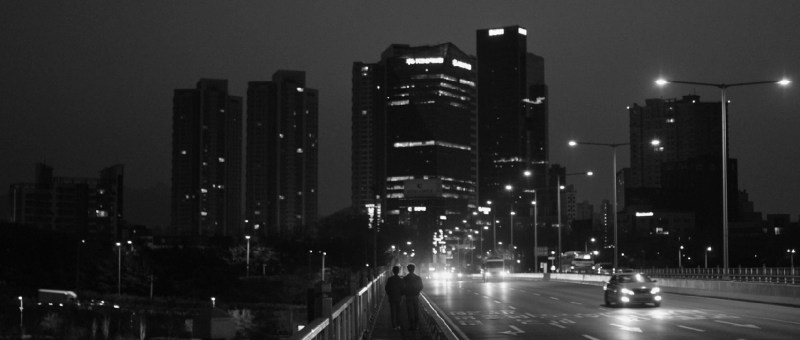
Yet on his eventual return to Korea after experiencing a degree of disappointment, he seems lost rather than free, a man without a plan adrift without direction. His aloneness seems all the more obvious among the throng of travellers at the airport each heading somewhere or nowhere only they can know. He sees movies in empty theatres, lives in bare rooms, and wanders down empty streets. Often returning to transitory spaces such as airports and train stations, Suo’s preference for long takes with a degree of detachment hints at a cinema of loneliness asking us if this increasingly migratory existence has disrupted the natural rhythms of human relationships such as that of Nari and Han-chul who were, at least according to Eun-hye, once “so close” but now very far apart both physically and emotionally. Han-chul may be searching for the very thing that he has rejected in his floating life, but nevertheless remains on the move chasing his dreams if perhaps not quite sure what exactly they may be. 


Sesang streams in the US Oct. 23 to 31 as part of this year’s Korean American Film Festival New York.

Original trailer (English subtitles)

Between the Seasons (계절과 계절 사이, Kim Jun-sik, 2018)

“To live the way I am” replies the reserved heroine of Kim Jun-sik’s Between the Seasons (계절과 계절 사이, Kyejeolkwa Kyejeol Sai Kaebongyejeong) when questioned about her dream, not quite able to answer when asked if she isn’t living that way now. An anti-romance and gentle meditation on the costs of authenticity, Between the Seasons finds two women at different stages of life unknowingly fighting a similar battle, perhaps identifying something in each other but unable to voice themselves fully though in fear and insecurity rather than shame even if they each internalise something of that too as they struggle to push past the barriers that prevent them from fully becoming themselves. 

In her mid-30s, Hae-soo (Rie Young-zin) has just moved from Seoul to a small town to open a bare bones coffee shop. She spends her spare time alone, and we quickly get the impression that she’s making an attempt to move on from something, eventually visiting a mobile phone shop to buy a new handset and instructing the salesman to delete all of her previous contacts and photos. Despite her attempts to discourage her, however, Hae-soo ends up forming an awkward friendship with bubbly high schooler Ye-jin (Yoon Hye-ri) who came into the coffee shop with an unusual order and then became a regular customer. Further bonding on a rainy night after the movies where Ye-jin was stood up by her boyfriend, the young woman starts randomly helping out just because she can see Hae-soo is overstretched eventually becoming an official part-timer spending most of her spare time with Hae-soo much to the consternation of her overbearing, grades-obsessed mother. 

Ye-jin quite literally begins to bring spring into Hae-soo’s life decorating the cafe with pretty cherry blossoms and floral motifs, lending it a cosier, more domestic atmosphere than the rather frosty, utilitarian vibe of Hae-soo’s original non-design. Questioned by Hae-soo about her dream she says she’d like to make things by hand, a dream that is perhaps in direct contrast with her mother’s obvious ambition for her. There’s not much money in paper cherry blossoms after all. That’s two reasons she might prefer being in the cafe rather than at home or studying somewhere else, Hae-soo both mysterious older sister and quasi-maternal figure, only the relationship is further complicated by Ye-jin’s growing romantic attraction to the older woman, becoming jealous as Hae-soo begins a tentative relationship with the sweet and goofy guy from the phone shop (Kim Young-min). 

For her part, Hae-soo remains either wilfully oblivious or simply unwilling to acknowledge Ye-jin’s obvious crush, awkwardly failing her as a friend and as a quasi-parental figure in refusing to engage with her complicated feelings in fear of having to reveal her true self. Instead she pushes the younger woman away without explanation, rejects her, and leaves her with only more shame and awkwardness despite having insisted that that there is nothing wrong in being different and that only by embracing your difference can you improve your life. Ye-jin continues to struggle with her feelings, observing her homophobic friends making fun of the supposed lesbian only to find herself semi-stalking the young woman confessing that if the rumours are true she too is the same. Despite eventually approving of her, the other girl tells her to keep her distance at school, lest they each fall victim to guilt by association. Eventually she gets all dolled up and heads to a gay bar where she furiously makes out with the bartender, mostly one assumes because she reminds her of Hae-soo doubly confirming her feelings. 

Hae-soo, however, is still conflicted, afraid to reveal her true self to anyone. The realisation she eventually comes to, symbolically removing the scarf from around her neck, is that she wanted to shine by herself, finding the confidence in authenticity rather than reflecting the light cast by the approval of others. Ironically that’s something she tried to encourage Ye-jin to do too but accidentally crushed in her brutal rejection of her feelings, costing her perhaps more than she realised in the process. Ye-jin had coyly asked her if she wasn’t making a rash decision, that so far she’d only shown her spring in her cheerful coffeeshop interior design, perhaps she’d like to take in the summer, even see her in winter too, truly thinking long term but the two women remain caught between the seasons, trapped by a sense of internalised anxiety that prevents forward motion. A gentle meditation on connection, authenticity, and self-acceptance Between the Seasons offers no easy answers for its conflicted heroines but motions towards a season of openness in which all are free to be who they are.


Between the Seasons streams in the UK until Oct. 11 as part of the Iris Prize Film Festival in collaboration with Queer East.

Original trailer (Korean subtitles only)

London Korean Film Festival Announces Full Programme for 2020

The London Korean Film Festival returns for 2020 in an unprecedented digital edition bringing some of the best in contemporary Korean cinema to homes across the UK along with a few select physical cinema screenings in London. This year’s Special Focus is dedicated to Friends and Family reminding us of our essential connections as we continue to face the effects of the pandemic.

Opening

  • Pawn – tearjerking dramedy from Kang Dae-kyu in which a debt collector (Sung Dong-Il) becomes the accidental guardian of a little girl when her mother offers her up as collateral on a loan but is then deported for being an undocumented migrant.

Closing

  • Bori – the only hearing member of her family, Bori struggles with the idea of difference as she tries to adjust to communicating verbally at school eventually wishing that she too were deaf.

Special Focus: Friends and Family

  • Family Ties – tripartite family comedy from 2006 following two unusual family units which eventually merge.
  • The Happy Life – 2007 musical drama from Lee Joon-ik in which former members of a college band decide to reform after the lead singer dies.
  • Juvenile Offender – 2012 drama from Kang Yi-Kwan in which a 16-year-old delinquent reunites with the estranged mother who gave him up at birth.
  • Intimate Strangers – Korean remake of the international hit Perfect Strangers in which a collection of respectable bourgeois couples have their lives upended after they agree to share all their mobile communications during the course of a dinner party. Review.
  • Moving On – moving coming-of-age drama in which a little girl and her brother move in with grandpa in the wake of their parents’ divorce.

Cinema Now

  • Vertigo – an office worker suffering existential vertigo is comforted by the presence of a fearless window cleaner. Review.
  • Jesters: The Game Changers – Joseon-era street entertainers get into trouble for spreading fake news in a period drama from The Grand Heist’s Kim Joo-ho.
  • Ashfall – A bomb disposal expert with a baby on the way is dragged into a covert mission to the North when Mt. Baekdu suddenly erupts in Lee Hae-jun & Kim Byung-seo’s starry disaster movie. Review.
  • Me and Me – directorial debut from actor Jung Jin-young in which a policeman wakes up one day to discover he’s someone else. Review.
  • The Woman Who Ran – the latest from Hong Sang-soo starring Kim Min-hee as a married woman taking a solo vacation to visit old friends.

Women’s Voices

  • An Old Lady – hard hitting drama in which a 69-year-old woman struggles to get justice after she is raped by a nurse at a hospital.
  • Gull – a middle-aged woman faces social ostracisation while seeking justice after being raped by an influential co-worker.

Classics

  • Eul-hwa – Byeon Jang-ho drama from 1979 based on a famous story in which a shamaness finds herself at the mercy of changing times and at odds with her son who has converted to Christianity.
  • Divine Bow – Im Kwon-taek’s 1979 drama starring Yoon Jeong-hee as a former shamaness who gave up her practice after a traumatic incident.
  • Daughter of Fire – Im Kwon-taek drama from 1983 in which a man from a shamanistic background who married a Christian is visited by his mother in his dreams.

Documentary

  • My Own Breathing – final instalment in a trilogy of films featuring testimony from former comfort women.
  • Itaewon – documentary following three women living in Itaewon

Animation

  • Underdog – a collection of stray dogs finds a place without humans where they are free to become themselves in this charming family animation.

Bong Joon-ho Shorts

The festival will also be showcasing a series of rarely seen early short films from Parasite director Bong Joon-ho.

  • Incoherence – 1994 student short
  • Influenza – 30-minute short from 2004 shot in front of real CCTV cameras in Seoul.
  • Some Light? – 2009 short directed by Kang Dae-hee featuring Bong in a rare acting appearance.

The London Korean Film Festival runs 29th October to 12th November online across the UK and in London cinemas. Full details for all the films as well as screening times and ticketing information will be available shortly via the official website and you can keep up with all the latest news by following the festival on FacebookTwitter, and Instagram.

Lucky Chan-sil (찬실이는 복도 많지, Kim Cho-hee, 2019)

Life can be cruel and unpredictable. The titular heroine of Lucky Chan-sil (찬실이는 복도 많지, Chansilineun Bokdo Manji) thought she’d go on making movies with the same group of like minded people until the day she died only to have the rug pulled from under her by an ironic twist of fate that leaves her feeling worthless and exiled as if she’s wasted her youth on a one-sided love affair with cinema. What are you to do when your whole world collapses and you aren’t even sure who you are anymore? The answer, apparently, is to “dig deep”, maybe make a few mistakes, but figure out what it is you really want and then do that. 

The trouble is, all Chan-sil (Kang Mal-geum) had ever thought of doing was making movies. She’d been a long term producer to a notable indie auteur, but when he suddenly dies at the launch party for their latest film it leaves her without a career. Though a top industry figure had previously described her as the hidden gem of Korean cinema, a statement that seemed too effusive to be sincere even in the moment, she later tells her she doesn’t see the point in giving her a staff job because she’d only ever worked with the same director and for auteurs the producer is irrelevant. He would have made the same film without her or with literally anyone else. Even Chan-sil’s new landlady (Youn Yuh-jung) seems intent to put the boot in asking a genuine question as to what it is a producer actually does. Chan-sil tries to explain, but only ends up talking herself into another spiral of despair in wondering what exactly it was she was doing all these years. 

To ends meet she moves into room in a house lodging with an elderly woman who keeps a locked room Chan-sil is instructed not to enter. She also ends up becoming a cleaning woman/assistant to an eccentric actress friend with problems and insecurities of her own of which her timekeeping is only one. Sophie (Yoon Seung-ah) is also taking French lessons from secret indie filmmaker Young (Bae Yoo-ram), on whom Chan-sil gradually develops an awkward crush unsure in herself if she’s actually interested in him, in romance in general, or simply lonely and losing faith in cinema which she realises she had always used to fill the void of the emotional intimacy otherwise missing in her life. 

She is indeed a keen cinephile, going off Young when she tells him of her favourite filmmaker Ozu, only for him to admit he found Tokyo Story boring because “nothing happens” while expressing a preference for “entertaining” films like those of Christopher Nolan and retro hits from Hong Kong. That might be one reason Chan-sil finds herself haunted by a strange ghost (Kim Young-min) claiming to be Leslie Cheung and dressed in the white singlet and boxers he wore in an iconic scene from Days of Being Wild. Nevertheless, Leslie ends up being a sympathetic sounding board, giving her little bits of life advice and encouragement that finally allow her to rediscover her pure love of cinema aside from her industry betrayal. 

Director Kim Cho-hee draws on her own experience as a former producer who worked with the prolific Hong Sang-soo from 2008 to 2015 though her film is perhaps both a winking homage and rejection of Hongism. She opens with a Hongian title sequence featuring stark names against rattan, in itself a reference back to the Ozu Chan-sil claims to favour, before ironically expanding from 4:3 to a more comfortable widescreen as Chan-sil’s world implodes, killing of the indie auteur at a trademark Hong soju session. She also plays with doubling and symmetry, Chan-sil’s attempts to help her landlady learn to read cut against those of Young struggling to teach Sophie French while we learn that the landlady once had a daughter who loved movies and Chan-sil had a grandma who never learned to read or write. But unlike one of Hong’s self-obsessed directors, Chan-sil’s introspection has a more open quality, deciding that she wants to know what it is to really live while accepting that for her cinema is a part of that. Kim ends, literally, with the light at the end of the tunnel while a ghost applauds in a standing ovation, perhaps joining in with the audience as they celebrate Chan-sil’s success in finding her way out of a mid-life crisis and into a more positive future.


Lucky Chan-sil streamed as part of this year’s New York Asian Film Festival.

Original trailer (English subtitles)

Leslie Cheung in Days of Being Wild

Baseball Girl (야구소녀, Choi Yun-tae, 2019)

According to the title card which opens Choi Yun-tae’s Baseball Girl (야구소녀, Yagoosonyeo), an obscure regulation in the founding principles of the Korean Baseball League placed a bar on players who were “biologically non-male”, a ban which was struck down in 1996 allowing women to play professionally though attitudes it seems are much harder to change than regulations. In contrast to the grand tradition of Korean sports dramas, the contest is not a game but the right to play in one and the opposing team not talented rivals but sneering sexism and a conformist society. 

Joo Soo-in (Lee Joo-young) made the papers as the first girl to play in her high school team in over 20 years. Casting an eye around her room we see her trophies and discover that she is a talented pitcher known for top speed fastballs, but then as others seem to put it her balls are only fast “for a girl”. All she’s ever dreamed of is playing professionally and, after all, there’s nothing in the rulebook to say she can’t but that’s all anyone ever tells her. Why can’t I? she asks them, but the only answer they have for her is that it simply isn’t done. Lined up with her teammates following a meeting with a scout from the big leagues, Soo-in watches as only one of her friends, Jeong-ho (Kwak Dong-yeon), is picked. The others all walk off with resignation, accepting that they’ll need to find alternate careers but Soo-in doesn’t back down. 

Soo-in’s determination places her at odds with her working class family, her harried mother (Yum Hye-ran) continually insisting that she’s being childish and unreasonable and should give up her dreams to do something more practical with her life or risk becoming like her father (Song Young-Kyu) who is perpetually unemployed, unable to provide for the family while repeatedly failing the exam to become a licensed estate agent. There’s no shame in giving up when there’s no chance of success, her mother tells her, aligning her quest with her father’s as an egotistical act of prideful selfishness. As a teenage girl, however, Soo-in cannot help but feel the slight of her parents’ lack of support, resenting her mother’s understandable prioritisation of the ability to earn as she pushes Soo-in towards taking an office job in the factory where she works right out of high school in the belief that she’s helping her towards an economically stable life. 

Meanwhile, the new coach on the team, Jin-tae (Lee Joon-Hyuk), is quick to sideline her, viewing her as ridiculous and deluded. It’s not because you’re a girl, he tells her, it’s that you aren’t good enough, paradoxically insisting that she never could be because of the “limitations” of her female body which make it impossible for her to compete with men who also, as he points out, are extremely unlikely to make it as professional players. She tells him that he’s wrong, vowing to pitch at a speed unheard of, certain that if achieved the leagues would have to take her. Jin-tae has problems of his own, a never was player who wasted his youth trying to turn pro, became an alcoholic, and ruined his marriage. It’s understandable that his experiences have turned him cynical and mean, but something about Jin-soo’s determination, along with her strong skillset, begins to move him. Maybe he thinks it’s hopeless too, but it would be wrong to deny her the right to try. 

The biggest battle Soo-in faces, however, is from other players. Jeong-ho relates how in their little league days she was the only girl on the team and the kids mercilessly bullied her in part because the coach told them having a woman around was bad luck and made them all do intensive training to encourage her to quit. Jin-tae tries to get his scout friend to get her a tryout for a professional team, but he makes no secret of his distaste for the idea, exasperatedly complaining that Soo-in doesn’t look like a ball player (i.e., not a man, small and slight) only to later offer her an insulting token job as a figurehead for a “Woman’s Baseball Project” designed to make his big league team look more progressive than it really is. At her big try out, the guys in the dug out snigger and laugh, making fun of the batter who was struck out by “a girl” while the other coach congratulates her suggesting that she must have “trained with the boys” before giving her some unsolicited advice. 

As she tells the director of the big league team, baseball is for everyone. Her femininity is not a strength or a weakness, it simply is. She might not be as fast or as strong, but she’s smart, and brute force is not the point of the game. Some tell to her give up, that she should just play in the women’s leagues as a “hobby”, and perhaps at times Soo-in doubts herself but as Jin-tae tells her, other girls can dream because she showed them it was possible when she overcame huge prejudice to play on her high school team. Yet for Soo-in with every success it will only get harder. Even so she won’t give in, playing hardball with a relentlessly patriarchal society as she insists on the right to follow her dreams wherever they may take her.


Baseball Girl streams in the US via the Smart Cinema app until Sept.12 as part of this year’s New York Asian Film Festival.

Original trailer (English subtitles)

Diaspora: Arirang Road (디아스포라의 노래: 아리랑 로드, Lee Kyu-chul, 2019)

A song from home can be a powerful thing when you’re far away, as the various protagonists of Lee Kyu-chul’s Diaspora: Arirang Road (디아스포라의 노래: 아리랑 로드, Diaspora-eui Nolae: Arirang Road) make plain. Though they perhaps can no longer remember all the words, or are too overcome by emotion to be able to sing, each of Lee’s overseas Koreans has a deep connection to the melancholy folk song which sings, as one farmer puts it, of “the grief of living” but as others affirm is also full of life and hope if only in the solidarity of voices raised together in shared hardship. 

The guide, Korean-Japanese composer Yang Bang-ean, is on a quest to write his own version of Arirang, a new version which sings in the voices of the diaspora. Yang was himself born in Japan to Korean parents and is a member of the zainichi community committed to cross-cultural exchange. Unsurprisingly the first half of the film is dedicated to the Koreans who found themselves in Japan sometimes against their will, trafficked as forced labour during the colonial era and taking solace in Arirang while enduring harsh treatment and discrimination at the hands of the Japanese. In a brief reconstruction, a miner reads a letter to his mother in which he hides how much he is suffering, later likening himself to an octopus tricked into a pot, gradually consuming itself in a desperate attempt to survive.

Unlike many folksongs, little of Arirang is fixed aside from the distinctive chorus leaving melody and lyrics open to interpretation meaning there are thousands of different versions found all over Korea and beyond. The action later shifts to a perhaps forgotten diaspora community, the Koreans of Central Asia who travelled to Russia in search of a better life only to be moved on by Stalin in the 1930s as international tensions escalated. Packed onto a fetid train travelling for days on end with many dying during the journey from cold, stress, or hunger, they had only Arirang to unite them and offer hope that their lives would one day be better. 

As as someone puts it, Arirang is the “tragic history of a scattered people”, but also “a belief of our history and future”. According to another singer, it is “love. life. and living”, running like water with the rhythms of nature and leading those who share the song toward hope. Yang later re-characterises the song as both personal and universal, the singer in a sense becoming Arirang and Arirang the singer in a process of mutual change and evolution, something which is perhaps underway as he continues to write his own Arirang for those Koreans who remain outside of Korea. 

As many of the singers point out, there is much grief and sorrow in Arirang but also hope and a spirit of endurance. Lee Kyu-chul shows us two different burial grounds on different sides of the Earth, the first marked only with stones for Koreans buried anonymously in Japan, and the second a small city of walled headstones for those who died peacefully of old age in Kazakstan. Those who survived the train later prospered and endured, their grandchildren born and raised in Kazakstan but still united by Arirang as a marker of their culture while one young man enthusiastically belts out a K-pop tune to remind us they’ve not forgotten their roots. 

Yang concludes his performance with an intense jam session of various artists each forging a new Arirang together, testimony to the power the song has to bring people together as it has with Yang and the members of the Korean diaspora he has met from all over the world in some ways very like him and in other ways not but united in their Koreanness through the memory and the sentiment of Arirang no matter what lyrics they sang or what hardship they endured. A heartfelt tribute to the solidarity of voices raised in song and the cathartic properties of music, Lee Kyu-chul’s folksong odyssey rediscovers the invisible connections of the diasporic community brought together by the power of Arirang which offers, as Yang puts it, “the opportunity to hope” even in the depths of despair.


Diaspora: Arirang Road streams in the US Sept. 10 to 14 as part of the 11th season of Asian Pop-Up Cinema.

Original trailer (English subtitles)

Paper Flower (종이꽃, Koh Hoon, 2019)

Rich or poor, we’re all the same when we die, according to dejected funeral director Sung-gil (Ahn Sung-ki). A mild rebuke on the heartless corporatism dominating contemporary Korean society, Paper Flower (종이꽃, Jongikkot) looks for beauty even in the depths of despair, but is unafraid to admit that the world has its ugliness too as its twin protagonists practice entirely contrary reactions to the traumatic past. While a single mother on the run fills her life with joy and light, Sung-gil struggles to hold on to his principles while never quite as cynical as the years have conspired to make him seem. 

Sung-gil’s problem is that his funeral business has run into trouble now that a conglomerate has entered the marketplace providing a more convenient, modern service which vastly undercuts his own. He’s been stubbornly holding out, but his rent is long overdue and his landlord’s getting antsy, meanwhile he’s also responsible for the care of his paralysed son Ji-hyuk (Kim Hye-seong) whose carers keep quitting because he keeps attempting suicide and generally makes their job as difficult as possible. All things considered, Sung-gil has no option other than to become a franchisee of the enemy conglomerate, Happy Endings. 

Across town, single mother Eun-sook (Kim Yoo-jin AKA Eugene) is facing a similar problem in that she’s just been unceremoniously let go from her cleaning job despite being promised a year’s contract because the company decided to outsource to a conglomerate who didn’t want to keep her on. Meanwhile, she’s also being pursued by men in suits handing her court orders which say that she has to go into “rehabilitation” as soon as possible or the order will be forcibly enforced. Overdue on her rent, she hopes to evade them by doing a flit, moving into the vacant apartment opposite Sung-gil’s with her small daughter No-eul. The pair are warned about the bad tempered old man next-door and quickly find out for themselves when he grumpily complains about their moving boxes cluttering the hallway but Sung-gil still needs someone to look after his son, and Eun-sook needs a job, so the obvious solution presents itself. 

What Sung-gil couldn’t have expected, however, is the light that Eun-sook brings into his home. We can infer that she’s had a difficult life, the prominent scar along her jaw proving a cause for concern at the job centre, but unlike Sung-gil and his son she remains unrelentingly cheerful, determined to find the tiny moments of joy in the everyday precisely because she’s known what it is to be without them. Her daughter No-eul is much the same, hilariously unfiltered and prone to asking the most inappropriate of questions with childlike innocence, but eventually bonding with the gruff Sung-gil after she pays his bus fare when he comes up short and he teaches her a few lessons about the funeral business. 

Sung-gil’s greatest crisis, however, arrives when a local man who’d been a hero to the homeless in operating a restaurant which became a point of refuge offering free noodles to anyone who needed them no questions asked, suddenly dies. Like Eun-sook and Sung-gil, Jang (Jung Chan-woo) also suffered at the hands of an increasingly capitalistic society, dropping dead while being pressed by a greedy landlord. Because Jang had no family and no named next of kin, no one is permitted to claim his body. The authorities send him to Happy Endings, which is where Sung-gil comes in, but the company resent having to deal with a case of death by poverty, instructing him to dispose of the body as quickly as possible. Even if Jang had no legal “family” he had a community who loved him and wanted to say goodbye even if they didn’t have the money to reclaim the body or give him the proper send off. Sung-gil remains conflicted. He believes Jang should be treated with dignity in death and that his friends should have the right to pay their respects, but he’s already in trouble for working with too much care and needs to make sure his contract is extended so he can pay his rent and look after Eun-sook. 

Jang’s friends want to have a public funeral in the local square where many of them first met him at his noodle stand, but that presents a problem for the local council who are in the middle of a clean streets campaign and trying to win the right to host Miss World in the hope of boosting the local economy. The authorities are very interested in “dealing” with “the homeless” but not at all with the issue of homelessness which is only exacerbated by their increasingly heartless social policies. Of course, they make a good point, somebody somewhere has to pay, but Sung-gil remains conflicted, originally opting for a kind of compromise but finally pushed towards reconsidering the source of his own trauma which turns out to have a curiously symbolic, national quality that encourages him to think that perhaps it is time to take a stand against this worryingly inhuman obsession with margins and conviction that nothing is worth anything if it can’t be monetised. Moved by Eun-sook’s sunniness which eventually gives new hope to the dejected Ji-hyuk, he begins to find the strength to fight back, masking the darkness with paper flowers in defiance of those who would say that some lives aren’t even worth that.


Paper Flower screens at Chicago’s Davis Drive-In on Sept. 10 as the opening night presentation of the 11th season of Asian Pop-Up Cinema.

Original trailer (English subtitles)

My Punch-Drunk Boxer (판소리 복서, Jung Hyuk-ki, 2019) [Fantasia 2020]

“The most Korean is the most universal” according to the hero of My Punch-Drunk Boxer (판소리 복서, Pansori Boxer) and his childhood best friend as they pursue parallel dreams of Pansori and pugilism which are destined, we come to understand, only for heartbreak and tragedy. Yet, in true Korean sports movie fashion, there’s more than one way to win and the best revenge against cruel fate might indeed be living well because “we only live once we should do what we want or you’ll regret it before you die.”

Byung-gu (Um Tae-goo) was once an aspiring boxer determined to make it to the top, developing his own idiosyncratic style of fighting dubbed “Pansori Boxing” fought in rhythm with the drum beats of traditional folk music as played by his friend Ji-yeon (Lee Seol) who is equally determined to become the world’s best performer of Pansori. These days, however, he works part-time at his old gym doing odd jobs and handing out flyers to try and win more customers. Waking up one day he claims from a “very long and strange dream”, Byung-gu has a sudden urge to take up boxing again, reminding his old coach that George Forman was 45 when he became World Champion so 29 is not to old to give it another go. Director Park (Kim Hee-Won) is unconvinced, partly it seems because Byung-gu has partially forgotten the reasons he was forced to give up his boxing career in the first place which make It unlikely he’ll be able to regain his licence. Meanwhile, in an attempt to increase his chances, he begins coaching a young woman, Min-ji (Hyeri), coaxed into the gym by one of his unconventional ads which promise dramatic weight loss as a result of intensive boxing training. 

Boxing is however outdated. As the two young tykes who hang out in the gym point out, they don’t even show boxing on the TV anymore it’s all about MMA. The gym is dying, hardly anyone wants to train and the only other boxer on the books, Gyo-hwa (Choi Joon-young), is continually put out because they’ve yet to arrange any fights for him. “Times have changed” Park is told, eventually agreeing as he contemplates making a sacrifice to make Byung-gu’s dreams come true. But as Byung-gu tells him, “our prime time may be over, but that doesn’t mean that we are”, determined to regain himself in the ring if aware that his gesture is in one sense “meaningless” and soon to be forgotten. 

As we soon discover, Byung-gu’s words have an additional meaning beyond simple transience in that he is suffering from “punch-drunk syndrome”, a degenerative condition similar to Alzheimer’s brought on by brain damage sustained by all those blows in the ring. His world is literally disappearing, the photographer’s closing down because no one uses film anymore and, unbeknownst to him, the gym targeted for demolition, yet it’s Byung-gu’s sense of reality that is ultimately crumbling as he looks back on past mistakes and regrets the failure of relationships that were important to him because of his stubborn pride. As Min-ji tells him, however, no matter what it was he did that has a him continually remind her that he’s a “bad person”, his other problem is that he’s too nice, a mild-mannered boxer who won’t fight for himself outside of the ring but is always in everyone else’s corner. 

The central irony is that he fights partly for the honour of boxing, an outdated craft, incongruously married to the similarly ‘outdated” art of Pansori which sees him move not only in an unexpected rhythm but incorporating the sweeping moves of traditional dance. As luck would have it, Min-ji is also a Pansori drummer, providing him with a new beat to spur him on to achieve his dreams while Park eventually comes on side in realising that nothing matters so much anymore as making sure Byung-gu gets the opportunity to fulfil himself while he’s still in some way present. Featuring lengthy sequences of Pansori performance singing Byung-gu’s story in traditional recitative as well as off-beat editing to the rhythms of traditional folk music, My Punch-drunk Boxer is a heartfelt ode to giving it everything you’ve got right to the mat but also to forgiveness and redemption as Byung-gu learns to make peace with the past while supporting and being supported by those all around him quietly fighting similar battles of their own. 


My Punch-Drunk Boxer streamed as part of this year’s online edition of Fantasia International Film Festival.

International trailer (English subtitles)

Bring Me Home (나를 찾아줘, Kim Seung-woo, 2019) [Fantasia 2020]

“They were all like me” a drowning man exclaims, trying to justify his inhumanity but gaining only poetic retribution as he finds himself shackled, quite literally, to his crimes. Kim Seung-woo’s debut feature Bring Me Home (나를 찾아줘, Nareul Chajajwo) stars Lady Vengeance herself, Lee Young-ae, in her first big screen leading role since Park Chan-wook’s seminal thriller once again cast as a figure of wounded maternity coming for systemic societal corruption and the savagery born of hopeless desperation in her singleminded determination to retrieve her son and take him with her even if with a dark destination in mind. 

Six years previously, Jung-yeon’s (Lee Young-ae) son Yoon-su vanished from a playground at six years old. Since then, her husband (Park Hae-joon), formerly a teacher, has spent every waking moment looking for him while she works as a hospital nurse where her colleagues describe her as a cool, infinitely professional presence. She continually berates herself for a vague memory of wanting a break from her child, exhausted by the act of caring for him as if she somehow brought this on herself or at any rate gave the universe her permission to take him away. Just when the conditions of her life seemed as if they were about to improve with her husband agreeing to return to work, he is killed in a car accident while pursuing a lead which turned out to be useless anyway, a cruel prank played by insensitive children. Left so totally alone, Jung-yeon begins to consider suicide only to receive another promising lead. A boy who looks like Yoon-su and has a burn on his back and a birthmark behind his ear, is working at a fishing pool in a rural town.

The sad truth is Yoon-su or not, the “family” running the fishing pool have “adopted” two displaced children which they use for slave labour, cruelly abusing them both physically and sexually. It’s this essential act of inhumanity which alerts the corrupted community to the danger presented by Jung-yeon. They could give the boy back, claim the reward, and hope she asks no more questions, but the likelihood is all their dirty dealings would be exposed and then they’d have to replace him. Corrupt policeman Sgt. Hong (Yoo Jae-myung) who for some reason seems to be in charge of the fishing pool is confident he can make all of this go away, pretending to be sympathetic to Jung-yeon’s search but insisting that there is no such boy while introducing her to the landlady’s “son” , keeping “Minsu” chained up in the shed. 

Sgt. Hong is fond of reminding people that he works for the government, a symbol of corrupt and oppressive authority obsessed with maintaining his own status as the man in charge apparently insecure in his sense of control. He claims that he was only able to do the things that he has done because no one really cared. Hundreds of people came through and saw Minsu, none of them said anything until another officer noticed that he looked quite like the boy on the news and was struck by the large reward on offer. The same officer accepted a pay off not to say anything, but apparently took the money and talked anyway. Even Jung-yeon’s brother-in-law tries to get money out of her and then comes up with an elaborate ruse to get his hands on the reward after accidentally being given the tip-off. The only one of the gang to treat Minsu with any sort of compassion eventually turns against Jung-yeon out of fear, citing the economic precariousness of the town. He’s worried that their business will be ruined, more shops will close, and as an ex-con he’ll never find another job which is a problem because he wants money to make sure his son goes to university so he doesn’t end up like him. 

“The living must go on living” another of the gang agrees, indifferent to the costs or the consequences of their actions through it’s difficult to see how their desire to save the town could ever justify their treatment of these displaced children, dehumanising Minsu because of his learning difficulties. Jung-yeon finds one of her fliers pasted on a pillar partially covered by another one for missing dog while the gang’s most deranged member keeps his own wanted poster listing rape and murder on the wall of his shack as if it were some kind of commendation. Hinting at a dark history of missing children as evidenced in one young man’s (Lee Won-geun) recollections of being adopted abroad mistakenly believing that his parents had abandoned him, Bring Me Home eventually descends into archetypal pulp for its misty finale, returning to the mythic vistas of desolation in which it began with the dishevelled Jung-yeon walking the shore of life and death consumed by futility in the depths of her maternal guilt, but does perhaps offer a glimmer of hope in the crushing irony of its final revelations. 


Bring Me Home streamed as part of this year’s online edition of Fantasia International Film Festival.

International trailer (English subtitles)

Me and Me (사라진 시간, Jung Jin-young, 2020) [Fantasia 2020]

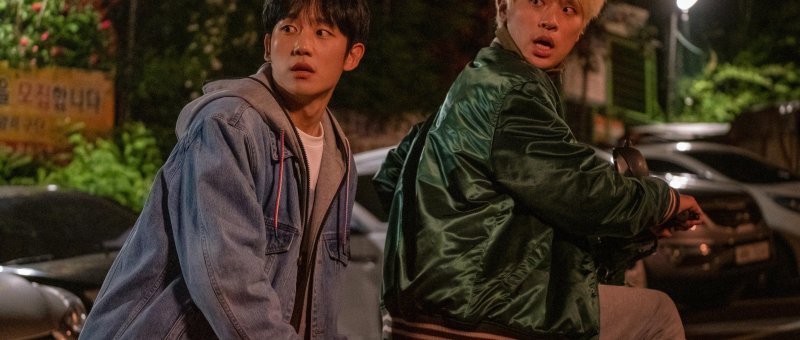
“Don’t invent stories, just go with what you see” the hero of Jung Jin-young’s Me and Me (사라진 시간, Salajin Shigan) is advised, only to find himself investigating his own disappearance. The first directorial feature from the veteran actor, Me and Me throws its existentially displaced hero into another world but then asks him who it is he thinks he is if everyone is telling him he’s someone else. “It’s painful” he finally commiserates unexpectedly encountering a similarly troubled soul, living with another self inside him and consumed by a sense of loss for another life that perhaps never was or will be.

After a brief black and white title sequence featuring policeman Hyung-gu (Cho Jin-woong), Jung opens with a lengthy prologue following primary school teacher Soo-hyuk (Bae Soo-bin) who has just moved to a small, rural town along with his wife Yi-young (Cha Soo-yeon) who has, we discover, a secret. When the locals find out that at night she’s quite literally someone else, repeatedly possessed by departed spirits, they decide that she must be dangerous and install bars and a gate inside her home to cage her inside. Soo-hyuk refuses to leave her, asking to be locked inside too, and the sense of partial acceptance, that the townspeople know of her condition and have decided to meet her halfway, seems to free his wife. Having long been resistant, Yi-young warms to the idea of having a child, that perhaps they could have a happy family life despite her unusual affliction. 

Unfortunately, however, the house is consumed by fire and as they were locked inside, village foreman Hae-gyun (Jung Hae-Kyun) who has the key apparently out of town in a love hotel with the wife of the local police chief, Soo-hyuk and his wife are unable to escape. Hyung-gu finally arrives to investigate the crime, only to be bamboozled by the anxious locals who trick him into drinking some of their homemade pine needle liquor after which he wakes up to discover that he’s not a policeman after all, but the local schoolteacher and he’s very late for work. 

Obviously confused, Hyung-gu tries to figure out what’s going on. He misses his wife and his sons, but is distressed to discover that none of his neighbours recognise him, someone else lives in “his” apartment, and according to the school his kids don’t exist. Half-wondering if the pine needle liquor did something funny to his brain or even perhaps catapulted him into an alternate reality, Hyung-gu is forced to wonder if his previous life was a dream he’s now physically but not mentally woken up from, which means his wife, children, colleagues, and position in society as a policeman were not “real” no matter how real they might seem to him. The dilemma he now faces is in whether he should carry on trying to “wake up” from his new life to return to his “true” reality, or accept his new identity in the knowledge that this too could also be a “dream” from which he may someday wake and will eventually grieve. 

“When it’s time a new season comes” Hae-gyun reminds him, “and when it’s time it goes away”. Freeing himself, having the bars removed from his new home, Hyung-gu begins to accept his new reality, after all what choice does he have? But still he reflects on his own interior life, necessarily a secret from those around him and filled with private sorrow. Even little Jin-kyu, Hae-gyun’s dreamy son, had insisted on his right to privacy over his messy school locker which itself contains a secret pain for another life that he perhaps cannot share with those closest to him. “Everyone’s got a sickness” Hyung-gu sympathises with his new friend as she begins to tell him hers which is, ironically, another echo of his “dream” but also points towards the secret lives that most people have or more to the point never have, carrying something inside them never to be shared. “Don’t worry,” he reassures her, “you’re not the only one”. Each person is a hundred different people, or maybe just one in a hundred different parts. Perhaps in the end it is other people who will tell you who you are and you’ll eventually agree with them because it’s less painful than resisting, leaving that other life as a half-remembered dream. Elliptical and contemplative, Jung’s existential detective story refuses clear interpretation but is in its own way filled with a gentle humanity and a sense of acceptance for all of life’s transitory sorrows as well as its comfort and joy. 


Me and Me streamed as part of this year’s online edition of Fantasia International Film Festival.

Original trailer (no subtitles)