The Great Battle (안시성, Kim Kwang-sik, 2018)

Great Battle posterThe moral of every Korean war film, period and modern, is that Koreans are resilient and resourceful. They can accomplish great things when they work together in a spirit of collective good. Kim Kwang-sik’s The Great Battle (안시성, Ansi-seong), is no different in this regard for being set in 645AD when Goguryeo is threatened by the warlike Tang Dynasty which has its eyes firmly set on conquest.

Meanwhile, there is drama in the court. The king has been usurped and most of the lords have fallen behind General Yeon (Yu Oh-seong) who promises to vanquish the Tang, but to do so he intends to cede territory and abandon his fellow citizens (mostly peasants) to the mercy of Emperor Li (Park Sung-woong). However, the governor of Ansi understandably objects and has alone chosen to stand against Yeon in support of his people, vowing to fend off the Tang all alone by defending his garrison to the last man if necessary. To facilitate his plan, Yeon orders Ansi native and earnest cadet Samul (Nam Joo-hyuk), still grieving for the loss of his brother in a previous battle, to infiltrate the recalcitrant fortress and assassinate Yang (Jo In-sung) so that the territory can be razed.

Having been inducted into the city and despite his fierce loyalty to Yeon, Samul begins to question his mission the longer he is exposed to Yang’s unfettered nobility. A lord but also a man of the people, Yang thinks of himself as a leader among equals. He is not the type to observe from the safety of the rear lines, but proudly wades into battle alongside his men, unafraid to risk his life in their service. In fact, Yang is also perfectly aware of Samul’s true intentions, but is prepared to let him bide his time as a son of Ansi in the hope that he can be turned. Orders, as it turns out, are less important than doing the right thing, and Yang, out of sense of loyalty to the old king refuses to throw his lot in with Yeon, especially if it means he is supposed to throw away the lives of his subjects without a fight.

This necessarily means that the people of Ansi are left with the prospect of fending off the entire might of the Chinese Empire with only a garrison army and limited resources. Of course, they succeed – largely through ingenious stratagems and a sense of solidarity. The Tang, not to be outdone, decide to build an entire artificial mountain in order to fight on Yang’s level, bedding in for months of siege as they do so, but there is no crisis Yang cannot overcome and Emperor Li is about to discover he has seriously underestimated the capabilities of Goguryeo warriors when their backs are to the wall.

Not for nothing does Li eventually mutter that it’s bad idea to go about invading Korea and instruct his successors never to bother trying. Sacrifices, however, must be made – many of them romantic. Yang’s dynamic sister (Kim Seol-hyun), a talented bow woman, has long been in love with the head of his cavalry (Uhm Tae-goo) but Yang tells them to delay their happiness until after the war while he himself nurses a broken heart over a young woman who ended up becoming a shamaness (Jung Eun-chae) and later falls into the hands of the Tang. Not everyone is as convinced by Yang’s boldness as he is, and even some of his own people decide perhaps it would be better to simply acquiesce in the face of such overwhelming odds, but Yang remains firm. He will protect his fortress and the people inside it from anything which threatens their peaceful way of life.

In contrast to Yeon’s authoritarian austerity, Yang’s leadership is one built on nobility and fellow feeling. He hopes to create a freer, more equal society in which the king exists to serve the people rather than the other way around. The battle for Ansi is then an oddly revolutionary affair as they fend off imperialists on either side, bowing neither to Li nor to Yeon in steadfastly defending their principles against overwhelming odds. Kwang achieves truly epic scale through the modern wonder of CGI and ensures his battles are suitably gruelling while keeping the patriotism in check as Yang makes himself stand for something bigger than nationhood or ancient nobility in solidarity as he leads from the front but gives the power back to his people.


The Great Battle was screened as part of the 2019 Udine Far East Film Festival.

International trailer (English subtitles)

Door Lock (도어락, Lee Kwon, 2018)

Door lock poster 1Behind your own front door, you’re supposed to feel safe but the modern city conspires to ensure no space, not even the most private, can feel completely free from danger. A Korean spin on the Spanish film Sleep Tight, Lee Kwon’s Door Lock (도어락) shifts the focus from perpetrator to victim as it explores each of the many and various ways women are made to feel vulnerable in the still male dominated Korean society.

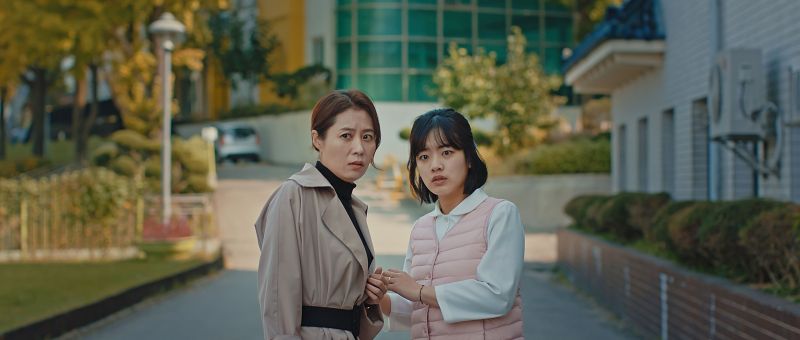
Kyung-min (Gong Hyo-jin) has more than one reason to feel anxious. A bank clerk on a temporary contract, she’s forever worrying that she’ll soon be out of a job though there is a rumour of permanent employment on the horizon if only she can keep up her efficiency at work. That might be difficult, however, because Kyung-min has not been feeling well. She wakes up groggy and goes through much of the day feeling a little out of things, though perhaps that’s just the city air. Another cause for concern is that she keeps having the eerie feeling that someone’s been in her apartment when she wasn’t there. Fully aware of all the dangers (and perhaps having had problems before), Kyung-min is concerned enough by signs of someone fiddling with her door lock to change the code every few days, and is panicked by someone furiously rattling the door late at night trying to get in.

Like any sensible person, Kyung-min calls the police but they remain unsympathetic to her fears. Knowing she’s called several times before, they write her off as nervous and hysterical or perhaps an attention seeking lonely single woman. Kyung-min, unfortunately for her, has a habit of attracting the attentions of unpleasant men like a customer at the bank, Ki-jung (Jo Bok-rae), who refuses to take no for an answer after inappropriately asking her out during a consultation about his bank account. In an angry rant, Ki-jung accuses her of leading him on, that she flirted with him on purpose to encourage him to take out additional accounting services. Kyung-min feels herself shrinking in wondering if there’s some truth in what he said, instantly blaming herself, as she recalls that the appraisals are in the offing and she wasn’t making enough sales. Her colleague told her to smile more, so maybe she did and this is what comes of it. The situation is only diffused when Kyung-min’s smartly dressed boss steps forward to place a hand on her shoulder and call security on her behalf.

The boss, nice and well mannered as he is, is perhaps another sort of problem as he too has additional interest in Kyung-min that could end up becoming an awkward workplace issue. As it turns out he becomes another sort of crisis entirely which gets Kyung-min mixed up with the police who now assume she herself is the creepy stalker with only the evidence of her previous calls to back up her claim of persistent harassment. The police remain unsympathetic, intent on pinning something on Kyung-min to close the case quickly while dismissing her fears as either lies, psychosis, or hysterical paranoia. Eventually Kyung-min and her best friend Hyo-joo (Kim Ye-won) decide they’re on their own and they’ll have to proactively protect themselves because, it seems, no one else is going to.

The men who routinely approach Kyung-min do so with frustrated entitlement. They disregard her right to refuse for no particular reason and assume it to be a slight, insisting that Kyung-min is a snob who has only rejected them for their working class occupations and relative lack of financial status. Wounded male pride is once again the most dangerous force of them all. In a precarious economic situation of her own, Kyung-min is left feeling as if nowhere is safe in an intensely chauvinistic, rabidly capitalist, and conservative society which encourages her to find fault with herself rather than the world in which she lives that forces her to feel that way. Inequalities, both economic and sexual, are driving violent crime but when it comes down to it the powers that be are relatively uninterested in the fears of single women or in doing more to create a fairer, safer society. They would rather hang fake security cameras that make you feel safe than deal with illicit spy-cams or listen seriously to women’s concerns when they say they feel afraid. A tense and harrowing thriller, Door Lock is also a frighteningly relatable exploration of the fears of modern urban living.


Door Lock was screened as part of the 2019 Udine Far East Film Festival.

International trailer (English subtitles)

Innocent Witness (증인, Lee Han, 2019)

Innocent Witness poster“Are you a good person?” asks the confused girl at the centre of Lee Han’s Innocent Witness (증인, Jeungin). Her question comes after a series of surprising revelations which have left her questioning all of her relationships and the nature of the world itself, yet it’s one that’s largely impossible to answer. Formerly idealistic lawyer Soon-ho (Jung Woo-sung) thinks he’s been given the kind of case he can get behind, but as usual nothing is quite as it seems and if he wants to get to the truth of the matter he’ll have to learn to think differently.

Soon-ho began his career as an activist lawyer working for NGOs, but now he’s “sold out” to join an elite law firm with a dodgy reputation in order to pay back debts his father unwisely guaranteed for a friend. Because of his precarious financial status, Soon-ho has put-off marriage and relationships, despite his father’s nagging, believing them to be out of his reach and is conflicted by his recent career choices which leave him on the opposite side from old friends. When he’s handed a pro-bono case to defend a housekeeper (Yum Hye-ran) accused of murdering her employer he thinks it’s the best of both worlds. All the evidence points to suicide, but there’s a witness testimony which suggests otherwise. Seeing as the testimony is from a 15-year-old autistic girl who witnessed the crime from across the street, Soon-ho feels he can easily have it discounted.

Like many in the film, Soon-ho doesn’t know much about autism and writes Ji-woo (Kim Hyang-gi) off as “mentally impaired”, believing that will be enough for the jury to disregard her testimony especially as it so strongly conflicts with the rest of the evidence. Refused permission to meet with her in person, Soon-ho begins trying to befriend Ji-woo on the way home from school and eventually comes to realise that she is highly intelligent if easily distracted and uneasy in social situations. What he discovers is not that Ji-woo is unable to communicate with the world, but that the world is unwilling to communicate with her. If he wants to bond, he will need to learn her language and earn her trust.

Trust maybe he hard to come by as he witnesses the minor aggressions she goes through every day like the horrible boys at school who taunt her mercilessly and the supposed friend bullying her in secret, not to mention a world full of barking dogs and ringing telephones. When he finally puts her on the stand, his own co-defence chair reads out passages from a book about autism which describe it as a “mental disability” before painting her as a deranged idiot who probably half-imagined what she saw from things she’d seen on television – an act which has profound ethical implications in eroding Ji-woo’s sense of self. Ji-woo told Soon-ho she wanted to be a lawyer because lawyers are good people who help those in need, but Soon-ho has to ask himself whose interest destroying a 15-year-old girl on the stand is really serving.

The law firm Soon-ho joined does seem to be a sleazy one. Despite hiring him to improve their image, Soon-ho’s boss tells him that his new clients won’t be comfortable with him unless he gets himself a little “dirty” while inviting him to awkward parties with call girls in high class hotels. Meanwhile, Soon-ho remains conflicted – especially after potentially losing a 20-year friendship through saying the wrong thing to a still idealistic lawyer and passing it off as an attempt to be “realistic”. Realism is one thing, but Soon-ho seems to have given up and decided if you can’t beat them join them. His dad, sensing his son’s unease, writes him an impassioned letter in which he tells him that the most important thing in life is to be happy with yourself, everything else you can figure out later.

Realising his mistake, Soon-ho begins to see the light. Through bonding with Ji-woo, he learns that seeing things differently can be advantage and that society should have a place for everyone where they shouldn’t have to worry about being themselves. Tellingly, no one ever bothered to ask Ji-woo about the most important part of evidence in her testimony because they all had too many prejudices about her delivery. Only Soon-ho, having bothered to get to know her, was able see what it was that she wasn’t saying. The film perhaps missteps when it has Ji-woo come to the conclusion that she can’t be a lawyer because of her autism, but otherwise presents a sensitive portrayal of a society trying to be better in accommodating difference and doing it with empathetic positivity while subtly waving a finger at the self-serving forces of conservative corruption.


Innocent Witness was screened as part of the 2019 Udine Far East Film Festival.

International trailer (English subtitles)

The Odd Family: Zombie On Sale (기묘한 가족, Lee Min-jae, 2019)

The odd family poster 2It takes a special sort of mind to see a zombie and think “business opportunity”, but that’s exactly the kind of out of the box thinking you’ll find with the the Parks – a very strange family living way out in the countryside. Korean cinema is having a bit of a zombie moment, but they’ve rarely been as amusing as this. The debut feature from Lee Min-jae, The Odd Family: Zombie On Sale (기묘한 가족, Gimyohan Gajok) is a surreal satire of changing family values, the stereotypical strangeness of farm country, and the growing suspicion of underhanded practices in the pharmaceuticals trade.

As an opening voiceover informs us, there have long been rumours of diabetes drug manufacturer Human Bio kidnapping innocent members of the public to test their NoInsulin wonder drug. One day, a young man (Jung Ga-ram) manages to crawl out of a hole in the ground and shuffles zombie-like into the nearest village where he encounters the patriarch of the Park family (Park In-hwan), eventually biting him on the head. The Parks once owned the local petrol station, but with things as they are the business is all dried up and so now they mainly make their living by engineering road traffic “accidents” they can later charge exorbitant fees to fix seeing as they are literally the only place in town. When Mr. Park realises that after getting bitten on the head he’s regained his youthful virility, the family become less afraid of the fairly docile lad and decide to take him in partly with the idea of pimping him out to the other sad old men in town who long for nothing more than to regain their glory days.

Only middle son and recently returned failed salaryman Min-gul (Kim Nam-gil) wonders if there’s something not quite right about the new member of their family, showing the others a brief clip from Train to Busan to get his point across, but even he is temporarily won over by the money making opportunity. Tellingly, no one really stops to wonder if it’s OK to lock a young man up in the shed and make him do your bidding for no remuneration, but then where really is the harm if biting people on the arm makes them feel better about themselves? The harm is he’s a zombie which will eventually become quite a big problem.

Meanwhile, the strange Park family continues to fray at the seams. Youngest daughter Hae-gul (Lee Soo-kyung), an ethereal girl in dungarees with a fondness for pet rabbits she can’t seem to keep alive much longer than a month, takes to the zombie instantly. Naming him “Jong-bi” in a pun on his being a zombie and in keeping with the naming system for her rabbits, she installs him on a mattress right next to the hutch and proceeds to feed him cabbages for which he develops an intense fondness (along with ketchup which is Hae-gul’s personal favourite). Meanwhile oldest son Joon-gul (Jung Jae-young) does his best to keep out of the way while his heavily pregnant wife Nam-joo (Uhm Ji-won) keeps an iron grip on the family finances and the house in general. When everyone starts to wonder if dad is going to turn zombie, filial piety goes out the window but all Mr. Park wants is to jet off to Hawaii and leave the family to deal with the mess on their own.

With the patriarch out of the picture and a new little brother to play with (plus quite a lot of money to buy a new start), the Parks begin to repair themselves and make the “family” anew but the cracks are still there as Min-gul turns out to be more like his dad than he seemed in always looking for the best angle and opportunity to make some money no matter the risks or ethical concerns. Nevertheless, the zombie apocalypse does its best to remind them what’s really important as they find themselves having to work together to come up with a plan for survival. Riffing strongly off wholesome ‘50s Americana and kitschy pop-culture cues, The Odd Family is a charmingly surreal ode to family values in which one family’s money grubbing entrepreneurship almost leads to the end of the world only to paradoxically become its salvation as they prove that there’s nothing so potent as togetherness in combatting existential threat.


The Odd Family: Zombie On Sale was screened as part of the 2019 Udine Far East Film Festival.

International trailer (English subtitles)

Birthday (생일, Lee Jong-un, 2019)

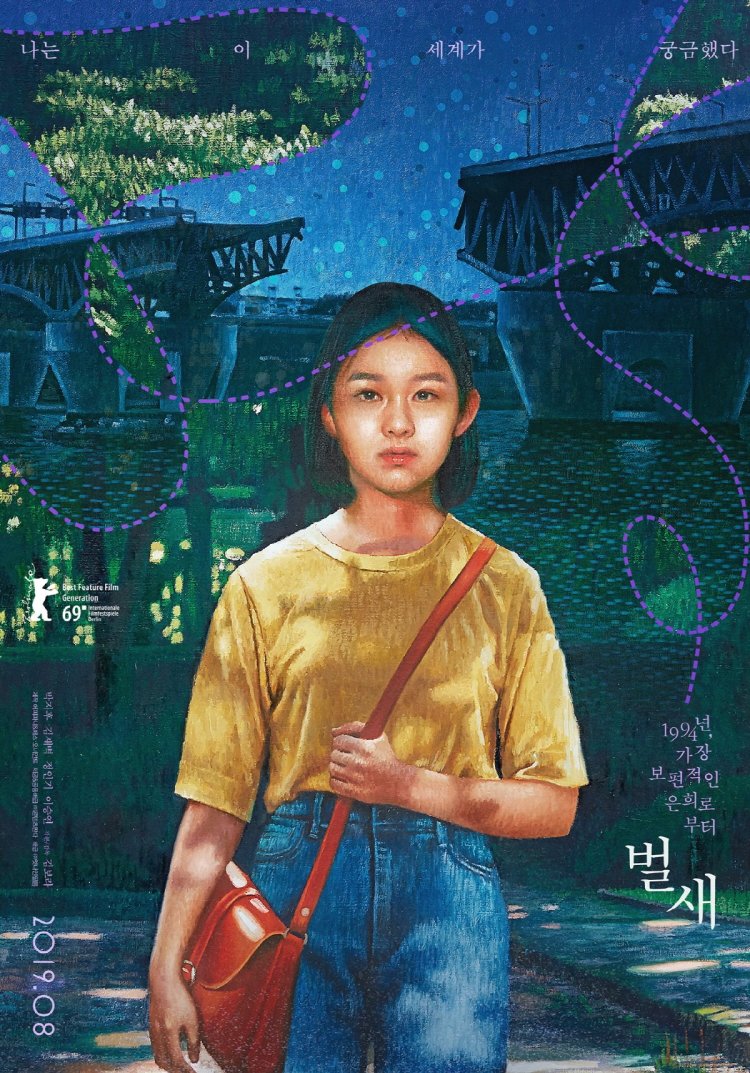
Birthday posterOn 16th April 2014, a ferry carrying mostly teenagers on a school trip sank taking 304 passengers and crew down with it. The Sewol Ferry tragedy was to have profound ramifications, asking a series of questions as to corporate and political corruption in the society which had permitted such an accident to happen and then failed to mount an effective rescue. In the five years since, many films have probed the causes and implications of the tragedy, but Lee Jong-un’s Birthday (생일, Saengil) is not so much interested in the incident itself as in the nature of grief and all the more so when it takes place across a national canvas.

Lee picks up three years after the sinking as husband and father Jung-il (Sol Kyung-gu) returns to Korea after five years of working away in Vietnam. So disconnected is he from his family, that he was only vaguely aware that they had moved and has trouble finding the new apartment. When he gets there, his wife Soon-nam (Jeon Do-yeon) pretends to be out, sending Jung-il back to stay with his understanding sister who tries to fill him in on the various reasons he might not be welcome at his own door.

The loss of the couple’s oldest child, Su-ho (Yoon Chan-young), in the ferry tragedy is only gradually revealed though it’s clear that there is an absence in the family home. Soon-nam has kept Su-ho’s room exactly as he left it – school uniform hanging on the wardrobe door, unfinished school work on the desk, post-its seemingly everywhere. Meanwhile, youngest daughter Ye-sol (Kim Bo-min) is often left to her own devices while Soon-nam buries herself in work and shuts out everything that reminds her that her son is never coming home.

While some of the other parents have formed a tightly bonded community forged by shared grief and anger, Soon-nam wants no part of it. Invited to a gathering after bumping into other parents at the memorial site, she lasts barely a few minutes before accusing them of turning their suffering into an excuse for frivolity. It’s not as if she could ever forget what happened to her son, but when the ferry tragedy is on every street corner, on the radio, on the news, it becomes impossible to ignore. Soon-nam wants her grief to herself. Her son and her loss. She isn’t interested in sharing him with anyone else, be that an increasingly angry society or her little girl who is now terrified of water and worried about her mum.

Jung-il, burdened with guilt for having abandoned his family, tries to address his grief in a more positive sense by re-embracing his role as a father to Ye-sol who was so small when he left that she doesn’t really remember him. Though Lee is not particularly interested in the political ramifications of the tragedy, she does subtly point the finger at the effects of economic pressure on the ordinary family which have seen Jung-il exile himself abroad and Soon-nam working so hard just to keep her head above water that Ye-sol is caught in the middle. Jung-il wasn’t there when his family needed him, and there’s precious little he can do for them now other than try to be around.

The other members of the support group have been holding birthday parties for some of the kids who passed away, turning the solemnity of a memorial service into a celebration of life. Soon-nam is against the idea – she would rather save the day for herself in private commemoration, but Jung-il is broadly in favour. Probed, he has to admit he barely knew the young man his son was becoming and that this party might be the only way to reconnect with the boy he lost. A passport that will never be stamped, colleges that will never be applied to, weddings that will never take place – the finality of the loss is crippling, but in holding the birthday parties those left behind are able to find a kind of acceptance in shared remembrance and a confirmation that their loved ones were loved and will continue to be loved even in their absence. A sensitive yet uncompromising exploration of the sometimes forgotten personal dimension to a national tragedy, Birthday is a beautifully complex evocation of learning to live with loss and a strangely uplifting, cathartic experience.


Birthday was screened as the opening night gala of the 2019 Udine Far East Film Festival.

Original trailer (English subtitles)

Winter’s Night (겨울밤에, Jang Woo-jin, 2018)

Winter's Night poster“You clumsy man, don’t lose her again!” a busybody landlady instructs the hero of Jang Woo-jin’s Winter’s Night (겨울밤에, gyeoulbam-e), neatly cutting to the heart of the matter with just a few well directed words. In Korean cinema, the is past always painfully present but our pair of dejected lovers haunt themselves with echoes of lost love and pangs of regret mixed with a hollow fondness for the days of youth. The fire has long since died, but the memory of its warmth refuses to fade.

We first meet Eun-ju (Seo Young-hwa) and her husband Heung-ju (Yang Heung-joo) in a taxi driven by an extremely chatty man of about the same age which is to say around 50. Heung-ju, sitting uncomfortably in the front while his wife sits alone in the back, explains that he first came to this area 30 years previously when he did his military service. Bored and perhaps irritated by her husband’s conversation, Eun-ju realises she has lost her phone and insists they turn back to go and look for it at the temple they have just left. Heung-ju is annoyed but makes a show of humouring his wife while she refuses to leave, forcing the couple to stay overnight in a small inn that he later realises is the same place they stayed 30 years ago on the very night that they first became a couple.

As is pointed out to Eun-ju several times, losing a phone is an inconvenient and expensive mistake but perhaps not the end of the world. Nevertheless she continues to hunt for it as if it were her very soul, eventually explaining to a confused monk that it is all she has and even if she were to buy another one it wouldn’t be the same. Eun-ju’s attachment to her phone may hint at a deeper level of loss which has contributed to the distance she feels between herself and her husband, but the search is as much metaphorical as it is literal, sending both husband and wife out on a quest to look for themselves amid the icy caves and snow covered bridges.

An early attempt to check CCTV yields a pregnant image of a young soldier (Woo Ji-hyun) and a girl (Lee Sang-hee) sitting across from each other before they disappear and are replaced by the older Eun-ju and Heung-ju. Eun-ju later re-encounters the younger couple several times, becoming witness to their impossibly innocent romance which is such an eerie reminder of her own that one wonders if they are simply ghosts of her far off past. The soldier, an earnest, shy poet tries and fails to stop the girl walking onto the same thin ice that Eun-ju will later brave not quite so successfully, while the girl gleefully tells him that she has recently broken up with her boyfriend. They are young and filled with hope for the future, while Eun-ju is older and filled only with disappointment. Still, there is something in her that loves these young not-yet-lovers for all the goodness that is in them as she takes the younger woman, and her younger self, in her arms and warmly reassures her that the future is not so bleak as it might one day seem.

Meanwhile, a petulant Heung-ju has gone out looking for his “lost” wife but been distracted by the shadow of another woman (Kim Sun-young) wandering across the back of his mind. He drinks too much and ends up singing sad solo karaoke before discovering an old flame sleeping on a hidden sofa. She doesn’t immediately recognise Heung-ju and so runs away in fear, but later joins him for a drink over which she flirts raucously but probably not seriously while he moons over his wife, mourns an old friend, and recalls their student days lived against the fiery backdrop of the democracy movement.

Together again the couple attempt to talk through their mutual heartaches, expressing a mild resentment at the other’s unhappiness and their own inability to repair it, but seem incapable of bridging the widening gulf which has emerged between them. Trapped in an endless loop of romantic melancholy, the pair fail to escape the wintery temple where, it seems, a part of them will always remain, haunting the desolate landscape with the absence of recently felt warmth. A beautifully pitched exploration of middle-aged malaise and the gradual disillusionment of living, Winter’s Night tempers its vision of unanswerable longing with quiet hope as its two dejected lovers hold fast to the desire to begin again no matter how futile it may turn out to be.


Winter’s Night was screened as the first teaser for the 2019 London Korean Film Festival. Tickets for the next teaser screening, Default at Regent Street Cinema on 20th May, are already on sale.

Original trailer (English subtitles)

The Witch: Part 1. The Subversion (마녀, Park Hoon-jung, 2018)

There’s probably something quite profound to be said about the folkloric tradition of the foundling child and untold destiny, that exiled nobility can salvage the best qualities of the place they escaped in a rural paradise before returning to make their restoration. Superheroes do indeed seem to find frequent refuge in the wholesome plains of farm country where the salt of the Earth raises them into upstanding people with the right kind of values to couple with their “unnatural” powers to enable them to “save the world” in ways both literal and metaphorical. Perhaps there is darkness in that idea too, that we need such people to save us rather learning to save ourselves or that we secretly long to believe in our latent specialness and hidden destiny, and of course those rightful values may also be inherently conservative in that they aim to preserve a particular vision of “goodness”. In any case, the heroine of Park Hoon-jung’s The Witch: Part. 1. The Subversion (마녀, Manyeo) is not so much out to save the world as engaged in a war to save herself and that particular vision of goodness she’s been gifted by good people (or, then again, perhaps not).

Park begins with blood as a little girl manages to escape a massacre at some kind of shady facility before passing out in front of an idyllic farmstead where she is eventually taken in and nursed back to health by a kindly older couple, the Koos. 10 years pass. The little girl is now the teenage Koo Ja-yoon (Kim Da-mi) and an archetypal farm girl albeit an extraordinarily pretty one with straight A grades and fierce love for her now struggling adoptive parents. With the farming industry in crisis and Mrs. Koo suffering with Alzheimer’s, Ja-yoon finds herself bullied into taking part in a televised singing competition by her boisterous best friend Myung-hee (Go Min-si), which is not the best idea if you’re trying to hide from shady government forces. Sure enough, the past begins to resurface leaving Ja-yoon with a series of difficult choices.

Like many other recent Korean action dramas with female leads, The Witch steps back into the familiar territory of “good” mothers and “bad” while uncomfortably asking if childhood corruption can be cured by love alone. Living as Ja-yoon, the unnamed little girl has been reset. Given a “normal” childhood, she seems to have become a “normal”, perhaps ideal, young woman who does well at school, is confident and self possessed, and dearly loves her family and friends. When we finally meet the woman responsible for her corruption, Professor Baek (Jo Min-su) who presents herself again as a maternal figure and Ja-yoon’s “creator”, we learn that Ja-yoon is a creature born of icy violence, raised without compassion or love for no greater purpose than destruction.

Mr. Koo (Choi Jung-woo), perhaps understanding Ja-yoon a little better than she understands herself, often tells her not to go out “like that” which seems like slightly archaic paternal sexism but is also an attempt to soften those “male” instincts towards violence which are so much a part of her early life and of her essential nature. Frightened by her “unnatural” cruelty, Mr. Koo wasn’t sure if they should keep Ja-yoon with them but his wife (Oh Mi-hee) disagreed, believing they could heal her by raising her in love. The choice Ja-yoon faces is whether to embrace her persona as Koo Ja-yoon as raised by her adoptive parents, or the psychopathic killer which lies underneath.

Park leaves the dilemma very much in the air with “Ja-yoon” a vacillating cypher whose internal divisions seem to become ever more stark as she begins to wall off her various personas. “The Witch”, as the title implies, may itself have its misogynistic overtones in pointing directly at Ja-yoon’s transgressive femininity, both innocent farm girl and unstoppable killing machine, but as the subtitle hints Ja-yoon is also attempting to subvert herself in service of a greater mission which (for the moment) remains unclear. Park opens the door to a sequel in which subversion might not be the aim, sending Ja-yoon further along the path of dark self exploration which promises still more violence and mayhem before her bloody work is done.


The Witch: Part 1. The Subversion is released on Digital HD in the UK on April 22nd courtesy of Signature Entertainment.

UK release trailer (English subtitles)

Memories of a Dead End (막다른 골목의 추억, Choi Hyun-young, 2018)

Memories of a dead end posterSometimes dead ends show up unexpectedly, as the heroine of Memories of a Dead End (막다른 골목의 추억, Makdareun Kolmokui Chueok) points out while ruminating on the abrupt revelation which has just rendered all her life’s hopes and dreams null and void. Adapted from the Banana Yoshimoto novella, Choi Hyun-young’s debut feature follows a young-ish Korean woman to Japan where she finds out something she probably knew already but didn’t quite want to accept and, thanks to the kindness of strangers, begins to see a way forward where she feared there might not be one.

Yumi (Sooyoung), a woman in her late 20s from a wealthy family, has been engaged to Tae-gyu (Ahn Bo-hyun) for the last few years but he has been working away in Japan supposedly preparing for their shared future. Unable to get in touch with him and worried he seems to be dodging her calls and refusing to return her texts, Yumi decides (against the advice of her steadfast sister) to go to Japan and confront him. Sadly, her family were right when they advised her that perhaps she should just forget her fiancé and move on. Tae-gyu has met someone else. On arriving at his apartment, Yumi is greeted by another woman who knows exactly who she is and why she’s come, but takes no pleasure in explaining that she and Tae-gyu plan to marry and were hoping Yumi would take the hint given a little more time.

Confused and heartbroken, Yumi checks into a hotel for the night planning to return to Korea the following day but a nagging phone call from her “I told you so / plenty of fish in the sea” mother (tipped off by her loudmouth sister) makes her think perhaps that’s not the best idea. Wandering around, she winds up at the End Point hotel and cafe where she cocoons herself away to think things through, trying to reconcile herself to the “dead end” she has just arrived at in the life path she had carved out for herself.

“End Point” is not perhaps an auspicious name for a hotel. A hotel is, after all, a deliberately transient space and not in itself a destination. The reason it might accidentally become one is perhaps on Yumi’s mind when she decides to check in, but despite the name the cafe is a warm, welcoming, and accepting place perfectly primed to offer the kind of gentle support someone like Yumi might need in order to rediscover themselves in the midst of intense confusion.

This is largely due to the cafe’s owner, Nishiyama (Shunsuke Tanaka), who, we later discover, was himself neglected as a child and almost adopted by the community who collectively took him under their wing and sheltered him from his childhood trauma. This same community still frequents the End Point cafe and is keen to extend the same helping hand to those in need, becoming a point of refuge for a series of lonely souls many of them travellers from abroad. Despite her desire for isolation, Yumi is finally tempted out of her room by the gentle attentions of the cafe’s regulars who make sure to include her in all their gatherings, reawakening something of her faith in humanity in the process.

In introducing her to the cafe, Nishiyama remarks that though it is literally in a dead end, many begin their forward journeys from here. A dead end does not, after all, have to be an “end point” but can become an opportunity to turn around and start again without necessarily having to go back the way you came. Yumi likes the End Point so much she briefly considers staying, but it would, in a sense, be a betrayal of its spirit. Nishiyama, becoming a staunch friend and ally, finally comes to the conclusion that her former fiancé was not a bad man even if he was a weak one, but that in all the time he knew her he never discovered the “treasure” of her heart as he seems to have done despite knowing her only a few days. Yumi takes this new knowledge with her on her forward journey as she abandons her much commented on practicality for warmhearted connection as a path towards fulfilment, learning to treasure her “dead end” memories not as time wasted but as a pleasant diversion which led her to exactly the place she needed to be in order to discover the treasure in her own heart and the willingness to find it in others.


Memories of a Dead End screens as part of the eighth season of Chicago’s Asian Pop-Up Cinema on April 17, 7pm, at AMC River East 21.

International trailer (English subtitles)

The Pension (더 펜션, Ryu Jang-ha, Yang Jong-hyun, Yoon Chang-mo, Jung Heo Deok-jae, 2018)

The Pension poster“We’re all lonely beings” the proprietor of a small mountain lodge advances hoping to comfort a distressed guest. The temporary denizens of The Pension (더 펜션), a four part omnibus set in a charmingly old-fashioned forest hideaway, are indeed mostly lonely beings making use of this liminal place to process the taboo away from the prying eyes of civilisation, embracing the savagery of the natural world as they cast off conventional morality to pursue their illicit desires be they vengeful, violent, protective or loving.

We begin with darkness as our first pair of guests, a man, Choo-ho (Jo Han-chul), and his wife Mi-kyung (Park Hyo-joo), seem to be all too interested in the family next door. Eventually we discover that the couple have come with ill intentions and revenge on their mind, though the man they’re after doesn’t seem so bad to begin with – he asks them to dinner with his wife and son who seem happy, but the atmosphere grows tenser as he begins to drink and a darkness creeps in. Before long Mi-kyung has set her mind on poetic justice, leaving the other couple’s young son in peril while Choo-ho struggles with his desire to stop his wife making a terrible mistake while not wanting to upset her.

Unhappy families continue to be theme with the second pair of guests – a married couple hoping to rekindle their listless romance in the peace and tranquillity of the remote mountain lodge. While the arrival is pleasant enough, perhaps too much so as the husband (Park Hyuk-kwon) puts on a show of making the effort, despair creeps in when he realises he’d made sure to bring his wife’s (Lee Young-jin) favourite coffee but forgotten the grinder. He wants her all to himself, but she just wants to go home and worries about their young daughter staying with a mother-in-law she doesn’t seem to like very much. Eventually the couple decide they need some time apart and she ends up meeting someone else (Kim Tae-hoon) in the woods to whom she recounts all the loneliness and isolation she experiences in her married life, seemingly trapped by conventionality but unconvinced that anything would be very different if she left.

The hotel owner (Jo Jae-yoon) might agree with her – a lonely soul he is too, though it appears he opened this hotel for just that reason, burying himself away from his heartache by coming to live alone with the transient presence of strangers and peaceful isolation of the woods. His mother, however, is not convinced and is constantly nagging him to get married – in fact, she’s set up a meeting for the following day meaning he’ll have to close the shop. That might be a problem, because he gets a surprise guest in the middle of the night, a distressed woman (Shin So-yul) intent on staying in a very particular room. Finding it odd, he can hardly turn her away with nowhere else to go but a TV programme on the causes of suicide (loneliness, the decline of the traditional family, economic pressures etc) convinces him he ought to check on her. Assuming she is merely lovelorn (as is he), he tries to comfort her with platitudes but pulls away from her emotional need only to find himself eventually wounded only in a much more physical way as he idly fantasises what it might have been like if he’d gone back to her room and been a bit more sympathetic.

Our proprietor is notably absent in the final segment, replaced by a much younger man (Lee Yi-kyung) with much more urgent desires. Despite being there to do a job, the boy has brought his girlfriend whom he alienates by failing to explain a mysterious text from another girl all while making eyes at the attractive young woman (Hwang Sun-hee) staying next door who claims to be “from the future”. When another guest turns up and starts making a fuss about a missing engagement ring she supposedly left behind, everything becomes much more complicated than it seems but one thing is certain – there is precious little love to be found in this hotel where everyone has come to embrace the side of themselves the city does not allow to breathe.

Much more cynical and obviously comedic than the preceding three tales, the final chapter perhaps bears out the message that it’s not so much rest and relaxation people have come to The Pension for, but “privacy” or to be more exact “discretion”. Some came for love, others for lack of it, but all of them are looking for something they are unlikely to find here though the first couple could perhaps have found it if only they had stuck together. Nevertheless, hotels are transient places for a reason – take what you need from your stay and leave the rest behind.


The Pension screens as part of the eighth season of Chicago’s Asian Pop-Up Cinema on April 16, 7pm, at AMC River East 21.

International trailer (English subtitles)

A Single Rider (싱글라이더, Lee Zoo-young, 2017)

Single Rider posterAs the old adage goes, you don’t know what you’ve got ’til it’s gone. Having sacrificed it all for “conventional success”, an emotionally repressed salaryman loses everything when his company is exposed for its immoral business practices only to discover that he’s left it all too late and those he meant to keep close have begun to draw away from him. Quietly contemplative, Lee Zoo-young’s debut A Single Rider (싱글라이더) is a gentle meditation on the way life can get away from you. Brainwashed into the salaryman dream, our financier “hero” allows himself to be swept along by the confidence of his superiors, taking friends and family with him, when he knows deep down that if something seems too good to be true, that’s because it is. Sometimes, it really is just too late, and then sometimes, tragically, it isn’t but you miss your chance anyway.

Kang Jae-hoon (Lee Byung-hun) is a broker at a securities company. Buttoned-down and near silent, he cuts a geeky if reassuringly dull figure but there’s a storm brewing under his calm exterior. His top rated company is in a lot of trouble. They’ve all been breaking the rules, and now they’re about to go under taking the savings of hundreds of ordinary, innocent people with them – people that Kang personally assured that their money would be safe because the company would never declare bankruptcy. Not quite as morally bankrupt as he seems, Kang has been depressed for some time and is on some pretty heavy duty medication. Sending what looks eerily like a suicide note to his bosses, Kang appears to rethink. He sent his wife and son to Australia to “upgrade” them through adding English functionality but hasn’t exactly paid much attention to them since. Searching for the address of the house where they live on Google Maps, he spots them captured together outside and makes an abrupt decision. Before he knows it, he’s bought a plane ticket for Sydney, heading straight to the airport with no luggage and leaving his phone behind so his boss can’t bother him.

Far from a joyful reunion, however, what Kang finds is a visual guide to all the ways he has been erased from the lives of his family. Though Kang’s wife Soo-jin (Gong Hyo-jin) and son Jin-woo (Yang Yoo-jin) have been in Australia for a couple of years, Kang does not appear to have visited before and has trouble finding the house. When he eventually locates it, he knocks at the door and gets no answer, only to find his wife laughing and joking with a neighbour – apparently the father of a friend of Jin-woo’s. Unable to bring himself to knock again, or even to find a call box and explain, Kang begins “haunting” his family, creeping around the house while they’re out, spotting pictures of the Australian neighbour, Chris (Jack Campbell), everywhere and none at all of him.

Watching them from afar, Kang is forced to reevaluate his choices. The smallest details trigger memories of his life in Korea – a flapping kitchen door left ajar when his wife had insisted on a deadlock in Seoul because she felt so afraid with him gone so often even though they lived in an upscale high-rise with an electronic entry pad, the violin she gave up for him but now apparently has taken back up, the papers on the kitchen table which imply she wants to stay rather than go “home”. Like many men who work away from their families, Kang forgot that time was passing for them too and assumed they would be waiting for him like toys put away in a box, sleeping until he’s ready to wake them. Now he wonders how close she really is to Chris, if she wants to stay for him, if she’s grown away from her husband, or simply enjoys the wide open breeziness of their spacious Sydney home with its comparatively relaxed rhythms and friendly laid-back way of life. The only thing he can be sure of is that he doesn’t seem to belong in this house anymore and this is very much not his world.

Then again perhaps Australia is not all good – Kang hates the way everyone seems to call his wife “Sue” to make her foreign name easier to remember. He runs into something similar with a young girl he noticed at the station whose name is “Ji-na” (Ahn So-hee) but everyone in Australia seems to call “Gina”. Ji-na’s problems turn out to be bigger than a misremembered name. Despite his obvious familiarity with financial scams, Kang does nothing when he overhears Ji-na on the phone to some dodgy people who want to do a “personal currency exchange”. He doesn’t see them convince her to get in their car, but does catch sight of her coming back the same way later limping and bloody having been deprived of the money she’d carefully been saving up while her labour was exploited as she lingered on after her visa had expired (which is why she can’t go to the police, as her abusers are well aware). Ji-na, like him, made a series of bad decisions though perhaps for “better” reasons and has paid dearly for her mistakes.

To be fair, Kang thought he was making his decisions for good reasons – he convinced himself he was working to provide for his family, even sending them away “for their benefit”, but now he regrets it. He regrets everything – his workaholic lifestyle, the way he allowed his principles to be compromised in pursuit of “success”, the way he bought his swanky Seoul apartment and a middle-class suburban home in Australia through defrauding people who trusted him, and the way he lost his family through a misplaced desire to “better” them rather than simply allowing them to be happy. He thinks it’s too late, that he’s ruined himself and that his family have already moved on. He may be wrong, but he won’t find out by snooping around the house and following Chris about all day to figure out how close he is to his wife.

Kang’s tragedy is that he made a series of bad decisions in which the last was the worst and the most sad. Lee Byung-hun invests Kang with an air of utter defeat, as if the air itself were crushing him while he remains unable to reconcile himself to his new circumstances or bring himself to make contact with his family. A final revelation (or perhaps confirmation of an obvious fact) makes plain why exactly it is that he seems to wander invisibly through the city streets, using public transport but miraculously disappearing from one place to appear in another as if in a trance. Kang’s only option is, perhaps, to learn to be glad that his wife and son finally have a chance to be happy even if it’s without him and be grateful that his son has found another man who’d run until his feet were sore just to keep him safe. Sometimes it really is just too late, but, tragically, sometimes you accept defeat too early when what you thought you’d lost is already on its way back to you only you’ve already given up, not on it, but on yourself.


Original trailer (no subtitles)