Tazza: The Song of Beelzebub (타짜: 벨제붑의 노래, Choi Kook-hee, 2026)

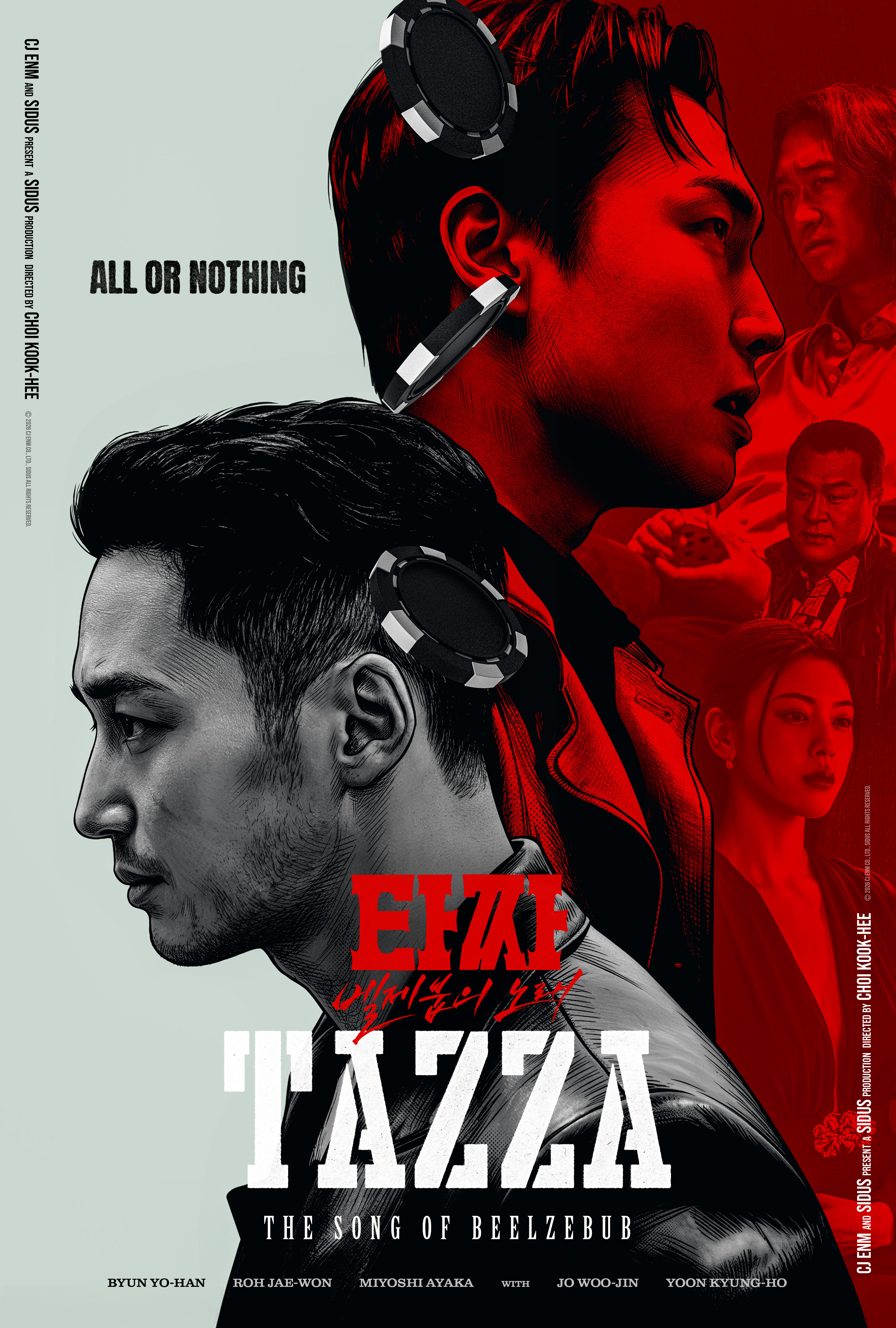
“Luck” is a funny thing. You might think you’ve come out on top, only to realise that perhaps you haven’t been quite so lucky after all. Choi Kook-hee’s Tazza: The Song of Beelzebub (타짜: 벨제붑의 노래, Tazza: Beelzebubui Norae) is the latest instalment in the thematic series that began with 2006 manwha adaptation Tazza: The High Rollers, though otherwise a stand-alone tale. This time around, gambling is more a means of revenge as two men, who are in effect two sides of the same coin, find their roles constantly reversed.

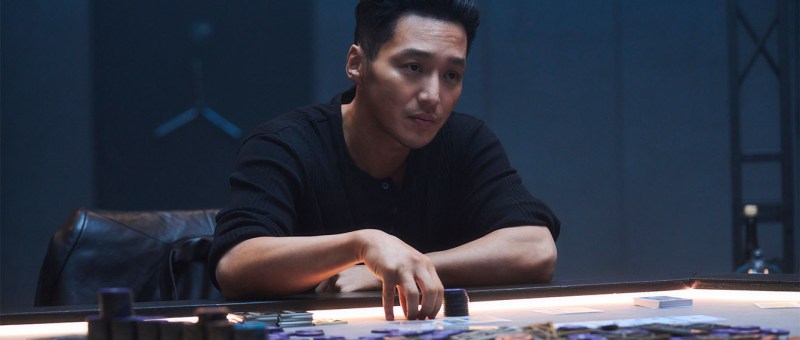
Indeed ParkTae (Roh Jae-Won) characterises them as Beelzebub and Lucifer vying for control with Beelzebub the apparent loser. He and JangTae (Byun Yo-Han), who each share the name Taeyoung, met in high school and became friends, though ParkTae came to resent JangTae for apparently having charmed luck in which everything seemed to go his way and he always came out on top. The boys develop a shared love of gambling, but ParkTae is experiencing a difficult home life in which his mother is a religious fanatic who seems to have an alcohol problem. She regularly beats him with a crucifix and refers to him as the antichrist, which perhaps fuels his characterisation of himself as Lucifer. JangTae, meanwhile, has lost both his parents but shares a warm familial environment with his older sister Tae-hee (Lim Se-Mi). They later take in ParkTae too, but he soon develops unreturned feelings for Tae-hee that see him almost long to push JangTae out of the next.

Filled with self-loathing, ParkTae sees himself as unlucky and feels hard done by, resentful of the ease with which JangTae seems to live his life and what he sees as the way JangTae’s “luck” often ends up making him look foolish. ParkTae seems to be the more the rational side of the crypto casino business the guys start together while JangTae is readier to make decisions on gut instinct. JangTae later asks him if it wasn’t ParkTae who was the lucky one all along. He was smart, talented, and had people who loved him, though he was too consumed with resentment  to notice. While the guileless JangTae only offered him support and friendship, ParkTae dreamed of ruling alone and taking the entire prize for himself. 

That might be why he sets up a honeytrap with the help of Korean American lobbyist Linda Park (Stephanie Lee) who’s supposedly agreed to give them the lowdown on how to clear the way for a physical casino in Vietnam. JangTae has to bet his life on the toss of coin where both sides spell death only to find himself lucky once again when it somehow ends up standing on edge. Taken in by a former card sharp hiding out in Vietnam (Jo Woo-Jin), JangTae is co-opted into another battle for revenge in which a young woman (Ayaka Miyoshi) plots against the man who shot her father (Tsuyoshi Ihara) who foolishly bet his life after getting too into a poker game. The lure of odds seems to drive men mad with each begging for just one more game to turn it all around. It is, however, a battle of wits as much as anything else in which the pair engage in a kind of psychological warfare over the gaming table.

As JangTae says, maybe ParkTae was always luckier than he was. He just isn’t able to see why a particular outcome benefits him while fixating on winning or being a conventional success. ParkTae wants to knock JangTae off his perch to satisfy his ego, but cannot shake his inferiority complex and attributes all his shortcomings to his unluckiness rather than accept the consequences of his own actions. As JangTae’s mentor taught him, the luckiest man at the table is the one who knows when to walk away. That’s something that seems to have eluded ParkTae who doesn’t know when to quit when he’s ahead. Rather, he fixates on his chosen income unable to see clear where real “luck” lies. In any case, the dynamics between the two men are continually in shift as they find themselves quite literally staking their lives on the cards while wondering whether either of them has the courage to see things through. In the end, the real winner maybe the one who knows when it’s time to call it quits, rather than allow themselves to be manipulated by the constant allure of the odds.


Tazza: The Song of Beelzebub opens in US cinemas October 16 courtesy of Well Go USA.

Trailer (English subtitles)
The Great Battle (안시성, Kim Kwang-sik, 2018)

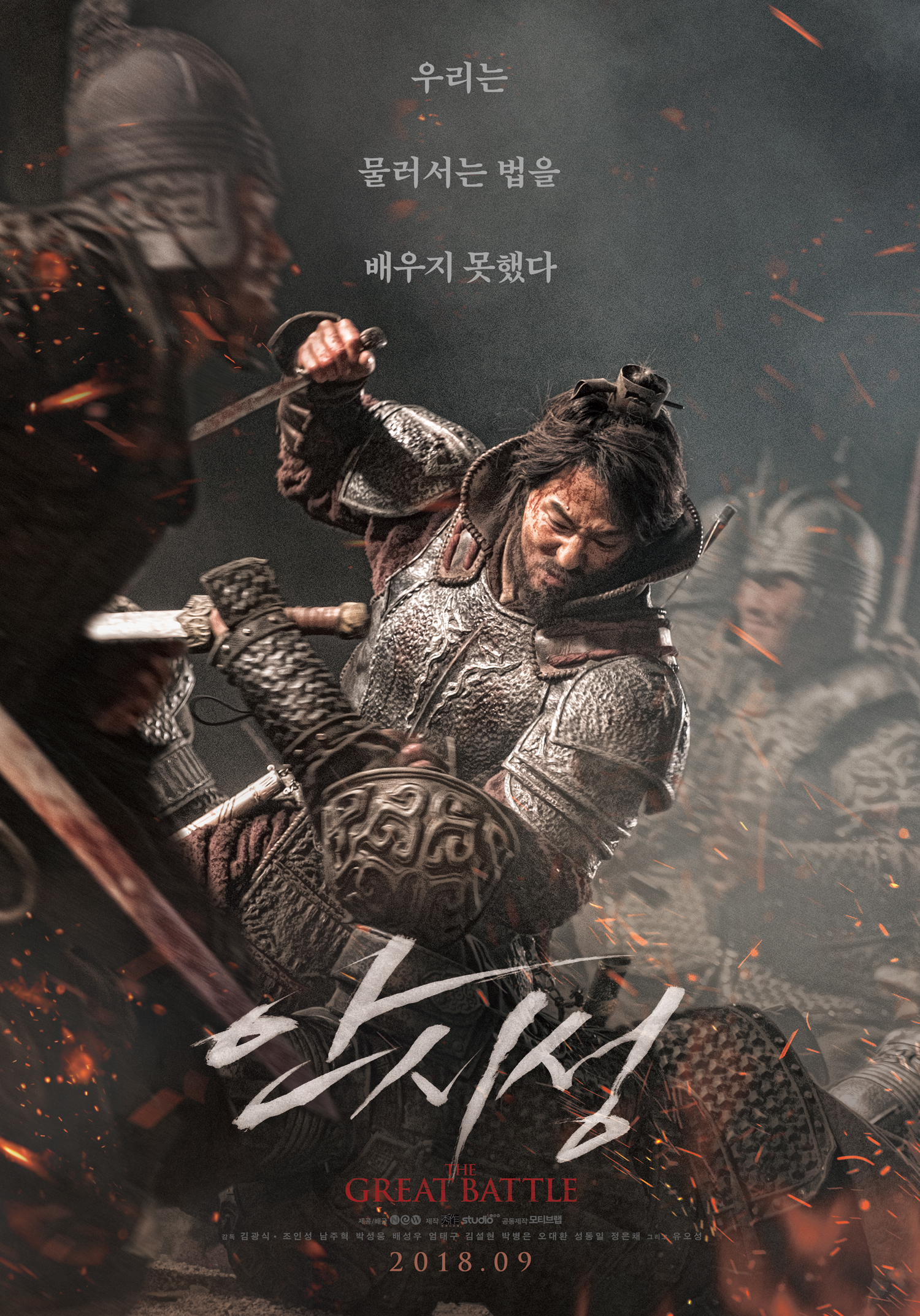
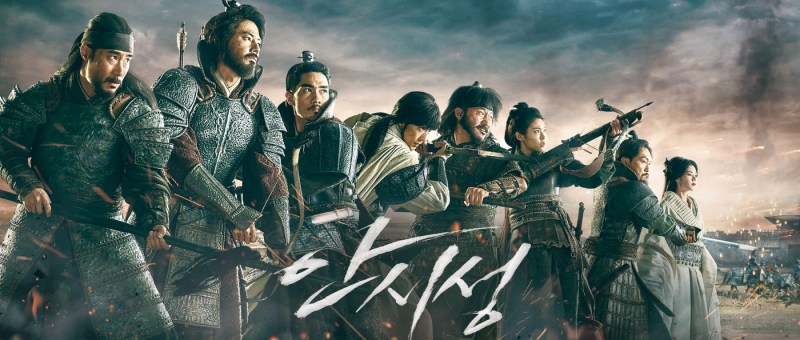
Great Battle posterThe moral of every Korean war film, period and modern, is that Koreans are resilient and resourceful. They can accomplish great things when they work together in a spirit of collective good. Kim Kwang-sik’s The Great Battle (안시성, Ansi-seong), is no different in this regard for being set in 645AD when Goguryeo is threatened by the warlike Tang Dynasty which has its eyes firmly set on conquest.

Meanwhile, there is drama in the court. The king has been usurped and most of the lords have fallen behind General Yeon (Yu Oh-seong) who promises to vanquish the Tang, but to do so he intends to cede territory and abandon his fellow citizens (mostly peasants) to the mercy of Emperor Li (Park Sung-woong). However, the governor of Ansi understandably objects and has alone chosen to stand against Yeon in support of his people, vowing to fend off the Tang all alone by defending his garrison to the last man if necessary. To facilitate his plan, Yeon orders Ansi native and earnest cadet Samul (Nam Joo-hyuk), still grieving for the loss of his brother in a previous battle, to infiltrate the recalcitrant fortress and assassinate Yang (Jo In-sung) so that the territory can be razed.

Having been inducted into the city and despite his fierce loyalty to Yeon, Samul begins to question his mission the longer he is exposed to Yang’s unfettered nobility. A lord but also a man of the people, Yang thinks of himself as a leader among equals. He is not the type to observe from the safety of the rear lines, but proudly wades into battle alongside his men, unafraid to risk his life in their service. In fact, Yang is also perfectly aware of Samul’s true intentions, but is prepared to let him bide his time as a son of Ansi in the hope that he can be turned. Orders, as it turns out, are less important than doing the right thing, and Yang, out of sense of loyalty to the old king refuses to throw his lot in with Yeon, especially if it means he is supposed to throw away the lives of his subjects without a fight.

This necessarily means that the people of Ansi are left with the prospect of fending off the entire might of the Chinese Empire with only a garrison army and limited resources. Of course, they succeed – largely through ingenious stratagems and a sense of solidarity. The Tang, not to be outdone, decide to build an entire artificial mountain in order to fight on Yang’s level, bedding in for months of siege as they do so, but there is no crisis Yang cannot overcome and Emperor Li is about to discover he has seriously underestimated the capabilities of Goguryeo warriors when their backs are to the wall.

Not for nothing does Li eventually mutter that it’s bad idea to go about invading Korea and instruct his successors never to bother trying. Sacrifices, however, must be made – many of them romantic. Yang’s dynamic sister (Kim Seol-hyun), a talented bow woman, has long been in love with the head of his cavalry (Uhm Tae-goo) but Yang tells them to delay their happiness until after the war while he himself nurses a broken heart over a young woman who ended up becoming a shamaness (Jung Eun-chae) and later falls into the hands of the Tang. Not everyone is as convinced by Yang’s boldness as he is, and even some of his own people decide perhaps it would be better to simply acquiesce in the face of such overwhelming odds, but Yang remains firm. He will protect his fortress and the people inside it from anything which threatens their peaceful way of life.

In contrast to Yeon’s authoritarian austerity, Yang’s leadership is one built on nobility and fellow feeling. He hopes to create a freer, more equal society in which the king exists to serve the people rather than the other way around. The battle for Ansi is then an oddly revolutionary affair as they fend off imperialists on either side, bowing neither to Li nor to Yeon in steadfastly defending their principles against overwhelming odds. Kwang achieves truly epic scale through the modern wonder of CGI and ensures his battles are suitably gruelling while keeping the patriotism in check as Yang makes himself stand for something bigger than nationhood or ancient nobility in solidarity as he leads from the front but gives the power back to his people.


The Great Battle was screened as part of the 2019 Udine Far East Film Festival.

International trailer (English subtitles)