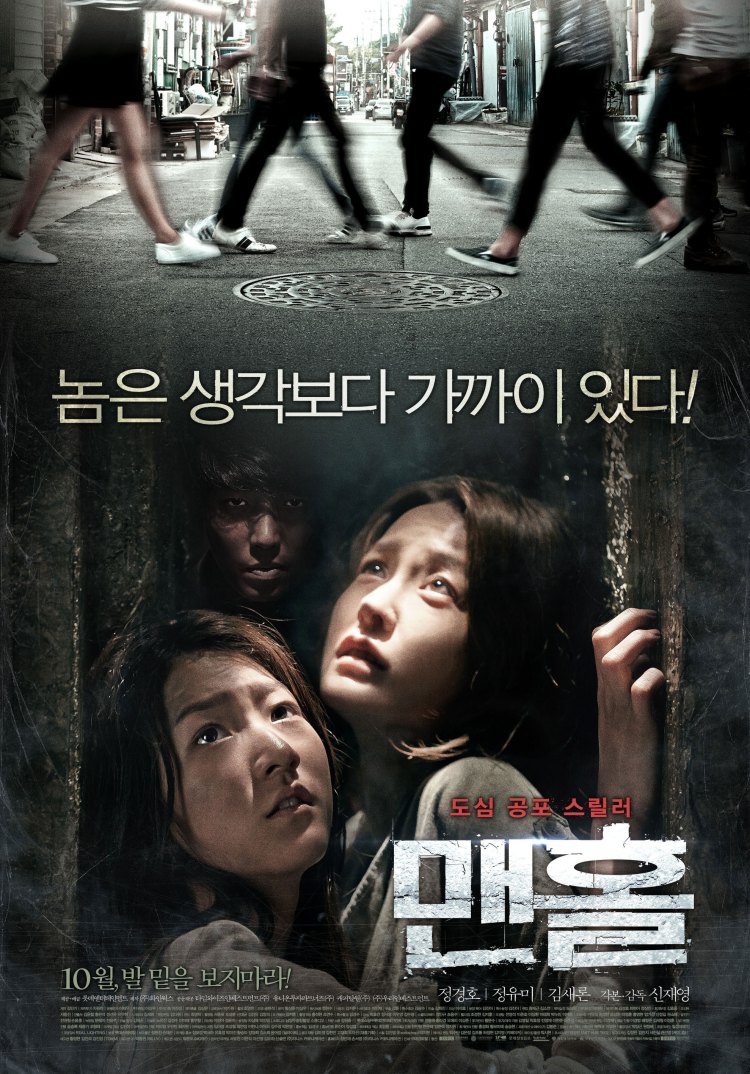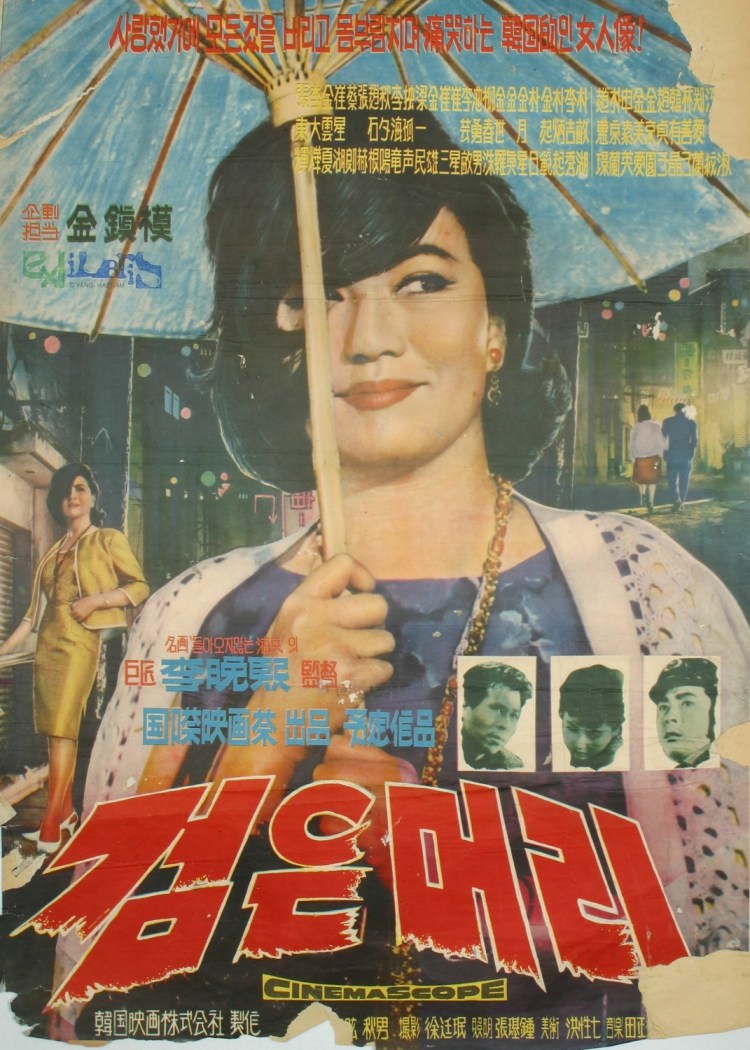
Memories of Murder (살인의 추억, Bong Joon-ho, 2003)

memories_of_murderThe Korea of the mid-1980s was a society in flux though you might not know it looking at the sleepy small town about to be rocked by the country’s very first publicised spate of serial killings. Between 1986 and 1991, at least ten women ranging in age from schoolgirls to grandmothers were murdered while the killer seemingly got away with his crimes, either dying, fleeing or perhaps getting arrested on other charges explaining the abrupt end to his crime spree. Bong Joon-ho’s fictionalised take on the case, Memories of Murder (살인의 추억, Salinui Chueok), is not so much interested in the killer’s identity, but wants to ask a few hard questions about why the crimes took place and why they were never solved.

In October of 1986, Inspector Park (Song Kang-ho) rides a junk cart out to a paddy field where a farmer has found the decomposing body of a woman blocking a drainage ditch at the edge of his land. Park quickly confirms that it is, in fact, the body of a murdered woman and tries to look unphased while a strange little boy distracted from his bug catching neatly echoes everything he says, playing policeman while the other children run roughshod over the crime scene trailing their butterfly nets behind them.

Needless to say Park and his bruiser partner, Cho (Kim Roe-ha), are ill equipped to handle a case of this magnitude, especially when it becomes clear that the murder is not an isolated episode. They are later joined by a more experienced officer from Seoul, Seo (Kim Sang-kyung), who is not used to country ways and finds it hard to adjust to their distinctly old fashioned and unscientific approach to law enforcement. Park, resentful at being saddled with a babysitter from the city and made to feel as if his small town skills aren’t good enough is determined to prove that he knows his stuff even as he begins to realise that perhaps policing really isn’t for him.

Park is the kind of policeman every small town has. Placing great faith in his detective’s instinct, Park is sure that he “just knows” who is naughty and who is nice. He asks suspects to look directly into his eyes so that he can assess whether they’re telling him the truth but it’s more of a party trick than anything else, looking into Park’s earnest gaze most suspects will crack. Early on Park’s boss gives him a test – two boys have been brought in and are patiently filling out forms. One caught the other in the middle of raping his sister, stopped him, and dragged him to the police station. Which one is the brother and which the rapist? Park feels sure he knows, and one could certainly make an educated guess based on the number and positioning of bruises on the suspects’ faces, but attempting to identify criminality based solely on perceived shiftiness or not liking the look of someone is crossing the line from professional instinct to ignorant prejudice.

The truth is that Park knows he’s no great shakes as a law enforcer. He was never meant to be – small town cops don’t generally do a lot of crime solving, they maintain order through the visible presence of authority. Thus he takes against city boy Seo because he instantly feels threatened by his urban sophistication and big city ways. Seo is perhaps not the best cop Seoul had to offer, but he is trained investigative techniques entirely alien to Park and Cho. The extent to which they’re out of their depth is obvious when they seem to know they’re supposed to secure the crime scene, but can’t, allowing valuable evidence to be carelessly destroyed.

Park’s investigative techniques involve making scrapbooks of shady local guys and browbeating suspects, eventually trying to railroad a young man with learning difficulties into confessing to the crime through a process of physical violence and mental attrition. Put out by Seo’s more concrete leads, Park’s only other contribution is to suggest they start looking for guys with no pubic hair which sees him waste more time hanging out in public baths and doing a lot of inappropriate staring. Wasting time is Park’s biggest crime though, amusingly enough, he and Seo end up in exactly the same place when Park consults a Shaman and Seo pursues a more rational line of enquiry lending credence to the idea that neither of them is really much better than the other.

What gets lost is that a woman, and then several more women, are dead and there is a man out there preying on wives, sisters, and mothers yet nothing much is being to protect them save reminding them to take care of themselves. Park wants the kudos of catching a killer but he barely thinks about the consequences of arresting the wrong man, it doesn’t seem to occur to him that the real killer would still be out there posing a threat to every woman in the town. Despite the fact that this is a small place where the victims are known to most people, there is little in the way of public grief or even sadness. The only sign of public feeling is in the small protest held outside the police station when a member of a local church is arrested.

The protest may be the key. In this strained era, Korea was reaching the end of its period under the control of a military dictatorship with the Olympics still a few years away and democracy the bright dream of brave radicals. Park and co. are the “friendly” face of the ruling regime, one of their secondary roles is doing the government’s dirty work. Hence when they really need extra manpower to chase a suspect they are denied it because everyone in the local area has been sent to suppress a protest in a nearby town. This is a scant few years after the Gwanju massacre, “suppression” means more than just standing around with riot shields designed to intimidate. Yes, there’s a crazed killer on the loose, but he is only a symptom and manifestation of a social order which has long since abandoned the idea of protecting its citizens in order to more effectively oppress them.

A woman can walk down a street in broad daylight and be terrified by a man trying to ask for directions because she has been taught to be afraid and knows the threat is real. A television news report on the trial of a policeman accused of violence and sexual assault reminds us why she can’t trust Park. Her government does not care about her. It could make more of an effort to solve these crimes, but it won’t, because the appearance of order is always preferential to its reality. The memories of murder run deep, they speak of all the stifled impulses of a life under a dictatorial regime. No one does anything because there is nothing to be done.

The identity of the killer is, in this sense, irrelevant – it is the society which is ultimately responsible for creating him and then for failing to put an end to his crimes. Park and Seo, eventually working together through a kind of cross pollination, think they’ve found their man but can’t prove it because Korea doesn’t have DNA testing facilities and they need to wait for results from an American lab. The evidence is circumstantial yet convincing, and one can’t be sure. The face of evil is “plain” and “ordinary”, much like your own. If you want to find the answer, start looking closer to home.


Original trailer (English subtitles)

A Quiet Dream (춘몽, Zhang Lu, 2016)

Review of Zhang Lu’s A Quiet Dream (춘몽, Chun-mong) first published by UK Anime Network.


A North Korean defector, a lonely orphan, and a nerdy landlord walk into a bar but also, perhaps, into a dream or several dreams in Zhang Lu’s latest chronicle of lovelorn city dwellers and their eccentric days of tiresome banality. Dreams, reality, and wish fulfilment mingle freely in this run down land of cheerful hopelessness populated by the displaced and permanently fugitive. Zhang’s film is as elusive as it is melancholy but offers its painful meditations with good humour and kindness even if it sees little possibility of escape.

Everyone is in love with pretty barmaid, Yeri (Han Ye-ri). Yeri bears this with good grace as she divides her attentions equally between her three suitors, nervous landlord Jong-bin (Yoon Jong-bin), petty criminal Ik-june (Yang Ik-june), and sorrowful North Korean defector Jung-bum (Park Jung-bum). Having come to Korea as a teenager after her mother died, Yeri tracked down her estranged father only for him to suffer a serious illness requiring round the clock care soon after. When she’s not serving drinks or looking after dad, Yeri spends her time with the three guys, drinking, visiting the Korean Film Archive, or chatting with the romantic teenage poetess (Lee Joo-young) so obviously, painfully, in love with her that Yeri is able to do little other than ignore it in an attempt to let her down gently.

Dreamscape aside, the problems each of the protagonists is facing is real enough. Yeri’s life yields its own sorrows as her heartfelt rendition of Li Bai’s famous ode to homesickness makes plain as do her frequent references to her mother and the quest for a mysterious crater bound lake. Having lost a mother and found a father she loses again when he is taken ill and she is left to care for a man she barely knew in the most intimate of ways. Her burden is a heavy one and her dreams filled with the idea of abandoning it as her father’s wheelchair careers emptily down the hill on which they live. A visit to a fortune teller proves far from reassuring when he informs her that her father will live a long life, but abruptly changes the subject when it comes to a more personal projection.

The three guys could almost be aspects of her own personality turning up to haunt her but each of Yeri’s men (as she later describes them) is battling his own kind of despair. Jung-bum’s is the most pronounced as he battles bipolar disorder and possible PTSD from North Korean labour camps. A refugee with no one to protect him, Jung-bum falls victim to workplace exploitation only be fired because his eyes are “too sad” and it’s bringing his boss down. Ik-june, kinder than anyone gives him credit for, thinks he can help him through his gangland godfather “Mr. Jellyfish” but Ik-june can’t decide how far he really wants to be in the criminal underworld and is in disgrace after laughing at a funeral. Jong-bim lays claim to control over everything in sight as he’s “the landlord” only it’s his father who actually owns the land and Jong-bim is arrested in an almost adolescent sense of powerlessness.

Nevertheless, their days are ones of gentle dreaming as the guys push their luck but refuse to compete for the love of Yeri, preferring to share the unique light she seems to bring into their darkened world. Dreams and reality flow into one another without thought or warning leaving each indistinct as Yeri dances drunkenly on a rooftop only to turn around and find her trio of suitors disappeared, though the surreal characters which people the city including an old lady who collects cans, bottles and cardboard to place outside an old wardrobe on the side of the road which she uses “to pray” might make “reality” a difficult thing to believe in in any case.

Purgatorial as their existence is, the melancholy collective seem to find a comforting symbiosis in their personal miseries. Filming through mirrors and opaque curtains Zhang rejects any idea of certainty or concrete realities. The Chinese characters which accompany the film’s original title effectively mean “short lived illusion”, lending a poetic air to the otherwise surreal goings on, painting this greyed out land as a temporary container for eternal woes. At the film’s end we either wake up or fall asleep, or perhaps merely exchange one dream for another but despite all of the heartache and desperation this strange world is one defined by warmth and basic human goodness.


A Quiet Dream was screened as part of a teaser programme for the London Korean Film Festival. The next screening in the series will be E Oni’s Missing at Picturehouse Central on April 10, 2017. Tickets on sale now directly from Picturehouse.

Original trailer (English subtitles)

Sorrow Even Up in Heaven (저 하늘에도 슬픔이, Kim Soo-yong, 1965)

It’s a sorry enough tale to hear that many silent classics no longer exist, regarded only as disposable entertainment and only latterly collected into archives and preserved as valuable film history, but in the case of South Korea even mid and late 20th century films are unavailable thanks to the country’s turbulent political history. Though often listed among the greats of 1960s Korean cinema, Sorrow Even Up in Heaven (저 하늘에도 슬픔이, Jeo Haneuledo Seulpeumi) was presumed lost until a Mandarin subtitled print was discovered in an archive in Taiwan. Now given a full restoration by the Korean Film Archive, Kim’s tale of societal indifference to childhood poverty has finally been returned to its rightful place in cinema history but, as Kim’s own attempt to remake the film 20 years later bears out, how much has really changed?

11 year old Yun-bok has been forced out of his home and into a makeshift hovel near the river thanks to his gambling addicted invalid father’s inability to look after his four now destitute children. Yun-bok likes to narrate his life as a kind of letter to his absent mother who seems to have abandoned the family for unclear reasons possibly related to her husband’s drinking and gambling problem. Attending school as normal in an attempt to work hard and get an education so he can take care of the family in an adult world, Yun-bok, along with his younger sister Sun-na, spends his free time selling sticks of gum in the streets to try and earn enough money to feed everyone before his father drinks and gambles it all away.

Despite his obviously difficult circumstances, Yun-bok remains steadfast in his desire to stick by his family and take care of his siblings. Berated by the teacher for arriving late, Yun-bok finds an ally in a schoolmate who just wants to help even though many of the others shun him because of his raggedy clothes and lice infested hair. Eventually a teacher notices Yun-bok’s distress and urges him to write his struggles in a diary – which he does much as he’d been narrating his days in his imagined conversations with his mother. Moved by Yun-bok’s heartending descriptions of his life on the starvation line, the teacher manages to get the diaries to the newspapers who begin publishing them as a public interest column but just when it looks as if things maybe looking up for the family, Yun-bok loses heart and hops a freight train to look for Sun-na who has run away from home after an argument.

Korea in the 1960s was a difficult place, still bearing the scars of both WWII and the Korean War not to mention the resultant political turmoil. Nevertheless, by 1965 things had begun to pick up as seen in the flip side to Yun-bok’s sorry state of affairs – the various bars and drinking establishments he manages to work his way into in order to sell a few more sticks of gum. These places are filled with the sound of popular music where affluent young couples dance The Twist and salarymen in dark suits cement their business relationships over drinks. For some, everything is going fine but a concerted effort is being made to unsee the kind of unpleasantness which lurks below growing economic prosperity as manifested by 11 year old boys somehow responsible for the maintenance of a family of five.

As one teacher puts it, you can’t break the mirror because you don’t like what you see. Though there are some willing to help Yun-bok (at least to an extent) including his school friend who comes from a well to do family only too glad to set some food aside for Yun-bok and his siblings, out in the real world he finds only other desperate people willing to stoop to theft and violence against a child for nothing more than a few pennies. Many of these episodes are distressing as Yun-bok has his shoeshine kit stolen by an older boy or is violently beaten by a grown man at the harbour but the most serious occurs in the city when he is accused of pickpocketing by some louts who kidnap him and strip him naked for otherwise unclear reasons.

Though Sorrow Even Up in Heaven has a broadly positive ending as Yun-bok’s circumstances seem set to improve thanks to his accidental fame, Kim is quick to point out that there are many Yun-boks out there who can’t all become media sensations. Like many child heroes of classic Korean cinema, Yun-bok remains morally good – the idea of theft occurs to him but he remembers his teacher saying that everything will work out as long as his heart is pure, and his only transgression lies in spending a few pennies on himself to get something to eat and thereby work harder for his family (and for this he pays a heavy price). Even so his circumstances are portrayed in a naturalistic rather than melodramatic fashion neatly undercutting the inherent sentimentality of the material. Though Kim’s approach is closer to neorealism in the early scenes, he mixes in touches of magical realism with the ghostly appearances of Yun-bok’s mother which, alongside impressive montage and superimposition sequences, lend Yun-bok’s story an elevated cinematic quality. Remade several times over the last forty years, Sorrow Even up in Heaven remains sadly timeless in its depiction of an earnest young boy who knows only kindness and honesty even while those around him remain wilfully indifferent or actively cruel in the face of his continued suffering.


Aimless Bullet (오발탄, AKA Obaltan, Yu Hyun-mok, 1961)

Post-war cinema took many forms. In Korea there was initial cause for celebration but, shortly after the end of the Japanese colonial era, Korea went back to war, with itself. While neighbouring countries and much of the world were engaged in rebuilding or reforming their societies, Korea found itself under the corrupt and authoritarian rule of Syngman Rhee who oversaw the traumatic conflict which is technically still ongoing if on an eternal hiatus. Yu Hyun-mok’s masterwork Aimless Bullet (오발탄, Obaltan) takes place eight years after the truce was signed, shortly after mass student demonstrations led to Rhee’s unseating which was followed by a short period of parliamentary democracy under Yun Posun ending with the military coup led by Park Chung-hee and a quarter century of military dictatorship. Of course, Yu could not know what would come but his vision is anything but hopeful. Aimless Bullets all, this is an entire nation left reeling with no signposts to guide the way and no possible destination to hope for. All there is here is tragedy, misery, and inevitable suffering with no possibility of respite.

Nominal head of the family Cheolho (Kim Jin-kyu) has an OK job as an accountant but still he can’t make ends meet and his small family consisting of his wife, two children, war hero younger brother Yeongho (Choi Moo-ryong), unmarried sister Myeongsuk (Seo Ae-ja), and senile mother with wartime PTSD lives in a makeshift hovel in the middle of a fetid slum. Yeongho may have distinguished himself on the battlefield, but now the war is over society can’t find a use for him and so he remains jobless and another drain on his brother’s resources. In many ways he was one of the lucky ones, returning from the war with physical and mental scars but no permanent impairments. Myeongsuk’s former fiancé was not so lucky and requires the use of crutches to get around leading him to reject the woman he loves in the belief that he will never be anything more than a burden to all around him.

Cheolho suffers with a persistent toothache which he refuses to get treatment for despite the constant urging from his colleagues because he cannot in good conscience consider spending the money on himself when he has so many people with so many different needs to take care of. His toothache is not just a toothache but a manifestation of the unending torment of life in this ruined city defined by despair, madness, and cruelty.

The film begins with broken glass – a motif which will be repeated throughout as the structural integrity of this makeshift environment is repeatedly tested and repeatedly fails. A group of former soldiers is drinking in a bar, each lamenting their sorry progress in the post-war world. Yeongho remarks that he feels like a broken bowl – something used up and ready for the scrap heap. The country he fought so hard to protect has no place for him now the fighting is done. After such a long time searching for work, Yeongho is finally offered a promising job by an old flame currently working as an actress in the fledgling film industry, but the part they’ve offered him is that of a war veteran with similar scarring to his own. The studio want realism and casually ask him to remove his shirt and show off the traces of bullet holes on his side which is a step too far for Yeongho who objects to his wartime service being “exploited” in such a mercenary way. Insulted and not wanting to dishonour the memories of his fallen comrades Yeongho storms out only to later reconsider and realise he may have been foolish to turn down such a promising opportunity despite his indignation.

It isn’t just bowls and glass which end up shattered but dreams too as love lies bleeding in a land of permanent despair. Yeongho seems like something of a ladies’ man but re-encountering a kindly nurse he met at the front he begins to feel another life is possible. This particular dream is complicated by the presence of a disturbed neighbour who has also fallen in love with the nurse and stops by late at night to read her poetry despite the fact that she has taken to waving a gun to scare him off.

Cheolho has committed himself to living honestly, even if it means his family suffers. Yeongho is beginning to wonder if his philosophy is worth suffering for, why should they have to keep living like this when they could abandon conventional morality and humanitarian concerns and become rich through immoral means. Myeongsuk, abandoned by the love of her life and unable to find work, has fallen into prostitution, another effect of the ongoing American military presence. Yeongho, having lost all hope, makes a drastic decision of his own but one which is destined to be as ill fated as each of his other dreams, hollow and unfulfillable as they are.

Experiencing a moment of selfish indulgence born of total despair, Cheolho finally gets his tooth seen to. Actually he asks the dentist to just pull all his teeth right now but medical ethics suggest that’s not a good idea. Ignoring the dentist’s advice, Cheolho roams the streets of the city before stopping into another dental clinic for more “treatment”. Dazed and bloody he steps into a taxi but confuses his drivers by changing his mind on destinations from the morgue to the hospital to the police station. The Aimless Bullet of the title, as the cabbie calls him, Cheolho can only echo the words of his senile mother, “let’s go”, even if he has no idea where. Earlier in the film another character has the same dilemma and frames it as a joke – ask a dying man where he’s going, he says, and he’ll tell you he doesn’t know. There is nowhere for Cheolho to go. His road is blocked, his meter running. Korea is directionless and lost, a desolate land of broken bowls and ruined hearts too tired to keep moving even if there were any destination available.

So relentlessly bleak, it’s little wonder that the film ran into censorship problems which eventually saw it pulled from cinema screens. Legend has it censors objected to the frequent refrains of “let’s go” from the bedridden mother which they interpreted as “let’s go to North Korea” as opposed to the “just let us die” which seems to be the much darker message implied by her later talk of sheep and green pastures. Everything here is broken, caged, ruined. There is no way out or possibility of salvation in this life or any other. Lasting only a few seconds, the film’s most shocking moment passes with little to no reaction as Yeongho, on the run from the police, dashes past the body of a woman who has hanged herself with her crying baby still tied to her back. Yeongho, and presumably the police chasing him, ignore both the body and the wailing of the child in their self obsessed propulsion forwards. A warning – but one which is heeded only too late.


Short scene from the film (English subtitles)

Aimless Bullet is available on English subtitled region free blu-ray courtesy of the Korean Film Archive but you can currently watch the HD restoration version of the film in its entirety legally and for free via the Korean Film Archive’s YouTube channel. (You may have to sign in and “confirm” you’re a grown up.)

Petty Romance (쩨쩨한 로맨스, Kim Jung-hoon, 2010)

petty-romanceKorea is quite good at rom-coms. Consequently they make quite a lot of them and as the standard is comparatively high you have to admire the versatility on offer. Korean romantic comedies are, however, also a little more conservative,  coy even, than those from outside of Asia which makes Petty Romance (쩨쩨한 로맨스,  Jjae Jjae Han Romaenseu) something of an exception in its desire to veer in a more risqué direction. He’s too introverted, she’s too aggressive – they need each other to take the edges off, it’s a familiar story but one that works quite well. Petty Romance does not attempt to bring anything new to the usual formula but does make the most of its leads’ well honed chemistry whilst keeping the melodrama to a minimum.

Manhwa artist Jeong Bae (Lee Sun-kyun) is not having much success with his latest project. In fact, his publishing house has been using his submitted drafts as scrap paper. He’s also got a problem in that a gallery owning friend of his late father has been the caretaker of a precious painting left to him in his father’s will but now wants to call in a loan or sell it to get the money back and so Jeong bae is in desperate need of fast cash.

Across town, Da-rim (Choi Kang-hee) has managed to bag a writing gig on her friend’s woman’s magazine but finds herself out of her depth working on a sex advice column when she has no direct experience of love or dating. Given the axe by her friend and living with her moody twin brother to whom she owes money, Da-rim is also in need of something to sink her teeth in to.

When a friend of Bae’s lets him know about a new competition with a $100,000 cash prize it sounds like just what he needs. The only snag is the competition is for “adult” manhwa which has not generally been Bae’s thing. Taking his editor’s advice, Bae decides to work with a writer but most of his interviewees are not exactly what he’s looking for. Da-rim with her “experience” in translation and publishing, as well as her unusual forthrightness concerning the subject matter very much fits the bill.

Kim doesn’t waste much time in getting the two together though their love/hate relationship is a definite slow boil as both Bae and Da-rim spend most of their partnership playing each other to try and get the upper hand. Bae’s trouble, according to his editor, is a talent for action but a failure with narrative – hence the need for a writer. Da-rim, by contrast, has altogether too much imagination coupled with the kind of arrogance which masks insecurity. Having blagged her way into the job, Da-rim spends most of her time ensuring that she’s in a superior position to Bae so that he will have to do most of the work while she enjoys freshly made coffee ordered to distract him from the fact that she has no idea what she’s doing.

Despite coming up with a promising storyline about a sex obsessed female assassin, Da-rim’s naivety is palpable in her attempts to come up with a suitably “adult” atmosphere. Disney-esque scenarios of handsome princes and desert islands, even if spiced up (in the most innocent of ways), isn’t quite striking the tone for the kind of prize winning raunchy manga that the pair are aiming for. Pushed further, Da-rim’s extrapolations from “research” are so unrealistic as to set Bae’s alarm bells ringing but offered with such insistence as to have him momentarily doubt himself.

Kim makes good use of manhwa as a visual device allowing him to include slightly more erotic content than usual in a Korean romantic comedy in an entirely “safe” way. Refreshingly he keeps the usual plot devices to a minimum though there is the “sibling mistaken for lover”, “mistimed job offer,” and “aggressive rival” to contend with, even if the major barriers are entirely centred around the personalities of the protagonists who are each fairly self involved in their own particular ways. Despite making good use of the chemistry generated by previous collaborators Lee Sun-kyun and Choi Kang-hee, Petty Romance lives up to its name in providing enough low-key drama to keep rom-com fans happy but never quite moves beyond the confines of its genre.


Available to stream on Mubi (UK) until 15th March 2017 courtesy of Terracotta Distribution.

Original trailer (English subtitles)

The Red Shoes (분홍신, Kim Yong-gyun, 2005)

the-red-shoesWalk a mile in a man’s shoes, they say, if you really want to understand him. If Kim Yong-gyun’s The Red Shoes (분홍신, Bunhongsin, 2005) is anything to go by, you’d better make sure you ask first and return them to their rightful owner afterwards without fear or covetousness. Loosely based on the classic Hans Christian Andersen tale this Korean take replaces dancing with murder and also mixes in elements from other popular Asian horror movies of the day, most notably Dark Water in its dank and supernaturally tinged dingy apartment setting.

Late one night at a deserted train station in Seoul, a high school girl complains that she’s been waiting ages for her friend to arrive before noticing a pair of hot pink high heels resting incongruously on the platform’s edge. Strangely drawn to them, the girl puts the shoes on only for her friend to turn up and immediately become infatuated with the unexpected footwear herself, suddenly exclaiming that she saw them first. The two fight as the first girl is almost pushed onto the tracks by her friend and all over a random pair of actually quite ugly funny coloured shoes. The eventual winner will come to regret their victory as that night in an otherwise empty train station a teenage girl will loose her footing to a pair of high heels which slowly fill with blood and then disappear leaving only a pair of severed legs behind them.

After this grim opening, we meet another little girl who has definite opinions about her footwear in the form of little Tae-soo who wanted to wear her red shoes to ballet but mum Sun-jae (Kim Hye-soo) says no and they’re already late. Letting Tae-soo learn independence by telling her to make her own way but surreptitiously following her backfires when Tae-soo somehow evades the net leading Sun-jae to head home earlier than expected and discover her husband pleasuring another woman who is also wearing a pair of Sun-jae’s favourite shoes, just to add insult to injury. Next thing you know Sun-jae and Tae-soo have moved into a horrible (but presumably cheap) apartment while they wait for Sun-jae’s new optometrist’s clinic to be finished. It’s all kind of OK, until Sun-jae notices a pair of hot pink high heels all alone on the subway and in obvious need of adoption by a pair of loving feet…

Anyone with a even a passing knowledge of the genre will have figured out the central twist well ahead of time though, strangely, it seems almost irrelevant. The shoes are cursed, but they’re cursed with jealous desire as they both contain the entirety of a scorned woman’s rage and humiliation, and a lingering want for that which has been lost. Spreading like a virus, the shoes pick a host and then target those whom it infects with the need to posses them. This tension manifests itself in odd ways as mother and daughter become rivals in the tug of war over who the rightful owner of the shoes should be. A precocious child, Tae-soo has soon tried on her mother’s new shoes and there after progressed to makeup and pretty dresses. Her mother, rather than using authority or reason to regain her lost treasure, fights with her daughter like a child eventually resorting to violence but with all the force of adulthood. The shoes corrupt even this most innocent and essential of relationships as Sun-jae continues to struggle with maternity as Tae-soo’s overwhelming need to possess the shoes and eclipse her mother’s femininity arrives well ahead of schedule.

Shoes aside, Sun-jae does not seem to be a well woman. Problems with her eyes do not quite explain the flashbacks she’s been experiencing to an apparently traumatic episode in the 1940s in which the shoes seem to feature. She’s also begun having strange waking dreams which involve blood, lots of blood – far more blood than any one body could realistically contain, and bad things happening to Tae-soo. Eventually Sun-jae figures out that the shoes were a bad idea and that there may be other stuff going on in her life that she isn’t exactly aware of, but the extent to which cursed footwear is influencing her behaviour may be open to debate given later (though extremely obvious) revelations.

It just goes to show that misplaced desire can leave you footless and fancy free. Kim does his best to make modern day Seoul a supernaturally scary place, overlaying eerily empty shots of intersections and train stations with gothic infused musical cues whilst having Sun-jae move into the kind of place which only someone trying to disappear would consider. Adding in touches of surrealism from the aesthetically beautiful fantasy sequences to snowing blood, Kim creates the atmosphere of fairy tale whilst allowing for an imbalance of perception in the possibly fracturing mind of his heroine. Despite the often impressive cinematography and strong leading performance from Kim Hye-soo, The Red Shoes never manages to transcend its lack of originality and frequent callbacks to similarly themed genre efforts but nevertheless offers its share of elegantly composed scares even if its internal integrity fails to convince.


Original trailer (English subtitles)

Homebound (歸路 / 귀로, Lee Man-hee, 1967)

homeboundLee Man-hee was one of the most prolific and high profile filmmakers of Korea’s golden age until his untimely death at the age of 43 in 1975. Like many directors of the era he had his fare share of struggles with the censorship regime enduring more than most when he was arrested for contravention of the code with his 1965 film Seven Female POWs and later decided to shelve an entire project in 1968’s A Day Off rather than tailor it to the concerns of the day. For these reasons it’s not difficult to read a political message into Lee’s 1967 tale of the (im)possibility of escape from a moribund marriage, Homebound (歸路 / 귀로, Gwiro). Like her country, Ji-yoen finds herself at a crossroads in the battle scarred post-war world which asks her to choose between a life of miserable servitude in fulfilment of her duty or one of accepting the painfulness of public disapproval in choosing to strike out for a happier future.

For fourteen years, Ji-yeon (Moon Jeong-suk) has been more caretaker than wife to her paralysed war hero husband, Dong-u (Kim Jin-gyu), who is so absorbed in his own sense of impotence that he has almost come to resent the extreme sacrifice he feels his wife has made for him. Dong-u is now a writer earning his living through serialised newspaper stories which at least affords Ji-yoen the opportunity of frequent trips into the city to deliver his manuscripts and meet with the publishers.

As it happens, the novel Dong-u is currently writing has a meta-dimension in that it’s extremely close to his own life. The ongoing story of a paralysed writer and his “saintly” wife who endures all hardships to stay at her husband’s side has proved popular with readers but now the editor is minded to warn Ji-yoen that some are becoming bored with the wife’s unrealistic goodness. They want something more human, he says, that sort of devotedness is nothing short of dull. Offended (the editor is almost talking about her real life, after all), Ji-yeon storms out leaving her bag behind. A young reporter, Gang Uk (Kim Jeong-cheol), runs out after her and becomes instantly smitten. This fateful meeting will lead to a number of subsequent ones but like the heroine of the story the jury is out on whether Ji-yeon should leave her embittered husband for a better life with a younger man, or accept the vow she made as his wife and stay by his side no matter how unhappy it will ultimately make her.

Ji-yeon’s life is undoubtedly a difficult one despite her frequent protestations that she’s happy with her husband and could never love anyone else. Dong-u is forever trapped in the past, dreaming of his military glory and unable to accept his new life to move forward into the increasingly modern world. An early scene sees Ji-yeon deliver a letter congratulating him on the fourteenth anniversary of his wartime service. Dong-u asks Ji-yeon to help him into his uniform after which he puts on a recording of a parade and attempts to stand and salute only to immediately fall over, leading to a brief flashback of the battlefield as Ji-yeon cowers to the side, only later lifting the needle to end the ordeal.

Trapped within his own history, Dong-u berates himself for his physical failings in being unable to be a “full” husband to his self sacrificing wife. The couple have separate bedrooms and share no particular intimacy, barely even friends let alone husband and wife. Dong-u’s bitterness is all encompassing, claiming to be in regret of a sacrifice he feels has been made on his behalf which only brings him additional guilt for destroying his wife’s future happiness as the childless wife of a paralysed man. This same internalised frustration leads him to treat Ji-yeon coldly in intense resentment for the way in which she forces him to feel all of these negative emotions.

Receiving affection only from the family dog, few would blame Ji-yeon if she did find herself a way out through romance. Even Dong-u’s sister who confronts Ji-yeon after catching sight of her with Gang Uk expresses sympathy for her situation, but urges the couple to divorce in order to prevent greater suffering further down the line. Ji-yeon is torn between her uncertain feelings for Gang Uk and her duty as a wife to her husband. At one point, Ji-yeon asks a question about who in the world is the most unfortunate only to answer that it is the person who can neither be respected or hated. She can’t bear the idea of being the woman who abandoned her disabled husband for a younger man, but neither can she endure untold years of respect as his devoted wife trapped in that lonely, claustrophobic house forever.

Torn between modernity in the form of her young lover, and tradition in the form of her embittered former soldier, Ji-yeon is in a similar dilemma to her nation as she looks out at a transformed Seoul standing ready to strike out onto the world stage only to return home to her dark and dingy Incheon cottage which almost seems to exist in the never was of fourteen years before. Her final decision is an ambiguous one, paralysed in indecision as she longs for forward movement but is terrified to accept it. Lee’s film is subtle and subversive, not least in its social messages which lean towards individual freedom and happiness over duty bound tradition even whilst suggesting that those two ideals may be impossible to achieve. Shot in a crisp black and white, Homebound is a study in alienation with its claustrophobic angles and wide sweeping shots of the prospering city which seems to warn that those caught between the past and the future are likely to find themselves crushed by fear and memory in equal measure.


The Concubine (후궁: 제왕의 첩, Kim Dae-seung, 2012)

the-concubineYou can become the King of all Korea and your mum still won’t be happy. So it is for poor Prince Sungwon (Kim Dong-wook) who becomes accidental Iago in this Joseon tale of betrayal, cruelty, and love turning to hate in the toxic environment of the imperial court – Kim Dae-seung’s The Concubine (후궁: 제왕의 첩, Hugoong: Jewangui Chub). Power and impotence corrupt equally as the battlefield shifts to the bedroom and sex becomes weapon and currency in a complex political struggle.

Prince Sungwon first catches sight of official’s daughter Hwa-yeon (Cho Yeo-jeong) after a hunting party and develops a dangerous attraction to her. His possessive parent, the Queen Mother (Park Ji-young), finds this worrying and manoeuvres to take Hwa-yeon out of the picture by having her brought to court as a concubine of the king. Hwa-yeon, however, has a love of her own in the roguish hanger-on Kwon-yoo (Kim Min-jun) and is willing to risk her life by defying the imperial orders and running away with him. The pair consummate their union but are discovered at first light whereupon Hwa-yeon agrees to go to court on the condition Kwon-yoo’s life is spared.

Some years later, Hwa-yeon is the reigning queen as the mother of the sickly king’s only son but her life becomes considerably more complicated when the king dies in mysterious circumstances. Power passes back to the Queen Mother who puts her son, Sungwon, on the throne, making Hwa-yeon and the young prince direct threats to her power base. Sungwon is still in love with Hwa-yeon but his mother forbids him from pursuing her. Forbidding is something his mother does quite a lot of, and it’s not long before Sungwon becomes frustrated with his lack of real power. Matters come to a head when Kwon-yoo also resurfaces as a eunuch at the imperial court.

The imperial court is a golden prison and a world in itself. Once entered, it cannot be escaped. Everyone is vying for power but no one really has any. The king’s ill health and lack of a direct heir has left him dangerously vulnerable and the Queen Mother in a position of unusual strength. If one thing is clear, it’s that she has had to play a long game to get here, done terrible things in the name of power or self preservation, and will stop at nothing to make sure she remains on top.

The Queen Mother’s ascendency is contrasted with Hwa-yeon’s fall as she finds herself forced into the court against her will. Realising her total lack of agency as the court ladies are instructed to obey protocol in undressing her for the bath rather than allowing her to undress herself, Hwa-yeon exclaims that she has no right to her own body. Hwa-yeon’s body is, now, imperial property to be used and abused by the king for his pleasure and his alone. However, the Queen Mother may have met her match in the steely and intelligent politician’s daughter who seems just as well equipped to play the game as she is.

Much has been made of the sexual content of The Concubine which was largely sold on its titillating qualities. However, even if the adult content is frank it is far from erotic as sex becomes a tool of control and manipulation – one of the few available to the subjugated women of the court environment. Aside from the first love scene between Hwa-yeon and her true love, Kwon-yoo (which is perhaps the least direct), none of the subsequent scenes is fully consensual, each a part of a wider scheme or courtly ritual. Rather than an expression of love or intimacy, sex is an act of mutual conquest in which each side, essentially, loses.

Sungwon finds himself powerless both politically and romantically, unable to wrest power away from his controlling mother or win the heart of the already brutalised Hwa-yeon. A prisoner of his own circumstances, Sungwon’s increasing feelings of impotence manifest in violence and erratic behaviour as his obsession with Hwa-yeon borders on madness. Far from a liberation, Sungwon’s sex life is, in a sense literally, dictated as his ritualised consummation of marriage is conducted in front of an audience shouting out commands from behind screen doors who eventually criticise him for his lack of stamina. Kwon-yoo has been robbed of his ability to engage in this game and his desire for revenge is intense yet he will have to take it from the shadows by stealth if at all.

Director Kim Dae-seung manages the intrigue well in crafting the intensely claustrophobic environment of the oppressive court whilst ensuring motivations and desires remain crystal clear. There are no winners here even if there is a reigning champion claiming the throne. The cycle of violence and manipulation seems set to continue as even those who entered as innocents leave with blood on their hands, having become the very thing they fought so hard against. Often beautifully shot with opulent production values, The Concubine is an ice cold thriller in which desire competes with reason but rarely, if ever, with love.


Original trailer (no subtitles)

Ashamed (창피해, AKA Life is Peachy, Kim Soo-hyun, 2011)

ashamedOne of the very earliest films to address female same sex love in Korea, Ashamed (yes, really, but not quite – we’ll get to this later, 창피해, Changpihae, retitled Life is Peachy for US release) had a lot riding on it. Perhaps too much, but does at least manage to outline a convincing, refreshingly ordinary failed love romance even if hampered by a heavy handed structuring device and a lack of chemistry between its leading ladies.

Beginning in the film’s “present”, embittered art professor Jung Ji-woo (Kim Sang-hyeon) is auditioning models for an art project, whereupon she bonds with two students currently undergoing some kind of unresolved drama of their own. Hee-jin (Seo Hyun-jin), Jung’s pupil, has roped in her friend also coincidentally named (Youn) Ji-woo (Kim Hyo-jin) who, as she recounts in a lengthy flashback, she met in odd circumstances whilst drinking with layabouts in an alley. Eventually, Youn Ji-woo confessed to her that she’s attracted to people of the same sex, which has left Hee-jin feeling kind of awkward.

Trying to console her student, Jung encourages the younger woman to recount the story of her own great yet failed romance with a pickpocket named, yes, again (Kang) Ji-woo (Kim Kkobbi). Youn had been leading a dull and unfulfilling life as a shopgirl in a department store, baby sitting middle aged housewives. Disillusioned with her disappointing boyfriends, Yoon has entered a dark place where the thing she’s most sorry about in life is that she won’t be able to witness her own suicide. Accordingly she dresses up one of the department store mannequins in her clothes and pushes it off a roof, only it hits a car below and causes an accident.

Not exactly a traditional “meet-cute”, Youn and Kang first encounter each other surrounded by broken glass and are then handcuffed together by the investigating policeman (Choi Min-Yong) who was also just stabbed by one of Kang’s gang members after he spotted her pickpocketing on the metro. The policeman then randomly takes them to his friend’s Chinese restaurant which affords them an opportunity to escape even if they’re still chained at the wrists.

Though this very improbable situation points to a cute and quirky romance, Ashamed takes a non committal stance as regards to tone, throwing in odd details like strange priests living in the woods and Kang’s constantly unreliable self narratives but then retreating to something more straightforwardly melancholy. Love falls slowly as Youn recounts her lack of satisfaction with men only to find herself strangely attracted to her new handcuffs buddy while she, somewhat rudely, has sex with an ex-boyfriend she invited over for help with Youn lying mortified beside them. Suddenly realising why none of her boyfriends ever worked out, Youn feels, understandably, awkward alone with Kang and her ex and but is encouraged by Kang’s tentative but ultimately decisive grasping of her hand during the taxi journey onwards.

Kim’s attempt to avoid prurience whilst also pushing boundaries for sexual content unavoidably feels tame, hampered by the lack of chemistry between the leading actresses and lingering sense of embarrassment in his choice of camera angles. Though painted as a grand and heartbreaking love affair of a lifetime in the opening sequences, Youn and Kang’s romance never takes on the weight of tragedy or moves much beyond the very ordinary tale of two people who couldn’t make it work. This indeed may be the point, but given the melancholy atmosphere of the the three women discussing lost love on a lonely beach, Youn and Kang’s missed opportunity can’t help but feel slighting underwhelming.

Rather than the strongly negative “ashamed” the meaning of the original Korean might be more generously translated as “shy” or “embarrassed”, at any rate the film does not imply any of its characters have reason to feel shame. The title word surfaces a handful of times, most notably when the loosened up professor declares she has no need for it anymore, and in the final showdown with Kang as Youn attempts to challenge her on her problems with intimacy and commitment but fails to push her into a more honest space. Kang’s sense of “shame”, if that would be the right word, seems to be unconnected to sexuality but has deeper roots in the past which she remains unwilling to reveal. This sense of personal inadequacy fuels Kang’s drifting life as she feels the need to move on each time someone gets too close, afraid or perhaps on some level “ashamed” to commit herself fully.

Kim’s multi layered flashback structure mixed with imagined sequences and expressionist scenes inspired by Jung’s artwork proves an unwieldy concept which often detracts more than it gives. With a running time of over two hours and a romance which doesn’t start until many indie films have already ended, Ashamed bites off much more than it can chew but at the same time never fully engages with the most interesting elements of its subject matter. Flawed, if interesting, Ashamed is a bold and worthy effort yet one which falls far short of its target despite the committed performances of its central trio.


Original trailer (English subtitles)

Gangnam Blues (강남 1970, Yoo Ha, 2015)

gangnam-bluesYoo ha takes us back to the 1970s for some Gangnam Blues (강남 1970, Gangnam 1970) in a sorry tale of fatherless men caught up in dangerous times of ambition and avarice, very much at the bottom of the heap and about to be eclipsed by the “new world” currently under construction. Back then, Gangnam really was all just fields, owned by farmers soon to be cheated out of their ancestral lands by enterprising gangsters engaged in a complicated series of land grab manoeuvres, anticipating the eventual expansion of the bursting at the seams capital. Far from the shining city of today, Gangnam was a wasteland frontier town, the sort of place where a man can make a name for himself trading on his wits and his fists alone.

In 1970, Jong-dae (Lee Min-ho) and Yong-ki (Kim Rae-won), sworn brothers from the same orphanage, are two street rats trying to survive in straightened times. When the shack they were squatting in is demolished and they come in to contact with a petty gangster, Kang (Jung Jin-young), the pair end up getting a one off job as thugs sent to smash up a political rally but get separated when the police arrive. Jong-dae finds himself taken in by Kang and his daughter Seon-hye (Kim Seol-hyun AKA Seolhyun) as a surrogate son and brother, repaying their affection by saving Kang’s life during an assassination attempt which later prompts his decision to retire from the criminal world altogether. Yong-ki joins the rival gang instead and seems to be making a success of himself but both find themselves at the mercy of an increasingly corrupt, dishonourable system hellbent on progress but only for the few.

Gangnam Blues has an overly complex, intricate narrative overlaying the generic brotherhood and betrayal theme that runs through the film. Dipping into a particularly dark period of history, Yoo is not afraid to step back into those difficult days marked by both rapid progress and increasing inequality furthered by complicated systems of interconnected corruption. The gangsters are at the service of the politicians but it’s always debatable who is running the show. Jong-dae’s participation in the land grab scheme is painted as amusing cleverness (at least at first) but little attention is paid to the farmers who are being “convinced” to sell their land off cheaply to gangsters who are each competing for the prime sections. Modern day Gangnam was built on blood and extortion, by men like Jong-dae and Yong-ki, even in the knowledge that they will be discarded as soon as their usefulness has been exhausted.

Jong-dae and Yong-ki are the bottom of the pile, orphaned and without family connections they have only each other to rely on yet their brotherly bond is repeatedly tested. The ‘70s Philippine folk song, Anak by Freddie Aguilar, which forms the film’s major musical motif has some very poignant lyrics about parents and their children but neither Jong-dae nor Yong-ki are able to find the kind of family they’re looking for. Both end up opting for the fraternal bond of a crime syndicate to replicate the kind of support usually offered by the family unit with Jong-dae finding a father figure in Kang who eventually takes him into his household as a son outside of the criminal world, and Yong-ki eventually marrying and soon to become a father himself. Forced into crime by their poverty, each becomes an outcast, permanently shut out from the thing they most want even whilst living a life of material comfort.

Yoo opts for a highly stylised approach filled with beautifully photographed, expertly choreographed scenes of violence including the traditional mass brawl in the rain, and a sequence of intercut killings each artfully sprayed with blood. Lee Min-ho acquits himself well enough in his first leading role as the noble hearted gangster Jong-dae with quality support from Kim Rae-won as the much less noble Yong-ki though the superfluity of secondary characters leads to an avoidable lack of depth. Relative newcomer Kim Seoul-hyun also does well with her underwritten role of the film’s most tragic character even if her domestic violence themed subplot seems like one too many. Another classic slice of gangster action from Korea, Gangnam Blues is an unflinching look back at a difficult era with uncanny echoes of the present day, and a suitably period tinged tale of melancholy ‘70s bleakness in which brotherhood and honour are merely words misused by men trying to justify their own ambitions.


International trailer (English subtitles)

Freddie Aguilar’s Anak as featured in the film: