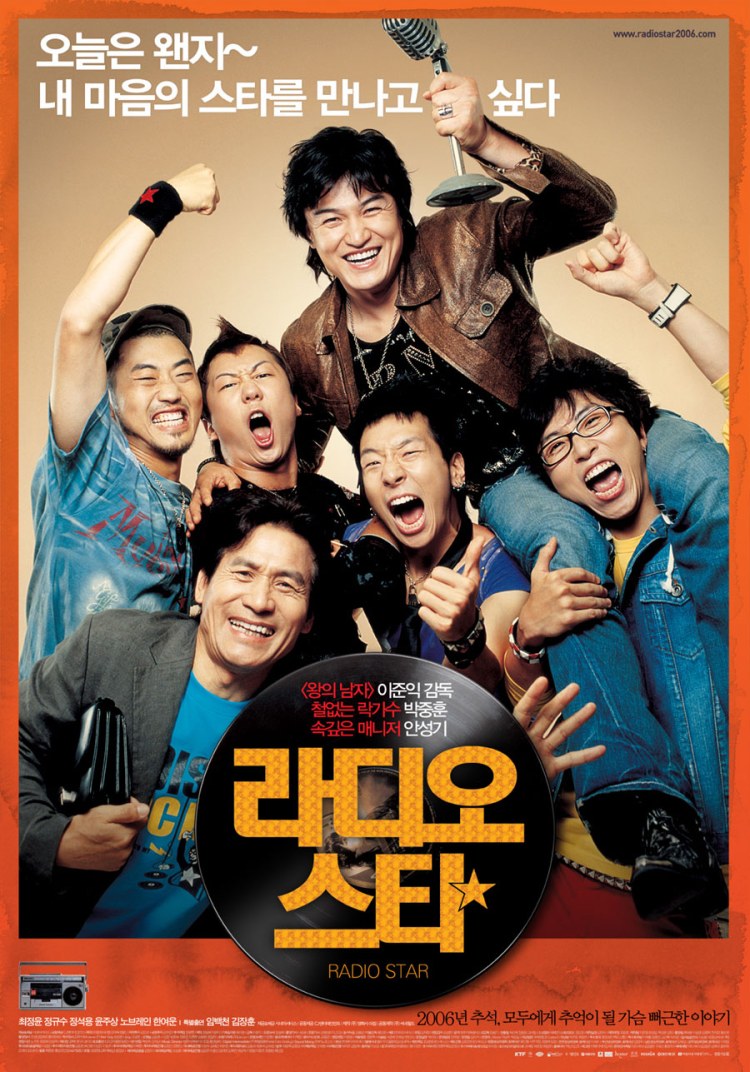
 What do you do if you’ve just directed a box office smashing, taboo busting, giant mega hit? Well, you could direct Star Wars, but if you’re Lee Joon-ik you go back to basics with a low budget, heartwarming tale of friendship and failure. Radio Star (라디오 스타) reunites frequent costars Ahn Sung-ki and Park Joong-hoon whose shared history runs all the way back to ‘80s movies Chilsu and Mansu, Two Cops, and Nowhere to Hide. ‘80s nostalgia plays not a small part in Lee’s film as it takes a washed up one hit wonder from 20 years back and gives him a new opportunity to shine…if only he can get over himself first.
1988 was something of a banner year for Korea, a newly minted democracy the country put itself on the international map with that year’s Olympic Games taking place in Seoul. It was also a big year for rock star Choi Gon (Joong-hoon) who scored a chart topping mega hit with his song The Rain and You which won him a prestigious musical prize. However, it all went to his head and despite the best efforts of his best friend and manager Park Min-soo (Ahn Sung-ki), 18 years later in 2006 Gon is a cafe singer with a habit of getting into fights which land him in jail. After yet another “incident”, Min-soo is having trouble finding the money to bail his friend out, until, that is he hits on the opportunity of selling Gon’s name as a radio host in an isolated rural town.
Of course, this doesn’t go down well with Gon who’s still every inch the edgy rockstar despite his reduced circumstances. Eventually Min-soo talks him into taking the gig but he’s anything but enthusiastic about his new life as a disembodied voice talking to a handful of country bumpkins who still have transistor radios. Gradually, through learning to appreciate his surroundings Gon begins to understand exactly what it is that’s important in his life.
Playing off its central dynamic, Radio Star undoubtedly brings a lot with it in the casting of Ahn and Park whose similar trajectories add to the film’s otherwise straightforward narrative. Min-soo appears to have only the one client to whom he remains completely devoted (even neglecting his wife and daughter in the process) though it’s true Gon’s career has not gone in the hoped for direction. Still dressing like an ‘80s rock god with sunglasses, torn jeans and a leather jacket, Gon is his own worst enemy as he plays the rockstar game all the way into a jail cell he fully expects Min-soo will get him out of. His new assignment as a local radio DJ is one he finds beneath his dignity and only takes because he thinks it’s a favour to a friend (rather than a friend doing a favour for him), but when it brings him unexpected success he finds that it’s all worth nothing if Min-soo isn’t there to enjoy it with him.
Though many in the small town barely remember Choi Gon or his iconic, prize winning song, he still has a few fans in the form of local garage band East River (played by real life punk band No Brain) who become devoted supporters of the show even helping to spread the word and putting on a special celebratory tribute concert. Ironically enough, the show starts to take off with Gon’s nonchalant approach to hosting which often sees him abandoning the mike to a random local either by phone or getting a guest into the studio. Sliding into talk radio territory, Gon begins taking calls and offering (to begin with) flippant advice on such topics as jobs for the unemployed and the proper rules for card games but he’s soon involved in a campaign to help a shy florist declare his love to a bank cashier and eventually makes a heartfelt personal appeal in support of a little boy who’s father has run off, encouraging him to come back home if only to apologise for making the kid think it’s all his fault that his dad went away.
It’s undoubtably small scale stuff, which of course means that it’s infinite in scope as Gon’s growing sense of interconnectedness takes the show out of the local area and eventually all the way to Seoul after the East River boys’ internet fan site gives him a potentially global (well, to anyone who can speak Korean) reach. As Min-soo points out, stars don’t shine alone – they reflect the light they’re given, and therefore Gon’s only rises because of his friendship with Min-soo and the support he begins to win from the local people once he drops the aloof rockstar persona and begins to engage. Necessarily sentimental and drenched in the dust of broken dreams, Radio Star is a sometimes melancholic though warm tribute to the power of friendship and redemptive possibilities offered by unlikely second chances.
Original trailer (English subtitles)
Gon’s prizewinning song – Rain and You as sung by Park Joong-hoon
And sung by Korean punk band No Brain
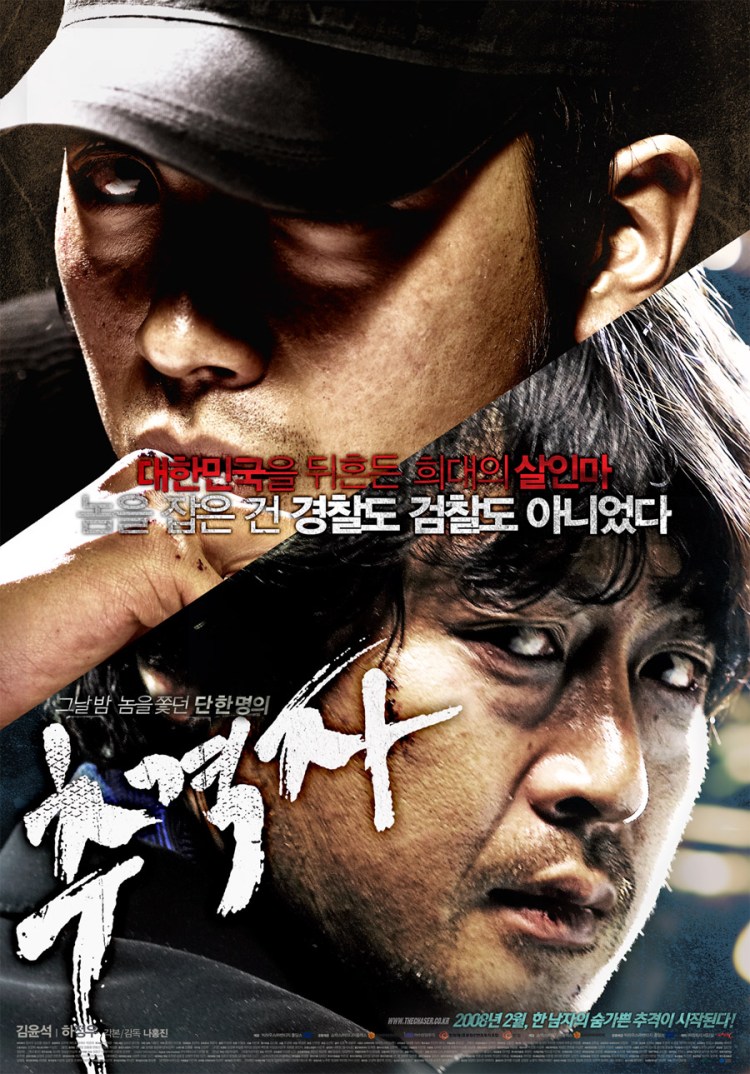 When it comes to law enforcement in Korea (at least in the movies), your best bet may actually be other criminals or “concerned citizens” as the police are mostly to be found napping or busy trying to cover up for a previous mistake. The Chaser (추격자, Chugyeogja) continues this grand tradition in taking inspiration from the real life serial murder crime spree of Yoo Young-chul , eventually brought to justice in 2005 after pimps came together and got suspicious enough to make contact with a friendly police officer.
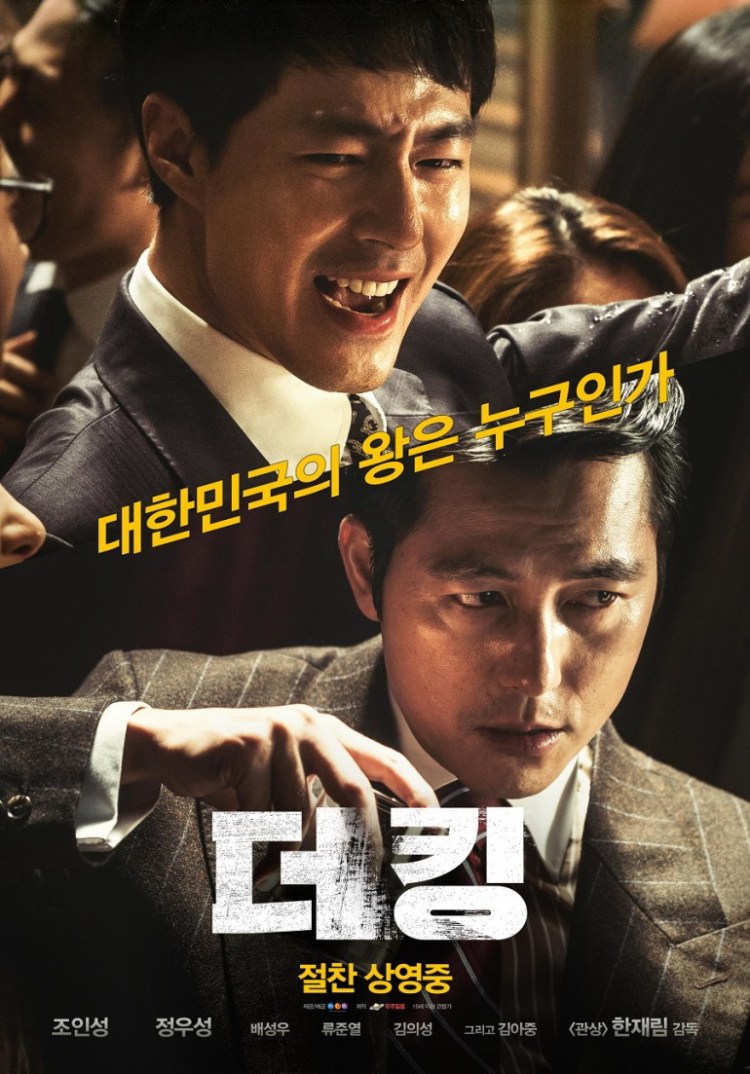 Absolute power corrupts absolutely, but such power is often a matter more of faith than actuality. Coming at an interesting point in time, Han Jae-rim’s The King (더 킹) charts twenty years of Korean history, stopping just short of its present in which a president was deposed by peaceful, democratic means following accusations of corruption. The legal system, as depicted in Korean cinema, is rarely fair or just but The King seems to hint at a broader root cause which transcends personal greed or ambition in an essential brotherhood of dishonour between men, bound by shared treacheries but forever divided by looming betrayal.
 It’s tough when parents don’t approve of their children’s romantic partners, but fortunately most realise there’s nothing they can do about it so the best thing is to feign civility (and avoid saying I told you so when it all goes wrong). Unfortunately the older generation of Kim Jin-young’s Enemies In-Law (위험한 상견례 2,
  It’s a strange paradox that in a land defined by corruption of the legal system, your only hope my lie in a new trial. So it is for the hero of Kim Tae-yun’s latest film. Inspired by a real life miscarriage of justice (a case which was in fact still continuing at the time of filming), New Trial (재심, Jaesim) takes aim at everything from social inequality to unscrupulous lawyers and abuse of police power. A teenager pays dearly for being in the wrong place at the wrong time, not only losing 10 years of his life but the entire possibility of his future now that he’s forever branded a criminal. That’s aside from leaving his ageing (now blind mother) alone with no means of support and the additional burden of trying to clear her son’s name.
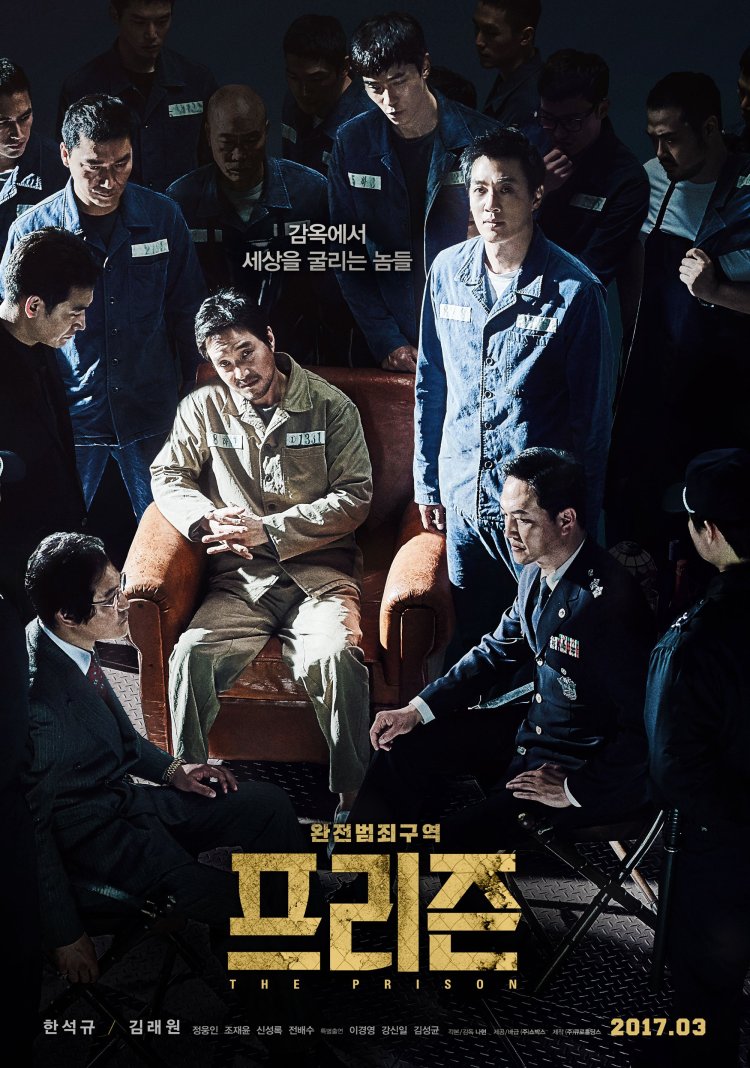 Prison can be a paradise if you’re doing it right, at least if you’re a top gangster in the movies. Na Hyun’s The Prison (프리즌) paints an interesting picture of incarceration and the way it links into his nation’s infinitely corrupt power structures. When investigators wonder why a crime spree suddenly came to an end, one of the frequently offered explanations is that the perpetrator was most likely arrested for another crime but what if you could turn this obviously solid alibi to your advantage and get those already behind bars to do your dirty work for you?
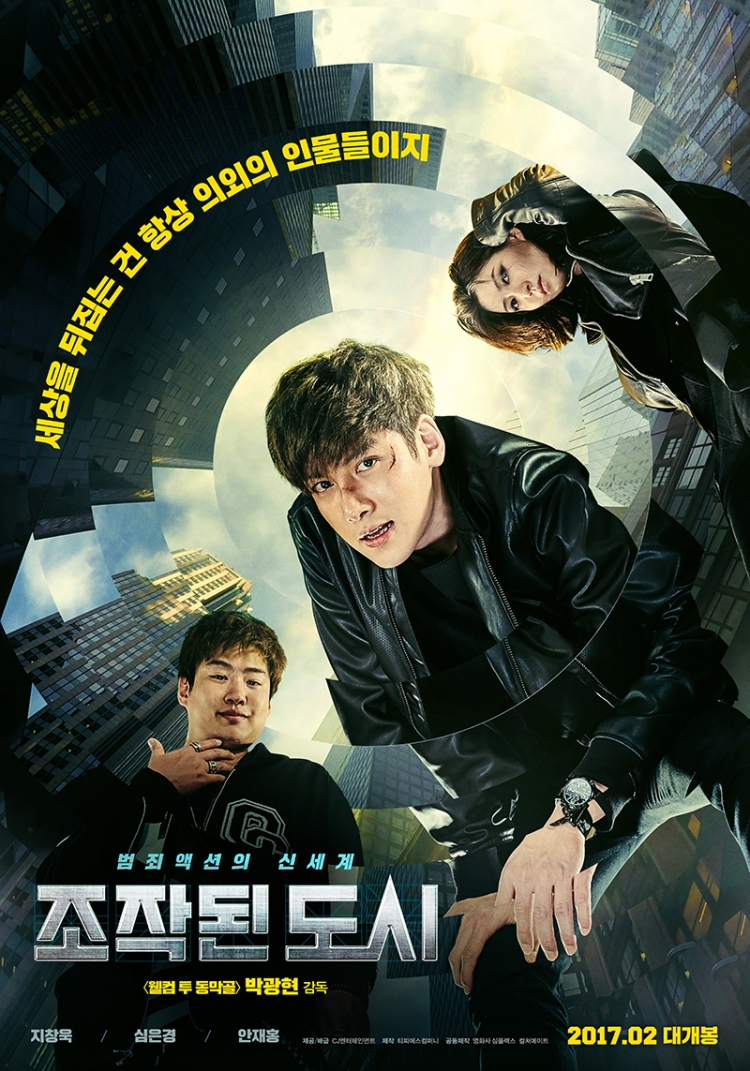 The real and the unreal. In the era of fake news, it’s become ever harder to draw a clear line between the two but when you live online, the borders are even more permeable. Twelve years after the wartime comedy Welcome to Dongmakgol, director Park Kwang-hyun finally makes a return to the director’s chair with an action packed cyberpunk thriller which joins the ranks of recent Korean films bemoaning the country’s hardwired tendency to social inequality where the rich and powerful are free to run roughshod over the merely ordinary. Fabricated City (조작된 도시, Jojakdwen Doshi) refers to more than just the literally manufactured online world, but to the social reality in which unseen forces govern and define the lives of others, operating in secret behind a government backed curtain.
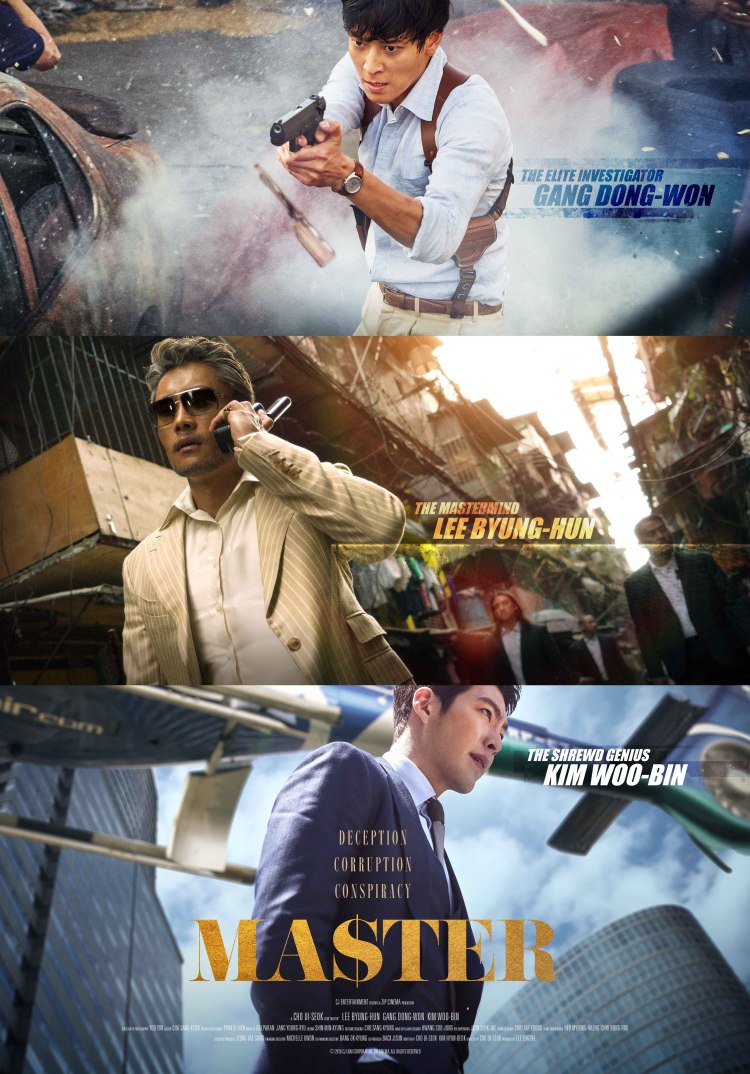 Corruption has become a major theme in Korean cinema. Perhaps understandably given current events, but you’ll have to look hard to find anyone occupying a high level corporate, political, or judicial position who can be counted worthy of public trust in any Korean film from the democratic era. Cho Ui-seok’s Master (마스터) goes further than most in building its case higher and harder as its sleazy, heartless, conman of an antagonist casts himself onto the world stage as some kind of international megastar promising riches to the poor all the while planning to deprive them of what little they have. The forces which oppose him, cerebral cops from the financial fraud devision, may be committed to exposing his criminality but they aren’t above playing his game to do it.
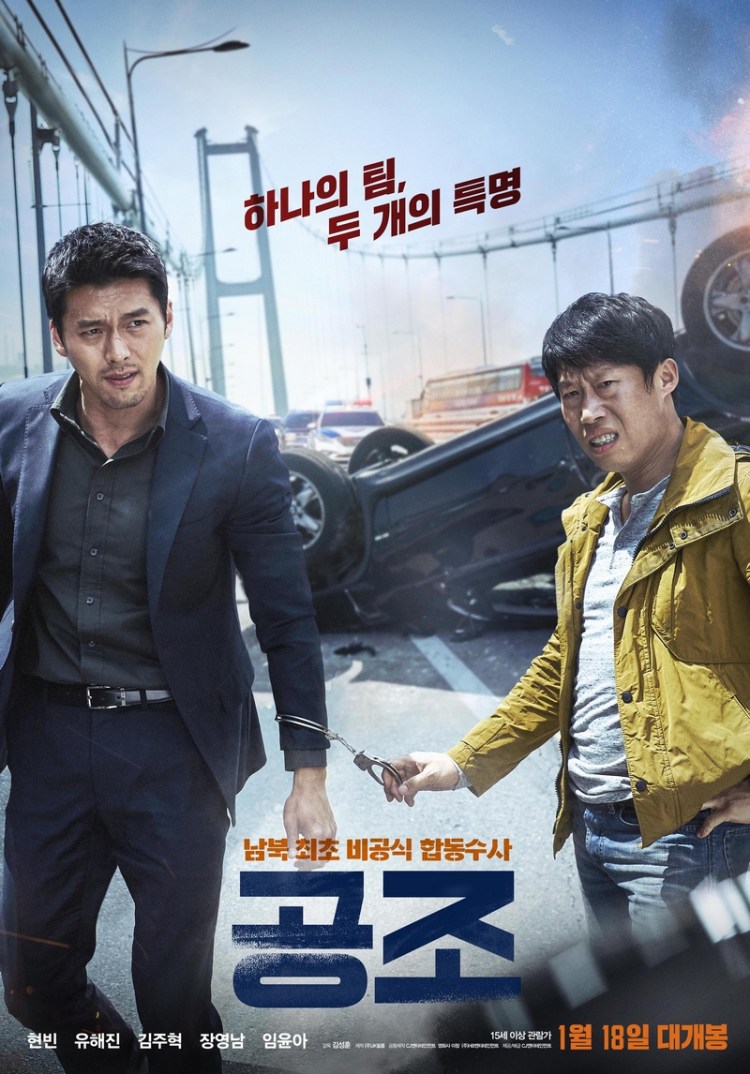 South Korean cinema has a fairly ambivalent attitude to its policemen. Most often, detectives are a bumbling bunch who couldn’t find the killer even if he danced around in front of them shouting “it was me!” whereas street cops are incompetent, lazy, and cowardly. That’s aside from their tendency towards violence and corruption but rarely has there been a policeman who gets himself into trouble solely for being too nice and too focussed on his family. Confidential Assignment (공조, Gongjo), though very much a mainstream action/buddy cop movie, is somewhat unusual in this respect as it pairs a goofy if skilled and well-meaning South Korean police officer, with an outwardly impassive yet inwardly raging North Korean special forces operative.
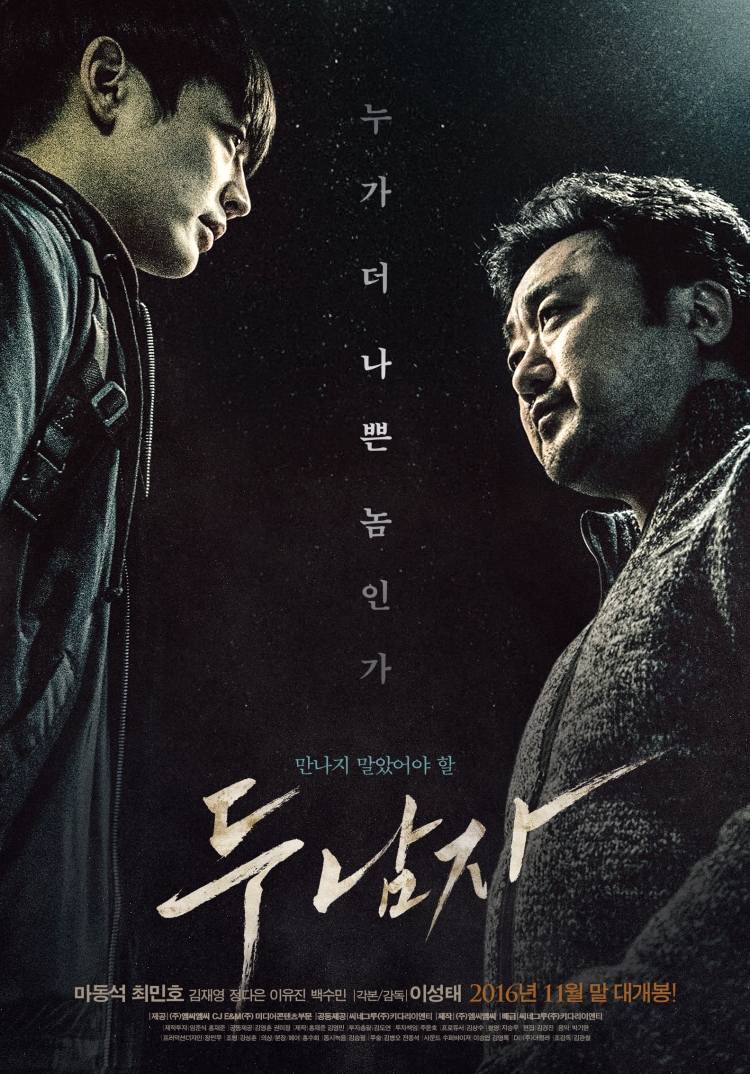 The best laid plans of mice and men often go awry, as the old saying goes, but for four down at heels street kids even their meagre attempts to evade a desperate situation land them in even more trouble than they’ve ever been in before. The debut feature from director Lee Sung-tae, Derailed (두 남자, Doo Namja) is bleak and gritty though underpinned by an ironic sense of love and connection which is itself often “derailed” or subverted as genuine feeling becomes a tool to be exploited in the ongoing war between those fighting amongst themselves to get a hand on the bottom rung of the ladder.
