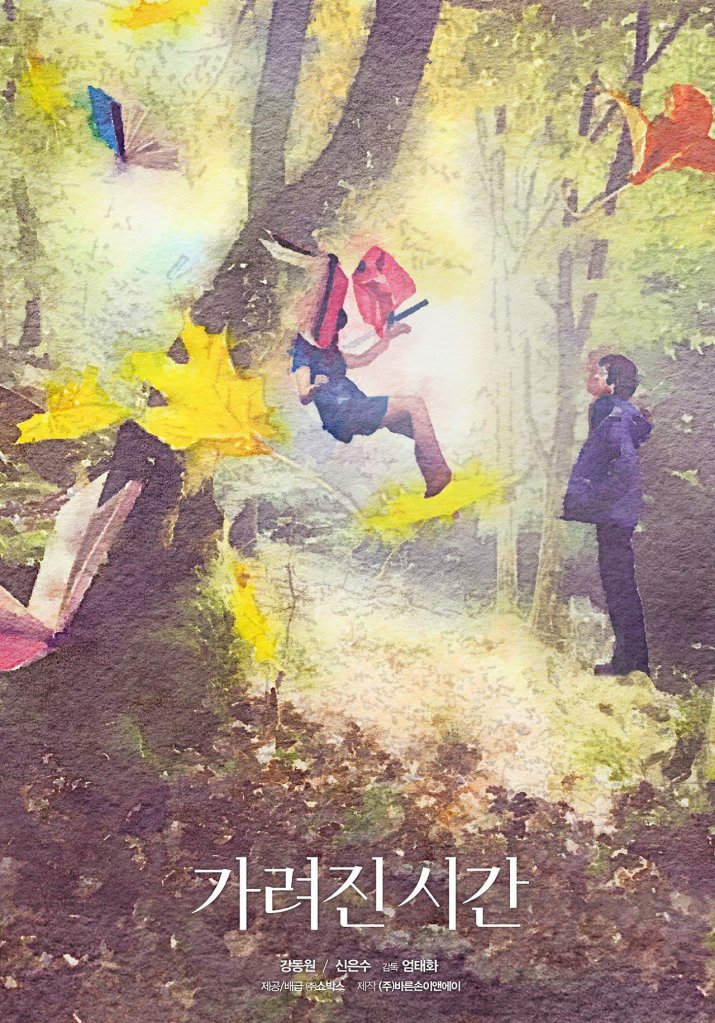
 When no time passes, does anything change? Yes, and then again, no, if Um Tae-hwa’s Vanishing Time: A Boy Who Returned (가려진 시간, Garyeojin Shigan) is to be believed. Dealing with the nature of time, connection, and faith Um’s film is a supernaturally tinged fairytale which never seriously entertains the more rational explanation offered by the naysayers, but is filled with the innocence of childhood and the essential naivety of adolescence. Melancholy, though somehow uplifting, Vanishing Time neatly avoids the pitfalls of romantic melodrama for a genuinely affecting coming of age story as its heroine is forced to make peace with her traumatic past through accepting the loss and sacrifice of her present.
Thirteen year old Su-rin (Shin Eun-soo) is an orphan, living with her step-father who has just moved to a small island where he is engaged in the construction work on a new tunnel. Sullen and lonely, Su-rin does not get on with her step-father whom she holds responsible for the death of her mother in a car accident. All Su-rin wants is to disappear into another world. In fact, she even has her own blog dedicated to exploring possible portals to alternate dimensions and the best methods for provoking an out of body experience. Needless to say, Su-rin does not fit in at school and has immense trouble making friends, especially when they stumble across her online activity and brand her a weirdo.
Su-rin does, however, bond with another boy, Sung-min (Lee Hyo-je), who (though not actually an orphan) lives at the orphanage. Sung-min seems to have some success with the methods Su-rin suggests for out of body experiences and the pair gradually build a up friendship complete with a secret written code and strange rituals. Though Sung-min’s friends Tae-sik (Kim Dan-yool) and Jae-wook (Jeong Woo-jin) don’t want any girls around, Sung-min convinces them to let her come when they sneak into the cordoned off construction area to witness the tunnel blasting. Whilst there, they discover a secret cavern in which there is a strange glowing egg at the bottom of a pool. The boys steal the egg and ponder over what it is until Tae-sik remembers a story his grandfather told about a time stealing goblin that turns children into adults and adults into old people by means of an egg found in a mysterious cave which only exists at a time of a full moon.
When Su-rin emerges from the cavern after nearly being buried by an explosion, the boys have vanished. The community begins to fear the worst – everything from child abduction to an industry conspiracy to cover up a blast related accident, but some time later Su-rin is approached by an older man who claims to be Sung-min.
Um begins the film with the lens cap of a camera as a woman gives a perfunctory voice over explaining that this is the record of her three month psychiatric evaluation of the teenager Su-rin which she hereby offers to us in the hope that we will understand her. When the lens cap comes off, a black and white montage sequence follows detailing the police investigation into the disappearance of the three boys before flashing back to Su-rin seated in front of the camera. It’s clear that Su-rin is sticking to her story, but also that she hasn’t been believed, has not managed to save any of her friends, and is, in some way, suspected of collusion in the events which have engulfed her.
Filmed with earthy browns and greens, the overall atmosphere is one of fairy tale with its supernatural rituals and stories of goblins which feast on time and misery. Obviously very affected by the death of her mother and by her resultant loneliness in having only the step-father she refuses to bond with, Su-rin has already retreated into a fantasy world despite being unable to actively cross over through any of the possible methods she explores in her blog. Bonding with Sung-min through their shared experimentation, the pair attempt a summoning ritual in which they each leave messages for a possible visitor – hers a question about her mother, his a wish that he grow tall and make enough money to retire by thirty. Su-rin’s question goes unanswered, but in the best fairy tale tradition Sung-min is going to get what he asked for, only in the most terrible of ways.
When the boys stop time it first seems like a paradise. They can do whatever they like, running round town stealing slices of pizza and peeking up ladies’ skirts but the novelty quickly wears off when they realise they’re stuck in this ever unchanging world with no means of escape. Thinking ahead, the boys study hard soaking up all the available knowledge in this completely silent universe whilst also stockpiling cash so they’ll be prepared if the hands on the clock ever start turning again. Trapped inside this bubble for more than a decade, the boys have grown into men but in body only. The lack of ongoing experience has also trapped them inside their fourteen year old minds rendering them adrift in either place. Some of them find escape in other ways yet tellingly, time comes only when despair reaches its critical mass.
Um’s painterly vision of the time stopped universe is a beautifully constructed one in which the suspended forward momentum of objects is depicted as a kind of anti-gravity where manga and crisp packets hover in the air while even the heaviest furniture can be trailed on a string like a balloon. Repeated motifs of Su-rin looking at her shadow and the occasionally strange angles give the picture an off kilter atmosphere which further brings out the creepy fairy tale quality of the abandoned Western-style cottage in the woods and its European gothic aesthetics.
Only Su-rin is prepared to believe Sung-min, convinced both by her gut instinct driven by the recognition of their original connection and the hard evidence of their unique code and the scar on Sung-min’s arm. The film never seriously entertains the “rational” explanation offered by the police, but focuses on Su-rin’s desire to restore her friend to his rightful place in society by ensuring he is recognised as Sung-min, the boy who disappeared and has returned as a man. Gang Dong-won, pale and gaunt, gives off just the right level of eerie uncanniness as this strangely innocent man-boy, desperately wanting to go home but having no home to go to other than Su-rin. A tale of innocent, selfless love, Vanishing Time: A Boy Who Returned is a melancholy, often dark exploration of the journey into adolescence captured with a beautiful, surrealist eye and a beating human heart.
Original trailer (English subtitles – select from settings menu)
 Do you know Hong Sang-soo? So asks the heroine of Miss Ex (비치온더비치, Bitch on the Beach) as part of her nefarious mission to win back her childhood sweetheart. Unfortunately, his reply is to ask if he directed The Host, so Ga-young (Jeong Ga-young) is out of luck with her Dark Knight loving former love, but possibly in luck with us as her movie obsessed ramblings and strange stories about accidental AIDS tests during wisdom tooth extractions continue to dominate the screen for the next 90 minutes. Divided into three chapters and filmed in an oddly colourful black and white, director and leading actress’ Jeong Ga-young’s debut feature channels Hong Sang-soo by way of Woody Allen and the French New Wave but may prove funnier than all three put together.
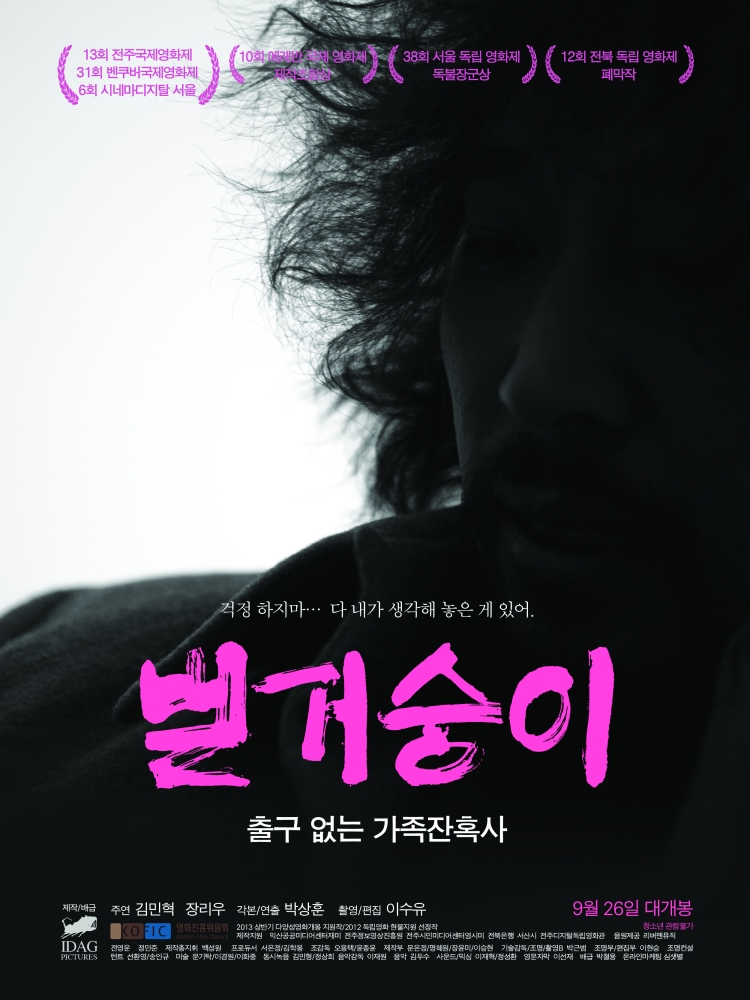 Anyone who follows Korean cinema will have noticed that Korean films often have a much bleaker point of view than those of other countries. Nevertheless it would be difficult to find one quite as unrelentingly dismal as A Mere Life (벌거숭이, Beolgeosungi). Encompassing all of human misery from the false support of family, marital discord, money worries, and the heartlessness of con men, A Mere Life throws just about everything it can at its everyman protagonist who finds himself trapped in a well of despair that not even death can save him from.

 Review of Byun Young-joo’s Helpless (화차, Hwacha) first published by
  Review of Jo Sung-hee’s The Phantom Detective (탐정 홍길동: 사라진 마을, Tamjung Honggildong: Sarajin Maeul) first published by
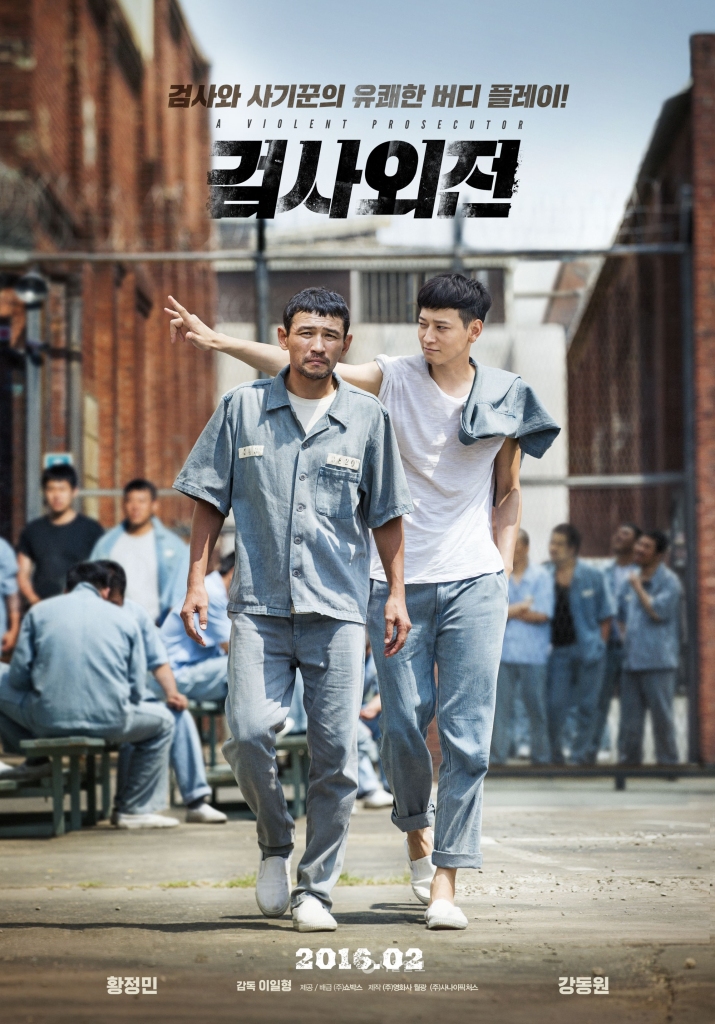 Review of Lee Il-hyeong’s A Violent Prosecutor first published by
 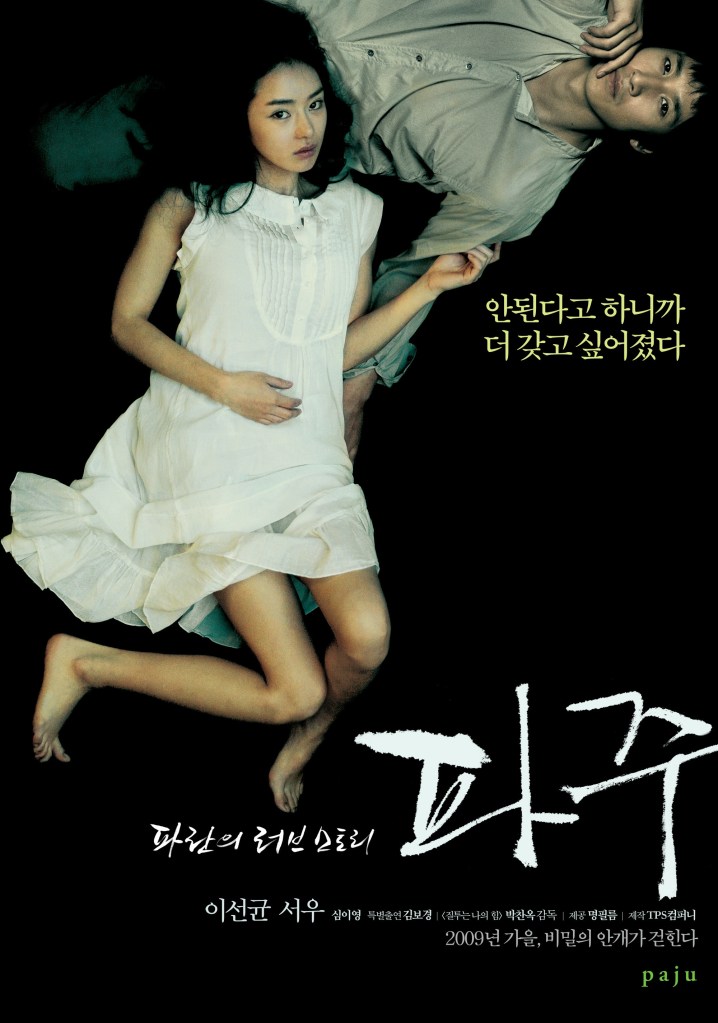 Paju (파주) is the name of a city in the far north of Korea, not far from “the” North, to be precise. Like the characters who inhabit it, Paju is a in a state of flux. Recently invaded by gangsters in the pay of developers, the old landscape is in ruins, awaiting the arrival of the future but fearing an uncertain dawn. Told across four time periods, Paju begins with Eun-mo’s (Seo Woo) return from a self imposed three year exile in India, trying to atone for something she does not understand. Much of this has to do with her brother-in-law, Joong-shik (Lee Sun-kyun), an local activist and school teacher with a troubled past. Love lands unwelcomely at the feet of two people each unable to make us of it in this melancholy coming of age tale shot through with tragic irony.
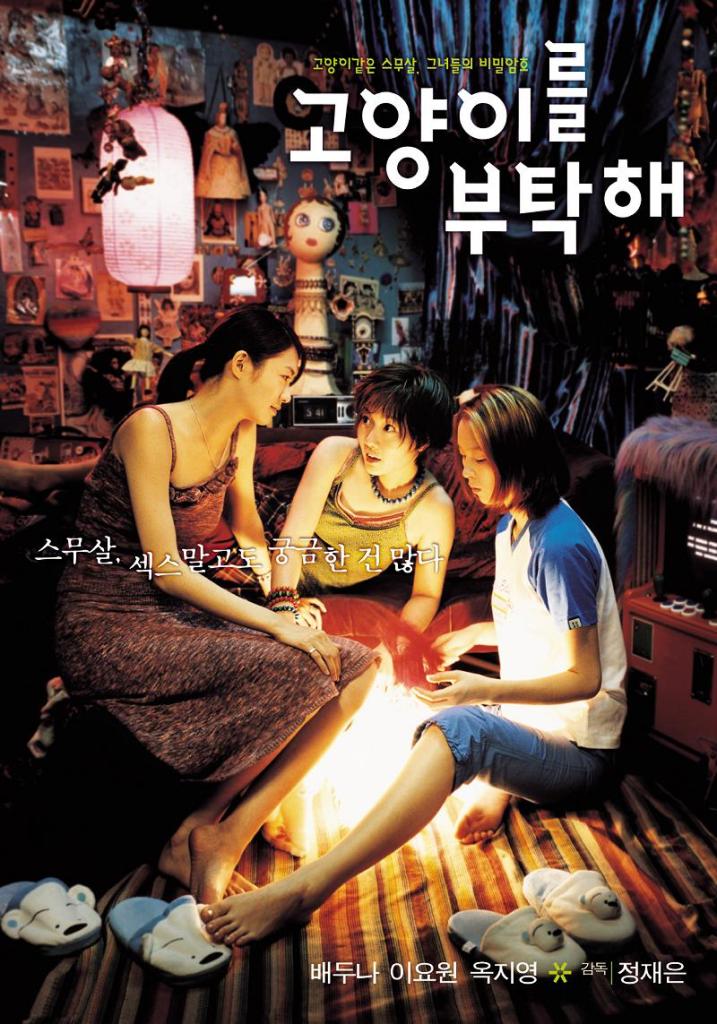 The time after high school is often destabilising as even once close groups of friends find themselves being pulled in all kinds of different directions. So it is for the group of five young women at the centre of Jeong Jae-eun’s debut feature, Take Care of My Cat (고양이를 부탁해, Goyangileul Butaghae). All at or around 20, the age of majority in Korea, the girls were a tightly banded unit during high school but have all sought different paths on leaving. Lynchpin Tae-hee (Bae Doo-na) is responsible for trying to keep the gang together through organising regular meet ups but it’s getting harder to get everyone in the same place and minor differences which hardly mattered during school grow ever wider as adulthood sets in.
 Windows on Worlds