 North Koreans have become the go to bad guys recently, and so North Korean spies have become the instigators of fear and paranoia in many a contemporary political thriller. The Suspect (용의자, Yonguija), however, is quick to point the finger at a larger evil – personal greed, dodgy morals, and the all powerful reach of global corporations. Opting for a high octane action fest rather than a convoluted plot structure, Won’s approach is (mostly) an uncomplicated one as a wronged man pursues his revenge or redemption with no thought for his own future, only to be presented with the unexpected offering of one anyway alongside the equally unexpected bonus of exposing an international conspiracy.
Ji Dong-cheol (Gong Yoo) is former top North Korean asset now defected to the South and working as a driver for an important CEO. His boss thinks he ought to just go home, but Ji has a mission – he’s looking for a former friend, also defected, who was responsible for the deaths of his wife and daughter as part of a wide ranging purge following the accession of Kim Jong-un. Taking pity on him, the CEO eventually gives him the address of his target, adding that he hopes Ji can learn to forgive him (which seems unlikely), but is assassinated by other agents that same night. Arriving at the scene too late, Ji finds himself framed for the killing and charged with taking care of a secret message also in the CEO’s possession at the time of his death. Teaming up with a documentary filmmaker, Ji is now on the run and determined to find his former friend turned mortal enemy before the authorities catch up with him whilst also trying to work out what to do with his boss’ coded message.
Family, debts of honour, and bonds between men are at the centre of this fast paced thriller as Ji attempts to navigate this ever changing conspiracy torn between friends turned enemies and enemies who may become friends. His main adversary is a government agent, Min (Park Hee-Soon), whom he previously encountered during a mission in Hong Kong during which he made the decision to spare Min’s life after catching sight of a photo of his wife and son in his wallet. Min, however, is less than grateful as the failed mission greatly damaged his career prospects and so he has a personal grudge with Ji which he hopes to exorcise through arresting him. On the other side, Ji is also on the hunt for his former training buddy, Lee (Kim Sung-Kyun), whom he believes to have been responsible for the death of his own wife and child though later discovers that perhaps they have all merely been pawns in a much larger game.
The larger game appears to include worldwide arms sales by turns frustrated and conducted by North Korean agents. The conspiracy, however, is very much home grown in terms of its South Korean genesis but makes clear the complicated relationship between the two territories which is very much open to abuse by those who have access to both sides. The big bad turns out not to be the totalitarian regime with its constant purges and rigid enforcement of its political power, but the greedy and venal, power hungry petty officials of the democratic regime working in concert with big business.
Won has obviously drawn inspiration from the first Bourne film, offering several blatant homages including a long car chase referencing The Italian Job by proxy. His shaky cam aesthetic is perhaps overworked, but the fight scenes are undoubtedly impressive, anchored by the astounding performance of unlikely action star Gong Yoo – hitherto known as a sensitive leading man and frequent romantic lead. Having piled on the pounds, Gong is a credible vengeful presence apparently providing many of his own stunts including a strangely overblown sequence which sees him rock climbing bare chested only to emerge panting and glistening next to the flapping North Korean flag. Nevertheless, his near silent performance is a masterclass of physical acting, adding a much needed emotional dimension to the otherwise straightforward script which leaves little time for character development in between its admittedly impressive set pieces. Overlong yet moving at a rip roaring pace, The Suspect is a surprisingly well photographed action fest which manages to add a degree of pathos to its closing scenes even if failing to completely earn it whilst engaging in a series of subtle political allegories.
International trailer (English subtitles)
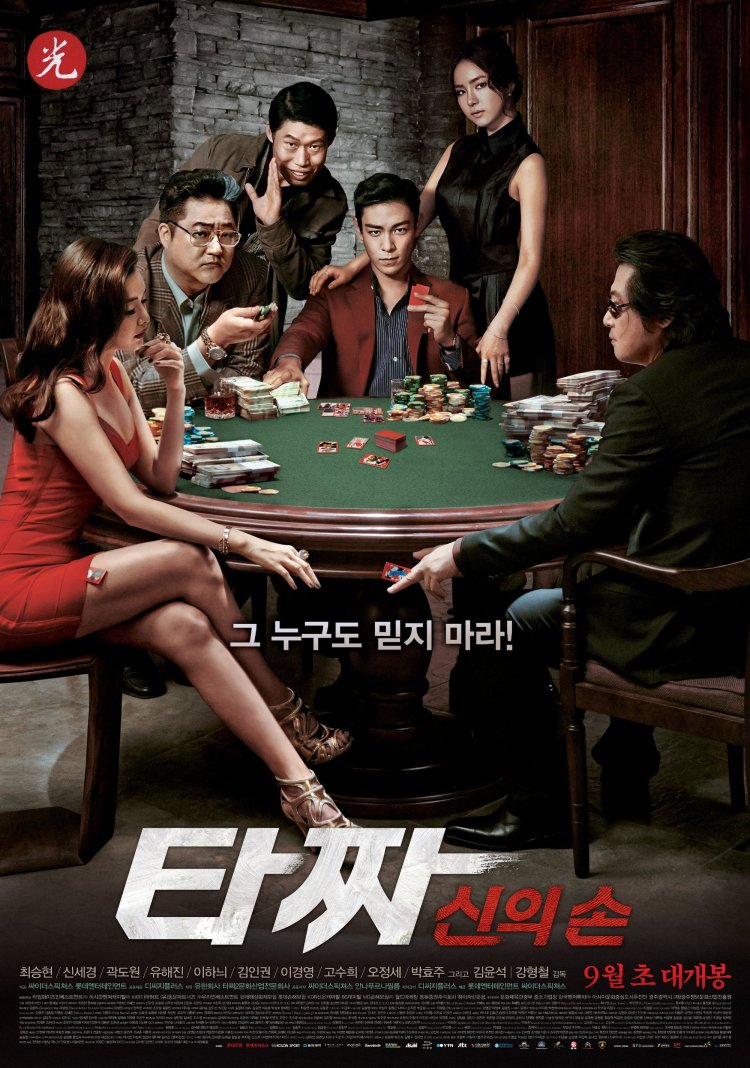 You gotta know how to hold ‘em, know when to fold ‘em, know when to walk away and know when to run. Apparently these rules of the table are just as important in the cutthroat world of the Korean card game Hwatu as they are in the rootinest tootinest saloon bar. Like most card games, having the winning hand is less important than the ability to play your opponent and so it’s more a question of who can cheat the best (without actually breaking the rules, or at least being caught doing so) than it is of skill or luck. A second generation sequel to 2006’s Tazza: The High Rollers, The Hidden Card (타짜-신의 손, Tajja: Shinui Son) is a slick, if overlong, journey into the dark, underground world of gambling addicted card players which turns out to be much more shady than the shiny suits and cheesy grins would suggest.
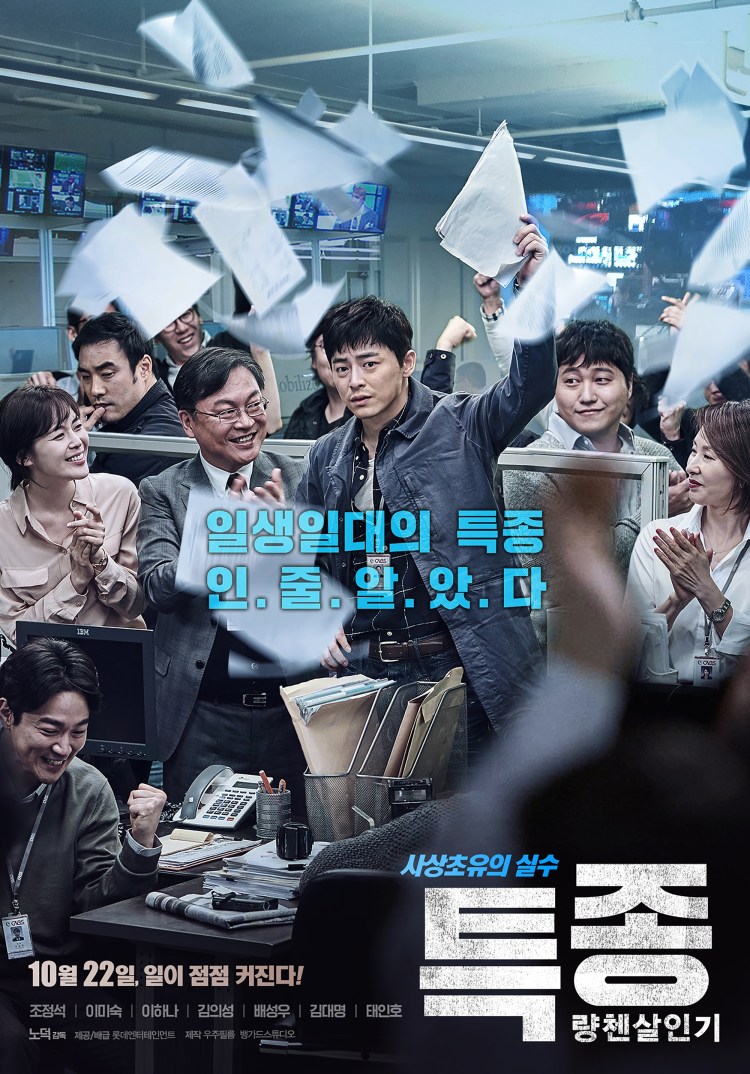 Some people just can’t keep themselves out of trouble. The down on his luck reporter at the centre of Roh Deok’s The Exclusive: Beat the Devil’s Tattoo (특종: 량첸살인기, Teukjong: Ryangchensalingi) is something of a trouble magnet as he makes mistake after mistake, requiring lie after lie to try and put him back on the straight and narrow. Unfortunately for him the deeper he gets the closer he turns out to be to the “real” truth. Only by that stage everyone has lost interest in “the truth” anyway – who cares about little things like facts against the overwhelming power of a constructed narrative.
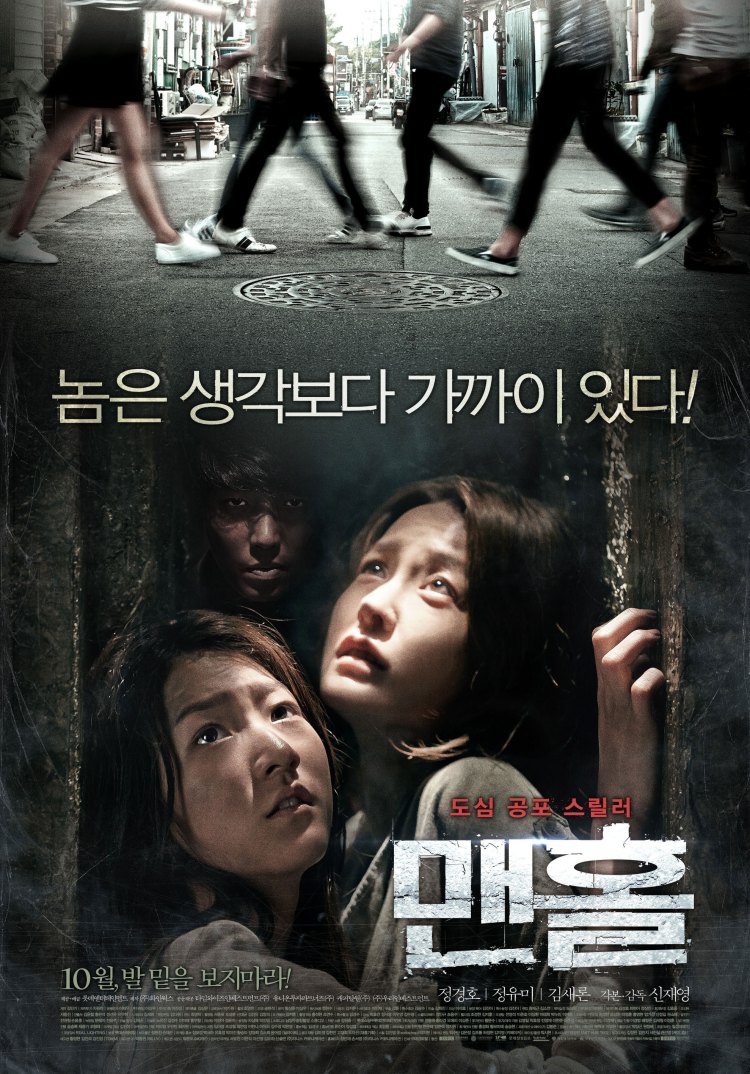 Finding the sinister in the commonplace is the key to creating a chilling horror experience, but “finding” it is the key. Attempting to graft something untoward onto a place it can’t take hold is more likely to raise eyebrows than hair or goosebumps. The creators of Korean horror exercise Manhole (맨홀) have decided to make those ubiquitous round discs the subject of their enquiries. They are kind of worrying really aren’t they? Where do they go, what are they for? Only the municipal authorities really know. In this case they go to the lair of a weird serial killer who lives in the shadows and occasionally pulls in pretty girls from above like one of those itazura bank cats after your loose change.
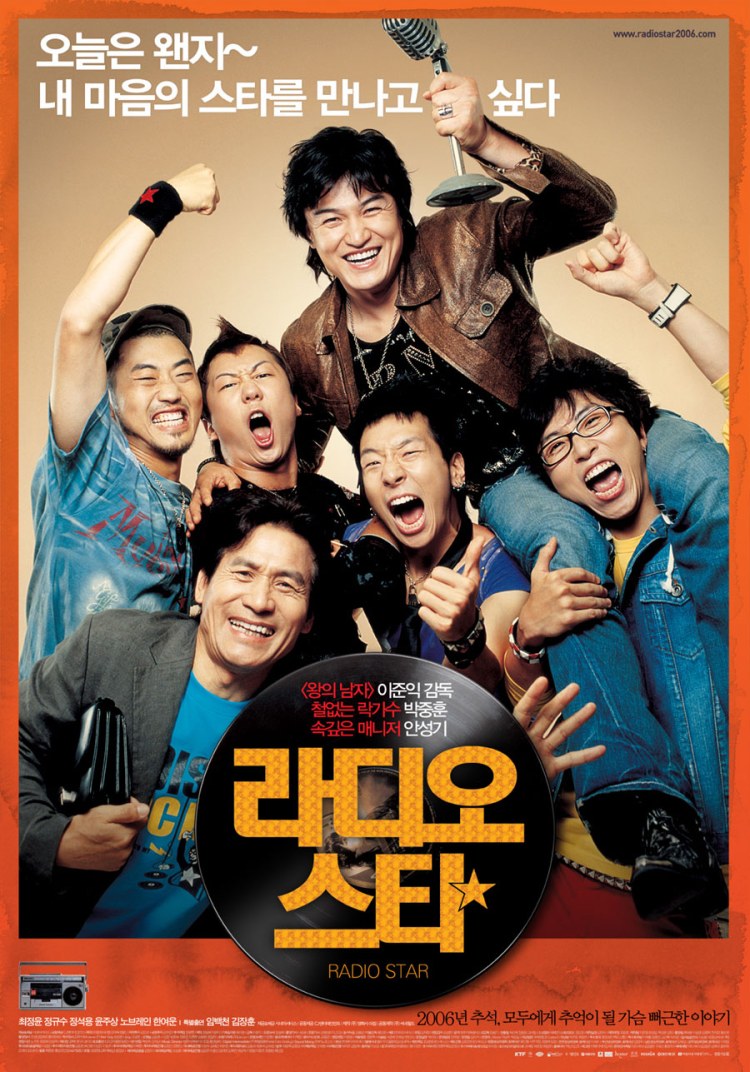 What do you do if you’ve just directed a box office smashing, taboo busting, giant mega hit? Well, you could direct Star Wars, but if you’re Lee Joon-ik you go back to basics with a low budget, heartwarming tale of friendship and failure. Radio Star (라디오 스타) reunites frequent costars Ahn Sung-ki and Park Joong-hoon whose shared history runs all the way back to ‘80s movies
 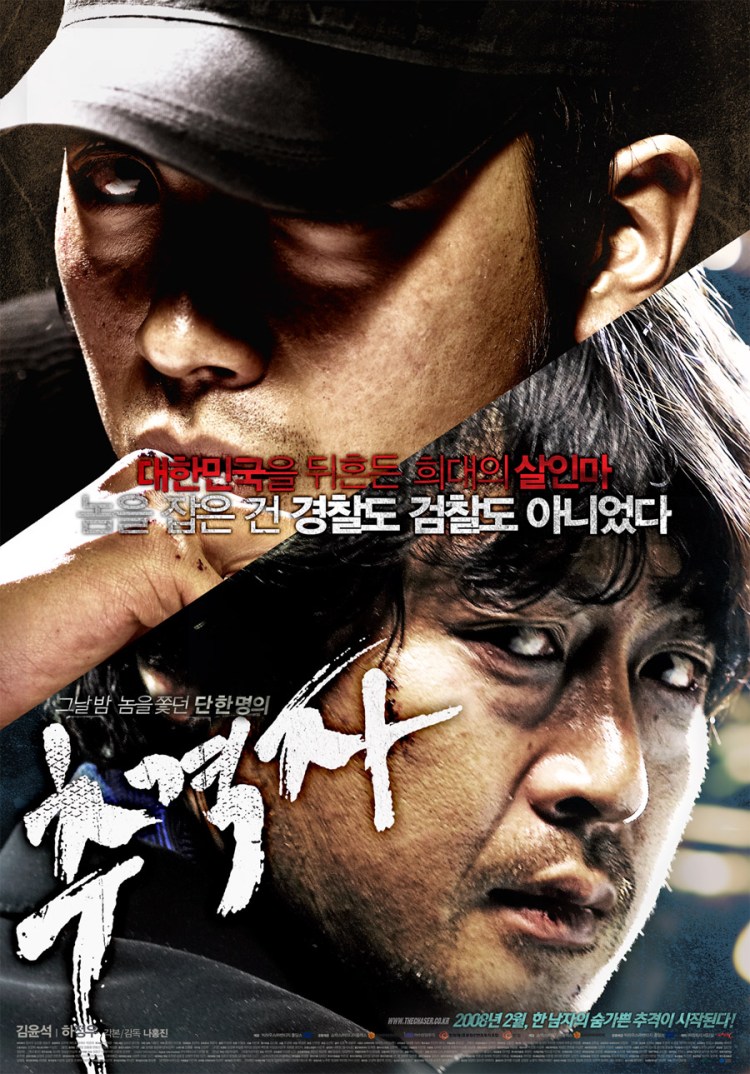 When it comes to law enforcement in Korea (at least in the movies), your best bet may actually be other criminals or “concerned citizens” as the police are mostly to be found napping or busy trying to cover up for a previous mistake. The Chaser (추격자, Chugyeogja) continues this grand tradition in taking inspiration from the real life serial murder crime spree of Yoo Young-chul , eventually brought to justice in 2005 after pimps came together and got suspicious enough to make contact with a friendly police officer.
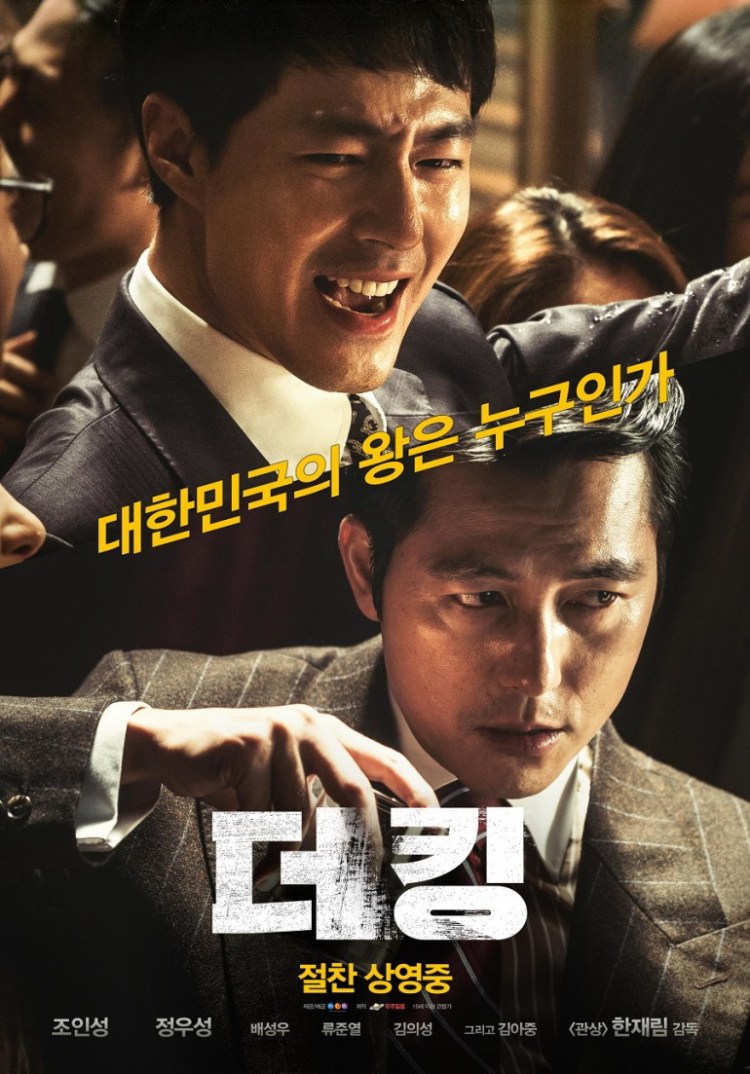 Absolute power corrupts absolutely, but such power is often a matter more of faith than actuality. Coming at an interesting point in time, Han Jae-rim’s The King (더 킹) charts twenty years of Korean history, stopping just short of its present in which a president was deposed by peaceful, democratic means following accusations of corruption. The legal system, as depicted in Korean cinema, is rarely fair or just but The King seems to hint at a broader root cause which transcends personal greed or ambition in an essential brotherhood of dishonour between men, bound by shared treacheries but forever divided by looming betrayal.
 It’s tough when parents don’t approve of their children’s romantic partners, but fortunately most realise there’s nothing they can do about it so the best thing is to feign civility (and avoid saying I told you so when it all goes wrong). Unfortunately the older generation of Kim Jin-young’s Enemies In-Law (위험한 상견례 2,
  It’s a strange paradox that in a land defined by corruption of the legal system, your only hope my lie in a new trial. So it is for the hero of Kim Tae-yun’s latest film. Inspired by a real life miscarriage of justice (a case which was in fact still continuing at the time of filming), New Trial (재심, Jaesim) takes aim at everything from social inequality to unscrupulous lawyers and abuse of police power. A teenager pays dearly for being in the wrong place at the wrong time, not only losing 10 years of his life but the entire possibility of his future now that he’s forever branded a criminal. That’s aside from leaving his ageing (now blind mother) alone with no means of support and the additional burden of trying to clear her son’s name.
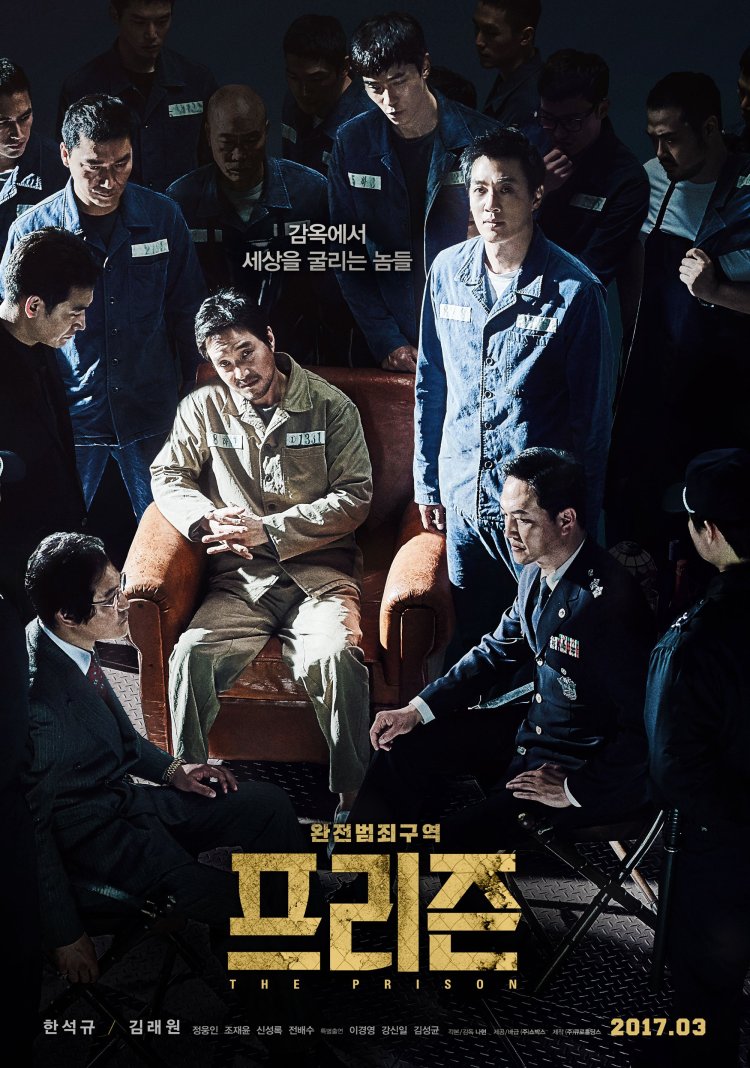 Prison can be a paradise if you’re doing it right, at least if you’re a top gangster in the movies. Na Hyun’s The Prison (프리즌) paints an interesting picture of incarceration and the way it links into his nation’s infinitely corrupt power structures. When investigators wonder why a crime spree suddenly came to an end, one of the frequently offered explanations is that the perpetrator was most likely arrested for another crime but what if you could turn this obviously solid alibi to your advantage and get those already behind bars to do your dirty work for you?
