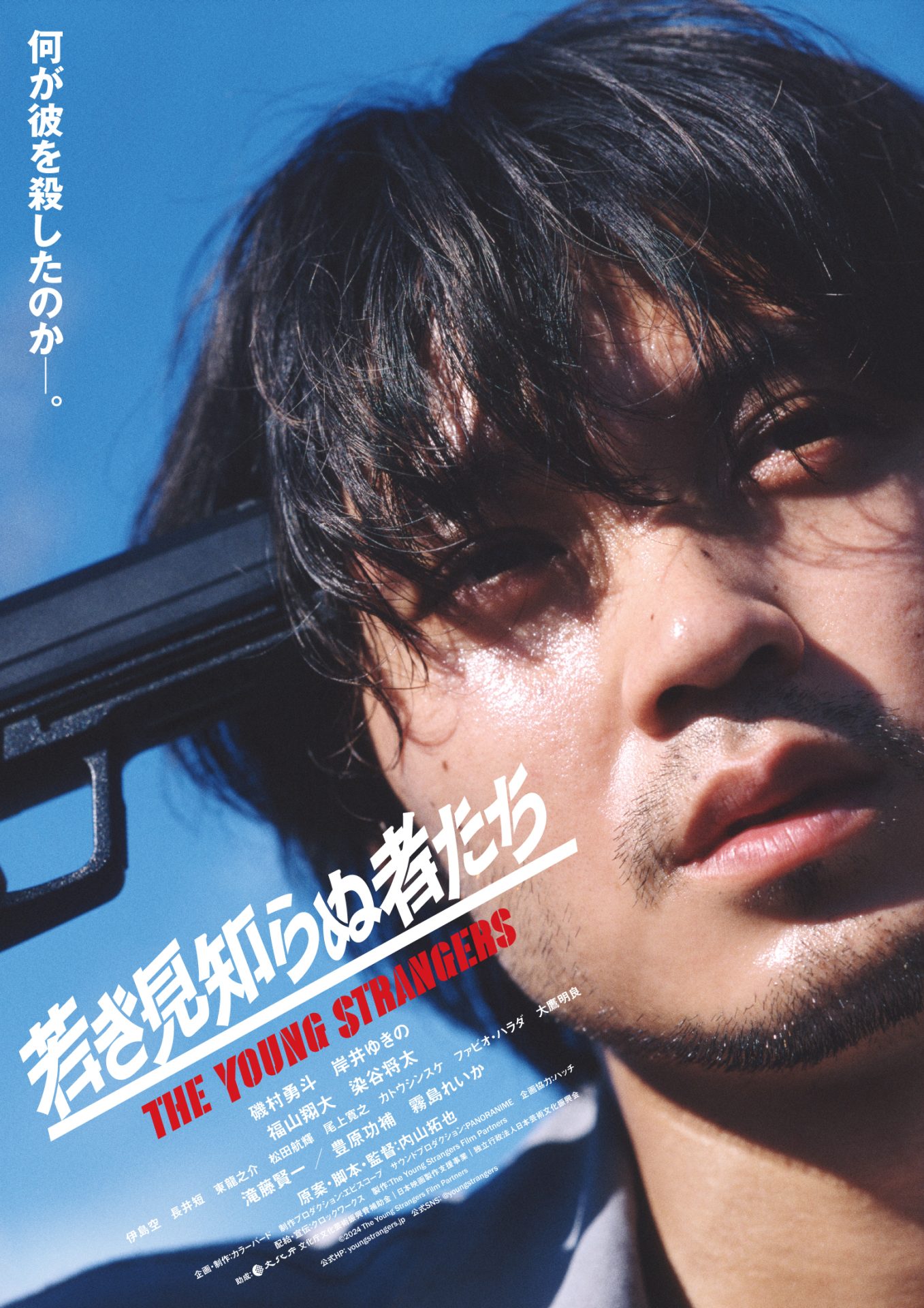
The Young Strangers (若き見知らぬ者たち, Takuya Uchiyama, 2024)

You have to protect your space from the violence of this world, a compromised father advises his sons, yet it’s something that neither he nor they are fully capable of doing. Billed as the “commercial debut” from the director of the equally emotionally devastating Sasaki in my Mind, Takuya Uchiyama, The Young Strangers (若き見知らぬ者たち, Wakaki Mishiranu Monotachi) paints a somewhat bleak portrait of contemporary Japan as place of desolation and abandonment, but at the same time is melancholy more than miserable in the earnestness with which they all dream of a better life somewhere beyond all of unfairness and injustice.

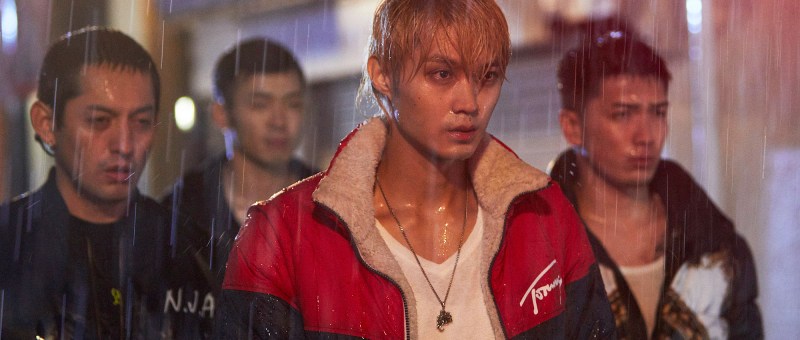
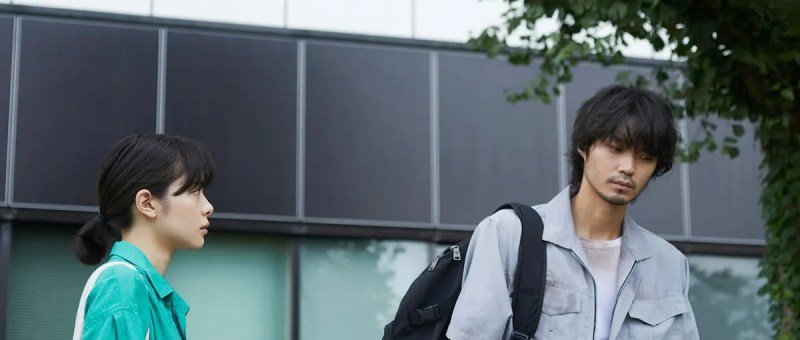
But Ayato (Hayato Isomura) seems to know that he’s burdened with some kind of karmic fate. His life oddly echoes that of his former policeman father and takes on an ironic symmetry even as he was unfairly left to pick up the pieces as a teenager adrift in the wake of parental betrayal. Now his late 20s, Ayato is a worn out and dejected figure who barely speaks after years of doing multiple jobs, in addition to running the snack bar his parents opened as a new start, to pay off the debts his father left behind. Now his mother has early onset dementia and her care is also something else he must manage as best he can with support from his girlfriend Hinata (Yukino Kishii), a nurse, and less so from his conflicted brother, Sohei (Shodai Fukuyama), who has a path out of here as an MMA champion if only he can stick to the plan and keep up with his training. 

As his best friend Yamato (Shota Sometani) points out, he’s hung onto everything his father left him but is equally in danger of losing his future. He seems wary of his relationship with Hinata, afraid to drag her into his life of poverty and hardship, while he watches friends get married and start families. He once had a promising future too, as the star of the school football team, but like everything else that came to an abrupt end in the wake of family tragedy. There are hints of trouble with law in his younger years that may have made it even more difficult for him to earn a living wage, along with giving him an unfavourable view of authority figures. Seeing another young man hassled by the police, he steps in to inverse but ends up in trouble himself. The policemen, take against him and when he’s beaten up by thugs who drag him out of the bar, they arrest him instead and let the others go. Time and again, bad actors seem to prosper and get away with their crimes, while good people like Ayato continue to suffer. When Yamato tries to come to his defence and questions the police, they lie and tell him Ayato’s just a waster as if the world were better off without him.

The boys have this game they play where put two fingers up against the back of a friend’s head and shout “bang”. It’s like there’s a bullet that always coming for them, and Ayato too fantasises about shooting himself in the head to escape this misery. Sohei, meanwhile, makes violence his weapon in taking the martial arts his father left him to forge a new path for himself while vowing not to be intimidated by violence. But violence is all around them from the literal kinds to that of an uncaring and oppressive society, and as much as Ayato fights in his own way to protect his family he can’t keep them all together nor the darkness at bay. He badly needs Sohei’s help, but also knows he can’t ask him to give up his way out or take away his future while Sohei is already pulling away. He thinks it’s time to look into a more permanent solution for their mother, and that they should let the past go, but Ayato wants to hold on to all of it as a means of giving his life meaning. “It’s not your fault, but it will be if it carries on,” a sympathetic neighbour tells Ayato after finding his mother in his cabbage patch again and leaving him to one again clear up the mess. Haunted by images of the past that in Uchiyama’s masterful staging segue into and out of the present, Ayato desperately searches for a way out of his suffocating existence, but encounters only betrayal and injustice amid the constant violence of an indifferent society.


The Young Strangers screened as part of this year’s Camera Japan.

Trailer (no subtitles)
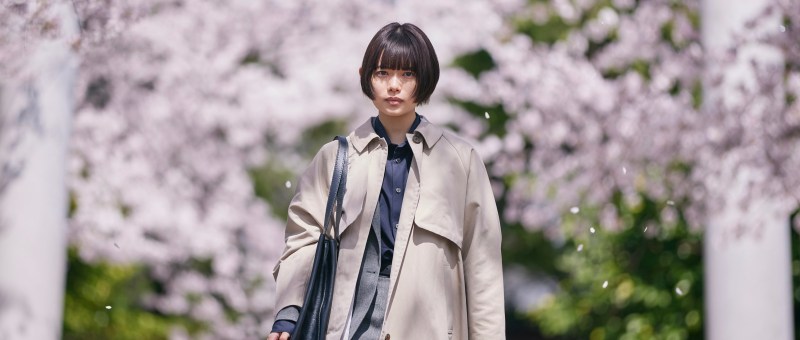
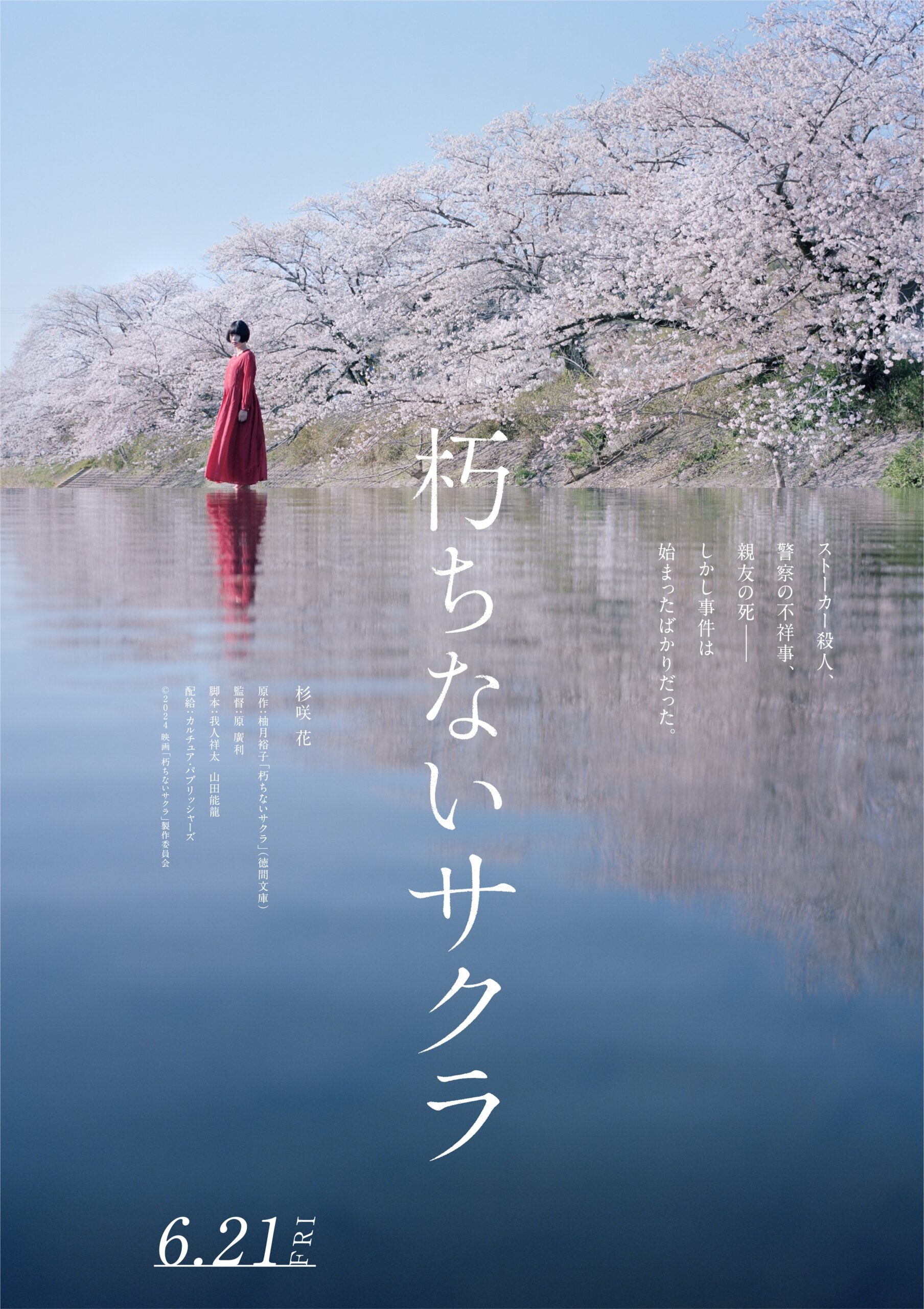
SAKURA (朽ちないサクラ, Hiroto Hara, 2024)

Sakura, or cherry blossoms, are often seen as emblematic of “Japan”. A potent poetic symbol, they blossom only for a short time and then slowly fade away. In the case of Hiroto Hara’s conspiracy drama SAKURA (朽ちないサクラ, Kuchinai Sakura), however, the title refers to a nickname for the security services. In fact, the title could be read either as the “sakura never decays,” or perhaps “will never be tarnished”, “will never die,” echoing the frequent messages that you can never really escape your past for like sakura it will always blossom again while the security services themselves will never fall.

In this case, the event that reverberates is a nerve gas attack on a station that is clearly an allegory for that conducted by Aum Shinrikyo in 1995. Like Aum which is now known as Aleph, the cult in the movie simply changed its name and carried on. Now the head of the police PR department for which the heroine works, former security agent Togashi (Ken Yasuda), is haunted by a mistake he made as a rookie cop and blames himself for not being able to stop the disaster. As fate would have it, the case they’re currently investigating ties back to the cult suggesting a much wider conspiracy in play than the simple intention to cover up a murder.

But there are also two killings here that are likely connected, the first being that of a woman whose allegation of stalking was ignored by the police who, rather than investigate, went off to enjoy themselves on some kind of outing The press is having a field day with the implication the police are both lacking in compassion and negligent in their work. Predictably, the PR division’s main intention is to uncover the source of the leak with Togashi seemingly already suspecting a woman in his department, Izumi (Hana Sugisaki), whose boyfriend, Isokawa (Riku Hagiwara), was himself on that outing. Izumi had accidentally let slip about the police’s activities to her best friend Chika (Kokoro Morita), a reporter who works at the local paper that broke the story. Chika insisted it wasn’t her who wrote the article, but Izumi didn’t believe her. Chika is then found dead after vowing to investigate more fully and prove Izumi wrong with an original hypothesis that she took her own life in guilt over betraying her friend.

Obviously, there’s more to it than that and it soon becomes clear she was murdered probably because she got too close to the truth. Izumi isn’t a detective, but finds herself trying to investigate out of a sense that she contributed to Chika’s death by not believing her when she said she never broke the promise she made not to tell anyone else about the police outing. One might legitimately ask why she is allowed to do this, and the lead detective is not originally happy about it, but as they’re grateful for the leads she turns up, Izumi effectively gets a sort of promotion to investigator. Later events might lead us to wonder if she isn’t being manipulated as part of a wider conspiracy, but then the central intention remains unclear as does the reason the shady forces in play would allow her to investigate Chika’s death knowing the possibility that she may stumble on the “real” truth in the process.

It could be that they simply don’t need to stop her because they know there’s nothing she can do. She has no evidence for her final conclusions and no one would believe her if she spoke out, but it seems odd that conspiracists who’ve already bumped off several other people would allow her to simply walk away knowing what she knows if there were not some grander plan in motion. The question is, is it justified to cause the deaths of a small number of people in order to save the lives of hundreds more who might otherwise die if the cult carries out another terrorist attack before they can be stopped? Sakura apparently have spies and informants everywhere and will do everything they can to protect them in order to facilitate their goal of protecting the nation. Thus the famed cherry blossoms now become another symbol of constant threat and oppression in the spectre of the security services who watch and oversee everything but remain in the shadows themselves. Hara homes in on this sense of paranoia and injustice but in the end cannot resist indulging Izumi’s plucky rookie investigator spirit. Her final decision may not make an awful lot of sense while essentially pitting one authority figure against another. Nevertheless, the tension remains high as Izumi presses forward towards the truth no matter what the danger while like her policeman boyfriend determined to pursue justice wherever it may lie.


SAKURA screens as part of this year’s Japan Foundation Touring Film Programme.

Trailer (English subtitles)

Images: ©2024 SAKURA Film Partners

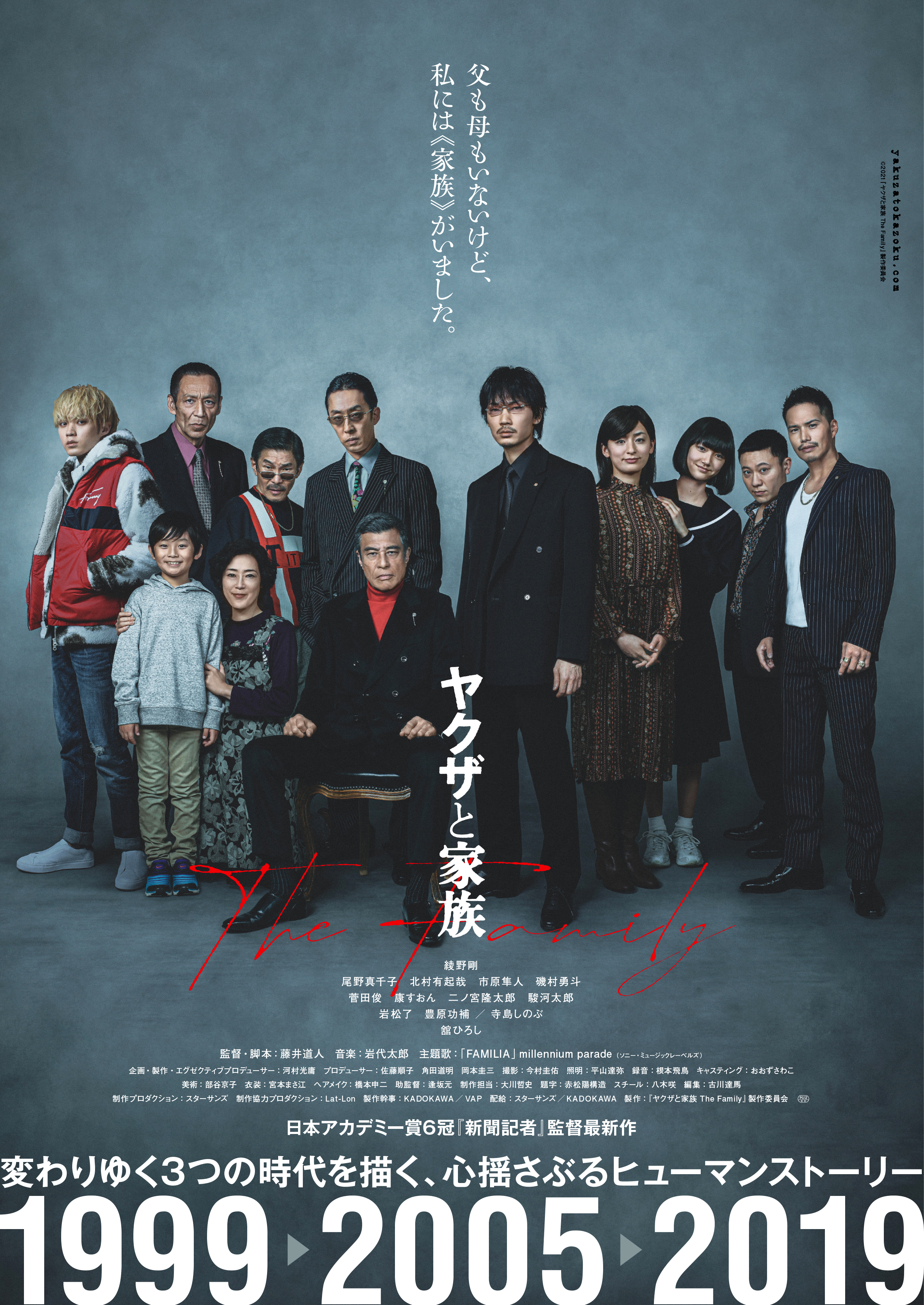
A Family (ヤクザと家族 The Family, Michihito Fujii, 2020)

“No one can survive as a yakuza in this world” according to another orphaned son playing the long game of a crime adjacent existence in Michihito Fujii’s melancholy gangster drama, A Family (ヤクザと家族 The Family, Yakuza to Kazoku The Family). The yakuza, or at least yakuza in the movies, has long been a relic of the Showa era rendered increasingly irrelevant in a society no longer in need of its dubious claims of protection. In truth, it’s hard to mourn the passing of organised crime, but Fujii at least finds a kind of pathos and infinite sympathy for these men for whom the gangster brotherhood took the place of a family even if one with a self-destructive legacy. 

To begin with, petty street punk “Li’l Ken” (Go Ayano) wants nothing to do with the yakuza, seemingly the only guest at the funeral of the drug dealer father he resented other than a corrupt cop from the organised crime squad, Osako (Ryo Iwamatsu), who expresses regret that had he simply arrested him perhaps Ken’s father would be still be alive. Visiting another “familial” environment, a Korean barbecue run by the maternal Aiko (Shinobu Terajima) herself the widow of a gangster currently with a baby on her back, Ken gets himself noticed by local mobster Shibasaki (Hiroshi Tachi) by taking on some punks who stormed into the restaurant and attacked his guys. Explaining that his guys don’t associate with drugs, Shibasaki offers him a job which he refuses but having his card in his pocket literally saves his life when he’s pickup by rival gang leader Kato (Kosuke Toyohara) after having stolen and then destroyed some of their stash after stumbling across a drug deal. The course of Ken’s life is set, he joins the Shibasaki gang along with his two delinquent friends and accepts Shibasaki as his “oyabun” or “father”. 

In Shibasaki, Ken finds a father figure more palatable than the one he lost. As in many a yakuza movie, the Shibasaki clan is positioned as “good yakuza” of the old school kind who believe in things like duty and honour and are apparently pursuing the path towards becoming “true men”. The rival Kyoyo, by contrast, are “bad” new yakuza who no longer play by the old rules and make their money through destructive vices such as drugs. The expected turf war does exactly materialise though the uneasy truce between the rival gangs becomes increasingly strained as the economic situation of millennial Japan begins to shift, the local town council apparently set on demolishing the red light district as part of their plans for redeveloping the city. Kyoyo would rather take over its entirety, pushing Shibasaki to retreat in exchange for a small amount of monetary compensation while shady cop Osako tries to play the situation to his own advantage. 

Yet it’s also clear that the yakuza as an institution is on its way out. After a 14-year prison term, Ken emerges into a very different world in which organised crime has been hounded further into the margins thanks to effective, though the film would also argue inherently vindictive, legislation. No one can make any money anymore, and the slightest slip up can lead to arrest. The Shibasaki gang is now a handful of old men, most of the guys having moved on only moving on from the yakuza life is not easy as Ken’s old friend Hosono (Hayato Ichihara) explains. In order to rejoin regular society, a former yakuza must endure five years in the wilderness unable to open a bank account or get a regular job leaving them with few possibilities for basic survival that enable them to leave a life of crime. Now with a young daughter and job in waste disposal, Hosono is nervous and reticent, reluctant to be seen in public with Ken lest he be tarred with the criminal brush and lose access to the new life he’s managed to build for himself as a responsible husband and father. 

Urged by Shibasaki, Ken eventually leaves one family for another in reuniting with a woman he loved before prison who has since made a respectable life for herself as a low level civil servant but once his life of crime is exposed by a thoughtless colleague at his new job in deconstruction, he discovers that there is no place for a “reformed” yakuza in the contemporary society because in a sense there can be no such thing. Once gangster always a gangster, there is no path forward. Complaining that Osako has stolen his right to life, Ken is told only that the yakuza lost human rights long ago. 

“They’re my family. No reasons are needed” Ken replied when asked why he became a yakuza, but he continues to find himself torn between the various concepts of family and the inheritances of his two very different father figures. “Your time is over old man”, Aiko’s fatherless son Tsubasa (Hayato Isomura) tells an unrepentant Kato attempting to hang on to his territory in the face of a younger generation operating on an entirely different level, rejecting the codification of gangsterdom but seemingly embracing its romance. Tsubasa too is later sucked in by the hyper masculine revenge drama of the yakuza way, seeking vengeance for the death of his father and apparently prepared to ruin his life in order to gain it. It’s for this surrogate son, now a kind of father figure himself, that Ken will eventually make a sacrifice. A sad tale of dubious paternal legacies, frustrated fatherhood, life’s persistent unfairness, and a perhaps uncomfortable lament for a bygone Japan defined by giri/ninjo conflict ruled by manly men, the ironically titled A Family has only sympathy for those trapped by an inescapable spiral of manly violence but also reserves its respect for those who know their time has passed and elect to end the cycle in order to set their “sons” free. 


Original trailer (no subtitles)

September 1923 (福田村事件, Tatsuya Mori, 2023)

After the devastating Great Kanto Earthquake struck in 1923, it led to a period of hysteria in which in the natural disaster somehow became equated with the Korean Independence Movement, foreigners, and socialists and who were after all thorns in the side of rising nationalism. Documentarian Tatsuya Mori makes his narrative film debut with September, 1923 (福田村事件, Fukudamura Jiken) released to mark the 100th anniversary of the incident and focussing on a little known episode in which villagers turned on a small group of itinerant medicine pedlars they were convinced were not Japanese. 

In this case, at least, they were Burakumin. An oppressed underclass of their own, they too are divided in their views about Koreans some finding solidarity with them as another minority who is bullied and discriminated against while others are quick assert themselves as at least being above them on the pecking order cheerfully using slur words as they go. Shinsuke (Eita Nagayama), the leader of the troupe, laments that they have to live this way, tricking those worse off than themselves into buying their snake oil cures while explaining that though people will often help each other out when times are good, if survival’s on the line they’ll turn against each other. 

Perhaps that’s difficult to imagine in a small village of genial farmers, but militarism has already corrupted its gentle rhythms. Men from the village are fond of telling war stories from their time as conscripts in China or Russia, though one has a particular bee in his bonnet about wives being left lonely with husbands away overseas and is convinced that his father has slept with his wife. Another local woman was indeed having an affair shortly before her husband was killed in action and is then ostracised by the village for her transgressive behaviour becoming yet another oppressed minority. The village chief is keen on democracy and progressive in his way yet soon finds himself powerless against the local militia mostly comprised of old men with a lust for blood and glory. It’s this militarist hysteria that eventually proves tragedy as they find themselves desperate to identify “spies” and protect the village only to murder children and a pregnant woman who were just passing through. 

The absurdity extends to asking those suspected of being Non-Japanese to repeat a particular phrase difficult for Koreans in particular to pronounce, only those from other areas of Japan also pronounce it in a way that might seem “foreign” in Tokyo. Cornered by the militia, Shinsuke asks if it would be alright to kill him even if he were Korean, taking issue with the militia’s absurdist and racist rationale that decides someone must die because of the way they pronounced a certain word or seemed uncomfortable shouting “banzai” at the point of a sword. But one of the villagers unwittingly uncovers a since of guilt felt even by a man in a village miles away from anything that the Koreans have been bullied for years, this the understandable result of their rage boiling over and a moment of retribution. 

The film seems to suggest that the buck doesn’t really stop, except perhaps with the bystander who merely watches this horrifying violence and does nothing. Tomokazu (Arata Iura) has recently returned to the village after many years living in Korea bringing back with him a Korean wife but his marriage is falling apart due to his own guilt and trauma having been complicit in a Japanese atrocity. Watching the massacre unfold, his wife, Shizuko (Rena Tanaka), asks him if he’s just going to watch this time again but his attempt to intervene makes no difference. An idealistic news reporter meanwhile takes her boss to task for publishing propaganda headlines associating Koreans with crime and terrorism rather than real truth of what’s happening on the ground, asking him what the point of the press is if it won’t speak truth to power. But militarists do not listen to reason, and as the headman points out they will have to keep living with those who’ve committed these heinous acts. Sometimes a little on the nose with its symbolism such as a literal murder of hope in the killing of an unborn child, Mori’s otherwise poignant drama lacks the impact it strives for but nevertheless addresses a shocking moment of mass hysteria that is not quite as historical as we’d like to think.


September 1923 screened as part of this year’s Nippon Connection

Original trailer (English subtitles)

Deliver Us From Evil (다만 악에서 구하소서, Hong Won-chan, 2020)

A melancholy hitman bids for paternal redemption but finds himself literally stalked by the mistakes of his violent past in Hong Won-chan’s pulpy action drama, Deliver Us From Evil (다만 악에서 구하소서, Daman Akeseo Goohasoseo). Aptly named, Hong’s noirish thriller takes us from the back streets of Osaka to underground Bangkok while the hero longs for the tranquil horizons of Panama but finally discovers that he cannot outrun himself even if he can perhaps repay his karmic debt by freeing others from the riptide of his moral transgressions. 

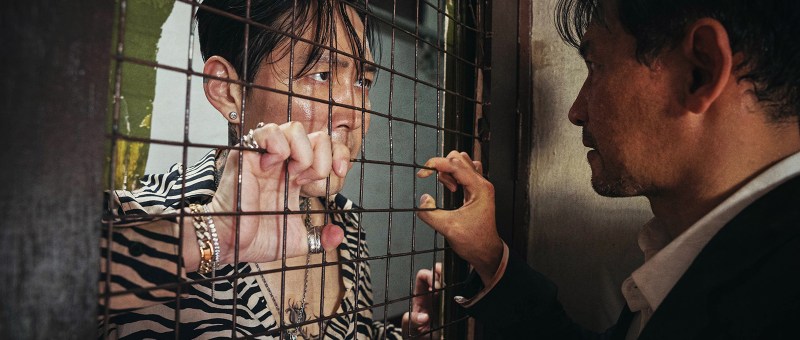
A former government agent apparently unceremoniously burned, In-nam (Hwang Jung-min) has been earning his keep as a killer for hire hiding out in Japan. His “one last job” is knocking off a Zainichi Korean mob boss, Koreda (Kosuke Toyohara), after which he’ll be free to go wherever he wants, arbitrarily setting his sights on Panama solely because of the tranquil scene featured in a picture opposite his favourite seat in his local izakaya. The past is however not done with him yet. His old handler gets in touch to let him know old flame Young-ju (Choi Hee-seo) has been trying to contact him, but so consumed with shame and defeat is he that he declines to respond only to hear a short time later that Young-ju has been found dead in Bangkok and as she’d listed him as next of kin he’s responsible for the repatriation of her body. Remorseful, he’s shocked to discover that Young-ju had a daughter, Yoo-min (Park So-yi), whose kidnap by her Korean-Chinese nanny may be connected to her murder. Switching up his plans, In-nam determines to save the daughter he believes to be his own but is pursued by flamboyant Korean-Japanese gangster Ray (Lee Jung-jae) hellbent on getting revenge for his estranged blood brother Koreda. 

In-nam finds himself in a sense caught between a series of codes of masculinity, apparently a former government spy who seems to have been involved in state sanctioned acts of torture and murder that may privately be against his sense of morality only to fall still further as a killer for hire even if we’re told in no uncertain terms that Koreda was a bad guy, a killer of women whose death is perhaps morally justifiable within the codes of chivalry. In-nam’s partner warns him about Ray, reminding him that they should have killed him at some point in the past but apparently let him live, a decision that has led, as Ray later states, to their present confrontation. Quizzed by a local Thai mobster, Ray claims he can’t even remember why he’s so set on killing In-nam but is mindlessly bound to follow his own code of manliness in avenging the death of a blood brother he had apparently fallen out with some years previously.

Meanwhile, in retrieving his daughter In-nam attempts to reclaim the right to a peaceful life making up in a sense for the mistakes of the past in having first abandoned Young-ju because of his manly code and then failed her in refusing her request for help. He attempts to reassert himself as a father by saving his little girl, but in doing so opts only for the personal, unmoved on discovering a child trafficking network enabled by the peculiar medical regulations of Japan and Korea which prohibit child organ transplants looking to save only Yoo-min while making no real effort to help the others. On reporting her daughter missing to the police, Young-ju had been horrified to discover Yoo-min’s photo pasted onto a wall entirely covered in similar notices for other children the police, as we later discover somewhat complicit, have so far failed to find. Yet saving the children is more happy accident than design, an indirect consequence of In-nam’s violent intervention. 

Indeed, In-nam more or less leaves the kids to his local sidekick a Korean transgender woman whose confirmation surgery he’s promised to fund in return for her assistance as guide and translator while he remains bound to a nihilistic path of manliness knowing there’s no way out for him that does not end in violent confrontation with past sins. Caught between the outlandish pulp of the flamboyant Ray and the noirish fatalism of In-nam’s journey into the darkness of the Bangkok underworld, Deliver Us From Evil defiantly refuses to marry its conflicting sensibilities as the two men pursue their respective codes each looking for their own particular deliverance but finding that salvation lies only in confrontation. 


Deliver Us From Evil screens at Edinburgh Filmhouse on 22nd June and Genesis Cinema London 24th June as the first Teaser Screening for this year’s London Korean Film Festival. The next screening in the series, Voice of Silence, will screen at Edinburgh Filmhouse on 1st July and Curzon Soho 3rd July, while Samjin Company English Class will then screen at London’s Screen on the Green on 8th July.

International trailer (English subtitles)

Children of the Dark (闇の子供たち, Junji Sakamoto, 2008)

Children of the Dark posterJunji Sakamoto’s career has been marked by a noticeable split between commercial projects and artier genre pieces but even considering his tendency towards socially conscious filmmaking, Children of the Dark (闇の子供たち, Yami no Kodomotachi) is a surprising entry into his filmography. Starring heartthrob Yosuke Eguchi as an earnest reporter determined to expose the extent of Japanese complicity in the exploitation of Thai children, Sakamoto’s film is hard hitting in the extreme, refusing to back away from the horrors that these children are forced to experience but perhaps taking things too far in putting his young actors through a series of emotionally difficult scenes. Children of the Dark was pulled from its slot in the Bangkok Film Festival for painting a less than idealised picture of the grim underbelly of Thai society but Sakamoto is also keen to point out that the problem is a global one which merely finds an unhappy home in a country many regard as a “paradise”.

Nanbu (Yosuke Eguchi), a Japanese ex-pat reporter living in Thailand, has been handed a hot tip on a difficult piece of investigate reporting relating to the illegal trafficking of human organs. His investigation brings him back into contact with a local NGO who operate a centre promoting educational and human rights whilst helping the impoverished children of the area. The NGO is currently investigating the disappearance of child they’d been trying to save, but the two investigations eventually overlap as it becomes clear that the organ trafficking and sexual exploitation of abandoned children are part of the same deeply entrenched cycle of human cruelty.

Nanbu’s key interest is in the Japanese connection to organ transplant case. A wealthy Japanese couple will apparently be bringing their son to Thailand for an illegal transplant to get around Japan’s strict medical ethics laws which prevent children becoming organ donors. Though it might be thought that the boy’s parents simply believe they will be undergoing a legitimate medical procedure only abroad, they are perfectly aware that the organ they will be receiving will have been acquired specifically for the purpose and will have been ripped from a healthy child rather than transplanted from an unfortunate accident victim.

Using the NGO’s contacts, Nanbu begins to realise how deeply the conspiracy runs. The NGO’s investigations lead them to a brothel in which extremely young boys and girls are kept in cages to be picked out like lobsters in a restaurant by the international clientele each after a different kind of sexual experience. The children are beaten if they refuse and literally “thrown out” in black bin bags should they contract illnesses such as AIDS. When one of the children is killed by a client who overdoses him on hormones, the matter is settled with financial compensation and the body disposed of. Many of these children are orphans from backgrounds of extreme poverty, neglected or abandoned by their parents into a life of sexual servitude in part caused by ongoing economic inequality which is only exacerbated by the thriving underworld enterprises of people and drug trafficking.

Nanbu is, however, only a reporter. Keiko (Aoi Miyazaki), a young and idealistic Japanese woman recently arrived in Thailand to work with the NGO, is committed to saving individual lives whereas Nanbu and the paper are committed to being passive observers exposing the truth in the hope that the whole sordid system will one day collapse. Keiko’s sometimes dangerous naivety is contrasted with Nanbu’s jaded complicity in essentially allowing a young child’s life to be sacrificed to get his story with only the justification that something might be done if the truth were known.

A final revelation, however, proves a step too far even if it encourages all to point the finger back on themselves and accept that personal complicity may run far deeper than most suspect. The tragedy is further undercut by the strange decision to end on an idyllic scene of paradise with a karaoke track playing over the top complete with lyrics pasted on the side – a tonal variation too far given the necessarily somber atmosphere of the the film as a whole. Despite the strangeness of the ending with its unexpected reversals and clumsy attempt at reflexivity, Children of the Dark is an urgent, difficult piece exposing the unspeakable cruelties hidden away in the underbelly of a foreign “paradise”.


Original trailer (no subtitles)

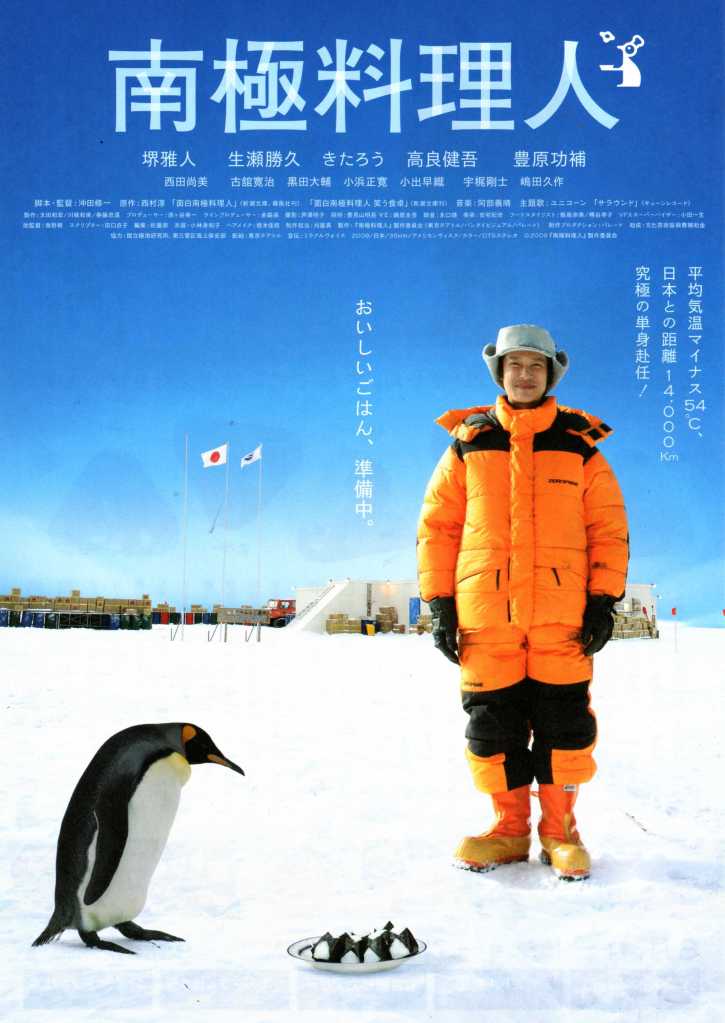
The Chef of South Polar (南極料理人, Shuichi Okita, 2009)

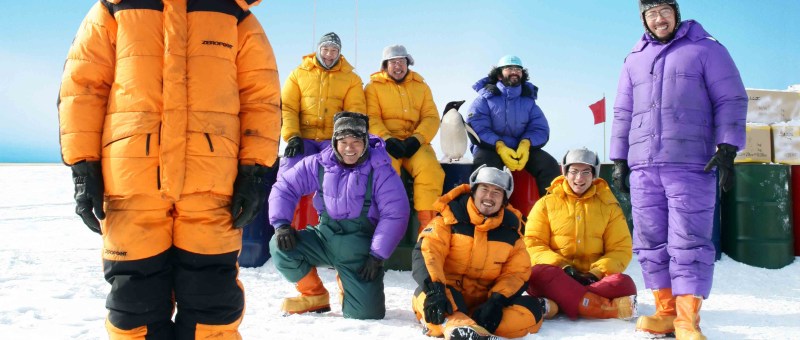
If there’s one thing which unites the universes present in the films of Shuichi Okita, aside from their warm and humorous atmosphere, it’s their tendency to take a generally genial, calm and laid-back protagonist and throw them into an inhospitable environment which they don’t quite understand. When it comes to “inhospitable”, the hero of The Chef of South Polar (南極料理人, Nankyoku Ryourinin) couldn’t have it much worse, unfairly transferred to a polar research station where the air temperature is so cold nothing, not even bacteria, can survive outside. Still, like all of Okita’s laid-back guys, he handles his difficult circumstances with a kind of stoical resignation until, of course, the situation can be handled no more.

Separated from his wife and children, Jun Nishimura (Masato Sakai) previously worked for the Japanese coastguard but has now been transferred (not altogether of his own volition) to a polar research station where he is responsible for all the culinary needs of the seven men who will be working together during the expedition which is intended to last one year. Each of the other men has his own part to play in the scientific endeavours but cooped up as they are, the greater issue is downtime as the guys revert to a kind of high school camp mentality, divided into various groups and activities from the “Chinese Research Club” to a bar being run by the doctor who is also training for a triathlon. 365 days in the freezing cold does eventually begin to take its toll but all of the crazy only serves to remind people how important it is that they all get on and make it through this together.

Based on the autobiographical writings of the real Jun Nishimura, Okita’s isolation experiment has a pleasantly authentic feeling as the titular chef laments the difficulties of the conditions but continues to churn out beautifully presented culinary treats despite the hostile environment. Resources are also strictly limited as the original provisions are intended to last the entire expedition, hence why most of the foodstuffs are canned, vacuum packed or frozen but there are a few luxuries on offer including some prize shrimp apparently left behind, uneaten, by a previous team which proves an additional occasion for celebration just as despair is beginning to set it in. Seeing as the men are all here for more than a year, celebratory occasions do present themselves with regularity from birthdays to “mid winter holiday” and even a good go at the Japanese festival of Setsubun with peanuts instead of beans.

Despite these brief moments of respite, being completely cut off from the outside world for such a long time with little natural light and hardly anything to do outside of research places its own kind of pressure on the minds of these top scientists. As their hair gets shaggier and their beards progressively less kempt, sanity also begins to slip. Each of the guys has their own particular marker, something they’re missing that’s playing on their minds until they eventually break completely. For some this could be realising they’ve eaten all of the ramen which exists in their tiny world and now have nothing left to live for, missing their kids, or realising that their girlfriend might have met someone else while they’ve been busy devoting themselves to science, but this being an Okita film even if an axe is raised it rarely falls where intended and the only cure for mass hysteria is guilt ridden kindness and a willingness to work together to put everything right again.

Of course, the other thing the guys have to put up with is the attitude of the outside world as everyone is very keen to ask them about the cute penguins and seals which they are sure must be everywhere at the South Pole, only to have to explain that it’s just too cold for cuteness though it does lead them to the epiphany that they are the only living creatures in this desolate place and so share a special kind of kinship. Filled with Okita’s usual brand of off the wall humour and gentle humanity, The Chef of South Polar is another warm and friendly tale of nice people triumphing over adversity through cooperation, mutual understanding and sustained belief in the healing power of ramen.


Original trailer (no subtitles)

https://www.youtube.com/watch?v=BJpBexuuSWU

Shinjuku Swan (新宿スワン, Sion Sono, 2015)

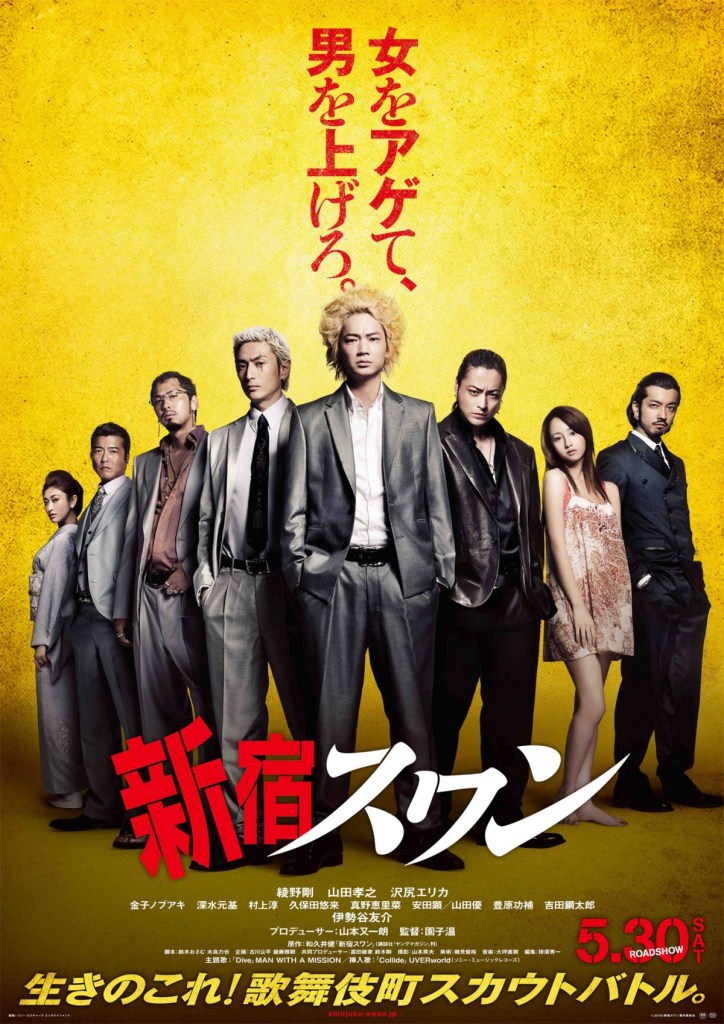
Shinjuku SwanEnfant terrible of the Japanese film industry Sion Sono has always been prolific but recent times have seen him pushing the limits of the possible and giving even Takashi Miike a run for his money in the release stakes. Indeed, Takashi Miike is a handy reference point for Sono’s take on Shinjuku Swan (新宿スワン) – an adaptation of a manga which has previously been brought to the small screen and is also scripted by an independent screenwriter rather than self penned in keeping with the majority of Sono’s directing credits. Oddly, the film shares several cast members with Miike’s Crows Zero movies and even lifts a key aesthetic directly from them. In fact, there are times when Shinjuku Swan feels like an unofficial spin-off to the Crows Zero world with its macho high school era tussling relocated to the seedy underbelly of Kabukicho. Unfortunately, this is somewhat  symptomatic of Sono’s failure, or lack of will, to add anything particularly original to this, it has to be said, unpleasant tale.
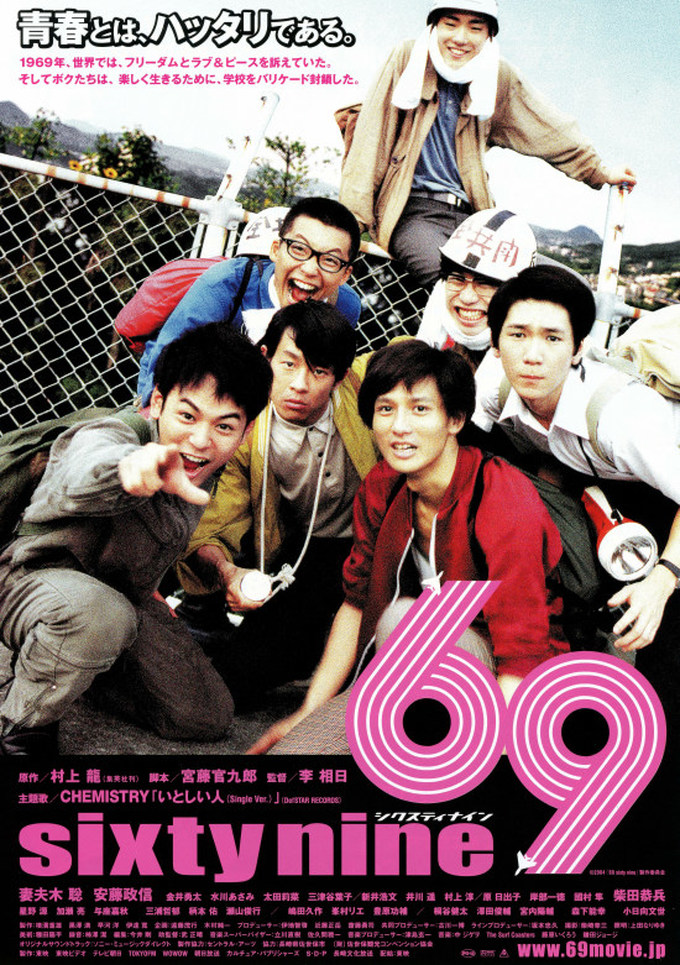
Our “hero” is down on his luck loser Tatsuhiko (Go Ayano) who’s come to Shinjuku to make it big. He’s here because it’s the sort of place you can make it happen with no plan and no resources. “Luckily” for him, he runs into low-level gangster Mako (Yusuke Iseya) who spots some kind of potential in him and recruits him as a “scout” for his organisation, Burst. Now dressed in a fancy suit, Tatsuhiko’s new job is stopping pretty girls in the street and trying to talk them into working in the sex industry….

Tatsuhiko is not the brightest and doesn’t quite understand what the implications of his work are. When he finally gets it, he feels conflicted but Mako convinces him that’s it’s OK really with a set of flimsy moral justifications. Before long, Tatsuhiko comes into conflict with a lieutenant, Hideyoshi (Takayuki Yamada), from the rival gang in town, Harlem, and a yakuza style territorial dispute begins to unfold destabilising the entire area.

Sono has often been criticised for latent misogyny and an exploitative approach to his material and Shinjuku Swan is yet more evidence for those who find his output “problematic”. Though based on a manga and scripted by a third party, Shinjuku Swan has an extremely ill-defined take on the sex industry and the people involved with it. After figuring out what happens to the girls he takes to Mako, Tatsuhiko has second thoughts but Mako tells him that the girls are happy and are in this line of work because they enjoy it (leaving out all the stuff about debts, drugs, and violence). So Tatsuhiko vows to make even more girls live happy lives inside the “massage parlours” of Kabukicho.

Noble heart or not, Tatsuhiko is a pimp. Not even that, he’s a middle man pimp. He’s earning his money from the suffering of the women that’s he conned, coerced, and finally exploited. Leaving aside the idea that, yes, some of these women may be perfectly happy with the arrangement, at least one of Tatsuhiko’s recruits displays evidence of previous self harm and is unable to cope with the demands of her new way of life. Another woman, Ageha (Erika Sawajiri), who becomes Tatsuhiko’s primary damsel in distress, escapes into a children’s fairytale picture book in which a prince with crazy hair just like Tatsuhiko’s comes to rescue the heroine from her life of slavery and takes her to a place of love and safety. Tatsuhiko “rescues” her by taking her to a “nicer” brothel…

Tatsuhiko may have convinced himself that he’s somehow a force for good, “helping” these women into employment and providing “protection” for them unlike the other guys from rival gangs who use drugs and violence to keep their girls in line, but his continued belief in his own goodness becomes increasingly hard to swallow as he learns more about how this industry really works. It’s difficult to believe in a “hero” who is so deluded about his own place in the grand scheme of things – he’s not stupid enough to be this oblivious, but not clever enough to be continually unseeing all of the darkness that surrounds the way he makes his living.

All of this is merely background to the central yakuza gang war which later ensues. Tatsuhiko ends up as a pawn in the tussle for territory between Burst and Harlem as double crosses become triple crosses and no one is to be trusted. Predictably, Tatsuhiko and Hideyoshi turn out to have a long standing connection though this revelation never achieves the dramatic weight it’s looking for and the gang war itself is, at best, underwhelming. Notable scenes including a classic battle in the rain could have been spliced in from Crows Zero and no one would have noticed. The main dramatic thread remains Tatsuhiko’s journey as he travels from clueless loser to, admittedly still clueless, assured petty gangster and smooth talking lady killer.

If there’s an overall feeling which imbues Shinjuku Swan, it’s lack of commitment. Though often beautifully photographed and featuring some interestingly composed sequences (including a few Carax-esque musical set pieces) the final effect is one of workman-like competence. Not bad by any means, but this feels like the work of a director for hire and lacks the sense of the personal that a would-be-auteur would usually seek to provide. Moral ambiguity can often be a film’s strong point, inviting comment and debate rather than pushing a pre-defined agenda but Shinjuku Swan takes too many incompatible approaches to the already unpalatable series of questions that it stops short of asking. Distinctly uneven, Shinjuku Swan ends on a note of anti-climax and though a perfectly serviceable, mainstream, commercial effort proves something of a disappointment from a director who has often managed to bring out a sense of mischievous irony in similarly themed work to date.


Unsubtitled trailer:

69 (Lee Sang-il, 2004)

69Ryu Murakami is often thought of as the foremost proponent of Japanese extreme literature with his bloody psychological thriller/horrifying love story Audition adapted into a movie by Takashi Miike which itself became the cornerstone of a certain kind of cinema. However, Murakami’s output is almost as diverse as Miike’s as can be seen in his 1987 semi-autobiographical novel 69. A comic coming of age tale set in small town Japan in 1969, 69 is a forgiving, if occasionally self mocking, look back at what it was to grow up on the periphery of massive social change.
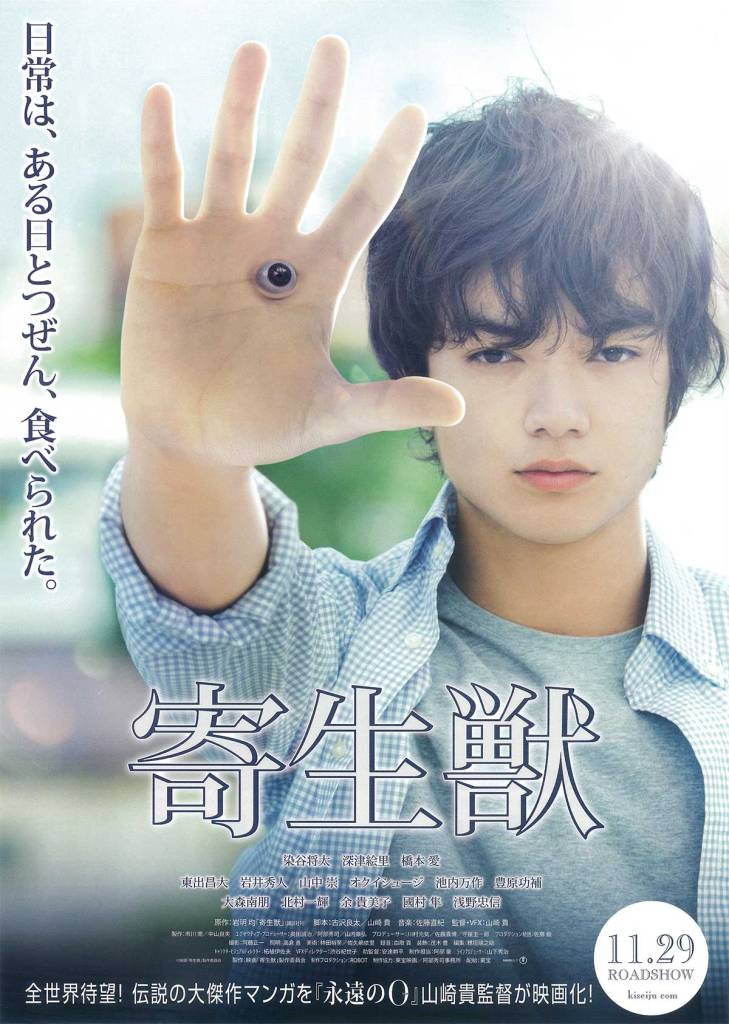
The swinging sixties may have been in full swing in other parts of the world with free love, rock and roll and revolution the buzz words of the day but if you’re 17 years old and you live in a tiny town maybe these are all just examples of exciting things that don’t have an awful lot to do with you. If there’s one thing 69 really wants you know it’s that teenage boys are always teenage boys regardless of the era and so we follow the adventures of a typical 17 year old, Ken (Satoshi Tsumabuki), whose chief interest in life is, you guessed it, girls.

Ken has amassed a little posse around himself that he likes to amuse by making up improbable fantasies about taking off to Kyoto and sleeping with super models (oddly they almost believe him). He talks a big about Godard and Rimbaud, posturing as an intellectual, but all he’s trying to do is seem “cool”. He likes rock music (but maybe only because it’s “cool” to like rock music) and becomes obsessed with the idea of starting his own Woodstock in their tiny town but mostly only because girls get wild on drugs and take their tops off at festivals! When the object of his affection states she likes rebellious guys like the student protestors in Tokyo, Ken gets the idea of barricading the school and painting incomprehensible, vaguely leftist jargon all over the walls as a way of getting her attention (and a degree of kudos for himself).

69 is a teen coming of age comedy in the classic mould but it would almost be a mistake to read it as a period piece. Neither director Lee Sang-il nor any of the creative team are children of the ‘60s so they don’t have any of the nostalgic longing for an innocent period of youth such as perhaps Murakami had when writing the novel (Murakami himself was born in 1952). The “hero”, Ken, is a posturing buffoon in the way that many teenage boys are, but the fact that he’s so openly cynical and honest about his motivations makes him a little more likeable. Ken’s “political action” is merely a means of youthful rebellion intended to boost his own profile and provide some diversion at this relatively uninteresting period of his life before the serious business of getting into university begins and then the arduous yet dell path towards a successful adulthood.

His more intellectual, bookish and handsome buddy Adama (Masanobu Ando) does undergo something of a political awakening after the boys are suspended from school and he holes up at home reading all kinds of serious literature but even this seems like it might be more a kind of stir crazy madness than a general desire to enact the revolution at a tiny high school in the middle of nowhere. Ken’s artist father seems oddly proud of his son’s actions, as if they were part of a larger performance art project rather than the idiotic, lust driven antics of a teenage boy but even if the kids pay lip service to opposing the war in Vietnam which they see on the news every night, it’s clear they don’t really care as much as about opposing a war as they do about being seen to have the “cool” opinion of the day.

Lee takes the period out of the equation a little giving it much less weight than in Murakami’s source novel which is very much about growing up in the wake of a countercultural movement that is actually happening far away from you (and consequently seems much more interesting and sophisticated). Were it not for the absence of mobile phones and a slightly more innocent atmosphere these could easily have been the teenagers of 2003 when the film was made. This isn’t to criticise 69 for a lack of aesthetic but to point out that whereas Murakami’s novel was necessarily backward looking, Lee’s film has half an eye on the future.

Indeed, there’s far less music than one would expect in the soundtrack which includes a few late ‘60s rock songs but none of the folk/protest music that the characters talk about. At one point Ken talks about Simon & Garfunkel with his crush Matsui (Rina Ohta) who reveals her love for the song At the Zoo so Ken claims to have all of the folk duo’s records and agrees to lend them to her though his immediately asking to borrow money from his parents to buy a record suggests he was just pretending to be into a band his girl likes. Here the music is just something which exists to be cool or uncool rather than an active barrier between youth and age or a talisman of a school of thought.

Lee’s emphasis is firmly with the young guys and their late adolescence growth period, even if it seems as if there’s been little progress by the end of the film. There’s no real focus on their conflict with the older generation and the movie doesn’t even try to envisage the similar transformation among the girls outside of the way the boys see them which is necessarily immature. That said, the film is trying to cast a winking, wry look back at youth in all its eager to please insincerity. It’s all so knowingly silly, posturing to enact a revolution even though there’s really no need for one in this perfectly pleasant if slightly dull backwater town. They’ll look back on all this and laugh one day that they could have cared so much about about being cool because they didn’t know who they were, and we can look back with them, and laugh at ourselves too.


Ryu Murakami’s original novel is currently available in the UK from Pushkin Press translated by Ralph McCarthy and was previously published in the US in the same translation by Kodansha USA (but seems to be out of print).

Unsubtitled trailer:

and just because I love it, Simon & Garfunkel At the Zoo

Parasyte The Movie Part 1 (寄生獣, Takashi Yamazaki, 2014)

parasyte part oneReview of Takashi Yamazaki’s adaptation of Hitoshi Iwaaki’s manga Parasyte – Parasyte: The Movie Part 1 (寄生獣, Kiseiju) first published by UK Anime Network.


Humans – are we the biggest threat to our planet and ultimately our own survival? If the world population were halved, would we also halve the number of forests that are burned and the damage that we’re doing to our natural environment? These thoughts run as a voice over beginning the full scale blockbuster adaptation of Hitoshi Iwaaki’s classic manga which was also recently adapted into a critically acclaimed anime. The Parasyte of title most obviously refers to the extraterrestrial microbes which are climbing into the driving seat of an unsuspecting host’s brain with nothing less than the colonisation of our entire species on their “minds”, yet, is it we ourselves who are the real parasites feasting on the corpse of our dying planet? Parasyte is that rare blockbuster treat that is content to give us man-eating, shapeshifting, monsters and gore filled destruction but also wants us to dig a little deeper into our own souls at the same time.

Shinichi Izumi’s (Shota Sometani) mum (Kimiko Yo) probably told him not to sleep with his headphones on but luckily they’re about to save his life as a weird little bug tries to crawl into his ears but finding them blocked opts for the arm instead. Wrapping the cord around his elbow tourniquet style, Shinichi is able to stop the bug’s progress but the parasite has taken root and Shinichi is horrified to find his right hand is no longer his own but is now controlled by a dispassionate alien that eventually names himself “Migi”.

Shinichi and Migi develop an odd kind of partnership born of their mutual dependency which is threatened only by the presence of other Parasytes who have successfully infiltrated a human brain and can blend in with the general populace (aside from their cold and robotic natures). To his horror, Shinichi discovers a new teacher at his school is actually a Parasyte stooge who recognises the “research” potential of a hybrid team like Shinichi and Migi. Becoming very keen on “experiments” Ryoko Tamiya (Eri Fukatsu) has also mated with one of her fellow Parasytes in the hopes of exploring what will happen with the birth – will it be purely a human child seeing as it’s born of two human bodies or will something of the Parasyte get through? However, Ryoko’s “network” of Parasytes aren’t all as committed to scientific research as she is and Shinichi and Migi quickly find themselves becoming humanity’s last line of defence against the invading creatures.

Shinichi is the teenage lead of the picture but in this first part at least it seems to be Ryoko leading the show. She gives us the original voice over and it’s her burgeoning motherhood that gives the film its clearest ideological standpoint. As the dispassionate Ryoko comes to develop the beginnings of maternal pangs and a desire to ensure the survival of her child (or perhaps just her “experiment”), so Shinichi finds his humanity being erased by the parasitical “child” he is gestating in the form of Migi. At the same time Migi begins to take on a protective mentality towards his host which may be more than simple self preservation particularly after a traumatic near death experience bonds the two even tighter together, in a biological sense at least.

Though the film obviously references former genre classics, in particular Invasion of the Bodysnatchers with its difficult to detect pod people, it steers clear of the “red scare” inspired sense of paranoia and the feeling of intense mistrust that exists even between supposedly good friends. Migi is able to sense (to a degree) his own kind making the presence of potentially dangerous Parasytes easier to detect but the fact that the Parasytes are able to colonise and use the form of someone all too familiar to confuse their enemies restores something of their power to lurk unsuspected in the shadows.

All this seems to suggest that the big screen live action adaptation of Parasyte would be a fairly serious affair yet the tone is often lighthearted, maintaining the darkly humorous buddy comedy side of the relationship between normal teenager Shinichi and the almost omniscient yet strange Migi. Migi, as played by veteran actor Sadao Abe who is perhaps most closely associated with comedic roles, has a thirst for a different kind of “brains” than his fellow Parasytes and quickly devours any and all knowledge he can get his “hand” on though he lacks the emotional intelligence to make sense of everything he learns and thus is dependent on his host Shinichi to get a fuller understanding of the human world.

Like the blockbuster mainstream films of recent times Parasyte boasts generally high production values on a par with any Hollywood movie though it has to be said that the film is often undermined by unconvincing CGI. However, this is mainly a problem with the action scenes and Migi himself is generally well integrated into the action and oddly adorable to boot. In some ways it might have been interesting to see a fully “in camera” take on the effects ala Cronenberg whose spirit is most definitely evoked throughout the film which also harks back to ‘80s body horror with its synth score highlights and generally gruesome scenes of carnage. Though it’s hard to judge the overall effect from just this first instalment of a two part film which drops a decent number of threads to be picked up in part two, part one at least serves as a tantalising appetiser which only heightens expectations for its final conclusion.


Parasyte: The Movie Part 1 is currently available on DVD and blu-ray in the UK from Animatsu Entertainment with Part 2 to follow in June 2016.