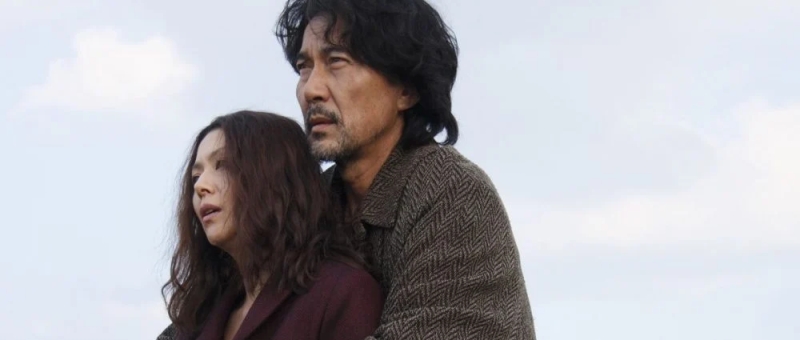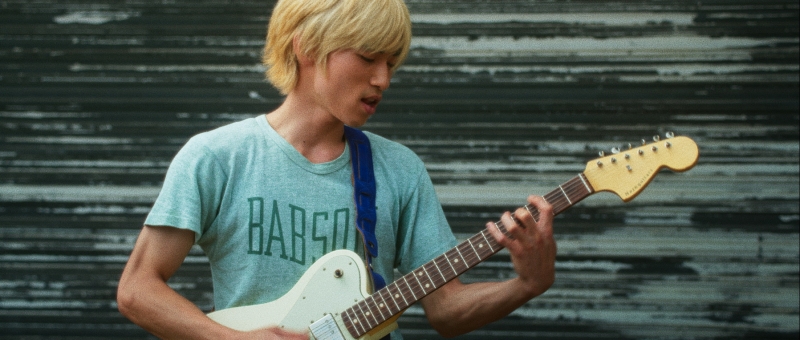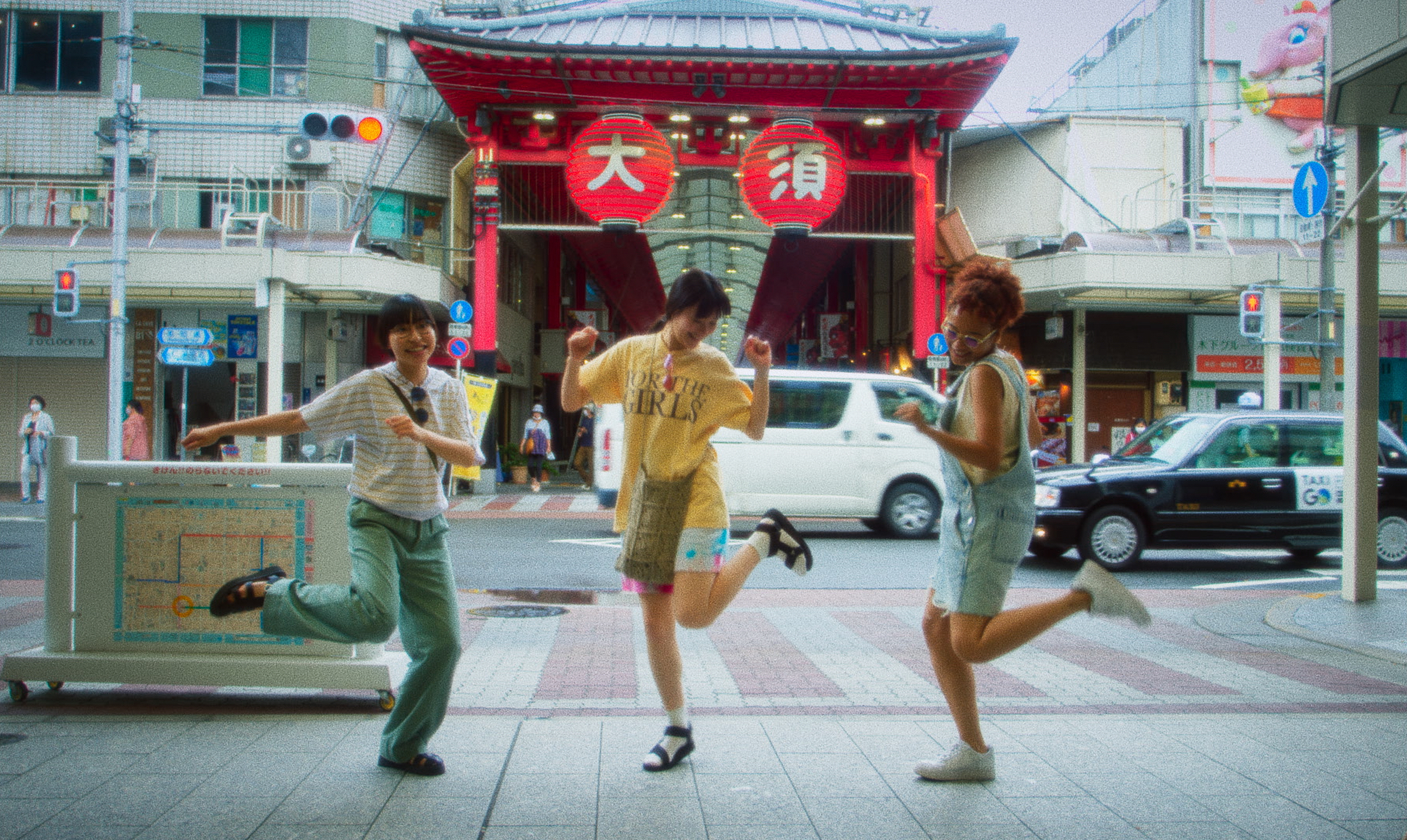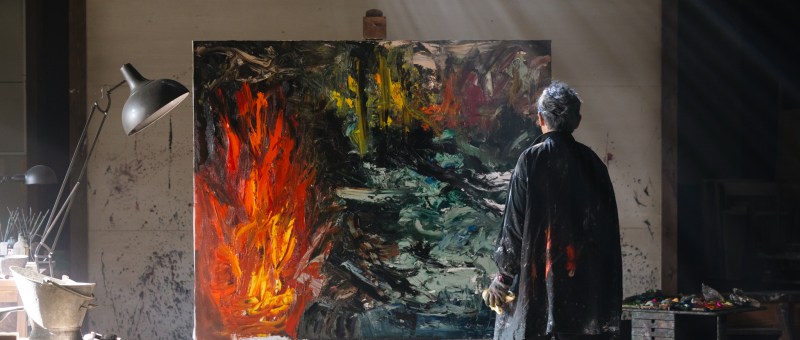
Bayside Shakedown (踊る大捜査線 THE MOVIE, Katsuyuki Motohiro, 1998)

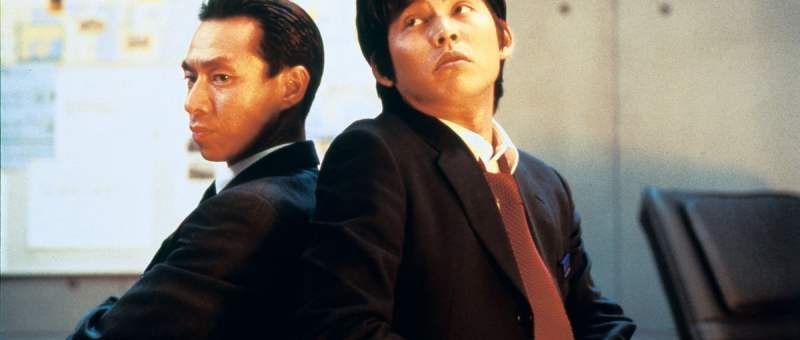
Those who believe that Japanese cinema has continued to decline throughout the 21st century often cite the release of Bayside Shakedown (踊る大捜査線, Odoru Daisosasen) as a turning point arguing that its vast and unexpected success ushered in an era of populist filmmaking dominated by existing franchises such as television drama, manga, and light novels. Leaving aside the question of whether the industry can really be said to be in a creative decline, the criticism is in itself a little unfair in that the film is exactly what it’s intended to be, perfectly enjoyable mainstream entertainment, while like the television series quietly subversive in its criticisms of police bureaucracy using humour to make subtle digs at the service in a way more “serious” films may not be able to. 

Director Katsuyuki Motohiro signals his intentions in the opening scene in which grizzled, trenchcoat-wearing detective Aoshima (Yuji Oda) stakes out a pleasant suburban house later joined by two colleagues who appear equally serious, yet as it turns out they aren’t on the look out for criminals but simply waiting for their boss, Police Commissioner Yoshida (Shigeru Koyama), to emerge so they can drive him to a police golfing tournament. Ironically enough, the scene is soon repeated, only for Yoshida to be tasered and kidnapped for ransom. Meanwhile, another difficult case arises when a body is found floating in a local river and is discovered to have been murdered, a soft toy found sewn into his stomach. 

The bizarre murder is a problem for the detectives at Wangan Police Station because whenever there’s a difficult case they have to call in the guys from HQ and are then financially responsible for them which is why the guys in accounts would really rather they write down suicide and leave it at that. Budgetary constraints are a persistent theme, the other random case hovering in the background being a phantom thief who keeps stealing the detectives’ receipts so they can’t claim their expenses. In any case, the kidnapping means HQ are involved anyway, quickly taking over an upper floor of the station and locking the local cops out of their investigation or else relegating them to demeaning leg work such as traffic stops and info gathering. 

The conflict between HQ and the local branch is further brought out by the awkward friendship between careerist policeman Muroi (Toshiro Yanagiba) and the earnest Aoshima who have each made a promise to each other that Muroi will climb the ladder while Aoshima takes care of business in the streets to ensure the police force continues to function correctly. Muroi is however in a difficult position, another officer informing him that he’s being put in charge because he’d be an easy fall guy as he went to a regional college while the others are all Todai alumni and minded to look out for each other. He finds himself compromised, unable to keep his promise to Aoshima because of the pressure from above while feeling guilty about the way the local cops are being treated by the bigwigs from the city. Meanwhile the police chiefs sit around a large circular table not unlike the war room in Stanley Kubrick’s Dr Strangelove issuing orders via video link while spending most of their time trying to make sure the local force is sidelined and squabbling over who actually gets to make an arrest. 

Pressured over their expenses, expected to work long hours, and generally made to feel unappreciated the detectives start to wonder what it’s all for, energetic female detective Sumire (Eri Fukatsu) in particular keeping a resignation letter in her desk uncertain whether or not to hand it in. Nevertheless through their quest to save the commissioner along with all the other cases including a potential serial killer operating through a murder fantasy website and a thief who seems to enjoy sneaking into people’s workplaces and stealing small personal items including those of the police officers, they each come to re-appreciate the importance of compassionate local policing along with their responsibility to each other as friends and colleagues even making sure they hold their fellow officers to account especially those involved with the budget. Lighthearted in tone yet boasting a fair few impressive action sequences Bayside Shakedown has in the past been unfairly maligned but is undeniably entertaining with a series of solid mysteries at its centre along with a few jibes at the overly bureaucratised nature of modern policing. 


Trailer (no subtitles)

Bushido (碁盤斬り, Kazuya Shiraishi, 2024)

The hypocrisies of samurai society have led a dejected ronin into prideful penury but there is perhaps a fine line between properness and priggery that he struggles to accommodate. Like his earlier film Blood of Wolves, Kazuya Shiraishi’s Bushido (碁盤斬り, Gobankiri) is a loving homage to a classic genre, in this case jidaigeki, albeit one with a modern twist in which it’s the murkiness of the society and contradictions of its code that make it impossible to live in rather than the innate corruptions of the samurai class. 

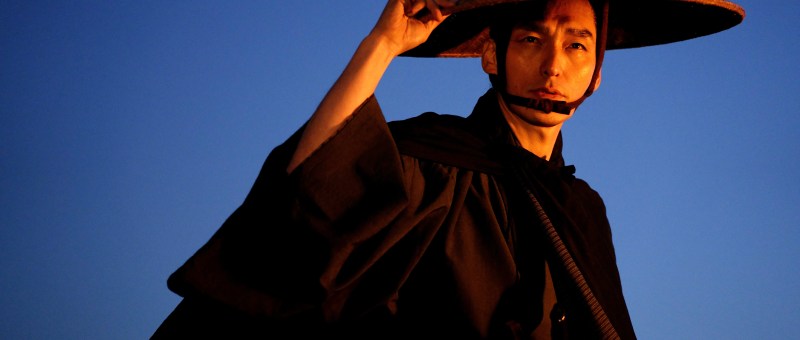
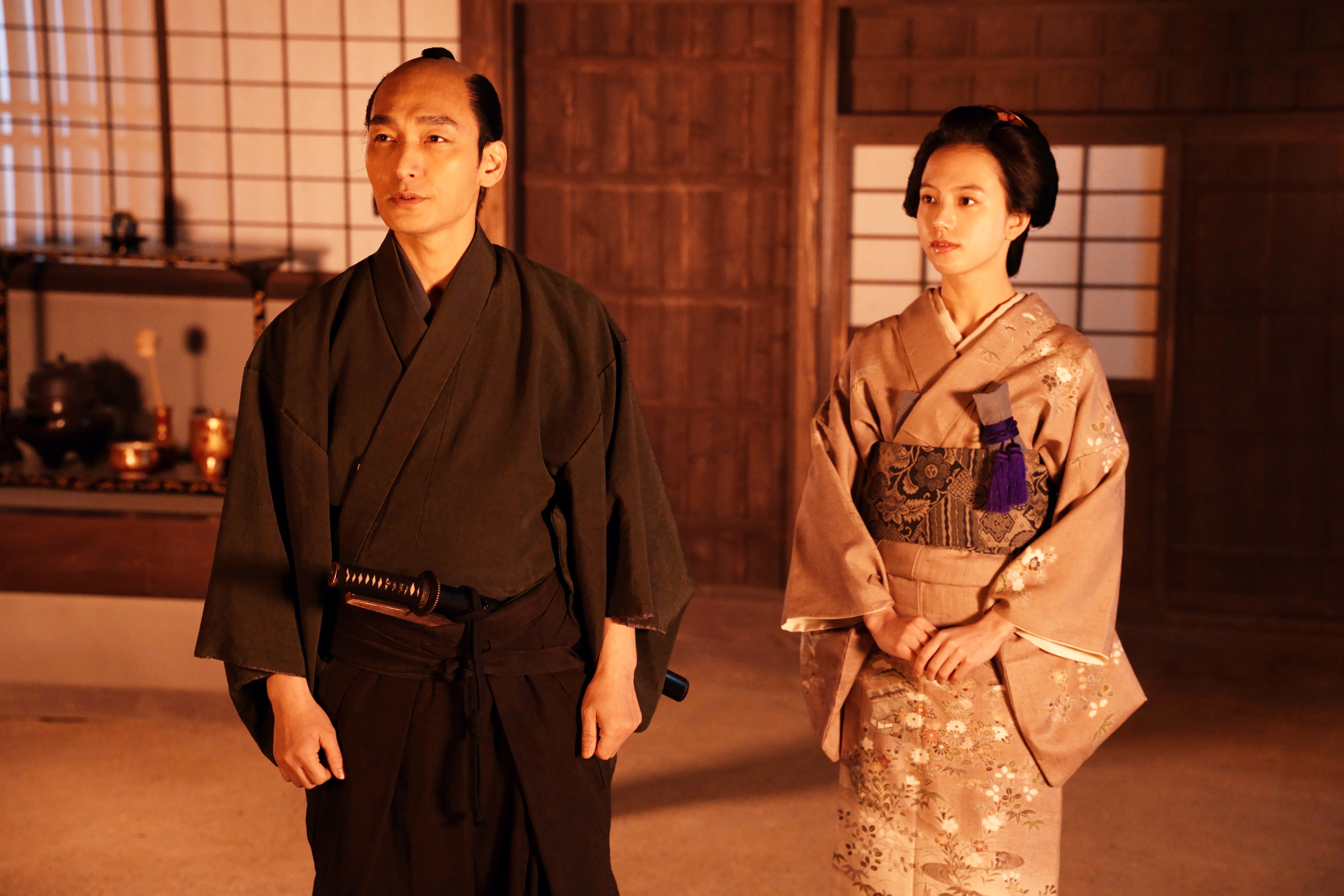
Even so, it’s samurai society which has betrayed Kakunoshin Yanagida (Tsuyoshi Kusanagi), now a seal-carving ronin living in a tenement house and months behind on his rent. Largely silent, Yanagida projects an air of calm but also a dangerous tension that hints at a deeply buried rage often echoed in the hellish glow of the candlelight that bathes his face in red. Not a natural gambler, he is nevertheless a Go enthusiast and talented player who gives the impression that he is always several steps ahead of any game in play. 

But that turns out not quite to be the case when he’s blindsided by a series of unexpected events that quickly destabilise his calmly ordered existence. Cast out of his clan after being accused of thievery, he is accused once again of taking 50 ryo from a pawn broker who had become a friend, Genbei (Jun Kunimura). Behind on his rent as he may be, Yanagida would not steal for stealing is beneath the dignity of a samurai and this stain on his honour is more than he can bear. But for all his righteousness we learn that he is also an ironic victim of his own priggishness and responsible for several other men meeting similar fates, cast out of the clan for something Yanagida turned them in for. In his reduced state, he seems to feel guilty and wavers momentarily on hearing the man who framed him for stealing a scroll from his former lord say he did so to gain money to support disenfranchised samurai but is caught between the spirit of samurai integrity and its letter. As his quarry told him, fish cannot live in water that is too clean and his oppressive enforcement of these arbitrary rules did no one any good. 

Yet his seeming righteousness does seem to improve the world around him, proving an epiphany in pawnbroker Genbei who develops a new determination for doing business fair and square after witnessing Yanagida’s conduct at the Go table. The irony is perhaps that everything on the Go board is black and white whereas Edo society is decidedly grey. Even the madam from the Yoshiwara Yanagida and his daughter are on good terms with (Kyoko Koizumi) can switch from wise mother to heartless gang boss in an instant. One moment, she’s giving maternal advice to Yanagida’s daughter Okinu (Kaya Kiyohara) and the next berating a runaway geisha who’s obviously been beaten while her lover has been killed for his transgression. The theft of 10 ryo will also it seems get you killed in this world of heartless rigidity and universal suspicion. 

Yanagida may not be much better in some respects. He is prideful and reckless, endangering himself and his daughter, whom he allows to pawn herself in the Yoshiwara knowing it’s very unlikely they will be able to repay the debt before the New Year deadline seeing nothing other than his obsession with vengeance against the man who wronged him in so many ways, Shibata (Takumi Saito). Shibata is his opposite number, cynical and amoral he subverted the samurai code for his own gain yet in its way perhaps it’s just a rebellion against the kind of austerity a man like Yanagida represented. In the end he can only escape his self-imposed prison by abandoning his rigour and accepting compromise, slashing the Go board with its black and white mentality in two though it leaves him further exiled. He cannot return to the world of samurai, but neither can he live among these ordinary people and like so many jidaigeki heroes seems to be condemned to wandering in this imperfect world. To that extent, the resolution seems much more cheerful than we might have been expecting. Everything works out, no harm done, but there’s a lingering tension even amidst apparent good fortune in a world of constant watchfulness. 


Bushido screened as part of this year’s New York Asian Film Festival.

Original trailer (no subtitles)

The Mosquito on the Tenth Floor (十階のモスキート, Yoichi Sai, 1983)

A beaten-down beat cop’s existential crisis progressively deepens after he throws himself into financial ruin to buy a computer in Yoichi Sai’s debut The Mosquito on the Tenth Floor (十階のモスキート, Jikkai no Mosquito). Like Pool Without Water, star Yuya Uchida conceived and co-scripted the film as a vehicle for himself and was apparently inspired by the sight of some blood, his own, on a wall where he’d squashed a mosquito though he also claimed the the 10 in the title is intended to reference the 10 commandments in addition to simply where the unnamed protagonist lives.

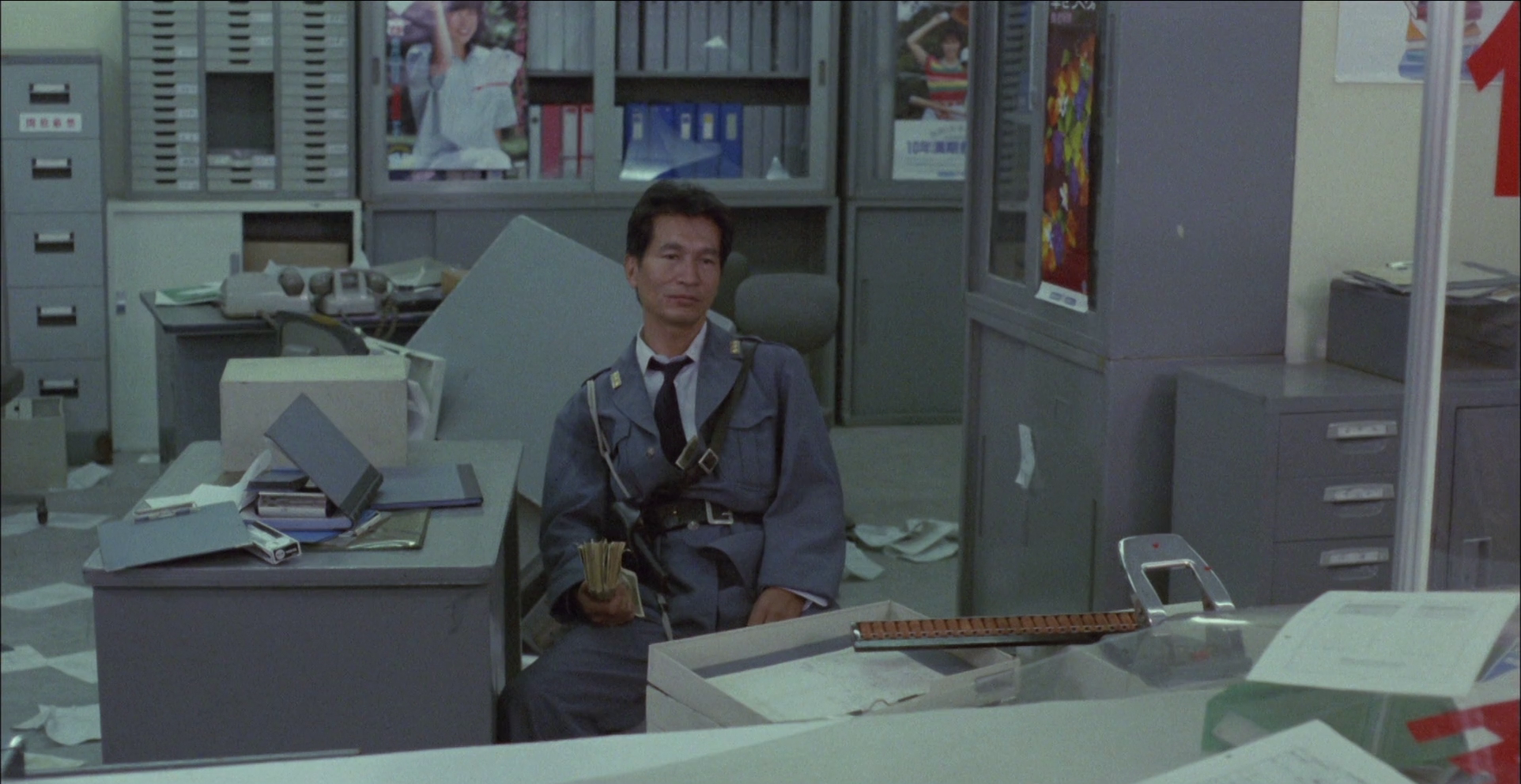
The fact that he lives on the 10th and top floor in a building with no lift is symbolic of his dismal circumstances. On the one hand he can rise no higher but on the other is stuck with an inconvenient living situation precisely because of his inability to rise socially. As it transpires the hero, a policeman, joined the force right out of high school with aspirations of rising to the rank of captain but has spent the entirety of his 20-year career manning a police box. He’s repeatedly failed the exam for promotion to lieutenant and realistically speaking is now simply too old to make much further progress. A man of few words, he listens as the other officers who took the exam with him outline the hierarchal structure of the police force while meditating that as a man on the wrong side of 40 his possibilities have decreased and it’s more than likely he’ll be stuck in the police box until he retires. 

His boss later says as much, sympathising with him but also pointing out that a policeman is also a public servant with a role to serve within the community. He is supposed to make people feel safe and contribute to the progress towards a crime-free society, but it’s clear that his life has spiralled out of control precisely because he cannot ally his career goals with the kind of life he wished to lead. His wife divorced him two years ago seemingly because she wanted a greater degree of material comfort and became resentful that he failed to progress in his career and could not move on from the low-salaried position of an ordinary street cop. She now makes a living selling golf club memberships, looking ahead to the oncoming Bubble-era and a society of affluent salarymen which is very much what her new boyfriend seems to be. Meanwhile, she lives in a very nice townhouse with their teenage daughter and constantly hassles the policeman for falling behind with his child support and alimony payments. He’s also racked up a healthy tab at a karaoke bar where he regularly hangs out and has a serious gambling problem with betting on boat races seemingly his only other form of social outlet.

As his daughter and others keep reminding him, the world is changing and his decision to buy a computer after unwisely taking out a payday loan is in part a symbol of his desire to progress into the modern society even if, somewhat ironically, others chastise him for spending what is then a huge amount of money on something they think of a child’s toy. Otherwise an upstanding policeman who irritatedly deflects a colleague’s joke about bribing someone to pass the exam, the policeman finds himself taking out one payday loan to pay another with loansharks constantly ringing him at the police box to remind him he’s behind on his payments. To overcome his sense of powerlessness, he begins by abusing his authority in catching a punk woman shoplifting and arresting her but then taking her back to his flat to play computer bowling and take advantage of her sexually. He later does something similar with a bar hostess, Keiko (Reiko Nakamura), who took him home when he was drunk. Though the encounter begins as rape, Keiko soon gives in and even comes back for more claiming that she’d never done it with a policeman before and it exceeded her expectations which is in many ways reflective social attitudes at the time. Emboldened, he invites danger by raping a female traffic cop, tearing her clothes as she fights back, screams, and cries though she presumably does not report him given the professional and social consequences that may adversely affect her life and career if she chose to. 

His ex-wife Toshie (Kazuko Yoshiyuki) says she’s not even sure if he’s human anymore, and his failed attempt to rape her after his boss reminds him that he advised against getting a divorce in the first place because it would negatively affect his chance of promotion may be a perverse way to prove he is though it obviously backfires. Having failed in every area of his life and with no prospect of ever getting back on track or starting again, he begins to go quietly insane typing rude words into his computer while the constant calls from loansharks take on a mosquito-like buzzing as does his own final wail of despair and powerlessness as he’s brought down by same authority he once served. His aloneness and confusion are palpable when he ventures into the city and discovers his teenage daughter Rie (Kyoko Koizumi) dancing in Harajuku staring at her intently but then walking away having invaded this space reserved for the young. “Police yourself!” one of the Rockabilly guys ironically instructs him on noticing that he’s dropped his ice cream cone, explaining that the police might shut them down if they’re discovered to be using the space irresponsibly by littering. Rie and her friends tell him to get a life, explaining that the world is changing while tapping him for cash he doesn’t have but is too embarrassed to refuse, laying bare the extent to which he and those like him have been left behind by the economic miracle, buzzing around maddeningly in mid-air with safe nowhere safe to land. 


Original trailer (no subtitles)

Belonging (とりつくしま, Kahori Higashi, 2024)

What if you could come back after you died and watch over those close to you while possessing a familiar if inanimate object? Her second film this year, Kahori Higashi’s Belonging (とりつくしま, Toritsukushima) adapts a novel by her mother in which the recently deceased are asked to choose a “belonging” to sink into given that they seemingly still have lingering attachments to this world. Yet simply watching can itself by painful while it might not do to linger too long in a place where everything is moving on except you.

That’s a possibility that comes to mind the second story featuring a little boy who asks to inhabit the blue climbing frame at the park. He wistfully watches other kids he used to play with pass by and later meets a little sister for the first time, but all these other children will grow up while he will not even if other children will their place. The kindly woman (Kyoko Koizumi) sitting in the school room that doubles as Belonging’s office doesn’t mention what happens if the object is destroyed or moved as something like a climbing frame might be though we later discover that depleted objects can no longer hold their charges which are then dragged back to the afterlife. 

Of course, there’s always the possibility that an object that was precious to you was not so precious to others and may end up being sold or given away as one old woman discovers realising the beloved grandson she hoped to spend eternity with has sold the camera she gave him. The heroine of the first sequence, Koharu, installs herself in a coffee cup featuring a design of a triceratops she and her husband bought on a trip to the museum which he continues to fondle and treasure though Koharu watches him being a tentative relationship with another woman who urges him to buy new mugs as a symbolic moving on from his late wife. 

For Wataru, the coffee cup may already in a sense have been possessed by her spirit though he sees her more in a plant he keeps watering unaware that it’s artificial. Objects can have a kind of presence and carry something of their former owners with them even if not literally possessed but being trapped inside an inanimate object is also frustrating and at times painful. They can no longer act or interact but are mere passive observers at the mercy of their loved ones who may be readier to move than they’d assumed or otherwise dispose of or lose the objects the deceased assumed would be precious to them. 

The heroine of the final sequence might have this right when she chooses to possess an item she knows will only give her a limited time, not even minding when she’s denied the full resolutions of her anxieties in seeing her teenage son win a baseball game while he continues to call her number and recite pleasantries like some kind of mantra. She acknowledges that it might not be good for her or her son to stay too long, she just wants to see he’ll be alright before moving on to the afterlife. The woman from Belonging seems to approve of her choice though her own backstory remains unclear, present both in this world and in the other. 

Making brief detours to introduce us to some strange people in the part such as a female banzai double act and a not-quite-couple, the film is at pains capture both everyday life and the poignancy of loss as the various spirits look for new places to belong while the world around them continues to change and evolve in ways they no longer can. In the park, an old man dances comically much to the dismay of his female companion who is trying to read her book, claiming that he’s going to keep living to the very end which at least expresses a vibrant desire for life in some ways free of the lingering attachments that bind the recently deceased to our world but perhaps also trap them here in solitary museums of past love in which their presence may be felt but also unacknowledged. 


Belonging screened as part of this year’s Nippon Connection

Original trailer (English subtitles)

Tokyo Sonata (トウキョウソナタ, Kiyoshi Kurosawa, 2008)

Orphaned salarymen are the soulless ghosts haunting an increasingly empty city in Kiyoshi Kurosawa’s eerie tale of urban anxiety Tokyo Sonata (トウキョウソナタ). Undermining the certainty of the traditional family, Kurosawa paints it as a simulacrum dependent on each member playing their respective role blindly or otherwise, though in this case the integrity of the family unit is shaken by an economic intervention in which the accepted rules of the society have been upended with a vindictiveness that seems inexplicably unfair. 

This is the bargain of the salaryman dream. A man like Sasaki (Teruyuki Kagawa) now aged 46 came of age at the tail end of an era of economic prosperity. He was brought up in an atmosphere of jobs for life in which the corporate family was almost more “real” than the emotional which is one reason why it comes as such a shock when his boss effectively divorces him. He’s found someone new, planning to outsource Sasaki’s entire department to China while less than kindly explaining that as he has no other skills he of no more use to the company. Sasaki immediately clears his desk in anger, walking home early with a pair of carrier bags then, after meeting his son in the street, attempting to climb in through an upstairs window to avoid alerting his wife, Megumi (Kyoko Koizumi), to the fact he’s home early.

Sasaki is unable to tell her that he’s lost his job in part because of the acute embarrassment it would cause him. Somewhat dazed and confused, he’s become one of many disenfranchised salarymen who survived the 15 years of economic stagnation only to have the rug pulled out from under them. Being a salaryman was in a way his whole identity and without it he doesn’t know who he is, which is one reason he puts on a suit every day and goes to sit in the park surrounded by other similarly dressed men with briefcases who now seem to haunt the city like crows ominously dotting the horizon. In a repeated motif, Kurosawa shows us people trapped in kafkaesque queuing situations shuffling around buildings while prevented from moving forward but forced to keep pace with the increasingly glacial environment. At the moment an old school friend he runs into, Kurosu (Kanji Tsuda), seems to give up he is swept into a great parade of the suited and hopeless while Sasaki hovers on its edges. 

It’s this threat to Sasaki’s masculine pride which is largely founded on his economic ability to support a family that kickstarts a chain reaction in his home even he becoming increasingly violent and authoritarian in an effort to overcome the sense of humiliation and powerlessness he feels after being made “redundant”. His younger son, Kenji (Kai Inowaki), tells him he wants to learn the piano but Sasaki irritably shuts him down either because he’s now worried about the money or simply sees it as a frivolous waste of time. Later when Megumi asks him why he won’t he change his mind he insists that he has to stick to his original decision otherwise it would undermine his patriarchal authority as a father. 

But this “authority” was perhaps already largely illusionary given that an intense work schedule meant he was rarely home to do much parenting. After finding out Kenji spent his lunch money on piano lessons behind his back he ironically shouts at him for lying and keeping secrets even though this is obviously what he himself has been doing in keeping up the illusion of his identity as a conventional salaryman. His older son, Takashi (Yu Koyanagi), was keeping secrets too his being his desire to join the US military believing that Japan no longer has a future for him in an atmosphere of stagnation not only economic but emotional and spiritual. Takashi tells his mother she should leave Sasaki, but to her question of who would play the role of mother replies that it makes no difference simultaneously encouraging her to reclaim an individual identity and perhaps robbing her of one just as Sasaki lost his in being shorn of his salaryman credentials. 

Lying on the sofa one evening she raises her arms and poignantly asks someone to lift her up but Sasaki has already gone to bed without even looking at her. Her life as a housewife is thankless and emotionally unfulfilling. Donuts she spent ages making go uneaten while her husband and sons brood on their own problems alone. At a car dealership, the salesman shows her a people carrier explaining that it’s perfect for family camping trips while she gravitates towards a red convertible, mesmerised by the way the roof can just disappear as if it were literally freeing her of her stultifying existence. On showing Takashi the shiny new driving license she’s just got as a symbol of her desire for independence, he scoffs that she’ll never use it but she counters him that it’s for “ID” which it is in more ways than one.

The family is imploded, the illusions of a conventional middle-class life upturned as Sasaki and Megumi each ask themselves if there’s a way to start again and escape their sense of middle-aged futility and disappointment. Cracking under the weight of conventionality, the foundations begin to fracture but the family nevertheless finds itself returning if with greater degrees of clarity and perhaps with less inclination to play the play the roles assigned to them rather than those they might wish to play as embodied by Kenji’s moving performance at the piano capturing all of the chaos and confusion of the world around him but finding in it also harmony and a gentle breeze that feels almost as if the city itself were breathing once again.


Tokyo Sonata screens Feb. 18 as part of Family Portrait: Japanese Family in Flux

International trailer (English subtitles)

Plastic (Daisuke Miyazaki, 2023)

A young couple bond over their shared love of an obscure 70s glam rock band, but soon find their youthful romance eroded by the realities of impending adulthood in Daisuke Miyazaki’s warmhearted coming-of-age tale, Plastic. Emotional distance becomes a persistent theme as mediated through a message into space that might take light years to arrive not to mention the reply, which seems to echo the couple’s inability to communicate despite their star-crossed connection.

Jun (Takuma Fujie) and Ibuki (An Ogawa) bond after realising they are both fans of 70s band Exne Kedy, talking for hours at a small cafe only leaving when the place closes. Having recently relocated to Nagoya from Tokyo, Jun enrols at Ibuki’s high school and joins her after school club much to the chagrin of her two friends. The pair eventually become a couple going on a series of wholesome dates including a trip to watch Sad Vacation in a cinema and are apparently very much in love but a year later the novelty has begun to wear off. Ibuki is studying for university exams and bound for a top institution in Tokyo while Jun is planning to drop out and pursue music full-time. 

Perhaps slightly more conventional, Ibuki berates Jun for his impracticality asking how likely it is he’ll be able to support himself with the kind of music he makes. Later she has some kind of flash forward in which she imagines herself supporting him financially while he’s not even playing guitar anymore and they’re arguing about responsibilities for rent and living costs. She breaks up with him in the carpark of a convenience store but perhaps regrets it, keeping up a half-hearted friendship while he remains lost and lovelorn pursuing music on the side while working part-time. “Plastic” becomes a kind of metaphor for their relationship, something which should have lasted forever but has been subtly undermined by the microorganisms of conventionality and contemporary capitalism until it eventually broke apart. 

The distance between them is likened to that of the space radio broadcast which might not reach its target for 25,000 light years. The message was sent the same year that Exne Kedy broke up, and may well be delivered a little more than 50 years later at their reunion concert only as the narratorial voice over explains, that’s largely up to chance. Swapping notes on studying in the same way Jun’s mother and grandfather had talked about seeing Exne Kedy in concert, Ibuki’s parents had compared their flashcards to modern apps and joked that maybe someday education would all be online as in fact happened during the pandemic. Having swapped her rural home for the bright lights of Tokyo, all her classes are online which ironically gives her more time to spend with her friends but also leaves her exhausted and distant. 

When Jun wonders if his music is like the broadcast, destined not to arrive for thousands of years so he’ll never know who got it. Another school friend, Ayumu, asks him if he’s sure he hasn’t just missed a reply 25,000 years in the making which is sort of ironic because he’s clearly missed that she’s been trying to answer his message only he’s too hung up on his ex to notice. Later she asks him to move in with her, pointing out that she’s right there not 25,000 light years away like Ibuki who is now living with a DJ who doesn’t even know who Exne Kedy are. The two of them are far apart but somehow still connected, not least by their love for the band which may eventually reunite them. 

Exne Kedy is modern day creation by Ide Kensuke who had previously released the album Kensuke Ide With His Mothership ― Contact From Exne Kedy and the Poltergeists and makes a self-cameo in the film in a surreal scene featuring the band whom Ibuki and Jun unexpectedly run into doing an impromptu performance in the middle of a forest singing a song that echoes the state of the couple’s relationship in which a lighthouse no longer illuminates and cannot light the way. Yet there is always a sense of the couple as a pair of flashing beacons waiting to pass close enough to each other to be able to convey a message. Featuring cameo appearances from (former pop star) Kyoko Koizumi and Machiko Ono, Miyazaki’s strangely charming youth movie is surprisingly sincere in its romanticism but equally in its critique of the world that frustrates it while suggesting that music may once again save the day.


Plastic screened as part of this year’s JAPAN CUTS.

Original trailer (no subtitles)

Adrift in Tokyo (転々, Satoshi Miki, 2007)

An aimless young man finds unexpected direction while walking the streets of the city with an unlikely father figure in Satoshi Miki’s meandering dramedy Adrift in Tokyo (転々, Tenten). These two men are indeed adrift in more ways than the literal, each without connections and seeking a concrete role in life while attempting to make peace with the past. But like any father and son there comes a time when they must part and their journey does indeed have a destination, one which it seems cannot be altered however much they might wish to delay it.

That Fumiya (Joe Odagiri) is aimless might be assumed from his unruly hair and the fact that he thinks tricolour toothpaste might be enough to jolt him out of his sense of despair but is confirmed by his matter of fact statement that he’s in his eighth year of university where nominally at least he’s studying law. His problem is that he’s amassed massive debts to a loanshark, Fukuhara (Tomokazu Miura), who breaks into his apartment and threatens him by shoving a sock in his mouth before leaving with his ID and driving licence. Fukuhara, however, later decides to make him another offer that he will cancel the debt and even give Fumiya even more money if only he will agree to wander around Tokyo with him for an unspecified time until they reach Kasumigaseki where he intends to hand himself in at police headquarters claiming to have recently murdered his wife. 

Like many things that Fukuhara says, it’s not clear whether or not he has indeed killed his wife though Miki frequently switches back to a scene of a woman who seems to have passed away and has been laid out in bed though she shows no signs of having died violently. Her zany co-workers keep thinking they should check on her seeing as she hasn’t shown up in days but something always distracts them and they end up forgetting about her entirely. The body appears to have been treated with love, hinting that if what Fukuhara says is true and this woman was his wife whom he killed in a fit of passion he has quite clearly thought through his plan of action rather than attempting to flee the scene and is perhaps only delaying the inevitable while walking out some other trauma in the company of Fumiya a surrogate son mirroring the description he gives of taking walks in the company first of his father and then of his wife. 

Fumiya deflects every question and agrees that he hates memories having burned his photo albums before leaving for university. He claims that he has no parents, describing the people who raised him as just that, as his mother and father both abandoned him as a child leaving him in a perpetual state of arrest which is one reason he’s still a student four years after most people have graduated. He never went to the zoo or rode a rollercoaster or called a man dad and seems to think of himself as nothing much of anything at all. Yet the fake can sometimes be more real than the real as he eventually discovers becoming part of an awkward family unit with Fukuhara’s “fake” wife (Kyoko Koizumi) he used to accompany to weddings as a paid guest, just beginning to enjoy being someone’s son when Fukuhara decides he’s reached the end of his road. 

There is a sense that everyone is chasing the ghost of someone else or perhaps even themselves, Fumiya finding shades of the father who abandoned him in career criminal Fukuhara who tells someone else that he once had a son who died in infancy, and seeing something of his mother in fake wife Makiko discovering transitory roots in an unlived imaginary childhood. But then there are also occasions of cosmic irony such as a coin locker bag being full not of money but of bright red daruma dolls and tengu noses, or a rebellious street musician meekly bowing to the police. A repeated gag says you’ll have good luck if you spot iconic actor Ittoku Kishibe out and about in the streets, and perhaps in a way Fumiya does in learning to make peace with his childhood self walking with Fukuhara who also comes to accept his failures as a man, a husband, and perhaps a father too. Filled with zany humour and a warmth underlying its melancholy, Adrift in Tokyo is a meandering journey towards a home in the self and a sense of rootedness in the middle of a sprawling metropolis filled with infinite possibility. 


Adrift in Tokyo is released on blu-ray in the UK on 12th December courtesy of Third Window Films.

Original trailer (English subtitles)

Eating Women (食べる女, Jiro Shono, 2018)

Eating Women poster 2“Comfort cinema” may be a slightly maligned genre, disregarded for its throwaway pleasures, but it can often be much more subversive than it’s given credit for. Jiro Shono’s adaptation of Tomomi Tsutsui’s novel Eating Women (食べる女, Taberu Onna), refusing to unambiguously reinforce contemporary social norms, it actively undercuts them as it pushes its lonely heroines towards more positive paths of self-fulfilment while remaining unafraid to embrace the sometimes taboo idea of female desire as something entirely normal.

The heroine, however, is someone who’s decided to live without it. Food writer and bookstore owner Atsuko (Kyoko Koizumi) lost the love of her life at 29 and has lived alone ever since. She does, however, have a very committed group of female friends who get together once a month to enjoy a tasty dinner she and her friend Mifuyu (Kyoka Suzuki), who runs the local restaurant, cook for them. Unlike Atsuko, Mifuyu is a sexually liberated older woman, complaining once again that both of her (young, male) apprentices have quit after she seduced them. Keiko (Erika Sawajiri), Atsuko’s editor, has hatched on a different solution in affirming that she has already achieved financial independence and has no real desire for male companionship, preferring to embrace her freedom to live as she chooses while Tamiko (Atsuko Maeda), an assistant TV producer and the youngest of the group, is facing the opposite dilemma – her boyfriend has proposed to her, but she’s unconvinced because he’s just too “nice” to make her heart beat faster.

Though at different points of their lives, the women are always there to support each other while permitting themselves the indulgence of fully enjoying beautifully cooked meals taken with good company. Meanwhile, across town, an American woman, Machi (Charlotte Kate Fox), seems to be content to play the role of a 50s housewife to a grumpy salaryman husband (Hiroyuki Ikeuchi) who barges in through the front door and roughly forces himself on her before retreating to the bedroom. The problem in their marriage is, apparently, that Machi can’t cook, providing mostly Western-style microwavable dinners which fail to excite her husband who tells her he’s been having an affair with someone who can make good food. Heartbroken, Machi runs into Mifuyu and eventually ends up living in one of Atsuko’s spare rooms where she slots right in with the other gourmet women as she begins to learn to cook under Mifuyu’s gentle guidance.

It is not, however, a pathway towards regaining her husband or “fixing” a perceived fault so that she can be a “proper” wife, but a way for Machi to rediscover life’s small pleasures along with a sense of independence, rejoicing in her own success as she enjoys a meal she cooked herself made with ingredients that she earned the money to pay for. Tamiko’s barfly friend Akari (Alice Hirose) begins to discover something similar on her own, repeatedly dumped by snooty salarymen boyfriends who objected to her preference for minced meat over whole steak. Akari had a habit of thinking of herself in terms of the meat – quick, cheap, and simple, but finally finds love with a gentlemanly colleague after she gains the confidence to share with him her real self by embracing her love of mince without embarrassment.

The only “misstep” is perhaps in Keiko’s tale in which her bid for solo independence is eventually negated by her loneliness, implying that in the end she did need male companionship after all. Indeed, only Atsuko who rejects sex in favour of vicarious maternity is allowed to live life alone, though conversely Mifuyu’s free spirited pursuit of younger men is never judged negatively nor is she encouraged to settle down even while she ironically advises Tamiko to do just that, and pointedly tells Keiko that she’s running out time to find anyone halfway decent. Yet all of that aside, the ladies are an accepting bunch, emphasising that love is love and refusing to judge others, making sure to offer support to all who need it. We’re never the same people as yesterday, Atsuko writes in her book, we just need to be ourselves. Above all, however, she seems to say you have to be kind to yourself, embracing life’s small pleasures such as the simple joy of well cooked food made with love, and the rest you can figure out later.


Original trailer (no subtitles)

Gu Gu the Cat (グーグーだって猫である, Isshin Inudo, 2008)

Gu Gu the cat posterJapanese cinema has long been in love with the local flavour movie. It may be true that many otherwise fantastic examples of the small subgenre have a “sponsored by the tourist board” aesthetic, but then the pure “furusato” love is usually genuine enough and often proves infectious. Gu Gu the Cat (グーグーだって猫である, Gu Gu Datte Neko de Aru) is a case in point in its fierce determination to sell the benefits of trendy Tokyo suburb Kichijoji – an upscale bohemian neighbourhood well known for being home to artists and dreamers who take care to foster the kind of hometown spirit you wouldn’t normally associate with city living. The film is also, however, the story of a struggling middle-aged mangaka who is forced to deal with a long delayed existential crisis after her elderly cat passes away.

Ça Va had been living with Asako (Kyoko Koizumi) for the last 15 years but passed away while she and her team were working flat out on a special Christmas issue. Asako is of course devastated and not least because she feels guilty that perhaps she was too busy to notice that Ça Va was ill until it was too late. According to her assistant Naomi (Juri Ueno), Asako’s career had been faltering even before Ça Va passed away – the Christmas issue had been the only thing she’d produced all year leaving her team of assistants out of pocket and worried for the future. Grief-stricken as she is, Asako eventually decides to get a new cat, Gu Gu, enabling a rebirth in her professional as well as personal lives.

Based on an autobiographical story by mangaka Yumiko Oshima, Gu Gu the Cat wastes no time in reminding us that being a mangaka is a precarious business. Asako is well acclaimed as an artist and has inspired countless young women with her shojo manga (Naomi not least among them) but is still pressed into working insane hours to meet publication deadlines and is constantly badgered by her publishing company to provide new material. Her mother (Chieko Matsubara), meanwhile, just wants her to settle down and get married before it’s “too late”.

Asako’s mother’s nagging may seem like the usual kind of conservatism that is a little embarrassed by an unmarried middle-aged woman, as well as with the idea of a woman having a career and especially in manga which is a “popular” art and therefore less respectable than literature or painting. It is also, however, born of knowing her daughter and seeing that there is a part of her that hasn’t quite matured thanks to working on manga all her adult life which has left her feeling isolated and lonely in a way a cat might not be able to satisfy. This is perhaps why potential love interest Seiji (Ryo Kase) describes all her manga as “sad”, and why Asako is somewhat uncomfortable with being treated as a “famous author” rather than as a person.

Gu Gu the cat takes a back seat to most of the action (as cats are want to do) but does help engineer a meeting with Seiji who, despite being much younger than Asako, begins to reawaken in her a sense of desire if not exactly for romance then perhaps for life. Following a familiar pattern, however, Asako re-channels that desire into her manga – coming up with an idea in which a teenager suddenly grows old, neatly mirroring her sudden sense of having become “a woman of a certain age” overnight without really noticing. Having lost Ça Va, Asako attempts to come to terms with lost time in accepting that many choices have already been made and opportunities lost. In that sense there is something sad in Asako’s decision to remain alone in knowing that in the end she lost love because she was too timid to claim it, but then, the answer isn’t new romance but an acceptance of being happy in the present in the knowledge that things change and people leave but it will all be OK in the end.

Based on Oshima’s real experiences, Inudo’s film takes a turn for the melodramatic towards its conclusion which feeds back into his “live every day” message but is perhaps a little heavy for the cheerful slice of life drama surrounding it. Likewise, his strange decision to sell the joys of Kichijoji (which appear to be many) through an American Eikaiwa teacher narrating a journey through the area in the manner of a TV programme aimed at tourists is a particularly strange one which in no way benefits from its surreal plot revelation. Nevertheless, Gu Gu the Cat is a warm and affectionate tribute to this seemingly warm and quirky area which acts as a kind of coming of age story for its middle-aged heroine who, in a sense, births herself in coming to an acceptance that life goes on and the best you can do go along with it for as long as you can.


Original trailer (English/Chinese subtitles)

Blue Spring (青い春, Toshiaki Toyoda, 2001)

Blue Spring posterJapan is a hierarchical society, but that doesn’t mean there is only one hierarchy. Every sector of life seemingly has its own way of ordering itself, including high school. Back in the ‘80s, high schools became known as violent places in which angry young men took out their adolescent frustrations on each other, each hoping to be accounted the toughest guy in town. Toshiaki Toyoda, chronicler of millennial malaise, made his one and only “youth movie” in adapting Taiyo Matsumoto’s delinquent manga Blue Spring (青い春, Aoi haru), bringing to it all the nihilistic hopelessness of his earlier work tempered with sympathetic melancholy.

The action begins with a photograph of group of boys entering their final year of high school before embarking on a dare to decide who will be the new king of the school which involves hanging off a high balcony and seeing how many times you can clap before needing to catch hold of the railing or fall to your death. Cool and apathetic Kujo (Ryuhei Matsuda) wins easily with a new record, but seems indifferent to his increased status while his best friend and underling, Aoki (Hirofumi Arai), basks in the vicarious glow of suddenly being top dog. Meanwhile, Yukio (Sousuke Takaoka) – a silent and troubled young man, keeps his minion on the hook with promises of making him a fully fledged member of the gang while squaring off against Ota (Yuta Yamazaki) who is keen to talk up his growing friendship with a local mobster.

Despite a reputation for order and discipline, Asa High School is a lawless place where ineffective authority figures run scared of the hotblooded teens. Set in entirely within the school, there is little hint of the boys’ home lives but none of them truly believe there’s very much for them out in the world and know that the last year of high school is a final opportunity to be uncivilised with relatively few repercussions. The teachers, sadly, mainly agree with them, tiredly reading out the same dull text books while letting the kids do as they please because they lack the inclination to help them. Even those who do take an interest fail to get through, trotting out tired platitudes which do little to convince the kids in their care that their time at school matters or that they should want to work on their interpersonal skills and anger issues.

“People who know what they want scare me”, Kujo explains to a strangely sympathetic teacher (Mame Yamada) whose job it is to make the flowers bloom. He’s top dog now, but being made king has only made him feel powerless and uncertain. Suddenly, being the strongest seems like an irrelevance and this pointless violence an absurd waste of time. The problem is, none of these kids have any direction or hope for the future. They don’t believe education can be a way out, and being trapped in a stagnant economy makes them inherently distrustful of the salaryman dream that might have distracted their fathers. All they have are their fists and angry, adolescent hearts.

One by one their dreams are crushed – the baseball star doesn’t make it to Koshien, the sickly kid doesn’t show up for school, the yakuza goon is betrayed by a friend, the bullied underling moves up to bullying others, and a cross word between Aoki and Kujo threatens to ruin a childhood friendship. Asked for his hopes and dreams for the future, all Yukio can offer is a dedication to world peace and the Ultraman pose. Kujo, staring confused at the flowers, wonders if some are destined to wither without ever blooming only for his teacher to console him, melancholically, that he chooses to believe that flowers are born to bloom and so bloom they will.

Meanwhile, yakuza circle the fences like baseball scouts at a championship game, knowing organised crime is the traditional next step for handy boys who won’t graduate high school. Yet the tragedies here aren’t so much ruined futures and the futility of life as the failure of friendship. The boys fight and they hurt each other in ways other than the physical but lack the maturity to deal with their pain. Violence, self inflicted and not, is their only outlet and their only means of attracting attention from the authority figures so intent on ignoring their existence. Toyoda builds on the relentless sense of hopelessness seen in Pornostar but leaves with the weary resignation of one no longer young who knows that youth is dream destined to disappoint.


Blue Spring is released on blu-ray courtesy of Third Window Films on 13th May. The set also includes a very frank and often humorous commentary from Toyoda (in Japanese with English subtitles) as well as a “making of” from the time of the film’s release.

Original trailer (English subtitles)