Before We Vanish (散歩する侵略者, Kiyoshi Kurosawa, 2017)

©2017 BEFORE WE VANISH FILM PARTNERS

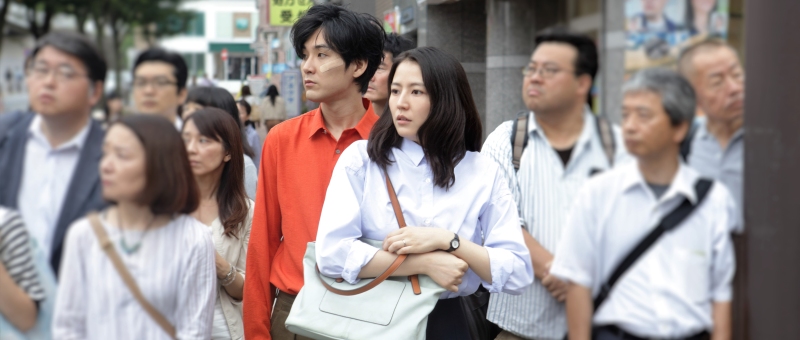
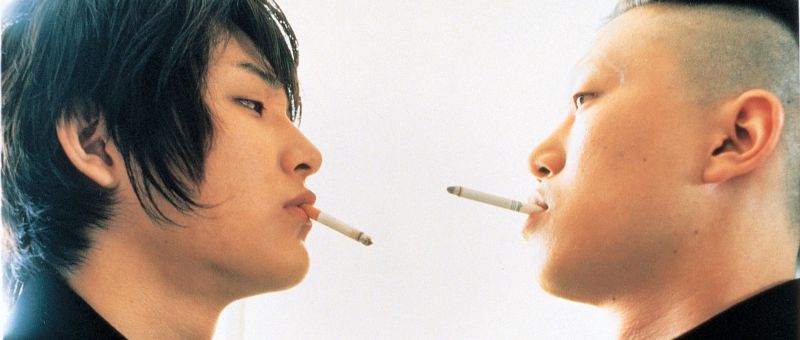
before we vanish posterKiyoshi Kurosawa is getting sentimental in his old age. In Journey to the Shore and Real, brokenhearted, left behind spouses went on long and difficult journeys of grief and salvation. In Before We Vanish (散歩する侵略者, Sanpo Suru Shinryakusha) we receive a visitation that presages our doom but wishes to know us before we go. An alien invasion movie which takes its cues from Invasion of the Body Snatchers and They Live, Kurosawa’s quirky drama is less about the enemy within than the hidden existential threat of a failure to understand oneself. As the Japanese title suggests, these invaders are merely out for a stroll, making time to smell the flowers before the big lawnmower arrives to cut them all down.

Strange events are afoot in Tokyo. A high school girl wanders home with a pair of goldfish in a plastic bag before brutally murdering her entire family, gazing at the scene of carnage with a beatific smile. Meanwhile, the estranged wife of Shinji Kase (Ryuhei Matsuda), Narumi (Masami Nagasawa), has been sent for to claim her presumably amnesiac husband from a medical facility. Shinji was brought in after wandering the streets cluelessly and seems to have lost certain sections of his memory. The doctor’s diagnosis is uncertain but leans towards some kind of temporary psychotic break or early onset Alzheimer’s. In any case, he is now Narumi’s responsibility, much to her consternation. Across town a down on his luck journalist (Hiroki Hasegawa) covering the brutal family murder finds himself the designated “guide” to another strange young man, Amano (Mahiro Takasugi), who seems to have done something very untoward to his parents.

These three “strangers” are really invaders from outer space – something which they freely confess to anyone who will listen, only everyone assumes they are joking. Exactly why they want to destroy the Earth is never revealed, nor is the the reason for the strange mission undertaken by the three researchers acting as the vanguard for the upcoming invasion. These three have been tasked with a thorough investigation of “humanity” in which they must learn and acquire certain “concepts”. They do this by requiring the subject to visualise their thinking behind a word or phrase and then tapping the head to pinch it causing that concept to be removed from the person’s interior cosmology.

The aliens learn as much from the effect of removing the concept as they do from its explanation. This being Japan, it’s not surprising that the first concept Shinji removes is that of “family” which he takes from Narumi’s younger sister, Asumi (Atsuko Maeda). Asumi had decamped to Narumi’s after an argument with her parents over their railroading her into a mainstream life she doesn’t really want. The removal of the concept of family means Asumi no longer needs to be bound by hollow obligation but her sudden coldness towards her sister immediately invites a series of other questions as to the true nature of their relationship. Similarly, Shinji removes a concept of “possession” from a young man. The young man does not immediately lose understanding of the word, but the concept ceases to be important to him. He is, in a sense, freed from the burden of materialism. Paying an unexpected visit to Narumi’s workplace and meeting her boss who, it seems, has just belittled her work on an important project after she rebuffed his attempt at sexual harassment, Shinji removes his concept of “work” leading him to play aeroplanes all around the office like an overexcited child.

There are positive effects of losing some of these centrally held ideas even if their loss seems tragic or painful on the surface. They are, however, what make us human whether that be attachment to family or an irrational desire to devote all to work and ceaseless acquisition. The final, most elusive concept is that of love – something alien and fascinating to the visitors which they find impossible to harvest due its essentially nebulous nature. Despite being part of a uniform hive mind, the invaders have each developed unique personality traits as a consequence of their “human” lives – the schoolgirl craves violence and destruction, Amano fatherly friendship, and Shinji something close to love with his own “guide” in the form of Narumi whose love for her husband apparently endured despite his betrayal.

Far from the gloomy nihilism of Pulse in which death is eternal loneliness, Before We Vanish suggests that what will survive of us is love. Salvation does, however, require a sacrifice which provokes the film’s romantic conclusion in which the absence of love becomes the “eternal loneliness” promised by Pulse but is tempered by patience and devotion. A gleefully absurdist exploration of the human soul, Before We Vanish finds Kurosawa at his most optimistic affirming the power of the human spirit at its most indestructible.


Screened at the London East Asia Film Festival 2017.

International trailer (English subtitles)

Real (リアル 完全なる首長竜の日, Kiyoshi Kurosawa, 2013)

real posterKiyoshi Kurosawa has taken a turn for the romantic in his later career. Both 2013’s Real (リアル 完全なる首長竜の日, Real: Kanzen Naru Kubinagaryu no Hi) and Journey to the Shore follow an Orpheus into the underworld searching for a lost love stolen by death, but where Journey to the Shore is a tale of letting go, Real is very much the opposite (or so it would seem). Taking on much more of a science-fiction bent than Kurosawa’s previous work, Real adapts the Rokuro Inui novel A Perfect Day for a Pleisiosaur in which the boyfriend of a woman in a coma journeys into her subconscious through a process known as “sensing” in order to help her face up to whatever it is that’s keeping her asleep and lead her back towards the living world (or so we think). Strange and surreal, Real is a meditation on love, trauma, and the nature of consciousness in which “reality” itself is constantly in shift.
Koichi (Takeru Satoh) and Atsumi (Haruka Ayase) are childhood friends now living together as a couple. Despite their apparent happiness, one year after we see them enjoying a cheerful breakfast Atsumi is in a coma following a suicide attempt and Koichi is about to undergo an experimental procedure known as “sensing” to try and venture inside her consciousness to find out why she did it and possibly help her wake up.

Koichi makes contact and finds Atsumi living more or less as she had before, inhabiting their shared apartment and hard at work on a manga series, Roomi, which is now on hiatus following her indisposition. Roomi, like much of Atsumi’s work, is dark and macabre – the story of a serial killer who murders people in increasingly violent and disturbing ways. The brief flashes of bloody victims Koichi begins to notice in his peripheral vision soon give way to “philosophical zombies” or the NPCs of of the subconscious which take the form of badly animated third parties peopling Atsumi’s mind. What Atsumi wants from Koichi is to find a drawing of a Pleisiosaur she drew for him when they were children, because it was “perfect” and will help restore her faith in herself as an artist.

The Pleisiosaur turns out to be a little more significant than it first seems, taking Koichi and Atsumi back to the remote island where they first met. Almost like Stalker’s “The Zone” the island is a place of ruined dreams and frustrated inertia where some kind of accident related to the construction of a resort Koichi’s father was involved in building has permanently destroyed any idea of progress. This frozen, rubble strewn landscape perfectly reflects the lost world of the trapped dreamers as they battle the ghost of a shared yet half forgotten childhood trauma.

Though less obviously disturbing than some of Kurosawa’s previous forays into eerie psychological horror, Real has its share of typically J-horror tropes including a dripping wet ghost albeit this time one of a little boy popping up in unexpected places. Kurosawa opts for a hyperreal aesthetic, filming with harsh digital cameras which make little concession to the obviously cinematic, adding to the appropriately lifeless atmosphere of Koichi’s “real” world life and the surreal dreamworld of Atsumi. Koichi’s oddly pyjama-like clothing adds to the ongoing uncertainty as the two worlds blur into each other, becoming indistinct as the screen texture suddenly changes or the camera rolls to an unusual angle.

Shifting from Tarkovsky’s landscapes of desolation to Antonioni’s fog filled confusion, Kurosawa peels back the layers of repressed trauma to finally get to the core of what’s trapping the protagonist’s psyche within its frozen state. Childhood friends as they are, Koichi and Atsumi are trapped by a sense of guilt for something that they were both witness to all those years ago and so to overcome it, they will need to face it together. This time Orpheus descends but refuses to leave alone, battling literal dinosaurs from the distant past which must be placated with tokens of affection and, finally, heartfelt apologies. The “real” remains obscure, but Kurosawa does, at least, demonstrate his faith in love as salvation in a climax that echoes A Matter of Life and Death even if in a surreal and not altogether successful way.


International trailer (English subtitles)

Tears for You (涙そうそう, Nobuhiro Doi, 2006)

tears-for-youComing in at the end of the “pure love” boom, Nobuhiro Doi’s second feature, Tears for You (涙そうそう, Nada So So) is presumably named to tie in with his smash hit debut Be With You, and continues in the same general vein but with a much less satisfying melodrama at its core. A complicated love story centring on a pair of orphaned step-siblings, Tears for You edges into some difficult, perhaps unpalatable, territory but neatly skirts around it with a childish innocence intended to enhance its romantic credentials. Starring the jun-ai icon Masami Nasagawa, the tragic heroine at the centre of Crying Out Love in the Center of the World, alongside the then up and coming leading man Satoshi Tsumabuki, Tears for You is never quite as heartrending as it would like to be but does its best to wring its sorrowful narrative for all of its inherent tragedy.
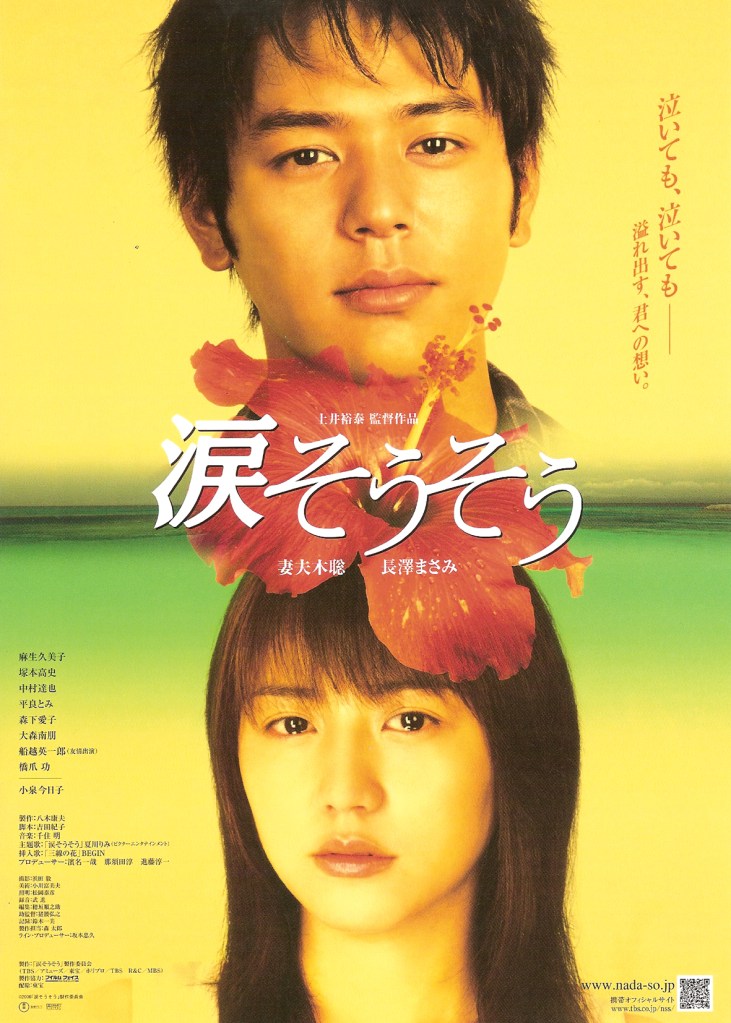
21yr old Yota (Satoshi Tsumabuki) is a young man with big dreams but he’s put lots of them on hold in order to take care of his younger step-sister, Kaoru (Masami Nagasawa), who has only him to depend on. Yota’s mother married Kaoru’s father when both the children were small but her new husband soon ran off leaving his daughter behind. The three of them continued as a tightly knit family until Yota’s mother became ill and passed away, making Yota promise to take care of Kaoru no matter what even whilst on her deathbed. The two then moved back to an Okinawan island to live with Yota’s grandmother until Yota came back to Naha for high school. Kaoru is now about to make that same journey but the siblings’ happy reunion also provokes a number of questions about the nature of their relationship and the course each of their lives will take in the future.

This being a “pure love” movie, tragedy is coming though Tears for You does its best to disguise where it’s coming from even if the eventual outcome is quite obviously signposted. The original barrier between Kaoru and Yota is raised by their nature as accidental siblings, not related by blood but raised alongside each other with a familial bond stronger than that of just childhood friends. This, of course, becomes a problem as they grow older and begin to find it difficult to draw the line between their familial love and a possibly romantic one which would allow their family of two to continue forever.

Yota, the self sacrificing older brother has indeed become everything to Kaoru – a brother, father, and friend all in one. Dropping out of high school early, Yota has been sending a pay check home since the age of sixteen, putting his own future to one side in order to provide for Kaoru. Determined that Kaoru should prosper and escape their lowly, poverty stricken island existence through getting to university and into a middle class profession, Yota has been working three different jobs. When it looks as if he’s about to be able to realise his own dream of opening a restaurant, it all comes crashing down around his ears as he realises he’s been duped by a con artist and is now on the hook to a gang of loansharks.

In addition to adding to his financial burdens, causing him embarrassment, and further deepening his worry about providing for Kaoru, the situation also creates instability in his romantic life when the father of his longterm medical student girlfriend finds out about his predicament and offers to help – but only at a price. Keiko (Isao Hashizume), he reminds him, is a middle class girl on track to take over her father’s clinic. Yota is a poor boy with limited expectations. The implications are clear and already known to Yota who has internalised a degree of shame over his lowly origins and lack of education which he overcomes through hard work and enthusiasm. Keiko is not the sort to worry about a petty class difference even if her father is, but his words get to Yota who has always felt Keiko is too good for him. She does, however, care slightly about Yota’s ongoing and complicated relationship with his younger sister whom, she fears, will always eclipse any other woman in his life.

As in all pure love stories, love is an impossibility, surrounded by unassailable walls of culture and fate. Though there is no blood relation between Yota and Kaoru, their familial circumstances make romantic love a taboo which leads the film into a rather odd corner in which the familial side of their relationship is the one which gains the upper hand as the love of a brother and sister eclipses that of a tragic missed opportunity. As such the nature of the heartrending conclusion does not reach the melodramatic heights of other genre hits, even if it adheres to the form in maintaining the “purity” of the love through the final impossibility of its realisation. Doi employs many of the same techniques he used so well in Be With You, artfully shifting between past and present and making the most of repeated motifs to bring home the circularity of the relationship between the pair of tragic lovers but never achieves the same kind of emotional depth. Nevertheless, Tears for You is a suitably melancholy weepy anchored by strong performances from its two leads which does ultimately prove moving even if not quite reaching the degree of melodrama implied by the title.


Original trailer (no subtitles)

And here’s the original song, Nada Sou Sou, in its cover version by Rimi Natsukawa which spawned a mini industry of its own encompassing two TV dramas and this standalone film (English translation):

Hanging Garden (空中庭園, Toshiaki Toyoda, 2005)

hanging gardenIf you wake up one morning and decide you don’t like the world you’re living in, can you simply remake it by imagining it differently? The world of Hanging Garden (空中庭園, Kuchu Teien), based on the novel by Mitsuyo Kakuta, is a carefully constructed simulacrum – a place that is founded on total honesty yet is sustained by the willingness of its citizens to support and propagate the lies at its foundation. This is The Family Game 2.0 or, once more with feeling.

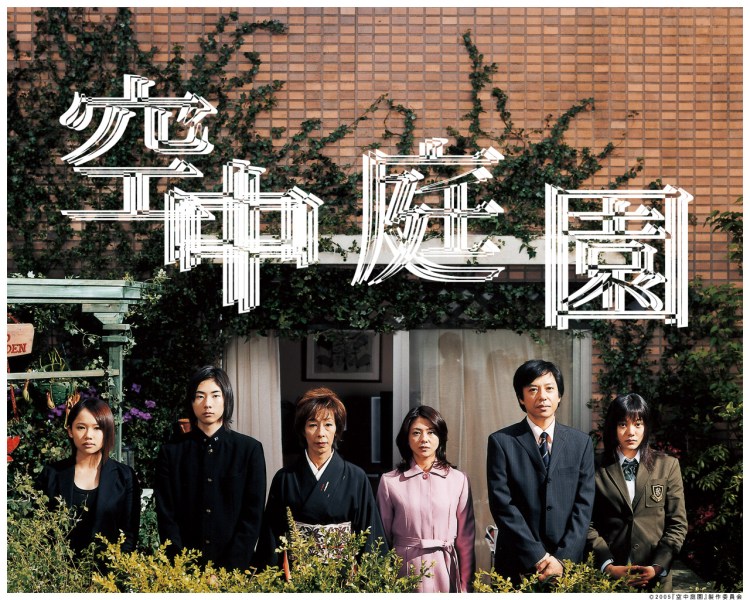
The Kobayashis have one rule – they keep no secrets and no subject is taboo. We can see they take this approach to life seriously when daughter Mana asks her mother about the circumstances of her conception and receives an honest and frank reply. However, this “pretence” of honesty is exactly that – a superficial manifestation of an idea intended to maintain control rather than foster liberty. Each of the family keeps their secrets close be it extra marital affairs, past trauma, or just dissatisfaction with the state of current society. The very idea which binds them together also keeps them forever apart, divided by the charade of unity.

Toyoda crafts his metaphors well. The hanging garden of the title belongs to the matriarch, Eriko, who has created an elegant garden space on the cramped balcony of their small flat on a housing estate. Her swinging hanging baskets give the film its odd sense of off kilter sway as the camera swirls and swoops unsteadily like a rudderless ship adrift at sea. Eriko is carefully rebuilding her world in manner more to her liking, pruning her rosebushes with intense precision both metaphorically and literally.

Eriko’s intense control freakery stems back to her childhood and strained relationship with her currently hospitalised mother, Sacchan. Sacchan is one feisty grandma who may not share Eriko’s tenet of total honesty but nevertheless is inclined to tell it like it is. The central tragedy here is of maternal misconnection, a mother and daughter who refuse to be honest with each other. An encounter with Eriko’s older brother who seems to have an equally difficult relationship with Sacchan makes this plain. However, facing a health crisis and aware of reaching the final stages of her life Sacchan is also in a reflective mood and reveals that she’s recently begun dreaming her memories – revising and improving them as she goes to the point that she’s no longer sure how much of her recollection is how she would have liked things to have been rather than how they really were.

Son Ko is also interested in imagined worlds only more of the technological kind where he’s created a virtual version of his real life on his computer. Something of a dreamer, he wonders if the designers of the tower block deliberately made all the windows face south so that they’d get more sunlight and people would feel happier but he’s quickly shot down with the prosaic explanation that it’s all to do with drying laundry. He’s the only one who tries to explain to his mother that her intense need for “honesty” is, ironically, just another way of avoiding reality but then everyone already knew that – it’s the final truth that underpins the value system which has defined each of their lives.

However, where the family at the centre of The Family Game is shown to be hollow, the Kobayashis’ willingness to go along with this crazy self determined cosmology is driven by genuine feeling. Father Takeshi may be having affairs all over the place and even lying to his boss to facilitate them, but he wouldn’t have stayed at all if it truly meant nothing to him. Eriko plays manipulative goddess, micromanaging the fate of this tiny nation state since its inception with a keen and calculating eye but it’s all in the service of creating for herself something which she’d always felt she’d been denied – unconditional familial love, something which she also seeks to pass on to her children as the ultimate revenge on her mother whom she believes to have been cold and unfeeling.

As useful a tool as honesty may be, Sacchan may have a point towards the end when she says you take your most important secrets with you to the grave. Some things lose their power once you speak them aloud, too much honesty only focuses attention on the self and is apt to make those secretive who would seek to be open. Hanging Garden is a rich and nuanced exploration of human relationships, the shifting nature of memory, and the importance of personal privacy coupled with the veneer of authenticity which makes life in a civil society possible. Take away a man’s life lie you take away his happiness – hanging gardens never take root, but they bloom all the same.