Girl (女孩, Shu Qi, 2025)

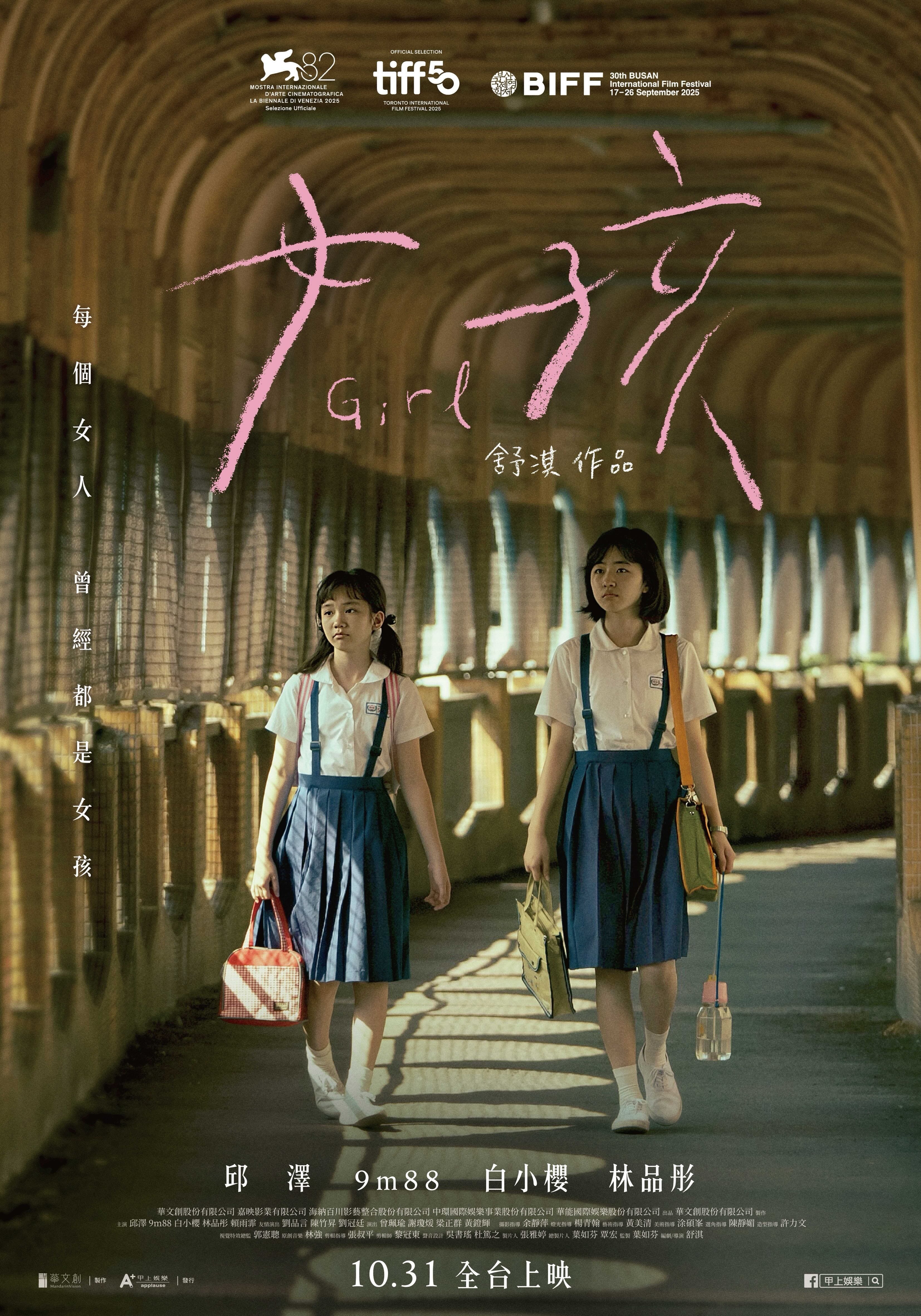
Taiwan may be emerging from martial law, but the cycles of patriarchal violence and oppression prove much harder to escape in Shu Qi’s touching directorial debut and portrait of a disrupted childhood, Girl (女孩, Nǚhái). Inspired by her own memories and set in the late ’80s, the film is unflinching in its depiction of mundane, domestic horror, but equally even-handed in extending understanding even to the most flawed of its protagonists who are themselves locked into a cycle of violence and self-loathing.

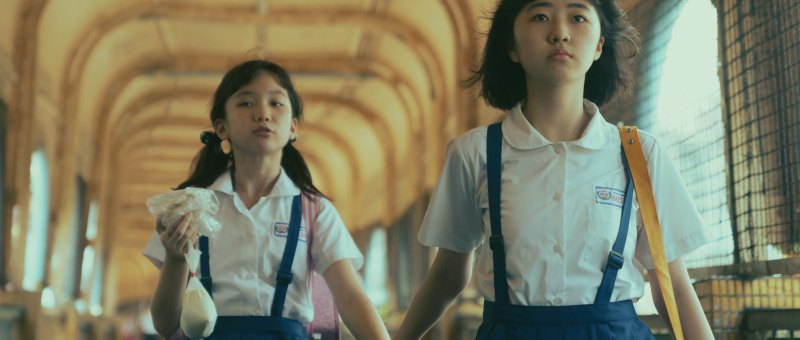
Hsiao-lee (Bai Xiao-Ying) doesn’t quite understand how her sister can be so cheerful even the other children at school make fun of her. Hsiao-lee is often criticised for looking “sullen,” and even her new friend Li-li (Lin Pin-Tung) jokes that on the rare occasion she smiles, she still looks “bitter”. But Hsiao-lee has plenty of reasons to be sorrowful and has perhaps already internalised the idea that there is no escape from her dismal circumstances. Finding a hole in the wall behind the school quite literally shows her another world, one that she later passes into in the company of Li-li who convinces her to ditch her classes and hang out with her at a sleazy video booth that is not really an age-appropriate environment for the two young girls. 

Li-li is Taiwanese-American and has recently moved to the island following her parents’ divorce. The fact that Li-li’s parents’ marriage has ended, even if she wistfully wonders if her father will suddenly jet in to repair the family, shows Hsiao-lee that the prison that is her family home has a door that could be unlocked. It’s clear that Hsaio-lee is terrified of her father (Roy Chiu) who is a violent drunk and may also be sexually abusing her. She zips herself up in a tent at night and cowers in terror as his hand presses down on the canvas, though he doesn’t like closed doors and flies into rages when he encounters them, which explains the large dent next to the handle to the door of her room. Hsiao-lee’s mother, Chuan (9m88), seems to take most of her frustrations out on her even if she tries to intervene and distract her father from further harming her.

Hsiao-lee doesn’t understand why her mother seems to resent her while doting on her sister, though we soon come to wonder if she blames her for condemning her to this kind of life. Shots of Chuan’s adolescence in rural Taiwan hint at a still more patriarchal world in which her father told her there was no need to study and if she had free time to hang out with friends she should spend it helping her grandmother instead. It’s implied that Chuan may have been assaulted while finally embracing the simple freedom of spending time with other people her age, while her father disowned her on her pregnancy declaring himself ashamed and telling her to leave and never return. Even now, she earns a meagre living as a hairdresser’s assistant and is groped by the male customers which the salon otherwise has little option other than to court. Her boss fusses over the air conditioning whenever they come in, and though Chuan may have taken a liking to Mr Chen, he is already married and only ever a symbol of the life that has eluded her. 

Chuan’s boss also tells her of a woman in Taipei who left an abusive husband and is now living happily with someone who treats her better, but Chuan continues to stick with Chiang possibly as an act of self-harm in her deep-seated self-loathing. Chiang doesn’t always seem to have been that way, but he’s otherwise someone who can’t fit into the contemporary society and is only employed thanks to a very understanding friend of his late father. Having gone too far and realised that Chuan may leave him if he continues to beat and rape her, he tries to reform, but it doesn’t last long and he’s soon back to drunkenly riding his scooter through town in the middle of the night. He too may feel hard done by, but it can’t excuse his behaviour nor the authoritarian terror of his home in which he takes out the frustrations of his fractured manhood on Chuan and Hsiao-lee. 

Chuan is imprisoned within the house and can find no escape from it, even when Hsiao-lee directly asks her to divorce him. Hsaio-lee might, however, be able to get out but only be accepting exile from her family and leaving her mother and sister behind at her father’s mercy. Given the omnipresence of male failure, there’s something quite heartening about the female solidarity that arises between Hsiao-lee and Li-li even if their circumstances are quite different from each other. Li-li is mired in the collapse of her family and longs for its repair with her father’s return while resentful of the unfairness of being exiled to an unfamiliar country where she’s looked after by her grandmother whom she can’t understand, presumably because she speaks Taiwanese rather than the Mandarin her mother made her keep up in America, while Hsiao-lee is trapped and looking for a way to free herself from her father. On a trip to the local shop, she ominously eyes up the rat poison while Li-li buys some sweets.

But even as Taiwan emerges from the authoritarian superstructure of the martial law era, patriarchal violence refuses to die and it’s only through an act of maternal sacrifice, framed as rejection and a continuation of that same cycle of violence now enacted by her mother, that Hsaio-lee finds a more literal kind of escape. Only once her father is gone does light return to the house and the possibility of healing the disrupted relationship with her mother become a reality. Beautifully written and elegantly directed, the film has a very genuine sense of place with its busy alleyways and bustling streets. The kids at school might cheerfully sing that there’s no place like home, but for Hsiao-lee home might be the scariest place of all and the one it’s the most difficult to escape.


Girl screened as part of this year’s LEAFF.

96 Minutes (96分鐘, Hung Tzu-Hsuan, 2025)

The needs of the many outweigh the needs of the few, as the famous goes. Prioritising saving lives where you can rather than risk spreading yourself too thin and not helping anyone as a result may be a sensible decision. But what if you or a loved are among those who’ve been deprioritised? Like many things, now it’s not just theory but here right in front of you and victims are real people not just anonymous numbers, it looks quite different.

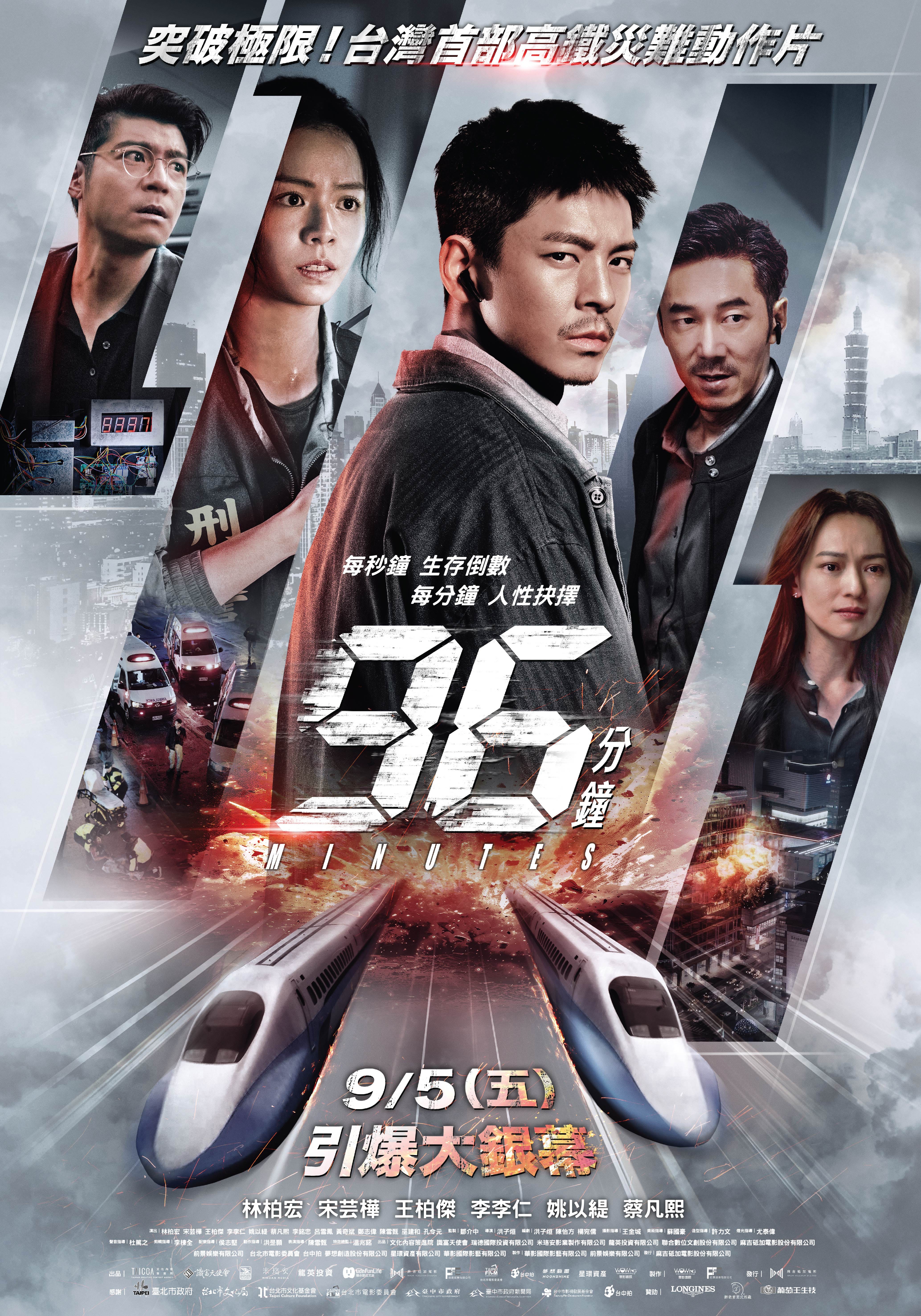
At least, that’s how it is for A-Ren (Austin Lin), a brash bomb disposal expert. Though he disarmed a bomb in a cinema, another one went off across the road in a department store. The bomber had warned them that might happen, but A-Ren’s commanding officer Liu (Wang Bo-Chieh) convinced him they were probably bluffing. They were told there were two more bombs, one located in their command centre, and the other in the department store, and given a choice. Save the people in the department store by heroically blowing themselves up, or choose to save themselves even though this time they’re in the minority. 

Three years later, A-Ren has never forgiven himself, or Liu, for the bomb going off. He’s quit the police and though he’s married fellow officer Huang Xin (Vivian Sung), they never had a wedding and still haven’t been on honeymoon. His guilt is compounded by the fact that he’s been feted as a hero even though he knows he’s directly responsible for everyone who died in the department store. He gets a shot at redemption when the train he’s travelling on returning home after a memorial service for victims of the bombing receives a bomb threat, but at the same time he fears the eventual exposure of what really happened three years ago and is too ashamed to get his mind fully on the job.

On the other hand, it’s true that, ironically, no one on the train has been able to move on from the incident. All of them are mired in their grief and confusion, while looking for someone to blame. Needing to solve the case quickly, the police named a random victim with a criminal past as the bomber rather than admit they didn’t know who did it, making the police themselves a legitimate target for the resentment of the victims’ families given their cavalier attitude to life and death. Liu reminded A-Ren that the policemen in the command centre had families too, as if the people in the department store didn’t or that having a family made their lives weigh more, while Huang Xin was there too further influencing their decision and feeding into A-Ren’s guilt wondering if he was just selfish and made a choice to save her at the expense of the lives of a large number of people he didn’t know.

The bomber essentially gives him the same choice again, putting two bombs on two trains and leaving A-Ren with a binary choice of choosing to sacrifice one or the other to see if he will make the same hypocritical decision again in opting to save the minority because he is among them. Of course, they try a number of other high-risk strategies to disarm both bombs and/or evacuate passengers, but the bomber leaves them with little choice other than to accept the fact that one of the bombs has to go off. A-Ren and Liu can either blow themselves up figuratively by admitting that they chose to sacrifice the lives of the department store victims, or they can save themselves by blowing up the other train.

During a train derailment incident, Liu had cited his greater good philosophy in prioritising passengers who remained outside the tunnel rather than those trapped in the carriages inside, but he perhaps he was wrong to do so and should either have made more of an effort to help everyone or refrained from announcing his decision to let some of the victims die live on television. But then again, the victims’ families are also torn now they are directly involved with some leaning towards saving themselves rather the passengers on the other train whom they don’t after all even know. A-Ren, meanwhile, is in a race against time to restore his sense of integrity by disarming the bombs inside his mind to cure the lingering trauma of the department store bombing as the train rockets forward with only him between it and certain destruction.


96 Minutes screened as part of this year’s LEAFF.
Trailer (Traditional Chinese / English subtitles)

Project Y (프로젝트 Y, Lee Hwan, 2025)

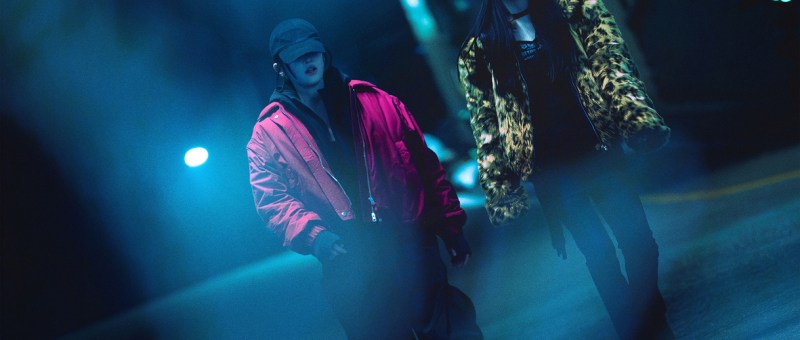
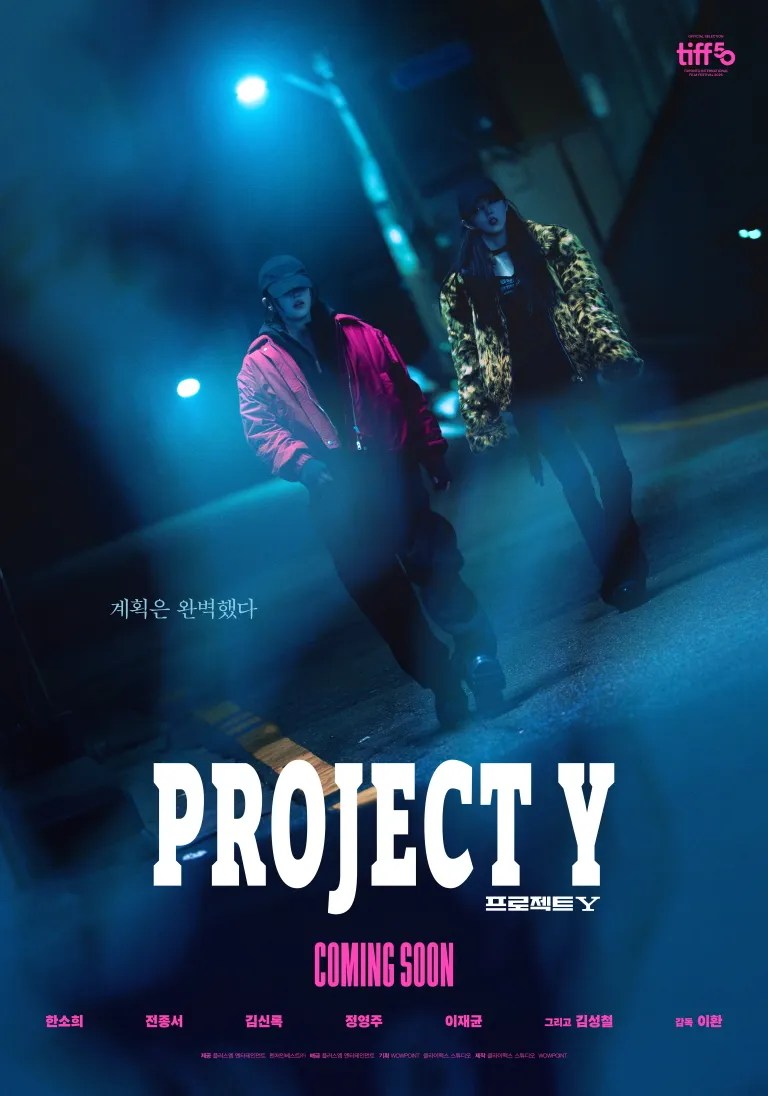
The opening sequence of Lee Hwan’s Project Y (프로젝트 Y) seems to echo the iconic intro of Millennium Mambo as two women look back over their shoulders as they traverse a seemingly endless tunnel. Later we realise that the tunnel is their passage out of the underworld of the red light district towards escape and liberation, not only from patriarchal control and their impossible lives, but from a generational legacy of abuse and entrapment.

Indeed, Ga-young (Kim Shin-rok) the adoptive mother of Mi-sun (Han So-hee) and birth mother of Do-kyung (Jeon Jong-seo), is fond of asking who is saving who when we’re all the same, and insisting that your life is yours to save. It’s a message the girls have taken to heart, yet they remain devoted to each other in a relationship that also appears to be romantic or perhaps has already transcended romance in the depth of their connection. Mi-sun has been working as a karaoke bar hostess for a number of years while Do-kyung works as her driver and occasional courier for various shady types. They plan to leave the red light district now Mi-sun has saved enough money to buy a florist’s from its retiring owner along with a downpayment on a apartment, but it turns out half the girls in the red light district have been scammed by a dodgy estate agent at the behest of local kingpin Blackjack (Kim Sung-cheol).

It seems that Blackjack may have done this deliberately in a nefarious plot to increase the girls’ debts and prevent them from leaving. Blackjack’s callousness is signalled early on when he tells the girls’ manager to get rid of a drooping plant if she can’t manage it and space the others out to disguise the gap. But on the flip side, Blackjack has a young and very silly wife who has got into host clubs and has been spending all his money on a young man who is openly exploiting her. Though the men are ostensibly in the same position as the women, they still have a greater power in preying on female loneliness while the women, by contrast, may be indulging in this behaviour precisely because it gives them an illusion of control they ordinarily don’t have a patriarchal society. Blackjack’s wife throws expensive gifts at her favourite host in an attempt to persuade him to enter a deeper relationship while blabbing her husband’s secrets. The host doesn’t seem to have realised it might be a bad idea to be messing around with Blackjack’s wife, while stealing his secret stash is going to annoy him even more and Blackjack’s not the sort of man you want to be annoyed with you.

Blackjack watches a video of a dog drowning in a tarpit while he works out, and this particular tarpit acts as a kind of vortex drawing all the greed in the red-light district towards it. Hearing about the plot to rob Blackjack, the girls decide to rob him first and blame it on a local hoodlum. But after retrieving a bag with the exact amount they lost, discover a stash of gold bars. It’s taking them too that damages the integrity of their quest and sets them on a course towards a direct confrontation with Blackjack as they try their hardest to escape the red light district for good.

The implication seems to be that if they take the money, they’ll never really be free because it stemmed from the source of their exploitation. This might in a way be what Ga-young is trying to teach the girls in her otherwise hard to read behaviour, sacrificing herself to save them from their poor decision to cross Blackjack while trying to catapult them free of the red-light district though she knows she herself can never leave. Slick and stylish, Lee’s noir stays just on the right side of realism despite its recurrent grimness and larger than life characters such as the Blackjack’s icy female enforcer Bull and captures both girls’ desire for a “normal life” of working in the day and sleeping at night, along with the cheerful solidarity of the hostesses as they band together to take revenge on Blackjack and finally free themselves from this world of constant betrayal and exploitation.


Project Y screened as part of this year’s LEAFF.
International trailer (English subtitles)

The People Upstairs (윗집 사람들, Ha Jung-woo, 2025)

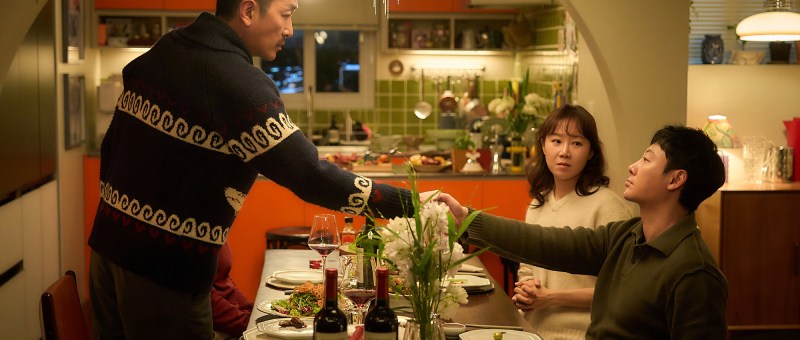
A moribund marriage finds itself haunted in the reflective image of the couple upstairs in Ha Jung-woo’s take on the Spanish film, Sentimental. A very ’70s sex farce, the film is, in other ways, a refreshingly modern examination of contemporary relationships that ultimately comes down on the side of sexual freedom and personal fulfilment rather than encouraging its unhappily married protagonists back into a socially conformist cage of merely settling for an unsatisfying existence.

You can tell Jeong-ah (Gong Hyo-jin) is unsatisfied by the way she accidentally embarrasses the life model at the art class where she teaches part-time to the point he feels he has to cover himself up even though it defeats the purpose of him being there. Her work as a temporary art teacher is also a symbol of her defeated hopes having given up on her creative practice to focus on more practical concerns while her husband, Hyun-soo (Kim Dong-wook), is a struggling film director who is currently on the 48th draft of a project to turn an unsuccessful film pitch into a TV drama that he’s been working on for the last four years. 

Neither of them are getting much sleep because the rambunctious nightly lovemaking of the couple upstairs keeps them up at night, but these days Hyun-soo sleeps on a fold up mattress in his office which is full of empty boxes of instant ramen like some student bachelor pad. Though they’re only in adjacent rooms, they communicate through Kakao talk and are otherwise leading separate lives. That might be why Jeong-a is drawn to the self-help YouTube channel run by Soo-kyung (Lee Hanee), her upstairs neighbour, which assures that no one can cure the loneliness inside you and the fastest way to better relationships is to stop expecting too much from other people. 

But it’s clear that Jeong-a, at least, is looking for something more which is likely why she decides to invite the upstairs neighbours over for dinner. Hyun-soo isn’t keen on the plan and tries to force her to cancel, then only agreeing to stay an hour while making passive-aggressive comments and veering close to telling the Kims that they can hear everything that’s going on upstairs and they don’t like it. Soo-kyung and her husband Mr Kim (Ha Jung-woo) are, however, the inverse of Jeong-a and Hyun-soo in their hyper-sexualised relationship and apparently solid marriage. They’ve come with something to say too, but while Jeong-a is increasingly receptive to their entreaties and open about her dissatisfaction, Hyun-soo is rude and indignant, resentful of what he sees as a perverse intrusion into his otherwise very “normal” life.

Indeed, part of this is that Mr Kim keeps making subtle digs at his masculinity in needling him about his lack of career success and inability to get this TV drama off the ground after apparently working on it for four years. This is also the root of Hyun-soo’s own insecurities and withdrawal from Jeong-a, unable to see himself as a man in the wake of his dissatisfying career. But Mr Kim is also a contradictory picture of masculinity. A teacher of Chinese characters who really wanted to be a calligrapher, he cuts a fairly authoritarian figure, but is otherwise a modern new man who is domesticated and open with his feelings. The Kims bring a dish to the dinner that Mr Kim has made while he orgiastically tears into pomegranate and suggestively squeezes lemons. He fixes drinks, makes tea, and gets out of the way while his wife does her work. 

But at the same time, the film seems to dial back on the inherent queerness of the Kims’ sexual practice by eliding the homoeroticism between Hyun-soo and Mr Kim who is keen to recruit him because his apparently explosive essence. This internalised homophobia is also a manifestation of Hyun-soo’s conventionality and desire for middle-class properness to bring order to his life, if only superficially, by continuing to live in a simulacrum of a marriage that leaves husband and wife unhappy. The recently remodelled flat is full of the signs of aspiration from the posh china to elegant modern decor. But it’s a row about the curtains that most obviously signals the cracks in their relationship. Jeong-a doesn’t want any because she wants a more open and transparent marriage, while Hyun-soo can’t live without them because he craves repression and can’t understand a life without it.

In any case, during their incredibly weird evening with the Kims, the couple hit rock bottom that is also a kind of epiphany liberating them from their misconceptions and the inertia of their married life. Hyun-soo, finally, begins to realise that Jeong-a is right when she says he uses sarcasm to run away from his problems and if he wants to save his marriage, he’ll have to be a little more emotionally honest and open to compromise. Despite his squeamishness, the film seems to come down on the side of the Kims who are living happy and fulfilling lives in embracing their sexuality, while it is Hyun-soo, by contrast, who must learn to open up even if he’s not quite ready to get in the lift.


The People Upstairs screened as part of this year’s LEAFF.
Trailer (no subtitles)

Escape (탈주, Lee Jong-pil, 2024)

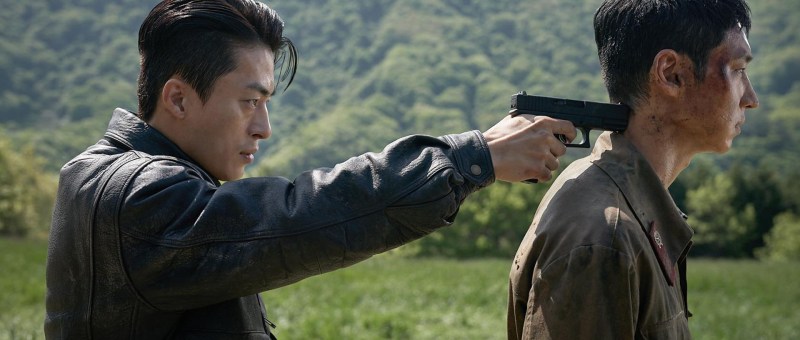
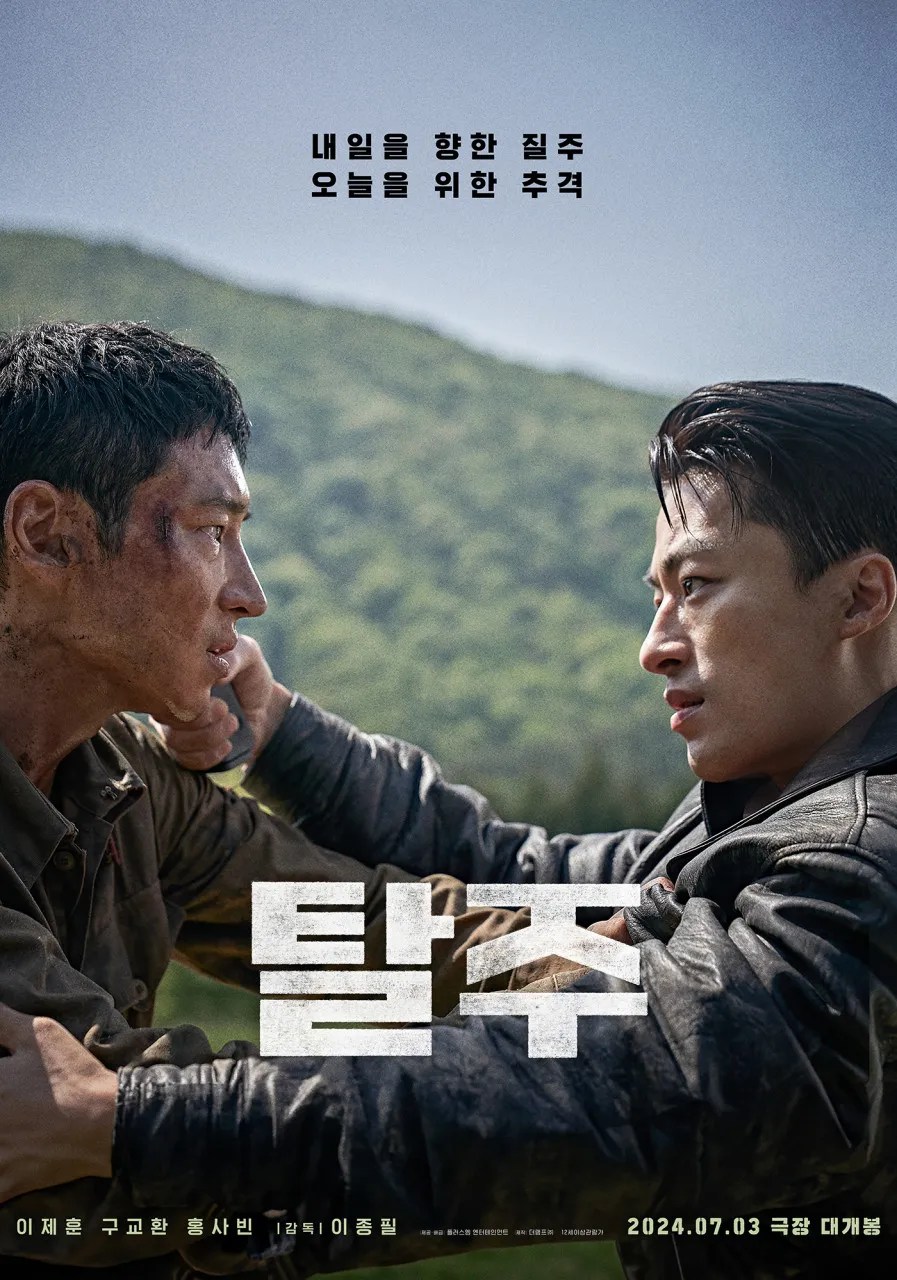
Lee Jong-pil’s existential action drama Escape (탈주, Talju) opens with scenes of a man running. He runs his way through the rest of the film, continually on the move and chasing a dream of freedom outside of the oppressive society in which he is otherwise trapped. The man who chases him, meanwhile, is himself running away. His movements are slow, calculated, and cold but also somehow tender and almost it seems an act of self harm. 

The fact that the oppressive regime is North Korea is almost irrelevant and the film is less about Communism than it is lack of autonomy that may be found in any other democratic or developed nation in which people are driven to erase a part of themselves in order to fit in or to prosper amid rigidly defined social codes. Nevertheless, there is a direct criticism of the Democratic People’s Republic in the ironic signage, a car ploughing straight through a sign that reads “for freedom and happiness of people”. But then, even if deserter Kyu-nam (Lee Je-hoon) finds happiness in the South we can’t be sure it’s really any better. The welcome message blasted through loudspeakers over the wall that marks the border doesn’t sound all that different from the propaganda messages on Kyu-nam’s radio, while the deserter’s phone positioned to appeal to men like him appears to be out of order. 

But to Kyu-nam, “the South” is only really an idea and it’s clear he intends to transcend those borders too, venturing on to the wider world and wherever it pleases him to go. What he rails against is fate, that his life is dictated by forces outside of his control or more accurately by Field Officer Hyun-sang (Koo Kyo-hwan) from State Security who takes him under his wing and tries to make something of him as a loyal soldier of the North. What becomes clear is that Hyun-sang is a man who fears freedom and that the presence of a man like Kyu-nam is a threat to him because he awakens his own deeply buried desire for liberation. 

From the longing looks he directs at a man with whom he studied abroad in Russia we infer that Hyun-sang is gay and the suppression of his authentic self in order to keep himself safe in a repressive culture has made him cruel and vindictive. Unfortunately, this presumably unintentionally plays into a homophobic trope which aligns queerness with sadistic villainy, but does nevertheless lend a kind of poignancy to Hyun-sang’s otherwise vindictive quest to prevent Kyu-nam’s escape precisely because he himself desires to be free but is too afraid to free himself. From a wealthy and prominent family and with an important position within the regime, this system otherwise works out well for Hyun-sang but he is also imprisoned by it and will forever be prevented from becoming his authentic self or gaining what he truly wants so long as he remains within North Korea. 

A homoerotic charge exists between the two men though what Hyun-sang may really be chasing is himself and half-hoping he’ll be caught. Kyu-nam meanwhile has a single-minded desire for autonomy and individuality, to live and die on his own terms rather than live with no right or power to decide his future. There are those who’ve found other ways to reject the system, a group of mostly female nomads seeking a new place to belong after being kicked out of their village but seemingly with no intention of leaving the country, but for Kyu-nam there is no freedom inside the walls and his determination to find it is what makes him so dangerous to Hyun-sang for whom the very idea of freedom is so painful he’s sublimated himself entirely into an oppressive regime.

With pulsing synth scores, Lee keeps the tension high as Kyu-nam runs and runs through minefields and bullets while pursued by the full force of the North Korean army and the steely Hyun-sang who always seems to be one step ahead. His passage takes on an existential quality, risking death rather than continue to live a “meaningless life” in which he has no power to decide his own fate. His escape is finally self-liberation, taking the decision to free himself because no one else is going to, while Hyun-sang remains a prisoner too afraid of freedom to actively pursue it though perhaps tempted by his encounter with Kyun-nam, a man free in his mind if nowhere else.


Escape screened as part of this year’s London East Asia Film Festival.

US trailer (English subtitles)

Send Me to the Clouds (送我上青云, Teng Congcong, 2019)

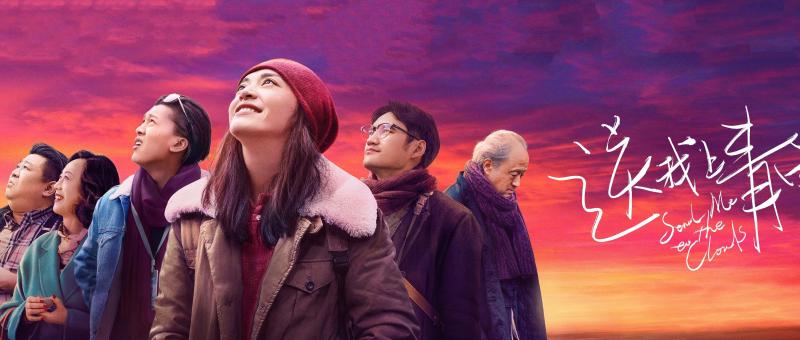
Send me to the clouds posterWomen hold up half the sky, Chairman Mao once said, but in contemporary China sexual equality is an unrealised dream of a previous era. The debut feature from Teng Congcong, Send Me to the Clouds (送我上青云, Sòng Wǒ Shàng Qīngyún) follows one “left-over” woman as she attempts to assert her independence in a world which still expects her to accept her subjugated position in a male dominated society by marrying and subsuming herself within a man’s career.

Ageing investigative journalist Shengnan (Yao Chen) whose name literally means “surpass men” has a cynical eye and fiercely independent nature but is struggling to make a living while protecting her integrity in an increasingly acquisitive culture. Getting kicked in the stomach by a “nutcase” while looking for evidence to support her theory that a local wildfire was started by a politician hoping to capitalise on successfully putting it out forces her to make a long delayed trip to the doctor who tells her that the pain in her abdomen is a result of advanced ovarian cancer and that she needs expensive surgery as quickly as possible.

As she’s been keen to ensure she acts ethically, ready money’s something Shengnan doesn’t have a lot of. Confiding in her cynical, ambitious best friend Simao (Li Jiuxiao) who has no such scruples, Shengnan finds him unwilling to help because, after all, there’s a chance Shengnan might die anyway which would mean it’s a bad investment because she won’t be able to pay him back. He does, however, offer her a job ghostwriting an autobiography for the eccentric father of the local official she was just in the business of exposing for shady double dealing. Understandably she doesn’t want to take the job and decides to try asking her parents without disclosing what the money’s for. Shengnan’s skeevy industrialist father (Shi Qiang), however, is currently losing out in the precarious Chinese economy and actually deigns to ask Shengnan for a loan before she can even broach the subject leading to a spiky father daughter argument. Shengnan has to take the job and throw her lot in with Simao even if she doesn’t feel quite right about it.

Simao cynically affirms that a problem which can be solved with money isn’t a problem, but unlike Shengnan he has no qualms about bowing before power if he feels there’s something to be gained by it. Shengnan nearly blows the gig when she takes offence to the official’s extremely condescending attitude but does after all have little choice given that her life is on the line. Meanwhile, the job is further complicated by the unexpected arrival of her mother (Wu Yufang) who decides to tag along while feeling neglected seeing as her now estranged husband is having yet another affair leaving her entirely alone in a culture which expects women to go back in their boxes until the menfolk want to take them out.

Shengnan and her mother come from very different generations, but in essence not much has changed. Shengnan’s mother married young and had her only daughter at 19 only to see her husband tire of her and the deeply entrenched idea that a woman’s career is a home and family exposed as a fallacy. Shengnan meanwhile was born during China’s reformist period and told that she had total equality only to be frequently criticised for her “manliness” in her desire to assert her independence. On visiting the doctor she displays worryingly little awareness of her health in her confusion regarding the cause of her cancer, stating that her love life ended years ago, but even if she’s quick to roll her eyes at Simao’s insensitive story about a woman who had the surgery and found it ruined her sex drive eventually decides she’d like to have one last hurrah with someone she really likes only to have her proactive stance on female desire rejected as unfeminine.

Yet this hyper capitalistic, intensely sexist environment is also harming men as Shengnan discovers in her unsatisfying encounters both with Simao and with a philosophical photographer she meets on a boat. Shengnan develops an attraction for Guangming (Yuan Hong) because of his softness and seeming desire to see further than others but eventually he disappoints her, trapped as he is by a hierarchal system to which he can offer only token resistance while hating himself for his cowardly complicity. Simao meanwhile has jumped headlong into the consumerist dream, obsessed with getting rich and not particularly caring what he has to do to make that happen.

The most meaningful connection Shengnan makes turns out to be with the subject of her biography, a randy 80-year-old poet (Yang Xinming) who quickly sets about romancing her mother with a series of cryptic text messages. The old man knows his son is a “complete moron” and even changed his name to something bland and commonplace so that the police might arrest someone else by mistake if he got caught while committing a crime, but has a sort of exasperated love for him and for the world that transcends his failing body and worldweary philosophy. Thanks to his refreshing earthiness, Shengnan starts to see a way forward, once again claiming her independence and resolving to live her life in the way she chooses for as long as it lasts while the men around her largely crumble under the weight of social expectations and a rampantly capitalist society.


Send Me to the Clouds  was screened as part of the 2019 London East Asia Film Festival.

International trailer (English subtitles)

Nina Wu (灼人秘密, Midi Z, 2019)

Nina Wu poster 1“They’re not just destroying my body but my soul” complains an exploited woman in a film within a film, “I’ll do something you’ll all regret” she adds, only the actress never will. Penned by leading actress Wu Ke-xi, Nina Wu (灼人秘密, Zhuó Rén Mì) provides a timely exploration of the gradual erasure of the self the pursuit of a dream can entail in a fiercely patriarchal, intensely conservative culture. Arriving in the wake of the #metoo scandal the film goes in hard for industry exploitation but never tries to pretend that these are issues relating to the film industry alone or deny the various ways it informs and is informed by prevailing social conservatism.

Originally from the country, the titular Nina Wu (Wu Ke-xi) has been in Taipei for eight years trying to make it as an actress but is still awaiting that big break. Aside from some small bit parts and commercial jobs, she supports herself by working in restaurants with a side career as a live-streaming webcam star. Then, just as she’s starting to think it’s too late, a call comes through – she’s in the running for the lead in a high profile period spy thriller. The only snag is that the part requires full frontal nudity and explicit sex scenes.

Nina is understandably conflicted. Aside from the potential discomfort, taking a part in the kind of film this could turn out to be is a huge gamble that could either make or break her career (just look at what happened to Tang Wei after Lust Caution, itself a period thriller about a female assassin who falls for her target). Nina’s unsympathetic agent skirts around the fact this might be her last chance while promising to respect her decision, implying it’s this or nothing. Of course, neither he nor the sleazy director inviting parades of identically dressed hopefuls up to his hotel room where he forces them to engage in dubious acts of degradation for his own enjoyment will admit that the reason they want a “fresh face” isn’t for any artistic motivation but that no well established actress with a proper agent would ever take a role like this (and even if she did, she couldn’t be pushed around in the same way).

Convincing herself to do whatever it takes, Nina takes the part but goes on to suffer at the hands of a controlling and tyrannical director who psychologically tortures and physically abuses her supposedly in order to get the performance he wants rather than the one she chooses to give him. A repeated motif sees hands continually around Nina’s throat as if she were being permanently strangled, unable to speak or express herself, permitted breath only when compliant with the desires of men.

Subsuming herself into the part, Nina avoids having to think about the various ways her offscreen life is also a performance or of her own complicity in the erosion of her emotional authenticity. A visit home reveals a difficult family environment with a father (Cheng Ping-chun) losing out in the precarious modern economy, while she, now the “famous actress”, wonders if she was happier as an am dram bit player staging inspirational plays for children. The secret she seems so desperate to conceal seems to be her same sex love, sacrificed for a career in Taipei and now perhaps unsalvageable. Her lover has moved on, preparing to marry a man and embark on a socially conventional life. If she too has made her peace with sacrificing a part of her true self, she does at least seem superficially “happy” in contrast to Nina’s gradually fracturing psyche.

Meanwhile, Nina becomes paranoid that a mysterious woman is stalking her. Apparently another hopeful also driven mad by the demands of an exploitative industry, the woman is convinced Nina has taken what was rightfully hers and done so by selling her body for career advancement. Yet as time goes on we begin to wonder if the film ever happened at all or is only a part of Nina’s fabricated delusion sparked Marienbad-style by the single traumatic event on which the film ends, filled as it is with a lingering sense of tragic defeat. Nina Wu never takes her longed for revenge, even if she (perhaps) gains it in a kind of success, but silently endures as the misuse of her body begins to destroy her soul and leaves her nothing more than an empty vessel on which the desires of others are projected.


Nina Wu was screened as part of the 2019 London East Asia Film Festival.

Original trailer (English subtitles)

A Girl Missing (よこがお, Koji Fukada, 2019)

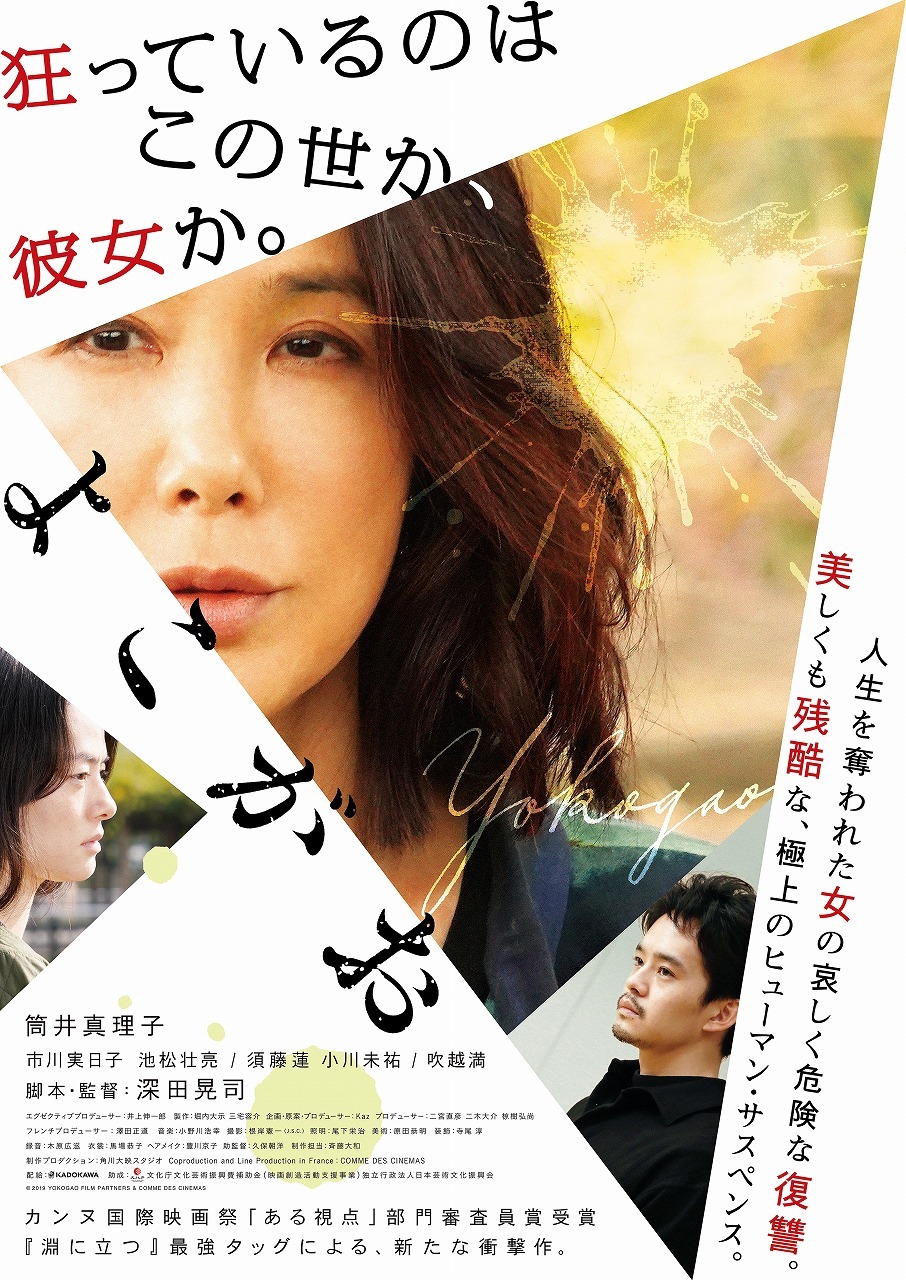
A Girl Missing poster 1In Harmonium, Koji Fukada explored the death of the family unit as a harried father found the foundations of his home eroded by a mysterious “stranger” with whom he shared an unspoken connection. A Girl Missing (よこがお Yokogao) pushes a little deeper in demonstrating how profoundly the foundations of a life can be shaken by frustrated connections, misunderstandings, and unspeakable desire. Probing deeper still, it wants to ask us on what foundations we’ve chosen to build our selfhoods, why it is that we don’t know ourselves without those tiny markers that tell us where we stand, and if it is really possible to rediscover a sense of self if we somehow go missing from our own lives.

Beginning in the mysterious second timeline, Fukada opens with the heroine changing her identity through the time-honoured fashion of a haircut. Calling herself Risa, she brushes off the hairdresser’s suggestion that they’ve met before, but she hasn’t chosen this salon because of its reputation or proximity to her home. Flashing back some months, we see the same woman looking a little softer and apparently working as a homecare nurse known as Ichiko (Mariko Tsutsui) to an elderly woman dying of stomach cancer. Ichiko’s colleagues worry that she’s becoming too emotionally involved with the Oishi household, helping the two daughters – uni student Motoko (Mikako Ichikawa) and high schooler Saki (Miyu Ogawa), study in cafes in her off hours, but she enjoys playing mother and does after all like to help. Meanwhile, she’s also happily engaged to a doctor (Mitsuru Fukikoshi) with a young son and looking forward to starting a brand-new family life of her own.

All that is derailed, however, when Saki goes missing in a suspected abduction on her way home from cram school. Thankfully, she’s found alive, unhurt, and apparently relatively well adjusted a few days later and anyone would assume the drama to be over, only it turns out that the suspect is Ichiko’s own nephew whom she briefly introduced to Saki at a cafe on the night in question. Feeling tremendously guilty and confused though she herself had nothing to do with the incident, Ichiko feels she must confess and make a formal apology to the Oishis but Motoko stops her fearing that the family will fire Ichiko and she’ll never see her again. Ichiko decides to trust Motoko and keep quiet, but it will prove to be a bad decision not least because it is in such sharp contrast to her otherwise straightforward and honest character.

The film’s Japanese title, “Yokogao” or “profile” reminds us that it is not possible to see the entirety of any one thing, only a single facet and more often that not the facet that it particularly wants you to see. Ichiko is guileless, innocent, and naive in her innate kindness. She doesn’t see how her relationship with the Oishi girls could eventually become problematic because, as a nurse, she’s used to doing what needs to be done when it needs doing. What we see of her is a woman about to marry “late” by the standards of her society into a readymade family, an intensely maternal figure looking for people who need mothering. Meanwhile, Saki’s disappearance exposes cracks in the Oishi household, Motoko’s grumpy response of “would you rather it was me?’ to her mother’s wails of “why her?” beginning to explain some of her seeming disaffection with her family.

Yet as much as there may be a maternal component in her desperation to keep Ichiko in her life, we can infer from all her plaintive looks that there is another kind of desire in play, one which she seems to regard as unspeakable. Ichiko, oblivious, does not quite realise the depth to which her accidental rejections wound the troubled young woman but equally could not anticipate the casual cruelty of her petty revenge. Upset that Ichiko is not catching her drift, Motoko leaks her connection to the case to the papers, and then tells them a secret shared in confidence to pour salt on the wound. Instantly regretful and caught in the white heat of passion, Motoko fails to realise the extent to which her desire to return the hurt done to her will only wound her more in ensuring Ichiko disappears from her life for good.

Ichiko then does something much the same, reinventing herself as “Risa” she lives in an empty apartment overlooking Motoko’s with the sole aim of taking revenge against the woman who pretended to be her friend and then betrayed her. But Ichiko does not understand why Motoko did what she did, and so her own revenge is also a misplaced act of self harm which causes her to absent herself from herself, assuming another identity better disposed to cruelty but finding it an awkward fit.

Fukada places emotional repression at the heart of all. Ichiko, despite her kindness, keeps others at a distance without entering into true intimacy with anyone, while Motoko apparently struggles to articulate perhaps even to herself the truth of her own feelings, childishly hitting back when slighted and unable to bear the possibility that she is in love with someone who cannot return her feelings. Forever at odds, they see each other only in profile. The desire for revenge destroys them both, but despite the pain and inescapability of regret, they have to find new ways of going on, making little nicks on their identities to help them remember who they really are. A melancholy tale of frustrated desires, A Girl Missing flirts with constructed identities polluted by social toxicity but leaves its heroines on (slightly) firmer ground in having at least taken what control they can over the forces which destabilise them.


A Girl Missing was screened as part of the 2019 London East Asia Film Festival.

Original trailer (no subtitles)

G Affairs (G殺, Lee Cheuk-pan, 2018)

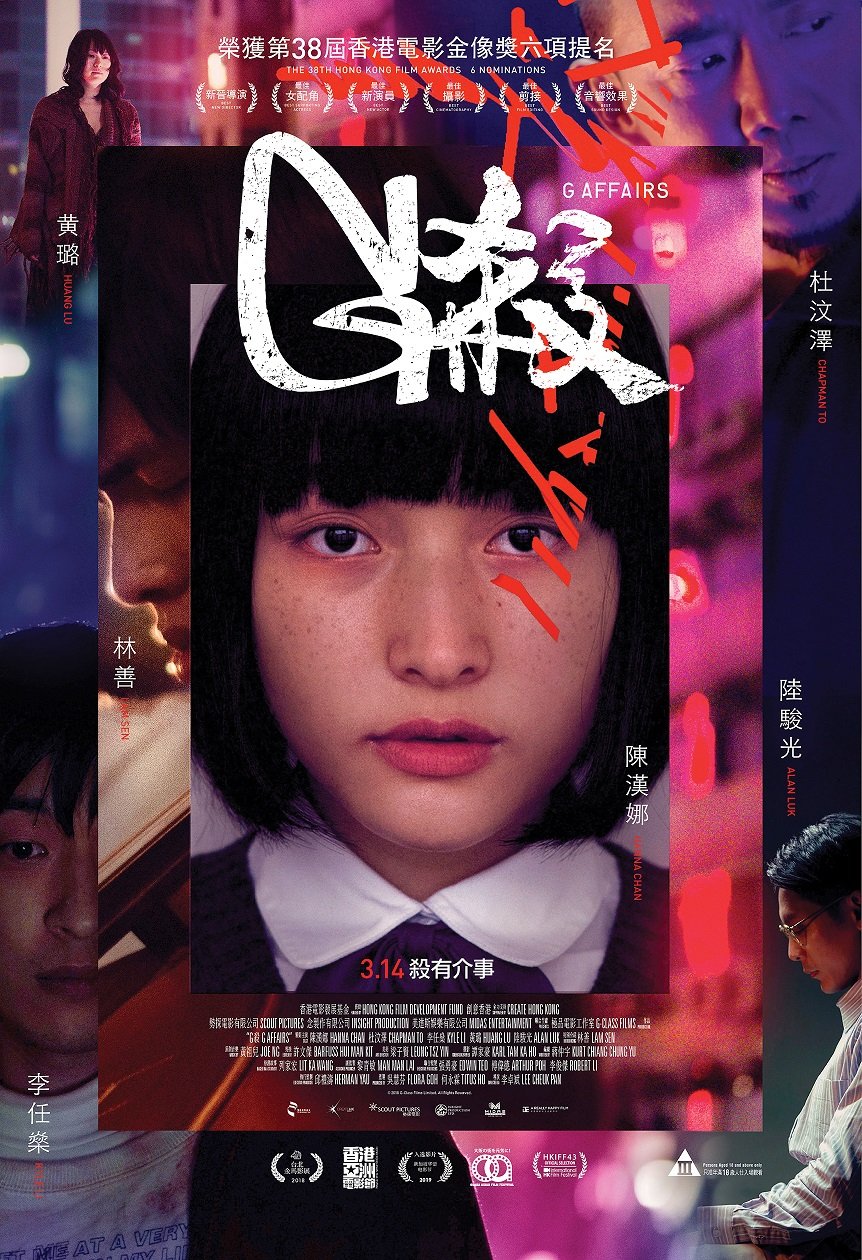
G Affairs poster 1“Many think Hong Kong is getting better, but I can tell you for sure Hong Kong is getting worse” says the dejected hero of Lee Cheuk-pan’s striking debut, G Affairs (G殺). Reminiscent of Fruit Chan’s landmark chronicle of handover malaise Made in Hong, G Affairs finds itself in a city once again in crisis where the young struggle to see a future, abandoned or misused by the older generation who think only of themselves in an increasingly nihilistic world of violence and transaction.

Lee opens with an arresting scene shot in 4:3 in which a teenage boy practices his cello while a scantily clad woman opens the door only to be dragged back to the couch by a burly policeman who proceeds to have his way with her until a severed head suddenly bounces in through the French doors. The story of how the head came to land there brings together a disparate collection of people from all walks of life – teenage cello player Tai (Lam Sen), his classmate Yuting (Hanna Chan), her autistic friend Don (Kyle Li), her corrupt cop dad “Master Lung” (Chapman To Man-chak), former sex worker stepmother Mei (Huang Lu), and high school teacher Markus (Alan Luk Chun-kwong) with whom Yuting has been experimenting with oral sex.

Today’s lesson is brought to us by the letter G – chosen by Don as his favourite letter in the Western alphabet connected as it is to many of his beloved computer words, but reminiscent to Yuting of a human skull with its jaw hanging open. Above it all, Yuting resents her fellow students at the elite high school, especially the immature boys who nickname her “G” behind her back for a number of reasons ranging from an unflattering comparison to a busty classmate and the fact that her stepmother was a sex worker the slang word for which sounds like G in Chinese. Tai, meanwhile, is not well liked either and also considers himself superior to his surroundings, proclaiming that only losers need friends and frequently dobbing in his classmates for their bullying behaviour. Don, a few years older, is associated with another G word – “gay” which people seem to assume him to be for unclear reasons, and is an outcast because of his autism.

The three seem to be more or less abandoned by their parents. Tai lives alone, a melancholy musician who believes that “things of value cannot be found in the world” only in music, literature and art, while his parents have long since departed in search of riches. “A family that’s never home is not a family” he explains to mainlander Mei who hoped to find a new life for herself in Hong Kong but even with her present “family” feels even more alone than she ever had before. Her stepdaughter Yuting intensely resents her, regarding her father’s affair with Mei as the primary cause of her mother’s gastric cancer and subsequent death. Yuting also resents her father, ashamed of his embarrassing gangster antics and tendency to spout high minded quotes to mask his essential superficiality. Neglecting his daughter, Lung positions himself as a kind of father figure to Don to whose parents own an internet cafe which facilitates some of Lung’s dirty work.

Dirty work is something of a Lung speciality but as Tai says, he’s not even that bad a man merely someone trying to make a fast buck in the burgeoning Hong Kong underworld. Calling himself “Master Lung”, he thinks of himself as maintaining his own kind of order – “one country, two systems” as Yuting later ironically describes her complicated home life, but may actually be on the “better” side of law enforcement as we witness the legitimate police waterboard a terrified Don who is largely unable to answer their questions in the way they insist on asking them, and physically abuse a guilty Markus while threatening to expose his illicit relationship with Yuting and, it turns out, her stepmother Mei. Another middle-aged hypocrite, Markus confesses only to introducing Mei and her sex worker sister to his church group in the belief that they “deserved salvation”.

That may not be a view commonly held by most as Mei finds out during an impassioned conversation with Yuting’s headmistress who berates her for her “shameless” past. Speaking as a mainlander, a trafficked woman, and a sex worker, Mei hits back by asking what right Hong Kong people have to look down on her and why it is her background in sex work is so problematic that everyone seems to be telling her it would be inappropriate for her to be a mother which is only what she’s trying to be to Yuting despite her animosity. Lung might have married Mei, but he wastes no time denigrating other mainland women trafficked to the Hong Kong underworld and cooly brushes off complaints after shooting a man with the justification that no one cares about another dead mainlander. Mei does her best to be “happy”, but learning that her own mother has been executed by the Chinese state for opposing its oppression leaves her adrift, longing to go “home” but knowing there is no home to go to and no safe land even in Hong Kong.

Children are the adults of tomorrow, Yuting explains, but the adults of today have robbed them of any possible future. Lee’s depiction of contemporary Hong Kong is one of increasing chaos, a hopeless place that has lost its way. The older generation think only of money while the young want something more but struggle to find anything of meaning in the soulless modern world which seems to be imploding all around them. Strangely hopeful, yet infinitely nihilistic, Lee ends on the single word “Go” as his troubled protagonists find their own kind of peace in the abyss of the modern city.


G Affairs was screened as part of the 2019 London East Asia Film Festival.

International trailer (English subtitles)

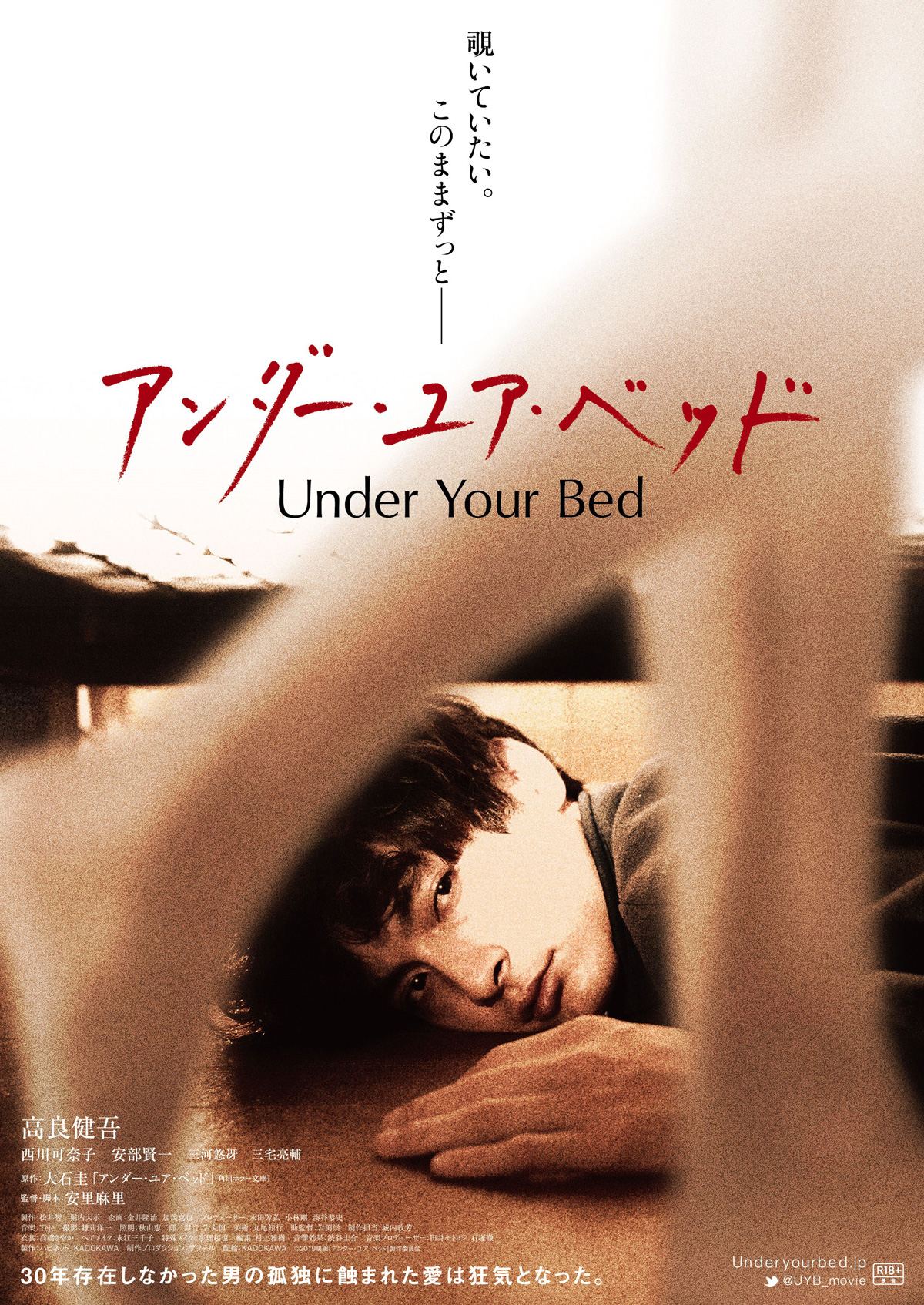
Under Your Bed (アンダー・ユア・ベッド, Mari Asato, 2019)

Under Your Bed poster 1Japanese cinema has something of a preoccupation with invisible men, but there’s rarely been as empathetic an exploration of benign alienation as Mari Asato’s Under Your Bed (アンダー・ユア・ベッド). Asato’s lonely stalker is a creep and a voyeur, but his problem is his innate passivity born of defeatism in which he has, despite his tendency to fantasise, already accepted that he lives in a kind of other world unable to touch his fellow humans from whom he remains painfully separated as if by a sheet of invisible glass.

Tropical fish enthusiast Mitsui (Kengo Kora) is one of those people who tend to be forgotten. He doesn’t feature in his high school graduation photo, and nobody, not even his parents, has ever noticed. Harbouring intense feelings of worthlessness linking back to a childhood memory of abandonment after almost dying when his father left him sitting in a hot car, Mitsui has no friends or much of a life to speak of and regards himself as a kind of non-person invisible to others. Longing to be seen, he treasures the precious memory of the only time he has ever heard someone else call his name which occurred 11 years previously when he was a university student.

Mitsui deeply believes that this memory is the only thing that gives his life meaning. Hiring a private eye to track down the woman in question, Chihiro (Kanako Nishikawa), he quits his job and opens a tropical fish store in the town where she lives, apparently now married with a baby. What he discovers, however, is that this Chihiro is quite different from the one of 11 years previously. Hoping to figure out why he begins watching her intensely, swiping a key to the house after she drops into the fish shop by chance and he offers to set her up with a tank full of colourful guppies. What Mitsui eventually discovers is that Chihiro is also living a somewhat invisible life as a victim of domestic violence unable to escape the tyrannical control of her respectable salaryman husband.

Facing a dilemma, Mitsui doesn’t so much want to rescue Chihiro as preserve his peculiar level of access to her even if seeing her subjected to such degrading and inhuman treatment quite obviously disturbs him. Mitsui can’t swoop in and save her because he’d blow his cover and lose the fragile connection to her life he’s convinced himself he has. Never daring to hope he could get her attention through an act of white knight salvation, he nevertheless fantasises about a different version of himself – one that is capable of providing comfort and protection rather than simply sitting and watching while others suffer.

Ironically enough, however, his passive presence seems to make a difference. Shifting to a brief voice over from Chihiro, we discover that the flowers Mitsui has been sending with a card wishing her happiness are the only thing that’s been keeping her going. What some might regard as a cause for concern has given Chihiro strength in proving that there’s someone else out there who cares about her. Yet this change or at least potential restoration also endangers Mitsui’s plan as Chihiro’s growing conviction that she can protect herself, spurred on by the invisible support of the flower sender and others, threatens to dissolve the fragile fantasy world he’s constructed.

Mitsui is forced to wonder if his obsession is equal parts delusion, that perhaps the very events which define his life are part fabrications. His intense conviction that he is a forgettable person is borne out when he realises that Chihiro not only does not recognise him, but apparently does not even remember anything that passed between them 11 years previously. To her, he is probably just a random guy she had coffee with one time, whereas to him she is the woman who changed his life by showing him what true happiness could feel like simply by saying his name. Spotting another invisible person like himself reminds Mitsui what he looks like from the outside and of the potential dangers of those like him when he finds out that the man later went out and stabbed his boss’ wife because she gave everyone except him a holiday souvenir. Yet there is a strange kind of positivity in Matsui’s gentle acceptance of his invisibility. Resenting nothing, it’s not revenge he wants but recognition and though he may eventually figure out that what he really desired was something more, all he needs is the possibility that Chihiro may one day say his name again.

An invisible man, Mitsui longs to “seen” but lives a bug-like existence, hiding in the places no one thinks to look. Proudly telling us that the guppies in his shop are the 34th generation of the guppies his mother once gave him, Mitsui reveals that he flushes the subpar males, with whom he inevitably groups himself, away in order to preserve the beauty of the whole rather than allow it to descend on a path towards mediocrity. Like his beloved fish, Mitsui remains trapped within an invisible tank unable to reach beyond the glass, resigned to looking but not touching. Nevertheless, his presence is eventually felt, unseen but recognised and finally rewarded with a single long-awaited word.


Under Your Bed was screened as part of the 2019 London East Asia Film Festival.

Original trailer (no subtitles)