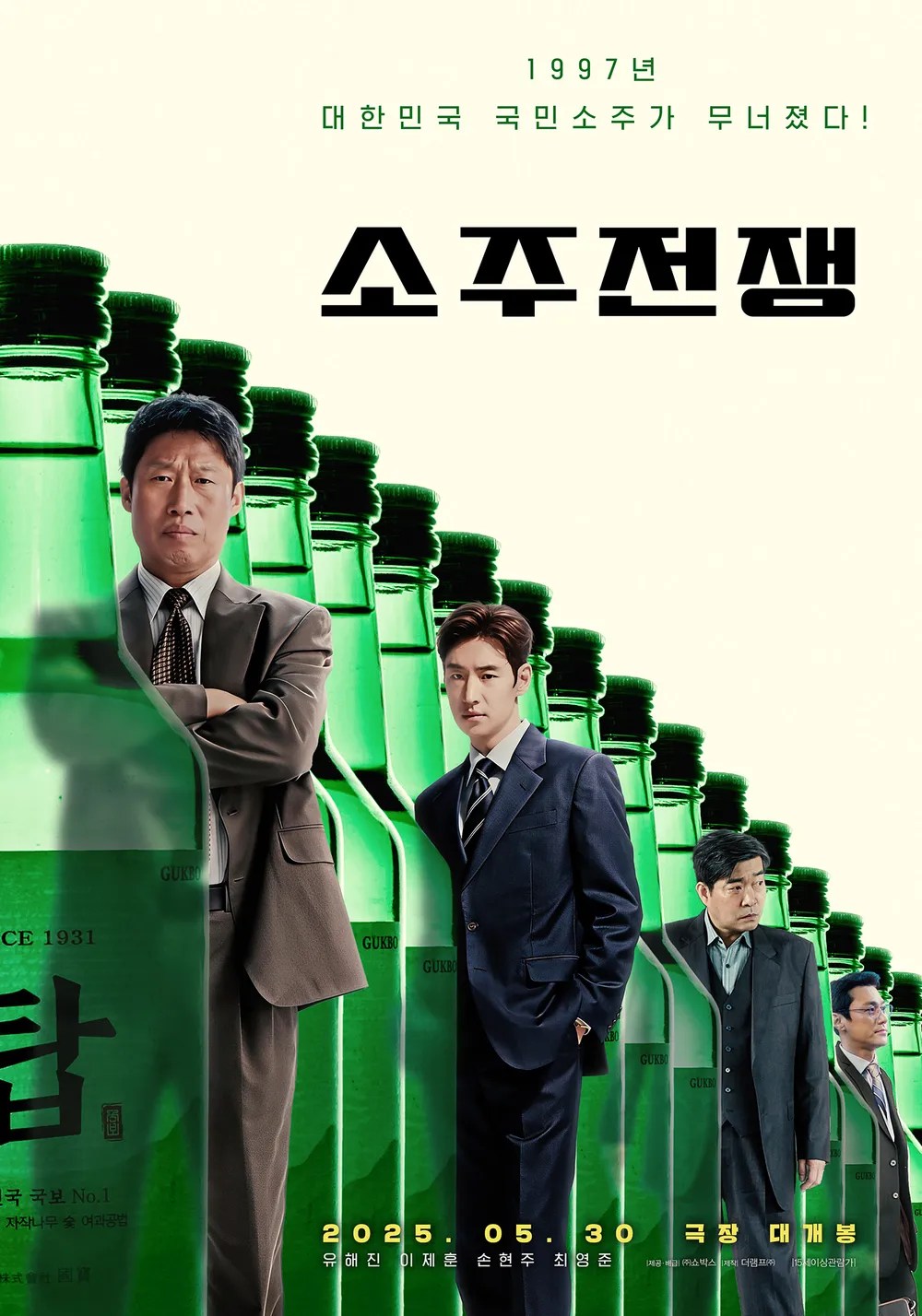
Big Deal (소주전쟁, Choi Yun-jin, 2025)

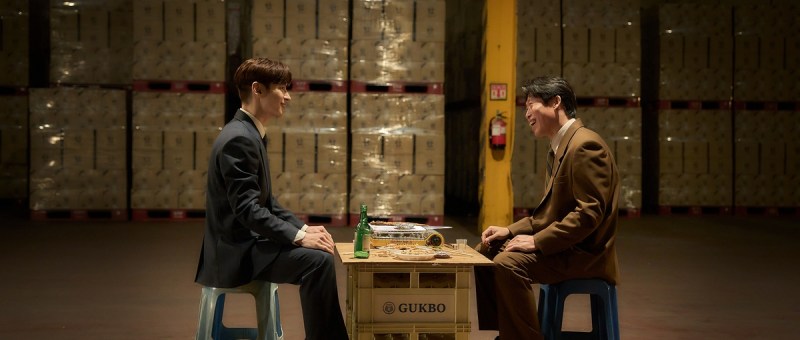
When Korea’s biggest Soju conglomerate, Gukbo, is on the verge of bankruptcy in the wake of the Asian financial crisis and the CEO’s mismanagement, it provokes a national outcry but also the attention of a hundred foreign firms all swarming over Korea like vultures eager to get a piece of the pie. Loosely based on a real life incident, Choi Yun-jin’s Big Deal (소주전쟁, Soju Jeonjaeng) is more evenhanded than one might expect at once decrying the amoral business practices of American corporate imperialism while pointing out that maybe things aren’t perfect in Korea either with its dynastic approach to company management and workaholic lifestyle that comes at the cost of familial bonds.

In fact it sort of implies that In-beom’s (Lee Je-hoon) desire to send Gukbo into bankruptcy so they can take it over and flip it is a kind of revenge against his own workaholic father who passed away 10 years previously, his death presumably hastened by stress and overwork though what In-beom resents more than anything else is that he was never really much of a father to him. That might be why Gukbo’s earnest financial officer Pyo (Yoo Hae-jin) comes to fill that role. In-beom complains that Pyo is stupid and naive, knowing nothing of how the world works, but also that his stupidity makes him feel like an arsehole because it forces him to realise that he’s doing something wrong. 

Caught between In-beom whose firm, Solquin, are pretending to consult on the administration process but in reality feeding into to their subsidiary to buy up shares, and the CEO, Pyo is the only one thinking about what’s going to happen to all their employees when the place goes bust. Like In-beom’s father, Pyo is also a workaholic whose wife and daughter left him because he was never there. He remains dedicated to Gukbo, but not to the extent of breaking the rules, even if he eventually goes along with it when the CEO suggests a dodgy plan to undercut Solquin and maintain control of the company his father founded. What becomes apparent is that Seok (Son Hyun-joo) is out of his depth and that the only qualification he has is being the boss’ son. It’s his fault the company got into trouble because of his reckless expansion plans while he tries to cover up his failings through cronyism, playing golf with the great and the good while leaving Pyo to clean up the mess he’s made.

Nevertheless, for good or ill, Gukbo comes to represent a Korea preyed upon by venal foreign influence. When the plan is exposed, Pyo is sure that the creditors won’t agree to bankruptcy because they won’t be able to stand such a typically Korean business being placed into foreign hands. In-beom thinks that’s ridiculous and no one has that kind of patriotic attachment to a company, but it turns out he’s right and Solquin have an uphill battle in front of them. Yet even In-beom begins to tire of his colleagues’ underhandedness. Though there are a handful of women working at the American investment firm, the culture is extremely macho and misogynistic with liberal and frankly unprofessional use of the F-word as In-beom’s male colleagues make obnoxious jokes about who is getting their dick sucked by whom. Pyo and his team may drink too much, but at least they’re collegiate rather than adversarial.

The question is really whether as In-beom says making money is just that and can’t be either sleazy or noble, while Pyo definitely thinks there are right ways and wrong ways to earn. Solquin is definitely wrong, while Gukbo isn’t entirely right either. In-beom may have a point when he challenges his old-fashioned salaryman mentality of putting the company first every time, but the conclusion Pyo seems to come to is to let all go and just be yourself. That doesn’t mean you have to stoop to their dishonest ways of doing business, but equally it doesn’t mean you have to let them walk all over you either. Capitalism is an inherently corrupt system, but there’s not a lot either of them can do about that even if eventually meeting somewhere in the middle as Pyo loses his faith in chaebol culture and In-beom realises he’s just as disposable when his American bosses chew up him and spit him out as soon as he’s served his usefulness. A closing title reminds us we’re still dealing with a lot of these problems 20 years later with companies that are too big to fail and inadequate regulation though Pyo at least seems to have found a happy medium doing what he loves on his own terms.


Trailer (English subtitles)

Choi Yun-jin directed this film, but her name was later removed from the credits after being fired by the production company who accused her of misappropriating the script.
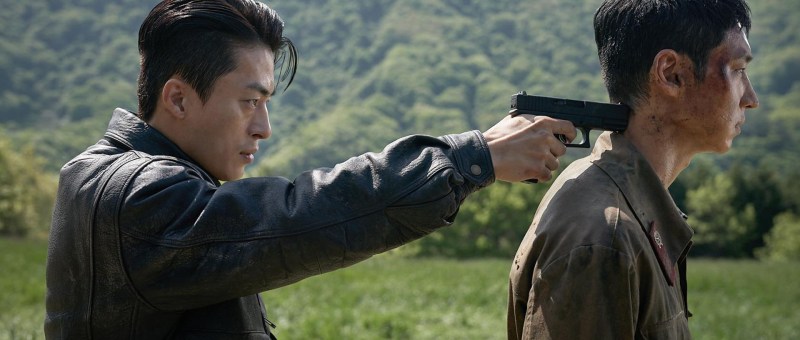
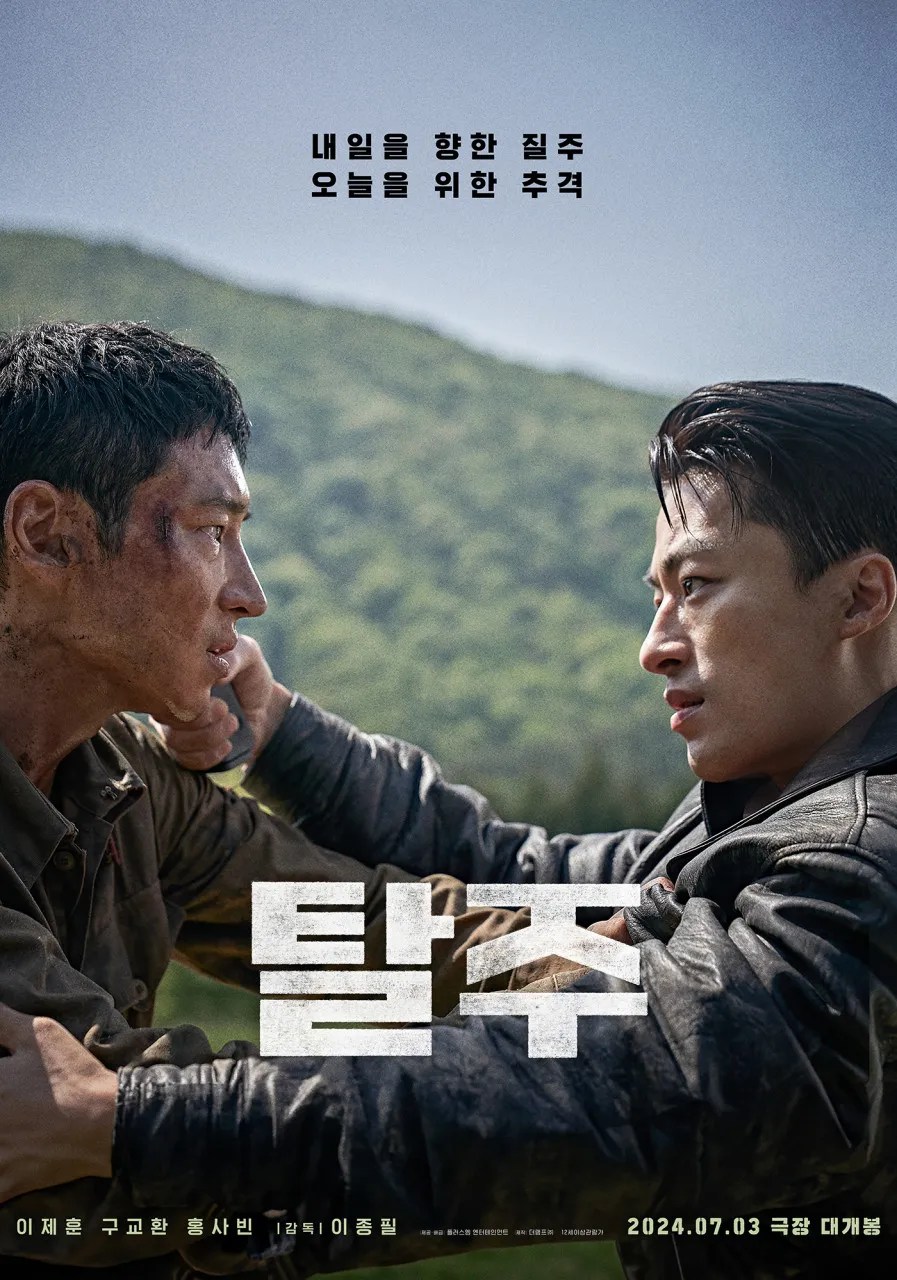
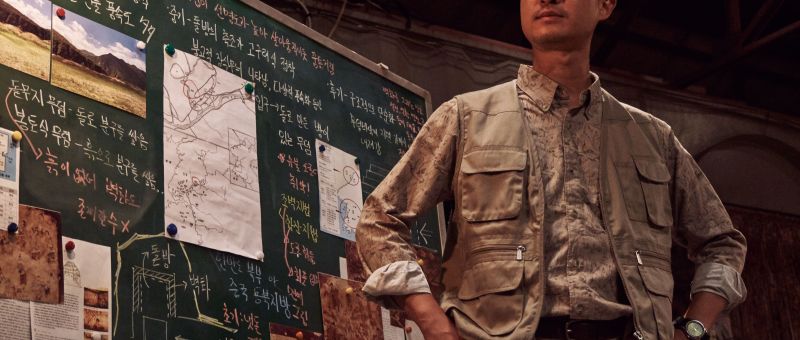
Escape (탈주, Lee Jong-pil, 2024)

Lee Jong-pil’s existential action drama Escape (탈주, Talju) opens with scenes of a man running. He runs his way through the rest of the film, continually on the move and chasing a dream of freedom outside of the oppressive society in which he is otherwise trapped. The man who chases him, meanwhile, is himself running away. His movements are slow, calculated, and cold but also somehow tender and almost it seems an act of self harm. 

The fact that the oppressive regime is North Korea is almost irrelevant and the film is less about Communism than it is lack of autonomy that may be found in any other democratic or developed nation in which people are driven to erase a part of themselves in order to fit in or to prosper amid rigidly defined social codes. Nevertheless, there is a direct criticism of the Democratic People’s Republic in the ironic signage, a car ploughing straight through a sign that reads “for freedom and happiness of people”. But then, even if deserter Kyu-nam (Lee Je-hoon) finds happiness in the South we can’t be sure it’s really any better. The welcome message blasted through loudspeakers over the wall that marks the border doesn’t sound all that different from the propaganda messages on Kyu-nam’s radio, while the deserter’s phone positioned to appeal to men like him appears to be out of order. 

But to Kyu-nam, “the South” is only really an idea and it’s clear he intends to transcend those borders too, venturing on to the wider world and wherever it pleases him to go. What he rails against is fate, that his life is dictated by forces outside of his control or more accurately by Field Officer Hyun-sang (Koo Kyo-hwan) from State Security who takes him under his wing and tries to make something of him as a loyal soldier of the North. What becomes clear is that Hyun-sang is a man who fears freedom and that the presence of a man like Kyu-nam is a threat to him because he awakens his own deeply buried desire for liberation. 

From the longing looks he directs at a man with whom he studied abroad in Russia we infer that Hyun-sang is gay and the suppression of his authentic self in order to keep himself safe in a repressive culture has made him cruel and vindictive. Unfortunately, this presumably unintentionally plays into a homophobic trope which aligns queerness with sadistic villainy, but does nevertheless lend a kind of poignancy to Hyun-sang’s otherwise vindictive quest to prevent Kyu-nam’s escape precisely because he himself desires to be free but is too afraid to free himself. From a wealthy and prominent family and with an important position within the regime, this system otherwise works out well for Hyun-sang but he is also imprisoned by it and will forever be prevented from becoming his authentic self or gaining what he truly wants so long as he remains within North Korea. 

A homoerotic charge exists between the two men though what Hyun-sang may really be chasing is himself and half-hoping he’ll be caught. Kyu-nam meanwhile has a single-minded desire for autonomy and individuality, to live and die on his own terms rather than live with no right or power to decide his future. There are those who’ve found other ways to reject the system, a group of mostly female nomads seeking a new place to belong after being kicked out of their village but seemingly with no intention of leaving the country, but for Kyu-nam there is no freedom inside the walls and his determination to find it is what makes him so dangerous to Hyun-sang for whom the very idea of freedom is so painful he’s sublimated himself entirely into an oppressive regime.

With pulsing synth scores, Lee keeps the tension high as Kyu-nam runs and runs through minefields and bullets while pursued by the full force of the North Korean army and the steely Hyun-sang who always seems to be one step ahead. His passage takes on an existential quality, risking death rather than continue to live a “meaningless life” in which he has no power to decide his own fate. His escape is finally self-liberation, taking the decision to free himself because no one else is going to, while Hyun-sang remains a prisoner too afraid of freedom to actively pursue it though perhaps tempted by his encounter with Kyun-nam, a man free in his mind if nowhere else.


Escape screened as part of this year’s London East Asia Film Festival.

US trailer (English subtitles)

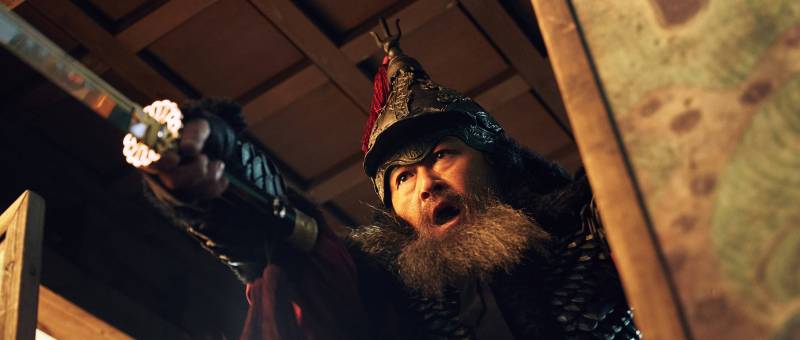
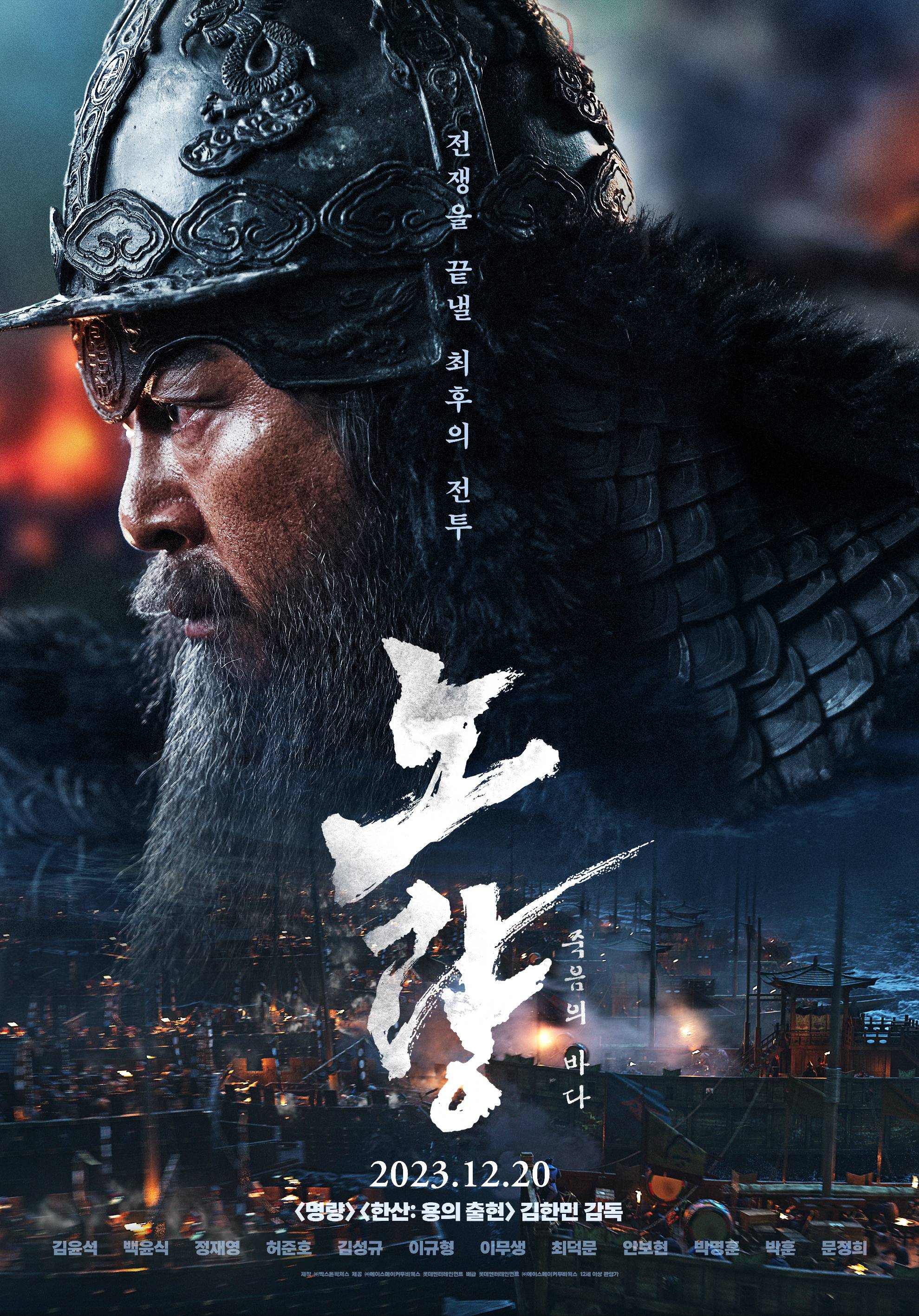
Noryang: Deadly Sea (노량: 죽음의 바다, Kim Han-min, 2023)

The strange thing about Noryang: The Deadly Sea (노량: 죽음의 바다, Noryang: Jugeumui Bada), the third and final instalment in Kim Han-min’s trilogy about 16th century admiral Yi Sun-sin is that everyone wants to end the war but they all want to end it definitively and so are unable to simply let it run its course. Then again, there is a little more complexity involved in the depiction of Yi in asking whether his desire to repel the Japanese once and for all is really about the national good or personal vengeance for the death of one of his sons at the hands of Japanese raiders.

The opening scenes taking place in 1598 witness the death of Toyotomi Hideyoshi who had launched two invasions of Korea in the previous decade which were in themselves precursors to an invasion of Ming China in an attempt to disrupt the Chinese Tributary System that prevented Japan from trading with China without agreeing to pay them taxes and recognise their political superiority. In the film at least, his deathbed order is to withdraw troops from Korea where they had been unsuccessfully fighting for the previous year. The leader of the Japanese forces, Konishi Yukinaga (Lee Kyu-hyung), is however prevented from leaving by a naval blockade placed by Admiral Yi around their fort on Suncheon Island. With Hideyoshi dead, Yukinaga is keen to return to Japan as quickly as possible in order to defend Hideyoshi’s young son, Hideyori, from Tokugawa Ieyasu who makes a very sinister appearance at Hideyoshi’s deathbed.

One might wonder why Yi does not allow Yukinaga to simply leave and return to Japan now that the war is technically over yet he insists that without a full surrender nothing is guaranteed and the Japanese may simply regroup and return as they had done before. Then again, he’s haunted by nightmares of his son’s death in which he witnesses him cut down by Japanese pirates while unable to intervene dragged back by shadowy figures rising from the water. Yi also later makes clear that his motivation is coloured by a desire for revenge to the extent that he is willing to sacrifice his life for it, which is one thing but it also necessarily means he’s willing to risk the lives of his men over what is partly a personal vendetta. 

Yukinaga, meanwhile, and the Japanese in general are depicted as cruel, ruthless, and cowardly. Shimazu (Baek Yoon-sik), the admiral leading the reinforcements sent to help spring Yukinaga, wilfully fires on his own men in order to cut his way through to the enemy and then threatens to execute sailors who tried to desert. In the end Yukinaga breaks his promise and declines to come to the assistance of Shimazu’s fleet as arranged, turning away and sailing back to Japan (he is subsequently beheaded after being on the losing side of the battle of Sekigahara as he was unable to commit ritual suicide because he was a Christian). They had originally been let down by a Chinese general they’d bribed to assist them but had decided not to turn up given the war was already over, making a secondary agreement with Admiral Chen (Jung Jae-young) who also desires a peaceful end to the disruption but vacillates between each side while not really wanting to get involved before making a fairly disastrous intervention in the final battle. 

There is something a little a uncomfortable in the film’s framing and most particularly in its post-credits scene which reinforces Yi’s conviction that the war isn’t really over without a complete surrender from Japan. In any case, Yi becomes a literal beating heart of the battle banging the drums of war to encourage weary fighters that it isn’t over yet and to keep going to the last man buoyed by the spirits who appear to him of his son and allies who lost their lives fighting similar battles in the previous films. That aside, Deadly Sea is mostly standalone though some knowledge of Japanese and Korean history in the late 16th century is undoubtedly helpful. Kim devotes the second half of the film to a lengthy series of naval battles as Yi tries to lure Shimazu to a vulnerable position, eventually shooting a harrowing long take from the perspective of an ordinary sailor trying to cut his way through after boarding a series of enemy boats. The senseless futility of the violence is the point, but it’s one that’s continually lost on Yi who continues to insist that this war will never really be over until they chase the invaders all the way back to their own islands and into total capitulation even as his quarry sails away towards his own unhappy destiny in an equally turbulent Japan.


International trailer (English subtitles)

Collectors (도굴, Park Jung-bae, 2020)

“Grave Robber” is ordinarily not a nice thing to call someone, let alone to be, yet the heroes of Park Jung-bae’s Collectors (도굴, Do-gul) are just that if in effect more like cultural Robin Hoods robbing the dead to reclaim the past than heartless thieves interested only in profit. Operating with a “this should be in a museum!” mentality, these grave robbers have a variety of motives, among them revenge both personal and national, as they take aim at lingering historical betrayals stemming back to the days of Japanese colonialism. 

As the film opens, intrepid thief Dong-gu (Lee Je-hoon) manages to trick a pair of Buddhist monks suspicious on the grounds that he’s a bit handsome for the religious life into letting him “guard” a pagoda that’s set for imminent dismantling in order to nab a precious miniature Buddha located inside. What puzzles the authorities is that Dong-gu leaves obvious evidence of the theft along with a trademark chocopie wrapper which suggests he wants everyone to know how clever he is. This may be true, Dong-gu is quite smug about his obvious abilities as a tomb raider, but he may also have ulterior motives in play. As a duplicitous broker points, out, however, it’s surprisingly difficult to make money trafficking artefacts because they are simply to famous to be sold openly meaning thieves and fences are all dependent on a small pool of super rich “collectors” with whom they have personal relationships or else are stealing to order. 

Stepping back a little, what this means is that not only are those like Dong-gu robbing the dead and selling their affects on the black market, but that they are in a sense traitors to their nation often selling these precious historical artefacts to foreigners and most problematically to the Japanese, ironically enough grave robbers themselves in having looted half the country during the colonial era. It will come as little surprise that the main villain Jin Sang-gil (Song Young-chang), a hotel entrepreneur and head of the Korea Cultural Asset Foundation, in fact owes his inherited wealth to his family having sold artefacts to the Japanese from 1910 onwards, and himself is keeping a large selection of plundered treasures in an ultra secure vault underneath his offices. 

The Buddha brings Dong-gu into Jin’s orbit, first made an offer by his gangster underling Gwang-chul (Lee Sung-wook) who is, perhaps conveniently, Chinese-Korean hailing from Yanbian, and then by his smart assistant Sae-hee (Shin Hye-sun) who is fluent in English, Chinese, and Japanese acting as a broker for wealthy Japanese clients which is how she finances Dong-gu’s upcoming operation to steal an ancient frieze from a grave located in what is now technically China but was then Korean. Dong-gu, meanwhile, despite claiming he got into grave robbing because he realised he’d never be able to buy a house working “like regular people do”, is remarkably uninterested in the money refusing Sae-hee’s “gift” of a fancy car, and instantly losing his fee in the hotel casino. As we later realise, what he seems to want is for the artefacts to be returned to their rightful owners, the Korean people. 

To complete his heist he recruits a series of “experts” including the slightly nerdy souvenir peddler nicknamed “Dr. Jones” (Jo Woo-jin) who even dresses like Indy himself, as well as a former miner recently released from prison renowned for his tunnelling abilities. Dong-gu’s methods are traditional in the extreme, locating the entrance to a burial mound by tasting the soil looking for traces of decomposing flesh, while his sister Hye-ri (Park Se-wan) is much more technologically advanced making frequent use of drones and angering her father and brother by drilling a tiny hole in the Buddha to insert a GPS tracker hoping to figure out what Jin is doing with the artefacts. In a touch of irony, the vault has itself been designed to mimic the security features of an ancient tomb if updated with biometric eye scanning and fingerprint technology topped off with a good old-fashioned key, but as it turns out there’s no security system that can protect you from betrayal especially if you’re generally unpleasant and no one trusts you anyway. 

Dong-gu’s target, however, is a royal tomb located in the centre of Gangnam from which he intends to steal the “Excalibur of Joseon” appealing to Jin’s sense of hubris, leaning into a kind of mythical prophecy in which he’d become a contemporary hero ruling over all Korea as the wielder of the sword. Taking in some additional social commentary in which the government has chosen to improve their approval ratings through spending money buffing up a tomb while when the guys try to rent a subbasement the flirtatious realtor admits the rents are low in this area because it often floods only to shake off some of her disapproval when they tell her they’re part of the restoration team, the central message is that the historical relics of Korea’s past belong to the Korean people, not to the shady businessmen further corrupting an already compromised economy, nor to former colonial powers. Sometimes, it seems to say, digging up the past is a necessary act of national reclamation. 


Collectors screens 13th November as part of this year’s London Korean Film Festival.

International trailer (English subtitles)

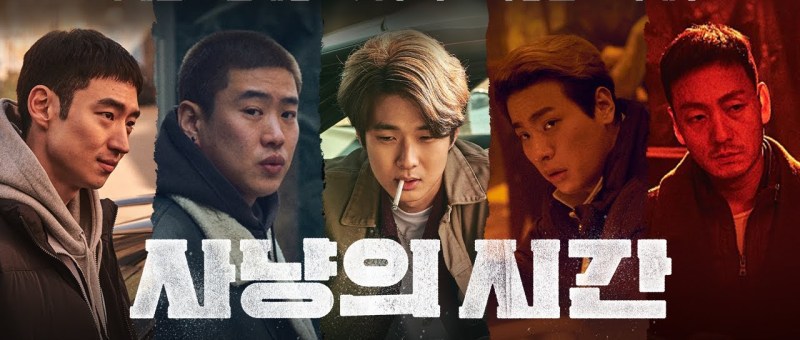
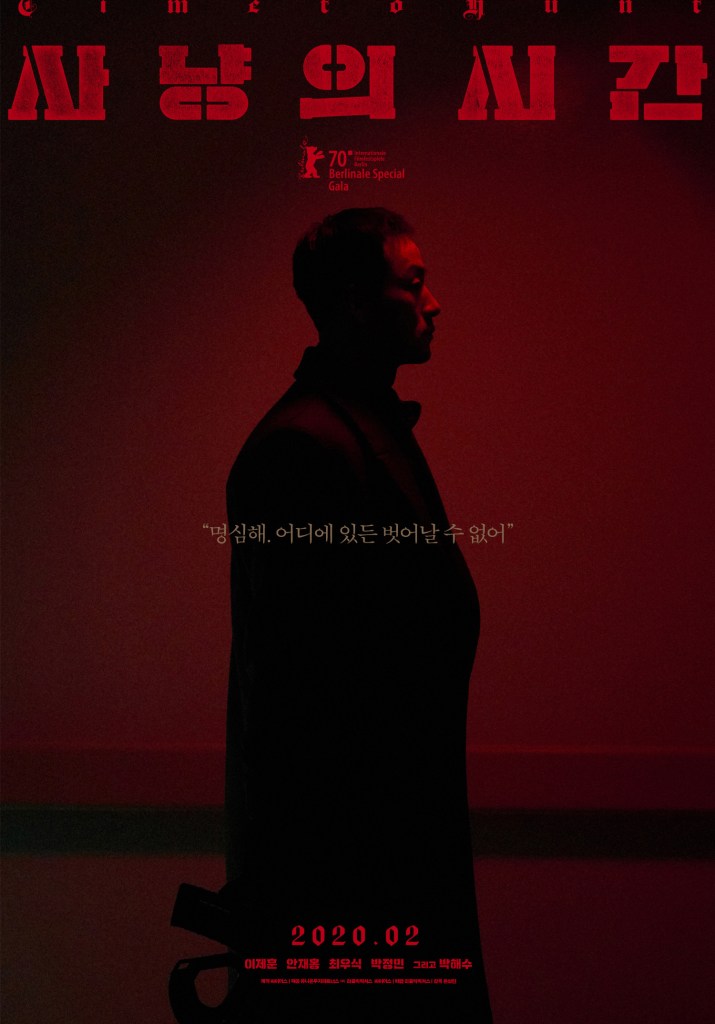
Time to Hunt (사냥의 시간, Yoon Sung-hyun, 2020)

A little over 20 years ago, the Korean economy faced an existential threat in the face of the Asian Financial Crisis during which it defaulted on its loans, ran out of ready cash, and was forced to accept concessions some regarded as humiliating not to mention politically regressive as part of the bailout package it negotiated with the IMF. Returning nine years after his indie debut Bleak Night, Yoon Sung-hyun brings these events very much to the fore with Time to Hunt (사냥의 시간, Sanyangui Sigan) while blending them with a painfully contemporary take on “Hell Joseon” pushed into a literal dystopia in which Korea has somehow become a lawless police state in which the Won is now worthless as the government once again defaults and is forced to negotiate with the IMF while workers protest in the streets against mass layoffs and forced “restructuring”. 

It’s into this world that Jun-seok (Lee Je-hoon) emerges after spending three years in prison for a robbery which was supposed to be his first and last job. Unfortunately, the loot he got sent away for stealing turns out to be worthless, the Won being so unreliable that most shops no longer accept it and insist on trading with the American Dollar though currency exchange is also illegal. Jun-seok finds this out from his two sheepish friends who’ve come to pick him up but didn’t quite have the heart to explain just how much has changed. Previously civilised Korea is now awash with drugs and guns, and crime, it seems, is the only viable economy. While inside, Jun-seok received an invitation to a better place, a paradise waiting for him in Taiwan where it’s always warm and the water is a beautifully clear shade of emerald. The only problem is he has to buy in, and without the loot he’s stuck. Which is why he talks his friends, plus a guy who owes him money, into helping him rob an underground casino operated by gangsters. 

The force which binds the men together is futility. On their way to collect Jun-seok, Ki-hoon (Choi Woo-shik) and Jang-ho (Ahn Jae-hong) joke about trying to sell vintage clothes abroad. “This isn’t the time for pride”, they remark, “we’re penniless”. Ki-hoon isn’t keen on Jun-seok’s scheme, reminding Jang-ho that after the last time they swore they’d never do anything like that again. Jang-ho, however,  has decided to go for it, partly out of loyalty to Jun-seok who took the fall for them and went to prison alone, and partly because, well, what else is there? While Jun-seok was inside, they lived quiet, honest lives but it’s got them nowhere and all that’s waiting for them is more of the same. “We’ll just be bottom dwellers,” he sighs, “when we pull this off we can live like human beings”. 

Yet even between bottom dwellers there are further class divisions. Jang-ho is an orphan with no family to fall back on, while Jun-seok’s mother has passed away leaving him only with a vague dream of an island paradise, a 1950s-style postcard from Hawaii sitting next to her photo on a makeshift altar. Jang-ho also has asthma which means he was exempted from military service, something that leaves him at a disadvantage in the world in which he now lives as the only member of the group without weapons training. Ki-hoon meanwhile has two loving parents, but that also means additional responsibilities in exchange for a permanent safety net. 

Ki-hoon’s family is also evidence of rapid social change. His parents own a modest Korean-style home complete with a well which is a source of amusement to city-raised Jang-ho, while the boys are about to be kicked out of their tiny flat for failing to pay the rent. Ki-hoon’s dad is also one of the protestors outside the factory, loudly calling for the government to “secure laborers’ right to live”. Perhaps to his generation, protest has possibility, to Ki-hoon it seems not only “pointless” but potentially dangerous even as his dad grins ear to ear while shouting out slogans in the hope of social change. 

The boys take a desperate chance because they know nothing other than desperation. “We don’t have anything to lose now” Jun-seok points out, but immediately contradicts himself in claiming that he never wants to lose the “dream” of his Taiwanese paradise. Dreams are however also something which plague him, visions of accidentally causing the deaths of those close to him or scenes of blood and ghosts followed by the melancholy image of a friend finally returning. The tragedy is that the heist comes off without a hitch, they do everything right, but they’ve made a fatally naive mistake. In trying to cover their tracks, they swipe the CCTV footage, little knowing that the hard drives also host extremely valuable information regarding the casino’s police-backed VIP money laundering operation which is why they find themselves “hunted” by a cruel and relentless gunman. In over their heads, the guys think this is about the money and maybe they can just give it back, never knowing that they’re sitting on something much more valuable or why it is they’re really being chased. 

“This isn’t the world you used to live,” Jun-seok is warned once again, “no matter where you are, you cannot escape”. Han (Park Hae-soo), the relentless hunter, becomes an omnipresent threat fused with the shadows as a representative of the societal corruption which cannot it seems be overcome. Shiny LCD screens pepper the landscape as a grim reminder of a possible future, the tech giant of the world now a lawless wasteland filled with derelict buildings and shuttered businesses, a corrupt police state in which the police is the biggest gang and the man owns the streets. Jun-seok dreams of an island paradise where everything is calm and airy, he owns a small shop repairing bicycles, and goes fishing on the beach. Such a wholesome future is more than he could ever expect to gain, but eventually he realises that you can’t escape the spectre of control by refusing to face it and the only way to be free in your own personal paradise is to exorcise your demons so you need not fear the darkness.  


Time to Hunt is currently available to stream worldwide via Netflix.

International trailer (English subtitles)

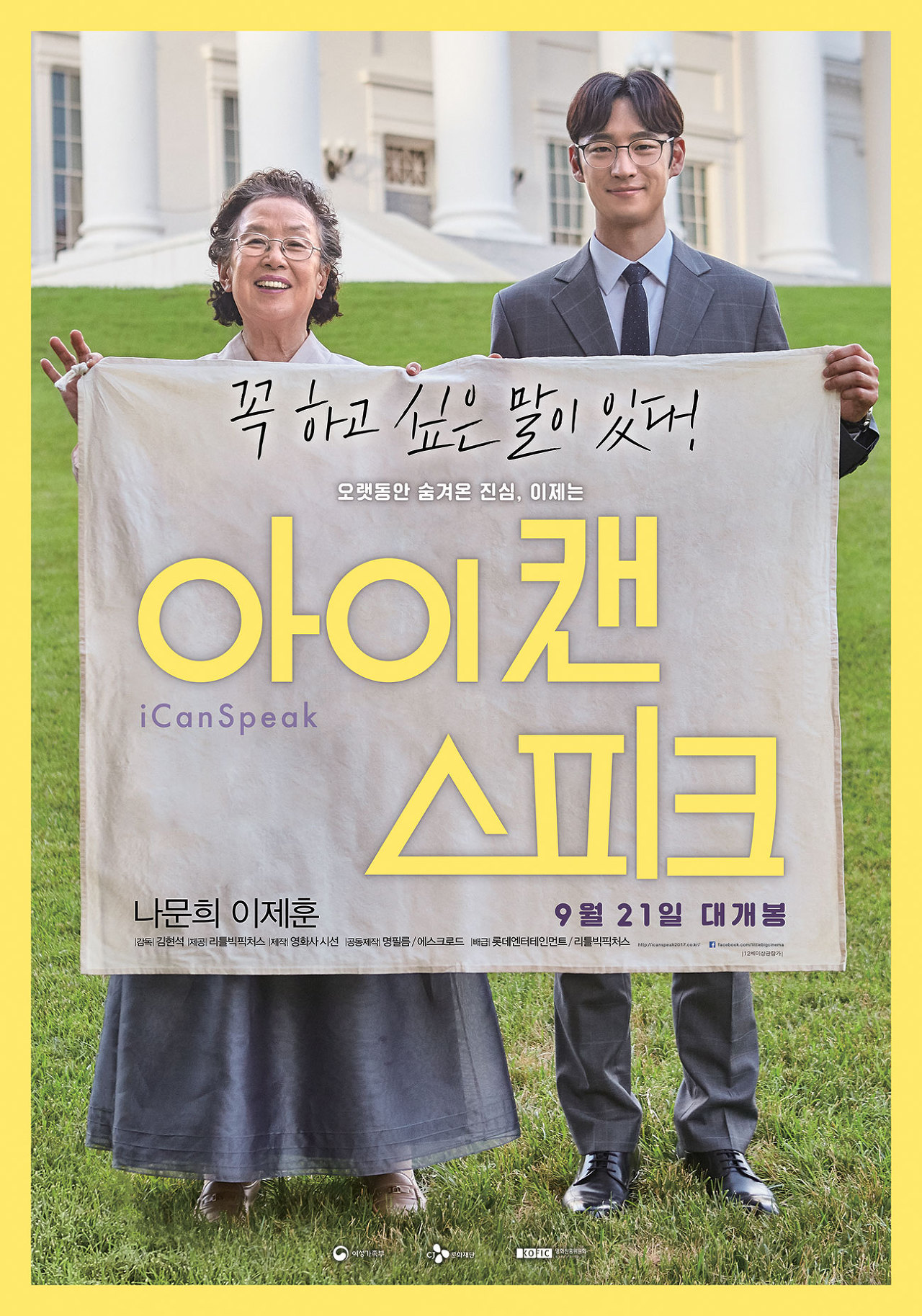
I Can Speak (아이 캔 스피크, Kim Hyun-seok, 2017)

I Can Speak posterGenre in Korean cinema has always been a more fluid affair than it might be elsewhere, but careering from zany generational comedy to affecting historical drama is perhaps a bold choice. I Can Speak (아이 캔 스피크) is, in many ways, the story of an old woman’s personal revolution as she finds herself repurposing her “Goblin Granny” credentials to pursue justice for a great evil she spent a lifetime hiding from, but it’s also an unabashedly political attack on a legacy of unresolved national trauma. Nevertheless, despite its slightly awkward straddling of cheeky comedy and heartrending melodrama, I Can Speak does at least manage to lay bare a series of entrenched social problems affecting all areas of modern Korean society while also making a fairly uncontroversial (at home at least) political point.

Park Min-jae (Lee Je-hoon) has just transferred to the local council offices in a rundown area of Seoul. Seeing as he’s new and very by the book, he doesn’t know that everyone in the office is terrified of “Goblin Granny” (Na Moon-hee)  – an old woman who turns up every single day with a list of complaints and things around the neighbourhood that could do with being fixed. Min-jae, unaware of Goblin Granny’s fortitude, attempts to deal with her complaints in a bureaucratic manner. He is no match for Ok-boon’s bloodymindedness, but his straightforward approach eventually earns her respect.

Ok-boon is the sort of old woman familiar to many municipal offices in that she is essentially lonely and comes in to complain about things just to make her presence felt. She does have a few friends, however – one being the lady who runs the local convenience store, and the other a woman of around her own age who can speak fluent English. Ok-boon decides she ought to learn English too and enrols in an expensive cram school but is abruptly kicked out of the class which is almost entirely filled with youngsters because of her old lady ways. On the way out, however, she runs into Min-jae who was there to check that his extremely high TOEIC scores were still valid. Ok-boon manages to talk Min-jae into giving her English lessons in return for decreasing the burden on the municipal offices by making fewer complaints.

I Can Speak begins firmly in the realms of bureaucratic comedy as the council workers find themselves cowering in front of Goblin Granny while simultaneously enjoying their cushy jobs for life which require almost no effort in their daily activities. Some in the community assume Ok-boon is a horrible old busybody who likes making trouble and pulling other people up on their various social failings but her community patrols come from a good place. The woman who runs a small stall in the market assumes Ok-boon reported her to the police for selling alcohol to a minor but that’s not the sort of thing that Ok-boon would think worth reporting, which is why she doesn’t think much of breaking city regulations to enjoy a drink outside her friend’s shop. Everything she reports is because she genuinely worries someone may get hurt and her main area of concern is with the strange goings on around the market which is earmarked for “regeneration”. Her concerns are not unfounded as she discovers when she overhears some of the council workers talking about taking backhanders to push the redevelopment through while making use of “external labour” in the form of shady gangsters tasked with clearing the area so the ordinary people who live in the old fashioned neighbourhood will consent to quietly move away. Perhaps because no one ever stood up for her, or because she’s sick of being pushed around, Ok-boon is not going to go quietly nor is she going to allow any of her friends to be taken away without a fight.

Ok-boon is perhaps attempting to fight something else, something she has been afraid to revisit for most of her life. The fact is that Ok-boon was one of many Korean women forcibly abducted by the Japanese army at the end of the Second World War and subjected to heinous, inhuman treatment as sex slave in one of the many “comfort woman stations” which existed throughout Japanese occupied territory. After the war, she was disowned by her family who saw only shame in her suffering and insisted she tell no one what had happened in fear of damaging her family’s reputation. One of the reasons Ok-boon wants to learn English is to be able to talk to her little brother again who she has not seen since they were children and has apparently forgotten how to speak Korean after spending a lifetime in the US.

English does however give her back something that she’d lost in the form of a familial relationship with the otherwise closed off Min-jae who is also raising a teenage brother (Sung Yoo-bin) following the death of their parents. It is true enough that it is sometimes easier to talk about painful things in a second language – something Min-jae demonstrates when he shifts into English to talk about his mother’s death. Abandoning Korean allows Ok-boon to begin dismantling the internalised shaming which has kept her a prisoner all these years, too afraid to talk about what happened in the war in case she be rejected all over again. Her worst fears seem to have come true when her old friends learn about her past, but what they feel for her is empathy rather than shame, hurt that Ok-boon was never able to confide in them and unsure what it is they should say to her now.

Ok-boon learns that she “can speak” – not only English but that she has the right to talk about all the things that happened to her and the long-lasting effect they have had on her life, that she has nothing to be ashamed of and has a responsibility to ensure nothing like this ever happens again. English becomes a bridge not only between her past and future, but across cultures and eras as she finds herself bonding with a Dutch woman giving a testimony much similar to her own and receiving the same kind of ignorant, offensive questions from the American law makers as well as cruel taunts from a very undiplomatic Japanese delegation. Undoubtedly, the final sequence is a very pointed, almost propagandistic attack on persistent Japanese intransigence but then its central tenet is hard to argue with. Tonally uneven, and perhaps guilty of exploiting such a sensitive issue for what is otherwise a standard old lady regains her mojo comedy, I Can Speak is an affecting, if strange affair, which nevertheless makes a virtue of learning to find the strength to stand up for others even if it causes personal pain.


I Can Speak screens at the New York Asian Film Festival on 12th July, 6.30pm.

Original trailer (English subtitles/captions)

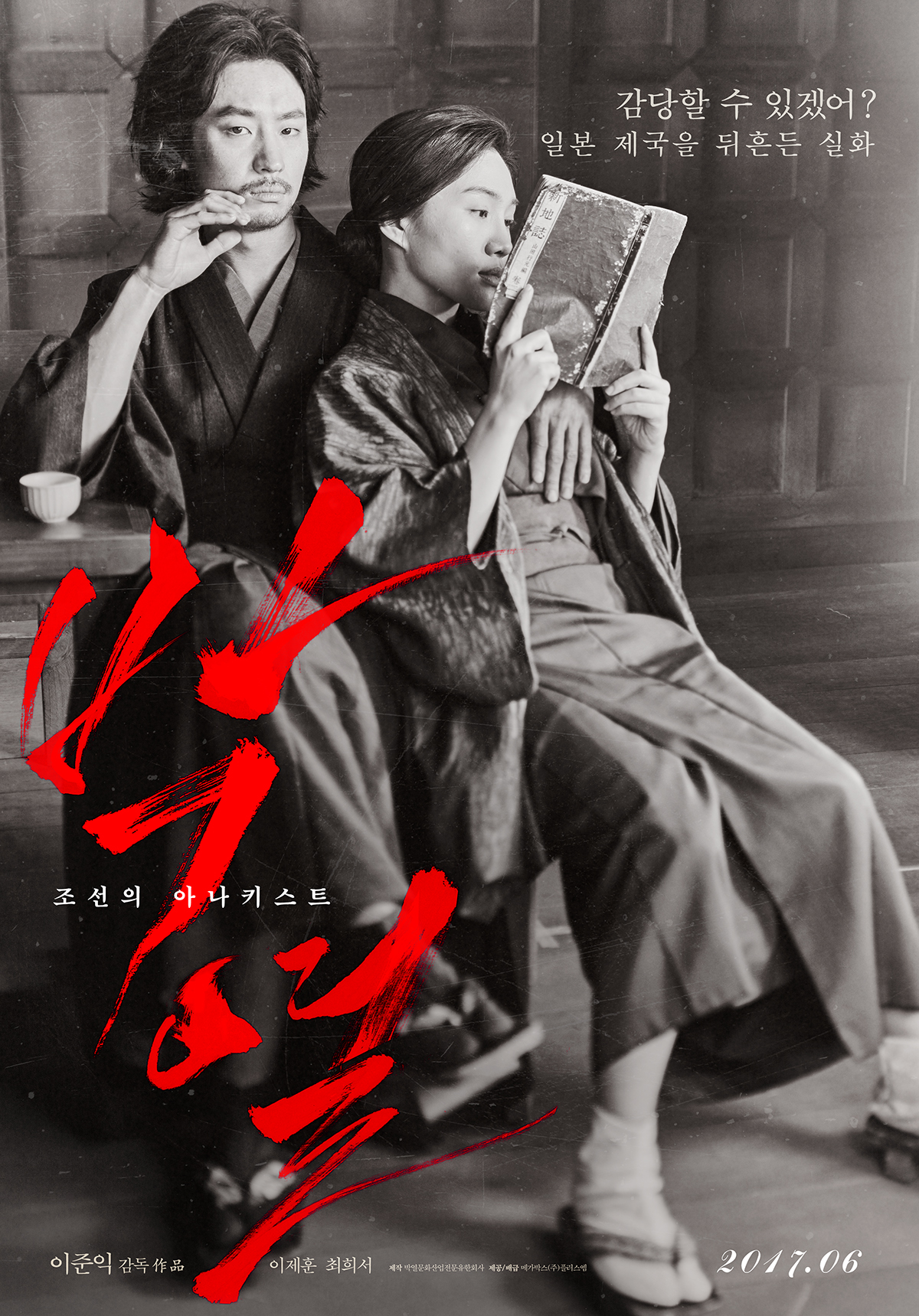
Anarchist from Colony (박열, Lee Joon-ik, 2017)

anarchist from colony posterLee Joon-ik follows his poetical mediation on the Korean independence movement, Dong-ju, with an equally philosophical, if not quite as rigorous, tale of rebellion and tragedy inspired by real life revolutionary anarchist, Park Yeol. Where Dong-ju was a tale of a world in in black and white, Anarchist from Colony (박열, Park Yeol) is one of glorious colour and the strange joy of pithily rejecting an oppressor’s authority. The oppressor’s authority is, however, infinite and no amount of anarchy will be enough to evade it even if there may be long term advantages in losing a battle in grand style.

Park Yeol (Lee Je-hoon) is a Korean left wing agitator living in Tokyo and earning a living as a rickshaw driver. He is also a hero to local Koreans and has gained a lot of fans (many of them female) thanks to his poetry including his latest entitled “Damn Dog” which laments his lowly status as an oppressed Korean man. One of his many fans, Fumiko Kaneko (Choi Hee-seo) – a Japanese woman who spent some time in Korea as a child, manages to work her way into his heart and becomes both a lover and an integral part of his revolutionary movement known as The Revolt.

In 1923, The Great Kanto Earthquake caused wide scale destruction and general chaos in the capital. Martial law was instituted, but a rumour soon spread that Korean insurrectionists were using the confusion to fuel their revolutionary ambitions, poisoning wells, committing arson, and plotting to assassinate the Emperor and his son. Of course, the rumours were baseless but led to a citywide pogrom in which around 6000 Koreans are thought to have been murdered both by ordinary people and by the army. Hoping to avoid the violence, Park decides he might be better off turning himself in to the police, but even police cells are not free of vigilante justice.

Unlike many recent films set during the colonial period, Anarchist from Colony is not particularly interested in demonising the Japanese. Generally speaking, the Japanese government are depicted as a collection of buffoons ill equipped to deal with the unexpected disaster of the earthquake and obsessed with rules, protocol, and Emperor worship. The major antagonist is a moustache twirling idiot and committed racist nursing a grudge against Koreans over a career setback to do with the suppression of the March 1, 1919  protest which kickstarted the Korean Independence Movement. The other officials mostly regard Mizuno (Kim In-woo) as an embarrassment, calling him out on his obvious racism and attempting to circumvent his machinations but more often than not failing to successfully outmanoeuvre him.

Having been partly responsible for the massacre in failing to stop the racist rantings of Mizuno and co, the government are eager to suppress all knowledge of it and distance themselves from anything that could make them look bad on the international stage. In this Mizuno makes a serious miscalculation when he decides to fit up the most popular Korean political activist he can get his hands on as a “traitor” and have him tried and executed as an example to the others. Park is wise to this scheme right away and decides to play along even if he knows it may eventually cost him his life. In fact, he almost hopes it will because not only will he lend weight to the cause of independence through his own martyrdom, but it will be much harder for the government to suppress news of the massacre with him on trial for his supposed terrorist activities which are being touted as its cause.

Yet the tale is framed not so much as suppressed revolution but ill fated love in the tragic romance of Park and Kaneko. The mini band of anarchists are a surprisingly cheerful bunch for hardline leftists, and Park and Kanenko’s intense bond is one of both political solidarity and true affection. Being anarchists through and through, they do not believe in marriage but agree to live together after signing a contract of cohabitation in which they mutually affirm their loyalty to each other and their cause. When Park is arrested, Kaneko turns herself in and follows him despite his pleas with her not to. The couple remain fiercely together to the end presenting a united front delighting in mocking their joint show trial even knowing they may soon be heading for the gallows.

This strange kind of lightness and dada-esque surrealism is an odd fit for the grim tale at hand. Lee mostly glosses over the wider implications of the massacre aside from minor references to longstanding prejudices such as Park’s beating by a customer who has short changed him and the vigilante gang’s repeated use of a particular phrase to flag up Korean accents. The overriding sense of flippancy undercuts the seriousness of Park’s plight and ultimately robs it of its power as his struggle is played for broad comedy rather than subtle satire. Perhaps overly ambitious, Lee’s reframing of of Park’s story as surrealist vaudeville romance never quite takes off, sacrificing passion for laughs but finding that they ring hollow surrounded by so much suppressed terror.


Screened at the London East Asia Film Festival 2017.

International trailer (English subtitles)

The Phantom Detective (탐정 홍길동: 사라진 마을, Jo Sung-hee, 2016)

su0mhpqReview of Jo Sung-hee’s The Phantom Detective (탐정 홍길동: 사라진 마을, Tamjung Honggildong: Sarajin Maeul) first published by UK Anime Network.


Comic books and film noir are, in many ways, a match made in heaven. Tough guys lurking in the shadows, larger than life villains and an ever present sense of the strangeness of criminality, lend themselves particularly well to the extremes of both genres which is why the combination is not exactly an uncommon one. In The Phantom Detective , director Jo Sung-hee adds an extra layer of meta textuality in naming the amnesiac hero Hong Gil-dong which is both the Korean “John Doe” and the name of a legendary Robin Hood figure from the 16th century. Like his namesake, this Hong Gil-dong is a preternaturally gifted detective with a faultless memory and an almost supernatural ability to stay ahead of the game, but he’s also a classic film noir hero with a damaged past and hollow heart…

In an alternate 1980s Korea, Hong Gil-dong (Lee Je-hoon) is an ace detective about to break a trafficking ring, which is righteous enough, but he also has another motive – these men may be able to offer him a clue to tracking down a target he’s been chasing for over 20 years. A one eyed man, Kim Byung-duk (Park Geun-hyung), contributed to Gil-dong’s origin story by murdering his mother right in front of him. At least, he thinks so – Gil-dong can’t remember anything about that day save for the visions he sees in his nightmares. In fact, he doesn’t even know his real name or who he really is.

When he finally gets to Byung-duk’s location, Gil-dong discovers he’s already been kidnapped by someone else leaving his two young granddaughters, Dong-yi (Roh Jeong-eui) and Mal-soon (Kim Ha-na), all alone. Taking off with the kids in tow, Gil-dong vows to track down “grandpa” but still has revenge in his heart. As the investigation progresses Gil-dong finds himself getting involved with the strange residents of a tiny town who may be about to fall victim to a dastardly doomsday plan engineered by a shady cult leader…

Ever since his mother’s death, Gil-dong has been unable to sleep thanks to constant nightmares and has lost the capacity for fear and empathy (qualities which serve him well in his line of work). Fiendishly clever, Gil-dong also has a sweet tooth and a sarcastic personality but despite his protestations, usually does the just thing when comes down to a straight choice. Byung-duk’s adorable granddaughters pose something of a problem for him as he begins to warm to their straightforward earnestness, yet his revenge rests in killing their beloved grandfather to avenge his mother’s death. The kids quickly take to Gil-dong, for some reason believing in his essential goodness. Dong-yi follows him around like a deputy detective, meticulously noting everything down in her notebook, whereas Mal-soon has figured out Gil-dong’s talent for deception but hilariously almost blows the gang’s cover on several occasions through her total lack of investigatory acumen.

Through investigating his lead on Byung-duk, Gil-dong hopes to recover his own memories of his early life and the mother he only remembers in his nightmares. The path he finds himself on is a dark one leading straight towards a powerful cult populated by fascism fetish sociopaths. Sure that the “New World is Coming”, the cult have planned a large scale event which threatens the lives of most of the residents of a small, strange town. Now Gil-dong has several reasons to get to the bottom of this long standing mystery ranging from his own desire for answers and revenge to saving the lives of these ordinary people and making sure no one else comes under threat.

Taking inspiration from the comic book world, The Phantom Detective makes use of highly saturated color schemes and deliberately artificial looking backgrounds. Though the approach remains bright and colourful for much of the film which adds to its slightly surreal atmosphere, there’s still ample room for noir with faces cast in shadow, light striking glasses so as to eerily block out the eyes, and Gil-dong’s classic detective outfit and occasional weary voiceover. The pulpy plot doesn’t worry too much about internal consistency, but blusters along well enough on its own even if coasting on Gil-dong’s wisecracking tough guy antics as he unexpectedly bonds with the two plucky little girls temporarily in his care. Cute and funny but also filled with innovative action sequences, The Phantom Detective acts as a worthy secondary origin story for its titular hero whose return will be eagerly awaited!


Reviewed at the 2016 London Korean Film Festival.

International trailer (English subtitles)