Concerning My Daughter (딸에 대하여, Lee Mi-rang, 2023)

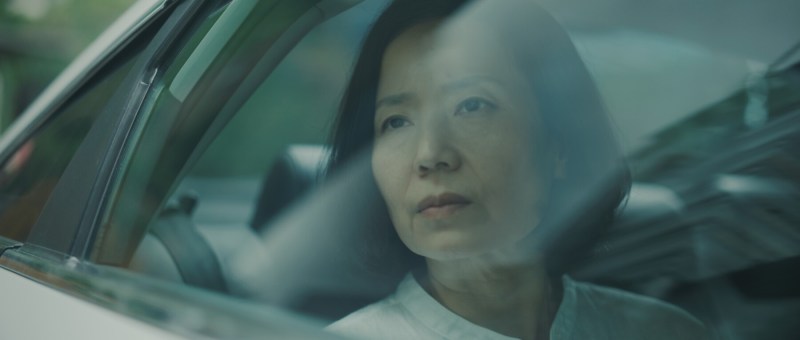
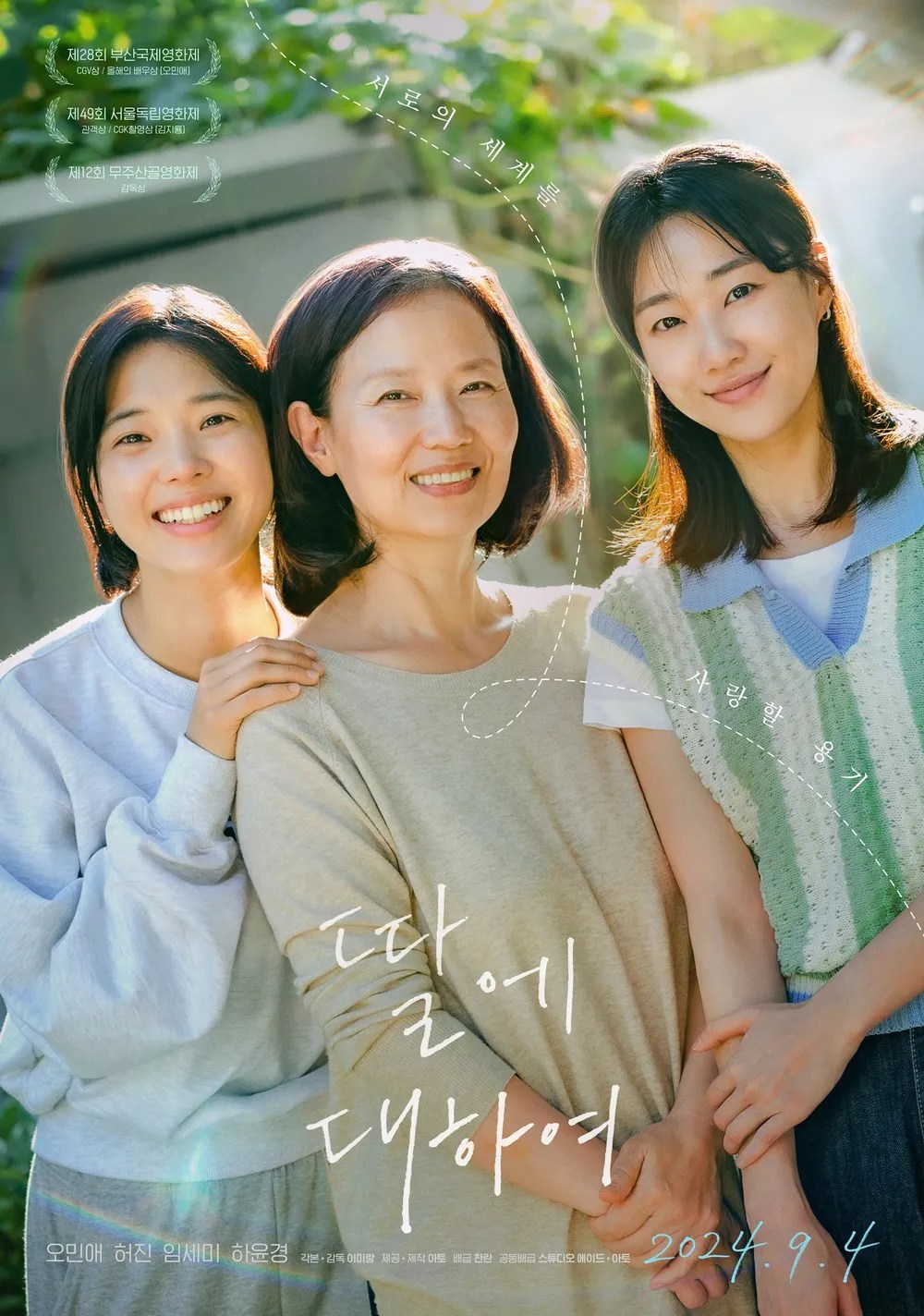
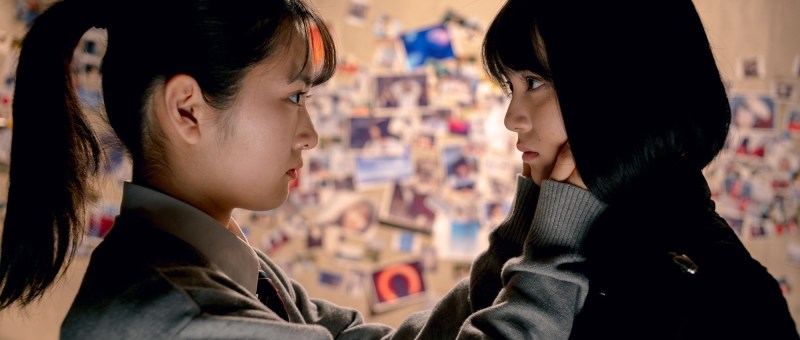
The unnamed mother (Oh Min-ae) at the centre of Lee Mi-rang’s Concerning My Daughter (딸에 대하여) has only one wish, that her daughter will find a nice man to marry and have a few grandchildren. But Green (Im Se-mi) is gay and has been in a relationship with her partner Rain (Ha Yoon-kyung) for the last seven years though her mother doesn’t seem to accept that what they have together is “real” believing it to be some kind of delusion that’s holding Green back from her happy maternal future. 

When she suggests Green move back in with her after her attempt to secure a loan to help her out with the rising cost of housing is denied, it doesn’t seem to have occurred to her that Rain would be coming too while it perhaps seemed so natural to Green that it didn’t occur to spell it out. Green can at times be obtuse and insensitive, unfair both to her mother and to Rain who bears the unpleasant atmosphere with grace and tries her best to get along with her new mother-in-law who is openly hostile towards her and makes no secret of the fact she would prefer her to leave. Of course, some of these issues may be the same were it a heterosexual relationship as the mother-in-law struggles to accept the presence of the new spouse in the family home and the changing dynamics that involves, but Green’s mother’s resentment is so acute precisely because her daughter’s partner is a woman. She cannot understand the nature of their relationship because it will produce no children and to her therefore seems pointless. 

While her attitude is in part determined by prejudice and a sense of embarrassment that her daughter is different, it’s the question of children which seems to be foremost in her mind. Another woman of a similar age at her job at a care home remarks on her maternal success having raised her daughter to become a professor, but she also says that only by leaving children and grandchildren behind you can die with honour. Green’s mother is the primary carer for an elderly lady, Mrs Lee (Heo Jin), who had no children of her own though sponsored several orphans none of whom appear to have remained in touch with her. Now ironically orphaned herself in her old age, Green’s mother is the only one who cares for her while the manager berates her for using too many resources and eventually degrades Mrs Lee’s access to care Green’s mother suspects precisely because she has no family and therefore no one to advocate for her. 

It’s this fate that she fears for her daughter, that without biological children she will become a kind of non-person whose existence is rendered meaningless. Of course, it’s also a fear that she has for herself and her tenderness towards Mrs Lee is also a salve for her own loneliness and increasing awareness of mortality. Green is her only child, and she may also fear that she will not want to look after her as she might traditionally be expected to because her life is so much more modern as exemplified by the bread and pasta the girls bring into her otherwise fairly traditional Korean-style home. On some level she is probably aware that if she continues to pressure Green to accept a traditional marriage they may end up becoming estranged and she will be in the same position as Mrs Lee, wilfully misused by a cost-cutting care industry because they know there’s no one to kick up a fuss about her standard of care.

Even so, it doesn’t seem to occur to her that Rain could care for her daughter into their old age. Resentfully asking her why they “have to” to live together, Rain patiently explains that in a society which rejects their existence, in which they are unable to marry or adopt children, togetherness is all that they have. Green is currently engaged in a battle with her institution which has fired her colleague on spurious grounds but really because of her sexuality with claims that some students are “uncomfortable” with her classes. The violence with which the women are attacked is emblematic of that they endure from their society while even colleagues interviewing her invalidate Green’s concerns because she too is “one of them,” in their prejudicial way of speaking. 

Green’s mother had also, rather oddly, said that her daughter wasn’t like that when Rain reluctantly explained her difficulties at work and again resents that she’s making waves rather than keeping her head down and getting on with her career. Her decision to jump in a car with boxes of biscuits intending to smooth things over with Green’s boss by apologising on her behalf bares out her old-fashioned attitudes, though she too is shocked by the violence directed at Green and her colleague. When her lodgers ask about Rain, she tells them she’s her daughter’s friend, while she avoids the question when her colleagues ask, still embarrassed that her daughter has not followed the conventional path as if it reflected badly on her parenting. 

Yet through her experiences with Mrs Lee and Rain’s constant, caring patience she perhaps comes to understand that her daughter won’t be alone when she’s old and that she too does not need to be so lonely now. There’s something a little a sad in the various ways Green’s mother is told that her attachment to Mrs Lee is somehow inappropriate as if taking an interest in the lives of those not related to us by blood were taboo even if it’s also sadly true that it’s also in Mrs Lee’s best interests to ask those questions to protect her from those who might not have her best interests at heart. What the film seems to say in the end is that we should all take better care of each other, something which Green’s mother too may come to realise in coming to a gradual, belated acceptance of her daughter-in-law if in part through recognising that they aren’t alone and that it’s a blessing that her daughter is loved and will be cared for until the end of her days.


Concerning My Daughter screened as part of this year’s London Korean Film Festival.

Trailer (English subtitles)

Worlds Apart (違国日記, Natsuki Seta, 2024)

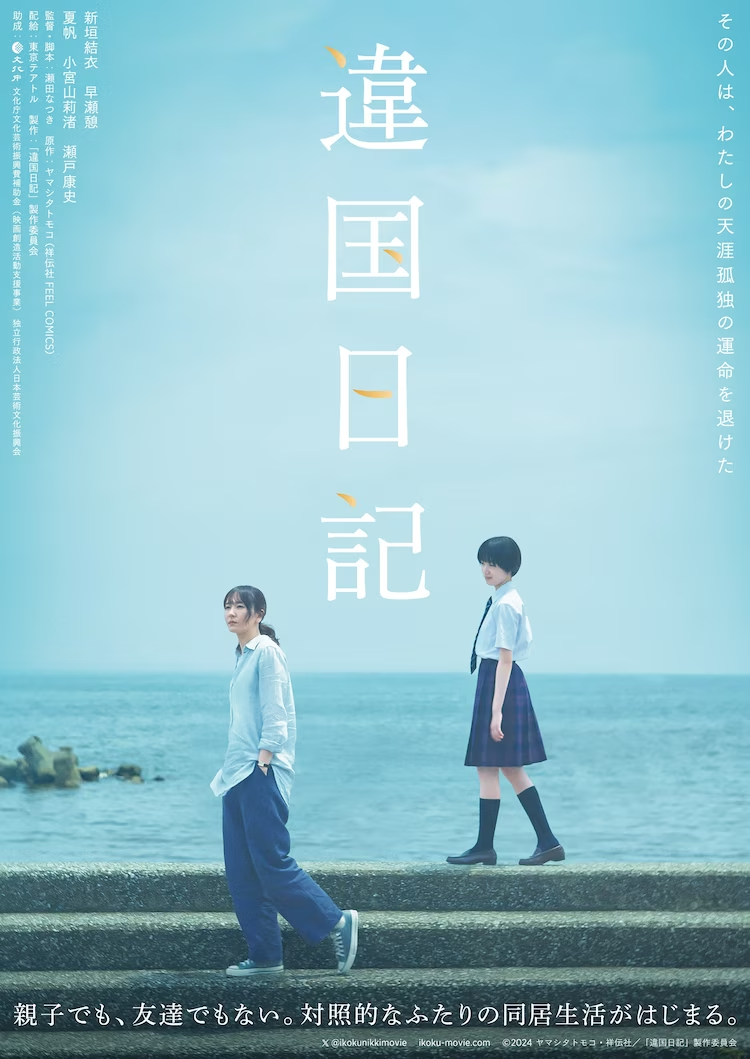
Adapted from the manga by Tomoko Yamashita, Natsuki Seta’s quietly empathetic drama Worlds Apart (違国日記, Ikoku Nikki) eventually reveals the private lonelinesses and hidden sorrows that everyone has which isolate them from others. The film’s Japanese title plays on a homonym for the word for “foreign country” instead using the character for “different” which in itself suggests each person is an entire world often unable to make contact or be fully understood by those who cannot after all ever travel there. 

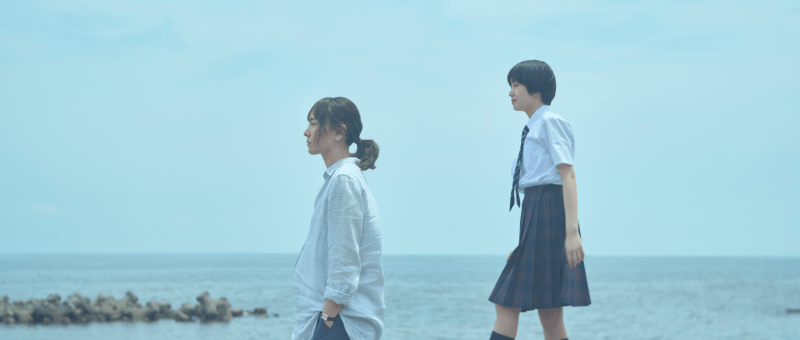
Perhaps that’s something most people feel every once in a while but becomes acutely obvious to 15-year-old Asa (Ikoi Hayase) when her parents are killed in a surreal traffic accident in the film’s opening scenes. She sits struck dumb and vacant at the funeral, having no idea what’s going to happen to her now while other relatives crassly describe her as having been cast adrift like an “unwanted barrel”. It’s this insensitive phrase that seems to drive her aunt Makio (Yui Aragaki), a novelist, into an impromptu decision to offer to take her in though they had only met briefly long in the past and had no real relationship with each other. Makio had been estranged from her sister for many years and never makes any attempt to disguise her utter loathing and resentment towards her for having been so cruel and judgemental when they were children. 

It’s refreshing, in a way, that the film doesn’t encourage her to change her feelings after her sister’s death. She doesn’t discover another side to her through bonding with Asa nor are her feelings invalidated much as Asa originally tries to make her like her mother as a means of reclaiming her. In fact, what Makio does is normalise whatever way Asa is feeling telling her at the hospital when forced to identify her parents bodies that it’s alright not to know how she feels. The two sisters were it seems very different, though the grandmother eventually offers an explanation that Makio’s sister had once been seriously ill and therefore unable to live a “normal life” which might explain why she was so enraged by Makio’s decision to chart her own course and wilfully spurn conventionality. 

These are also hints to the hidden world contained with the diaries Asa’s mother left behind to opened when she graduated high school. Makio wrestles with whether or not to pass the notebooks on and when, unsure if Asa is ready to receive the knowledge that might be inside them. Though she settles in to Makio’s home quite comfortably, Asa keeps her grief and occasional bouts of resentment to herself. Seta often frames her as standing alone in vast empty spaces or total darkness, isolated and lonely, now displaced by her liminal status no longer anybody’s daughter but not quite independent. 

Yet this isolation also blinds her to that of others. She doesn’t quite pick up on it when she clumsily attempts to talk about boys with her best friend Emily (Rina Komiyama) who directly tells her she has no interest in them and deflects the question when she asks if she likes girls instead. Emily is also lonely and isolated in feeling anxious to reveal her sexuality to Asa who in any case reacts clumsily when she eventually does. A similar thing happens with a girl in their class who studied hard to apply for a special programme only to be told the organisers are looking for a male student because it requires “physical strength,” while Asa also seems to develop a fascination with a bass player in the school music club who declines an offer to collaborate because she doesn’t want to get her hopes up only to be disappointed in the end. 

Makio hadn’t previously wanted to share her life, separating from an old boyfriend she still seems attached to out of an apparent fear of intimacy but nevertheless opens herself to Asa in deciding to respect her as an adult giving her agency over her own choices along with good, empathetic advice while simultaneously being clear that she doesn’t know if she can come to love her given the depth of hatred and resentment she bore towards her sister. But what the pair of them realise is that good or bad they can each share their memories rather than being forced into a frosty silence even if as Makio points out Asa will never understand her hurt and she will never understand Asa’s loneliness. Gentle and wholesome, the film ironically lays bare how opening up to others can in fact expand the world inside you instead filling the space rather than leaving you isolated inside it and returning light to a world that might otherwise have seemed dark and lonely.


Worlds Apart screened as part of this year’s Camera Japan.

Original trailer (no subtitles)

Kalanchoe (カランコエの花, Shun Nakagawa, 2017)

The truth is, most people genuinely mean well but they often make mistakes. They make them because they don’t think things through, fail to consider perspectives outside of their own, or act on assumptions that they later realise were incorrect (or tragically do not). Most people will come to understand where they went wrong and resolve to do better in future, but you don’t always get a second chance and a momentary lapse in judgement can do untold and sometimes irreparable harm.

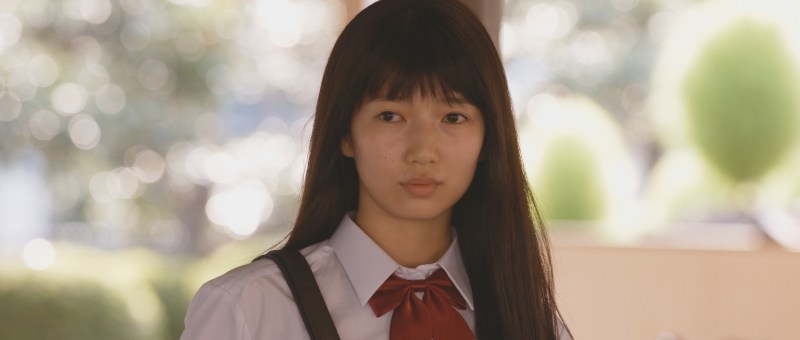
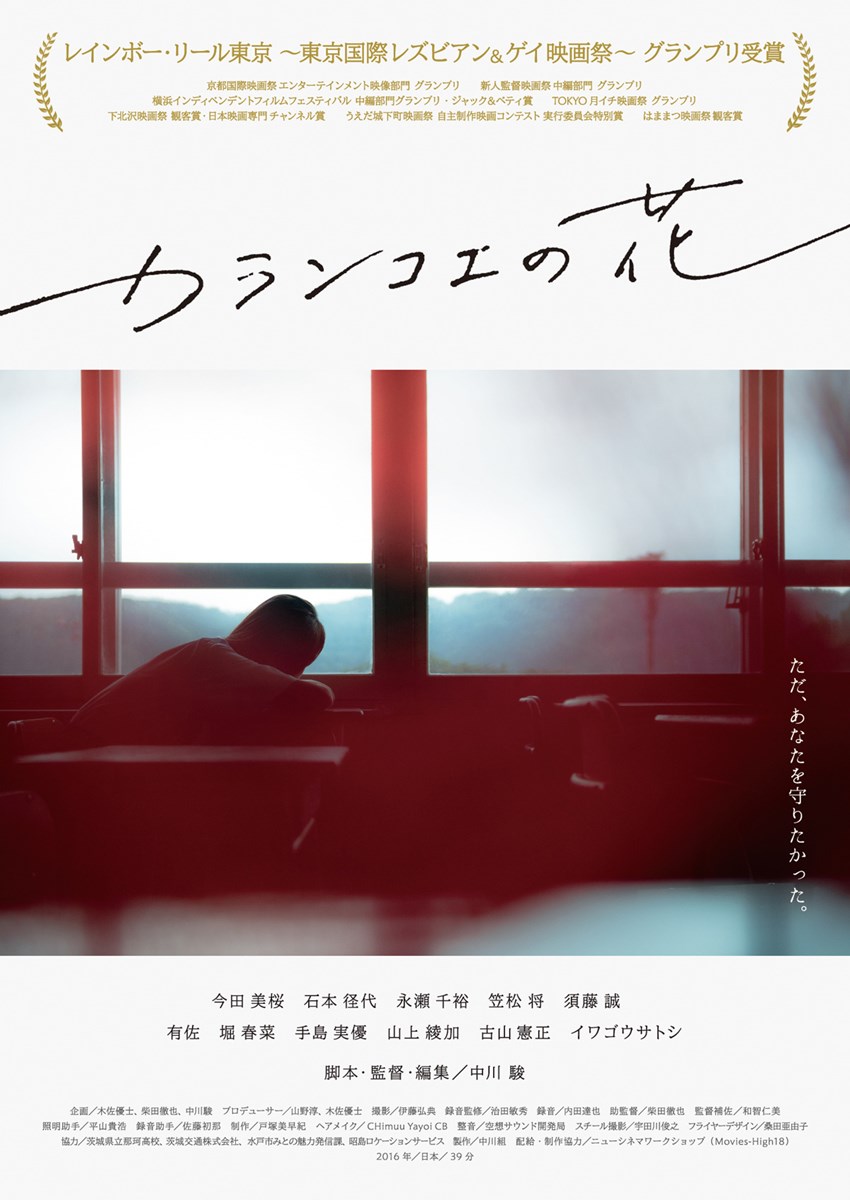
Perhaps that’s just a lesson you learn as a part of growing up, but it doesn’t make it any less painful or indeed shocking at least for the heroine of Shun Nakagawa’s 40-minute mid-length film Kalanchoe (カランコエの花, Kalanchoe no Hana). The film’s title refers to a bright red plant that in the language of flowers means “I will protect you.” But protection can be a double-edged sword, and Tsuki’s (Mio Imada) later attempt to do just that for her friend seriously backfires well meaning though it may have been. The same is true of an ill thought out decision by the school nurse to give a mini lecture on LGBTQ+ issues to Tsuki’s class when their English teacher’s off sick. Because it was only their class that received this talk, some of the students assume it must mean that one of them is gay and begin a kind of witch-hunt trying to figure out who it might be which is completely the opposite of the reaction the talk was supposed to provoke.

Of course, the nurse meant well but it probably should have occurred to her to make sure the class wasn’t singled out and support was available for any students who might be experiencing anxiety surrounding their sexuality or gender identity rather than doing something essentially superficial to make herself feel better. Though most of the students are indifferent to the talk, the class clown bears out the latent homophobia of the current society in badgering the nurse to find out if there are any gay people “or other creeps” in their class while vowing to root them out and making it a kind of game to catch one. The girls, meanwhile, engage in some aggressive heteronormativity talking about boys and pretty much making it impossible for any of them to declare themselves for whatever reason uninterested. 

As it turns out, one student overheard the conversation in the nurse’s office that provoked the talk and knows that one of the students is indeed gay, perhaps inappropriately telling Tsuki who it is in an effort to relieve the burden on herself of carrying this explosive information. When Sakura (Arisa), the student in question, begins to tell Tsuki that she’s gay, Tsuki firstly reacts well patiently waiting rather than admit she already knows though in the end Sakura cannot go through with it despite having said that Tsuki was the person she most wanted to understand. Sakura had admired Tsuki’s red scrunchie that she herself had worried was too bold, prompting her to turn over in her hands and consider it as if thinking over how she intends to react to this information and how she herself may or may not feel.

But on her second opportunity she missteps. Fearing Sakura has been outed, she loudly and clearly says it isn’t true even though she knows it is in a mistaken attempt at “protection” as if she were clearing her name which is also an expression of her own latent belief that it being true is in someway bad. In its way, it echoes the fateful moment in William Wyler’s The Children’s Hour in which Shirley MacLaine tells Audrey Hepburn there’s some truth in the rumour, but Audrey Hepburn tells her she’s lost her mind and though the outcome may not be quite as devastating it’s still a crushing blow with the brutal conclusion implying nothing more than Tsuki will have to live with her bad decision and the pain it caused for the rest of her life. Nakagawa skips between idyllic scenes of the girls on a bike, head gently resting on a shoulder, and scenes of regular high school life but ends on a note of quiet tragedy that feels somehow casually cruel.


Kalanchoe is available to stream via SAKKA from 20th September.

Ice Cream Fever (アイスクリームフィーバー, Tetsuya Chihara, 2023)

“Cold and sweet” is the way a customer to Million Ice Cream describes their produce, but it might also be an odd way to describe its comforts echoing the melancholy of the series of women who pass through its doors in Tetsuya Chihara’s adaptation of a short story by Mieko Kawakami, Ice Cream Fever (アイスクリームフィーバー). For each of the heroines it represents a kind of purgatorial space as they find themselves torn between past and future while seeking new directions.

For Natsumi (Riho Yoshioka), who took the job working part-time at the ice cream shop after experiencing burn out in her career as a designer, that new direction appears in the form of Saho (Serena Motola), an alluring yet sullen woman dressed all in black who turns out to be a formerly successful novelist plagued by writer’s block. A series of flirtatious encounters seem to rejuvenate the creative impulses of both women with Natsumi returning to doodling new signs for the shop and Saho beginning to write again, though there remains something distant and elusive between them. Saho later describes herself as like a summer storm destined to pass by in an instant and soon forgotten though in an ironic way her aloofness and enduring mystery may in fact be a way to ensure she is not forgotten while she at least seems unable to embrace her romantic desires instead sublimating them into her literature.

This inability to forget has also marred the life of Yu (Marika Matsumoto), a similarly lost woman approaching middle age who is suddenly approached by a niece she’s never met because she cut ties with her sister after she stole her boyfriend. Her mother having now passed away, Miwa (Kotona Minami) has come to Tokyo in search of her father and though seemingly aware of the circumstances of her familial estrangement enlists her aunt to help find him thereby forcing Yu to confront the past and reassess her life. Like Natsumi she is also becoming disillusioned with contemporary working culture and contemplating making a change. While she is a devotee of ice cream, it’s the local bathhouse, “an oasis for working women” as she describes it, that her been her refuge. When it suddenly closes due to the elderly owner’s (Hairi Katagiri) own decision to pursue a different kind of life, Yu wonders if she might be happier giving up her high powered corporate job to take it over. 

The dilemma both women face is reflective of a generational shift away from a desire for conventional success achieved by hitting each of life’s landmark events to that for immediate individual happiness derived from small comforts such as an ice cream cone or a soak in a large bath. The irony is that Miwa comes to Tokyo in search of an absent father and finds her aunt, while Yu is able to make peace with her past and accept the new gift life has given her in accepting a maternal role in her niece’s life. What both women choose are pleasant lives rooted in community and giving pleasure to others rather ones of consumerist desire or external validation.

Still, that doesn’t necessarily mean romantic resolution. While one woman’s decision may reflect a desire to move on, the other’s may not but rather an intention to wait if also to do so in a happier and more fulfilling environment that unlike the Mexican salamanders in Saho’s tank she has chosen for herself. Gradually we come to understand these events are unfolding at differing time intervals though weaving through around each other, pursuing a logic of memory rather a more literal reality while driven by the natural rhythms of a life which continues onward around them in continual oscillation. Gradually spinning outward it ropes in the unfulfilled romantic desires of Natsumi’s punkish co-worker choosing to move on in the realisation that her feelings have not been acknowledged and are unlikely to be returned, along with the cruel irony of the happy life seemingly being lived by Miwa’s long absent father. With its gentle framing and pastel colours, the film has an atmosphere of calm and serenity that belies its underlying melancholy in the frosty sweetness of a dormant love kept in the deep chill waiting for summer’s return.


Ice Cream Fever screens in New York July 20 as part of this year’s JAPAN CUTS.

Original trailer (English subtitles)

Who’ll Stop the Rain (青春並不溫柔, Su I-Hsuan, 2023)

What does “freedom” actually mean? Su I-Hsuan’s post-martial law drama Who’ll Stop the Rain? (青春並不溫柔) sees a younger generation struggle to shake off the authoritarian yoke meanwhile it seems clear that freedom has its limits and has not been granted equally to or by all. Set in 1994 it takes place against the longest student strike in the nation’s history and ultimately pits the forces of protest and complicity against each other in the constant struggle for individual freedom. 

Free-spirited Chi-wei (Lily Lee) might be something of an outlier in this age, later expressing confusion to the comparatively repressed Ching that she doesn’t understand why they’re fighting for freedom when freedom was something they had always possessed. Yet at the university she finds herself constrained in what is supposed to be an artist’s school, denied creative freedom by stuffy professors who mark their students not by the quality of their work but their obedience and willingness to accept the lessons the professors see fit to give them. Chi-wei’s professor gives her telling off because he says her hair’s too messy, then humiliates her in front of the class by throwing her work on the floor and telling her to start again. Chi-wei, however, remains defiant and continues to work her own way regardless of what the teachers may say. 

It’s after a chance encounter with Ching (Yeh Hsiao-Fei) that she’s drawn into the student movement which opposes the authoritarian rule of the professors and demands greater creative freedoms for the students and society at large as this generation who came of age after martial law considers the kind of future they envision for themselves. But like any student movement, there are innate tensions within the group with some suggesting that its leader, Kuang (Roy Chang), is merely trying to relive the White Lily movement and is in fact less committed to the cause than he seems as evidenced by his willingness to enter dialogue with the staff against the wishes of his girlfriend, Ching. 

Unlike the others, Ching is a law student and not and artist. She’s also the daughter of a prominent, conservative and patriarchal politician and the group is somewhat ironically often dependent on her familial wealth. Her background perhaps makes it harder for her to emerge into a new, ostensibly freer age as bound by a set of ideas otherwise alien to Chi-wei who is at any rate absolutely herself and unafraid to be so. Ching tells her that she longs to be part of a group, which is presumably why she’s joined the artists in their protest even if others accuse her of simply rebelling against her privilege, which is something Chi-wei has little need for as she has already discovered the power of freeing her mind. 

It’s these forces that generate the push and pull between the two women as Chi-wei is eventually awakened to her sexuality by Ching only to experience her pulling away in her deeply internalised shame. Even so, she takes an approach that largely avoids direct confrontation but allows her to stay by Ching’s side, patient yet confused in attempting to create a safe space that Ching can accept as her own. Both women are also constrained by forces of traditional patriarchy with even Kuang stating that perhaps women shouldn’t be too independent after all or else they wouldn’t need him in an ironic moment foreshadowing his total redundancy. Meanwhile, Chi-wei is aggressively pursued by a fellow student who won’t be deterred by her frequent rejections and general lack of interest in men while ironically trying to convince her she’s been “brainwashed” by the strikers and is really a good girl, like him willing to bend to the authoritarian yoke. 

Perhaps it’s telling that it’s only once the strike is over and following a confrontation with her authoritarian father that Ching is able to overcome the barriers that prevent her from embracing her true desires and authentic self. In her opening voiceover, Chi-wei reflects that back then they still believed a tiny flame could burn down the forest implying at least that she was mistaken but even if a wider revolution ends if not exactly in failure than in compromise, disappointment, and rancour, it is true enough that the spark between these women was enough to burn through the forces that kept them apart to find a more individual kind of freedom that exists outside of oppressive superstructures even if as Ching says protest never ends.


Who’ll Stop the Rain screened as part of this year’s BFI Flare.

Trailer (English subtitles)
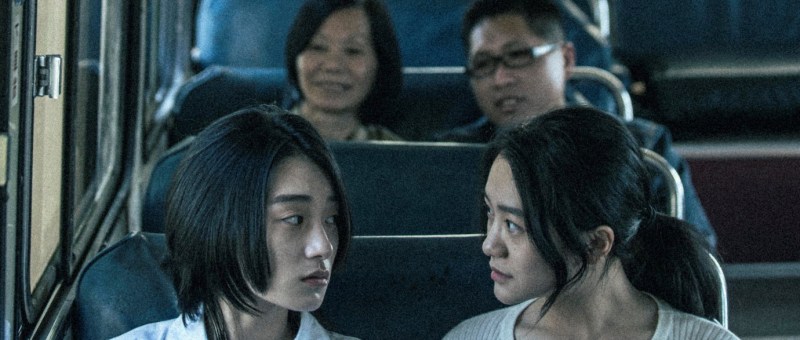
A Song Sung Blue (小白船, Geng Zihan, 2023)

Late into Geng Zihan ’s coming-of-age drama A Song Sung Blue (小白船, xiǎo bái chuán), the heroine’s father (Liang Long) who perhaps knows a little more about her than we might have assumed, tells her that love and resentment are often the same thing. At least, they are both unforgettable. Resentments are something Xian (Zhou Meijun) has in spades, though she has little way of expressing them outside of her sullenness and silence while perhaps learning some unhelpful lessons in her seemingly unreturned attraction to the daughter of her father’s receptionist. 

Firstly, Xian is resentful towards her mother who has abandoned her to go on a humanitarian mission to Africa for an entire year explaining that the hospital have promised her a long awaited promotion after which she won’t have to do the nightshifts and so can spend more with her daughter, the irony being that by that time Xian will be in her late teens and perhaps less keen to spend time with her mum. Secondly, Xian is resentful towards her estranged father whom she only sees at family gatherings and has little connection with. She also seems resentful towards the other children in the choir and has no real friends. When the choir runs out of female uniforms she’s told to wear one of the boys and stand at the back hoping no one will notice. Meanwhile, she’s a little surprised after venturing backstage and catching sight of her choir mistress embracing another woman. 

Yet in other ways Mingmei (Huang Ziqi), the daughter of her father’s receptionist with whom he is also in a relationship, is simply her inverse. Flighty and confident, Mingmei appears much older than her years and is training to be an air stewardess but inwardly seems hurt and vulnerable. She lives a fairly chaotic life in which she’s learned at an early age how to weaponise her sexuality and largely relies on sugar daddies for her financial upkeep while hating herself for doing so. It’s after learning that the man in question maybe about to leave his wife and marry Mingmei that Xian abruptly kisses her but is immediately rebuffed, Mingmei running a thumb across Xian’s lips as if more concerned about what she may have passed to Xian than outraged or offended.

Then again, Mingmei seems to have been aware of Xian’s attraction while no doubt tipped off by the fact that she was playing around with a stethoscope and presumably noticed her heart beating unusually fast. At times she seems insensitive, wilfully so or otherwise, or perhaps simply doesn’t know how not to manipulate the attraction that she inspires in others cruelly taking Xian along on one of her sugar daddy dates or asking her to help her dress. But then Xian also learns some problematic lessons, adopting some of Mingmei’s behaviour patterns in attempting to manipulate the attraction shown for her by a boy in the choir she is otherwise uninterested in by virtually forcing herself on him and then asking for a loan to get the money for Mingmei to open a store so she won’t have to rely on potentially violent sugar daddies and would therefore be more available to Xian who has also developed a white night desire to save her from her self-destructive instincts.

The only bright spot in Xian’s melancholy existence which is generally coloured in blue, her desire for Mingmei is palpable even gazing at the many photos of her taken by her father including one in striking red. Yet there’s an another sense of distance in her longing given that Mingmei is a member of the Chinese-Korean community. Xian is at once struck by this additional layer of exocitity and bewildered by her inability to understand it knowing no Korean nor much of Mingmei’s culture. The film takes its Chinese title from the song Xian sings at the choir recital, the traditional folksong Little White Boat which actually originated in Korea. Xian is disappointed not to spot Mingmei in the audience little knowing that she had been there but left early. Later in the film, Mingmei sings the song herself but in Korean perhaps a way of letting Xian know she came after all, or else simply intended in the way song is often sung as one of parting. In any case, Xian is indeed like the little boat dotting the horizon drifting along barely noticed and with no means of controlling her direction. Geng frames her with a quiet empathy and a gentle sense of recognition for those whose gaze is rarely returned.


A Song Sung Blue screened as part of this year’s Queer East.

Trailer (English subtitles)
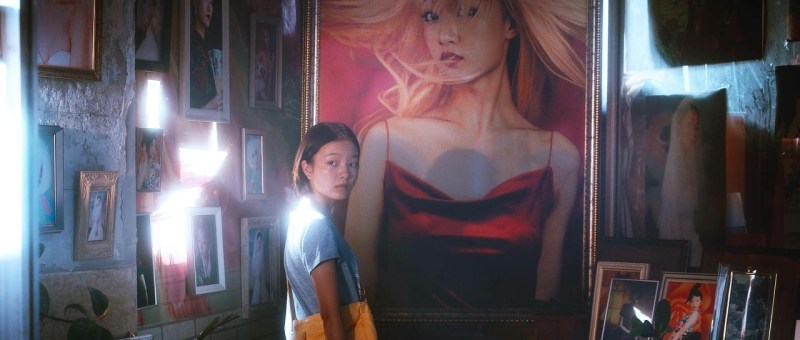
Heavy Snow (폭설, Yun Su-ik, 2023)

“It’s obvious it was a romance, why did you pretend it wasn’t?” one wounded woman asks another while their connection seems to be frustrated by internalised shame and conflicting desires. Yun Su-ik’s frosty drama Heavy Snow (폭설, pokseol) does indeed seem to suggest that their love for each other can only exist in a kind of otherworld, eventually segueing into a metaphysical realm which simultaneously implies that this isn’t actually a romance but self-reflection and interrogation as a tomboyish actress searches for herself inside her various roles.

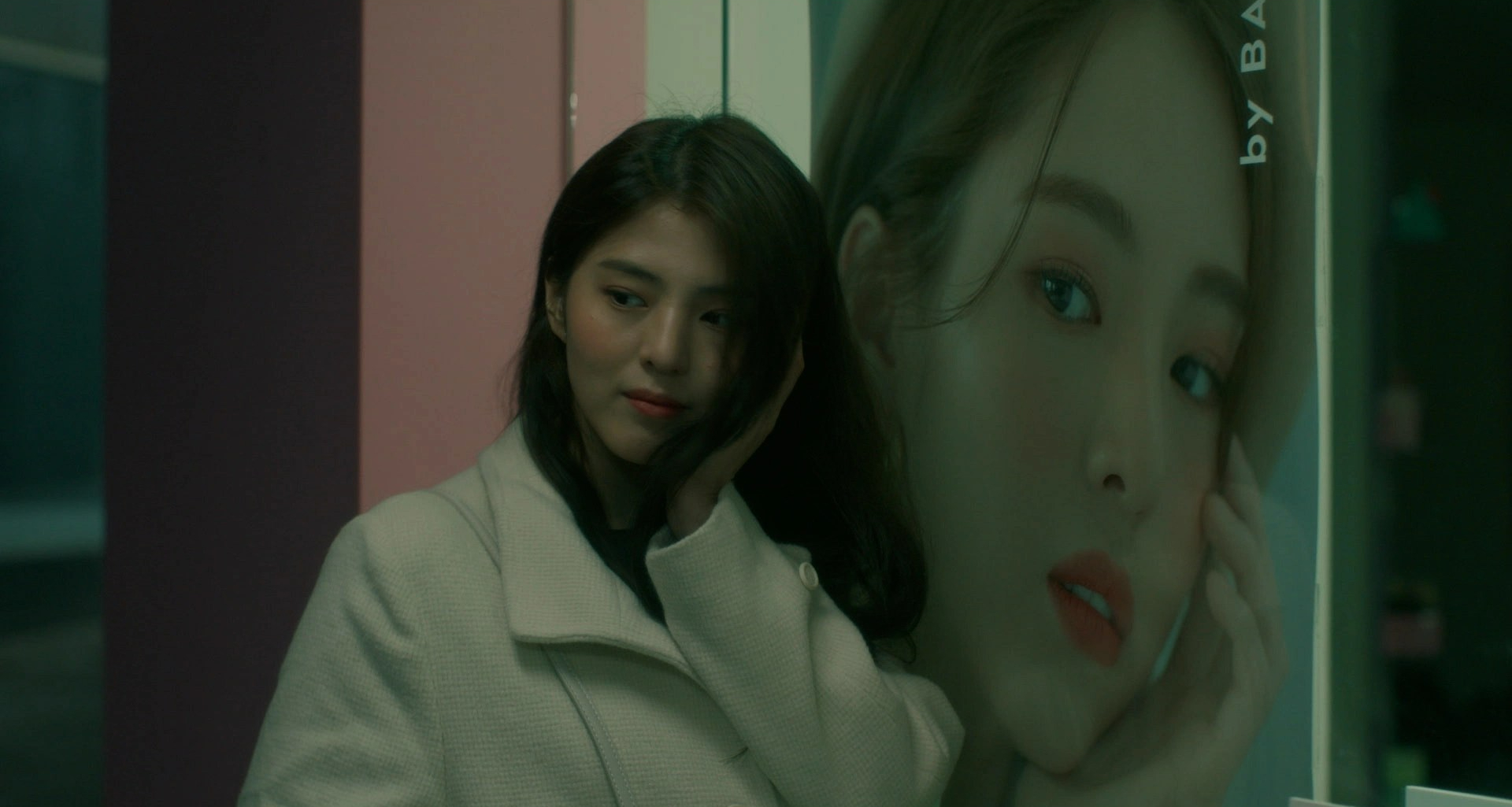
Indeed, Su-an (Han Hae-in) views Seol (Han So-hee) with a kind of awe which might be understandable given that Seol is a TV drama superstar improbably transferring to her rural arts school for a break from the world of showbiz. Or as Seol would later imply, because she’s become too difficult to manage and is rebelling against the emptiness of her ostensibly glamorous life through increasing acts of reckless self-harm. Su-an might wonder if that’s all her flirtation is, an attempt to flaunt a taboo while otherwise puzzled and jealous as to why someone like Seol would actually be interested in her. 

Yet Su-an’s interest is also in part idolisation, attracted to Seol because she fears she is everything she wants to be but isn’t, beautiful and talented. But Seol seems to doubt she’s either of those things while otherwise superficially confident in her sexuality and drawn to Su-an because of her ordinariness. Experiencing a moment of identity crisis, she’s looking for herself outside the frame yet also perhaps like Su-an caught in moment of self-idolisation. Noticing one of the giant billboards of her face that the litter the city she briefly touches it before walking away as if attracted to an image of herself she recognises and doesn’t. 

Yet it seems it’s less the awkwardness of too much intimacy that causes Su-an to pull away when Seol kisses her than shame. She tells Seol that she thinks it isn’t right, and perhaps goes on to regret that decision while continually pining for an idealised teenage love. The two women in a sense trade places. Years later Su-an is a famous TV actress, having in a way taken over the image of Seol, while Seol is evidently no longer acting but a depressed and defeated figure still resentful of Su-an’s rejection. The effects of their shifting fame deepen the gap between them with the teenage Su-an further nervous in her relationship with Seol knowing the danger that her celebrity presents. There is a suggestion that their creative desires conflict with the romantic, that they feel they cannot embrace their sexuality freely and remain in the entertainment industry because of the intense pressures a conservative society places on prominent people to be shining examples of moral purity. Each of them appear to become worn out by the demands of their fame, Su-an turning to drugs in attempt to mask her depression while the teenage Seol ponders quitting acting to become more her authentic self.

In the dreamlike third act which commences at the sea, a touchstone for each of the women connected to the innocence of their teenage romance, may suggest that in looking for Seol Su-an is really looking for herself or perhaps simply to recapture the person she was at the beginning of everything. At odds with each other, the two women become marooned in a snowbound land with no one else around. Finally repairing their relationship, it seems that they can only embrace their love in this barren place where no one else exists to judge them. The implication maybe that as Seol says the things Su-an wants to say to Seol she really wants to say to herself in a desire for self-acceptance, but equally that we can’t be sure that any of this “real” rather than dream or wishfulment.  In any case all that remains is a painful longing either for an unrealised love or the elusive self. 

Hinting at the pressures of the contemporary society, the unrealistic expectations placed on those in entertainment industry and outward social conservatism the film never less presents its central romance with an evenhanded poignancy even in its continuing impossibility as the two women continue to look for the self in each other but seemingly struggling to see past the hollow images of their own self-projections.


Original trailer (no subtitles)

Heavy Snow screened as part of this year’s BFI Flare.

Mayhem Girls (メイヘムガールズ, Shinichi Fujita, 2022)

Four teenage girls unexpectedly find themselves with superpowers during the Covid-19 pandemic, but largely struggle with just the same problems as everyone else in Shinichi Fujita’s sci-fi-inflected high school dramedy Mayhem Girls (メイヘムガールズ). Despite the implications of the title, mayhem is not exactly the girls’ vibe though they each in their own way challenge the oppressive social norms of those around them later depressed by the realisation that they’ll soon have to go back to being “normal” and lose this brief respite they’ve been given from the rigours of high school life. 

The girls are already close to boiling point with the pressures of the pandemic as the teachers (ironically) yell at them to use hand sanitiser and social distance. The final straw seems to be the announcement that the Cultural Festival will be going online. That might be one reason why popular girl Mizuho (Mizuki Yoshida) suddenly snaps when her teacher catches her reading Twitter on her phone rather than studying. Miss Sawaguchi (Maako Miwa) is young and somewhat timid, unable to exert her authority over the class which is largely uninterested in her attempt to read out articles from English-language magazines. What’s the point, Mizuho wonders, in learning English if you can’t go abroad anyway? Sawaguchi takes this opportunity to reprimand Mizuho as a means of asserting her control but it backfires as something strange happens when she confiscates the phone. Sawaguchi’s hand stops mid-air allowing Mizuho to simply reclaim it while she runs out of the room as if in pain. 

This is only the first inkling that Mizuho has gained unexpected powers of telekinesis though she struggles to understand what happened, certain that she didn’t touch Miss Sawaguchi and confused that she seems to be talking about “violence” and displaying bruises on her wrists. In any case, the event loses her her phone which is akin to a kind of social death for a teenage girl. Her powers have, however, brought her to the attention of Tamaki (Amane Kamiya) who is a telepath, or more accurately given her an excuse to make contact for as it turns out Tamaki has long been carrying a torch for the oblivious Mizuho who is hung up on the student who was her tutor in middle school, Yusuke (Taisei Kido). Soon they are joined by two more girls, Akane (Manami Igashira) who can teleport, and Kei (Hina Kikuchi) who can read the minds of machines, in a kind of after school superpower club. 

Though they eventually become good friends, the relationship between the girls is strained by their differing views on their powers and by Mizuho’s concurrent obsession with Yusuke who is now a part-time delivery rider struggling to find a full time job in the middle of the pandemic. Using Kei’s powers to track him down she waits outside his house for him to come back and inserts herself into his life. Though he seems as if he’s about to remind her that her behaviour is inappropriate, Yusuke eventually goes all in on Mizuho after learning of her powers and asks her to use them to rob a bank so he can forget about his employment woes. 

There are many things you shouldn’t do for a boy and robbing a bank is very high on the list, though perhaps merely a more extreme version of a lesson typically learned in adolescence. In any case, this is far as Mizuho is pushed to the dark side. Other than that, none of the girls really consider using their powers for evil ends with even Tamaki admitting that she has thought about poking around in Mizuho’s head but feels it would be wrong to do so. It’s Tamaki who draws the short straw in being largely unable to articulate herself even by using her powers before eventually trying to communicate in images only to be robbed of the power to do so at the very last second when she’s reduced to being “normal” once again. 

“Normality” does seem to resume for them, each of the girls heading back to their own individual cliques having seemingly learned little from their experiences save Tamaki who is left with a lingering sadness. Perhaps what they’ve been through is a kind of mayhem, a period of chaos provoked by the pressures of the pandemic along with oppressive teachers and the regular teenage issues of unrequited love and romantic disappointment but they’ve returned to “normal” all too quickly leaving precious little time to meditate on the results of their flirtation with superpowers and psychic abilities in a world in which normality itself is both somewhat illusionary and infinitely oppressive.


Mayhem Girls screened as part of this year’s New York Asian Film Festival.

Original trailer (no subtitles)

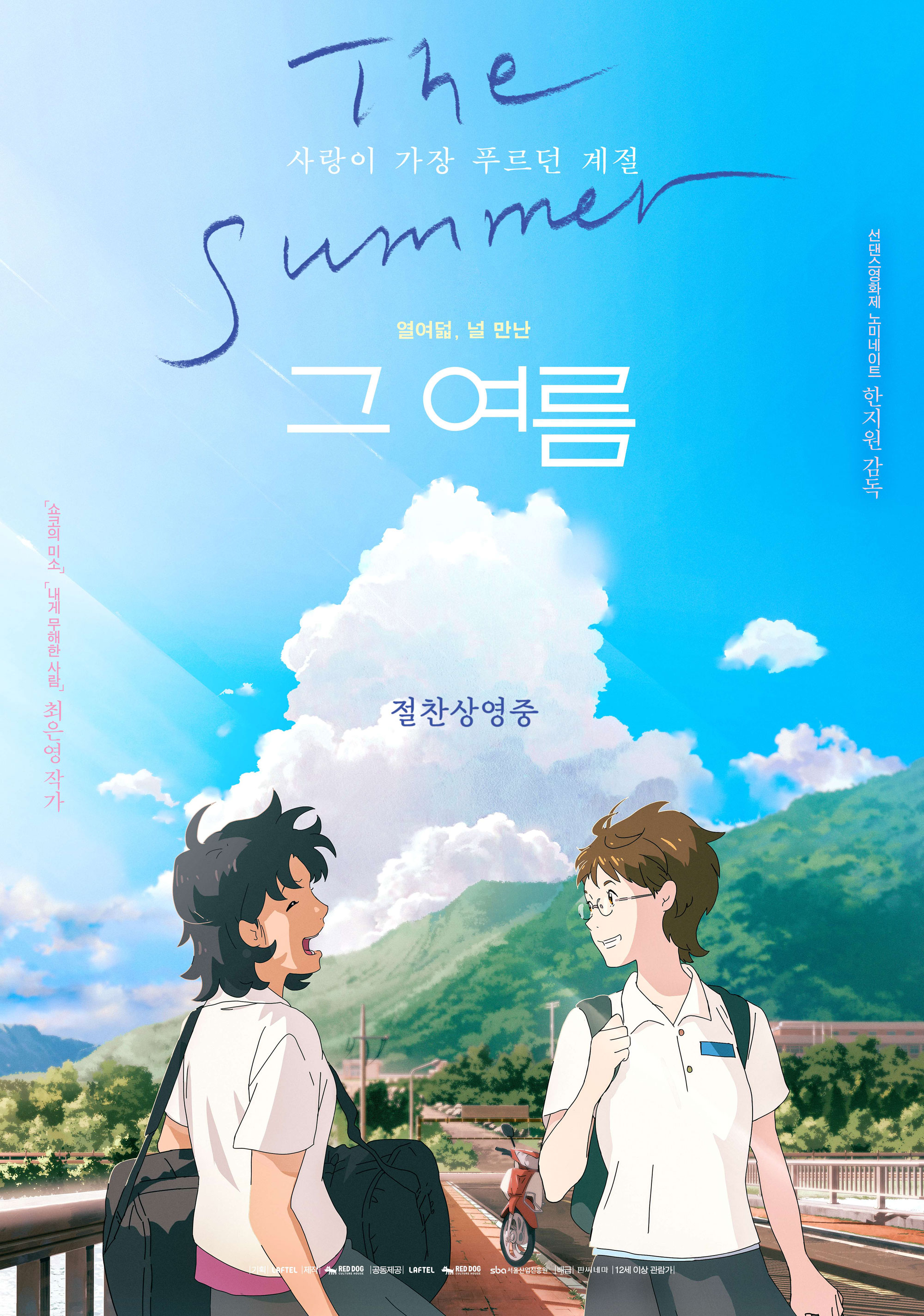
The Summer (그 여름, Han Ji-won, 2023)

A rueful young woman meditates on first love while losing direction in the city in Han Ji-won’s nostalgic adaptation of the story by Choi Sun-young, The Summer (그 여름, Geu Yeoleum). Set in the late ‘90s and early 2000s, the film finds an unexpected optimism for better future even in a society perhaps (even) less tolerant than that of today, but equally positions opposing reactions to their queerness as a force which erodes the innocent romance between two girls who met in high school and fell in love along with the more obvious stressors of city life such as social class and aspiration.

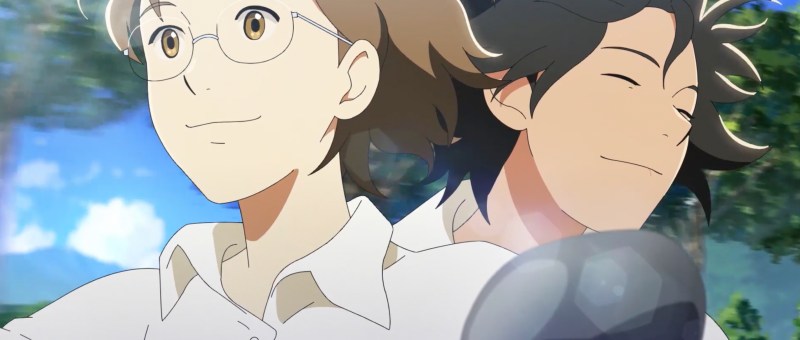
As Yi-gyeong later admits, “everything changed when we moved to Seoul”. Han depicts the tranquil rural town where the girls grew up as place of light and warmth, a kind of eternal summer of memory. Yet perhaps there’s something in the fact that when they first meet, footballer Su-yi accidentally breaks Yi-gyeong’s glasses rendering her at least temporarily unable to see clearly. A connection develops that first leads to an awkward friendship and finally to love, but where as a naive Yi-gyeong plans to come out and live openly as a lesbian, Su-yi is terrified and withdrawn. A few mocking sneers from her classmates show Yi-gyeong that Su-yi may have had a point and there are reasons they may have to keep their relationship secret.

Yi-gyeong’s inner conflict is reflected in a conundrum over her hair which is naturally lighter than than that of the uniform black of the girls around her. A teacher often stops to tell her to stop messing with it, leading her to wonder if she shouldn’t dye it the “correct” colour to be the same as everyone else thereby erasing her otherness and symbolically rejecting her homosexuality. She is also teased for having hazel eyes which are to some the eyes of a dog, and it’s Su-yi’s straightforward gaze into them that eventually brings the pair closer, Yi-gyeong feeling seen and accepted while Su-yi calmly tells her not to pay so much attention to what others think.

Yet for Su-yi the words are a double edged sword. Her way of not caring what other people think is to retreat into a bubble in which only she and Yi-gyeong matter, as if the rest of the world simply did not exist. Yi-gyeong, however, wants more. These divisions between them become even more palpable in the city when Yi-gyeong begins frequenting and then working at a lesbian bar which Su-yi still afraid to step into preferring to keep her relationship with Yi-gyeong an entirely private matter.

Han shrouds the city in shades of cold, blue and grey while the summer of their hometown gives way to a harsh winter. Where an orange cat had basked in the sun on Yi-gyeong’s desk, in the city a starving kitten shivers in an alleyway as if symbolising the love between the two women which is no longer being cared for or sheltered. While Yi-gyeong lives in a university dorm studying economics, an embittered Su-yi has given up her football dreams to become a mechanic while living in a dank room with mold on the ceiling that causes her to feel as if she’s compromising Yi-gyeong’s health simply by inviting her over. 

Conversely, as Yi-gyeong integrated more closely with the community through working at the bar she begins to grow apart from Su-yi, beginning to look down her as a working woman visibly irritated when she finally shows up at the bar but in her work clothes with grease on her face. Her new friends immediately put their foot in it by asking what Su-yi is studying at uni only to cause her embarrassment as she admits she didn’t get in and is doing a manual job instead. Yi-gyeong has to admit that what she feels is shame, now harbouring desires for city sophistication and nice middle class life as symbolised in her nascent crush on a slightly older nurse seemingly much more at home with who she is. 

But even so, an older Yi-gyeong can’t help asking herself why she swapped her dull but idyllic hometown for the emptiness of urbanity while meditating on the failure of her first love, wondering if she was wise to give it up or in the end betrayed both herself and Su-yi in her desire for something that was “more” than this without appreciating its innocent fragility. Poignant in its sense of melancholy regret, Han’s hazy drama lends a touch of warmth to Yi-gyeong’s infinite nostalgia for the endless summer of first love that in its way for her will never really end. 


The Summer screened as part of this year’s London Korean Film Festival.

Original trailer (Korean subtitles only)

Phantom (유령, Lee Hae-young, 2023)

Neatly subverting the drawing room mystery, Lee Hae-young’s intense colonial-era spy thriller Phantom (유령, Yuryeong) positions female solidarity as the roots of resistance towards oppressive militarist rule. Inspired by Mai Jia’s novel Sound of the Wind which focused on Chinese resistance towards the Japanese puppet government in Nanking, the film does indeed begin with the suggestion that one of the people in this room is a spy but soon encourages us to wonder if they all may be or some other game may be being played by an infinitely corrupt authority in the midst of a constant series of betrayals and reversals.

Opening in Kyungsung (modern day Seoul) in 1933, the film both begins and ends with a radio broadcast in Japanese reporting on the actions of “terrorist” group known as the “Shadow Corps” which has been conducting “organised crime” through a network of spies known as “Phantom”. An assassination attempt has recently been made in Shanghai on the new Korean governor and all members of the organisation are reported as dead following shootout with the Japanese authorities, though that obviously turns out not to be the case and we are quickly introduced to operative Park Cha-kyung (Lee Hanee) who works in the intelligence division of the colonial government and utilises a local cinema permanently screening Shanghai Express to communicate with her handlers. New instructions are boldly announced in plain sight through coded messages on cinema posters including one for Tod Browning’s Dracula. 

The group plan to assassinate the new governor when he visits a Japanese shrine in the city. A young woman dressed as a Shinto shrine maiden using a pistol concealed in a tray manages to wound but not kill him. She makes an escape but is shot by an unseen hand that could have come from either side. Following, Cha-kyung witnesses her death but can do nothing other than make a swift disappearance before the authorities arrive. Cha-kyung is often depicted as a shadow presence, disappearing phantom-like from the scene both there and not there as she tries to maintain her cover, but Lee also imbues her with an additional layer of repression in that the assassin, Nan-young (Esom), had been her lover. The two women meet briefly outside the cinema in an emotionally charged scene in which they can display no emotion as they must appear to be two strangers exchanging a match on the street though it’s clear that something much deeper is passing between them. 

The exchange of cigarettes itself becomes repeated motif standing in for deepening intimacy in an atmosphere of intense mistrust. The box of matches that Cha-kyung had given to Nan-young as a parting gift and means of buying a few seconds more, blows their operation in leading investigating officer Takahara (Park Hae-soo) to a bar opposite the cinema where he figures out their code. Seemingly unsure as to who is the “Phantom”, he rounds up five suspects and takes them to a clifftop hotel where he encourages them to identify themselves or else they will be interrogated the following day. Along with Cha-kyung whom we already know to be “a” if not “the” Phantom is a police officer against whom Takahara bears a grudge (Sol Kyung-gu), the governor’s flapper secretary Yuriko (Park So-dam), codebreaker Cheon (Seo Hyun-woo) who is very attached to his cat, and terrified mailroom boy Baek-ho (Kim Dong-hee). 

Lee keeps the tension high and us guessing as we try to figure out what’s really going on, who is on which side, and if there’s to this than it first seems. Cha-kyung too seems uncertain, unable to trust any of her fellow suspects who obviously cannot trust her either while trying to maintain her ice cool cover. With sumptuous production design evoking the smoky, moody elegance of the 1930s setting, Lee drops us some clues in focussing on footwear particularly Cha-kyung’s ultra-practical boots and Yuriko’s totally impractical high heels and fancy outfits which as it turns out may have their uses after all when the simmering tension finally boils over and all hell breaks loose at the combination luxury hotel and state torture facility. In any case, as we gradually come to realise, the real “Phantom” the title refers to may be Korea itself, the resistance fighters accused of clinging on to the ghost of a nation which no longer exists while themselves rendered invisible, forced to live underground until the liberation day arrives. 


Phantom screens July 30 as part of this year’s New York Asian Film Festival.

International trailer (English subtitles)
Images: ⓒ 2023 CJ ENM Co., Ltd., THE LAMP.ltd ALL RIGHTS RESERVED