Table for Six 2 (飯戲攻心2, Sunny Chan Wing-Sun, 2024)

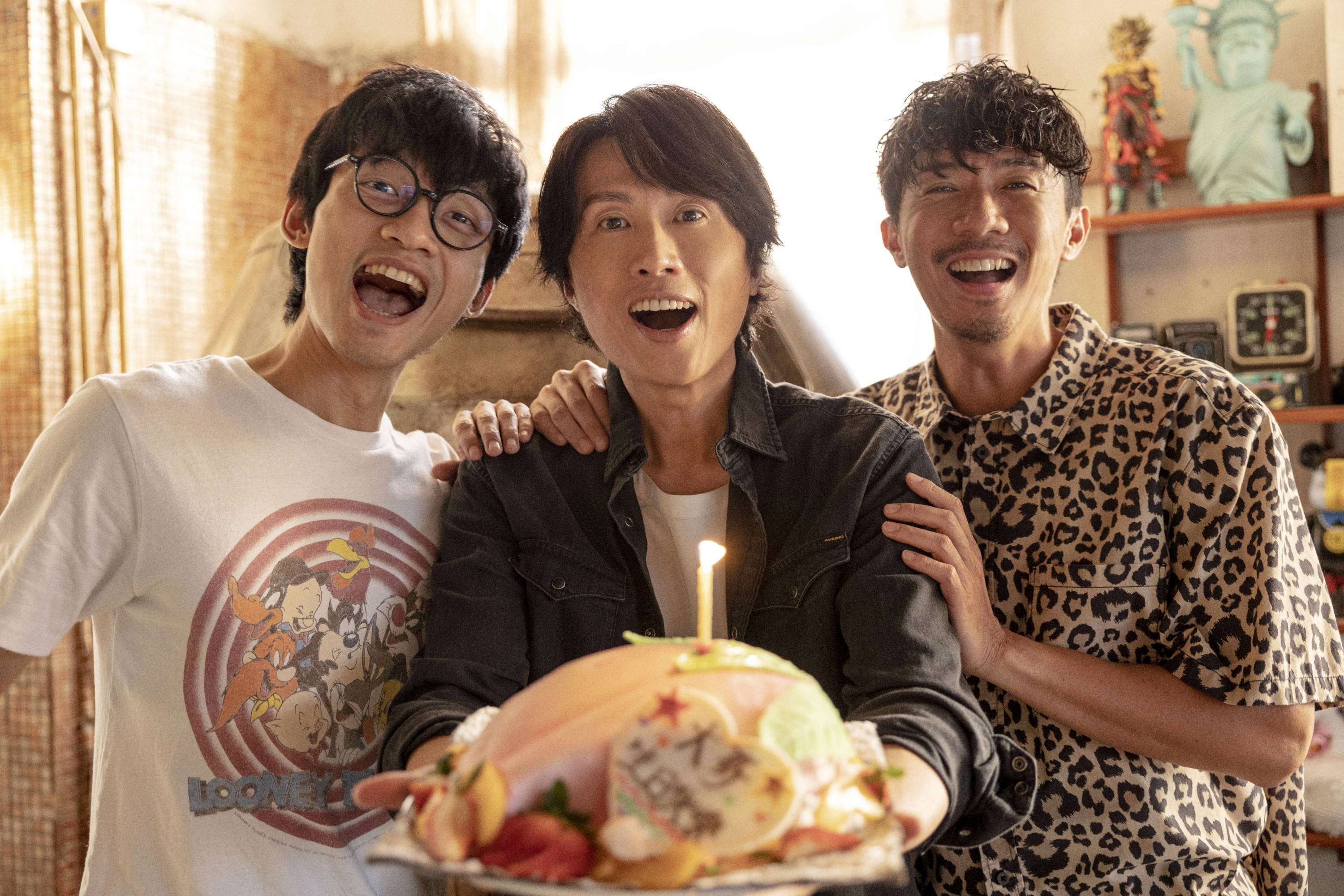
“It’s okay to be screwed, we’ll unscrew you later,” youngest brother Lung (Peter Chan Charm Man) comforts his dejected brother in an accidental advocation of what means to be a family in Sunny Chan’s followup to the phenomenally successful comedy  Table for Six. Like the previous film and in true Lunar New Year fashion, Table For Six 2 (飯戲攻心2) explores the concept of family in a wider sense along with contemporary attitudes to marriage and traditional gender roles.

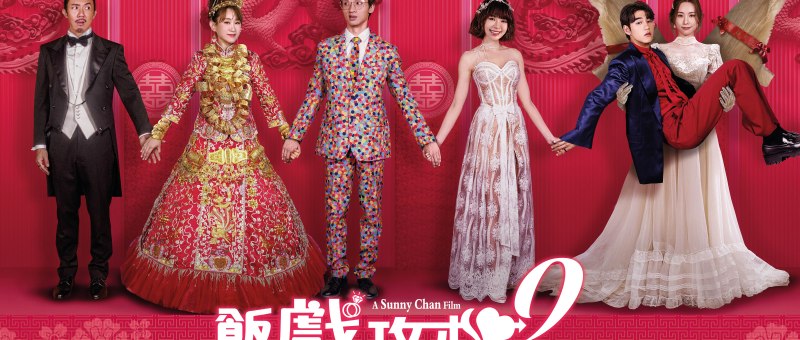
Even so, it has to be said this table is now uneven as oldest brother Steve has literally run away from his romantic dilemmas taking off for Africa leaving new girlfriend Miaow (Lin Min-Chen) behind claiming she’s too far out of his league and it’s not fair of him to waste her youth. Ironically enough, Bernard (Louis Cheung) has now started a wedding business helping people pull off extravagant public proposals such as the sort of fake one he prepares for Monica (Stephy Tang Lai-yan) as a publicity stunt featuring him dancing in a 90s-style music video. As part of the campaign, they’ve set up Lung and Miaow as a fake couple hoping to build a following for their romance online much to unexpected chagrin of Josephine (Ivana Wong) who has begun to embrace her dreams by becoming a well-known quirky chef who makes food disguised as other food. Though they had agreed to separate so the could both follow three dreams at the end of the previous film, Josephine suddenly proposes leading Bernard to put on an extravagant wedding as promotion for his business. 

In a way, Bernard’s company symbolises the performative qualities of marriage as couples put themselves through a stressful and expensive ritual more out of obligation than real desire. When Lung is prevented from reaching the ceremony on time, Bernard ends up impersonating him in a full body costume making plain that the spectacle is more for show than sentiment and it could really be anyone up there simply fulfilling a role. In fact, no one even checks the certificates were properly signed. Then again, just as in Josephine’s cooking sometimes the “fake” and can actually contain the “real” just in a different way than expected. She may say that once a relationship has cooled the spark can’t be regained, but that doesn’t necessarily mean a new, different, spark couldn’t be found. 

Perhaps that’s what happened for Bernard and Monica who’ve now overcome the awkwardness of Monica having been in a longterm relationship with oldest brother Steve. Ironically enough, they’d more or less decided not to get married only to be blindsided by their reactions to the “fake” proposal but as it turns out more because of the emotional baggage from their parents’ failed relationships that have left them too afraid to get married. Monica is still traumatised by her father’s extra marital affair which resulted in a half-brother she’s never met but has since become a Cantopop star, while Bernard still has bad memories of being treated as a “red-headed” child and like Steve is preoccupied with a desire to keep the family together while worried that he isn’t really up to it. 

The lesson Bernard learns is that family is a burden that’s carried together so he didn’t need to save it on his own and that it’s alright to mess things up because his family will be there to take care of him. Miaow meanwhile is left in the same place as Steve had been in the first film, wondering how long she should wait for love or if Steve is ever coming back, trying to decide whether to accept a promising job offer in Japan or stay in Hong Kong. Part of her reluctance to move on is that she’s become wedded to the family and fears losing her place within it but as Monica says her status wasn’t dependent on blood or relationships and that she’s already been accepted into the family just for being herself. 

Then again, families can also be annoying as Bernard remembers after inviting his gangsterish uncles to one of the weddings only for them to muscle in as a major sponsor for another own insisting on designs the dress themselves complete with a par of shark fin wings to promote their business none of which meshes well with Monica’s passion for conservation. In any case, as Monica reflects family means you can embarrass yourselves together so maybe wearing a stupid dress for a few minutes isn’t such a big deal. Heartfelt and zany, Chan’s farcical drama shifts past the performative aspects of marriage and family to what lies beneath which, like Josephine’s cooking, may not always be what it first appears.


Table for Six 2 is in UK cinemas from 9th February courtesy of CineAsia.

UK trailer (English subtitles)
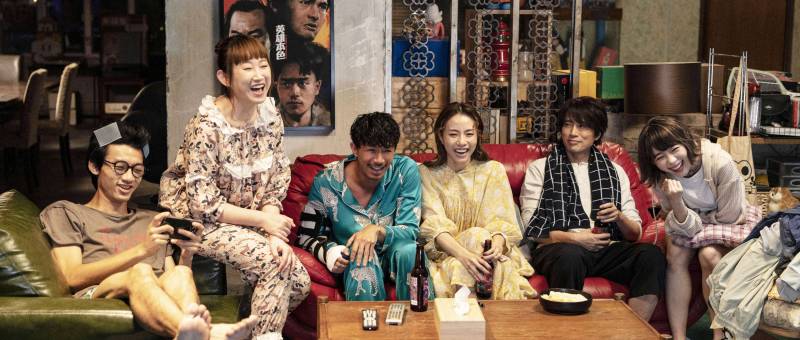
Table for Six (飯戲攻心, Sunny Chan, 2022)

“Wherever family is, that’s where home is” the dejected hero of Sunny Chan’s ensemble comedy Table For Six (飯戲攻心) is eventually told after struggling to keep his small family together by refusing to sell the apartment their parents left them in an old barbecue pork kitchen. Like his previous film Men on the Dragon, Chan’s tightly woven farce is a kind of delayed coming-of-age tale in which the hero realises that his familial bonds aren’t necessarily tied to a place and won’t disappear even if he has to leave it, but also the gentle celebration of food and family that has come to define the Chinese New Year movie (even if this one was delayed to the Mid-Autumn Festival for obvious reasons). 

Steve (Dayo Wong Chi-Wah) is the oldest of three brothers and a de facto father figure in the absence of their parents who have each passed away. Under the justification of obeying their late mother’s dying wish, Steve insists each of the brothers come home for dinner every night and now rarely leaves the apartment as if fiercely guarding an interior world he’s afraid he’ll one day lose. Working as a photographer from home, he ends up meeting popular Taiwanese influencer Miaow (Malaysian actress Lin Min Chen) who turns out to be one of his biggest fans and a now grown up woman who once sent him fanmail as a teenager. Miaow makes obvious romantic overtures but Steve tells her he’s not interested because he still hasn’t got over his ex Monica (Stephy Tang Lai-Yan) who broke up with him three years previously. This is also a problem because unbeknownst to him middle brother Bernard (Louis Cheung Kai-Chung) has been secretly dating Monica for the last six months. 

Much of the tension in the apartment stems from trying to integrate the competing desires of the brothers with their relationships as a family. Bernard and youngest brother Lung (Peter Chan Charm-Man) both want to sell the apartment for different reasons while only Steve insists on hanging on to it determined for them all to continue living together as impractical as that may be given that they are all approaching middle age. Lung quit his regular job some time ago to become a professional esports player which has further strained his relationship with longterm girlfriend Josephine (Ivana Wong Yuen-Chi) who is fed up with waiting for him to formalise their union while finding her own hopes and desires stifled by his obsession with esports success. To keep the peace Steve suggests an unusual solution in which he’ll employ Josephine as a cook which is certainly awkward on several levels given the resulting power dynamics but on the other hand not all that different from the status quo in practical terms as much as it annoys Lung who is secretly insecure in his lack of financial standing which is why he’s been putting off marriage. 

Essentially what Steve learns is that keeping the family together isn’t as literal a thing as he’d assumed it to be. If he wants to preserve it he might have to let it go and learn to move on from the past rather than stubbornly trapping himself in the inertia of his parents’ old apartment. Miaow turns out not be quite as vacuous as her online persona suggests, a neat subversion of Teorema as an unexpected guest who immediately sees and understands the unfulfilled needs of each of the family members and helps to guide them towards moments of realisation. Steve struggles to come to terms with the end of his relationship with Monica which turns out to have been caused by a minor misunderstanding while on the other hand processing complex feelings towards his brother trying to be magnanimous in the best interests of the future but on the other hand wondering if he and Monica might still have a future after all. 

Of course that does rather leave out Monica’s feelings though she too seems conflicted even if having made a choice to move on in deciding to date Bernard in the first place. Her pet peeve is that she hates it when people “disrespect” old things and can’t bear to see otherwise obsolete objects thrown away all of which suggests she might have made a mistake in moving on all while filling the apartment with relics of a disappearing Hong Kong such as old street signs and a pair of golden phoenix dragons which seem gloriously out of place in the otherwise industrial environment of the former barbecue pork kitchen. There might then be something of an additional message in Steve’s final realisation that home is where the family is in an era when so many have felt displaced and been forced to leave the place they love because it has changed beyond all recognition while he makes the decision to break out of his self-imposed inertia by moving on from the past to explore new possibilities outside of the apartment. Anarchic yet warmhearted and always forgiving of its sometimes flawed, often confused protagonists Chan’s cheerful family dramedy discovers that home is not so much a place as the people who live in it and that family is still family even if it’s far apart.


Table for Six is in UK cinemas now courtesy of Haven Productions.

Original trailer (Traditional Chinese / English subtitles)

One Second Champion (一秒拳王, Chiu Sin-Hang, 2020)

“All things in their being are good for something” little Yan is told by a sympathetic TV presenter slightly unconvinced by his short-lived celebrity as the “One Second Wonder”. It may not sound like the most complimentary nickname, but in this case it’s intended in the kindest sense referring to the kid’s uncanny ability to see into the future if only for one second. As a child he’d told the TV audience that he wanted to grow up and find a way to use his superpower to contribute to society, but now a dejected middle-aged man the hero of Chiu Sin-Hang’s One Second Champion (一秒拳王) is something of a loser, imbued with a sense of defeat and not quite so much trading on past glory as using his “superpower” as a party trick to earn extra cash. 

As he tells us, Yan (Endy Chow Kwok-yin) was born during a storm, a power cut threatening his new life and leaving him apparently dead for one second to which he attributes the cause of his strange ability. All things considered, however, being able to see one second ahead is almost useless. What good is it to predict the winning lottery numbers or the winner of a horse race if you’ve no time to buy a ticket or place a bet? A nerdy sort of child unfairly thrust into the spotlight as the “One Second Wonder”, Yan has become a defeated middle-aged man working in the bar of an old friend while trying to pay off gambling debts accrued trying to raise the money for an operation for his son, Chi-leung (Hung Cheuk Lok), who is deaf. His total lack of self-esteem is rammed home when Chi-leung points out a classmate who’s been bullying him, often ripping out and damaging his hearing aid. Though Yan vows to talk to the school and the boy’s parents to sort it out, he quickly backs own even trying to force Chi-leung to apologise to the bully in front of his equally intimidating mum. 

The one arena where seeing one second ahead may in fact be valuable is in the middle of a fight which is what brings him to the attention of aspiring boxer Shun (Chiu Sin-hang). Faced with esteem issues of his own, Shun struggles in the ring partly due to his asthma and partly ongoing anxiety as a result of trauma having seen his dad behaving strangely after a fight. Aside from personal success, his desire is to resurrect his dad’s old gym, eventually teaming up with Yan after hearing of his strange ability and hoping his success might help attract more members. In this positive environment, Yan starts to regain a sense of confidence, getting a smart new haircut and paying more attention to personal grooming, while impressing his young son with his unexpected success not to mention reflecting that his “useless” ability might not be so useless after all. 

But then, after a traumatic incident he fears his special powers may be gone and is faced with another choice in whether to continue boxing as a “real” boxer or go back to the defeated life he used to live. Boxing shouldn’t be about gimmicks, according to a young pretty boy star (Chanon Santinatornkul) with an ironic, if sometimes cruel, devotion to the craft marketed like an idol by his ambitious manager, but Yan has to wonder if there’s more to him than the “One Second Wonder”. The conclusion that he comes to is that, as the TV presenter had said, everything’s good for something, one second can make a huge difference, and every choice you make counts. Win or lose, what matters is making the most of your time so why wait when you could start right away. A soulful tale of self-acceptance, the power of mutual solidarity, and the restorative qualities of physical discipline, Chiu Sin-Hang’s warmhearted drama is an ode to forging your own destiny, one second at a time, while remaining true to yourself. “Our superpower is never giving up” Yan tells his young son, no longer so afraid of the sound of his own heart beating, as they walk off into the sunset One Second Champions win or lose. 


One Second Champion streams worldwide (excl. China/Spain/Canada) until 2nd July as part of this year’s hybrid edition Udine Far East Film Festival.

Original trailer (English / Traditional Chinese subtitles)

The Fatal Raid (辣警霸王花 2 不義之戰, Jacky Lee, 2019)

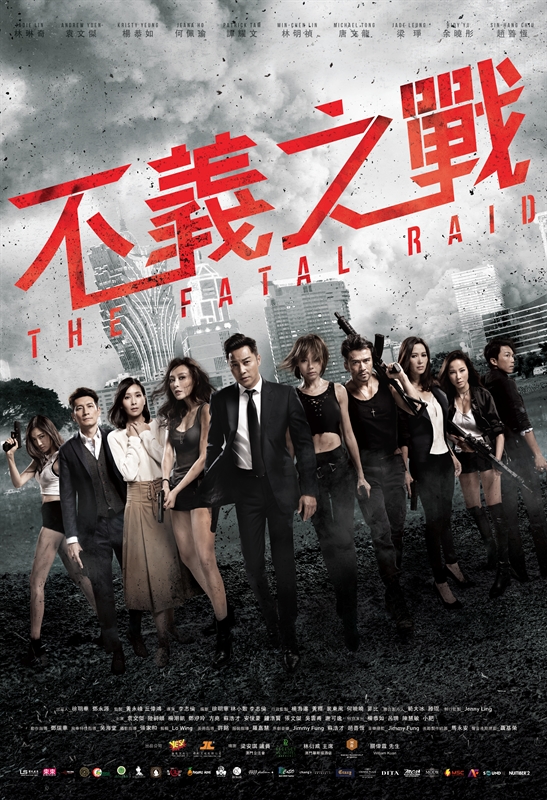
Fatal Raid posterUnrealistically heroic as it might have been, Hong Kong cinema was once unafraid to suggest that sometimes good guys bend the rules, but these days the Mainland market is an important consideration and so the right kind of justice must be served. A salacious B-movie and thematic sequel to Special Female Force (itself a loose remake of 1986’s The Inspector Wears Skirts), Fatal Raid does not have much of a message but does make time to muse on the philosophical nature of “justice” as it corresponds to law enforcement.

20 years previously, Hong Kong cops Madame Fong (Leung Yuk-yin) and Tam (Patrick Tam) were members of an elite squad on a covert mission in Macao which went about as wrong as it’s possible to go, concluding in a mass shoot out in which all of the other squad members died. Because the operation must be kept a secret, the fallen officers have not received their proper due – something which continues to weigh heavily on the resentful Tam, while Madame Fong is still suffering with PTSD related to the incident. A quirk of fate sees the two officers return to Macao as part of a security team escorting the current police chief to a conference, but the past returns to haunt them when their convoy is ambushed by drug addled, youthful anarchists striking back against oppressive authoritarianism.

Meanwhile, there’s inter-squad drama between newish overseas recruit Zi Han (Lin Min-Chen) and veteran Alma (Jeana Ho). A flashback to the original incident reminds us that it was being run along male/female squad lines with the elite team of women the driving force of the operation. However, it continues to be an extraordinarily sexist world that the officers inhabit. The comedic banter between Tam and fellow copper Hei (Michael Tong Man-lung) on the fateful day was mostly Hei boasting about how handsome he thought he was and how pretty some of the female officers were. In the present, the ladies face many of the same problems as undercover officers staking out a nightclub are asked to put some clothes on immediately after the operation because the men can’t concentrate surrounded by barely dressed women, and then in Macao introduced to other female officers as if they constitute some kind of special group.

In any case, the main themes are karma and justice and a possible difference between the two. The last officers standing, Fong and Tam feel guilty about another policeman who died whose body was never recovered, presumed destroyed in the explosion. Tam, who feels “justice” has not been served for his friends who were killed in the line of duty, rocks the boat by dedicating his Macao speech to their memory even if the operation they died in officially does not exist (and cannot exist, because they had no right to open fire in Macao). Fong, meanwhile, is conflicted on learning that a former mentor who helped to teach her about “justice” may have crossed over to the dark side. Tam wonders if they really need to go to such great lengths to “uphold justice” and what it is that really gets them, while Fong remains convinced that “justice should be governed by law”.

The anarchists, however, feel as if there is no justice and that law enforcement of any kind is inherently oppressive. Well, to be fair, they are mostly drugged up teens rather than politically conscious rebels, and have fallen under the spell of an older man peddling personal revenge against a system he feels has betrayed him. In any case, the original squad made mistakes which will come back to bite the remaining members as they take on a new generation of thugs outside of their official jurisdiction. Filled with strangely comic scenes such as the early in-car banter and a running subplot about a lovelorn Macao detective and his crush on Zi Han which hark back to a freer, easier era of Hong Kong cinema, Fatal Raid maybe a little rough around the edges but is not without its old-fashioned charms.


The Fatal Raid screens on 5th July as part of the 2019 New York Asian Film Festival where stars Jade Leung and Michael Tong will be present to present the film.

It’s a Mad, Mad, Mad, Mad Show (瘋狂電視台瘋電影, Hsieh Nien Tsu, 2019)

It's a Mad, Mad, Mad, Mad Show poster 1New Year comedies are usually about food and community, but for those lonely souls with no one to go home to, perhaps TV can fill the void. That’s certainly been the way for kindhearted TV variety show producer Yeh (Ou Han-Sheng). As a young boy he was often all alone at home and turned to TV for comfort, but with the industry as soulless as it is, is it still possible to lose yourself in the glow of the television screen?

In truth, Yeh’s programming has never been very successful which is perhaps why he finds himself unexpectedly promoted to director by his shady boss Lo (Lin Yu-Chih) who abruptly fires almost everybody else while suddenly insisting on round the clock programming. Unbeknownst to the crew, Lo has fallen foul of eccentric gangster David (Yen Cheng-kuo) who has showbiz ambitions and is determined to buy Crazy TV at a rock bottom price. Lo promoted Yeh in the hope that he’d fail so the ratings would crash and the station would go bust. Yeh’s programming, however, while not exactly a smash begins to find its audience largely through the zany schemes he comes up with to make the most of his budget like substituting repetitive ads for a “signal problem” warning, running cutesy phone-in kids TV, and a deliberately boring overnight program narrated by a guy in a sheep costume and featuring complicated maths problems and military history designed to send you straight to sleep.

Meanwhile, the backstage drama kicks off as Yeh begins to get closer to aspiring Malayasian actress Diva (Lin Min-Chen) while still nursing a broken heart over a failed relationship with a rising star who dumped him for her career. The main issue is, however, his obsession with television as a lifelong friend. As lonely child, TV was there for him, and it was still there for him as an ambitious adult, but somehow it’s lost its way and Yeh isn’t sure how to guide it home. Eventually he has to consider selling his house and earning his living as a noodle vendor while he waits for TV to rediscover its sense of self.

Filled with references to retro Taiwanese television and Western movies, It’s a Mad, Mad, Mad, Mad Show (瘋狂電視台瘋電影, Fēngkuáng Diànshì Tái Fēng Diànyǐngwears its love of the medium on its sleeve but is clearly unafraid to stick the knife in as Crazy TV lives up to its name with a series of bizarre skits created to make up for the fact they have no actual reporters so cannot actually report the news. The only way back in for Yeh, his aspiring actor friend Abi (Liu Kuan-Ting), and Diva is to enter a competition where they have to go head to head with Mr. David reenacting The Godfather, a singer, a guy reading a book, and a pair of gamers. They choose the surreal with a high risk strategy inspired by the movie Money Monster which eventually goes in an unexpected direction. 

A chance meeting with an old friend currently shooting an indie movie brings home to Yeh what exactly has been missing in his TV life – “value”, as in everyone has something valuable in their hearts that ought to be expressed but often isn’t in the increasingly commercialised TV industry. The veteran director deposed during Lo’s mass purge eventually says something similar, that the audience for their programming is mostly the elderly and children and that therefore they should accept a little more responsibility for the programmes that they air and do their best to send positive messages rather than focus on sensationalist stunts designed to win short-term ratings.

Yeh’s epiphany comes a little late, but eventually leads him to realise that if TV was a friend to him it can be a friend of everyone else and then they can all be mutual friends bonding in shared enjoyment even if they’re apart. In true New Year spirit, it really was all about community after all. Adapted from the stage play by variety TV legend Hsieh Nien Tsu, It’s a Mad, Mad, Mad, Mad Show is a warmhearted tribute to the healing power of silly TV, bringing tired people together through shared bemusement as they eagerly tune in to the next crazy onscreen antics as an antidote the increasingly surreal offscreen reality.


It’s a Mad, Mad, Mad, Mad Show screens on 4th July as part of the 2019 New York Asian Film Festival. It will also be screened in Australia on 26th July as part of the Taiwan Film Festival in Sydney.

Original trailer (English/Traditional Chinese subtitles)