Still the Water (2つ目の窓, Naomi Kawase, 2014)

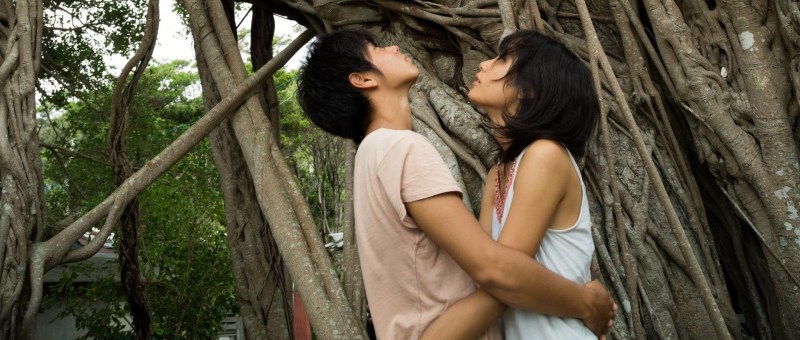
“Why is it that people are born and die?” asks the heroine of Naomi Kawase’s existential odyssey Still the Water (2つ目の窓, Futatsume no Mado). It’s a question with which the director has long been wrestling, though this time more directly as her adolescent protagonists ponder life’s big questions as they prepare to come of age. Moving away from the verdant forests of Nara Prefecture with which her work is most closely associated, Kawase shifts to the tropical beaches of Amami Oshima, a small island somewhere between Kyushu and Okinawa as two youngsters discover life and death on the shore while contemplating what lies beneath the sea. 

Opening with rolling waves and the graphic death of a goat, Kawase’s trademark visions of nature soon give way to night and the discovery of a tattooed man washed up on the shore made by moody teen Kaito (Nijiro Murakami) who leaves abruptly, walking past the confused figure of his tentative love interest Kyoko (Jun Yoshinaga) with whom he was supposed to meet. The next morning the townspeople are all aflutter with news of the body, confused by the sight seeing as there are few crimes in this community but admittedly many accidents. The cause of death however is an irrelevance, the import is in the body and what it represents. 

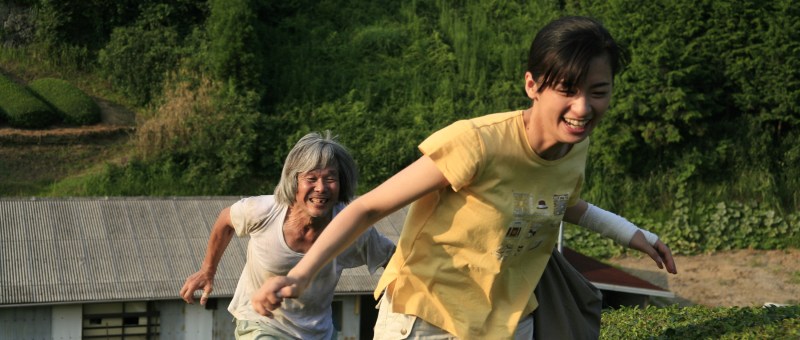
First and foremost, it turns the ocean into an active “crime” scene, placed off limits to the locals but Kyoko, a bold and precocious young woman, dives right in in her school uniform and all merely laughing as Kaito remains on the jetty asking her if she isn’t afraid. Raised in they city, Kaito finds the sea disquieting, apparently squeamish of its “stickiness”, describing it as something “alive” only for the bemused Kyoko to point out that she is a living thing too, exposing his essential fear of her as she kisses him and he freezes. On the brink of adulthood, Kaito is afraid to live, afraid of the “death” that change represents, and most of all afraid of the sea inside in the infinite confusion of human feeling. 

That confusion spills over into animosity towards his mother, Misaki (Makiko Watanabe), who, obviously at a different stage of life, exists in a world inaccessible to him. He’s at school during the day while she works evenings at a restaurant so they are rarely together and he’s quietly resentful on coming to the realisation that his mother is also a woman, berating her for daring to have a sex life and flying to Tokyo to attempt a man-to-man conversation with his absent father to figure out why their marriage failed. His dad, however, spins him some poetic lines about fate and romance which don’t really explain anything, paradoxically affirming that he feels more connected to Misaki now that they’re apart while admitting that age has shown him “fate” is less soaring emotion and more an expression of something which endures. 

Kyoko meanwhile is considering something much the same as she tries to come to terms with her shaman mother’s terminal illness, reassured by another priest that although her mother’s body will leave this world her warmth will survive. She and Kaito are treated to a lesson in nature red in tooth and claw as an old man slits the throat of a goat while the pair of them watch something die. “How long will it take?” Kaito asks in irritation, while Kyoko looks on intently until finally exclaiming that “the spirit has left”. Later she is forced to watch as her mother dies but even on her deathbed is painfully full of life, listening to plaintive traditional folksongs and moving her arms in motion with the music as the others dance. 

The old man, Kame, tells the youngsters that as young people they should live life to the full without regret, do what they want to do, say what they want to say, cry when they want to cry, and leave it to the old folks to pick up the pieces. But he also admonishes them for not yet understanding what lies in the sea. It’s Toru, Kyoko’s equally new age father, who eventually talks Kaito out of his fear which is in reality a fear of life, explaining that the ocean is great and terrible swallowing many things but that when he surfs it’s akin to becoming one with that energy and achieving finally a moment of complete stillness. Kaito needs to learn to “still the water”, to bear the “stickiness” of being alive to enjoy its transient rewards while the far more active Kyoko finds solace in her mother’s words that they are each part of a great chain of womanhood which is in itself endless, something Kame also hints at in mistaking the figure of Kyoko walking on the sand for that of her long departed great grandmother. 

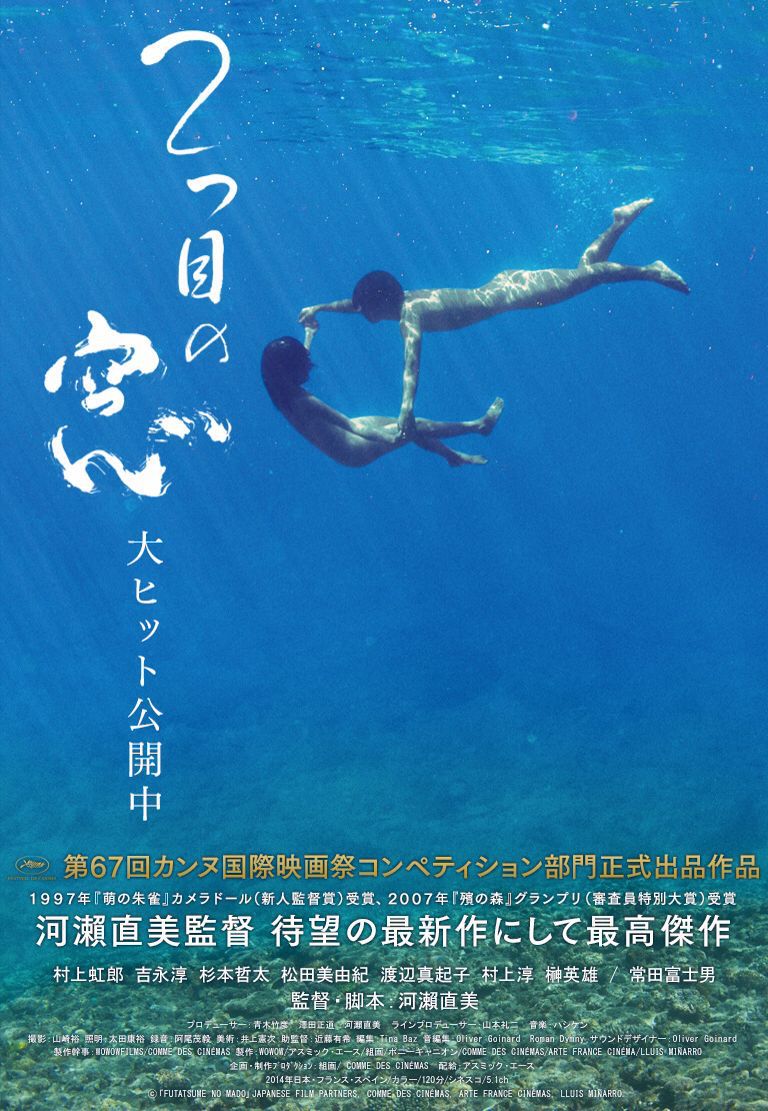
Nature eventually takes its course and in the most beautiful of ways as the young lovers learn to swim in the sea in spite of whatever it is that might be lurking under the surface. Death and life, joy and fear and misery, the sea holds all of these and more but they roll in and out like waves hitting the shore and the key it seems is learning to find the stillness amid the chaos in which there lies its own kind of eternity.


Trailer (English subtitles)
Come and Go (COME & GO カム・アンド・ゴー, Lim Kah-Wai, 2020)

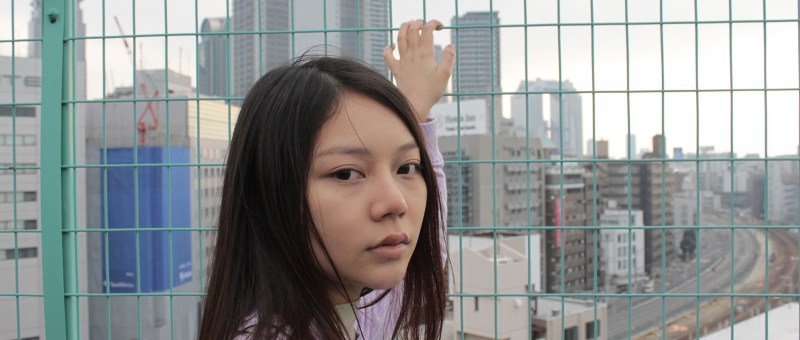
Japanese cinema has not always been willing to contend with contentious social issues such as immigration. More recently, however, indie filmmakers in particular have been keen to critique the nation’s attitudes towards those who’ve come to make their home there. Like Akio Fujimoto’s Along the Sea, Lim Kah Wai’s Come and Go (カム・アンド・ゴー) explores the lives of those who’ve come to Japan, in this case Osaka, in search of a better life but have mostly encountered exploitation and prejudice while marginalised Japanese residents apparently fare little better. 

Lim weaves his disparate tale around the discovery of a skeleton in a rundown part of town which is later found to belong to an elderly woman apparently reported missing six months previously. The comings and goings that we witness are an interconnected series of movements between a quartet of South Korean sex workers apparently trying their luck in Osaka because of an economic downturn at home, a tour group of wealthy Chinese tourists mainly interested in shopping, their guide, a Malaysian businessman in town for a presentation about tourism, a lost Japanese woman failing to make it as a hostess, an Okinawan porn producer literally pulling women off the street and embarrassing them into taking part in his videos, a Taiwanese sex tourist, a Vietnamese man on a “Technical Trainee” scheme but trapped in exploitative factory work, a student from Burma sexually harassed at the second of her part-time jobs, a Nepali refugee dreaming of opening a restaurant of his own, the Japanese teacher he is having an affair with, her husband the policeman, a middle-aged Japanese man embarking on a career as a rent-an-uncle, and a man being exploited while working in a car park who also seems to be mixed up with gangsters.   

Osaka it seems is a busy place. Mr Lee, the man travelling with the Korean sex workers, harps on about the “Osaka dream” as if the city held some special allure but pretty much everyone is struggling, either exploiting or exploited by others. Like the three women of Along the Sea, Nam came to Osaka on the technical trainee programme but is treated badly by his unsympathetic boss who refuses to give him permission to return to Vietnam temporarily to visit his mother who has been taken ill. Nam too attempts to run away, contacting a Vietnamese friend who runs a restaurant for advice where he’s told to convert his technical trainee visa to a student one by enrolling in a language school so he can “come and go” as he pleases. This is the same language school where Yoshiko, the policeman’s wife currently having an affair with Nepali Refugee Musoun, works. We can see that her classes are barely attended, and when she asks her boss about apparently fake names on the roster, she’s told to make her attendance figures look better on paper. It’s clear that not everything is on the level at the school, the headmaster explaining to Nam he needs to pay a hefty fee to enrol but that’s OK because they can help him find a part-time job in return for a hefty part of his salary. Later picked up by the police, Nam runs into another Vietnamese guy who also left his technical trainee programme but now regrets it, claiming he was cheated by false promises and one of his friends even took his own life as a result. 

Working at the same factory but as a part-timer, Burmese student Mimi finds something similar as she’s sexually harassed by the skeevy middle-aged boss at her second part-time job at a supermarket. While the men are forced to deal with labour exploitation and physical violence, the women are also subject to ingrained patriarchal values as evidenced by the preoccupation with sex and pornography among many of the male visitors such as sex tourist Xiao Kang who idly plays with sex toys in a store while lining up for an autograph from an AV actress, or the collection of sleazy Chinese businessmen demanding to be set up with authentic Japanese porn stars. The problem there is that porn producer Ryuji is deep in debt to yakuza loan sharks and has no women on his books, eventually brokering an unconvincing deal with Chinese tour guide Cheung and the South Korean pimp Lee to pass off the Korean sex workers as Japanese porn stars assuming that the Chinese won’t notice the difference because one woman’s as good as another. Meanwhile, conservative Malaysian family man William finds himself extremely uncomfortable when forced to conduct business in a hostess bar which his contact keeps insisting is how business gets done in Japan while unwilling to change his behaviour to accommodate his guest which is in itself ironic as William is there to advise them on boosting tourism from Malaysia through cultural awareness. 

While well-meaning protestors take to the streets to hold an anti-discrimination rally, Kenji fairly points out that they preach acceptance for the international community but ignore mixed-ethnicity citizens like himself, something fully borne out by their rather defensive and somewhat prejudiced conversation when he leaves to use the bathroom. The police conference regarding the skeleton ends with the policeman lamenting that the modern society has become selfish and indifferent to the feelings of others placing wealth and convenience above community which is how an old woman’s body went undiscovered so long and apparently became mixed up in a complicated real estate scam. Even the Japanese rent-an-uncle is forging time-limited, compensated relationships with strangers while his own son ironically tries to convince him to retire to Malaysia so he can get his hands on the house. These people are all connected even if they don’t know it, all victims of the same oppressive system as the city moves all around them increasingly indifferent to their existence.


Trailer (English subtitles)
The Mourning Forest (殯の森, Naomi Kawase, 2007)

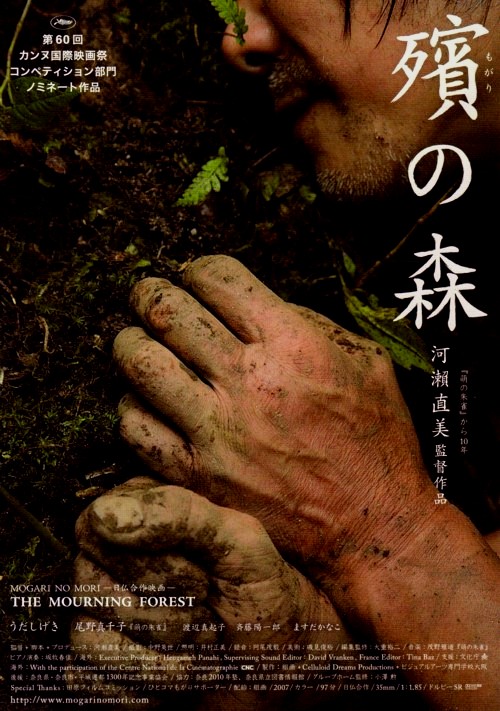
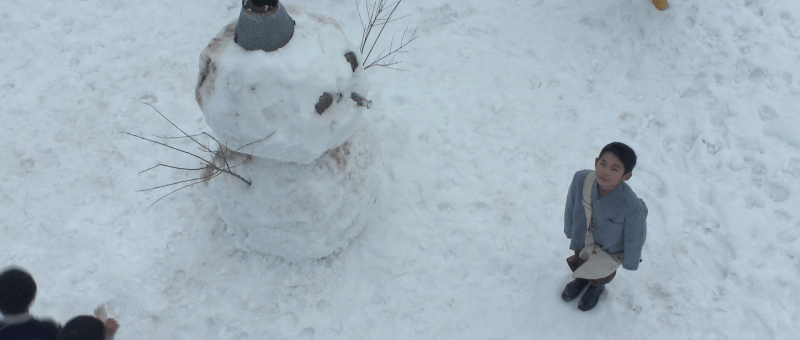
“There are no set rules,” according to the reassuringly steadfast head of a rural nursing home in Naomi Kawase’s The Mourning Forest (殯の森, Mogari no Mori). Uttering the phrase several times in many different contexts, the words prove truer than they first seem, eventually reassuring the grief-stricken heroine that there is no right way to feel or correct way to mourn, simply a gentle process of accommodation. An unexpected Palme d’Or winner, Kawase’s fourth feature sees her shifting into a more familiar arthouse register yet maintaining her trademark style as two lost souls, one old and one young, search for the “end of mourning” in the beauty of nature. 

The young one, Machiko (Machiko Ono), is a recently bereaved mother who has just taken a job at a local nursing home. We never find out exactly how her son died, in fact we only infer he did from the photo and incense on Machiko’s makeshift altar, but a later conversation with her presumed husband encourages us to assume that she blames herself for his death. Consequently, she perhaps recognises something in the dead-eyed vacancy of one of the home’s residents, Shigeki (Shigeki Uda), who crosses out the middle character, meaning 1000, in her name to make it read the same as his late wife Mako’s. Mako (Kanako Masuda) died 33 years previously, which according to the Buddhist priest visiting the facility means that her spirit will soon be leaving this plane for good, transitioning to the other world to become a Buddha.  

Something in Shigeki, whose name literally means “stimulation” though it is in fact the actor’s own, is awakened by the priest’s pronouncement, encouraging him to embark on a long-delayed journey. The priest too had been responsible for the initial connection between the two grieving souls, giving a perhaps insensitive lecture on the difference between living and existing which lies apparently in the ability to feel alive, something which neither of them perhaps do. For unclear reasons, Machiko agrees to travel with Shigeki to look for his wife’s grave, deep in the forest. Unfortunately they get into an accident on the way and while Machiko goes to look for help, Shigeki wanders off with the consequence that the pair of them eventually end up lost in the woods. 

“I was lost but now I’m here,” Shigeki finally explains, fighting his way through what was assumed to be dementia in his quest to say goodbye to his late wife for good before her soul leaves this world. The pair traverse somewhat difficult terrain, culminating in a painful episode in which Machiko begs the older man not to cross a wild river as if he were determined to cross the styx, or then again perhaps there is another explanation for the rawness of her distress. “We’re alive” they exclaim as they warm themselves by an elemental fire, settling the priest’s question once and for all as they press on in search of a grave and each of making peace with the past. 

As Wakako (Makiko Watanabe) had said, there are no set rules for mourning. Shigeki lived with his grief for 33 years and only found the courage to face it in the knowledge that there was no more time. Yet he reassures Machiko that “the water of the river which flows constantly never returns to its source”. In travelling with Shigeki, Machiko too begins to reckon with her grief, finding a kind of release in his catharsis and witnessing the proof of his long years of devotion suddenly given new purpose. She too is able to lay her mourning to rest in the natural beauty of the verdant forest.

Beautifully capturing the majesty of nature, Kawase shifts away from her trademark style swapping anarchic handheld for stateliness in the stillness of Machiko’s grief while quietly observing the ordinariness of the nursing home even as one resident relates her own grief in having lost a child. Filled with a deep sadness in its melancholy meditation on love, death, loss, and grief, The Mourning Forest is nevertheless a strangely uplifting, elegiac experience in which an old man and young woman find strength in their shared connection as they journey together towards the end of mourning and, perhaps, a rebirth in making at least a kind of peace with their grief and their longing.


Original trailer (English subtitles)

Happyend (Neo Sora, 2024)

The central thesis of Neo Sora’s mildly dystopian drama Happyend is that the real looming earthquake the powers that be are so afraid of is a youth revolution. But the film seems to ask if that’s something that’s really achievable or if idle teenage fantasies of a better world will soon be snuffed out by its seeming impossibility or the internalised desire for a conventionally successful life lived under a system they know to be corrupt, unfair, prejudiced, and staunchly hierarchal.

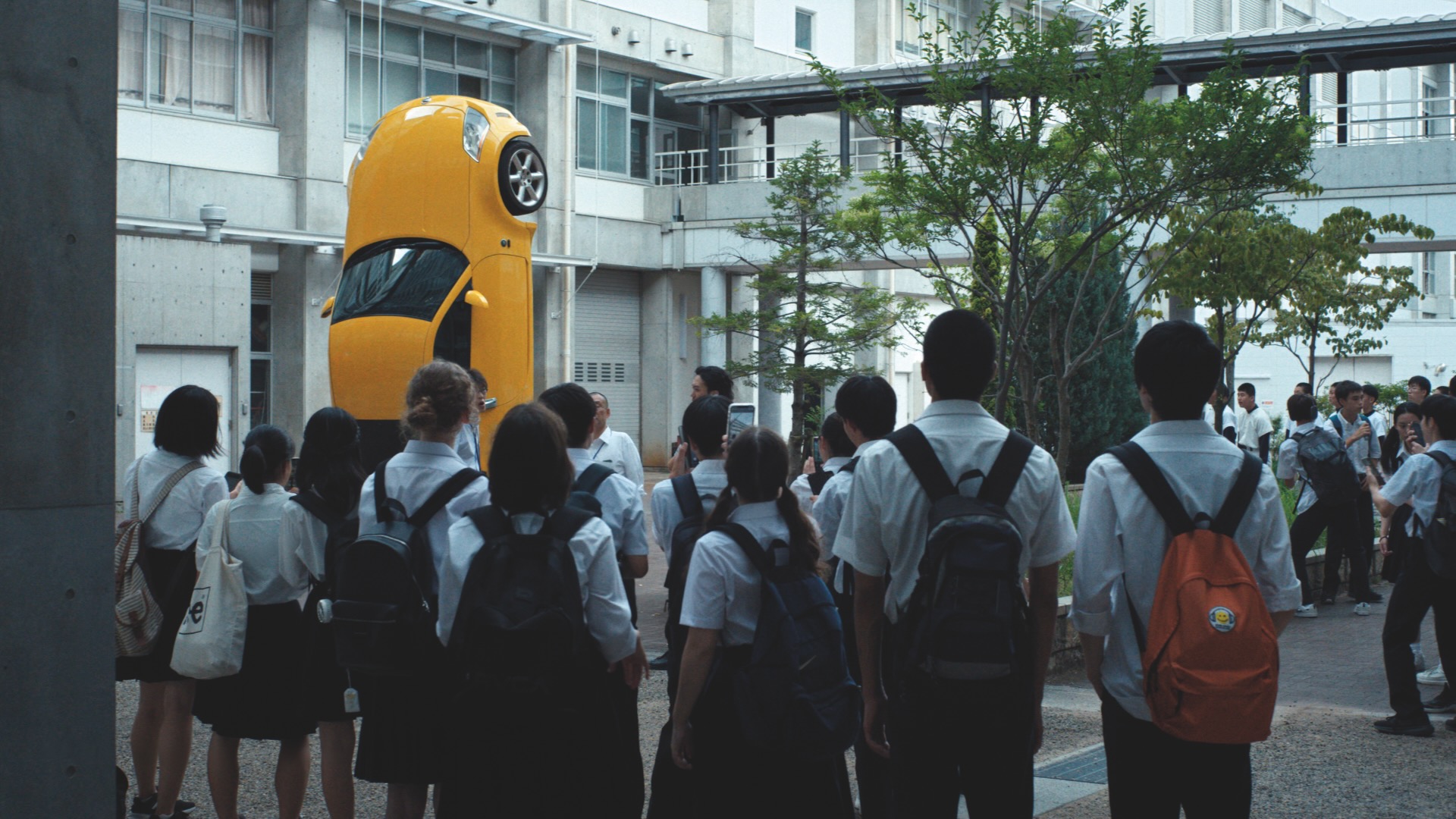
Thus the school at its centre becomes a microcosm for the society at large. Set slightly in the future, though with a retro sensibility, the film revolves around a close group of friends who are nevertheless pulled in different directions as they approach the end of high school while becoming aware of the destructive effects of an authoritarian educational system on children across the nation. The priggish headmaster (Shiro Sano) is involved in dubious schemes with local government and high tech companies and drives a flashy yellow sports car to work. Somehow the teens manage to prank him by standing it on its end like some kind of monolith to his hypocrisy and corruption. The headmaster quickly brands the obviously harmless prank as a “terrorist” action and uses it to crack down on lapses of discipline in the school. 

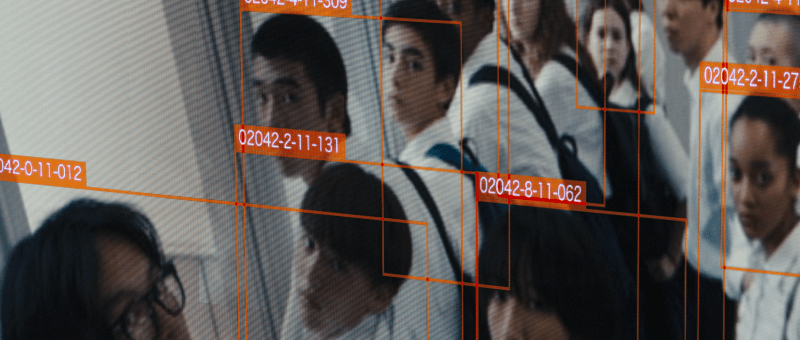
His actions are mirrored in those of the Prime Minister who uses the looming fear of “the big one” as a means of forwarding his fascitistic agenda. He alludes to the false narrative that Koreans and other minorities committed crimes and poisoned wells in the wake of the 1923 earthquake as justification for his tough approach to immigration while limiting the ability of those who do not hold Japanese citizenship to participate in democracy. Kou (Yukito Hidaka), the most conflicted of the teens is a zainichi Korean whose family as he points out has been in Japan for four generations. He’s not obliged to carry his permanent residency documentation on him, but is repeatedly asked for it by police who scan his face to pull up his records on their ominous new devices. Drawn to rebellious student Fumi (Kilala Inori), he’s minded to resist social oppression but also mindful of his single-mother’s hopes that he will win a scholarship and attend university. 

Nevertheless, he begins to drift away from childhood friend Yuta (Yuta Hayashi) who resists by immersing himself in the dance music of the past. Kou regards him as childish or unenlightened, irritated that he doesn’t seem to have grown or changed at all and increasingly convinced he’s outgrown their friendship. There may be something naive about Yuta’s simple desire to enjoy his time with his friends and find his freedom in music, but he is the only one of the teens who really does reject the system by choosing to live outside it. 

Tensions come to a head when the school instals a mass surveillance system under the cute name “Panopty,” doubtless inspired by Jeremy Bentham’s famous design for the perfect prison. The system awards points for infractions on discipline but ruthlessly and without thought. A delicious moment sees a telltale baseball student fined once for smoking after picking up a discarded butt with the intention of throwing it away and then again for littering when he inevitably drops it. Led by Fumi, the kids resist in distinctly old-fashioned ways with a sit-in at the headmaster’s office but cracks soon start to appear and some aren’t willing to risk their academic futures on something which will only benefit the kids of tomorrow. In the end they win the right to a free vote on the surveillance system, but have perhaps underestimated how many of the young will also vote for “safety” over freedom in the mistaken belief that the system does not infringe on the rights of people like them.

This is a city in which ominous red lights blink in the distance like silent alarms, where the kids are forever hanging out next to signs that read “caution”, where earthquake alerts are so common no one really pays much attention to them but the looming threat of mass destruction hangs over everything and everyone. Even so, these kids are just teens growing up, having fun with their friends, and beginning to decide which path they’ll take in life. A poignant moment takes place at the end of a bridge with steps on either side and the sense that at some point you go one way and your friend another and you may never see each other again. Perhaps this is their earthquake, the silent tremor that sends them into adulthood and a society still in flux that seems somehow beyond repair.


Happyend screened as part of this year’s BFI London Film Festival.

Original trailer (no subtitles)

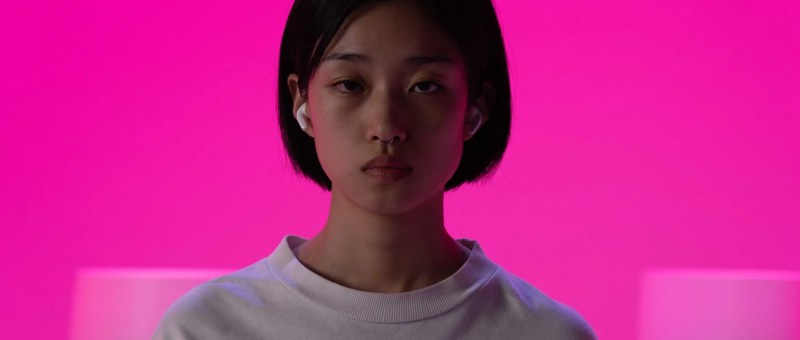
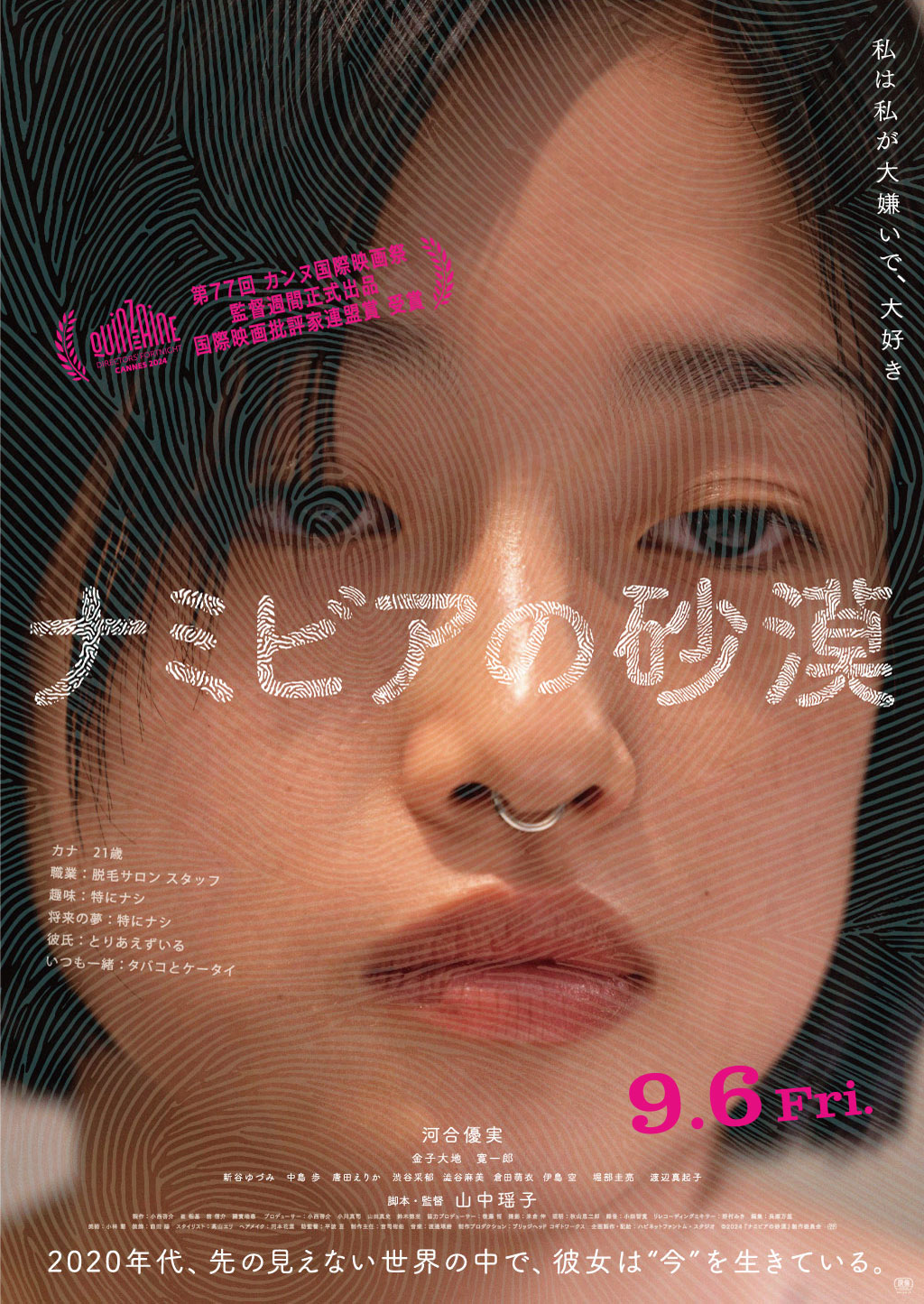
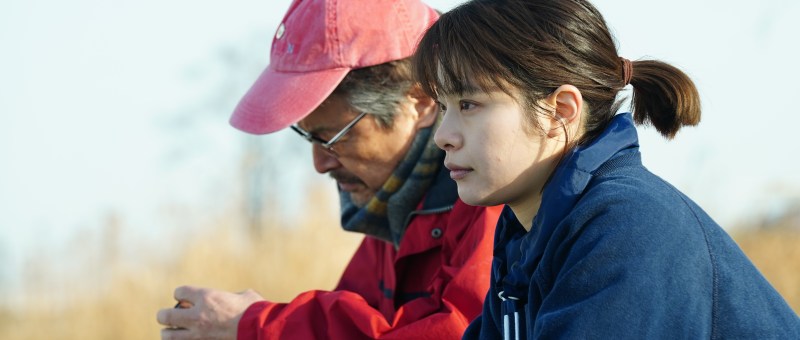
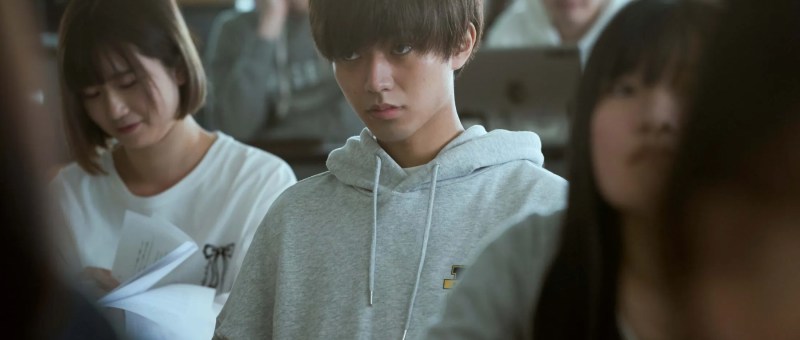
Desert of Namibia (ナミビアの砂漠, Yoko Yamanaka, 2024)

There’s a moment in Yoko Yamanaka’s quietly enraged character study Desert of Namibia (ナミビアの砂漠, Namibia no Sabaku) in which the heroine, Kana (Yuumi Kawai), finds herself stood at a crossroads. It might be tempting to read it as a symbol of her indecision, knowing she has to nix one of her two boyfriends but vacillating over which, but it’s more that she exists permanently between two states and as she later says may not really understand herself or the world around her.

We can see this in the opening sequence in which Kana fails to respond to her friend’s emotional distress when she tells her that a mutual acquaintance has taken their own life. She seems bored, indifferent, not really listening until suggesting that the pair hit a host club together in an attempt to cheer her friend up. But Kana soon leaves her friend behind, making excuses about an early start to meet a man we first think is her boyfriend but is actually the bit on the side. She cuddles up to him in a taxi and tells him that she wants to go visit his parents (right now, in the middle of the night) to see photo albums of his childhood but later returns home to the man she lives with who patiently holds her hair as she throws up into the toilet while asking politely how her friend is.

Perhaps the problem is that Honda (Kanichiro) is too nice, too respectable for the flighty Kana. He’s an estate agent with a cosy and well kept flat where he likes to make hamburgers from scratch and is otherwise very considerate of Kana’s needs little suspecting she’s seeing another man on the side. In Hayashi (Daichi Kaneko) she may see someone a little more exciting but is equally terrified when he asks her to break up with Honda and date him exclusively. She cheerfully bickers with Honda about his upcoming business trip, urging him to stand up to his boss if he tries to make him go to a sex club. Honda says he’ll just refuse, but of course doesn’t making a heartfelt confession on his return. The problem isn’t really that he slept with a sex worker or was unfaithful, but that he couldn’t stand up to his boss and allowed himself to be controlled by Japan’s overarching, hierarchal social structure, did something he thought was wrong and did not want to do to keep his boss happy and maintain his career prospects. 

Kana doesn’t actually care about the sex, but it gives her an excuse to jump ship to Hayashi taking Honda’s fridge, and its frozen hamburgers, with her as she disappears completely from his life. But it’s at this point that her mental state begins to decline. She meets Hayashi’s well to do, upper middle class family who are actually very nice to her (even if randomly bringing up the fact her mother’s Chinese hints at latent prejudice) but feels out of place and inadequate especially on discovering that Hayashi had a previous girlfriend by the same name who may have aborted his child. Abortion seems to be a red button issue for Kana, possibly bringing up some long buried trauma of her own. She seems disconnected from her family and wanders restlessly around suburban areas while later hinting at resentment towards her father who may have in some way abused her. Her rage seems to escalate, culminating in physical abuse of Hayashi who resists but doesn’t really fight back. She craves his attention, but he wants to be left alone. 

In her spare time, she watches videos of animals in the Namibian desert, suggesting that what she might actually crave is an unstimulating environment or a more peaceful solitude but at the same time yearns for male attention. Only 21, she seems somehow older but is also unbalanced by a new colleague at work who is like her spiky and rebellious and two years younger. An unsympathetic online psychiatrist tells her she may be bipolar or have borderline personality or something else completely but is dismissive assuming she can’t afford his fees so tells her her problems are too big to solve. She sees a more sympathetic female psychiatrist in person who helps her begin to understand something of herself, but exposes her loneliness when she tries to invite her out to dinner as if she were a friend. Abstracted from herself, she disassociates and has an out of body vision of watching herself and Hayashi wrestling as if she were watching animals in the Namibian desert, staring blankly as she often does unable to comprehend herself or the world around her. 

Filming in a boxy 4:3, Yamanaka lends an air of constant tension and constraint to Kana’s world. The psychiatrist tells her that she imprisons herself in believing there’s a way she ought to feel but doesn’t when everyone is free within their minds redefining her Namibian dreamscape as the only place she is really free to be herself yet can only watch rather than directly access. “I don’t understand” she tells Hayashi when he asks her what “ting bu dong” means in a conversation with her family where her mother is apparently still somehow absent as if illuminating the entirety of her life and with it an ironic new understanding of herself. 


Desert of Namibia screened as part of this year’s Camera Japan.

Trailer

The Asadas! (浅田家!, Ryota Nakano, 2020)

There’s a kind of irony at the centre of Ryota Nakano’s The Asadas! (浅田家!,Asada-ke!) in that its photographer hero makes a name for himself photographing his family yet at times neglects them or appears curiously insensitive, perhaps even selfish in the pursuit of his dreams. Inspired by the life of photographer Masashi Asada, the film is at once a celebration of the family and an advocation for the tangibility of a photograph as a repository of memory that can bring comfort even in the absence of its subject.

The first part of the film is narrated from the perspective of Masashi’s (Kazunari Ninomiya) much more conventional older brother Yukihiro (Satoshi Tsumabuki) who is generally exasperated by and a little resentful of the family’s indulgence of Masashi, a seeming free spirit who acts on impulse and gives little thought to the consequences of his actions. People frequently describe both Masashi and his father Akira (Mitsuru Hirata) as “not normal,” and there is something unconventional in their family setup with Akira a househusband in a small town in the 1980s while his wife Junko (Jun Fubuki) supports the family with her career as a nurse. It’s Akira who first gives Masashi a camera and his dream of becoming a photographer which he eventually achieves through taking amusing pictures of his family in various scenes casting them as firemen, racing drivers, or even gangsters. 

Masashi attempts to get the photos published as a book, but is quickly dismissed and told that no one wants to buy his personal family photo album. Though the publisher may have a point that in general people value photos of their own family but not those of others, the family photo itself is treated as a triviality as if it had no real worth. The same could be said of Masashi’s work, that some do not take it seriously because the subject is his own family. Yet Masashi finds new value in it in his ability to capture the essence of a moment in family life through a staged photograph such as that he designs for the family of a little boy who is dying of a brain tumour.

In the back of his book, eventually published by an eccentric woman who runs a small press and decides to take a loss because she found the photos so funny, Masashi pledges to travel anywhere to take similar photos for other families which of course means he is often separated from his own whom he then rarely photographs much to his father’s disappointment. After leaving for university, he had barely contacted them for two years while after travelling to the zone of the 2011 earthquake and tsunami he abruptly drops out of contact with his long suffering girlfriend Wakana (Haru Kuroki) after becoming immersed in the task of cleaning up the orphaned photos found among the wreckage. 

Of course, there are those who object to his work thinking that there are more important things to do while so many people are still missing, but as he discovers recovering the photos gives people a sense of comfort and healing as if they were getting back a little bit of the past that had been taken from them and most particularly if the people in the photographs are no longer here. A little girl who’s lost her father is alarmed and resentful that she can find no photos of him, realising that he was rarely in the ones they took as a family and wondering if that meant he didn’t really love them hinting at an ironic sense of parental absence in that parents often take the photos of their children so do not appear themselves but still leave their imprint in a sense of absence in which every photograph also contains the invisible presence of the photographer.

And then sometimes the reverse is true. A grandmother comes looking for pictures of her grandchildren, but ironically finds pictures only of herself. The triviality with which the family photo was regarded seems almost offensive for something that can offer such comfort and warmth in a time of profound grief as a tangible link to a past that will never return. Masashi makes his family’s unrealised dreams come true through his photos, bringing them joy if also a little anxiety in a creating a perfect record of their unconventional family while Nakano does something similar capturing of the essence of a happy family life filled with equal parts laughter and tears.


The Asadas! screens Feb. 24 as part of Family Portrait: Japanese Family in Flux

Original trailer (Traditional Chinese / English subtitles)

Heaven’s Story (ヘヴンズ ストーリー, Takahisa Zeze, 2010)

“When your family’s murdered, aren’t you entitled to happiness?” remarks a bereaved husband trying to move on from tragedy to a similarly bereaved little girl who is determined not to. “I don’t think so”, she coldly replies, dragging him back into a dark world of hate and vengeance. At that time perhaps best known for his career in pink film, Takahisa Zeze’s 4.5-hour epic Heaven’s Story (ヘヴンズ ストーリー) weaves a tale of interconnected hurts born of violence and its legacy, parental betrayals, and irreconcilable loss. The only victory is survival, but it’s a prize none of us will win. The best we can hope for is continuity, and perhaps leaving something more behind us than fear or rage. 

Our heroine, Sato (Moeki Tsuruoka), is orphaned when her parents and older sister are brutally murdered by a disgruntled employee exacting some kind of petty revenge on her father. The killer is later found dead in a hotel room, presumed to have taken his own life. The tragedy is however just one of many. Passing by a TV screen, Sato catches a report detailing the death of her family members and their murderer which is immediately followed by a press conference with a very angry young man whose wife and infant daughter were killed in random attack by a passing drifter who has been given an indeterminate sentence on account of the fact that he was underage and suffered greatly during his childhood. Tomoki (Tomoharu Hasegawa), the bereaved husband and father, vows revenge angrily insisting he won’t ask for the death penalty because he wants the killer, Mitsuo Aikawa (Shugo Oshinari), released as soon as possible so he can kill him with his own hands. Only eight years old, Sato identifies with his rage. The man she wants to kill is already dead and she’s been robbed of the chance of closure through vengeance so vicariously latches on to Tomoki’s quest for retribution, making him something of a personal hero. 

Tomoki’s words were offered in the raw pain of his loss. His reaction is understandable, but as he later says, people started to lose sympathy for him once he called for the killer’s death. As time moves on, he perhaps starts heal, marrying again and having another little girl, starting a new life in a new place which of course does not overwrite his past loss but is a new start. That’s something Sato can’t allow or understand. She feels irrationally betrayed by Tomoki’s decision to leave his loss in the past and move on to a new life. Rocking up at his tranquil island home, she accuses him of forgetting the dead, guilting him into thinking he’s betrayed the memories of his wife and child by not knowing that Mitsuo has been released from prison let alone not having taken his revenge. 

Mitsuo, however, has also attempted to move on. It can’t be denied that he committed a heinous, unforgivable crime, but he is also, in a sense, a victim himself. His mother took her own life when he was 13 because his father was abusive and he carries that abuse with him, which of course does not excuse his crime but might help to explain it. Kyoko (’70s folk singer Hako Yamasaki), a lonely doll maker, is taken by his enigmatic statement that he wants to be remembered by the unborn and begins writing to him in prison, eventually agreeing to adopt him as her son though she is already suffering with the early stages Alzheimer’s. Later in a tense conversation with Tomoki, Mitsuo describes Kyoko as a woman of great warmth and if it were not for her he might perhaps have killed again. Her positive maternal presence gives Mitsuo the sense of anchoring through parental love that he had never had, restoring him towards a more normal kind of existence as he diligently cares for her while her condition continues to deteriorate. 

Time swindles them all. Kyoko desperately tries to remember something she’s forgotten, while Sato is locked into a pleasant childhood memory of walking with her parents to see a newly completed housing estate which seems to be the very embodiment of a post-war utopia, a large green space surrounded by neatly arranged, identical blocks with well appointed family homes piled one on top of the other. The conclusion takes us somewhere similar, only inverted, in the empty shell of a disused danchi, once a home to a bustling mining community now abandoned by the modern era. In the monologue which opens the film, Sato recounts a folktale about a monster who lived in the hills and attacked people, but did so only accidentally in his loneliness and longing to be a part of the world around him, but the people were afraid and so they rejected him and his monstrousness intensified. Tomoki destroys his second family in an internecine need to avenge the first driven by Sato’s demonic need for vicarious retribution, while Mitsuo’s attempt to move into the light is frustrated by an inability to escape his past. All the fear, and hate, and suffering, breeds only more of the same. “Heaven’s Story” may be in many ways the story of violence, but violence is not its resolution. Sato makes a kind of peace with the past, but will also carry that legacy of pain back into the complicated urban world as far from the heavenly vistas of tranquility which exist now only in her memory as it’s possible to be. 


Original trailer (no subtitles)

Torso (トルソ, Yutaka Yamazaki, 2009)

A traumatised woman overcomes her sense of loneliness by sharing her life with a limbless inflatable doll in the aptly named Torso (トルソ). More than a treatise on urban disconnection, the directorial debut from Yutaka Yamazaki is both an exploration of the lingering effects of childhood trauma and a contemplation of contemporary womanhood, the changing relationship dynamics between men and women, and the extent of bodily autonomy in an often conformist society while ending on a note of ambiguity which may represent either liberation or resignation. 

34-year-old Hiroko (Makiko Watanabe) works at an apparel studio where she is among the older of the employees and somewhat aloof with her colleagues, declining invitations to hang out after work or attend the singles mixers one of the other girls is forever organising. She is indeed the sort of person who likes to keep her distance, ostensibly preferring her own company spending her time working on a patchwork quilt but secretly cuddling up at night with a slightly smaller than life-size inflatable male torso which is anatomically correct yet has no head, arms, or legs and into which she must herself breathe life only to let it out again later. Her only other real connection is with her younger half-sister Mina (Sakura Ando) who is her polar opposite in terms of personality, a bubbly, energetic woman who seems to crave the kind of contact her sister is largely unable to give her. 

Even so despite claiming to hate having other people in her space, Hiroko is indulgent of Mina always giving in and allowing her to stay at her apartment at one point for an extended period of time even if not entirely happy about it. While Hiroko has eschewed male contact for the 100% controllable union with the torso pillow, Mina is trapped in an abusive relationship with a man, the otherwise unseen Jiro, whom we later learn to have been a long term boyfriend of Hiroko. Theirs is a relationship frustrated and defined by unresolved resentments, Hiroko complaining that Mina always takes everything she treasures beginning it seems with her mother’s love. A colleague of Hiroko’s around her own age laments that at their age weddings and funerals are the only occasions that they visit their hometowns, but Hiroko is reluctant to visit for reasons other than the usual awkwardness between grownup children and their parents, dressing up and catching a train to attend the funeral of the stepfather we gather must have abused her while her mother (Miyako Yamaguchi) turned a blind eye but finally unable to go through with it. 

For Hiroko’s mother, Hiroko is the embodiment of her resentment towards her first husband who left her, later on another visit snapping back that she must have got her “unpleasant personality” from him while otherwise praising Mina who admittedly has bad taste in men but a generous heart. Hiroko meanwhile projects her own resentment onto her mother who failed to protect her from abuse she wonders possibly because of the resentment she feels towards her while she also projects her feelings of jealous inadequacy onto Mina who may also in a sense resent her for being unable to return the sisterly affection she desires. As she replies, she took Hiroko’s things because she only wanted her love even if vicariously through the otherwise abusive relationship with Jiro whose child she is also carrying. 

In many ways it’s Mina’s pregnancy which forces Hiroko to reassess her life, not least in the accusation that she had wanted to carry Jiro’s child herself. At 34 Hiroko is perhaps at a moment of crisis, her frosty mother coldly telling her she’ll soon have to “give in” and abandon her solitary life for a conventional marriage (despite her recent widowhood her mother has already started another affair with the guy from the funeral parlour). On the other hand, are men actually very necessary anymore or has true independence become not only viable but a respected choice? Despite the constant mixers, some of the younger women at the office have decided not to wait for marriage and have already put a foot on the property ladder getting a good deal on a mortgage by starting young to own their own place and achieve financial independence. “You can’t rely on men these days” one of others agrees while recognising that choosing this kind of independence does not necessarily mean a rejection of romance or long term relationships. 

For her part, Hiroko is wary of men who do in the main seem to be sleazy and predatory, visibly flinching as an over-friendly clerk at the car rental office repeatedly attempts to lean across her while she’s sitting in the driving seat. Aside from its obvious insentience, the torso is symbolically unable to harm her in having no arms to strike, no legs to kick, and no head to hurt while preserving the part she most craves buried in its empty chest which she cradles constantly like a child with a favourite toy. Her attachment to it is not purely physical but emotional, taking it on a mini holiday to the beach dressed in a pair of tiny speedos as they frolic in the sea together alone on a private beach. Yet even this body as empty as she feels her own to be can also betray and be betrayed, another treasure to be stolen if only in the breaking of a spell on realising that Mina has discovered her secret. 

Mina’s final decision is both old-fashioned and ultra-contemporary, vowing to go back to the country and raise the child alone while in a symbolic sense becoming her mother in intending to take over her old part-time job at a nursing home. Hiroko meanwhile is preoccupied with the idea that she’s sacrificing her dreams and aspirations because of something that’s essentially Jiro’s fault, in part stripping her of her own agency in making her decisions and imposing on her the view that struggling in the city even if it doesn’t really suit you is inherently better than making a simple life at home. A brassy gravure model (Sora Aoi) who makes a point of the fact her body is business similarly looks down on Mina, suggesting that she’s simply weak and if she really wanted to pursue her dreams she’d have an abortion without a second thought. Yet does it really need to be an either or? The decision that Hiroko finally comes to may suggest that it might, or then again perhaps she’s merely freeing herself of her long held trauma and looking to lead a more emotionally fulfilling life. “We’re just starting out” Mina shouts back from from across the ticket barriers as she leaves hinting at new beginnings for each of the sisters having each at least laid something to rest. 


Original trailer (no subtitles)

Small, Slow But Steady (ケイコ 目を澄ませて, Sho Miyake, 2022)

Part way through Sho Miyake’s empathetic character study Small, Slow But Steady (ケイコ 目を澄ませて, Keiko, Me wo Sumasete), an older man visits a doctor and is told that though he may think there is nothing really to worry about at the moment, a tiny drop of water falling steadily can soon make its mark in stone. It’s in one sense the small, slow, but steady stresses of everyday life that have eaten away at the soul of Keiko (Yukino Kishii), an aspiring boxer who is fast losing the will the fight. Yet it is also a small, slow, but steady process that allows her to begin moving again, climbing a new hill towards the next bout no longer so afraid of leaving the safety of the familiar. 

Deaf since birth, Keiko became a professional boxer two years previously and makes ends meet with a part-time job in housekeeping at an upscale hotel. Miyake often positions her as in a way free of the frenetic nature of the noisy city, unaffected by the shouts of rude passersby and unlike the men at her boxing gym never subjected to angry rants from her coaches. Yet it’s also at times as if she feels a kind of loneliness in the minor rejections of an indifferent society which often fails to cater to her difference. Few people are able to sign, even those at her gym haven’t learned, while others are sometimes impatient in her attempts to communicate. The restrictions of the coronavirus pandemic meanwhile only make things worse for her given that constant masking means she can no longer rely on lipreading nor can she hear the public health messages being blasted out in public spaces reminding citizens that there is a state of emergency in place and they should restrict their journeys to the barest of essentials. 

Then again, in the gym, she obviously cannot sign because the gloves her impede her ability to communicate. Nor can she hear the session bell or words of encouragement and advice from her coaches and the crowd. The chairman of the boxing club (Tomokazu Miura) admits in an interview that deafness is potentially fatal for a boxer, but that what Keiko may crave is a kind of internal peace in the surrender to the purely physical which allows her to empty her mind of everyday troubles. She may have taken up boxing as some say after being bullied as a child because of her disability, quite literally fighting back against a conformist society she refuses to beaten by, but has also found something reassuring in its slow and steady rhythms that allows her to reorient herself blow after blow. 

The chairman also says, however, that it’s not a matter of having a preternatural talent so much as a steady work ethic and above all a big a heart, describing her finally as simply “a really nice person”. “Why don’t you have your guard up properly?” another of her coaches asks her, while her brother having noticed there is obviously something bothering her tries to get her to talk, only for her to point out that “talking doesn’t doesn’t make a person any less alone”. With rumours the pandemic, along with the boss’ failing health, will finally take the boxing gym too, Keiko fears losing this final safe space but finds herself unable to stand up and fight for it. Though she had struggled to find a gym who would accommodate her disability, she is ambivalent when a new solution is found in an empathetic female coach (Makiko Watanabe) running a modern training facility who is learning sign language and keen to empower her in her own decision making rather than patronise or railroad her. Afraid of getting hurt, she takes a step back unwilling leave the security of the past for the possibility of the future. 

As Keiko reminds herself in her diary, self-control is the most important thing and the force she struggles with, suddenly losing her concentration in the middle of a match because the thoughtless referee keeps telling her to listen to him when he calls stop. In the end, it’s something quite trivial that sets her back on the path, a kind yet seemingly meaningless moment of acknowledgement from an unexpected source. Shot in a richly textured 16mm, Miyake captures Keiko’s isolated everyday with stunning clarity finding her alone amid the noisy city staring into space and looking for direction. Using intertitles to translate sign language his composition mimics that of a silent movie and lends an almost elegiac quality to the moribund boxing gym as it becomes an accidental victim of its times but ends on a note of quite resilience in the small, slow, but steady rhythms of gentle forward motion. 


Small, Slow But Steady screened as part of this year’s BFI London Film Festival.

Original trailer (no subtitles)

The Midnight Maiden War (真夜中乙女戦争, Ken Ninomiya, 2022)

An apathetic college student is pulled between nihilistic destruction and the desire for life in Ken Ninomiya’s adaptation of the novel by F, Midnight Maiden War (真夜中乙女戦争, Mayonaka Otome Senso). “Do those who struggle for life deserve to be defeated as evil?” is a question that is put to him while he asks himself if there’s something wrong in his yearning for a “boring”, conventional existence with a good job, house in the suburbs and people to share it. Then again as the forces of darkness point out, those who long for normality usually cannot attain it which only fuels their sense of resentment towards a “rotten” society. 

The unnamed protagonist (Ren Nagase) has come to Tokyo from Kobe to attend university and as his family are not wealthy is supposed to be studying for a scholarship exam while supporting himself with part-time jobs. Only as he’s abruptly let go from his side gig, he finds himself unfulfilled by his studies and wondering what the point is in wasting his youth just to lead a dull life of drudgery. In an intense act of self-sabotage which later goes viral, he tells his English professor (Makiko Watanabe) to her face that her classes are pointless while calculating exactly how much they cost per hour which turns out to be the equivalent to three hours of labour for his mother, the price of a new text book, or three months’ Netflix subscription which oddly becomes a kind of currency benchmark. He can’t see that anything he’s learning will be of much use to him in the further course of his life when the only prize is conventionality even if that conventionality might also provide basic comfort. 

After joining a mysterious “hide and seek” club and becoming distracted by a series of minor bombings of public bins on campus, the hero is pulled between a woman only known as “Sempai” (Elaiza Ikeda), and a man only known as “The Man in the Black Suit” (Tasuku Emoto) who sell him conflicting visions of hope and darkness. While Sempai thinks it’s wrong to belittle those who want to live their lives and are genuinely content with the conventional, The Man in the Black Suit quite literally wants to burn it all to the ground. What begins as an awkward friendship between two awkward men, soon develops into a cult-like organisation of, as the hero puts it, “social outcasts”, drawn to the Man in the Black Suit’s desire to destroy the rotten society which has rejected them through blowing up Tokyo on Christmas Day. 

Positing Tokyo Tower as the “root of unhappiness”, the hero claims he wants only to destroy, and most particularly himself along with everything else. Experiencing extreme ennui, he struggles to find meaning in his life yet is also conflicted in the breadth of the The Man in Black’s goals being fairly indifferent to the existence of others and unconvinced that those merely complicit in the system should also be targets of his social revenge. If not quite dragged towards the light, he realises that he must kill the nihilist within himself and in a sense be reborn, as the Man in Black puts it, as the god of a new world. “You’re alive, that’s good enough for me” Sempai echoes as the hero does at least in a sense embrace life even amid so much destruction. 

Ken Ninomiya has become closely identified with a singular style heavily inspired by music video and often taking place in Tokyo clubland. Midnight Maiden War is in many ways a much more conventional film mimicking the aesthetic of other similarly themed manga and light novel adaptations featuring only one real party scene and no extended musical sequences while routing itself in a more recognisably ordinary reality albeit one secretly ruled by a lonely tech genius. It does however feature his characteristic neon-leaning colour palate, focus pulls, and striking composition such as the revolving upside down shot which opens the film and hints at the unnamed protagonist’s sense of dislocation. Quite literally a tale of darkness and light, the film finds its dejected hero struggling to find meaning in a stultifying existence but perhaps finally discovering what it is to live if only at the end of the world. 


The Midnight Maiden War screened as part of this year’s Camera Japan.

Original trailer (English subtitles)