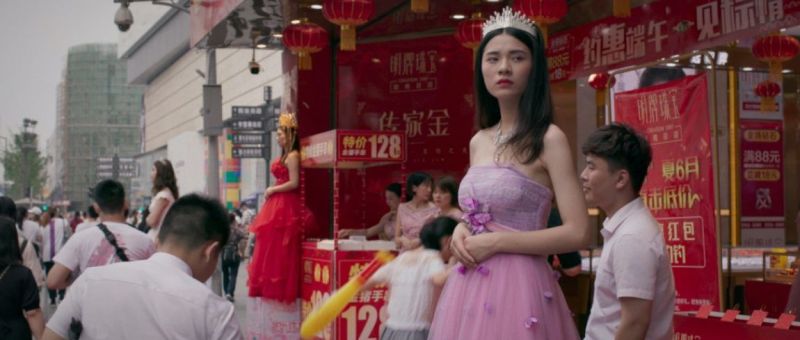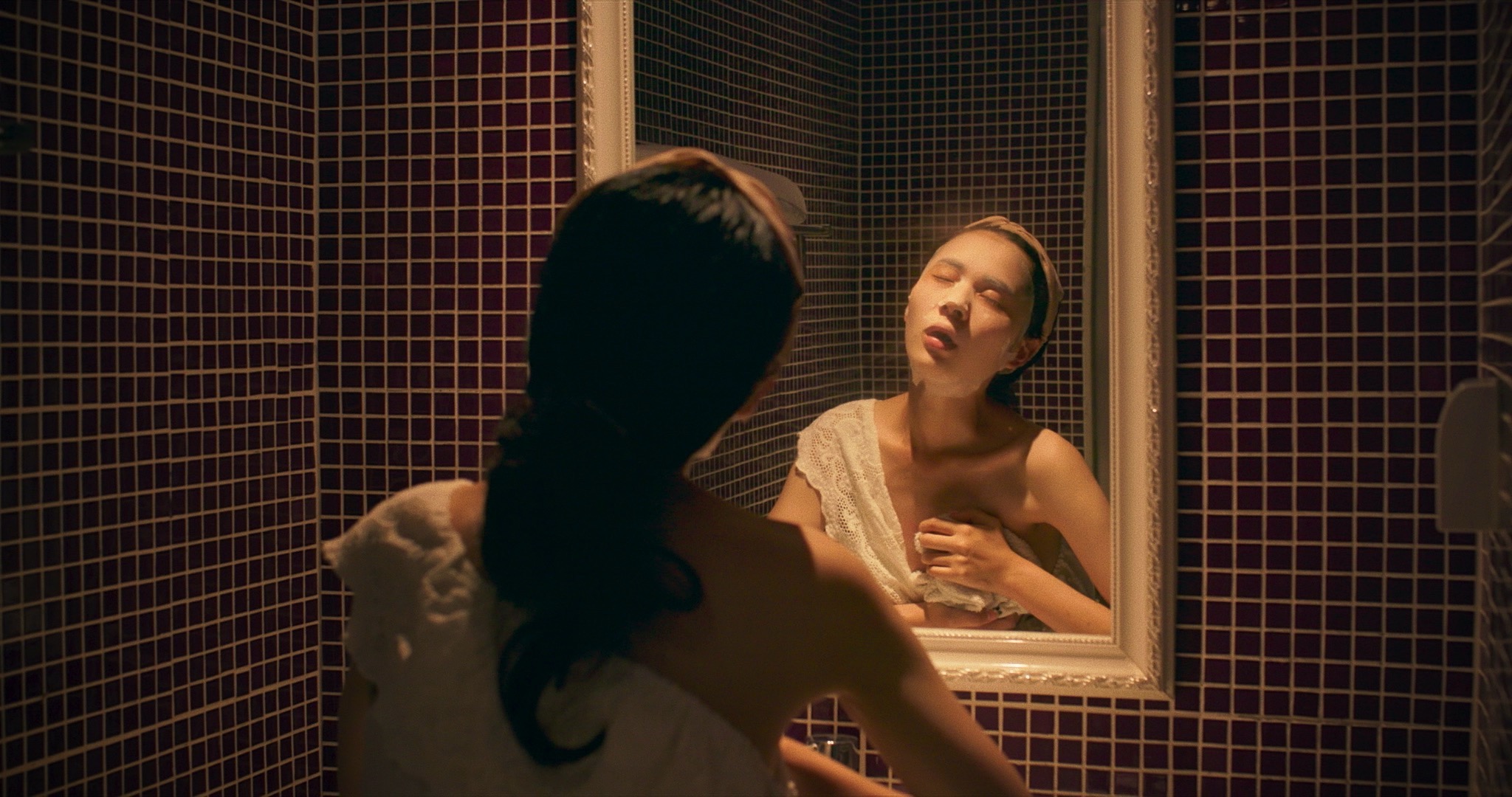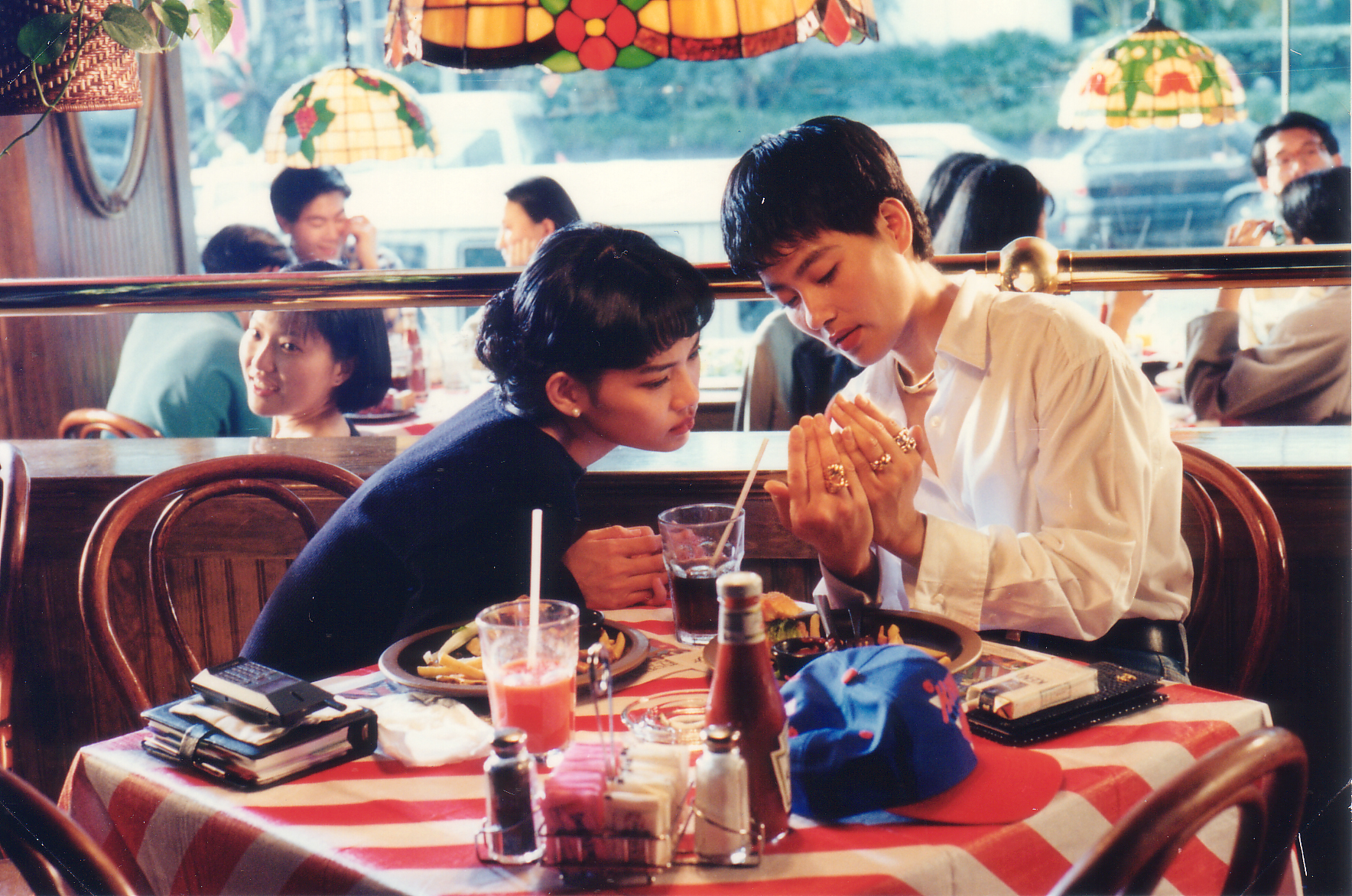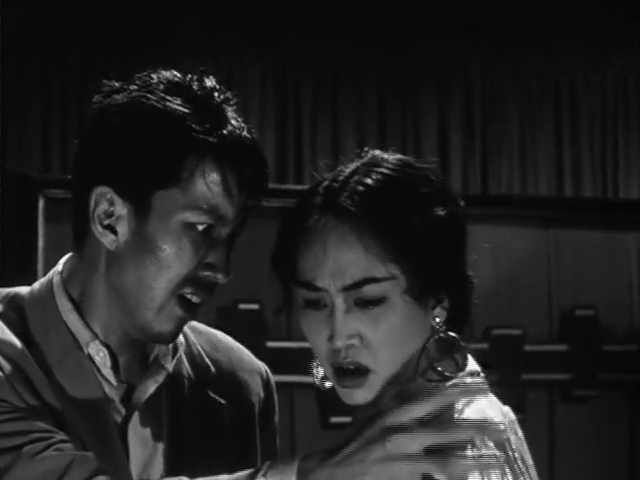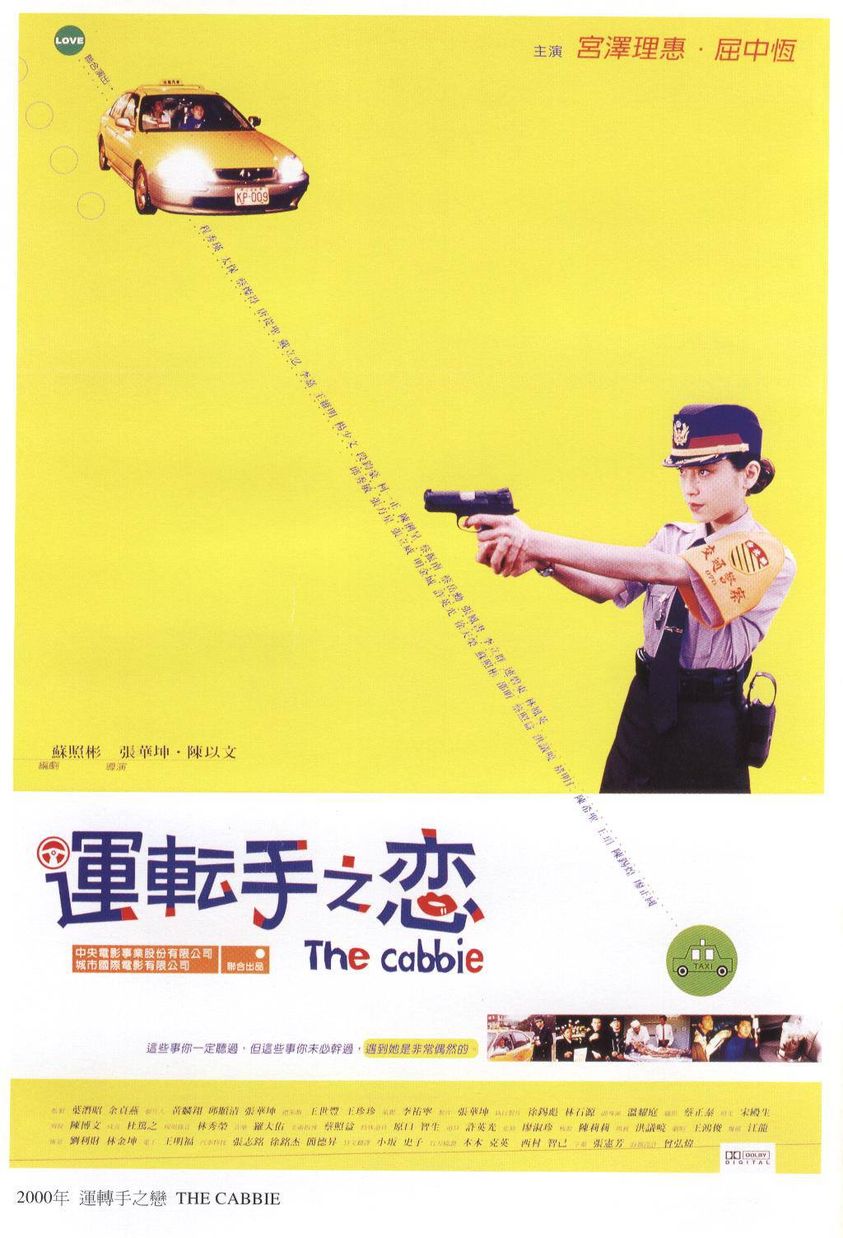
The Cabbie (運転手之戀, Chen Yi-wen & Chang Hwa-kun, 2000)

The crazy freewheeling life of a lovestruck taxi driver eventually takes a turn for the contemplative in Chen Yi-wen & Chang Hwa-kun’s infinitely charming comedy, The Cabbie (運転手之戀, yùn zhuǎn shǒu zhī liàn). Despite the film’s sunny atmosphere, darkness does indeed hang around the edges in the frequent references to car accidents and dismemberment yet it seems to be something that the affable hero can live with as he narrates a series of strange incidents from his ordinary life while meditating on his zany family when faced with mortal anxiety. 

As taxi driver Quan (Chu Chung-heng) points out, life can be pretty strange. His taxi can sometimes act as an unofficial confessional as his fares take the opportunity to unburden themselves to a complete stranger in a confined space, confessing the embarrassing details of their lives and even at one point seemingly confessing to a murder. Quan takes it in his stride, feeling as if he is one with his cab, Ah Di, and duty-bound to deliver his charges to their rightful destinations physical and emotional. Yet in an odd way it’s almost as if we’ve become the driver in this story and Quan is our fare, breaking the the fourth wall to speak to us directly of his strange life and the circumstances which led to this present turn of events. 

Quan is however unusual in that he tells his mother and father quite directly that he has no intention of marrying, giving a fairly logical reasoning based on the fact he believes women do not like him and he is not apparently much interested in them. This is of course a source of anxiety for his parents, his taxi driver father also turning fare in ranting at an old lady at the convenience store about his wayward son before trying to awaken something within him by gifting him porn. His mother meanwhile, the local coroner, decides to give up on him while ordering Quan to freeze his sperm so she can have a grandchild with or without his direct involvement at some point down the line. 

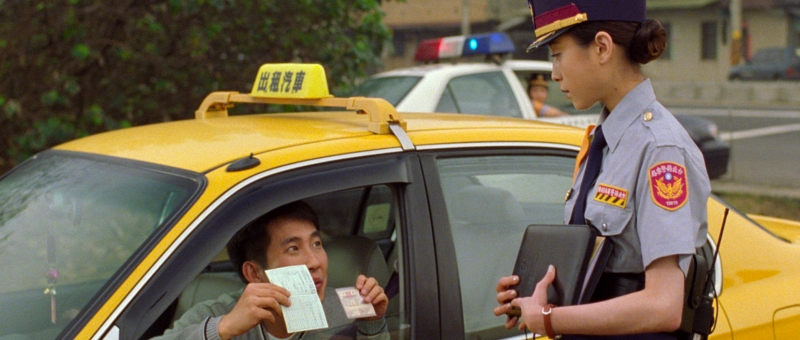
In any case, Quan changes his mind on falling in love at first sight with grumpy policewoman Jingwen (Japanese actress Rie Miyazawa, dubbed into Mandarin). Taking his mother’s advice about making an impression (not necessarily a good one) to heart, Quan decides the best way to woo his crush is to get fined by her as many times as possible. Even so there’s an undeniable Romeo and Juliet vibe to their relationship given the natural animosity between taxi drivers and traffic cops, along with a sense of cosmic irony that feeds directly back into the film’s darker themes. So much of life for Quan is coincidence, an act of cosmic collision not unlike the car crashes that occur so frequently outside the taxi depot. Quan encounters Jingwen by chance and then continues to push his luck by meeting her again in similar circumstances until she gives in to his unusual ardour. Yet not all of these accidents end well. One of Quan’s neighbours earns extra cash turning up at crash sites and making sure that the family gets all of the deceased’s body parts, reaching under twisted metal to retrieve pieces of severed flesh while his mother is indeed a coroner with a severed head in a jar sitting proudly in her office. 

In the end it might be that Quan is a mere passenger of fate, relating his life to us as it flashes before his eyes while threatened by a weird fare. What begins as absurd nonsense comedy as Quan tells us about his crazy family and the strangers who climb into his cab eventually takes an unexpected, poignant turn for the existential even as Quan continues to closely identify himself with Ah Di which might beg the question of who is driving who. Madcap and anarchic, there is something genuinely cheerful in Quan’s often simple existence governed both by chance and the rules of the road lending a fatalistic pall to all of his otherwise freewheeling adventures. Things don’t always always go right for him, but even when they go wrong it’s generally in the right way. Fast-forwarding though the “boring bits”, Quan races us through his life in the cab before taking us where we need to go keeping it cheerful while preparing for the inevitable collision with cosmic irony. 


The Cabbie screens 20th October as part of this year’s Taiwan Film Festival Edinburgh.

Original trailer (Traditional Chinese / English subtitles)

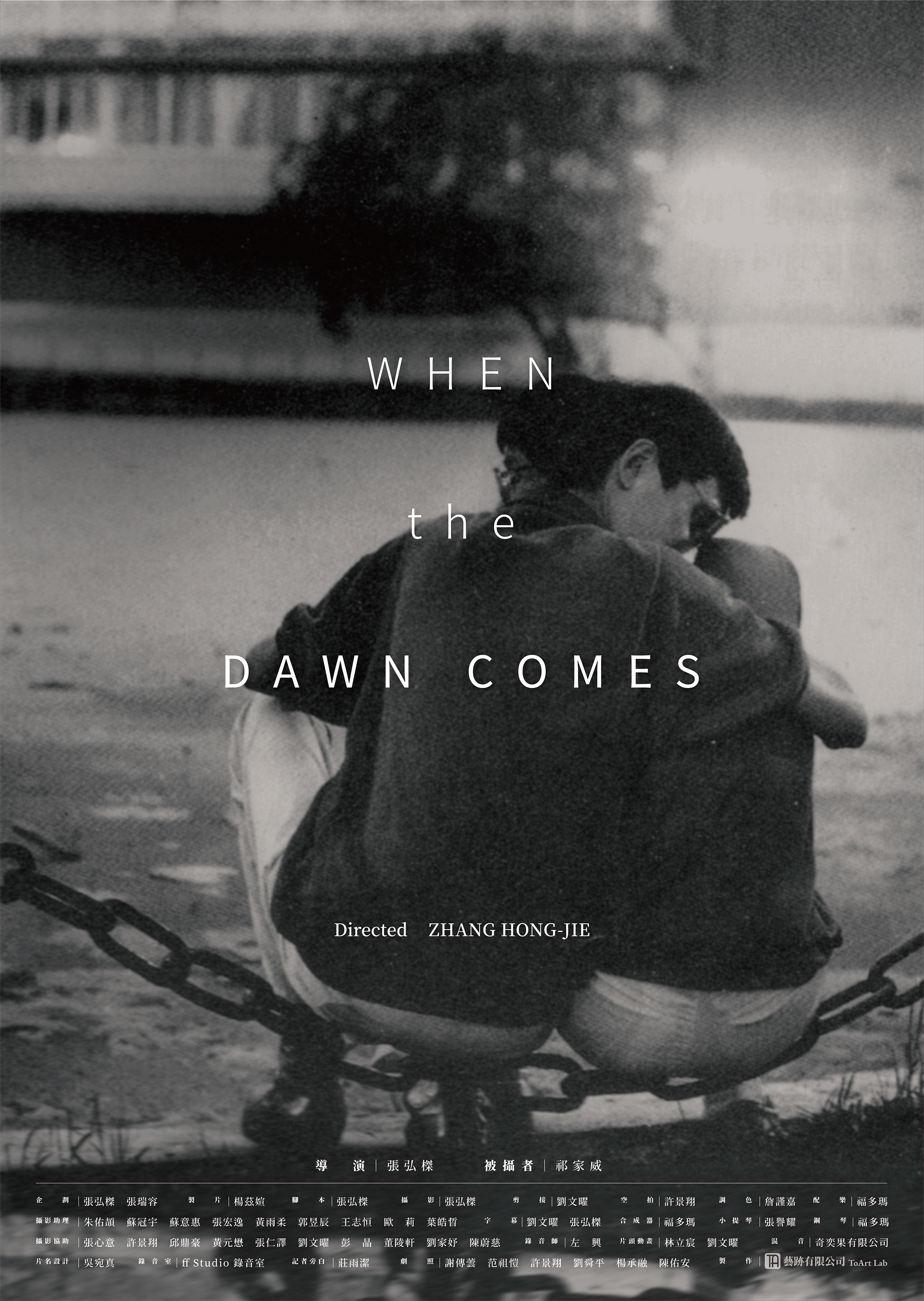
When the Dawn Comes (黎明到來的那一天, Zhang Hong-Jie, 2021)

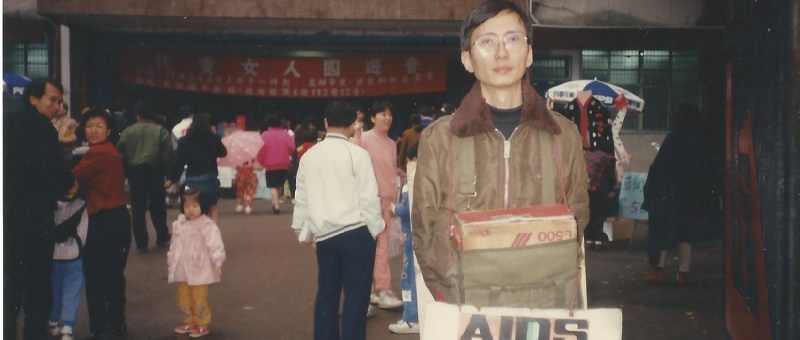
When Chi Chia-Wei appealed to the Legislative Yuan for marriage equality in 1986, he was told that “homosexuals are perverted minorities that seek to disrupt social morals for their own sexual desires”. 33 years later in 2019, Taiwan became the first Asian nation to legalise same-sex marriage. Zhang Hong-Jie’s documentary When the Dawn Comes (黎明到來的那一天, límíng dàolái de nà yī tiān) follows Chi during the final days of the campaign amid a counter offensive from conservative groups who hoped to prevent the legislative change going ahead. 

Chi has been a literal flag bearer for the LGBTQ+ community, a familiar sight at protests and pride parades well known for climbing to the highest point available and waving a rainbow flag where no one can miss it. Indeed the documentary captures him doing just this despite his advancing age and the efforts of the authorities to prevent him. His campaign has been a long one, beginning when he was just a young man as the opening sequence points out with dark hair who held a press conference and came out publicly as a gay man becoming the first in Taiwan to do so. Now his hair is grey, and he is still fighting the same the battle though when this battle is done he knows there will be others still to fight. 

When he first began his campaign for marriage equality Chi was battling the stigmatisation of the gay community during the AIDS crisis, continuing to argue that advocacy for gay rights and AIDS prevention should be carried out at the same time. In some ways subverting the prejudice shown against him, Chi became a well known figure handing condoms out in the streets wearing a series of striking outfits as a kind of performance art. As another advocate points out, what made his approach different was that it refused to submit to internalised shame in normalising the idea of gay sex while encouraging safe practice and educating both the gay and straight communities about the importance of sexual health. 

Nevertheless, Chi was not uncontroversial. Though he took a hands on approach in AIDS activism, setting up a hospice for those with nowhere else to go, he was criticised for inviting the press to cover it leading some of the patients to leave resenting Chi for breaching their privacy. He then went on to sue three men whom he accused of hiding their diagnosis and going on to knowingly infect others, something that was also widely criticised in the community for essentially outing these men and their partners publicly and potentially setting a dangerous precedent when it comes to medical privacy. One fellow activist speculates that Chi may have justified his actions on the grounds of discouraging others from doing the same but points out that it in part had the reverse effect with some unwilling to be tested at all fearful that they might end up getting sued too if the test came back positive. On the other hand, he also regularly submitted blood samples on behalf of men who were too afraid to go in person lest their private lives be exposed. At one point Chi became such a thorn in the authorities’ side that they tried to frame him for a random crime and eventually sent him to prison for five months for “misappropriating waste”. 

As for himself, Chi is also in a somewhat difficult position in that his longterm partner (who is never seen in the documentary) is still in effect closeted and facing pressure from his family to marry. Asked if they personally plan to marry once the law goes into effect, Chi can’t really answer suggesting only that they may do once his partner’s father passes away explaining that he is an only child. In one of the hearings, a lawmaker brings up an anxiety about what to do with ancestral tablets while the question of the family line still seems to lie behind prejudice towards same sex relationships. Meanwhile, his partner has long been taking anti-depressants to cope with the pressure of his family’s lack of acceptance, while Chi too is also on numerous kinds of medication for conditions caused by the stress of his work. Even so, once marriage equality is fulfilled, Chi immediately files for a paper marriage with a Malaysian man to challenge the new legislation’s failure to account for international marriages, determined to continue fighting for fully equal rights. Zhang’s documentary never shies away from some of the more controversial aspects of his activism, but nevertheless celebrates the determination of a man who dedicated his life to a cause for which he was never afraid to stand out and proud.


When the Dawn Comes screens 16th October as part of this year’s Taiwan Film Festival Edinburgh.

Original trailer (English subtitles)

Hidden Letters (Violet Du Feng & Zhao Qing, 2022)

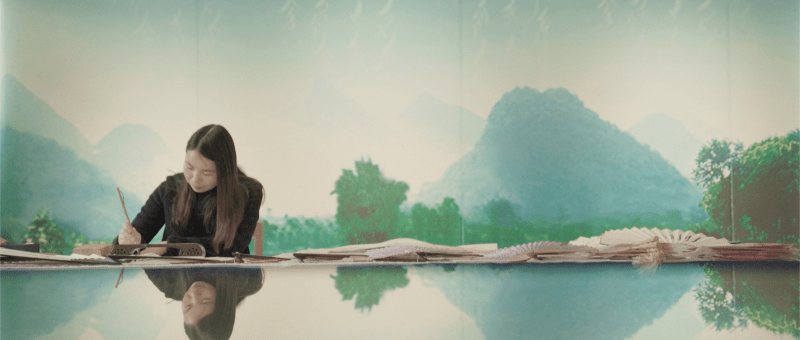
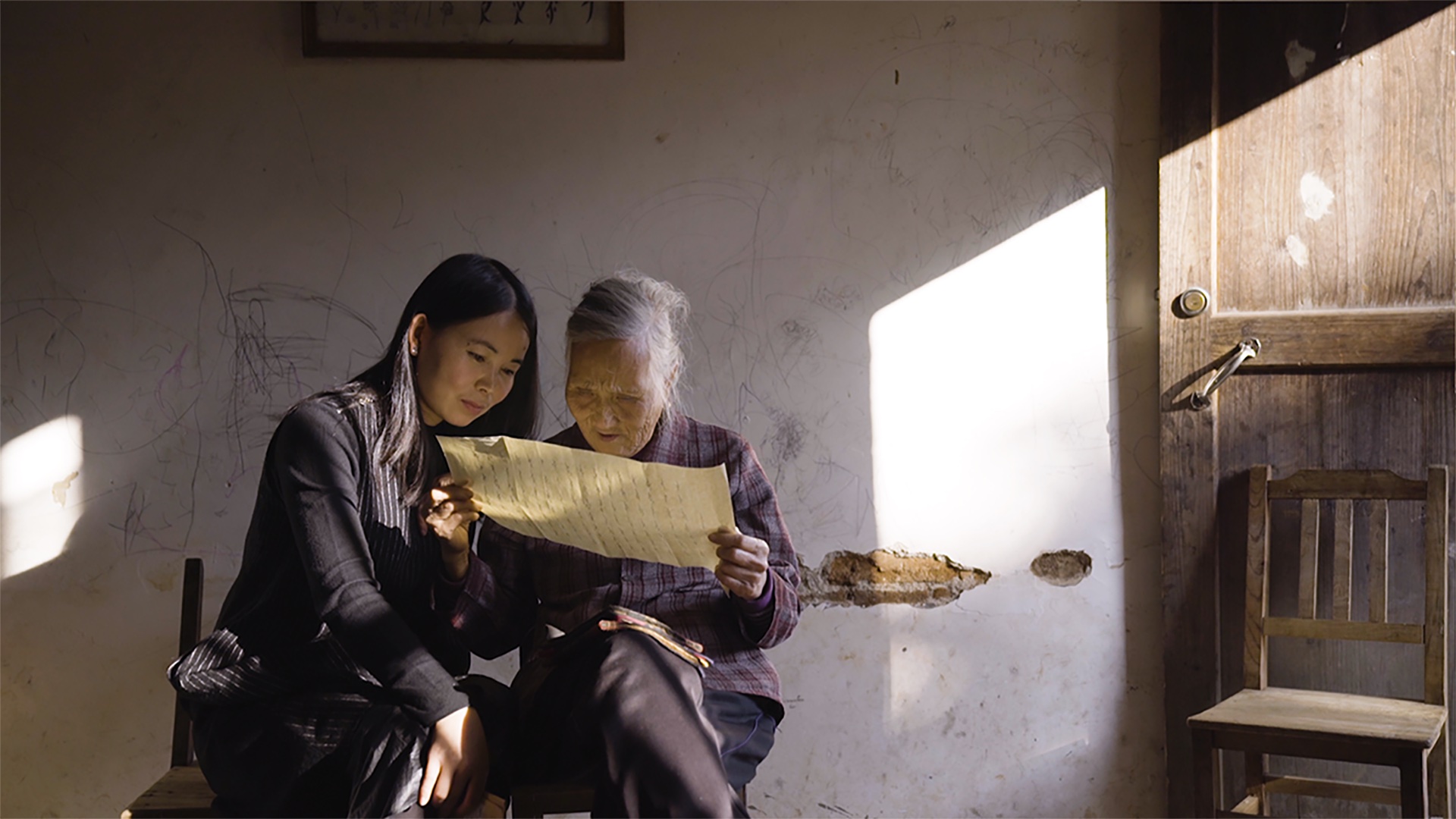
As the title cards that open Violet Du Feng and Zhao Qing’s Hidden Letters explain, women in feudal China had little freedom. Subjected to cruel practices such as foot binding, they were forbidden from learning to read or write and often confined to their husband’s home where they were expected to sacrifice themselves in service of his family. As someone later describes it, Nushu was secretive script created by women to communicate with each other in acknowledgment of their shared suffering with tiny messages concealed in fans or handkerchiefs, yet even as contemporary women try to preserve it its messages are co-opted by male patriarchal authorities in an increasingly capitalistic society. 

In fact, the documentary tells us little about the history of Nushu and its creation in part because its history is opaque in its nature as a tool of subversion. What we do learn is that Nushu was discovered only in 1983 and that little of it survives because women’s writings were often burned with them lest this only means of communication be exposed. One of the documentary’s two primary subjects, Hu Xin, runs a museum dedicated to Nushu in a small rural town and has formed a close relationship with one of its last living inheritors, He Yanxin, who talks with her openly of the miseries of her life as a woman and the lifeline Nushu once extended to help make them bearable. Nevertheless, she stresses that her Nushu was necessarily covert and unlike that of Xin whose Nushu is public and incorporates song and dance. 

It may in a sense be surprising that Xin, who has dedicated her life to the secret writings of women oppressed by patriarchy, still holds fairly conservative views. She married a man she met at the museum but he was violent and finally forced her into a late term abortion after learning their child would be a girl. Now a divorcee, she is too embarrassed to attend a neighbour’s wedding in her hometown and continues to feel as if she has “failed” as a woman in not becoming a wife or mother with a happy family home. Even He Yanxin ironically points out that the Nushu women would attend a mountain shrine to pray for sons, though in any case you can understand why they would not want to bring a daughter into this world of cruel subjugation. “We were only slaves to men” Yanxin explains, recounting that she was not even allowed to look her brothers-in-law in the eye as she carried them water and was often uncertain which of them she was addressing. 

We have to ask ourselves how much has really changed. Simu, the documentary’s second subject, is a woman with a more modern outlook yet drawn to the traditional. An opera singer by trade she lives a comfortable life in Shanghai and has found strength and inspiration in the existence of Nushu. As we meet her she is engaged to a man who first seems sympathetic, but expresses more conservative views on taking her home to meet his family. Getting her to drink a bitter tonic to encourage conception he then tells her that they shouldn’t have children right away because they need to buy a house so that his mother can stay with them when the baby’s born. She can continue with her opera career (it comes with several government perks related to housing and other subsidies), but he wants her to take another part-time job, dismisses Nushu as a “hobby”, and insists that she dedicate herself entirely to their family leaving her no time for anything for herself. As she looks askance at the camera for help, it’s plain that her situation is in reality little different from that of a feudal woman trapped in her husband’s home robbed both of identity and of fulfilment. 

Simu eventually breaks off the engagement with the support of her comparatively progressive parents and especially of her mother, a doctor who recounts her own childhood in which her father, a coal miner, would not allow her sister to be educated. They were “liberated” by the Great Leap Forward’s false promise of “equality” which saw fit to acknowledge them as equal only when their productivity was required to be so. In any case, she believes society has in a sense devolved and that contemporary women face harder battles in a culture which once again judges them solely on their ability to bear children.

Disturbingly, the legacy of Nushu has itself been co-opted to enforce the very values that it rebelled against. The director of Xin’s museum, a man, claims that Nushu represents the virtues of true womanhood, obedience, acceptance, and resilience, that he feels have been lost in this modern society of independent women. Meanwhile, while Xin makes Nushu banners at a tourism convention her male bosses huddle round putting Nushu slogans on promotional knickknacks such as retractable chopsticks in the shape of nunchucks. They claim that Nushu must be monetised if it is to survive while robbing it of its soul, overruling a woman’s objection that naff tie ups with KFC are not the answer to this particular problem. At the opening ceremony for the Beijing Nushu Cultural Exchange Center there are only men onstage to unveil the plaque for some reason to theme of The Magnificent Seven. 

Leaving the city to follow the guiding light of Nushu, Simu writes letters to her ancestors reassuring them that it’s better now than it was then. Women have agency over their marriages, foot binding has been banned, and they can live self-reliant lives of freedom and independence. Considering her experiences, Simu’s words might sound a little idealistic, not quite as it is but as she would like it to be. Yet as another woman puts it, perhaps the responsibility of the women of today is to live up to the legacy of Nushu and its spirit of rebellion in once and for all shaking free of oppressive feudalistic and patriarchal social codes. 


Hidden Letters screened as part of this year’s BFI London Film Festival and is available to stream in the UK via BFI Player 14th to 23rd October.

Original trailer (English subtitles)

Moon Man (独行月球, Zhang Chiyu, 2022)

A diffident everyman battles loneliness and despair only to become a selfless sacrifice for a world that left him behind in the latest film from the Mahua FunAge gang, Moon Man (独行月球, Dúxíng Yuèqiú). Not quite the raucous comedy that Mahua FunAge has become known for with popular hits Never Say Die and Hello, Mrs. Money, Moon Man is a more contemplative affair adapted from a South Korean manhwa by Cho Seok and equal parts absurdist exploration of the human condition and cathartic post-pandemic dramedy that insists there is always a homecoming in one way or another. 

Yue Dugu (Shen Teng) is proud to refer to himself as a “middle man” in that he has deliberately cultivated the image of Mr. Average in an intense attempt never to stand out from the crowd. On applying for an engineering job on a space programme he’s told the position has been filled but there’s an opening in maintenance. Yue didn’t really want to take it but does, as we later learn, after falling in love at first sight with Xing (Ma Li), the commander of a mission set to save the Earth from a meteor strike some years in the future. Being the kind of guy he is, Yue never makes an attempt to get close to her but thinks his chance has finally come when the mission is concluded successfully though Xing doesn’t appear to even know he exists. He decides to write a long love letter while listening to romantic music and consequently misses all of the alarms alerting him to the fact that something has gone very wrong, the mission is being aborted, and they all need to evacuate as soon as possible. Left behind as the rockets take off he can only look on in horror as a meteor strikes the Earth leading him to believe he is the sole survivor of the human race. 

Of course, that turns out not quite to be the truth. What starts out as Robinson Crusoe quickly becomes The Truman Show as Xing, who has found safe refuge on a nearby space base, realises someone was left behind and plans to livestream their daily life to give hope to the survivors on Earth who are now living a dismal post-apocalyptic existence underground. Recruiting a former live-streaming king, they try to set Yue up as an idealised propaganda hero but, as they are unable to communicate with him, Yue still thinks he’s the last of his kind and his behaviour cannot really be called inspirational seeing as he spends most of his time trying to crack the code to enter Xing’s quarters and having dinner with a mannequin he’s pasted her face on. Meanwhile, he’s also discovered that he’s not quite as alone as he thought but is trapped with a very angry kangaroo left behind by a research team. 

Yue was a lonely man before, but begins to experience true despair while quite literally alone on the moon wondering what the point of his life is especially if, as he assumes, Xing is no longer in this world. He contemplates suicide and then, after hearing radio static and coming to believe there may be someone else out there comes into his own trying to plot his escape by thinking outside of the box and proving himself a talented scientist. Struck again by despair he realises that cure for loneliness is knowing there’s someone there to keep the light on for you to guide you home only to see the Earth light up with a message intended to read “you are not alone” but which accidentally reads “you are no one” reinforcing Yue’s everyman status as a middle of the road guy who shouldered the burden that was handed to him and set out to save the world all while locked outside of it. 

Yue’s accidental heroism begins to soften Xing’s austerity as she gradually falls for this “awkward” man, while he learns to step up to the plate to protect her and the rest of humanity all of which lends hope to those trapped in the bowels of the Earth and encourages them to begin rebuilding even if at great personal cost. Shifting into Armageddon territory, it’s a nobody who finally saves the world in a final act of selfless heroism. Over the past few years, many may have felt as if they were alone on the moon or found themselves trying to parse grief on a mass scale while mourning the world they knew which had been so abruptly taken from them. Yet as the final title card puts it, the universe is vast, “we will meet again” and there will always be a homecoming in one way or another. Boasting excellent production values including some adorable animated sequences, Moon Man is a strangely cathartic experience filled with zany humour but also genuine hope for brighter future on the other side of the darkness. 


Moon Man is in UK cinemas now.

Original trailer (Simplified Chinese subtitles only)

Give Me Five (哥,你好, Zhang Luan, 2022)

A struggling 30-year-old begins to repair his relationship with the difficult father he believed never liked him after being unexpectedly thrown back to the past and almost erasing himself from history in Zhang Luan’s sci-fi-inflected tale of filiality, Give Me Five (哥,你好, gē nǐhǎo). What begins as a Chinese riff on Back to the Future eventually skews closer to recent hit Hi, Mom which the Chinese title subtly echoes as the hero comes to appreciate the power of maternal love and sacrifice through bonding with the younger versions of his parents. 

Now 30 years old, Xiaowu (Chang Yuan) explains that he was long estranged from his grumpy father Wu Hongqi (Wei Xiang) and rarely visited him but has since become his main carer now that he is living with Alzheimer’s. Xiaowu makes his living as an e-sports entrepreneur which is not something former engineer Hongqi can well understand and in truth Xioawu doesn’t seem to be that successful as he’s been putting off proposing to longterm girlfriend Huahua because of an anxiety about his finances. When Hongqi suddenly jumps off a bridge for no apparent reason and ends up in a coma, Xiaowu is at first oddly pleased and immediately begins raiding his office looking for his bankbooks only to find a mysterious ring and an old diary penned by his mother who died when he was a baby. Putting the ring on sends him back to 1986 where he manages to mess up his parents’ meet cute, endangering his own existence. In order to put things right he has to go back in time Marty McFly-style to ensure his mum and dad fall in love just like they were supposed to. 

Back to the Future is a film from the 1980s expressing nostalgia for an idealised 1950s small-town America. Give Me Five to a degree romanticises the China of the mid-1980s but does so from an entirely different angle than the recent trend in 80s nostalgia which has taken hold in the West in that, other than a brief romantic moment featuring Teresa Teng’s Tian Mi Mi along with a few other retro hits, it is largely uninterested in pop culture or revisiting childhood memories but is attempting to draw a comparison between China before economic reform and the ultra-capitalist society of today. In what some might see as a simpler time, Xiaowu’s mother Daliu (Ma Li) is, as she’s fond of saying, a “model worker” in a factory which is in danger of closure while the “Biff” character, Qiang (Jia Bing), is a former employee who was dismissed for stealing coal. Having become wealthy after almost certainly doing something dodgy in Hong Kong he’s returned with a prominent Cantonese accent to buy the factory as part of a public-private partnership. A feisty young woman, Daliu sends him packing insisting she won’t let anyone disadvantage her fellow workers. 

The comparison is further borne out by the melancholy figure of Qin (Huang Yuntong) who dated Hongqi after getting the meet cute that was supposed to go to Daliu but thew him over for the promise of riches with Qiang only to be left lonely in her old age having unwisely betrayed love for material gain. Meanwhile, there’s an interestingly progressive element to the relationship between Daliu and Hongqi in which Hongqi is somewhat feminised as the domestic partner cooking and shopping for his wife while Daliu is the uncompromising model worker as she proves during a high impact welding competition while eight months pregnant. The couple first fall in love talking over industrial plans with Daliu offering advice from the shop floor to help improve educated engineer Hongqi’s designs. While interacting with his parents before he was born, Xiaowu gains the familial experience he always felt he lacked in being able to share a family meal while touched by the love that existed between his mother and father and the knowledge that his parents were at least blissfuly happy with each other even if it was only for a short time. 

Xiaowu had been resentful of his father that he never really told him how his mother died. He decides to try saving his mother’s life too and through his various experiences comes to an appreciation of maternal love not least through somehow being able to time travel into the womb to forge a more direct connection with her. In part an advocation for a more traditional filiality in which Xiaowu develops an understanding of the interplay between love and sacrifice between parent and child while coming to understand his relationship with his father after learning his family history, the film also offers a subtle rebuke against the consumerist society in idolising Daliu and her model worker attitude insisting that everything was better when people worked together for the good of all rather than for personal gain. It might be a slightly disingenuous message, Daliu’s factory life is indeed somewhat idealised, but there is something touching in Xiaowu’s eventual conversion and belated bonding with his heartbroken father. 


Give Me Five is in cinemas across the UK, Australia and New Zealand courtesy of CMC and Well Go USA in the US and Canada.

International trailer (Simplified Chinese / English subtitles)
Manchurian Tiger (东北虎, Geng Jun, 2021)

An adulterous bulldozer operator in north east China finds himself in conflict with a failed construction magnate when his wife insists he find a new home for their Alsatian before their baby arrives in Geng Jun’s dark comedy Manchurian Tiger (东北虎, dōngběihǔ). A Manchurian tiger does indeed appear at certain points of the film, a child at the zoo asking their grandfather why the rather morose beast does not roar only to receive the explanation that the tiger is all alone with no one to talk to. The child sadly reflects that it’s like the tiger is in prison, but the grandfather corrects them that it’s in there for its own good so that it can be protected, loved, and admired, but its plight still calls out to an emotionally wounded poet (Xu Gang) who is also no longer young and feels isolated and constrained by the world around him. 

As for bulldozer operator Xu (Zhang Yu) who it seems may once have been a teacher, his problems seem to lie more in the inability to reconcile his conflicting emotions towards his family. His wife Meiling (Ma Li) tells him to get rid of the dog because it’ll be too much for them when the new baby arrives and he complies but is also sickened when he’s met with only prices by the pound on trying to find it a new home. He unwisely decides to leave the dog with a local businessman, Ma (Zhang Zhiyong), but Ma slaughters it to curry favour with a pair of “collection agents” he hires to help him get back money he invested into a construction project that’s clearly gone south and in truth sounds like it may have been a scam to begin with. When the heartbroken Xu discovers the truth he vows revenge only for a strange sort of solidarity to arise between them in shared victimhood both bested by the problems of the modern society in the formerly industrial north east. 

Ma could try to make the case that he’s a victim too and he is in a sense but he’s also a conman as Xu later brands him. Even so he does seem to feel some remorse if not for eating Xu’s dog then at least for plunging his friends and family into financial ruin after they sunk their lifesavings into his project because they believed in him. As he puts it they all, he included, fell for the fantasy of the modern China believing they could all get rich quick only to be undercut by the ironic flip side when cost cutting and subpar materials prevent the apartment block from being finished leaving Ma high and dry unable to recoup his costs until the apartments can be sold. The debt collection agents he unwisely hires are just thuggish loansharks who then ask him for a hefty deposit, smashing up his car to make a point when he tries to use it as collateral. 

In essence it seems as if all Xu wants is to Ma to apologise to the spirit of his dog but Ma apparently values his pride above money and complains the price is too high while Xu resents the attempt to place a monetary value on his friend or imply that perhaps his own flesh also has a price. He’s clearly in a space of mental despair, reminding his mistress that like the tiger he’s no longer young and has exhausted all other opportunities to improve his life so the only thing he has left is his marriage. As his wife Meiling starts starts visiting several women around the local area after noticing the scent of perfume along with stray hairs on Xu’s clothes, it becomes clear he has had several affairs already and is seemingly being punished for his sexual transgressions which are perhaps an attempt to escape his own sense of imprisonment, as caged as the tiger by his familial responsibilities and humiliated by the inability to meet them.

Yet none of these men, not Xu, nor Ma, nor the dejected poet are going to roar because they’ve long since accepted their captivity and believe themselves already too old to risk escape. A fight eventually breaks out among Ma’s creditors when one suggests that the money should first be given to the young because they will spend it, keeping the money moving through an uncertain economy, while the old will save having learned to be cautious amid the vicissitudes of life in a rapidly changing society. Darkly comic and tinged with the fatalism of Sino-noir along with its jazzy score, Manchurian Tiger seems to suggest that the cage is infinite and the only escape lies in accepting its myriad disappointments. 


Manchurian Tiger screened as part of this year’s New York Asian Film Festival where it was presented in partnership with CineCina.

Festival trailer (English subtitles)

Images: © Blackfin Production

Schemes in Antiques (古董局中局, Derek Kwok, 2021)

Two very different men square off in the race to find a precious Buddha head and reclaim their family honour in an old-fashioned tomb raiding mystery from Derek Kwok, Schemes in Antiques (古董局中局, gǔdǒng jú zhōngjú). The key to the future seems to lie in the past as the heroes approach from opposing sides, one keen to expose a truth and the other seemingly to conceal it but both otherwise unable to escape a problematic family history and be rehabilitated as a member of one of the top five antiquing families in the China of 1992. 

Now a middle-aged drunkard, down on his luck Xu Yuan (Lei Jiayin) lays the blame for his present circumstances solely with his immediate forbears. A member of the Plum Blossom Five, five families who are the ultimate authorities on the authenticity of historical artefacts, Xu Yuan’s grandfather was executed as a traitor during the war for having gifted a precious Buddha head to the Japanese. In a fairly traumatic childhood, Yuan was abandoned by his his dad whom he believes to have been too badly damaged by seeing his grandfather die to be any sort of father while somehow even kids his own age called him scum in the streets because of the shame his grandfather’s transgression had placed on the family. Now running an electronics store which is in its way the opposite of antiques, Yuan has a fairly cynical view of the artefacts trade but is dragged back into it when the granddaughter of the Japanese soldier who received the Buddha head (Lili Matsumoto) insists on returning it to a direct descendent of the Xu family. 

Perhaps surprisingly, the issue isn’t really with the Japanese but the current status of the Buddha head which, after a duel of detection with well dressed rival Yao Buran (Li Xian) who is also trying to redeem his family honour, Yuan quickly realises is a fake suggesting his grandfather wasn’t really a traitor after all while giving rise to the question of what actually happened to the “real” one. When it comes to the antiques trade, perhaps there’s a question mark over the degree to which “authenticity”, whatever that might mean, really matters and if all the Plum Blossom Five are really doing is attempting to assert their authority over an unruly market as the accusation that one head of family in particular has long been knowingly authenticating fakes when it suits them to do so bears out. In something of a plot hole, Yuan is revealed to be an antiques expert despite having been abandoned by his father at a young age but his ability is for some problematic even if admired by his main rival in its ability to expose the hidden truth or as the film later puts it the real within the fake. 

In any case, it’s true enough that the battles of the past are still being fought by the grandchildren of those who started what they couldn’t finish. Yuan is joined in his quest by the feisty granddaughter of another Plum Blossom family (Xin Zhilei) who is also battling her grandfather’s sexism in his refusal to trust her with anything important in the antiques trade. She and Yuan end up squaring off against Yao who is largely playing his own game as they embark on a good old-fashioned treasure hunt in which they solve a series of puzzles set down by Yuan’s father to lead them towards the truth.

Discovering another father figure along the way, Yuan learns to accept his complicated legacy while redeeming his family honour and along with it his self worth in outsmarting just about everyone else to solve the final mystery. There is something refreshingly innocent in these well constructed, defiantly analogue puzzles which rely on cultural knowledge and mental acumen along with a spirit of curiosity, while there’s also a fair amount of running away from bad guys and escaping from collapsing tombs filled with artefacts that might in a sense be cursed even if not quite literally. There are definitely a lot of schemes in antiques, something of which Yuan himself takes full advantage, but they’re also in their own way pieces of a puzzle in which the fakes are less red herrings than gentle pointers towards other truths some of them buried under layers of subterfuge and obfuscation only to be dragged into the light by those with dangerously curious minds.


Schemes in Antiques streams in the US Sept. 10 – 16 as part of the 15th season of Asian Pop-Up Cinema.

International trailer (English subtitles)

The Magical Craftsmanship of Suzhou (天工苏作, Sun Zengtian, 2022)

Suzhou was once such a bustling hub of traditional arts that the guild had to institute a quota system forbidding artisans from taking on too many apprentices lest they generate a monopoly. Times are now very different and such businesses often have trouble recruiting young people willing to learn traditional crafts or are even in a sense reluctant to do so knowing that their industry is in decline and those entering it now may never be able to support themselves fully on an artisan’s earnings alone. 

Sun Zengtian’s documentary The Magical Craftsmanship of Suzhou (天工苏作, tiān gōng sū zuō) is however a little more hopeful than some of its subjects examining the still thriving local culture along with some of the efforts and perhaps compromises of those trying to ensure the traditional arts survive. A lantern maker laments that his industry has become so straitened that his small team often have to work to incredibly tight schedules with little time for rest yet he refuses to compromise on quality and is determined not to damage his hard-won reputation as a master of the art. The demand may be more limited than it might have been in the past but is still very much there as the crowds of visitors at a local festival marvel at the spectacle of light illuminating the darkness through the beautiful lantern designs. In any case, he takes pride in showing his daughter some of his work safely installed in a local museum while giving talks in local schools to ensure the next generation is at least familiar with the art of lantern making.

Meanwhile, another man’s business carving intricate designs into olive stones continues to grow while he takes on pupils to pass on his knowledge. Others meticulously craft traditional furniture and aim to reintroduce an element of serenity through simplicity in an increasingly chaotic modern society. A chair can be whipped up in as little as eight minutes by a skilled carpenter, but the wood requires two years of seasoning and a seasoned craftsman to understand the process. Many believe that only a handmade piece can perfectly match the spirituality of the natural materials rather than the soulless mass produced furniture of a similar design. 

For the carpenters, their craft is almost a ritual and for that reason largely unchangeable save for the use of modern sandpaper in place of the leaves their ancestors may have used with a kind of tenderness to protect the wood. Yet for the craft itself may be less important that the end result such as it is for a local architect who sometimes butts heads with his father trying to explain that things cannot always be done like the old days given modern building and employment regulations. Their problem is that many of the craftsmen are now elderly and few are keen to learn their skills while the veterans often find it difficult to follow the plans constructed by young and inexperienced architects sometimes choosing to disregard them in favour of their well honed professional judgement. Yet the young architect feels compromise is the way to go, building traditionally but with the assistance of modern technology while preserving the aesthetic charm of traditional buildings. 

Others look to the international market drawing inspiration from global fashion trends and making innovations of their own such as an embroidery master who has patented her own style and firmly believes her craft to be an art rather than a simple means to support oneself as it had been for her mother and grandmother. She worries about taking on apprentices knowing that there is little scope for them to earn a decent living through handmade embroidery, but there is a poignant moment as she discusses options with a young woman wanting to learn as she sews the needle and the potential apprentice pulls it through. Meanwhile, a pair of female visitors from overseas ask how they might be able to learn traditional weaving. The woman running the store just laughs while the narrator explains that it’s easy to learn but difficult to master and many give up halfway. She is trying to modernise by building an online platform for practitioners in her field but finds it difficult to get the older artists on board. In any case, it seems that the traditional arts are very much alive in Suzhou, not fossilised or stuck in the past but constantly evolving as they fight for their survival along with the pleasures of a simpler existence in a fast moving culture. 


The Magical Craftsmanship of Suzhou screens in Chicago on Sept. 10 as part of the 15th season of Asian Pop-Up Cinema.

Trailer (English subtitles)

Back to Love (带你去见我妈, Lan Hongchun, 2021)

Change comes slow to rural China in Lan Hongchun’s lighthearted drama, Back to Love (带你去见我妈, dài nǐ qù jiàn wǒ mā). Shot largely in the local Chaozhou dialect, the film explores the increasing distance between the kids who left for the city and their small-town parents whose views are often more conservative especially given the fluctuating local hierarchies which are often defined by successful marriages of the children. True love may be hard-won in a sometimes judgemental society but it is in the end the older generation who will have to make a shift if it’s really their children’s happiness that they care about most. 

Xian (Zhong Shaoxian) runs a backstreet butcher shop in a small rural town and lives with her retired husband, who is also a performer of traditional opera, her elderly mother, and her youngest son. Engaged in a sort of competition with another local old lady, Xian is forever trying to organise blind dates for her older son who works in a warehouse in the city. Unbeknownst to her, Zekai (Zheng Runqi) already has a girlfriend, Shan (Lu Shan), and the pair have been living together for some time. Though his uncle who works with him already knows about the relationship, Zekai has been reluctant to tell his family back home because not only is Shan not from their local area but has also been married once before which he knows will not play well in his hometown where divorce and remarriage are still taboo subjects. As his uncle advises him, his diffidence is unfair to Shan who deserves a little more commitment along with the possibility of starting a family before the chance passes her by. 

Having thought it over, Zekai proposes and talks about becoming a father while suggesting they visit his family en route to her hometown for a wedding but still hasn’t explained to his parents about Shan’s marital status. Their immediate problem with her, however, is simply that she isn’t from the Shantou area and does not understand their local dialect while, living as they do in a fairly isolated community, they do not understand standard Mandarin. Xian and the grandmother who is otherwise more accepting of the situation continue to refer to Shan as “the non-local” while she does her best to pitch in, learning little bits of dialect and helping out as much as she can with the family’s ancestral rites while getting on well with Zekai’s already married sister. 

Gradually Xian warms to her, but the divorce may still be a dealbreaker given Xian’s preoccupation with her status in the local community reflecting that the family would become a laughing stock if people find out their already old to be unmarried son stooped to marrying a divorcee. Most people don’t mean any harm, but there are also a lot of accidentally hurtful comments about a wedding being a once in a lifetime affair and that a woman should stick by the man she married no matter what else might happen. But then it’s also true that Zekai has been keeping secret from his mother and she can’t help but feel deceived. If he’d told her earlier, she might have just got over it after getting to know Shan personally. At the end of the day, perhaps it’s Zekai’s own internalised anxiety that’s standing in the way of his romantic happiness rather than the outdated social codes of small-town life.  

As Zekai points out, he’s always done what his mother told him to. He wanted to study fine art and she convinced him to switch to general sciences but in the long run it hasn’t made a lot of difference to his life and he might have been happier doing what he wanted. The couple could of course choose to just ignore Xian’s resentment and continue to hope she’ll change her mind in the future, but then Shan is also carrying some baggage in internalised shame over her failed marriage. She didn’t think she’d marry again not because of the bad experience but because of the stigma surrounding divorce, fearing she’d never have the opportunity. In any case, it’s Xian who finally has to reconsider her actions, accepting that she may have unfairly projected some of her own feelings of disappointment onto her son while accidentally denying him the possibility of happiness solely for her own selfish reasons in fearing a change in her status in the community. Filled with local character, Lan’s gentle drama doesn’t necessarily come down on either side but advocates for compromise while clear that the youngsters should be free to find their own path to love with nothing but gentle support from all those who love them. 


Back to Love streams in the US Sept. 10 – 16 as part of the 15th season of Asian Pop-Up Cinema.

Original trailer (Simplified Chinese / English subtitles)

Embrace Again (穿过寒冬拥抱你, Xue Xiaolu, 2021)

Another in the recent line of “Main Melody” features celebrating ordinary heroism during the extraordinary period of the pandemic, Embrace Again (穿过寒冬拥抱你, chuānguò hándōng yōngbào nǐ) is dedicated to the volunteers who risked their own safety to support frontline workers in the early days of the Wuhan lockdown. Though sometimes bittersweet, the film is noticeably lighter in tone and somewhat rosy in comparison to other similarly themed dramas such as Ode to the Spring but it is in its own way prepared to concede that the initial response was not handled perfectly and that fear, chaos and panic were the defining features of New Year 2020 even if it does so to throw the heroism of those who stepped up to help in stark relief. 

Like other pandemic films, Embrace Again is comprised of a series of interlocking stories connected by the volunteer effort helmed by A-Yong (Huang Bo) who has something of a hero complex and is caught in a mini war with his feisty wife who is quite understandably upset with him seeing as he’s left her all alone with their son during these difficult times while he runs around helping other people having decided to stay elsewhere so as not to expose them to further risk of disease. As he ferries people around, it becomes clear that there were not so many people like him in the beginning with most preferring to keep to themselves out of fear leaving the medical staff who were risking their own lives to protect those suffering from the virus with nowhere to turn for support.

A-Yong’s heroism is contrasted with the indifference of wealthy businessman Li (Gao Yalin) who rudely tells him where to go when A-Yong rings up trying to organise food donations for hospitals. Li is at odds with his wife (Xu Fan) whose successful tourist business has been all but destroyed by the virus, unable to understand her decision to keep her staff on payroll with full salaries and resentful of her insistence on calling in a longstanding loan from an old friend of his. Yet like so many his attitude is gradually changed by witnessing responses to the pandemic, allowing him to regain his social conscience becoming a volunteer himself and agreeing to donate a significant proportion of his stock to frontline workers while rediscovering his love for his wife who started her own business not for the money but for her dignity after being called a “stupid housewife” by their daughter now soon to be a mother herself and trapped overseas in New Zealand by the lockdown. 

Nicknamed Brother Wu (Jia Ling) because of her forthright character and robust frame, a female delivery driver associate of A-yong’s experiences something similar as she firstly befriends a cheerful young nurse, Xiaoxiao (Zhou Dongyu), working at the hospital and engages in a tentative romance with a sensitive divorcee, Mr. Ye (Zhu Yilong), she picks up prescriptions for. In a pleasantly progressive plot strand, Wu is forever telling people she’s trying to lose weight but both Xiaoxiao and Mr. Ye make a point of telling her that she’s fine as she is and has no need to. When Xiaoxiao gifts her lipstick, it’s not a suggestion that she is unfeminine but the reverse allowing her a means to reclaim her femininity for herself and believe that she is both beautiful and desirable exactly as she is. 

Similarly, an elderly woman (Wu Yanshu) living with her widowed son-in-law and grandson is given permission to begin moving on with her life when when she’s called out of retirement to return to the hospital as a midwife. While telling her son-in-law that he shouldn’t feel guilty about seeking new happiness, she too finds love with a Cantonese chef (Hui Shiu-hung) who ends up becoming a volunteer solely so he can deliver her lovingly prepared meals direct to the hospital. Each of these tales are essentially about people finding love in unexpected places while rediscovering their ties to the community, setting greed and self-interest to one side as they risk their own safety to preserve that of others. Wuhan is cut off from the rest of the world, but receives support in the form of external supplies celebrated by A-Yong and the small core of volunteers pitching in to keep the city running. Ending on a bittersweet note acknowledging a sense of loss but also that of a new beginning, the film closes with touching scenes of community in action before giving way to the now familiar stock footage of the real volunteers celebrating Wuhan’s reopening with a sense of joy and relief that might in retrospect seem premature but is also a perfect encapsulation of the view from April 2020.


Embrace Again screens in Chicago on Sept. 10 as part of the 15th season of Asian Pop-Up Cinema.

International trailer (English subtitles)