A Confucian Confusion (獨立時代, Edward Yang, 1994)

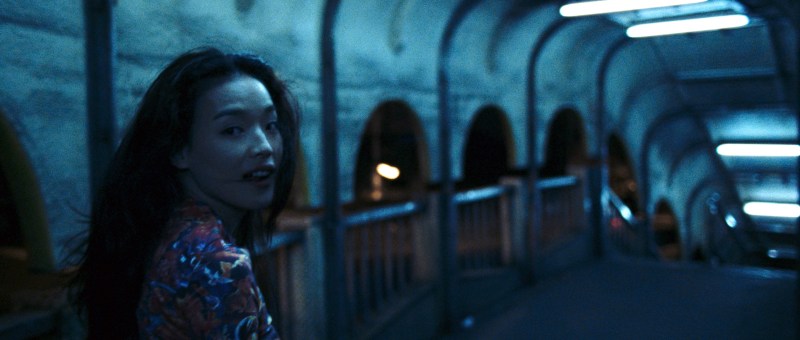
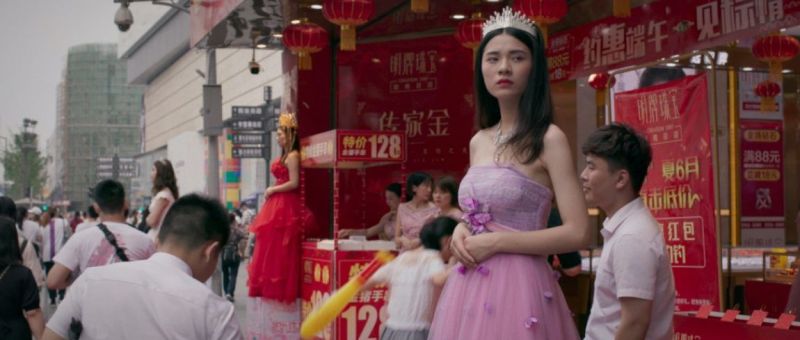
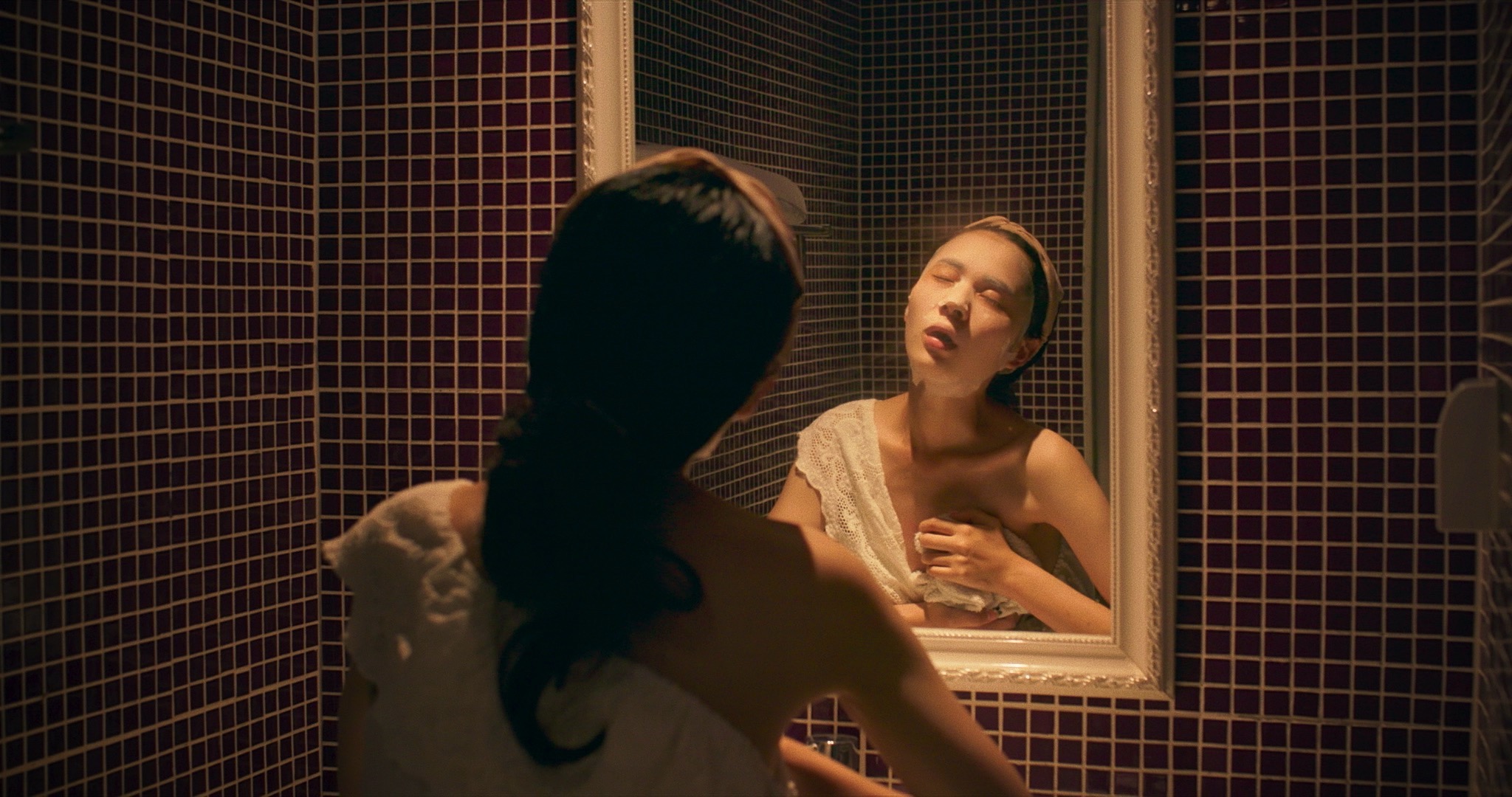
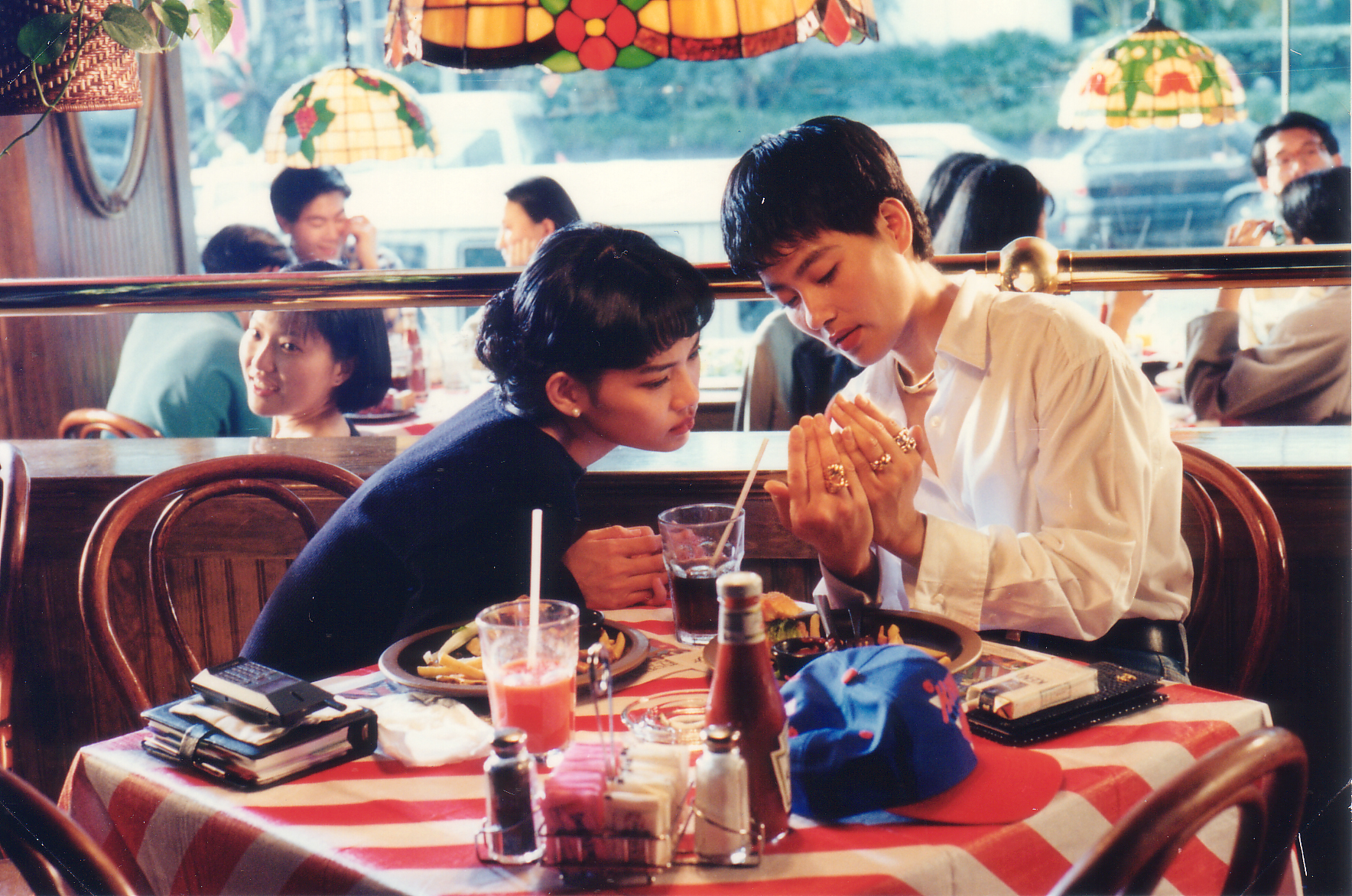
A collection of conflicted urbanites find themselves lost in a rapidly changing society in Edward Yang’s bitterly ironic social drama, A Confucian Confusion (獨立時代, dúlì shídài). Floundering in the post-martial law society, they struggle with the new freedoms of the democratic future torn between the blind obedience of the authoritarian past and the risky business of having to figure out who they are and what they want in a Taipei that seems to have its lost soul to rapidly advancing consumerism. 

Much of the confusion is centred on Chi-chi (Chen Shiang-chyi), a demure young woman admired by all for her radiant quality yet herself under-confident and worried that on some level others might resent her assuming that her genial persona is in someway an affectation. Chi-chi’s tragedy is that she is genuinely nice and relatively authentic in comparison to those around her only she’s beginning to realise that she doesn’t really know herself and has no idea what it is she really wants. “I didn’t have views of my own, it doesn’t mean I agreed with you” she eventually fires back at her ultra-conformist boyfriend Ming (Wang Wei-ming) after he takes the step of resigning for her when she expresses reluctance to accept a job offer set up by his father’s girlfriend.

“You weren’t like this before” Ming continues to berate her, telling another woman, Feng (Richie Li), that feels he no longer understands the changes in Chi-chi’s mind. A symbol of old school patriarchal thinking, he attempts to overrule all her decisions while frustrated that she can’t see he’s only acting in the best interests of her future. Ming thinks that everyone being the same is a good thing, determined to follow the conventional path for a “stable” life as a civil servant but carrying a degree of personal baggage that his politician father was once sent to prison for corruption. He tells Feng, the one person most at home with the duplicities of the modern society, that he chased Chi-chi because she most conformed to the image of his ideal woman which does rather imply that he preferred her to appear as an extension of himself not having any particular thoughts or opinions of her own. The realisation that she does indeed have individual agency seems to destabilise him even as his allegiance to the social conformity of the authoritarian era is shaken on witnessing the hypocrisy of contemporary corporate culture in which his straight-talking friend (Chen Yi-wen) is forced to pay for Ming’s own mistake. 

It’s the hypocrisy which seems to weigh heaviest on the mind of a struggling writer (Hung Hung) who finds it impossible to accept the democratic revolution and has given up the cheerful romance novels which made his name to write “serious” books. Now living in a tiny apartment without electricity, he has become estranged from the wealthy woman he married as a student (Chen Li-mei) who defied her family to turn down an arranged marriage just to be with him. She now hosts a fairly conservative TV programme aimed at housewives pushing family values which is one reason it would be a problem if their separation became public knowledge. The man she was supposed to marry, Chin (Wang Bosen) the foppish son of a business associate of her father’s, is now engaged to her sister, Molly (Ni Shu-Chun), and mainly conducts his business in Mainland China looking ahead to a kind of “One Country, Two Systems” future which may in a sense be a return to a more authoritarian society albeit one fuelled by corporatism. 

In any case, more than anyone Chin is caught between old and new desperately trying to make his engagement to Molly work by hoping they will eventually fall in love while she is more or less just going along with it while convincing him to continue investing in her failing business. In this very confusing environment, communication is never direct. Molly, who is also a childhood friend of Chi-chi and Ming, never really discloses her feelings but according to Chin’s sleazy business manager Larry (Danny Deng) is too “unique” for the times in failing to appreciate the necessity of emotion as a corporate tool. Yet she goes along with the arranged marriage unable to fully break with feudal norms as her much more conservative sister had ironically done even if she is no longer happy with her choice. As is so often pointed out, anything can happen anytime. Sudden reversals and accidental revolutions are just a part of life. 

Conformity had perhaps been a way of coping with life’s uncertainty, but in its way only created more misery and resentment. Ironically the radiant smile Larry so admires in Chi-chi is also the symbol of a societal defence mechanism. The angrier you get, the wider your smile, Larry had tried to teach Chin who nevertheless remains the most “emotional” of all the protagonists, eventually breaking with feudal past in ending his engagement to Molly after randomly falling in love with a voice on a telephone. “We’re all so lonely” Ming admits, disillusioned with his life of dull conformity and edging towards seizing the new freedoms open to him to finally be “independent” no longer bound either by lingering Confucianism or the authoritarian past. The writer’s last book had followed Confucius as he found himself in the modern society but discovered that the people no longer believed in his sincerity, seeing him as a kind of motivational speaker and wanting to learn the quick fixes of his philosophy. Yet in meeting his own destiny, the writer hits on an epiphany that the best weapon against hypocrisy is to live honestly and authentically. Finally integrating into the democratic future, each is finally becoming accustomed to making their own decisions but informed by a kind of mutual solidarity in navigating the still confusing landscape of a changing Taipei.


A Confucian Confusion screens at the Museum of Photographic Arts on Nov. 11 as part of this year’s San Diego Asian Film Festival.

Restoration trailer (Traditional Chinese / English subtitles)

The Wild, Wild Rose (野玫瑰之戀, Wong Tin-lam, 1960)

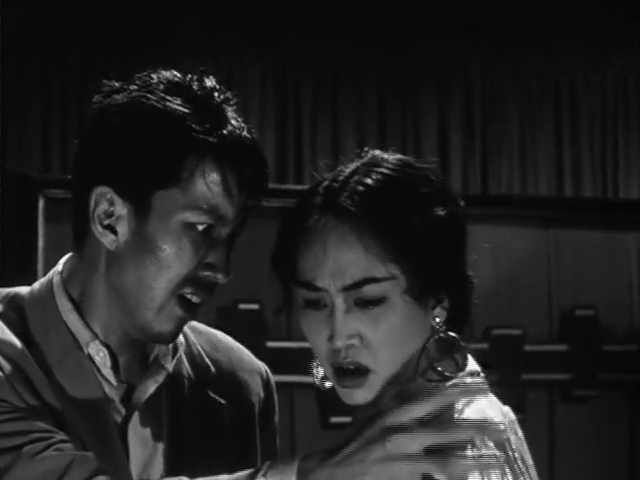
A free-spirited nightclub singer’s dreams of love are shattered by fragile masculinity and an unforgiving society in Wong Tin-lam’s take on the classic opera Carmen, The Wild, Wild Rose (野玫瑰之戀, yě méiguī zhī liàn). Where similar films of the era may paint the heroine’s plight as punishment for her subversion of societal norms, Wong’s musical noir implies that perhaps she was too good, too pure-hearted for the increasingly selfish and judgemental society around her while the man she loves is simply too weak to accept her transgressive femininity. 

It’s with the man, Hanhua (Chang Yang), that we first enter the world of the EW Ritz cabaret bar. An “elite” English graduate, Hanhua has fallen on hard times and unable to find teaching work has been forced to take a job he sees as sordid and degrading as a pianist in a nightclub. He and his teacher fiancée Suxin (So Fung), literally the girl next-door, joke about it outside, Hanhua asking her if she’s worried about all the “pretty bad women” in such establishments and pointing at his engagement ring as an amulet of protection against predatory femme fatales. Once inside, however, he’s instantly captivated by the alluring singer, Sijia (Grace Chang), who nevertheless takes against Hanhua because unbeknownst to him he’s displacing her regular piano player, Old Wang (Lui Tat), who’s being let go by the greedy boss for showing up late because his wife is seriously ill. 

Unable to accept such callous behaviour, Sijia tries to use her position to speak up on Wang’s behalf and almost loses her own job in the process while irritating her stage rival and the boss’ squeeze Meimei (Shen Yun). While Meimei sings a quiet romantic ballad on the dance floor, Sijia embarks on a crowd-pleasing, gender-bending routine in the bar which proves both that she is the star in this establishment and that she can bend the crowd to her will turning them on whoever she sees fit. After a fight breaks out, Hanhua finds himself physically restraining Sijia to prevent her from stabbing Meimei with an icepick. Though this originally annoys her, Sijia is quite clearly turned on watching Hanhua fight off all of the other men who rose up to defend her honour. Once he is wounded, she again asserts her authority by calling them off and proceeding to flirt with Hanhua who leaves with Suxin vowing never to return. 

But as Old Wang had said, it’s tough to find a job these days and faced with his mother’s excitement about his new career prospects Hanhua has no choice but continue working at the Ritz. We can perhaps tell something of Hanhua’s background from the interior of his home which though modest has a large classical portrait on one wall and is otherwise neat and well organised. He evidently envisaged a conventional middle-class life for himself and is humiliated to have been reduced to a mere piano player in a backstreet bar, the kind of place that he sees as sordid and dangerous and would not ordinarily think of himself visiting. He sees Sijia in much the same way but perhaps stops short of admitting her danger, refusing to look at her or only with contempt while furiously denying his barely controlled desires of the kind which were perhaps unleashed by the fight at the bar. 

Yet all the qualities which attract her to him are the ones he eventually wants to destroy in her rebellious goodness and refusal to follow the unjust rules of her society. She tells him point blank not only in her song but repeatedly to his face that she is a fickle woman who believes there are no good men and is essentially in this only for a good time for as long as it lasts. In fact, her interest in him largely stemmed from a bet with a guy at the bar that she couldn’t seduce him in 10 days, stung by his rough rejection of her after the fight. But Hanhua is too conventional a man to understand or accept her. He gives in to his desires after discovering that she slept with a rich man only to get the money for a life saving operation for Old Wang’s wife, witnessing her self-sacrificing goodness and therefore deciding that she is “worthy” of him after all. Ultimately he expects her to play the role of a conventional housewife, refusing to allow her to continue singing in nightclubs even while he is unable to find another job having served time in prison for bludgeoning her abusive ex. His fragile masculinity had also caused him to blow up at Suxin when she went to the headmaster at her school and asked him to give Hanhua a less degrading job, humiliated to have a woman beg for him just he is humiliated to be supported by Sijia and especially by her doing a job he thinks is somehow improper. 

It is not Sijia who ruins Hanhua, but Hanhua himself and the toxicity of conventional social codes that feed into his sense of resentment. His obsessive desire to possess Sijia, to dominate and tame her, drives him to drink and uselessness to the point he completely degrades himself, pathetically pleading with Sijia not to leave, prepared to allow her to return to work or even take other lovers if only she does not abandon him. Sijia meanwhile is in a sense tamed by her love for Hanhua in that she decides that love is sacrifice, that she must live a more conventionally proper life as Hanhua’s wife and eventually that she must separate from him in order to preserve his future. In this she is redeemed in the eyes of Suxin and Hanhua’s mother who realise that she is a good woman who genuinely cared for Hanhua, but is finally done in by her goodness. Her morality cares nothing for properness and all for humanity, her kindness to Old Wang and her best friend eventually repaid while all Hanhua can think of is a redemption of his masculinity through violence driven just like Don José to the peak of madness in obsessive love. But there’s more than just inevitable tragedy in Sijia’s fate, there is a deep sense of injustice and that Hanhua’s actions were as much about stifling her transgressive goodness as they were about vindicating himself as a man which in any case is only pathetic in its unrighteousness. Masterful in its musicality, Wong’s romantic noir positions its heroine as dangerous but only because she is better than the world around her and the world around her knows but does not want to see. 


The Wild, Wild Rose screens in Amsterdam on 27th/29th/31st October as part of this year’s Imagine Fantastic Film Festival.

Shiro – Hero of Heroes (諸葛四郎 – 英雄的英雄, Lin Yu-chun & Chuang Yung-hsin & Liu Yu-shu, 2022)

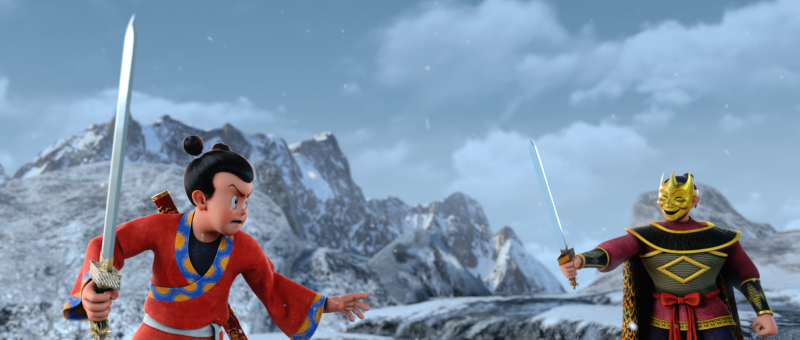
An earnest young man, grieving son, and feisty princess team up to stop the evil Demon Society from becoming all-powerful rulers of their land in an adaptation of classic Taiwanese comic book Shiro – Hero of Heroes (諸葛四郎 – 英雄的英雄, Zhūgě Sìláng – yīngxióng de yīngxióng). Created by Yeh Hong-Chia in the late 1950s, the series has become a nostalgic touchstone for generations of children and is about to reach new ones with a feature-length 3D CGI animation following Zhuge Shiro (Wang Chen-hua) on another exciting adventure to reunite the magical Dragon and Phoenix swords and stop their awesome power from falling into the wrong hands. 

Unfortunately the Dragon Sword has already been lost, much to the king’s regret. When Demon Society raid the palace during a festival and place a mask over the princess’ face, the king puts the land on lockdown and summons the nation’s locksmiths to try and free her only to realise there’s no way to unpick Demon Society’s diabolical locks without giving in to their demands to surrender the Phoenix Sword. Luckily hero of heroes Zhuge Shiro just happens to be in town on the invitation of his locksmith uncle and pledges to help the king salvage his fracturing relationship with his daughter who resents his hesitation to exchange the sword for her wellbeing and make sure Demon Society doesn’t get its hands on the swords’ unleashed power. 

Though this is in many ways a tale aimed at younger audiences, the incredibly witty script moving to the rhythms of traditional opera includes a series of meta jokes for grownups from a silly reference to a limited edition dart and workplace exploitation to subtle digs at societal authoritarianism along with a small cameo from a wandering cartoonist whose work is censored by the powers that be. Having faced Demon Society several times before, Zhuge Shiro is a pure hearted young man wise beyond his years with a strong sense of justice. His first act of goodness is standing up to an officious guard, General Shan, who won’t let a worried father with a sick child enter the town to find a doctor, while he soon earns the respect of the king through his compassion and emotional intelligence in trying to explain the king’s dilemma to the princess. He does however engage in a little sexism which the princess herself is quick to push back against, pointng out that she’s a skilled fighter herself and does not need protecting but will be joining him on this mission whether he likes it or not. 

Similarly, Zhuge Shiro gains another comrade in Zhen Ping (Chiang Tieh-Cheng) who is originally under the misapprehension that Zhuge Shiro is responsible for his father’s death only to later realise it was all the fault of Demon Society. To reunite the swords and save the kingdom, the trio find themselves battling through the villain’s booby trapped lair and discovering that the swords’ power lies in a different place than they first might have assumed, one Demon Society is largely unable to appreciate and therefore to benefit from even if they had managed to hold both swords in tandem. In other words, it’s brotherhood and justice which eventually enable the trio to prosper while the bumbling masked demons only make fools of themselves in their intense greed and villainy. 

Staying close to the aesthetic of the comic book, the film’s highly stylised designs closely match those of the original characters from back in the late 1950s if perhaps a little cuter and rounder in keeping with contemporary CGI animation while it moves to a comic beat inspired by traditional opera interspersed with a few song and dance numbers and exciting martial arts fight scenes as the trio face off against the minions of Demon Society while standing up for justice. Just as the king learns the real meaning of treasure, the trio discover a brotherly bond and a new mission to rid the land of the evils of Demon Society while accepting that even villains can change their ways and should be allowed a chance to redeem themselves, and those who may seem obviously villainous might be alright on the inside. In any case, Zhuge Shiro embarks on what could be the first of many adventures in charming style taking down the bad guys with good humour and righteousness fuelled by the power of friendship.


Shiro – Hero of Heroes screens in Chicago on Oct. 23 as part of the 15th season of Asian Pop-Up Cinema.

Original trailer (English subtitles)

Go Through the Dark (盲弈, Pu Yunhong, 2021)

“You should rely on yourself not on others. Success comes from your own efforts” a father tells his son, yet his words have a particular irony given the complicated nature of their relationship. Pu Yunhong’s mostly observational documentary Go Through the Dark (盲弈, máng yì) follows an 11-year-old boy who unwittingly became a social media star after winning a regional Go contest despite the fact that he is blind. At first Guanglin’s father seems supportive and caring, yet the boy often appears to be on the brink of tears and is near silent giving no real indication whether or not he actually likes the game of Go or is only doing it to please the father who has told him he has no other future solely because of his blindness. 

In any case, Guanglin has already achieved level four status after only two years and at a relatively young age even for a sighted child who devoted themselves solely to studying the game. Using a specially adapted board that allows him to play by touch, he seems genuinely heartbroken on losing out in the final match of a tournament, crying into his father’s shirt, but later events lead us to wonder if it’s merely disappointment that has him so upset or guilt mixed with fear in being unable to live up to his father’s expectations. It seems that Guanglin’s father has decided that his future lies in becoming a professional Go player, explaining that he had previously considered sending him away to train as a masseur expressing a rather outdated and prejudicial view of blindness in insisting there are no other possibilities for him, but there is an ongoing conflict of interest that sees him attempt to micromanage the boy’s affairs as if making a bid for vicarious success rather than earnestly supporting his son in order to see him fulfil his dreams. 

He first explains that they were offered a place at a Go school in Beijing but then that the school messed them around, accusing them of exploiting Guanglin to boost their image while having no real intention of helping him. Then they travel south to Xiamen following an offer from Mrs Wang who provides them with an apartment and offers to train Guanglin for free. But it’s still not enough for his father who complains endlessly that he feels ripped off and exploited, irritated by Mrs Wang’s suggestion he help out at the school while she seems to have some concerns about their potentially toxic co-dependency. Though his father is always pointing out that Guanglin will have to become independent someday, he takes frequent steps to prevent him doing so. Apparently suffering from severe separation anxiety, Guanglin does not attend school and is getting no conventional education nor does he have the opportunity to mix with other children of his own age and has poor social skills. Mrs Wang is concerned that he never chooses his own food to eat but accepts only what his father gives him, while there is something worrying in his tendency to simply eat a few bites and declare himself full with his father then finishing off his meal. 

The cause of Guanglin’s blindness, according to his father, is malnutrition caused by their poverty though Mrs Wang in particular is convinced that he may never have attempted to get proper medical care for his son. When she tries to encourage him to take Guanglin to a specialist who suggests that it might be possible for him to regain at least some of his sight, his father becomes indignant. His anxiety may be born of a genuine fear that surgery may make things worse or cause additional injury because of the affects of the anaesthetic but behind it all there’s the uncomfortable suggestion that he simply doesn’t want Guanglin to be cured because that would reduce his dependency on him while rendering him “ordinary”, no longer the blind Go player with no guarantee that he can learn to play the game the way that others play it. 

Even when his father puts him in a school in Beijing, the coach seems to agree with him that it would be “better” if Guanglin could delay the treatment on his eyes so the school would have the cachet of training the blind Go champion. Yet when he had put him in a school in his hometown, the coach there had humiliated Guanglin in front of the whole class calling his moves “cabbage-headed” and unacceptable for someone at his level. “No one wants to play with a loser” his father cruelly tells him, as Guanglin wanders around on his own rejected by the other kids who are mostly reading or playing video games yet often appearing at his most happy running around and standing behind his classmates listening to them play even when not included. Though often withdrawn, stressed and close to tears, Guanglin does his best without complaint while his father runs him down and rants about people not supporting their dream. It may be that pretty much everyone is exploiting Guanglin in one way or another, no one really thinking about his quality of life or future independence, but he is left with nowhere else to turn and only Go to cling to as an uncertain lifeline towards a better future. 


Go Through the Dark screens on 21st October as part of Cambridge Film Festival.

Original trailer (English subtitles)

The Cabbie (運転手之戀, Chen Yi-wen & Chang Hwa-kun, 2000)

The crazy freewheeling life of a lovestruck taxi driver eventually takes a turn for the contemplative in Chen Yi-wen & Chang Hwa-kun’s infinitely charming comedy, The Cabbie (運転手之戀, yùn zhuǎn shǒu zhī liàn). Despite the film’s sunny atmosphere, darkness does indeed hang around the edges in the frequent references to car accidents and dismemberment yet it seems to be something that the affable hero can live with as he narrates a series of strange incidents from his ordinary life while meditating on his zany family when faced with mortal anxiety. 

As taxi driver Quan (Chu Chung-heng) points out, life can be pretty strange. His taxi can sometimes act as an unofficial confessional as his fares take the opportunity to unburden themselves to a complete stranger in a confined space, confessing the embarrassing details of their lives and even at one point seemingly confessing to a murder. Quan takes it in his stride, feeling as if he is one with his cab, Ah Di, and duty-bound to deliver his charges to their rightful destinations physical and emotional. Yet in an odd way it’s almost as if we’ve become the driver in this story and Quan is our fare, breaking the the fourth wall to speak to us directly of his strange life and the circumstances which led to this present turn of events. 

Quan is however unusual in that he tells his mother and father quite directly that he has no intention of marrying, giving a fairly logical reasoning based on the fact he believes women do not like him and he is not apparently much interested in them. This is of course a source of anxiety for his parents, his taxi driver father also turning fare in ranting at an old lady at the convenience store about his wayward son before trying to awaken something within him by gifting him porn. His mother meanwhile, the local coroner, decides to give up on him while ordering Quan to freeze his sperm so she can have a grandchild with or without his direct involvement at some point down the line. 

In any case, Quan changes his mind on falling in love at first sight with grumpy policewoman Jingwen (Japanese actress Rie Miyazawa, dubbed into Mandarin). Taking his mother’s advice about making an impression (not necessarily a good one) to heart, Quan decides the best way to woo his crush is to get fined by her as many times as possible. Even so there’s an undeniable Romeo and Juliet vibe to their relationship given the natural animosity between taxi drivers and traffic cops, along with a sense of cosmic irony that feeds directly back into the film’s darker themes. So much of life for Quan is coincidence, an act of cosmic collision not unlike the car crashes that occur so frequently outside the taxi depot. Quan encounters Jingwen by chance and then continues to push his luck by meeting her again in similar circumstances until she gives in to his unusual ardour. Yet not all of these accidents end well. One of Quan’s neighbours earns extra cash turning up at crash sites and making sure that the family gets all of the deceased’s body parts, reaching under twisted metal to retrieve pieces of severed flesh while his mother is indeed a coroner with a severed head in a jar sitting proudly in her office. 

In the end it might be that Quan is a mere passenger of fate, relating his life to us as it flashes before his eyes while threatened by a weird fare. What begins as absurd nonsense comedy as Quan tells us about his crazy family and the strangers who climb into his cab eventually takes an unexpected, poignant turn for the existential even as Quan continues to closely identify himself with Ah Di which might beg the question of who is driving who. Madcap and anarchic, there is something genuinely cheerful in Quan’s often simple existence governed both by chance and the rules of the road lending a fatalistic pall to all of his otherwise freewheeling adventures. Things don’t always always go right for him, but even when they go wrong it’s generally in the right way. Fast-forwarding though the “boring bits”, Quan races us through his life in the cab before taking us where we need to go keeping it cheerful while preparing for the inevitable collision with cosmic irony. 


The Cabbie screens 20th October as part of this year’s Taiwan Film Festival Edinburgh.

Original trailer (Traditional Chinese / English subtitles)

When the Dawn Comes (黎明到來的那一天, Zhang Hong-Jie, 2021)

When Chi Chia-Wei appealed to the Legislative Yuan for marriage equality in 1986, he was told that “homosexuals are perverted minorities that seek to disrupt social morals for their own sexual desires”. 33 years later in 2019, Taiwan became the first Asian nation to legalise same-sex marriage. Zhang Hong-Jie’s documentary When the Dawn Comes (黎明到來的那一天, límíng dàolái de nà yī tiān) follows Chi during the final days of the campaign amid a counter offensive from conservative groups who hoped to prevent the legislative change going ahead. 

Chi has been a literal flag bearer for the LGBTQ+ community, a familiar sight at protests and pride parades well known for climbing to the highest point available and waving a rainbow flag where no one can miss it. Indeed the documentary captures him doing just this despite his advancing age and the efforts of the authorities to prevent him. His campaign has been a long one, beginning when he was just a young man as the opening sequence points out with dark hair who held a press conference and came out publicly as a gay man becoming the first in Taiwan to do so. Now his hair is grey, and he is still fighting the same the battle though when this battle is done he knows there will be others still to fight. 

When he first began his campaign for marriage equality Chi was battling the stigmatisation of the gay community during the AIDS crisis, continuing to argue that advocacy for gay rights and AIDS prevention should be carried out at the same time. In some ways subverting the prejudice shown against him, Chi became a well known figure handing condoms out in the streets wearing a series of striking outfits as a kind of performance art. As another advocate points out, what made his approach different was that it refused to submit to internalised shame in normalising the idea of gay sex while encouraging safe practice and educating both the gay and straight communities about the importance of sexual health. 

Nevertheless, Chi was not uncontroversial. Though he took a hands on approach in AIDS activism, setting up a hospice for those with nowhere else to go, he was criticised for inviting the press to cover it leading some of the patients to leave resenting Chi for breaching their privacy. He then went on to sue three men whom he accused of hiding their diagnosis and going on to knowingly infect others, something that was also widely criticised in the community for essentially outing these men and their partners publicly and potentially setting a dangerous precedent when it comes to medical privacy. One fellow activist speculates that Chi may have justified his actions on the grounds of discouraging others from doing the same but points out that it in part had the reverse effect with some unwilling to be tested at all fearful that they might end up getting sued too if the test came back positive. On the other hand, he also regularly submitted blood samples on behalf of men who were too afraid to go in person lest their private lives be exposed. At one point Chi became such a thorn in the authorities’ side that they tried to frame him for a random crime and eventually sent him to prison for five months for “misappropriating waste”. 

As for himself, Chi is also in a somewhat difficult position in that his longterm partner (who is never seen in the documentary) is still in effect closeted and facing pressure from his family to marry. Asked if they personally plan to marry once the law goes into effect, Chi can’t really answer suggesting only that they may do once his partner’s father passes away explaining that he is an only child. In one of the hearings, a lawmaker brings up an anxiety about what to do with ancestral tablets while the question of the family line still seems to lie behind prejudice towards same sex relationships. Meanwhile, his partner has long been taking anti-depressants to cope with the pressure of his family’s lack of acceptance, while Chi too is also on numerous kinds of medication for conditions caused by the stress of his work. Even so, once marriage equality is fulfilled, Chi immediately files for a paper marriage with a Malaysian man to challenge the new legislation’s failure to account for international marriages, determined to continue fighting for fully equal rights. Zhang’s documentary never shies away from some of the more controversial aspects of his activism, but nevertheless celebrates the determination of a man who dedicated his life to a cause for which he was never afraid to stand out and proud.


When the Dawn Comes screens 16th October as part of this year’s Taiwan Film Festival Edinburgh.

Original trailer (English subtitles)

Hidden Letters (Violet Du Feng & Zhao Qing, 2022)

As the title cards that open Violet Du Feng and Zhao Qing’s Hidden Letters explain, women in feudal China had little freedom. Subjected to cruel practices such as foot binding, they were forbidden from learning to read or write and often confined to their husband’s home where they were expected to sacrifice themselves in service of his family. As someone later describes it, Nushu was secretive script created by women to communicate with each other in acknowledgment of their shared suffering with tiny messages concealed in fans or handkerchiefs, yet even as contemporary women try to preserve it its messages are co-opted by male patriarchal authorities in an increasingly capitalistic society. 

In fact, the documentary tells us little about the history of Nushu and its creation in part because its history is opaque in its nature as a tool of subversion. What we do learn is that Nushu was discovered only in 1983 and that little of it survives because women’s writings were often burned with them lest this only means of communication be exposed. One of the documentary’s two primary subjects, Hu Xin, runs a museum dedicated to Nushu in a small rural town and has formed a close relationship with one of its last living inheritors, He Yanxin, who talks with her openly of the miseries of her life as a woman and the lifeline Nushu once extended to help make them bearable. Nevertheless, she stresses that her Nushu was necessarily covert and unlike that of Xin whose Nushu is public and incorporates song and dance. 

It may in a sense be surprising that Xin, who has dedicated her life to the secret writings of women oppressed by patriarchy, still holds fairly conservative views. She married a man she met at the museum but he was violent and finally forced her into a late term abortion after learning their child would be a girl. Now a divorcee, she is too embarrassed to attend a neighbour’s wedding in her hometown and continues to feel as if she has “failed” as a woman in not becoming a wife or mother with a happy family home. Even He Yanxin ironically points out that the Nushu women would attend a mountain shrine to pray for sons, though in any case you can understand why they would not want to bring a daughter into this world of cruel subjugation. “We were only slaves to men” Yanxin explains, recounting that she was not even allowed to look her brothers-in-law in the eye as she carried them water and was often uncertain which of them she was addressing. 

We have to ask ourselves how much has really changed. Simu, the documentary’s second subject, is a woman with a more modern outlook yet drawn to the traditional. An opera singer by trade she lives a comfortable life in Shanghai and has found strength and inspiration in the existence of Nushu. As we meet her she is engaged to a man who first seems sympathetic, but expresses more conservative views on taking her home to meet his family. Getting her to drink a bitter tonic to encourage conception he then tells her that they shouldn’t have children right away because they need to buy a house so that his mother can stay with them when the baby’s born. She can continue with her opera career (it comes with several government perks related to housing and other subsidies), but he wants her to take another part-time job, dismisses Nushu as a “hobby”, and insists that she dedicate herself entirely to their family leaving her no time for anything for herself. As she looks askance at the camera for help, it’s plain that her situation is in reality little different from that of a feudal woman trapped in her husband’s home robbed both of identity and of fulfilment. 

Simu eventually breaks off the engagement with the support of her comparatively progressive parents and especially of her mother, a doctor who recounts her own childhood in which her father, a coal miner, would not allow her sister to be educated. They were “liberated” by the Great Leap Forward’s false promise of “equality” which saw fit to acknowledge them as equal only when their productivity was required to be so. In any case, she believes society has in a sense devolved and that contemporary women face harder battles in a culture which once again judges them solely on their ability to bear children.

Disturbingly, the legacy of Nushu has itself been co-opted to enforce the very values that it rebelled against. The director of Xin’s museum, a man, claims that Nushu represents the virtues of true womanhood, obedience, acceptance, and resilience, that he feels have been lost in this modern society of independent women. Meanwhile, while Xin makes Nushu banners at a tourism convention her male bosses huddle round putting Nushu slogans on promotional knickknacks such as retractable chopsticks in the shape of nunchucks. They claim that Nushu must be monetised if it is to survive while robbing it of its soul, overruling a woman’s objection that naff tie ups with KFC are not the answer to this particular problem. At the opening ceremony for the Beijing Nushu Cultural Exchange Center there are only men onstage to unveil the plaque for some reason to theme of The Magnificent Seven. 

Leaving the city to follow the guiding light of Nushu, Simu writes letters to her ancestors reassuring them that it’s better now than it was then. Women have agency over their marriages, foot binding has been banned, and they can live self-reliant lives of freedom and independence. Considering her experiences, Simu’s words might sound a little idealistic, not quite as it is but as she would like it to be. Yet as another woman puts it, perhaps the responsibility of the women of today is to live up to the legacy of Nushu and its spirit of rebellion in once and for all shaking free of oppressive feudalistic and patriarchal social codes. 


Hidden Letters screened as part of this year’s BFI London Film Festival and is available to stream in the UK via BFI Player 14th to 23rd October.

Original trailer (English subtitles)

Moon Man (独行月球, Zhang Chiyu, 2022)

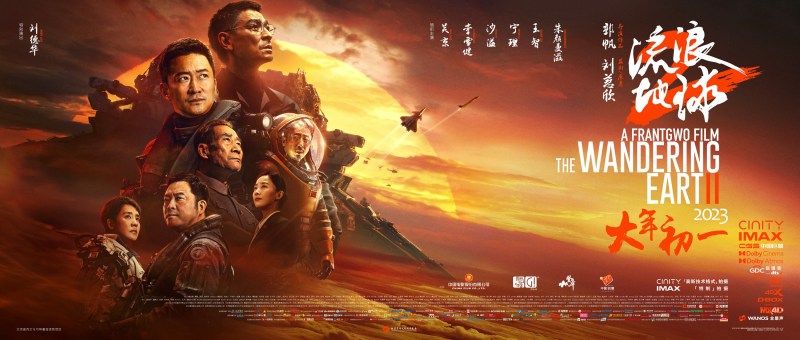
A diffident everyman battles loneliness and despair only to become a selfless sacrifice for a world that left him behind in the latest film from the Mahua FunAge gang, Moon Man (独行月球, Dúxíng Yuèqiú). Not quite the raucous comedy that Mahua FunAge has become known for with popular hits Never Say Die and Hello, Mrs. Money, Moon Man is a more contemplative affair adapted from a South Korean manhwa by Cho Seok and equal parts absurdist exploration of the human condition and cathartic post-pandemic dramedy that insists there is always a homecoming in one way or another. 

Yue Dugu (Shen Teng) is proud to refer to himself as a “middle man” in that he has deliberately cultivated the image of Mr. Average in an intense attempt never to stand out from the crowd. On applying for an engineering job on a space programme he’s told the position has been filled but there’s an opening in maintenance. Yue didn’t really want to take it but does, as we later learn, after falling in love at first sight with Xing (Ma Li), the commander of a mission set to save the Earth from a meteor strike some years in the future. Being the kind of guy he is, Yue never makes an attempt to get close to her but thinks his chance has finally come when the mission is concluded successfully though Xing doesn’t appear to even know he exists. He decides to write a long love letter while listening to romantic music and consequently misses all of the alarms alerting him to the fact that something has gone very wrong, the mission is being aborted, and they all need to evacuate as soon as possible. Left behind as the rockets take off he can only look on in horror as a meteor strikes the Earth leading him to believe he is the sole survivor of the human race. 

Of course, that turns out not quite to be the truth. What starts out as Robinson Crusoe quickly becomes The Truman Show as Xing, who has found safe refuge on a nearby space base, realises someone was left behind and plans to livestream their daily life to give hope to the survivors on Earth who are now living a dismal post-apocalyptic existence underground. Recruiting a former live-streaming king, they try to set Yue up as an idealised propaganda hero but, as they are unable to communicate with him, Yue still thinks he’s the last of his kind and his behaviour cannot really be called inspirational seeing as he spends most of his time trying to crack the code to enter Xing’s quarters and having dinner with a mannequin he’s pasted her face on. Meanwhile, he’s also discovered that he’s not quite as alone as he thought but is trapped with a very angry kangaroo left behind by a research team. 

Yue was a lonely man before, but begins to experience true despair while quite literally alone on the moon wondering what the point of his life is especially if, as he assumes, Xing is no longer in this world. He contemplates suicide and then, after hearing radio static and coming to believe there may be someone else out there comes into his own trying to plot his escape by thinking outside of the box and proving himself a talented scientist. Struck again by despair he realises that cure for loneliness is knowing there’s someone there to keep the light on for you to guide you home only to see the Earth light up with a message intended to read “you are not alone” but which accidentally reads “you are no one” reinforcing Yue’s everyman status as a middle of the road guy who shouldered the burden that was handed to him and set out to save the world all while locked outside of it. 

Yue’s accidental heroism begins to soften Xing’s austerity as she gradually falls for this “awkward” man, while he learns to step up to the plate to protect her and the rest of humanity all of which lends hope to those trapped in the bowels of the Earth and encourages them to begin rebuilding even if at great personal cost. Shifting into Armageddon territory, it’s a nobody who finally saves the world in a final act of selfless heroism. Over the past few years, many may have felt as if they were alone on the moon or found themselves trying to parse grief on a mass scale while mourning the world they knew which had been so abruptly taken from them. Yet as the final title card puts it, the universe is vast, “we will meet again” and there will always be a homecoming in one way or another. Boasting excellent production values including some adorable animated sequences, Moon Man is a strangely cathartic experience filled with zany humour but also genuine hope for brighter future on the other side of the darkness. 


Moon Man is in UK cinemas now.

Original trailer (Simplified Chinese subtitles only)

Give Me Five (哥,你好, Zhang Luan, 2022)

A struggling 30-year-old begins to repair his relationship with the difficult father he believed never liked him after being unexpectedly thrown back to the past and almost erasing himself from history in Zhang Luan’s sci-fi-inflected tale of filiality, Give Me Five (哥,你好, gē nǐhǎo). What begins as a Chinese riff on Back to the Future eventually skews closer to recent hit Hi, Mom which the Chinese title subtly echoes as the hero comes to appreciate the power of maternal love and sacrifice through bonding with the younger versions of his parents. 

Now 30 years old, Xiaowu (Chang Yuan) explains that he was long estranged from his grumpy father Wu Hongqi (Wei Xiang) and rarely visited him but has since become his main carer now that he is living with Alzheimer’s. Xiaowu makes his living as an e-sports entrepreneur which is not something former engineer Hongqi can well understand and in truth Xioawu doesn’t seem to be that successful as he’s been putting off proposing to longterm girlfriend Huahua because of an anxiety about his finances. When Hongqi suddenly jumps off a bridge for no apparent reason and ends up in a coma, Xiaowu is at first oddly pleased and immediately begins raiding his office looking for his bankbooks only to find a mysterious ring and an old diary penned by his mother who died when he was a baby. Putting the ring on sends him back to 1986 where he manages to mess up his parents’ meet cute, endangering his own existence. In order to put things right he has to go back in time Marty McFly-style to ensure his mum and dad fall in love just like they were supposed to. 

Back to the Future is a film from the 1980s expressing nostalgia for an idealised 1950s small-town America. Give Me Five to a degree romanticises the China of the mid-1980s but does so from an entirely different angle than the recent trend in 80s nostalgia which has taken hold in the West in that, other than a brief romantic moment featuring Teresa Teng’s Tian Mi Mi along with a few other retro hits, it is largely uninterested in pop culture or revisiting childhood memories but is attempting to draw a comparison between China before economic reform and the ultra-capitalist society of today. In what some might see as a simpler time, Xiaowu’s mother Daliu (Ma Li) is, as she’s fond of saying, a “model worker” in a factory which is in danger of closure while the “Biff” character, Qiang (Jia Bing), is a former employee who was dismissed for stealing coal. Having become wealthy after almost certainly doing something dodgy in Hong Kong he’s returned with a prominent Cantonese accent to buy the factory as part of a public-private partnership. A feisty young woman, Daliu sends him packing insisting she won’t let anyone disadvantage her fellow workers. 

The comparison is further borne out by the melancholy figure of Qin (Huang Yuntong) who dated Hongqi after getting the meet cute that was supposed to go to Daliu but thew him over for the promise of riches with Qiang only to be left lonely in her old age having unwisely betrayed love for material gain. Meanwhile, there’s an interestingly progressive element to the relationship between Daliu and Hongqi in which Hongqi is somewhat feminised as the domestic partner cooking and shopping for his wife while Daliu is the uncompromising model worker as she proves during a high impact welding competition while eight months pregnant. The couple first fall in love talking over industrial plans with Daliu offering advice from the shop floor to help improve educated engineer Hongqi’s designs. While interacting with his parents before he was born, Xiaowu gains the familial experience he always felt he lacked in being able to share a family meal while touched by the love that existed between his mother and father and the knowledge that his parents were at least blissfuly happy with each other even if it was only for a short time. 

Xiaowu had been resentful of his father that he never really told him how his mother died. He decides to try saving his mother’s life too and through his various experiences comes to an appreciation of maternal love not least through somehow being able to time travel into the womb to forge a more direct connection with her. In part an advocation for a more traditional filiality in which Xiaowu develops an understanding of the interplay between love and sacrifice between parent and child while coming to understand his relationship with his father after learning his family history, the film also offers a subtle rebuke against the consumerist society in idolising Daliu and her model worker attitude insisting that everything was better when people worked together for the good of all rather than for personal gain. It might be a slightly disingenuous message, Daliu’s factory life is indeed somewhat idealised, but there is something touching in Xiaowu’s eventual conversion and belated bonding with his heartbroken father. 


Give Me Five is in cinemas across the UK, Australia and New Zealand courtesy of CMC and Well Go USA in the US and Canada.

International trailer (Simplified Chinese / English subtitles)

Manchurian Tiger (东北虎, Geng Jun, 2021)

An adulterous bulldozer operator in north east China finds himself in conflict with a failed construction magnate when his wife insists he find a new home for their Alsatian before their baby arrives in Geng Jun’s dark comedy Manchurian Tiger (东北虎, dōngběihǔ). A Manchurian tiger does indeed appear at certain points of the film, a child at the zoo asking their grandfather why the rather morose beast does not roar only to receive the explanation that the tiger is all alone with no one to talk to. The child sadly reflects that it’s like the tiger is in prison, but the grandfather corrects them that it’s in there for its own good so that it can be protected, loved, and admired, but its plight still calls out to an emotionally wounded poet (Xu Gang) who is also no longer young and feels isolated and constrained by the world around him. 

As for bulldozer operator Xu (Zhang Yu) who it seems may once have been a teacher, his problems seem to lie more in the inability to reconcile his conflicting emotions towards his family. His wife Meiling (Ma Li) tells him to get rid of the dog because it’ll be too much for them when the new baby arrives and he complies but is also sickened when he’s met with only prices by the pound on trying to find it a new home. He unwisely decides to leave the dog with a local businessman, Ma (Zhang Zhiyong), but Ma slaughters it to curry favour with a pair of “collection agents” he hires to help him get back money he invested into a construction project that’s clearly gone south and in truth sounds like it may have been a scam to begin with. When the heartbroken Xu discovers the truth he vows revenge only for a strange sort of solidarity to arise between them in shared victimhood both bested by the problems of the modern society in the formerly industrial north east. 

Ma could try to make the case that he’s a victim too and he is in a sense but he’s also a conman as Xu later brands him. Even so he does seem to feel some remorse if not for eating Xu’s dog then at least for plunging his friends and family into financial ruin after they sunk their lifesavings into his project because they believed in him. As he puts it they all, he included, fell for the fantasy of the modern China believing they could all get rich quick only to be undercut by the ironic flip side when cost cutting and subpar materials prevent the apartment block from being finished leaving Ma high and dry unable to recoup his costs until the apartments can be sold. The debt collection agents he unwisely hires are just thuggish loansharks who then ask him for a hefty deposit, smashing up his car to make a point when he tries to use it as collateral. 

In essence it seems as if all Xu wants is to Ma to apologise to the spirit of his dog but Ma apparently values his pride above money and complains the price is too high while Xu resents the attempt to place a monetary value on his friend or imply that perhaps his own flesh also has a price. He’s clearly in a space of mental despair, reminding his mistress that like the tiger he’s no longer young and has exhausted all other opportunities to improve his life so the only thing he has left is his marriage. As his wife Meiling starts starts visiting several women around the local area after noticing the scent of perfume along with stray hairs on Xu’s clothes, it becomes clear he has had several affairs already and is seemingly being punished for his sexual transgressions which are perhaps an attempt to escape his own sense of imprisonment, as caged as the tiger by his familial responsibilities and humiliated by the inability to meet them.

Yet none of these men, not Xu, nor Ma, nor the dejected poet are going to roar because they’ve long since accepted their captivity and believe themselves already too old to risk escape. A fight eventually breaks out among Ma’s creditors when one suggests that the money should first be given to the young because they will spend it, keeping the money moving through an uncertain economy, while the old will save having learned to be cautious amid the vicissitudes of life in a rapidly changing society. Darkly comic and tinged with the fatalism of Sino-noir along with its jazzy score, Manchurian Tiger seems to suggest that the cage is infinite and the only escape lies in accepting its myriad disappointments. 


Manchurian Tiger screened as part of this year’s New York Asian Film Festival where it was presented in partnership with CineCina.

Festival trailer (English subtitles)

Images: © Blackfin Production