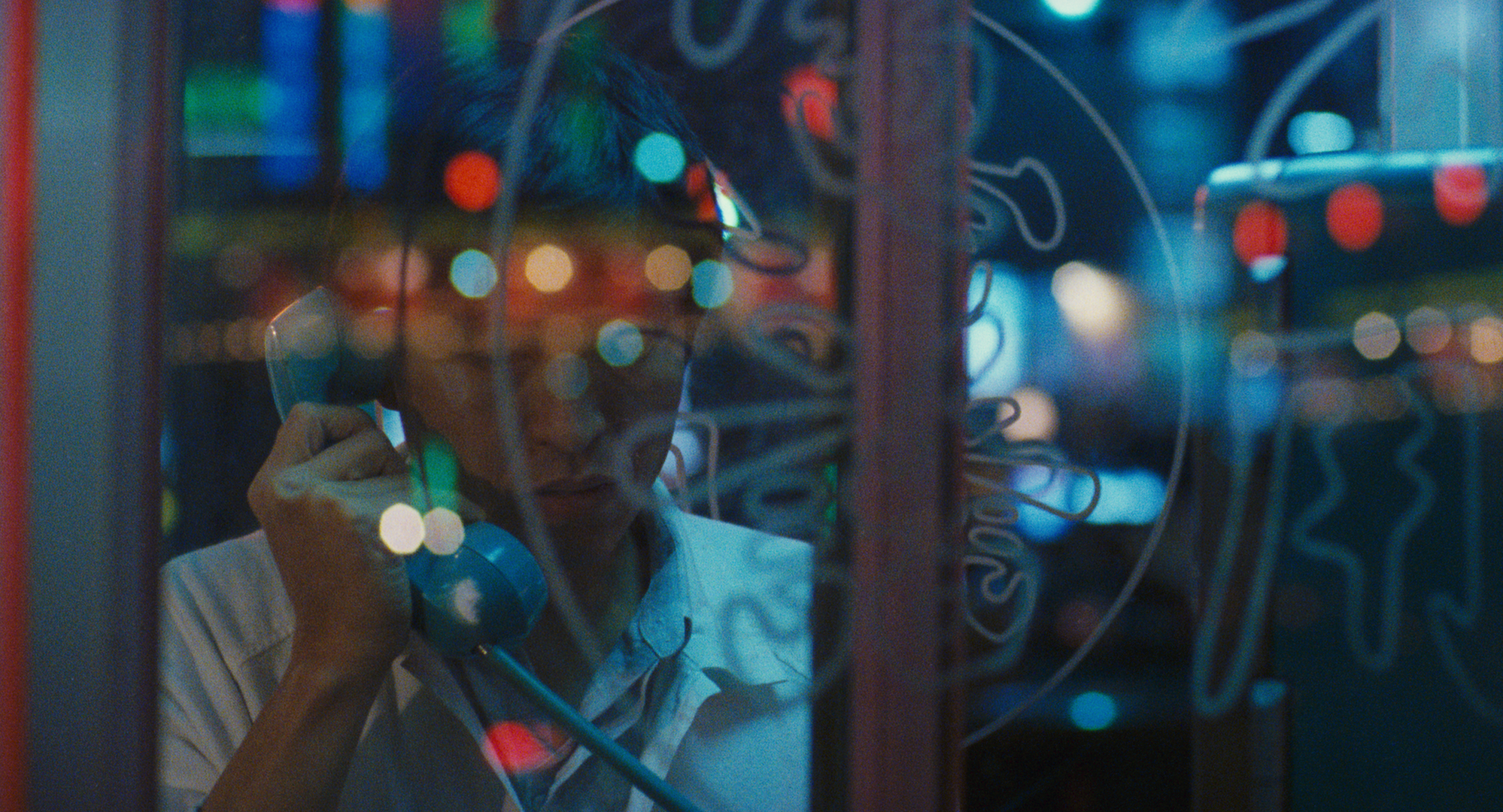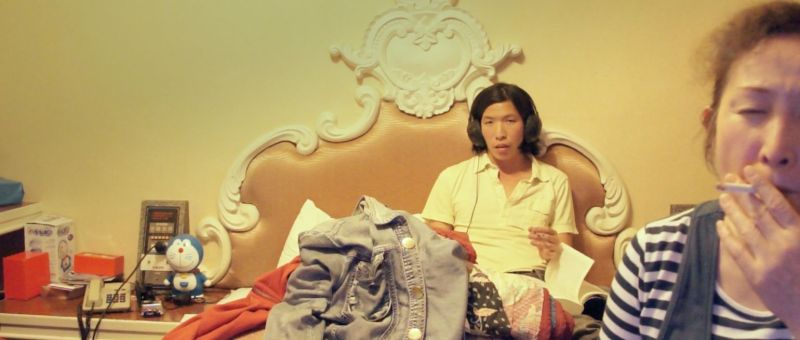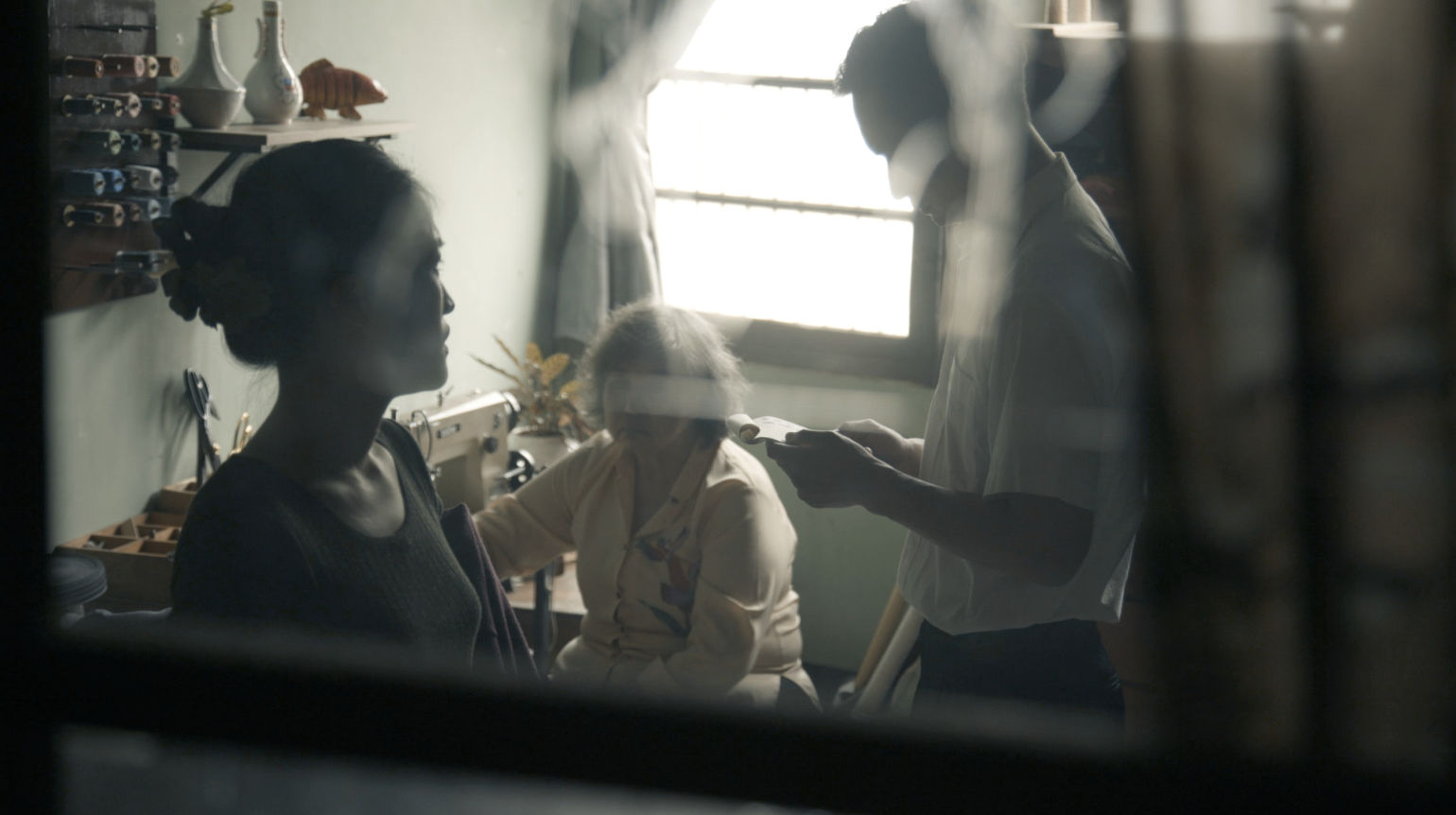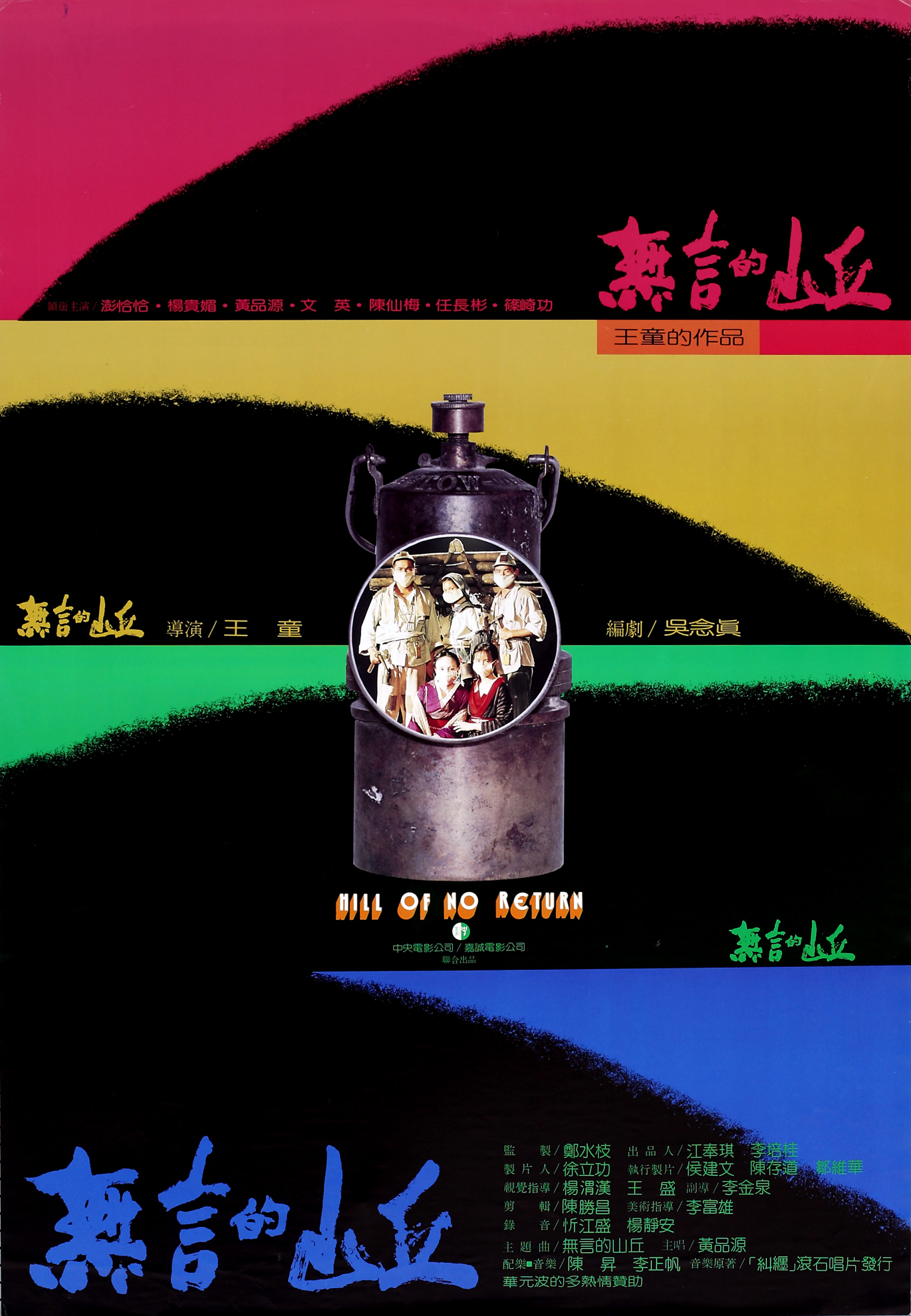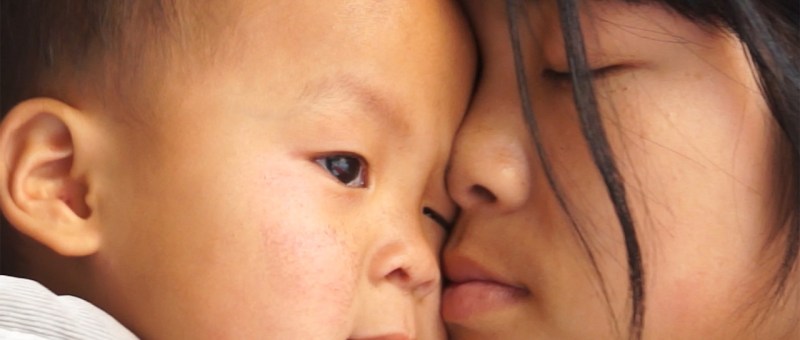
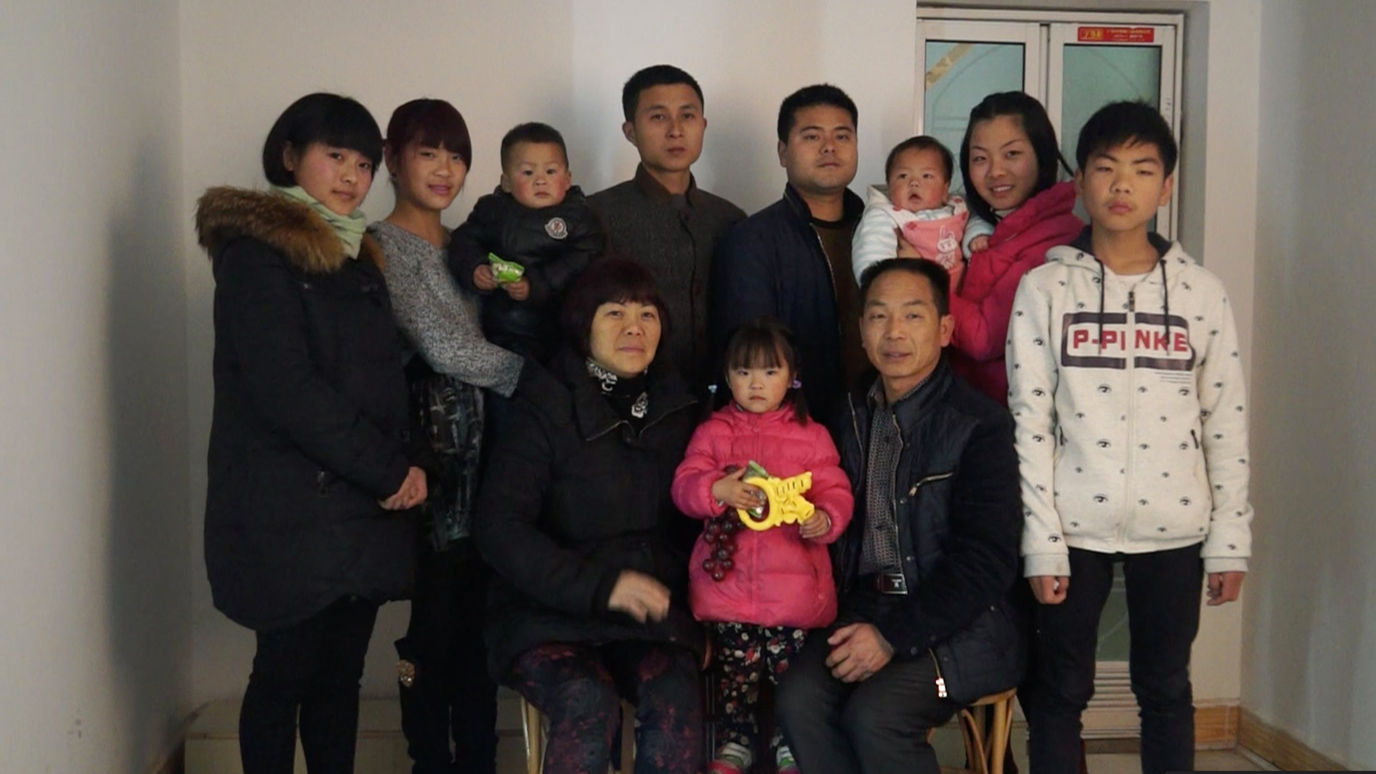
Dust in the Wind (戀戀風塵, Hou Hsiao-hsien, 1986)

Geographical dislocation and changing times slowly erode the innocent love of a young couple in Hou Hsiao-Hsien’s nostalgic youth drama, Dust in the Wind (戀戀風塵, Liànliàn Fēngchén). Hoping for a better standard of life, they venture to the city but discover that the grass is always greener while their problems largely follow them and the young man finally alienates his childhood love with his stubborn male pride, imbued with a general sense of futility in the inability to better himself because of the constraints of a society which is changing but unevenly and not perhaps in ways which ultimately benefit. 

Opening with a long POV shot of a train emerging from darkness into the light, Hou finds Wen (Wang Chien-wen) and Huen (Xin Shufen) travelling home from school she bashfully admitting that she didn’t understand their maths homework while he automatically shoulders the heavy rice bag her mother has asked her to collect on the way. Their relationship is indeed close and intimate, almost like a long-married couple, yet there’s also little that tells us they are romantically involved rather than siblings or merely childhood friends. Given his family’s relative poverty and the lack of opportunities available in the village, Wen decides not to progress to high school but move to Taipei in search of work while studying in the evenings. Some time later Huen joins him, but they evidently struggle to reassume the level of comfort in each other’s company they experienced at home, Wen permanently sullen and resentful while Huen perhaps adapts more quickly to the rhythms of urban life than he expected if also intensely lonely and fearful, no longer confident in his ability and inclination to care for her. 

Huen clearly envisions a future for the both of them of conventional domesticity, eventually writing to Wen after he is drafted for his military service that a mutual friend spared the draft because of a workplace injury is moving back to his hometown to get married and is planning to sell off land to build houses one of which will be for them. But Wen is still consumed with resentment, frustrated that he can’t make headway in Taipei and in part blaming Huen for highlighting his failure while also holding her responsible when the motorbike he’d been using for work as a delivery driver is stolen after he gives her a ride to town to buy presents for her family. They only seem to speak through the bars of a small window in the basement tailoring room where Huen works as if something is always between them while she complains of her loneliness, Wen apparently ignoring her for long stretches of time while studying for exams though ultimately electing not to apply for colleges. While he’s away in the army, Huen’s letters to him become increasingly infrequent until Wen’s start coming back return to sender, the other soldiers mocking him for his devotion to his hometown girlfriend while suggesting that she has most likely moved on, a supposition which turns out to be correct in the extremely ironic nature of her new suitor. 

Yet it’s not quite true that everything is rosy in the country and rotten in the city. On a visit home, Wen overhears his father and some of the other coal miners discussing a potential strike action feeling themselves exploited and under appreciated, while later that evening a group of boys who also left for Taipei lament their circumstances afraid to explain to their parents that things aren’t going well and that they’ve been physically abused by their employers. Ironically enough it’s Wen who can’t seem to gel with city life, becoming frustrated by Huen’s ability to go with the flow having a minor patriarchal tantrum when she accepts a drink from his male friends at a going away party for a man about to enlist. She responds by voluntarily removing her shirt for an artist friend to decorate, staring at him with scorn while waiting around in her vest. In the village everyone is disappointed, feeling as if Huen has betrayed Wen in failing to fulfil their romantic destiny though it is often enough he who has alienated her in his prideful stubbornness, continually cold towards her, leaving her lonely and afraid. Had they stayed, perhaps they would have married, had children, grown old and done all the expected things together and in that sense “modernity” has indeed come between them but then again they were children and what teenage lovers don’t assume they’re “supposed” to be? “What can you do?” come the words from stoical granddad (Li Tian-lu), explaining that his transplanted potatoes haven’t fared well in the recent storm. 

While Wen’s father can only lament the toll changing political realities took on his future prospects, literally moving rocks around in drunken bouts of frustrated masculinity, Wen must struggle with his familial legacy while wondering if perhaps it’s better in the village after all ensconced in the beautiful rural landscape far from the consumerist corruptions of increasing urbanity. But then according to granddad, the potatoes only accept the nutrient when severed from the vine, much harder to look after than ginseng, apparently. You have to wander in order to find a home, life is hard everywhere, sometimes painful and disappointing, but what can you do? Like dust in the wind, try your best to ride it out.


Dust in the Wind streams in the UK 25th to 31st October as part of this year’s Taiwan Film Festival Edinburgh.

Trailer (Traditional Chinese / English subtitles)

Peony Birds (牡丹鳥, Huang Yu-Shan, 1990)

Two women struggle with inter-generational conflict and the changing Taiwanese society in Huang Yu-Shan’s melancholy familial drama, Peony Birds (牡丹鳥, Mǔdan Niǎo). Perhaps the love birds of the title, mother and daughter find themselves at odds partly through a series of misunderstandings but also in the strange reversals of their social outlook, the older woman eventually becoming a successful industrialist rejecting the patriarchal social codes of her upbringing while the younger remains prudish and resentful, unfairly blaming her mother for her father’s early death. 

The film opens with two children accidentally releasing a pair of caged birds before the camera lights on the melancholy figure of Ah-chuan (Su Ming-ming), absentmindedly embroidering beneath a large picture which appears to be of herself. The portrait, a source of contention with her husband Cheng, will follow her throughout her life a symbol of herself as a young woman with choices falling in hopeless love with a Japanese-speaking doctor, Kuo, who never gave her a second glance and later married someone else. Seemingly on the rebound, Ah-chuan consented to an arranged marriage to the wealthy son of a rice merchant who thinks himself a member of the local aristocracy, forever throwing around his money and reminding people of his good name, but the marriage is unhappy Cheng frustrated that his wife loves someone else and Ah-chuan unable to let go of her idealised image of Kuo. Soon enough, Cheng drowns, falling into the river stumbling around in a drunken stupor. As they pull his body out of the water, doting daughter Shu-chin remembers her father bitterly exclaiming that her mother loved someone else and, noticing the comforting arm of childhood friend Chin-shui on her shoulder, assumes it must be him.  

It’s this fundamental misunderstanding that continues to colour the frustrated relationship between the two women, the grown-up Shu-chin (Vivian Chen Te-Yung) childishly complaining that Ah-chuan failed in her wifely responsibilities and has never been a mother to her, blaming her for Cheng’s death while criticising her commitment to her career almost as a betrayal of womanhood. By this point, Shu-chin is in her 20s and has a job as a record producer, later attempting to push her mother towards retirement claiming her salary is enough to support both her and her artistic brother but eventually leaving home entirely after beginning an affair with an unsuitable man defiantly ignoring Ah-chuan’s attempts to convince her she is making a huge mistake. 

Meanwhile, Chin-shui resurfaces in their lives having become a wealthy real estate magnate, a career we saw him start back in the village by taking advantage of the post-war land reforms to buy up the redistributed estates of formerly noble families, some of it Cheng’s. In some ways, former sharecropper Chin-shui is a villainous Lopakhin intent on paving over the beautiful Taiwanese countryside with towering high rise buildings, a symbol of the nation’s transformation from agrarian economy to financial powerhouse and of the hollowness it implies. Yet Ah-chuan’s business is floundering partly she claims because of protectionist US trade laws leaving her at the mercy of men like Chin-shui who, though not the man in her heart, has long carried a torch for her despite knowing of her impossible, unrequited love for Dr. Kuo. Shu-chin finds herself in a similar position in her affair with free-spirited colleague Li Kang whose previous girlfriend attempted to take her own life, discovering the mutability of his affections after he becomes famous with one of his solo compositions, while also drawn to a more suitable match in the more traditional Yi-cheng who eventually pledges his love to her, offering to make her a home explaining that having a home is what gives the young confidence to wander. 

Yet “home” is what Shu-chin continually rejects, yearning for her childhood in a more rural, quasi-feudal Taiwan while misunderstanding the tragedy of her parents’ toxic romance, only latterly reawakening to her mother’s love for her and discovering a new sense of security in a changing Taiwan as Ah-chuan frees them both in literally setting fire to the frustrated hopes of the past, reminding her “It’s always been our home”. A touching story of two women finally coming to understand each other while learning how to live in a changing society, Huang Yu-Shan’s maternal drama eventually bridges a generational divide as mother and daughter finally flee the coop but choose to fly together. 


Peony Birds streams in the UK 25th to 31st October as part of this year’s Taiwan Film Festival Edinburgh.

Clip (English subtitles)

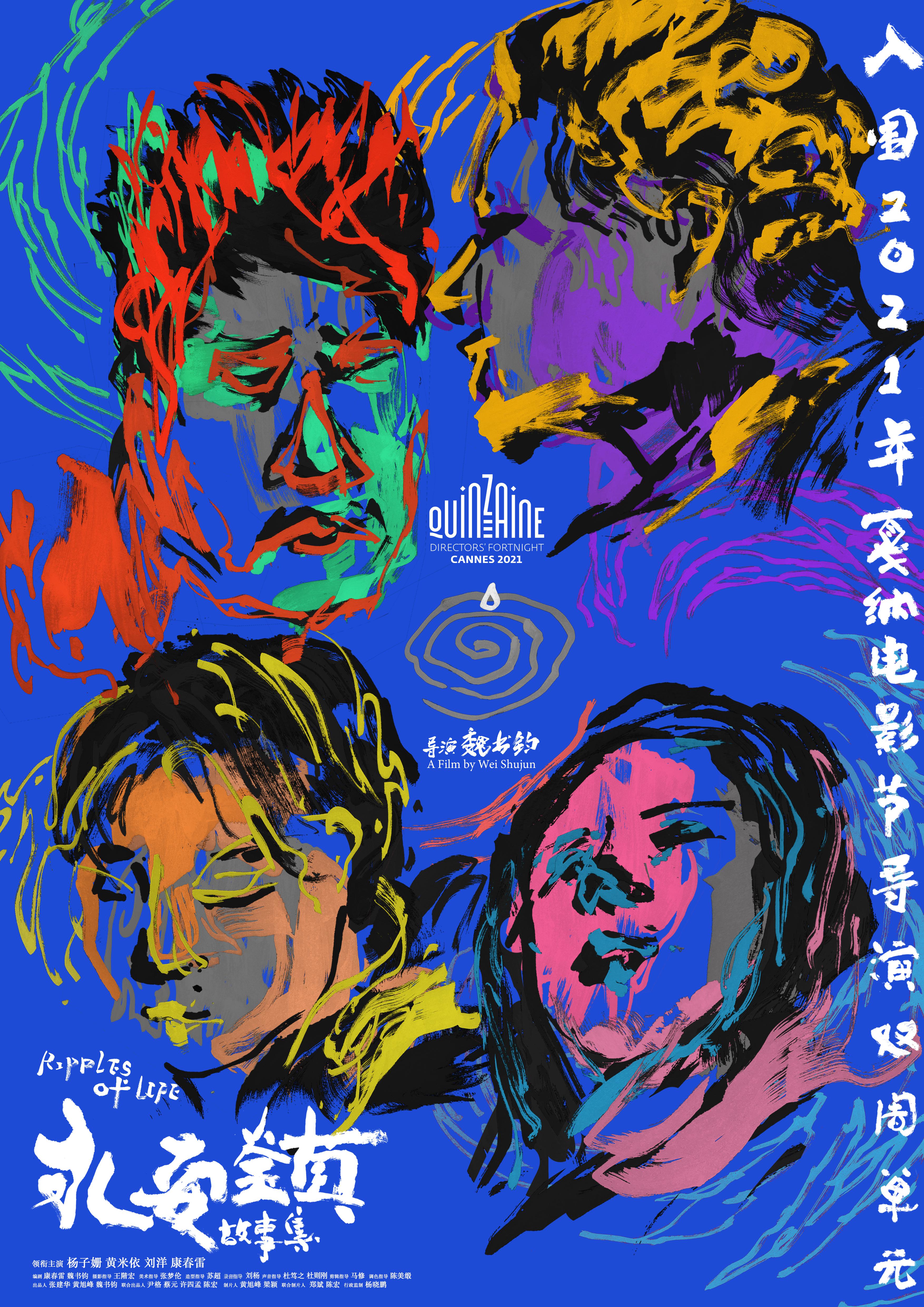
Ripples of Life (永安镇故事集, Wei Shujun, 2021)

“I had to let it happen, I had to change” the rather incongruous voice of Madonna insists, finding a note of defiance on reaching the climactic “so I chose freedom” as the movie version of Don’t Cry for Me Argentina erupts over the closing minutes of Wei Shujun’s Ripples of Life (永安镇故事集, Yǒng’ān Zhèn Gùshi Jí). Like much of the film, the use of the song is ironic but still somehow poignant its repurposing perfectly expressing the interior lives of each our “characters” who are all in some way or another looking for escape or at least a way out of personal dissatisfaction while trying to film a movie about the inertia of life in a small town in rural China where nothing ever happens. 

Divided into three segments, Wei’s film is as much about the positioning of rural China as it is about “cinema”. A Beijing film crew descend on this provincial small town with their own preconceived notions of rural life, determined not to “romanticise” country living but nevertheless bending it to their will looking only for signifiers that align with their mental image of the hinterlands of their nation. Only latterly do they realise that for true authenticity the film should be in Hunanese, but none of them speak it which is a significant stumbling block in their efforts to overcome ongoing creative differences over the script. 

Wei is, in part, satirising the recent trend in Chinese indie cinema for gritty stories of rural poverty usually filmed with depressing naturalism determined to stress the harshness of life outside of the cities amid the nation’s ever increasing wealth divide. The first chapter in part does this too, later shifting away from early Jia Zhangke towards the neon yearning of Wong Kar-wai but always undercut with a sense of meta irony not least in its choice of heroine. The infinitely cornered Gu (Huang Miyi) longs for “a different life”, trapped in an unsatisfying marriage to a gruff man she accuses of working night shifts to get away from their toddler daughter whom she is forced to take to work with her while he constantly undermines all her parenting decisions based on articles sent by his mother. A woman at the market coos over the baby and asks when the next one’s due, Gu crestfallen realising she’s trapped in this small-town existence where nothing ever happens. But then the film crew begin to notice her, telling her she has a “real cinema face” and likening her to Kim Min-hee of whom she has never heard. Their admiration is again ironic, considering they were looking for the authentic face of rural China but taken with this cinematic vision, yet it’s also callous and cruel. They give her false hope, allowing her to dream as she puts on makeup and models costumes only to be forgotten once again when the “real” actress arrives, cast back into a life of quiet desperation. 

Perhaps this too is another unfair stereotype assuming that everyone from a small town longs for escape, but Gu’s story does indeed mimic the earlier parts of the screenplay for the film within the film which the director sees as a tale of a small-town woman’s awakening to independence and agency while the screenwriter Chunlei (Kang Chunlei) opts for an old-fashioned take on consumerist corruption. Shifting away from Gu towards formerly successful actress Chen Chen (Yang Zishan), the second arc pulls towards Chunlei as Chen Chen searches for escape from a rut in her career apparently having left her commercial agent to do more earnest work but doing not much of anything for the previous year. In another meta touch, she is from this rural backwater and like her character in the film chose to leave but now admits that sometimes she misses life in the country. As someone else puts it, city folk all want a return to simple rural life but can’t accept the reality of it which is why the plan to rejuvenate the area largely relies on tourism including the building of a waxwork museum of which Chen Chen is expected to be a notable inclusion as a local girl made good. 

Chen Chen’s image has once again been commodified, stripping her of power or agency over her name and face but on returning to Yong’an she is forced to realise that she is no longer of there, this place where nothing ever happens has already changed while she exists on a slightly different plane. Realising the maid covering her room is a childhood friend she cheerfully tries to reconnect but the woman is awkward and evasive, embarrassed perhaps to acknowledge that she is a mere hotel employee while Chen Chen has achieved her dreams of stardom. Attempts to reconnect with two other male friends similarly backfire, the first a typical provincial bureaucrat who uses her for official business without her consent while a meal with the other’s family proves even less joyful as she endures countless barbed comments from his snippy wife who eventually tries something similar in asking her to find a job for her son on the film. As she’s leaving he asks her the same question the screenwriter obsessed over, suggesting that she left for mercenary reasons only for her to answer that she didn’t want to live like his wife, or indeed like Gu, but wanted “a different life”. 

This battle between image and authenticity lies at the heart of the conflict between the director, a hipsterish festival darling with a sideline in hip hop, and the schlubby screenwriter himself perhaps trapped in the previous generation of Chinese filmmaking but also in his way more idealistic believing in cinema as an art form which can move the world rather than mere entertainment created for commercial gain. He accuses the director of hypocrisy, exploiting the arthouse aesthetic for critical credibility and with it a vision of rural China, while the director criticises him for his old-fashioned mentality in seeking melodrama over message. Shot in cooling blues their heated arguments are noticeably dispassionate, Wei even descending into some ironic iconography which sees the pair talking through their issues with a wise man film critic on a boat on a misty river. The ironic conclusion brings the whole affair full circle as the words of Madonna as Eva Peron come to speak for each of the protagonists, Gu now angrier, impatient as she shifts dishes while her husband idles nearby, and Chen Chen forced to pose next to a wax figure of herself during a launch ceremony for this film in which the script has yet to be “finalised”. “But nothing impressed me at all” the song continues, “I never expected it to” hinting at the contradictions of the modern China in the internalised defeatism of small-town dreams and the cynical filmmakers who exploit them. 


Ripples of Life screens on Oct 11 & 12 as part of this year’s BFI London Film Festival

Wuhan Wuhan (武汉武汉, Chang Yung, 2021)

“Safety isn’t the issue right now. We have to keep moving forward” a harried doctor replies to a cabman’s question, like most it seems just getting on with it until it’s over. Like Wu Hao, Chen Weixi & Anonymous’ 76 Days, Chang Yung’s Wuhan Wuhan (武汉武汉, Wǔhàn Wǔhàn) documents the final stretches of the city’s intense lockdown beginning in February 2020 yet where 76 Days was largely a exploration of grief, panic, and confusion Chang’s documentary assembled remotely from 300 hours of footage shot on the ground by local camera crews perhaps reflects a new accommodation with the nature of the pandemic in its empathetic depiction of ordinary people going about their lives as normally possible. 

The first trail Chang picks up is that of factory worker Yin who has begun working as a volunteer driver ferrying medical staff between the hotel where they are being housed during the lockdown and the healthcare facilities where they are working. Yin explains he took the job more or less for something to do rather than be bored at home, but it also places a strain on his relationship with heavily pregnant wife Xu who is intensely anxious about catching the disease or that there may be other complications with the birth but no hospital space available to treat her. Through his various fares, Yin gets to see the other side of the pandemic as the medical staff honestly describe the situation on the ground which is often in contrast with the impression given by official channels. 

As for the medical staff themselves, ER Chief Zheng is quick to point out that much of the PPE they’ve received is not fit for purpose while his staff is already traumatised and close to burnout. Later a team of psychiatrists is sent in to provide support both to the frontline health workers and to the patients, most of whom are extremely grateful to the doctors and nurses if sometimes frightened and angry though one they’ve nicknamed grumpy grandpa continually refuses treatment and otherwise makes a point of pigheadedly insulting his nurse. Psychiatrist Zhang is also however under strain, learning via telephone that her father in her hometown has been diagnosed with a serious illness. Like many she is away from her family with no idea when she’ll be able to return to them. Nurse Susu, in the same position, receives a raw and difficult phone call from her small daughter who breaks down crying, unable to understand why her mother’s not coming home while all she can do is listen in heartbreak unable to explain or make a promise she knows she can keep as to when she’ll back. Zheng likewise makes calls to his wife and daughter, but also reveals that he’s asked an old friend to watch over them should the worst happen. 

Nevertheless, people try to find the small moments of joy where they can. At a temporary hospital for those whose cases are mild to moderate, a mass dance routine breaks out while patients otherwise try to keep active through group tai chi supporting each other while Zhang runs group therapy sessions on the other side of the wall. Worried part of the problem is that the patients can’t bond with them because the PPE erases their identity, some of the doctors print out photos to display on their chests while others are always quick to help, a collection of local hairdressers offering free haircuts to medical personnel to help prevent contamination and make PPE more comfortable. 

The overall impression is of a community managing, working together to get through the crisis while quietly getting on with the job. Chang apparently made his documentary partly with the rise in anti-Asian hate crime in mind, hoping to “humanise” the citizens of Wuhan by showing them as ordinary people living in extraordinary circumstances though others of course may read it slightly differently in its deliberate avoidance of the horrors of the virus save a few scenes of grieving relatives or terrified patients, the only indication of anxiety caused by the system seen in those at the temporary hospital hearing it’s about to close down and fearful of what might happen to them next. Nevertheless Chang’s empathetic documentary is at its best capturing the everyday reality, be it a husband running all over town trying to find somewhere selling a crib or a woman cooking yams in her room because she can cope with the virus but another one of those box meals might push her over the edge. 


Wuhan Wuhan streams in the US Oct. 6 – 12 as part of the 13th Season of Asian Pop-Up Cinema. It will also screen at Chicago’s Chinese American Museum on Oct. 9.

Original trailer (English subtitles)
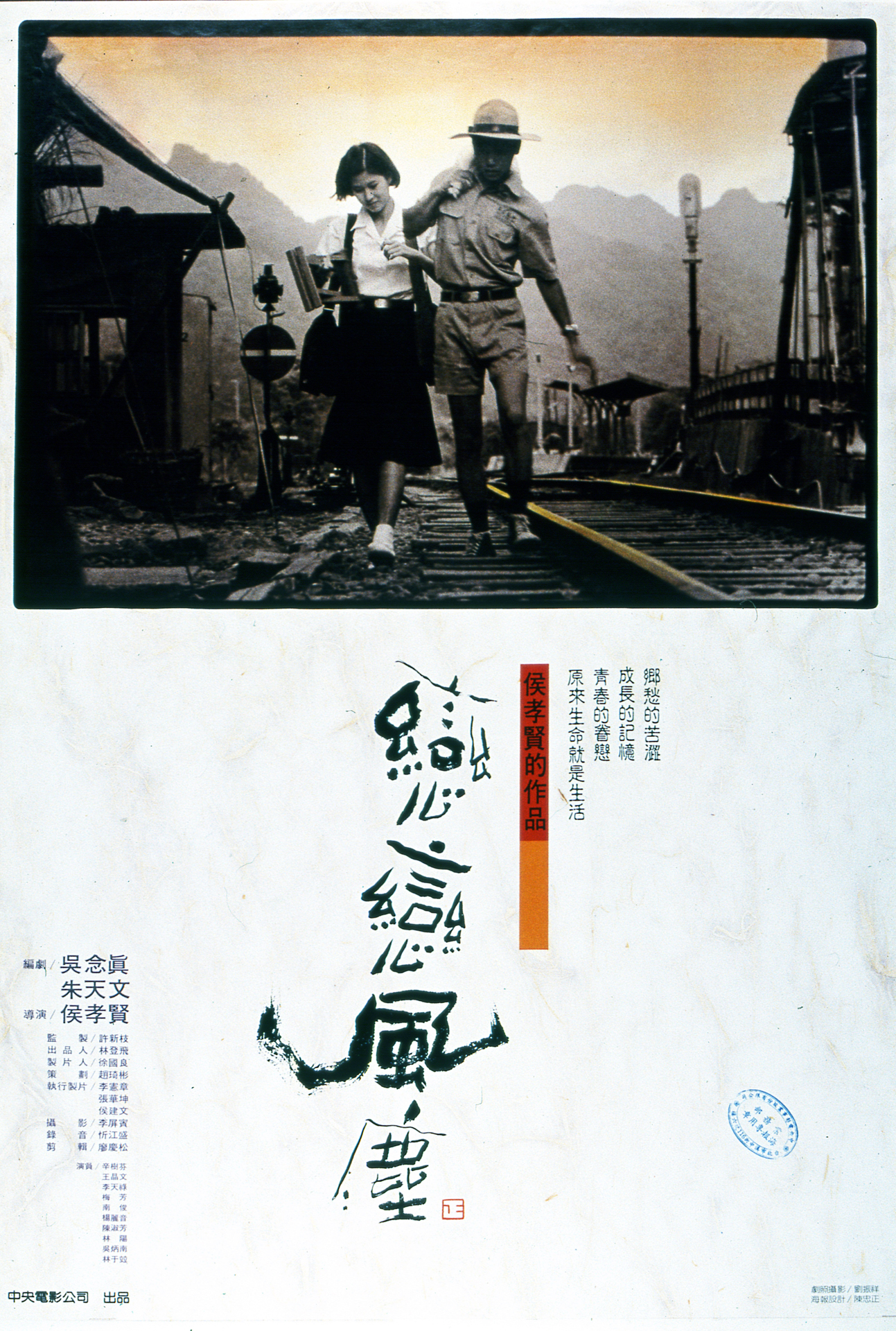
Raining in the Mountain (空山靈雨, King Hu, 1979)

Is it truly possible to retreat from the world and live a pure life free of Earthly desires? Perhaps not, at least not entirely as the monks of King Hu’s joyously comic wuxia Raining in the Mountain (空山靈雨, Kōng Shān Líng Yǔ) later discover in attempting to cure the corruption already eating through their ranks. The old abbot is ill and mindful that his time is short, recruits a series of advisors to help him pick a successor to steer the monastery in his absence yet whether he too is plotting or not there is intrigue at play and not everyone’s motives are strictly spiritual. 

The film opens with Hu’s trademark immersion in the beauty of nature as three pilgrims approach a mountain temple yet there’s something almost suspicious in their manner as they’re met by the abbot’s reliable righthand man, Hui Ssu (Paul Chun Pui). Esquire Wen (Sun Yueh), a wealthy merchant and frequent donor, introduces the woman with him as his concubine, the man obviously a servant given that he’s carrying their pack. Wen has, however, an ulterior motive in that he’s come with the intention of stealing a unique scroll featuring the Mahayana Sutra in the hand of Xuanzang/Tripitaka of Journey to the West fame. The woman is no concubine but a famous thief, White Fox (Hsu Feng), who wastes no time at all before changing into her best sneaking clothes and reuniting with the servant, her minion Chin Suo (Wu Ming-Tsai), to try and break into the sutra room. 

They are not however alone in their endeavours. The abbot has also invited local police chief General Wang (Tien Feng) and his underling Chang Cheng (Chen Hui-Lou) who nominally favour monk Hui Tung (Shih Chun) for the position of abbot but are also there largely with the intention of getting their hands on the scroll which Hui Tung has pledged to give them if he wins. Likewise, though it seems Esquire Wen had forgotten to brief White Fox, rival candidate Hui Wen (Lu Chan) is also in league with them. Just as it looks as if this duality is about to implode, the introduction of a third party, former convict Chiu Ming (Tung Lin) who claims he was framed by Chang Cheng because his family refused to sell him a precious scroll, creates additional uncertainty in the race for succession. 

Secluded in the mountains, the temple ought to be a refuge of enlightenment free from spiritual corruption in its isolation from Earthly desires. Even so, we’re told that the most holy man is the third advisor, Wu Wai (Wu Chia-Hsiang), a Buddhist lay preacher who arrives with a massive entourage of colourfully dressed handmaidens and is said to be “immune to sensual pleasures”. He favours no particular candidate, but acts as a spiritual sounding board at the right hand of the abbot who may or may not be aware that his other two advisors have ulterior motives, or that corruption is already rife in the monastery. Aside from the power-hungry machinations of Hui Wen and Hui Tung, who is so desperate for the position he later consents to murder on temple grounds, many of the younger monks have been bribing a pedlar to smuggle in meat and wine for them, literally passing it over the fence, and not even paying him properly. They are also tested perhaps deliberately by Wu Wai who has his handmaidens frolic in the water where the monks are supposed to be meditating, many of them unable to maintain concentration.  

Yet these are only partial incursions, the monastery is not entirely isolated from the wider society by virtue of its financial dependency. Wu Wai who lives on the outside seems to be fantastically wealthy (still it seems clinging on to material desires), yet the temple is dependent on donations from men like Esquire Wen or else on alms giving. On her arrival, White Fox disdainfully rejects the meal she’s offered and describes the place as a dump, her complaints apparently not unfounded as a ruse to raise rebellion by staging a protest about the the low quality of the catering strikes a genuine note of discord with the monks. The solution posited by the new abbot, opting for austerity rather than opulence, is to tell the young monks they’ve had it too easy and now it’s time they shift for themselves by aiming to become self-sufficient growing their own veg (and thereby lessening their contact with worldly corruption). 

In any case, they cannot purify the temple while the temptation of the scroll exists. “Priceless” to General Wang and Esquire Wen, to the abbot and interestingly to White Fox, the scroll is “worthless” merely a raggedy bit of old paper with no intrinsic value. Yet hoping to raise revenue, the new abbot is advised to borrow on its collateral by the duplicitous Esquire Wen and thereby is forced to accept its “worth” in the secular world perhaps only then realising that if the temple wishes to finalise its divorce the scroll has to go. Essentially a morality tale, Hu hints at the absurdity of these petty corruptions in the cartoonish, farcical shenanigans of the rival thieves as they dance around each other silently fighting over a “worthless” scroll the camera following them with a wry eye while the constant drumming of the background score lends a note of ever present tension. Almost everyone, it seems, is redeemable for the path to enlightenment should be available to all though those who choose not to follow it may find the way of corruption leads to only one destination. 


Raining in the Mountain streams in the US until Sept. 28 as part of the 13th Season of Asian Pop-Up Cinema.

Restoration trailer (English subtitles)
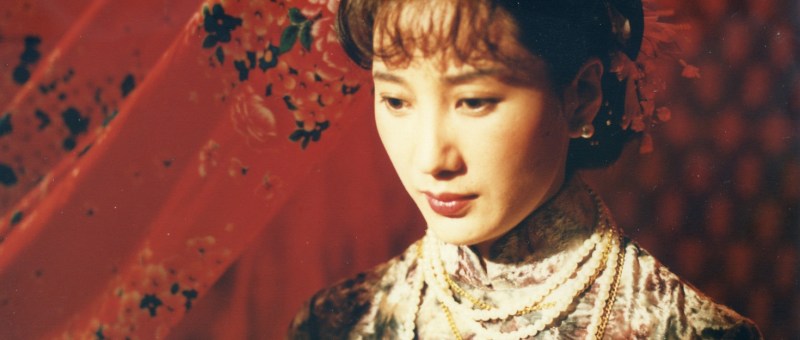
Secrets of 1979 (弓蕉園的秘密, Zero Chou, 2021)

Love is a political act in the latest film from Zero Chou, Secrets of 1979 (弓蕉園的秘密, Gōng Jiāo Yuán de Mìmì). As history repeats itself, a now ageing woman is called back to the past on witnessing the Hong Kong democracy protests triggering memories of the Kaohsiung Incident and her youth fighting for political freedom in martial law Taiwan. Chou’s betrayed heroine dreams of a future in which all voices can be heard and all loves embraced, a future that in some senses may have come to pass, yet tragically too late for some forced to believe that their love must forever remain a secret. 

Malaysian student Shu-lan (Daphne Low) falls for Kuan (Chen Yu), the daughter of a banana plantation owner majoring in art as part of a teacher training programme. The pair draw closer while sharing a room, and a bed though partly because those two things are mainly the same, over the summer while Shu-lan takes a job at the farm but their innocent romance is soon overshadowed by the revelation that Kuan’s brother Siu (Hsu Yu-ting) has become involved with the movement against martial law producing a magazine critical of the government. Though they could never know it, their love will lie at the centre of a political divide, cruelly used against them even while they commit themselves to the battle for freedom and human rights. 

Soon after the film opens, a young man walks into Shu-lan’s classroom with application forms to join the nationalist governing party of the martial law one party state, the KMT. The idea does not seem popular among the students, but some are interested if treating it with a degree of irony explaining that they’d only be joining to take advantage of the generous perks which include free travel back to your hometown to vote and access to scholarships, or else because it may be advantageous in their future careers. Shu-lan is fiercely disinterested and attempts to politely decline, but the recruiter, Chih-hsiang (Sean Sun), has an obvious crush on her and won’t take no for an answer thrusting a form into her hand to think about later while lowkey resentful as she distances herself from him to leave with Kuan. 

Kuan, meanwhile, has just been subjected to an unpleasant grilling in her art class when she tried to stand up for a painter rumoured to be gay provoking a homophobic rant from several of her classmates who then openly mock her for being a lesbian. Perhaps surprisingly the rumour of homosexuality does not cause either of the girls particular problems with the authorities or their fellow students save for further irritating the extremely creepy, generally evil, and cruelly manipulative fascist Chih-hsiang who views it as merely another bargaining chip in his pointless quest to convince Shu-lan who has no interest in men (or members of the KMT) to go out with him. The problems that Shu-lan faces which are partly set up by Chih-hsiang so he can save her from them, are largely to do with her status as a foreign national and involvement with politics accused of collaborating with communists for listening to Chinese folk songs sent by her teacher in Malaysia. 

These are all reasons, along with her treatment at the hands of the authorities, that eventually convince her she must renounce her love for Kuan in order to keep her safe in fear that she too will be implicated as a politically suspicious person. Prior to that, she’d been learning Taiwanese and hoped to stay living on the banana farm with Kuan whose family seem relatively relaxed about the relationship, only for their love to be stamped out by oppressive authoritarianism and the machinations of a petty and jealous man. The bookending sequences set in the present day and featuring a Kuan who seems much older than a woman who’d only be in her mid-60s remind us that though Taiwan may have become a relatively progressive place in which same-sex marriage has been legalised, the battle is never really won as the young people of Hong Kong too campaign for freedom and democracy. But Kuan is left only with her secrets and her sadness stuck in the summer of 1979 and a love never to be told. 


Secrets of 1979 screens at Lexi Cinema on 21st September as part of this year’s Queer East. It is also available to stream in many territories via GagaOOLala.

Original trailer (English subtitles)

My Dear Friend (好友, Yang Pingdao, 2018)

“What’s right or wrong doesn’t matter anymore. Being at peace is what matters.” an old man insists, attempting to help his troubled companion regain a sense of himself at the end of his life. A magical realist fable, Yang Pingdao’s My Dear Friend (好友, Hǎoyǒu) quite literally sends its elderly heroes back into the past as if they had become unstuck in time but also bears witness to the inexorability of fate as events seem only to repeat themselves from one generation to the next. 

The film begins, however, with a literal intrusion of the present into the past as city girl Jingjing (Gabby So) drives her red saloon car, more suited to a morning commute than a trek through the mountains, into a rural village, rudely barging into the home of elderly couple A-Fang (Jiang Hong) and Shuimu (Luk Suk-Yuen AKA Robert Loh) in search of their grandson Yiming. Jingjing claims that she is pregnant and Yiming is the father, but now he’s ghosted her so she’s come to make him assume his responsibilities. Unfortunately Yiming isn’t there, but rather than scandalised or ashamed as one might have assumed them to be, A-Fang in particular and her husband seem to be both relieved and excited to the extent they don’t really want Jingjing to leave which might explain why her car won’t start the next morning. 

While staying with the elderly couple, Jingjing hears that absent fathers run in the family. Shuiming’s father disappeared suddenly without warning or explanation leaving his mother to raise him alone, while his son also abandoned Yiming to run off with an impoverished bar hostess who had four children of her own. Yiming’s mother remarried, leaving the boy with his grandparents. Jingjing asks why Shuimu didn’t leave and he doesn’t answer her, but following him around she may have stumbled on the answer in his 60-year, apparently secret friendship with a man of the same age who appears to be mute and intelligible to Shuimu alone. Zhongsheng (Lu Haoquan), as the man is called, is a man without a past apparently having no memory before the age of ten. Once her car is fixed, Shuimu asks Jingjing to drive them to another village 300km away where Zhongshen thinks he may be from, obsessed with a rumour about a child who survived a massacre by “four psychos” after falling into the river. 

Things that drift loom large. Shuimu muses on a giant fish head apparently washed down by the voiding of the dam the head then linking back to a strange pipeline that reminds them of a giant whale only without its mouth as if something had been uncapped or opened to the elements. Travelling through mist and fog, the trio stop their car in what seems to be the meeting of a wedding and a funeral as a procession passes by them made of men and women from another time, wearing donkey jackets and silently carrying umbrellas, seemingly filled with solemnity. Shuimu and Zhongsheng encounter younger versions of themselves, a version of their story replaying itself as the boys become men who might equally be Yiming and his friend in this strange place where past and present co-exist. 

Yet Shuimu is perhaps looking for the truth of himself as much as his friend, Zhongsheng’s name apparently originally his only his mother changed it on the advice of a fengshui master worried he lacked water (水 shui) and wood (木 mu) though Shuimu liked the other name better. He also gives Zhongsheng his own birthday, making of him another self, in a sense a secret shadow self unable to speak though Shuimu is always able to interpret his thoughts perfectly. He sees a similarity in Jingjing and A-Fang, one which she also sees, a little jealous of the younger woman’s freedom lamenting the simplicity of her wedding and harshness of her life since. Both sharp tongued they’ve become prickly in the unreliability of men, each searching A-Fang like Zhongsheng’s mother calling out at night for her wandering husband only hers always comes back. Don’t become like me, she tells Jingjing, pledging to drag Yiming back and give her the proper wedding she never had. 

Zhongsheng complains A-Fang haunts him like a phantom, yet everyone here is already a ghost literally haunted by historical trauma and parental failure. Shuimu and Zhongsheng search for truth and identity, but find themselves in a place they no longer recognise which in turns claims not to know them. Perhaps truth isn’t so important, Shuimu claims, as peace, deciding the entire earth is a grave, make your offerings where you will. Aided by the rolling mists, Long Miaoyuan’s ethereal photography adds to the sense of mythic grandeur in this long sad story of enduring male friendship and perpetual orphanhood carried away in the grand ever flowing river of life and death.


My Dear Friend screens at Curzon Hoxton on 18th September as part of this year’s Queer East.

Original trailer (Simplified Chinese / English subtitles)

Number 1 (男儿王, Ong Kuo Sin, 2020)

“What I don’t understand is your so-called rules and traditions. Just what good does it do?” a newcomer ironically asks of a veteran drag artist, having perhaps shed but not yet quite acknowledged his original prejudice towards those different from himself. Ong Kuo Sin’s cheerful drag dramedy Number 1 (男儿王, Nán’ér Wàng) examines attitudes to the LGBTQ+ community in the comparatively conservative nation of Singapore where sexual activity between men remains illegal even if the law is not heavily enforced, while subtly undermining oppressive group think as to what constitutes a “successful”, “normal” life. 

44-year-old Chow Chee Beng (Mark Lee Kok Huang) is a successful general manager at a construction firm where he’s worked for the last 17 years which is the entirety of his working life. It comes as quite a shock to him therefore when he’s unceremoniously let go, passed a letter of termination seconds after entertaining everyone with a song at the office New Year party. Given his experience, he perhaps feels that getting another job won’t be too difficult, but as various employers tell him he’s either “too old” or “too expensive” for the competitive Singapore job market. Faced with the prospect of telling his wife they’ll have to sell their luxury detached home because he can’t make the mortgage payments, Chee Beng is forced to accept the last resort offer from his recruitment advisor which happens to be as an AGM at local drag bar Number 1. 

Like many men of his age, Chee Beng has a rather conservative mindset and had been living a very conventional life of suburban, middle-class success. His wife Marie (Gina Tan) even complains to her sister-in-law that their new swimming pool is a little on the small side and she’s thinking of swapping it for a bigger one. Yet as his performance stint at the company party implies, he is perhaps holding a part of himself back thinking that his love of singing is frivolous or even a little taboo given his wife’s mild embarrassment. The drag bar is therefore firmly outside his comfort zone. Not only does he lack experience managing an entertainment venue, but finds it difficult to overcome his sense of discomfort with those living lives so different from his own. When one of the drag artists turns out to be a deserter from the army and is carted off by the military police, Chee Beng finds himself press-ganged into performing and discovers that he is something of a natural though he doesn’t understand why they have to lip-sync to pre-recorded tracks rather than singing live. 

Chee Beng’s point seems to hint at a concern about the ability to completely embody the performance and fully express himself, yet he’s also a straight man wading into a predominantly LGBTQ+ community he knows nothing about and insisting on having his own way. That brings him into an additional conflict with former number one Pearly (Kiwebaby Chang) who dragged him on stage in the first place because with only four performers she wouldn’t be able to stand in the middle. Pearly might feel that lip-syncing completes her performance because she lacks the ability to sing in a feminine register, yet Chee Beng ironically accuses her of mandating a no singing rule in order to mask her own weakness while simultaneously attempting to mandate live singing in order showcase his strength as a performer. 

But even if he’s come to feel at home in the drag community, Chee Beng continues to keep his new life a secret from his socially conservative wife. When a video of him singing at the club goes viral, Chee Beng’s wife and sister-in-law react by taking the children’s phones away as if seeing it is in some way harmful. Later on seeing a poster for the Queens she irritatedly tells Chee Beng they should be banned by the government for giving children “wrong ideas”. Meanwhile their son Mason is conflicted in being a boy asked to play the part of Mulan in the school play, claiming he dislikes the character of Mulan because she “lies” about who she is while his father can only sympathise offering the justification that sometimes people have to lie in order to protect those they love. When Chee Beng’s identity is exposed, little Mason begins receiving vile hate mail online and all his friends stop playing with him. Yet he doesn’t see anything wrong in “wearing a dress” and can’t understand why everyone, including his mother, seems so upset. Marie complains that Chee Beng’s new life is “confusing” for Mason, but he doesn’t seem confused at all because he hasn’t yet had time to absorb the “wrong ideas” from the conservative world around him. 

That conservative world has been a very dark place for some of the Queens, Pearly revealing that she believes her coming out drove her parents in Taiwan into an early grave, while bar owner Fa’s brother took his own life, and the gang experience homophobic harassment from a man who turns out to be the high school bully who made one of their live’s a misery. Nevertheless, the sudden and otherwise unexplained reversal in the attitudes of some seems more than a little contrived for an otherwise uncomplicated happy ending despite Chee Beng’s defiant message that he wants his son to grow up “different” in that he learns early on not to be prejudiced against those different from himself and goes on to be happy with whoever he is rather than blindly following the rules of social conformity. Drag is for everyone, and becoming a member of the supportive drag queen community even helping out fundraising for a local LGBTQ+ friendly nursing home, Chee Beng begins to see a different way life that opens his eyes to the constraints of the way he lived before swapping the trappings of extreme consumerism for personal fulfilment and compassion for others. 


Number 1 screens at London’s Genesis Cinema on 18th September as part of this year’s Queer East.

Original trailer (English subtitles)
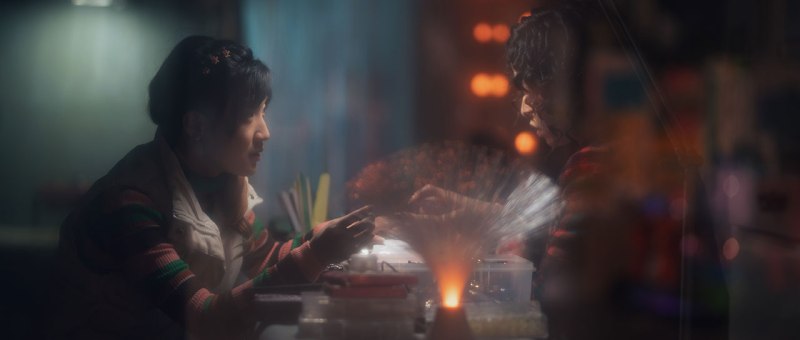
Never Stop (超越, Han Bowen, 2021)

“And what comes after the finish line?” an anxious novice asks of his mentor who has little answer for him, his singleminded pelt towards the end of the road later convincing him “running never leads anywhere” even as he continues to run away from his sense of shame and inadequacy. One of a number of sporting dramas emerging in the run up to the Tokyo Olympics, Han Bowen’s Never Stop (超越, Chāoyuè) ultimately suggests that in life there is no finish line while “winning” is perhaps more a state of mind than a medal and a podium. 

This is however a lesson former champion Hao Chaoyue (Zheng Kai) struggles to learn after his sprinting career comes to an abrupt halt. In 2009, he won gold in the Asian Games and publicly proposed to his reporter girlfriend in the middle of a packed stadium. 10 years on, however, he’s a washed up middle-aged man whose business is failing and marriage falling apart. His protege, Tianyi (Li Yunrui), is still flying high but approaching his late ‘20s is now also experiencing similar problems as Chaoyue had previously compounded by the fact he suffers from ADHD and is prevented from taking his medication because of anti-doping regulations which has left him mentally drained through overstimulation. 

Later, Chaoyue describes the athletes’ existence as like that of a lab rat forced to run around for little more reward than food and water. Nevertheless the source of all his problems is in his stubborn male pride, unable to accept the reality which is that he lost to nothing other than time in the perfectly natural decline of his ageing body which coupled with the extent of his injuries left him unable to maintain the peak physical performance of his earlier career. Petulantly quitting his original team, he tries an international super coach who refuses to sugarcoat the reality that Chaoyue has simply aged out of international athletics while throwing in a few racist micro-aggressions for good measure. Unable to move on, he attempts to trade on past glory but ironically continues to run away from his problems in refusing to accept he has no head for business while discouraging his young son from pursuing athletics despite his apparent love and aptitude for sports. 

Tianyi’s plight meanwhile highlights the external pressures placed on sporting idols in the internet age, his career suddenly on the rocks when he’s spotted taking pills and and damages his reputation losing his endorsement deals. Having idolised Chaoyue and essentially followed in his footsteps he now finds himself directionless and wondering what to do with the rest of his life. The appeal in running for him at least may have been in, as Chaoyue had described it, the intense focus and single-mindedness of the short distance sprinter in which everything except the runner and the finish line disappears, but without his medication Tianyi finds it increasingly difficult to concentrate often slow off the blocks in his initial confusion. 

The problem the runners face is ultimately one of self-confidence, motivated to give up on believing that they cannot fulfil the internalised ideal they have of a champion. Chaoyue remains unwilling to “lose”, running his business further into the ground and damaging his relationships with those around him out of stubbornness rather than making a strategic retreat or attempting to reorient himself in accepting he may need help with making his sneaker shop a conventional “success”. Feeling betrayed, he refuses to let his son run because running doesn’t lead anywhere but continues to run away from the humiliating spectre of failure rather than face it head on. Tianyi meanwhile looks for guidance and unable to find it struggles to find independent direction, but in confronting each other the two men begin to regain the confidence to keep going redefining their idea of success as striving for rather than reaching the finish line.

An unconventional sporting drama, Han’s inspirational tale nevertheless promotes perseverance and determination as the former champions overcome their self-doubt to realise that you don’t have to just give up if you feel you’ve lost your way and that there are always other ways of winning. There may be no finish line in life, but there are ways to go on living when your sporting life is over not least in supporting the sporting endeavours of others or as the post-credits coda less comfortably suggests monetising your name brand to build a sportswear empire that enriches both yourself and the nation. A late in the game slide towards a patriotic finale cannot however undo the genuine warmth extended to the struggling athletes as they resolve to keep on running no matter what hurdles lie in their way.


Never Stop streams in the US Sept. 15 to 21 as part of the 13th Season of Asian Pop-Up Cinema.

Original trailer (English subtitles)
Ascension (登楼叹, Jessica Kingdon, 2021)

Factory worker inspecting the head of a sex doll during assembly in Zhonghan City, Guangdong Province, China, as seen in Ascension, directed by Jessica Kingdon. Image courtesy of MTV Documentary Films.

“Work hard and all wishes come true” according to a propaganda slogan pasted on a wall in Jessica Kingdon’s interrogation of the Chinese Dream, Ascension (登楼叹, dēng lóu tàn). Working her way through its various layers, Kingdon’s observational doc addresses the ironies of the contemporary society defined by its intense and ever growing wealth inequalities. According to a speech made by a dubious CEO approaching the film’s conclusion, China is a “fair society” his logic being that only the morally responsible are entitled to profit and society will find ways to rob those who’ve acquired their riches though illicit means of their ill-gotten gains while the trickle down economy otherwise ensures “wealth redistribution”. 

His justifications are, it has to be said, hard to accept. Kingdon opens the film with an aerial shot of a rooftop swimming pool in which the trio of women cleaning it appear tiny next to its comparativeness vastness as they care for a facility they may not be entitled to use. Descending to street level, we’re assaulted by PA speakers advertising for labour with promises of comfortable work, some which can be done sitting down, with accommodation in spacious dorms with aircon thrown in. Anyone would think there must be some kind of tremendous labour shortage, but the wages are lower than low, and employers apparently still picky over what kind of people they employ, stating an age cap of only 38 while banning those with criminal records or tattoos along with dyed hair and piercings. The excessively tall are also not welcome hinting at conditions more cramped than the announcements imply. 

Taking her camera inside the factories, Kingdon discovers people reduced to the level of automata, machines among machines mechanically sorting cooked poultry or stamping packaging while watching TV drama on smartphones. Workers complain that their bosses cheat of them of their pay and feel the need to bribe them by buying lunch to curry favour. Yet Kingdon also uncovers the absurdity of the everyday, shifting from a production line producing plastic bottles to an artisan workshop staffed almost entirely by women in cheerful yellow outfits with red gingham aprons crafting uncannily realistic sex dolls presumably for extremely wealthy, sometimes demanding clients. A worker stops to snap a picture of the doll’s nipples with a tape measure next to them to send for approval, while others obsess over the proper colouring for the areola or complain that the chemicals irritate their skin.

Shifting up a gear, she visits a school for bodyguards where the instructor randomly plays with a little goat for some reason hanging around outside and is then stung by a bee. The need for bodyguards is perhaps another symptom of increasing inequality as the super rich discover their “success” has only made them anxious for their safety. On the flip side, another school is busy training butlers for those enamoured of the trappings of feudalism. The instructor explains that one of her clients got a job as a PA right away and his sole responsibility was squeezing his boss’ toothpaste for him, preparing it in a little cup. Meanwhile across town, others teach proper business etiquette most particularly to female employees. A pretty woman is China’s business card, one enthusiastically points out selling the importance of cosmetics, while another even more dubious course in entrepreneurship has its participants “deciding” to earn millions within the year and then triple the amount in the next five. 

While a woman plumps pillows in a fancy hotel suite, painstakingly stripping a rose of its petals to place on a pair of towels folded into the shape of a swan, the wealthy enjoy leisure time at a huge water park which boasts a tunnel ride through the aquarium where “mermaids” swim alongside sharks and stingrays. Others ride a literal “lazy river” sitting in rubber rings styled like frosted donuts. Guests at a fancy French dinner praise American freedom, while others complain that Westerners criticise China’s human rights record but how can you think about human rights when you’re so poor your entire existence is occupied with survival? Billboards at street crossings bear footage of other people crossing, while a picture of Xi Jinping sits in the corner of a garment factory where they sew clothes embroidered with the logo “Keep America Great” and another worker rolls her eyes at claims the place is haunted. China’s greatest export, it seems, is irony. Kingdon’s beautifully composed shots add to the sense of absurdity as does the score veering from eerie synths to jaunty theme park music implying that the entire nation has in a sense become a playground for the rich and powerful built on wilful exploitation and the thoughtless cruelties of intense consumerism. 


Ascension opens the 13th Season of Chicago’s Asian Pop-Up Cinema on Sept. 15 before opening at New York’s IFC Center on Oct. 8 courtesy of MTV Documentary Films.