Girls’ School (女子學校, Mimi Lee, 1982)

The intense friendship between two young women is placed in jeopardy when a rumour begins to circulate that they are more than friends in Mimi Lee’s subversive 1982 drama Girls’ School (女子學校, nǚzǐ xuéxiào). The film’s educational framing may ensure that it can only reinforce the contemporary social codes of the repressive martial law era in insisting the two women must be guided back towards he “correct” path, but otherwise affords them a genuine sympathy that undercuts the sense of moral censure while simultaneously rooting the source conflict in the rejection and frustrated longing that provoke only pettiness and jealousy. 

Chia-Lin and Chih-Ting have been best friends all the way through school and are more or less inseparable but the transgressive intensity of their relationship has also isolated them from their classmates some of whom, such as Chun-Hsueh, feel rejected and excluded. Possibly with a high degree of projection, it’s Chun-Hsueh who first starts the rumour that the two young women are “lesbians” only later admitting to the teacher Mr. Mei, informed via a note from class monitor Yu-Liang who has a crush on him, that she doesn’t quite understand what the word means or what saying it might mean not only for Chia-Lin and Chih-Ting but for the other girls and indeed for the school’s reputation. In reprimanding her, Mr. Mei accuses Chun-Hsueh of casting a dark shadow over the hearts of her previously innocent classmates now corrupted with the ugliness not only of her lie but the topic of homosexuality which he and the rest of the educational body view as something shameful and taboo. 

Reminiscent of William Wyler’s The Children’s Hour, the reason the rumour takes hold may be that there is a grain of truth in it in the burgeoning feelings between the two women yet in keeping with the social attitudes of the time the main interest is in proving that it isn’t true with each keen to clear their name of such vicious slander while the other girls frequently describe them as “disgusting”. Even so, the unfairness of their separation and the obviously strong feelings between the two women cannot help but evoke sympathy while Chih-Ting, the bolder of the pair, continues to insist that they’ve done nothing wrong even as Chia-Lin is overwhelmed by the pressure all around them suggesting that they might be better to simply “keep our friendship in our hearts” shamed into repressing their true feelings by an oppressively judgmental society. 

Then again, the film also succumbs to a series of uncomfortable stereotypical tropes in rooting Chih-Ting’s potential lesbianism in her tomoboyishness having been raised by a single father and longing for maternal affection. Having been abandoned by her mother she also feels emotionally rejected by her father who has a gambling problem and rarely returns home while further rejection by Chia-Lin at the instigation of her sister who is also a teacher at their school herself nursing a broken heart after her longterm boyfriend married someone else leaves her feeling like a “monster”, constantly asking herself “what’s wrong with me?” while wondering why others treat her like a “poisonous sore”. This sense of rejection and frustrated longing is the primary motivator for the actions of all, Chun-Hsueh starting the rumour because she wanted to be included in the girls’ friendship and Yu-Liang reporting it because she wanted to curry favour with Mr. Mei after seeing him scrunch up and bin a love letter while quite obviously smitten with Chia-Lin’s sister Miss Yang. 

Mr. Mei is clearly in a difficult position and often trying to do the right thing, admitting to Chih-Ting that the teacher’s don’t know how to help them, but also somewhat insensitive while like others overly mindful of the school’s reputation rather than girls’ fragile emotions never quite considering that the intensity of their feelings and the pressure placed upon them could lead them to harm themselves or else endanger their mental health. It is then a little uncomfortable that the resolution lies in Chih-Ting who had previously professed to hate everyone except Chia-Lin undergoing a softening in which she becomes “more cheerful and mature”, eventually re-embraced by the same classmates who shunned her now satisfied the rumour isn’t true while Chih-Ting has quite literally sacrificed a part of herself to be accepted by a society whose acceptance she had been insistent was unnecessary. The starkness of her conversion along with the subversive quality of the melancholy love song which recurs throughout may attack the underlying homophobia in supporting the truth of the feelings between the two women but leaves them with little possibility for emotional authenticity in an overly conservative society. 


Girls’ School screened as part of Osaka Asian Film Festival 2022

Restoration trailer (Traditional Chinese / English subtitles)
Waiting for My Cup of Tea (一杯熱奶茶的等待, Phoebe Jan Fu-hua, 2021)

How long should you wait for love? Released during the prime romance season over the Christmas holidays and adapted from her own novel, Phoebe Jan Fu-hua’s Waiting for My Cup of Tea (一杯熱奶茶的等待, yī bēi rè nǎichá de děngdài) wonders if love is something you can defer or something to which you should submit as a collection of youngsters attempt to deal with various kinds of baggage from unresolved attachments to chronic illness, career worries, and the burden of responsibility for one’s own feelings and those of others. 

Xiao-hua (Ellen Wu), for example, is a shy young art student who seems to stand at a distance from her friends while intensely irritated by a classmate/neighbour who has a sideline as a model and seems to have everything passed to her on a plate simply for being pretty. It’s Yi-chun’s love life, however, which is beginning to annoy her partly because each of her suitors, which Xiao-hua suspects may extend to at least three, constantly rings her bell mistakenly believing Yi-Chun’s is broken. After being jokingly threatened by Yi-chun’s overbearing secret boyfriend, she later runs into another young man, Zi-jie (Simon Lien Chen-hsiang), ringing her bell in vain advising him to come back later fearful of a scene should he enter and find another guy in Yi-Chun’s flat, while she’s also touched by the sight of a third man, A-wen, sitting quietly on a bench opposite her window next to a bouquet of flowers assuming he too is probably waiting for Yi-Chun. 

Feeling sorry for A-wen sitting out in the cold waiting for a girlfriend who’s probably off with someone else, Xiao-hua buys him a hot milk tea from a vending machine which will become something of a motif throughout the film, but it’s Zi-jie she eventually falls for after a series of meet cutes during which he declares himself uninterested in committed romantic relationships and indifferent to Xiao-hua’s revelation that Yi-Chun may have as many as three guys on the go at the same time. Even so, he appears much more interested in her than he ever was in the model next-door, later ending his association with Yi-Chun rather abruptly much to her surprise in order to better romance Xiao-hua if mainly through an air of mystery. 

Though all of these people are very young, in the main college students about to graduate, they each have their own barriers to romance which they’re wary to overcome, Xiao-hua’s being her previous relationship with fellow student Shao-Ping who broke up with her to take care of a childhood friend living with mental illness while selfishly asking Xiao-hua to wait for him. At one point or another, everyone asks someone else to wait or else to give them time, Xiao-hua eventually that of asking Zi-jie on figuring out why he seems to be keeping a distance from her echoing the words of the radio host she’s fond of listening to that he should give her time and learn to let her in, while he later asks the same of her, and of course A-wen is always “waiting” in one sense or another. There is something a little uncomfortable in Shao-ping’s broodiness, opposed to Xiao-hua’s new relationship not only because he unfairly believes he still has a right to a say in her romantic future but uncomfortably suggesting that he sees an ironic degree of symmetry fearing that Xiao-hua will discover that Zi-jie is a “burden” she will become responsible for an idea tacitly affirmed in the otherwise positive conclusion in suggesting that Zi-jie must wait until he’s physically fit for love before committing himself fully. 

Meanwhile Xiao-hua’s romantic naivety is challenged by relationships between her friends witnessing a couple she thought were made for each other suddenly break up while each of them prepare for their lives after college, getting jobs and moving on often in different directions. She comes to realise that it’s unfinished business that holds people back and that in the end it’s better to have an uncomfortable conversation than leave a door open that would be better closed because there’s no sense waiting for a moment that’s already passed, but then paradoxically commits herself to waiting as an act of faith in a surer love. A gentle meditation on loneliness, grief, and the internalised barriers to romance Jan’s melancholy drama is less an advocation for moving on than for taking the time to find the right direction or at least one that is your particular cup of tea. 


Waiting for My Cup of Tea screens in Chicago April 10 as part of the 14th season of Asian Pop-Up Cinema.

Original trailer (English subtitles)

Grit (鱷魚, Chen Ta-Pu, 2021)

A former gangster just released from prison finds his loyalties conflicted while working for a corrupt local official in Chen Ta-pu’s quirky romantic crime drama, Grit (鱷魚, èyú). According to a not particularly interested policeman, no one really cares about things like loyalty or morality anymore but like the best of noble gangster heroes, Yu Da-Wei (Kai Ko Chen-tung), otherwise known as Croc because of an incomplete tattoo of a dragon on his back, really does yet his nobility only makes him vulnerable to the machinations of those around him even as he does his best to stand up to thuggish intimidation masquerading as local government. 

At 17 years old, Yu was convicted of a gangland murder though it was rumoured at the time that petty gang boss Liu (Lee Kang-sheng) may have orchestrated the hit and set the young man up as a scapegoat promising him riches on release and that the grandfather who raised him would be looked after. Now a local councillor, Liu at least keeps his promise handing over twice the agreed amount of money along with a folder detailing where his grandfather’s ashes have been interred, but is otherwise unsupportive while later reluctantly agreeing to give Yu a job in his office during which he runs in to stubborn farmer Chen (Angelica Lee Sinje) whose father has recently passed away after a drunken accident. Chen has being trying to ring the council for weeks because someone’s cut off the water supply to her rice paddy but no one is willing to help her get it turned back on. Over earnest in his new occupation, Yu throws himself into action but is largely unaware of the vagaries of local politics and the likely reasons behind Miss Chen’s sudden inability to earn her living. 

Chen is quick to denigrate local government, complaining that they always turn up for weddings and funerals but when you really need them they’re nowhere to be found. That’s one reason she’s so surprised by Yu’s genuine attempts to help but conversely disappointed when nothing is really done. For his part, Yu is disappointed too because he really thought they were there to serve the people so he rolls up his sleeves and unblocks the irrigation channel himself but thereafter finds himself on the receiving end of the harassment Chen has been facing for months because she refuses to sell her land to developers. Liu is only motivated to help on discovering that the thugs at Chen’s farm may have been sent by a political rival but thereafter resorts to typical gangster tactics. Rather than try to help Chen, he blackmails his way onto the deal and then tells Yu to do whatever it takes to get her off her land so they can all profit as part of a dodgy real estate scam.  

An old school gangster, Yu is torn between loyalty to his old boss for whom he’s already been to prison and doing the right thing especially as he begins to bond with Chen as she continues to care for him after he is badly injured by thugs. He naively gives Liu opportunities to change, tries to convince Chen her land’s not worth dying for, and searches for another solution but eventually finds himself hamstrung by the contradictions of the world in which he lives where former gangsters are now in legitimate power and the state continues to behave like a low level street gang. It might be tempting to read a wider political message into Chen’s determination to hang on to her land which as her father was fond of saying is the only thing you can’t import as she alone refuses to give in to intimidation asking why it is they’re telling her to leave when there seems to be no good reason while Yu is eventually pushed towards resistance if only in her defence because of the mutual kindness that has arisen between them, two people otherwise alone in the world. 

“We all have our own worth” Liu snarls, but Yu is perhaps beginning to realise his, no longer the naive kid but turning the boss’ weapons back on him willing to sacrifice himself in order to save Chen even if he retains an unrealistic belief that Liu will honour his promises. Quirky in tone and somehow earnest, Chen Ta-pu’s charming crime drama is at once an innocent romance in which a lonely woman and a morally compromised man find love while battling institutional corruption, and a tale of personal redemption as the hero discovers “something more important” than loyalty to an oppressive social system and exploitative mentor.  


Grit screens in Chicago April 10 as part of the 14th season of Asian Pop-Up Cinema.

Original trailer (Traditional Chinese / English subtitles)

Treat or Trick (詭扯, Hsu Fu-Hsiang, 2021)

Diamonds, What it is it about them that makes everyone crazy? A bag of the elusive gemstones leads a series of corrupt cops towards a purgatorial hellscape deep in the mountains in Hsu Fu-Hsiang’s remake of the 2004 Korean film To Catch a Virgin Ghost, Treat or Trick? (詭扯, guǐ chě). The title could stand in for diamonds themselves which after all have little intrinsic value outside the illusionary desirability they evoke, but also hints at the “trickster” nature of its duplicitous hero. 

Corrupt cop Feng (Chen Bolin) admits that he didn’t join the police out of a fierce sense of justice, but because it was more convenient for his gangster lifestyle as he demonstrates in arresting a bunch of crooks only to stage a secondary robbery, getting his best friend Chiang (Yen Sheng-yu) to pose as a thief taking him hostage and running off with a bag of diamonds. Only, unbeknownst to Feng, Chiang has been picked as a fall guy for Boss Lin (Yu An-shun) to whom they were supposed to deliver the diamonds and has taken off with them. This is obviously a problem for Lin who takes cop Psycho hostage and charges Feng, his buddy Monk, and a guy from the gang Yang (Liu Kuan-ting), to track him down and bring the diamonds back. The trouble is that Chiang got into a car accident swerving to avoid the ghostly presence of a young woman and has wandered into a very weird village where everyone seems to be acting suspiciously. 

In many ways, you could see the village as a kind of purgatorial space inhabited by those trapped between two worlds towards which the gang of corrupt cops is beckoned to answer for their transgressions. Meanwhile, they’re also haunted by the figure of the mysterious woman whose presence is both help and hindrance hinting at dark goings on in this very remote area where visitors are a rarity. Having found out about the diamonds, the villagers are obviously keen to keep hold of them but then there are only so many to go round and it’s not as if you can cut a diamond in half, so the dilemma remains exactly who is going end up with the loot and how creating division on both sides. 

You couldn’t really say that either of these groups are the good guys, but it’s true enough that the villagers variously end up paying a high price for their greed usually caught out by their attempts to get one up on the cops, injured by backfiring weapons or caught in their own traps. Meanwhile, even Chiang falls victim to the essential weirdness of the village in succumbing to a freak accident which leads some to believe that he is dead though in a running gag he turns out to be more or less unkillable as if the eeriness of the place will not allow him to die no matter how many times he’s thrown off a hill, nailed in the head, crushed under falling objects, or set on fire. Yet Feng and his buddies remain largely untouched, outsiders in this strange world and completely by accident occupying some kind of murky moral high ground in trying to rescue their friend (along with diamonds which they need to get Psycho back and save their own lives by smoothing things over with Lin).

Hopping from the gangster movie to supernatural horror, martial arts, and mystery Hsu’s absurd morality farce throws in a series of running gags from “unlucky” Chiang’s strange ability to survive the unsurvivable to frequent allusions to the diamond sutra while possessing its own sense of karma as the greedy find themselves victims of their own scheming, but then perhaps not as the final twist might imply. Even so in this weird place, natures and destinies perhaps possess the ability to change, eccentric thug Yang getting far too into his role as a cop and finally deciding he’d like to be a “good guy” after all while guided by their brotherhood Feng and Monk too find themselves rediscovering a sense of justice in accidentally helping to solve a long dormant cold case. It’s all curiously circular, which is perhaps fitting for this farcical morality tale, but the jury seems to be out on whether even the brotherhood between Feng and his buddies not to mention their newfound sense of justice can survive the cursed allure of the stolen diamonds. 


Treat or Trick screens in Chicago April 9 as part of the 14th season of Asian Pop-Up Cinema.

Original trailer (Traditional Chinese / English subtitles)
Increasing Echo (修行, Chienn Hsiang, 2021)

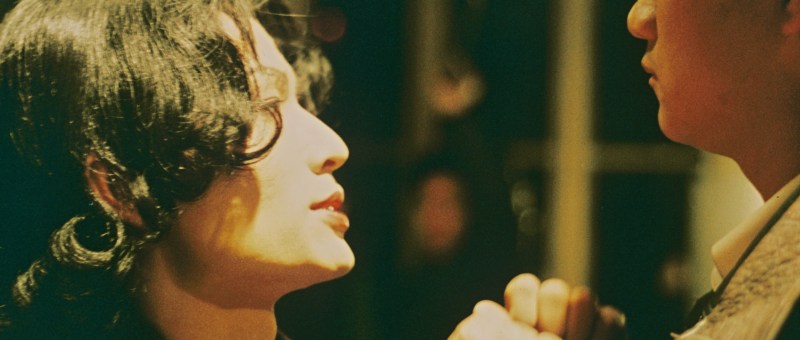
Marriage is a curse from which there is no cure in Chienn Hsiang’s horror-inflected pandemic-era social drama Increasing Echo (修行, xiūxíng). Though the English-language title may hint at the spiralling quality of the shared resentment between a husband and wife no longer, if they ever had been, happy with each other, the Chinese reflects on the heroine’s spiritual journey as she searches for a release from her internalised imprisonment but finds it increasingly difficult to “become a little bird and fly away”. 

Reuniting with Exit’s Chen Shiang-chyi, Chienn opens the film with a surreal scene of a collection of people dressed in white stumbling around zombie-like in a park while some kind of guru instructs them to listen to the voice inside which will guide them towards their own tree. One of the blindfolded devotees, Mrs Yan (Chen Shiang-chyi) eventually embraces a trunk but subsequently faints after a cicada lands on her arm. Encounters with the natural world will prove increasingly ominous, yet we can infer from Mrs Yan’s distress that even if she has managed to find her own tree or at least a solid trunk to hang on to it has not given her the sense of release that she is seeking. With her son about to be married, she finds herself trapped in a loveless relationship with her equally depressed husband Fu-sheng (Chen Yi-Wen) who sips from a hip flask all day at the office, ignores his wife’s calls, and sits in a depressing convenience store cafe every evening to delay having to go home. 

As we later discover the major source of discord between the pair is Fu-sheng’s infidelity, Mrs Yan having discovered his affair with his secretary, Ke-yun (Huang Rou-Ming), some years previously after hiring a private detective. Never really healed, the wound is reopened when Mrs Yan receives a surprise phone call from Ke-yun’s sister who is stuck abroad due to COVID-19 and wants Fu-Sheng to visit his former mistress who has been living in a nursing home for some years having sustained some kind of brain injury that has left her largely unable to communicate. Though originally outraged, Mrs Yan pays a visit to Ke-yun herself and then goads Fu-Sheng into accompanying her though whatever it was she intended the event only forces Fu-sheng into revolt taking off with the dog in tow leaving her all alone in the family home. 

For his part, Fu-sheng quite clearly identifies with the family dog, Terry, surreptitiously feeding him junk food in the park after being admonished for giving him salty table scraps. Where Mrs Yan would prefer to keep him safely at home, Fu-Sheng keeps letting Terry escape to wander freely with the result that he ends up with a canine venereal disease. The vet advises Mrs Yan have him neutered, but this is obviously something Fu-sheng can’t countenance himself feeling fairly emasculated and trapped within his marriage. In this the film perhaps leans uncomfortably leans into patriarchal social codes in implying that Mrs Yan is at fault for limiting her husband’s sexual freedom with even the private detective she hires to find him telling her that it’s good to let him stay out a little and that he’ll come home once he’s got bored and had enough which sounds like statement more applicable to a randy dog like Terry or a child who’s wandered off in a huff than a cheating husband indifferent to his wife’s feelings and willing to risk his relationship with his son by not showing up for any of the wedding prep. 

The implication that Mrs Yan has brought this on herself is further deepened by her gradually fracturing sense of reality born of the array of pills we see her taking each morning and her investment in a cult-like new age religious practice which is later betrayed when she returns to her spiritual home and discovers someone’s put it up for rent. Her world is full of eeriness and ominous symbols from the pigeons which seem to follow her around, to the ghostly corridors at the hospital to which Ke-yun has been consigned with Mrs Yan perhaps also harbouring a sense of guilt though each of them is themselves imprisoned if in an obviously different sense. In this age of social distancing, Mr and Mrs Yan appear to have had a lengthy head start, their alienation from each other later leading towards an act of violence which provides no sense of release only further constraint. Broken by the anxious knelling of Buddhist prayer bells, Increasing Echo hints at the radiating legacies of emotional betrayal but paints the marriage of Mr and Mrs Yan as a kind of maddening curse for which there is no cure only perpetual misery amid the impossibility of separation. 


Increasing Echo screens in Chicago April 9 as part of the 14th season of Asian Pop-Up Cinema.

Original trailer (Traditional Chinese / English subtitles)
You Have To Kill Me (我是自願讓他殺了我, Chan Chun-Hao, 2021)

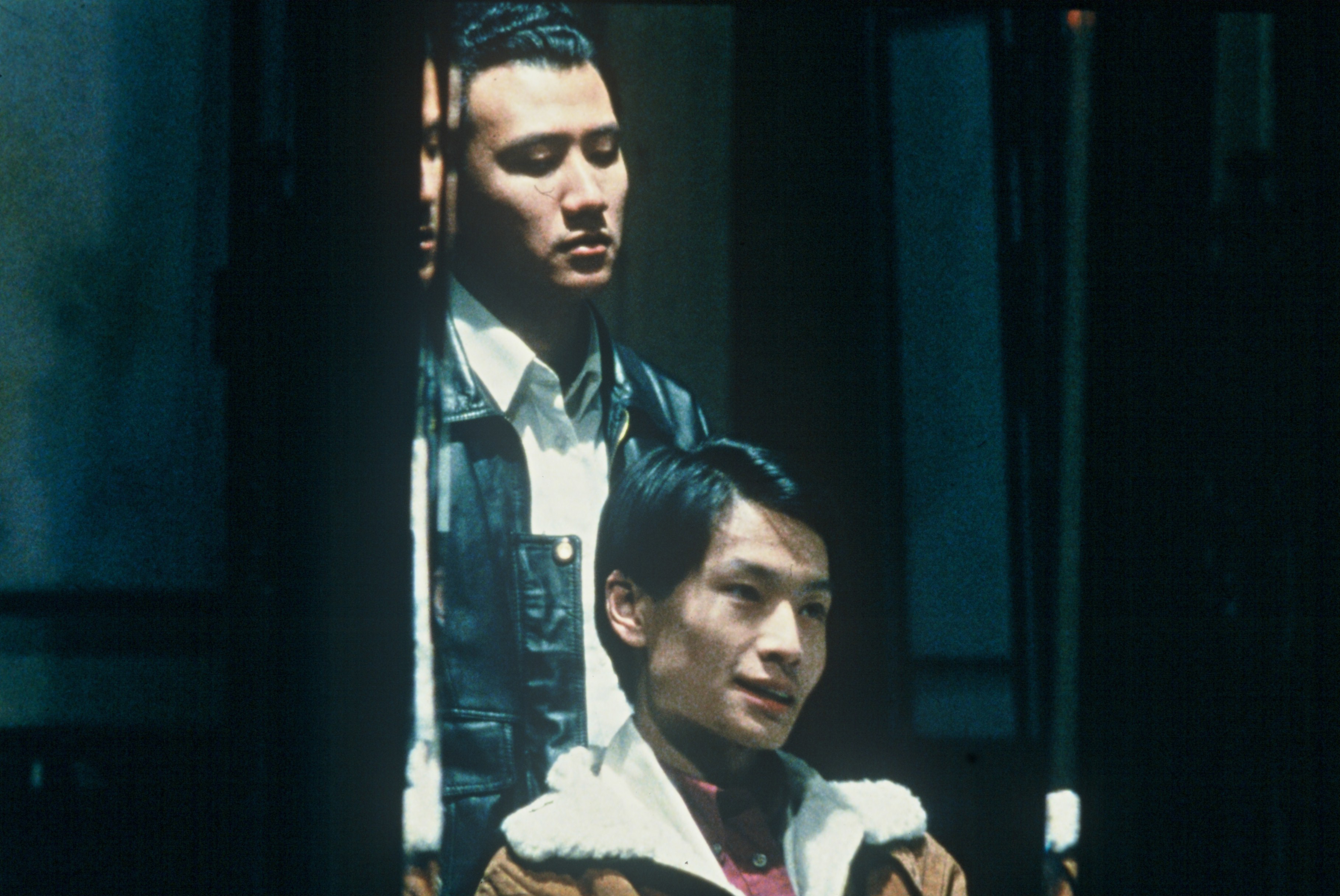
An earnest policeman discovers nothing is quite as he thought it to be in Chan Chun-Hao’s adaptation of the novel by Feng Shi, You Have to Kill Me (我是自願讓他殺了我, wǒ shì zìyuàn ràng tāshā le wǒ). Drawn into a dark web of intrigue which eventually points to abuse of power and a low regard for human life, he is forced into a realisation that even as a law enforcement officer he can never be certain of what is real and what is not while caught in the middle in a battle of between parents each trying desperately to protect their sons. 

About to propose to his live-in girlfriend Kai (Janel Tsai), Shing’s (Cheng Jen-shuo) world comes crashing down when he and his partner Ye-ze (Xue Shi Ling) are dispatched to the mountains and discover that she is the victim of the homicide they’ve been sent to investigate. Shing apprehends the apparent killer, Li Zi-jian (Snoopy Yu), running away from the scene, but the situation is complicated when it turns out that Zi-jian is the son of a local politician, Chairman Li (Yin Chao-Te), and while he admits to the killing claims that he did it at the instigation of Kai who was suffering from terminal cancer and wanted him to help her escape her suffering. A look at Kai’s medical records bears out his story, but on closer examination Shing realises the documents don’t add up. His suspicions are confirmed when Kai’s parents, whom he had seemingly never met, arrive and fail to identify the body claiming instead that it is another woman who had been harassing their daughter, Lin Jing. 

Shing is forced to accept that he might not have known the woman he wanted to marry and that their relationship was founded on a lie, uncertain how much of any of it might have been real. Meanwhile he runs into a series of bureaucratic roadblocks as the chairman continues to disrupt the investigation in order to protect his son, eventually having Shing taken off the case leading him to investigate all alone discovering even more uncomfortable truths that cause him to question his reality. Leaving aside the minor plot hole that it seems unusually easy to live under an assumed name in contemporary Taiwan even if you’re involved in activities which would generally require an extensive background check, Shing has good reason to be confused as he dives ever deeper into an amoral morass in which those with power are prepared to manipulate it for their own ends without much thought for the lives of others. “That’s how much a person is worth” the chairman baldly states signing a settlement agreement over something else his son may or may not have done, later claiming that it doesn’t matter if he caused someone’s death “accidentally” and he’d do it all again to save his son. 

Even so, the chairman may have limits in that his attempts to manipulate the system are bureaucratic in nature and seemingly unnecessary at least it seems as if there would be easier ways to achieve his aims without directly harming others even if they would risk lives indirectly. Meanwhile his accomplice is also seemingly involved in order to protect their family, willing to compromise themselves morally to protect their elderly relatives while believing nothing that bad would come of their actions. Then again, Shing finds himself on the receiving end of further recriminations accused of having failed to protect the woman he knew as Kai from herself leaving her with only a dark path to ensure that justice would be done and corruption exposed. 

While Zi-jian feared he was a burden to his father feeling himself unloved even as he went to such drastic lengths to protect him, Kai/Jing was also afraid to fully trust Shing fearing she’d one day disappoint him unable to move on from her traumatic past without putting it to rest. Taking aim firmly at the societal corruption that allows the rich and powerful to misuse their position for their own gain while ordinary people suffer Chan’s noirish drama situates itself in a murky world of constant uncertainty in which even an earnest policeman can be largely oblivious of the lives of those around him while the purest of motivations can lead to only darkness and misery.  


You Have To Kill Me streams in the US April 4 – 10 as part of the 14th season of Asian Pop-Up Cinema.

Original trailer (English subtitles)

No Man is an Island (沒有人該成為孤島, Jay Chern, 2022)

For much of the pandemic, Taiwan was regarded as a success story having largely managed to avoid mass infections through a well formulated public health programme that meant for many life could carry on more or less as normal. Jay Chern’s documentary No Man is an Island (沒有人該成為孤島, méi yǒurén gāi chéngwéi gūdǎo) focusses on the sometimes forgotten frontline workers that made that sense of normality possible while losing their own in situating itself in a small hotel which agreed to become a quarantine facility for travellers arriving from overseas. 

Chern spends much of his time with the hotel’s manager, Rebecca Ma, who at one point describes the decision to house those needing to quarantine as the biggest mistake of her life but also something she ultimately felt was the right thing to do, that it would be wrong to refuse when they had the capability to help. Nevertheless, she makes clear that her greatest responsibility was to her staff, negotiating with the government that they’d only agree to offer quarantine services if they’d be provided with full PPE while we can also see the extensive procedures they must take to keep the the guests and themselves safe disinfecting rooms after guests leave and allowing several hours before deep cleaning them while running UV disinfectant lamps throughout the building. 

Meanwhile, they also face some pushback from the local community upset by the close proximity to those who may be carrying COVID-19 only to be reminded that if they weren’t quarantining at the hotel they’d have to go somewhere else and could even be staying in the apartment below theirs so the point is in many ways moot. Even within the hotel Ma is well aware of how boring and distressing being trapped in quarantine could be even in a hotel as nice as hers fully preparing herself for a series of picky complaints from guests with quite literally nothing else to do taking out their frustrations on the front desk team. Meanwhile, others forget that it’s not a holiday, they’re in quarantine, and want access to normal hotel services around the clock not always taking kindly to being reminded that certain things may not be possible. 

With that in mind, it’s genuinely touching to see the level of care that the hotel staff have for those staying with them taking note of their mental health as well as the physical. Ma recounts personally preparing a meal for the first few quarantiners and is often seen organising special treats for the guests particularly in the holiday periods so that they don’t feel alone as if the hotel staff is their family even gifting pretty flowers and cupcakes for mother’s day as well as small toys to keep children entertained. She herself has been living away from her family in the hotel to keep everything running smoothly while further members of staff move in later during the stricter lockdowns put in place after the situation intensifies ironically because of lax quarantine processes at another hotel which allowed airline personnel to leave earlier than otherwise recommended. 

Mindful of her responsibilities, Ma makes a point of leading by example never asking anyone else to do something she wouldn’t or put themselves in harm’s way unnecessarily. One employee reflects that she was so frightened that she wrote her will and explained to friends what to do with her ashes should the worst happen, but in general the atmosphere among the staff seems cheerful and upbeat, Ma giggling that she feels like a naughty child ringing people’s doorbells and then running away to let them know their meals have arrived. Privately she admits that the situation can be stressful because no mistakes can be made, it is quite literally a matter of life and death, but also a job she just needs to keep doing to the best of her ability. 

Chern also speaks to a few of the quarantiners one of whom is his own mother returning from the US to care for his bedridden grandmother, while others have returned to be closer to their families or because it is simply safer in Taiwan than wherever they were before, allowing each of them to chronicle their experiences in their quarantine diary as they try to stave off cabin fever and the anxieties of their long journeys home. Hanns House has become for them a small safe haven until they’re able to go back out into the world. “Sometimes life isn’t about what we want or if you’re ready, but rather if it’s necessary” Ma adds, later reflecting that the pandemic is turning into a never-ending marathon, “If you can’t run, crawl to the very end”.  


No Man is an Island streams in the US April 4 – 10 as part of the 14th season of Asian Pop-Up Cinema.

Original trailer (English subtitles)

Journey to the West (宇宙探索编辑部, Kong Dashan, 2021)

An eccentric middle-aged man’s search for alien contact sends him on a quest for enlightenment in Kong Dashan’s deadpan epic Journey to the West (宇宙探索编辑部, Yǔzhòu Tànsuǒ Biānjí Bù). Inspired by the classic Chinese tale of the monk Tang Sanzang who journeyed west in order to bring true Buddhism to China in the company of the anarchic monkey king Sun Wukong, Kong’s comical adventure finds its awkward hero longing for connection in contemporary China his search for the extraterrestrial a means of provoking the next great human evolution in the belief that on the discovery of alien life humanity would immediately abandon its petty disagreements and live in perpetual harmony. 

Kong opens however with some VHS footage from 1990 in which UFO-obsessive Tang (Yang Haoyu) is interviewed for a documentary before flashing forward 30 years to the present day in which Tang has made little progress. The magazine which he edits, Universe Exploration, is on the brink of bankruptcy with his exasperated boss Mrs Qin (Ai Liya) already holding tours for prospective sponsors none of which go particularly well. As we later discover, Tang’s obsession has dominated his life resulting in the breakdown of his marriage while his daughter later died by her own hand it seems in part because of the same despair he too feels in his inability to understand the purpose of human existence. His quest is partly one for answers, though his theories often sound unhinged as he patiently explains about messages in the white snow of a detuned analogue television or pays visits to psychiatric institutions believing that psychopaths whose brains are wired differently may be better able to receive extraterrestrial signals. 

On the other hand, his way of life is not perhaps that different to that of his namesake Tang Sanzang in his wilful aestheticism insisting that the desire for better food along with sex for reasons other than procreation is merely a consumerist trap actively blocking the path towards human evolution which he believes he will discover in contacting extraterrestrial life. In his theory, if the Earth is like a grain of sand in the desert of the universe then it’s illogical to assume there are not other beings out there whom he assumes will be far advanced not only in technological terms but also in morality. But then, as a poet he later meets on his journey west into the mountains eventually asks him what if the aliens don’t have any answers either and have in fact come to Earth in order to ask the exact same question for which Tang seeks the solution?   

Inevitably, the conclusion that he comes to is that the answer lies within, that humanity is the universe and each person a single word in a great poem centuries in the making that might in its conclusion allow us to understand why we live if only we can go on connecting with each other to form new sentences in the great unfinished journey towards enlightenment. Then again, Mrs Qin hints at the mean spiritedness of the contemporary society in her conviction that if there are aliens out there who want to come to Earth it’s probably to rob it, while out on the road Tang is taken in by a bizarre scam involving the body of an alien in a freezer you can only see if you are the chosen one which requires the willingness to pay $99.99 to man running the alien embassy on Earth though it does at least result in Tang receiving a mysterious bone which does seem to be crucial to his quest once he runs into monkey king stand in Sun Tiyong (Wang Yitong) who wears a saucepan on his head and claims to have received a mission to retrieve a stone ball stolen from a lion statue’s mouth from a mysterious alien entity. 

Ever mindful of the contemporary realities, Kong throws in several ironic nods to the censors board Tang repeatedly reminded that he must always find a “scientific” explanation for bizarre phenomena rather than succumbing to “superstition”. Travelling west with Sun and a small team including his drunken friend and a young woman the same age as his daughter would have been if she’d lived, Tang does indeed undergo a kind of vision quest culminating in the apotheosis of Sun into Wukong while a strange man in a red hat riding a tiny UFO-like cart always seems to be one step ahead of them. Shot in a faux documentary style complete with direct to camera interviews and occasional breaking of the fourth wall, Kong’s hilariously deadpan, absurdist epic sees Tang journeying west in search of the meaning of life only to be confronted by the vastness of the universe and discover himself, and the answer he seeks, already in its embrace. 


Journey to the West screened as part of Osaka Asian Film Festival 2022

Clip (English subtitles)

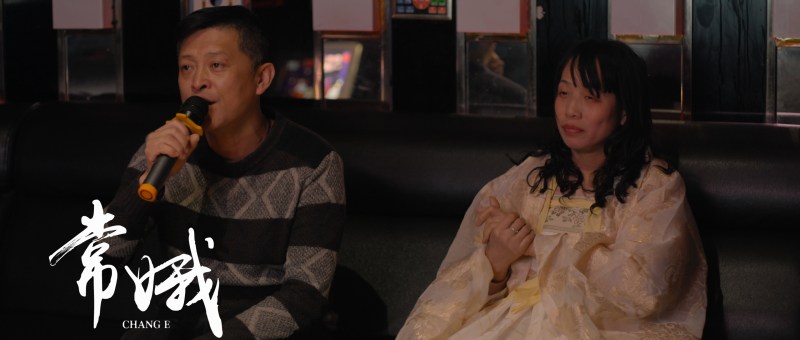
A New Old Play (椒麻堂会, Qiu Jiongjiong, 2021)

“A new play always tells an ancient tale” according to an intertitle a little more than half way into Qiu Jiongjiong’s three-hour Brechtian epic of mid-20th century Chinese history as witnessed by a Sichuan Opera performer, A New Old Play (椒麻堂会, Jiāo Má Táng Huì). Inspired by the life of his grandfather, Qiu’s absurdist drama is a cradle to grave journey through turbulent times but also a questioning of the nature of art at the intersection of politics and commerce, its uses and misuses in a constantly evolving society. 

As the film opens a pair of grim reapers kick start a pedal bike rickshaw and deliver a summons from the King of Hell to Qiu Fu (Yi Sicheng), now in his 70s one of the finest clowns of the Sichuan Opera. Qiu Fu does not want to accept that he is dead and tries to run away but running away from death will always be a futile endeavour. Oxey and Horsey will escort him to the Ghost City and the afterlife where he will be relieved of all his pain and suffering after drinking Mother Meng’s Soup of Oblivion. But if it all just disappears in the end, what was the point of it all? Two young lovers discuss between them their immediate fate and decide to stay on in limbo where they still remember their love. Qiu Fu wonders how he’s supposed to perform Sichuan Opera for the King of Hell if all his memories and long years of perfecting his craft have been taken away, but is told that each of us has a “secret code” that can never be erased his presumably being clowning. When everything else is gone, Sichuan Opera will survive. 

Then again Qiu Fu has found himself playing many different roles in the course of his life beginning with plucky orphan, convincing former nationalist soldier turned stage performer Pocky (Qiu Zhimin) to train him up as an apprentice. Pocky meanwhile will turn out to be on the wrong side of history, a Nationalist loyalist quickly outmanoeuvred by the times in which he lives. One moment, the troupe is performing pro-Nationalist patriotic fare with titles such as “The Patriot Beggar” and “Behead Ma Miao” crying “down with traitors” in front of signs which say “save the nation fight communism” only to find them replaced by those which read “save the nation down with Chiang Kai-shek”. A fearful Pocky sends the troupe to Taiwan but discovers Sichuan Opera doesn’t travel as well as he’d assumed, the actors quickly reduced to begging and finding even that somewhat competitive. 

Qiu Fu’s greatest performance may even have been when dragged onstage by the communists as an example during a lecture on opium addiction having been forced to endure going cold turkey, claiming that his Lenin suit is far superior to the fine robes he once wore as an opium addict. The “theatre of joy” is now “the people’s theatre” but the promised new era almost immediately disappoints. Red brick buildings sit incongruously amid the traditional houses with their ornate tiled roofs while Oxey and Horsey lurk forever in the shadows waiting to escort those succumbing to the famines provoked by the Great Leap Forward though even they are afraid to use their rickshaw in this age of austerity. No longer the representatives of a new world, the troupe finds itself on the wrong side of the Cultural Revolution, Pocky branded a reactionary warlord while others are forced to wear signs reading “theatre tyrant” or “gangster” only for Qiu Fu to turn his humiliation into a show clowning for the local children who giggle at them in their funny hats as they stand in the courtyard in front of the theatre displaying their sins for all to see. Before too long Qiu Fu is forced to brick himself up inside a pig sty while his wife (Guan Nan) is encouraged to divorce him testifying to his faults before a judgemental panel of ideological purists. Once rehabilitated he must once again play the beggar, cast as a villain forevermore. 

Qiu Fu’s memories seems to end soon after the Cultural Revolution though he must have lived on a little longer, the story of his life told to a series of ghosts caught up in a kind of bureaucratic hell apparently undocumented in the land between life and death. Now you see him, now you don’t, Qiu Fu’s life both eternal and gone an instant. Using a series of deliberately theatrical stage sets, Qiu’s beautifully ethereal production design is somewhere between Roy Andersson and Arthur Rackham’s Brothers Grimm in its oneiric mists and pale-faced ghosts, Qiu Fu always sporting a bright red nose and gnome-like little red beanie accompanied by a pair of oversize glasses to remind us of his age. Imbued with an ironic sense of humour, the tale is sometimes broken by a series of Brechtian intertitles written in the rhythms of Sichuan Opera the techniques of which Qiu repurposes to fantastic effect, boats travelling on seas of silk, or small boys floating away on clouds above model cities and armies at war. Is it life or death that’s a dream? Both or neither perhaps it’s all the same a cyclical opera to be performed in perpetuity telling an old story in a new way from here until eternity. 


A New Old Play screens in New York March 18 as part of Museum of the Moving Image’s First Look 2022

Original trailer (English subtitles)

Detective Chinatown 3 (唐人街探案3, Chen Sicheng, 2021)

Cerebral sleuth Qin Feng (Liu Haoran) and his larger than life uncle Tang Ren (Wang Baoqiang) are back on the case in the third instalment in the Detective Chinatown franchise (唐人街探案3, Tángrénjiē tàn àn 3) picking up as promised in Tokyo as the duo take on another locked room mystery on the invitation of dandyish local investigator Hiroshi Noda (Satoshi Tsumabuki). This time around, the mystery is only tangentially connected to a Chinatown though the solution in itself does indeed lead back towards the Mainland and the complicated relations between China and Japan, while Qin in particular finds himself confronting the idea that oligarchy is in fact the “perfect crime”. 

Hired by a yakuza boss, Watanabe (Tomokazu Miura), accused of offing a Thai rival, Su Chaiwit, following a dispute over development rights in the local Chinatown, Qin and Tang Ren quickly find themselves hamstrung by their own discovery of evidence which further implicates their client and brings them to the attention of top cop Tanaka (Tadanobu Asano) who wastes no time telling them to mind their own business. Meanwhile they are also being pursued by muscly Thai detective Jaa (Tony Jaa) working for the other side. In a new high tech motif, the guys are each handed a simultaneous translation earbud which allows the Japanese and Chinese guys to converse with each other in their own languages though Hiroshi often chooses to speak directly in Mandarin instead while the Thai contingent exclusively use English. Unlike previous instalments the duo do not venture into the local Chinese community and Chinatown itself is merely territory contested by Japanese yakuza and South East Asian gangsters. 

Even so Qin and Tang Ren find themselves at a nexus of cross-cultural conflict caught between the cops, yakuza, and Thai gangsters each looking not so much for the truth but some kind of advantage for their side all of which culminates in a hilarious series of mixups at a morgue. Once again, Tang Ren falls in love with a local woman, in this case Su Chaiwit’s secretary Anna Kobayashi (Masami Nagasawa) who is certain Watanabe is guilty and later apparently kidnapped by a crazed serial killer (Shota Sometani) just by coincidence. Of course, all this cycles back towards the franchise’s growing mythology, Qin pursued and manipulated by the mysterious entity known only as “Q” which, as we learn, is as obsessed with the idea of the perfect crime as Qin largely in that they think they’ve perfected it in the stranglehold placed over civilisation by a shady elite. 

In this, the film may be taking aim at hidden oligarchy and the immorality of growing social inequality, but in its Japanese setting Chen is also freer to take potshots at contemporary Chinese society such as in Tang Ren’s confusion that they can’t simply bribe the police to get Qin out of jail when he is wrongfully arrested. “Justice and equality require sacrifices” Qin explains after solving a grim riddle only to be asked some difficult questions about the nature of justice and his own role within it by a manipulative villain, but in a classically censor-friendly move ends the movie with a brief monologue declaring that “justice always prevails and light overcomes darkness”, he and his team recommitting themselves to fighting “vices”, and presumably the shady elitism fostered by Q, wherever they arise. 

Like Detective Chinatown 2’s New York setting, the vision of Japan on display is deliberately stereotypical from an Akihabara cosplay carnival to tasks involving masked kendo fighters and a sumo wrestler, not to mention bumbling comedy yakuza forever threatening to cut off their fingers, the Shibuya Scramble set piece, or a playful homage to Phoenix Wright: Ace Attorney. Meanwhile, Chen continues his taste for huge ensemble action such as the complex slapstick routine that opens the film and now traditional end credits sequence featuring the cast dancing to theme tune “Welcome to Tokyo” dressed in the classic green detective mac worn by Qin. Truth be told, the solution to the central mystery is heavily signposted and slightly unsatisfying though Chen’s visualisations of Qin’s deductions are expertly rendered even as the hero’s growing confidence as a crimefighter unbalances his relationship with the increasingly silly if goodhearted Tang Ren. Boasting a host of A-list Japanese acting talent, the film also makes space for an unexpected cameo from one of the most recognisable faces in Sinophone cinema before teasing a further instalment to take place in London, home to the greatest consulting detective of them all. 


Detective Chinatown 3 is available to stream in the UK via iTunes, Google Play, Amazon Prime, Microsoft, Sky, and Virgin Media courtesy of Cine Asia.

Original trailer (English / Simplified Chinese subtitles)