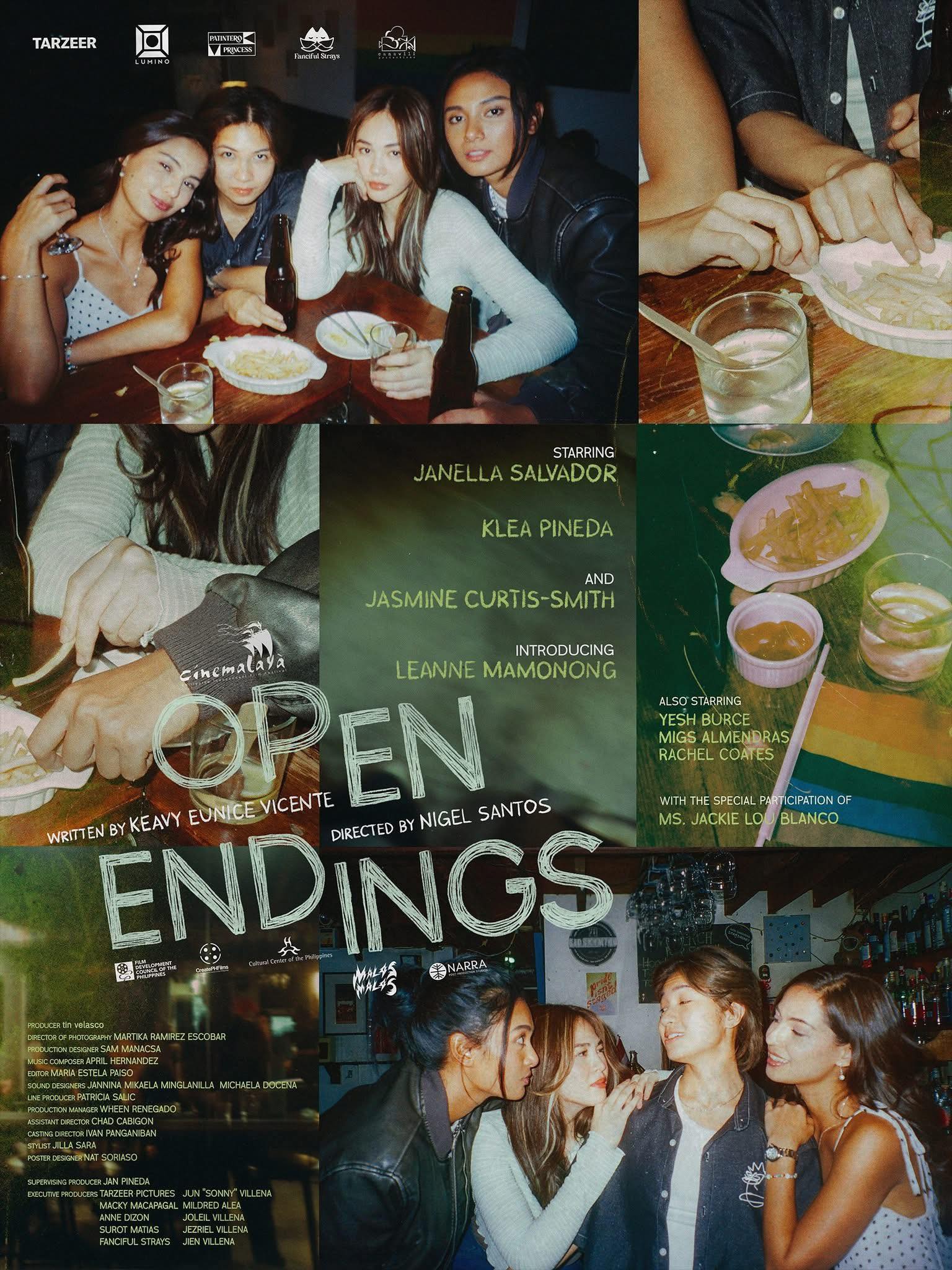
Is it acceptable to be friends with your exes? Charlie’s (Janella Salvador) bond with her friendship group made up of women who’ve all been romantically entangled at one point or another becomes a problem for her new relationship. Rafa (Rachel Coates) finds the situation altogether too weird, and even goes so far as to ask Charlie to cut her friends off. It might not be a good idea to date someone who tries to isolate you from friends and family, but Rafa claims these are just her boundaries and she can’t help feeling uneasy with Charlie spending so much time with women she’s previously slept with.
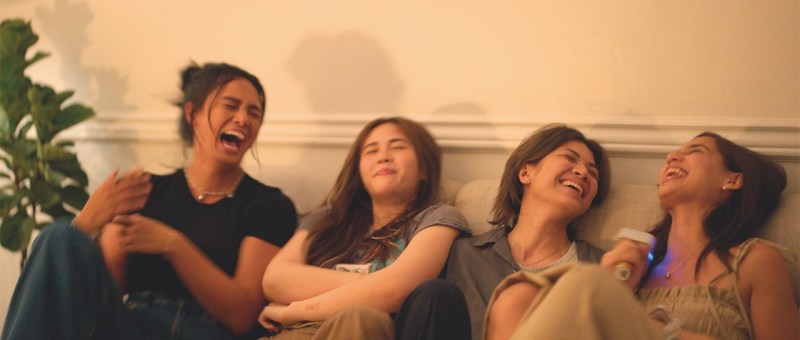
Then again, it’s not easy to be gay in the Philippines and this community is quite small. Can you really afford to cut people off just because of potential awkwardness? Each of the women is struggling in their own way, but tries to support her friends and is supported in return. The group only really formed as the exes banded together to look after Hannah when her partner passed away. Sundays have now become sacred to them as a time they can all come together and share their fears and worries no matter the various unresolved feelings that exist between them.
These relationships are often messy and ill-defined, but genuine and heartfelt. For Kit (Klea Pineda), friendship is most the beautiful of gifts and she fears acting on her feelings for Charlie because she doesn’t want to ruin what they have. Still closeted not wanting to upset her parents are religious and conservative, Kit is in an awkward non-relationship with a married woman who is also the mother of one of her pupils at the school where she teaches. Alexa (Yesh Anne Burce) is trapped with a heteronormative relationship she cannot escape because divorce is still not legal in the Philippines. Constrained by her own circumstances, she becomes possessive of Kit who is the only path back to her authentic self and the only person with whom she can be free. In other ways, however, perhaps the impossibility relationship suits Kit because she cannot be her authentic self either while unable to reveal her sexuality to her parents.
The impossibility of divorce is also a factor when Hannah (Jasmine Curtis-Smith) suddenly drops the bombshell that she’s become engaged to a man. The group’s only bisexual, Hannah faces prejudice from her family who express relief that she’s finally got over her lesbian phase and rediscovered the right path, while the friends also see it as a kind of betrayal though perhaps only because she kept her new relationship secret from them for several months. Charlie is also subjected to homophobic violence when a man barges into the gay bar where she’s drinking and propositions her, insisting that she is “alone” because he’s only seen her with another woman. When he finally figures it out, he sees it as a challenge and quickly becomes violent.
These kinds of petty aggressions remind the women of their precarious position within a hostile society that enforcers heteronormativity and traditional gender roles. Their friendship is a small bubble of resistance that gives each of the women additional confidence to continue being who they are. This atmosphere of hostility plays into Mihan’s insecurities, her far of commitment and inability to clearly declare her feelings. She resents Hannah for choosing to marry a man as if she were doing it because of social expectation rather than personal desire, while also forced to accept that this is all her fault. She had plenty of time to try and patch things up with Hannah, but never did.
The open-ended nature of these relationships leaves Mihan with anxiety, but it also allows these women to continue being friends and supporting each other. The friendship doesn’t have to end just because the romance did. But at the same time, she has to accept that the risk of heartbreak is something that has to be actively embraced and her tendency to skip out on relationships the moment they become serious leaves her only with a lack of resolution. Painting a warm and funny portrait of contemporary queer life in the Philippines which nevertheless does not shy away from its difficulties, Open Endings celebrates most of all the joyousness and power of female friendship in the face of social hostility.
Open Endings screened as part of this year’s Queer East.
Trailer (English subtitles)

