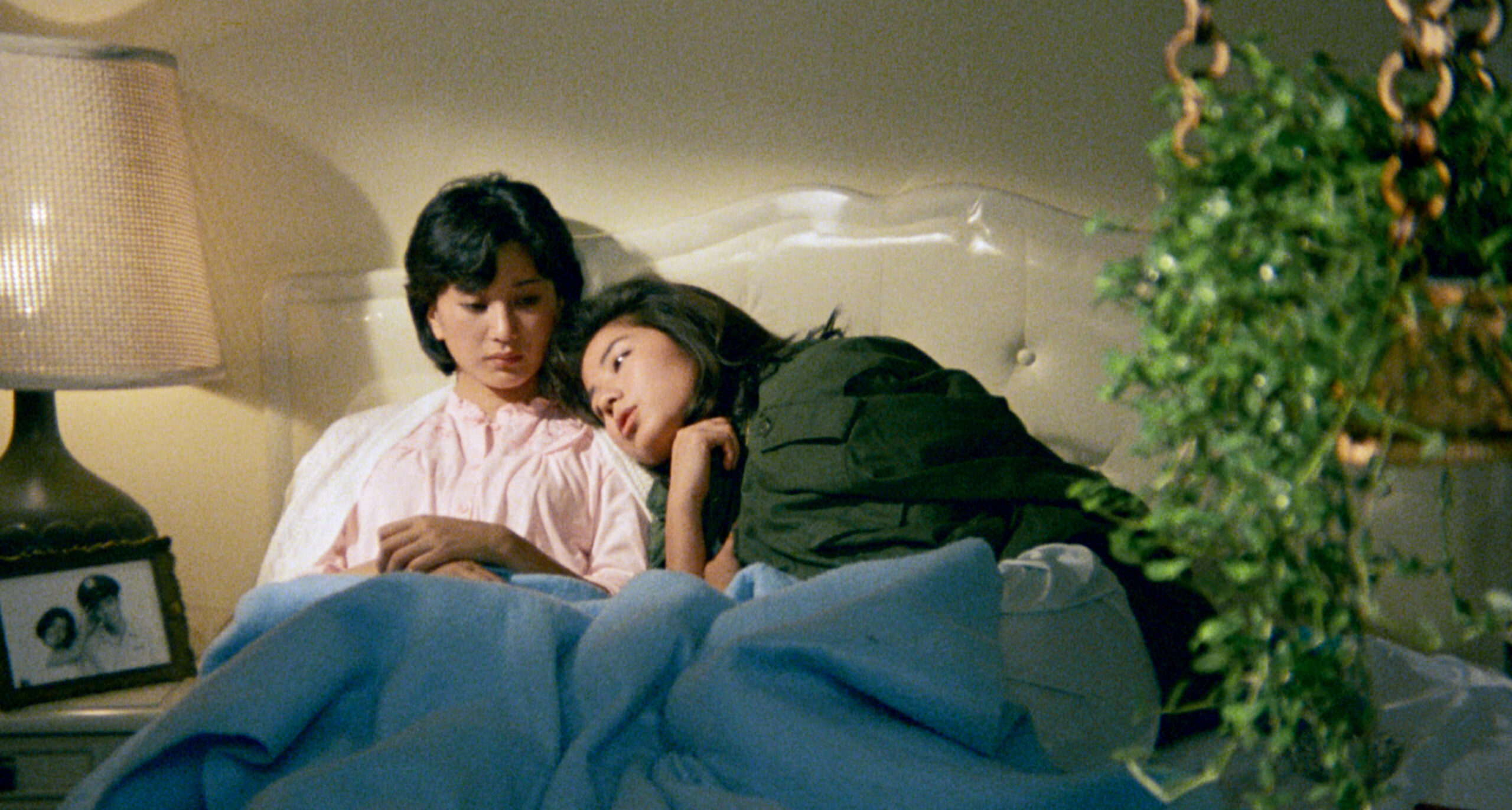
The Spring Outside the Fence (竹籬笆外的春天, Li Youning, 1985)

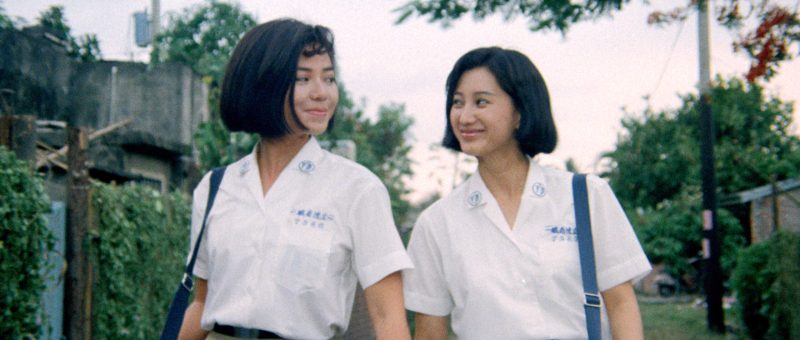
Two young women attempt to ride the waves of a changing Cold War Taiwan in Li Youning’s bittersweet melodrama, Spring Outside the Fence (竹籬笆外的春天, zhúlíbā wài dechūntiān). The titular fence is that of the military dependents’ village where the two women grew up that comes to represent an increasingly distant past and a vision of Taiwan that has all but become obsolete by the film’s conclusion in 1972 in which the nation seems to have abandoned both the US and the idea of reclaiming Mainland China to forge a more independent future.

The film opens in 1949, not long after the Chinese Civil War and nationalist defeat in which Chiang Kai-shek’s forces fled to Taiwan. The military dependents’ village is a settlement for the family members of former KMT soldiers and a rather ramshackle, rundown place. Nevertheless, Ai Hua (Su Ming-ming) says she likes it because the people are kinder there than elsewhere. They’re like one big family with everyone supporting each other. To that extent, one could describe her relationship with best friend Li Lin as “sisterly”, though there are hints in her longing gazes that suggest her affection for her may lean towards the romantic. When Li Lin begins dating their childhood friend He Kang, Ai Hua abruptly agrees to go out with another boy she’s previously turned down only to later admit there is “no chemistry” between them.

That’s partly because he’s a slightly patronising hypocrite who tries to encourage Ai Hua to work on her English so she can study abroad in the US. He gives Ai Hua books on “existentialism”, while He Kang had given her poetry after reading some of her own in the newspaper. When Taiwan is kicked out of the UN, the other boy first broaches the subject with Ai Hua but then drops it saying he thinks it’s probably too difficult for her to understand. Despite his sense of betrayal that America sided with China, he is still studying English and planning to study in the US in order to get ahead. Ironically, capitalism has now become the enemy of right-wing patriotism even among the formerly privileged waishangren whose status has begun to decline. With the Vietnam War coming to a close, the bar in Taipei where Li Lin works as a hostess, and Ai Hua as an accountant, begins to refocus its attentions on chasing Japanese businessmen rather than US forces.

He Kang’s early death can also seen as symbolic of the death of the KMT’s vision of Taiwan. As a child, he’d given a firebrand speech about becoming a fighter pilot like his father to liberate the Mainland with a large picture of Chiang Kai-shek dominating the classroom. The children used to enjoy standing on the air raid shelter watching the planes go by safe in the knowledge that they were protected. For Li Lin, the planes also seemed to symbolise freedom and a world outside of the village. Her room is full of pictures of classic Hollywood stars like James Dean and Clark Gable, while she listens to the Beach Boys and dances to the The Twist aligning her with the anti-communist sensibilities of the KMT. Her love for He Kang is also bound up with this ideology in which the village is only ever really a transient space designed to exist only until the Mainland is retaken and the families return. 

Speaking of her own emotional repression, Ai Hua remarks that she was always envious of Li Lin who was confident in expressing her feelings and having a good time outside the fence while she remained trapped within it. Though Li Lin remains wedded to the past, wearing He Kang’s jacket and the aeroplane necklace he gave her in lieu of a ring, the two women watch the plane carrying Chinese-speaking American airman Michael, whom Li Lin has rejected, fly away with a sense of sadness tempered with optimism. They have now only each other, but have perhaps achieved a kind of self-sufficient independence free of both Mainland China and America in the new nation of Taiwan. 


The Spring Outside the Fence screened as part of this year’s Queer East.
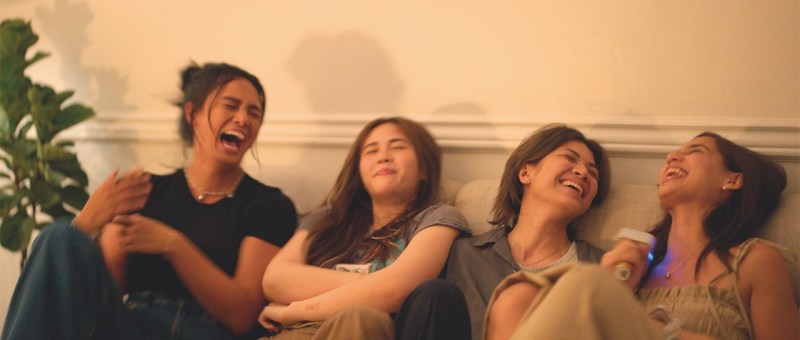
Open Endings (Nigel Santos, 2025)

Is it acceptable to be friends with your exes? Charlie’s (Janella Salvador) bond with her friendship group made up of women who’ve all been romantically entangled at one point or another becomes a problem for her new relationship. Rafa (Rachel Coates) finds the situation altogether too weird, and even goes so far as to ask Charlie to cut her friends off. It might not be a good idea to date someone who tries to isolate you from friends and family, but Rafa claims these are just her boundaries and she can’t help feeling uneasy with Charlie spending so much time with women she’s previously slept with.

Then again, it’s not easy to be gay in the Philippines and this community is quite small. Can you really afford to cut people off just because of potential awkwardness? Each of the women is struggling in their own way, but tries to support her friends and is supported in return. The group only really formed as the exes banded together to look after Hannah when her partner passed away. Sundays have now become sacred to them as a time they can all come together and share their fears and worries no matter the various unresolved feelings that exist between them.

These relationships are often messy and ill-defined, but genuine and heartfelt. For Kit (Klea Pineda), friendship is most the beautiful of gifts and she fears acting on her feelings for Charlie because she doesn’t want to ruin what they have. Still closeted not wanting to upset her parents are religious and conservative, Kit is in an awkward non-relationship with a married woman who is also the mother of one of her pupils at the school where she teaches. Alexa (Yesh Anne Burce) is trapped with a heteronormative relationship she cannot escape because divorce is still not legal in the Philippines. Constrained by her own circumstances, she becomes possessive of Kit who is the only path back to her authentic self and the only person with whom she can be free. In other ways, however, perhaps the impossibility relationship suits Kit because she cannot be her authentic self either while unable to reveal her sexuality to her parents. 

The impossibility of divorce is also a factor when Hannah (Jasmine Curtis-Smith) suddenly drops the bombshell that she’s become engaged to a man. The group’s only bisexual, Hannah faces prejudice from her family who express relief that she’s finally got over her lesbian phase and rediscovered the right path, while the friends also see it as a kind of betrayal though perhaps only because she kept her new relationship secret from them for several months. Charlie is also subjected to homophobic violence when a man barges into the gay bar where she’s drinking and propositions her, insisting that she is “alone” because he’s only seen her with another woman. When he finally figures it out, he sees it as a challenge and quickly becomes violent. 

These kinds of petty aggressions remind the women of their precarious position within a hostile society that enforcers heteronormativity and traditional gender roles. Their friendship is a small bubble of resistance that gives each of the women additional confidence to continue being who they are. This atmosphere of hostility plays into Mihan’s insecurities, her far of commitment and inability to clearly declare her feelings. She resents Hannah for choosing to marry a man as if she were doing it because of social expectation rather than personal desire, while also forced to accept that this is all her fault. She had plenty of time to try and patch things up with Hannah, but never did. 

The open-ended nature of these relationships leaves Mihan with anxiety, but it also allows these women to continue being friends and supporting each other. The friendship doesn’t have to end just because the romance did. But at the same time, she has to accept that the risk of heartbreak is something that has to be actively embraced and her tendency to skip out on relationships the moment they become serious leaves her only with a lack of resolution. Painting a warm and funny portrait of contemporary queer life in the Philippines which nevertheless does not shy away from its difficulties, Open Endings celebrates most of all the joyousness and power of female friendship in the face of social hostility.


Open Endings screened as part of this year’s Queer East.
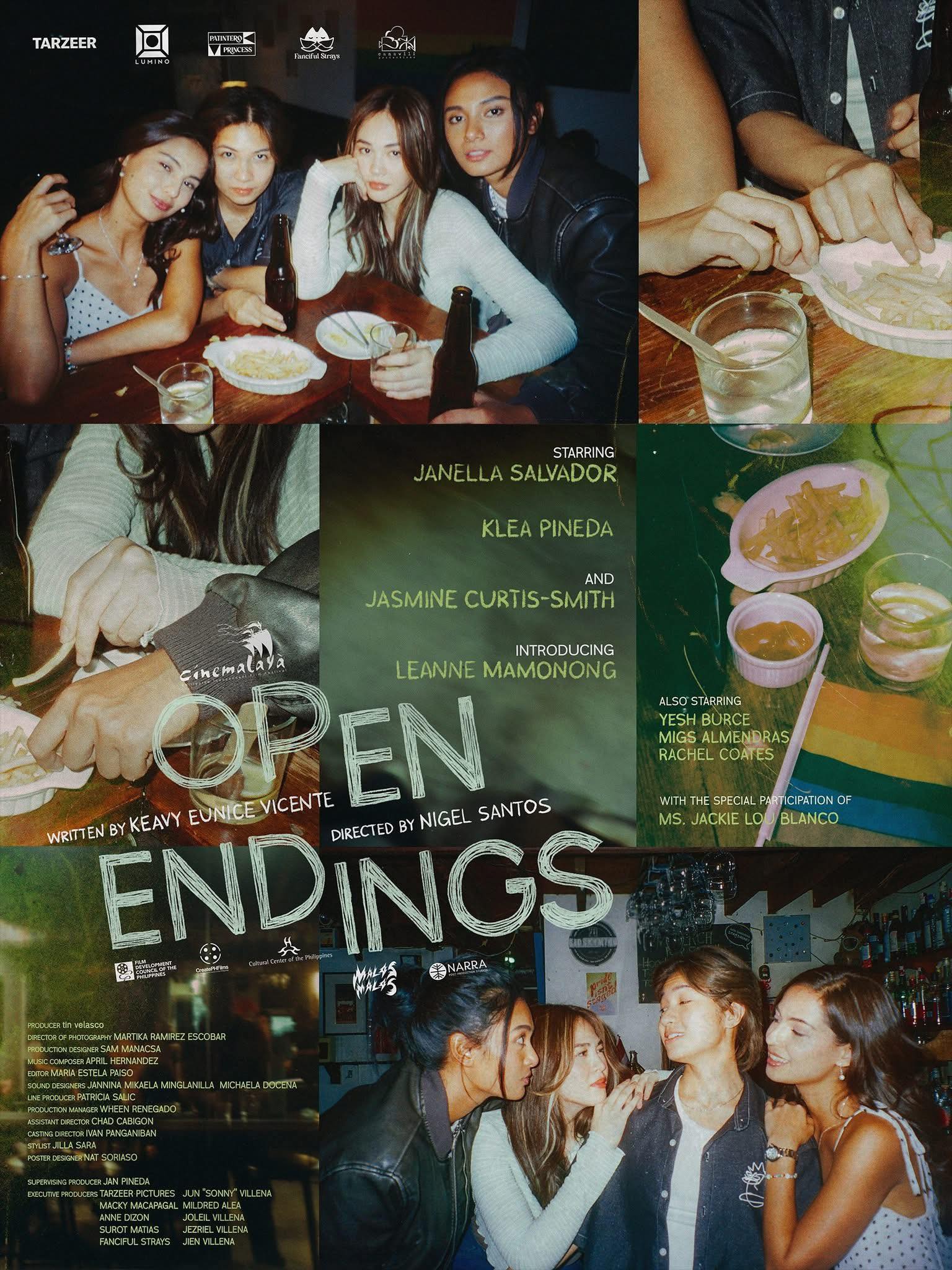
Trailer (English subtitles)

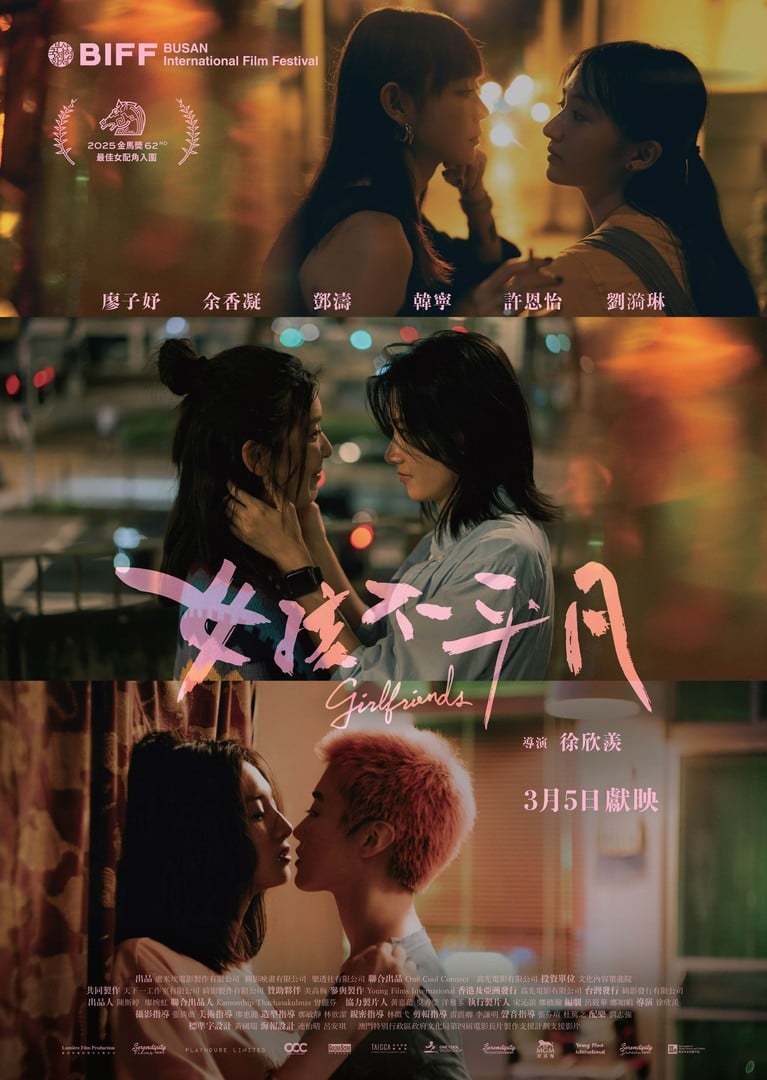
Girlfriends (女孩不平凡, Tracy Choi Ian-Sin, 2025)

Now in her mid-30s, Lok (Fish Liew) feels as if she were perpetually standing at a crossing waiting for the light to turn green. She made her first film five years ago, but hasn’t been able to make another one since. A producer likes her script, but tells her that with this kind of content they won’t be able to release it in Mainland China or Malaysia, so they won’t be able to recoup their investment. As he says though, the script can always be tweaked and if she rewrote it including a role for an actress looking for a comeback they might be in business.

But Lok doesn’t really want to compromise. Tracy Choi Ian-Sin’s semi-autobiographical Girlfriends (女孩不平凡) is in many ways about the of fear of being railroaded into something that’s not what you really want. After an argument with her girlfriend Bei (Jennifer Yu), Lok begins to look back on her life in reverse chronological order inching towards the source of her insecurity in her Macao childhood. At 17, she faced intense pressure to conform. As a member of the debate team, she’s tasked with making an argument for something she doesn’t believe in and resents being forced to say what’s expected of her rather than how she really feels. Her parents expect her to go a local university and become a civil servant without really giving her much choice in the matter. The older sister of a classmate, Faye (Eliz Lum) is the first person who asks her what it is she really wants. 

Lok finds herself watching 2004 Hong Kong drama Butterfly and trying to sort out her confusing feelings for Faye while secretly taking the exam to study at a university in Taiwan in the hope of living a freer life, if only for four years. There seems to be a part of present-day Lok that still thinks she’s on an extended holiday and will one day have to return to Macao and become a civil servant after all. She’s incapable of thinking of the future and seems to be mothered, to a certain extent, in all her relationships as her respective partners take on the burden of practical considerations like financial planning. Each time things start to get serious, she begins to back away, even ghosting her Taiwan girlfriend to return to Macao alone without saying goodbye.

Both the Taiwan girlfriend and Bei seem to want move back to Macao with Lok without even really considering if she actually wants to go. This assumption seems to further fuel her desperation and send her looking for an escape route. Returning to Macao with a girlfriend does not seem to be an option for her because Macao represents conventionality and the life she doesn’t really want but still deep down thinks she is unable to escape. Never having fully addressed her lost love for Faye, she lacks the courage to commit or to believe in a long-term future. Her apartment seems to be full of reminders of old lovers, while she remains uncommunicative and insecure. Using sex as a means of avoiding confrontation, she has a tendency to storm out rather than have a conversation and has never fully accepted herself. When her long-term girlfriend Bei starts talking about serious things like marriage and children, she tells her that she wants her to have a “normal” life, as if she were preventing Bei from having one.

Bei is indeed under the pressure of conventionality, nagged by parents who still haven’t accepted her relationship with Lok to settle down and marry a man. Lok’s family in Macao seem to have already accepted Bei as her wife, but still Lok can’t get over the mental hurdle of believing that she has a right to a future of her own choosing. After her script is turned down, she goes to the cinema to see The Lyricist Wannabe and over identifies with a line in which the heroine is bluntly told that if she’s spent all this time waiting and still not got anywhere, perhaps it’s time to consider another career. Her lack of success further deepens her insecurity as Bei practically points out that they do actually need some money coming in, and perhaps they might have to compromise their artistic dreams as an actress and a director under the pressure of living in difficult economic circumstances while planning for their long-term financial future. It doesn’t sound very romantic, but in a way it is. It’s only by looking back over her life and failed relationships and returning to Macao to put her past to rest, that Lok is finally able to stop chasing the ghost of Faye and gains the courage to seize the future that she really wants.


Girlfriends screened as part of this year’s Queer East.
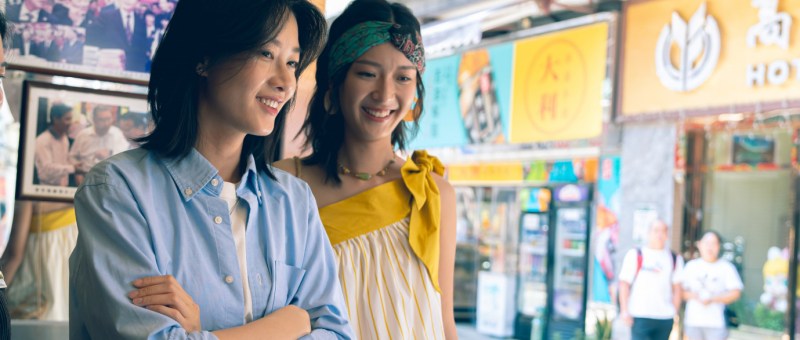
Trailer (Traditional Chinese / English subtitles)

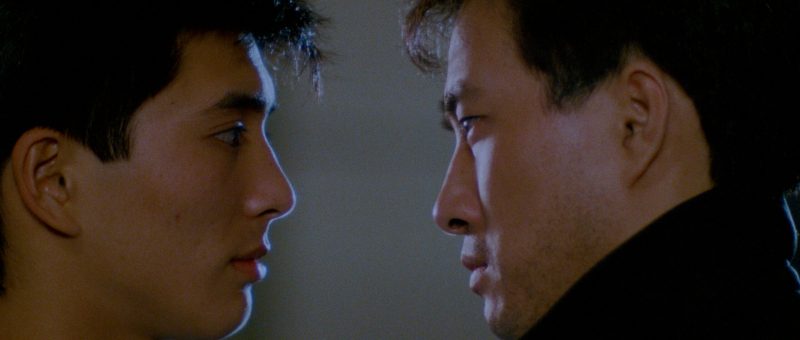
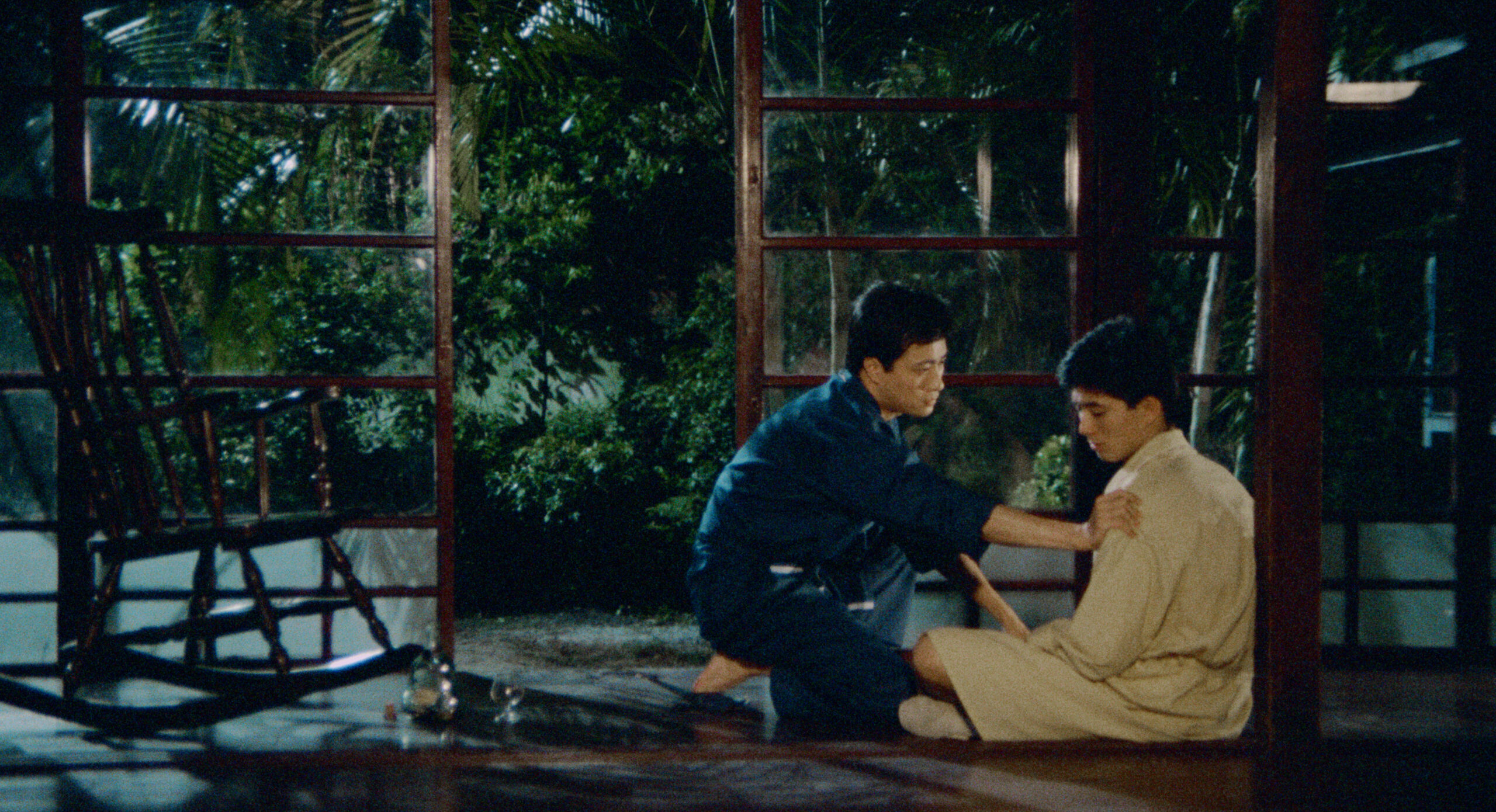
The Outsiders (孽子, Yu Kan-Ping, 1986)

Released at the tail end of martial law, Yu Kan-Ping’s adaptation of Pai Hsien-Yung’s seminal novel Crystal Boys seems to anticipate a coming liberation, but also perhaps that even then not all will be free. The film’s Chinese title, Unfilial Sons (孽子, nièzǐ), hints at the way it, in a certain sense, circles back to a kind of conservatism in which the hero must reconcile with his abusive father for cultural rather than personal or psychological reasons. But at the same time, perhaps this reconciliation will be necessary at the time the present regime falls and speaks more of a need for peace as the authoritarian father must learn to accept that he has a gay son and will end his life alone if hex chooses not to do so.

Li Qing’s (Shao Hsin) father is, in many ways, a symbol of the authoritarian regime in that he is a former KMT soldier who came to Taiwan with Chang Kai-Shek after the Chinese civil war. Filled with notions of toxic masculinity, he kicks Qing out when he is expelled from high school after being caught having sex with a male lab assistant. Screaming at him in the street, he calls him a “degenerate” and tells him never to come home. Yet it seems obvious that Qing’s father has no real power and all his abuses stem from just this fact. His son’s homosexuality calls his own manhood into question, while his violence towards his wife also stems from his insecurity that she will leave him for a better man. She eventually does leave him for a trumpet player, abandoning her two sons the youngest of which dies as a direct result of his father’s neglect. 

Though Qing was a wounded, lonely little boy who felt himself rejected by both parents due to his mother’s obvious preference for his brother, he adopts a maternal position that comparable to that shown to him by “Mama Yang” who takes in “homeless birds” or young gay men who’ve been rejected by their birth families and have nowhere else to go. Qing was kicked out not only of his home but the school too, leaving him educationally disadvantaged. He can only earning a living as a sex worker in the Peace Memorial Park which has become a cruising spot for gay men. Pushed out of the mainstream society and left with nowhere to go, they have repurposed this public space as their own but are not safe even in here given the frequency of police raids. Auntie Mann, the former actress who lives with Yang, asks him where these young men are supposed to go if they can no longer go to the park with the consequence that they decide to formalise their situation by selling Yang’s photo studio and the building Mann owns to open a gay nightclub called The Blue Angel.

The club speaks of a need to carve out one’s own space in a hostile society, but also the commodification of gay life that accompanies greater acceptance. The park was free and money could also be earned there, but here the guests will need to pay because this is, after all, a business in addition to being a community hub. It also seems that for whatever reason, policemen are also drinking here, so it is not completely liberated and its existence depends on not offending the authorities. Nevertheless, it otherwise extends the family forged by Yang and Mann to a wider community of queer people by offering them a safer space in which they can be their authentic selves if only for a short time.

This seems to be true for Mann’s former director who seems to make a point of going everywhere with two very young and attractive women hanging on his arms, but abandons them to flirt with men at the club. Closted movie Hua Kuo-Pao similarly seems to have taken a liking to Qing, but must presumably keep his sexuality secret in order to go on working. Dangers are spoken of regarding the potential violence of obsessive love in a repressed community as Yang cautions Qing about entering an affair with Dragon, a man he meets in the park, who killed his lover Phoenix in a crime of passion and has been a wandering soul ever since having convinced himself never to love again because it would only end in death.

Yu frames murder as a moment of gothic madness as fog rises behind the bridge in the park, which was already a space of darkness and depression symbolising the degree to which these men are already isolated within their society. Another of the young men Yang takes in ties to take his own life after his lover kicks him out. Though the others tell him his boyfriend was not worth dying for, the problem seems to be more that being thrown out again convinced him he had nowhere else to go. If it were not for Yang and Auntie Mann, he would be totally alone. There does seem to be, however, a degree of tension in the relationship between Yang and Auntie Mann in which there exists a deep platonic love that cannot be resolved sexually. Just as he saves the boys, Yang also once saved Mann from an addiction to drugs, though he could not save her film career or hope for feminine fulfilment through marriage. The Blue Angel club finally only possible because of Mann’s acceptance that she will never be an actress again nor marry for love. Yang has been a kind of beard for her, helping her save face and avoid the stigma of being an unattached woman by making it look like there was a man in her life, just as she perhaps provided security for him in ways other than allowing him to rent his shop from her cheaply and have a place to live.

So tying into the film’s title, these new support networks play into a heteronormative vision of the family in which Yang becomes a father figure to Qing and teaches him how to live a more fulfilling, safer life as a gay man in contrast to his birth father’s authoritarian attempts at dominance. Another of the boys eventually leaves with a lover to look for their father in Japan, but seemingly struggles to find him reflecting the way in which each of them search for a more positive parental input having been failed or abandoned by their birth families. What they discover is a sense of brotherhood and solidarity that gives them a place to call home within the community. Nevertheless, the film ends with the symbolic gesture of Qing following Yang’s advice and attempting to reconcile with his father though an “unfilial son”, while his father too seems to have pulled himself together and is readier to accept Qing for who he is. This sense of homecoming for the homeless bird may then play into a code of familial obligation which could itself by oppressive, but also signals a new beginning and the opening up of a more liberated era.


The Outsiders screened as part of this year’s Queer East.