The Last Dance (破·地獄, Anselm Chan, 2024)

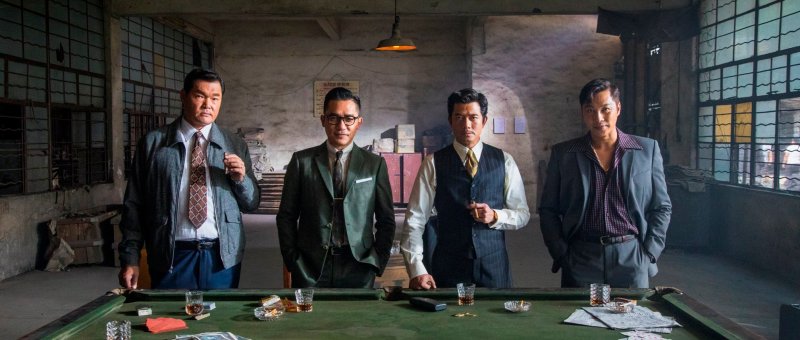
When serving the living doesn’t pay, why not make money from the dead? That’s the advice that’s given to former wedding-planner Dominic (Dayo Wong) in Anselm Chan’s touching spiritual drama The Last Dance (破·地獄), but after pivoting towards organising death rituals it’s the living he continues to serve. In many ways, Dominic stands at the borders of life and death, but he’s also an onlooker in a wider debate about tradition and modernity, what we inherit and what we choose to pass on, along with the departing soul of an older Hong Kong as the young flee abroad leaving those who stay behind to carry what may seem to them a burden too heavy to bear alone.

The irony is that though Dominic had been a wedding planner until the economic effects of the coronavirus pandemic killed his business, he is not in fact himself married and according to his long-term girlfriend Jade (Catherine Chau) did not see the point in a marriage certificate. One might infer that if he thought weddings were essentially meaningless exercises in vanity then he might feel the same way about funerals and his initial behaviour after taking over the funeral parlour run by Jade’s ageing Uncle Ming (Paul Chun) might confirm that suspicion. Not only does he start selling tacky trinkets as some kind of funeral favours, but makes a huge faux pas with an ostentatious stunt at his first funeral that causes upset and offence to the family. At the very least, it would have been useful to confirm how the deceased passed away before trawling their instagram account in an attempt to reconstruct their personality.

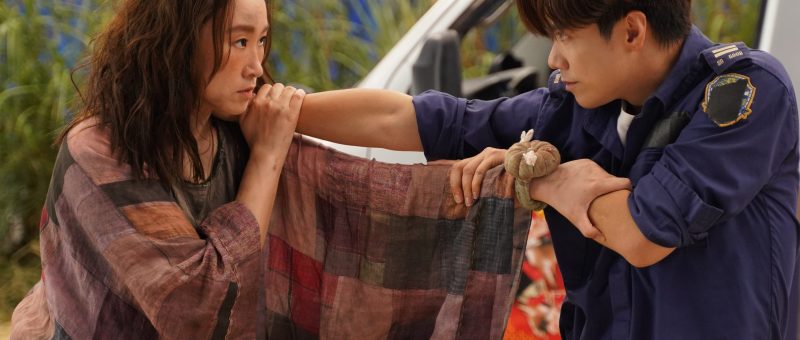
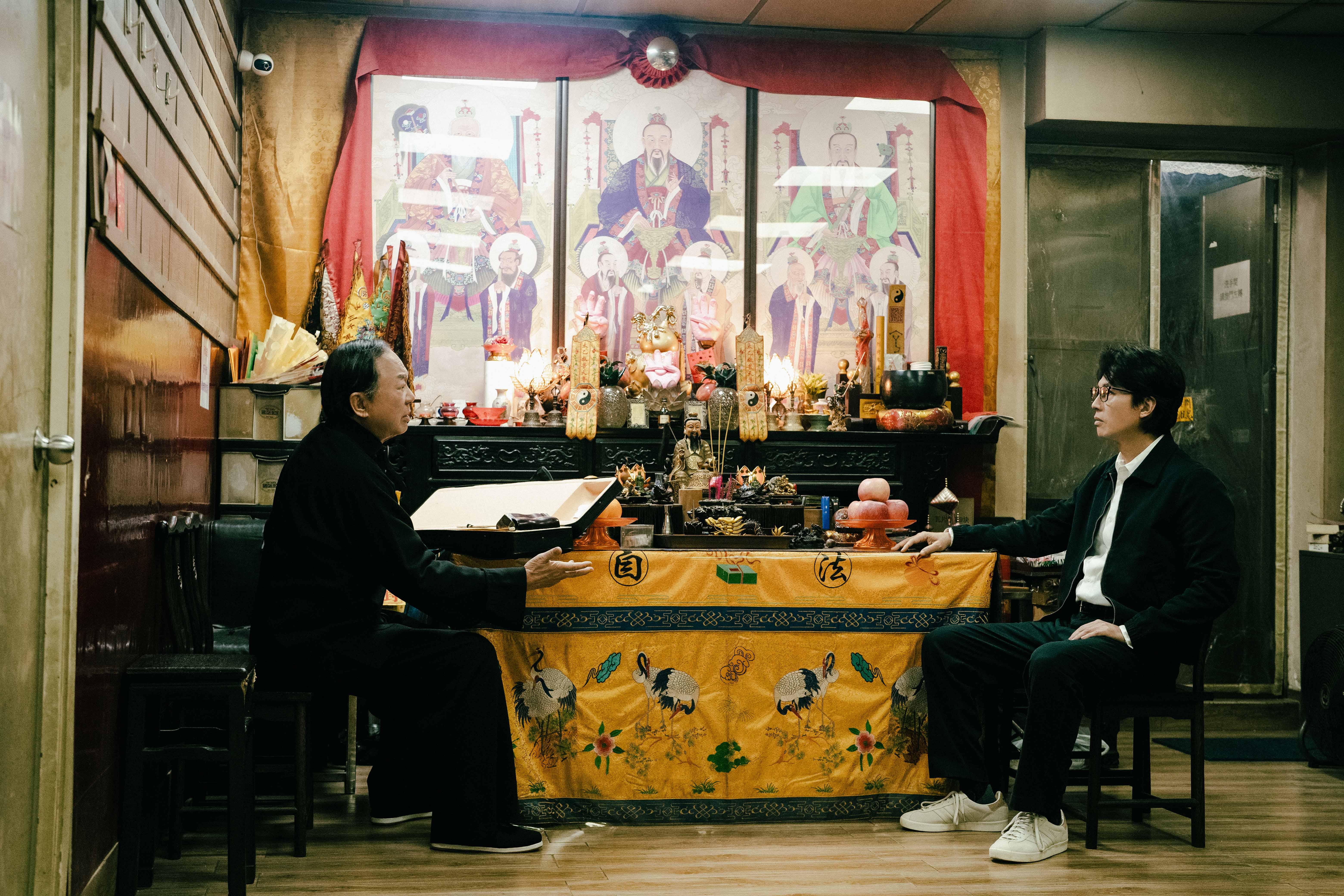
It’s this kind of insensitivity that irritates intensely grumpy Taoist priest “Hello” Man (Michael Hui) who brands Dominic an “amateur” believing that he’s only obsessed with money and intent on exploiting the grief of bereaved families. But on the other hand, Man is only really interested in the sanctity of ritual and doesn’t get involved with the living nor is he very sensitive to the emotional needs of those in the process of sending off a loved one. His entire life has been in service of the ancestors to the point that it’s soured his relationships with his two children. He has no faith in his son Ben (Chu Pak Hong) to inherit his position as a Taoist priest, while Ben resents being forced to inherit a burden he has no desire to carry. Daughter Yuet (Michelle Wai), perhaps ironically a paramedic, would have happily have carried it, but has endured years of being told that “women are filthy” and is prevented from inheriting these traditions because there is a taboo against women undertaking the role of a Taoist priest. The continual sense of rejection has left her with huge resentment towards her father and resulting low self-esteem that sees her engage in a no strings relationship with a married doctor.

Ultimately the film suggests that these traditions themselves are too large to bear, at least in their entirety, and do nothing more than crush and oppress the young. In part, they embody the spirit of an older Hong Kong which is itself in danger of fading away as seen in Dominic’s innovative new bespoke funeral planning services which to traditionalists might seem like they play fast and loose with ancient ritual, but the resolution that each Dominic and Man come to is that funerals are for those who remain behind and while Man liberates the souls of the dead Dominic does the same for the living in taking a more compassionate approach to dealing with those grieving a loss. Not only does his acceptance of the strange requests of a heartbroken mother (Rosa Maria Velasco) branded a “nutcase” and rejected by the local area bring her a degree of comfort, but his decision to allow what seems to be the same sex partner (Rachel Leung) barred from a funeral service the right to say goodbye albeit in secret demonstrates the necessity of doing right by both the living and dead.

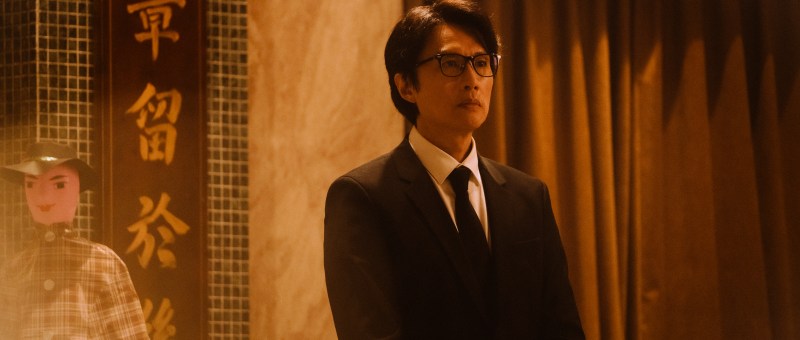
As Man later says, in some ways he’s shown him how to do funerals and awakened him to the ways his oppressiveness in his adherence to tradition has prevented him from being a better father. His decision to wear a western suit for his own funeral might indicate a desire not to take this rigidity into the next world while hoping to liberate his children from the burden of tradition and show them that they were each loved and accepted even if it did not always seem that way. Which is not to say that the tradition should not be saved or that this is itself a funeral for the soul of an older Hong Kong, but only that if you let some of it, such as its inherent sexism, go it will be easier to carry when everyone carries it together. “Living can be hell,” Dominic admits and the funeral is a liberation both for the living and the dead. A touching yet surprisingly lighthearted meditation on life and death, what it comes down to really is that death is coming to us all but there’s no point spending your life worrying about it when you should just try to enjoy the dance until the music stops.


The Last Dance is in UK cinemas from 15th November courtesy of CineAsia.

UK trailer (Traditional Chinese / English subtitles)
The Moon Thieves (盜月者, Steve Yuen Kim-Wai, 2024)

If something’s constructed entirely from orphaned parts of others like it, can you really say it’s a “fake”? Watchmaker Vincent (Edan Lui Cheuk-on) might say no, making his living through passing off “period correct” replicas of fancy watches as the “real” thing while trying to stay one step ahead of the authorities and the gangsters who seem to be his prime customers. Then again, The Moon Thieves (盜月者), Steve Yuen Kim-Wai’s return to the big screen in four years since Legally Declared Dead and a vehicle for phenomenally popular boyband Mirror, never really stops to ask just why vintage luxury watches are so desirable that the super wealthy are prepared to expend vast sums on a niche vanity status symbol but perhaps there really is no answer for that one. 

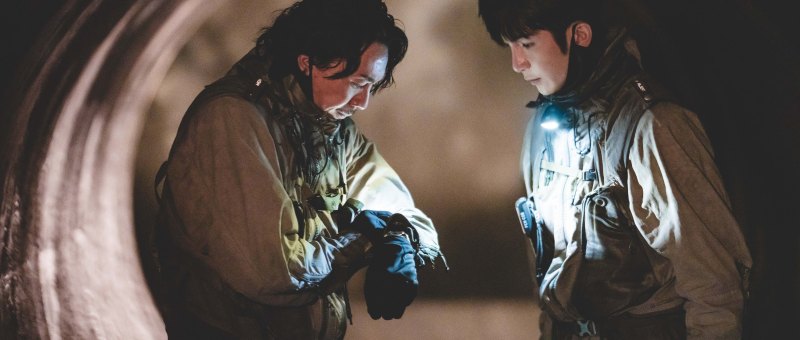
In any case, Vincent’s obsession is with the watch worn by Buzz Aldrin as he stepped onto the moon which seems to have become lost to time with NASA apparently refusing to confirm or deny its existence. His decision to make a period correct watch for a petty gangster in order to retrieve some info on the Moon Watch lands him in hot water when he’s blackmailed by local kingpin Uncle (Keung To), who is actually a youngish guy who’s taken over the name and criminal empire of his late father. Unless he wants the gangster to find out the watch is “fake”, Vincent will have to join his heist team and travel to Japan where he’ll sneakily replace three watches worn by Picasso with his homemade replicas. 

It has to be said that the film’s fatal flaw is the miscasting of Keung To as the mercurial gangster, Uncle. Though his boyish bravado might play into the idea that Uncle is out of his depth, too insecure to even use his own name rather than adopt his father’s, To’s total lack of menace or authority leaves him a rather hollow villain who alternates between super sharp intelligence and dull predictability laced with misplaced smugness. Meanwhile, Vincent is able to stay a few steps ahead of him if only in his canny knowledge of the vintage watch trade and easy power to manipulate the markets though even he probably didn’t plan on incurring the wrath of space-obsessed local yakuza who are very annoyed to have had their luxury watches stolen out from under them. 

This leaves the gang doubly vulnerable while veteran members Chief (Louis Cheung) and Mario (Michael Ning) begin to suspect that Uncle is getting rid of all his father’s previous associates and doesn’t really plan to let them live. Tensions within the group are only further strained by an unexpected hitch in the plan which brings them to the attention of the yakuza despite their incredibly careful preparations. Yuen keeps the tension high through the heist slipping into slick Ocean’s Eleven-style visuals which lend a sense of cool to the gang’s endeavours which are after all a kind of rebellion against Uncle as much as they are a capitulation to his stronghold on the local community. 

Twists and double-crosses abound as the gang try to stay ahead of him with not everything quite as it seems. Like the watches, they take everything apart to put it back together again in a way that better suits them, freeing themselves from Uncle’s thumb which might in itself stand in for another distant and corrupt authority. Ironically, the yakuza remarked that no one remembers who came second yet everyone is desperate to get their hands on the famed Moon Watch worn by the second man to walk on the moon as a kind of holy grail among horologists that they would maim or kill for though of course even if they had it they could never show it to anyone fearing they’d caught out by the authorities including NASA who apparently have a lot of say over this particular relic of the moon landing. The heist isn’t quite as daring as actually stealing the moon, though it is definitely a sticky situation for all involved which eventually requires them to hide their quarry in plain sight while doing their best to outsmart Uncle and avoid turning on each other. Smart and slick, the broadly comic overtones lend an endearing quality to Vincent’s quest for survival while targeted by a ruthlessly corrupt and infinitely implacable authority.                                                                                                                                                                  


The Moon Thieves opens in UK cinemas 23rd February courtesy of Central City Media.

UK trailer (English subtitles)

One More Chance (別叫我”賭神, Anthony Pun Yiu-Ming, 2023)

A feckless gambler gets a final shot at redemption when he’s suddenly asked to take care of an autistic son he never knew he had in Anthony Pun Yiu-Ming’s nostalgic drama, One More Chance (別叫我”賭神). Previously titled “Be Water, My Friend”, the film has had a troubled production history only reaching cinema screen four years after filming concluded in March 2019 and has been retitled in the Chinese “Don’t Call Me the God of Gamblers” which seems to be a blatant attempt to cash in the audience’s fond memories of similarly pitched Chow Yun-fat vehicles from the ’80s and ’90s such as All About Ah Long.

In truth, Chow is probably a little old for the role he’s cast to play as the middle-aged barber Water who’s long since fled to Macao in an attempt to escape problems with loansharks caused by his gambling addition. Of course, Macao is one of the worst places someone with a gambling problem could go and so Water is already up to his neck in debt and a familiar face at the local casino. That’s one reason he ends up going along with the proposal of old flame Lee Xi (Anita Yuen Wing-Yee) to look after her grownup son, Yeung (Will Or Wai-Lam), who is autistic, for a month in return for 50,000 HK dollars up front and another 50,000 at the end assuming all goes well. She claims that Water is Yeung’s father and even provides forms for him to send off for a DNA test if he doesn’t believe her, but at this point all Water is interested in is the cash. 

To begin with, he pretty much thinks of Yeung as cash cow, descending on a Rain Man-esque path of using him to up his gambling game but otherwise frustrated by his needs and ill-equipped to care for an autistic person whom he makes little attempt to understand. For his part, Yeung adapts well enough and tries to make the best of his new circumstances but obviously misses his mother and struggles when Water selfishly disrupts his routines. For all that, however, it’s largely Yeung who is looking after Water, tidying the apartment and bringing a kind of order into his life while forcing him to reckon with the self-destructive way he’s been living. 

Picking up a casino chip in the opening sequence, Water describes it as a “chance” in an echo of the way he’s been gambling his life just as he decides to gamble on taking in Yeung. At one point, he wins big on the horses but takes his winnings straight to the casino where he’s wiped out after staking everything on a single bet only to realise he’s been played by another grifter at the table. It seems that Xi left him because of his gambling problem and the resultant change in his lifestyle that had made it impossible for her to stay or raise a child with him, causing Water to become even more embittered and cynical. Where once he provided a refuge for wayward young men trying to get back on the straight and narrow, now he’s hassled by petty gangsters over his massive debts.

Nevertheless, it’s re-embracing his paternity that begins to turn his life around as he bonds with Yeung and begins to have genuine feelings for him rather than just fixating on the money while simultaneously recognising that Yeung is already a man and able to care for himself in many more ways than others may assume. One could say that he gambles on the boy, staking his life on him rather than endless rolls of the dice to fill an emotional void but also rediscovering a sense of himself and who he might have been if he had not developed a gambling problem and left it up to chance to solve all his problems. Unabashedly sentimental, the film flirts with nostalgia in the presence of Chow and Anita Yuen and largely looks back the Hong Kong classics of the 80s and 90s if with half an eye on the Mainland censors board, Bruce Lee shrine not withstanding, but nevertheless presents a heartwarming tale of father and son bonding and paternal redemption as Water crosses the desert and finally reclaims himself from his life of dissipation. 


Original trailer (English subtitles)

The Goldfinger (金手指, Felix Chong Man-keung, 2023)

Following Wong Jing’s Chasing the Dragon and Philip Yung’s Where the Wind Blows, Felix Chong’s financial thriller The Goldfinger (金手指) is the latest in a series of Hong Kong films revolving around colonial-era corruption in which the apparent lawlessness of the pre-Handover society allowed crime to flourish along with a nascent greed nurtured by the island’s rising prosperity as an increasingly important financial centre. In an ironic touch, the film even opens with mass protests against the introduction of ICAC with protestors calling for more respect for law enforcement officers while implying some dark authoritarian force is in play even as angry policemen demand the right to immunity from their own misconduct.

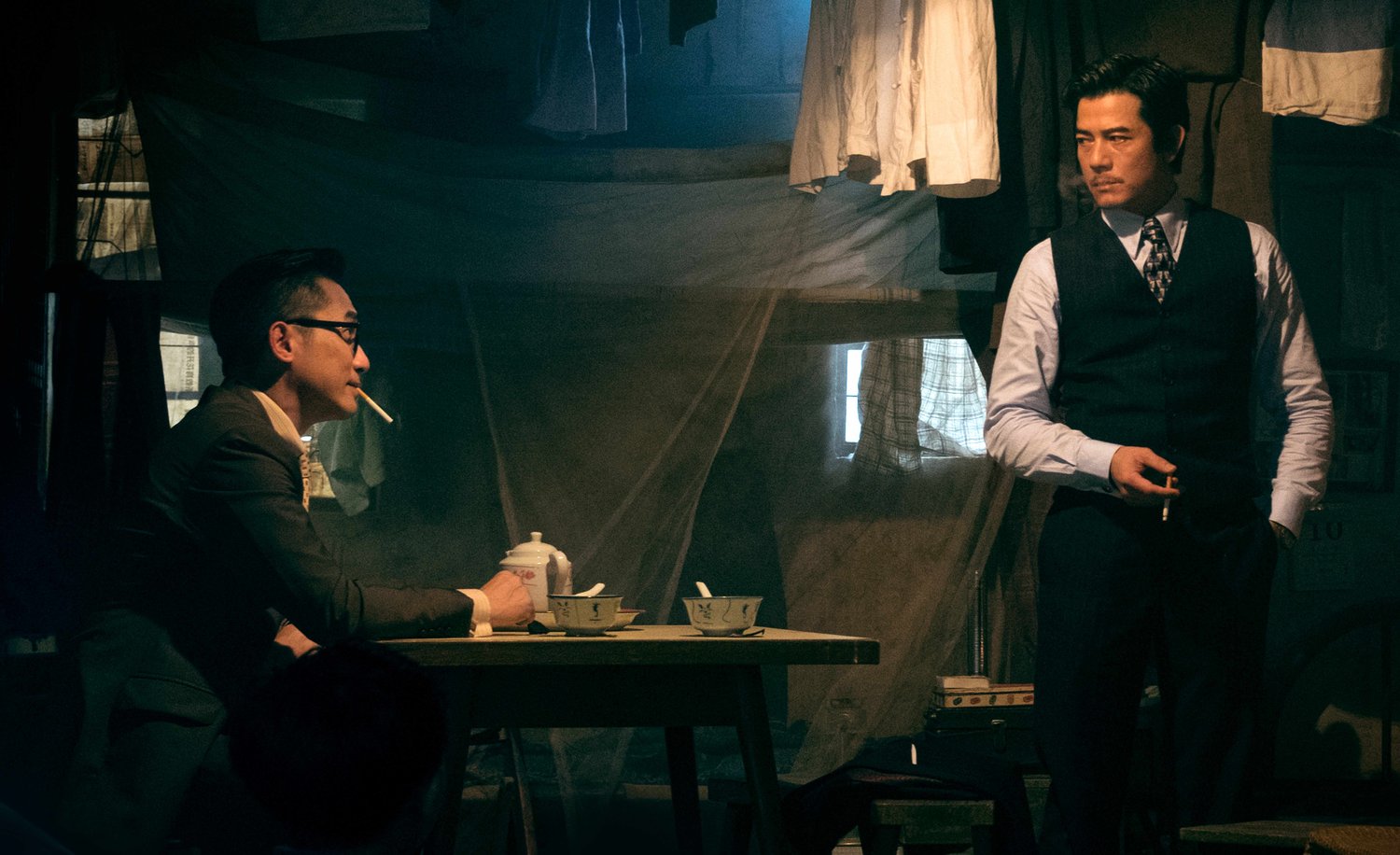
In any case, what arises is a cat and mouse game between wily conman/entrepreneur Henry Ching (Tony Leung Chiu-Wai) and ICAC investigator Lau (Andy Lau Tak-Wah) who chases him for 15 years trying to expose his web of financial fraud. A failed businessman on the run from debt having supposedly abandoned an idealistic desire to build homes for people, Ching arrives in Hong Kong seeking a land of opportunity and largely finds it though through dubious means. Teaming up with similarly embittered businessman KK (Simon Yam Tat-Wah), who is resentful towards his family who treat him with disdain for being a mistress’ son and force him to do their dirty work, to build a giant real-estate based empire that is in reality rooted in complex financial fraud.

Working on the rationale that stocks can be spent like money, Ching makes contacts and manipulates markets which is all very well as long as no one asks for the cash because it doesn’t exist. Chong hints at the realities of the housing market in Hong Kong today in which land is at a premium and apartments largely unattainable as Ching alternately allies with and subverts British rule to build a property empire, setting his sights on acquiring prestigious Golden Hill building as symbol of a new Hong Kong and his own hubristic desire for personal success. With shades of Wolf of Wall Street and The Great Beauty, Ching attends soirees organised by the British and puts on a show for his targets. In his attempts to woo a British bank, his office is suddenly invaded by salsa dancers and gold glitter falls from the ceiling much to the chagrin of a bemused and increasingly mistrustful KK.

Even so the title of the film is echoed in a comment Ching makes to Lau that though he may thinks he’s some genius with the Midas touch he’s really just a patsy, pushing him to investigate possible international conspiracy that is bigger than either of them. Ching has already become a legend with a series of stories about how he made his stake money which range from running into Imelda Marcos in a shoe shop and getting backing from the oppressive regime in the Philippines, to narrowly escaping a war zone and catching a CIA spy in Moscow. He even has the hutzpah to attempt to bribe Lau by offering him a vast fortune and a scholarship for his daughter to study abroad if only he’d find a way to nix the case.

The corruption is indeed embedded, as is obvious when a judge with a posh British accent actively welcomes Ching to the court in a friendly manner and suggests they conduct their business swiftly to avoid any unnecessary turmoil to the Hong Kong economy. Friends in high places largely assist him, whether through personal greed or blackmail though as another of his associates admits, in the end there is no real loyalty among thieves only increasing fear and desperation along with resentment that Ching seems to be taking more than his fair share of the loot. Loosely based on the Carrian Group scandal, the film never loses sight of the damage one man’s greed and duplicity can do as millions of Hong Kong citizens find themselves out of pocket and uncompensated when the shares they bought become worthless, but equally suggests that in the end justice will always be denied to ordinary people while men like Ching will never fully pay for their crimes. With gorgeous production design, Chong beautifully the woozy world of Hong Kong in the ’70s and ’80s amid an intense cat and mouse game of financial fraudsters and a compromised authority.


The Goldfinger previews from 30th December ahead of opening in UK cinemas 5th January courtesy of CineAsia.

UK trailer (Traditional Chinese / English subtitles)

Where the Wind Blows (風再起時, Philip Yung, 2022)

Philip Yung’s first film since the acclaimed Port of Call was scheduled for release all the way back in 2018 only to be repeatedly held up by troubles with the censors later compounded by the coronavirus pandemic. For many reasons, it isn’t surprising that Where the Wind Blows (風再起時) would run into trouble with the current censorship regime dealing as it does with the touchy subject of police corruption albeit it in the colonial era, but the most surprising thing may be that it was passed at all given the subversive undertones of a late speech delivered by the voice of reason, ICAC chief George Lee (Michael Hui Koon-man), whose attack on the corrupt practices of the British authorities has obvious parallels with the modern day. 

The film is however set firmly in the past ranging from the 1920s to the 1980s and inspired by the “Four Great Sergeants” of post-war Hong Kong who amassed great personal wealth while working as police officers. Once again, the police is just the biggest gang, or perhaps the second biggest given that the great racket in town is the colonial rule. It is indeed the British authorities who have enabled this society founded largely on systemised corruption, something which as Lee points out they are unwilling to deal with because it suits them just fine and they have no real interest in the good of Hong Kong. 

In any case, flashy cop Lok (Aaron Kwok Fu-shing) started out as an earnest bobby before the war who was shocked by the institutionalised corruption all around him and refused to participate in it. But his law abiding nature only made him a threat to other officers who needed him to be complicit in their crimes to keep them safe. After several beatings, he ended up accepting the culture of bribery just to fit in. In the present day, he and likeminded detective Nam (Tony Leung Chiu-wai) justify their dubious methods under the rationale that they’re helping to “manage” triad society by effectively licensing the gangs in taking protection money to leave the chosen few alone while enriching themselves in the process. 

Then again, the balance of triad society is disrupted by the arrival of a bigger Mainland outfit which later ends up backing Lok, with the assistance of his Shanghainese wife (Du Juan), to place him in a position which is the most beneficial to themselves. To quell riots by supporters of the KMT in 1956, Nam lies to the protestors that he secretly supports their cause and that if they do not disperse there is a chance the British Army will forcibly disperse them which he also describes as an inappropriate outcome because this is a matter that should be settled among the Chinese people not by foreigners. In the final confrontation with ICAC chief Lee, the British authorities rule out military or police action, though the rioters in that case are in fact policeman angry about increasing anti-corruption legislation. Ironically enough, Lee’s speech advocates for something similar to that which Nam had suggested, essentially saying that the Hong Kong people should decide their own future and that society in general should be more mindful as to the kind of Hong Kong their children and grandchildren will eventually inherit. 

In any case, the four sergeants are soon eclipsed by changing times while Lok and Nam are mired in romantic heartbreak in having fallen for the same woman who brands Nam an over thinker and implies she may have married Lok less out of love than in the knowledge he’d be easy to manipulate. For his part, Lok is damaged by wartime trauma which has left him cynical and nihilistic while filled with regret and longing for a woman he lost during the war in part because he did not have the money to pay for medical treatment which might have saved her. In this sense, it’s money that is the true corrupting force in a capitalist society in which, as Lee suggests, it might eventually become necessary that you’d have to bribe a fireman to save your house or an ambulance driver to get your ailing mother to a hospital. Then again, as Nam says power lies in knowing there are those weaker than yourself. Yung’s sprawling epic apparently rant to over five hours in its original cut before being reduced to three hours forty-five and then finally to the present 144 minutes leaving it a little hard to follow but nevertheless filled with a woozy sense of place and an aching longing for another Hong Kong along with a melancholy romanticism as a lonely Nam dances alone to a ringing telephone bearing unwelcome news. 


Where the Wind Blows screens in Chicago on March 14 as part of the 16th season of Asian Pop-Up Cinema.

Original trailer (Traditional Chinese / English subtitles)

Everything Under Control (超神經械劫案下, Ying Chi-Wen, 2023)

A cocky band of security guards find themselves on the back foot when they’re ambushed by gangsters and one of guys decides to hightail it with the loot in Ying Chi-Wen’s anarchic take on Taiwanese movie Treat or Trick which was itself inspired by the Korean film To Catch a Virgin Ghost. A Lunar New Year release, Everything Under Control (超神經械劫案下) is a typically anarchic affair full of zany nonsense comedy and random gags but is ultimately a redemption story and a defence of community. 

Possibly in a nod to mainland censors the “heroes” are now private security officers rather than actual policemen and have a rather cynical view of their work. The cocky Yau-shing (Hins Cheung King-Hin) who wears sunshades and talks a big game, laughs at rookie recruit Penguin’s questions about about a possible ambush explaining that, in a slice of dark humour, you’d need to rob around 10 convoys before you could afford a Hong Kong flat so it’s not worth the risk nor the effort. Nevertheless in what seems to be at least in part an inside job, the gang are indeed ambushed by gangsters working for Boss Lai (Juno Mak) while transporting diamonds across town on the behalf of an elite tycoon. When Penguin unexpectedly fights back, fellow guard Jelly decides to snatch the diamonds and run with a view to starting a new life in Malaysia. Boss Lai is understandably unimpressed and orders his underling, Monk, to accompany Yau-shing and Penguin as they attempt to track down Jelly and get the diamonds back while he holds their friend Pig Blood hostage as collateral. 

After swerving to avoid what seemed to be the ghostly figure of a young woman in the road, Jelly ends up in a weird village with its own theme song that he has to bribe his way into. His presence is definitely unwelcome and the villagers’ behaviour is undeniably suspicious even in their weird hippie commune aesthetic though the diamonds themselves become something of a MacGuffin as a battle begins between the security guys and the villagers who are understandably keen to defend their territory from incursion especially as it seems there may have been an attempt to force them off their land. “Everyone has something they want to protect” according to weird village chief Wong Cool (Ivana Wong Yuen-Chi) whether it be like her her community, diamonds, status, or the lives of friends though truth be told that doesn’t seem to be at the top of Yau-shing’s list, poor Pig Blood more or less forgotten about by everyone. 

Nevertheless, Ying amps up the weirdness in the quirky village with its rumours of a vengeful ghost who kidnaps “virile men” and gives them what otherwise seems to be a strangely childish punishment adding a note of creepy horror to the guys’ predicament. Penguin even comes to the conclusion that he has psychic abilities and is able to read a crime scene with the power of his mind, committed to the pursuit of justice but also endearingly dim. Monk, meanwhile, is some kind of cinephile gangster who is mocked by his mother for not being a “real man” because he’s never been to a film festival. The guys’ car radio also seems to be permanently tuned to an entertainment program where they offer acerbic comments about the Hong Kong film industry. After a while, we might wonder if we too are being affected by the purple sporing plants found all over the forest which cause Jelly to have a weird fever dream involving a kappa, a Nian beast, and the apparently well-endowed Goddess of Fortune who insists he say “Gong hei fat choy” despite it not being New Year in the movie even though it obviously is to the audience. 

As the radio host admits, redemption doesn’t come from outside forces but by one’s own moral character which explains Yau-shing’s final change of heart, dropping his cynicism and deciding to believe in a better world after all. “Serve with our hearts, protect with our lives” it says on the outside of their van, and Yau-shing may have discovered something worth protecting while the diamonds remain more or less forgotten along with Lai’s ultimatum and Pig Blood’s fate. Decidedly strange, Ying’s genre hoping crime caper strays into some dark corners of human activity but maintains a lightness of touch along with genuine heart even as it does so.


Everything Under Control was released in UK cinemas courtesy of CineAsia.

UK trailer (English subtitles)

All U Need Is Love (總是有愛在隔離, Vincent Kok Tak-chiu, 2021)

All things considered, there are worse places to quarantine than a five star hotel especially if it’s free but then again forced proximity with those you love, or those you don’t, can prove emotionally difficult. An old school ensemble comedy, Vincent Kok’s All U Need Is Love (總是有愛在隔離) features a host of A-list stars each providing their talent for free in order to support the struggling Hong Kong film industry in the wake of the COVID-19 pandemic but as its name suggests eventually offers a small ray of hope that the enforced period of reflection may have fostered a spirit of mutual solidarity and personal growth. 

Kok opens, however, with a tense chase sequence as a shifty looking man runs from the authorities at the airport only to be picked up by the PPE-clad Epidemic Task Force who whisk him away to a secret location where he’s placed inside a weird bubble and interrogated by Louis Koo. Several more top HK stars including Gordon Lam fetch up in the bubble each implicating the Grande Hotel as the centre of of a coronavirus cluster at which point an order is given to place it under total lockdown requiring everyone inside to remain for a 14-day quarantine. 

Essentially a series of intersecting skits, Kok’s ramshackle drama nevertheless has its moments of satire as the hotel chief takes to the stairs for an inspirational speech in which he frequently slips into English and bizarrely likens himself to the captain of the Titanic because we all know how well that went. He spends the rest of the picture trying to escape without anyone noticing while his dejected security guard/brother tries to bump him off. Meanwhile, two gangsters develop a homoerotic bromance while plotting how best to profiteer off the pandemic through smuggling anti-COVID paraphernalia just as panic buying takes hold on the outside. 

Nevertheless, it can’t be denied that All U Need Is Love is also guilty of some rather old fashioned, sexist humour particularly in the antics of a pair of old men (Tony Leung Ka-Fai and Eric Tsang reprising their roles from Men Suddenly in Black) and their minions who misled their wives in order to embark on a sexual odyssey only to have their plans both improved and then ruined by the quarantine order. Meanwhile, a young couple who were in the hotel preparing for their wedding banquet ironically scheduled for the last day of the quarantine find themselves at loggerheads as the man gets cold feet over his fiancée’s bridezilla micromanaging, and her father undergoes a total makeover while continuously watching Japanese pornography in his room. 

Watching it all, a little girl, Cici, becomes the moral voice of the pandemic innocently hoping that nature will continue to heal itself even after the sickness ends. It’s she who shows the gangsters the error of their ways in pointing out that if they steal all the anti-COVID equipment then they will end up being more at risk because no one else is protected, while she also softens the heart of the hotel’s cynical manager to the point that he too makes a lengthy speech about becoming a better person thanks to his experiences during in the pandemic. 

During their enforced proximity friends and strangers have indeed needed to rediscover their love for their fellow man as they band together in mutual solidarity waiting for their freedom. Culminating in an oddly uplifting wedding decked out with balloons and messages from friends and family played via iPad, Kok’s anarchic ensemble farce does its best to discover a silver lining among the fear and anxiety of the pandemic as it ironically brings people together through driving them apart. Along with his A-list cast, Kok throws in a series of movie parodies and pop culture references from an impromptu rendition of Baby Shark to a surprise appearance from the Landlady from Kung Fu Hustle as well as a suitably random cameo from Jackie Chan. Repurposing the traditional Lunar New Year movie, All U Need is Love is a classic nonsense comedy designed to lighten the mood in these trying times while celebrating the essence of Hong Kong cinema through, arguably, its most idiosyncratic of genres. 


All U Need Is Love streamed as part of this year’s New York Asian Film Festival.

Original trailer (Traditional Chinese/English subtitles)

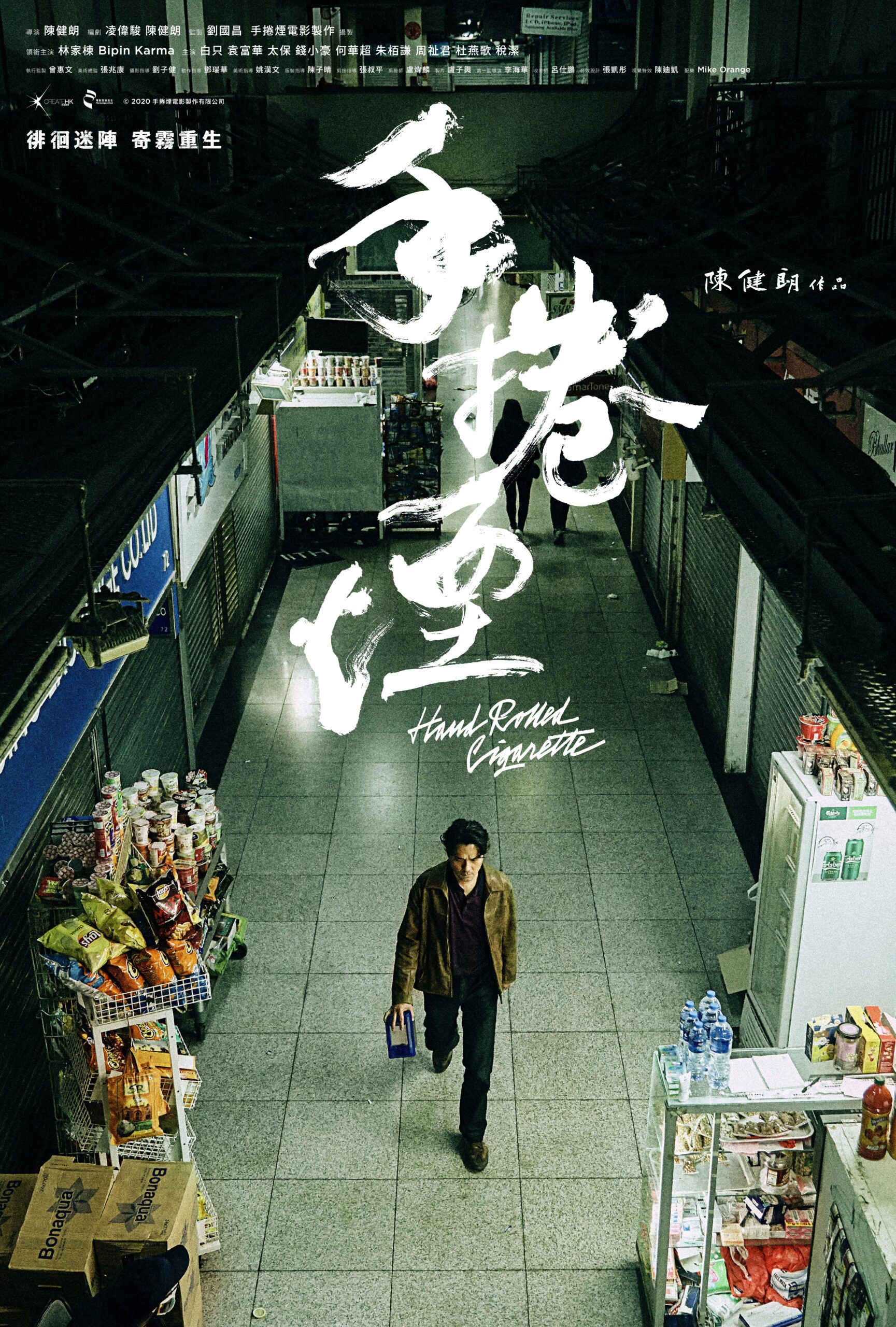
Hand Rolled Cigarette (手捲煙, Chan Kin-long, 2020)

A former serviceman turned triad middleman bonds with a similarly oppressed South Asian petty criminal in Chan Kin-long’s noirish crime drama Hand Rolled Cigarette (手捲煙). An unexpected awards contender, the first directorial effort from actor Chan aligns its disparate heroes as two men in a sense betrayed by the world in which they live, one longing for a way out and the other too convinced he no longer deserves one to continue looking. 

“Let’s start over” Chiu (Gordon Lam Ka-tung) philosophically muses over a cigarette contemplating the coming handover. As a brief title card explains, when the British Army pulled out of Hong Kong, it hung its local recruits out to dry, disbanding their units and leaving them entirely without support. 25 years later, Chiu has become a dejected triad middleman, as we first meet him setting up a dubious deal for smuggled turtles between Taiwanese mobster Pickle (To Yin-gor) and local top dog Boss Tai (Ben Yuen). On his way back to his flat in Chungking Mansions, Chiu literally runs into a South Asian man apparently in the middle of a drug deal. Kapil (Bitto Singh Hartihan) dreams of bigger prizes, listening to the stock market report on the morning news and musing about robbing a bank. His cousin Mani (Bipin Karma), more conflicted in their criminal activities, cautions him against it reminding him that they already face discrimination and don’t need to add to their precarious position by giving their ethnicity a bad name. “If we have money people can’t look down on us” Kapil counters, seemingly desperate to escape his difficult circumstances by any means possible which eventually leads him to make the incredibly bad decision to cheat local triads out of their drug supply. Leaving Mani and his schoolboy brother Mansu (Anees) alone to carry the can (literally), Kapil takes off while Mani finds himself crawling into Chiu’s flat for refuge when chased by Boss Tai’s chief goon Chook (Michael Ning). Unwilling at first, Chiu agrees to let Mani stay, for a price, only to find himself falling ever deeper into a grim nexus of underworld drama. 

Chiu’s plight as a former British serviceman makes him in a sense an exile in his own land, a displaced soul free floating without clear direction unable to move on from the colonial past. We later learn that he is in a sense attempting to atone for a karmic debt relating to the death of a friend during the Asian financial crisis, also beginning in 1997, of which he was a double victim. Most of his old army buddies have moved on and found new ways of living, some of them rejecting him for his role in their friend’s death and tendency to get himself into trouble while Chiu can only descend further into nihilistic self-loathing in his self-destructive triad-adjacent lifestyle. 

Mani, by contrast, did not approve of his cousin’s criminality, particularly resenting him for using Mansu’s schoolbag as a means of shifting drugs. He dreams of a better life but sees few other options for himself, hoping at least to send Mansu to university and ensure he doesn’t share the same fate. Chiu continues to refer to him solely by a racial slur, but simultaneously intervenes in the marketplace when Chook and his guys hassle another South Asian guy insisting that they’re all locals and therefore all his “homies”, despite himself warming to the young man and even going so far as to sort out child care for Mansu otherwise left on his own. “Harmony brings wealth” Boss Tai ironically exclaims, but harmony is it seems hard to come by, Chiu’s sometime Mainland girlfriend expressing a desire to return because the city is not as she assumed it would be while little Mansu is constantly getting in fights because the other kids won’t play with him. 

“There’s always a way out. I’ll start over” Chiu again tells Mani, though he seems unconvinced. Clearing his debts karmic and otherwise, Chiu discovers only more emptiness and futility while perhaps redeeming himself in rebelling against the world of infinite corruption that proved so difficult to escape. A moody social drama with noir flourishes, Chan’s fatalistic crime story is one of national betrayals culminating in a highly stylised, unusually brutal action finale partially set in the green-tinted hellscape of a gangster’s illegal operating theatre. Men like Chiu, it seems, may not be able to survive in the new Hong Kong but then perhaps few can. 


Hand Rolled Cigarette streams in Europe until 2nd July as part of this year’s hybrid edition Udine Far East Film Festival.

Original trailer (English / Traditional Chinese subtitles)

Concerto of the Bully (大樂師.為愛配樂, Fung Chih-chiang, 2018)

Concerto of the Bully posterRemember the heady heydays of the Hong Kong rom-com in which a series of zany, often entirely random adventures eventually led to true love? Director Fung Chih-chiang evidently does judging by the innocent charms of Concerto of the Bully (大樂師.為愛配樂) – a beautifully pitched soulmates thrown together romance with a kidnapping at its centre. For many things to work, they need to be in sync, as an unexpected utterance from the vacuous pop star boyfriend of the female lead points out, but sometimes you have to turn the volume down in order to hear the harmony.

Yung (Ronald Cheng Chung-kei) is a petty thug with a difference. Unable to cope with the noisiness of modern life which often pushes him into fits of erratic violence when overwhelmed, he lives out on a remote fishing raft and carries around with him a soothing track he discovered on the internet by an artist known as “Hit Girl”. His life becomes a lot more complicated when he returns home one evening to find a mysterious sack lying in the middle of the floor with a note reading “please feed” right above it. Yung’s no good gangster friend has kidnapped a young woman, Jamie (Cherry Ngan Cheuk-ling), after recognising her as the girlfriend of a famous pop star from whom he hopes to arrange a ransom. Yung is not very keen on this plan for several reasons but finds himself going along with it. Meanwhile Jamie, who is secretly “Hit Girl”, attempts to plan her escape by ingratiating herself with the guys while thinking about her unfinished composition to keep her mind off the potential danger of her predicament.

The central irony is that Jamie is a girl who loves noise – all the sounds of the world, natural and manmade, are music to her ears and part of the great song of the universe. Yung, however, prefers things quiet save for Hit Girl’s calming song. Forced to babysit Jamie, Yung begins to fall under her spell which is partly weaved solely to lower his guard so that she can escape, but soon enough both begin to get a glimpse of what it is that might be missing in each of their lives.

All the standard romantic comedy tropes are out in force – the boyfriend is a no good heel who isn’t keen on paying the ransom and already has someone else, while Yung is a noble and good man who has been brought low by his no good buddies who have once again gotten him into a lot of trouble. Yung’s inability to process sound turns out to be a life limiting condition which has forced him into a career of violence but Jamie’s musical philosophy eventually allows him to see “another world” – literally, as he re-imagines a crowd of street thugs performing an epic dance routine to Mozart’s Seranade No. 13 in G Major. Unmasked as “Little Fairy”, Hit Girl’s only fan, the shy and under confident Yung gets a new lease on life thanks to Jamie’s less than patient tutelage as she tries to convince him to help her complete her masterwork in time for the big concert finale.

Like her boyfriend said, sometimes it’s no good if it’s not in sync. Many things in the relationship of Yung and Jamie are fake – Jamie has been kidnapped and is taking care to be “nice” and “useful” to her captors, while the pair begin with playacting music through a series of homemade mock up instruments until the arrival of a beaten up tinny piano which might be just the sound Jamie has been looking for. Gradually, the melody begins to come together, working towards a graceful harmony even while the distant drums of trouble in the city continue to threaten their quietly growing romance just as it begins to hit a more authentic key. A strangely sweet love story with a kernel of darkness at its centre, Concerto of the Bully is a hopelessly innocent fairy tale about an unwitting musical genius who never learned to hear his own voice, and a melancholy songstress who finally finds the key to her musical dreams in an unexpected place, as they meet on a floating musical stage which is both silent and somehow alive with all the quiet joys of a melodious life.


Concerto of the Bully is screening in Chicago as part of the seventh season of Asian Pop-up Cinema on 2nd October, 7pm, at AMC River East 21 where Director Fung Chih-chiang and Art Director Chet Chan will be present for an intro and Q&A. Tickets on sale now!

Original trailer (English subtitles)

The White Girl (白色女孩, Jenny Suen & Christopher Doyle, 2017)

white girl posterFollowing their Hong Kong Trilogy, first time feature director Jenny Suen and veteran cinematographer Christopher Doyle get back together for another love letter to the “Pearl of the Orient”. With 2047 always in the back of the frame, The White Girl (白色女孩) is the story of a Hong Kong that was and will be as seen through the space which connects the two. In 2047 the mantra of One Country, Two Systems which has been applied to Hong Kong and surrounding territories since the 1997 handover will come to an end with Hong Kong simply becoming another region of China. With this starting point in mind, Suen and Doyle are left wondering what will happen in the next five years as they watch elements of the city begin to die or be eroded both by the passage of time and by the growing proximity of the 2047 deadline.

The White Girl (Angela Yuen), as she’s called, lives in Pearl Village where they still do things the old fashioned way. Living with her fisherman father, The White Girl dresses in long, dark clothing, and wears sunshades with a large floppy hat which hides her face and gives her a mysterious air of anonymity and otherworldliness. She does this because her father has told her that she is allergic to the sun, as her late mother was, so that she will never stray too far from him. Now a grown woman, The White Girl is beginning to think differently. She no longer takes her medication and has discovered a chest containing her mother’s clothes and a walkman with a tape inside featuring her mother singing her trademark song. Defying her father by walking around the town dressed only in her mother’s vintage white camisole and nickers, The White Girl who once felt invisible is seen by everyone including a new visitor to the village, Sakamoto (Joe Odagiri), a runaway Japanese artist squatting in local ruin.

Pearl Village, like Brigadoon, is a place that doesn’t quite exist. An example of the traditional Hong Kong fishing village which has all but died out, Pearl Village is a timeless place which seems to exist across eternity encompassing all eras and filled with a melancholy nostalgia. The White Girl longs to know the truth about her mother, putting on her very 1960s cheongsam and listening to her sing on her ‘80s walkman before walking to a pay phone to ring a DJ to ask him to play her mother’s song and then listening to it on a portable transistor radio. There are no mobile phones or computers and the major source of info in the village is the little boy, Ho Zai (whose name, in different characters, also means “oyster”), who keeps his ear to the ground and knows everything which goes on in the land that he regards as his.

What Ho Zai has discovered is that the village chief is about to sell them out. Creating controversy with the censor’s board, Ho Zai remarks on a destructive bridge project which will damage the beauty of his village, destroying wildlife and killing the beautiful dolphins which live in the sea off the coast. The “tourists” who come to the village (there is no real reason for a tourist to ever come here) are really developers who’ve come to hear the village chief’s plans which include bulldozing the beautiful mangrove forest Ho Zai loves so much to build a luxury mall.

Also on the list for eradication is the ruined mansion, built in the Chinese/British colonial style, in which Sakamoto is currently living. The White Girl regards the “ruins” as her palace but warns Sakamoto that the villagers believe it to be haunted. Sakamoto brands himself its ghost which touches a nerve with The White Girl whose pale skin and vacant aura have seen her also branded a “ghost”, leaving her feeling alone and invisible, trapped in her tiny, timeless world. Sakamoto, a temporary visitor to the unchanging village, is a literal outsider observing all around him from inside the ruins via the in built camera obscura and finding himself strangely drawn to The White Girl who reminds him of himself.

The White Girl will attempt to save her palace and succeed, but only for a time as her closing monologue tells us. In having spent so long not wanting to become invisible and insisting she is no ghost, she speaks to us as the ghost of a dying a world, occupying a liminal space between past and present where memory and dream collide. Her deeply felt non-romance with the Japanese visitor is destined to remain unfulfilled but that is its point, as she tells us, we exist in the space between us. Pearl Village is a place of endless longing in which familiar music wafts in on the breeze, haunted by its own future and existing within the shadow of an inescapable fall. Beautiful and ethereal, The White Girl is just as elusive as its heroine, lingering like a half remembered dream which ended far too soon leaving only melancholy and irresolvable longing in its place.


Screened at the BFI London Film Festival 2017.

Original trailer (English subtitles)