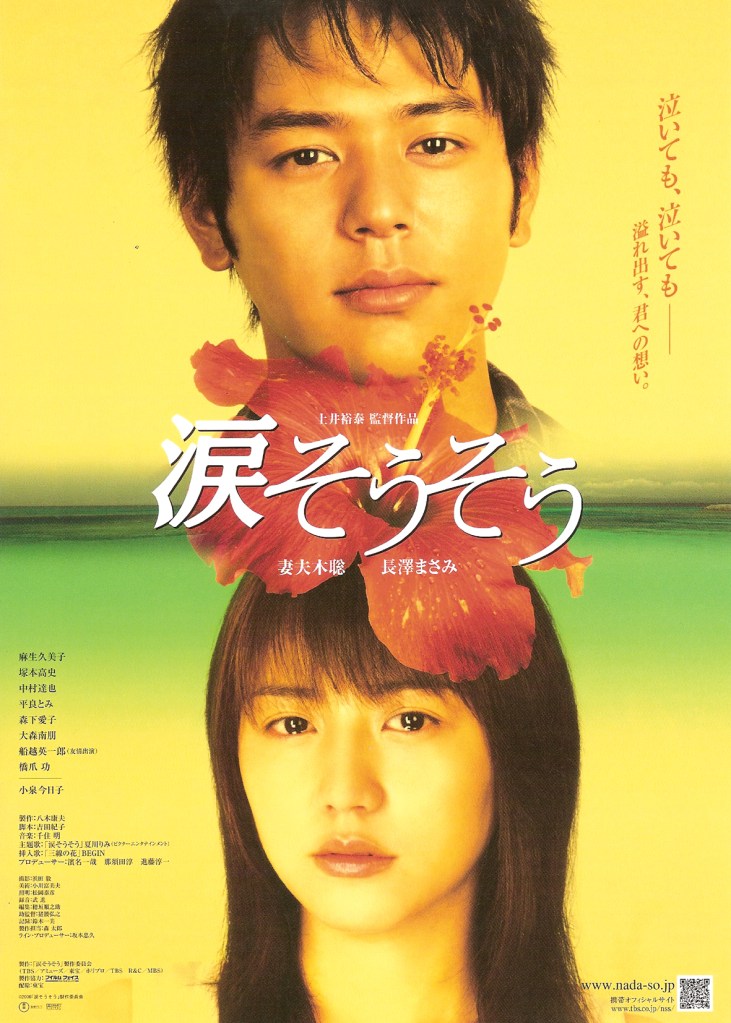
 Coming in at the end of the “pure love” boom, Nobuhiro Doi’s second feature, Tears for You (涙そうそう, Nada So So) is presumably named to tie in with his smash hit debut Be With You, and continues in the same general vein but with a much less satisfying melodrama at its core. A complicated love story centring on a pair of orphaned step-siblings, Tears for You edges into some difficult, perhaps unpalatable, territory but neatly skirts around it with a childish innocence intended to enhance its romantic credentials. Starring the jun-ai icon Masami Nasagawa, the tragic heroine at the centre of Crying Out Love in the Center of the World, alongside the then up and coming leading man Satoshi Tsumabuki, Tears for You is never quite as heartrending as it would like to be but does its best to wring its sorrowful narrative for all of its inherent tragedy.
21yr old Yota (Satoshi Tsumabuki) is a young man with big dreams but he’s put lots of them on hold in order to take care of his younger step-sister, Kaoru (Masami Nagasawa), who has only him to depend on. Yota’s mother married Kaoru’s father when both the children were small but her new husband soon ran off leaving his daughter behind. The three of them continued as a tightly knit family until Yota’s mother became ill and passed away, making Yota promise to take care of Kaoru no matter what even whilst on her deathbed. The two then moved back to an Okinawan island to live with Yota’s grandmother until Yota came back to Naha for high school. Kaoru is now about to make that same journey but the siblings’ happy reunion also provokes a number of questions about the nature of their relationship and the course each of their lives will take in the future.
This being a “pure love” movie, tragedy is coming though Tears for You does its best to disguise where it’s coming from even if the eventual outcome is quite obviously signposted. The original barrier between Kaoru and Yota is raised by their nature as accidental siblings, not related by blood but raised alongside each other with a familial bond stronger than that of just childhood friends. This, of course, becomes a problem as they grow older and begin to find it difficult to draw the line between their familial love and a possibly romantic one which would allow their family of two to continue forever.
Yota, the self sacrificing older brother has indeed become everything to Kaoru – a brother, father, and friend all in one. Dropping out of high school early, Yota has been sending a pay check home since the age of sixteen, putting his own future to one side in order to provide for Kaoru. Determined that Kaoru should prosper and escape their lowly, poverty stricken island existence through getting to university and into a middle class profession, Yota has been working three different jobs. When it looks as if he’s about to be able to realise his own dream of opening a restaurant, it all comes crashing down around his ears as he realises he’s been duped by a con artist and is now on the hook to a gang of loansharks.
In addition to adding to his financial burdens, causing him embarrassment, and further deepening his worry about providing for Kaoru, the situation also creates instability in his romantic life when the father of his longterm medical student girlfriend finds out about his predicament and offers to help – but only at a price. Keiko (Isao Hashizume), he reminds him, is a middle class girl on track to take over her father’s clinic. Yota is a poor boy with limited expectations. The implications are clear and already known to Yota who has internalised a degree of shame over his lowly origins and lack of education which he overcomes through hard work and enthusiasm. Keiko is not the sort to worry about a petty class difference even if her father is, but his words get to Yota who has always felt Keiko is too good for him. She does, however, care slightly about Yota’s ongoing and complicated relationship with his younger sister whom, she fears, will always eclipse any other woman in his life.
As in all pure love stories, love is an impossibility, surrounded by unassailable walls of culture and fate. Though there is no blood relation between Yota and Kaoru, their familial circumstances make romantic love a taboo which leads the film into a rather odd corner in which the familial side of their relationship is the one which gains the upper hand as the love of a brother and sister eclipses that of a tragic missed opportunity. As such the nature of the heartrending conclusion does not reach the melodramatic heights of other genre hits, even if it adheres to the form in maintaining the “purity” of the love through the final impossibility of its realisation. Doi employs many of the same techniques he used so well in Be With You, artfully shifting between past and present and making the most of repeated motifs to bring home the circularity of the relationship between the pair of tragic lovers but never achieves the same kind of emotional depth. Nevertheless, Tears for You is a suitably melancholy weepy anchored by strong performances from its two leads which does ultimately prove moving even if not quite reaching the degree of melodrama implied by the title.
Original trailer (no subtitles)
And here’s the original song, Nada Sou Sou, in its cover version by Rimi Natsukawa which spawned a mini industry of its own encompassing two TV dramas and this standalone film (English translation):
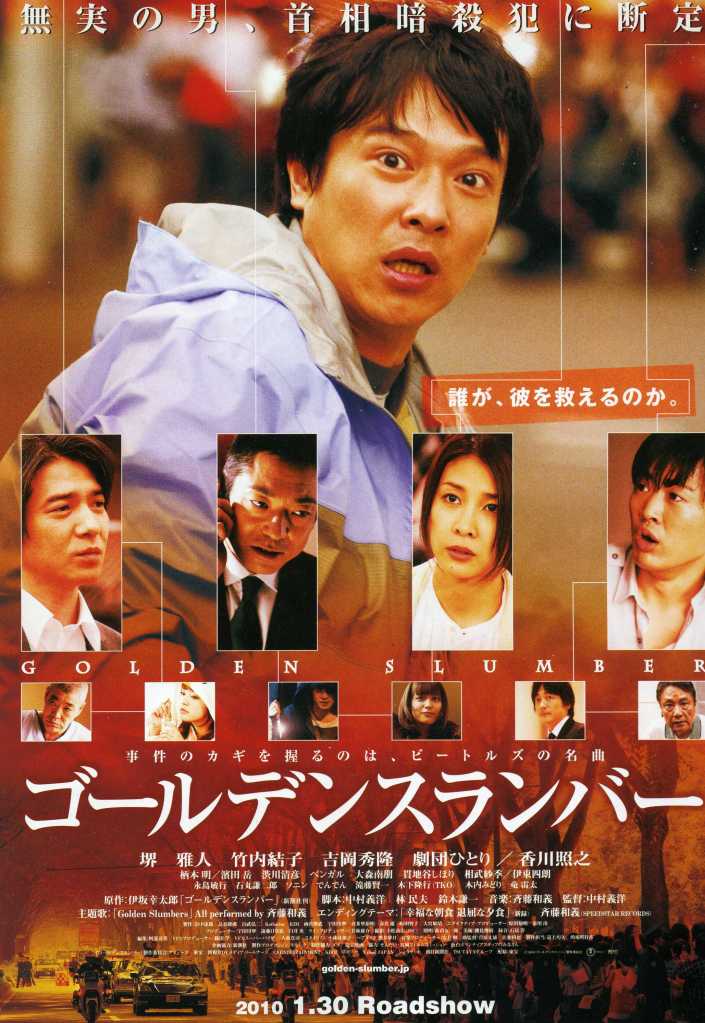 Yoshihiro Nakamura has made a name for himself as a master of fiendishly intricate, warm and quirky mysteries in which seemingly random events each radiate out from a single interconnected focus point. Golden Slumber (ゴールデンスランバー), like
 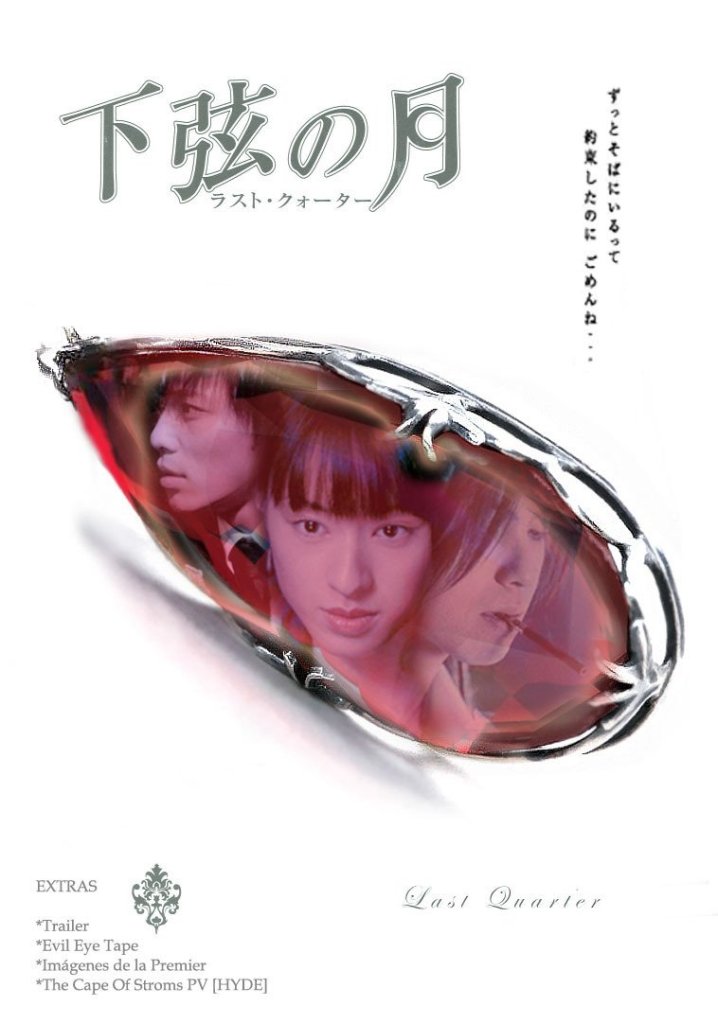 To begin on a cynical note, Last Quarter (下弦の月 ラスト・クォーター, Kagen no tsuki Last Quarter) is a film with a wide variety of marketing hooks. The first being that it’s an adaptation of a much loved short manga series by the well respected mangaka Ai Yazawa (Paradise Kiss) so it has its shoujo pedigree firmly in place. Secondly, pop star HYDE of L’Arc-en-Ciel is central to the production as he both stars in the movie as the ghostly love interest/deathly spirit and repeatedly sings his own songs throughout the film including over the end credits. Thirdly, it also stars actress Chiaki Kuriyama well known to overseas audiences thanks to Kill Bill and Battle Royale. You’d think with all these high quality ingredients first time director Ken Nikai would be able to cook up quite a feast though he does somewhat over egg the pudding.
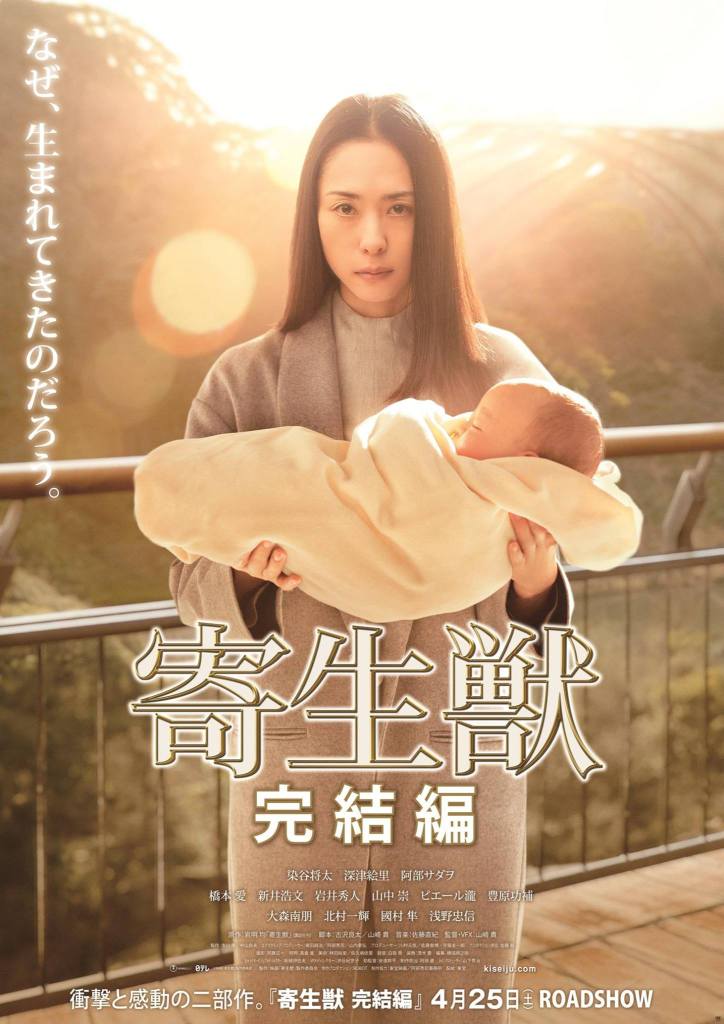 Review the concluding chapter of Takashi Yamazaki’s Parasyte live action movie (寄生獣 完結編, Kiseiju Kanketsu Hen) first published by
 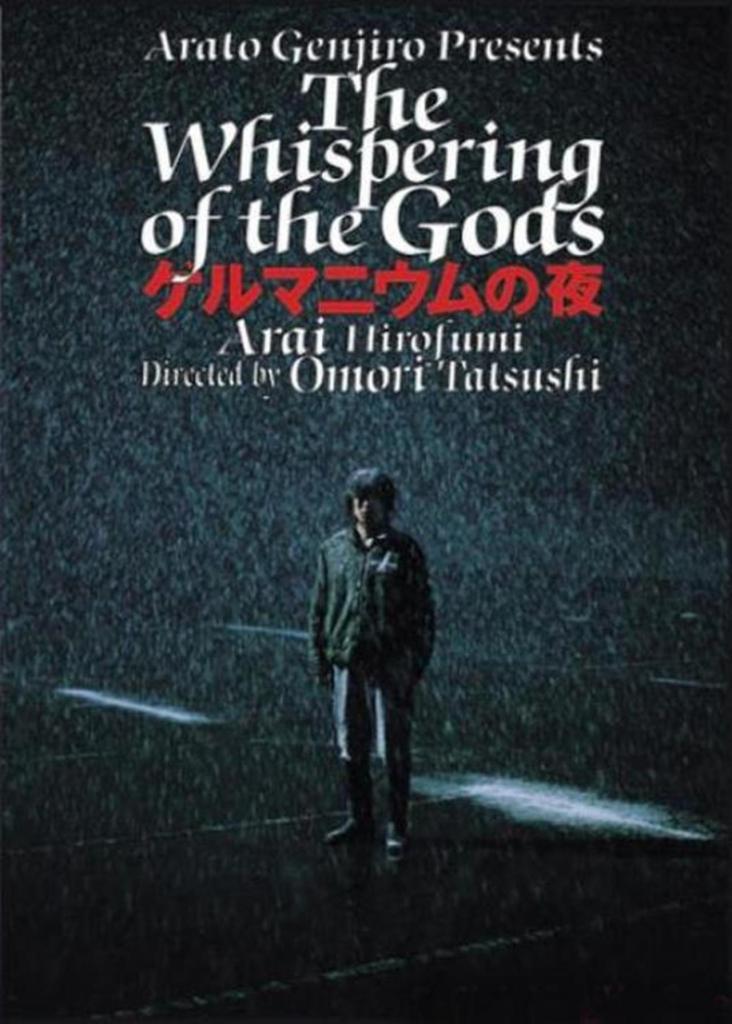 If you’ve ever wondered what it’s like to live in hell, you could enjoy this fascinating promotional video which recounts events set in an isolated rural monastery somewhere in snow covered Japan. A debut feature from Tatsushi Omori (younger brother of actor Nao Omori who also plays a small part in the film), The Whispering of the Gods (ゲルマニウムの夜, Germanium no Yoru) adapted from the 1998 novel by Mangetsu Hanamura, paints an increasingly bleak picture of human nature as the lines between man and beast become hopelessly blurred in world filled with existential despair.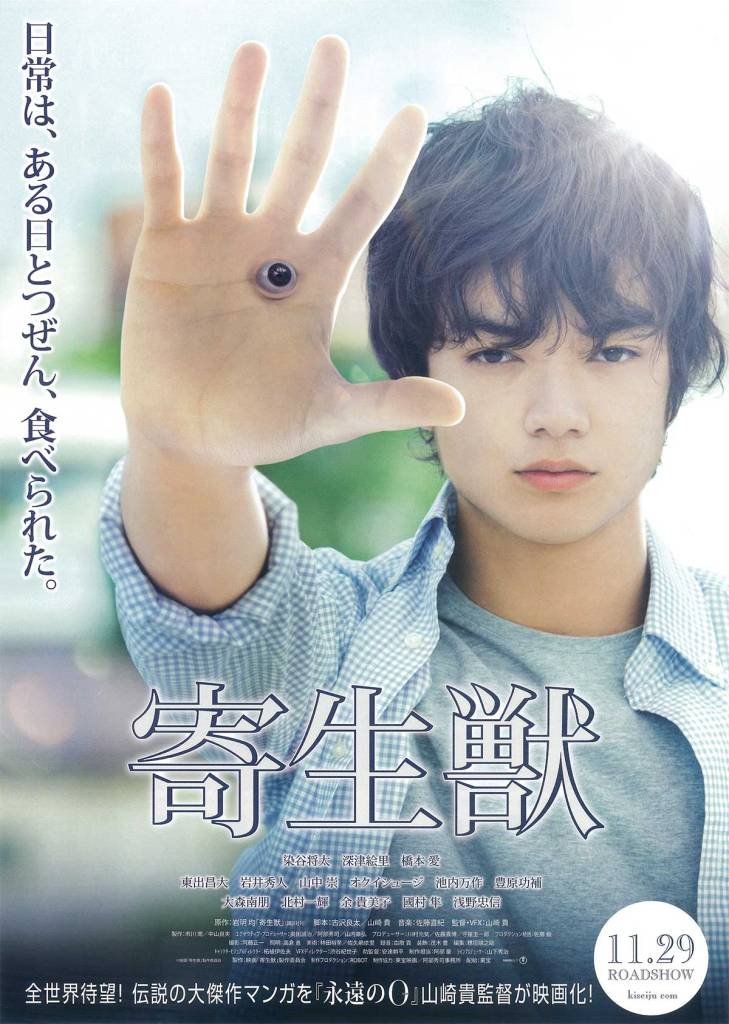
 Just look at at that title for a second, would you? Crying Out Love, in the Center of the World, you’d be hard pressed to find a more poetically titled film even given Japan’s fairly abstract titling system. All the pain and rage and sorrow of youth seem to be penned up inside it waiting to burst forth. As you might expect, the film is part of the “Jun ai” or pure love genre and focusses on the doomed love story between an ordinary teenage boy and a dying girl. Their tragic romance may actually only occupy a few weeks, from early summer to late autumn, but its intensity casts a shadow across the rest of the boy’s life.
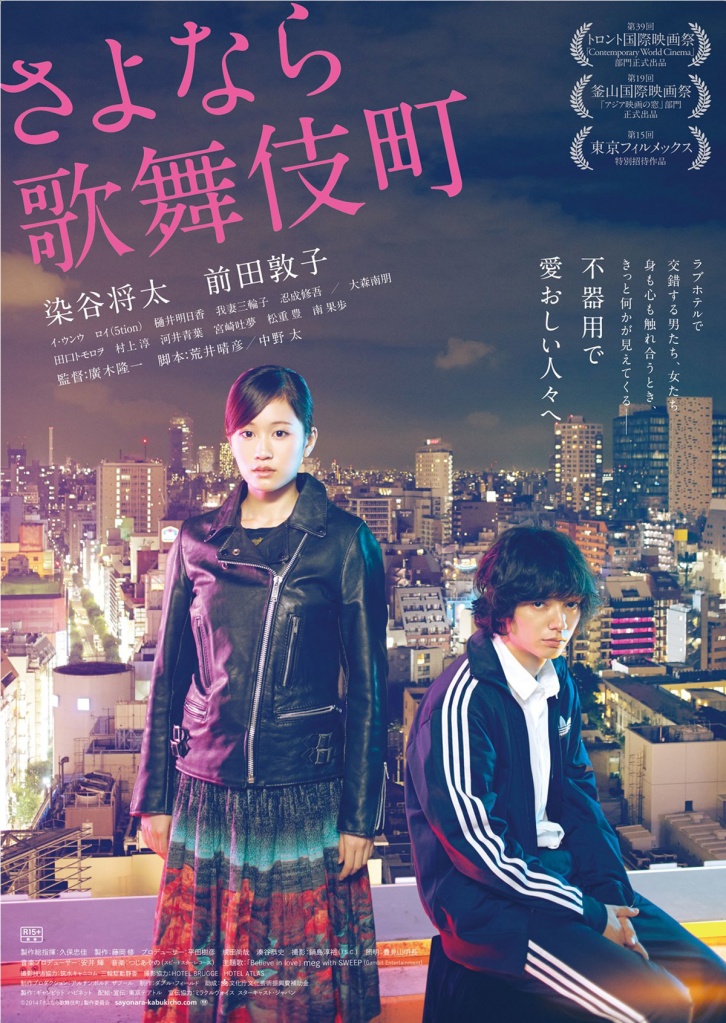 Kabukicho Love Hotel (さよなら歌舞伎町, Sayonara Kabukicho), to go by its more prosaic English title, is a Runyonesque portrait of Tokyo’s red light district centered around the comings and goings of the Hotel Atlas – an establishment which rents by the hour and takes care not to ask too many questions of its clientele. The real aim of the collection of intersecting stories is more easily seen in the original Japanese title, Sayonara Kabukicho, as the vast majority of our protagonists decide to use today’s chaotic events to finally get out of this dead end town once and for all.
 Windows on Worlds