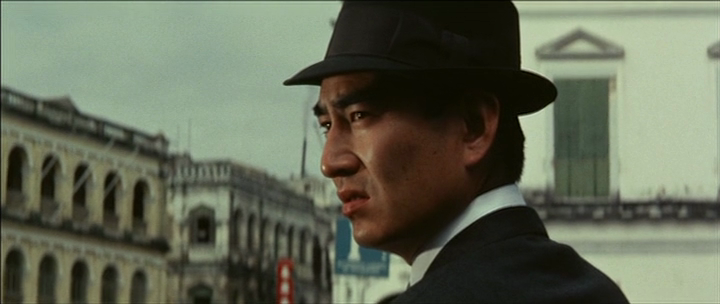
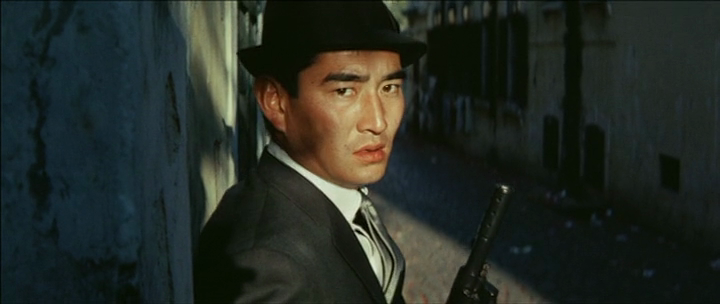
Outside of Japan, “king of cult” Teruo Ishii is most closely associated with a particular brand of transgressive ero-guro exploitation films such as Horrors of Malformed Men, yet his career was much more eclectic than many might assume. Starring Ken Takakura with whom Ishii was developing a professional relationship which would eventually lead to the hugely successful Abashiri Prison series, 1964’s An Outlaw (ならず者, Narazumono) is one of a string of noir thrillers from the earlier part of Ishii’s career this one taking place mainly in Hong Kong and Macao.
China-based Japanese hitman Nanjo (Ken Takakura) runs into trouble after he offs a man he assumed to be “the biggest thug in the underworld” but actually turns out to have been a law enforcement official working against a people trafficking ring. To make matters worse when Nanjo returns to his hotel where he was supposed to get his pay off, he discovers the body of a young woman in his bed who is later identified as the official’s daughter. Understandably annoyed, Nanjo starts trying to track down the people who hired him to figure out what’s going but is accidentally dragged into underworld intrigue after being mistaken for a drug deal middle-man owing to the yellow flower he’s wearing on his lapel.
Like any good noir hero and especially one played by Takakura, Nanjo is basically a good guy with a strong sense of justice and an acute moral compass. He doesn’t like having been manipulated into killing someone who wasn’t in the game nor does he approve of those who make their living by exploiting women such as arch villain Mao (Toru Abe) whom he discovers to have been running a nefarious international trafficking ring getting Japanese women hooked on drugs, shipping them to Hong Kong and Macao, and working them to death before abandoning them once they’ve served their purpose. Then again, he also has a strange problem with women who like to lie in bed in the middle of the day which seems slightly puritanical for a man who kills for a living yet you’d have to admit no one could call him lazy.
Not much of Nanjo’s past is revealed save that he was born in prison to a woman who stabbed her former partner because he left her for another woman while she was pregnant with his child, raising her son to be anything but dishonest especially with women. In any case, he appears to have been based in China and Hong Kong for some time, claiming that he came down from Xiamen for the job and speaking fairly fluent Cantonese and Mandarin though in another strange coincidence many of the people he meets turn out to be Japanese. In this there’s a slightly ironic inversion of the normal patterning of post-war crime films which sees Japan exporting crime to China the big mcguffin revolving around a tin of drugs Nanjo was given by mistake intended for the local market while the secondary target becomes Mao’s people trafficking operation bringing sex workers who’ve gotten into his bad books to Hong Kong or to be used for the pleasure of wealthy men. Despite his apparent disapproval, Nanjo reveals he was given part payment for the job in the form of a girl who he could use for his “convenience” though it seems unlikely that he did so.
On the other hand, the secondary villain, the Japanese-speaking Minran (Yoko Mihara), is painted as something of a femme fatale playing off Nanjo and her boss while trying to get her hands on the drugs to split the proceeds with her Cantonese-speaking lover who accidentally kills a young girl Nanjo had befriended in Hong Kong. The girl’s death is in part Nanjo’s responsibility in that he placed her in danger without warning or an understanding of what he was asking her to do, yet he later proves no better when he kills the landlady of the hotel who had watched as she died and then blackmailed Minran for financial gain. Aside from the girl and her Japanese friend Aki (Yoko Minamida) who is dying of consumption after being worked to death as one of Mao’s trafficked women, and a detective with whom Nanjo later forms an unexpected alliance, Nanjo is the representative of humanist morality despite his morally compromised existence reminding Mao that his mistake was in thinking that there is nothing money could not buy in rejecting his efforts to pay him off.
Shot largely on location in Hong Kong and Macao, Ishii adds to the noirish tone with frequent voice over and a melancholy jazz score while making full use of the atmospheric environment with its deserted alleyways and cobbled streets not to mention the naturally canted angles of the Victoria Peak funicular, while there is a fair amount of lowkey sleaze more typical of his later career along with a bizarre scene in which Nanjo sucks out blood from the mouth of a woman suffering a pulmonary haemorrhage. First and foremost a fatalistic noir thriller in which the hero, unfairly damned by a corrupt society, is unable to outrun his past transgressions, An Outlaw nevertheless suggests that true nobility is to be found only in those existing outside of its borders.
Original trailer (no subtitles)

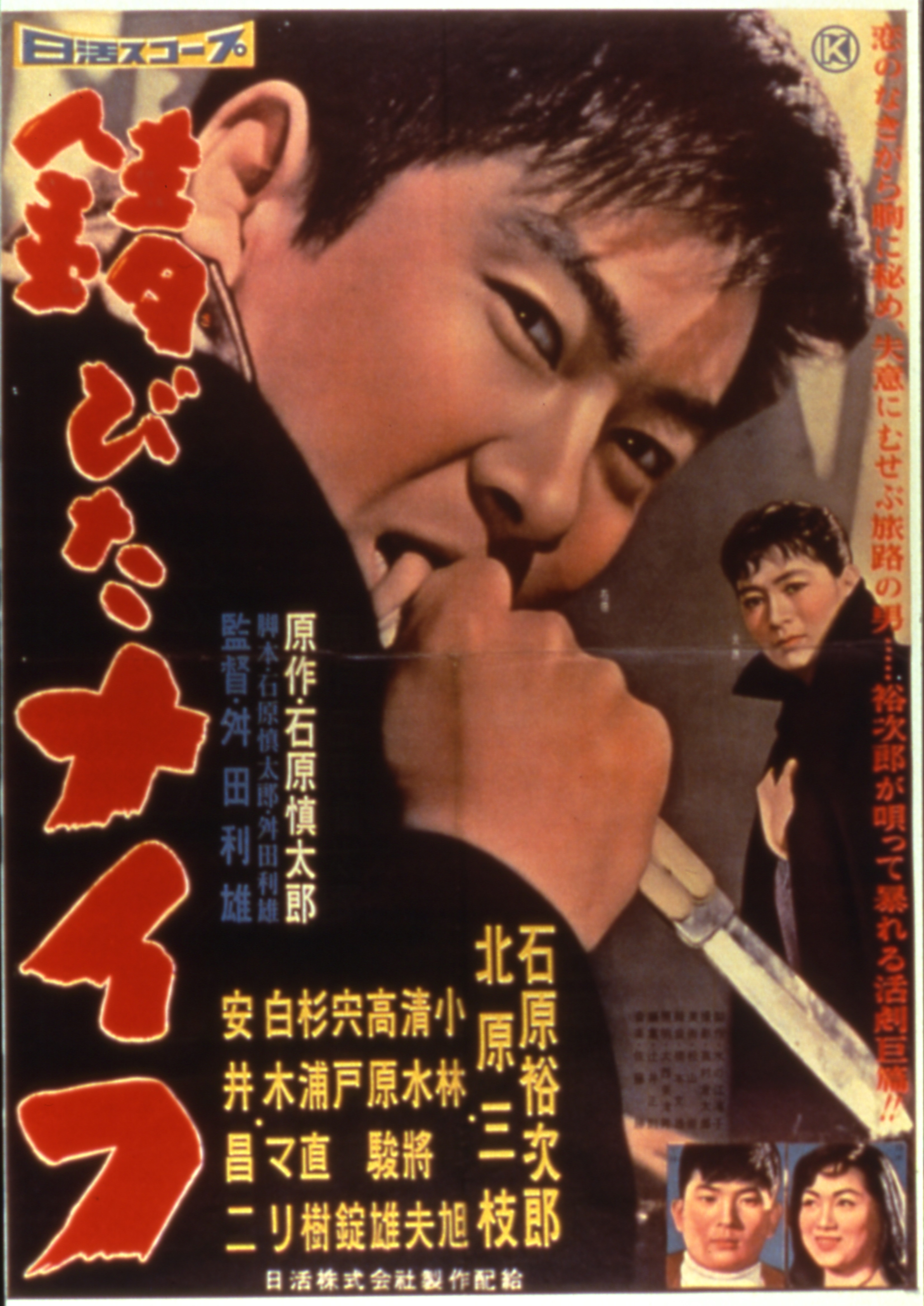 Post-war Japan was in a precarious place but by the mid-1950s, things were beginning to pick up. Unfortunately, this involved picking up a few bad habits too – namely, crime. The yakuza, as far as the movies went, were largely a pre-war affair – noble gangsters who had inherited the codes of samurai honour and were (nominally) committed to protecting the little guy. The first of many collaborations between up and coming director Toshio Masuda and the poster boy for alienated youth, Yujiro Ishihara, Rusty Knife (錆びたナイフ, Sabita Knife) shows us the other kind of movie mobster – the one that would stick for years to come. These petty thugs have no honour and are symptomatic parasites of Japan’s rapidly recovering economy, subverting the desperation of the immediate post-war era and turning it into a nihilistic struggle for total freedom from both laws and morals.

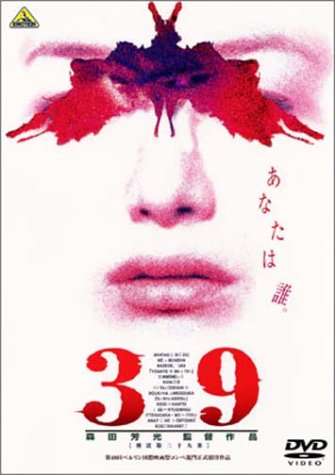 Article 39 of Japan’s Penal Code states that a person cannot be held responsible for a crime if they are found to be “insane” though a person who commits a crime during a period of “diminished responsibility” can be held accountable and will receive a reduced sentence. Yoshimitsu Morita’s 1999 courtroom drama/psychological thriller Keiho (39 刑法第三十九条, 39 Keiho Dai Sanjukyu Jo) puts this very aspect of the law on trial. During this period (and still in 2016) Japan does nominally have the death penalty (though rarely practiced) and it is only right in a fair and humane society that those people whom the state deems as incapable of understanding the law should receive its protection and, if necessary, assistance. However, the law itself is also open to abuse and as it’s largely left to the discretion of the psychologists and lawyers, the judgement of sane or insane might be a matter of interpretation.
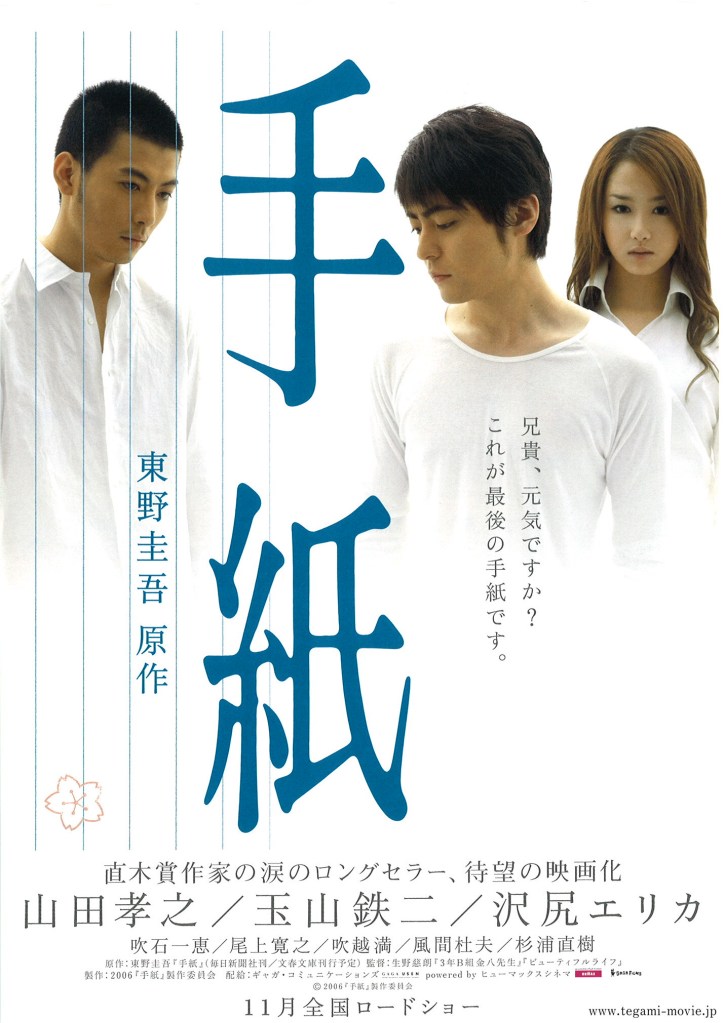 When it comes to cinematic adaptations of popular novelists, Keigo Higashino seems to have received more attention than most. Perhaps this is because he works in so many different genres from detective fiction (including his all powerful Galileo franchise) to family melodrama but it has to be said that his work manages to home in on the kind of films which have the potential to become a box office smash. The Letter (手紙, Tegami) finds him in the familiar territory of sentimental drama as its put upon protagonist battles unfairness and discrimination based on a set of rigid social codes.
 Windows on Worlds