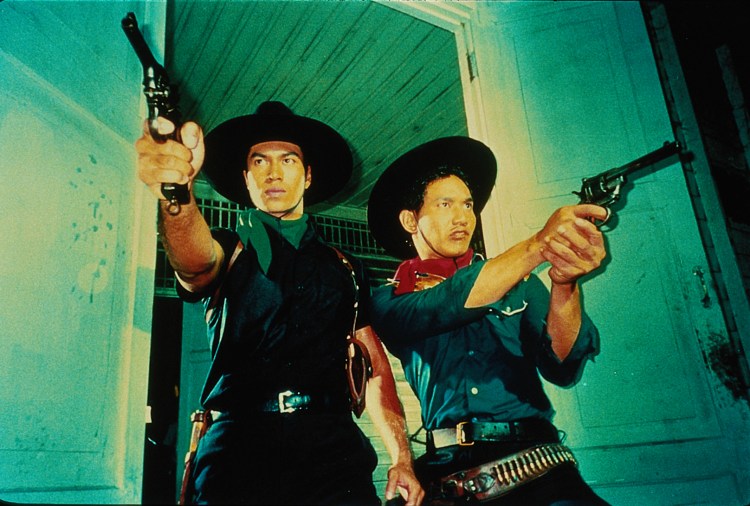
We Will Not Die Tonight (Richard V. Somes, 2018)

We Will not Die Tonight poster“Your moves are so old”, complains the director of a filmset towards the beginning of Richard V. Somes’ We Will Not Die Tonight, “it’s like the ‘80s”. An homage to The Warriors among other punk infused action classics of the 70s and beyond, We Will Not Die Tonight is as gritty and as grimy as they come following a pack of cornered desperados who unexpectedly find themselves to be the good guys when confronted by an evil unthinkable even on the streets of Duterte’s Philippines. Each in need of fast dough, a desperate gang of martial artists determines on the job to end all jobs, but it’s no surprise that they get a lot more than they bargained for just trying to survive in an unforgiving world.

Our heroine, Kray (Erich Gonzales), is a principled young woman who prides herself on her sense of justice, her good heart, and her ability to survive. Each of these qualities will stand her in good stead in the chaos that’s about to engulf her but for the moment they’re all that sustains her in her frustrating life as a stunt double for low budget movies. Berated by a director (Lehner Mendoza) who seems like he just wants to shout at someone while the “real” actress (Dani Baretto) blithely insists the stunt woman is an unnecessary waste of money, Kray can do little more than grin and bear it, unable even to make much of a fuss when she realises she’s only getting half pay on account of the director’s bad mood. She needs the money because her father (Baldo Marro) is ill and needs medical treatment, though he urges her to give up the stunt work which is dangerous and leaves her feeling humiliated to take a low paid but steady job working for a friend’s catering company.

Kray isn’t suspicious when a couple of her old friends turn up out of the blue, but quickly catches on when her ex, Ramil (Alex Medina), fetches up too. He wants to get the gang back together for one last hurrah. Having let them all down before, Ramil’s suggestion is not universally popular but as everyone is so desperate for money they eventually agree. Unfortunately, Ramil’s plan is once again a bust as it turns out the contacts he’s made are not into drug trafficking (itself a dangerous prospect given the current regime) but something far darker – snatching kids off the street for illegal organ trafficking. Now, our guys aren’t saints but they didn’t sign up for murdering children and even the slimy Ramil manages to suddenly develop enough of a backbone to firmly refuse and walk away. You can’t walk away from this sort of thing, however, and all hell breaks loose as they find themselves on the run with a little girl they save from the bad guys while they try to get to relative safety.

Unlike many similar genre examples, Kray and her friends aren’t hardened street gangsters or young punks, they’re way out of their depth in the murky Philippine underworld where drugs have become too much hassle while disappearing street children might even be viewed as a public service by the current regime. A bunch of martial arts experts with broken dreams and ruined hearts, all they want is to survive. Kray wants to help her dad, Cheche (Max Eigenmann) wants to move back to the country and open a shop, Jonesky (Thou Reyes) is just sick of being poor, and Reneboy (Nico Dans) is looking for a family seeing as his own has moved to Germany without him. Ramil, the slick pretty boy leader just wants to lead with a mild ulterior motive of using his friends to get rich and perhaps winning back the respect of old flame Kray. This world, however, is not going to let them have any of that – they are going to have to fight not only for their lives but also for what’s right if they want to survive.

Somes backgrounds an authoritarian regime as the enabler of such a dark and amoral world as it thinks nothing of gunning down “drug dealers” in the streets while turning a blind eye to other kinds of violence and horror which, in a strange way, perhaps play into its continuous propaganda machine. Yet as much as our heroes are essentially trying to fight their way out of inescapable poverty, Somes’ grime fuelled action picture is pure B-movie, filled with gritty street violence enacted with makeshift weapons and fierce ingenuity. The fighting is ugly, and real (not to mention bloody), but our heroes are fighting for more than just their lives, they’re fighting for the soul of the society in which they live. Desperate to survive, they would rather die fighting than give in to the darkness but the night is long and the battle only just beginning.


We Will Not Die Tonight was screened at the New York Asian Film Festival 2018.

Original trailer (dialogue free, English captions)

Smokin’ on the Moon (ニワトリ★スター, Kanata Wolf, 2017)

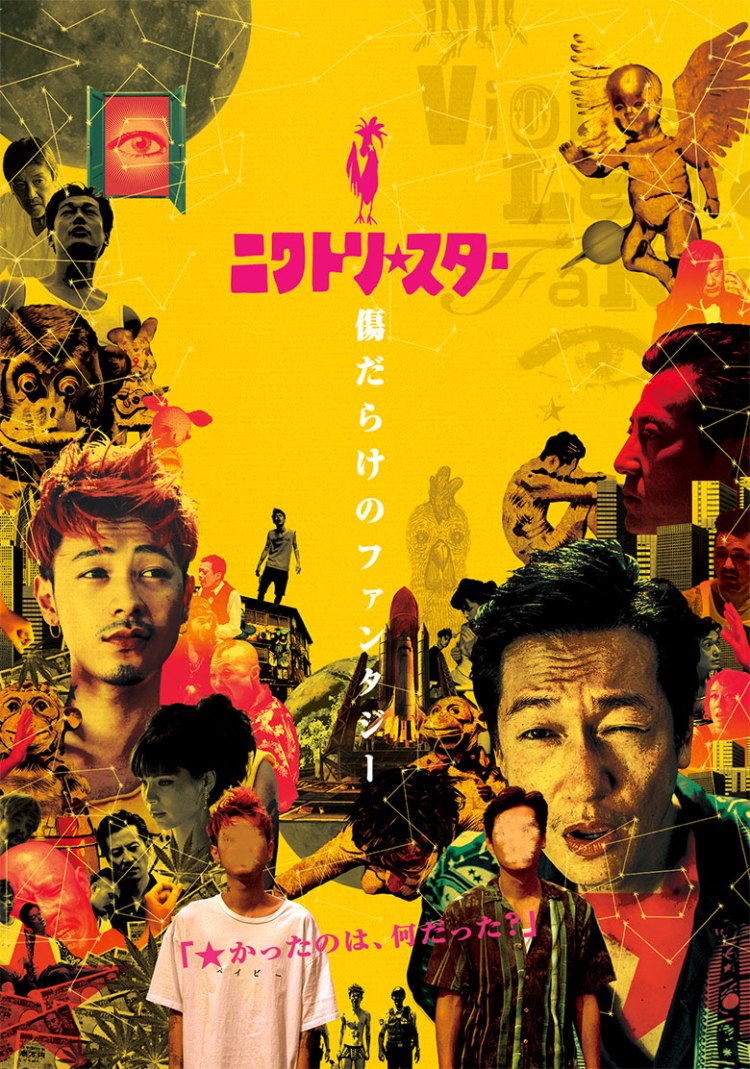
Smokin' on the Moon posterSlacker drama has become a mainstay of the Japanese indie scene as aimless young men drift freely in a society which promises them little and threatens to take much. Even so they’ve rarely been quite so genially lost as the pair at the centre of Kanata Wolf’s Smokin’ on the Moon (ニワトリ★スター, Niwatori★Star) whose relatively serene life of stoner bliss is radically derailed after a dramatic encounter with a psychotic yakuza drug dealer. Dreaming of escape, a better life somewhere else, the pair find themselves taking very different paths as they reflect on their familial pasts, broken dreams, and future promises.

34-year-old Sota (Arata Iura) and his younger unofficial roommate and official best friend Rakuto (Ryo Narita) live a “simple” life of casual work which pays for rent and getting stoned if not much else. They are broadly “happy” with their aimless drop out lives and determined not to get involved with the shadier sides of their underworld existence by avoiding the pull of hard drugs and gangster hang outs. All that ends up going by the wayside when their dealer, Jay (Peron Yasu), is offed by sadistic yakuza Hatta (Kanji Tsuda) who makes a point of dropping in on the boys to ask them if they know where Jay might be in order to make sure they don’t. Being directly confronted with gangster violence sparks Sota into a series of epiphanies as he suddenly realises that the stoner life is not a good fit for a man of 34, while Rakuto, who has few other options, considers throwing his lot in with Hatta if only to remain on the sidelines of organised crime.

Sota, son of an Osakan okonomiyaki restaurant owner (Eiji Okuda), left home in flight of family legacy, bored with boring small-town life and resentful of his “destiny” as the heir to a family business. Eight years in Tokyo, however, have been largely wasted, squandered away on constant evasion with nothing more to show for his time than a few crazy stories and a deeply held friendship. Sota does at least have a safety net, he can always go home to a family that will welcome him with open arms. Rakuto is not so lucky. Harbouring deep seated resentment towards his mother who was unable to protect him from a violent step-father, Rakuto fled Okinawa to escape the memory of a traumatic childhood which is perhaps why he finds himself becoming a surrogate father to a little boy whose mother, as it turns out an old friend of his, desperately tries to kick a crack habit given to her by an unforgiving city even as it crushed her dreams of musical success.

Discovering an old report card on which he’d written that his greatest ambition was to work hard for his family, Rakuto decides he needs to buck up and become a responsible husband and father who can provide a stable home for a woman and a child. There are, however, few opportunities for middle-school dropouts and even those there are Rakuto has already disqualified himself from thanks to his stoner looks which include fiery red hair and several prominent tattoos (prohibited in almost every conceivable “decent” job in Japan). Thus he feels his only option is to become a kind of errand boy for Hatta, naively believing he will allow him to remain in the shallower end of the gangster pool just dealing weed and making deliveries rather than pushing hard drugs or getting involved in violence. While Sota finds peace in the country, Rakuto begins to build the family life he’d always dreamed of while trying to cope with the constant anxieties of being an underling to a bunch of unhinged crooks.

Wolf shifts registers throughout – starting off in stoner comedy where our heroes inhabit a bohemian world of gay bars and randy landladies, shifting into crime thriller as the nasty gangsters rear their heads, and then finally ending up in masculine melodrama as Sota recounts the sad story of his friend who, despite his good heart, finds himself a victim of fate rather than of himself or even of his society. Mixing strange animation and surrealist diversions with an affecting tale of friendship, Smokin’ on the Moon is another sad story of those unable to find their place in the world taking refuge in each other only to find a melancholy compromise even as fate threatens to rob them of the little joys they’ve found.


Smokin’ on the Moon screens at New York Asian Film Festival 2018 on 10th July at 9.15 pm plus Q&A with director Kanata Wolf

(Kanata Wolf (かなた狼) previously known as Yuichiro Tanaka (たなか雄一狼). Surname is Wolf as per official website).

Original trailer (no subtitles)

The Looming Storm (暴雪将至, Dong Yue, 2017)

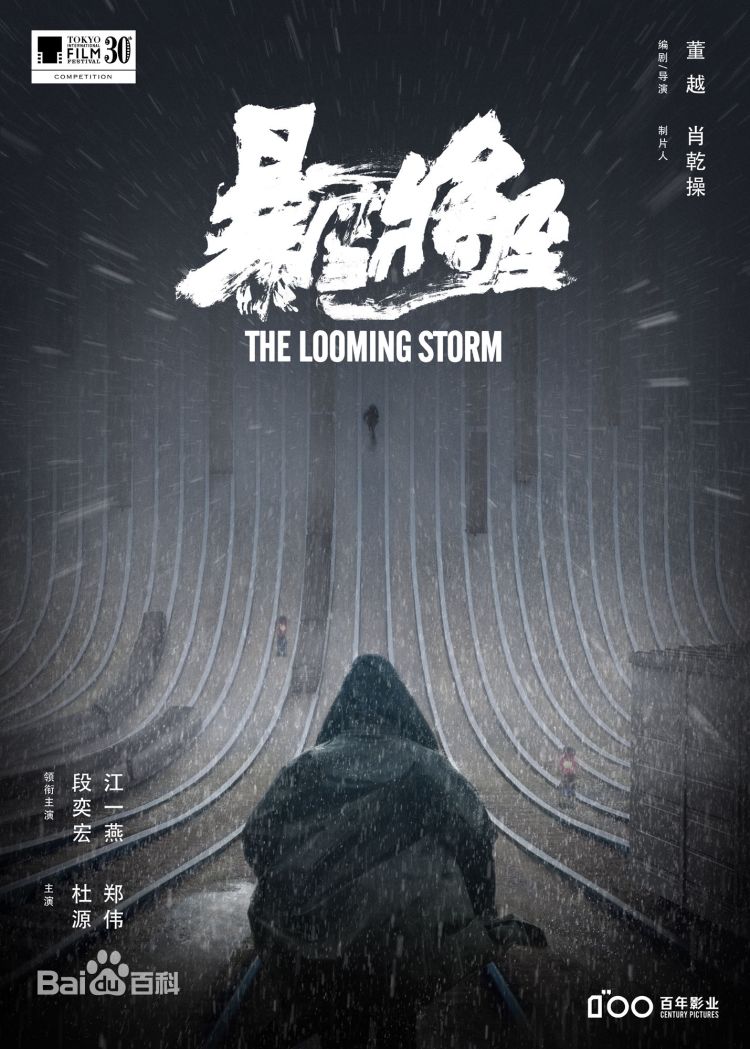
The Looming Storm posterGreat changes were afoot in China in 1997. While the rest of the continent contended with the Asian Financial Crisis, China saw the death of reformer Deng Xiaoping who had begun the business of putting the nation’s economy on a modern footing – something which was still very much in progress under the then premier, Jiang Zemin. The old unprofitable factory cities and the work unit system were on their way out, but with little in the way to replace them save the hope for a new and glorious future. The hero of Dong Yue’s debut, The Looming Storm (暴雪将至, Bào Xuě Jiāngzhì) has an unhappy destiny in that his name uses characters which could be translated as “unnecessary remnant of a glorious nation”. He, like many of his generation, is one caught out by his country’s sudden shifts and finds himself living out a fantasy, chasing at shadows and eventually destroying himself in a misdirected attempt to attack a society which has all but forgotten him.

We begin at the end – in 2008, Yu Guowei (Duan Yihong) is released from prison as a parolee, awaiting the return of his ID card and along with it his official existence as a member of society. Flashing back to 1997, Guowei is the security officer at the local factory. Having proved himself efficient in catching petty criminals thieving from the communal resources, Guowei gets himself a “model worker” commendation and the nickname “Detective Yu”. Fancying himself as a top investigator and there being very little to do in this no horse town, Guowei is, in a sense, excited when another body of a young woman turns up near the factory closely matching the pattern of other recent murders and hinting at a serial killer. Seeing as the police are short staffed in any case, the local sheriff decides to humour Guowei by allowing him to go on trying to solve the case on his own.

Guowei investigates the crime with methods he’s learned from hardboiled movies – staking out the crime scene and asking awkward questions in an illicit local disco where, it is suggested, some of the victims may have been earning money through casual sex work. He becomes obsessed with shadowy figures, faces hidden by raincoats, who lurk on the periphery anonymous and almost unseen but yet unsettling. Guowei finds and chases his quarry, only to abandon a friend in need while the suspect gets away leaving Guowei with only his shoe as a possible clue.

During his model worker speech, Guowei somewhat milks the occasion but proudly states that he intends to live a “meaningful live”. Given the depressing drudgery of his existence it’s unclear how he intends to do that, but then his “investigation” becomes his great and glorious destiny – something which will bring both meaning and acclaim to his otherwise meaningless existence. Like many of his age, Guowei has learned to be proud of his contributions to society through his work but remains unaware that the security bureau is not well respected. Everyone knows Guowei is a pure hearted sort who cannot be corrupted and pretends to respect him for it, but in reality they find him priggish and ridiculous. Unbeknownst to him to there have been many more mysterious thefts he’s never discovered because the entire factory and even his own assistant are engaged in a complex system of bribery to cover them all up.

When the factory is unceremoniously shut down, all Guowei is left with is his need to find the killer. Striking up a relationship with a pretty sex worker, Yanzi (Jiang Yiyan), who dreams of opening her own hair salon in Hong Kong – another new horizon in 1997 though one she fears she may never see, Guowei perhaps has another shot at building a “meaningful life” but rejects it, suppressing his natural desires for his obsessive pursuit in deciding to use his new muse as bait. Time and again, Guowei backs away from the reality, unwittingly sacrifices friends and lovers in service to his self created narrative in which he is a hero seeking justice whose victory is all but assured. Having discovered the truth, Yanzi’s eyes are opened – she has woken up from the beautiful dream of a possible future while Guowei is still boyishly dreaming of becoming a hero in an unheroic world.

Dong paints the industrial factory town in tones of washed out browns and greys as the rain falls without end, muddying the streets and thickening the air. Having made a life changing transgression, Guowei is asked what the point in any of this really was and seemingly has no answer, his fantasy perhaps shattered by his single act of horrifying violence intended for the world in which he lived which had already robbed him of so much, but vented on a possibly innocent party all because of a personal conviction more akin to prejudice. A victim of changing times denied his future, the “meaningful life” that would allow him to greet the new century with head held high, Guowei creates a new narrative for himself in which he can be the hero but there is a storm always looming and Guowei has been swiping at ghosts flickering on the peripheries of his fracturing mind. Eventually Guowei too decides it’s time to leave this place only to find no way out from the blizzard conditions which continue frustrate the path towards his future.


The Looming Storm screens at New York Asian Film Festival 2018 plus Q&A with director Dong Yue on 9th July at 9.30pm.

Original trailer (English subtitles)

Kamikaze Taxi (Masato Harada, 1995)

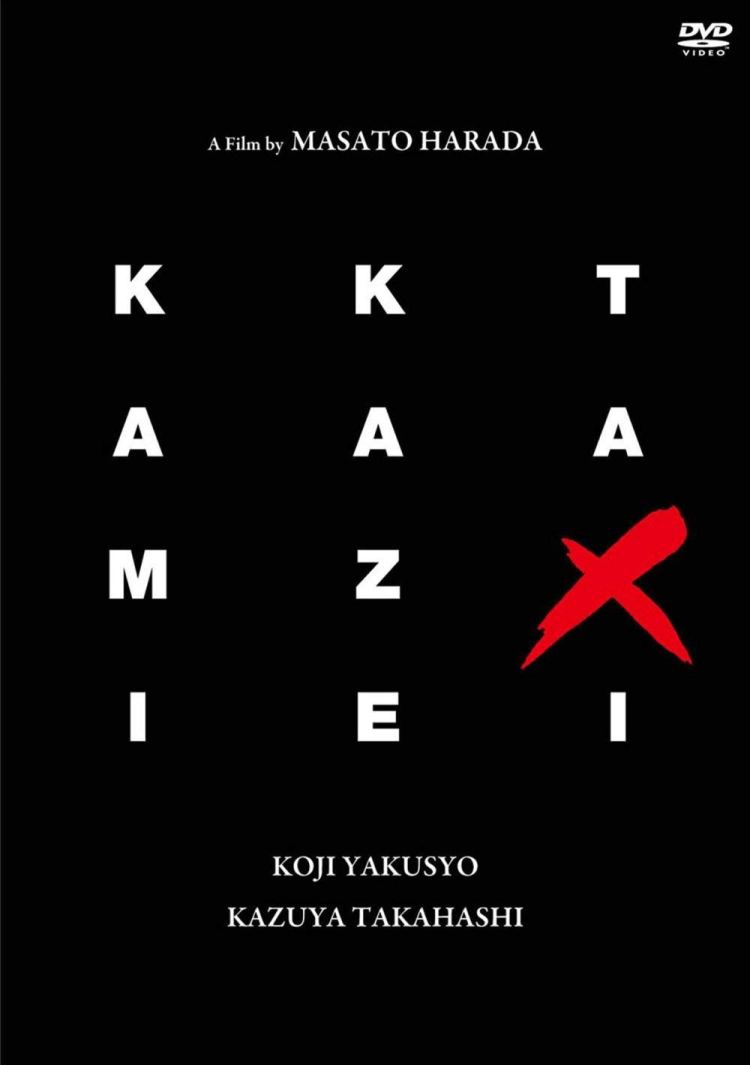
Kamikaze Taxi DVD coverAlmost 25 years later, Masato Harada’s post-bubble critique of a society failing to deal with its traumatic past feels oddly relevant. Xenophobia, misogyny, class oppression, and political corruption are far from unique problems but find fertile ground in a society in flux in which recent economic trauma has forced tensions to the fore. 1994 was a period of marked political chaos in which a corruption scandal had brought down a Prime Minister while the country debated electoral reform and attempted to deal with the ongoing recession, finding itself caught between the problems of past and future as the Showa era legacy continued to gnaw at the promise of Heisei.

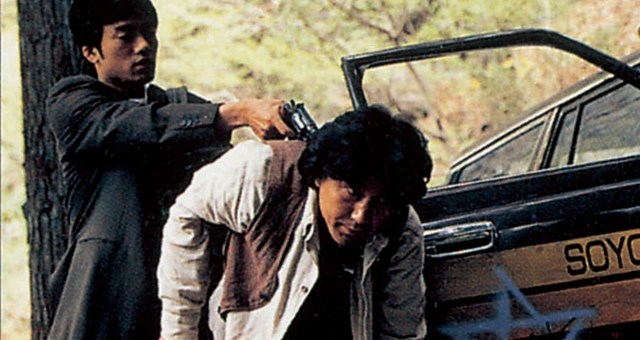
Lowly goon Tatsuo (Kazuya Takahashi) has been charged with finding girls for corrupt politician Domon (Taketoshi Naito), but his world is turned inside out when Domon badly beats a prostitute leading his girlfriend Renko, a madam, to kick up a fuss which eventually gets her killed by sadistic mob boss Animaru (Mickey Curtis). Insensitively ordered to dispose of Renko’s body, Tatsuo’s resentment intensifies until he is shouldered with caring for the injured prostitute, Tama (Reiko Kataoka), who tells him that Domon keeps a large amount of cash hidden in his house. Seeing a chance to escape from the yakuza world whilst getting revenge on everyone involved in the death of Renko, Tatsuo enlists a few of his trusted guys and stages a heist. It goes badly wrong, leaving everyone except Tatsuo dead.

Meanwhile, on the run, Tatsuo gets a lift from Peruvian returnee Kantake (Koji Yakusho) now working as a taxi driver after being unable to find any other kind of work in the middle of a recession in a society not always welcoming of overseas workers. Although he was born in Japan and spent most of his childhood in the country, Kantake’s grasp of the language has become corrupted and he finds himself unable to communicate in his “homeland” despite being “Japanese”. Even without verbal communication, the two men bond and Kantake returns to collect Tatsuo despite becoming aware of his gangster past, forging a kind of brotherhood in their shared outsider status.

When Tatsuo is first introduced to Domon, the first thing he asks him is if he is “fully Japanese”. Domon “hopes” he is, but has his doubts because his name “sounds a bit Korean”. Harada opens the film with some on screen testimony from migrant workers in Japan, some of whom are, like Kantake, of Japanese birth if raised overseas but nevertheless find themselves regarded as foreigners – turned down for housing and employment, cast out from regular mainstream society. In the bubble era when it was all hands to the wheel, the migrant workers were an essential part of a well functioning economy, but now the bubble’s burst and they are no longer “needed” as construction dwindles and the demand for casual labour decreases, men like Domon begin to suggest simply sending them all “home”. 

A fierce nationalist, Domon is also a misogynist whose sexual proclivities run to extreme violence. Sadly, his views are not so far from the mainstream as might be hoped – the heartless yakuza think nothing of silencing Renko and then disappearing her body, while Tama’s assault is something bought and paid for. On TV, Domon appears on a panel discussing the comfort woman issue and unsurprisingly refuses to acknowledge it while the increasingly exasperated female contributor points out that the use of comfort women was not only a state sponsored crime but a crime against women which speaks volumes about current social attitudes. Domon insists that the Japanese women who “served” as prostitutes overseas were soldiers, while the “foreign” women were soulless money hungry mercenaries who deserved everything they got. In his view, all of today’s problems are down to “selfish” career women who should get back in their boxes as quickly as possible so everything can go back to “normal”.

The wartime legacy hangs uncomfortably over modern Japan as ultra nationalists like Domon harp on about their time in service, exploiting their fallen comrades for personal and political gains. Kantake too, it seems, has fought in a war and is the son of a former kamikaze pilot of the kind despised by men like Domon who themselves have continued to live even in defeat. Drugs and foreign wars link two eras and two continents, not to mention two men, as Kantake reflects on the true “kamikaze” spirit as seen in the beautiful flight of the Condor coasting on the winds above the Andes. It is indeed a gust of wind which saves him as he decides to fulfil Tatsuo’s quest for vengeance, remaining true to their brotherly bond and attempting to wipe the slate clean by eliminating the corrupting forces which deny each of them the right to live as full members of their society. Asked for his life story by a dying man, Kantake begins to speak but all too quickly is urged to “forget about Showa” – a partial plea for making peace with the past, getting rid of nationalism, the yakuza, the hierarchical and patriarchal society in favour of something kinder and more honest built out of its ashes.


Kamikaze Taxi screens at New York Asian Film Festival 2018 on 1st July at 6pm plus Q&A with director Masato Harada.

HD re-release trailer (no subtitles)

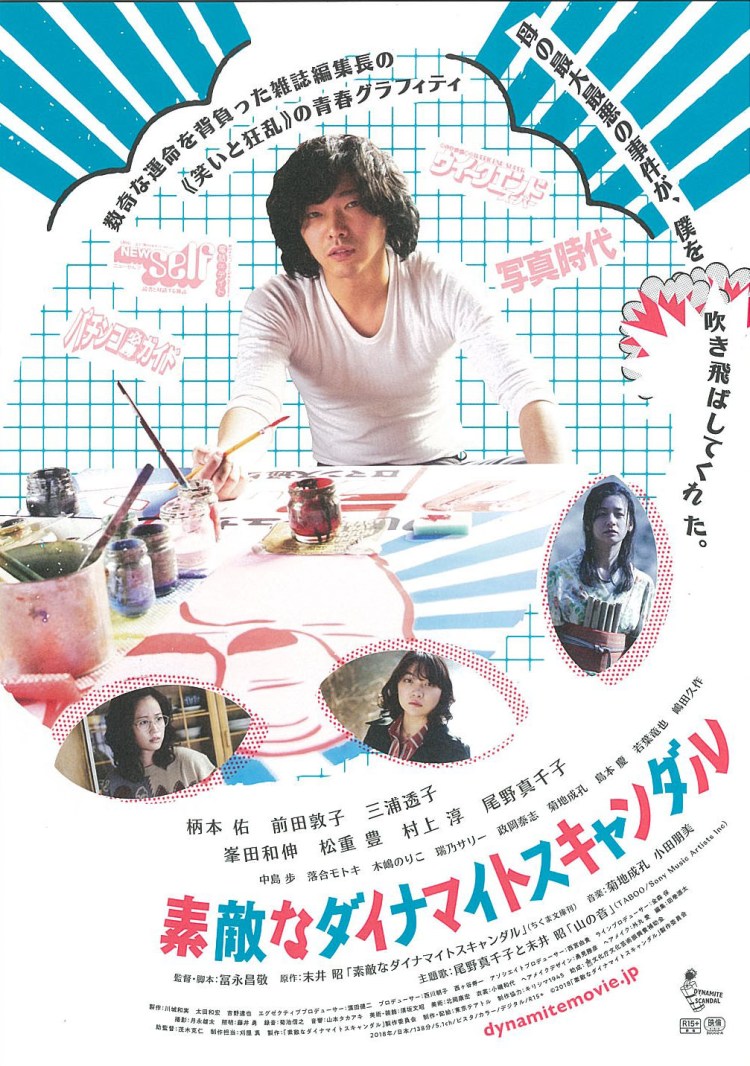
Dynamite Graffiti (素敵なダイナマイトスキャンダル, Masanori Tominaga, 2018)

Dynamite Graffiti posterThe division between “art” and “porn” is as fuzzy as the modesty fog which still occasionally finds itself masking “obscene” images in Japanese cinema, but for accidental king of the skin rag trade Akira Suei it’s question he finds himself increasingly unwilling to answer even while he employs it to his own benefit. Back in the heady pre-internet days of the 1980s, Suei was the public face behind a series of magazines along differing themes but which all included “artistic” images of underdressed women in provocative poses alongside more “serious” content provided by such esteemed figures as Daido Moriyama and Nobuyoshi Araki in addition to stories and essays penned by “legitimate” authors and the more scurrilous fare written by Suei himself. Inspired by one of Suei’s essays “Dynamite Graffiti” (素敵なダイナマイトスキャンダル, Sutekina Dynamite Scandal), Masanori Tominaga’s ramshackle biopic has the informal feel of a man telling his sad life story to a less than attentive bar girl as he takes us on a long, strange walk through the back alleys of ‘70s Japan.

The entirety of Suei’s (Tasuku Emoto) life is lived in the wake of a bizarre childhood incident in which his mother (Machiko Ono), suffering with TB and trapped in an unhappy marriage to a violent drunk, chose to commit double suicide with the young man from next door. Perhaps there’s nothing so strange about that in the straightened Japan of 1955, but Suei’s mother chose to end her life in the most explosive of ways – with dynamite stolen from the local mine. Carrying the legacy of abandonment as well as mild embarrassment as to the means of his mother’s dramatic exit, Suei finds himself a perpetual outsider drifting along without the need to feel bound by conventional social moralities as symbolised by the “ideal” family.

What he longs for, by contrast is freedom and independence. Bored by country life he dreamt of moving to the city to work in a factory, but the problem with factories is that they’re mechanical and turn their employees into mere tools with no possibility of personal expression or fulfilment. Spotting an advert for courses in “graphic design”, Suei’s world begins to open up as he embraces the bold new possibilities of art even as it wilfully intersects with commerce.

Taken with the new philosophy of design as the message, a means of “exposing” oneself and ultimately enabling true human connection, Suei remains frustrated by the limitations of his role as a draughtsman for local advertisers and, inspired by a friend’s beautiful poster, finds himself entering the relatively freer creative world of the “cabaret” scene as a crafter of signboards and flyers. The cabaret bars are little better than the factories, exploiting the labour of women who themselves are the product, but Suei’s distaste is soon worn down by constant exposure. From the clubs and cabarets it’s only a natural step towards erotic artwork, nudie photographs, and finally a vast magazine empire of “literary” pornography.

Suei’s accounts of his youth are filled with a lot of high talk about the possibilities of art, of his desire to remove the masks which keep us divided so that we might all know “true” human love. Whether his adventures in adult magazines can be said to do that is very much up for debate. They are, as he freely admits, expressions of male fantasy – exposing a perhaps unwelcome truth about the relationships between men and women even as they continue to exploit them. Yet Suei’s own desire to find something more than a potential for titillation in his work continues to dwindle as he finds himself engaged in increasingly complicated schemes to avoid censure from the police while simultaneously insisting that his magazines are both “artistic” and not.

His insistence that the photographs are “artistic” becomes his primary weapon in getting sometimes vulnerable young women to agree to take their clothes off. Abandoning his loftier aspirations, Suei sinks still further into the smutty morass whilst still maintaining the pretension that his magazines are not like the others. He neglects his wife (Atsuko Maeda) to chase fleeting affections with unsuitable or unstable women, one of whom eventually descends into a mental breakdown which provokes in him only the realisation that his desire for her was a romantic fantasy which her illness has now dissipated. Art is an explosion, Suei claims, but his mother was the explosive force in his life, blowing him off course and leaving him too wounded to embrace the reality he so desperately claims to crave but continues to reject in favour of the same kind of male fantasies his magazines peddle.

Everyone around Suei seems to be damaged. Nary a face in the red light district is without a bandage or bruise of some sort. These are people who’ve found themselves at the bottom of the ladder and are desperately trying to scrap their way up. Times change and Suei’s empire implodes. Porn is swapped for pachinko as the exploitable pleasure of choice paving the way for yet another reinvention which sees him throw on a kimono to rebrand himself as his own mother and self-styled pachinko expert. You couldn’t make it up. Still, perhaps there is something more honest in Suei’s pachinko persona than it might first appear even if his present “art” is unlikely to enlighten us to the true nature of love.


Dynamite Graffiti is screening as the opening night movie of this year’s New York Asian Film Festival.

Original trailer (no subtitles)

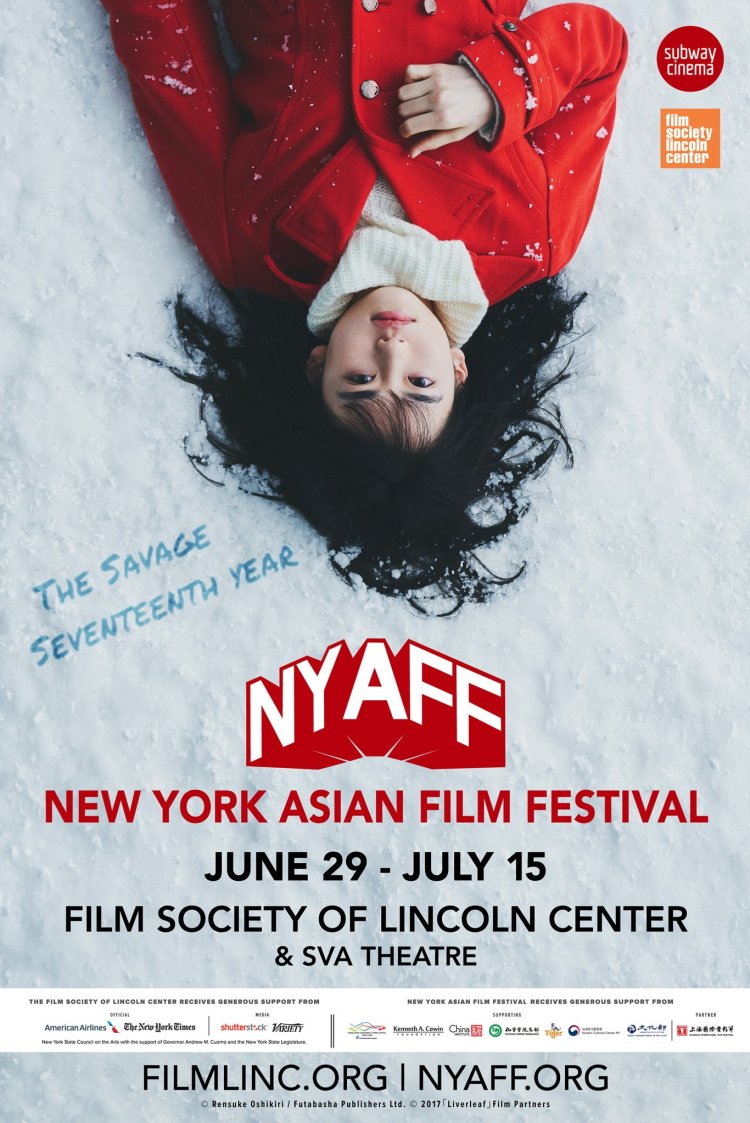
New York Asian Film Festival Confirms Complete 2018 Lineup

NYAFF 2018 posterThe New York Asian Film Festival returns for its 17th edition with a packed programme of recent hits from East Asia. This year’s festival will open with Masanori Tominaga’s Dynamite Graffiti and close with the World Premiere of Erik Matti’s BuyBust. Hong Kong’s Dante Lam will receive the Daniel A. Craft Award for Excellence in Action Cinema, while the Star Asia Lifetime Achievement Award goes to Japan’s Masato Harada and the Star Asia Awards will honour actors Kim Yun-seok and Jiang Wu.

The programme in full:

China 

wrath of silence horizontal

  • Dude’s Manual (Kevin Ko, 2018) – the first Mainland film from Taiwanese director Kevin Ko is a ribald sex comedy in which one student attempts to teach another a lesson in love. Q&A with director Kevin Ko
  • End of Summer (Zhou Quan, 2017) – coming of age football drama in which a little boy’s obsession with the world cup irritates his headmaster dad.
  • The Ex-Files 3: The Return of the Exes (Tian Yusheng, 2017) – final film the Ex-Files series.
  • Looking for Lucky (Jiang Jiachen, 2018) – a graduate student loses his professor’s dog and ropes in his dad to help him find it.  Director Jiang Jiachen in attendance.
  • The Looming Storm (Dong Yue, 2017) – a factory worker tries to solve a serial killing case in 1997. Q&A with director Dong Yue
  • Old Beast (Zhou Ziyang, 2017) – an old man spends his final years gambling and womanising.
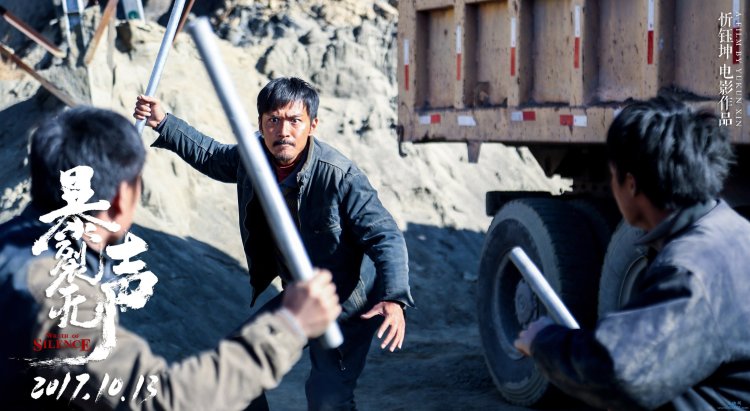
  • Wrath of Silence (Xin Yukun, 2017) – a mute minor searches for his missing son. ReviewQ&A with director Xin Yukun and actor Jiang Wu

Hong Kong Panorama

paradox still 1

  • Beast Stalker (Dante Lam, 2008) – Dante Lam’s 2008 thriller starring Nicholas Tse and Nick Cheung. Director Dante Lam will be in attendance
  • The Big Call (Oxide Pang, 2017) – noble policeman Ding goes in hard chasing villainous phone scammers in Oxide Pang’s high octane thriller.
  • The Brink (Jonathan Li, 2017) – Jonathan Li makes his feature debut with a metaphorical police procedural in the form of a salty sea shanty. Review.
  • The Empty Hands (Chapman To, 2018) – a young woman thinks she’s finally free of her father’s legacy only to realise he’s left half his dojo to a former pupil who says she can only have his share if she wins a fight. Q&A with actress Stephy Tang
  • House of the Rising Sons (Antony Chan, 2018) – musical biopic of ’70s Hong Kong band The Wynners directed by the band’s drummer Antony Chan. Preceded by a live performance. Q&A with director Antony Chan.
  • Men on the Dragon (Sunny Chan, 2018) – Francis Ng stars as the leader of a team of salarymen forced to join the company dragon boat team. Q&A with director Sunny Chan and actress Jennifer Yu
  • Operation Red Sea (Dante Lam, 2018) – a team of elite special forces soldiers handles the extraction of Chinese diplomatic staff caught up in a Middle Eastern coup in Lam’s Operation Mekong followup. ReviewQ&A with director Dante Lam and producer Candy Leung
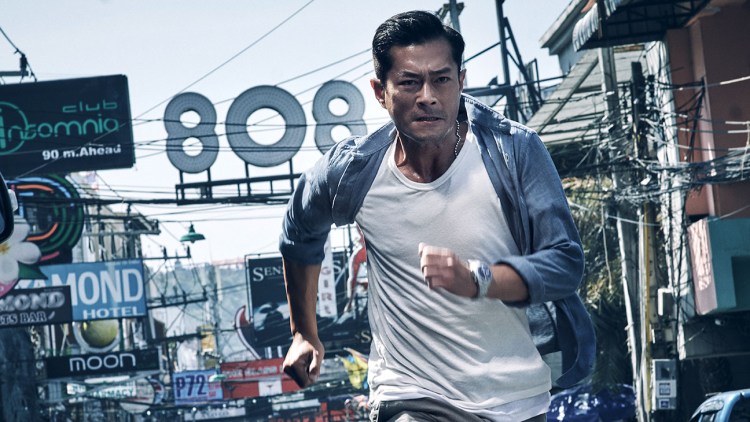
  • Paradox (Wilson Yip, 2017) – Louis Koo becomes embroiled in a conspiracy when his daughter goes missing in Thailand. Review.
  • Unbeatable (Dante Lam, 2003) – Nick Cheung stars as a down on his luck boxer starting over in Macau. Director Dante Lam will be in attendance

Indonesia

buffalo boys 2

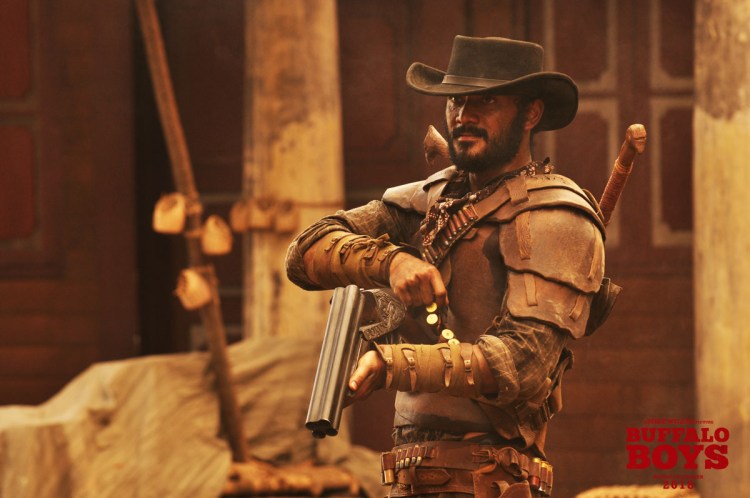
  • Buffalo Boys (Mike Wiluan, 2018) – Indonesian Western in which two brothers come back from California to avenge the death of their father. Q&A with director Mike Wiluan 

Japan

blood of wolves still 1

  • Blood of Wolves ( Kazuya Shiraishi, 2018) – Kazuya Shiraishi takes jitsuroku into the ’80s as Koji Yakusho’s rogue cop tries to keep the lid on a gang war. Review.
  • Dynamite Graffiti (Masanori Tominaga, 2018) – biopic of porn-mag mogul Akira Suei. Q&A with director Masanori Tominaga and actor Tasuku Emoto
  • The Hungry Lion (Takaomi Ogata, 2017) – a teenage girl is harassed when she is rumoured to be the girl in a sex tape featuring a high school teacher. Q&A with director Takaomi Ogata
  • Inuyashiki (Shinsuke Sato, 2018) – a mild mannered middle-aged man and an angry teen are given mysterious super powers and decide to use them in very different ways. Review.
  • Kakekomi (Masato Harada, 2015) – a small temple becomes an Edo era women’s refuge for those seeking escape from abusive marriages in Masato Harada’s light hearted drama. ReviewDirector Masato Harada will be in attendance
  • Kamikaze Taxi (Masato Harada, 1995) – Koji Yakusho plays a taxi driver taken hostage by a rage fuelled yakuza out for revenge on the politician who killed his girlfriend. Q&A with director Masato Harada
  • Liverleaf ( Eisuke Naito, 2018) – manga adaptation in which a teenage girl takes revenge on her bullies. Q&A with director Eisuke Naito
  • Midnight Bus (Masao Takeshita, 2017) – a bus driver’s second chance at life is ruined when his estranged ex-wife, salaryman son, and engaged daughter all come home. Director Masao Takeshita will be in attendance
  • One Cut of the Dead (Shinichiro Ueda, 2018) – real zombies suddenly invade a film set in Shinichiro Ueda’s hilarious madcap horror comedy. Review.
  • River’s Edge (Isao Yukisada, 2018) – disaffected teens fight ennui with a studied appreciation of death in Yukisada’s adaptation of the classic ’90s manga. Review.
  • The Scythian Lamb (Daihachi Yoshida, 2017) – a rural town opens itself up to a government backed scheme to repopulate through employing ex-cons in Daihachi Yoshida’s thoughtful drama. Review.
  • Sekigahara (Masato Harada, 2017) – historical epic starring Junichi Okada and Koji Yakusho dramatising events leading up to the famous battle. ReviewQ&A with director Masato Harada
  • Smokin’ on the Moon (Kanata Wolf, 2017) – indie slacker drama about two guys who work at a midnight bar and also deal marijuana. Q&A with director Kanata Wolf
  • The Third Murder (Hirokazu Koreeda, 2017) – Hirokazu Koreeda puts the law on trial. Review.

Malaysia 

one two jaga still 2

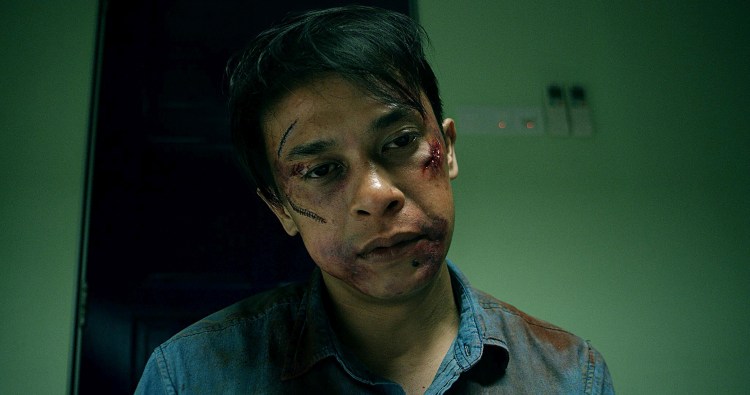
  • Crossroads: One Two Jaga (Nam Ron, 2018) – corruption drama in which a straight-laced rookie turns out to be the most dangerous destabilising element in a fracturing society. Review. Q&A with director Nam Ron and actor Ario Bayu.
  • Dukun (Dain Said, 2018) – shelved for over a decade, Dukun is the controversial tale of a nightclub singer suspected of murdering a politician seeking immortality through ritual sacrifice!

Philippines 

https://www.respetomovie.com/

  • BuyBust (Erik Matti, 2018) – high octane action thriller from Erik Matti in which a young rookie police officer gets caught up in a bust gone wrong. Q&A with director Erik Matti and actors Anne Curtis & Brandon Vera
  • Neomanila (Mikhail Red, 2017) – neo noir in which a young man becomes an apprentice to an older woman taking out drug dealers for the government.
  • On the Job (Erik Matti, 2013) – a conspiracy is uncovered when a drug dealer is murdered. Director Erik Matti will be in attendance
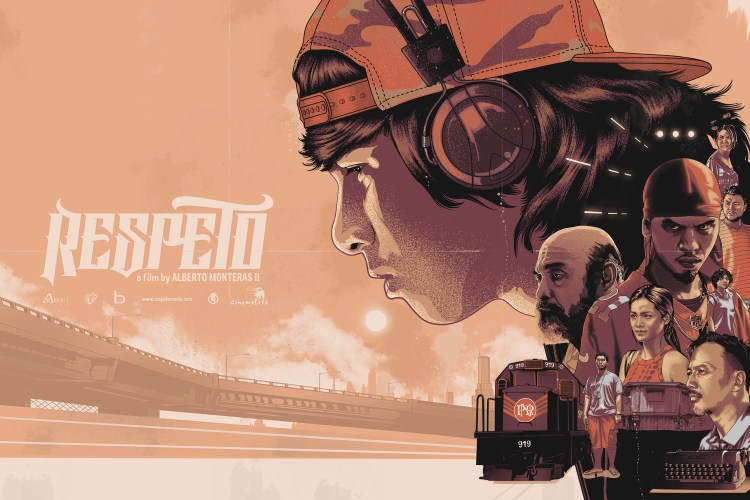
  • Respeto (Treb Monteras, 2017) – intergenerational hip hop drama in which a young rapper comes into conflict with a Marcos-era poet. ReviewDirector Treb Monteras, actor Abra, and producer Monster Jimenez will be in attendance
  • Sid & Aya: Not a Love Story (Irene Villamor, 2018) – rom-com in which an insomniac stock broker pays a waitress to talk through his troubles. Q&A with actress Anne Curtis
  • We Will Not Die Tonight (Richard Somes, 2018) – genre thrills as a former stuntwoman is forced to defend herself against hordes of bad guys.

South Korea

korean little forest 1

  • 1987: When the Day Comes (Jang Joon-hwan, 2017) – powerful democracy movement drama. ReviewQ&A with director Jang Joon-hwan and actor Kim Yoon-seok
  • After My Death (Kim Ui-seok, 2017) – a high school girl’s disappearance raises fears of suicide and also puts her best friend in the firing line.
  • The Age of Blood (Kim Hong-sun, 2017) – period drama in which a top swordsman is demoted to prison guard.
  • Counters (Lee Il-ha, 2017) – documentary centring on anti-racist protest in Japan.
  • Hit the Night (Jeong Ga-young, 2017) – Jeong Ga-young once again stars in her Bitch on the Beach followup as a young woman unafraid to ask “inappropriate” questions while researching a screenplay. Q&A with director/actress Jeong Ga-young
  • I Can Speak (Kim Hyeon-seok, 2017) – an old woman convinces a young man to teach her English and gives voice to a dark part of her nation’s history.
  • Little Forest (Yim Soon-rye, 2018) – gentle tale in which a wounded young woman retreats to her country home to figure things out. Review.
  • Microhabitat (Jeon Go-woon, 2017) – a young woman decides rent is an unnecessary expense and commits to couch surfing her way through life. Q&A with director Jeon Go-woon and actor Ahn Jae-hong
  • The Return (Malene Choi, 2018) – two Danish-Korean adoptees return to the country where they were born for the first time.
  • What a Man Wants (Lee Byeong-hun, 2018) – social satire in which an adulterous husband and his mild-mannered brother-in-law become involved with a sexy dance teacher.

Taiwan

On Happiness road banner

Thailand

tears of the black tiger

  • Premika (Siwakorn Jarupongpa, 2017) – horror comedy in which guests at a resort are terrorised by a karaoke obsessed ghost! Actress Gena Desouza will be in attendance
  • Sad Beauty (Bongkod Bencharongkul, 2018) – the friendship between two women is tested by a violent encounter. Q&A with director Bongkod Bencharongkul and producer Kongkiat Khomsiri
  • Tears of the Black Tiger (Wisit Sasanatieng, 2000) – cult classic Thai western!

The 17th New York Asian Film Festival runs from 29th June to 15th July. Full details for all the films are available via the official website where you can also find screening times and ticketing information. You can also keep up with all the latest festival news via the official Facebook Page and Twitter account.