The Sea and Poison (海と毒薬, Kei Kumai, 1986)

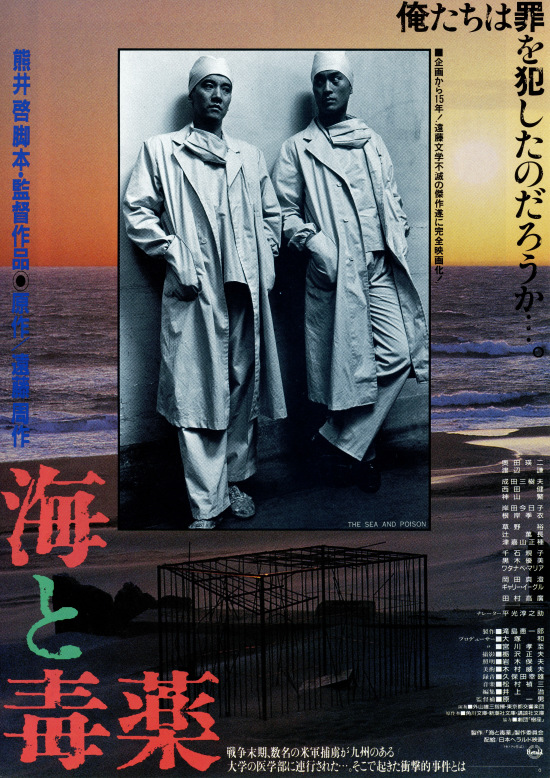
the sea and poison posterWhen thinking of wartime atrocity, it’s easy enough to ascribe the actions of the perpetrators to a kind of madness, to think that they have in some way moved away from us to become some kind of “other”. In thinking of those who transgress our notions of humanity as inhuman or “evil” we can absolve ourselves of their crimes, believing that they are not like us and we are not like them. The truth is never so simple and as long as we continue to other these dark parts of ourselves, we will not be able to overcome them. The Sea and Poison (海と毒薬, Umi to Dokuyaku), adapted from the novel by Shusaku Endo, shows this delusion of inhumanity for what it is in taking as its central concern the real life case of the doctors at a Kyushu university who committed heinous acts of experimentation on eight American prisoners of war in late 1945. Rather than focus of on those who took the decision that the experiments should take place, Endo and Kumai examine the motives of those on the fringes who merely went along with them finding that they did so for petty, essentially human motives.

Shot in a crisp black and white, the film opens in a caged cell where an American officer is interrogating a young man still in a student’s uniform. Suguro (Eiji Okuda) is the first of several witnesses to the deaths of eight American servicemen during alleged vivisection at the hospital at which Suguro had worked. Young and naive, Suguro is the most sympathetic of three witnesses we will encounter but his essentially compassionate nature puts him at odds with his colleagues who abhor “sentimentality” and regard his emotionality as a childish weakness. It is through Suguro that we discover that the hardness that has apparently led to these horrific betrayals of the physicians’ code are not born of the war, or of militarism, or of adherence to some ideal like god or country but are a natural extension of the hyper-rational attitude of the medical profession.

Suguro’s colleague, Toda (Ken Watanabe), is his polar opposite, viewing Suguro’s sense of compassion as a ridiculous but somewhat endearing character trait. A textbook nihilist, Toda takes the view that as death comes to us all, the when and why are essentially unimportant. When so many are dying in air raids or on the battlefields, what does it matter that some also die in hospitals. Yet Toda is, in someways, the most ruminative among the hospital staff. In the diary he keeps, Toda attempts to dissect himself and his ongoing lack of feeling. Telling the interrogators that he began the diary because he had begun to find himself “creepy”, Toda asks why it is he feels nothing in relation to his fellow men. Surely it must be right that one should feel some degree of empathy? Toda volunteers for the experiments in part to test his own hypothesis but discovering that he still feels no pity for these men, he wonders if these ideas of morality are a kind of affectation seeing as others too can commit such acts of extreme cruelty and think nothing of it.

In this, Toda earns our sympathy, seeming at least to want to feel something even if he does not. Nurse Ueda (Toshie Negishi), by contrast, is the most human and also the most repugnant of our three witnesses. Her concerns are petty and ordinary, born of jealousy and resentment. Returning again to the scene of a botched surgery, Kumai shows us Ueda calling the operating theatre and being told to give a patient a dose of morphine by a harried doctor still panicked by the ongoing OR drama. Following her instructions, Ueda fills a syringe but the vial is knocked out of her hand by the German wife of the head doctor, Hilda, who was once a nurse herself and likes to help out on the wards. Hilda is a severe woman but not a cold one, she cares for the patients but perhaps with a more rigorous adherence to the nurses’ code than the less experienced team at the hospital. Hilda tries to get Ueda fired for her “mistake”, scolding her by asking (in German) if she is not afraid of God, and expressing concern that she thought so little of giving a fatal dose of morphine to a suffering patient.

Ueda’s decision to attend the experiments is a form of backhanded revenge – Hilda, whom everyone regards as some kind of annoyingly saintly figure, has no idea her husband would be involved in something so against her deeply held ideals, but Ueda also offers another reason when she says that the doctors exist in another, more rarefied world to the rank and file ward staff. This idea is echoed again by the head nurse, Ohba (Kyoko Kishida), who states that nurses must do as the doctors tell them without asking questions. Ohba rounds out the just following orders contingent but the first half of the film has already shown us that the medical profession is corrupt and cannot be trusted.

The old Dean has had a stroke and there is a mini war of succession in play between the heads of surgery divisions one and two. Dr. Hashimoto (Takahiro Tamura) had been the favourite but his star is fading. In an effort to improve his chances, he decides to move up an operation on a friend of the Dean – a young woman with advanced TB. Meanwhile, Suguro’s patient, an old woman who also has TB has been earmarked for “experimental surgery”. The old woman has not been properly briefed on the risks of the operation in which she has only a five percent chance of survival and has only agreed to it because the doctor, whom she trusts implicitly, has told her it’s her only chance. The Dean’s friend is “Mrs. Tabe”, and she is “important”. The old woman is only “the welfare patient” and therefore not important at all.

Suguro, anxious to save the old woman to whom he has developed an attachment, wants the operation to be postponed, at least until she’s potentially strong enough to survive but Dr. Shibata (Mikio Narita) is only interested in using her as a potential candidate for experimentation which he claims will help future treatment of TB but also, of course, improve his career prospects. Mrs. Tabe’s mother asks the doctor if her operation carries any risk but the assistant laughs in her face, claiming the operation is so simple even a monkey could do it and pretending to be insulted that she has so little faith in her physicians. The operation goes wrong and Mrs. Tabe dies which is bad news for Dr. Hashimoto but rather than offer his apologies to the relatives, he tries to cover it up. So that it won’t look like she died on the table, they take the body back to her room and hook it up to a drip, insisting to Mrs. Tabe’s mother and sister that all is well while planning to announce that Mrs. Tabe died of complications from the operation early the following morning.

This level of callousness and self interest is echoed in Dr. Shibata’s justification that the old woman is going to die anyway and therefore the operation is worth a shot even though he believes it will kill her and is not in any way attempting to save her life (though it would be a nice bonus). Unlike Toda’s nihilism, Shibata’s practicality has no human dimension, he thinks in numbers and statistics, deciding who is a “real patient” and who is not. This same justification is used when recruiting doctors for the experiments. The US servicemen are downed aircrew from the bombers which have been making raids overhead for months. A court in Tokyo has ruled the random bombing contravenes international law and has sentenced the airmen to death. Seeing as the airmen will die anyway, might it not be “better” for their deaths to “benefit” medical science? The operations will be conducted under anaesthetic and so the men will not be in pain or know their fates which might, perhaps, be better than a firing squad.

The reality is not so convenient. Asked if his agreement was partly revenge, Suguro replies that, no, he felt no hate, he was just too mentally and physically exhausted to resist. Threatened by soldiers with guns he capitulates but refuses to assist in the room on the day, remaining a passive witness cowering at the edges. Before the operation, Dr. Gondo (Shigeru Koyama) makes small talk with the subject in English, asking about his hometown to which the airman, poignantly, says he’d like to return. The surgery is not like that conducted on Mrs. Tabe. The airman gets only ether and he struggles as the cloth is placed over his mouth, requiring four people – two doctors and two nurses, to hold him down until he stops kicking. This is no gentle death, this is murder.

A possible “justification” lies in the fact that the operating room is also filled with soldiers who laugh and jeer, snapping away on their brand new German-made camera. Tanaka, the officer in charge, asks for the airman’s liver after the operation, joking that he’d like to feed it to his men. The liver is indeed delivered to the horrified faces of the soldiers waiting for the party they’ve organised to begin, though it is not clear whether Tanaka really intends to feast on it or keep it as some sort of grim souvenir. Gondo, looking at the liver, remarks that they’ve all grown used to corpses but that “sentimentality” is never far away. Nevertheless, he appears to feel no real remorse for the heinous act of killing in which he has just been involved.

Adopting Endo’s Christianising viewpoint, the interrogations take place in a ruined church, a statue of the Virgin Mary directly above Ueda as she gives vent to her impure thoughts. The trio are being judged, not only by God but by us – or “society” as Suguro later puts it. The central proposition is that prolonged exposure to death on a mass scale – firstly as members of the medical profession, and later as victims of war, has led to an inhuman, nihilistic viewpoint in which we are all already dead and that, therefore, nothing really matters anymore. It isn’t clear who suggested this be done or why, but it is clear that Hashimoto collaborated in an effort to save his career by allying himself with the military – something he misses out on anyway when Shibata steals his thunder. Suguro is powerless to resist, Toda a melancholy sociopath, Ueda a vengeful woman, and Ohba a willing disciple of a beloved doctor, but none is a zealot to a regime or true believer in militarism. This is the dark heart of humanity – selfishness and cowardice, petty jealousies and ambitions. Kumai paints this scene of desolation with intense beauty, which only makes it all the more painful.


Original trailer (no subtitles)
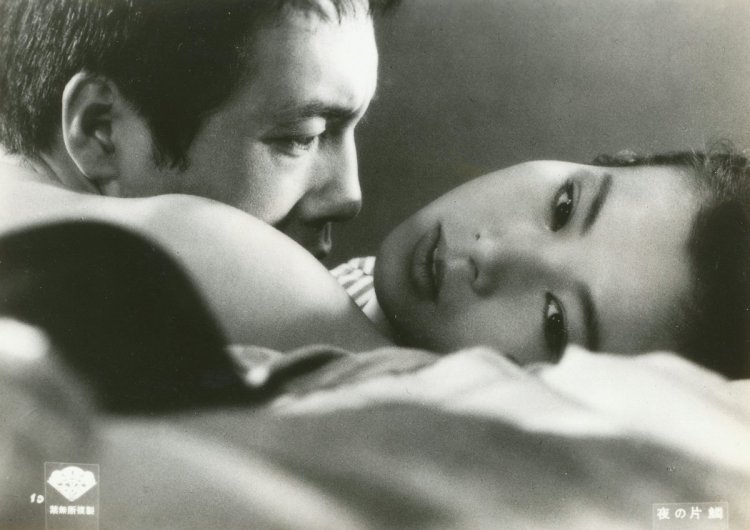
The Shape of Night (夜の片鱗, Noboru Nakamura, 1964)

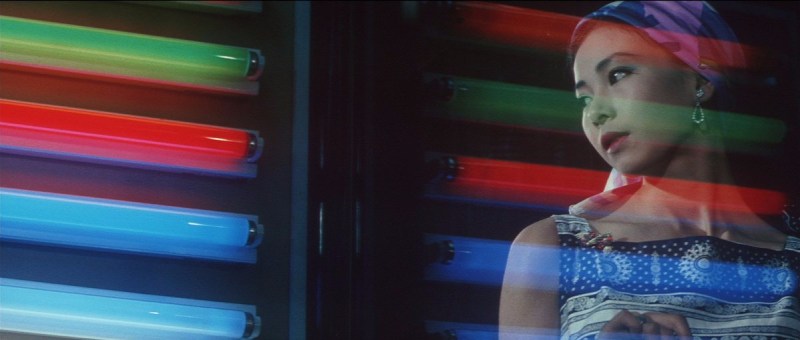
(C) Shochiku 1964Despite having two films nominated for a best foreign language Oscar and a handful of foreign festival hits under his belt, Noboru Nakamura has been largely forgotten by Western film criticism though a centennial retrospective of three of his most well regarded films at Tokyo Filmex in 2013 has helped to revive interest. The Shape of Night (夜の片鱗, Yoru no Henrin), Nakamura’s 1964 Shochiku melodrama focussing on the suffocating life of a young woman pulled into the Tokyo red light district, was one of the three newly restored films featured and was also screened in Berlin and Venice to great acclaim. Making full use of its vibrant colour palate, The Shape of Night paints its city as a constant tormentor filled with artificial light and false promises.

As we meet her, melancholy street walker Yoshie (Miyuki Kuwano) has been trapped in her dead end existence for six years and has lost all hope of living a “normal” life filled with love and happiness. A chance encounter with a supercilious client, Fujii (Keisuke Sonoi), prompts her into a series of recollections in an effort to explain exactly how it was she ended up in such a sorry state. As the eldest daughter of a poor family Yoshie left school early to work in a factory (making those neon tubes you see everywhere) while supplementing her income by working as a barmaid (not a hostess, just a girl behind the bar). Just shy of her 20th birthday, she meets a handsome “salaryman”, Eiji (Mikijiro Hira), who starts coming to the bar regularly to see her. The pair became a couple, and then lovers, and then cohabiters, but Eiji isn’t a “salaryman” so much as a low level gangster with a gambling problem whose street name is “princess”. Continual losses put Eiji in a tight spot with his crew and he begins borrowing money from Yoshie before asking her to prostitute herself to get him out of a hole. Thinking it will just be a one time thing, Yoshie resolves to make a sacrifice for her man but, of course, it wasn’t a one time thing.

Yoshie’s story is a sadly familiar one – an innocent woman duped by a duplicitous man whose empty promises aim to mask his continued fecklessness. Eiji, despite his smart suits and coolly confident attitude, is unlikely to make much of himself in the yakuza world yet is as tied into its hellish system of loyalty and reciprocity as Yoshie is in her non-marriage to the man she thinks she loves. Seeking constant approval, Eiji thinks nothing of living off a woman and his childishly excited smile on re-entering the apartment after Yoshie has sacrificed herself to save his face is a grim reminder of his priorities. When pleading doesn’t work Eiji turns violent, prompting Yoshie to finally consider leaving him but she’s too late – the yakuza world has already got its hooks into her and any attempt to escape will be met with terrifying resistance.

Fujii may seem as if he presents another option for Yoshie, a chance for a better, kinder existence but he too is merely another man trying to tell her how she should live her life. Hypocritical at best (as he freely admits), Fujii pays Yoshie to “ease his sexual urges” but expresses disgust and disapproval of her lifestyle and seeks to “save” her from her life of humiliating immorality, “purifying” her just like the dam he is building is supposed to do to the Sumida river. Fujii’s obvious saviour complex is worrying enough in itself though there is also the additional worry of what his “salvation” may entail if Yoshie decides to make a break from her yakuza chains and run off to the comparative safety of provincial Hokkaido. Fujii may claim to have fallen in love with her, but so did Eiji and who’s to say Fujii’s idea of wedded bliss will be any better than Eiji’s brutal reign as a common law spouse.

The situation is further complicated by Eiji’s gradual shift from a violent, overbearing, abusive boyfriend to a genial figure of gentle domesticity and what that shift later provokes in Yoshie. Rendered physically impotent by an incident during a gang fight, Eiji is literally and figuratively emasculated. Though his sudden inability to satisfy Yoshie originally provokes his jealously, it soon robs him of his violent impulses and turns Eiji into a willing housewife who dutifully does the couple’s washing and prepares the meals much to Yoshie’s consternation. This transformation is what finally kills her love for him, but still Yoshie cannot find it in herself to sever her connection with the man who has been the cause of all her suffering. Not quite hate or loathing, Yoshie’s burned out love has become a burden of care as she finds herself duty bound to look after a man she now believes incapable of looking after himself.

While Yoshie and Eiji sit in a bar one night after “work”, the television plays a report featuring the sad news of the death of a female student at the ANPO demonstrations. Prompting Yoshie to exclaim “what is ANPO anyway?”, the news report lays bare just how isolated her life as become – as all of Tokyo is aflame with with righteous indignation and the streets are filled with the largest protest in living memory, Yoshie is trapped in her tiny neon world which promises so much and delivers so little.

Nakamura makes fantastic use of sound design to capture Yoshie’s interior world – the background music rising over the droning voice of a boring client who hasn’t quite made up his mind, the radio cutting out at intense moments of violence, the terrible clanging of Eiji’s geta on the iron staircase which leads to his flat. Fading into blue dissolves of memory, Nakamura makes a hellish wonderland of nighttime Tokyo whose flashing neon lights, crowded bars and oddly darkened streets turn it into a prison of dubious delights. Finally making a drastic decision, Yoshie attempts to free herself from her burdens and sever the chains which bind her to her misery but in cutting the cord she finds the knots tightening, realising she will never be released from the source of all her suffering.


Screened at BFI as part of the Women in Japanese Melodrama season.

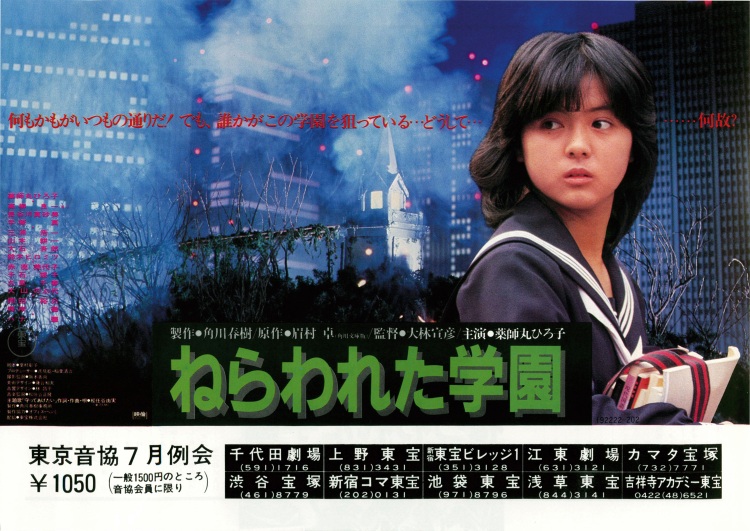
School in The Crosshairs (ねらわれた学園, Nobuhiko Obayashi, 1981)

Still most closely associated with his debut feature Hausu – a psychedelic haunted house musical, Nobuhiko Obayashi’s affinity for youthful subjects made him a great fit for the burgeoning Kadokawa idol phenomenon. Maintaining his idiosyncratic style, Obayashi worked extensively in the idol arena eventually producing such well known films as The Little Girl Who Conquered Time (starring Kadokawa idol Tomoyo Harada) and the comparatively less well known Miss Lonely and His Motorbike Her Island (starring a very young and extremely skinny Riki Takeuchi). 1981’s School in the Crosshairs (ねらわれた学園, Nerawareta Gakuen) marks his first foray into into the world of idol cinema but it also stars one of Kadokawa’s most prominent idols in Hiroko Yakushimaru appearing just a few months before her star making role in Shinji Somai’s Sailor Suit and Machine Gun.
Set once again in a high school, School in the Crosshairs is the ultimate teen movie for any student who’s ever suspected their place of education has been infiltrated by fascists but no one else has noticed. Top student Yuka (Hiroko Yakushimaru) is the archetypal Obayashi/idol movie heroine in that she’s not only bright and plucky but essentially good hearted and keen to help out both her friends and anyone else in trouble. Her life changes when walking home from school one day with her kendo obsessed friend Koji (Ryoichi Takayanagi) as the pair notice a little kid about to ride his tricycle into the path of a great big truck. Yuka, horrified but not quite knowing what to do, shouts for the little boy to go back only it’s time itself which rewinds and moves the boy out of harm’s way. Very confused and thinking she’s had some kind of episode, Yuka tests her new psychic powers out by using them to help Koji finally win a kendo match but when a strange looking man who claims to be “a friend”  (Toru Minegishi) arrives along with icy transfer student Takamizawa (Masami Hasegawa), Yuka finds herself at the centre of an intergalactic invasion plot.

Many things have changed since 1981, sadly “examination hell” is not one of them. Yuka and Koji still have a few years of high school left meaning that it’s not all that serious just yet but still, their parents and teachers have their eyes firmly on the final grades. Yuka is the top student in her class, much to the chagrin of her rival, Arikawa (Macoto Tezuka), who surpasses her in maths and English but has lost the top spot thanks to his lack of sporting ability. Koji is among the mass of students in the middle with poor academic grades but showing athletic promise even if his kendo career is not going as well as hoped.

Given everyone’s obsession with academic success, the aliens have hit on a sure thing by infiltrating a chain of cram schools promising impressive results. Grades aside, parents are largely laissez-faire or absent, content to let their kids do as they please as long as their academic life proceeds along the desired route. Koji’s parents eventually hire Yuka as a private teacher to help him improve only for her to help him skip out to kendo practice. Her parents, by contrast, are proud of their daughter and attentive enough to notice something’s not right but attribute her recent preoccupation to a very ordinary adolescent problem – they think she’s fallen in love and they should probably leave her alone to figure things out her own way. A strange present of an empty picture frame may suggest they intend to give her “blank canvas” and allow her to decide the course of her own life, but she has, in a sense, earned this privilege through proving her responsible nature and excelling in the all important academic arena.

School is a battlefield in more ways than one. Intent on brainwashing the teenagers of Japan, “mysterious transfer student” Takamizawa has her sights firmly set on taking over the student council only she needs to get past Yuka to do it. Takamizawa has her own set of abilities including an icy stare which seems to make it impossible to refuse her orders and so she’s quickly instigated a kind of “morality” patrol for the campus to enforce all those hated school rules like skirt lengths, smoking, and running in the halls. Before long her mini militia has its own uniforms and creepy face paint but her bid for world domination hits a serious snag when Yuka refuses to cross over to the dark side and join the coming revolution. Asking god to grant her strength Yuka stands up to the aliens all on her own, avowing that she likes the world as it and is willing to sacrifice her own life for that of her friends. Accused of “wasting” her powers, Yuka asks how saving people could ever be “wasteful” and berates the invaders for their lack of human feeling. Faced with the cold atmosphere of exam stress and about to be railroaded into adulthood, Yuka dreams of a better, kinder world founded on friendship and basic human goodness.

Beginning with a lengthy psychedelic sequence giving way to a classic science fiction on screen text introduction Obayashi signals his free floating intentions with Yuka’s desaturated bedroom floating over the snowcapped mountains. Pushing his distinctive analogue effects to the limit, Obayashi creates a world which is at once real and surreal as Yuka finds herself at a very ordinary crossroads whilst faced with extraordinary events. Courted by the universe, Yuka is unmoved. Unlike many a teenage heroine, she realises that she’s pretty happy with the way things are. She likes her life (exam stress and all), she loves her friends, she’ll be OK. Standing up for the rights of the individual, but also for collective responsibility, Yuka claims her right to self determination but is determined not to leave any of her friends behind.


Original trailer (no subtitles)

Blind Beast (盲獣, Yasuzo Masumura, 1969)

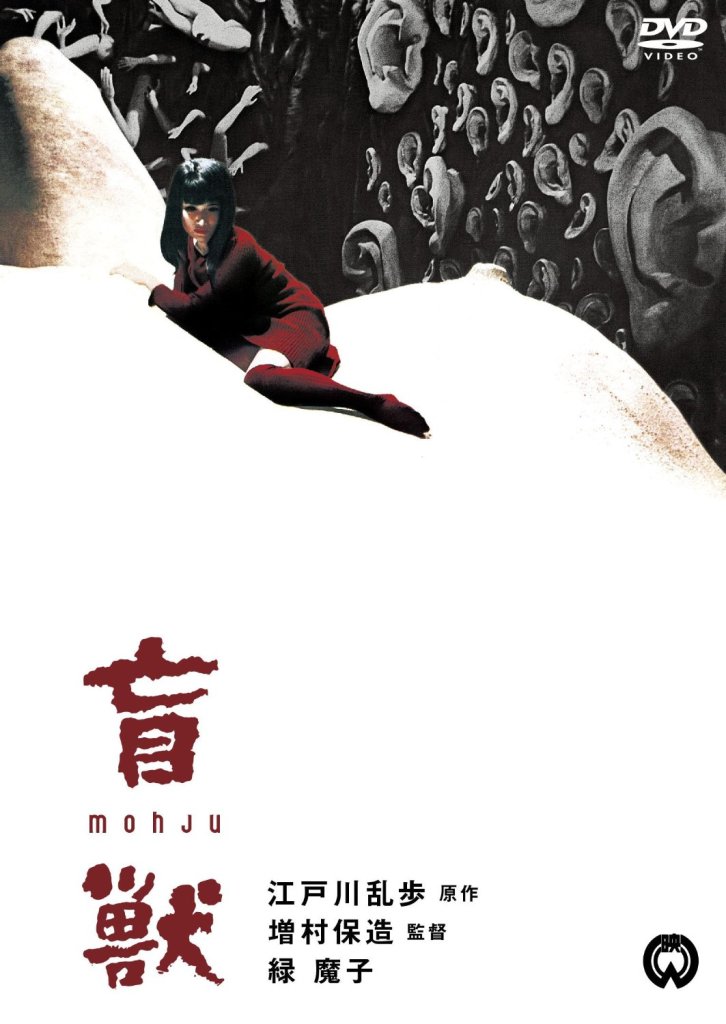
81dGenRMu-L._SL1500_Never one to take his foot off the accelerator, Yazuso Masumura hurtles headlong into the realms of surreal horror with 1969’s Blind Beast (盲獣, Moju). Based on a 1930s serialised novel by Japan’s master of eerie horror, Edogawa Rampo, the film has much more in common with the wilfully overwrought, post gothic European arthouse “horror” movies of period than with the Japanese. Dark, surreal and disturbing, Blind Beast is ultimately much more than the sum of its parts.
This dark tale is narrated by its “victim” Aki, a photographer’s model and the subject of a currently running exhibition. On paying a visit to the show herself, she finds a strange man caressing a statue of her built by one of the photographer’s students. Somewhat uncomfortable, she leaves the gallery in hurry and once home calls up a massage company help her relax. Once her masseuse arrives, he proceeds to caress her in a strange manner despite Aki’s protestations that she needs it “harder”. Eventually the ruse is uncovered and Aki realises he’s the blind man from the gallery at which point he chloroforms her and drags her back to his evil lair and mysterious studio in the middle of nowhere where he lives with his accommodating mother. The pair keep Aki prisoner until she consents to modelling for blind artist Michio’s latest sculpture project. After trying and failing to escape, Aki gradually falls into a kind of Stockholm syndrome where she finds herself in thrall to Michio and the pair’s sexual adventure enters a path towards the ultimate debasement and depravity…

The opening sequence of Blind Beast is the most surreal in this eerie, bizarre film. As Aki awakens in Michio’s lair she explores her darkened environment only to find the walls are each covered in sculptured motifs of various women’s body parts. First an entire wall of noses followed by mouths, arms, legs and breasts each apparently created from memory by the aspiring sculptor who, in his blindness, has decided that touch is the ultimate, neglected sensation. If that weren’t strange enough, the floor of the studio is taken up by a colossal statue of a woman lying on her back, as Aki finds out trying to escape the room by crawling over its perfectly sculpted breasts.

Micho himself is an unsettling though somewhat weakened figure, supported still by his caring mother who is prepared to do “anything” to indulge his “one pleasure in life”. Neither of the pair seems to appreciate the perfectly natural reaction of Aki to being held prisoner or her desire to escape and both are entirely focussed on making use of her in Michio’s new artistic movement which will place touch at the forefront of expression. Aki attempts to manipulate the situation in order to escape, firstly pretending to go along with their plans and then by attempting to place a wedge between Michio and his mother by emphasising Michio’s lack of autonomy and particularly his lack of sexual experience. Eventually she seduces him as a way of building his trust so he’ll let his guard down. However, after an event most would regard as traumatic, she comes to build a grudging affection for the blind sculptor and no longer wishes to leave.

Losing her sight herself, Aki grows ever more obsessed with the sculptor’s touch. As the pair’s relationship becomes increasingly intense they seek out even more vibrant sensations, new paths to ecstasy. Turning to sado masochism firstly through animalistic biting, clawing, and tearing they eventually resort to whips and knives before coming to a conclusion about where their new life of dissipation is leading them. Aki wonders if she had masochistic tendencies all along which the sculptor has “unlocked” with his magic touch.

Literally blinded, the two have entered a realm of sensations which are purely physical. Sexually naive, Michio has mentally dismembered the concept “woman” into a series of neatly separated components which can be assembled to form the physical shape without needing to think about anything which lies beyond the skin. Blind Beast is a romance, in some sense, even if an extremely disturbing one. Michio and Aki don’t fall in love in the conventional sense so much as become obsessed with the physical sensation of mutual touch. Pain and pleasure become interchangeable as the pair’s desire for physical satisfaction exceeds all limits.

Strange and surreal, Blind Beast carries one of the most disturbing final sequences ever committed to celluloid. With its European chamber music soundtrack it feels much more like an arty ‘60s giallo than anything else though in terms of what is actually visible on the screen is actually fairly light on gore or violence. This level of restraint only makes the film more disturbing as does its claustrophobic atmosphere and deadpan voice over. Another characteristically probing effort from Masumura, Blind Beast is among his strangest and most original efforts and is likely to linger in the memory long after its traumatic finale fades from the screen.


Blind Beast is available with English subtitles on R2 DVD from Yume Pictures.


Kwaidan (怪談, Masaki Kobayashi, 1964)

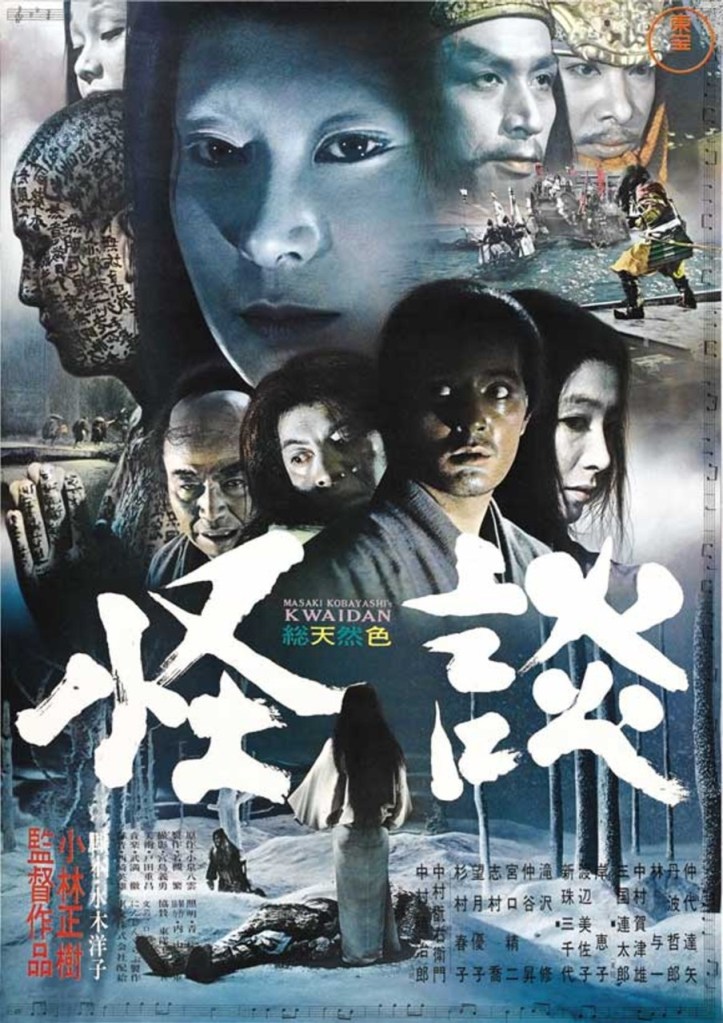
tumblr_ly5zbgdNH61rn3yrmo1_1280Kwaidan (怪談) is something of an anomaly in the career of the humanist director Masaki Kobayashi, best known for his wartime trilogy The Human Condition. Moving away from the naturalistic concerns that had formed the basis of his earlier career, Kwaidan takes a series of ghost stories collected by the foreigner Lafcadio Hearn and gives them a surreal, painterly approach that’s somewhere between theatre and folktale.

The first tale, Black Hair, is the story of an ambitious young samurai (Rentaro Mikuni) who abandons his one true love to marry a wealthy woman and advance his career. However, his second marriage is far from happy and he begins to appreciate just what it is he’s cast aside. Eventually returning home he meets his former wife again and harbours the desire to start afresh. However, when the sun comes up all is not as it seems.

Tale two, The Woman of the Snow, begins when two woodsmen are caught in a blizzard and a mysterious woman appears to suck one of them dry of blood. She spares the other, Minokichi (Tatsuya Nakadai), because she’s moved by his youth but she instructs him never to reveal the events of that evening or she will return to finish what she started. Minokichi returns home and meets another mysterious woman who later becomes his wife and bears him three children but will he remember to keep his secret even from the love of his life?

The third tale is perhaps the most famous, Hoichi the Earless, and features the sad tale of a blind biwa player (Katsuo Nakamura) whose storytelling ability is so great that the dead themselves petition him nightly to recount their story. Eventually the head monk finds out and disapproves of Hoichi’s dealings with the supernatural so the monks paint sutras all over his body to protect him from the malevolent spirits. However, like achilles and his vulnerable heel, they forget to paint Hoichi’s ears…

The fourth tale, A Cup of Tea, is a little more whimsical and opens with a framing sequence lamenting the fact that some ancient tales were never finished for one reason or another. The tale within the tale features a samurai who keeps seeing a face appear in his tea. Obviously this is quite disturbing, but eventually he just decides to drink it anyway only for the owner of the face to suddenly appear and complain about soul having been stolen.

Like all good fables the stories each have a moral to offer but also, crucially, paint the protagonists as victims of circumstance more than rash or unwise people. The samurai feared poverty so he abandoned his love in search of riches only to discover he’d been chasing the wrong kind of dreams. Minokichi momentarily forgot himself, perhaps entrapped by the Snow Woman’s final trick, Hoichi just wanted to play his biwa but his desires were frustrated by the powers at be who further mess things up for him by botching the sutra application. The protagonist of A Cup of Tea does choose to drink the tea himself but the resultant madness is not something that could ever have been reasonably expected. These are worlds of spirits where the doorway to the supernatural is always ajar, waiting for some ordinary person to tumble through accidentally.

Though employing slightly different styles for each of the four segments, Kobayashi sets his stage with a deliberately theatrical, almost hyperreal set design. Obviously shot on a soundstage, the tales take on the feeling of stories which have been told and retold, replayed countless times across the great theatre of life. Black Hair steers closest to a traditional kabuki play, an effect aided by Toru Takemitsu’s more traditional score but The Woman of the Snow gives way to intense color play full of cold blue ice vistas mixed with impressionistic, passionate red skies. Hoichi’s tale begins with an overlay of a scroll painting recounting the famous The of the Heike of which Hoichi sings his song. Full of epic battle scenes, ghostly apparitions and a whole load of biwa music, this segment is the lengthiest but also the meatiest when it comes to subtext. The final tale by contrast is much more straightforward and brings a little chanbara exuberance to the otherwise heavy atmosphere though it does leave us with one of the most haunting images in the entire film.

Kwaidan may look like an exercise in style for Kobayashi – it was also his first colour picture and he makes full use of that aspect of the film. However, that isn’t to say he’s abandoned his recurrent concerns. The people in the stories are all ordinary, they’re flawed but they aren’t evil. The samurai comes closest to bringing his fate on himself when he makes the selfish decision to abandon his loving wife for money and status though he pays a heavy price when he finally realises his foolishness. Minokichi’s crime is a loss of faith of perhaps of having doubted the truth of his tale in itself. In the end, he simply forgot his promise rather than making a conscious decision break it like the samurai. Hoichi is something of a passive player here as his blindness renders him unable to understand his plight – he is unable to keep his promise to the fallen samurai firstly because of the physical toll it’s taking on him and secondly as he’s prevented by his superiors. The protagonist of the final tale simply gives in to temptation and then to madness perfectly symbolising human weakness. Kobayashi maybe more artful here than acerbic but his bleak view of human nature still wins out. However, what Kobayashi crafted in Kwaidan is a beautiful, dreamlike canvas of supernatural visions which continue to dazzle in their artistry long after the screen has gone dark.


Kwaidan is available on blu-ray in the US from Citerion and on DVD in the UK from Eureka Masters of Cinema.