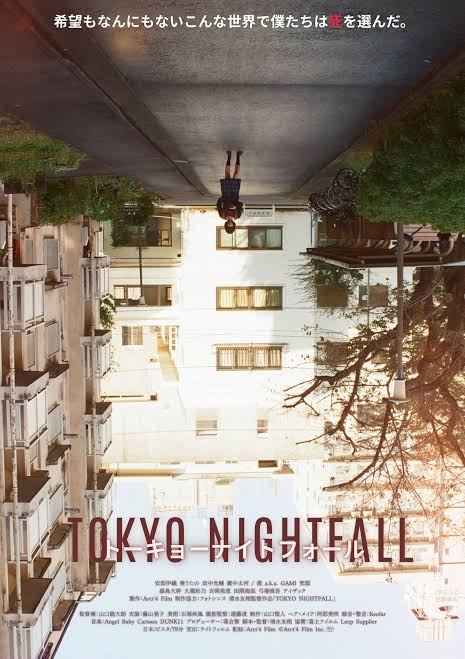
Tokyo Nightfall (トーキョーナイトフォール, Yuto Shimizu, 2026)

Struggling to deal with his feelings of grief and guilt following his younger sister’s suicide, a young man finds himself at an end of the world party for those who want to end their lives in Yuto Shimizu’s melancholy urban drama Tokyo Nightfall (トーキョーナイトフォール). The Tokyo these young people inhabit is one of loneliness and futility in which there is no real hope for future and the past holds only painful memories. 

The bleakness might best be demonstrated by Anna’s (Utano Aoi) reply that her happiest moment in life was her parents’ divorce. The pair hint at a childhood marked by domestic violence, but any hope they might have had for a better future was cut short when Anna witnessed the suicide of a friend of her brother Amenashi (Iori Abe) who jumped from their eighth floor flat. This even seems to have changed Anna who relates that it wasn’t so much the horror or the blood but the fact that she saw a person turn into an object in real time. It made her feel as if being alive wasn’t all that important. 

Working a soulless job as a delivery driver where his clients are often similarly withdrawn or hostile, Amenashi blames himself for Anna’s death and wonders if there was something more he could have done to prevent it while drawn into the same kind of darkness she was. Amenashi’s friend, Hattori (Taiga Hironaka), even states that he is worried about him because his erratic behaviour reminds him of that of Anna shortly before she died. It seems that the party he goes to a gathering for those planning to end their lives where they can have one last night of fun before they go.

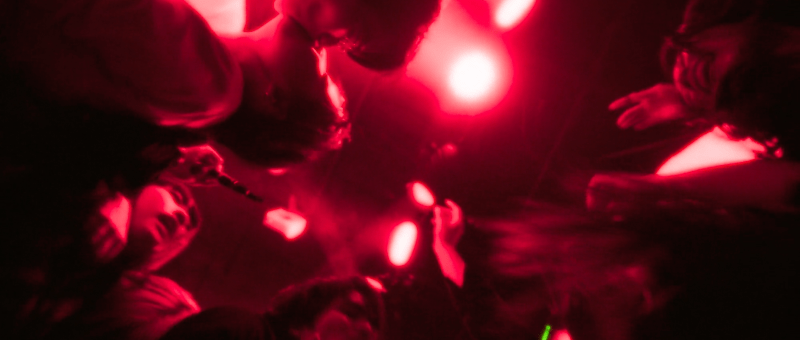
Amenashi goes to the party, but is followed by his friends Hattori and Nozu (Kosuke Tanaka) who don’t quite know what the party is, but just want to find their friend. While Nozu, otherwise a comic relief character giving lewd and disgusting answers to the questions put to him, Nozu too sets out to enjoy the night even bonding with a young woman, but is also drawn into the darkness of the evening and reconsiders his own life. Others in the club react with irritation, telling Hattori he should respect his friend’s decision and has no business being here. Haunted by visions of Anna, Amenashi remains uncertain not quite knowing whether to live or die. Another guest at the club tells him that he should forget about this cold world and stay with them, dragging him over to the side of death, while Hattori does him best to encourage him to live.

The video camera sequences play out as a kind of will as Anna, Hattori, and Nozu look back over their lives. Shimizu sometimes replays the same video only to let the conversation run to add more information that changes our impressions of what’s gone before. Speaking about their happiest and saddest moments, the friends paint a bleak picture of familial disconnection and loneliness but are saved only by their bond with each other as Hattori names his happiest moment as spending time on the roof with them.

The irony is that may not be enough. The ghost of Anna tells Amenashi that neither choice is wrong and the film is non-judgemental about the idea of suicide, perhaps feeling that those who make the deacon to leave should be allowed to do so while Amenishi wrestles with himself about the right thing to do. Others may have the decision taken away from them, but he does at least have the power to decide his own future. Hattori had told him that there may be no point in thinking. People are full of contradictions and don’t even understand themselves. “We are here for each other,” Nozu adds, offering the only possible source of salvation in a world that otherwise seems hopeless and devoid of possibility. As Amenashi cycles around the city, he looks on at young couples and is struck by a sense of urban disconnection and loneliness, but does perhaps begin to rediscover something of the will to live in the power of friendship and the memories of those he’s lost, if perhaps only too late.


Tokyo Nightfall screened as part of this year’s Raindance Film Festival.

Trailer (English subtitles)
The Unluckiest Girl in the World (Ryosuke Hayazaka, 2026)

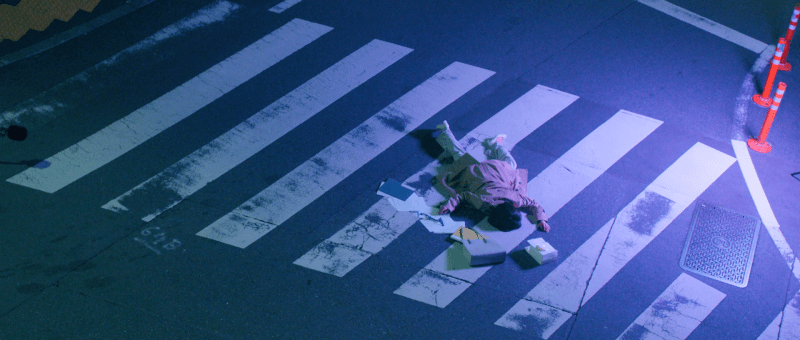
Sachiko Yamanoura feels herself to be the unluckiest person in the world. Her unluckiness may tens towards the superficial in that she has terrible luck with men and is the sort of person who always manages to step in gum and pick the tako-less takoyaki, but her perception of it seems to be impacting her quality of life This is partly because she has an odd conception of the world in which she believes that fate is decided by gacha capsule toys and therefore exercises very little agency over her life to the extent that she is continually unable to break up with her financially exploitative boyfriend who not only forgets her birthday, but chooses that particular day to bring another woman back to their flat.

It’s this romantic dimension that occupies most of Ryosuke Hayazaka 50-minute drama as Sachiko is abruptly hit by car and wakes up in an afterlife where a smartly suited version of herself invites her to choose a new lover for her next life from the Gacha Life machine. It apparently contains only men she is compatible with and therefore allows her to experience what it would actually be like to date them as a sort of advanced mental fantasy. What quickly becomes clear, however, is that none of these men are very good options for her and even the ones who looked good on the surface had hidden issues. She briefly considers dating her 45-year-old boss who did actually remember her birthday and otherwise appears to be kind and considerate, but it turns out that he is already married and fleeing domestic responsibility after his wife has given birth to their first child.

The real issue is that she’s still dealing with the fallout from the abrupt disappearance of her fiancé three years previously who left alone to travel the world the morning after proposing to her. When he suddenly reappears, she considers picking up where they left off but is continually insecure that he will suddenly disappear again. A popular influencer host, meanwhile, offers the opposite sort of comfort in making it his business to tell her what she wants to hear in soft and non-threatening tones while all the while planning to exploit her by recruiting her as a member of his cult-like pyramid scheme selling lucky water. A student she interviews at her company similarly claims that luck is his special skill, but when she considers dating him, she finds out that he’s overtly close with his mother and she’d need to pass an interview with her first if she wanted to be his girlfriend.

A series of speed dates provide a little more real life detail as Sachiko is subjected to the obviously married guy, the bully who insists no one else is going to want to date her, the guy who wants an open relationship, and the evangelistic polygamist who wants her join him in a new era. She certainly does seem to be unlucky in drawing all these men none of whom seem to be very viable prospects for a long-term relationship or even genuine romantic connection. But at the same time, it’s entrusting her life to luck that put Sachiko in this position. If she accepted that luck was something she could make for herself rather than continually accepting an unsatisfying status quo and basically allowing all these men to treat her badly, she might be able to find a degree of satisfaction in her life that may or may not include romance. 

Each of the rounds included the option to “pass”, but really Sachiko had that all along without really realising. Eventually she realises she doesn’t really need to pick any of these men and is free to stop drawing gacha rather than constantly waiting for the machine to spit out the winning ball. Shot in a 1:1 frame to mimic an Instagram reel, the film has a youthful, contemporary vibe informed by current dating mores and though it may present a rather bleak view of the prospect of romantic fulfilment in a chauvinistic society does at least allow the heroine to recover herself esteem and finally break up with her no-good boyfriend, refusing to let luck rule her life and finally taking control of her own destiny. 


The Unluckiest Girl in the World screened as part of this year’s Raindance Film Festival.