Midnight Diner 2 (続・深夜食堂, Joji Matsuoka, 2016)

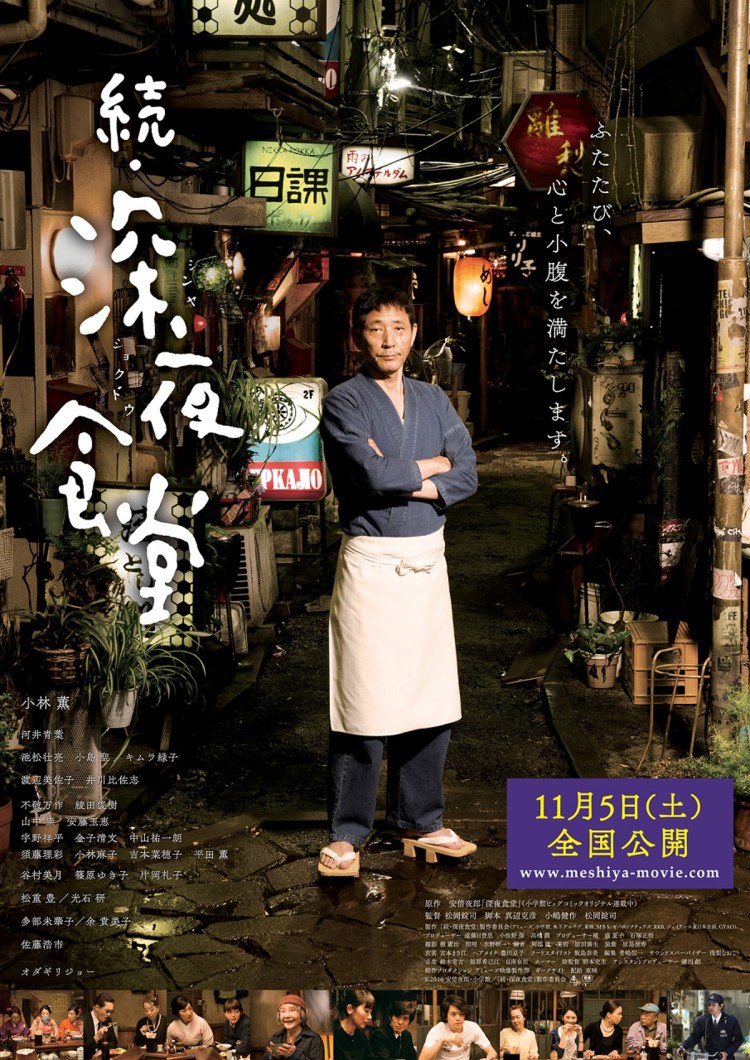
midnight diner 2 posterThe Midnight Diner is open for business once again. Yaro Abe’s eponymous manga was first adapted as a TV drama in 2009 which then ran for three seasons before heading to the big screen and then again to the smaller one with the Netflix original Midnight Diner: Tokyo Stories becoming the de facto season four. Midnight Diner 2 (続・深夜食堂, Zoku Shinya Shokudo) returns with more of the same as Master puts out his sign and opens the shop, welcoming the denizens of Tokyo after dark in search of a little place to call home amid all the chaos and alienation.
To re-cap, the Midnight Diner is a casual eating establishment run by Master which opens only between the hours of midnight and 7am. The restaurant has only a small formal menu but Master’s selling point is that he is prepared to make whatever the customer so desires (assuming the ingredients are available). Regulars and newcomers alike are given a warm welcome and a place to feel at home, free of whatever it was that was bothering them in the outside world.

Like the first film, Midnight Diner 2 is really three TV episodes stitched together. The first begins on an ominous note as each of the regulars arrives in mourning clothes only to be struck by the coincidence that they’ve each been to a different person’s funeral. A woman arrives dressed in black but reveals she hasn’t been bereaved, she simply enjoys dressing like this to destress from the difficult atmosphere at her publishing job. Noriko (Aoba Kawai) is a top editor but often finds herself sidelined – this time by a young author whose book she made a success but has now dumped her owing to all her notes on his second effort. Saddled with an elderly client who doesn’t like taking advice from a woman, Noriko’s fortunes fall still further when she finds him dead. A visit to a real funeral threatens to change her life completely.

Strand two follows the son of a nearby soba shop, Seita (Sosuke Ikematsu), who has fallen in love with a much older woman and wants to marry despite his mother’s reservations. The third segment continues along the familial theme with an old woman travelling all the way from Kyushu to Tokyo after falling victim to an “Ore Ore” scam.

Scams and parental bonds become the central themes tying the episodes together as each of the lovelorn protagonists finds themselves taking advantage of Master’s sturdy shoulders. Noriko and Mrs. Ogawa (Misako Watanabe) fall victim to an obvious conman but do so almost willingly out of their desperate loneliness. Noriko, dissatisfied with her working environment, takes to the streets dressed in black but becomes the target of “funeral fetishists” who are only interested in her “bereaved” state. A chance encounter at a real funeral makes her believe her life can change but she is deceived again when a man she came to care for is unmasked as a serial trickster. Mrs. Ogawa faces a similar problem when she races all the way to Tokyo to pay off a “colleague” of her son’s, so desperate to help that she never suspects that she’s fallen victim to a scam.

Mrs. Ogawa’s deep love for the son she has become estranged from is contrasted with that of the soba noodle seller for the son she can’t let go. Seita cares for nothing other than ping pong, much to his mother’s consternation and has little interest in taking over the family business. A young man, he’s tired of the constraints his lonely widowed mother continues to place on him though his determination to marry an older woman at such a young age bears out his relative maturity.

As usual Master has good advice and a kind word for everyone that helps them get where they need to go, softly nudging them in the right direction through the power of comfort food. By now the cast of familiars is well and truly entrenched but there will always be space at Master’s counter for those in need who will be greeted warmly by those already aware of its charms. True enough, Midnight Diner 2 offers little in the way of innovation (though we do get a little more information about the mysterious Master) but no one comes the Midnight Diner looking to try something new. In here, nostalgia rules and we wouldn’t have it any other way.


Original trailer (no subtitles)

Yamato (California) (大和(カリフォルニア), Daisuke Miyazaki, 2016)

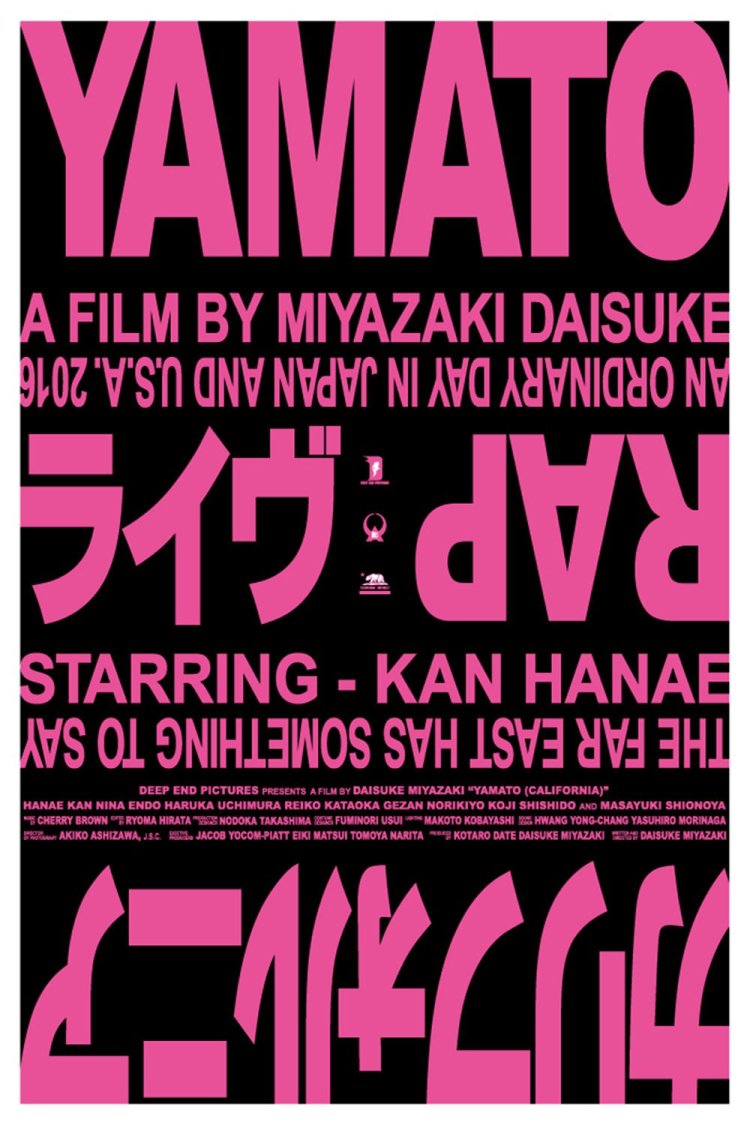
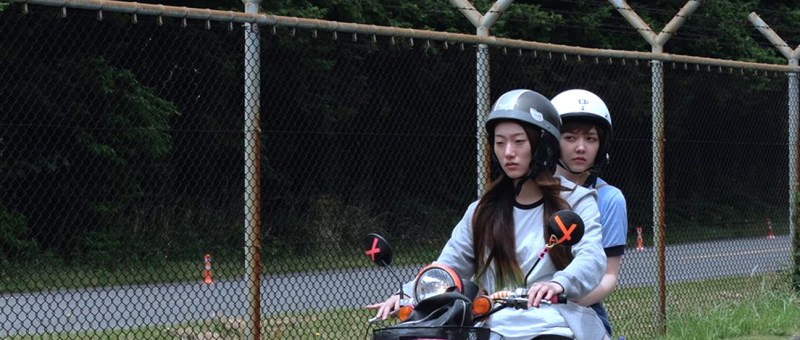
yamato (california) posterWhen you think of the American military presence in Japan, your mind naturally turns to Okinawa but the largest mainland US base is actually located not so far from Tokyo in a small Japanese town called Yamato which is also the ancient name for the modern-day country. The US has been a constant presence since the end of the second world war prompting resistance of varying degrees from both left and right either in resentment at perceived complicity in American foreign policy, or the desire to reform the pacifist constitution and rebuild an independent army capable of defending Japan alone. Daisuke Miyazaki’s second feature, Yamato (California) (大和(カリフォルニア) dramatises this long-standing issue through exploring the life of hip-hop enthusiast and Yamato resident Sakura (Hanae Kan) who idolises an art form born of political oppression in a country which she also feels oppresses her as a Japanese citizen living on the other side of the fence from land which technically still belongs to the US government.
As the camera pans around a ruined landscape which turns out to be a junkyard, it eventually finds Sakura as she sits alone atop a pile of rubbish rapping about her existential misery, the hopelessness of her life, and her constant anxiety. Sakura has left high school but has no hopes, aspirations or plan. She works part-time at the eel restaurant owned by a family friend but he rarely has enough custom to need her help. Still living at home with her single mother (Reiko Kataoka) and older brother Kenzo in a cramped apartment where space is divided by a series of hanging sheets, Sakura is put out to learn that the half-Japanese daughter of her mother’s American G.I. boyfriend will be coming to stay. When Rei (Nina Endo) finally arrives, Sakura makes a point of ignoring her but the two eventually bond over a shared love of hip-hop and an awkward sense of recognition.

Tellingly, Rei’s (late) mother was from Okinawa – another reminder of the wider American presence, but her long absent father, Abby Goldman, is as distant a protector as America itself. Communicating only through handwritten letters, Abby is neither seen or heard but somehow believed in like an invisible god. Strangely, Rei asks Sakura what her father was like as if she’d never met him only for Sakura to awkwardly answer that he was somewhere between a bother, a friend, and a father but that she’s also grateful to him for introducing her to her beloved hip hop. Later she takes her mother to task on this same issue, Abby hasn’t visited in years and doesn’t even provide for them anymore yet he dispatches the daughter he rarely sees himself for them to care for instead. Abby, like America, offers little and takes much, at least in Sakura’s increasingly hotheaded assessment.

Sakura is quite clearly in a state of depression. Sullen and angry, she lashes out at all around her but is mostly at war with herself and understandably anxious about her future. Her mother and brother both understand this about her and are patient and understanding, naturally cheerful people faced with adversity. With no work to go to and the prospect of finding any slim, Sakura spends her time perfecting her rap technique and hanging out alone in an abandoned trailer in the woods. Despite dressing in the accepted rapper style of loose grey tracksuit bottoms and a hoodie Sakura is a poor fit for the world she’s chosen. Lyrical writing more suited to performance poetry or, as she later puts it, the avant-garde, doesn’t gel with the aggressive, mostly male posturing she sees from her peers yet Sakura is determined to make her way into this arena as a means of self-expression rather than any deluded idea of fame and fortune.

Rei, her American friend, eventually sparks an epiphany following a fiery argument during which she accuses Sakura of being nothing more than an American copycat, adopting a foreign art form to mask an insecurity in her own fragile identity. Rei, trying to get through to her knew friend, has pushed too deep and hit all the wrong nerves leading to a surreal sequence which finally sets Sakura off on a voyage of self discovery and results in a concerted vow of “independence” but also of rejoining the world, accepting others rather than refusing to engage, and stepping forward together but on an equal footing with no leaders and no followers.

Miyazaki’s balanced view does not shy away from the less pleasant aspects of his own society from the protest group which wanders through the frame carrying banners calling for the immediate expulsion of migrants from Asia, to a group of yankees throwing rocks at the homeless, and Kenzo’s straightforward remark that he’s only interested in meeting Rei if she’s pretty – according to him mixed-race Japanese girls often aren’t. Grey mixes with green as brutalist shopping malls break through the vegetation leaving even an errant pagoda entirely intact in the central square. Like Sakura’s own soul this is a land of contradictions and uneasy cross-pollinations but it doesn’t need to be as defeatist and unimaginative as a dated shopping mall, wasei hip-hop just might be the next big thing.


Yamato (California) was screened at the 17th Nippon Connection Japanese Film Festival.

Original trailer (dialogue free)

All Around Us (ぐるりのこと。, Ryosuke Hashiguchi, 2008)

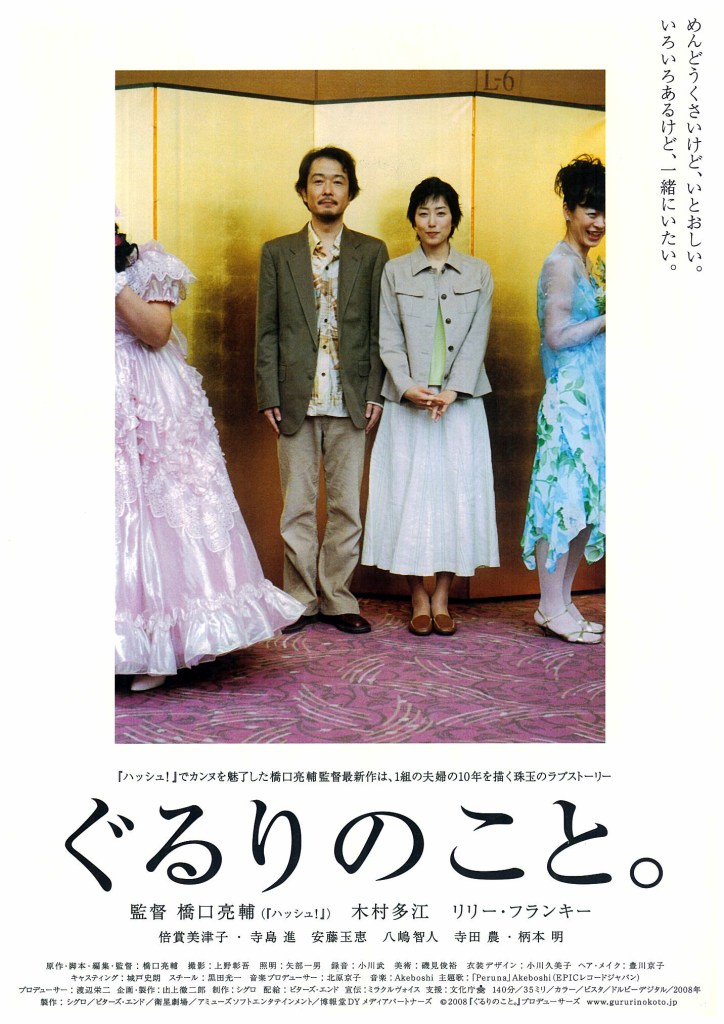
all around usRyosuke Hashiguchi returns after an eight year absence with All Around Us (ぐるりのこと。Gururi no Koto) and eschews most of his pressing themes up this by point by opting to depict a few “scenes from a marriage” in post-bubble era Japan. Set against the backdrop of an extremely turbulent decade which was plagued by natural disasters, terrorism, and shocking criminal activity Hashiguchi shows us the enduring love of one ordinary couple who, finding themselves pulled apart by tragedy, gradually grow closer through their shared grief and disappointment.

Tokyo, 1993. Kanao (Lily Franky) and Shoko (Tae Kimura) have had an “on and off” (but seemingly solid) relationship since their art school days. She works at a publishing house and he’s kind of a slacker with a job in a shoe repair booth. Shoko worries that Kanao plays around too much (but actually doesn’t seem that bothered about it) whilst continuing to attempt to micromanage their entire existence with her clearly marked calendar planning out the most intimate of actions. When Shoko discovers she’s expecting a child, the pair decide to finally get married and begin their lives as a family. Kanao also gets an opportunity on the work side when an old college friend helps him get a job as a courtroom artist for a news agency.

However, their joy is short-lived as an abrupt jump forward in time shows us a tiny shrine underneath the calendar (shorn of its red crosses) dedicated to the memory of their infant daughter. Kanao is the keep calm and carry on sort so he just tries to bluster through but Shoko is distraught and slowly descending into a mental breakdown. If that weren’t enough to contend with, Shoko’s estranged father has been tracked down and is apparently very ill dredging up even more pain an uncertainty from the long buried past.

We follow Shoko and Kanao over a period of nine years. As well as the ever present motif of the calendar, we feel the passage of time through Kanao’s work at the court house which sees him become the artistic recorder of some of the most traumatic moments of the age. Having entered into an era of economic turmoil following the end of the bubble economy, the 1990s saw not only the devastating Kobe Earthquake but also the sarin gas attack on the Tokyo underground perpetrated by a dangerous religious cult, members of which wind up in court in front of Kanao, tasked with the thankless task of bearing witness to their testimony.

Kanao evidently decided not to discuss his personal tragedy with his work colleagues or, one would assume, his boss would not have reacted so harshly when he made the reasonable request to turn down the opportunity to sit in on yet another child murder trial – either by accident or design, the trials which present themselves to Kanao (and are all real, sensationalised media events of the time) involve the horrific murders of small children with only one of the defendants voicing any kind of regret or remorse.

Meanwhile, Shoko has been trying to get on with life as best she can but finds herself sinking ever deeper into depression. Her uptight, controlling personality cannot cope with this perceived “failure” on her part or of the destruction of all her plans by a truly unforeseen tragedy. Having had her doubts before regarding Kanao’s commitment to her, she finds his lack of reaction puzzling. Mistaking Kanao’s lack of outward emotion for indifference, Shoko finds it hard to continue believing in their shared destiny and wonders if her husband ever really cared for her at all. Kanao is a laid-back soul, someone who’s learned to become used to disappointment by accepting it quickly and then trying to move on. His more grounded approach might be just the one Shoko needs in order to come to terms with what’s happened – never pushing or complaining Kanao is contented simply by her presence and is prepared to give her the space she needs whilst always being around to offer support.

Hashiguchi relies on visual cues to help navigate the shifting dynamics including the repeated use of the calendar as a symbol of Shoko and Kanao’s marital status, the now unneeded pregnancy books bundled to be thrown out, or rice discarded in the sink as a marker of a house proud woman’s slide into crippling depression. Small moments make all the difference from a mother’s bandaged wrists and a cutback to the only person who’s noticed them, to the repeated joke of all the veteran journalists suddenly falling over themselves in an attempt to escape the courtroom and be the first to file their copy. A necessarily sad story, but an oddly warm one as two people worried they may be mismatched grow into each other in the face of their shared tragedy. Anchored by the strong performances of its two leads (particularly Tae Kimura who manages some convincing on screen crying in a difficult role) All Around Us is another beautifully pitched human drama from Hashiguchi who proves himself an adept chronicler of the human condition even whilst stepping away from his trademark themes.


Original trailer (English subtitles)

Hush! (ハッシュ!, Ryosuke Hashiguchi, 2001)

hushThe family drama is a mainstay of Japanese cinema, true, but, it’s a far wider genre than might be assumed. The rays fracture out from Ozu through to The Family Game and Crazy Family which sought to ask a few questions about where the idea of “family” was headed in a society of rapidly increasing materialism. Ryosuke Hashiguchi comes at the idea from a different angle in 2001’s Hush! (ハッシュ!) as he once again takes the perspective of the gay community and asks if the “traditional family” is about to change – what could, or should, survive if the old, rigid ideas can be remade into something lasting created out of love and acceptance rather than obligation?
As the film begins, Naoya (Kazuya Takahashi) wakes up to find his one night stand already fully dressed and heading out the door, awkwardly, without even stopping to say goodbye. Eventually he hooks up with the kindly Katsuhiro (Seiichi Tanabe) and the two quickly become fairly serious but then a damaged woman, Asako (Reiko Kataoka), enters their lives hoping to use Katsuhiro as a sperm donor, forcing the men to reassess a number of important desires and beliefs, putting strain on their still fledgling relationship. If that weren’t enough drama, a girl at Katsuhiro’s place of work has also developed a crush on him and is prepared to take her unreturned love to some extremely dark places.

The first level of mini stresses Naoya and Katsuhiro have to contend with is their conflicting (if complementary) personalities and attitudes to their sexuality. Naoya is an easy going type with a job at a pet grooming salon. He’s a fully out gay man and a frequenter of city’s gay scene. Katsuhiro, by contrast, is much more mild mannered and innately kind. He works at a scientific research station and is more or less closeted – that is, he doesn’t particularly go out of his way to hide his sexuality from his work mates and family but he doesn’t volunteer the information either. This attitude seems to bother Naoya at various points but being the easy going type he’s apt to let it go most of the time.

However, when Katsuhiro reveals Asako’s offer, Naoya is actively against it. His idea of gay life suggests that relationships are generally short, he prefers the relative freedom of his life as an essentially “single” man rather a husband shackled to a family. Katsuhiro on the other hand perhaps would have liked children, or to be a father figure to someone else’s. Though Naoya has previously expressed boredom and disillusionment with his life spent in clubs and gay bars, he’s still resistant to the idea of settling down, or at least to the belief that a single relationship really can stay the course.

All three of the central characters have, in a sense, been let down by the “traditional” family. Naoya’s father left when he was small, leaving him with a single mother which is something that wasn’t so common when he was a child resulting in a fair amount of social stigma from other people in the community. These days his brassy mother knows about his sexuality and seems OK with it (aside from getting the random idea that Naoya will be wanting a pair of breasts at some point). Katsuhiro’s father was an alcoholic who died when he was just a small boy, his relationship with his brother and his family seems good but he’s afraid to reveal his sexuality to them for fear of disapproval. His brother had an arranged marriage, which doesn’t seem to have worked out so well at least from the sister-in-law’s perspective. Asako has also had a troubled life looking for affection in all the wrong places, feeling that if she had not been neglected as a child perhaps she’d have been a steadier adult. Naoya was running away from the idea of family ties, but Katsuhiro and Asako are actively seeking to repair the ones which never grew into the kind of roots one needs to anchor onself in a society entirely built around familial bonds.

After receiving some surprising medical news, Asako perversely decides that her own salvation lies in becoming a mother. She’s had enough of casual relationships and decided to go a different route so when she spots the kind look Katshiro gives a small child at a restaurant, she decides he must be the one to father her baby. Asako knew that Naoya and Katsuhiro were a couple, but that works out pretty well for her plan so she approaches him and makes her left field offer right off the bat. It will take some figuring out but this literal third way is a neat solution to a series of problems and, being completely new, is safe from the pettiness and misery often found within the traditional family unit. Contrasted with the bitterness displayed by Katsuhiro’s sister-in-law, the unusual arrangement of these three would be parents and their unborn child(ren) is one filled with love, forgiveness and mutual support rather than cold obligation or a simple fulfilment of societal expectations.

Once again Hashiguchi proves himself adept at creating a series of complex, flawed human beings who are nevertheless relatable and often endearing. Hashiguchi’s films tend to run long but he also ensures that even his supporting characters are well enough drawn to maintain interest in the many subplots from Naoya’s abrasive gay bar buddy to Katsuhiro’s unhinged stalker. An interesting sideways look at the state of the modern family, Hush! seems to advocate that just shutting up and going with the flow is not the answer but there are quieter solutions to be found if everyone is willing to listen to the silence.


Original trailer (no subtitles)

A Touch of Fever (二十才の微熱, Ryosuke Hashiguchi, 1993)

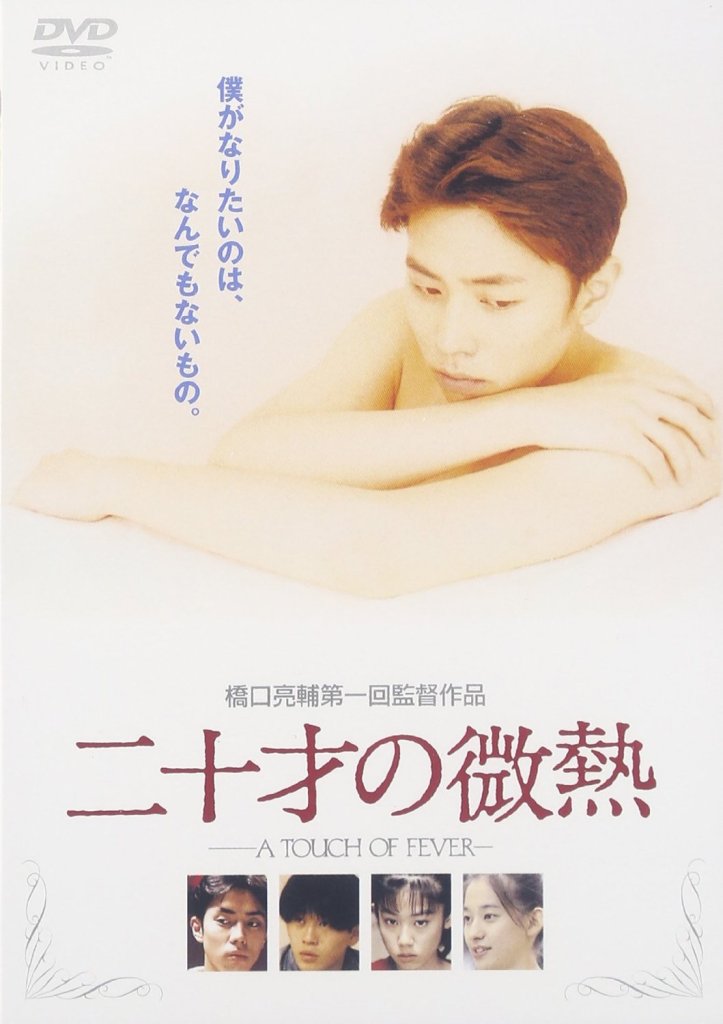
Touch of FeverRyosuke Hashiguchi’s debut feature A Touch of Fever (二十才の微熱, Hatachi no Binetsu) proved a surprise box office hit in Japan and is also credited for helping to bring male homosexuality into the mainstream. A no-budget movie shot on 16mm, A Touch of Fever is the story of two ordinary boys each going about their everyday lives whilst also beginning to understand themselves in terms of their sexualities, mirroring each other perfectly in their inner confusion.

Tatsuru is a college student by day, but he spends his nights working at Pinocchio’s where he entertains male customers looking for some no strings action with a disinterested young man. Among the other youngish guys working at the club is Shin who is actually still in high school. Shin is out to his parents, but they haven’t taken it well so he’s couch surfing, leading to him to ask Tatsuru if he could temporarily move in with him. Along with all of the practical problems this may raise, Shin has something of a crush on his older colleague, but Tatsuru is filled with doubts about many things and his apartment is in no way big enough to contain this particular elephant in the room.

Tatsuru is about as detached as they come. He claims that he can separate love and sex and that for him his work is just a mechanical action that he happens to be pretty good at. The first client we see him with interrogates him about his non-compensatory love life, assuming that he must have a girlfriend. Tatsuru gives a non-committal answer about whether he also sleeps with women which offers the first indication of his slight resistance to the idea of being gay even if he has no problem earning a living through sleeping with men. Throughout the film he also conducts a parallel (platonic, if fliratious) relationship with an older female student, though when he decides to try and take things further she more or less shuts him down explaining that she’s confused about her feelings for him – she wants him in her life, but probably not in a romantic way. As if to underline the point, an attendant begins to spray cleaning fluid over the passenger side window of the car Tatsuru is sitting in, effectively painting him out of the picture.

Shin, on the other hand, is very clear about his sexuality but less so about the idea of selling it for money. Uncomfortable with the atmosphere at the club, Shin has decided he only wants to do it with people he likes, as impractical as that may turn out to be. What Shin wants is romance, but that’s exactly what Tatsuru is currently unable to acknowledge. When taken to task by one of Shin’s female friends, Tatsuru offers a series of justifications about different kinds of love but remains rational and closed down. At the moment it appears something may happen between the pair, it’s Shin who ultimately can’t follow through. Whether due to “chickening out” as his friend accuses, a lack of belief in his object of affection, or simple vulnerability, Shin is not quite ready to acknowledge his true feelings either.

Both boys have also become estranged from their families and particularly with their fathers. Tatsuru’s father leaves gruff answerphone messages and then when he finally gets through, suggests that his son is a drain on his resources that he could well do without. Having left Tatsuru’s mother for another woman, dad is now cash strapped – so much so that his new partner has had to have an abortion because of all the loans he’s taken out for Tatsuru’s fees. The final parting blow is to say that (contrary to the suggestion of a complete divorce between father and son) Tatsuru is now the sole heir of the Shinomori name which is yet another burden for guy who may be gay and therefore may not necessarily be looking to pass that name on. Shin’s father had something of an apoplexy when he found out his son was gay and threatened to have him sent away to the self defence force for some “toughening” up, going so far to trample all over Shin’s dreams of becoming a fashion designer and leading him to leave home at such a young age.

Hashiguchi’s first feature is his most melancholy but also oddly innocent. A theme which recurs throughout his career – that love is sad and ultimately impossible, rears its head during the film’s final scene in which Hashiguchi himself plays a sinister customer. This uncomfortably long sequence which breaks with the formalist camera movements of the the earlier part in favour of destabilising, unbroken handheld, acts as the climax of the film as the pair are once again symmetrically opposed. Tatsuru likes things impersonal but this guy wants to talk, whereas Shin craves connection but finds the customer unpleasant in his wheedling, direct and almost forceful approach. “You wouldn’t know the pain of being unable to speak out about how you really feel”, says the customer, oblivious to the obvious subtext. This long, strange, and uncomfortable encounter does at least lead both boys into the centre ground, making each clearer both about themselves independently and about whatever it is that exists between them.

Contrary to the customer’s assertion about the impossibility of true connection, the film ends on a note of hope as the boys walk home together with a little more lightness in their steps. When Shin enquires how much Tatsuru was paid for something that he previously disapproved of but seems to have got over now, he tells him he’s underselling himself and ought to value himself more. Tatsuru says he’ll bear that in mind – that has, after all, been the problem all along. In one sense, the “fever” has broken – a weight has been lifted, leaving both boys freer to go about their lives with more clarity and less angst. Perhaps it isn’t all so sad and impossible after all.


Original trailer (no subtitles)

https://www.youtube.com/watch?v=ZN6xyL4cKPY