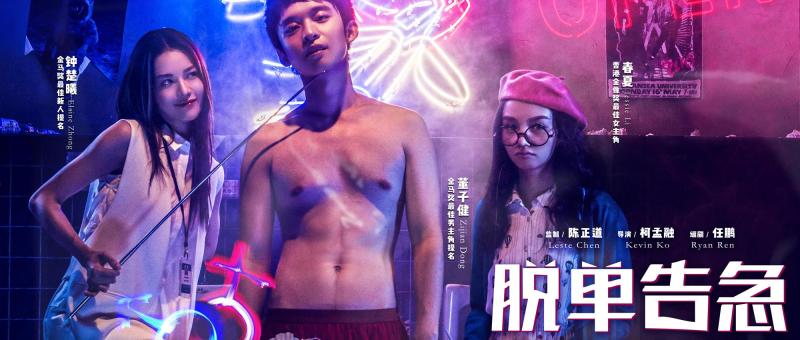
 Personas – university can be all about figuring them out but more often than not the key comes from an unexpected direction. An unexpected direction is where Dude’s Manual (脫單告急, Tuōdān Gàojí) eventually takes us after kicking off with a scary crime thriller opening in which our hero gets himself temporally mixed up with a serial killer investigation only to earn himself the embarrassing nickname “Air Pump” when his “victim” is revealed to be a blow up doll. An unlikely meet cute brings him into the orbit of the most popular girl at school and subsequently into her plan to win back her reputation after getting it tarnished with his naffness at the expense of another shy and lonely student, but then again, isn’t everyone going to get what they wanted? Perhaps yes, perhaps, no.
He Xiaoyang (Dong Zijian) is in the last year of uni and is still single, never having had a girlfriend. An embarrassing incident with a blowup doll has earned him the nickname “Air Pump” around campus, while his roommates – “sexpert” Boshi (Yuan Fufu), and rich kid Ren Yi (Jin Jin), are doing a little better when it comes to the ladies, but neither of them is much help to the nerdy Xiaoyang whose main passion is the homemade flying machine he’s crafting in preparation for a competition. At an exclusive party Ren Yi gets the boys into, Xiaoyang’s life takes a dramatic shift when popular pretty girl Guan Xin (Elaine Zhong) throws up on his T-shirt and then becomes trapped with him in a bathroom from which they fail to escape before a budding paparazzo snaps them together in a compromising position. Guan Xin, mortified that anyone might think she hooked up with “Air Pump”, hatches a plan to get Xiaoyang a “real” girlfriend to clear her name and retrieve her top girl status.
As rom-com plots go it’s a fairly old fashioned one. Guan Xin decides to set Xiaoyang up with a shy concert pianist, Li Shushu (Jessie Li), who hardly ever comes to parties because of her intense social anxiety. She is therefore, Guan Xin rationalises, perhaps grateful for the interest and Guan Xin is really “helping” two people by manipulating them both into a possible relationship which might just have legs. Of course, while she’s doing that she and Xiaoyang can’t help but grow closer even if Guan Xin can’t quite bring herself to admit it.
The spanner in the works is that Xiaoyang, despite himself, is a pretty nice guy. He plays along with Guan Xin’s scheme but quickly goes off book, demonstrating genuine understanding and connection with the shy Shushu as he gently helps to bring her out of her shell. He is, however, also falling for Guan Xin but doubting that she will ever set aside her haughty attitude and accept her growing feelings for him.
The central irony is that Guan Xin can’t see all the ways in which she and Xiaoyang have already progressed through the standard rom-com gateways to love. Meanwhile, Xiaoyang’s friends are also enjoying a lesson in romance with both of their respective girlfriends as sex obsessed Boshi has to learn to be less superficial, and Ren Yi that money really doesn’t buy everything. It is hard to get past the unethical using of poor Shushu who becomes a sacrificial pawn in Guan Xin’s grand plan, but then again perhaps she learns a thing or two herself even if it’s just how to subvert someone else’s nefarious plan in order to engineer a happier out come for all.
Ko has a few laughs at the expense of the young men and women of modern China. Lives lived online have contributed to an already shame hungry culture and given birth to a fair few unscrupulous paparazzo gossip hounds who might be better sticking their cameras in more useful places, while also reinforcing traditional ideas about social hierarchy. Guan Xin, in many ways taking on the masculine Svengali role as she “fixes” the feminised ugly duckling of Xiaoyang, has some pretty cynical ideas about modern dating – using jealously as a weapon, trying to turn the “nice” Xiaoyang into a hot bad boy player that all the women will go crazy for, but then her plans do seem to work and Xiaoyang sees himself rising through the loser ranks to become an eligible campus catch. Like all good rom-coms, however, he doesn’t let himself be changed on the inside so much as rediscover what it is that makes him him, flying off into the sky on the wings of a romantic dream crafted with his own hands.
Dude’s Manual screens as part of New York Asian Film Festival on 14th July at 2.45pm.
Original trailer (English subtitles)



 Jimmy and Cherie, against all the odds, are still together and in a happy longterm relationship in the third addition to Pang Ho-cheung’s series of charming romantic comedies, Love off the Cuff (春嬌救志明). Following the dramatic declaration at the end of
  2010’s
 They say the way to a man’s heart is through his stomach, but for some guys you’ll have to do a whole lot of baking. Based on the popular manga which was also recently adapted into a hit anime (as is the current trend) My Love Story!! (俺物語!!, Ore Monogatari!!) is the classic tale of innocent young love between a pretty young girl and her strapping suitor only both of them are too reticent and have too many issues to be able to come round to the idea that their feelings may actually be requited after all. This is going to be a long courtship but faint heart never won fair maiden.
 Tony Leung Chiu-wai may have just won a best actor prize in Cannes, but that didn’t stop him getting right back on the HK treadmill with the run of the mill rom-com, Fighting for Love (同居蜜友). Reuniting director Jack Ma with Feel 100% star Sammi Cheng, Fighting for Love is the kind of wacky, thrown together romantic comedy that no one really makes any more (not that that’s altogether a bad thing). Still, even if the film is over reliant on its two leads to overcome the overabundance of subplots, it also makes use of their sparky chemistry to keep things moving along.
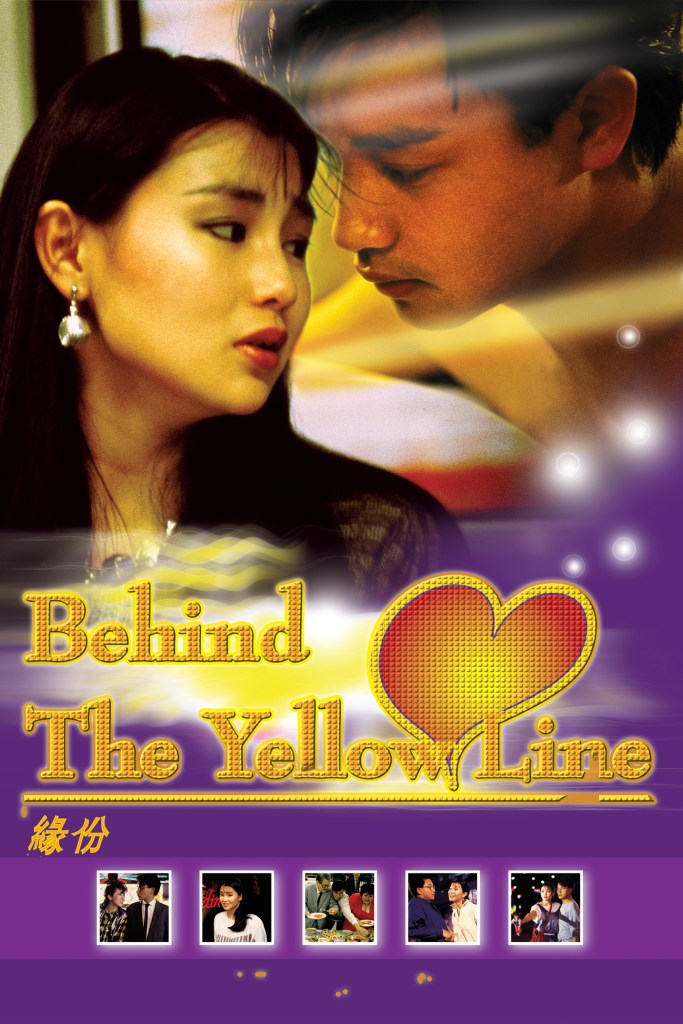 Back in the 1980s, you could make a film that’s actually no good at all but because of its fluffy, non-sensical cheesiness still manages to salvage something and capture the viewer’s good will in the process. In the intervening thirty years, this is a skill that seems to have been lost but at least we have films like Taylor Wong’s Behind the Yellow Line (緣份, Yuan Fen) to remind us this kind of disposable mainstream youth comedy was once possible. Starring three youngsters who would go on to become some of Hong Kong’s biggest stars over the next two decades, Behind the Yellow Line is no lost classic but is an enjoyable time capsule of its mid-80s setting.
 Chinese cinema screens are no stranger to the event movie, and so a Chinese remake of the much loved 1997 Hollywood rom-com My Best Friend’s Wedding (我最好朋友的婚礼, Wǒ Zuì Hǎo Péngyǒu de Hūnlǐ) arrives right on time for Chinese Valentine’s Day. Purely by coincidence of course! However, those familiar with the 1997 Julia Roberts starring movie may recall that My Best Friend’s Wedding is a classic example of the subverted romance which doesn’t end with the classic happy ever after, but acts as a tonic to the sickly sweet love stories Hollywood is known for by embracing the more realistic philosophy that sometimes it just really is too late and you have to accept that you let the moment get away from you, painful as that may be.


 Windows on Worlds