Full Moon in New York (人在紐約, Stanley Kwan Kam-Pang, 1989)

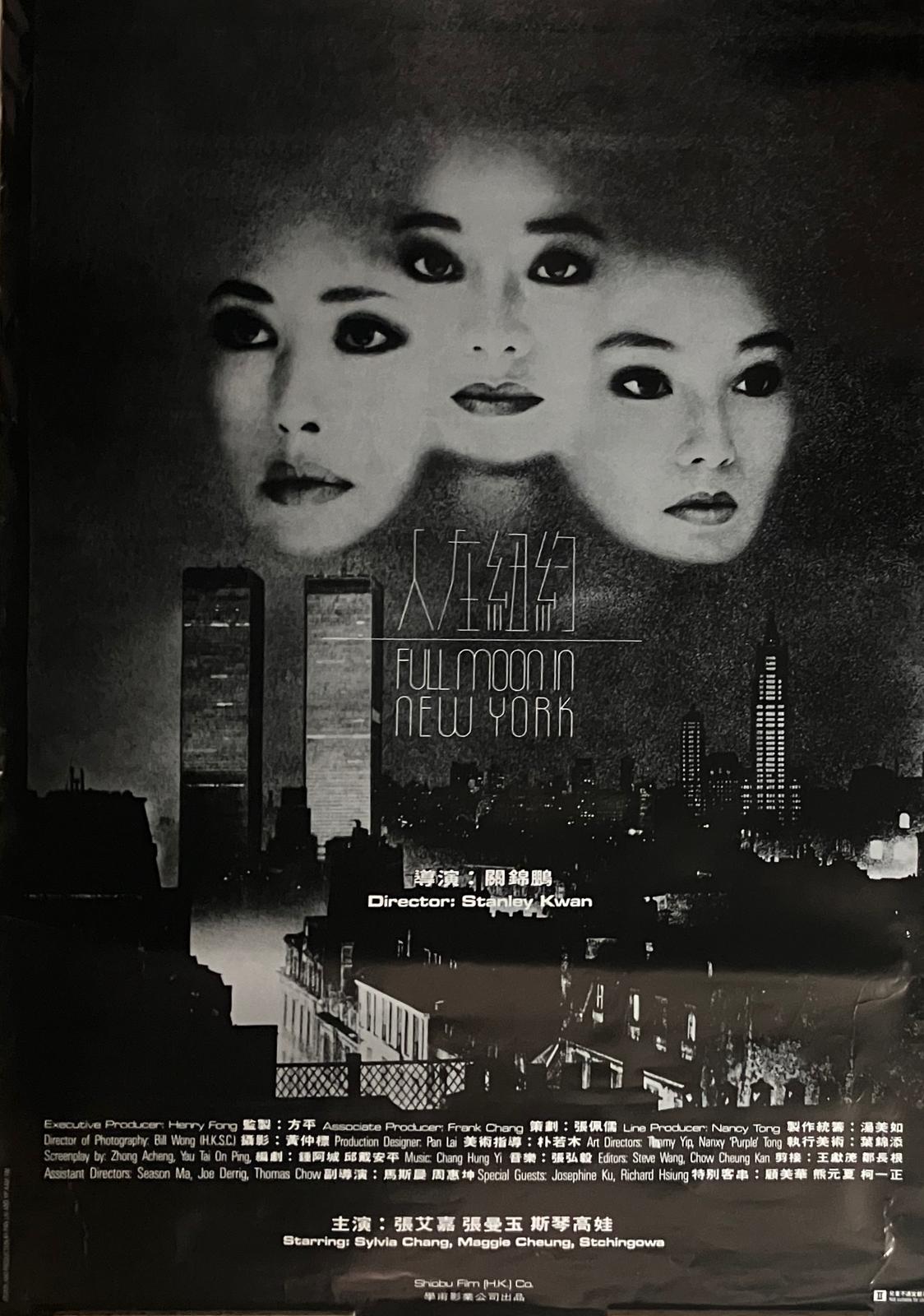
“We’re all Chinese, why argue?” asks one exasperated woman in Stanley Kwan’s tale of displacement and reunification, Full Moon in New York (人在紐約). While the three heroines hailing from Hong Kong, Taiwan, and Mainland China respectively may stand in for a pan-Chinese identity along with an attempt to preserve cultural identity in a third place, they also discover a sense of solidarity in being young women cast adrift in a sometimes hostile city and changing times.

As if to ram home the themes of reunion, the film opens with a wedding but one filled with awkwardness and contradictions. Chinese-American businessman Thomas makes a few off-colour jokes about his new bride, a woman he met while travelling to Shanghai, to the effect that it’s very funny he’s married a woman from the Mainland while praising the pastry chef who made their wedding cake for bothering to make the bride and groom like Chinese people. Zhao Hong (Siqin Gaowa) is confused and doesn’t get his jokes while struggling with the foreignness of an American-style wedding, uncertain as to how to cut the cake while Taiwanese guest Hsiung-Ping (Sylvia Chang) quips that she will teach her how to cut up men.

Hsiung-ping is an actress in the middle of a breakup with an obnoxious American boyfriend who has defaulted on the rent for their apartment which is owned by no-nonsense Hong Konger Jiau (Maggie Cheung). Jiau has fallen headlong into the capitalistic abyss of the 1980s in which she chases business success at all costs and is determined to make serious money. “I like taking risks,” she tells the boring the businessman she’s set up with while, despite having been in relationships only with women, apparently falling for his business savvy friend. She’s intermittently stalked by Stella, seemingly an ex that she struggles to move on from.

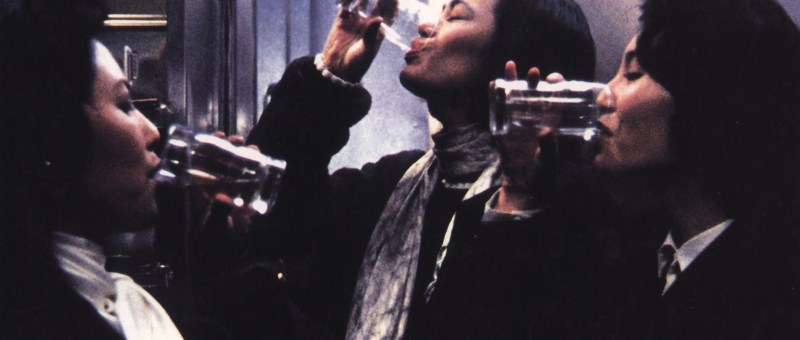
Though originally at odds with each other, the three women develop a sense of friendship and solidarity not least by being outsiders finding solace in their culture. After getting drunk at Jiau’s father’s Chinese restaurant, Hsiung-ping abruptly breaks into a rendition of a Taiwanese song, while Zhao Hong joins her with a folksong from northern China. Jiau looks on with confusion. She cannot think of what to sing as a woman from Hong Kong, signalling her difficulty in expressing her national identity, before settling on a Sally Yeh Cantopop track. She seems to be one of many choosing to seek their futures overseas with the Handover looming and the shadow of Tiananmen Square in the background. 

Hsiung-Ping, meanwhile, represents a second wave of migration as her father was a nationalist solider who went to Taiwan after the Chinese civil war. With the White Terror now over, men like him aren’t so welcome anymore, though as Hsiung-Ping points out who exactly has he been representing for all these years in America? “Once can save one’s country from abroad,” he answers as if singing the song of an exile and echoing each of the women’s attempts to preserve their culture, though what she comes to discover about him through his relationship with a Mainland Chinese woman who suffered in the Cultural Revolution disturbs her sense of righteousness and legacy.

The legacy of the Cultural Revolution is also what Zhao Hong is trying to escape, but finds herself frustrated by life in America while Thomas constantly brushes off her desire to bring her mother to live with them in New York. Thomas’ family are almost entirely Westernised while he seems to almost fetishise Zhao Hong’s Chineseness with quips about his Mainland wife. She tries to ask him about her mother and he changes the subject by remarking that what drew her to him was her black hair. When they visit his family for dinner, Thomas’ mother cooks a pot roast while his father asks him to dispose of an ancestral tablet that he can’t bring himself to throw away. To Thomas it’s just an antique that he jokes is probably worth something to the right kind of collector and would look “cool” in their apartment. Thomas’ Cantonese-speaking father asks if it’s true that ancestral tablets were forbidden during the Cultural Revolution and smashed, making this one yet another example of culture surviving in another place, but seems to be uninterested in the answer when Zhao Hong sadly recalls her mother carving her late father’s name into the back of a chair in defiance of the regulations.

Zhao Hong’s fatherlessness is also a reflection of her sense of dislocation. As she points out, both Jiau and Hsiung-ping have their fathers with them in New York while she has no one other than Thomas. She looks on in consternation as he chats with a white male employee about arranging visits to Chinatown as a collection of mainly elderly Chinese women get on with the actual work of sorting fabric behind them. He finally tells her she should learn to be more American and likens missing her mother to a mental illness, explaining that American people don’t want to live with their parents all their lives, entirely missing the point that the issue is not cultural notions of filial piety that he has now, to some extent, abandoned, but that the close bond between Zhao Hong and her mother forged during the Cultural Revolution has been disrupted by this migration and must now be resolved through reunion. 

Nevertheless, Jiau swears that one can only prosper here by embracing the qi of New York, on the one hand opening all her windows at night as advised by her feng shui practitioner, while, on the other hand, her Hong Konger father runs a Hunnan-style restaurant that serves Peking Duck to cater to American tastes and expectations with the staff and treasured guests eating the heads in the back. Hsiung-Ping is rudely asked by a white male theatre director why a Chinese woman thinks she can play Lady Macbeth, and Jiau loses her temper when a man deliberately bumps into her in the street chasing after him and then hitting him with her shoe. In various ways, this new environment can be hostile towards them, asking them to discard the culture they have come to save or otherwise to bastardise it, but nevertheless the three women discover a sense of community and solidarity even amid their own conflicts and contradictions.


Screened as part of Hong Kong Golden Age 1985-1997 at the Garden Cinema.

Prince Charming (青蛙王子, Wong Jing, 1984)

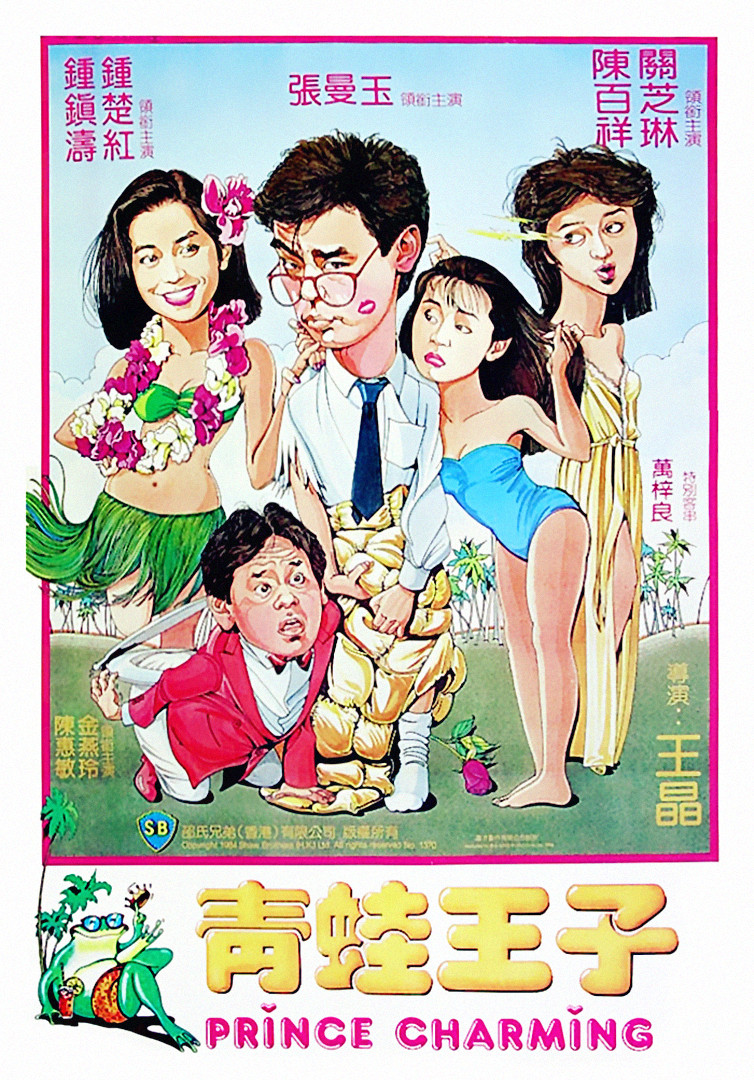
Prince charming 84 poster“This isn’t a film from the 1930s!” a confused sidekick exclaims part way through Wong Jing’s zany ‘80s comedy Prince Charming (青蛙王子). He’s right, it isn’t, but it might as well be for all the farcical goings on in Wong’s hugely populist, unabashedly zeitgeisty romp through a rapidly modernising society. Starring popstar Kenny Bee, Prince Charming also marks the feature film debut of the later legendary Maggie Cheung who would find herself making a fair few disposable comedies in the early part of her career. All the Wong trademarks are very much in evidence from the sometimes crude humour to the random narrative developments and deliberate theatricality but it has its charms, even if perhaps despite itself.

Signalling the “aspirational” atmosphere right away, Wong opens in “Hawaii” with Kenny Bee performing one of the many musical numbers which will be heard throughout the film (which is also a kind of idol movie as well as a populist Shaw Brothers Comedy). Chen Li Pen (Kenny Bee) is the son of an oil magnate and hotel chain manager but unlike his father, is a sensitive, nerdy young man who gets the hiccups around attractive women and has never had any luck with the opposite sex. Nevertheless, his mother wants to set him up with an arranged marriage – something which he vehemently opposes but understands will become harder for him fend off if he can’t find himself a love match in good time. Enter his old friend Lolanto (Nat Chan Pak-Cheung) who is a self-styled ladies man if a bit “common”. Lolanto has come to Hawaii on holiday and to hang out with Li Pen, but like any young guy he also wants to meet some girls.

The guys end up in a kind of sparring match with the two ladies staying in an adjacent room at the hotel, May (Cherie Chung Cho-Hung) and Kitty, (Maggie Cheung Man-Yuk) following a series of misunderstandings. When the girls drug them and then somehow leave them on a rock in the middle of the ocean, the boys are humiliated but don’t have too long to nurse their wounds because Li Pen’s dad sends them back to Hong Kong to investigate suspected embezzlement at head office. As luck would have it, both May and Kitty work for Li Pen’s family firm (which was perhaps why they were staying in the hotel). Another misunderstanding sees May assume Li Pen is a former triad looking for a new start, so she “bribes” the hiring department to get him a job as a chauffeur, while Lolanto ends up in the boss’ office posing as Li Pen. Hilarity ensues.

Aiming a squarely for the populist, Wong’s defiantly aspirational vision revolves around the fabulously wealthy and internationalised Li Pen who went to college in the US and lives most of his life in Hawaii, perhaps not quite understanding Hong Kong in the same way Lolanto does, both because of his outsider status and because of the freedom his wealth gives him. When the two swap roles they each get a kind of education, but their real quest (while halfheartedly investigating the embezzlement scandal) is winning over Kitty and May who think they’re dating a CEO and a chauffeur respectively. Despite their irritation when they realise their mistake, both May and Kitty perhaps come to realise that the deception is a part of what eventually drew them to the guys and they’re a better match than they might otherwise have imagined.

Meanwhile, Wong finally remembers the embezzlement plot and introduces a third woman, Puipui (Rosamund Kwan Chi-Lam), who is secretly a plant set up to seduce the pure hearted Li Pen and marry him because this will in some way prevent the embezzlement scam from coming to light. Puipui’s scheme eventually kicks off the ridiculous finale in which the gang find themselves chased by goons and having to play pool for their lives with hostages hooked up to electric chairs which will be triggered when a certain number of points are scored. Wong adds a host of cutesy touches from cartoon hearts around our lovelorn heroes and adorable doodles popping up as on screen graphics while Kenny Bee and Cherie Chung also get a completely bizarre musical number at the midway point where they pretend to be happy frogs marooned on a private lily pad. It doesn’t make any sense, but it really doesn’t matter. Completely throw away, but strangely fun.


Currently streaming on Netflix UK (and perhaps other territories)

Celestial Pictures trailer (English subtitles)

The Mad Monk (濟公, Johnnie To, 1993)

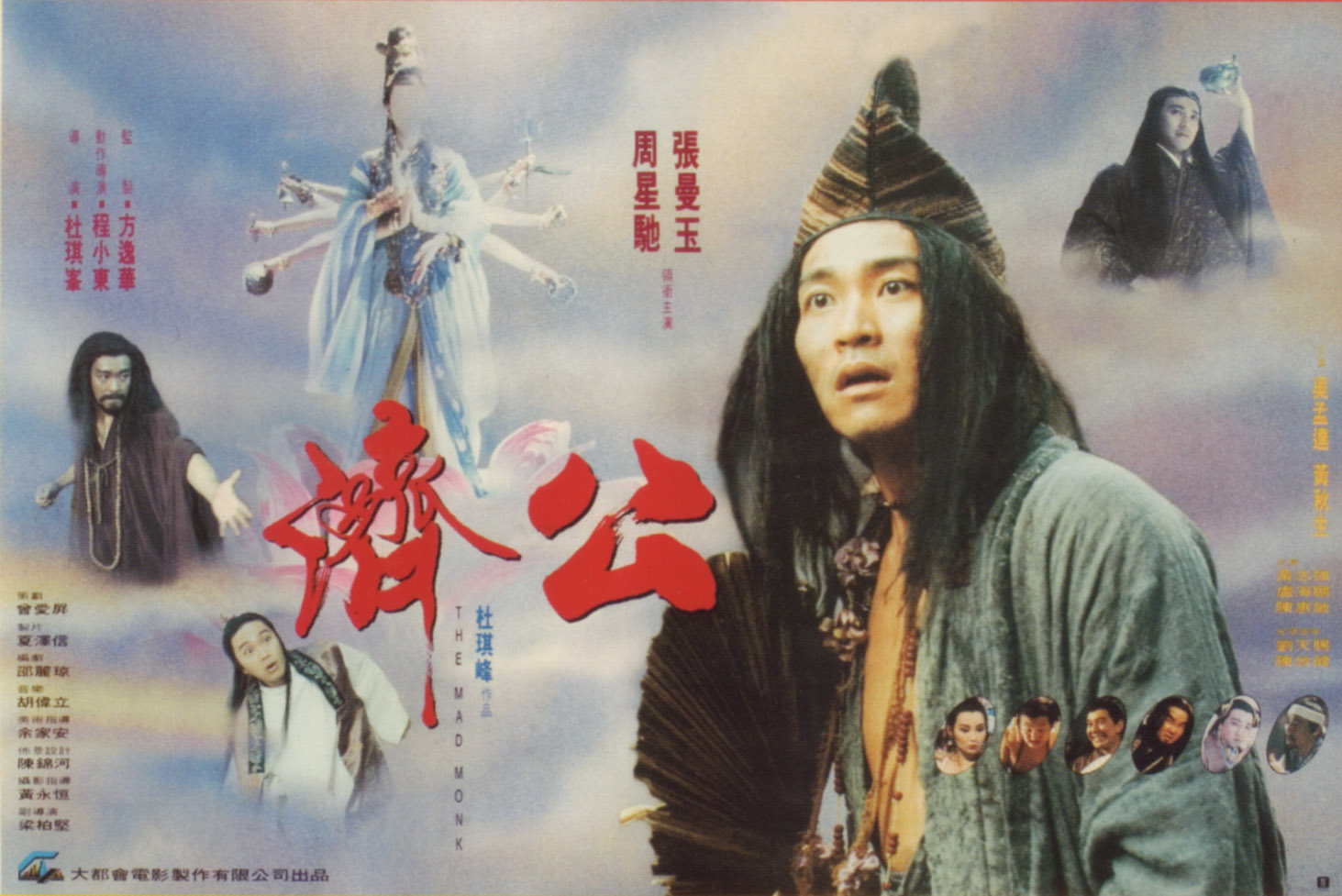
mad monk poster“The Mad Monk” sounds like a great name for a creepy ghost, emerging robed and chanting from the shadows to make you fear for your mortal soul. Sadly, The Mad Monk (濟公, Jì Gōng) features only one “ghost”, but it might just be the cutest in cinema history. The second of Johnnie To’s Shaw Brothers collaborations with comedy star Stephen Chow is another wisecracking romp in which Chow revels in his smart alec superiority, settling bets made in heaven and eventually vowing to spread peace and love across the whole world.
Dragon Fighter Lo Han (Stephen Chow) has a low opinion of his fellow celestial beings. He thinks they ought to be taking more of an interest rather than blindly following the rules. Consequently, Lo Has been making all kinds of mischief and the other gods are very annoyed. They’ve appealed to their high arbitrator – the goddess of mercy (Anita Mui). Wisecraking Lo Han first tries to fob the gods off by sending his friend, Tiger Fighter (Ng Man-tat), instead but can’t resist offering a few more words of smugness in his own defence. Nevertheless, the goddess sees something in Lo Han’s argument and, rather than condemn him to a life as an animal, sets him a challenge – go to Earth and change the fates of three people whose destinies are set to remain the same for the next nine lives. Lo Han agrees and the “Mad Monk” is born.

Like Justice, My Foot, Mad Monk is an opportunity for Chow to show off his verbal dexterity with occasional forays into martial arts. Sadly much of the fast and furious dialogue does not translate though Chow’s spirited performance helps to breathe life into the comedy. Slightly less forgivably, To and Chow repeat jokes from the earlier film including one odd, very much of its time sequence in which Chow walks in on two gay men enjoying a banana in the privacy of their own room. Other attempts at long running jokes include Tiger’s metamorphosis into a giant baby which soon becomes tiring but is eventually forgotten.

Lo Han’s mission is to “reform” a prostitute (Maggie Cheung) who enjoys her work too much, a beggar (Anthony Wong ) with social anxiety and low self esteem, and a stone hearted villain (Kirk Wong) intent on inflicting as much evil as possible on the Mad Monk and his cohorts. Whilst living as a mortal, Lo Han is not allowed to use any of his celestial magic, but is given a magic fan which can be used three times a day. The goddess of mercy instructs Lo Han that he is to use his sincerity to convert these dyed in the wool sinners, which he does – descending to Earth in an oddly Christlike fashion, determined to save these lost souls even if he’s doing it for the pleasure of winning a bet more than an altruistic desire to help “troubled” people back onto what he sees as “the right path”.

Like many Shaw Brothers comedies, Mad Monk’s narrative is its least important element. The nonsensical plot races from one random incident to another, glued together with over the top slapstick and the occasional martial arts showdown. By the end, Lo Han has wound up in a monster movie as he tries to stop a giant marauding spirit from destroying the city even though he is running out of time for his personal quest and currently has other pressing concerns. Lo Han’s “sincere” attempts to manipulate his targets into changing their ways may seem as if they fail, but even if the effects will be felt in the next life rather than this one, Lo Han has made difference in the mortal world, albeit not quite the one he expected. Seemingly out of nowhere, Lo Han’s mission seems to have changed him too as he begins extolling the virtues of compassion and insisting on building another paradise to spread peace and love through the world. Like the film itself, it’s a noble cause but one that sadly never hits its mark.


Celestial Pictures trailer (Cantonese with English subtitles)

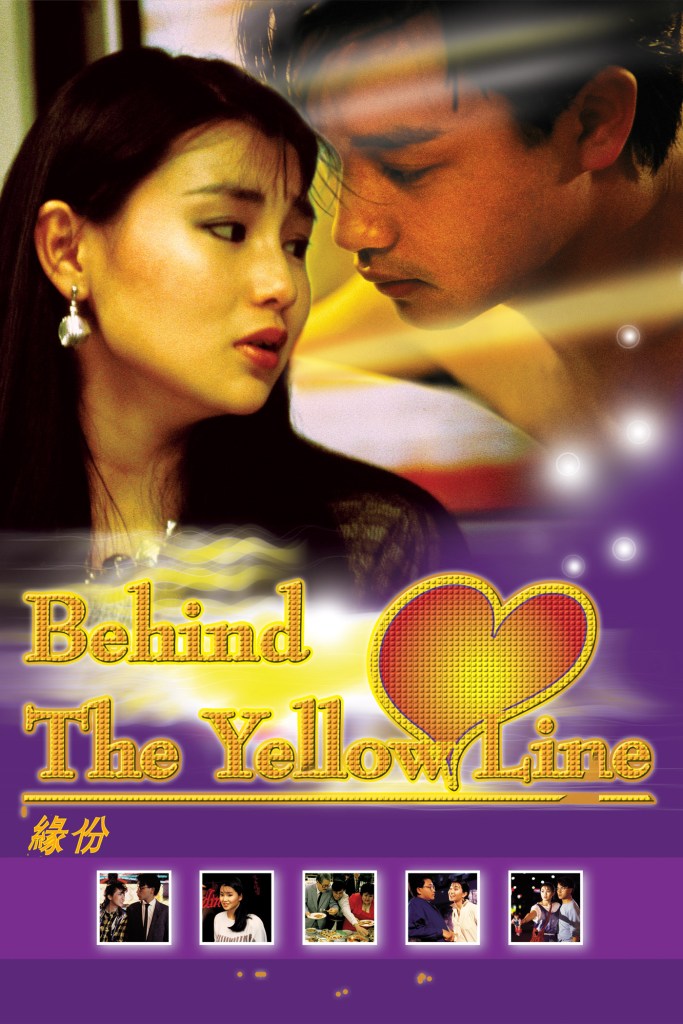
Behind the Yellow Line (緣份, Taylor Wong, 1984)

behind-yellow-lineBack in the 1980s, you could make a film that’s actually no good at all but because of its fluffy, non-sensical cheesiness still manages to salvage something and capture the viewer’s good will in the process. In the intervening thirty years, this is a skill that seems to have been lost but at least we have films like Taylor Wong’s Behind the Yellow Line (緣份, Yuan Fen) to remind us this kind of disposable mainstream youth comedy was once possible. Starring three youngsters who would go on to become some of Hong Kong’s biggest stars over the next two decades, Behind the Yellow Line is no lost classic but is an enjoyable time capsule of its mid-80s setting.
Paul (Leslie Cheung) is a mild mannered guy trying to get to work on time and make a good impression on his first day on the job but after having a taxi stolen out from under him and having to run some of the way, he rushes onto the underground where he has a meet cute with Monica (Maggie Cheung) – a sad looking lady who barely notices his presence. Paul is smitten and follows her onto the train where she continues to ignore him. Despite his best efforts he makes more of an impression on Anita (Anita Mui) – a wealthy and extremely fashionably dressed woman with giant 80s hair! Anita makes a play for Paul but he only has eyes for Monica. Monica is just getting over a failed affair with a married man and isn’t really sure of anything anymore. It’s all in the hands of fate and the mass transit authority but will true love really run its course?

Behind the Yellow Line (presumably so named for its train station setting, the chinese title is simply “fate”) is meandering mess of a picture though very much typical of its time. Paul and Monica get together but she’s still torn over her married lover who resurfaces at the most inconvenient moment whilst also fighting off the attentions of her flirtatious boss causing Paul to overreact in fit of jealously and almost ruin everything in the process. Eventually they decide to sort things out with a game of fate as Monica hides on the MTR expecting Paul to successfully pin point her location before the last train rolls so that she knows they are truly destined to be together.

This central spine of the film works well enough as Paul and Monica tempt fate with their true love romance but where does Anita fit into all this? Popping up now and then almost at random, Anita seems like a strange after thought or a refugee from another film. A stock ‘80s style kooky character, she’s all big hair and bold makeup but she’s also a wealthy woman trying to buy Paul (or more particularly his parents) with the promise of material security. ‘80s setting aside, consumerism is only a mild bi-product and neither Paul nor Monica is particularly pressed over material concerns – all that matters here is true love destiny and the successful resolution of their romantic difficulties. Anita becomes a kind of cupid, forsaking her own feelings in order to satisfy Paul’s in gesture of true love that also recognises having lost out in the great game of fate as her feelings are not returned. Or, there are things money cannot fix (at least, not in the way you want it to).

In this way Behind the Yellow line becomes more interesting as it’s Anita and Monica who begin to move the plot. Monica is quick to remind us that she’s a single woman and she has the right to choose – in this case, she feels sorry for both of her potential partners (whilst completely disinterested in her boss) and so is inclined to decide to remain alone. The film obviously doesn’t go this way, but it does present her choice as a perfectly valid one whilst also affording her the agency to choose her own destiny right the way through. Anita largely wields her power through her money (which appears to be inherited, the gang of other young people she hangs round with seem to be wealthy too making her choice of Paul a relatively strange one), but she exercises her individuality through her unconventional behaviour and bold fashion choices, refusing to give in to social norms but submitting to “destiny” in acknowledging that her feelings are unrequited.

Very much of its time, Behind the Yellow Line is an obvious piece of disposable entertainment designed to appeal to a very specific audience. Filled with cheerful ‘80s cantopop and bright neon lighting there’s relatively little angst in this tale of youthful romance. Everything bounces along much as one would expect with no melodramatic intrusions save Monica’s sometimes melancholy indecisiveness and Paul’s diffidence. Structurally the film is riddled with problems not least with its use of Anita who seems to appear and disappear as needed with no clear indication of her precise function yet it provides enough silly humour and good natured drama to coast though without too many problems. No great lost classic but enjoyable enough, Behind the Yellow is worth seeking out if only to witness the genesis of these three soon to be giants of the entertainment world whose careers became curiously intertwined before ending much too soon in the early years of the following century.


2003 Celestial Pictures trailer (English subtitles)

Original 1984 Cantonese trailer (English subtitles for onscreen text only, no subtitles for dialogue)

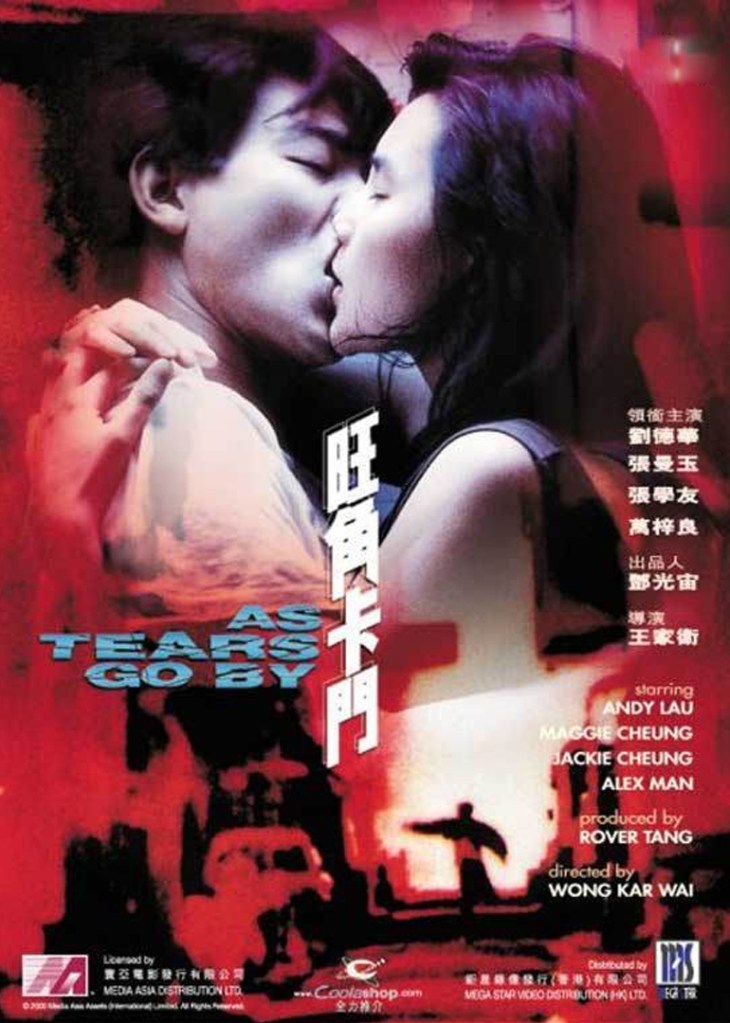
As Tears Go By (旺角卡門, Wong Kar-wai, 1988)

as tears go byThese days, Wong Kar-wai is an international auteur famous for his stories of lovelorn heroes trapped inside their memories, endlessly yearning in vain for the unattainable. In many ways his debut feature, As Tears Go By (旺角卡門, Mongkok Carmen) is little different save that it owes more to its vague heroic bloodshed, gangster inspiration and is less about memory than inevitability and a man abandoning his dreams of a better life with a woman he loves out of mistaken loyalty to his loose cannon friend.

The film opens with Wah (Andy Lau) still in bed despite it being late in the day only to be woken by a voice so piercing it can only belong to an aunty. It seems a mysterious cousin whom he’s never met before will be coming to stay with him as she has something wrong with her lungs and needs to see a specialist in town. Seconds after he puts the phone down the doorbell rings to reveal the cousin, Ngor (Maggie Cheung), standing outside. Slightly put out, Wah goes back to sleep despite the continuous phone calls from his friend, Fly, who is supposed to be collecting a bill but is not having much success. As he will do for the rest of the film, Wah will have to go down there himself and stop Fly making things even worse for everyone than they really needed to be.

For the early part of his career Wong had worked as a scriptwriter (a self confessed hack at times) and was finally given the opportunity to direct his own work as the Hong Kong film industry began to boom in the late ‘80s. This was of course largely due to the fantastically successful action flicks being made at the time including A Better Tomorrow, The Killer, City on Fire etc. so it’s not surprising that he chose the relatively safe arena of genre for his first foray into the director’s chair. His existing connections also enabled him to cast arguably the biggest young stars of the day including Andy Lau, Maggie Cheung and Jacky Cheung as his three leads meaning he had pretty much a safe bet on his hands whatever he decided to do. However, even if As Tears Go By is the most straight forward, even commercial, of his films that’s not to say it doesn’t bear many of the hallmarks of his later efforts.

Broadly speaking, As Tears Go By is a fairly standard gangster tragedy much indebted to Scorsese’s Mean Streets as its melancholic hero is caught between loyalty to his friend and the possibility of salvation through the love of a good woman. Fly is a one man disaster zone – a totally useless gangster who can’t take care of himself in a fight yet loves to buzz around irritating the hell out of everyone and starting gang wars over nothing every five seconds. Even the pair’s godfather warns Wah that sooner or later Fly is going to land him in big trouble and it would be better for everyone if they could find him something else to do. Wah seems to agree but is unable to guide his feckless friend away from the fleeting glory of the tough guy world. Wah is already tired of the gangster life, he feels old with it but knows somewhere deep down he’ll never be free. Either out of complete stupidity, mistaken loyalty and a desire for revenge, or just because he doesn’t think he deserves anything else Wah throws away his chance for something better in a pointless, though affecting, gesture of solidarity with Fly.

Shot by Andrew Lau (who would go on to direct his very own genre hit Infernal Affairs also starring Andy Lau only 15 years later), As Tears Go By sparks many of Wong’s consistent visual motifs including the use of slow motion and a persistent melancholic atmosphere which is also filled with tiny moments of contemporary life. Andy Lau makes for a super cool gangster hero in jeans, dark jacket and sun shades, cigarette hanging carelessly from his lips as he wanders about town in a perpetual statue of ennui. Like many of Wong’s subsequent lonely male heroes, he has an inner longing for something which he believes he can never have. Just as the best film noir tough guys do, he warns off his potential romantic salvation which comes in the pleasing form of Maggie Cheung by telling her that, being such as he is, he can promise her nothing because he’s learned never to bother thinking past tomorrow.

Taken on its own merits, As Tears Go By is an interesting addition to the canon of late ‘80s gangster movies which marries the classic tropes of heroic bloodshed with an arthouse aesthetic inspired by both “New Hollywood” classics and genre infused European cinema. Though he’d rarely return to such frenetic action scenes, here Wong shoots with energetic hand held camera and a kind of fury that might give Fukasaku a run for his money. Extraordinarily accomplished for a debut movie, As Tears Go By is very much a youthful feature which is stained with the same kind of unresolvable longing which would come to colour the rest of Wong’s work to date. A stylish genre effort, As Tears Go By is Wong finding his feet, but find them he does and leads us on a characteristically melancholy waltz as he does so.


Reviewed as part of HOME’s CRIME: Hong Kong Style touring season.

Such a pleasure seeing this again and in 35mm! Though there perhaps should have been a warning about how much of the film lacked subtitles (just as well I’d seen it before!).

As Tears Go By was previously released by Tartan in the UK but a word of warning as there was quite a big error involved with the UK edition in that Tartan were given the Mandarin dub of the film rather than the original Cantonese by mistake but opted to rush the film out in conjuction with the release of 2046 rather than fix the problem. Kino Lorber released the film in the US but maybe out of print. The good news is that the Hong Kong edition at least does have English subtitles.

Original trailer (no subs)

I’m not sure if the film’s title actually has anything to do with this song, but As Tears Go By is an appropriately melancholic ballad from The Rolling Stones, here’s a vintage version sung by Marianne Faithfull:

The original Cantonese title is Mongkok Carmen – Mongkok being an area of Hong Kong and Carmen referring to the opera by Bizet which certainly creates an interesting set of allusions!