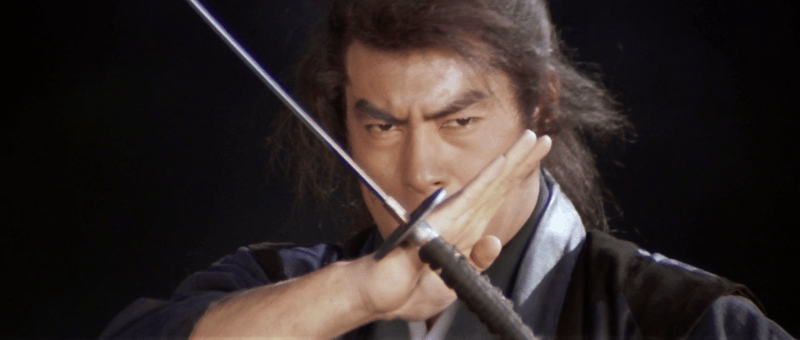

An exiled spy is confronted by the cruel inequalities of the feudal era in Keiichi Ozawa’s possibly mistitled ninja drama Haunted Samurai (土忍記 風の天狗, Doninki Kaze no Tengu). There is a kind of fatalism that follows him, and he is in some senses haunted not only by men like himself charged with the neutralisation of a deserter but by the ills of a corrupt society, though the only ghost here may be himself. Based on a manga by Goseki Kojima who illustrated Lone Wolf and Cub, the film ultimately suggests that to be a good man necessarily means to walk alone as a melancholy exile from a society founded on greed and power.
Indeed, Rokuheita’s (Hideki Takahashi) sole desire is to live a “simple and decent” life as an ordinary farmer. The film opens with him squaring off against a childhood friend, who is also his sister’s love interest, having been ordered to execute him for deserting from their ninja clan. His friend no longer wants to live “like a beast”, and so there’s nothing more either of them can really do in this situation. Rokuheita carries out his duty, and his sister takes her own life in despair. When he’s given another similar mission, he questions it but again resolves that he has no real choice. Only he discovers that his target, Ushizo (Yuji Odaka), has chosen to desert after marrying and having a child. When his family suddenly show up just as he’s contemplating delivering the final blow, Rokuheita decides to let him go warning Ushizo that the Yagyu will never give up and he’ll be haunted all his life so he should try to live it well for as long as it lasts.
But this also makes Rokuheita an exile too, himself now a target and on the run from the Yagyu and his clan. On his travels, he runs into a small family who’ve been attacked by bandits while returning from town to buy wheat seeds because their harvest has failed in the drought and they’re facing onerous taxes from an unforgiving lord. Rokuheita decides to stay in the village hoping to become an ordinary farmer but is regarded with suspicion by some because of his samurai status, while there is also another samurai exile in town, Tarao (Seiichiro Kameishi) who first worked hard to be a part of the community but has since become lazy and aloof.
Tarao is also suspicious of Rokuheita but mostly fearing that either he’s come to make trouble for him or is a fugitive who will lead trouble their way. Unlike Rokuheita, Tarao was kicked out of his clan for stealing and now lives a slightly disreputable life made all the more so by his attempts to pan gold from the local river. Rokuheita fears that if the villagers find out about Tarao and the gold it will only cause chaos and the obsession with easy riches will in the end be much worse for them than the famine. Even Tarao’s wife Oryo (Utako Shibusawa) insists they’ve already got plenty to live on and should simply go somewhere else to lead a quiet life but Tarao wants more, his hand reaching out for his purse even while attacked by corrupt retainers themselves intent on discovering the gold and keeping it a secret from their lecherous lord.
The retainers have been taking one life for every bale of “hidden” rice, carting off young women from the village to place into sexual slavery. Rokuheita tries to teach the villagers how to skirt the feudal order by secretly farming on rough terrain to evade taxes and ensure their own food supply, but this simply incurs harsher penalties even as one of the young men points out hungry farmers can produce nothing at all. Yet there’s nothing Rokuheita can really do for the villagers because it is the feudal order which is most at fault, an order which his ninja clan supports through their spy activities. The man who tracks him, Matahei (Isao Natsuyagi), says he does so as a means of appeasing the Yagyu and protecting his home territory from them but to do he must choose a lesser evil in killing those who have chosen to try to live “simple and decent” lives outside of this system.
Ozawa brings them together in a supernaturally charged conclusion which takes place during a solar eclipse marked by the eerie winds of the Japanese title but finds them both defeated, left with only the melancholy acceptance of their rootlessness as men who will always be pursued by the invisible hands of the feudal order. Utilising wuxia-esque jump cuts to recreate the ninja magic of Rokuheita’s spy craft along with a degree of surrealism in the underwater sequence in which he is attacked by a band of topless female ninjas the film seems to edge towards a more contemporary reading of jidaigeki and not least in the unexpected violence of its final scenes.
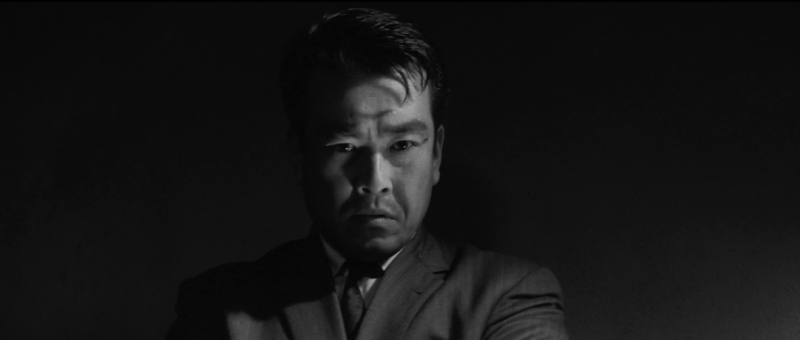


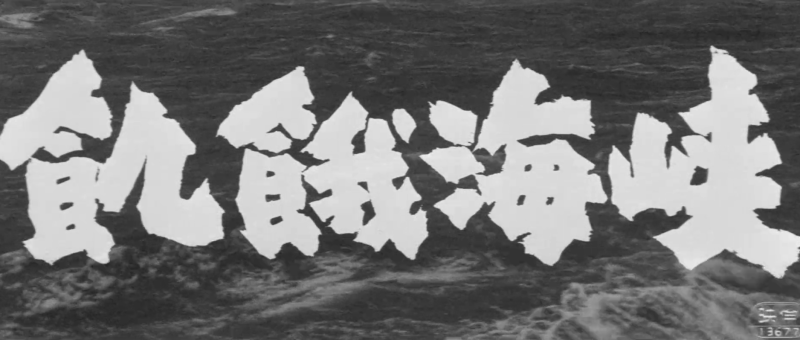

 Brutal Tales of Chivalry (昭和残侠伝, Showa Zankyo-den) – a title which neatly sums up the “ninkyo eiga”. These old school gangsters still feel their traditional responsibilities deeply, acting as the protectors of ordinary people, obeying all of their arcane rules and abiding by the law of honour (if not the laws of the state the authority of which they refuse to fully recognise). Yet in the desperation of the post-war world, the old ways are losing ground to unscrupulous upstarts, prepared to jettison their long-held honour in favour of a dog eat dog mentality. This is the central battleground of Kiyoshi Saeki’s 1965 film which looks back at the immediate post-war period from a distance of only 15 years to ask the question where now? The city is in ruins, the people are starving, women are being forced into prostitution, but what is going to be done about it – should the good people of Asakusa accept the rule of violent punks in return for the possibility of investment in infrastructure, or continue to struggle through slowly with the old-fashioned patronage of “good yakuza” like the Kozu Family?
 Windows on Worlds