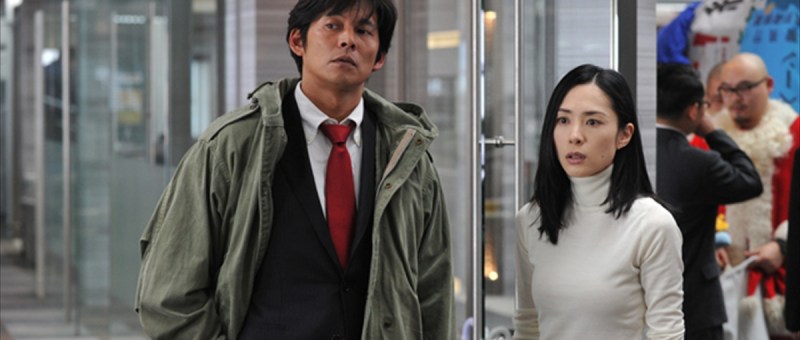
Bayside Shakedown the Final: The New Hope (踊る大捜査線: THE FINAL 新たなる希望, Katsuyuki Motohiro, 2012)

Is it really the end? Billed as the “final” instalment in the Bayside Shakedown series which began with a TV drama in 1997, Bayside Shakedown the Final: The New Hope (踊る大捜査線: THE FINAL 新たなる希望, Odoru Daisousasen the Final: Aratanaru Kibou) once again finds the gang contending with annoying red tape but also with a police force which is intrinsically corrupt and self-serving while questioning if they should remain in an occupation in which they are treated with such disdain. Continuing the familiar pattern from throughout the series, the gang find themselves coming up against a serial killer who may be a crazed vigilante only to discover that the whole thing may have been an extreme inside job designed with the intention of drawing attention to inadequacies in the justice system. 

The problem is that the body they’ve found appears to have been shot with a gun which was removed from the police evidence locker and is linked to a kidnapping case six years previously which just happens to have been handled by Mashita (Yusuke Santamaria) when he was a hostage negotiator. Mashita had ordered an end to the negotiations because of pressure from above to play by the rules with the consequence that the child later died while the prime suspect in the case was recently acquitted of the crime at trial (a staggeringly rare occurrence in Japan). When Mashita’s young son is kidnapped, all eyes are on a rogue policeman, Kuze (Shingo Katori), but it is obvious he is not acting alone. 

Toragai (Shun Oguri), the authoritarian detective from the previous film, has continued along a dark path which only intensifies when his paper on police reforms is rejected out of hand. He too thinks the police force needs structural reform but leans hard into the idea that too many people are getting away with crime rather than concentrating on removing the barriers which prevent police from doing their jobs as Muroi (Toshiro Yanagiba) and Aoshima (Yuji Oda) would probably suggest. Muroi’s lasting dream is of building a police force which trusts policemen to do the right thing and he frequently tells his subordinates that they should feel free to exercise their own judgment. 

Meanwhile, the local cops continue to suffer under the command of the elitist officers from HQ who not only look down on them but assign menial tasks, as does Mashita in finding himself short staffed while most are busy providing security for a local energy summit. While Aoshima had experienced a health crisis that turned out to be a false alarm in the previous film, so this time Sumire (Eri Fukatsu) finds herself struggling with ongoing effects from her shooting in Bayside Shakedown 2 eventually deciding that it might be better to leave the police force entirely while lamenting her unfinished business with Aoshima which remains unresolved even in this “final” instalment while he somewhat unsympathetically can only ask her not to leave rather than express his true feelings. 

Ironically enough, by the time of the final showdown neither of them are actually in possession of a police badge, Aoshima scapegoated by Toragai who still holds a grudge against him while inconvenienced by interference in his scheme to frame a local petty thief for the killings, presenting him with an invitation to resign following serious misconduct accusing him of beating up suspects and planting evidence. One again, the police chiefs sit around a large circular table issuing orders from afar but are mainly concerned how to bury the “scandal” of having a police officer steal a gun from evidence and then use it to commit a murder. In a bizarre twist of fate, it later turns out that the whole thing may be an elaborate, not to mention entirely amoral, plan to expose police shortcomings with a side dose of revenge against Mashita for contributing to the child’s death by insisting on following protocol while receiving heat from above. 

As such the apparently “final” instalment skews a little darker than the series norm while as the subtitle implies offering a new ray of hope in the reversal of Muroi’s fortunes allowing him to embark on the police reforms which have been his and Aoshima’s goal throughout the series. Meanwhile, the film pays tribute to its previous instalments with frequent words of wisdom from the late Waku read from his notebook by his nephew and the ironic return of the previous chiefs reinstated as volunteer mentors as part of a reinforcement programme while familiar faces such as the Captain Kirk cosplayer also make their customary appearances. What’s clear is that there will never really be a “final” outing for Aoshima who reaffirms himself as the last line of defence protecting the local population as he once again runs toward sunset and the next case waiting just behind. 


Trailer (no subtitles)
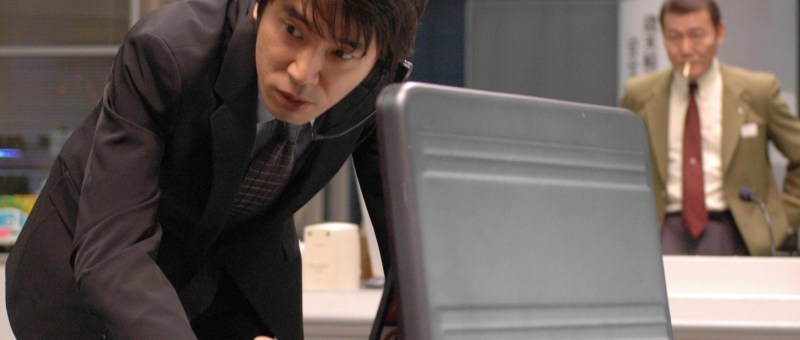
Negotiator (交渉人 真下正義, Katsuyuki Motohiro, 2005)

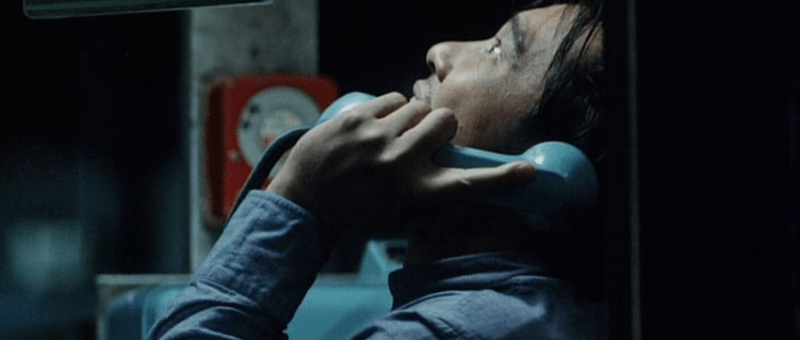
Beginning as a popular television drama, Bayside Shakedown developed into hugely successful franchise. Released two years after the second theatrical feature, 2005’s Negotiator (交渉人 真下正義, Koshonin: Mashita Masayoshi) is a self-contained spin-off revolving around Japan’s first specialist negotiator Mashita, whose name actually appears in the title. In Bayside Shakedown 2, he’d returned to the Wangan police department having left to pursue specialist training in the city. Though some of his former colleagues make cameo appearances and Motohiro maintains the lighthearted tone the series is known for, Negotiator essentially reverses the position of previous instalments, adopting the outsider’s perspective as Mashita finds himself implanted in the control room of the metropolitan mass transit system. 

For some reason in Japanese cinema, terrorist threats seem to arrive on Christmas Eve with alarming frequency, significantly upping the stakes for Mashita personally as he was planning to propose to fellow police officer Yukino (Miki Mizuno) after a romantic date the details of which he seems to be rather sketchy on. In any case, the crisis at hand is a rogue and unexpected train on the Tokyo subway. It quickly becomes apparent that someone has hijacked a remote-driven experimental “Spider” train designed to automatically switch gauges so that it can travel between differing lines on the complicated transit map. The hijacker will apparently only speak to Mashita, impressed or irritated by his accidental celebrity status following the Rainbow Bridge incident in Bayside Shakedown 2. One of the problems of that crisis had been the police discovering they do not actually have the power to unilaterally close a bridge because it requires the consent and co-operation of numerous other transportation officials (though actually in the end they just do it anyway). 

Something similar happens to Mashita when he fetches up in the control room to help. The official in charge, Kataoka (Jun Kunimura), directly tells him that they don’t require his assistance. He will just be in the way and should sit quietly in the corner while they get on with solving the crisis. In this scenario, Mashita is the outsider akin to the HQ guys descending on the Wangan police station and taking over, though as a trained negotiator he is more aware of the implications of his actions and temporarily agrees to take a back seat while his team set up shop in a meeting room only to be further embarrassed when it becomes apparent that the hijacker is intent on playing a game with him personally while thousands of ordinary passengers, not to mention railway and law enforcement officials, are placed in danger. 

Unlike previous instalments in the franchise, Negotiator is prepared to leave several questions unanswered such as the hijacker’s identity, purpose, and intentions focussing instead on the approach of the police and railways in response to the crisis. As in Bayside Shakedown 2, a solution is only possible once both sides have learned to trust each other letting go of any sense of division so that they can work together in total harmony. Meanwhile, there is also a minor criticism of institutional insularity as it becomes clear that part of Kataoka’s reluctance to cooperate is out of a sense of duty to the rail service in that he feels himself duty bound to withhold “secret” information that would help Mashita solve the case, that being the existence of tunnels and sidetracks not listed on the map because they are intended for use by the government and the military only in the event of an emergency fearing that revealing them would, ironically, present a security risk. Meanwhile, on the other side, Mashita and his team find their investigations hampered by the fact most of the data they need from HQ is stored on outdated media such as floppy disks, Jazz and Zip drives they do not immediately have the capability to open. 

Meanwhile, Mashita is engaged in a game of cat and mouse with a train obsessive who baits him with movie trivia and inevitably threatens his romance by targeting the oblivious Yukino who thinks she’s been stood up again and has no idea she’s actually in the middle of a terrorist incident. Like the previous films in the franchise, however, the central thesis is that in the end you just have to ignore all of the annoying bureaucracy and learn to work together for a common goal which is in essence what a negotiator is for, Mashita smoothing over conflict and differences of opinion with sympathetic politeness while unafraid to put on a show for the hijacker in order to get what he wants. A seasonal thriller, Negotiator is in an odd way about peace and harmony to all men and saving Christmas from the forces of disorder. 


Trailer (no subtitles)

Curse of the Dog God (犬神の悪霊, Shunya Ito, 1977)

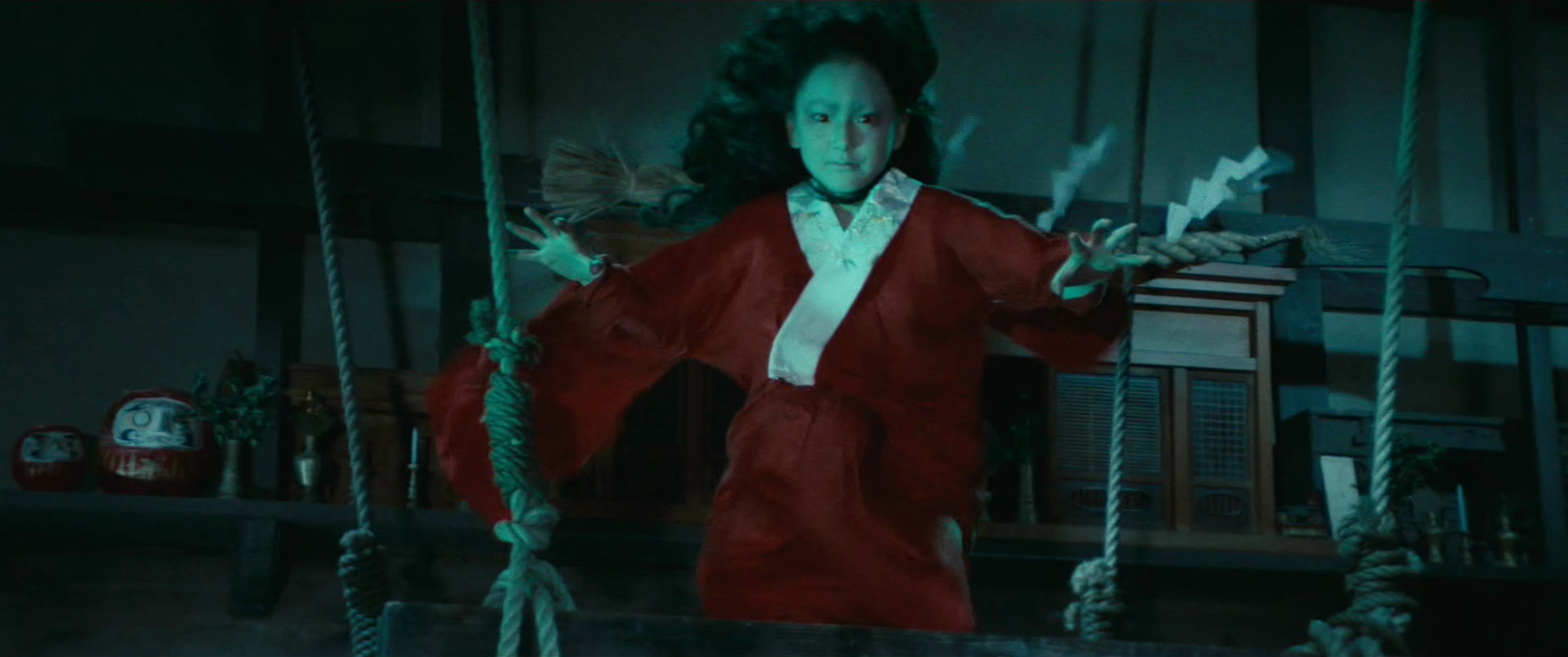
By the late 1970s, Japan was a very prosperous place and the cutting edge of modernity yet old beliefs die hard and those who run afoul of a natural order they assumed had long been forgotten will pay a heavy price for their arrogance. After a four-year hiatus following the third of the Female Prisoner Scorpion films, Shunya Ito returned with a strange slice of folk horror The Curse of the Dog God (犬神の悪霊, Inugami no Tatari) in which it is indeed the city invaders who have transgressed these ancient boundaries in their wilful indifference to the natural world.

The conflict between these two Japans is clear in the opening sequence in which three men pass through a tunnel in a truck bearing the logo of a nuclear power company and emerge into a village where a group of boys jump out from behind a row of tiny haystacks wearing masks made of leaves. The boys crowd around the van asking the strangers why they’re here and they jokingly tell them that they’ve come to look for “treasure,” which turns out to be a quest to find uranium in the local mountains. Otherwise uninterested in the village or the landscape, the men back their truck into a dilapidated roadside shrine which then collapses, and subsequently run over a little boy’s dog which had attempted to stop their car by barking fiercely at them. Rather than stop to apologise or comfort the boy who is cradling his dead dog in his arms, the men sheepishly drive off as if embarrassed. 

Of course, the shrine turns out to belong to the Dog God who is guardian deity of these mountains and now incredibly annoyed not just by the destruction of the shrine and killing of the dog, but by the men’s intention to tear the natural world apart looking for something which could prove very destructive even if they claim they want to use it responsibly to fuel the economic rocket which is Japan in the 70s. The Kenmochi family, the head of which, Kozo, is the local mayor are very receptive to the firm’s entreaties and immediately grant them access to their land while arranging a marriage which at least in part dynastic between Kozo’s daughter, Reiko (Jun Izumi), and the head of the expeditionary group Ryuji (Shinya Owada). But once they return to the city, the other two men die in mysterious circumstances, one entering a kind of trance and walking off the roof of the hotel after the couple’s formal wedding reception and the other attacked by a pack of wild German Shepherds in the middle of Tokyo. 

Reiko is quick to exclaim that it’s all the fault of the Dog God, though it’s never quite clear whether or not she is aware that her family is the subject of an ancestral curse because they themselves offended the deities by getting their hands on the land cheaply when it was used as collateral for a loan. In contrast to the Tarumis, the family of Reiko’s best friend Kaori (Emiko Yamauchi) and her little brother Isamu (Junya Kato) who is the boy whose dog they killed, the Kenmochis put on heirs and graces and as if they were the ancestral aristocracy of this area rather than having made a speedy class transition thanks to someone else’s misfortune and the vagaries of the post-war era. The Tarumis, meanwhile, live in a much more humble home and dress in a much more traditional mountain village manner. Patriarch Kosaku (Hideo Murota) point-blank refuses to sell his land and will have little truck with Ryuji or the mine once it opens, leaving the family regarded as outcasts within the village. 

But then there is a definite and literal pollution signalled by the arrival of the prospectors. At a meeting, it’s suggested that the sulphuric acid they’re using to flush out the uranium in inaccessible areas of the mine could contaminate the local groundwater which is a problem when many families are still taking their water from wells but they all laugh it off. Sometime later Ryuji is horrified to see dead fish floating in the river, while his own in-laws, the older generation of the Kenmochi family, are also killed by ingesting contaminated water. A rumour arises that the culprit is the Tarumis who have poisoned the wells out of spite, and when Ryuji tries to raise the alarm after getting a positive result for sulphuric acid in the water supply the company tell him to pin it on them instead. 

The intrusion of modernity has interrupted the careful, if woefully feudal, balance of the village with terrifying and tragic consequences. Yet Kosaku is also surprised, asking how a city man like Ryuji could really believe in something like a “curse”. The shamans they bring in to do a ritual also blame everything on the Terumis, adding the suggestion that the ill will is motivated by Kaori’s sexual jealousy over Ryuji giving rise to yet another interpretation of the curse’s origin besides the Kenmochi’s class transgression and the unintentional offence caused by the destruction of the shrine. Then again, perhaps it really is all because of the Dog God in a great confluence of coincidences that have led to this incredibly strange and unfortunate situation. In the end, even the film’s purest character, the Kenmochi’s small daughter Mako (Masami Hasegawa), is possessed by the evil spirit and made to take her revenge with a remorseful Ryuji desperately trying to repair what he himself broke in the acceptance that he should not have come here and was the catalyst for this confrontation with fate. Weird and haunting even in its bizarre obscurity the film nevertheless makes a case for the protection of the dark heart beating at the centre of the contemporary society which speaks of something older that cannot be crossed and most specially by those hellbent on a hubristic path to prosperity that has little respect for the land.


To Trap a Kidnapper (誘拐報道, Shunya Ito, 1982)

One of a number of films released in the early ’80s critical of the police force, To Trap a Kidnapper (誘拐報道, Yukai Hodo) draws inspiration from a real life case of child abduction but suggests that the police largely just get in the way and are only interested in apprehending the culprit rather than ensuring the boy’s safety. In any case, unlike the similarly themed High and Low, the film devotes most of its focus to the kidnapper’s desperation as a man apparently left behind by the rapidly rising tides of prosperity. 

Yet somewhat perversely the film opens with a scene of children playing and seven-year-old Hideyuki (Motoyoshi Wada) getting into trouble for flicking toy discs at his friend and deskmate Kaori (Kaori Takahashi). Hideyuki is then made to stand on his own in the playground as a punishment, though quickly makes things up to Kaori by gifting her the plastic discs he was playing with. Neither of them know it, but the children share a grim connection for it’s Kaori’s father Kazuo (Kenichi Hagiwara) who is responsible for kidnapping Hideyuki on his way home from school in the next town over.

Both Hideyuki and Kaori attend a prestigious private institution but are being raised in very different circumstances. Kazuo was once a successful cafe owner but was swindled out of his business and is now in massive debt to a shady loanshark named Moriyasu who’s sold his promissory note on to a third party debt collector. Hideyuki’s father, Noboru Mitamura (Fujita Okamoto), is a doctor though there’s nothing that suggests the family is anything more than financially comfortable and they aren’t immediately able to get the money together for the ransom. Noboru has to ring round all his friends, family, and random acquaintances begging for emergency loans but without really being able to explain why he needs the money. Just having seen it noted on a school register that Hideyuki’s dad was medical professional Kazuo assumed they’d be a good target for a kidnapping and is in any case resentful of their nice middle class life. 

His wife, Yoshie (Rumiko Koyanagi), is in turn resentful of Kazuo for their reduced circumstances later lamenting that they moved house, swapped their big car for a smaller one and are even going to rehome their dog but if Kazuo is really so deeply in debt, something he had kept from her, then nothing they do really matters because their lives will never improve. What she can’t understand is why Kazuo was so keen on keeping Kaori in a private school that he’d get himself into financial hell rather than make a more pragmatic decision to let her go somewhere else. The obsession perhaps hints at his class anxiety, wanting his daughter to stay in a more resolutely middle class environment otherwise in strong contrast to the hometown he later visits where his elderly mother operates a loom in a moribund fishing village which the youngsters are slowly leaving for jobs in factories in neighbouring towns. 

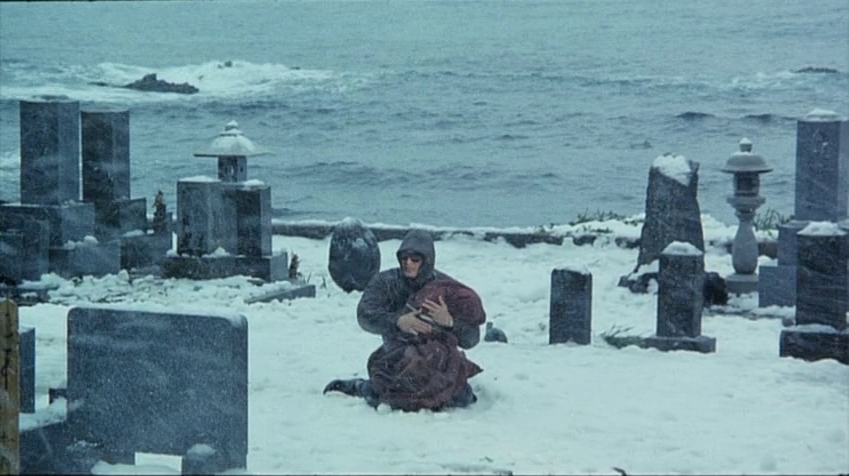
Perhaps in over his head, it at one point looks like Kazuo is about to dump Hideyuki’s body in the sea only to realise police divers are already searching the area. Despite himself, he begins to care for the boy though doesn’t really know what to do with him. He feeds him bread from convenience stores and keeps him tied up in the boot of his car wrapped in several blankets without really considering the possibility that he may die of cold or hypothermia left outside in the freezing winter. Realising the distraught parents have called in the police despite his warnings not to, he is too afraid to accept the ransom and is therefore at something of an impasse given he can’t very well give up the boy without getting the money.

Meanwhile, as the Japanese title implies the tale is alternately told from the perspective of the reporters at Yomiuri Shinbun who are originally quite annoyed by the police’s request for a news blackout to avoid panicking the kidnapper, suggesting it’s an infringement on their free speech if coming around in the acceptance that a child’s life is at stake. A rookie reporter, Kotaro (Shin Takuma) is involved in a dispute with his fiancée Tomo (Miwako Fujitani) who is having second thoughts because he’s always working while her parents are pressuring her to consider an arranged marriage. Kotaro refuses to write one of the dummy articles they’re putting together in the event that Hideyuki is killed describing it as morbid and irresponsible, but is very involved with the ongoing press investigation which simultaneously seems more rigorous than that of the police and accidentally gets in its way. A “suspicious car” that’s noticed outside a drop sport turns out to belong not to the kidnapper but a reporter on a stakeout wasting the police’s time.

Even they are eventually conflicted, the officer in charge on the ground later letting the Mitamuras leave on their own for the final drop empathising with them as a fellow parent and acknowledging the reason everything keeps going wrong is because the police got involved. Yet his boss orders him to follow them anyway, reminding him that the only job of the police is to catch the culprit seemingly indifferent to whether or not they rescue the hostage unharmed. Their tactics are quite naive, not considering that Kazuo will obviously realise that the Mitamuras are surrounded by undercover officers because they keep using the same ones and it’s odd to keep seeing that couple from the coffee shop everywhere they go. The big break in the case happens by accident just because a couple of traffic cops decide to ask a random car a few questions.

In any case, it’s Kaori who ends up suffering. She and her mother are also victims, unfairly hounded by the press and left with nowhere to go and no-one to turn to having had their lives turned upside down by her father’s desperate decision. He didn’t even know the kids were friends or the effect his actions would have on his daughter. Kazuo hadn’t really thought any of this through but acted only in jealousy and resentment, wanting payback against the Mitamuras for their nice middle class life and his own slice of the pie that he felt had been denied to him. In the end, the only winners are the press who can rejoice in selling their newspapers even if a remorseful Kotaro resents himself for taking a paparazzo photo of Yoshie and Kaori trying to leave town quietly. On seeing his article pasted on pillars at the station, even Tomo starts to change her mind reflecting that if he’s working on a story like this then perhaps working too much isn’t such a dealbreaker after all even if everyone seems to have forgotten about little Hideyuki in the headlong rush to dominate the newsstands by trying to lure a kidnapper into their trap.


Original trailer (no subtitles)

Shrieking in the Rain (雨に叫べば, Eiji Uchida, 2021)

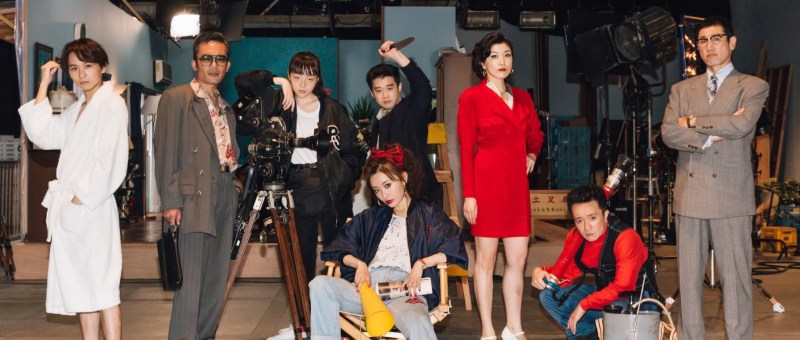
“Let’s change Japanese film” a duplicitous distributor tries to convince a diffident director though his “creators first” stance predictably turns out to be somewhat disingenuous. Inhabiting the same territory as Netflix’s Naked Director, Eiji Uchida’s meta dramedy Shrieking in the Rain (雨に叫べば, Ame ni Sakebeba) finds a young woman struggling to take charge of her artistic vision while plagued by workplace sexism, commercial concerns, and absurd censorship regulations but finally claiming her space and along with it her right to make art even if not quite everyone understands it, 

Set entirely on a Toei lot in the summer of 1988, the film opens with rookie director Hanako (Marika Matsumoto) locking herself inside a car with her hands clamped over her ears, fed up with the chaos that seems to surround her. How Hanako got the job in the first place is anyone’s guess, but it later becomes clear that she is in a sense being exploited by the producer, Tachibana (Kazuya Takahashi), who thinks a pretty young girl directing a softcore porno is a selling point in itself. Meanwhile, he’s teamed up with an US-based production company and its Japanese producer, Inoue (Kiyohiko Shibukawa), who seems fairly exasperated by the Japanese-style shoot and despite his pretty words is all about the business. For him, the main selling points are the actors, one a young idol star intending to boost his profile by getting into films and the other a veteran actress stripping off for the first time in an attempt to revitalise her fading career. 

Surrounded by male industry veterans, Hanako struggles to get her voice heard and feels under confident on set as they encircle her and bark orders she doesn’t quite understand. Her decisions are continually overruled by the male AD, cameraman, and finally Tachibana who always has his mind on the bottom line while Hanako’s inability to express herself to the crew results in endless takes of scenes that others tell her are “pointless” and should be cut despite her protestations that they are essential to the piece. A forthright female makeup artist (Chika Uchida) asks if filmmaking should really be this heartless as she watches Hanako humiliated by the chauvinistic cameraman who forces her to get on her knees and beg for help, while a more sympathetic grip (Gaku Hamada) later tells her that becoming a successful director has little to do with talent and a lot to do with the art of compromise. 

Nevertheless, Hanako tries to hold on to her artistic vision even while some roll their eyes considering the project is a softcore romantic melodrama revolving around a love triangle involving two brothers in love with same woman. Inoue claps back that film is a business, admitting that when he said creators first he just meant the ones that make money. According to him, anyone could direct the film because all anyone’s interested in is the actress’ bared breasts and the teenybopper appeal of top idol Shinji. Or in other words, it doesn’t really need to be good, it’s going to sell anyway. In any case, it seems incongruous to cast a squeaky clean idol in an edgy erotic drama especially considering that if they want to market it to his fans then they need to secure a rating which allows them to see it without adult supervision. Business concerns and censorship eventually collide when the rather befuddled censor puts a red line through some of their kink and explains that the actress’ third hip thrust has just earned them an X rating. 

Unlike Hanako and her similarly troubled junior camerawoman Yoshie (Serena Motola), veteran actress Kaede at least knows how to advocate for herself and get what she wants on set so that she can do her best work. Only in this case doing her best work means she wants to go for real with arrogant idol star Shinji who refuses to wear a modesty sock or trim his pubic hair to fit in with the arcane regulations of the censors board. Shinji is brought to task by aspiring actor Kazuto who is pissed off by his unprofessional behaviour while struggling to get a foothold in a difficult industry and apparently finding one through a romantic relationship with the producer which otherwise seems to be a secret from cast and crew. 

In any case a final confrontation prompts a rebellion against Inoue’s production line metaphor as the crew reaffirm that they are a team working together on an artistic endeavour not mere cogs in his machine. Reemerging in bright red lipstick, Hanako returns to retake what’s hers boldly claiming her artistic vision and taking charge on set before descending into an unexpected musical number. With a retro sensibility, the film neatly echoes late 80s production style with a cutesy background score often heard in movies of the era while posters for top Toei movies from the 70s and 80s such as Yukihiro Sawada’s No Grave for Us line the walls. A meta rebuke against the constraints placed on filmmakers by those who shout “creators first” to bolster their image but never follow through Shrieking in the Rain, is at once a homage to the classic days of low budget Toei erotica and an inspirational tale of an artist finding her voice in a sometimes repressive industry.


Shrieking in the Rain screened as part of this year’s Camera Japan.

Original trailer (no subtitles)

April Fools (エイプリルフールズ, Junichi Ishikawa, 2015)

april-foolsIn this brand new, post truth world where spin rules all, it’s important to look on the bright side and recognise the enormous positive power of the lie. 2015’s April Fools (エイプリルフールズ) is suddenly seeming just as prophetic as the machinations of the weird old woman buried at its centre seeing as its central message is “who cares about the truth so long as everyone (pretends) to be happy in the end?”. A dangerous message to be sure though perhaps there is something to be said about forgiving those who’ve misled you after understanding their reasoning. Or, then again, maybe not.

Juggling seven stories April Fools is never as successful at weaving them into a coherent whole as other similarly structured efforts but begins with an intriguing Star Wars style scroll regarding alien sleeper agents who can apparently go home now because they’ve accomplished everything they came for. Changing track, pregnant snack addict Ayumi (Erika Toda) decides to ring the still unknowing father of her child after witnessing an improbable reunion on TV only he’s in bed with someone else and assumes her call is a weird practical joke. Overhearing that he’s just arrived at a restaurant for a lunch date, Ayumi takes matters into her own hands and marches over there, eventually taking the entire place hostage. Meanwhile an older couple are having a harmless holiday pretending to be royalty and a grizzled gangster has “kidnapped” a teenage girl only to give her a nice day out at the fun fair. Oh, and the hikkikomori from the beginning who’s fallen for the whole alien thing has made a total fool of himself at school by taking out his bully, kissing his crush goodbye and racing up to the roof to try and hitch a lift from the mothership.

Importing this weird European tradition to Japan, the creative team have only incorporated parts of it in that they don’t call time on jokes at noon and it’s less about practical shenanigans and elaborate set ups than it is about wholesale lying which is frustrated by this famous non-holiday apparently created in celebration of it. All of the protagonists are lying about something quite fundamental and usually to themselves more than anyone else but at least their April Fools adventures will help them to realise these basic inner truths.

Then again some of these revelations backfire, such as in the slightly misjudged minor segment concerning two college friends who are repeatedly kicked out of restaurants before they can get anything to eat. One decides to “prank” his friend with an April Fools confession of love, only to find that his friend really is gay and is in love with him. Awkward is not the word, but then an April Fools declaration of love is about the worst kind of cruel there is and is never funny anyway, nor is the casual homophobia involved in this entire skit but that’s another story.

In fact, most of the other people are aware they’re being lied to, but are going along with it for various reasons, some hoping that the liars will spontaneously reform and apologise or explain their actions. Ayumi, who is shy and isolated by nature, always knew her handsome doctor suitor was probably not all he seemed to be but is still disappointed to be proved right, only be perhaps be proved wrong again in the end. Convinced to take a chance on an unwise romance by an older colleague who explains to her that many miracles begin with lies, Ayumi is angry with herself as much as with her lying Casanova of a baby daddy, and also feels guilty about an incredibly sight deception of her own. As in many of the other stories, now that everyone has figured out the real, important, truths about themselves and about the situation, they can excuse all of the lying. Sensible or not? The choice is yours.

Despite coming from the team who created some very funny TV dramas including Legal High, the comedy of April Fools never quite hits its stride. Weak jokes backed up with slapstick humour giving way to sentimentality as the “good reasons” for the avoidance of truth are revealed don’t exactly whip up the farcical frenzy which the premiss implies. The point may very well be that we’re the April Fools going along with this, but even so its difficult to admire a film which pushes the “lying is good” mantra right to the end rather than neatly undercutting it. Still, there is enough zany humour to make April Fools not a complete waste of time, even if it doesn’t make as much of its original inspiration as might be hoped.


Original trailer (English subtitles)