Ravens (レイブンズ, Mark Gill, 2024)

“All I see are self portraits”, the hero’s by then former wife cuttingly remarks on visiting his comeback exhibition in the company of her new husband, seemingly a much more conventional businessman. Japanese films about photographers are similar to those other countries make about writers in that their protagonists are often very flawed people, tortured artists consumed by their own trauma and often turning to drink at the expense of their personal relationships. Tadanobo Asano has in fact played similar roles a few times before. In Yoichi Higashi’s Wandering Home, he played real life war correspondent Yasuyuki Tsukahara who passed away from kidney cancer at the age of 42 after years of alcohol dependency, while in 1999’s One Step on a Mine, It’s All Over he played Taizo Ichinose whose obsession with getting a photograph of Angkor Wat eventually results in his death.

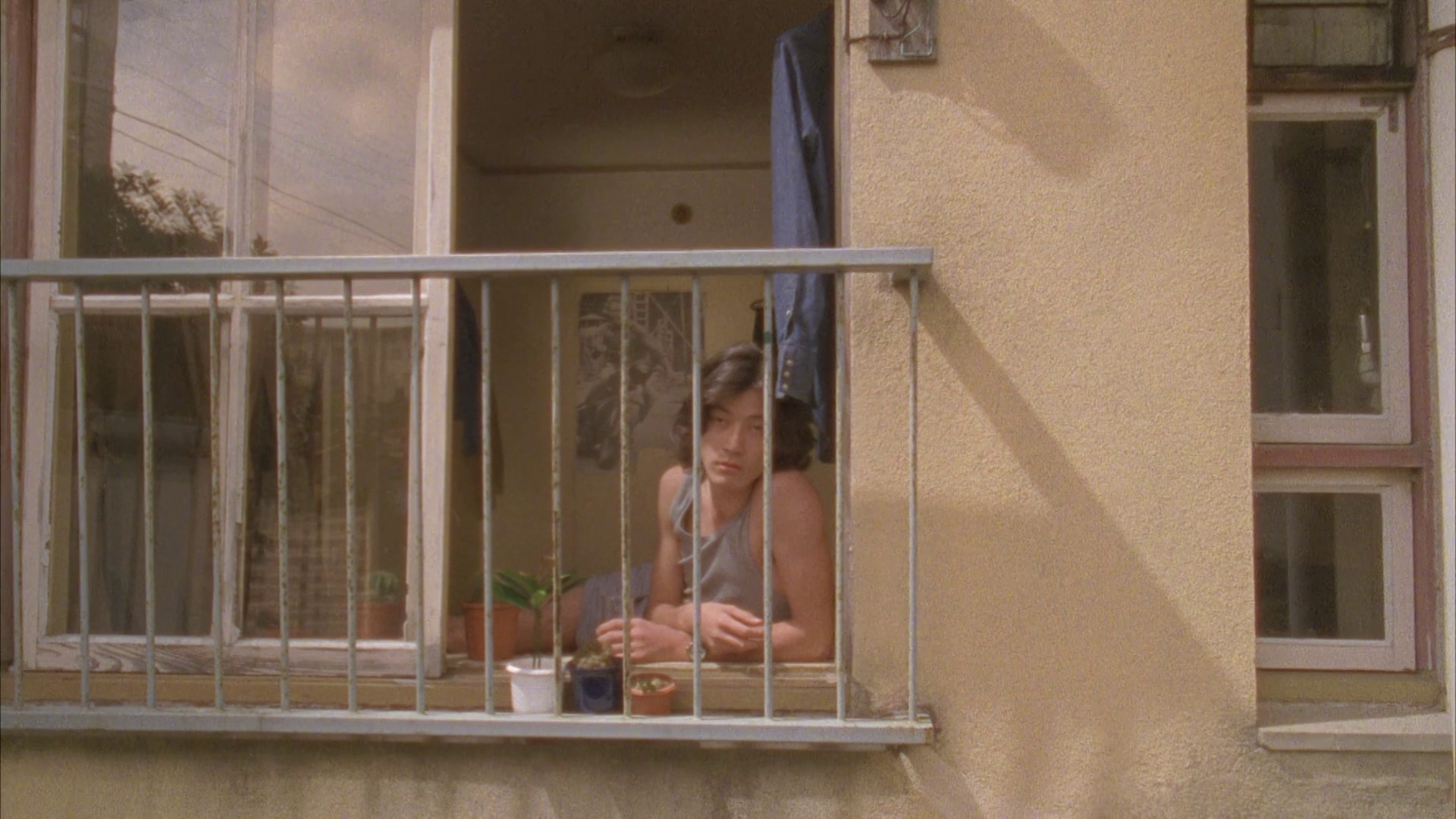
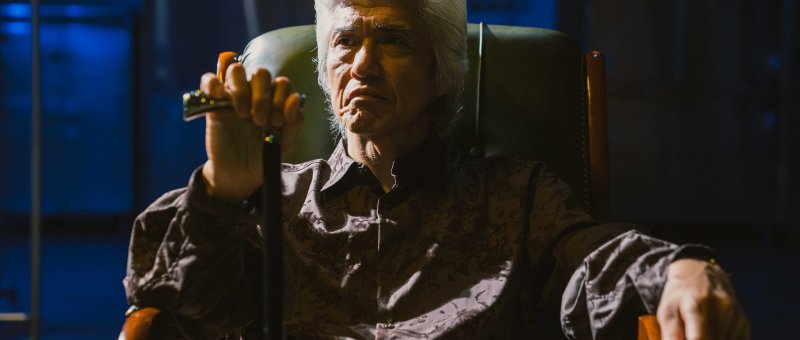
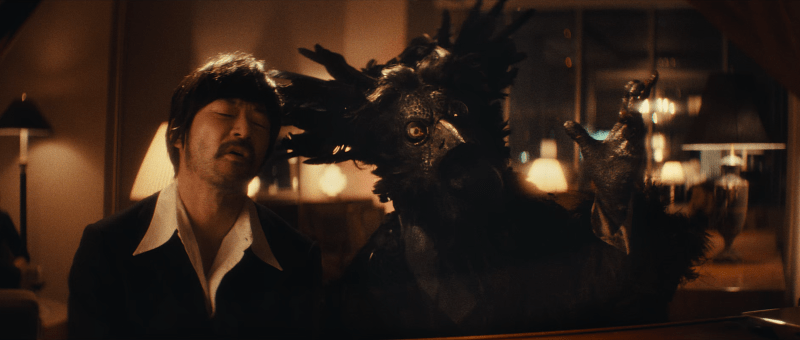
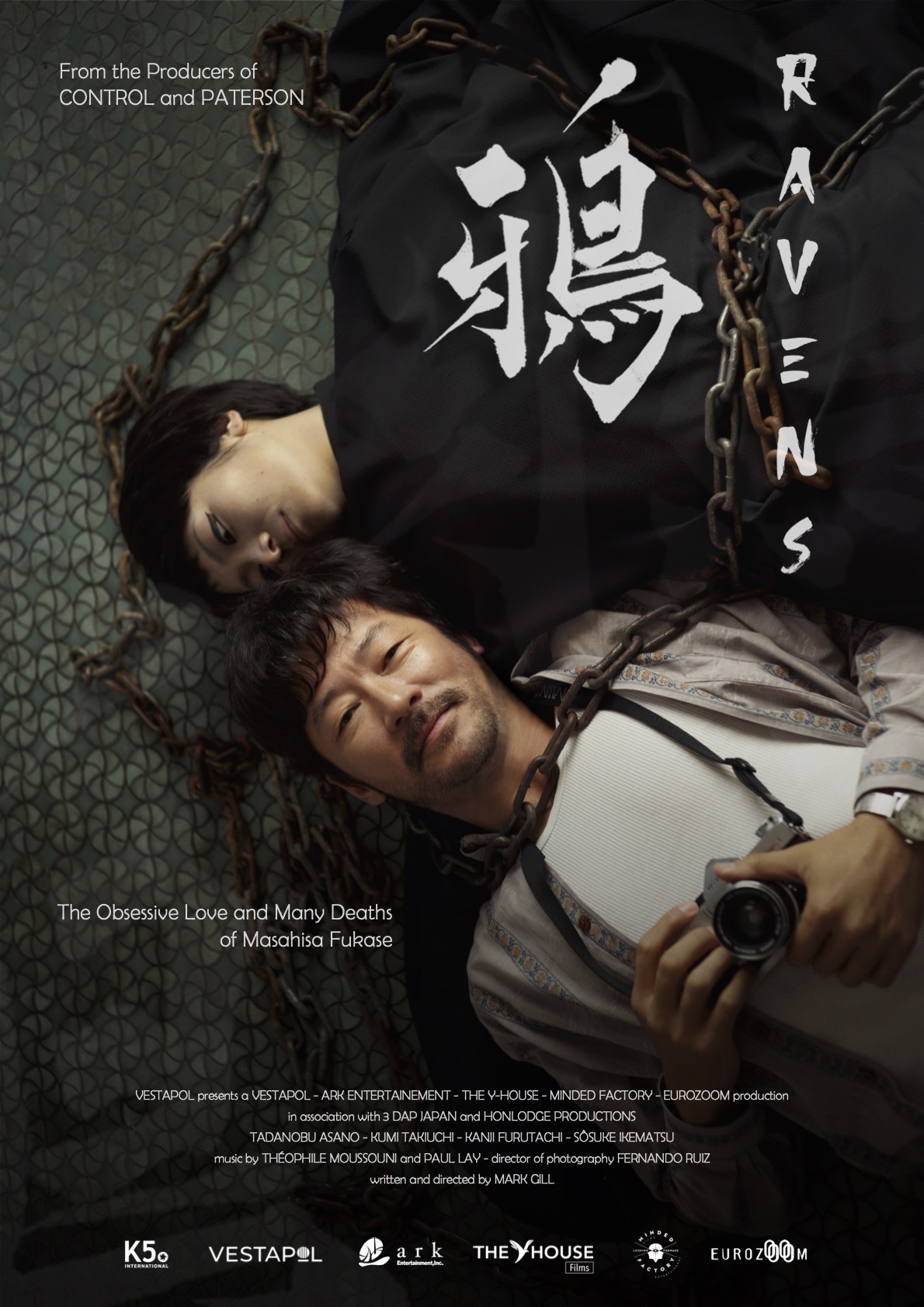
Masahisa Fukase was one of the key photographers of the post-war era and also an incredibly troubled soul. The conceit of Mark Gill’s Ravens (レイブンズ) is that Fukase is accompanied by a giant, anthropomorphised, English-speaking raven (José Luis Ferrer) who gives voice to his darkest thoughts and impulses. A magazine profile describes Fuksase’s work as having dark and occult influences, which the film attributes to the fact that his incredibly conservative father (Kanji Furutachi) used to lock him inside a more literal dark room as a punishment when he was a child. 

Like many of his contemporaries, Fukase’s photographs often express the widening gap between the traditional and the modern in the changing post-war society and the film also uses many of his motifs such as his family photographs to express the changing dynamics between them. Fukase himself is caught in the nexus of this continuing battle in inheriting the legacy of his father’s war trauma. A heavy drinking, violent man, Sukezo insists that as the oldest son Fukase must take over their family photography studio and that taking photogaps is a commercial activity not an artististic one. Fukase’s wife and muse Yoko (Kumi Takiuchi) often says the same thing, undercutting Fukase’s sense of purpose in his work even while he also denies Yoko’s role as a collaborator rather than simply as a subject. “Any woman will do,” the Raven tells him though that turns out not quite to be the case. 

Yoko complains that that Fukase never really looks at her but sees the world abstractedly through the lens of his camera which is really just another way of avoiding reality. She thinks she begins to understand him after belatedly meeting Fukase’s family years after their marriage and witnessing one of his father’s drunken rages first-hand, but it only seems to push them further apart. Despite his claims of artistry, Fukase quickly becomes jealous of the attention Yoko attracts as the star of his photographs as if she has eclipsed him, the artist, and can no longer be controlled by his camera. He clearly wanted the fame and acclaim through his success only seems to deepen his self-loathing and desire for death. His father had told that a man who failed to achieve success by 40 should kill himself, though when Fukase does eventually attempt to take his own life he does so by hanging, hoping that his assistant will photograph it, rather than by using the sword his father shoved at him.

Though Fukase describes Yoko as a very modern woman she too is caught by this cycle in that her mother tells her it’s a wife’s duty to forgive her husband even after he wounds with a knife during a drug-fuelled psychotic episode. Despite separating from him, Yoko continues to visit Fukase in the hospital where he remains after suffering a traumatic brain injury until his eventual death in 2012. In its way, it’s a frustrated love story in which the relationship between them is disrupted by the intrusion of outdated social codes, generational trauma, and Fukase’s own demons which appear to have been with him since childhood. The conviction that Yoko comes to is that all his pictures are actually reflections of himself and that he is incapable of seeing the world through any other lens even as he tells her that the sky is just the sky and ravens are just ravens, nothing means anything. He tells his assistant that he thought he was in search of death the whole time, but maybe it was death that was looking for him. Dreamlike and ethereal, Gill weaves back and fore throughout Fukase’s life from his conservative upbringing to the heady 1970s and gradual comedown of his later years before finally discovering a melancholy sense of serenity as Fukase, finally, dares to gaze back into the lens.


Ravens screens 20th June as part of this year’s Toronto Japanese Film Festival.

International trailer (dialogue free)
Helpless (ヘルプレス, Shinji Aoyama, 1996)

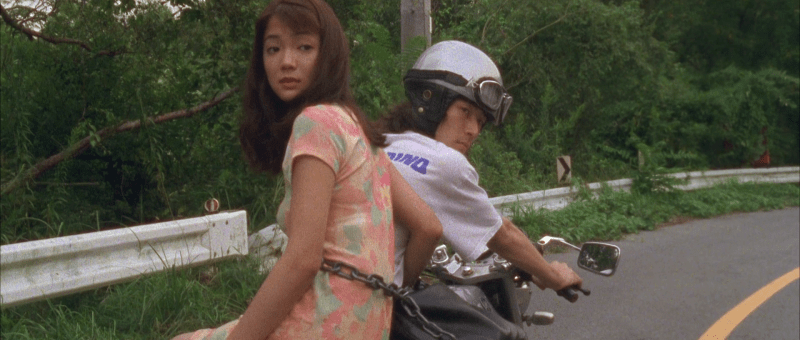
A title card close to the beginning of Shinji Aoyama’s debut film Helpless (ヘルプレス) lets us know that this drama which spans a single day takes place on Sept. 10, 1989. It is indeed late summer for most of the protagonists, refugees from the Showa era living on borrowed time in Heisei and intensely resentful towards the contemporary society which appears to have no place for them while the glamour of the Bubble economy does not appear to have trickled down to their peaceful provincial existence. 

Yakuza, for example, are very much associated with the post-war past and one-armed foot soldier Yasuo (Ken Mitsuishi) is an old-school street thug who can’t accept that his former boss literally is as dead as the institution itself. He’s met at a train station by two former associates, but it’s clear the older at least is awkward around him finally telling Yasuo not to call “too often”. “It’s nice to be normal,” Yasuo sneers, realising his former comrade has gone straight and lives an ordinary life as a regular businessman which is why he really wants nothing to do with his yakuza past. Yasuo takes his as more than just a personal betrayal and shoots him dead with his own gun.

He is quite literally helpless, there’s no place for him in the contemporary society and his only hope is killing his old boss, who is already dead, so he can go back to prison. The only sticking point his younger sister Yuri (Kaori Tsuji) who has learning difficulties and had been living in residential care. Another of Yasuo’s former associates now longer a yakuza, Kenji (Tadanobu Asano), is similarly caring for his father who is in hospital for serious medical treatment. Kenji’s father hums the Internationale to himself and seems to have been consumed by the failure of his personal revolution muttering about blast furnaces while at home Kenji looks out on the now rusty aspirations of another “new era” in a moribund steel plant. He lies to his father that he has a received a job offer from there. 

The two men seem destined to collide, Kenji’s numbed resignation and Yasuo’s irrational rage, though it’s Kenji who later snaps after learning that his father has hanged himself while he was busy taking care of Yasuo’s sister. Even an old classmate he runs into is filled with resentment, talking about taking his “revenge” at the class reunion by poisoning the punch. He says he “forgives” Kenji because he once helped him find his PE kit, though Kenji claims he did it mostly for selfish reasons.The chef at the roadside diner where they wait for Yasuo also seems to be henpecked by his wife who calls him “weaker than a woman.” Kenji later says that he killed them because they ridiculed him, tipped over the edge by his own insecurity and sense of futility. 

Yasuo discovers something similar after being stopped at a roadblock, a policeman expressing sympathy that “they forgot about a punk like you.” Yasuo points the gun at his own head, discovering one last bullet, but it’s not quite clear what happens after that. Yasuo was a wandering ghost anyway, a man of the Showa era haunting the streets of Heisei with a mission to kill a man like himself already dead. On the severed arm Kenji later discovers in his bag, there’s a tattoo of a skull and the motto “help me” which might speak for them all desperately looking for some kind of way out but finding little support. 

But then again, Kenji proves unexpectedly kind caring for Yuri even while Yasuo selfishly considers a double suicide. Dressed in white though also in a T-shirt featuring the cover for Nirvana’s Nevermind which was released in 1991, Kenji is the light and Yasuo the dark despite their mutual violence one bound by nihilism and the other a strange positivity blithely searching for an escaped rabbit just as helpless as he himself may be. Filled with ironic whimsy the film takes place in a purgatorial space inhabited by those displaced by the Bubble who no longer have anything to pin their hopes on while living on borrowed time in a late summer rapidly drawing to a close. 


Vital (ヴィタール, Shinya Tsukamoto, 2004)

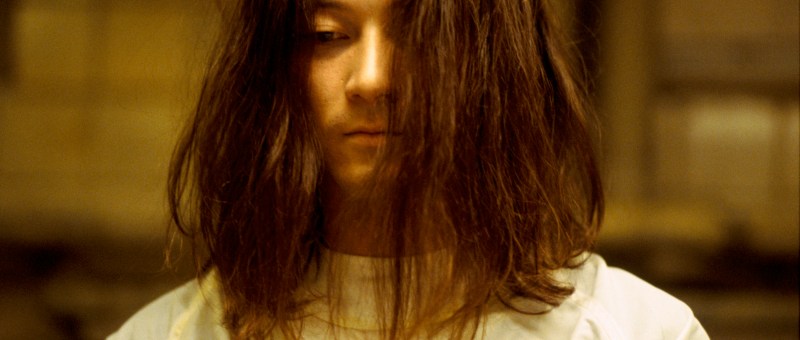
“There is the vast realm of the unconscious,” one of the professors explains to vacant medical student Hiroshi a soon-to-be physician attempting to heal himself from a trauma he doesn’t fully understand. Perhaps as the title implies, Vital (ヴィタール) sees Tsukamoto branch out from his vistas of urban alienation to find a new paradise in nature albeit one that it exists largely in the mind and that the hero can never fully return to because this place of life is also one of death which exists inside a kind of eternity.

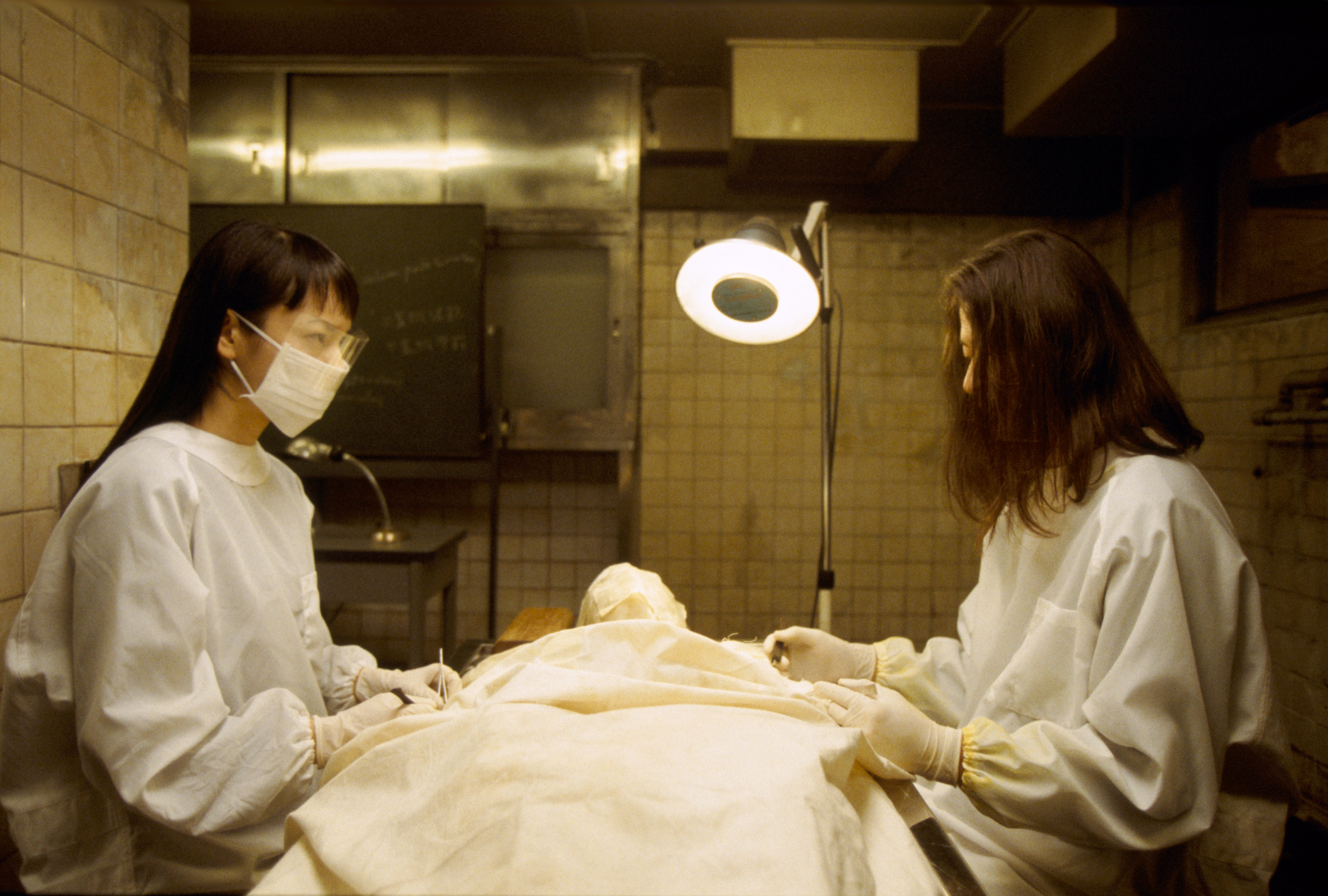
This explains to some extent Hiroshi’s (Tadanobu Asano) temporal confusion. Having lost his memory following a car accident in which he later learns his girlfriend Ryoko (Nami Tsukamoto) was killed, he shifts between “reality” and what first seems to be flashbacks of his unremembered past but are actually taking place in a kind of alternate, perhaps idealised reality in the “vast realm of the unconscious” as Hiroshi attempts to reconstruct his image of Ryoko along with that of himself. Another of his professors more philosophically asks were lies the seat of the soul in the human body and is this something that Hiroshi maybe unconsciously looking for during his anatomy classes in which he is coincidentally assigned Ryoko’s body to work on only realising when he sees her tattoo in one of his visions. 

In some ways this grim task of dissection is a bid for greater intimacy, to take Ryoko apart and then put her back together as the students diligently do at the end their studies reassembling the bodies and placing them in coffins in keeping with culturally specific death rituals. The faces of the cadavers are covered with a bag until the students are instructed to remove them, but they are always reminded to treat the dead with dignity and that their role here is one of understanding as they attempt to work out not only how these people died but also how they may have lived. Hiroshi causes conflict with some of his fellow students on just this point, seeming rather creepy in his vacant intensity over the body while also wanting to take ownership over that of Ryoko rather than work as part of the group complaining that the others are too clumsy and it’s affecting his ability to learn. 

Ryoko’s father comes to say that though he once blamed Hiroshi, his daughter had been in a way dead for a long time before she died, the light apparently going out of her eyes when she was still in high school. Only in Hiroshi’s unconscious does she say that she didn’t want to die despite an apparent obsession with death in Hiroshi’s other resurfacing memories/visions of her as symbolised in her repeated requests for him to strange her during in sex. Another of the professors had said that the suppressed desires of the unconscious could create conflict and this alternate reality is also in some senses Hiroshi’s own latent desire for death, to be with Ryoko in this new paradise that is founded on an idyllic beach rich with nature and sunshine where they are free to be together liberated from the oppressions of civilisation. 

Indeed, it’s been raining all through the film as if in expression of Hiroshi’s gloomy mental state but we later learn that Ryoko’s most treasured memory was simply standing in the rain with him and breathing in its scent. Verdant nature is aligned with the vitality that is often absent from the soulless concrete of a city in which everyone seems to exist in tiny, separate worlds which only border on but never join each other. Ikumi (Kiki), a strange female student who develops a fascination with Hiroshi, has an illicit conversation with a professor she’s apparently been sleeping with each of them speaking into mobile phones while standing steps apart. Tsukamoto often isolates the protagonists, placing them in corners or blurring the periphery as if they alone existed in this moment. In Hiroshi’s idealised alternate reality, these barriers disappear as he and Ryoko share an entire world in love and freedom. 

The irony is that he resurrects himself through the process of dissecting Ryoko’s dead body. His Da Vinci-like sketches begin to shift as do the ink-like shadows on the wall amid the reflection of the rain as Hiroshi stares vacantly trying to reassemble his past. Through accepting Ryoko’s death, he rediscovers life and is in a sense reborn insisting he will continue medicine even though his professor and parents advise him not to given what he’s just been through though his parents had also said that before the accident they didn’t really think he had it in him to become a doctor. Their disapproval may explain some of the pressures he was experiencing as perhaps was Ryoko that may have urged them to long for death. In any case, what the film presents is the archaeology of grief, a prolonged period of introspection and loneliness and a seeking of intimacy no longer really possible but discovered only in the vast realms of the unconscious.


Vital is released on UK blu-ray 30th September courtesy of Third Window Films.

Original trailer (English subtitles)

Kubi (首, Takeshi Kitano, 2023)

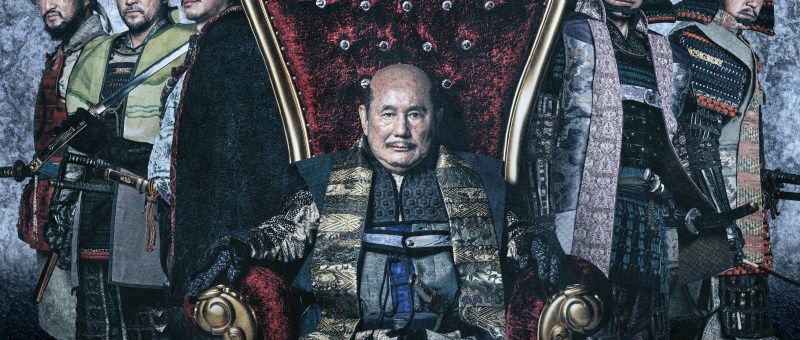
Apparently in gestation for a couple of decades, it’s unsurprising that Takeshi Kitano gave himself the role of Hideyoshi in a long-awaited historical drama adapted from his own novel, Kubi (首). Played as an irascible but wily old man, Hideyoshi is the second of Japan’s great unifiers and, unlike his predecessor, died as a result of an illness rather than intrigue. He was also a peasant who rose through the ranks and is perhaps witness to the tumultuous class conflict and social divisions of a hierarchal society.

Even so, in this version of events, Oda Nobunaga (Ryo Kase) too speaks in a thick rural dialect that sets him apart from his retainers and seems to hint at his uncouthness. This Nobugana is an unhinged despot who threatens and humiliates his subordinates, not to mention sexually assaulting them. In short, there’s no real mystery why his men have begun to turn against him and there is intrigue in the court. The film opens with Murashige’s (Kenichi Endo) quickly quelled rebellion which floundered when his reinforcements failed to arrive. Murashige is on the run and Nobunaga has heavily suggested whoever brings in his head will be first in line for the succession, but Murashige is also in a relationship with Mitsuhide (Hidetoshi Nishijima) another courtier vying for favour in more ways than one from the capricious Nobunaga. 

The striking thing about the staging is how like a yakuza drama this intrigue really is with each of the main factions manoeuvring for control, forming temporary or duplicitous alliances forged in the mutual desire of ousting a ruler whose increasing instability presents only the likelihood of a return to chaos. Nobunaga’s flamboyant speech and threatening manner are reminiscent of a yakuza boss on his way out, as is his obvious tactic of setting his rivals against each other while secretly planning to hand the reins to his son anyway. The film takes place in a largely homosocial world, the only women on screen are sex workers and peasants about to be murdered, only this time defined by romantic intrigue in which the various relationships between the men are inescapably linked with power and duplicity.

Mitsuhide’s relationship with Murashige is originally framed as a giri/ninjo conflict, Mitsuhide torn between the exercise of his duty as a samurai and his love for Murashige, only to later be set wondering if Murashige isn’t also playing him in urging him too towards rebellion, while Murashige accuses him of harbouring desires for Nobunaga which would also necessarily be desire for advancement. Advancement is something sought by all and in particular Mosuke (Shido Nakamura), a peasant who is taken on as a foot soldier after looting a battlefield for amour and killing his friend to get his hands on the prize only to realise just at the critical moment how pointless the constant desire for heads really is. The absurdity is rammed home in the closing scene in which Hideyoshi declares himself uninterested in the severed head he asked for, rendering the quest entirely pointless.

This absurdity extends to introducing the character of a comedian who is later killed for talking too much, while Kitano wise cracks his way along as the affable Hideyoshi. Kitano is in his way in dialogue with other samurai epics, using Akira Kurosawa’s horizontal wipes and introducing a pair of bumbling comic relief peasants only to suddenly kill one of them off because at the end of the day this world isn’t very funny. It’s cruel, and mean, and meaningless, so you might as well laugh like Hideyoshi. Residents of a ninja village conduct a festival in which they pray for death and to be released from this earthly torment as soon as possible, while farmers still dream of becoming samurai little knowing the reality of samurai life.

It’s this cycle of futility that is echoed in the opening image of a severed neck into which crabs in a river are crawling. Kitano stages lavish battle scenes, but ones that are often horrifying and absurd, a visceral struggle in mud and blood fought for no real reason. These samurai live their lives on the point of a sword, but they move and behave like yakuza fighting pointless turf wars and games of petty intrigue until someone finally comes for their heads. In the end, the victor is the one who doesn’t play the game at all, but sits and laughs at the absurd cruelty all around them in which the only stable force is ambition accompanied by a nihilistic lust for blood in an already bloody world.


Kubi  screens in New York July 16 as part of this year’s JAPAN CUTS.

Trailer (English subtitles)

The Box Man (箱男, Gakuryu Ishii, 2024)

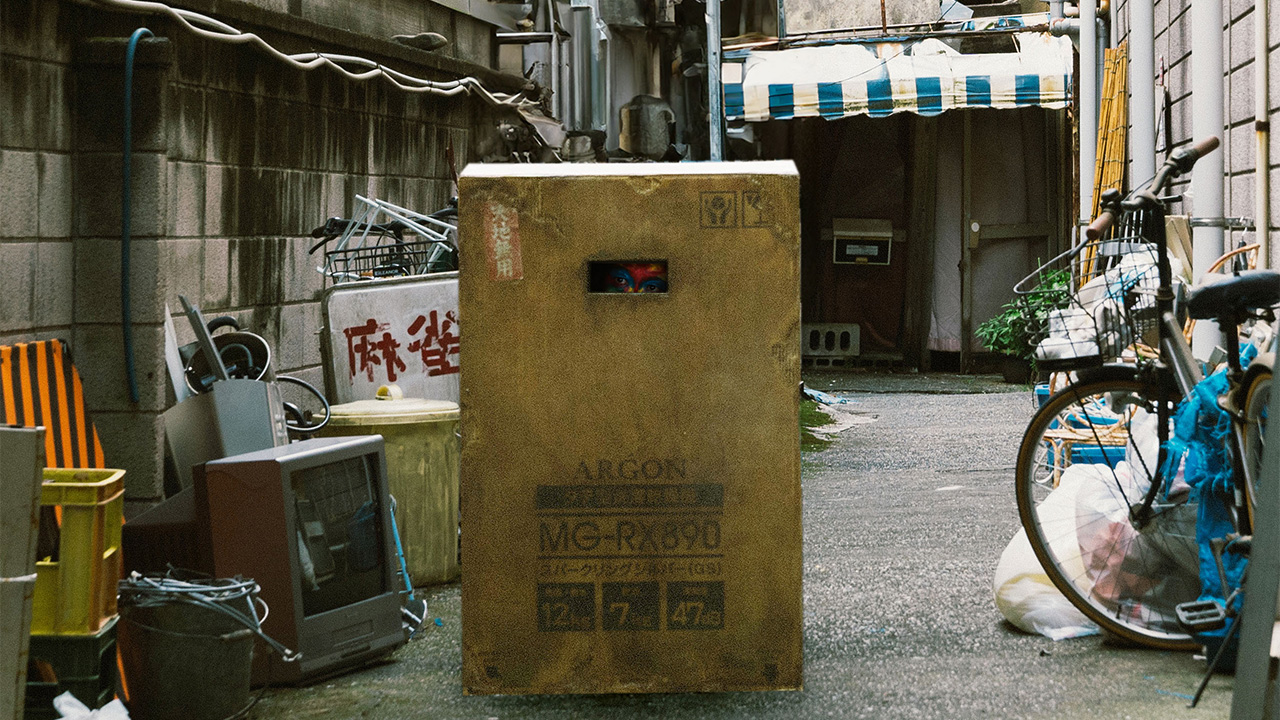
Those who obsess over the Box Man, become the Box Man, in Gakuryu Ishii’s adaptation of the Kobo Abe novel. Yet the unnamed hero’s problem is that he feels himself unable to become “the real thing” and is thereafter trapped inside a labyrinth while forever seeking an exit. It’s never clear to him, or to us, if the cardboard box he wears is really just that or something imbued with a supernatural power that actively masks his identity even from himself.

Tellingly, the only named character is a woman, Yoko (Ayana Shiramoto), who seems to exist outside of the box. She appears to be free, confident, aware of all she is and apparently certain of her identity. The Box Man, or perhaps “a” Box Man, meanwhile, is known only as “myself,” a former photographer (Masatoshi Nagase) who almost pities those who target him in memory of the Box Man who once infected and cursed him to the same fate. Watching the city through the tiny letterbox slit, he remains a step away from our world and later refers to the box as the entrance to some other place suggesting that it’s really we who are trapped on the other side of the cardboard.

He advances something similar when he in effect turns the box inside out, walling himself inside a single room by covering the windows and doors to box out the world but not really finding escape. Still, others seem to covet the title of Box Man, those also without concrete identities but going by names such as Fake Doctor (Tadanobu Asano) and the General (Koichi Sato), both of whom are apparently interested in the Box Man and tracking his every move. It seems they believe there can only be one real, authentic Box Man allowed, but become increasingly uncertain which of them is “real”. The notes the Box Man is keeping become key to his identity, but like a metaphor for the unseen hand of fate, one points out that perhaps someone else has written them out for them, Myself lamenting that the author has written a better version of himself than he ever could. 

There is something undeniably absurd about the way the Box Men scuttle around, occasionally sticking their ams out of the box’ flaps while arguing over the true identify of the Box Man despite having described the mystery as boring. The Fake Doctor seems to want to destroy the box, as if he wanted to obliterate it perhaps in an attempt to destroy the image of a mask to avoid the suggestion that he has one himself, while it remains unclear if this would free the other Box Man or trap him further while Fake Doctor would take his place. When Myself killed the Box Man before him, a mask may have been what he wanted. A photographer sick of seeing the world and longing to be free of it, to shed himself of an identity he no longer wanted only to search for it once again even as others try to crush it from without. 

The Box Man comes to the conclusion that it’s the world that should be boxed away, but of course it’s all the same. When he remarks that Yoko, after leaving their sanctuary, did not really escape but has simply gone to a deeper level, it’s reflective if his own desire to find meaning in a meaningless world. He claims that he dreams of a world yet to begin but is finally confronted perhaps by anonymity in witnessing a row full of Box Men apparently all also devoid of personality which might in an ironic sense tell him who is if only in reflection. 

Strange and surreal, Ishii lends an edge of absurdity to the strange existence of the Box Man while perhaps aligning the letterbox frame of his open window to that of the cinema screen and the artificial reality that surrounds us. In any case, it seems the other world the Box Man longed to enter was that of the self, his interior life expanding inside the box as a small galaxy he has somehow become lost inside, no longer able to see beyond himself but trapped inside an “exitless black hole” looking for a path to authenticity away from this “fantasy” in which everything is “fake” save the potential salvation of a distant guiding light.


The Box Man screens in New York July 13 as part of this year’s JAPAN CUTS.

Original trailer (English subtitles)

Kanasando (かなさんどー, Toshiyuki Teruya, 2024)

“Don’t forget I’m thinking of you” run the lyrics of the classic Okinawan folk song Kanasando (かなさんどー), but the theme of forgetting, and also of rediscovery, is central to Toshiyuki Teruya’s charming island dramedy in which a young woman begins to reclaim her memories of her parents on returning home after being informed her estranged father has been placed on palliative care and is not expected to last much longer.

Mika (Ruka Matsuda) had left the island seven years previously following the death of her mother, Machiko (Keiko Horiuchi), from a longterm illness severing ties with her father, Satoru (Tadanobu Asano), whose philandering and insensitivity she believes made her mother’s life a misery. In addition to his his illness, Satoru is now suffering with dementia and has obviously forgotten many things including his wife but seeing Mika, who is the spitting image of her mother at her age, begins to spark his memories. 

Yet in many ways it’s really Mika who has forgotten, displaced from her island home and filled with intense resentment towards her father. Having placed her own interpretation on her parents’ relationship, she begins to reevaluate on recalling conversations with her mother and reading her diary. Though she had felt miserable for Machiko, seeing her as belittled and humiliated by Satoru’s inconstancy, she failed to consider that staying was a choice her mother made or that though she may not have understood the relationship they had with each other it may have worked for them.

Then again, perhaps there is a surprising generational conflict between the youngish Mika now living in Tokyo and her mother whose traditional values seem overly strong and a little outdated for the time in which she lived. Burderned by her illness and unable to work, Machiko devotes herself entirely Satoru’s happiness. She dresses well every day, wears full makeup, and is constantly making Satoru’s favourite food while he stays out late drinking and seeing other women. Mika never really considers that her mother wears makeup because she likes it, but it does indeed seem as if it was in part a desire to compete with her husband’s philandering. Insecure in her illness she tells Mika that she just wanted to be seen as a woman even at the end of her life.

Satoru can no longer offer much of an explanation but as the song says, may have been thinking of his family even while an imperfect father and insensitive husband. In what she learns of him from his coworkers and friends, Mika comes to realise that her father had cared for her mother is and wracked with guilt over his behaviour even if he was thinking about her as he still may be despite the erasure of all his other memories. The folk song becomes a conduit that helps Mika reconnect with her island culture and understand the relationship of her parents just as it acts as a plaintive call of longing for each of them. In an effort to help her father not to forget, she ends up becoming her mother, dressing in her clothes and reenacting scenes from her diary hoping to break through her father’s forgetfulness and restore his wife in a gentle process of healing the family unit. 

Through this act of role play Mika comes to a new understanding of her parents’ relationship along with the things which meant something to them but which she had not really understood including the importance of flowers as a symbol of their love, something that is embodied in Mika’s own name which is written with the characters for “beautiful” and “flowers”. Heartrending poignancy of its final sequence aside, Teruya undercuts the potential for gloominess with quirky island humour and captures a real sense of warmth between between Mika and the mother she may not really have understood or at least forgotten the reality of in the midst of her own grief and resentment. The folksong of the title both reunites her parents and also enables Mika to begin processing the secondary loss of her father’s imminent passing with a fuller understanding of the couple and the realisation that Satoru may have been always thinking of them after all in a constant desire to protect the flower of their love along with its island home.


Kanasando screened as part of this year’s Toronto Japanese Film Festival

International trailer (English subtitles)

Party 7 (Katsuhito Ishii, 2000)

“This shit’s for real.” according to the front desk guy at Hotel New Mexico, an out of the way spot just perfect for those looking to lay low for a little while. Like a lot of Katsuhito Ishii’s work, Party 7 is essentially a series of self-contained vignettes which eventually collide following a series of bizarre coincidences revolving around some money stolen from the mob, a two-way mirror in a regular hotel room, and the receptionist’s tendency to almost literally shoot the shit. 

Following a brief prologue, Ishii opens with striking animated sequence which introduces each of the main players with an arcade game aesthetic and explains that Miki (Masatoshi Nagase) has stolen money from the mob and is currently on the run which is why he’s turned up at the infinitely weird Hotel New Mexico. The running gag is that Miki thinks he’s holed up somewhere no one will find him, but sure enough a series of “friends” soon turn up in part thanks to a loose-lipped travel agent. The fact that people can find it so easily dampens the impression of the Hotel New Mexico as some kind of interstitial space. It’s not so much existing in a weird parallel world as a bit run down and staffed by a series of eccentrics. It does however have a “peep room” hidden behind a two-way mirror where “Captain Banana” (Yoshio Harada) is attempting to pass his knowledge on to the young Okita (Tadanobu Asano), the son of a recently deceased friend who has been repeatedly arrested for voyeurism. 

Captain Banana’s insistence on his surreal superhero suit is in a way ironic, if perhaps hinting at the super empowerment of accepting one’s authentic self. “It’s your soul,” he tells Okita, “it’s screaming ‘I want to peep’.’” Meanwhile, Miki gets into an argument with his ex-girlfriend Kana (Akemi Kobayashi) who has turned up in the hope of reclaiming money that he owes her. Kana too seems to be less than rigorous with the truth if perhaps emotionally authentic. She’s now now engaged to a nerdy guy having somewhat misrepresented herself as the innocent girl next-door type. Her refusal to let her fiancé into her apartment perhaps hints at a more literal barrier to intimacy or at least that she is intent on preventing him from seeing her true self. What she doesn’t know is that her fiancé hasn’t been completely honest either, in part because he thinks she’s out of his league and is insecure in their romance. 

Miki too maybe somewhat insecure, having run off with the gang’s money after hearing them bad mouth his associate Sonoda (Keisuke Horibe) who has now been charged with killing him and getting the money back. But Sonoda too has reasons to doubt the boss’ affection for him after Miki and the others point out that gifts he thought were so valuable are really just cheap knock offs that suggest the boss thinks very little of him at all. Okita’s psychiatrist tells him that there are “no rules in making friends”, and maybe in a strange way that’s what everyone is trying to do. Kana wanted the money to overcome her anxiety about having no friends or family to invite to the wedding, while all Sonoda wanted was the boss’ approval and though Miki had deliberately gone somewhere he thought no one would find him nevertheless attracts a series of followers. 

Even the receptionists seem to be desperate for human contact with their strange stories of poo falling from the sky and bizarre approach to hospitality. “The point is whether you believe it or not,” one tells the other after spinning what sounds like a yarn but then again might not be. Ishii’s zany world has its own surreal logic culminating in a piece of cosmic irony and defined by coincidence as the otherwise unrelated stories begin to come together and slowly find their way to Hotel New Mexico but seems to suggest the point is in the serendipity of the meeting and its concurrent authenticity even if a literal shot in the arm is a less than ideal way of brokering a friendship.


Party 7 is released in the UK on blu-ray on 17th July as part of Third Window Films’ Katsuhito Ishii Collection.

Original trailer (English subtitles)

Punk Samurai (パンク侍、斬られて候, Gakuryu Ishii, 2018)

Gakuryu Ishii began his career under the name Sogo as a representative of the youth voice, in fact still a college student when invited by Nikkatsu to film a feature-length version of his Panic High School short though they paradoxically saddled him with the more experienced Yukihiro Sawada as a co-director in case his voice turned out to be more youthful than anticipated. In any case, he went on to make his name with a series of anarchic punk films such as Burst City and The Crazy Family before retreating from filmmaking in the early 2000s. When he returned in 2012 with Isn’t Anyone Alive?, he did so under a new name, Gakuryu, as if signalling a new phase in his artistic career that seemed to have left punk behind.

Like 2015’s That’s it, Punk Samurai is billed as a kind of return to Ishii’s anarchic roots while also harking back to surreal samurai movie Gojoe. Even so, Punk Samurai isn’t really a punk samurai film even in its irreverence towards the genre so much as an ironic jidaigeki comedy which eventually positions its hero’s nihilistic outsider status as his saving grace in a “fake” world where nothing has true meaning. “This world might be fake, but I’m alive” he insists, claiming not to ask anything of it, simply stating that he is “different” because he belongs to no group and has been a lonely a wanderer.

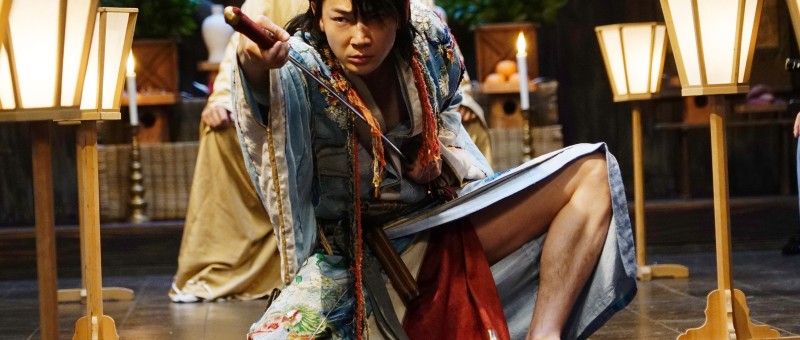
Nevertheless, Kake (Go Ayano) had wanted to join a clan so desperately that he spun a tale of dangerous cult rebellion to a naive retainer of a useless lord whose inability to rule has ruined his fiefdom. After killing a pilgrim he believed to be a member of the Bellyshaker Party, Kake is taken in by the Kuroae where he is enlisted by duplicitous councillor Naito (Etsushi Toyokawa) who seizes on the idea of the Bellyshaker threat as a means of undermining his rival, Ohura (Jun Kunimura), to seize the reins from overly serious lord Kuroae (Masahiro Higashide). 

The Bellyshaker cult believes that this “fake” world exists within a giant tapeworm and seeks escape though being excreted by it into the “real” world as a means of achieving some kind of spiritual enlightenment. Their furious belly shaking is deliberately meaningless in an effort to antagonise he tapeworm to such a degree that it gives it spasms to “spew” the believer into a more authentic existence. Not even the cult leader believed this to be true, and as Kake later suggests the appeal lies in a kind of Manichaeanism that allows the believer to believe nothing is their fault it’s just that this “fake” world is wrong. In the end, the conflict comes down to a battle between “monkeys and idiots”, while even an enlightened ape (Masatoshi Nagase) finds his revolution failing and is left with no option other than to retreat to the Heavens. 

The world is indeed in disarray, Kuroae is constantly plagued by his own poor decision making, or failure to make decisions at all, while there are constant allusions to the decline of his clan from persistent famine to military weakness after having made most of his foot soldiers redundant as part of an austerity programme. Many of the recruits to the “fake” Bellyshaker cult resurrected by Naito with the assistance of former devotee Chayama (Tadanobu Asano), who has two telepathic servants who speak for him, are in fact refugees from Kuroae who fled its disorder. Kake prides himself on being an outsider but in reality had wanted to join the clan, and there is perhaps something in the sudden collapse of the world around him along with a return to blue skies the moment his rebellion is ended. 

Yet for all its weirdness and incomprehensibility, for much of is running time Punk Samurai is a typical jidaigeki comedy about a useless lord, his clever underlings, and a chaotic ronin if one that also hints at the absurdist meaninglessness of the hierarchical samurai society. Only in its closing moments does the film truly embrace its punk spirit with psychedelic kaleidoscope backgrounds, electric swords, and the true slash down of the social order as Kake’s life comes full circle proving that even in this “fake” and meaningless world there are some things from which there is no escape.


Punk Samurai is released on blu-ray in the UK on 13th March courtesy of Third Window Films.

Original trailer (English subtitles)

Electric Dragon 80000v (エレクトリック·ドラゴン 80000V, Sogo Ishii, 2001)

“How do we repress the animal instinct to explode?” asks a narratorial voice (Masakatsu Funaki) in Sogo Ishii’s 50-minute cyberpunk fever dream Electric Dragon 80000v (エレクトリック·ドラゴン 80000V). The supercharged hero is indeed filled with a kind of rage, not least because society seems intent on trying to “regulate” him while he later comes into contact with an opposing force whose job it is to control the electric flow though in a curious way the two men perhaps free each other from their mutual oppression and regain the right to run on their own current. 

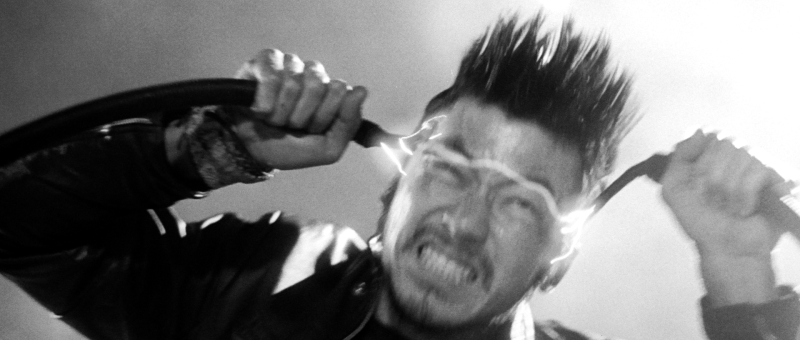
“Dragon Eye” Morrison (Tadanobu Asano), as he comes to be called, got zapped by a pylon when he was a child which altered his brain, awakening the dragon within by “damaging” the part of our neurology unchanged from our reptile ancestors that controls emotion and acts of desire. Doctors seem intent on “correcting” this “fault” in his circuitry through electro-shock therapy to force him to conform to mainstream society while he does admittedly seem to have some problems with violence and impulse control. He self-regulates by chaining himself to a table and “recharging” overnight while easing his frustrations through playing electric guitar, boxing, and hanging out with his calming lizard friends 

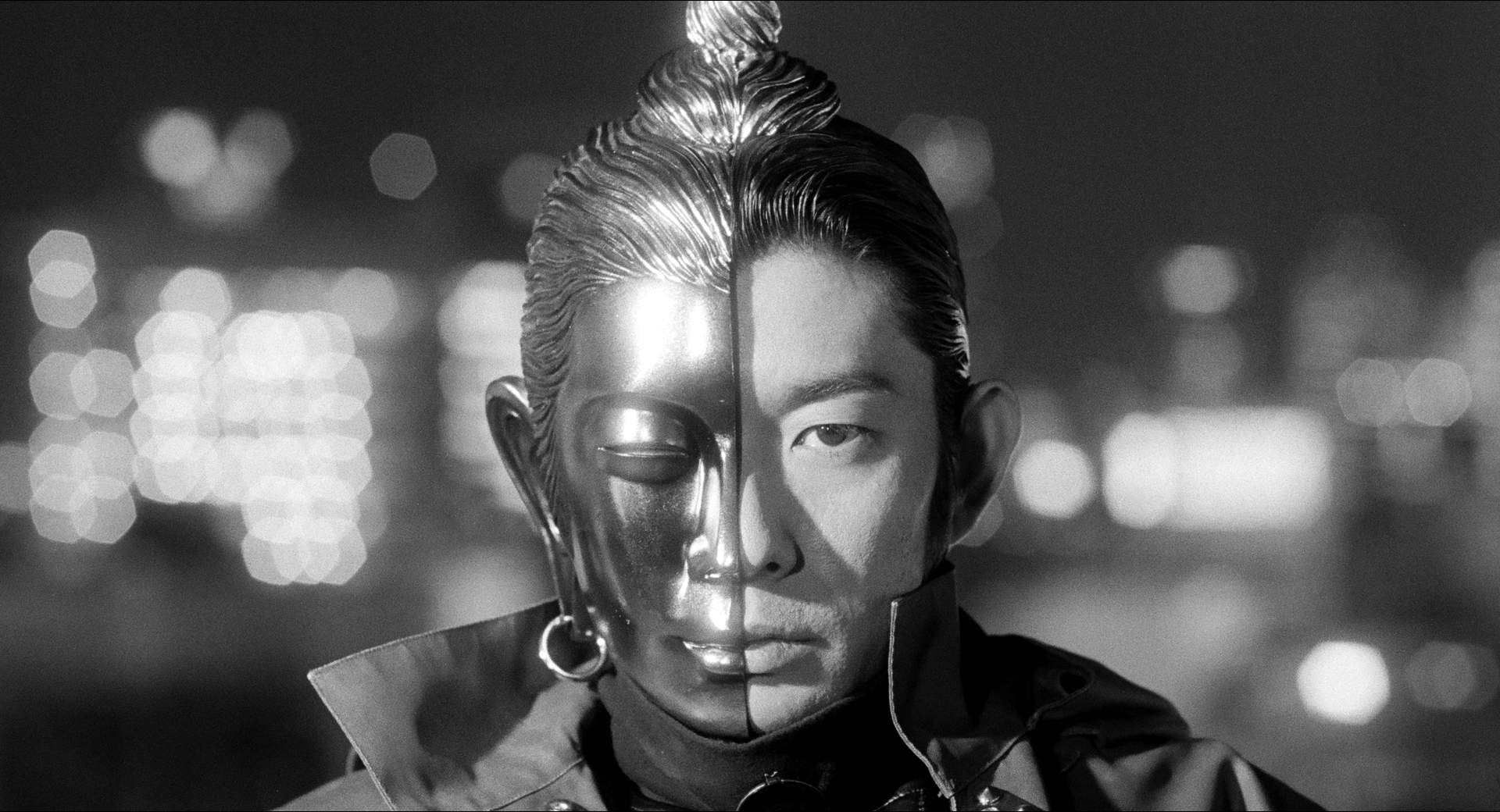
Meanwhile, Thunderbolt Buddha (Masatoshi Nagase) is literally divided in two, one half of his face covered in a metallic Buddha mask hinting at the inner duality which at times literally leaves him at war with himself while wandering around with an electric metre trying to control not just his own flow but everyone’s. “He’s the electricity man! All its wavelengths are his!” the narrator explains, while Thunderbolt Buddha turns his head to the Buddha side and an old lady prays to him in his infinite calmness. Not so long before, he’d been acting as a vigilante thief, like Dragon Eye in the ring only darkly exorcising his frustration through violence attacking the corrupting forces of the contemporary society. Perhaps jealous, or just seeking an escape, Thunderbolt Buddha gradually dismantles all of Dragon’s Eye’s means of self-regulation, disappearing lizards and chopping his electric guitar into a series of uniform triangles. Dragon Eye tries to put it back together, but the guitar doesn’t play the right tune anymore, now echoing Thunderbolt Buddha’s eerie discordance. “I just wanted to see you angry” Thunderbolt Buddha admits, trying to engineer a battle that will decide each of their fates. 

Dragon Eye’s power is in one sense manmade, he got he got it from a pylon which is after all an attempt to regulate natural energy into something useful to a modern society, whereas Thunderbolt Buddha was as his name suggests was struck by lightning and imbued with 20,000v of naturally generated pure electric charge. As the two men square off against each other on a Tokyo rooftop, Dragon Eye once again marshals the power of modernity, ripping open the electric power supply and using it to supercharge himself before turning it on Thunderbolt Buddha who has no such recourse to a greater power. In the end, they are perhaps both freed. Thunderbolt Buddha’s mask falls to the ground while a calmed Dragon Eye retrieves his lizard and returns home no longer locking himself into his electric table but freed of its restraints. 

Shooting in a crisp black and white, Ishii returns to the punk sensibilities of his earlier career in a tale of a free spirit seeking escape from a conformist society and rebelling against the forces quite literally intent on regulating his brain. Echoing the avant-garde cinema of the 1960s, Ishii uses anarchic title cards with strangely drawn, elongated figures accompanying the voiceover narration and aggressive guitar music as the two men spark in conflict each threatening to explode, already overloaded with the alternating currents of contemporary civility. “Let’s send them to hell, your demons and mine” Thunderbolt Buddha insists, ironically echoing Shinya Tsukamoto’s Tetsuo the Iron Man as the pair bend the electric city to their will and finally find release in a mutual explosion that catapults each of them free of the magnetic pull of social conformity towards a world of freedom in self-regulation and independent flow.


Electric Dragon 80000v is released on blu-ray in the UK on 6th March courtesy of Third Window Films.

Original trailer (English subtitles)

Labyrinth of Dreams (ユメノ銀河, Sogo Ishii, 1997)

“If both held their courses they would collide in nine seconds, and catastrophe would be inevitable” according to the voiceover which opens Sogo Ishii’s ethereal psychodrama Labyrinth of Dreams (ユメノ銀河, Yume no Ginga) though his words might as easily apply to the protagonist and her opposing number as a bus and a train locked as they are into a fateful cycle of love and death. Ishii had made his name in the ‘80s for a series of frenetic punk films such as Burst City and The Crazy Family yet adapted from the novel by Kyusaku Yumeno, Labyrinth of Dreams adopts the language of golden age cinema to tell a punk story as a young woman searching for freedom, independence, and a more exciting life finds herself drawn towards death in her inexorable desire. 

Set sometime in the 1930s, the film opens with a taste of the gothic on a stormy night all mists and confusion as a bus heads towards and then unwisely across a level crossing in front of an oncoming train. “Double suicide or accident?” a newspaper headline asks, as we’ll discover on more than one occasion as this is not an isolated incident either bizarre cosmic coincidence or the work of a mysterious serial killer. The heroine, Tomoko (Rena Komine), had always wanted to become a bus conductress, explaining that they looked so “heroic” in their uniforms but has discovered the reality to be not quite so satisfying. “The female bus conductor only looks good on the surface. We must obey the driver’s orders, put up with all displeasure and work like a slave” she writes in a letter to a friend, Chieko (Kotomi Kyono), telling her in no uncertain terms that she must never become a bus conductress. 

To a young woman from the country in the 1930s, such a job must have seemed exciting promising a way out of stultifying small-town life and a path to an independent urban future. It’s this sense of self-possession that Tomoko seems to have been seeking hoping that wearing a uniform even that of a bus conductress would grant her a level of authority she does not really have realising that she is a mere subordinate to the male bus driver and quite literally has no real control over the direction of her life. When she receives a letter from a friend who had also become a bus conductress only to die in a tragic accident explaining that she thinks her fiancé is a bus-based bluebeard rumoured to have seduced and murdered his previous conductresses Tomoko smells not danger but excitement in realising the new handsome driver with a flashy Tokyo haircut who’s just transferred to their station is none other than her friend’s possibly sociopathic former boyfriend. 

Fully embracing a sense of the gothic, neither we nor Tomoko can ever be sure if Niitaka (Tadanobu Asano) is a coldblooded killer or merely the projection of a fantasy created by Tomoko’s repressed desires and yearning for a more exciting life. Having encountered him once before sleeping on the railway tracks as a train approached, he becomes to her something like an angel of death and though she believes him to be dangerous she cannot help falling in love with him anyway. Ishii constantly flashes back to deathly images, a pair of shoes abandoned on the rocks or a bunch of drooping lilies while a literal funeral procession eventually boards the bus just before the climactic moments on which Tomoko is in effect staking her life as she and Niitaka each refuse to deviate from their course, a set of railway points and a trapped butterfly added to the film’s rich symbolic imagery. 

A policeman at the film’s conclusion makes a point of asking Chieko if Tomoko is known to be a habitual liar having found no evidence that Niitaka deliberately caused the deaths of his previous conductresses even if it seems unlikely that he is simply the victim of unhappy coincidence. “My life was miserable and lonely,” Tomoko writes, “but remember me as the one who wrestled her fate at the end”, staking her life on a “fatal romance” and in a sense overcoming existential dread by staring it down, a deathly desire leading finally to new life. Beautifully lensed in a golden age black and white with occasional onscreen text in the ornate font of the silent movies, Ishii’s ethereal drama freewheels between dreams and reality amid gothic mists and expressionist thunderstorms as it reels towards an inevitable collision. “They haven’t a clue about the truth” Tomoko sighs, perhaps all too aware.