Kids Return (キッズ リタ-ン, Takeshi Kitano, 1996)

kids-returnReview of Kitano’s Kids Return first published by UK Anime Network.


Kids Return (キッズ リタ-ン), completed in 1996, marks Kitano’s return to filmmaking after the serious motorcycle accident which almost claimed his life and has continued to have long term effects both personally and in terms of his career. Once again he remains firmly behind the camera but displays a more contemplative, nostalgic approach than had been present in much of his previous work. The tale of two delinquent slackers in small town Japan, Kids Return has an obvious autobiographical quality and even if the future looks bleak, Shinji (Masanobu Ando) and Masaru (Ken Kaneko), like Kitano himself, are not beaten yet.

Beginning with a sequence of the older Shinji delivering rice and sharing a melancholy reunion with school friend Masaru, Kitano then hops back to their carefree school days of slacking off and intermittently trolling the entire institution. Masaru is the leader of the pair, loud mouthed and violent, always trying to big himself up, while Shinji is the classic sidekick – always following dutifully behind and lost without his friend’s leadership. Their paths diverge when Masaru decides to join a boxing club after someone he’d bullied and extorted money from hires a boxer to get revenge on him. Masaru is hopeless in the ring and lacks the dedication it would take to become a serious althete but Shinji shows promise, eventually knocking Masaru out after being forced into a humiliating duel. Masaru ends up joining the yakuza gang which hangs out in his favourite ramen joint and quickly rises through the ranks. Though both boys look to be going somewhere along their chosen paths, they each squander their given advantages through a series of poor decisions and eventually find themselves right back where they started.

Shinji and Masaru are typical of many young men of their generation and social class. They “go to school” but rarely attend lessons and are often to be found riding their bike around the playground or pranking the other students such as in a particularly elaborate plot where they dangle a stick figure of a teacher down from the roof to the classroom window below, joyfully erecting the “penis” they’ve given it by attaching a torch to the middle section complete with wire brush hair and cotton balls. Such tricks may seem like innocent, juvenile behaviour but a more serious side emerges when an obnoxious teacher’s car is set on fire.

The teachers at the school have already written the boys off as not worth saving. Always referring to them as “the morons”, the school seems reluctant to actually expel the pair and has come to view them as amusing inconveniences more than anything else. None of the teachers is interested in reaching out to Shinji or Masaru and, in fact, they appear to be a cynical bunch with no real interest in the children in their care. At the end of the school year the teachers begin discussing their progress and reveal that only a handful of students will be going to university (and only one to a public, rather than private institution) and that those who are have largely achieved it through their own steam. The education system has nothing to offer these students who have already been judged unworthy of advancement and is in no way interested in providing any kind of pastoral care or social support.

Shinji and Masaru are expected to find their own paths, but the film posits that this idea of total, individual freedom of the modern era is at the root of their problems because it leaves them with too many choices and no clear direction. Failed by education, the pair must find new ways to move forward but the opportunities on offer are not exactly appealing. Masaru, the loud mouth of the pair, ends up on the obvious path of the disaffected young man by joining a gang and finding for himself the familial comradeship of the criminal brotherhood rather than that of a traditional family.

Shinji’s path looks more solid as he begins to train as a serious athlete, honing his skills and perfecting his physique. He is, however, still unable to take control of his own life and repeatedly looks for more dominant male role models to follow. This might have worked out OK for him if he’d stuck with the paternal influence of the coaches, but Shinji is easily led and falls under the influence of an embittered older boxer, Hayashi, who is full of bad advice. Under Hayashi’s tutelage, Shinji learns illegal moves and that he can still drink and eat what he likes because you can just throw it all up again afterwards. When even that doesn’t work, Hayashi begins giving him diet pills which exemplify the quick fix approach he’s taking with his life. Needless to say, his training suffers and his previously promising career is soon on the rocks.

It’s not just the two guys either. Their shy friend with crush on the cafe girl leaves school and gets a good job as a salesman but the aggressive boss makes his working life a misery leading him to take a stand with a colleague and quit to become a taxi driver. No good at that either, he experiences exactly the same treatment and is now unable to earn enough money to support both himself and his wife. In fact, the only success story is the manzai standup comedy duo which Masaru mocked in the beginning. Knowing exactly what they wanted to do and working hard to get there, the pair have built a career and an audience through steadfastly sticking to their guns and refusing to listen to the naysayers. If you have direction, progress is possible, but for Shinji and Masaru who have no strong calling the future is a maze of uncertainties.

The kids have returned, not quite as men but in the first flush of failure, ready to start again. When Shinji asks Masaru if it’s really all over for them already, he tells him not to be silly – it hasn’t even started yet. The town goes on as normal, unchanging, kids goof off lessons and melancholy people waste time over coffee. Perhaps nothing will change for Masaru and Shinji and their aimless days of drifting from one thing to the next, looking for guidance and finding none, will continue but there’s fight in them yet and the possibility remains for them to find their way, as difficult as it may prove to be.


Out now on blu-ray (in the UK) from Third Window Films.

Original trailer (no subtitles)

A Scene at the Sea (あの夏、いちばん静かな海, Takeshi Kitano, 1991)

scene-at-the-seaReview of Takeshi Kitano’s A Scene at the Sea – first published by UK Anime Network.


Takeshi Kitano’s third feature, A Scene at the Sea (あの夏、いちばん静かな海, Ano natsu, Ichiban Shizukana Umi), is about as much of a departure as it is possible to make from his first two films. Not only does Kitano not star, but he eschews his focus on down and dirty, grimy crime thrillers in favour of a poetic tale about a boy who falls in love with the sea. Largely told without dialogue, A Scene at the Sea is Kitano in one of his more contemplative moods as he creates an existential fable of one man’s search to find his place.

Shigeru (Claude Maki) has a dull and unfulfilling life as a dustman, endlessly staring out over the beautifully blue seas of his harbour town as if searching the horizon for some kind of destiny. His luck changes when he finds an old broken surfboard on one of his rounds and manages to repair it. Lacking the proper equipment, Shigeru takes to the seas to indulge his new sport after stripping down to his pants and T-shirt while his girlfriend Takako (Hiroko Oshima) watches him from the sands, lovingly folding his clothes as she waits for him. Over time Shigeru’s love for surfing begins to pull him away both from Takako and from his everyday life on land as he starts skipping work to spend more time riding the waves.

Shigeru is deaf and mute and his girlfriend Takako is more or less silent too, hence the overall lack of dialogue in the film though words are not especially necessary in their relationship. Shigeru is constantly isolated from all social groups (aside from his friendship with Takako) whether it be his inability to join in with workplace banter or the rejection of the snobbish surfers who laugh at his original attempts on the board whilst also grudgingly praising his determination to brave the cold seas without even a wet suit. Though he also had a kind of ally in his partner for dust round, the only person to try and help Shigeru is the owner of a surf shop who sees potential in him and convinces Shigeru to enter a competition. However, at the competition itself there is no one to help him participate – Shigeru misses his opportunity to surf because he can’t hear them call his name. The surf shop owner berates the other surfers for not helping Shigeru, but they continue to ignore him even after he’s been semi-admitted to the group.

Shigeru perseveres despite his lack of ability and paucity of equipment to hone his skills and quickly become a competent surfer. As his obsession with the sea deepens he moves further and further away from Takako. The sea becomes his lover and the surfing a kind of congress or quest for conquest in his new romance. Takako can forgive this growing need for the ocean, but finds herself hurt when she catches Shigeru peeling another girl’s oranges (not a euphemism). Kitano employs another of his beautifully composed long shots to show us Takako wordlessly approaching the pair, who after all are only sitting together on a beach, before stopping indecisively and leaving again without being seen.

The Japanese title of the film, Ano Natsu, Ichiban Shizukana Umi, translates as “That Summer, the Quietist of Seas” which is a little ironic given that calm seas are good for sailors but the opposite of what a surfer needs. The tinge of nostalgic melancholy is clearer here and it’s more obvious that we’re dealing with the remembrance of a past summer, taken from a specific viewpoint, rather than something which is occurring in real time in the present. This may explain some of Kitano’s stranger repeated imagery such as the footballers who never play football and more lyrical, less linear approach to narrative.

Kitano may be in a maudlin mood, but he still injects some of his trademark dark humour notably in the pair of hangers on who follow Shigeru into the world of surfing but spend much of their time bickering about whose turn it is on their shared surfboard, as well as brief appearance from frequent Kitano star Susumu Terajima as a van driver who picks a fight with the police (and loses). Still, A Scene at the Sea is a melancholic vista of a boy lost among the waves, looking for a home on the water. A beautiful, if sad, summer story, Kitano’s third feature is one of his most romantic (in the wider sense) and bears testimony to his talent for crafting intensely moving cinematic poetry.


Original trailer (no subtitles)

Dolls (ドールズ, Takeshi Kitano, 2002)

dolls posterOutside of Japan where he is still primarily thought of as a TV comedian and celebrity figure, Takeshi Kitano is most closely associated with his often melancholy yet insistently violent existential gangster tales. His filmography, however, is one of the most diverse of all the Japanese “auteurs” and encompasses not only the aforementioned theatre of violence but also pure comedy and even coming of age drama. Dolls is not quite the anomaly that it might at first seem but perhaps few would have expected Kitano to direct such a beautifully colourful film inspired by one of Japan’s most traditional, if most obscure, art forms – bunraku puppet theatre.
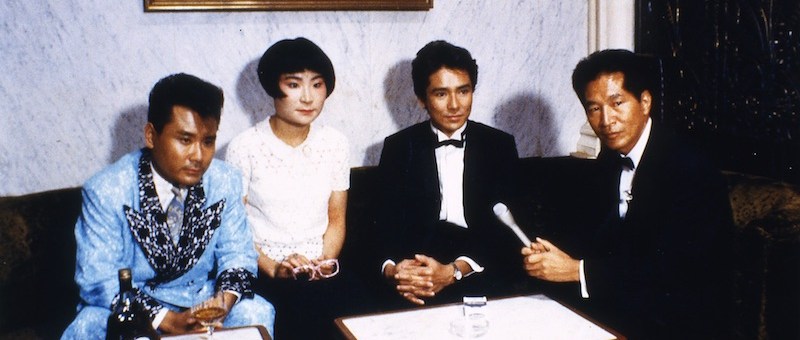
After opening with a bunraku performance featuring an excerpt from the Chikamatsu play Courier For Hell, Kitano moves on to his overarching narrative which connects the tripartite structure in a tale inspired by the classic story The Bound Beggars. This first pair of lovers, Sawako and Matsumoto, wander blankly through the ever changing landscape tied together with a long red rope. The two had previously been a young couple, very much in love, but Matsumoto was pressured into abandoning Sawako to accept a semi-arranged marriage to his boss’ daughter. Distraught, Sawako attempts suicide only to survive but in an almost catatonic state.

The second pair of doomed romantics consists of an ageing yakuza who looks back on his life which has forced him to act in a way that he is not always proud of and now finds himself remembering the girlfriend he parted with thirty years ago after fearing he was about to lose his job. She promised to wait for him, he promised to return a fine man but he became a yakuza and never saw her again. All these years later, she’s still exactly where she said she’d be, waiting.

Story three is strange tale of modern love as a young man becomes obsessed with an idol star who only ever notices his rival. After she is injured in a car accident and decides to retire, the young man takes drastic action to be able to meet with her on what he sees as a more equal footing.

Fools for love, each and every one of them. Love has ruined them, removed rational choice from their field of vision, yet there’s something noble and beautiful in the way in which it has penetrated each of their lives. They love as if possessed by an incurable madness, Sawako tries to kill herself because her heart is broken, a woman grows old spending each Saturday lunch time sitting on a bench with a second lunch box which is going to go to waste, and a young man maims himself to finally get his love’s attention. Was it worth it, in the end? Perhaps not if the desperately sad outcomes of each of these stories is anything to go by.

Kitano rejects his idiosyncratic blue colour palate for a world of vibrant colours. Travelling through a year we move along the seasons as punctuated by their symbolic scenery from cherry blossoms to green verdant landscapes, the overwhelming redness of autumn leaves and finally the purity of the winter snow. We travel one way, but also in circles as we navigate the story of love as it too changes with its seasons yet remains unchanged in essence. Each of the lovers is no more free than a bunraku puppet, manipulated by forces outside of their control and forced into a desperate unhappiness that is in part vindicated by their romantic bonds.

Love is tender, love is cruel. Each of the men, in particular, makes terrible choices which cause only pain to the women they supposedly love and, in their pride and arrogance, they fail to realise the consequences of their actions until it is far too late. The tragic inevitability of life’s suffering and the inability to escape it are the foundation stones of Chikamatsu’s world.

Working with fashion designer Yohji Yamamoto Kitano has created a beautiful, theatrical world of hyper realistic colour and life. Like much of Kitano’s work, Dolls amounts to a sad collection of tales coloured by melancholy and a resignation to the pain and suffering inherent in being alive. The lovers are inexorably bound to each other for all eternity because of the suffering they have each endured at the other’s hand. This is a sad world, but it’s a beautiful one too and even if hurts one must try to live.


Dolls is re-released in the UK on blu-ray courtesy of Third Window films.

(This is an original release trailer and does not reflect the quality upgrade of Third Window Films’ blu-ray release)

I first saw this film I guess almost fifteen years ago (!) and I still occassionally get this song stuck in my head:

Review of Takeshi Kitano’s Dolls (ドールズ) – first published by UK Anime Network.


No More Comics! (コミック雑誌なんかいらない!, Yojiro Takita, 1986)

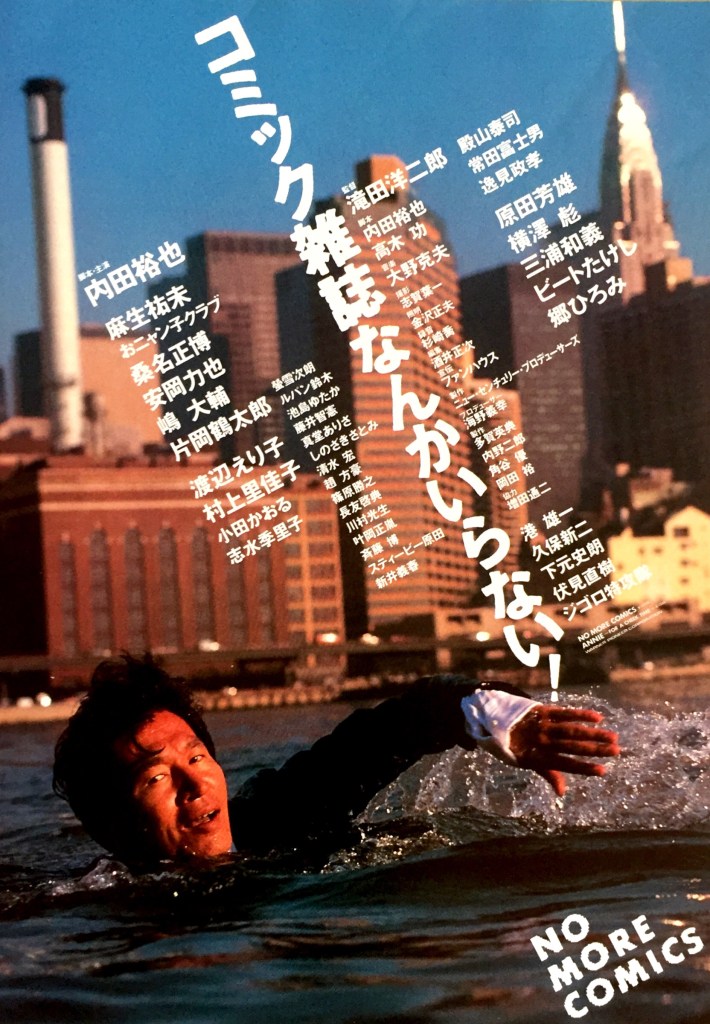
No More ComicsThe word “paparazzo” might have been born with La Dolce Vita but the gossip hungry newshound has been with us since long before the invention of the camera. Yojiro Takita’s 1986 film No More Comics! (コミック雑誌なんかいらない, Komikku zasshi nanka iranai AKA Comic Magazine) proves that the media’s obsession with celebrity and “first on the scene” coverage is not a new phenomenon nor one which is likely to change any time soon.
Kinameri (Yuya Uchida) is a hack reporter on a gossipy news magazine programme which reports on all the sordid personal details of the private lives of celebrities. In a bit of neat meta commentary, we first meet him when he’s doggedly following real life top actress of the time Kaori Momoi (making a brief self cameo) as she tries to board a plane at the airport. Kinameri keeps on asking his inappropriate questions about her alleged relationship with a screenwriter whilst Momoi successfully ignores him before finally reaching the relative sanctuary of the security cordon preventing Kinameri from actually boarding the plane with her. Of course, his interview attempt has failed but he plays the footage on the programme anyway justifying her silence as a lack of denial and that he has therefore “proved” that the rumours are true.

Kinameri is both respected and ridiculed by his colleagues who praise his probing journalistic techniques which see him doggedly refusing to give up on a story but also find his intensity amusing seeing as he’s mostly chasing cheating spouses rather than uncovering the next great political scandal like his heroes who exposed Watergate. Having graduated from a top Japanese university in political sciences, this is far from the line of work Kinameri would want to be doing and its vacuity coupled with his own failed ambitions push him further and further into a spiral of self loathing and depression.

It’s not only celebrities either. Even if you could make a case that those in the entertainment industry have entered into a pact with the media and are, therefore, fair game, civilians and particularly victims of crime should be off limits. Kinameri will literally stop at nothing to scratch a up a story including attending the funeral of a murdered 14 year old girl and quizzing her mother over the rumours that the girl had been engaging in prostitution to try and elicit some kind of social commentary about the youth of today. After his programming starts to decline in popularity he’s relegated to the late night slot which involves visiting various shady places such as strip clubs, snack bars that are actually yakuza hang outs, and even the set of a porn film where he gets a cameo feeling up the lead actress in the front of a convertible.

While all of this is going on, Kinameri is also receiving some bothersome cold calls offering to sell him gold as an investment proposal. His elderly neighbour is visited by a woman from the company and does actually buy some but Kinameri smells a rat and his journalistic instincts kick back in. His bosses at the network aren’t convinced though – dodgy gold dealers doesn’t sound like a ratings winner after all and even when Kinameri agrees to even shadier assignments so he can pursue his leads, they still aren’t really behind him. Eventually they catch up but it’s almost too late.

Kinameri keeps doing what he’s paid to do, even if he clearly despises everything about it. Asking trivial and ridiculous questions and being ignored anyway, conducting a vacuous meet and greet with a gang of up and coming idol stars, even posing as a gigolo – there are no lengths to which he will not sink in pursuit of his story. By the film’s finale he’s still the frontline reporter, looking on while a vicious yakuza (played by a young Takeshi Kitano) commits a brutal murder right in front of the cameras. No one is moving, no one is trying to stop this, everyone is manoeuvring to get the best coverage. Kinameri has had enough and, with a look of rage and contempt on his face, he launches himself through the widow in a last minute attempt to make a difference but once again, lands up flat on his face and, finally, excluded from the action.

Years ahead of its time, No More Comics! takes an ironic look at invasive media coverage of celebrity gossip which clogs the airwaves while the real story is wilfully ignored. Ironically, Kinameri even becomes something of a celebrity himself, well known for his dogged interviewing style. He receives countless answerphone messages from “fans” (somehow ringing his personal phone number) either praising his efforts or berating him for not pushing his targets harder. When a young aspiring journalist stops him in the street and asks for advice, Kinameri doesn’t even answer but just walks away with a look of contempt and sadness on his face. Finally, after his mad dash into a crime scene in the final reel, he becomes the news himself. All of his fellow reporters suddenly want to know “what happened”, “what was it like”, “did you go in to save him or for the story?” etc. Still stunned and probably in need of medical attention, Kinameri looks directly into the camera, puts his hand across the lens and states “I can’t speak fucking Japanese”.

Filled with rage and shame, No More Comics! is a Network-esque satire on the world of live broadcast reporting exposing the seedier sides of journalistic desperation. Ahead of its time and sadly still timely in the age of 24hr coverage which mainly consists of the same trivial stories repeated ad nauseum, its messages are needed more than ever.


Unsubtitled trailer:


Kikujiro (菊次郎の夏, Takeshi Kitano, 1999)

b97b89932bReview of Takeshi Kitano’s 1999 masterpiece Kikujiro AKA Kikujiro’s Summer (菊次郎の夏, Kikujiro no Natsu) first published by UK Anime Network.


When thinking about the career of iconoclastic Japanese director Takeshi Kitano, “cute” is not a word which immediately springs to mind. Nevertheless, it’s a fairly apt one for describing the bittersweet tale of one summer in the life of a lonely little boy and the roughhousing ex-yakuza who becomes his reluctant guardian.

Masao is a mournful looking schoolboy who lives alone with his grandmother. It’s almost the school summer holidays and all the other kids are excited about family trips and activities but Masao’s grandmother still has to work so they won’t be doing anything and he’ll have to entertain himself throughout all of the long, hot break. Seeing as all of his friends have gone away, and after finding a photograph of his parents and another of his mother and grandmother with him as an infant, Masao decides to take off for an adventure of his own to track down his long absent mum. However, he doesn’t get very far before some bigger boys have taken all his money and actually seem annoyed he doesn’t have more. Luckily, a former neighbour and her husband turn up and get the money back for him but they explain the town where Masao’s mother lives is too far for a little boy to travel all on his lonesome. The wife makes her husband, Kikujiro (Kitano) take the boy on summer trip of their own but what they find there isn’t exactly what either of them had been expecting.

In many ways, Kikujiro is in the best tradition of odd couple road trips. Kikujiro didn’t really want to escort this sad little boy on a strange family holiday but his wife insisted (and she gave him quite a lot of spending money) so he reluctantly takes Masao on a journey but introduces him to some of his favourite pursuits such as gambling on bicycle races and hanging out in hostess bars. Little by little he starts to warm to the boy and the pair go on to have several strange encounters throughout their trip, largely down to Kikujiro now being broke after losing all the money gambling at the beginning.

Sending a little boy off with a total stranger doesn’t seem like the best idea in retrospect, even if it’s preferable to letting Masao head off alone. Kikujiro is very much not an appropriate baby sitter which makes for a lot of comedic scenes from an outsider’s view though perhaps Masao’s grandmother might not find it so funny if anyone ever decides to tell her about any of this. There is only one scene in the film where something very untoward threatens to befall Masao involving a “scary man” in a park but luckily Kikujiro turns up just in the nick of time. This episode is, in truth, a little hard to take alongside the otherwise fun encounters which showcase Kikujiro’s own clownish, immature qualities.

The film is seen more or less through the innocent viewpoint of Masao and broken up into chapters seemingly taken from his “what I did on my holidays” scrapbook project. Perhaps not having the material to complete this inevitable post-summer assignment was one of the motives for Masao finally taking off on his own to solve the mystery of his absent mother but what his teacher’s going to make of this strange collection adventures is anyone’s guess (perhaps if he’s lucky no one will believe it anyway).

The story doesn’t finish once Masao and Kikujiro have reached the furthest point of the journey but carries on through their way back too as Kikujiro tries to cheer the boy up and begins to reflect on his troubled relationship with his own mother. The true reason for film’s name becomes apparent towards the end as Kikujiro mournfully watches Masao run off back home perhaps feeling sorry for him but also a little wistful that his own summer adventure is over and he might never have such a fun trip again.

Warm and funny, Kikujiro employs a hearty dose of sardonic black humour for its tale of a childlike gangster’s growth process as he morphs into the figure of a guardian angel for a sad little boy. Aided by Joe Hisaishi’s wistful score and the beautiful landscape of a Japanese summer by the sea, Kikujiro proves a slightly unusual entry in Kitano’s filmography (though only up to a point) and an often underrated one though it ranks among his highest achievements for its sheer poetic power alone.


Kikujiro is re-released on blu-ray today in the UK courtesy of Third Window Films who will shortly also be re-releasing Dolls and, it’s recently been announced, Kids Return and A Scene at the Sea.

This is the only trailer I could find and it’s from the original US VHS release so it’s extremely irritating (sorry), film is not this annoying (promise).

Merry Christmas, Mr. Lawrence (戦場のメリークリスマス, Nagisa Oshima, 1983)

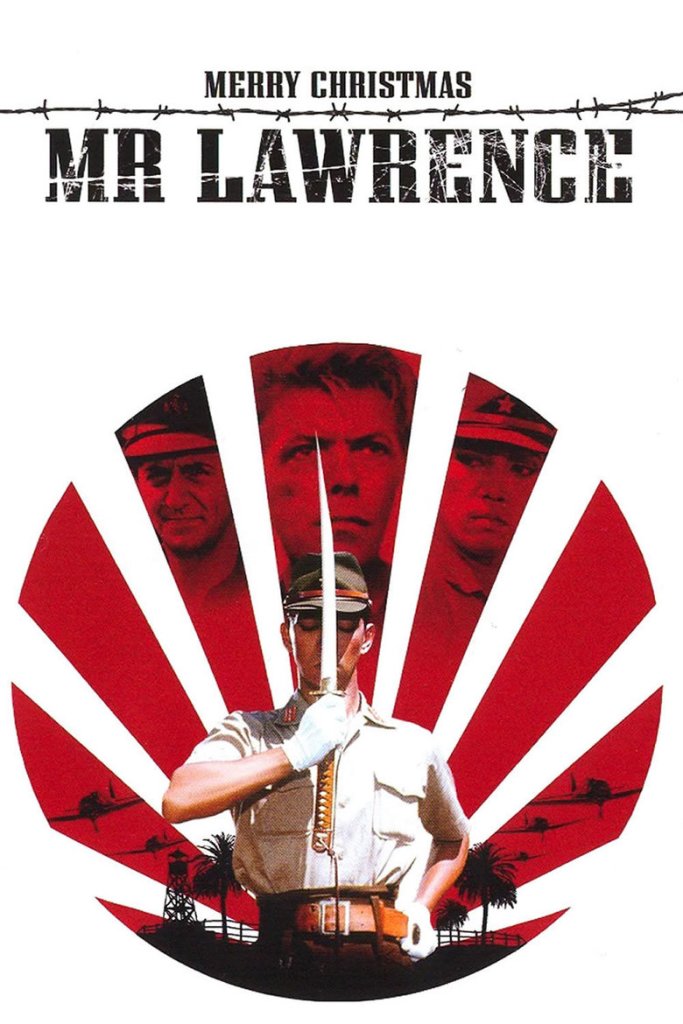
Merry-Christmas-Mr-Lawrence-images-832f3814-1564-403a-a98a-313c5bb99deOf all the post-war Japanese filmmakers, the one who liked to twist the knife the most was surely Oshima. No subject too taboo, no pain too raw – he liked to find the sore spot and poke at it a little, if only in the hope of encouraging an accelerated healing, albeit one which would leave a scar to remind you that once you suffered. With Merry Christmas, Mr. Lawrence (戦場のメリークリスマス, Senjou no Merry Christmas) he takes an unflinching look at the treatment of Japan’s prisoners of war and contrasts the Japanese forces with the different attitudes of the (mostly) British soldiers held within the walls of the camp.
Based on a semi-autobiographical novel by Laurens Van der Post, The Seed and the Sower, much of the action takes place in a prisoner of war camp run by the Japanese in Java in 1942. The titular Lawrence (Tom Conti) is one of the British prisoners here but unusually speaks fluent Japanese as he lived in Japan for a time before the war. The camp is run by Captain Yonoi (played by Ryuichi Sakamoto who also composes the music for the film) but largely ministered over by the more sadistic Sergeant Hara (played by Takeshi Kitano in an early straight acting role and billed here solely as “Takeshi”). Things kick off once Yonoi is called away to help preside over a military trial for a “difficult” prisoner who refuses to talk. However, Yonoi is somewhat taken aback by the upright soldier he discovers there. Celliers (played by David Bowie) is sentenced to death only to have the firing squad deliberately miss before he’s transferred to Yonoi’s camp.

As expected the conditions at the camp are not particularly pleasant. The first scene we’re treated to is Lawrence being called to witness an altercation where a Korean/Japanese soldier is accused of raping a Dutch internee. Hara taunts both of them with homosexual slurs and berates the Dutchman for not having resisted strongly enough. Kanemoto, the accused man, has obviously been badly beaten and is eventually ordered to commit seppuku which he eventually tries to do at that very moment by impaling himself on a bayonet. Seppuku is not something to be taken so lightly though so he’ll be patched up now for a ritual suicide later to be witnessed by the wronged parties (whether they wish to watch or not). Homosexuality, or more precisely, homosexual acts, are not to be tolerated among prisoners even if Hara later protests that samurai are not afraid of “queers” whilst insinuating that the majority of Englishman are gay anyway.

Latent homosexuality continues to be an ongoing theme throughout the film. The attraction between Yonoi and Celliers passes beyond simple admiration or even fascination. There don’t seem to be any other particular reasons for Yonoi to continue trying to protect Celliers as he does when he saves him from the firing squad and later allowing him a greater degree of freedom than other prisoners. Both men feel themselves prisoners of their respective social systems – Yonoi as the cold hearted samurai, efficient and unfeeling, yet with an intellectual core and a conflicted heart, and Celliers as a man desperately trying to atone for having once betrayed someone he deeply cared for in a misguided attempt to fit in. That said, both men are on opposite sides of a war and in any case that kind attraction stands against both of their countries’ current social customs. Again, a man is betrayed by a kiss and another man pays an extraordinarily high price leaving the other powerless to save him.

As Lawrence says there are no winners here, wars are just men doing what they thought was right at the time even if they really know that every one of them is wrong. The Japanese are rigid, repressed and anxious whereas the British are obsessed with honour in other ways and lean more towards the side of pragmatism when the going gets tough. A Japanese soldier may prefer to die, even going so far as to commit suicide, rather than subject themselves to the humiliation of having been captured alive. A British soldier will accept becoming a prisoner but largely because he believes he has a duty to live on and serve to the best of his capacity. Once captured, his duty is to try and escape to return to fight and die for King and country until the bitter end.

What both sides have in common is the dehumanisation of its troops. When it comes down to it one man is as good as another. If a radio has been smuggled into the camp someone must be punished for that action, the exact identity of the perpetrator becomes almost an irrelevance. Likewise, if a war has been lost, someone must pay for wrongful acts committed by the losing side even if his actions are no worse than those of any other soldier.

Merry Christmas, Mr. Lawrence proves a beautifully sad condemnation both of the rigidity of war, of men who think they’re acting in righteousness when the very idea is the one which causes them to act unjustly, and of repressive social systems in general. Lawrence acts as the voice of reason whilst all the while admitting that he himself is also “wrong” and forced into certain actions and modes of behaviour with which he does not necessarily agree. Both of these empires are on the verge of crumbling, all this death and cruelty will prove to have been for nothing. War is a fruitless tragedy in which there are no winners, only losers on every side. “There are times when victory is very hard to take”, victors too need to abide by their own sense of decency without being swayed by vengeance masquerading as righteousness.


Merry Christmas, Mr Lawrence is available with English subtitles on blu-ray as part of The Criterion Collection in the US (and was previously released on blu-ray in the UK from Optimum/Studiocanal but appears to be currently out of print).

(That final voice over is needlessy creepy, isn’t it?)


Hana-bi (はなび, AKA Fireworks, Takeshi Kitano, 1997)

Original quad poster from UK theatrical release (some of these cinemas no longer exist. Also, sponsored by Yo! Sushi.)

Review of Takeshi Kitano’s Hana-bi (はなび) first published by UK Anime Network.


Takeshi Kitano might still be best known for his ultra violent gangster pics, but after making it into the international arthouse repertoire with Sonatine back in the early ‘90s it was Hana-bi which put him on the map as one of Japan’s most prominent exports. Kitano plays the lead in the film once more adopting his cooler than cool persona with occasional flashes of violence only this time on the side of the law (to begin with, anyway).

Told in an initially confusing, flashback structure, Hana-bi follows middle aged policeman Nishi who experiences several life changing events in a short space of time. At the beginning of the film he’s let off a stakeout and told to go visit his wife who’s ill in hospital. Unfortunately, as we later find out, this will prove to be a poor decision as pretty much everything goes wrong – Nishi’s partner, Horibe, is shot and ends up paralysed, one of his other men is wounded and tragically another killed right in front of Nishi’s eyes. After being told that nothing more can be done for his wife and it’s better that she just come home from the hospital, Nishi quits the police force, gets involved with the yakuza and robs a bank before taking off with his wife for one last holiday.

Actually, the film skips over its climactic event until quite a way into its running time. Kitano unsettles us right away by giving us very little explanation for what we’re seeing. He shows us Nishi meeting with the widow of a man we didn’t even know was dead yet (not that he really told us who she was anyway). We’re left to piece events together like a detective listening to a confused witness testimony only our information is primarily visual – there isn’t even a lot of dialogue to guide us on our way. This refreshing technique is one the generally laconic Kitano seems to favour and greatly adds to Hana-bi’s low-key style.

Kitano never says too much in his movies anyway, but this time his is wife also near silent uttering the grand total of two words in the entire film and both of those come in the final scene. We know that she has a terminal illness (though it isn’t clear that she knows this, or how much she understands). Nishi and his wife also apparently lost their young daughter not long ago and it’s implied that perhaps she just hasn’t been fully present ever since. Her lack of speech, shyness and constant game playing coupled with her outwardly cheerful (if sometimes vacant) demeanour give her a childlike quality but the two words she does offer at the film’s conclusion imply (at least in that moment) that she knows what’s going on and understands what is about to happen.

Nishi and his wife have an extremely close relationship, they rarely need to speak to each other. However, Nishi’s partner, Horibe, discovers that his marriage was not as secure as he assumed as his wife and daughter walk out on him after his accident. In an effort to give him something to strive for, Nishi sends him some painting supplies and henceforth Horibe’s artwork (actually designed by Kitano himself) becomes a prominent motif in the film. The first series takes animals and then people and paints them with the heads of flowers but this then gives way to more complicated pointillist scenes. Many of Horibe’s works feature a repeated motif of a man, woman and child (neatly echoed in the films closing scenes) seemingly enjoying a happy family occasion. Perhaps this is an odd sort of masochism on Horibe’s part, lamenting everything he’s lost since his accident but the two figures could also represent the Nishis reunited with their lost daughter.

Shot in Kitano’s trademark blues, Hana-bi is a melancholy tale. Flowers and fire, Kitano shows us both extreme tenderness and fits of violence as he’s both the loving husband, grieving father, nurturing best friend and hardline cop who bears personal responsibility for the loss of his own. This path only leads in one direction and we’ve figured out where we’re headed long before nearing the end of our journey. Nevertheless, Hana-bi is a rich, poetic experience which continues to prove deeply moving and endlessly fascinating.


Hana-bi is re-released in the UK today on blu-ray courtesy of Third Window Films who will also be releasing Dolls and Kikujiro in the near future.


Ryuzo and the Seven Henchmen (龍三と七人の子分たち, Takeshi Kitano, 2015)

142984037484393493178_ryuzo-7nin-kobuntachi-g4First published on UK Anime Network – review of Takeshi Kitano’s Ryuzo and the Seven Henchman (龍三と七人の子分たち Ryuzo to Shichinin no Kobuntachi) from LFF 2015.


Most people probably know Takeshi Kitano best for his series of ultra violent ’90s gangster movies, his role as the sadistic teacher in the controversial Battle Royale or as the host of bizarre Japanese endurance game show Takeshi’s Castle. However, in Japan he’s probably best known as a comedian though few of his comedy films have ever made it overseas. This may change with his latest effort, Ryuzo and the Seven Henchmen, which both takes him back to his yakuza roots and celebrates his comedic talents.

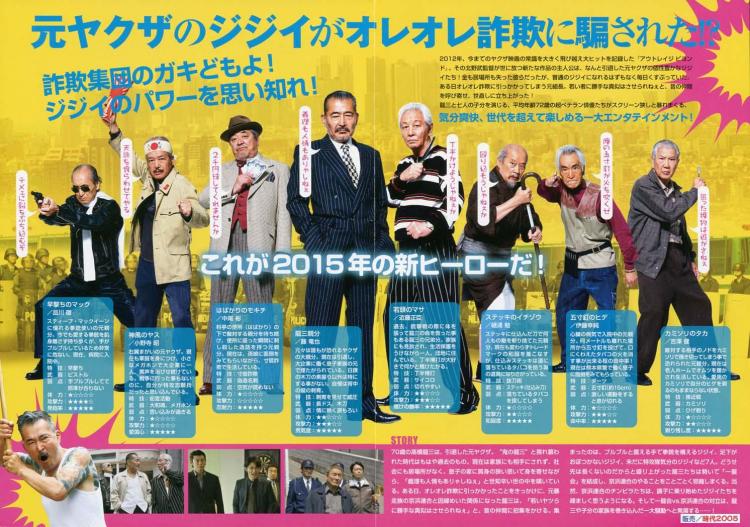
Ryuzo “the demon” was once a yakuza more feared the than respected whose very name alone made women swoon and struck fear into the hearts of men. Now though, he’s a grumpy grandpa living with his ultra conservative son who’d rather the neighbours didn’t know he had a gangster living in his house. After some punks make the mistake of trying an “ore ore” scam on him, Ryuzo gets back into the spirit of his gangster days and takes the guy down in a classic intimidation play. However, some of his other yakuza buddies also seem to be getting into trouble with upstart youngsters and once again it’s up to Ryuzo and his seven old timer yakuza buddies to set the town to rights.

The world has changed since Ryuzo and his guys were ruling the streets. In the old days the yakuza were a family, they had rules and ethics and they stuck to them. They saw themselves both as heroic outlaws and as defenders of the rights of ordinary people (even if they made their money through extorting those very people they claimed to protect). This new brand of crooks doesn’t care about honour, or morality or human kindness – they aren’t above conning the vulnerable into falling for obvious telephone scams or loaning large amounts of money to desperate people at ridiculously high interest just to make a buck. These guys are “business men” running a “legitimate enterprise” where the only rules are that you get rich and stay rich.

Ryuzo and co may be old, but they still have their honour and their pride. Watching the old guys trying to relive their former glory days is often funny, if a little sad as their grand schemes take on the absurd quality of little boys playing cops and robbers. It goes without saying that the film is hilarious though perhaps takes certain instances of low humour a too little far. Each of the main eight old timer yakuza has his own particular strength which endures despite their advanced ages though perhaps in slightly different forms and even if they’re coasting on former glory none of them has forgotten their former status.

Though not quite a return to the artistic highs of Sonatine or Hana-bi, Ryuzo and the Seven Henchmen is nevertheless an entertaining mix of Kitano’s tough guy yakuza and absurd comedian personas. Unlikely to walk away with any awards or lasting praise, Ryuzo and the Seven Henchmen is sure to be remembered fondly for its expertly timed and often gleefully absurd humour.


Reviewed at LFF 2015.