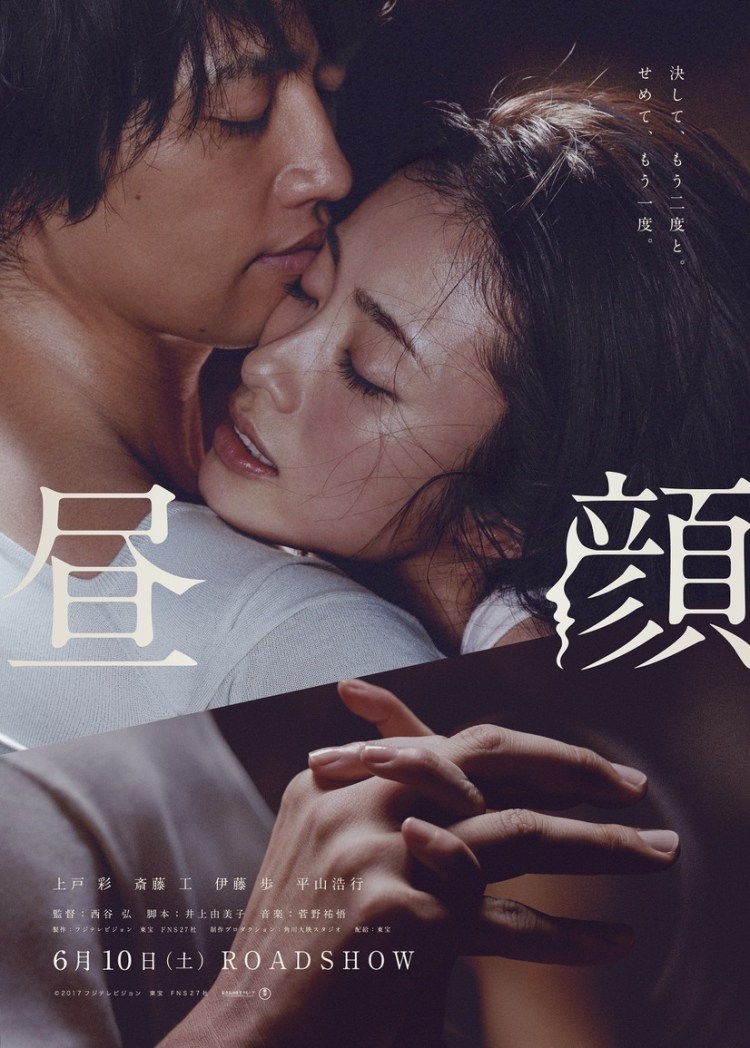
 Hiroshi Nishitani has spent the bulk of his career working in television. Best known for the phenomenally popular Galileo starring Masaharu Fukuyama which spawned a number of big screen spin-offs including an adaptation of the series’ inspiration The Devotion of Suspect X and Midsummer’s Equation, Nishitani has also brought his admittedly cinematic eye to other big screen transfers of small screen hits from Beautiful World to the European set Amalfi: Rewards of the Goddess and Andalucia: Revenge of the Goddess. Hirugao – Love Affairs in the Afternoon – (昼顔, Hirugao), is no exception to this trend and acts as a kind of sequel to a TV drama in which an unhappy housewife indulged in an intense yet doomed affair with a married schoolteacher. An old-fashioned romantic melodrama, Hirugao knows where it stands when it comes to conventional morality but is content to put its unhappy lovers through the ringer before meting out its judgement.
Three years after a passionate affair with her beloved professor Kitano (Takumi Saito), Sawa (Aya Ueto) has lost everything. She got a divorce, but Kitano went back to his wife and the terms of the settlement state that she is never to see, talk to, or in any way communicate with him ever again. Hoping to move on with her life, Sawa has done what many in her situation do and moved to a remote seaside town where no one knows her name, her history, or just why it is she looks so sad.
Eventually getting a job in a small cafe despite the obvious hostility of the long-standing staff, Sawa is making a go of things but no matter how hard she tries, she can’t get Kitano out of her mind. Only half alive Sawa lives out her days until one fateful afternoon she spots an advert for a lecture on fireflies – Kitano is coming to town. Sitting in the back, hunched down trying not to be seen Sawa listens to her lost love speak but accidentally catches his eye, once again sparking their long paused romance. Chasing, missing each other, retreating and advancing the pair eventually meet and go about the business of observing the local fireflies independently yet in the same space – obeying the terms of the settlement, at least in spirit. Gradually their old feelings resurface but Kitano stills goes home to his wife every day and a second chance for love after such a final judgement may require more than a simple act of faith.
Told more or less from the point of view of the unhappy Sawa, Hirugao’s main purpose is an exploration of her ongoing pain and inability to put the past behind her despite having moved to an unfamiliar place filled with unfamiliar faces. Not universally well liked by all on arrival, the cafe staff including a grumpy older woman and a cheerful if gossipy younger one eventually get used to Sawa though they both seem to resent the cafe owner’s affection for her. Later on, Sawa makes a critical mistake. She tells someone she thinks she can trust about her past – the affair, the divorce, her broken heart, and the frustrating possibility of starting a new life with a man who only ever half leaves his wife. Soon, the rumour gets out and Sawa might as well have painted a large red A on her forehead. Now she’s a hussy and a home wrecker, the women in the cafe want her out, the people in the market won’t serve her, and the cafe owner who was chasing her before suddenly turns cold.
This may not be the era of crucified lovers in which adultery is punishable by death, but it might as well be for all the unpleasantness Sawa must endure after being unmasked as someone who’s broken all the rules of social convention. Against the odds, the fuss dies down, her friends start to get over it and perhaps even like her a bit more now they know what it was that made her so closed off and mysterious – one even admits her anger was largely driven by personal regret over not pursuing the man she loved in her youth because he was already married and so she resented Sawa for having the courage to do what she never could. Sawa only wants one thing – to be with Kitano, and she’s willing to endure anything to stay by his side.
Kitano, however, is the nice kind of coward. Not wanting to hurt anyone he hurts everyone by keeping one foot with his wife and the other with Sawa. Though Sawa’s husband is well out of the picture, Kitano’s wife Noriko (Ayumi Ito) is descending into madness through jealousy and paranoia, unwilling to let her husband go. Having been one half of an adulterous couple, Sawa knows she can’t trust Kitano even if she loves him and soon enough jealousy, fear, and doubt begin to pollute their otherwise happy romance.
Illicit love cannot be allowed to succeed, there is always a price. Like the cruel flip side of jun-ai where fate cuts true love short before it’s allowed to turn sour, the furies are en route to deliver retribution to those who try to steal happiness by pursuing personal desires rather than adhering to social convention. Nishitani films with picturesque grandeur, capturing the sun-baked seaside town of Mihama in all its summery warmth and frosty hostility. An old-fashioned melodrama filled with grand emotions and overwrought symbolism, Hirugao is guilty of nothing so much as taking itself too seriously but nevertheless there is poetry in its pain even if the bitterly ironic closing coda seems to imply that love is a never-ending cycle of inescapable suffering.
Hirugao – Love Affairs in the Afternoon – was screened at the 19th Udine Far East Film Festival.
Original trailer (no subtitles)
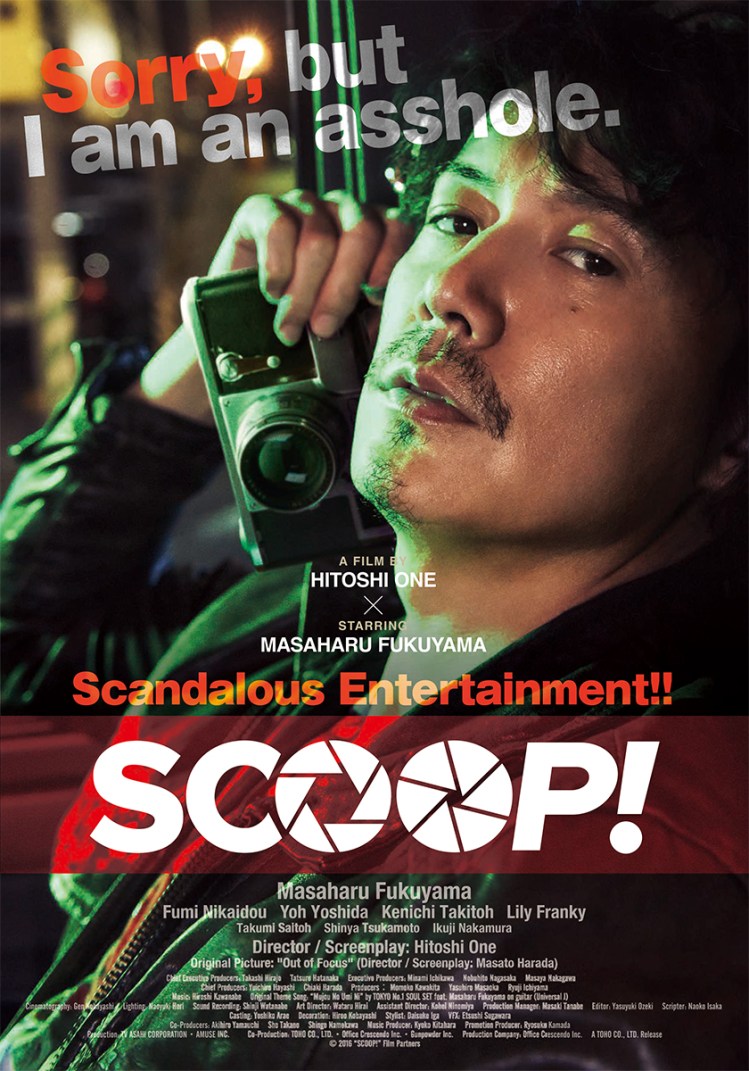 Hitoshi One has a history of trying to find the humour in an old fashioned sleazy guy but the hero of his latest film, Scoop!, is an appropriately ‘80s throwback complete with loud shirt, leather jacket, and a mop of curly hair. Inspired by a 1985 TV movie written and directed by Masato Harada, Scoop! is equal parts satire, exposé and tragic character study as it attempts to capture the image of a photographer desperately trying to pretend he cares about nothing whilst caring too much about everything.
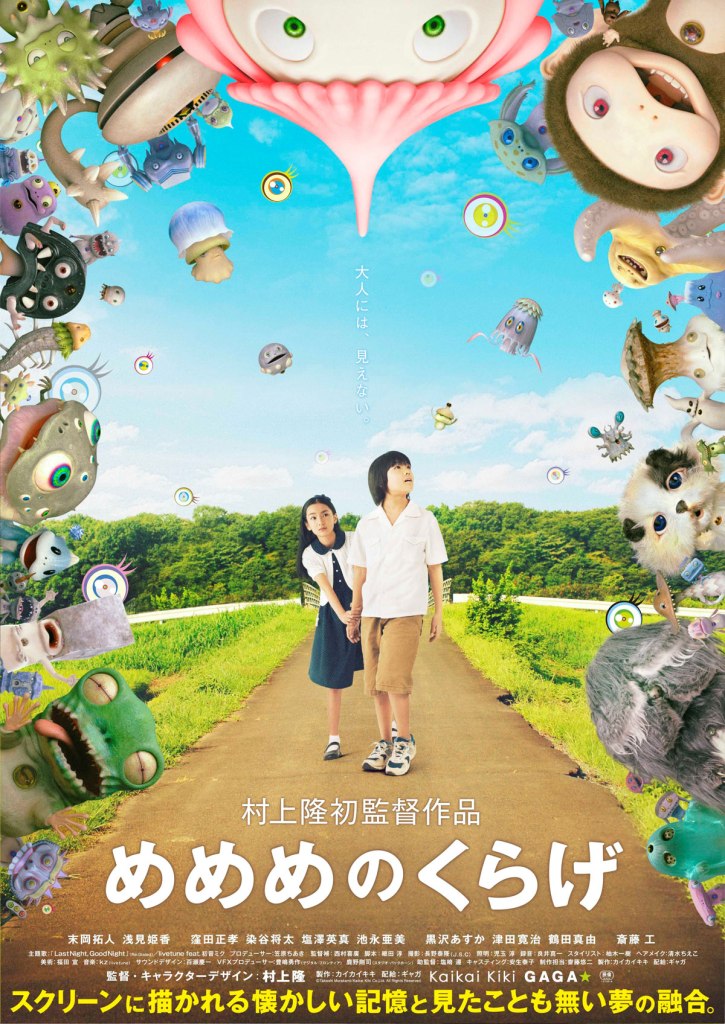 Jellyfish Eyes (めめめのくらげ, Mememe no Kurage) is the feature film debut of the internationally popular Japanese artist, Takashi Murakami. Well known for his cutesy character designs which are as likely to turn up in the world’s best regarded art galleries as they are on a kid’s backpack, Murakami is one of Japan’s most highly regarded art exports. Having unsuccessfully tried to raise interest in the more obvious totally CG animation, Murakami has enlisted the help of gore master Yoshihiro Nishimura for some director’s chair tips in creating a live action/CGI hybrid. Jellyfish Eyes is very definitely a kids’ movie, calling it a “family film” seems unfair when the age cut off is most likely around seven or eight years old but those who meet the (lack of) height requirement are sure to lap it up.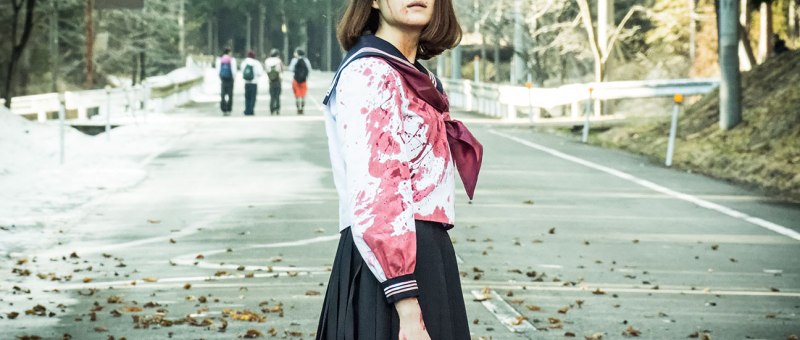
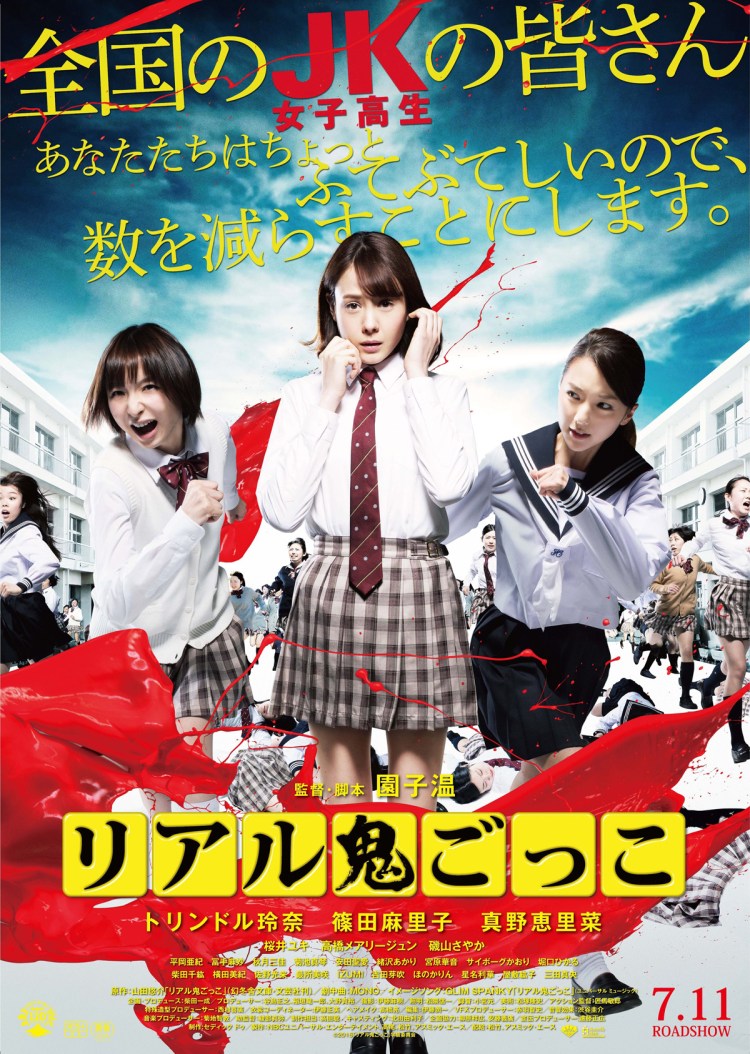 You could say Sion Sono is back, though with six films released within a year it’s almost as if he just nipped out to make a cup of tea. At first look Tag (リアル鬼ごっこ, Riaru Onigokko) seems as if it might be towards the bottom of the pile – school girls running away from things for 90 minutes whilst contending with awkward gusts of wind, but this is Sion Sono after all and so there’s a whole world of craziness going on below the surface.
