Peg O’ My Heart (贖夢, Nick Cheung Ka-Fai, 2024)

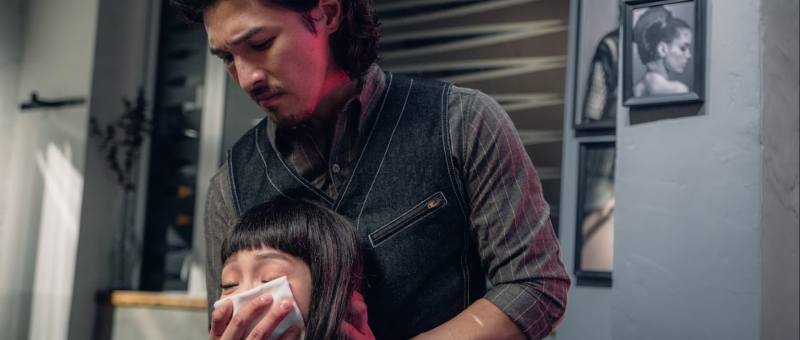
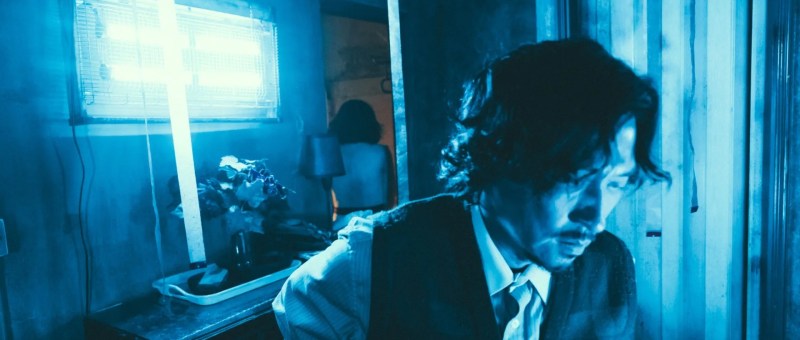
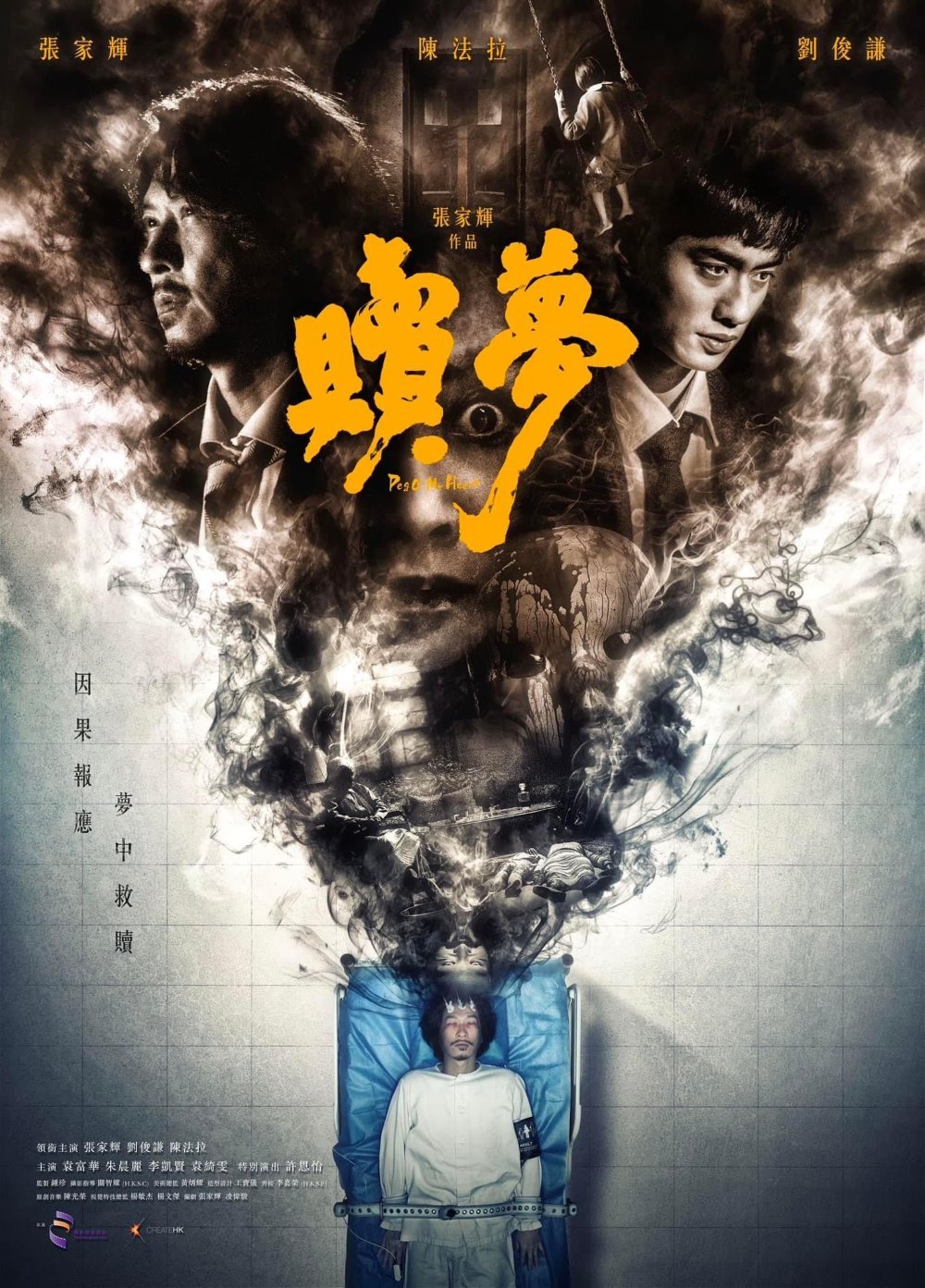
An insomniac taxi driver says he can’t sleep but he can’t wake up either. He finds himself plagued by bad dreams in an increasingly surreal Hong Kong that seems to exist more within the mind than the physical reality and populated by the orphaned ghosts of another era. Clearly inspired by the films of David Lynch with overt visual references to Lost Highway and Twin Peaks, Nick Cheung’s Peg O My Heart (贖夢) follows a maverick psychiatrist intent on actually treating his patients as he chases the taxi driver while in flight from his own trauma.

Dr. Man (Nicholas Cheung Ka-fai) is already in trouble for prying into the lives of his patients when his superiors, men in slick suits bickering in English, would rather he just get on with his job of prescribing pills. The first patient we see him treat is a teenage girl whose surreal dream sequence finds her on a swing in a room of blood while a giant baby doll looks on. Man notices an upturned doll’s head being used as a cup by one of her friends and begins to get a picture of what’s been going on. The apartment the girl lives in with her grandmother is cramped and grimy in the extreme despite the happiness banner on the door. The girl and her friends have taken to drugs to escape their own dissatisfying reality, but it led them to a dark place in which the boy abused the girl and left her with lasting trauma that blossomed into psychosis in much the same way’s Man’s own has. Nevertheless, in contrast to his bosses, he’s careful to remind her that she still has choices and it might not be the right time for her to have a child though he’ll help her whatever she decides.

In a strange way, it might be the taxi driver who’s responsible for her plight. In another life, Choi (Nicholas Cheung Ka-fai) was a high-flying financial analyst who could afford to give his wife a Mayfair flat on a whim, though you’d never guess it now. In those days, his hair was slicked back rather than long and wavy and his suit was finely buttoned rather than hanging loose. He wore glasses too, which he alarmingly no longer seems to do while driving. His eyes are red and puffy, his face pale like a ghost. On his return home, he and his wife have a number of strange rituals which make no kind of sense but hint at the extent that they have descended into a dream world, locked in by their guilt and the feeling that they are being tormented by a vengeful ghost. 

Then again, Choi’s heartless former colleagues describe him as being too sensitive for this line of work. They joke, a little misogynistically, that his wife was always the go-getter. Fiona (Fala Chen) was into stocks too, the pair of them playing a game of untold riches without any awareness of what it meant to gamble with other people’s money. His colleagues may have told him that’s exactly why it didn’t matter and it was silly to worry about it, but it seems Choi did worry, though the money distracted him from his moral quandary until the lack of it convinced him to betray an old friend with tragic and unforeseen consequences. 

Choi and Fiona are plagued by echoes of a single afternoon, one of sunlight and happiness that they unwittingly ruined with their insatiable greed. Dr. Man, meanwhile, says he has the same dream every night but can’t remember anything about it in the morning. That’s a contradictory statement in itself, though his loyal nurse Donna (Rebecca Zhu) doesn’t seem to have picked up on the holes in his story. In any case she introduces him to his previous boss, Vincent (Andy Lau Tak-wah), a former psychiatrist with an unexplained prosthetic arm, who has the power to enter other people’s dreams and seems to exist in more than one place at once, like the Mystery Man in Lost Highway. Exploring his dreamscape allows Man to reckon with his own trauma and subsequently learn to forgive and accept his father, though he may not, in fact, have faced himself fully or released his guilt even as he and Choi eventually share a similar fate. Are either of them awake, or still asleep? Did Man go through the mirror, or merely deeper inside it? The melancholy streets of contemporary Hong Kong take on a deathly hue trapping its traumatised denizens in an inescapable hell of guilt and regret from which they can never awake.


Trailer (English subtitles)
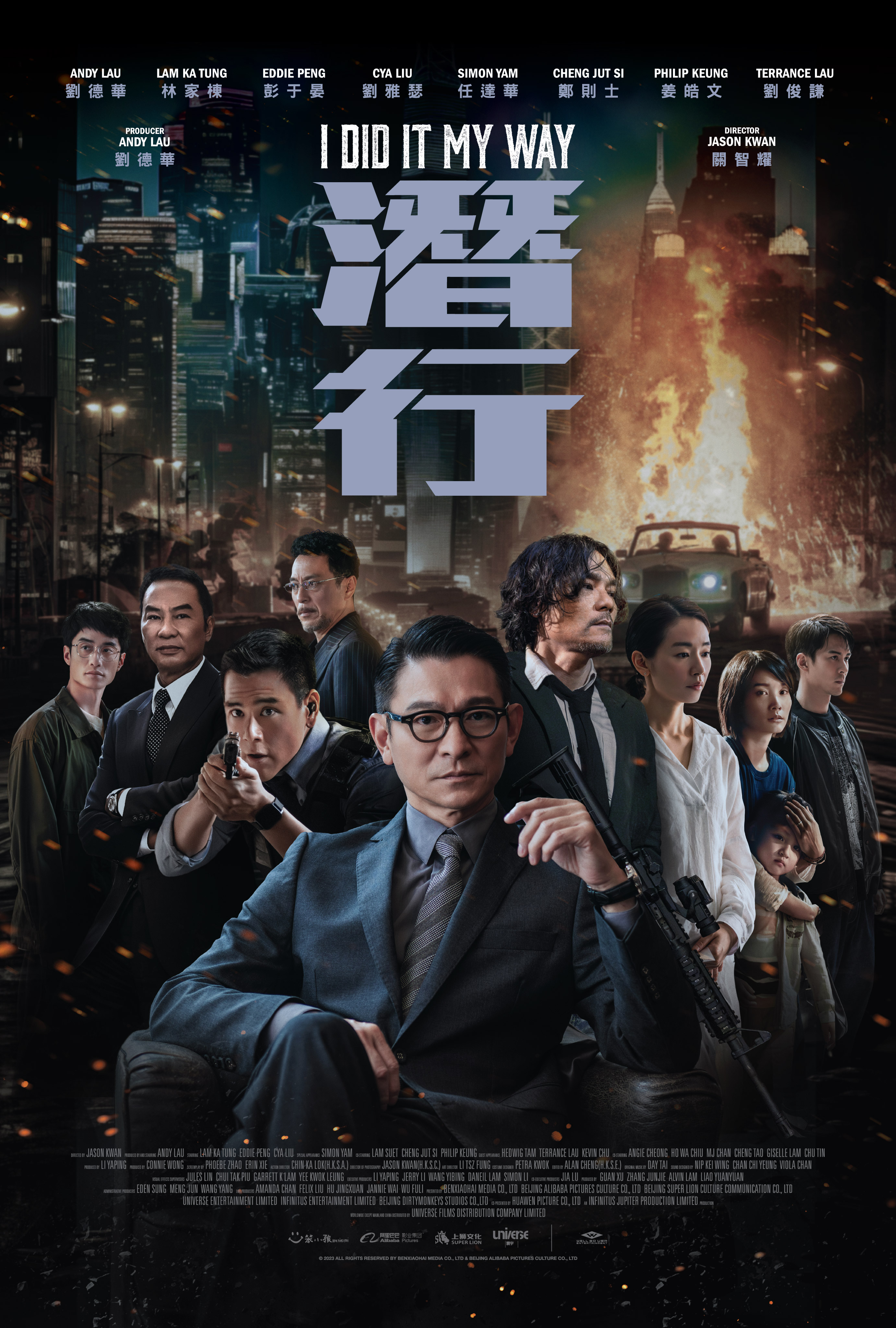
I Did It My Way (潛行, Jason Kwan, 2023)

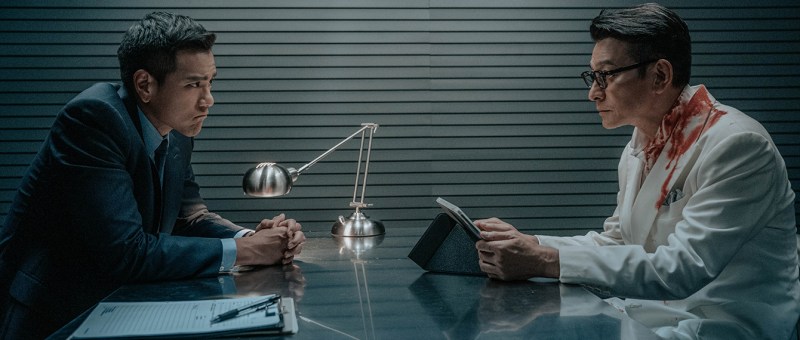
“Oldies are still the best,” one bad guy tells another while listening to a retro pop song about the inability to distinguish good from evil, “life was simpler back then.” Jason Kwon’s I Did it My Way (潛行) is in many ways an attempt to recapture the action classics of the 90s starring many of the same A-listers though they are all 30 years older and in some cases really ageing out of the kinds of roles they’re accustomed to playing in these kinds of films. Nevertheless, the action is updated for the contemporary era in its unsubtle messaging that drugs and cyber crime are bad, while the police are definitely good and will always win.

Indeed, barrister George Lam (Andy Lau Tak-wah) is not a particularly sympathetic villain and is given little justification for his crimes save doing things his way. Cybercrime specialist Eddie Fong (Edward Peng Yu-Yan) isn’t terribly sympathetic either, but mostly because of his bullheaded earnestness. Chung Kam-ming (Simon Yam Tat-wah) asks him to work with regular narcotics cop Yuen (Lam Suet), but Eddie originally refuses, insisting that they formed their new cybercrimes squad because the “old ways” weren’t working, so it’s better that they keep their investigations separate, which is of course quite rude to Yuen especially as he goes on to add that Chung’s only asked him out of politeness and professional deference. Chung, however, reminds them that they’re all part of one big family and should learn to work together. 

One might think that a criminal enterprise is also a kind of family, but it’s shown to be illegitimate in comparison to that of the police. Yuen’s undercover agent, Sau Ho (Gordon Lam Ka-tung), has a family he’s trying to protect, as does Lam who is about to marry his much younger pregnant girlfriend. For them, family is also a weakness because it gives them a reason to be afraid not to mention something to lose. Beginning to suspect him, Lam uses Sau Ho’s wife and son as leverage, symbolically taking them hostage along with Sau Ho’s promised future that would allow him to emigrate for a life of freedom under a new identity. 

Like the song says, Sau Ho is also struggling to define his identity as an undercover cop caught between his original desire to fight crime and the criminal lifestyle he’s been forced to live which leaves him never quite sure what side he’s actually on. Lam claims he only started dealing drugs after his girlfriend was raped and subsequently developed depression but that’s too late for him to turn back and so he’s gone all in. There is a kind of brotherhood that arises between them that’s permanently strained by their positioning on either side of this line and the inevitability of confrontation. Fong promises to save Sau Ho, but he failed to save most of their other undercover officers, while Sau Ho and Lam pledge to save each other, though the act of salvation could mean different things to each of them while both torn between their respective codes and the natural connection that’s been fostered by their long years working together as part of the gang. 

The severing of this connection is again part of the price for their involvement with crime, with Lam led to believe that his choices have ironically robbed him of the pleasant familial future he dreamed of, while Sau Ho is returned to the familial embrace of the police force. Chung is repositioned as a benevolent father who can save his men, while Eddie too is forced to reintegrate by working with the other officers to fight cybercrimes which often intersect with those of other divisions. While the film includes several action sequences, it also insists that the major battle takes place online between hackers and police computer specialists, dramatising these online fights with CGI to slightly better effect than 2023’s Cyber Heist but still struggling to move on from an outdated iconography of the web. Even so, it’s clear that crime never pays even if a policewoman asks herself if it’s really worth it on a trip to the police cemetery. The sun has come out once again, making the dividing line between good and evil clear if also reinforcing the paternalistic authority of law enforcement under which living life “my way” will never be tolerated.


I Did It My Way is available digitally in the US courtesy of Well Go USA.

Trailer (English subtitles)

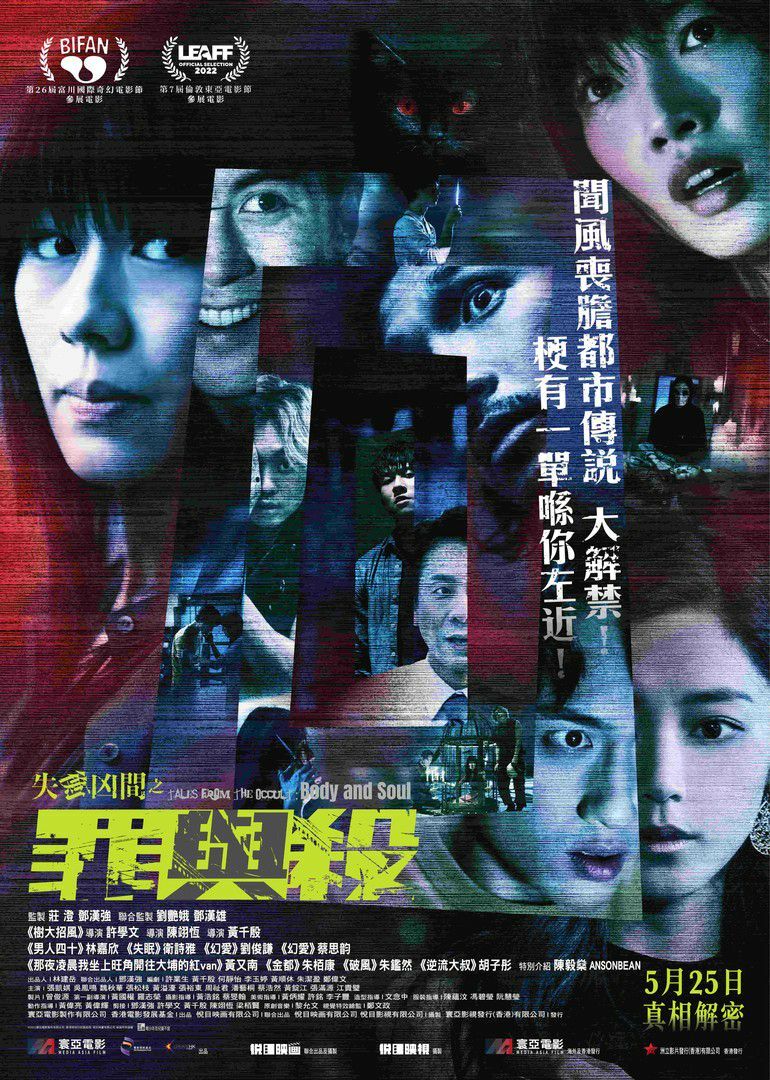
Tales from the Occult: Body and Soul (失衡凶間之罪與殺, Frank Hui, Daniel Chan Yee-Heng, Doris Wong Chin Yan, 2022)

The second in a series of horror-themed anthologies, Tales From the Occult: Body and Soul (失衡凶間之罪與殺) takes fairytales as its theme but truth be told none of the episodes has very much in common with the most well known version of their respective stories. What they do have in common is a rather grisly view of the nighttime city perhaps inspired by classic Cat III shockers though mediated through a strong sense of irony. “I like it a bit dark” one of the heroes exclaims and it’s certainly a sentiment shared by each of the three directors. 

The first instalment, Frank Hui’s Rapunzel finds former idol star Maggie (Michelle Wai) trying to prop up her flagging career while constantly written off as a has been best known for a cheesy pose in a dated shampoo commercial. Her manager sends her to an obnoxious rich kid’s birthday party where the women are so young they weren’t even born when she was a star and relentlessly mock the weird “aunty” and her “retro” movies. One of the guys sets fire to her hair which is even more of a problem for her because she’s supposed to have an important meeting with a producer in the morning and he’s not going to hire her with a less than perfect appearance. Maggie’s desperation eventually draws her into the orbit of a hair fetishist serial killer from whom she must try to escape while attempting to rescue her hair and save her career. A secondary strain of social community places the killer’s creepy all night salon in a building that’s about to be torn down for urban renewal leading him to be bullied by gangsters to move out but not wanting to for obvious reasons. Maggie meanwhile eventually makes a surprising decision in order to fix herself which is in its own way cannibalistic at least of the female image when it comes to the idea of perfect hair. 

You couldn’t say that Daniel Chan’s Cheshire Cat really has that much to do with the classic Alice in Wonderland character either, though Chan does throw in something like a Mad Hatter’s tea party and leave his heroine trapped in a cage suspended above the air. Nora (Cecilia Choi Si-Wan) works in a cat rescue centre and is particularly upset by the idea of people hurting her feline friends, especially as her own cat Bobo was recently murdered. After agreeing to rescue a kitten trapped under a van she unwittingly passes into a grim haunted house adventure with a death metal vibe. In a series of atmospheric shots, Chan frames Hong Kong in an angry red tint capturing the increasing resentment of Nora as she continues to take out her rage on those who would harm poor defenceless creatures. 

Doris Wong’s The Tooth Fairy perhaps ironically subverts its title while toying with the interplay of sadomasochistic fetishes. Dental nurse Sammi (Karena Lam Ka-Yan) is being relentlessly harassed at work by sleazy dentist Steve (Tommy Chu Pak-Hong) who won’t take no for an answer. On her way to the bank, she comes across a fight between two young men in which one bites off the other’s ear, and invites the biter to her clinic to get his swollen cheek looked at. Steve, however, does not take kindly to this after seeing he and Sammi flirt with each other, extracting a healthy tooth without anaesthetic as if teaching him a lesson, but clearly deriving sexual pleasure from his pain just like the sadistic killer on the news. In any case events soon escalate following some cake-related triggering and not just for its capacity to ruin your teeth. The killer may claim they’re setting people free from their earthly suffering but is clearly in part at least killing for the thrill. 

In any case, danger seems to lurk behind every corner with potential serial killers apparently all around us as the heroes find out during their various quests. Their stories may not have much in common with their inspiration but each have a strangely ironic quality curiously mimicking B-movie cinema in terms of colour palette and production design, Frank Hui eventually opting for a neon-coloured nightmare lair while Nora and the gang chase through a haunted Hong Kong and Sammi does her best to extricate herself from the unwanted attentions of her sleazy boss who is perhaps the real monster in the shadows. 


Trailer (English subtitles)

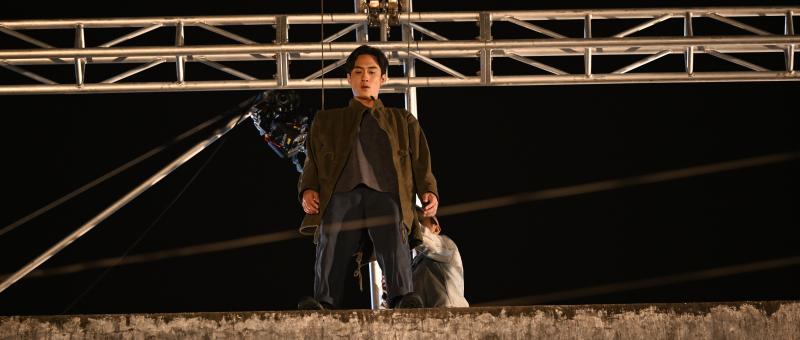
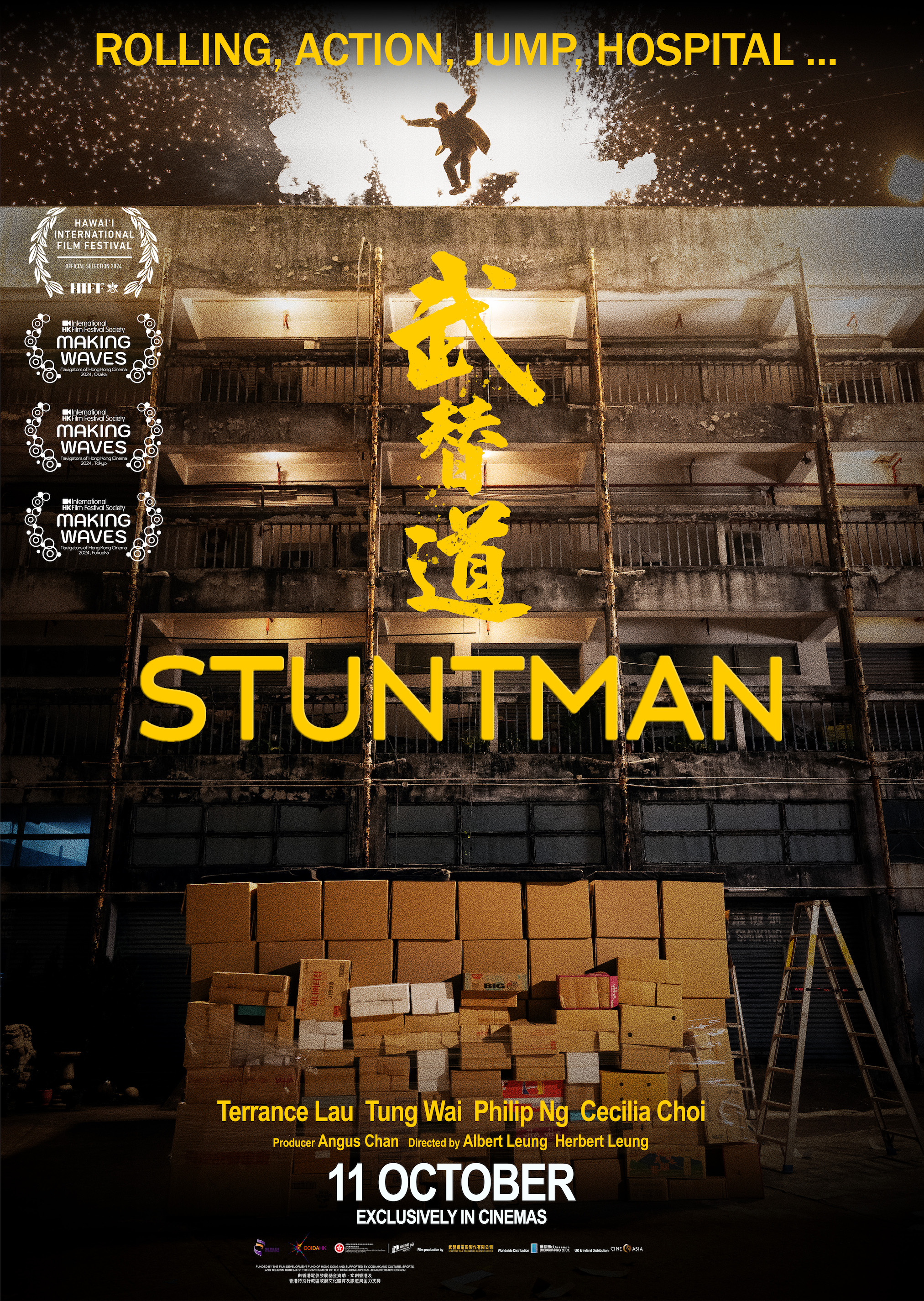
Stuntman (武替道, Herbert Leung & Albert Leung, 2024)

No matter how good a film is, it’s never worth risking someone’s life. Intellectually, “heartless” action choreographer Sam knows that, but once the camera’s rolling all he seems to see is the take and it’s win at all costs. An homage to the glory days of Hong Kong cinema when no one had ever heard the words health and safety, Herbert Leung & Albert Leung’s Stuntman (武替道) is in its way a paean for those who risked their lives for our entertainment but also for a fading Hong Kong which has the film seems to argue lost it’s bite and become rather defeatist if not docile. 

Those around Sam, played by real life action choreographer Tung Wai, seem to be convinced that “Hong Kong cinema is dead,” largely because, for very good reason, it’s no longer possible to make the kind of films they did back then with crazy, death-defying stunts and visceral action sequences. The opening scenes of the film, set in the mid-1990s, find Sam filming what appears to be a Police Story-style chase through a shopping mall that is supposed to end with a stuntman stand-in jumping from a bridge onto a moving car to catch the bad guy. The stuntman, Wai, is young and experienced so he doesn’t make the jump at which point Sam yells at him and asks his assistant, Kam, to to do it instead. But everything that could go wrong does and Kam is seriously injured because of Sam’s singleminded stubbornness in refusing to film the sequence with a cut which would obviously make it safer even if he argues less exciting. 

Sam evidently does feel a degree of guilt for this, especially as it later has other consequences for his personal life, and retreats from the film industry to run a bone setting clinic with posters for classic Hong Kong films on the wall. It’s a reverence for this bygone era that enables him to bond with Long (Terrance Lau Chun-him), a younger and more modern kind of stuntman who isn’t necessarily afraid of taking risks but understands the importance of on-set safety. Long can’t catch a break with demand for stuntmen falling rapidly precisely because of the concurrent decline of action cinema while his brother keeps pressuring him to give up his dreams and join his logistics company instead. It’s Kit’s delivery firm that becomes an accidental villain representing a Hong Kong that’s lost it’s nerve and is determined to play it safe while Sam’s recklessness perhaps represents the opposite, a dangerous desire to risk it all without considering the consequences for those around him.

But as he’s fond of saying, there’s always a way. It doesn’t have to be either or. The film seems to say, Hong Kong cinema isn’t dead, but now it belongs to those like Long to lead in new directions, modernising rather than fading away and taking the best of the past with it while leaving the more problematic elements behind. Originally swayed by Sam’s charisma, Long is somewhat horrified when he’s confronted with the consequences of his old school approach to filmmaking which includes going guerrilla style in the street without paying for permits with the consequence not only of police with real guns getting involved but innocent civilians trying to go about their day getting caught up in their fake robbery, becoming frightened and even injured in the ensuing panic. 

Meanwhile, he teaches old dog Sam a few new tricks in that being deliberately unpleasant is no longer the way to exert authority on set while ordering takeaway for everyone is a nice gesture that reminds them you’re all part of a team. As much as Long is a kind of surrogate son for Sam, he’s also reminded that there are some relationships that can’t ever really be fully repaired even if it’s not too late to try to remake them. His pain on seeing his soon-to-be-married daughter’s (Cecilia Choi Sze-wan) step-father taking pride of place at the wedding is palpable, but in the end he realises he’ll never really change because he’s a relic of an older Hong Kong unable to move forward into this new era. “No matter how strong the wind, keep the flame alive,” he tells Long talking both about the Spirit of Hong Kong and its cinema while in a flashback sequence reminding his young daughter that the fireworks will forever glow in her heart. Lent a degree of pathos by Tung Wai’s impassioned performance, the film is a true homage to classic Hong Kong action while also insisting that there’s always a way and it’s never too late to reclaim something of what’s been lost.


Stuntman opens in UK cinemas 11th October courtesy of CineAsia

UK trailer (English subtitles)
A Balloon’s Landing (我在這裡等你, Angel Teng I-Han, 2024)

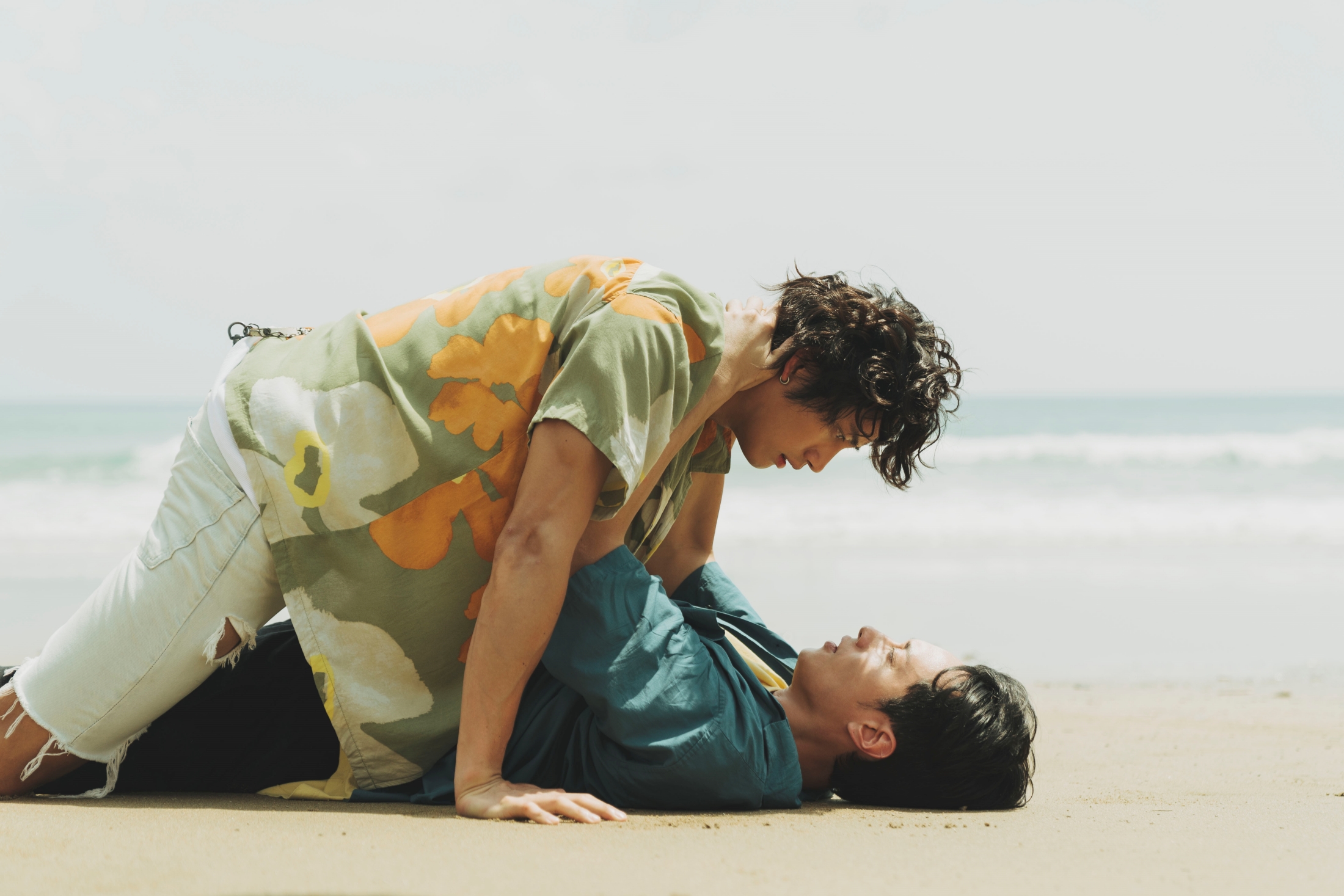
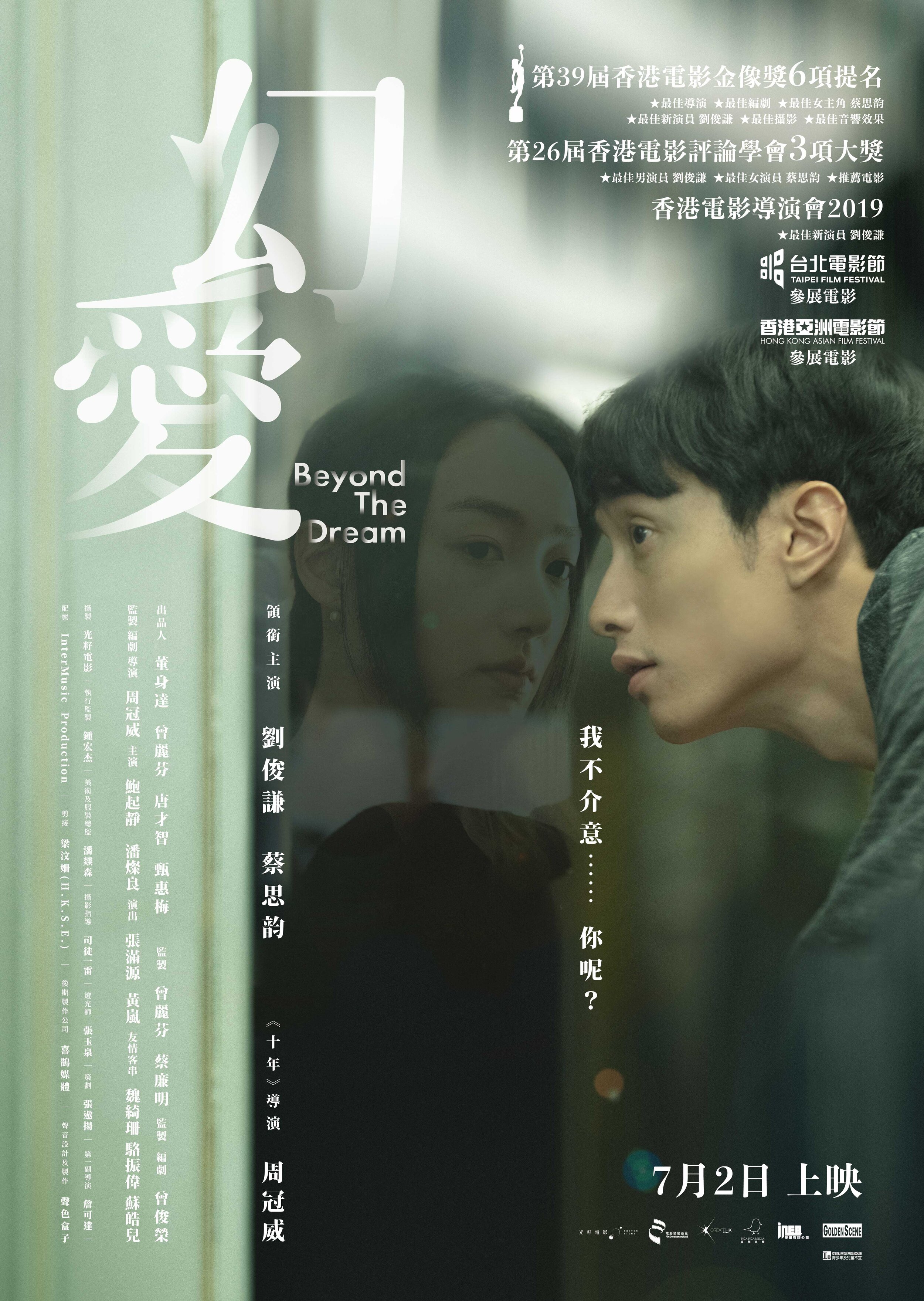
A dejected Hong Kong writer longs to find the path back to paradise if in the most ironic of ways, but finds something quite different after accidentally being befriended by a young street tough in Teng I-Han’s lowkey queer romance A Balloon’s Landing (我在這裡等你, wǒ zài zhèlǐ děng nǐ). Seemingly inspired by the boy’s love genre, the film is chaste in the extreme and overly subtle in its central love story which seems to borrow heavily from other similarly themed East Asian romances such as Il Mare and Comrades, Almost a Love Story.

Director Peter Chan is in fact name checked several times, while Taipei street tough A-Xiang (Fandy Fan) has a poster of Patrick Tam’s Nomad on his wall which of course features the face of Leslie Cheung who occupies a similar space to that of Teresa Teng in Comrades in connecting the would-be lovers. Cheung tragically took his own life in 2003, the same year writer Tian Yu’s (Terrance Lau) parents were killed, while Tian Yu himself seems to have suicidal thoughts and intends to end his life at a place called The Bay of Vanishing Whales he thought he’d made up for his novel but is informed is real in a letter from a little boy in Taiwan he continues writing to as a kind of pen pal older brother. 

In a way, A-Xiang represents his desire for life, fond saying that there’s “always a solution” and begging him not to die just like one of the letters he received urging him to carry on living because the sender would be waiting for him at the Bay of Vanishing Whales. A-Xiang is also his literal saviour in that they meet when he rescues him from a group of conmen after he got very drunk bar but though their first meeting is sexually charged with both men wandering round in their pants their romance is slow-burn to the point of non-existence. While on road trip to find the mythical bay, the pair grow closer with Tian Yu slowly giving up on the idea of finding it along with the death it represents only for fate to intervene.

At this point the film changes direction in allowing Tian Yu to rewrite his present, no longer in search of death but of love and a way to save A-Xiang in the same way A-Xiang has saved him. At least, A-Xiang becomes a kind of symbolic other self as hinted at in his stories of men as lonely islands casting messages in bottles out into the sea in longing for connection. This sense of isolation may stem from a feeling of otherness born of his sexuality, though the film never clearly defines it, along with the more literal orphanhood and existential loneliness he shares with A-Xiang. 

As expected there is a fated connection between the two men which is more than a little contrived if perfectly in keeping with the genre of romantic melodrama as Tian Yu begins to chase a future rather than the past even while actively rewriting it to engineer a better outcome. It might be tempting to read something more into the connections between these two men each orphaned, floating islands seeking new futures together though the central theme seems to be less romance than desire for life in which Tian Yu is able to overcome his depression and desire for death through his connection with A-Xiang who gives him a new reason for living. 

A-Xiang’s symbolic value as Tian Yu’s desire for life might explain why the relationship between them never sufficiently ignites in what is at least billed as a queer romance though could easily be taken for simple friendship or platonic brotherhood with the only expression of desire longing looks and tentative motions from A-Xiang. In any case, Teng lends the beautiful Taiwanese landscape a note of wistful melancholy, a place of infinite nostalgia in Tian Yu’s mind and an evocation of the paradise he’s seeking that’s simultaneously past and future waiting for parallel lines to cross. The lyricism cannot however overcome the coyness of the central romance that for its potential poeticism remains somewhat obscure, an unrealised desire awaiting its season but also a shift in the times born of a new desire for life rather than the melancholy loneliness of past emptiness.


A Balloon’s Landing screened as part of this year’s New York Asian Film Festival.

Original trailer (Traditional Chinese / English subtitles)

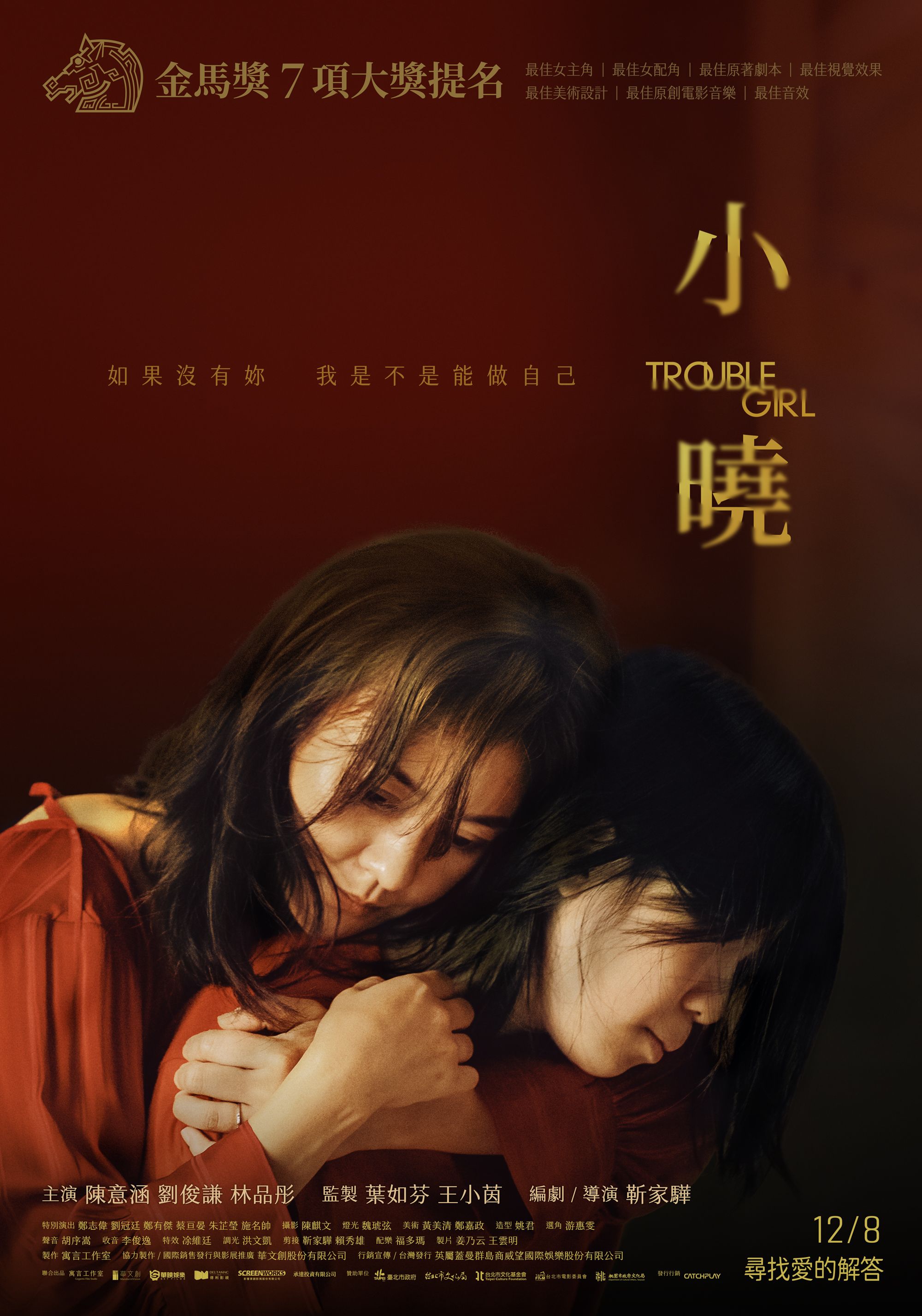
Trouble Girl (小曉, Chin Chia-hua, 2023)

The sad thing about Xiaoxiao’s life is that everyone is so intent on making her just like everyone else rather than trying to find ways to allow her to be more of herself. The film’s English title, Trouble Girl (the Chinese being simply her name, 小曉, xiǎo xiǎo), might hint at the external attitudes towards her in which she is seen only as a disruptive troublemaker while largely friendless and bullied by the other kids in her class.

The irony is that it’s only her teacher, Mr Chen (Terrance Lau Chun-him), who is actively trying to help her but he does so from a place of corrupted paternity in that he’s been having an affair with her mother, Wei-fang (Ivy Chen Yi-han), which began as a consequence of their meetings to discuss Xiaoxiao’s ADHD diagnosis and how to manage it at school. Seemingly under stimulated, Xiaoxiao ignores her classes and plays video games instead while Mr Chen doesn’t really say anything before gently taking her aside to suggest it’s not a good idea. He’s a proponent of positive reinforcement but is also a regarded as a soft touch by some of the other parents who increasingly turn against Xiaoxiao, regarding her as a disruptive presence damaging their kids’ education. 

Then again, it’s mostly these kids who are bullying Xiaoxiao for being not quite like them. Mr Chen has started some kind of secret program in which kids can get stickers for being nice to her, but it’s largely backfired as they alternately provoke Xiaoxaio because they think it’s funny when she loses her temper and act friendly when the teachers are around. Rather than attempting to make some accommodations for her, the school is only capable of trying to force her to behave in exactly the same way as everyone else. On an awkward camping trip with her mother and Mr Chen, he suggests capturing a frog but despite her fascination with them Xiaoxiao rejects the idea. She wouldn’t want the frog to be trapped in a bottle, and later attempts to free an owl from a cage symbolising her own desire to be free to be herself. After being suspended from school, she heartbreakingly tells her mother that she just wants to stay home and learn not to take pills anymore.

But then Wei-fang has problems of her own. She’s trapped too. Her husband has been living abroad for some time and it’s clear the marriage is all but over while she struggles to bond with Xiaoxiao and is ill-equipped to deal with her needs, perhaps on some level ashamed that she isn’t living up to the middle class ideals professed by the other mothers. She even may even resent her for trapping her in a dissatisfying domestic arrangement but is alternately frustrated that Xiaoxiao does not really want to play with her and prefers her father or Mr Chen. We see her struggle with her emotions too, sometimes slapping Xiaoxiao and shouting at her for doing something wrong or getting into trouble. 

Her affair with Chen may be a kind of escapist fantasy, but he seems to take it seriously and provides a positive, paternal presence in the absence of Xiaoxiao’s father who though he seemed caring later offers quite a harsh critique of his daughter that suggests he regards her as a disappointment. Nevertheless, it’s quite troubling that her sort of friend Xiaoshan calls Mr Chen “Paul” and is friendlier with him than seems appropriate but then her parents are involved with running the school so perhaps she simply knows him on a more personal level. Even so, the connection seems to arouse an odd kind of jealously that interacts with her disapproval of her mother’s betrayal of her father in having the affair. 

When Xiaoxiao tries to free the owl, she is surprised to discover that it simply flies back to its porch as trapped as both she and her mother though no longer with any desire for escape. Sympathetic towards the film’s twin heroines, Chin shoots with a down to earth naturalism though through the eyes of Xiaoxiao who is really just looking to be accepted for who she is while observing that her mother is much the same but even approaching middle-age seems no closer to finding accommodation or fulfilment.


Trouble Girl screened as part of this year’s Osaka Asian Film Festival.

Original trailer (English subtitles)

Anita (梅艷芳, Longman Leung Lok-man, 2021)

“I have the spirit of Hong Kong in me, I won’t resign to fate so easily” insists Anita Mui in a television interview following a year-long career break after a slap in a karaoke bar earned by standing up to a drunken gangster sparked a turf war and sent her into a temporary exile in Thailand. Running away wasn’t something Anita Mui was used to, though she had been it seems humbled by the experience and in Longman Leung Lok-man’s perhaps at times overly reverential biopic of the star who passed away of cancer at 40 in 2003, primed to rise stronger than before with greater focus and determination to serve the people of her home nation. 

Leung does indeed paint Anita (Louise Wong) as a daughter of Hong Kong, opening with her childhood as a vaudeville double act with self-sacrificing sister Ann (Fish Lew) in 1969. Jumping forward to 1982, the pair enter a TV talent competition but only Anita makes through to the final and then eventually wins launching herself into superstardom and path to success that later seems to her to have been too easy. Indeed, Leung frequently cuts to montage sequences featuring stock footage of the real Anita Mui receiving a series of awards and eventually moving into a successful film career with her appearance in Stanley Kwan’s Rouge bringing her best friend Leslie Cheung (Terrance Lau Chun-him) with her as she goes. 

If there’s a defining quality beyond her defiance that Leung is keen to capture, it’s Anita’s generosity and kindheartness. In the opening sequence, the 6-year-old Anita goes to great pains to rescue a balloon trapped in a tree for a little boy who then runs off happily forgetting to say thank you. Ann tells her off for going to trouble for someone who couldn’t even be bothered to say thanks but as she said it makes no difference she’d just just have told him it was no bother and the whole thing would be a waste of time. Her path to fame is not one of ruthless, she is keen to pay it forward and to help others where she can. She is obviously pained when her sister is cut from the competition and mindful of her feelings while bonding with life-long friend Leslie Cheung after his performance at a nightclub bombs while hers is a hit thanks in part to her ability to charm her audience in three different languages switching from Cantonese to Mandarin for a contingent of Taiwanese guests and Japanese for a gaggle of businessmen sitting at the back during a rendition of classic unifier Teresa Teng’s Tsugunai. 

Then again, though we see much of Anita Mui’s post-comeback charity work including that to raise money for flood victims in Taiwan, we obviously do not see any of her pro-democracy political activism or role in assisting those fleeing the Mainland after Tiananmen Square. Such controversial aspects of her life may be taboo for the contemporary Hong Kong or indeed Mainland censor, as perhaps are any overt references to Leslie Cheung’s sexuality even if Anita’s other key relationship, her stylist Eddie, is played with a degree of camp by a fatherly Louis Koo. For similar reasons, despite the emphasis on supporting other artists her major protege Denise Ho, who was recently arrested for her support of Hong Kong independence, is also absent. 

Meanwhile, the film is otherwise preoccupied with a more literal kind of maternity in directly contrasting the course of Anita’s life with that of her sister Ann who married and had children but later passed away of the same disease that would claim Anita just a few years later. The film presents her life as one of romantic sacrifice, that she was forced to choose between love and career and never found true romantic fulfilment. The love of her life, according to the film, was Japanese idol Yuki Godo (Ayumu Nakajima) who was more or less ordered to break up with her because the Japanese idol industry is much more controlling of its stars than that of Hong Kong, only his real life counterpart Masahiko Kondo was actually involved in a fair amount of scandal a short time later having become engaged to a Japanese idol who broke into his apartment and attempted to take her own life after he broke up with her and began dating another pop star. Anita is often described as the Hong Kong Momoe Yamaguchi with whom she shares her low and husky voice as well as rebellious energy, though Momoe Yamaguchi in fact retired quite abruptly after marrying her on-screen co-star and devoted herself to becoming the perfect housewife and mother in an echo of the romantic destiny the film implies continually eluded Anita culminating in her decision to marry the stage during her final concert. 

At the end, however, the film returns to her as a daughter of Hong Kong embodying a spirit of rebellion it subversively hints is now in danger of being lost. Yet Anita refused to resign herself to fate, ignoring her doctor’s advice to stop singing after developing polyps in her vocal chords and again when told to stop working during her treatment for cancer. Her defiance and resilience along with the conviction that anything is possible if you want it enough echo the spirit of Hong Kong in 2003 though later wounded by her loss and that of Leslie Cheung who tragically took his own life a few months before Anita too passed away. Featuring a star-making turn from model Louise Wong in her first acting role, Leung’s brassy drama capturing the fervent energy of Hong Kong in its pre-Handover heyday is a fitting tribute to the enduring spirit of its defiant heroine. 


Anita screens at the Soho Hotel, London on 8th July as part of Focus Hong Kong’s Making Waves – Navigators of Hong Kong Cinema.

International trailer (English subtitles)

Teresa Teng’s Tsugunai

Momoe Yamaguchi – 曼珠沙華 (Manjushaka)

Anita Mui – 曼珠沙華

Beyond the Dream (幻愛, Kiwi Chow Kwun-Wai, 2019)

Two troubled souls battle illusionary love in Kiwi Chow Kwun-Wai’s existential romance, Beyond the Dream (幻愛). What is love when divorced from fantasy, and once you know do you have the courage face it? That’s a question asked by each of the mirrored protagonists who’ve convinced themselves they are unworthy of love while struggling to extricate themselves from past trauma and present insecurity as they find the sands of reality constantly shifting beneath their feet. 

Chow opens with a street scene, the evening crowds gently parting to find a woman in distress, Ling (Wong Lam), who eventually begins to take off all her clothes. While passersby stare and film her public breakdown, a man, Lok (Terrance Lau Chun-Him), who recognises her from a support group for sufferers of schizophrenia, comes to her rescue as does a mysterious woman who wraps her cardigan around her giving her both modesty and warmth. Helping Ling into an ambulance, Lok ends up with the mystery woman’s cardigan somehow captivated by her, touched by the way she came to Ling’s rescue when everyone else was intent on ridicule. Sometime later he is surprised to realise that the woman lives on the floor above him on his estate. Returning her cardigan he discovers her name is Yanyan (Cecilia Choi Si-Wan) and she lives with her violent drunk of a father (Ng Kam-Chuen). The pair become a couple and Lok starts to wonder if he should tell her about his struggles with mental health only for his symptoms to begin resurfacing. Much to his horror he realises that his relationship with Yanyan is nothing but a vivid fantasy, a figment of his illness which exists only his mind. 

Yet even fantasy is built on a grain of truth as Lok later discovers when “Yanyan” turns up at one of his support group sessions only she’s a post-grad psychology student by the name of Yip Nam who is looking for volunteers to participate in her research into erotomania in those diagnosed with schizophrenia. Nam hopes to find out if lack of love is a causal factor in the condition through the stories of those who become consumed by romantic delusion. Unfortunately, her project is rejected by her supervisor, Dr. Fung (Nina Paw Hee-Ching), on the grounds that she has no viable subjects. Lok would seem to be the ideal patient, were it not for the awkward fact of which Nam is still unaware that she herself is the subject of his fixation, the “real” woman who came to Ling’s rescue all those months ago. 

“Relationships are always your problem” Nam is warned, herself carrying the burden of a traumatic past which, according to her mentor Fung, has also convinced her that she doesn’t deserve love, mirroring Lok’s fantasy of Yanyan and her imprisonment at the hands of the abusive father who eventually keeps them apart. In her role as his therapist, she counsels him to “find your true love in reality”, interpreting his recurring dream as a metaphor for his desire to lose himself in the comforting fantasy of his illusionary love for Yanyan rather than take the risks concurrent with seeking happiness in the “real” world. But she herself is also seeking wilful oblivion in other kinds of illusionary romantic distraction pursued perhaps as a form of self harm or at least a means of blaming herself for something for which she has no need to apologise. 

For Lok, meanwhile, romance is still more uncertain, his sense of reality permanently impaired as he finds himself pulled between his idealised love for Yanyan and the problematic relationship with Nam while convinced that no one could ever love him because of his mental illness. “No matter who you really are, you’ll all leave me in the end” he sadly affirms, later advising Nam that “it’s time we wake up from our dreams” ironically advocating for a return to “reality” while simultaneously running from it. Continually divided in Chow’s elegant composition, forever gazing through mirrors and seeing only the reflection of unfulfilled desire, the lovers struggle to overcome their psychological barriers to move beyond the dream of love into something more concrete if perhaps no less illusionary, chasing self-acceptance in the eyes of another as they surrender to romantic destiny as its own kind of “reality”. 


Beyond the Dream screens at Chicago’s Davis Drive-in on Oct. 10 as the closing night of the 11th season of Asian Pop-Up Cinema.

Original trailer (English subtitles)