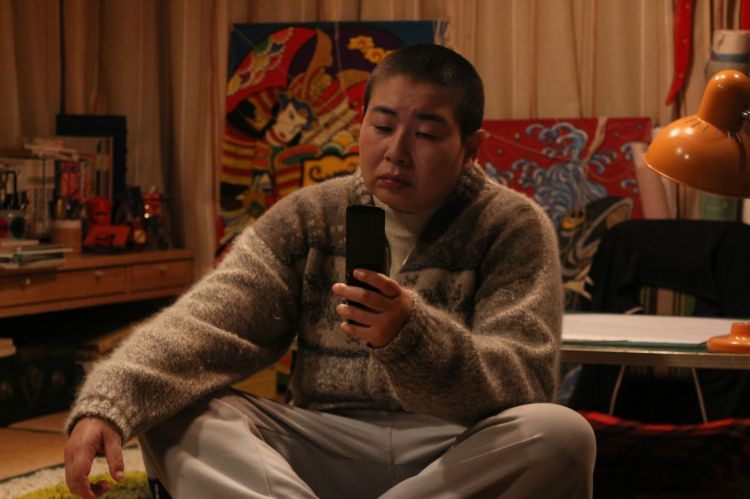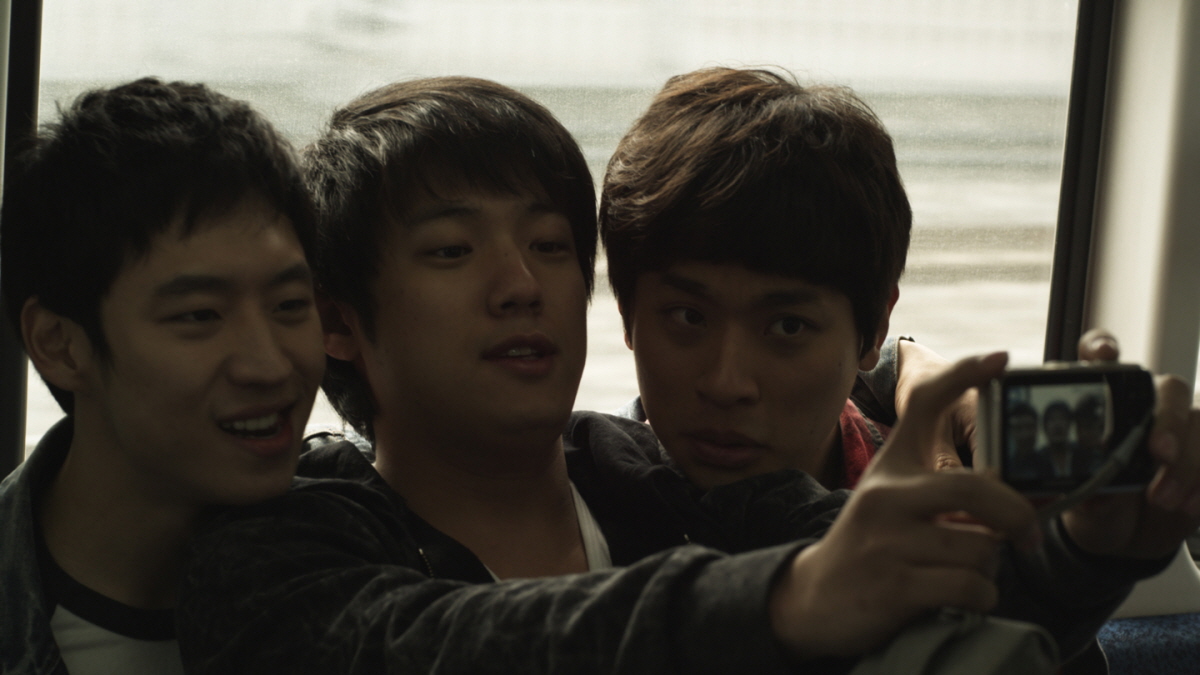
Greatful Dead (グレイトフルデッド, Eiji Uchida, 2013)

OEO9ONpIf there’s one thing Third Window Films have proved themselves adept at, it’s finding those smaller, off kilter and cultish films that often fall through the cracks. Greatful Dead, the deliberate misspelling the title of which is only the first sign of its oddness, is the latest find in what might be thought of as “weird cinema”. Evoking comparisons with Sion Sono’s Love Exposure thanks to its christianising themes, wry tone and sheer craziness, Greatful Dead is not all together as successful but is likely to find its own fans through its undeniably cultish appeal.

Nami, like many movie heroines, starts by recounting her childhood as a lonely, neglected child. The younger of two sisters, she desperately tries to get the attention of her mother who is only interested in saving disadvantaged children in other countries whilst ignoring the needs of her own two daughters, or her father who is so entirely wrapped up in their mother that he’s barely noticed the two girls either. Eventually after her mother leaves and her father slowly disintegrates, Nami becomes increasingly isolated. After inheriting a sizeable fortune, grown-up Nami wastes her time in idle pursuits before hitting on her favourite hobby – an amateur anthropological study of the “Solitarian” or those who have driven themselves completely mad through loneliness. Her favourite kind of Solitarian is randy old men whom she likes to watch as they spiral deeper into depravity before eventually reaching their end game. Old Mr. Shiomi, who was once something of a big shot but is now an embittered old man, is her perfect specimen but after he receives a visit from a pretty Korean Christian missionary and becomes “reborn” her observational project is ruined! Mr Shiomi’s been stolen by God, what lengths will Nami go to to get him back?

Of course, the irony is Nami is the biggest Solitarian of them all and the one she’ll never be able to identify. In the accompanying DVD interviews, the director states his intention to highlight the increasing numbers of lonely, older people in Japan thanks to the declining birth rate and fracturing of traditional community bonds but in actual fact many of the Solitarians Nami identifies are younger people and some of them even appear to have quite serious mental issues which require more serious intervention. Taking frequent field trips and noting down rare specimens in a little notebook like some deranged “twitcher”, Nami joyfully enjoys the darker side of her hobby as her favourite part seems to be watching lonely people die at the zenith of their craziness. Though in fact both she and Mr. Shiomi have both in some senses chosen their lonely lives as both have rejected the interest of family members – Nami the insistences of her sister that the normal is best and to be strived for and Mr Shiomi those of his son (who may or may not be mainly interested in his money).

There is then, obviously, a veneer of social commentary, though it feels fairly thin at best. The main appeal is in the degree of tonal shifts that occur throughout the film. Starting out in a similar way to many a quirky comedy as young Nami goes to extreme lengths just to get some kind of attention from her indifferent parents, to her carefree adult life the film plunges off a cliff face about two thirds of the way through thanks to Mr. Shiomi’s “betrayal”. Where another film would end with Nami meeting another lonely person and becoming slightly less unhinged, Greatful Dead veers into some seriously dark alleyways filled with blood, murder and pensioner rape among other perversions. The wildest thing is the resurgence of Mr. Shiomi as he decides he’s mad as hell and isn’t going to take this anymore! Fighting back in an equally strange way (why does no one ever just call the police? No, sharpening a mop into a spear seems like a more rational solution), the furious battle between subject and observer is quite literally in the lap of the gods.

Greatful Dead is an undeniably enjoyable, wild ride that escalates in a gently expert manner from its black comedy beginnings to exploitation ending but never quite coalesces into something more. Its views on the place of religion in this lonely world seem a little ambiguous – would Mr. Shiomi have opened his door to the male missionary quite as readily as he opened it to a pretty Korean girl and how long would his quite radical conversion really have lasted? Is the church actually helping some of these elderly people who might just want company or exploiting them? The film doesn’t seem sure, not that it’s that much of a problem. In the end, Grateful Dead is a wild ride through crazy town and destined to become another cult classic entry in to the world of wacky Japanese horror.


Review of Greatful Dead up at UK Anime Network – released courtesy of Third Window Films this coming Monday 26th January 2015.

New Directors From Japan Box Set (UK Anime Network Review)

A1rM9z8kBbL._SL1500_Great new box set from Third Window Films reviewed on Uk-anime.net.


We’re used to Third Window Films bringing us some of the best in contemporary Japanese cinema (as well as a few classics too), but this time they’ve gone even further and let us in on the ground floor as we meet these three new directors on the rise. This project was also a first as it took the unusual route of going to Kickstarter to fund its production, albeit following a pleasingly straightforward pre-order system. The three directors featured in this set all come from different backgrounds and are working in very different genres. As such they represent the level of diversity in modern Japanese indie filmmaking and each prove they have something very different and particularly idiosyncratic to offer in their later careers.

The first of these up and coming directors is Nagasa Isogai who has two films featured in the set – her student film My Baby and her longer short film, The Lust of Angels. My Baby tells the slightly crazy story of two sisters whose sibling rivalry intensifies as they both plan to have children of their own. Made to very strict guidelines, it’s shot in a now old fashioned looking 4:3 screen ratio with non-sync sound and has a strangely ‘70s-esque feeling with its odd, melodramatic concept and mostly straight forward shooting style.

Similarly, Lust of Angels takes on a lot of baggage from ‘70s exploitation cinema and though shot in a more modern feeling 2.35:1 widescreen it still has a distinctly old school feeling. Taking its queue from the delinquent girl movies of the past, The Lust of Angels is a dramatic story about train groping and female revenge. Transfer student Yuriko accidentally catches the train to school, something which most girls don’t do owing to its reputation as a “groper train”, where she discovers fellow student Saori about to fall victim to just this unpleasant crime. However, unbeknownst to the others Saori catches the train because she enjoys the attentions of the various perverts who ride it and even goes so far as to carry a special book which marks her out as desiring their attentions. Exploring such complicated themes as the differing reactions to burgeoning teenage sexuality, sexual abuse and sexual violence as well as female violence and revenge, The Lust of Angels is one of the more complex efforts in the set. However, first and foremost it works best as an exercise in genre and proves enjoyable both in that regard and in offering a good deal of promise for the future.

Next up is Kosuke Takaya whose 27 minute short is the most straightforwardly comic selection on the bill. Made under the NDJC program which aims to give a helping hand to promising new Japanese directors, Buy Bling Get One Free is a humorous satire on the fashion industry. Its hapless protagonist Kamono is literally a fashion victim – much less interested in expressing himself than in fitting into a scene, Kamono is easy prey for a bunch of weird fashion cultists. While it is undoubtedly very funny (and totally packed with awesome puns!), Buy Bling Get One Free is slightly hemmed in by the constraints of the NDJC programme. As such it may feel like a slighter effort than the other offerings in the set but it does still allow director Kosuke Takaya to show off a fair amount of skill which bodes well for the future.

The final and longest film included comes from Hirofumi Watanabe whose 88 minute feature tells the surreal story of layabout Takashi who unexpectedly discovers he has a teenage half sister he was previously completely unaware of. Takashi is a divorced father with no job and no hopes or plans for the future but his sudden discovery of a little sister and the new found responsibility being a big brother prompts him into thinking about his life. Finally, he makes a decision but unfortunately it ends up involving drug smuggling, shady business and finally….aliens! And The Mud Ship Sails Away is definitely the most surreal film in the set. It starts off with a sort of Jarmuschian aloofness which is brought out by the relatively static camera and black and white photography but towards the end this has been completely turned on its head. The last and strangest act takes on a Gilliam-esque level of absurdity with completely crazy, jagged camera action and bizarrely framed super close-ups. Some may feel the third act is simply too much or at least too far removed from the relative naturalism of the rest of the film but for those who like their movies surreal with a capital “S” And the Mud Ship Sails Away is another excellent addition to weird cinema.

Alongside the films themselves the package also offers interviews with each of the directors discussing how they got into filmmaking and more specifically how they came to make these particular films, as well as their general hopes for the future. Additionally, there’s also an interview with producer Shogo Tomiyama who’s the supervisor of the NJDC programme at the moment but is also famous for his involvement in the Godzilla franchise. This entire package was something of a labour of love for its producers and a fairly risky business venture – hence the initial need for Kickstarter. However, what The New Directors From Japan box set proves is that there is a wide and varied crop of new talent hovering just below the surface of contemporary Japanese cinema. Hopefully not the last boxset of this kind, each of the films presented has its own degree of promise and it will certainly be interesting to see how these burgeoning careers develop in years to come.


Fuku-chan of FukuFuku Flats (福福荘の福ちゃん, Yosuke Fujita, 2014)

cbTezoQReview of Fuku-chan of FukuFuku Flats up at Uk-anime.net! Screening in London as part of the 2014 Raindance Film Festival on 30th September / 1st October. Tickets still available and the director will be in attendance!


It’s been quite a while since Yosuke Fujita released his first feature length film – the charming comedy Fine, Totally Fine in which two childhood friends who haven’t quite grown up fall in love with the same kind of strange girl, but now he’s finally back with another feature following his short film Cheer Girls which formed part of the Quirky Guys and Gals anthology film. Like those two previous efforts, Fuku-chan of FukuFuku Flats is another warm and funny tale of the strange lives of ordinary people.

The titular Fuku-chan (played by actress Miyuki Oshima) is a painter and decorator and something of a parental figure at the small block of modest apartments at which he lives, Fukufuku Flats. As well as defusing work place disputes including one character breaking wind in the face of another to try and wake him up after lunch, and ones at home such as two neighbours disagreeing about the ownership of an exotic pet, Fuku-chan lives a fairly quiet, solitary life. On the other side of the story, a once high-flying executive, Chiho, has quit her lucrative and steady job to pursue a career in photography only to discover her idol and mentor is interested less in her artistic attributes than her physical ones. As you might expect, the path of these two characters is destined to cross – however an unlikely pair they may seem. In fact as it turns out, they share connection that for one of the them has become a long buried memory but for the other is an unforgettable scar that has coloured the rest of their life.

The more observant among you may wonder if there’s a mistake in the above paragraph. The titular Fuku-chan is indeed a male but the character is being played by the popular Japanese comedienne Miyuki Oshima. Though this is by no means the first time that an actress has portrayed a male character on screen – Linda Hunt even won an oscar for playing a male photographer in The Year of Living Dangerously, some viewers may initially be thrown by the decision. Fuku-chan’s shyness, caring nature and reluctance when it comes to dating women might, after all, be explained if ‘he’ were in reality a ‘she’. However, that is not where our story takes us and a joke about the size of Fuku-chan’s ‘maleness’ is perhaps designed to reassure us about his true nature.

As with Fine, Totally Fine Fujita’s world is packed out with eccentric characters and instances of everyday surrealism. From the the completely crazy ‘avant-garde’ photographer with his strange dress sense and giant camera wrapped up in some kind of alien-like yellow suit to the owner of an Indian restaurant who’s philosophically opposed to the idea of drinking water whilst ‘enjoying’ a spicy curry, these are some very strange people but crucially the sort of strange you might just come across in your everyday life – they never feel contrived or deliberately bizarre, just people that are little abstracted from the norm. Also to the film’s credit is that the characters’ individual quirks are just those – amusing, as character traits, but not ‘jokes’ in and of themselves.

There is, however, a slightly dark undertone to the film. The traumatic incident that binds the two central characters together is of a fairly ordinary variety, a typical sort of thoughtless teenage prank that happens everywhere, everyday (in fact, something similar happened to the author of this review in the dim and distant days of youth). Its ubiquity doesn’t make it any less cruel and even if it wasn’t exactly malicious in its intention, the effects of such humiliation can have an enormous effect on the rest of someone’s life. It’s not hard to see how such an experience could make someone bitter, withdrawn and misanthropic and it’s testament to Fuku-chan’s innately warm nature that his ability to help others remains undimmed even if he keeps himself in protective isolation. Conversely, you have to accept that some people’s problems are in need of more specialist care than even the kindest of hearts can provide, no matter how much you may want to help them.

Fuku-chan of FukuFuku Flats is another excellent entry in the ‘human comedy’ genre. Warm, genuinely funny and in the end even a little moving, it’s impossible not to be charmed by the film’s whimsical, absurd world. Though darkness sometimes creeps in around the edges, it only makes the light seem brighter and actually adds a little real world turmoil to Fuku-chan’s otherwise innocent world. An unconventional (not quite) romantic comedy, Fuku-chan of FukuFuku Flats is nevertheless a masterclass in the genre and genuinely one of the most fun films to come out of Japan (or anywhere else for that matter) for quite some time.


Pluto (명왕성, Shin Su-won, 2013)

GSEOiWzAs we’ve seen lately, there are certainly no shortage of films looking at the complicated and often harsh world of high school in Korea. Pluto (명왕성, Myungwangsung) takes a sideways look at the darker side of academic excellence when the praise and prestige of being one of the top students becomes almost like a drug and makes otherwise bright young people do things even a heroin addict in serious need of a fix might at least feel bad about afterwards with an all encompassing sense of entitlement that gives them a lifetime free pass for even the worst transgression.

June (David Lee) is a bright young boy from a regular high school who’s just transferred into an elite boarding school educating the country’s next great hopes. He may have been a top student at his old school, but here he’s merely average as the school hotshots are pretty quick to point out. Here, the top ten students are treated like princelings – a special computerised teaching room, no curfew, better rooms, better resources and they can more or less do what they like so long as they keep their grades up. Occasionally someone manages to bump one of the top ten from the list but they quickly get kicked out again. The top ten operate like some kind of swatters mafia – they all stick rigidly together, swapping hot tips for the upcoming exams that they refuse to share with the others and engaging in a series of increasingly cruel “pranks” they term rabbit hunts.

The film opens with the police finding the body of the previously number one student Yu-jin (Sung Joon) in a wood with June’s phone lying next him having been used to film the entire grisly affair. June is arrested for the murder but is released after his alibi checks out. Sick of all the struggle and unfairness, June puts his particular talents to use to try and teach the world a lesson about the sort of people this system is producing.

The picture Pluto paints of the Korean schools system is a frankly frightening one in which academic success is virtually bought and paid for or guaranteed by class credentials. Yes, the top students obviously must have ability – some of their activities may come close to cheating but interestingly nobody seems to want to try actual deception to get ahead. However, that natural ability has clearly been bolstered by their parents’ wealth. Attending an elite school and spending more than some people earn on private tutors geared towards knowing how to get into the best universities undoubtedly gives them advantages which are out of reach for others no matter how smart they may be. Perhaps that’s fair enough in a capitalist society, they didn’t ask to be born to rich parents and who would turn that sort of help down if offered it? However, though they may possess the virtues of discipline, hard work and a desire to succeed what they lack is any sort of empathy or even common human decency. Engaging in a series of manipulative hazing exercises, the elite group will stop at nothing to protect their status specialising in thuggery, blackmail, rape and even murder. The sort of people this system is advancing are not the sort of people you want running your schools and hospitals, they are morally bankrupt and only care about their own standing in the eyes of others.

Perhaps it’s fitting that this elite boarding school is housed inside a former compound of the Korean secret police, including a subterranean layer of prison-like tunnels once used as a torture chamber. Aside from the obvious school as torture analogies, much of them film seems to be about what people choose to ‘unsee’. The headmaster of the high school is aware of the ‘untoward’ behaviour of some of his pupils but refuses to do anything in case it upsets their well connected parents, damages the reputation of his school or has an adverse effect on those all important test results. The ‘Pluto’ of the title is referenced in June’s university application essay on the demotion of Pluto from the accepted list of planets. He argues that this is unfair and a fallacy as it’s illogical to measure anything by its proximity to the sun which is, after all, just another star which will eventually die like all the others. Just because it’s a little different looking, you shouldn’t necessarily categorise it as being in some way ‘inferior’ based on a set of fairly flimsy criteria. June, like Pluto, hovers in uncertain orbit on the periphery – always wanting in but perpetually locked out. Naturally gifted but from an ‘ordinary’ background where his single mother sells insurance for OK money, June can’t hope to compete with these elite kids even if his capabilities may be greater. A lot of decisions have already been made as to what people choose to see, have chosen to regard as an ideal, even if the reality is painfully obvious.

Though oddly funny in places for such a hard hitting film, Pluto is a difficult watch at times and paints a depressing picture of the high pressured nature of the Korean educational system and of human nature in general. The elite group are universally awful people who run the gamut from arrogant, entitled prigs to snivelling cowards which makes it difficult to feel any sort of sympathy and you start to long for bad things to happen to them which somewhat undermines the film’s premise. Perhaps the problem is just that they were awful people who were enabled by a system rather than people who started out good and were corrupted by it. Stylishly shot and supported by well grounded performances from its young cast, Pluto is a welcome addition to this perhaps overcrowded genre which brings more than a few new thought provoking ideas to the table.


Review of first Pluto published by UK Anime Network.

The Foreign Duck, The Native Duck and God in a Coin Locker (アヒルと鴨のコインロッカー, Yoshihiro Nakamura, 2007)

YgoLt - ImgurReview of The Foreign Duck, The Native Duck and God in a Coin Locker over at uk-anime.net I really enjoyed this one – great movie!


Director Yoshihiro Nakamura once again returns with another adaptation of a Kotaro Isaka novel, The Foreign Duck, The Native Duck and God in a Coin Locker (アヒルと鴨のコインロッカー, Ahiru to Kamo no Coin Locker). Having previously adapted Fish Story (also available from Third Window in the UK and itself a very fine film) and Golden Slumber, Nakamura and Isaka seem to have formed a very effective working relationship and this latest effort is another very welcome instalment from the duo. Elliptical, melancholic and thought provoking The Foreign Duck, The Native Duck and God in a Coin Locker is a minor gem and every bit as whimsical as its name would suggest.

Shiina (Gaku Hamada) has just left the small town shoe shop his parents own to study law in Sendai. Moving into his new apartment he attracts the attention of his neighbour, Kawasaki (Eita), who overhears him signing Bob Dylan’s Blowing in the Wind. Kawasaki is himself a great admirer of Dylan remarking that his is ‘the voice of God’. Aloof, cold, at once dominating and indifferent the prospect of developing a friendship with the mild mannered, short and shy Shiina seems an odd one but nevertheless the two seem to develop a bond. Kawasaki therefore proposes Shiina help him with a rather peculiar problem.

Shiina’s other neighbour, who rudely rebuffed Shina’s introduction and moving in present, is apparently a foreigner – Bhutanese to be precise – and although speaks fluent Japanese cannot read. He’s particularly perplexed by the different between ‘ahiru’ – the native duck, and ‘kamo’ – the foreign duck, and is sure that if he had a good dictionary he’d be able to understand the two fully and thus perfect his Japanese. To this end Kawasaki has decided to steal a Kanji Garden Dictionary for him and wants Shiina to help. Understandably confused Shiina originally declines but is soon bamboozled into helping anyway. There’s a lot more to all of this than a simple semantic quandary though and the only thing that’s clear is that Shiina has gone and gotten himself embroiled in someone else’s story.

‘That sounds like something you just made up’ is one of the first things Shiina says to Kawasaki and indeed everything about him seems studied or affected in someway as if he were reciting someone else’s lines – essentially performing the role of himself. Half of the crazy stuff he comes up with, like his warning Shiina to avoid a particular pet shop owner completely out of the blue, sounds as if he’s just invented it on the spot for a laugh were it not for his distant and humourless manner. Without spoiling the plot too much, you start to get the feeling that there’s really something slightly off about everything you’re being told, that crazy as it seems it is the truth in one sense but perhaps not in another. This is where the mystery element of the film begins to kick in – who is Kawasaki really? What is he on about? Is any of this really happening?

Wistful in tone, The Foreign Duck, The Native Duck and God in a Coin Locker is only partly a mystery, it’s also a bittersweet coming of age tale and an, admittedly light, examination of the Japanese attitude to foreignness. Away from home for the first time Shiina is obviously keen to strike out on his own and be his own his own person but at the same time wants to fit in and be liked by his classmates. A particularly telling incident occurs when a confused Indian woman tries to get some information at a bus stop only to be ignored by those waiting. Shiina seems to feel as if he ought to help her but having just heard two of his classmates complaining about ‘stupid foreigners’ does nothing. Feeling guilty he tries to reach out to his Bhutanese neighbour but is again rebuffed. Kawasaki wants to know the difference between the foreign duck and the native one – is there such a fundamental difference? As one character says ‘you wouldn’t have talked to me if you’d known I was a foreigner’ ‘Of course I would’ Shiina replies ‘no, you wouldn’t have’ his friend responds with resignation. Isn’t it better to just help those who need it, whoever or whatever they happen to be?

The Foreign Duck, The Native Duck and God in a Coin Locker maybe a little darker than its title suggests but its tone is definitely to the wistful/whimsical side – this juxtaposition might irritate some who’d rather a more straightforward mystery or a lighter, more conventional comedy but its refusal to conform is precisely what makes it so charming. That it also manages to pack in a decent amount of social commentary in an interesting way is to its credit as is its ability to make the totally bizarre seem perfectly natural. The Foreign Duck, the Native Duck and God in a Coin locker is another impressive feature from the creators of Fish Story and fans of that earlier film will certainly not be disappointed by their latest work.


Original trailer (English subtitles)

Third Window Announce 2013 Acquisitions

Ladies and Gentlemen, take a moment to prepare yourselves for I am about to tell you the best news you will ever hear. What’s that you say, they’ve finally finished The Grandmasters? No, unfortunately not but an even more exciting development has come to pass. Third Window announced via Twitch today that they will be releasing …..*drumroll please*…. AI TO MAKOTO on Blu Ray and DVD on 29th of April 2013. As you might remember I, and a few others of us here, were greatly impressed when this was screened at the LFF and it’s safe to say this is indeed very welcome, if totally unexpected, news!

If that wasn’t enough they’ll also be following up their recent Tetsuo release with another Tsukamoto double bill of Bullet Ballet and Tokyo Fist. Bullet Ballet is probably my favourite Tsukamoto film and I can’t wait to see it in HD!

They’ll also be releasing their ‘film of the year’ The Story of Yonosuke and the upcoming See you Tomorrow alongside the already announced Woodsman in the Rain, Vulgaria and the long over due Eyes of the Spider/Serpents Path from Kiyoshi Kurosawa! All in all these are a fantastic set of upcoming releases and Third Window continues to go from strength to strength!

Sawako Decides – Review


Sawako (Hikari Mitsushima) has been living in Tokyo for five years. She has a part time job at a toy company as an assistant, mostly making tea but doing any other slightly unpleasant menial tasks her petulant boss decides to throw her. She has a quite useless boyfriend who once worked at the toy company as a designer but has resigned (or was asked to leave following a total flop of his newest toy with a toddler focus group) in order to lead an ‘eco life’. His main hobbies appear to be knitting and recycling. A divorcée he has a daughter who he looks after, but isn’t terribly interested in and keeps referring to Sawako as her ‘new mother’.  Into this fairly dismal life is thrown the bombshell that Sawako’s father is seriously ill in hospital and it’s thought she ought to return home. Despite her protestations that she hasn’t been home for five years for a good reason and has no intention of going now, the boyfriend somehow convinces her to go as part of a naive plan to live on the land in an ‘eco’ way. As it turns out there are a few good reasons Sawako didn’t want to go home, it seems she’s none too popular there. Eventually ending up running her father’s clam packing business in his stead, these are the problems she will have to overcome if she’s to lead a more satisfying life.

Sawako Decides (kawa no soko kara konichiwa) is a decidedly bittersweet comedy about learning to accept yourself for what you are and doing your best with it. The humour is quirky and off the wall as might be expected, but mostly very true to life and the film is very funny. Unlike a most light comedies this one manages to be quite emotionally engaging and the audience quickly empathises with Sawako and her situation and is eager to see her move away from her disappointment. It’s a very charming film with an usual message delivered in an usual way, well worth looking at.