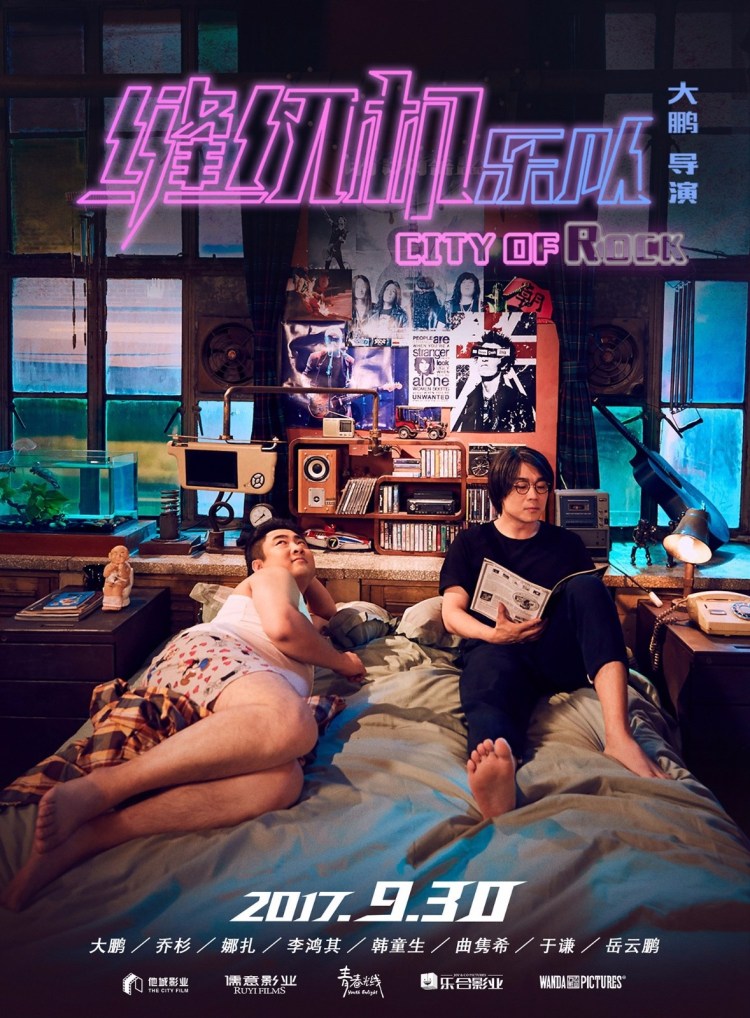
City of Rock (缝纫机乐队, Da Peng, 2017)

201708162324218235They built this city on rock and roll! Right in the middle of Ji’An, there’s a giant statue of an electric guitar with a plaque underneath it reading “The Heart of Rock” that was erected in memory of a legendary concert given by a super famous band, Broken Guitar, who happen to hail from the region. This being a particularly musical town, Broken Guitar continues to inspire young and old alike to pursue their musical dreams, but there is trouble on the horizon. Shady mobbed up developers want to tear down the Great Guitar and put flats there instead, which is not very rock and roll when all is said and done.

Meanwhile, in Beijing, shady musical agent Chen Gong (Da Peng), who was actually the agent for Broken Guitar at the time they broke up, is working on his latest venture – trying to turn three middle-aged, pudgy rockers into a Chinese K-pop act. Needless to say it’s not going well and Gong is perpetually cash strapped. When he receives an unsolicited call from Hu Liang (Qiao Shan), a Ji’An resident who wants him to help promote a local concert as a kind of benefit to help save the Great Guitar, Gong isn’t interested and quotes him a ridiculous sum of money only to see it instantly pop-up in his account. Jumping straight on a train, Gong is met at the station by a rapturous welcome parade which includes a marching band and kids throwing garlands but quickly figures out that Hu Liang is every bit as much of a schemer as he is. Hu Liang doesn’t even have a band and needs Gong to help him find one.

Once again, the conflict is between cynicism and artistic integrity as a group of misfits comes together to help stop a monument to true rock being torn down by soulless suits. Gong, as we later find out, had musical dreams himself but, after having gone against his father’s wishes to pursue a musical career, was forced out of the conservatoire after an accident robbed him of the feeling in two of his fingers and he became too depressed to sing. Having lost his faith in music, Gong has sold out and become a cynical money man, cutting deals anywhere and everywhere he can. Rather than work on the “unique” sound of the guys he was mentoring, he’s obsessed with the idea of sending them to Korea to get plastic surgery, and turning them into some kind of K-pop inspired Chinese song and dance group.

Hu Liang, meanwhile, is just as much of a con man but his heart is in a better place. Only two people show up for his auditions to join the band – jaded alcoholic with a broken leg, Ding Jianguo (Gulnazar), and a drummer from Taiwan who calls himself “Explosive” (Li Hongqi) and sits with his back to the audience. The other bandmates include a former member of Broken Guitar now a gynaecologist (Han Tongsheng) whose daughter has forbidden him from playing rock and roll, and a little girl (Qu Junxi) who’s a whizz on the keyboards despite the disapproval of her Taekwondo loving mother who thinks things like music are a frivolous waste of time. Together they face various obstacles in their quest to save the great guitar and the spirit of rock and roll itself but finally discover that the true spirit of rock lies in getting the band back together for one last hurrah and channeling all into music.

Gong, tempted by the shady developer, is reminded that money can save lives but dreams cannot. Faced with a dilemma, Gong falls back into cynicism and rejects the new sense of fun and togetherness he’d found as a peripheral member of the band. Yet reuniting with his hopeless wannabes and easing back into his soulless Beijing life, he begins to realise what he’s been missing and rediscovers the the true nature of rock and roll which isn’t trapped inside a giant concrete guitar but inside the hearts of musicians who need their instruments to help bring it out. Dreams, it seems, save lives after all. An often hilarious, sometimes silly comedy, City of Rock (缝纫机乐队, Féngrènjī Yduìis as full of heart as it encourages its protagonists to be, arguing for the importance of the right to express oneself in a society which often actively suppresses it.


Screened at the 20th Udine Far East Film Festival.

Original trailer (simplified Chinese subtitles only)
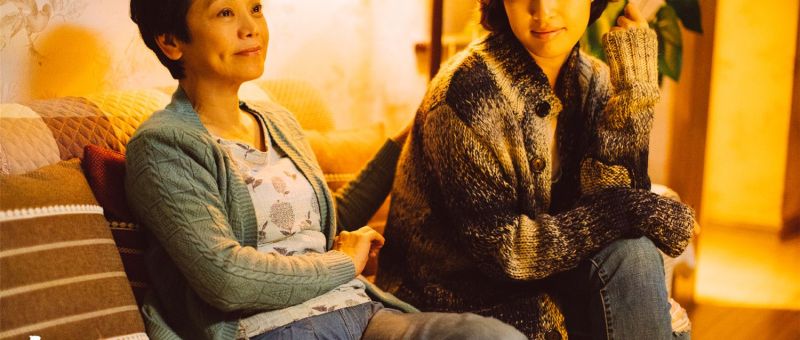
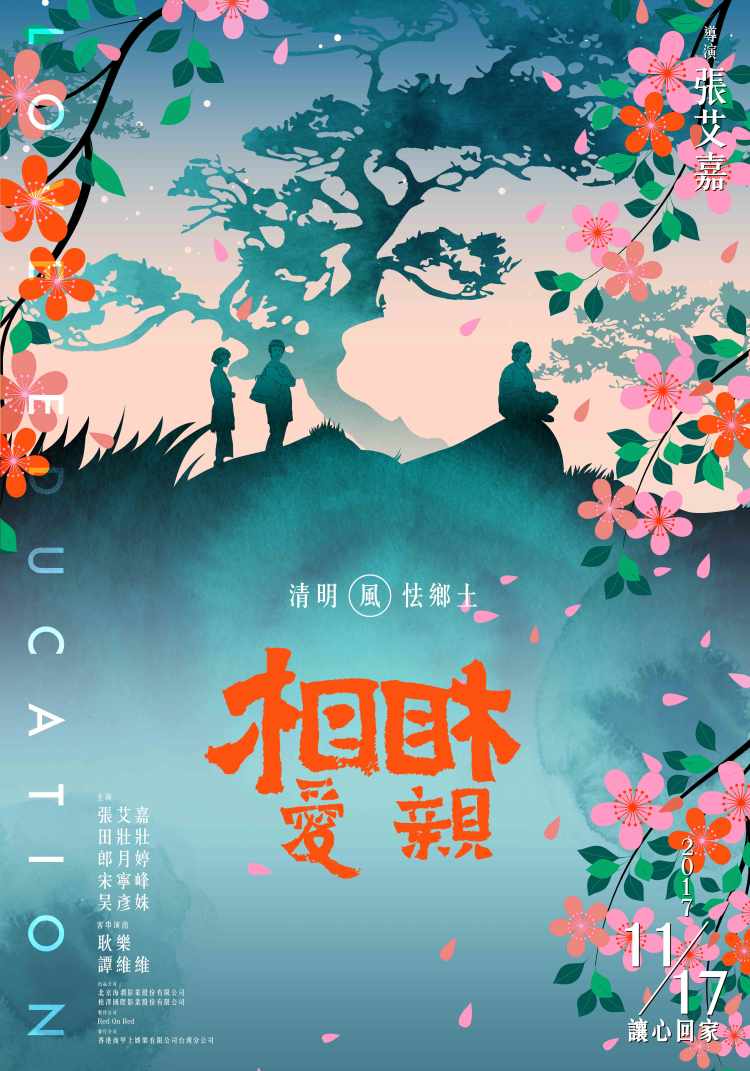
Love Education (相愛相親, Sylvia Chang, 2017)

Love Education posterWhat is love? Who gets to define it, and should it be a force of liberation or constraint? Sylvia Chang attempts to find out in looking at the complicated, unexpectedly interconnected romantic lives of three generations of women who discover that nothing and everything has changed in the decades that divide them. While a bereaved daughter channels her own anxieties of impending mortality into a petty and hopeless quest to validate the true love history of her parents, a daughter battles an oddly familiar problem with her musician boyfriend, and an elderly village woman is forced to realise she wasted her life waiting for the return of a man who had so carelessly abandoned her. Mediated by a culturally specific argument over burial rites, Love Education (相愛相親, Xiāng ài xiāng qīn) is a meditation on the demands and obligations of love, both familial and romantic, as they inevitably change and mature across the arc of lifetimes.

As Huiying’s (Sylvia Chang) elderly mother lies dying, she sinks into a vision of a bright summer’s day spent with her one true love who is already waiting for her in a better place. Huiying, a middle-aged school teacher facing semi-enforced retirement, is thrown into a tail spin of grief and anxiety in losing her mother, realising that it won’t belong before her daughter will in turn lose her. Weiwei (Lang Yueting), an aspiring TV journalist, remains unmarried and still lives at home though, unbeknownst to Huiying, is planning to move out and live with her aspiring rockstar boyfriend, Da (Song Ning). The plan is, however, thrown into confusion by the resurfacing of his ex, in the city with her son to compete in a cheesy TV singing contest. Meanwhile, Huiying has become obsessed with the idea of burying her mother alongside her father, only his body was sent back to his rural hometown, as is the custom, and so will need to exhumed and brought to the city. Unfortunately, Huiying’s father was technically a bigamist – he left an arranged marriage in the country to look for work in the city, “married” Huiying’s mother and never looked back. Huiying, determined to prove the “legitimacy” of her parents’ love seeks to reunite them in death, but Nana (Wu Yanshu) – the abandoned country wife, is hellbent on retaining the body, at least, of the man she married and thereby legitimising herself as a “true” wife.

Huiying’s grief-stricken descent into desperate obsession is a thinly veiled attempt to work through her own feelings of middle-aged dissatisfaction and anxiety on being violently confronted by her transition from a position of authority into a potentially powerless old-age. Her decades long marriage to Xiaoping (Tian Zhuangzhuang), a mild-mannered former teacher turned driving instructor, is comfortable enough but perhaps floundering as the couple contemplate their retirement and impending dotage. Huiying, mildly jealous of a elegant pupil who seems to have taken a liking to her husband, is also entertaining a mild crush on the father of one her own pupils while quietly feeling the distance that has inevitably grown between herself and her husband throughout the years. And so, she sets about “proving” that her parents’ romance was good and true, not only morally recognised but blessed by the state and legally approved.

This, however, proves more difficult than expected due to China’s rapid modernisation, series of political changes, high levels of bureaucracy and idiosyncratic way of issuing documentation. As her parents were “married” in the ‘50s, their union was approved by the local Communist authorities whose approach to record keeping was not perhaps as serious as might be assumed. The receipt for their license should be at the local block office, but they knocked that down. The papers were supposed to be moved to the town hall, but lacking resources they simply threw away all the documents from 1978 and before. Huiying’s parents belong to a past which has literally been thrown away, erased from history and regarded as an irrelevance by the current generation who think only of the future.

Meanwhile, Nana has been patiently waiting in her home town – a “good wife” by the standards of her rural society. Marrying Huiying’s father in an arranged marriage she has done all expected of her – looked after his family and then lovingly tended his grave despite the fact that he abandoned her after only a few months of marriage, not even bothering to tell her that he met someone else and wasn’t coming back. Nana, like Huiying, is desperate to legitimise her position to avoid the inevitable realisation that she has sacrificed her life for a set of outdated ideals.

Weiwei feels this most of all. Unlike her mother, she can’t forgive her grandfather’s moral cowardice in treating his first wife so cruelly. Building up an unexpected bond with the ironically named “Nana”, Weiwei is also forced to think about her own stalling relationship with Da who put his rockstar dreams on hold to stay with her rather than proceeding on to Beijing to try his luck there. Da, like her grandfather, has a past – in this case a childhood sweetheart with a young son and possibly territorial ambitions over a kind young man she has wounded through abandoning. Should Weiwei wait for Da, and risk ending up all alone like Nana, or should she end things now and give up on youthful romanticism for grown up practicality?

So bound up with the “legitimisation” of love, there’s an inevitable degree of possessiveness which creeps into each of the relationships – even that of Huiying and her daughter as she attempts to clip her wings to keep her close, but there’s also a kind of generosity in Chang’s direction which eventually allows them all to break away (to an extent) from an insecure need for validation to something bigger, warmer, and with more capacity for empathy and understanding. Quite literally a Love Education, Chang’s exploration of the romantic lives of three generations of women finds that though the times may have become more permissive nothing has become any easier. Nevertheless, there is comfort to be found in learning to appreciate the feelings of others, offering support where needed, and making the most of what you have while you have it in the acceptance that nothing is forever.


Screened at the 20th Udine Far East Film Festival.

Original trailer (English subtitles)

A Special Lady (미옥, Lee An-gyu, 2017)

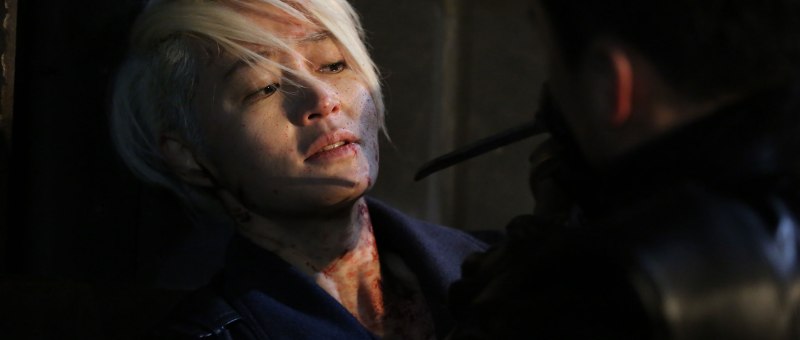
A Special Lady posterAll you need to make a movie is a girl and a gun – so goes the age old wisdom. Korean cinema, it has to be said, has been in a fairly progressive mood of late with several high profile female-led action movies to complement the macho melodrama that has become synonymous with the nation’s cinematic output. There has, however, been a slight imbalance in the way these films have been presented – yes, women carry guns and issue roundhouse kicks to the face but they do so out of maternal fire. This obsession with corrupted motherhood finds a natural home in Lee An-gyu’s A Special Lady (미옥, Miok) which puts puts Kim Hye-soo in a blonde wig and then asks her to do pretty much what she did in Coin Locker Girl only more sympathetically.

Na Hyun-jung (Kim Hye-soo) has risen from lowly bar girl and exploited sex worker to be the right-hand woman of mob boss Kim (Choi Moo-sung). Marshalling a collection of (well cared for) high class call girls, her main stock in trade is blackmail – she sends her girls out as honey traps to capture “important” people, bring them back to the “hotel” for illicit “fun”, and film them in the act to compel them to work in the best interests of the gang. The plan usually works, but snotty prosecutor Choi (Lee Hee-joon), who has just returned from his honeymoon after marrying the boss’ daughter, liked to think of himself as having integrity and is hell bent on revenge against the villainous Na. Exploiting weaknesses already exposed within the gang including the stormy romance between Na and ambitious foot soldier Lim (Lee Sun-Kyun), and the return of Na’s illegitimate son with boss Kim whose wife and (legitimate) child were murdered by a rival organisation, Choi sets about taking it down in an unorthodox way as a means of getting his sex tape back but also fulfilling his commitment to “justice”.

The English title, A Special Lady, has an awkward spin to it with its mobster-esque patter hinting at a classy bar girl or much loved peripheral figure. The Korean title which is simply a woman’s name gives a better indication of the tale at hand in its emphasis on loss of innocence, fall, and rebirth as something or someone else. Na is certainly well versed in the gangster world, perfectly equipped to operate within it both in her physical prowess and also in her emotional control, politicking, and ability to strategise, yet she also operates outside of gang structures with many, including Lim who has long been in love with her, resenting that a mere woman holds such a high position with such proximity to Kim.

This marginal status extends to Na’s feminised perspective which reduces her to a figure of ruined motherhood. Na takes care of her girls, as a mother would, entrusting them to another woman who acts as their madam but is fiercely loyal to her, more nanny than henchman. Her major preoccupation is with the son she was forced to give up as an infant after spending time on the inside on behalf of the gang. Joo-hwan (Kim Min-suk) is Kim’s son and heir and the mob boss has been careful to keep him overseas to keep him safe, but either because of persistent parental absence or his gangster genes, the boy keeps getting himself expelled for violent conduct and Kim thinks it’s probably time to bring him home and verse him in his heritage. Na has long wanted to be reunited with her almost grown up son, but he has no idea she is his mother and believes he is the son of Kim’s deceased wife. When Joo-hwan is threatened and then turned against her by vicious rumours, Na will stop at nothing to ensure his safety even if he never knows who she really is.

Na’s descent into ferocious fighting machine, attacking a field full of mobsters with a bone saw, is the rage of a mother whose child is threatened. She doesn’t fight them off because she wants to survive, or for revenge, or simply because they are from a rival gang but because they threaten her children both in the case of one of her girls who happens to be with Na, and of course their targeting of Joo-hwan solely to get to his mother. The world of the film is a persistently misogynistic one – not just in the way women are routinely used as a means to an end by the gangsters, and by Na herself, but in the way that Na struggles to be accepted as a valid member of the gangster hierarchy rather than an adjunct to it as an honorary manager of the female contingent. Lim, who feels displaced by her in his status within the gang, is also desperately in love with Na who seems to return his feelings on some level but ultimately turns him down – something he can not accept, stooping so low as to threaten Na’s child to blackmail her into accepting him despite his intense resentment on finding out about her previous relationship with Kim.

Unexpected action hero status aside, Na becomes nothing more than a figure of corrupted motherhood who must be “repaired” through saving her son and then by retiring to become a more “normal” maternal figure. The debut from Lee An-gyu, A Special Lady features a number of well choreographed action scenes, strikingly composed images, and impressive production design but all too often falls back on tired ideas as its heroine battles valiantly to save her son with the intention of “rescuing” herself in the process.


Screened at the 20th Udine Far East Film Festival.

International trailer (English subtitles)

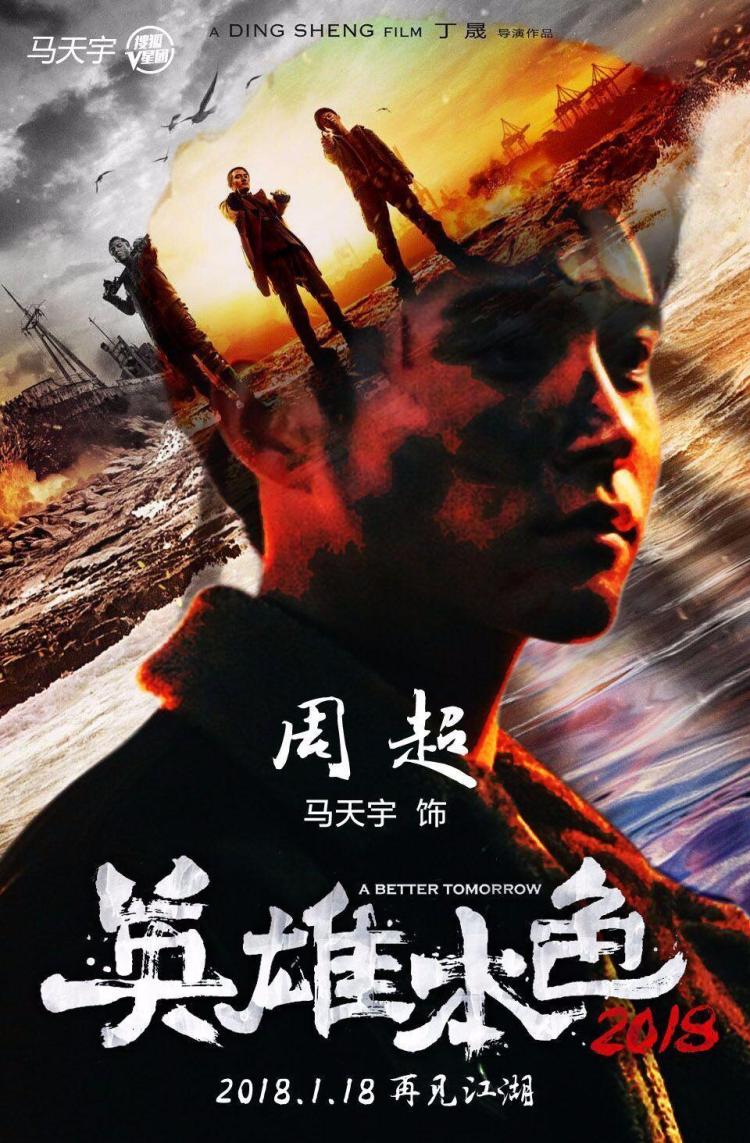
A Better Tomorrow 2018 (英雄本色2018, Ding Sheng, 2018)

better tomorrow 2018 posterIn the history of Hong Kong cinema, there are few films which could realistically claim the same worldwide influence as John Woo’s 1986 landmark A Better Tomorrow. Commissioned by Tsui Hark, the then jobbing director Woo was tasked with creating a vehicle for a veteran Shaw Brothers star. Casting Cantopop idol Leslie Cheung and TV sensation Chow Yun-fat, Woo mixed traditional melodrama with hyper masculine emotionality to give birth to what would become the “heroic bloodshed” genre which was to dominate the island’s cinematic output well into the ‘90s. A Better Tomorrow, as its title implies, is the perfect evocation of its era and among the first to express an oncoming anxiety for Hong Kong’s “return” to China then only a decade away. Slick and oozing with ‘80s, macho cool, Woo’s film captured the imaginations of young men everywhere who suddenly took to wearing sunglasses and trench coats while chewing on match sticks, dreaming dreams of heroism in a sometimes gloomy world.

Which is all to say, attempting to “remake” Woo’s masterpiece may well be a fool’s errand. It is however one which has been frequently attempted, not least by Wong Jing in 1994 and Song Hae-sung in Korea in 2010. Korean cinema has perhaps become the heir of heroic bloodshed with its inherent love of melodrama which often finds its way into the nation’s bloody gangster epics whose generally high level of homosocial bonding is perfectly primed for male honour drama. Ding Sheng, apparently a huge fan of the original Hong Kong hit, brings the tale north to the Mainland, relocating to Qingdao which serves as a trading post for the drug running route from Japan.

As in the original we have two biological brothers – Kai (Wang Kai), a “sailor” who has fallen into smuggling to support his family who are unaware of his criminal occupation, and Chao (Ma Tianyu) – a rookie policeman. Meanwhile, Kai also has a criminal “brother” in his younger partner Mark (Wang Talu), an orphaned hothead from Taiwan. Kai is a “noble” smuggler who refuses to traffic drugs but a Hong Kong triad boss is hellbent on fishing out his Japanese contacts and after a job goes wrong, Kai ends up getting shot and arrested by his own brother who is heartbroken to discover the truth. Spending three years in prison during which time Kai’s father is killed in a raid on their home by gangsters looking for info on the Japanese, Kai tries to go straight but finds himself pulled back into the underworld after coming into conflict with villainous gangster Cang (Yu Ailei) who has taken over the Japan route (and forced Kai’s old girlfriend into prostitution after getting her hooked on drugs).

Ding’s film, while replicating the plot of Woo’s original, attempts to bring it into the “modern” era in which the stylised, manly melodrama of the ‘80s action movie has long since been replaced by a finer desire for “uncool” realism. Ding does not seem to be making a particular point about modern China, other than in persistent economic inequality which has forced an “honest” man like Kai into a life of crime for the otherwise honourable reason of taking care of his family. Though this itself maybe a subtle reference to the post-90s world, the major anxiety seems to be more with cross cultural interactions and possible pollution of “good” Chinese men like Kai who have been led astray by the false promises of, for example, gangsters from Hong Kong, and the old enemies in Japan. Interestingly enough, the relationships themselves are formalised and superficial. In Japan Kai and Mark are entertained in a “super Japanese” bar of the kind which only tourists frequent, decked to the ceilings with cherry blossoms and staffed with “geisha” girls, while in China they take their guests to a bar which has Peking Opera going on in the background as entertainment.

Kai is fond of telling his sworn brother that everything in the world may change, but brotherhood remains the same. This turns turn out to be an ironic comment in that his natural brother, Chao, disowns him in shame and loathing after his release from prison. Nevertheless, Kai never gives up striving for Chao’s approval even whilst reuniting with Mark who has been crippled and reduced to cleaning boats at the harbour after trying to exact revenge for Kai’s betrayal. The trio’s manly honour code is thrown into stark relief by the amoral Cang who, claiming that “the world has changed” and loyalty no longer means anything, thinks nothing of shooting anyone and everyone who stands between himself and financial gain. If Ding has a comment to make, it’s that the traditional ideas of brotherhood, loyalty, justice and goodness are being eroded by the lure of foreign gold promised by corruption, exploitation, and an absence of morality.

Ding isn’t trying to match Woo’s grand sweep of tragic inevitability so much as aiming for straightforward crime drama but his occasional concessions to melodrama never quite gel with his otherwise gritty approach, nor do his unsubtle his homages to the original film which find Leslie Cheung’s iconic theme song becoming a frequent musical motif as well as prominently featuring at an ultra cool hipster bar located in a disused boat which plays his record on a turntable with a large picture of a grinning Chow Yun-fat behind it. A Better Tomorrow 2018 succeeds as a passible action drama, but one without the heart and soul that made Woo’s original so special. 


Screened at the 20th Udine Far East Film Festival.

Original trailer (English subtitles)

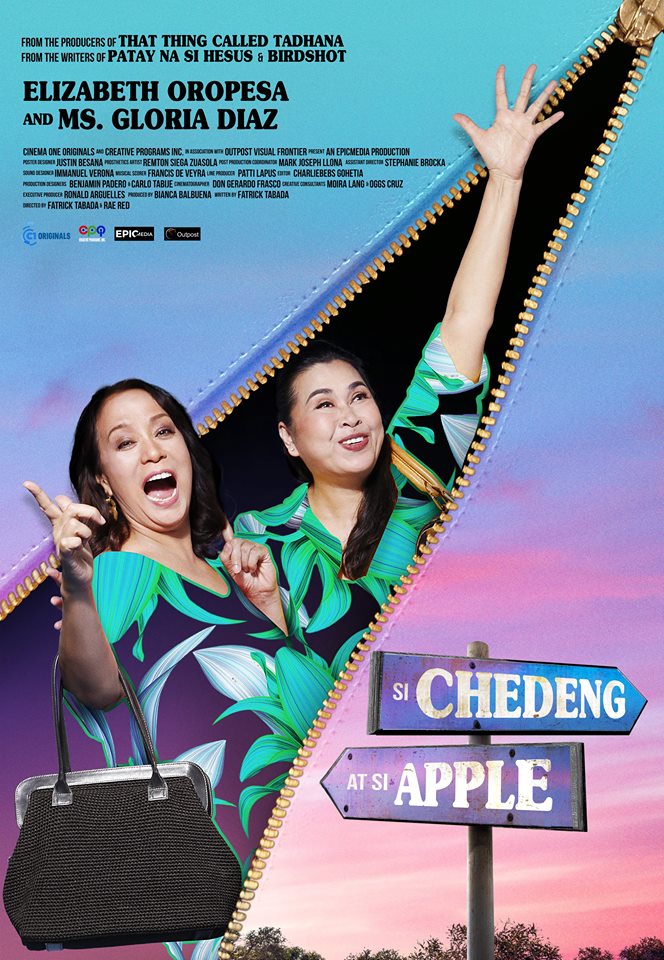
Chedeng and Apple (Si Chedeng at si Apple, Rae Red & Fatrick Tabada, 2017)

chedeng and apple posterWhen you feel you’ve discharged all your social obligations, you might feel as if you’ve a right to live by your own desires. Whether the dreams you abandoned in youth will still be there waiting for you is, however, something of which you can be far less certain. Following the death of her husband, one Filipina grandma decides to find out, taking to the road with her best friend who is, incidentally, wanted for murder and carrying around the severed head of her late spouse in a Louis Vuitton handbag belonging to her vacuous step-daughter, in search of the one that got away.
Chedeng (Gloria Diaz), apparently plotting the death of her sickly husband, is shocked to find him already gone when she takes him his breakfast. Shielded by the window which places her in the crematorium and her children outside it, Chedeng decides to make a shock announcement that comes as no surprise to her supportive best friend Apple (Elizabeth Oropesa). Standing front and centre and with intense determination, she announces to her grown up sons that she is a lesbian and will now be embarking on a more authentic life. Her sons are scandalised. Despite the fact that her youngest son is gay himself (and slightly hurt that his apparently supportive mother had never thought to share her own conflicted sexuality with him), the other two cannot get their heads around it and assume their mother has had some kind of mental breakdown.

Meanwhile, Apple whose life has been far less conventionally successful has been married to a wealthy but violent and abusive husband for the last five years. Praying furiously for his demise through black magic, she eventually snaps and kills him. Calling Chedeng for help, the pair dismember (in full view of the “discreet” maid) and bury the body (save for the head which Apple insists on keeping, and his penis which she can’t resist nailing to the wall and ruining the perfect crime in the process). With both their husbands out of the picture the pair decide to go on the run to look for Chedeng’s first love – a woman called Lydia for whom she had promised to return, only that was over 40 years ago.

At heart Chedeng and Apple is a story of liberation. The two women have been consistently impeded by men who prevented them from living the lives they wanted to live, trapping them within the patriarchal system of the conventional family. Chedeng, a serious and earnest woman, has prided herself in conforming so completely to the social role expected of her. A straight laced schoolteacher, she married well and kept a fine home raising three sons and supporting her husband who apparently knew she was gay and just accepted it. With her children grown and her obligation to the man she married at an end, she finally feels herself free to be her true self. Apple meanwhile has had the opposite experience in a series of unfulfilling relationships with useless men on whom she blames (rightly or otherwise) her inability to pursue her dreams of becoming an actress. Finally ending up in an abusive but economically comfortable relationship, she eventually has no choice but to free herself through violent means.

A pervasive sense of melancholy haunts the film as it becomes clear how much Chedeng has suffered in sacrificing her authentic self to live the life society expected of her. Lydia, the lost love of her youth, was braver – she dreamt of escaping to an island for a simple fisherman’s life in which she and the woman she loved could perhaps live together wanting little more than each other’s company. Chedeng, conventional as she is, could not imagine it and, though she vowed to return and reclaim her love after going to the city, she has waited 40 years and fears it may be too late.

Yet the resolution to her problems isn’t found in romance but in the depth of the friendship she shares with the loose cannon that his Apple – a woman her total opposite who follows her desires to destruction and freely speaks her mind little caring what anyone else may think about it. The spiky banter between the two women has an authentic, lived-in quality that brings a degree of realism to the often absurd adventure and proves a comedic counterpoint to the heaviness of the issues. Warm and oddly hopeful for its aged protagonists, if lamenting that they had to wait so long to achieve their “freedom”, Chedeng and Apple is at once a fierce condemnation of an oppressive, misogynistic society and a joyful celebration of friendship and liberation.


Screened at the 20th Udine Far East Film Festival.

Original trailer (no subtitles)

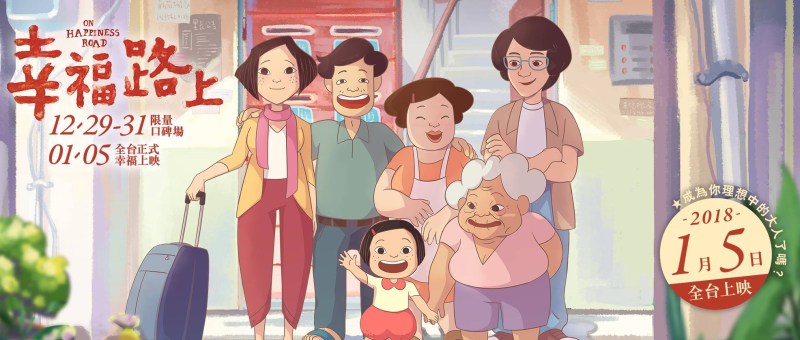
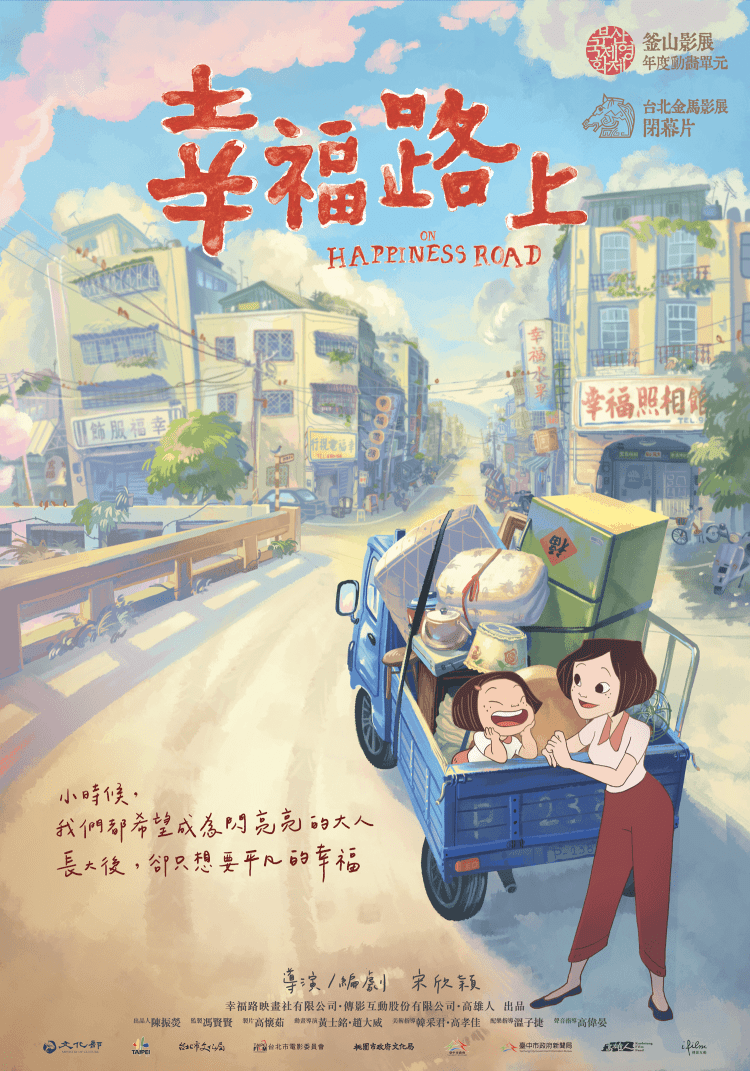
On Happiness Road (幸福路上, Sung Hsin-yin, 2017)

On happiness road posterSung Hsin-yin attempts a series of impossibles with her debut feature, On Happiness Road (幸福路上, Xìngfú Lùshang). In a bold move she has crafted what is possibly the last Taiwanese animated feature while attempting to pack 40 years of turbulent political history into the story of a lost middle-aged women ruminating on her cheerful, uncomplicated childhood on the distinctly humble Happiness Road. Battling the weight of parental expectation and the false promises of a better life overseas, her heroine, Chi, makes an enforced return to source on hearing that her beloved, part-aboriginal grandmother has passed away.

Chi (Gwei Lun-mei), an unhappy 30-something woman, receives the call in America where she has been living with her American husband. Unbeknownst to her family, Chi’s marriage is all but over and she finds herself at something of a crossroads, half wondering if it’s time to come home to Taiwan and half humiliated in being seen to have returned with her tail between her legs. She comes home, alone, to mourn her grandmother but finds herself wandering back through the streets of memory and fantasy recalling all the small details and minor incidents that brought her to his point in the hope of figuring out where it is she needs to go next.

Chi was born in 1975 on the very day that Chang Kai-shek died. Chang was by then a brutal dictator but the brainwashed little Chi who still sees his picture everywhere and has been taught to respect his many virtues idolises him all the same. Her family, uneducated ordinary working people, speak Taiwanese Hokkien at home but at school she has to speak Mandarin – the “official” language, all dialects are banned. Thus little Chi finds her parents’ language backward and embarrassing, their failure to adapt to “modernity” a hurdle in her own forward development.

As time moves on, Chi’s “Taiwaneseness” becomes something she feels she must sacrifice in order to purse the conventional success expected by her parents and the society at large. Little Chi, riding in the back of a pickup truck with her parents on the way to Happiness Road, asks them one of the biggest questions of all – what does “happiness” mean. Her parents, unable to answer, shush her, but her father (Chen Po-cheng) seems pleases his daughter has such big thoughts and wonders if she might become a philosopher one day. Oh no, replies her mother (Jane Liao). There’s no money in that – she’ll be a doctor! Her parents want for her all the material comforts of the settled middle classes, but her society tells her to attain them she must leave her nativeness behind – speak Mandarin, forget about granny’s ancient wisdom, and eventually go abroad leaving the “old fashioned” island far behind.

Chi has done everything she was supposed to do. She studied hard, got a good degree, got an OK job, and then ended up going to America almost on a whim. She reached the destination expected of her, but still she isn’t happy. Her marriage is failing as she and her American husband want very different things out of life and Chi wonders if she really belongs in this insincere culture which, at the end of the day, has never quite accepted her. In America she experienced mild forms of racism but then didn’t her half-American friend, Betty (Li Chia-hsiu) – blonde with blue eyes but speaking only Mandarin, experience exactly the same thing in Taiwan? Pregnant but seeking an escape from an unhappy marriage, Chi also worries what the future will be if she chooses to come home and raise her half-American child alone in a perhaps unforgiving society.

Yet reuniting with Betty she discovers that even if her life has not quite turned out the way she planned, she is blissfully happy as a single mother to two children, blonde like her but with brown eyes. Chatting with the ghost of her late grandmother who still has a few lessons to impart, Chi learns to see with the eyes of her heart and comes to realise that sometimes the road to happiness passes through a few uncertain turns but that that’s OK. Her parents, whom she feared would judge her for a failed marriage and a child born after divorce, are predictably enough only too happy at the prospect of their only daughter coming home for good and finally making them grandparents no matter the circumstances surrounding the origin of both those events. Chi may not have wanted the “road” her parents and her society had attempted to lay down before her, but discovers that departing from it is not failure and that “happiness” is a concept you are free to define for yourself. Beautifully animated and filled with whimsical flights of fancy, On Happiness Road is a sometimes melancholy but heartwarming tale of life in modern Taiwan as one lost woman finally discovers the road home and realises it has been waiting for her all along.


Screened at the 20th Udine Far East Film Festival.

International trailer (English subtitles)

Satan’s Slaves (Pengabdi Setan, Joko Anwar, 2017)

Satan's Slaves posterBad things happen in houses where they don’t pray. So says a kindly Imam in Joko Anwar’s chilling horror remake Satan’s Slaves (Pengabdi Setan). Taking inspiration from a 1982 classic, Anwar updates the tale of supernatural dread and familial breakdown for the new century while maintaining the early ‘80s setting and pushing back still further into the superstitious, gothic past. The family, threatened by financial, social, and spiritual pressures is stretched to breaking point by supernatural unease. Advised that the cure for their ills is religion, they begin to conform but, unlike the original, godliness cannot save them from a greater evil and if the family chooses to save itself, it will be through acts of selfless love rather than brutal adherence to a set of outdated social codes.

As the film begins, eldest daughter Rini (Tara Basro) – a 22-year-old former college student, has given up her studies and become the defacto maternal figure to her small family while her mother, Mawarni (Ayu Laksmi ), remains bedridden after a long illness. Mawarni was once a famous singer and the family’s breadwinner, but having been out of the spotlight so long her music has begun to go out of fashion. Royalties have dried up and there is little prospect of any further income. Lacking the funds to pay for ongoing hospital care, the family have brought Mawarni home to care for her themselves though the father (Bront Palarae), worrying about feeding his children, secretly urges his wife to be on her way to a better place, as a disturbed Rini hears him say from outside the door. Soon enough, Mawarni is gone, but not forgotten. Strange noises fill the old mansion as Mawarni’s bell continues to tinkle in the night, her records play without warning, and radios reset themselves to play her song. When dad leaves the siblings – 16-year-old Tony (Endy Arfian), 10-year-old Bondi (Nasar Annus), and 7-year-old Ian (M. Adhiyat) who is deaf and mute, in Rini’s care to head into the city in search of money, the kids are left to deal with the legacy of his moral cowardice all alone.

Adopting the trappings of the classic European gothic chiller, Satan’s Slaves sets itself in an old fashioned villa located in a forest some distance outside of the city. If the house were not creepy enough on its own, it is also conveniently located next to the local graveyard where Mawarni has now been laid to rest (in theory, at least). Moving in “next door”, a kindly Imam and his spiritually open minded son Hendra (Dimas Aditya) promise to provide pastoral care to the bereaved children but find themselves engulfed by the house’s increasing power to isolate and terrorise.

Tipped off by Hendra, Rini discovers a dark and disturbing secret regarding her mother’s former life and her own origins. Devolving into a vast conspiracy involving satanic fertility cults and their apparently omnipresent spy networks, Satan’s Slaves revels in its oppressive atmosphere of supernatural dread and human impotence as the children find themselves surrounded on all sides by faceless, umbrella wielding zombies lying in wait to tear their home apart.

Rini is told, by an old friend (Egy Fedly) of their grandmother’s (Elly D. Luthan), that the fertility cult requires child sacrifice but that the cult cannot take the child unless the family gives it up. She is being asked, quite literally, to put her life (and those of her siblings) on the line in order to save “the family”, yet “the family” or more particularly hers already has its problematic elements. Rini’s grandmother, recently deceased in mysterious circumstances, was not originally accepting of her daughter-in-law because of a class difference and also because of her occupation as an “entertainer” which was not considered respectable at the time. She only warmed to Mawarni once the children were born which was already some years into the marriage as Mawarni, finding it difficult to conceive, became desperate for a child and for her mother-in-law’s acceptance.

Rather than the lack of spiritual rigour which the Imam blames for the increasing demonic presence, it is these social taboos which seem to have opened the door to evil. The kids try the religious solution, but unsurprisingly it doesn’t help them. Literally haunted by their late mother who feels herself “abandoned” by her family, her loving husband hastening her death now that she is no longer economically useful and has become an unbearable burden, the only way to defeat this curse is to reverse it through unconditional familial love and solidarity even given what Rini now knows about her history. Oppressive in atmosphere yet filled with an eerie beauty as shadowy figures slowly colonise the misty Indonesian forest, Satan’s Slaves challenges the idea of “the family” in the face of strict patriarchal social codes and finds that in order to survive it must salvage itself through acts of defiance and self identification.


Screened at the 20th Udine Far East Film Festival.

Original trailer (English subtitles)

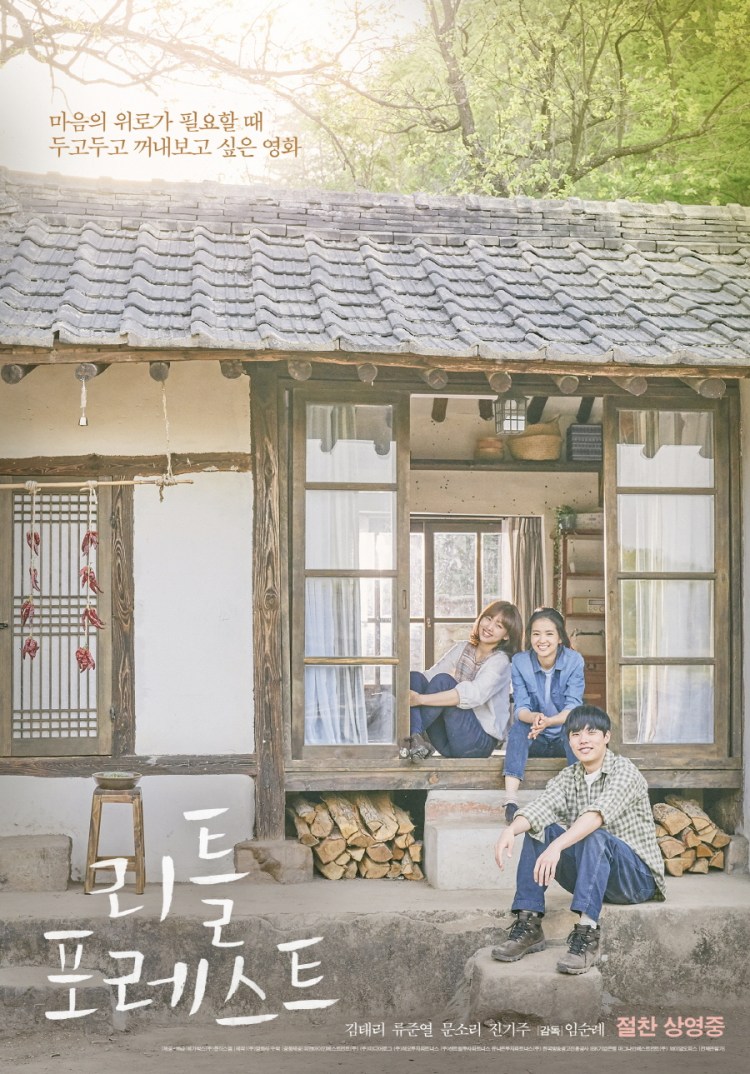
Little Forest (리틀 포레스트, Yim Soon-rye, 2018)

Little forest korean posterWhen you don’t know what to do, you go home. The logic seems sound and indeed the idea is common in many cultures, but the heroine of Little Forest (리틀 포레스트) has gone home to an empty, snow covered house with the intention of burying herself away rather than basking the unconditional support of the people who raised her. Yim Soon-rye, leading light of the Korean New Wave, takes the original manga by Daisuke Igurashi which was previously adapted as a two-part, four hour exploration of Japanese rural life by Junichi Mori, and relocates it to Korea finding that urban malaise and youthful indecision are from isolated phenomena.

Hye-won (Kim Tae-ri) has come home “for a few days”. What she wants is to be alone for a while, to take a time out from her life before trying to figure out what to do next. Accordingly, as she’s in hiding, she didn’t want anyone to know she’s here but perspicacious aunt Bok-soon has spotted smoke on the horizon and come running. Bok-soon thought that Hye-won’s long absent mother who abandoned her in the last year of high school might have been making a rare visit and is surprised to find her daughter instead, though perhaps not quite so much as you’d think. Nothing stays secret for long in a village, and Hye-won’s return is soon discovered first by the slightly unwelcome attention of the older village ladies and then by her treasured childhood friends, Eun-sook (Jin Ki-joo) and Jae-ha (Ryu Jun-yeol) who gives her a pet dog to look after in the hope that she will be eventually decide to stay for good.

Hye-Won faces many of the same problems as the heroine of Mori’s Japanese adaptation, but whereas Ichiko had come back in defeat and heartbreak, Hye-won’s flight is mostly pride mixed with fear and awkwardness. She admires Jae-ha who once lived in the city but eventually came home to be himself, rejecting the conformist salaryman life to be his own his boss, but knows deep down that her decision to retreat to the country is a cowardly attempt to delay dealing with the problems of adult life. After her mother left, Hye-won went to Seoul for university where she, along with her boyfriend, was studying for a teaching exam which only he passed. Wounded, Hye-Won has run away. Refusing her boyfriend’s calls and cocooning herself inside her childhood home she delays the inevitable breakup conversion along with the galling need to congratulate him on his exam success while silently nursing her own humiliating failure to match him.

Rather than the strained relationship Ichiko had with her long absent mother, Hye-won’s feelings run more towards a healthy competition – she wants to exceed her mother in all things but most especially as a cook. Unsatisfied with the tasteless pre-packaged nature of big city food, Hye-won came home because she was hungry, spiritually but also physically. Rejoicing in nature’s bounty, she finds new and exciting ways to cook the various fruits and vegetables grown by her own hand, living closely with the land and running with the rhythms of the seasons. In Seoul she ate cold food all alone, at home she shares her table with her two friends eager to see what she’s come up with to combat the latest glut while filling their souls with the warmth of friendship.

Despite her mild resentment and lingering anger towards her mother for disappearing so abruptly, Hye-won eventually comes to a kind of acceptance, realising that her mother’s “little forest” was raising her but seeing as she declared to her intention to repot herself somewhere else, her mother’s work was done and now it’s time for Hye-won to find her own little forest and set about tending to that. Still unsure if she’s in the country because that’s where she needs to be or is merely afraid to leave and risk failure, Hye-won eventually finds the strength move forward, breaking out of her extended period of hibernation to look for her answers wherever they may lie. Filled with the joy of home cooking and soulful down-home wisdom, Little Forest adapts itself well enough to the Korean climate, finding that life in the country, hard as is it may be, offers its own rewards in the simple pleasures of unconditional friendship and the natural freedom to enjoy all nature has to offer.


Screened at the 20th Udine Far East Film Festival.

International trailer (English subtitles)

The Scythian Lamb (羊の木, Daihachi Yoshida, 2017)

Scythian Lamb posterSometimes life hands you two parallel crises and allows one to become the solution to the other. So it is for the bureaucrats at the centre of Daihachi Yoshida’s The Scythian Lamb (羊の木, Hitsuji no Ki). The prisons are overcrowded while rural Japan faces extinction thanks to depopulation. Ergo, why not parole some of those “low risk” prisoners whose problems have perhaps been caused by urban living and lack of community support on the condition that they move to the country for a period of at least ten years and contribute to a traditional way of life. The prisoners get a fresh start where no one knows them or what they might have done in the past, and the town gets an influx of new, dynamic energy eager to make a real go of things. Of course, there might be some resistance if people knew their town was effectively importing criminality, but that’s a prejudice everyone has an interest in resisting so the project will operate in total secrecy.

Not even civil servant Tsukisue (Ryo Nishikido), who has been tasked with rounding up the new recruits, was aware of their previous place of residence until he started to wonder why they were all so unusual and evasive. Tsukisue likes to think of himself as an open-minded, kind and supportive person, and so is disappointed in himself to feel some resistance to the idea of suddenly welcoming six convicts into his quiet little town, especially on learning that despite being rated “low risk” they are each convicted murderers. Thus when a “murder” suddenly happens in the middle of town, Tsukisue can’t help drawing the “obvious” conclusion even if he hates himself for it afterwards when it is revealed the murder wasn’t a murder at all but a stupid drunken accident.

The ex-cons themselves are an eccentric collection of wounded people, changed both by their crimes and their experiences inside. Many inmates released from prison find it difficult to reintegrate into society, especially as most firms will not hire people with criminal records which is one of the many reasons no one is to know where the new residents came from. Yet, there are kind and understanding people who are willing to look past the unfortunate circumstances that led to someone finding themselves convicted of a crime such as the barber (Yuji Nakamura) who reveals his own difficult past and happiness in being able to help someone else, or the woman from the dry cleaners (Tamae Ando) who is upset by other people’s reaction to her new recruit who, it has to be said, looks like something out of Battles without Honour. Tsukisue doesn’t know anything about these people save for the fact they’ve killed and has, unavoidably, made a judgement based on that fact without the full details, little knowing that one, for example, killed her abusive boyfriend after years of torture or that another’s crime was more accident than design.

Tsukisue later becomes friends with one of the convicts, Miyakoshi (Ryuhei Matsuda), whose distant yet penetrating stare makes him a rather strange presence. Miyakoshi is the happiest to find himself living in the small coastal town, enjoying the lack of stimulation rather than resenting the boredom as some of the other new residents do. Despite his obvious inability to “read the air”, Miyakoshi is quite touched by Tsukisue’s kindness and by the way he treated him as a “normal” person despite his violent criminal past, excited to have made a real “friend” at last. Trouble begins to brew when Miyakoshi joins Tsukisue’s garage band and takes a liking to another of its members – Aya (Fumino Kimura), another returnee from Tokyo with a mysterious past though this time without a prison background. Tsukisue has had a long standing crush on Aya since high school but has always been too shy to say anything. He thought now was his chance and is stunned and irritated to realise Miyakoshi might have beaten him to it and, even worse, given him another opportunity to disappoint himself though doing something unforgivable in a moment of pique.

The bureaucrat in charge of the scheme wanted it kept secret in part because he was afraid the criminals might find each other and start some sort of secret murderer’s club (betraying another kind of prejudice) which actually turns out not to be so far fetched, though the main moral of the story is that kindness, understanding, and emotional support go a long way towards keeping the peace. Meanwhile, another of the convicts has taken to “planting” dead animals inspired by a plate she finds on a refuse site featuring a decoration of a “Scythian Lamb” – a plant that grows sheep which die when severed from their roots, and the evil fish god Nororo sits atop the cliffs in reminder of the perils of the sea. The Scythian Lamb is a poignant exploration of the right to start again no matter what might have gone before or how old you are. It might not always be possible to escape the past, and for some it may be more difficult than others, but the plant withers off the vine and there’s nothing like good roots for ensuring its survival.


Screened at the 20th Udine Far East Film Festival.

Original trailer (English subtitles)

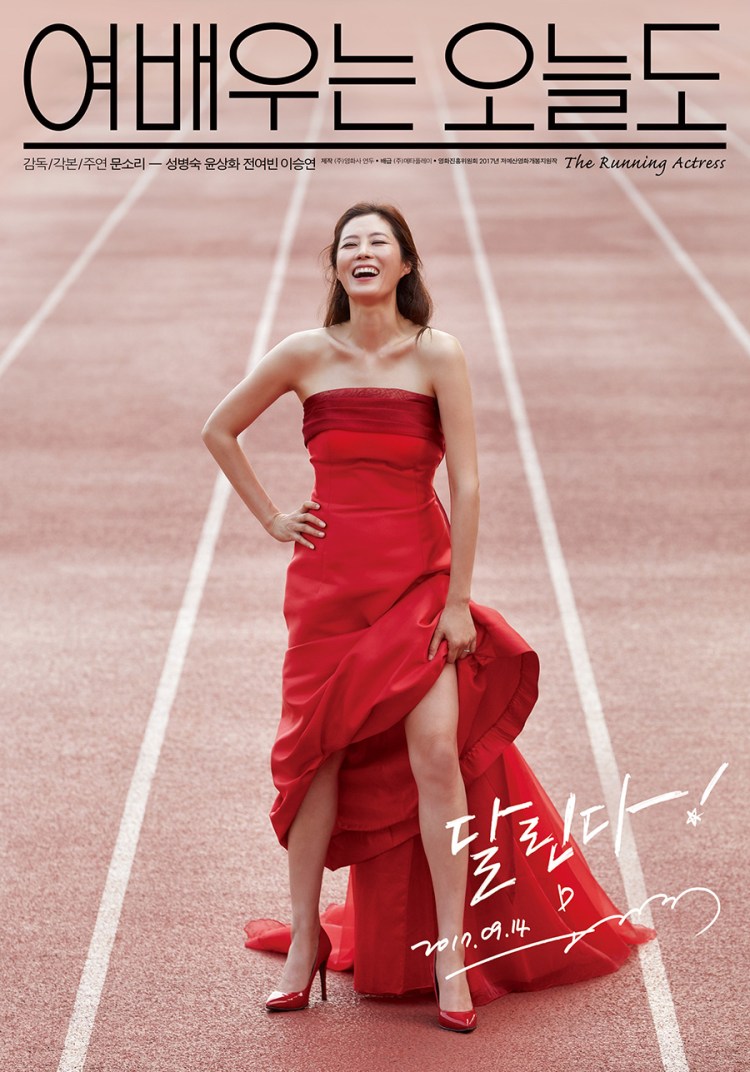
The Running Actress (여배우는 오늘도, Moon So-ri, 2017)

running actress posterIn international eyes at least, Moon So-ri is one of Korea’s most prominent actresses. She has worked with such highly esteemed directors as Lee Chang-dong, Hong Sang-soo, and Park Chan-wook, yet she continues to face the same kinds of issues as many women in the film industry despite her immense critical success and popularity at the box office. The Running Actress (여배우는 오늘도, Yeobaewooneun Oneuldo) is her first feature as a director and brings together three of her short films which neatly form a tryptic depicting the trials and tribulations of the contemporary actress.

Moon also stars in the films, playing a character called Moon So-ri, apparently inspired by her “real” life. Kicking off with the first segment titled The Actress, Moon introduces the fears and anxieties which recur throughout most notably in her preoccupation with gaining good roles and worrying that she is losing out on them though not being “pretty” enough. Her friends, attempting to be supportive, only add to her discomfort by assuring her that she is pretty “in her own way” and reminding her that in any case she is a wonderful actress. Confidence at rock bottom, Moon laments that her industry prefers airheaded beauty to technical skill and is unwilling to accept that women continue to exist past the age of 25 without suddenly morphing into spiky aunties and salty grandmas. Unexpectedly running into a producer whilst hiking, she gets a temporary boost when it seems he has her in mind for a dream project with a director she’s long wanted to work with but is dismayed when she realises the character has a college age child meaning she’ll be making a possibly irreversible step into playing suffering mothers rather than interesting women with nuanced character arcs.

Meanwhile, she runs into the producer and his friends at an inn on the way down and is forced to endure a drinking session with two starstruck fans whose increasingly drunken conversation turns to the rude and loutish in which they too begin picking apart Moon’s looks while mocking her acting skills, one of them even offering a slightly offensive caricature of her award winning performance as a disabled woman in Lee Chang-dong’s Oasis (the title of which he seems to have forgotten).

Moon’s fears and insecurities follow her into her family life in the second chapter, The Running Actress, which finds her attempting to juggle the demands of being a wife and mother with her acting career. In a running joke, everyone seems to assume that mega famous actress Moon So-ri must be filthy rich but like everyone else she has trouble making ends meet, especially as she is constantly worrying over where the next job is coming from. As if that wasn’t enough she also has to put up with her mother continuing to treat her like a petulant teenager (which to be fair her behaviour sometimes mimics) and trading photo opportunities for free dental work, while her adorable little daughter is sharp as a tack. 

The social and the professional come together in the final segment which sees Moon attend the funeral for a director she once worked with years ago and to tell the truth did not particularly like. Planning to show her face but not stay very long, Moon is dismayed to realise she is one of an extremely small number of mourners which include a drunken actor she doesn’t really get on with either, and an aspiring young actress who may have been involved in an improper relationship with the late director in the hope of furthering her career. In a lovely human touch, Moon breaks away from the rapidly declining situation at the wake to spend some time with the director’s young son who has been left all alone watching a few home videos his father shot by means of a handheld projector.

The film takes its title from a humorous moment in the second chapter in which Moon suddenly orders her driver to stop the car and jumps out to run away screaming, making a bid for frustrated freedom from her often exasperating life and career. Moon is obviously not afraid to poke fun at herself or her industry, taking her (presumably very real) fears and insecurities and exposing them for all to see. Taking a cue from Hong Sang-soo, Moon’s deadpan style only adds to the comic effect of her razor sharp dialogue which is filled with small moments of everyday humour somehow assuming wider dimensions thanks to the well crafted nature of the script. Addressing real problems faced by women today in all walks of life, The Running Actress is a warm and funny effort from the veteran performer turned first time director and will hopefully pave the way for an interesting second career.


Screened at the 20th Udine Far East Film Festival.

Original trailer (Korean subtitles only)