My Favorite Season (最想念的季節, Chen Kun-Hou, 1985)

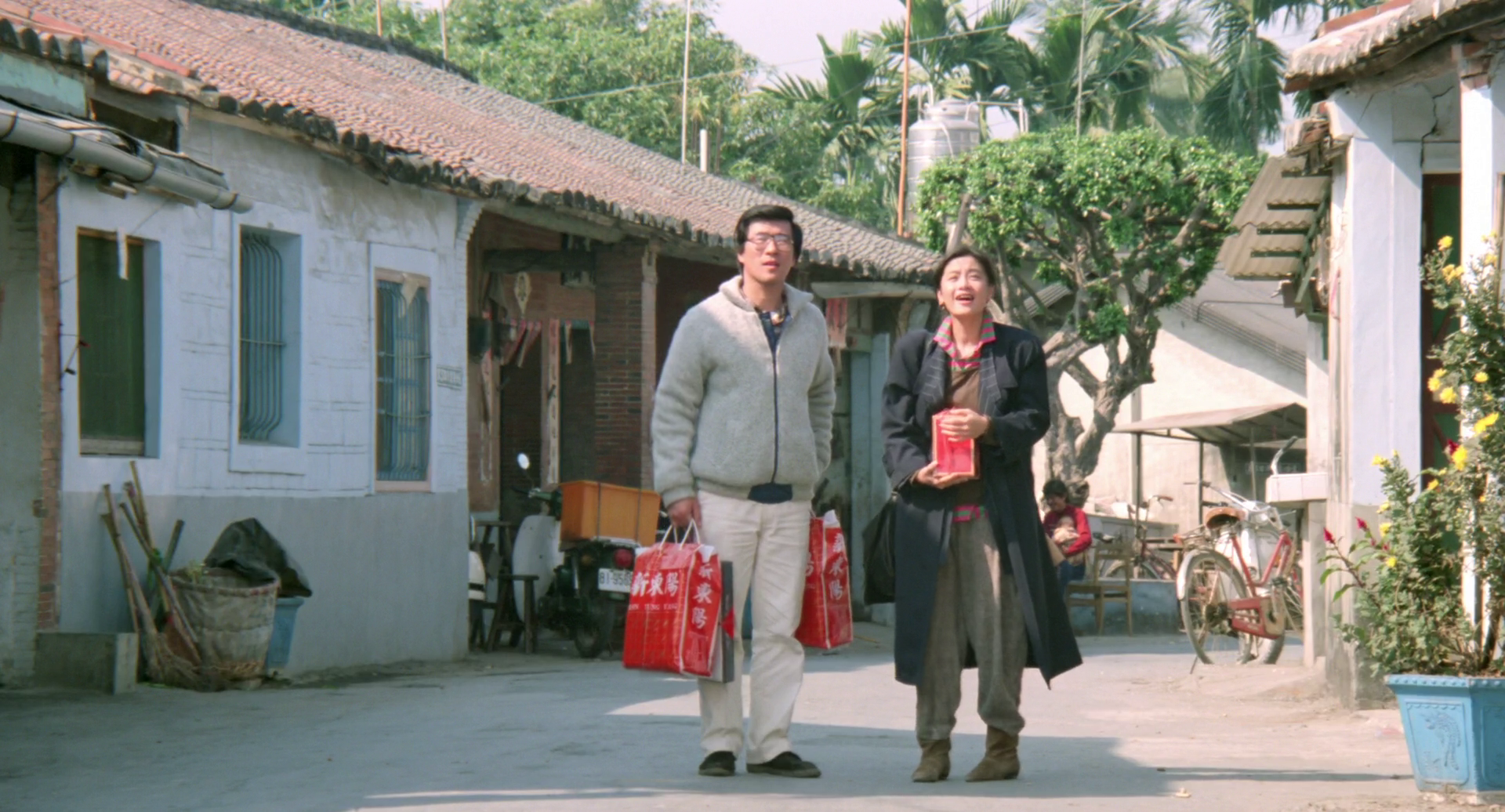
After becoming pregnant by her married lover, an otherwise independent young woman decides she must find a husband so that her baby will be legitimised but plans to divorce him a year later in Chen Kun-Hou’s charming Taipei-set rom-com, My Favourite Season (最想念的季節, zuì xiǎngniàn de jìjié). These contradictions perhaps express those at the centre of a changing society as the heroine temporarily shackles herself to a weak-willed man but finds herself both bonding with him and resentful of his attempts to control her, while the relationship itself continually straddles an awkward line.

Pao-liang (Jonathan Lee Chung-shan) is a somewhat nerdy guy who runs a print shop and has become a guardian to his niece because his sister and her husband are struggling artists. Incredibly superstitious, he insists he won’t get married before the age of 30 because it would be bad luck, but is roped into Hsiang-mei’s (Sylvia Chang Ai-chia) scheme by a friend who turned her down. Pao-liang tries to turn her down too, but is also struck by her beauty, his own improbable luck, and a possibly genuine emotional connection the pair may share even though they are in other ways opposites. 

Hsiang-mei works as a journalist for a fashion magazine and has more sophisticated tastes as well as a looser connection to money than the penny-pinching Pao-liang who, as the saying goes, knows the cost of everything but the value of nothing. He doesn’t like it when Hsiang-mei spends her own money on things she wants and insists on keeping a running tally of mutual expenses. When his sister asks him for a loan to tide her over, he immediately refuses despite having a large amount in his bank account, partly because he’s mean with money and partly because he’s essentially selfish. Hsiang-mei gives it to her instead, which annoys Pao-liang on several levels because he realises it’s made him look bad while he is now further indebted to Hsiang-mei. 

She, meanwhile, is from a small town and came to Taipei for a better life. The only girl in her family, Hsiao-mei strives for independence and ironically wanted a husband to secure it so she could have her baby and raise it on her own. As her brother says, “she does what she wants,” but seemingly hadn’t really thought through her plan assuming it would all go smoothly and she and Pao-liang could essentially hang out for a year and then bring the arrangement to an end. She picks Pao-liang partly because they do seem to get on, and possibly because she thought he’d be easy to manage, but is lucky in her choice of man that he presents little danger to her.

He is, however, petty and patriarchal in his mindset. He’s both attracted to Hsiang-mei and resentful of her strong will and independence while also small-minded and incapable of direct communication. It’s obvious that he wants this arrangement to continue, but often acts in ways that endanger it and lashes out at Hsiang-mei rather than explaining how he feels. When Hsiang-mei returns upset having met up with her married lover, Pao-liang shouts at her and accuses her of embarrassing him by sleeping with another man. He does something similar when she encounters unexpected tragedy, blaming and berating her in place of offering comfort even if his cruelty is motivated by frustrated affection. 

But Hsiang-mei is in some ways the same. She doesn’t really say what she wants either or acknowledge that she has grown fond of Pao-liang and his niece. She’s fiercely independent, but felt she still needed to have a husband to have a baby after having an affair with a man who was already married so was to her the ideal boyfriend because he wouldn’t tie her down. She buys a lamp for Pao-liang’s place because lamps make a place a home, but Pao-liang doesn’t want it or approve of the expense while simultaneously insisting on paying for half of it because it’s for a “communal” area. He’s still intent on keeping score and isn’t ready to accept that he and Hsiang-mei live in the house together so everything belongs to them “communally” as a couple. On a baseline level, he won’t cede his space to her nor acknowledge that she still has the upper-hand in this relationship even as the pair inevitably draw closer. Chen’s vision of 80s Taipei is warm and sophisticated as Pao-liang spends his time dancing with the old ladies in the park and loses his keys at opportune moments or drives his car into a ditch but even despite his pettiness and ineffectuality, can still find love and the courage to chase it if somewhat passive aggressively.


My Favorite Season screened as part of the BFI’s Myriad Voices: Reframing Taiwan New Cinema.

Trailer (Traditional Chinese / English subtitles)
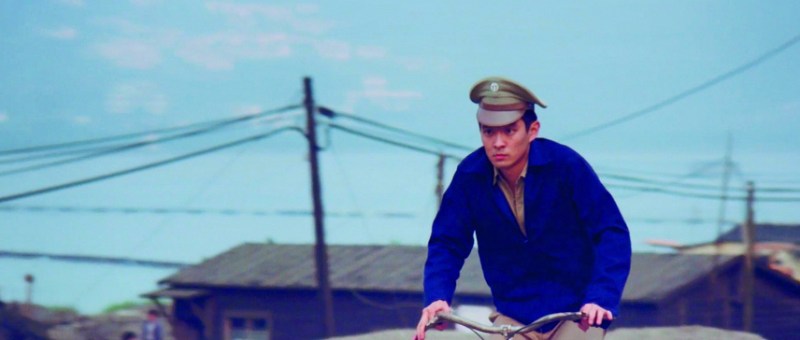
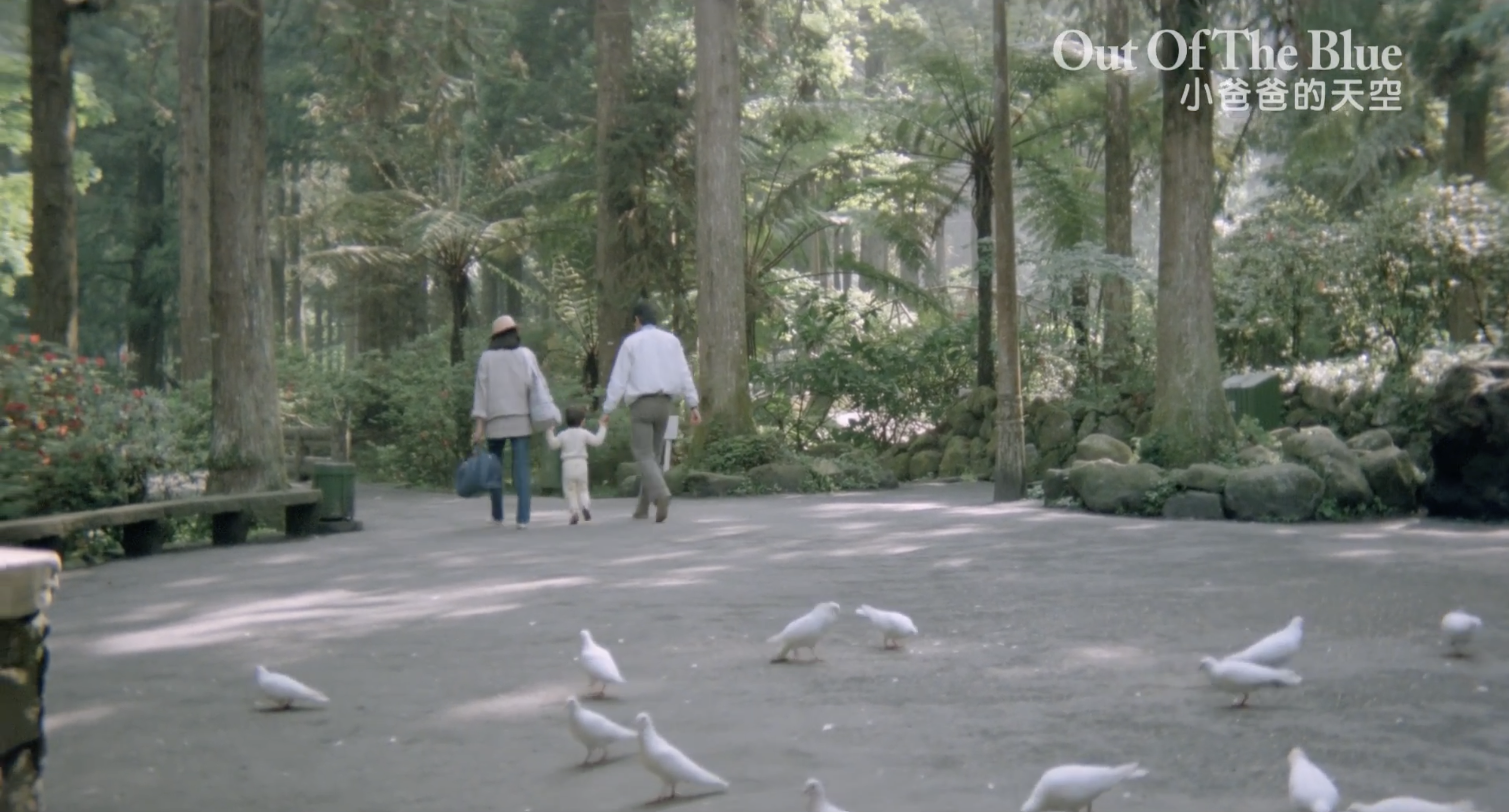
Out of the Blue (小爸爸的天空, Chen Kun-Hou, 1984)

A young man begins to dream after discovering he has become a father in Chen Kun-Hou’s poignant coming of age drama Out of the Blue (小爸爸的天空, xiǎo bàba de tiānkōng). Though it could perhaps be argued that the heroine suffers unduly, the film is remarkably unjudgemental about unplanned teenage pregnancy and at heart is rooting for the young couple. But the real world is not so kind, and it seems impossible that their love could survive in the liberalising but still oppressive late martial law society.

Long is a boy from an ordinary family with a crush on a wealthy young who goes to his school, Mi. Mi gets picked up by a chauffeured car every day, while Long watches her afar from his bicycle. Eventually, the pair get together and bond over their shared sense of dissatisfaction with their families by whom they are each trapped in opposing ways. Long complains that his former policeman father beats and berates him for not living up to his expectations, while Mi alternately implies her parents don’t really care about her because they’re always working and let her do as she pleases, and that she has no free will because she’s duty-bound by the expectations of filiality.

Perhaps bearing this out, Mi rarely speaks during her courtship with Long and only later is able to talk plainly to her mother, though her mother doesn’t listen. When she becomes pregnant after sleeping with Long when he stays out all night after a beating from his father, Mi can’t bring herself to tell anyone but stays at home alone while her parents head to LA. For unstated reasons, she can’t bring herself to tell Long, either. She ignores his calls and drops out of school, instructing the servants not to answer the phone when he calls. But when her mother finally finds out, she’s unexpectedly supportive. At least, she doesn’t disown her, force her to give up the child, to marry someone else or to stop seeing Long (though she does so anyway), all of which adds an additional layer to Mi’s sense of filial obligation feeling as if she cannot disobey her mother because she has been so kind and understanding of her “scandalous” behaviour.

When Mi abruptly disappears and he’s told she’s gone abroad, Long tries to talk to his father but in the end he doesn’t say anything. He simply refills his father’s ink pot while he continues to practice calligraphy. The only really time that Long’s father actually speaks to him is on hearing that he’s got the grades to get into his chosen university. It’s at this point that his father considers him “a man,” having his first drink with him and treating him as an adult rather than a naughty boy he can beat with a belt. In a sense, Long has conformed with his father’s authoritarianism in following the conventional path and is no longer trying to resist it, but on being unexpectedly reunited with his own son, Weiwei, is a more compassionate and empathetic presence, in love with the idea of having a family, though it is currently out of his reach. When he runs into Mi and realises the toddler she’s got in a pushchair is his, he’s still a student financially unable to support a wife and child let alone keep them in comfort.

As such, Long might be the unexpectedly good man who would have married and taken care of Mi if he knew but as they each say several times, everything’s different now. After their separation, both describe themselves as having grown up. Though he didn’t know he had become a father, Long feels as if he’s now older than his friends. He’s no longer interested in playing pool with them and is bored by their teenage pastimes. It’s ironically this sense of growing up that sets him on a more conventional path by knuckling down to study. But Mi perhaps feels trapped. Her parents have accepted her, but they have also more or less adopted Weiwei as their own and refuse to see her as a grown woman. When she tries to stand up to her mother about going to LA, her mother refuses to allow her to stay behind with Weiwei because she doesn’t believe she can look after herself let alone a child. Mi snaps back that could marry Long, but her mother doesn’t take it seriously. In the end, Mi is unable to break free of her filial obligations and defy her mother by leaving to make a new family with Long.

Mi’s mother stands in the way of progress, though she is in other ways a good and compassionate person who never tries to punish her daughter for her sexual transgression and only wanted to care for her and the baby. The baby has, however, now become part of her family to which Mi is merely an accessory, so he cannot now form a new family with Long. Long is unable to assume his paternity because of his financial status, but is otherwise good with the boy and in some ways better than Mi who becomes frustrated when he fails to settle in an unfamiliar environment. She admits that her mother usually tucks him in and is otherwise lost for what to do, leaving Long quite literally holding the baby.

But on the other hand, perhaps he’s only experiencing an idealised vision of fatherhood while spared the really difficult things like the anxiety of keeping food on the table and roof over his head. His friend at university is married with a child and is constantly late because of childcare issues. He recounts having to stay up all night because his son got enteritis from eating something he shouldn’t have when he wasn’t looking and now has a serious case of the runs. Long appears to want all of this too, but is prevented from having it as the older generation won’t surrender it to him or give Mi and Long the chance to figure it out. The closing scenes have a genuine sense of tragedy as Long watches his family ride away from him while Mi looks back with sadness and an expression that suggests she knows she will likely never see Long again. With minimal dialogue and elegant, expressive composition, Chen charts the course of a love too innocent to survive in a world of oppression and conformity but has only infinite sympathy for the young couple whose simple dreams are denied by generational authoritarianism.


Out of the Blue screened as part of the BFI’s Myriad Voices: Reframing Taiwan New Cinema.

Trailer (Traditional Chinese / English subtitles)
Taipei Story (青梅竹馬, Edward Yang, 1985)

“Just a fleeting hope. The illusion that you can start over” the hero of Edward Yang’s melancholy drama of the costs of modernity, Taipei Story (青梅竹馬, Qīngméizhúmǎ), eventually laments. Yang apparently chose the English title himself in a deliberate echo of Yasujiro Ozu’s equally pessimistic drama, yet the original title literally translated as “childhood sweethearts” also has its poignancy in hinting at the loss of innocence and hopeless impossibility of the fracturing love between its twin protagonists. 

Yang begins and ends in an empty room, for an empty room is always a possibility. As the film opens, high-flying career woman Chin (Tsai Chin) is buying her own apartment, already envisioning her life there in pointing out to her boyfriend Lung (Hou Hsiao-hsien) where they’ll put the TV and VCR so they can watch movies in bed hinting at a new level of consumerist success. More practically minded, he points out that the place needs a little work but Chin is confident she can manage it, saving up and paying in instalments having no immediate anxiety about her income. 

Yet Yang seems to suggest that this burgeoning economic powerhouse is built on shaky ground. The construction firm at which Chin works has recently been hit with a potential lawsuit about a lethal building error, while Chin’s mentor has already moved on and the firm has been bought up by another company presumably intent on some shady business of its own. This Chin discovers to her cost on hearing the not entirely unexpected news that the new bosses don’t understand her job title and want to demote her to the role of secretary which, she suspects, is just a way of pushing her to resign (which she then does). 

Shoddy business practices are also it seems responsible for her father’s present moment of financial insecurity though he only further alienates his daughter by talking entirely with Lung when the pair come to visit stopping only to ask awkward questions about marriage and children. Later we realise that part of Chin’s resentment towards her father is due to a long history of domestic abuse, her mother later crying silently prompting Chin to withdraw some of her savings something she would not have done had her father asked it. Yet Lung, old-fashioned in many ways and not least in his filiality, feels duty bound to help his not-quite father-in-law provoking a row between the pair when he gives him money he’d saved in the forlorn hope of going into business with his brother-in-law in America. 

Once childhood friends and now seeking a new start, the couple begin to dream of a new life though as Lung later says, America, like marriage, is not a panacea. Chin is in a sense torn between past and future neither of which have much possibility, in a committed relationship with Lung yet jealous over his past with a mutual childhood friend, and also carrying on an affair with an unhappily married man at work. A high-flying executive and independent career woman, she is determined to keep moving forward while Lung is stuck in the past hung up on baseball glory and morally righteous to a fault, helping out Chin’s feckless father while knowing it will do no good while his attempt to help a friend sort out his complicated family life leads only to tragedy. It’s obvious that he does not fit in with Chin’s yuppie friends, one particularly obnoxious male colleague describing him as having the face of a yam farmer and needling him to the point that it eventually leads to an altercation in a karaoke bar. Chin doesn’t seem particularly upset about the fight, comforting Lung as he confesses that he ends up in fights in order to stick up for himself or else because of his love of justice, but continues hanging out with her unpleasant friend for otherwise unclear reasons. 

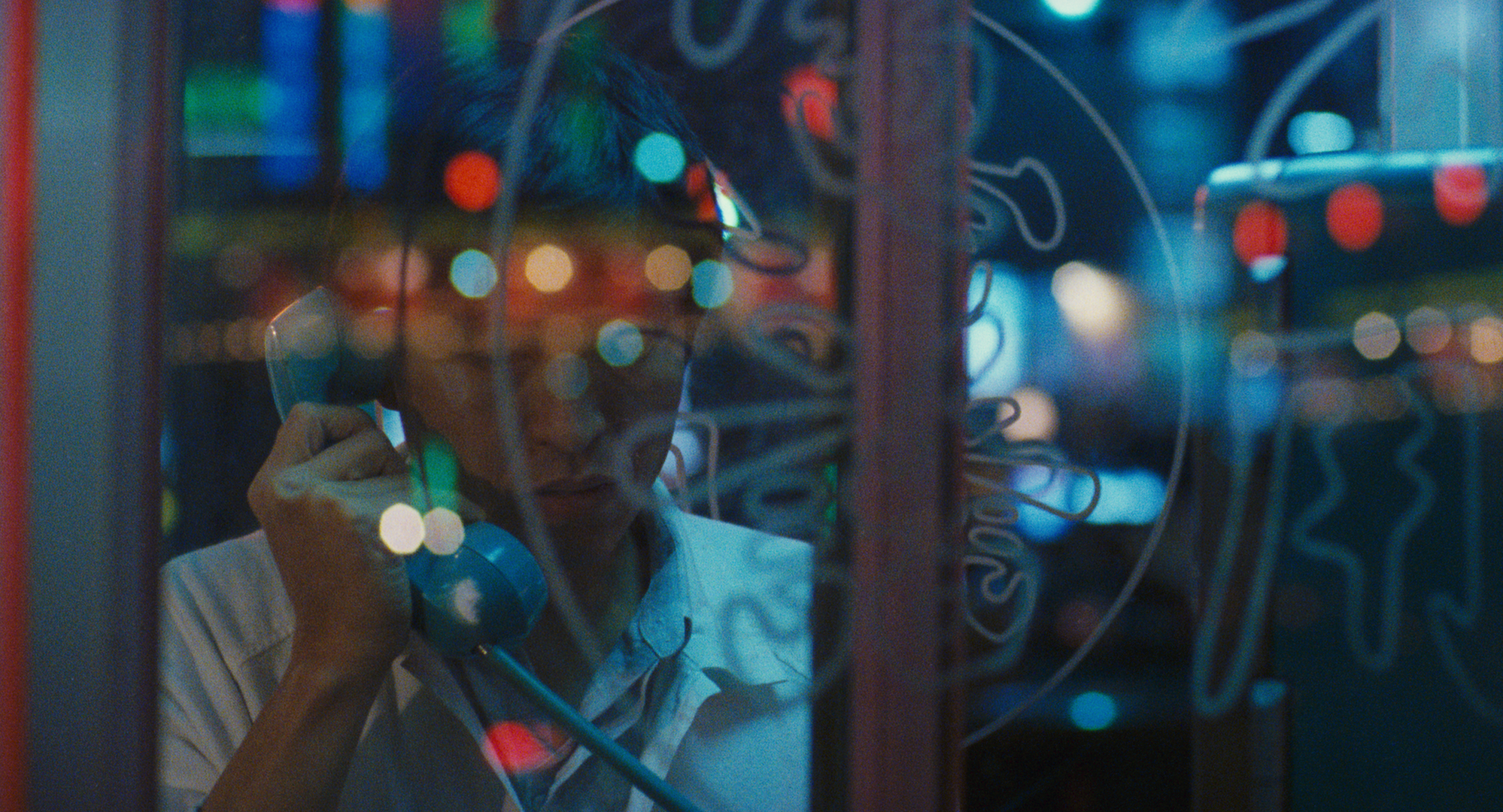
But it’s less a love of justice than frustrated masculinity that eventually seals Lung’s fate, unwisely picking a fight with a young tough not so much in order to protect Chin as to preserve his own sense of wounded male pride. Realising the futility of his situation, he is unable to move forward into the new society, whereas Chin eventually finds herself substituting his role as her former mentor shows her around a potential new office space just as she had him her apartment envisioning how they will exist within it, where their offices will be along with the state of the art computer room. “It’s actually nice here,” she assures her, “now we have a big American company right in our hometown. Why go abroad?”. Yet Chin perhaps remembers her dejected colleague lamenting that all the new buildings look the same and he can’t even remember which ones he worked on so anonymous has the landscape become. In this Taipei story, the city is devoid of life or character a highly corporatised arena of increasingly dehumanising capitalism where everyone dreams of escape abroad to America or Japan, yet all Chin can do lowering her sunshades is to gaze from the window of her new office onto the lonely streets below and ask herself where it is she thinks she’s going. 


Taipei Story streamed as part of this year’s Taiwan Film Festival Edinburgh.

Trailer (English subtitles)

Hill of No Return (無言的山丘, Wang Tung, 1992)

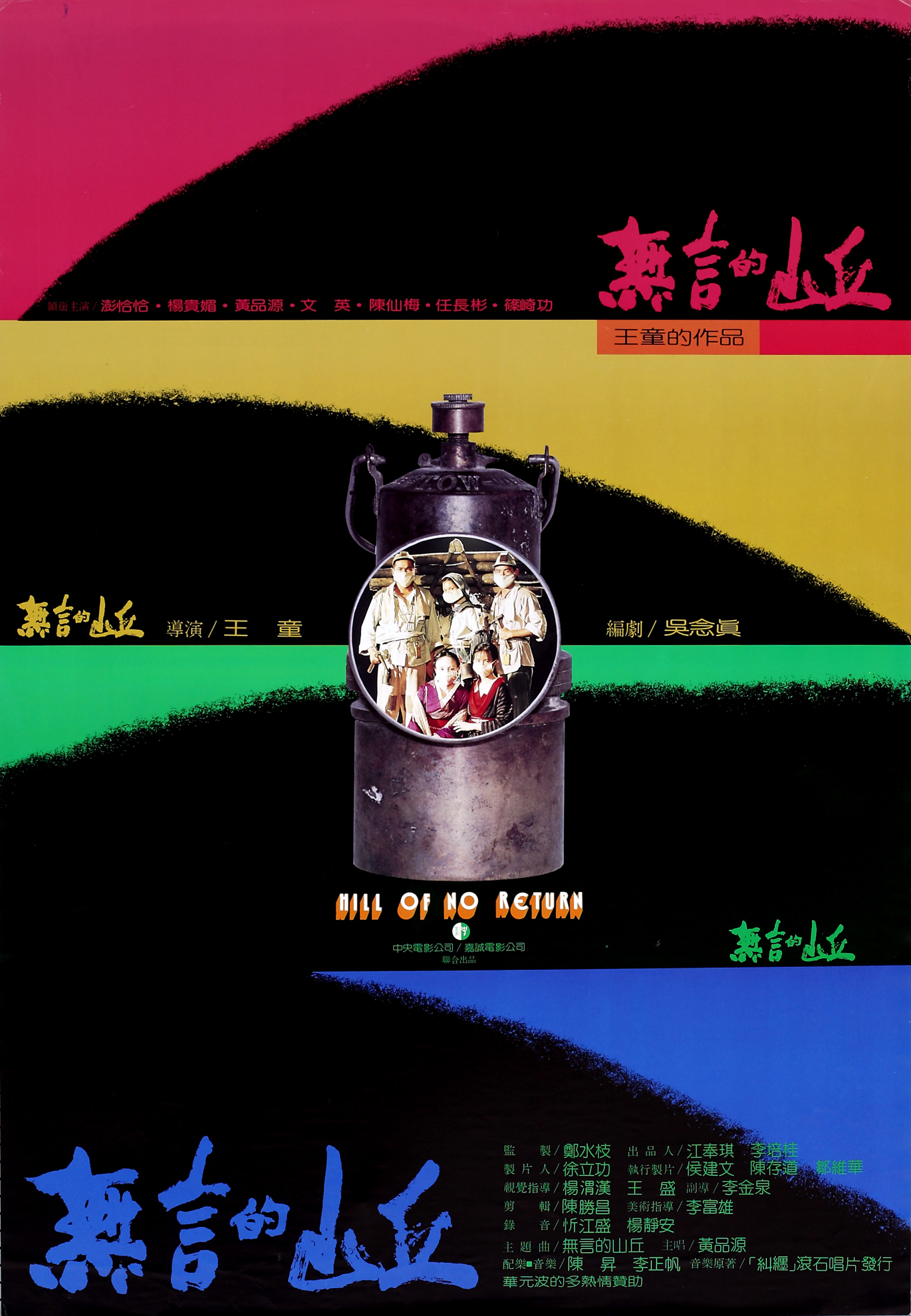
Two orphaned brothers set out to find a literal goldmine, but discover only relentless exploitation and defeat in Wang Tung’s meditation on oppression and colonialism, Hill of No Return (無言的山丘, Wúyán de Shānqiū). The third in a trilogy of films exploring Taiwanese history, Wang’s tragic melodrama finds commonality if not solidarity among a collection of villagers living in a small town sustained entirely by the mine which produces riches only for the Japanese while those who risk their lives underground deprived of the light of the sun delude themselves that if they work hard they too can become rich only to discover each of their attempts to escape the constraints placed against them leading to nothing other than despair. 

As the film opens, brothers Chu (Peng Chia-Chia) and Wei (Huang Pin-Yuan) who have signed long-term five year contracts as farm labourers, are listening to an old man’s story about the grandfather of a local man who followed a frog to a mountain noticing its skin glowing gold and thereafter filling his pockets with gold dust he later used to buy up land and become rich. Chu thinks the man was foolish for not going back and becoming even richer, but the old man explains that he was reminded in a dream that excessive greed would only anger the gods and lead to his downfall. Fed up with their lives as labourers, the brothers take the story to heart and decide to look for their own mountain of gold, their backs too bathed in the light of the sun as they rest while looking for the goldmine town of Jiou-fen, later coming across a grisly and ominous scene shortly before they arrive. 

Both illiterate and speaking only Taiwanese, the brothers are each intent on becoming landowners partly in order to give their late parents, apparently killed by TB, a fitting resting place, but soon find themselves once again exploited, Wei becoming increasingly disillusioned with being trapped underground whereas in the fields at least he’d had the sun. The mine is of course a Japanese concern and its operators care little for the local Taiwanese workforce even if their treatment may not be as deliberately brutal as it might have been elsewhere. The new director is convinced that the miners are pocketing gold before it reaches the surface, instituting several new controls which threaten the local economy and especially that of the Japanese-style brothel which depends entirely on the mine for its survival. 

Like many, Hong-mu (Jen Chang-bin), a young man raised in the brothel by its madam following the death of his mother, looks up to the Japanese colonisers seeing them as innately “better” than the Taiwanese all around him. “People will respect me if I wear Japanese clothes” he tells the madam disappointed on receiving a new outfit in the local fashion. Having been told that his father, whom he has never met and was presumably a client of the brothel, was Japanese he speaks the language fluently and believes himself to be slightly superior by virtue of his birth but only too late learns his mistake in collaborating with the mine owners believing they would help him marry a young Japanese woman working at the brothel as a maid, Fumiko (Mayko Chen Hsien-Mei), and finding himself betrayed. As Fumiko is from the Ryukyu islands (Okinawa), the mine owner doesn’t quite see her as fully “Japanese” either and thinks nothing of using and abusing her in the course of his activities. 

The wily madam quips that you can’t call yourself Taiwanese if you haven’t figured out how to do illegal things legally finding ways of getting around the prohibition on accepting gold from the miners as payment, but that doesn’t stop the military police later raiding the brothel and brutally taking back “their” gold even though it has already changed hands albeit not entirely in good faith. The sex workers too are victims of this same vicious cycle, dependent on the custom of the miners for their livelihood while deprived any real possibility of escaping their desperate circumstances. Meanwhile, the brothers’ grumpy landlady, Ro (Yang Kuei-mei), is a twice-widowed single mother of numerous children left with no choice other than to engage in independent sex work, advertising herself as the more economical, local alternative to the Japanese-style “opulence” of the traditional teahouse. While Wei falls for the melancholy innocence of Fumiko singing Okinawan folksongs in a field of golden flowers, Chu takes a liking to Ro and her many children but though they both dream of the same thing, saving enough money to buy a farm, their tempestuous romance is later frustrated by Chu’s reckless decision to take advantage of chaos at the mine in an attempt to get rich quick by harvesting a mega load of gold while no one’s looking. 

He has perhaps been too greedy, ignoring the lessons from the old man’s story. The brothers are continually forced to pay for their transgressions, Chu cutting off his own fingers when cornered by thugs sent out by his previous employer to satisfy their literal demand for an arm and a leg in satisfaction of the broken contract, while Wei’s foot is later injured in a partial cave in when caught underground during an earthquake. Ro calls Chu foolish in his delusion that hard work will bring him a comfortable life, watching him slaving away to make the Japanese rich but what other choice do either of them really have? Only later does Wei begin to reflect on the possibility that the treasure of the mountain was the bright yellow flowers which covered it, a natural beauty soon destroyed by industrial exploitation. A melancholy chronicle of life in a small mountain town in the colonial era, Hill of No Return finds only despair and impossibility for its orphaned brothers whose eternal quest for ownership of their own land leads to nothing but continual disappointment. 


Hill of No Return streams in the UK until 31st October as part of this year’s Taiwan Film Festival Edinburgh.

Trailer (Traditional Chinese / English Subtitles)

Zone Pro Site: The Moveable Feast (總舖師, Chen Yu-hsun, 2013)

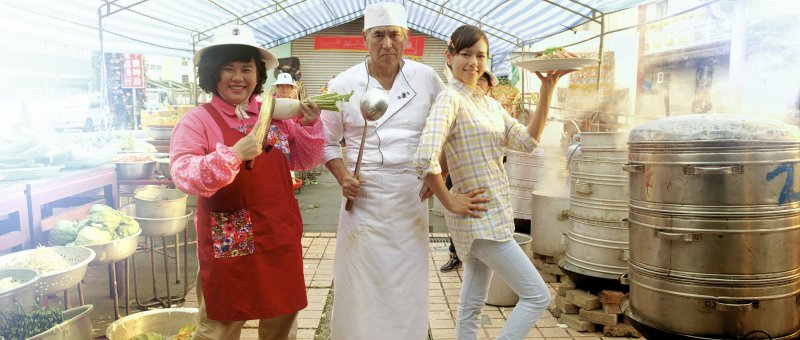
In these high speed days, it’s sometimes difficult to remember that “cooking means something” or at least it should do according to “Doctor Gourmet” Hai (Tony Yang). A warm tribute to the Taiwanese tradition of bandoh outdoor banquets, Zone Pro Site: The Moveable Feast (總舖師, Zǒng Pù Shī) positions the figure of the chef as a kind of conduit bridging the gap between people through the art of well cooked food. Heroine Wan (Kimi Hsia Yu-chiao), however, thoroughly rejected the ambitions of her top chef father and determined on a life in the city with her heart set on becoming a famous model, actress, and celebrity. 

Life in Taipei is however hard. Career success is hard to come by and duplicity lurks round every corner. Wan learns this to her cost when two shady guys turn up on the pretext of delivering a birthday cake only to explain to her that her boyfriend, whose loans she’s unwisely co-signed, has skipped town and left her with the bill. Confused and afraid, Wan decides to skip town herself, planning to head back to her hometown and ask her mother for help. What she discovers however is that her mother is on the run too after losing the family restaurant partly through her subpar cooking skills which could never match those of her late husband, and partly through the betrayal of his apprentice who poached all their best customers and set up on his own. Despite being “in hiding”, the only way Puffy (Lin Mei-hsiu) has been able to make ends meet is by putting on an impromptu dance show in the central square to promote her small noodle stall. Luckily for them both, Wan makes a chance encounter on the train with a nice young man, Hai, who turns out to be a “Doctor Gourmet” specialising in “fixing” failing restaurants.

His arrival comes at just the right moment as Wan and her mother get a visit from potential clients – a sweet older couple who first met 50 years previously at a wedding catered not by Wan’s father Master Fly Spirit, but by his now departed mentor. Wan’s mother was going to turn the request down because neither she nor Wan know how to make the traditional dishes the couple are looking for, but Wan makes an impromptu decision to try and make their wedding dreams come true, warning them that it might take a little extra time and not quite match up to their romantic expectations. 

Wan’s problem is that she always hated her family’s restaurant. She resented the heat and the smell and the grease, often placing an empty box over her head and retreating into a fantasy world to escape the chaos. Her father wanted her to take over, leaving her a notebook filled with his recipes which was unfortunately stolen by a homeless man who mugged her at the station, but she was dead set on escape and becoming a “someone” in the city. Unlike her mother, however, she has real talent for cooking and is equally skilled at using her good looks and sweet nature to get things done. Soon after her arrival at the noodle stand, she’s already got herself a gang of geeky groupies calling themselves “Animals on Call” who are ready to do pretty much anything she asks of them. 

That comes in handy when Puffy persuades her to enter a national cooking competition where her rival is none other than Tsai, the apprentice who betrayed them, backed up another famous ex-chef Master Ghost Head (Hsi Hsiang) who has a fiery temper and spent some time in prison which might be why he still dresses like an ultra cool motorcycle guy from the ‘70s. There were apparently three great masters, the other being the eccentric  Master Silly Mortal (Wu Nien-jen) who is later discovered living in a subway tunnel where he keeps the art of bandoh alive through a literal underground restaurant where his regulars bring him a selection of ingredients before sitting down to enjoy a communal meal. It’s Silly Mortal whose food is said to evoke human feelings who guides Wan towards a series of epiphanies about the nature of “traditional” food. According to him, there are no rules about what goes together, and having a “traditional” heart is really about embracing the true nature of bandoh. Only by having a heart full of joy can you make good food. 

Equally eccentric in some respects, Hai takes a back seat after reminding Wan that cooking is really a way of sending a coded message to its intended target. The two goons eventually join the team, working together earnestly to prepare for the biggest banquet of all which is both the old couple’s wedding celebration and the competition’s finale. Master Ghost Spirit talks about taking the “grief” out of meat through fine cutting, while Master Silly Mortal is all about putting positive emotions in, but the missing piece of the puzzle is Master Fly Spirit who sends his final message to Wan only after death as she rediscovers him through his recipes. Not quite giving up on her celebrity career, Wan embraces her inner chef, happy with the idea of making lunchboxes to sell at the station with her new friends and family rather than chasing money through oddly nihilistic cuisine as Tsai had done. In the end, it’s all about joy and togetherness, sharing tasty food in the open air where anyone and everyone is welcome to bring whatever they have to the table.


Zone Pro Site: The Moveable Feast screens in New York on Feb. 16 as part of this year’s New York Asian Film Festival Winter Showcase.

International trailer (English subtitles)