A Foggy Tale (大濛, Chen Yu-hsun, 2025)

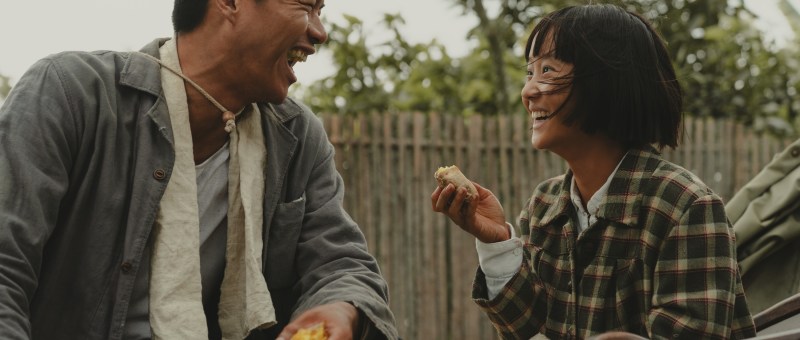
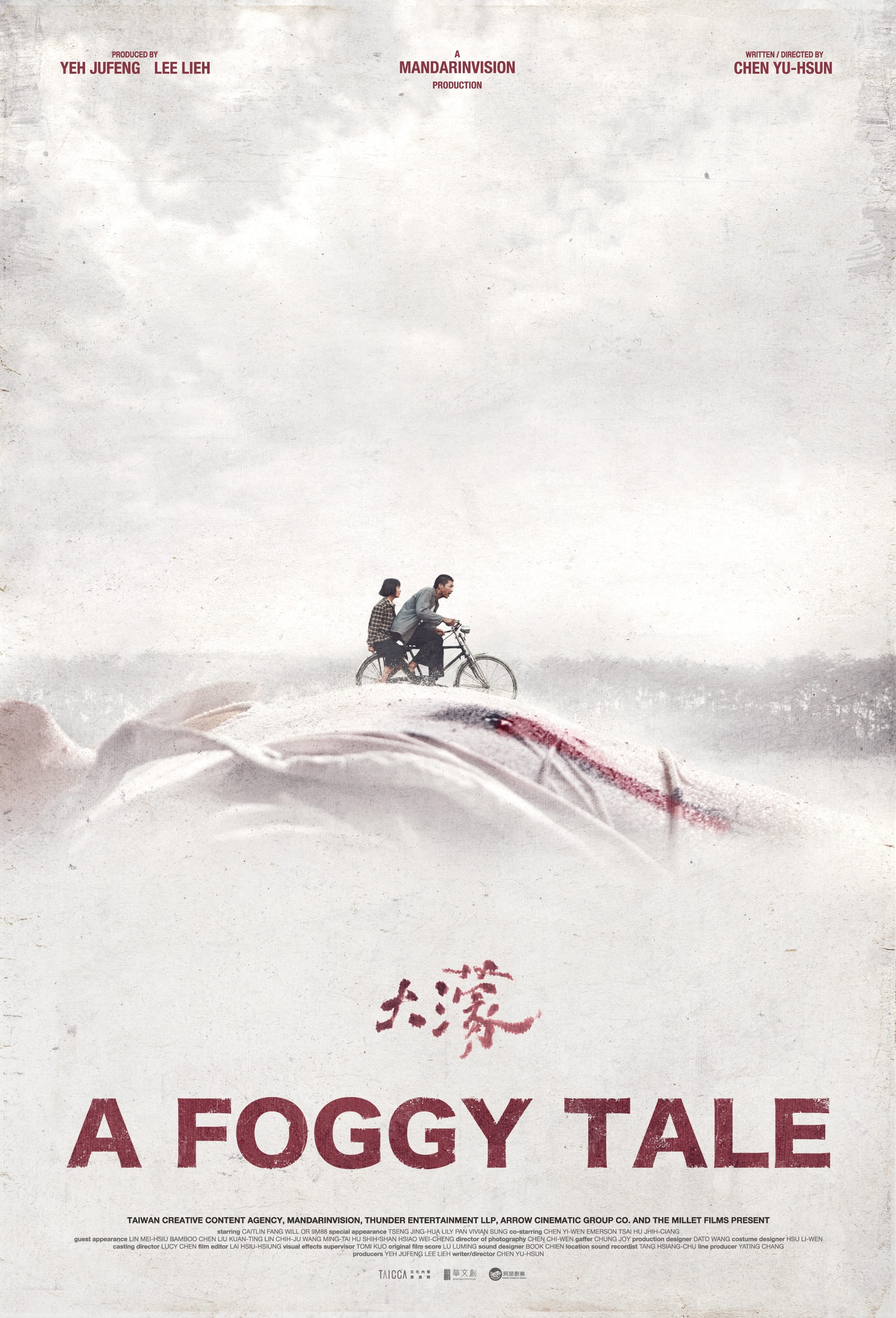
A young girl witnesses the horrors of the White Terror when she travels from her rural hometown to retrieve the body of her brother who has been executed by military police in Chen Yu-hsun’s otherwise light-hearted odyssey through 1950s Taipei, A Foggy Tale (大濛, dà méng). The title refers to a story the heroine’s brother Yun (Tseng Jing-hua), whose name means “cloud”, tells twice. First, it’s a metaphor for a resistance movement as two drops of water join many others to form a cloud that then descends on a patch of land that makes it farmable. Secondly, the second water droplet never makes it to the cloud, but instead becomes trapped half way and dissolves into the mist.

It is, however, into a foggy town that Yue (Caitlin Fang) arrives after leaving alone when her uncle, who has taken over her parents’ house following both of their deaths, explains that he can’t pay to retrieve Yun’s body. Their aunt is already resentful of the money they spent trying to save, and in truth does not want the extra mouths to feed of her niece and nephew. She would much rather have the house, which she regards as her husband’s rightful inheritance anyway, to herself for her sons to be the masters of. While he was in hiding, Yun had approved of Yue’s desire to become a teacher though she’s been taken out of school and, as he says, women in the country generally have little other choice than to become wives and mothers working the land. 

To add to the sense of displacement, Yue has an older sister in Taipei whom she’s never met because she was fostered out as a future daughter-in-law before Yue was born. Hsia (9m88) has since left the family who brought her up after refusing to marry the man she was betrothed to because they had been raised like siblings, though he remains somewhat resentful and badgers her to return. She had been acquainted with Yun while he was a student in the city, but has no idea that he has been killed after being arrested as a possible “communist” for protesting against the regime. 

Though she may not have felt it in the country, the forces of oppression are all around Yue in the city in the very presence of the military police. After being caught sleeping in the street, she’s taken in and beaten up by a policeman for talking back, while they also push her to “explain” where she got her money as a prelude to confiscating it for themselves. A kind yet flawed rickshaw driver (Will Or Wai-lam) who saves her from being kidnapped and sold into sex work, explains to her that the funeral home even charges for the bullets that were used to shoot her brother and she likely needs two or three times as much as she thought or they’ll throw him in a mass grave with the other victims of the regime.

Years later, an older Yue who has fulfilled most of her dreams though she no longer speaks Taiwanese with her adult daughter but Mandarin, sees a news report about the discovery of a mass grave and checks the names of those identified looking for someone she lost. This unearthing of the buried is past of symbolic of the desire to expiate this history, though Yue does not find the answers she’s looking for and the question is left hanging. When times where unbearable, Yun had told her to wind his watch forward and think of the Taiwan years to come that would be better where people could be free from oppression and exploitation. It took longer than expected, but some of that world has come to be, the film seems to say, if not completely and still with this mist hanging in the air that is the victims of the White Terror. Still, Yue’s story has its share of whimsy as she chases through the backstreets of a labyrinthine city. She encounters both kindness from the justice-loving rickshaw driver who tries to help but also scams her out of her brother’s watch only to return it years later as a means of assuaging his guilt, and cruelty from the men who tried to sell her, the secret policeman who apparently went into business, and unforgiving detectives. But in other ways, what she finds is a kind of peace and her place as a part of this nation and society as time continues its eternal march forward.


A Foggy Tale screens in Chicago 10th April as part of the 20th edition of Asian Pop-Up Cinema.

Trailer (English subtitles)
Zone Pro Site: The Moveable Feast (總舖師, Chen Yu-hsun, 2013)

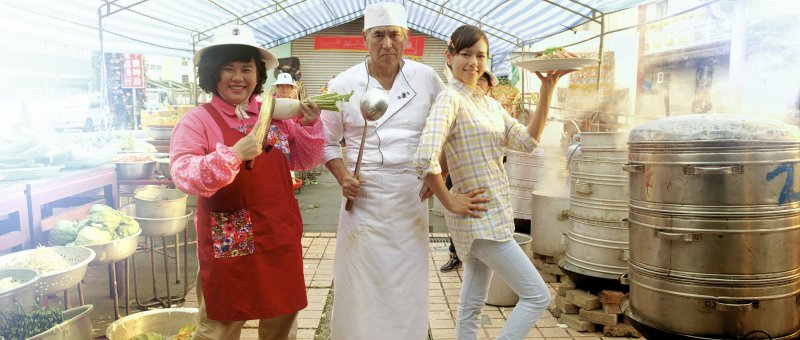
In these high speed days, it’s sometimes difficult to remember that “cooking means something” or at least it should do according to “Doctor Gourmet” Hai (Tony Yang). A warm tribute to the Taiwanese tradition of bandoh outdoor banquets, Zone Pro Site: The Moveable Feast (總舖師, Zǒng Pù Shī) positions the figure of the chef as a kind of conduit bridging the gap between people through the art of well cooked food. Heroine Wan (Kimi Hsia Yu-chiao), however, thoroughly rejected the ambitions of her top chef father and determined on a life in the city with her heart set on becoming a famous model, actress, and celebrity. 

Life in Taipei is however hard. Career success is hard to come by and duplicity lurks round every corner. Wan learns this to her cost when two shady guys turn up on the pretext of delivering a birthday cake only to explain to her that her boyfriend, whose loans she’s unwisely co-signed, has skipped town and left her with the bill. Confused and afraid, Wan decides to skip town herself, planning to head back to her hometown and ask her mother for help. What she discovers however is that her mother is on the run too after losing the family restaurant partly through her subpar cooking skills which could never match those of her late husband, and partly through the betrayal of his apprentice who poached all their best customers and set up on his own. Despite being “in hiding”, the only way Puffy (Lin Mei-hsiu) has been able to make ends meet is by putting on an impromptu dance show in the central square to promote her small noodle stall. Luckily for them both, Wan makes a chance encounter on the train with a nice young man, Hai, who turns out to be a “Doctor Gourmet” specialising in “fixing” failing restaurants.

His arrival comes at just the right moment as Wan and her mother get a visit from potential clients – a sweet older couple who first met 50 years previously at a wedding catered not by Wan’s father Master Fly Spirit, but by his now departed mentor. Wan’s mother was going to turn the request down because neither she nor Wan know how to make the traditional dishes the couple are looking for, but Wan makes an impromptu decision to try and make their wedding dreams come true, warning them that it might take a little extra time and not quite match up to their romantic expectations. 

Wan’s problem is that she always hated her family’s restaurant. She resented the heat and the smell and the grease, often placing an empty box over her head and retreating into a fantasy world to escape the chaos. Her father wanted her to take over, leaving her a notebook filled with his recipes which was unfortunately stolen by a homeless man who mugged her at the station, but she was dead set on escape and becoming a “someone” in the city. Unlike her mother, however, she has real talent for cooking and is equally skilled at using her good looks and sweet nature to get things done. Soon after her arrival at the noodle stand, she’s already got herself a gang of geeky groupies calling themselves “Animals on Call” who are ready to do pretty much anything she asks of them. 

That comes in handy when Puffy persuades her to enter a national cooking competition where her rival is none other than Tsai, the apprentice who betrayed them, backed up another famous ex-chef Master Ghost Head (Hsi Hsiang) who has a fiery temper and spent some time in prison which might be why he still dresses like an ultra cool motorcycle guy from the ‘70s. There were apparently three great masters, the other being the eccentric  Master Silly Mortal (Wu Nien-jen) who is later discovered living in a subway tunnel where he keeps the art of bandoh alive through a literal underground restaurant where his regulars bring him a selection of ingredients before sitting down to enjoy a communal meal. It’s Silly Mortal whose food is said to evoke human feelings who guides Wan towards a series of epiphanies about the nature of “traditional” food. According to him, there are no rules about what goes together, and having a “traditional” heart is really about embracing the true nature of bandoh. Only by having a heart full of joy can you make good food. 

Equally eccentric in some respects, Hai takes a back seat after reminding Wan that cooking is really a way of sending a coded message to its intended target. The two goons eventually join the team, working together earnestly to prepare for the biggest banquet of all which is both the old couple’s wedding celebration and the competition’s finale. Master Ghost Spirit talks about taking the “grief” out of meat through fine cutting, while Master Silly Mortal is all about putting positive emotions in, but the missing piece of the puzzle is Master Fly Spirit who sends his final message to Wan only after death as she rediscovers him through his recipes. Not quite giving up on her celebrity career, Wan embraces her inner chef, happy with the idea of making lunchboxes to sell at the station with her new friends and family rather than chasing money through oddly nihilistic cuisine as Tsai had done. In the end, it’s all about joy and togetherness, sharing tasty food in the open air where anyone and everyone is welcome to bring whatever they have to the table.


Zone Pro Site: The Moveable Feast screens in New York on Feb. 16 as part of this year’s New York Asian Film Festival Winter Showcase.

International trailer (English subtitles)