
 Adolescence is a difficult time for all, a period of waiting, in a sense, for the rain to end and everything to make the kind of sense you’ve been led to believe life is supposed to make only to finally see that the thing about life is there is no sense to be made of it. After the Rain (恋は雨上がりのように, Koi wa Ameagari no yo ni), adapted from the popular manga by Jun Mayuzuki, is touted as an admittedly creepy age gap romance between a confused teen and a melancholy middle-aged man but thankfully arrives at something more thoughtful and less problematic in its philosophical look at self-imposed inertia seen through the lenses of age and youth.
High school girl Akira (Nana Komatsu) loves nothing more than running but her record-breaking track career was brought to an abrupt halt by a ruptured achilles tendon. Having given up on her athletic dreams, she now spends her “free” time on a part-time job in a diner-style “family restaurant”. Unbeknownst to all, the reason Akira took the job was that the restaurant’s manager, 45-year-old divorced father Kondo (Yo Oizumi), was once nice to her after her accident and now she’s developed an almighty crush on his mild-mannered charms.
While Akira is processing the loss of her future as a top runner, Kondo is trying to get over not only the failure of his marriage but of his own dreams of literary success. Jealous of a college friend with a bestseller, Kondo has barely written anything in years and has all but resigned himself to a lifetime of managing a low-level chain restaurant in suburbia.
Kondo, for all his faults, is essentially a good guy whose major problem in life is being too nice. Needless to say, he’s not enthused by Akira’s surprise declaration of love and understands that it could cause him a lot of trouble but even so he wants to help her get over whatever it is that makes her think an affair with an older guy might be a good idea. Realising that her misplaced crush is most likely a displacement activity born of her grief for her racing career, Kondo sets about trying to coax Akira back towards something more positive than unwise romance through genial paternal attention even if she finds his attempts to make clear that he is only prepared to offer friendly support somewhat frustrating.
Akira’s problems are perhaps greater than they first seem. A strange girl with underdeveloped social skills and a relatively low need for interpersonal interaction, Akira has few friends and a habit of accidentally glaring at everyone she meets (which is not an ideal quality for a diner waitress). She is however very beautiful which also earns her a heap of unwanted attention precisely because of her angry aloofness. Neither of the boys her own age who declare an interest are very promising – both of them are unwilling to take a flat no for an answer and continue to chase Akira even though she consistently ignores them, though sous-chef Kase (Hayato Isomura) is at least a little more perceptive than he originally seems and finally able to offer some impartial advice to the confused young woman once he’s realised that his attentions really are unwanted.
Unwilling to engage with anything that reminds her of what she’s lost, Akira has been avoiding all her old friends. Haruka (Nana Seino), who has been chasing along behind desperate to catch up ever since they were kids, is as broken-hearted about their ruptured friendship as Akira is about running and longs to repair what was broken if only to prove that there’s more between them than just sports. Originally worried about Akira’s interest in Kondo she relaxes when she realises that he, like her, just wants to help Akira escape her moment of wounded inertia.
As Kondo puts, it’s boring waiting for the rain to stop. Like the heroes of Rashomon which becomes a repeated motif, Akira and Kondo are essentially just marking time waiting to be released from a self-imposed sense of frustrated impossibility. Kondo needed a dose of self-confidence which the decision to help a depressed high school girl who seems to be the only person who doesn’t find him pathetic just might offer, while Akira needs to realise that her life isn’t over and that she may have been too hasty in abandoning her dreams over what could be nothing more than a minor setback. Through their awkward non-romance the pair each rediscover something about themselves that they’d forgotten along with the courage to face their painful failures head on rather than attempting hide and living on in melancholy resentment.
Thankfully not the creepy age gap romance the synopsis teases, Nagai’s adaptation perhaps fails to mine the unexpectedly rich philosophical seam of Mayuzuki’s manga to its fullest extent in its powerful confrontation of age and youth sheltering from the storm of disappointment, but nevertheless presents an oddly warm tale of serendipitous friendships and mutual support as two frustrated people at different points of life each find the courage to move forward through helping someone else do the same.
Original trailer (no subtitles)


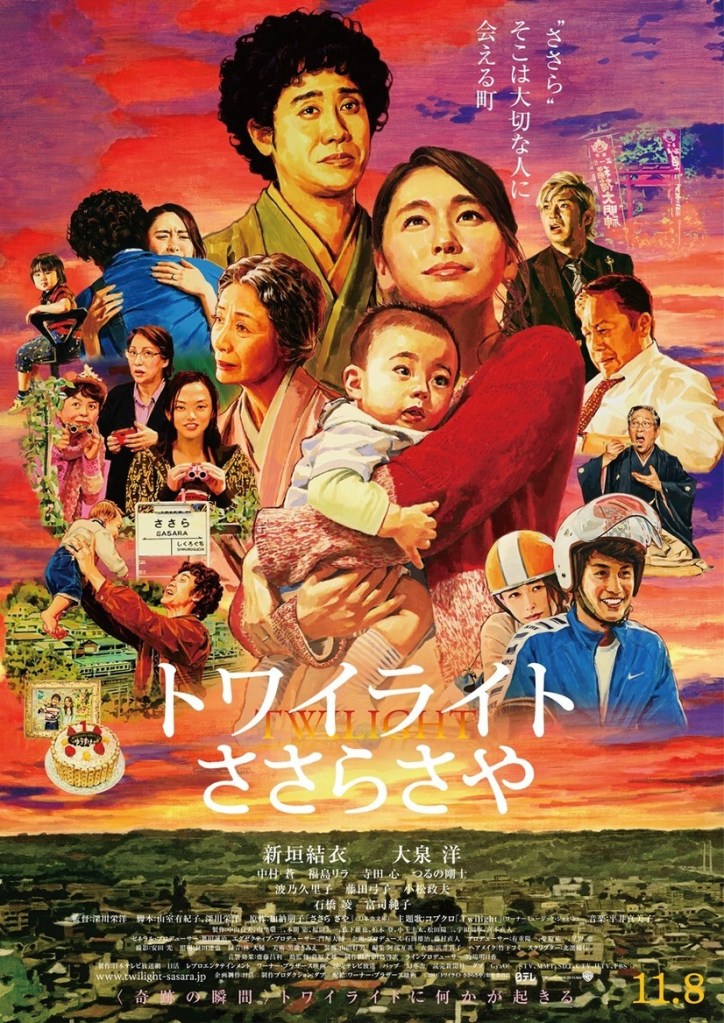 Japanese cinema has its fare share of ghosts. From Ugetsu to Ringu, scorned women have emerged from wells and creepy, fog hidden mansions bearing grudges since time immemorial but departed spirits have generally had very little positive to offer in their post-mortal lives. Twilight: Saga in Sasara (トワイライト ささらさや, Twilight Sasara Saya) is an oddity in more ways than one – firstly in its recently deceased narrator’s comic approach to his sad life story, and secondly in its partial rejection of the tearjerking melodrama usually common to its genre.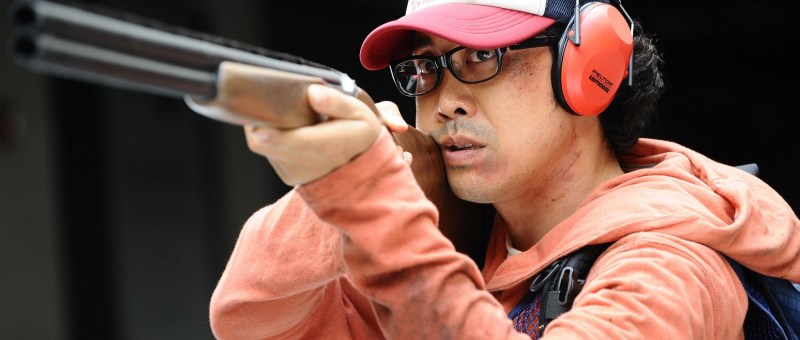
 Japan has never quite got the zombie movie. That’s not to say they haven’t tried, from the arty Miss Zombie to the splatter leaning exploitation fare of Helldriver, zombies have never been far from the scene even if they looked and behaved a littler differently than their American cousins. Shinsuke Sato’s adaptation of Kengo Hanazawa’s manga I Am a Hero (アイアムアヒーロー) is unapologetically married to the Romero universe even if filtered through 28 Days Later and, perhaps more importantly, Shaun of the Dead. These “ZQN” jerk and scuttle like the monsters you always feared were in the darkness, but as much as the undead threat lingers with outstretched hands of dread, Sato mines the situation for all the humour on offer creating that rarest of beasts – a horror comedy that’s both scary and funny but crucially also weighty enough to prove emotionally effective.
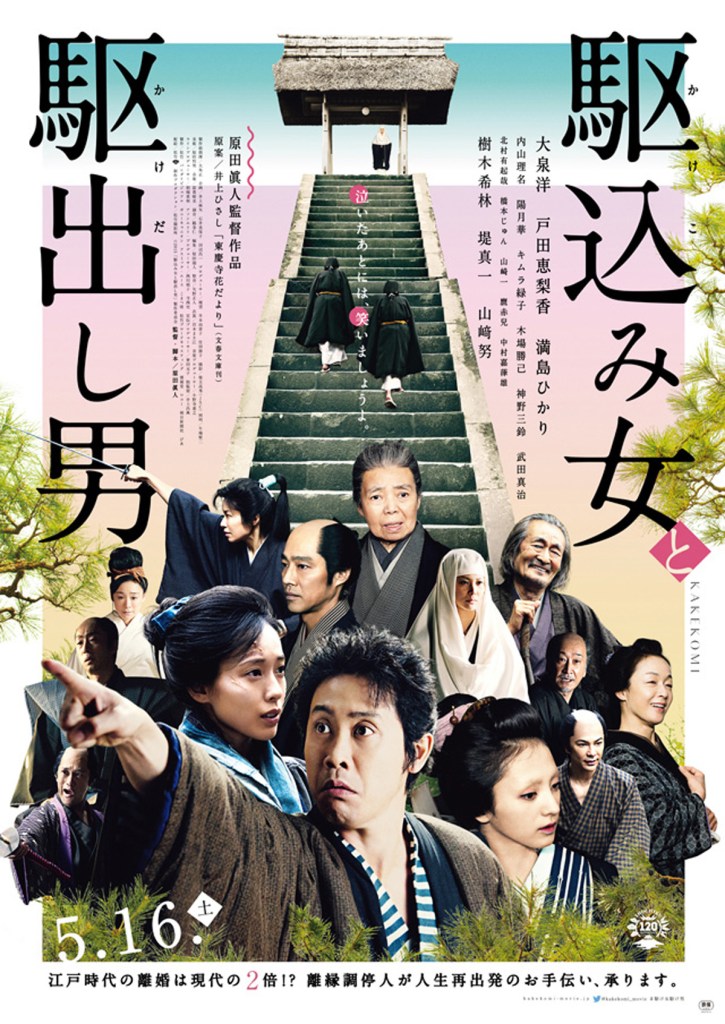 The world of the classical “jidaigeki” or period film often paints an idealised portrait of Japan’s historical Edo era with its brave samurai who live for nothing outside of their lord and their code. Even when examining something as traumatic as forbidden love and double suicide, the jidaigeki generally presents them in terms of theatrical tragedy rather than naturalistic drama. Whatever the cinematic case may be, life in Edo era Japan could be harsh – especially if you’re a woman. Enjoying relatively few individual rights, a woman was legally the property of her husband or his clan and could not petition for divorce on her own behalf (though a man could simply divorce his wife with little more than words). The Tokeiji Temple exists for just this reason, as a refuge for women who need to escape a dangerous situation and have nowhere else to go.
 Windows on Worlds