A Pale View of Hills (遠い山なみの光, Kei Ishikawa, 2025)

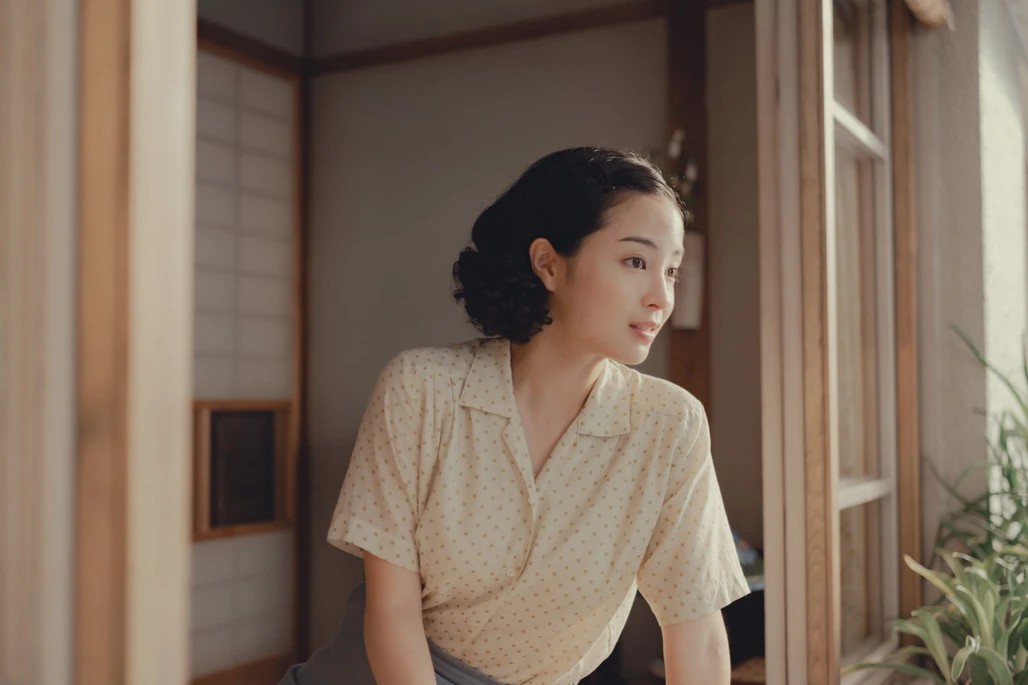
A young woman returns home at a moment of crisis, but finds herself with only more questions in an attempt to understand her mother and her decision to leave Nagasaki for the UK 30 years previously in Kei Ishikawa’s adaptation of Kazuo Ishiguro’s debut novel, A Pale View of Hills (遠い山なみの光, Toi yama-nami no Hikari). Set alternately in 1952 and 1982, the film positions the Greenham Common anti-nuclear protests as a point of connection between the two nations and the reason that Niki (Camilla Aiko) is currently so interested in her mother’s story seeing as there’s increased interest surrounding the atomic bomb, even if her editor keeps asking her about “Hiroshima”.

Another reason for Niki’s sudden return is that the editor is a married man Niki has been having an affair with. It seems she’s made a significant investment in the relationship by dropping out of university to work as a reporter, but despite saying he would, he has not left his wife and Niki suspects she may now be pregnant. All of which encourages her to investigate the relationship she has with her mother, Etsuko (Yo Yoshida / Suzu Hirose), and her late sister Keiko with whom she did not seem to get on, through tracing back her Japanese roots and trying to understand her familial history.

But what Etsuko, who is abruptly selling the family home, tells her is confusing and indistinct. Much of Etsuko’s story doesn’t line up, and we understand in part why later, but it seems almost as if the lacunas and contradictions are intentional and designed to hint at the ways we paper over cracks in our identities or create new mythologies for ourselves in an attempt to escape the traumatic past. Etsuko found a more literal escape in coming to the UK, but there’s something a little poignant about the way she says she thought there’d be more opportunities here and that Keiko would have had the chance to be anything she wanted which Japan would have denied her. Later she suggests that she always knew the UK wouldn’t be good for Keiko, but she came anyway. 

Now she’s selling the house, literally unpacking the past, Etsuko has begun dreaming about a woman she knew, Sachiko (Fumi Nikaido), and her daughter, Mariko, who lived near her in Nagasaki when she was pregnant with Keiko. Whereas Etsuko and her salaryman husband Jiro (Kohei Matsushita) live in a flat on a “danchi”, aspirational post-war housing estates for young families, Sachiko lives in a rundown shack across the way where the neighbours gossip about her for entertaining American soldiers who are still in the country post-Occupation because of the Korean War which is also what’s fuelling the economic recovery. Sachiko has met a man called Frank who says he’ll take her to America, but she doesn’t really believe him. 

On the one level, it seems that Etsuko and Sachiko are mirror images of each other yet they are in other ways alike, while their stories share several details in common. What unites them is that they both experienced the aftermath of the bomb, though Etsuko has been careful not to disclose the extent of her exposure and is now fearful of what effect it may have on the baby along with on her relationship with her husband who appears to share some of the prevailing social prejudice against those who were exposed to radiation. Jiro, meanwhile, is a distant workaholic who criticises Etsuko for not being more “motherly” and sees her as little more than a domestic servant. He has a damaged hand from his wartime service that seems to reflect his wounds, but still rolls in drunk occasionally singing war songs with his inconsiderate friends. 

When his father, Ogata (Tomokazu Miura), announces he’s coming to stay with them, Jiro is pleased to see him but rebuffs his request that he talk to an old school friend, Matsuda (Daichi Watanabe), about an article he published claiming that it’s a good thing that teachers like Ogata were let go after the war. Ogata evidently feels hard done by, but it’s also true that the cause of his son’s animosity towards him is that he was a card-carrying militarist who cheered when he left for the front and indoctrinated children with imperialist ideology in his job as a teacher. He is the past Japan must move on from, and a representative of the wartime generation by which the young of today feel betrayed. As Matsuda tells him, it’s a new dawn. Ogata has to change, and so does everyone else including Etsuko who may not be as happy in her marriage as others might assume and may well be seeking other paths towards self-fulfilment rather than allow herself to become another miserable, self-sacrificing housewife.

Even so, the contradictory message seems to be that perhaps you can’t actually move on from this past and Keiko, in particular, may have been changed by her exposure not to the bomb but it’s aftermath, the terrible things she heard and saw amid the wreckage and the stigma she faced afterwards. The artificiality of the Japanese sets might speak to the slipperiness of Etsuko’s memory, as if she were observing a film of herself rather than recalling real events or else reimagining them differently so they play out a little more cinematically, in comparison to the concrete reality of the Sussex bungalow which perfectly captures a lived-in Britishness of the early 1980s. In many ways, Niki might not have clarified very much at all, or perhaps begun to accept the idea that not knowing doesn’t matter in coming to understanding of her relationship with her mother and along with it of herself as she too decides it’s time for change.


A Pale View of Hills screens 16/18th October as part of this year’s BFI London Film Festival.

Trailer (English subtitles)

Trespassers (侵入者たちの晩餐, Itaru Mizuno, 2024)

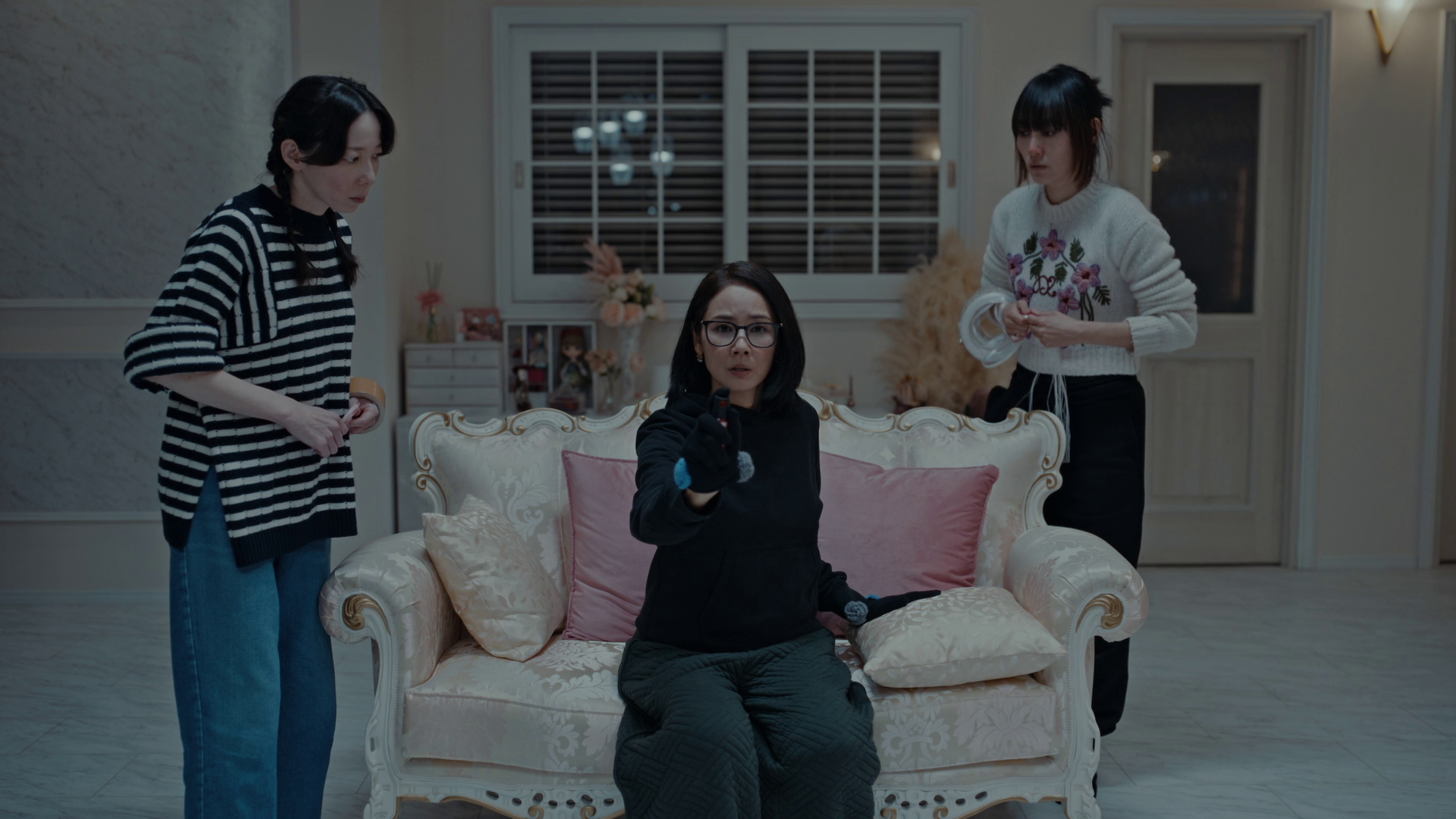
Trespassing. Somehow, it doesn’t sound that serious, does it? You’re always hearing about people being accused of trespassing simply for walking along a footway that someone believes to be on their land. It just means you were somewhere you had no right to be. Not doing anything, just being there. That’s exactly how it is for the heroines of Trespassers (侵入者たちの晩餐, Shinnyuushatachi no Bansan) who basically enter a home without permission, nosy around, then feel guilty and decide to clean the place to make up for it but accidentally find a burglar hiding in a corner! Could happen to anyone, really. 

Of course, there’s a little bit more to it than that. Middle-aged divorcees Akiko (Rinko Kikuchi) and Megumi (Kami Hiraiwa) work for the same exploitative housekeeping company which pays them a pittance while the boss, Natsumi (Mai Shiraishi), a former pin-up model turned influencer and entrepreneur, lives the high life. Though she claims to be an ally to working mothers, she also refuses to hire them because they have additional responsibilities that make it difficult for them to stick to her schedule, apparently. Megumi has heard a rumour that Natsumi is really into tax evasion and is hiding a large amount of undeclared money in her luxury flat, which is a rental in the company’s name that she also writes off. Of course, if someone were to steal that money, Natsumi could hardly go to the cops because then she’d have to admit she’d been cheating on her taxes. Why she wouldn’t just put it in a secret offshore account like everyone else is anyone’s guess, but everyone has their peculiarities and perhaps she just likes to have it handy. 

On entering with a cloned key and joined by Megumi’s yoga friend Kanae (Yo Yoshida) who “knows a lot about criminality”, the trio fail to discover the money or any evidence of tax evasion. Rather, Natsumi seems to have several certificates thanking her for donating large amounts of money to various charities which leaves the ladies feeling guilty for doubting her. Akiko had been the most morally conflicted about taking the money and was only persuaded on the condition that they would be giving the majority of it to worthy causes, so they were “helping people” like Robin Hoods rather than just helping themselves like greedy thieves. Megumi meanwhile had been less so and swayed by the rationale that Natsumi was exploiting them twice over by paying them such low wages and then depleting the public purse by thieving the money that should have been paid in taxes. Kanae, just seems to be along for the ride while hoping to open a yoga school with the money, but in a giant and unfortunate coincidence discovers another reason that Natsumi must pay.

Even the burglar, Shigematsu (Sosuke Ikematsu), a failed businessman with massive debts working as a food delivery guy to pay them off, has a sob story, but as the ladies point out it doesn’t really match the righteousness of their tax evasion whistleblowing mission. There is something quite wholesome about how bad they all are at “crime”, and how good Natsumi secretly is at it. It doesn’t even occur to the ladies that Natsumi’s willingness to forgive them is possibly because they’re right and she doesn’t want the police poking round because they might find something she doesn’t want them to. Meanwhile, it’s a little sad that each of them lament it’s been a while since they ate at home with other people rather than at restaurants and there’s something quite nice about their collective decision to make it a tradition though at one of their own homes rather than that of a suspected tax evader.

Indeed, as Akiko says, the real prize was the friends they made along the way. In many ways, they made everything better. Natsumi gets her comeuppance, they get improved working conditions, revenge, friendship and female solidarity too. What they found in Natsumi’s apartment was a family, though sadly they did not discover her hidden stash of hoarded gold. Bakarhythm’s typically witty script addresses a series of societal problems in a lighthearted way from the difficulties faced by middle-aged women and divorcees trapped in low-paying jobs, to hypocritical and exploitative CEOs peddling positive messages of success and empowerment but actually ripping off an entire society while laughing all the way to the bank. Maybe the ladies weren’t the ones trespassing after all when Natsumi too was where somewhere she had no right be.


Winny (Yusaku Matsumoto, 2023)

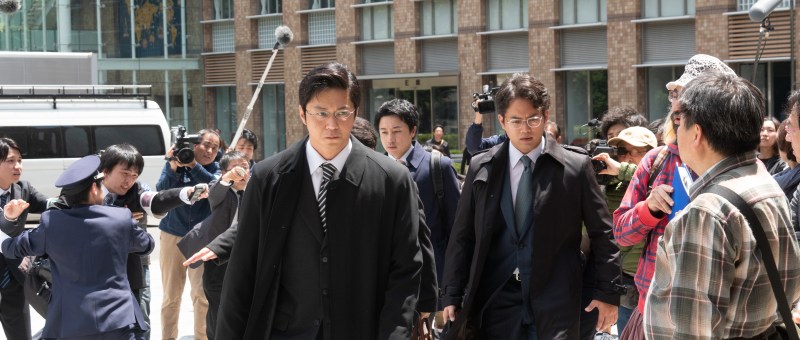
Can a creator be held legally responsible for what other people might decide to do with their creation? For some, that is the essential question of the trial at the centre of Yusaku Matsumoto’s legal drama Winny, but in speaking more to the present day than the early 2000s in which the real life events took place the film is more concerned with freedom of speech in a society in which established authorities may seek to resist the democratisation of information. 

A talking head seen on television at one point suggests that peer-to-peer file sharing programme Winny disrupts the democratic copyright regime, but according to its creator Isamu Kaneko (Masahiro Higashide) the appeal of peer-to-peer is that it is by nature democratic in forging a network of machines on an equal footing. Nevertheless, in November 2003 two people were arrested for using Winny to share copyrighted material and Isamu’s home was searched by the Kyoto police who arrested him for aiding and abetting copyright infringement. He and his lawyers argue that to charge the developer is wrongheaded and irresponsible in that it will necessarily stifle technological advance if developers are worried about prosecution if their work is misused by others while his intention in any case had not been to undermine copyright laws but essentially for technological innovation in and of itself. 

Meanwhile, the film devotes much of its running time to a concurrent police corruption scandal in which a lone honest cop is trying to blow a whistle on a secret slush fund founded on fraudulently produced expense receipts. The implication is that the reason the police decided to go after Isamu is that they feared Winny’s potential to expose their own wrongdoing. A member of the police force had apparently used Winny and introduced a vulnerability to the police computer system that allowed confidential data to be leaked, and Winny is indeed later used to publicly disseminate evidence which proves the claims of the whistleblower, Semba (Hidetaka Yoshioka), are true. Semba had previously tried to take his concerns to the press privately but was ignored, the editor simply printed a police press release without investigation unwilling to rock the boat. But a programme like Winny exists outside of the establishment’s control which is why, the film suggests, the police in particular resent it. 

A younger officer Semba reproaches at his station gives the excuse that everybody does it and refusing to fill in the false receipts would make it difficult for him to operate in an atmosphere in which corruption has become normalised. Even the police use Winny, a prison guard confiding in Isamu that he’s used the programme to download uncensored pornography while prosecution lawyers conversely attempt to embarrass Isamu by leaking pictures of his porn collection to the press and bringing it up on the stand. “Everybody does it” is not a good defence at the best times aside from being a tacit admission of guilt but reinforces a sense that the police operates from a position of being above the law. A particularly smug officer thinks nothing of perjuring himself on the stand, spluttering and becoming defensive when Isamu’s lawyers expose him in a lie. 

Isamu is depicted as a rather naive man whose social awkwardness and childlike innocence leave him vulnerable to manipulation. He’s told to sign documents by the police so he signs them thinking it’s better to be cooperative, taking the advice he’s given when he questions a particular sentence that he can correct it later at face value while assuming that he’ll be able to straighten it all out in court by telling them the truth and that he signed the documents because the police told him to. Meanwhile, he’s almost totally isolated, prevented from talking to friends and family out of a concern that he may use them to conceal evidence. 

The film seems to suggest that the stress of his ordeal which lasted several years may have led to his early death at the age of 42 soon after his eventual acquittal. In any case he finds a kindred spirit in his intellectually curious lawyer (Takahiro Miura) who defends him mostly on the basis that the right to innovate must be protected and a developer can not be responsible for the actions of an end user any more than a man who makes knives can be held accountable for a stabbing. Matsumoto captures the sense of wonder Isamu seems to feel for the digital world and has a great deal of sympathy for him as an innocent caught up in a game he doesn’t quite understand while fiercely defending his right to express himself, along with all of our own, without fear no matter what the implications may be.


Winny screens in New York Aug. 2 as part of this year’s JAPAN CUTS.

Original trailer (no subtitles)

My Broken Mariko (マイ・ブロークン・マリコ, Yuki Tanada, 2022) [Fantasia 2022]

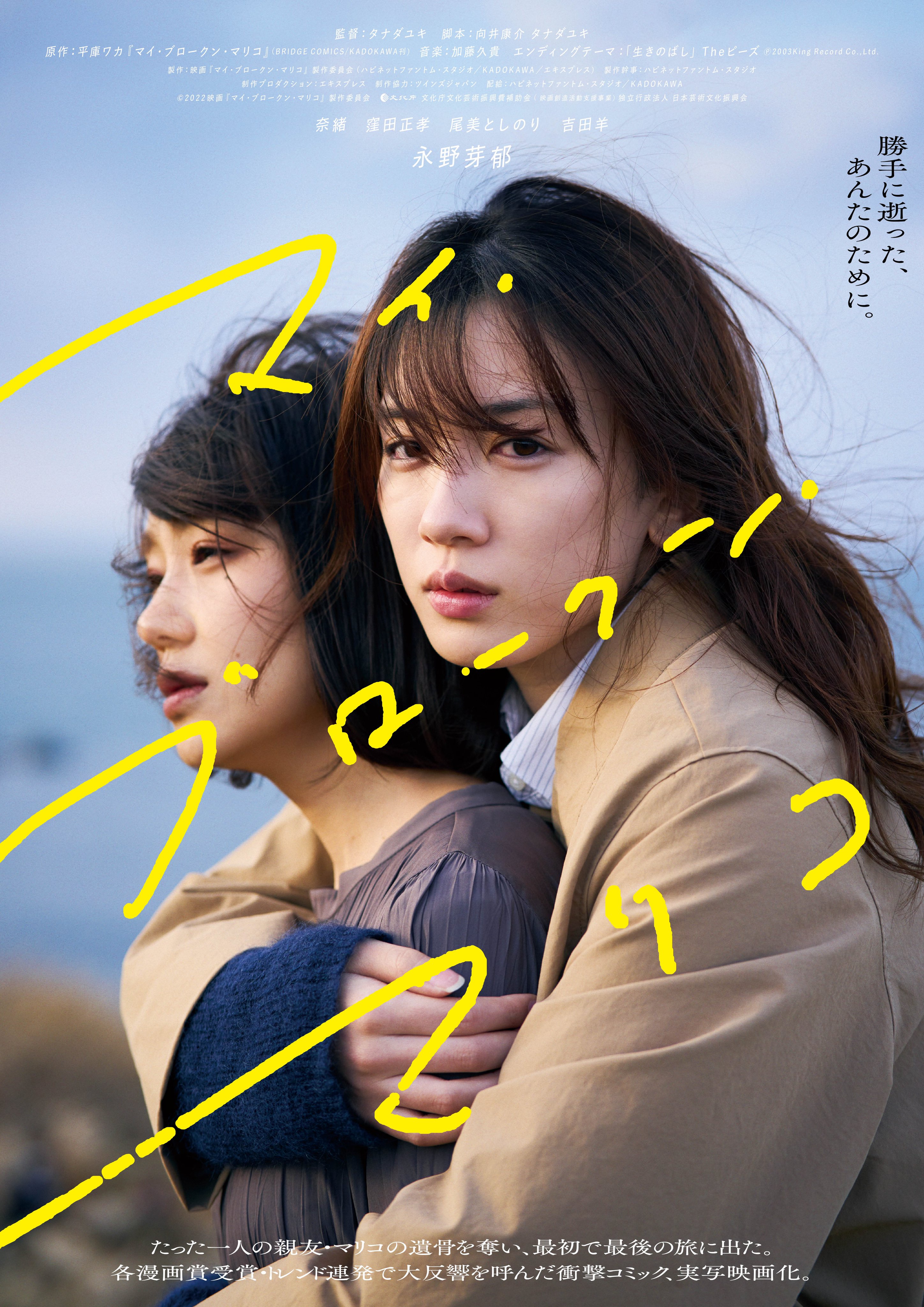
“The only thing you can do for a person who’s gone, is to live” according to a kindly soul at a train station attempting to comfort the heroine of Yuki Tanada’s adaptation of the manga by Hiroko Waka, My Broken Mariko (マイ・ブロークン・マリコ). It is in many ways, however, Shiino (Mei Nagano) who is trying to put herself back together after earth-shattering loss, attempting to reclaim her friend’s memory while struggling to reorient her life in the wake of her absence. Yet what she comes to realise is that all she can do for Mariko (Nao) now is to try to live.

At a cafe one ordinary day, Shiino hears the news announce the death of a woman presumed to have taken her own life who has the same name as her childhood friend. Overcome with anxiety, she tries to call Mariko on the phone but gets no answer nor reply to her messages. Dropping by her apartment, she realises the worst is true. Mariko is gone and she didn’t even say goodbye. Her apartment has already been cleared and her parents apparently opted for a “direct” cremation not even bothering to hold a funeral. It’s almost as if Mariko never existed at all. 

Consumed by grief and guilt that she didn’t see her friend’s death coming or in some way failed to save her, Shiino makes up her mind to rescue her unable to bear it that the father who beat and abused her all her life is allowed to keep her in death. After making a dramatic raid on their apartment, she kidnaps Mariko’s funerary urn and hits the road searching for new directions while on one last road trip looking for a safe place to let her friend rest. 

This was certainly an intense friendship or on Shiino’s side at least something more, she is clearly coded as queer in her masculine speech and attire, yet Mariko seems to have looked to her as a sisterly or maternal figure at one point exclaiming that she would have liked it if Shiino had given birth to her. As high school girls they’d idly looked at flats for rent, vowing to stay together until they were old and most importantly with a pet cat but even though Mariko had threatened suicide if Shiino were to get a boyfriend she eventually drifted away into a series of abusive relationships for which she continued to blame herself. Shiino can’t forgive herself that as much as she tried to show her she cared, she was never able to reach her or to restore Mariko’s sense of self worth. Now that she’s gone she finds herself still searching for her, struggling to remember not only the bad things or the good things but everything she was.

Through her random road trip, Shiino is forced to let Mariko go little by little firstly with the loss of her childhood letters to the unlikely appearance of a bag snatching biker in small-town rural Japan and secondly in ironically using the funerary urn to save another woman from abuse. The ghost of Mariko seems to hover around her, a street lamp flickering in comfort as she breaks down in tears in the street reading a letter in which the young Mariko told her she was no longer afraid to walk in the dark after hearing that Shiino used to go walking at night and she might bump into her at any time, while she is at one point almost possessed by her spirit when reclaiming her memory from the abusive father Shiino blames for causing her death in slow motion. In setting Mariko free she liberates herself not least from her all consuming friendship in which she admits that she had nothing and nobody else. 

“So this is how we get back to our ordinary lives” she reflects, lamenting that to the rest of the world Mariko’s death is an irrelevance and her absence barely felt, a realisation that can’t help but leave her feeling small and insignificant as do the offhand remarks from Mariko’s landlord that it’s a good thing she didn’t die in the apartment and her exploitative boss’ insistence that the death of a close friend isn’t a good enough excuse to take time off work. Replete with a quirky sense of humour despite the deep melancholy of Shiino’s overwhelming grief, Tanada’s empathetic drama finally allows its heroine to put herself back together again living quite literally in memory of her friend. 


My Broken Mariko screened as part of this year’s Fantasia International Film Festival.

Original trailer (English subtitles)

Hit Me Anyone One More Time (記憶にございません!, Koki Mitani, 2019)

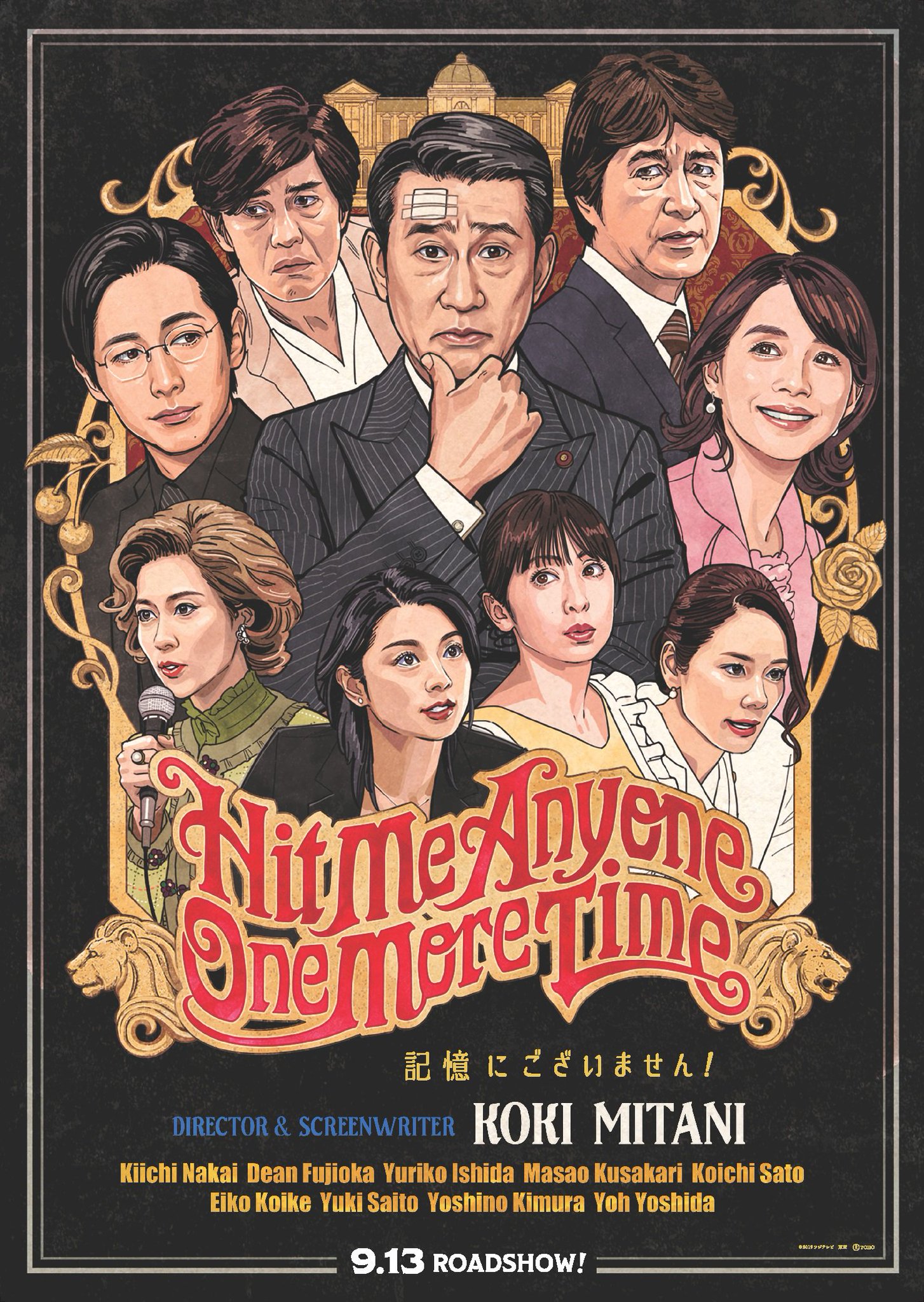
Imagine if you woke up one day and found out you’re actually the national leader of your country and not only that absolutely everyone, including your wife and son, hates you with furious intensity. The hapless protagonist of Koki Mitani’s lowkey political satire Hit Me Anyone One More Time (記憶にございません!, Kioku ni Gozaimasen!) finds himself in just this stressful situation having lost all of his memories since he made the fateful decision to enter politics, rendered infinitely naive as he tries to keep up appearances while internally conflicted by the direction both his life and his country under his stewardship seem to have taken. 

Regarded as the “all-time worst prime minister” in Japanese history, Keisuke Kuroda (Kiichi Nakai) is known as a venal bore, a ghastly misogynist and all-round arsehole. To put it bluntly the very fact that a man like Kuroda could ever have become prime minster in the first place hints at a deep-seated rot in the political order. Aside from his gaffe-prone personality, the chief complaints against his administration are a sales tax hike and welfare cuts both of which target those with the least means, not that Kuroda cares very much about them. His big legacy idea is to build a second Diet building right next to the first Diet building only with spa facilities, illicitly teaming up with a childhood friend turned construction magnate who has been supplying him with hefty “donations”. 

After insulting the electorate during an outdoor balcony speech, Kuroda is hit on the head by a rock thrown by a disgruntled voter. Having lost his memory he regresses to a state of innocence from before he was corrupted by the cutthroat world of Japanese politics, now a nice, polite, slightly mild-mannered man who stuns his staff with his newfound consideration for others including a widely televised moment in which he stops to help up a female reporter who trips while chasing him in the lobby. Few believe he’s really changed, assuming this is some sort of bit intended to help rehabilitate his reputation. His new attitude, however, eventually fosters a new sense of hope for political change among his previously jaded, cynical staff who had long since given up hope of building a better Japan. 

Unsurprisingly, Mitani mostly avoids direct allusions to real world politics but adopts a mildly progressive stance as he sends a virtual innocent into the lion’s den of contemporary politics. It’s not long before Kuroda’s asking sensible questions about policy that wouldn’t go down so well with his (presumably) centre-right party including lowering the sales tax and raising the corporate, taking the time to greet constituents including a contingent of cherry farmers which contributes to his later decision to turn down a tariff-free trade deal for American cherries endangering diplomatic relations with the Japanese-American US President. No longer a ruthless political animal but a rueful middle-aged man who actually cares about ordinary people, Kuroda attempts to change the course Japanese politics largely by taking on the king maker, Tsurumaru (Masao Kusakari), his Chief Cabinet Secretary and the true holder of power in this infinitely corrupt political system. 

All sorts of sordid politics is on display from Kuroda’s womanising and a potential blackmail plot involving his wife’s affair to Tsurumaru’s yakuza ties and an even worse secret he would find personally ruinous should it get out. The ironic Japanese title of the film takes its name from that most universal of political get out of jail free cards, “I do not recall”, Kuroda’s standard response when questioned in the Diet about any of his extremely dodgy dealings. Instructing Kuroda that he should drop this “shallow humanism”, Tsurumaru can offer only the motivation that he wants to “remain in politics for as long as possible” while discovering that his old-school methods of political manipulation may no longer work when those around him find the courage to shed their cynicism and embrace a cleaner, kinder politics. 

Throwing in random gags such as a foreign minister who can’t speak English and has large ears with a pot belly that give him the appearance of Buddha while taking minor potshots as the usually toothless TV media through his series of acerbic anchors only too keen to criticise the PM live on air, Mitani’s comedy is characteristically inoffensive with its mix of slapstick and goodnatured farce but nevertheless makes a subtle plea for decent, compassionate politics which puts the interests of the people first rather than those of the governing elite. 


Hit Me Anyone One More Time streamed as part of this year’s Nippon Connection.

Original trailer (English subtitles)

After the Rain (恋は雨上がりのように, Akira Nagai, 2018)

KoiAme_teaser_B5_F_outAdolescence is a difficult time for all, a period of waiting, in a sense, for the rain to end and everything to make the kind of sense you’ve been led to believe life is supposed to make only to finally see that the thing about life is there is no sense to be made of it. After the Rain (恋は雨上がりのように, Koi wa Ameagari no yo ni), adapted from the popular manga by Jun Mayuzuki, is touted as an admittedly creepy age gap romance between a confused teen and a melancholy middle-aged man but thankfully arrives at something more thoughtful and less problematic in its philosophical look at self-imposed inertia seen through the lenses of age and youth.

High school girl Akira (Nana Komatsu) loves nothing more than running but her record-breaking track career was brought to an abrupt halt by a ruptured achilles tendon. Having given up on her athletic dreams, she now spends her “free” time on a part-time job in a diner-style “family restaurant”. Unbeknownst to all, the reason Akira took the job was that the restaurant’s manager, 45-year-old divorced father Kondo (Yo Oizumi), was once nice to her after her accident and now she’s developed an almighty crush on his mild-mannered charms.

While Akira is processing the loss of her future as a top runner, Kondo is trying to get over not only the failure of his marriage but of his own dreams of literary success. Jealous of a college friend with a bestseller, Kondo has barely written anything in years and has all but resigned himself to a lifetime of managing a low-level chain restaurant in suburbia.

Kondo, for all his faults, is essentially a good guy whose major problem in life is being too nice. Needless to say, he’s not enthused by Akira’s surprise declaration of love and understands that it could cause him a lot of trouble but even so he wants to help her get over whatever it is that makes her think an affair with an older guy might be a good idea. Realising that her misplaced crush is most likely a displacement activity born of her grief for her racing career, Kondo sets about trying to coax Akira back towards something more positive than unwise romance through genial paternal attention even if she finds his attempts to make clear that he is only prepared to offer friendly support somewhat frustrating.

Akira’s problems are perhaps greater than they first seem. A strange girl with underdeveloped social skills and a relatively low need for interpersonal interaction, Akira has few friends and a habit of accidentally glaring at everyone she meets (which is not an ideal quality for a diner waitress). She is however very beautiful which also earns her a heap of unwanted attention precisely because of her angry aloofness. Neither of the boys her own age who declare an interest are very promising – both of them are unwilling to take a flat no for an answer and continue to chase Akira even though she consistently ignores them, though sous-chef Kase (Hayato Isomura) is at least a little more perceptive than he originally seems and finally able to offer some impartial advice to the confused young woman once he’s realised that his attentions really are unwanted.

Unwilling to engage with anything that reminds her of what she’s lost, Akira has been avoiding all her old friends. Haruka (Nana Seino), who has been chasing along behind desperate to catch up ever since they were kids, is as broken-hearted about their ruptured friendship as Akira is about running and longs to repair what was broken if only to prove that there’s more between them than just sports. Originally worried about Akira’s interest in Kondo she relaxes when she realises that he, like her, just wants to help Akira escape her moment of wounded inertia.

As Kondo puts, it’s boring waiting for the rain to stop. Like the heroes of Rashomon which becomes a repeated motif, Akira and Kondo are essentially just marking time waiting to be released from a self-imposed sense of frustrated impossibility. Kondo needed a dose of self-confidence which the decision to help a depressed high school girl who seems to be the only person who doesn’t find him pathetic just might offer, while Akira needs to realise that her life isn’t over and that she may have been too hasty in abandoning her dreams over what could be nothing more than a minor setback. Through their awkward non-romance the pair each rediscover something about themselves that they’d forgotten along with the courage to face their painful failures head on rather than attempting hide and living on in melancholy resentment.

Thankfully not the creepy age gap romance the synopsis teases, Nagai’s adaptation perhaps fails to mine the unexpectedly rich philosophical seam of Mayuzuki’s manga to its fullest extent in its powerful confrontation of age and youth sheltering from the storm of disappointment, but nevertheless presents an oddly warm tale of serendipitous friendships and mutual support as two frustrated people at different points of life each find the courage to move forward through helping someone else do the same.


Original trailer (no subtitles)

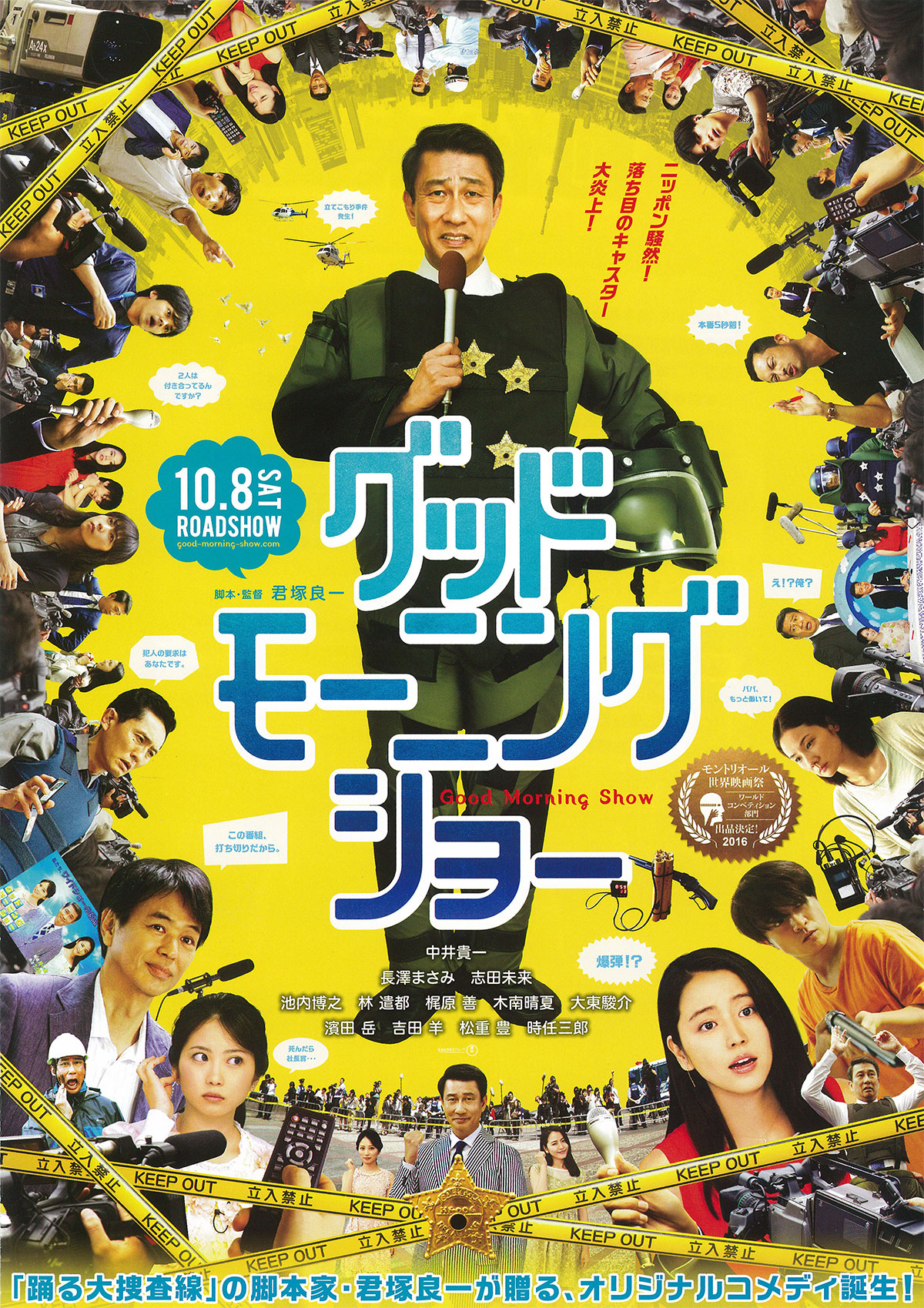
Good Morning Show (グッドモーニングショー, Ryoichi Kimizuka, 2016)

Good Morning Show posterThirty years before Good Morning Show (グッドモーニングショー), No More Comics showed us that the news is serious business and it seems the intervening three decades have not done much to change that. Good Morning Show is the kind of vacuous TV magazine programme that seems to have become popular the world over but Japan has mastered in its entirety. This is a news programme for people trying to avoid the news – there’s just enough of the essentials to keep the average viewer up to date with the big ticket item of the day, but the rest is horoscopes, cakes, and celebrity gossip. The morning news sets the mood for the rest of the day, and isn’t it in everyone’s interest if it’s blue skies all the way ahead? Perhaps so, but whatever happened to serious journalism?

Good Morning Show’s veteran anchor, Sumida (Kiichi Nakai), used to be a top talent on the evening news but a spot of “inappropriate” reporting from the scene of a disaster has had him relegated to the nonsensical early morning magazine show which involves getting up at 3am everyday and becoming something of an expert on pastries. Sumida’s day starts badly when he gets up to find his wife (Yo Yoshida) and son (Mihiro) still awake. As it turns out, there’s a family crisis. Sumida’s student son has got his girlfriend pregnant and has decided to do the right thing and get married, no matter what his dad might have to say about it. Sumida is definitely not happy but he’s also late for work. On the way, he finds out that his co-anchor, Keiko (Masami Nagasawa), with whom he apparently had some kind of drunken indiscretion, has decided that they’re now a couple and is about to announce as much live on air. Luckily for Sumida, a third crisis enters his life when a gunman (Gaku Hamada) takes a cafe hostage and asks directly for the Good Morning Show host to visit him at the scene.

The Good Morning Show exists entirely to cater to its audience’s baser instincts, but its simple charms are apparently going out of style and the show will be cancelled if they don’t get their numbers up soon. The hostage crisis is a godsend in this regard as is Sumida’s unexpected importance to the case which gets the show on the ground reporting live from the scene with exclusive access. Given this shift in broadcast tastes, it’s strange there’s no reference to social media though Good Morning Show is apparently viewable via the internet with a large portion of the audience tuning in on their smartphones during their morning commute. This sense of “community” seems to be key to the show’s appeal as the interactive poling which usually asks silly questions intended to spark debate such as whether or not to throw out gifts from old lovers, becomes central to the hostage case in deciding whether Sumida and the gunman should live or die live on air.

The gunman, like many, turns out to be just another angry young man frustrated that no one will listen to his complaints. At first it looks like Sumida may be in some way responsible, either because of his botched reporting on an earlier disaster or a connection to an incident in the cafe some years previously, but it turns out the major factor is a kind of hypocritical smugness that’s become the Good Morning Show’s trademark. For all of his frustrations with the format, Sumida is depressingly good at mindless twaddle and his fake “worry” about the future of the nation has got the gunman’s back up. The key issue is still more personal as the gunman feels himself excluded from the community feeling fostered by the show when he tries to make himself heard via its channels and is ignored.

A definite irony when Good Morning Show’s major selling point is “ignoring” the real news. Yes, they run a small item on the important headline of the day which provides Sumida a chance to “worry” about corrupt politicians misappropriating public funds etc, but then the show moves on to more cheerful areas like celebrity affairs and delicious cakes. Sumida ends up committing the newsman’s mortal sin – he becomes the news, much as the reporter at the centre of No More Comics did before him, though like the show itself it’s the personal which wins the day. Saying the things he couldn’t say to directly to his own son, Sumida tries to forge a connection with the gunman who is not a bad person, just another youngster at the end of his tether with an uncaring world. The connections are made through glass, but they are made all the same (even if imperfectly and with less than total honesty). Good Morning Show is, like its namesake, a fairly disposable effort but fun while it lasts. Then again sometimes the most harmless things do the most harm.


Original trailer (English subtitles)

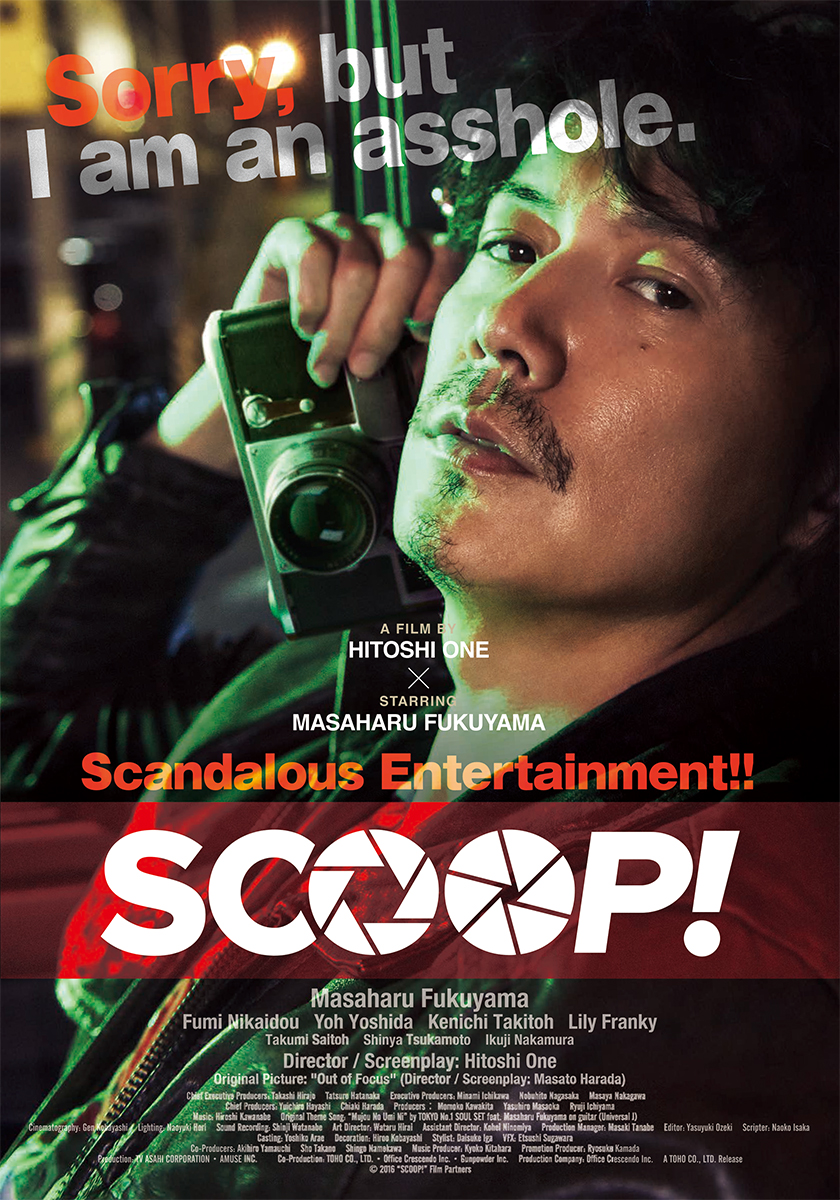
Scoop! (Hitoshi One, 2016)

scoop!Hitoshi One has a history of trying to find the humour in an old fashioned sleazy guy but the hero of his latest film, Scoop!, is an appropriately ‘80s throwback complete with loud shirt, leather jacket, and a mop of curly hair. Inspired by a 1985 TV movie written and directed by Masato Harada, Scoop! is equal parts satire, exposé and tragic character study as it attempts to capture the image of a photographer desperately trying to pretend he cares about nothing whilst caring too much about everything.
Shizuka (Masaharu Fukuyama) is a man out of time. Once the best photojournalist on his paper, he’s ridden the waves of a changing industry and become a high earning freelance paparazzo. Shizuka’s nights are spent in all of the fashionable if occasionally squalid drinking holes of the city in which the elites of the entertainment world attempt to disappear. Sadako (Yo Yoshida), the editor of Scoop! – a once proud publication now a seedy scandal rag, worries about her old friend, his debts, and his legacy. Offering to pay him well above the going rate for anything useable, she saddles him with the latest new recruit – Nobi (Fumi Nikaido), a naive young woman dressing in the bold childhood nostalgia inspired fashion trends of Harajuku. As might be assumed the pair do not hit it off but gradually a kind of closeness develops as Nobi gets into the thrill of the paparazzo chase.

In keeping with his inspiration, One shoots with a very ‘80s aesthetic of a city bathed in neon and moving to the beat of electropop and synth strings. Grainy and grungy, the images are seedy as is the world they capture though this is the Tokyo of the present day, not the bubble era underground. Shizuka claims his major inspiration came from the famous war photographer Robert Capa though now he can’t even remember if he really meant to become a photographer at all. Chasing cheating celebrities and exposing the odd politician for the kind of scandal that sells newspapers is all Shizuka thinks he’s good for, any pretence of journalistic integrity or the “people have a right to know” justification was dropped long ago.

Sadako, however, has more of a business head than her colleagues and is starting to think that Scoop! could be both a serious news outlet and nasty tabloid full of gravure shots and shocking tales of the rich and famous. Getting Shizuka to mentor Nobi is an attempt at killing to two birds with one stone – unite the plucky rookie with the down on his luck veteran for a new kind of reporting, and help Shizuka return to his better days by paying off those massive debts and getting his self esteem back.

Unfortunately Shizuka is his own worst enemy, hanging around with his strange friend Chara-Gen (Lily Franky) who is intermittently helpful but a definite liability. The world of the newspaper is certainly a sexist one – Sadako and Nobi seem to be the only two women around and the banter is distinctly laddish. An ongoing newsroom war leaves Sadako lamenting that the men only think about their careers and promotions rather than the bigger picture while the suggestion that she may win the position of editor has other colleagues bemusedly asking if a woman has ever helmed such a high office. The men ask each other for brothel recommendations and pass sexist comments back and fore amongst themselves with Shizuka trying to out do them all even going so far as to put down the new girl by describing her as “probably a virgin”.

Sadako’s plan begins to work as Shizuka and Nobi become closer, she becoming the kind of reporter who files the story no matter what and he finally agreeing to work on a more serious case. Having spent so long believing everything’s pointless, Shizuka’s reawakening maybe his undoing as a noble desire to help a friend who is so obviously beyond help leads to unexpected tragedy. Nevertheless, the presses keep rolling. A throwback in more ways than one, One’s 80s inspired tale of disillusioned reporters and mass media’s circulation numbers obsessed race to the bottom is all too modern. Unexpectedly melancholy yet often raucously funny, Scoop! is an old fashioned media satire but one with genuine affection for the embattled newsroom as it tries to clean up its act.


Scoop! was screened as part of the Udine Far East Film Festival 2017

Original trailer (no subtitles)

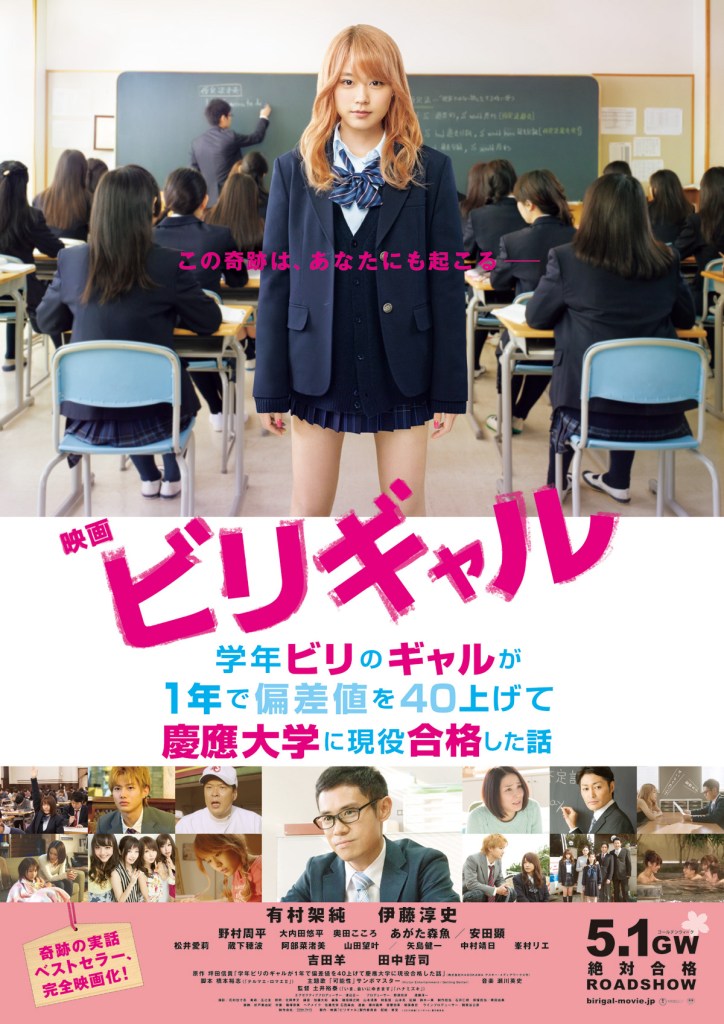
Flying Colors (ビリギャル, Nobuhiro Doi, 2015)

flying-colorsBelow average student buckles down and makes it into a top university? You’ve heard this story before and Nobuhiro Doi’s Flying Colors (ビリギャル, Biri Gyaru) doesn’t offer a new spin on the idea or additional angles on educational policy but it does have heart. Heart, it argues is what you need to get ahead (if you’ll forgive the multilevel punning) as the highest barriers to academic success are the ones which are self imposed. Arguing for a more inclusive, tailor made approach to education which doesn’t instil false hope but does help young people develop self confidence alongside standardised skills, Flying Colors is the story of one popular girl’s journey from anti-intellectual teenage snobbery to the very top of the academic tree whilst healing her divided family in the process.
Little Sayaka Kudo (Kasumi Arimura) got off to a bad start in her academic life, bullied and friendless at primary school. After the teachers refuse to help, Sayaka’s doting mother, Akari (Yo Yoshida), manages to get her into a more exclusive middle school which is affiliated with both a high school and a university which means that Sayaka’s academic destiny is fairly secure. However, though she does manage to make friends at her new school, she falls in with the “popular” crowd and begins dying her hair, rolling her skirt up, and wearing an inadvisable amount of makeup. Knowing that their entrance to high school and university is assured, the girls slack off completely and are at the very bottom of the class.

However, it all comes crashing down when Sayaka is caught smoking and threatened with expulsion. Bravely refusing to give up her friends and have them suffer the same fate, Sayaka is the only one who gets suspended but still risks missing graduation and losing her secured place at university. One of the few people to really believe in her, her mother Akari, arranges for Sayaka to attend an unconventional cram school where the well meaning teacher, Tsubota (Atsushi Ito), encourages her to have a goal, and it’s a lofty one – Keio University, one of the most prestigious institutions of higher education in Japan.

Despite her dismal academic prognosis, Sayaka is not lacking in ability, just the will and belief to see it through. After being so unhappy in primary school, Sayaka values her friendships and status as one of the popular girls and maintaining that side of her life is much more important than getting good grades. Written off by her teachers, no one is prepared to give her the permission to succeed and so she assumes she’s as dim as everyone says she is.

The situation isn’t helped by her home life in which her embittered father (Tetsushi Tanaka) ignores his two daughters in favour of devoting all his attention to his son, Ryuta (Yuhei Ouchida), whom he wants to become a professional baseball player. Vicariously thrusting his own dream on his unsuspecting son, Sayaka’s father is unprepared for the moment Ryuta realises he’s been denied the right to choose for himself and rebels against him as all young men are apt to do. In fact, many of the cram school students are there because of a grudge against an unfeeling father who has had quite an adverse affect on his child’s sense of self worth.

Tsubota is the first person other than her mother to show faith in Sayaka’s abilities and is able to convince her that she might be able to achieve something if she started to apply herself. Speaking to her in terms she can understand, Tsubota hunts down different kinds of study materials to help her along the way gradually raising her scores as she builds belief in her ability to reach her goal. Tsubota is the only teacher at the school and is able to take the time to get to know each of his pupils individually so he can tailor the course to bring out the potential in each of his charges. While the kids are studying to pass exams, Tsubota is studying pop culture so that he can talk to them on their own level and find out the best ways to keep them motivated.

As much as it’s the story of a persistent underdog finally discovering a well of self belief that will sustain them on a difficult path, Flying Colors is also an indictment on the modern educational system which only caters for the group rather than the individual and is so concentrated around rote learning and standardised tests that it fails to teach young people the critical thinking skills they need to succeed in life. Flying Colors probably is not going to influence public educational policy but it does offer an amiable and inspirational story that might give hope to those struggling under its often unreasonable demands.


Original trailer (English subtitles)

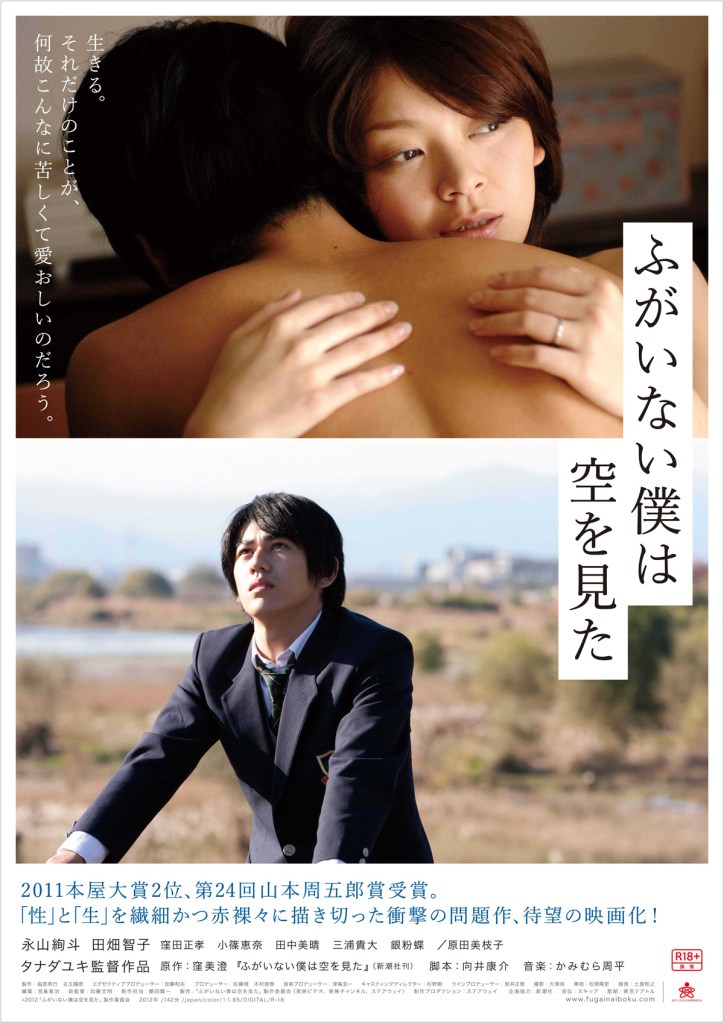
The Cowards Who Looked to the Sky (ふがいない僕は空を見た, Yuki Tanada, 2012)

Cowards who looked to the sky posterThe work of director Yuki Tanada has had a predominant focus on the stories of independent young women but The Cowards Who Looked to the Sky sees her shift focus slightly as the troubled relationship between a middle aged housewife who escapes her humdrum life through cosplay and an ordinary high school boy takes centre stage. Based on the novel of the same name by Misumi Kubo, The Cowards Who Looked to the Sky (ふがいない僕は空を見た, Fugainai Boku wa Sora wo Mita) also tackles the difficult themes of social stigma, the power of rumour, teenage poverty, elder care, childbirth and even pedophilia which is, to be frank, a little too much to be going on with.

Told in a non-linear, overlapping structure the central spine of the film follows unfulfilled housewife Satomi who likes to dress up as her favourite character from the retro anime Magic Girl. Whilst dressed as its heroine, Anzu, she spots a high school boy at a convention who looks eerily like the anime’s hero, Muramasa. Takumi is only at the convention with a friend and has no particular interest in anime but as the two live in the same area “Anzu” convinces Takumi to come and try on a Muramasa outfit at her place. One thing leads to another and the pair embark on a proxy affair which takes the form of role-play between the two anime characters carefully scripted by Satomi. However, Satomi’s hitherto disinterested husband begins to notice a change in her behaviour and has spy cameras installed catching the hot cosplay action for all to see. When he uploads the video to the internet it causes a serious problem for the young and impressionable Takumi.

Actually, there’s a third person in Satomi’s marriage to her feckless husband Keiichiro in the form of his overbearing mother. So far, the couple have no children despite having been married for some time and this has distressed Michiko to the point that she’s the one dragging the couple in for IVF treatment and getting upset when it doesn’t work. Her son, Keiichiro, has weak swimmers and actively doesn’t want children but this doesn’t stop Michiko taking all her frustrations out on Satomi whom she brands as “defective” and gives the impression that she’d like to “fire” her if she could. A shy woman and probably quite bored as a stay at home housewife, Satomi retreats into fantasy by cosplaying as the familiar character from her favourite childhood anime Magic Girl. Becoming Anzu and having an affair with Muramasa isn’t quite cheating, after all, and perhaps she even hopes to have the child that her mother-in-law so desperately wants her to have even if her husband and medical science won’t help her.

Among the younger generation, Takumi lives with his mother, Sumiko, in a residential maternity clinic that she runs where pregnant women can come and be looked after in a more natural and homely environment than the comparatively cold and sterile hospital. Takumi is best friends with a boy who lives near by who, like him, has no father but unlike Takumi his mother is also an absent figure too so Ryota must work part-time at the combini whilst also looking after his grandmother who is suffering with dementia.

Sumiko tries to support Ryota by giving him occasional food parcels but as a young man Ryota sometimes finds this a little embarrassing and is offended by the idea of receiving charity. When it comes right down to it, he resents Takumi’s happy relationship with his mother and their relative financial security. The manager at the store brands Ryota a “ghetto kid” and even blames him for the increase in shoplifting by kids from the estate. He has little time to study even if he wanted to, but all he sees for his future is a great big dead end. Another worker at the store who previously worked as a teacher offers to help Ryota improve his grades and maybe even try for a university scholarship but turns out to have a dark side of his own.

Simply put, there are far too many plot strands in rotation here and the screenplay never manages to corral them into any kind of satisfying arrangement. There is a moment of unity where Ryota’s story meets Takumi’s but it’s a fairly brief point of intersection (though a hugely important one both in terms of themes and storyline) leaving Ryota’s entire subplot feeling like a distraction to the main high school boy meets damaged older woman narrative. That’s without all of the goings on at the clinic, the brief appearance of Takumi’s father and the disappearing act of Ryota’s deadbeat mother who makes off with all his savings. The film’s scope and ambition is admirable but it ultimately fails to unify its disparate plot strands into a convincingly focused form.

That said, other than running too long the The Cowards Who Looked to the Sky does have a lot of interesting elements and is always beautifully shot showing off a rarely seen side of suburban Tokyo. The performances are also of a high quality particularly given the film’s frank erotic content which is played with refreshing realism by the veteran former child actress Tomoko Tabata and the comparatively less experienced Kento Nagayama as the confused high school boy caught in the fire of his first affair. At once too superficial and too deep, The Cowards Who Looked to the Sky spreads itself too thin to make a lasting impact though does offer enough rewards to justify its lengthy running time.


Reviewed as part of the Japan Foundation Touring Film Programme 2016.