Burning Dog (襲撃 BURNING DOG, Yoichi Sai, 1991)

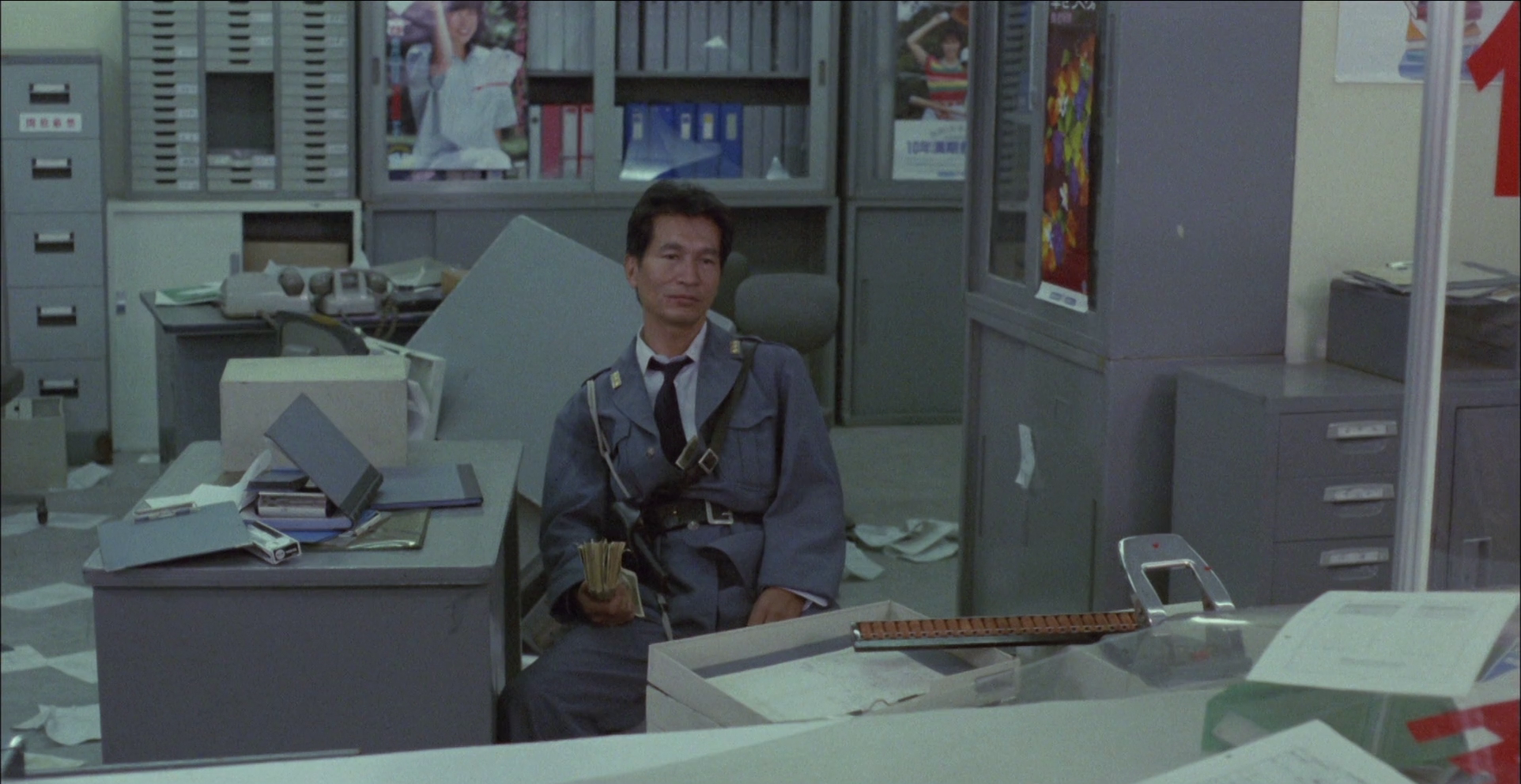
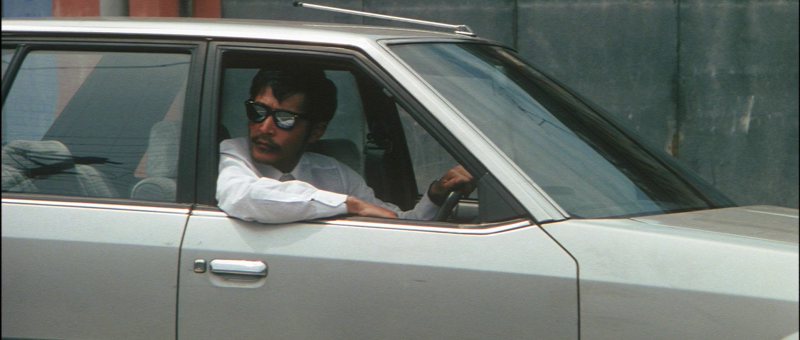
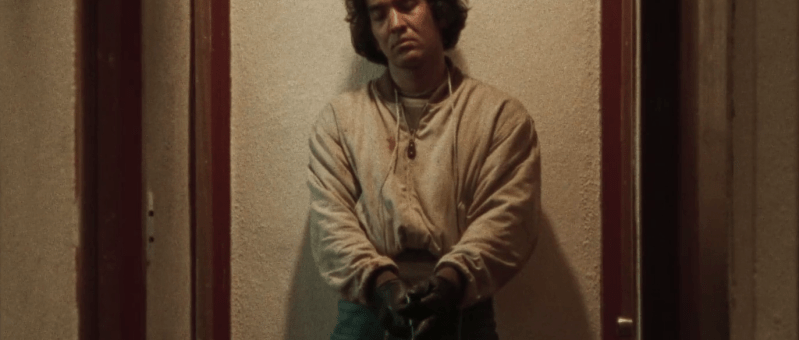
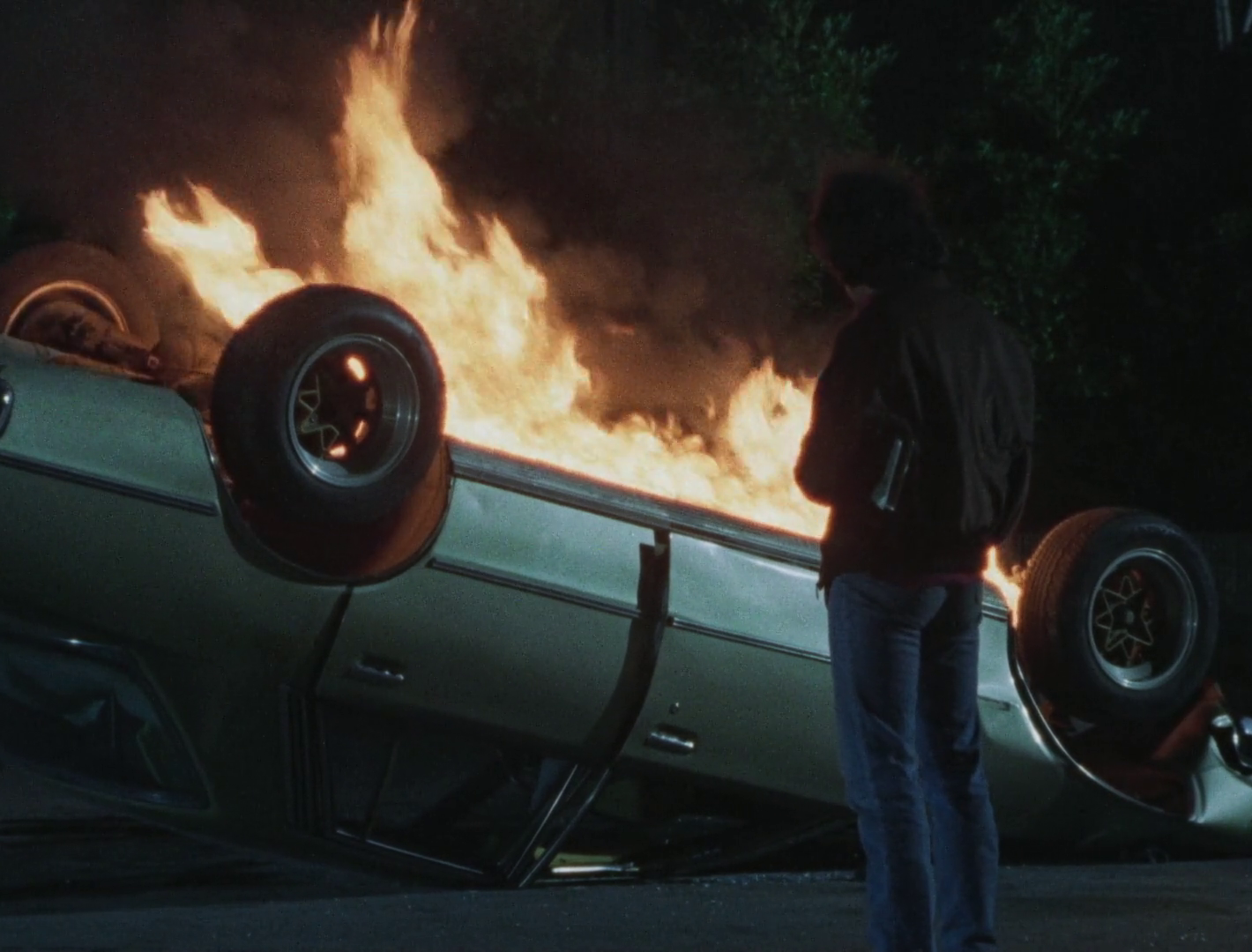
Freedom lies outside the confines of Japan In Yoichi Sai’s gritty crime thriller Burning Dog (襲撃 BURNING DOG, Shugeki Burning Dog). As the film’s name suggests, Shu (Seiji Matano) is a man on fire looking for a way out. When he’s betrayed by a gang member who shoots him and tries to make off with the do., He hot tails it back to Okinawa but as his old friend Takuji reminds him, he’s still in Japan and not as far from Tokyo as he might like to think. 

Takuji welds his desire for a fake passport against him to convince Shu to participate in his plan to rob a nearby American base on payday. For his part, he doesn’t really know what he wants to do with the money, but later tells his wife Ryoko that they could go anywhere together which is to say the money represents freedom in the ability to escape Japan. Then again, Takuji tells her that they could go the three of them, including his minion Koji who has been sleeping with Ryoko seemingly with his knowledge. There’s a strange kind of homoeroticism between Takuji and Koji that suggests that at least from Takuji’s view it’s a kind of proxy relationship. He allows Koji to sleep with his wife because he can’t actually sleep with him, though he doesn’t really appear to like his wife very much either. Shu tells him off when he first arrives in Okinawa for taking him to a club to look for women, pointing out that he has a wife at home, though Takuji describes her as a kind of inheritance and otherwise chases sex workers while dreaming of a life in which he’s not treated like “garbage” in particular by the Americans. 

“Women never forget when they’ve been wronged,” Shu warns Takuji, though it might also go for his relationship with former flame Mei who also took part in the traumatic bank robbery 10 years previously in which one of their teammates shot a policeman and then got killed. Mei now works at a furniture shop supplying Japanese-style furnishings to the resident Americans including Captain Ford, Takuji’s mark who apparently has no combat experience or chance for promotion but does have a drinking problem and a susceptibility to bribes. The fact he smuggles drugs out from the American base is more literal representation of the corruption caused by the ongoing presence of the American military. The Americans are currently involved in the Gulf War, which according to Takuji is why they’ve taken their eye off the ball. Huge amounts of money are flying through Okinawa to pay soldiers and they won’t be expecting anyone to try to steal it. 

The robbery is then a way of rebelling against the dominance of the American military and the marginalisation of men like Takuji. Captain Ford, meanwhile, may actually be smarter than he looks and a little bit ahead of the game or perhaps not far enough ahead while Mei’s allegiance seems uncertain. Shu’s isn’t all that clear either, but in any case just like back in Tokyo committing a heist together doesn’t so much bring people together as tear them apart. Someone’s double crossed them. It isn’t clear who, but it might not matter to Shu whose only goal has been to leave Japan completely with some money he could actually spend unlike the loot from the Tokyo heist which still hasn’t been laundered. He can’t take it all, but at the same time he may not want to share it and is willing to blast away his last chance at romance or redemption in attempt to escape his traumatic past.

Which is all to say, there are no real winners in this nihilistic game. As much as Shu is an antihero outsider trying to rebel against the constraints of Japanese society, he’s also a rampant misogynist sexually abusing the girlfriends of his targets for information and striking women who displease him while pushed to extremes geographical, social, and psychological. But like many of the hero’s of V-Cinema, the truth is that there is no real place for men like him in post-bubble Japan and only finally breaking free of its constraints can he hope to reclaim his identity and live as a free man.

The Stairway to the Distant Past (遙かな時代の階段を, Kaizo Hayashi, 1995)

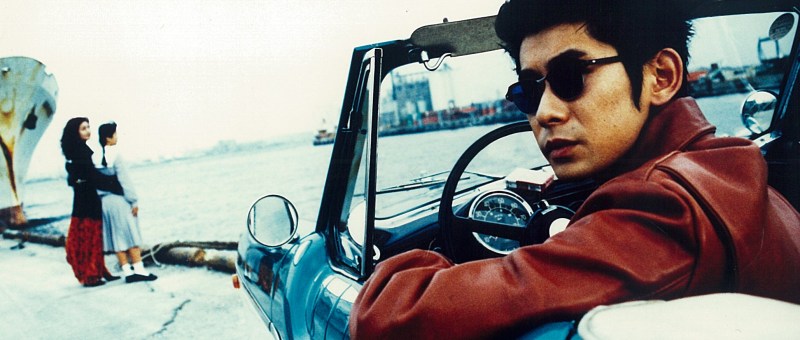
If The Most Terrible Time in My Life was channeling Nikkatsu Noir, Stairway to the Distant Past (遙かな時代の階段を, Harukana Jidai no Kaidan wo) sees Hayashi channel Fukasaku for a full-on confrontation with the legacies of the post-war era just as PI Maiku (Masatoshi Nagase) is forced to confront and attempt to cure the corrupted legacies of his own origins all while trying to save the city of Yokohama from drifting off to “another hell.” This time shooting in colour, Hayashi conjures a sense of mythic dread in the purple haze that hangs over a hidden city and the eerie blue of the path to get there.

But before all that, Maiku has fallen on such hard times his beloved car’s been repossessed and he’s stuck finding lost dogs for wealthy yet eccentric clients. Meanwhile, leader of New Japs gang Kanno (Shiro Sano) is running for political office while two of his underlings decide to freelance in order to take over the lucrative river trade which no one, not even the Taiwanese gang otherwise apparently in the ascendent, has ever dared to touch in fear of the mythic “White Man” who’s controlled the area since the post-war era with a ruthless efficiency that has seen any man challenge him not live to tell the tale. In the midst of it all is bigoted, and apparently pretty corrupt, policeman Nakayama (Akaji Maro) who first blackmails Maiku into helping him investigate a theft and smuggling ring on the river then apparently makes a deal with the White Man’s underlings who in turn blackmail him over his gambling debts but also claim they can make him chief of police if he chooses to play along.

Nakayama is a symbol of the rot in the contemporary city though he is in fact merely spineless, greedy, unpleasant and prejudiced. He asks Maiku for help because he’s hamstrung by the rules of policing which prevent him from doing the nefarious things he asks Maiku to do all of which leads to some pretty tragic consequences and a pair of orphaned children. The New Japs are perhaps a sign of further corruption still to come as Kanno tries to go legit as a politician but only as a means of increasing his influence and earnings. 

The river becomes a kind of nexus, the shore line between contemporary Japan and the “distant past” of the post-war era. Nakayama discovers that no one is technically policing it because it’s outside of everyone’s jurisdiction, while the White Man seems to have been in a position of unassailed power for half a century. As he later says, he’s the only one “living in the past” and perhaps quite literally so as Maiku has to transcend a literal stairway while guided by some kind of local prophet in order to travel to his world and finally risk his life to confront him. At the same time, Maiku is threatened by his own point of origin in the unexpected return of his mother, a now middle-aged stripper known as Dynamite Sexy Lily (Haruko Wanibuchi), who abandoned him and his sister and when he was just a child. 

Her name, along Maiku’s own, are perhaps hangovers from the Occupation era now even more out of place in a changed Japan. Making full use of the colour palate, Hayashi repeatedly flashes back to a pair of Lily’s red shoes as if signalling the unreality of the hidden city and the superimposition of past and present. His flashbacks to the late 1940s echo the cinematography of Fukasaku’s jitsuroku epics with their frenetic chases through black markets, but towards the conclusion the canted angles make it through to our era too and most particularly in the White Man’s lair, a blue-tinged industrial labyrinth that recalls the post-apocalyptic visions of a city still in ruins.

“Yokohama’s changed a lot,” Lily is told on her return and in fact several times after that. She likes it a little better now, the White Man no so much complaining that this city no longer has a place for him as if foreseeing his own eclipse and the oncoming end of an era. But then again, perhaps only the names have changed. All we’re left with is new gangsters with no code, and the White Man did at least stick to the rules even if he did so with ruthless authority. As for Maiku, his passage to the underworld seems to have brought him new clarity. His outfit now a little more sophisticated and mature, less an affectation borne of watching too many movies than an expression of himself. Nevertheless, Yokohama remains a small-town city, a cosy place with a generally friendly and easy going population albeit one with darkness hovering around the edges.


The Stairway to the Distant Past screens 18th/19th October at Japan Society New York.

Original trailer (no subtitles)

The Mosquito on the Tenth Floor (十階のモスキート, Yoichi Sai, 1983)

A beaten-down beat cop’s existential crisis progressively deepens after he throws himself into financial ruin to buy a computer in Yoichi Sai’s debut The Mosquito on the Tenth Floor (十階のモスキート, Jikkai no Mosquito). Like Pool Without Water, star Yuya Uchida conceived and co-scripted the film as a vehicle for himself and was apparently inspired by the sight of some blood, his own, on a wall where he’d squashed a mosquito though he also claimed the the 10 in the title is intended to reference the 10 commandments in addition to simply where the unnamed protagonist lives.

The fact that he lives on the 10th and top floor in a building with no lift is symbolic of his dismal circumstances. On the one hand he can rise no higher but on the other is stuck with an inconvenient living situation precisely because of his inability to rise socially. As it transpires the hero, a policeman, joined the force right out of high school with aspirations of rising to the rank of captain but has spent the entirety of his 20-year career manning a police box. He’s repeatedly failed the exam for promotion to lieutenant and realistically speaking is now simply too old to make much further progress. A man of few words, he listens as the other officers who took the exam with him outline the hierarchal structure of the police force while meditating that as a man on the wrong side of 40 his possibilities have decreased and it’s more than likely he’ll be stuck in the police box until he retires. 

His boss later says as much, sympathising with him but also pointing out that a policeman is also a public servant with a role to serve within the community. He is supposed to make people feel safe and contribute to the progress towards a crime-free society, but it’s clear that his life has spiralled out of control precisely because he cannot ally his career goals with the kind of life he wished to lead. His wife divorced him two years ago seemingly because she wanted a greater degree of material comfort and became resentful that he failed to progress in his career and could not move on from the low-salaried position of an ordinary street cop. She now makes a living selling golf club memberships, looking ahead to the oncoming Bubble-era and a society of affluent salarymen which is very much what her new boyfriend seems to be. Meanwhile, she lives in a very nice townhouse with their teenage daughter and constantly hassles the policeman for falling behind with his child support and alimony payments. He’s also racked up a healthy tab at a karaoke bar where he regularly hangs out and has a serious gambling problem with betting on boat races seemingly his only other form of social outlet.

As his daughter and others keep reminding him, the world is changing and his decision to buy a computer after unwisely taking out a payday loan is in part a symbol of his desire to progress into the modern society even if, somewhat ironically, others chastise him for spending what is then a huge amount of money on something they think of a child’s toy. Otherwise an upstanding policeman who irritatedly deflects a colleague’s joke about bribing someone to pass the exam, the policeman finds himself taking out one payday loan to pay another with loansharks constantly ringing him at the police box to remind him he’s behind on his payments. To overcome his sense of powerlessness, he begins by abusing his authority in catching a punk woman shoplifting and arresting her but then taking her back to his flat to play computer bowling and take advantage of her sexually. He later does something similar with a bar hostess, Keiko (Reiko Nakamura), who took him home when he was drunk. Though the encounter begins as rape, Keiko soon gives in and even comes back for more claiming that she’d never done it with a policeman before and it exceeded her expectations which is in many ways reflective social attitudes at the time. Emboldened, he invites danger by raping a female traffic cop, tearing her clothes as she fights back, screams, and cries though she presumably does not report him given the professional and social consequences that may adversely affect her life and career if she chose to. 

His ex-wife Toshie (Kazuko Yoshiyuki) says she’s not even sure if he’s human anymore, and his failed attempt to rape her after his boss reminds him that he advised against getting a divorce in the first place because it would negatively affect his chance of promotion may be a perverse way to prove he is though it obviously backfires. Having failed in every area of his life and with no prospect of ever getting back on track or starting again, he begins to go quietly insane typing rude words into his computer while the constant calls from loansharks take on a mosquito-like buzzing as does his own final wail of despair and powerlessness as he’s brought down by same authority he once served. His aloneness and confusion are palpable when he ventures into the city and discovers his teenage daughter Rie (Kyoko Koizumi) dancing in Harajuku staring at her intently but then walking away having invaded this space reserved for the young. “Police yourself!” one of the Rockabilly guys ironically instructs him on noticing that he’s dropped his ice cream cone, explaining that the police might shut them down if they’re discovered to be using the space irresponsibly by littering. Rie and her friends tell him to get a life, explaining that the world is changing while tapping him for cash he doesn’t have but is too embarrassed to refuse, laying bare the extent to which he and those like him have been left behind by the economic miracle, buzzing around maddeningly in mid-air with safe nowhere safe to land. 


Original trailer (no subtitles)

All Under the Moon (月はどっちに出ている, Yoichi Sai, 1993)

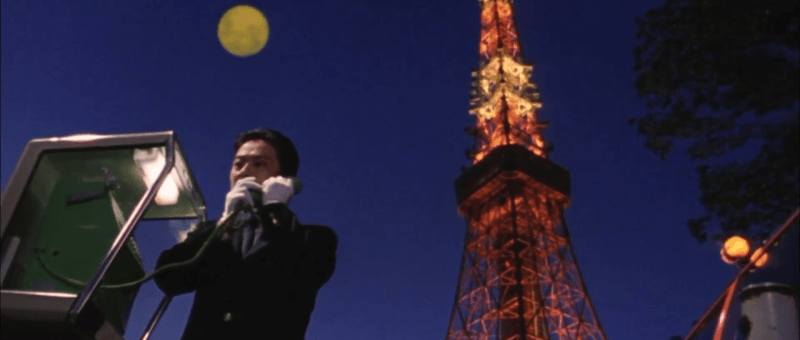
Throughout Yoichi Sai’s All Under the Moon (月はどっちに出ている, Tsuki wa Dotchi ni Dete iru), an earnest taxi driver, Anbo (Akio Kaneda), repeatedly calls in to despatch to inform them that he’s become lost and has no idea where he is despite rocking up next to such prominent landmarks as Tokyo Tower and Mount Fuji. His confusion reflects that of the changing post-Bubble society in which those like him struggle to reorient themselves and find new direction just as the nation appears slow to recognise itself and adjust to a new reality. 

It does seem that many of the drivers at Kaneda Taxi have themselves lost direction in their lives and are living very much on their margins while their rather deluded boss Sell is behaving like it’s still the Bubble dreaming of building a golf course and then a hotel to accommodate 2000 people. The Korean loan shark working with him alternately tells fellow Zainichi taxi driver Chun (Goro Kishitani) that he’s acquiring wealth to use for the reunification of Korea, and Sell that they are all children of capitalism, “Damn Reunification!”. At the wedding Chun attends, the guests take phone calls to deal with business and each remark on the precarious economic situation while one suggests that the North Korean association he represents is probably on the brink of failure joking that he fears they may sell their school and pocket the money. 

Yet despite the economic turbulence, the country has been slow to accept the presence of workers from outside Japan and many, including those at the taxi firm, still face discrimination as does Chun himself by virtue of his Korean heritage. One Japanese employee also seems to face a good deal of stigmatisation simply because he has a speech impediment, while an older mechanic with a limp insists on calling an Iranian colleague by a similar sounding Japanese name while baselessly accusing him of theft. Hoso (Yoshiki Arizono), a man with mental health issues provoked by his previous career as a professional boxer in which he accidentally killed an opponent during a bout, is fond of saying “I hate Koreans, but I like you” while otherwise fixating on Chun as a dependable big brother figure and resentful enough when he starts dating a Filipina hostess, Connie (Ruby Moreno), who works at his mother’s bar to pound down the door of her flat and demand to be let in. 

Chun himself is at least problematic and especially by the standards of today as he tries a series of crass pickup lines on Korean women at the wedding and then eventually forces a kiss on Connie not to mention physically striking her during a heated argument. He also insensitively tells her about his family’s tragic history in the war emphasising that citizens of Korea were abused for slave labour while seemingly unaware of the history of the Japanese occupation of the Philippines. Meanwhile, he also lies that his father was killed by the Japanese and that all his brothers died of malnutrition whereas they are (presumably) alive if possibly not so well in North Korea. His hard as nails mother (Moeko Ezawa) points out that she came to Japan at 10, while Connie counters that she came at 15, though their experiences have perhaps been very different leaving them somewhat at odds rather than sharing a kind of solidarity as otherwise echoed in the marginal status of each of the migrants who are similarly othered as merely not Japanese yet largely left to fend for themselves while facing possible exploitation and deportation. 

Divisions exist even within the Korean population with guests at the wedding complaining that there have been too many long and boring speeches along with North Korean propaganda songs, claiming that it is discriminatory against South Koreans and finally being allowed to sing a South Korean folksong instead which is at least a good deal more lively. The gangsters leverage the idea of reuinifaction to carry out their scams while later claiming that they have been scammed by their Japanese backer who turned out to be more racist than they had first assumed. Yet as Chun says during one of his cheesy pickup attempts, what really has reunification got to do with them, the younger post-war generation who know no other homeland than Japan? He too flounders, caught between a series of names from “Tadao Kanda” to “Chun”, to the name which appears on his taxi license “Kang” the Korean pronunciation of character read “ga” Japanese which is only otherwise used in the word for ginger as pointed out by a slightly racist fare who goes on to remark that he doesn’t see the point of the “comfort women issue”. Chun has to grin and bear it while technically powerless despite being in the driver’s seat. Predictably, the prejudiced passenger also attempted to make a run for it rather than actually pay Chun his money. “I was born after the war too” Chun reminds him, “but we say after the liberation.”

Sai introduces us to the world of Kanda Taxis through a roving long shot around the carpark travelling from one employee to another before drifting up to management on the second floor. He returns to a similar scene near the film’s conclusion as the remaining workers playfully hose each other with water while literally watching their world burn. Yet for some at least it may be liberating experience, Chun finally gaining the courage to choose his own destination and go after something that he wants, even if it he does it in a characteristically problematic way, seemingly no longer worrying about where it might be taking him but content to simply drive in the direction of the moon. 


Original trailer (no subtitles)

Doing Time (刑務所の中, Yoichi Sai, 2002)

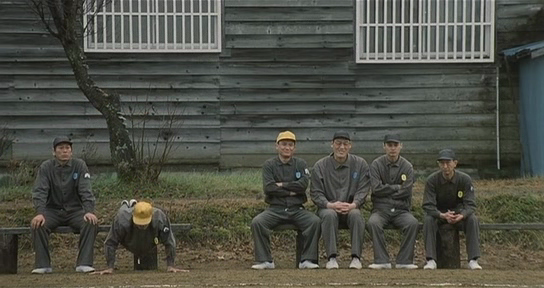
Who ever thought that life in prison could be so…peaceful? Adapted from the autobiographical manga by Kazuichi Hanawa, Yoichi Sai’s 2002 drama Doing Time (刑務所の中, Keimusho no Naka) is a slice of life dramedy somewhat typical of the early 2000s save its unexpected setting in a state penitentiary. Unlike the average prison movie, the main thing that Hanawa discovers is that life inside is incredibly dull, yet he approaches his brief sojourn in this other world with anthropological precision observing and mimicking the behaviour of his fellow prisoners while making the most of this hopefully once in a lifetime experience reflecting that he’ll likely never have the opportunity to wear such worn out undergarments ever again. 

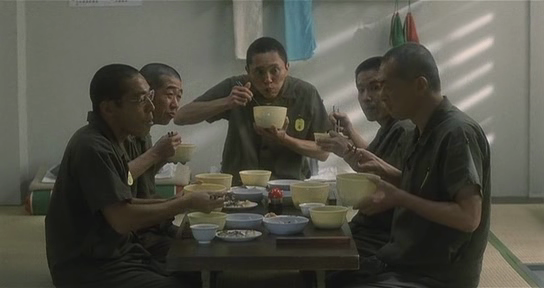
A quiet man already in middle age, Hanawa (Tsutomu Yamazaki) is no dangerous criminal merely a firearms enthusiast who liked to fire modified pistols into bottles of water. He’s got three years for illegal possession of weaponry and explosives, which seems to be quite a harsh penalty considering another man is doing seven for murder after shooting a man he says waved an axe at him when he went to collect a debt. There are clearly men who have committed violent crimes in Hanawa’s immediate vicinity, yet this is not a traditional tale of prison gangs and factional infighting, the only violence we witness concerns one prisoner who appears to have broken the rules accidentally in thoughtlessness or ignorance rather than direct rebellion. Rather it is, ironically enough, almost like a summer camp in which Hanawa and his four cellmates attempt to amuse themselves during the little free time they are offered for contemplation and relaxation. 

Even so, every inch of the prisoners’ lives is micromanaged by the guards from the way they walk to when they are allowed to move or speak. So entirely stripped of their dignity are they, that they must ask for permission even to use the toilet in their own cell while in solitary confinement and dutifully report back once they’ve finished. The communal squat toilets at the back of the workshop where Hanawa works crafting wooden tissue boxes are entirely open with only knee-height doors on each stall for privacy. The prisoners’ days are tightly ordered, early to bed and early to rise with work in-between and only the promise of rest to look forward to on weekends and holidays. 

Ostensibly a shy man, Hanawa dislikes having to ask permission all the time though not so much as an affront to his autonomy as simply bothersome. Surprisingly he begins to warm to the rhythms and routines of prison life discovering in them a kind of liberation, finding his time in solitary for “unauthorised communication” the most enjoyable of his sentence free as it is of the necessity of interacting with other people. Like the bug collector in Woman of the Dunes, he finds freedom in simplicity appreciating the mindlessness of his absurd new job folding paper bags for medical prescriptions. He can abandon any sense of responsibility for his life, submitting himself entirely to the guards’ authority and surrendering the need for control, happy to allow his existence to be managed for him without needing to decide on anything for himself. 

That aside, it’s difficult to see what other purpose prison could serve for a man like Hanawa who merely had an unusual if potentially dangerous hobby save providing him with a unique life experience he seems to be treating as a kind of adventure. He may at times look down on his cellmates who have their own routines, but otherwise appears grateful for their input and advice regarding prison life often listening to their explanations for behaviour he regards as strange such as removing one’s trousers before entering the bathroom and then deciding to do as they do. With so little stimulation the mundane becomes exciting, each meal a culinary adventure listening to a cellmate recount his group treat of a film screening (Takeshi Kitano’s Kid’s Return) as if he had returned from exotic land relishing his description of the chocolate biscuits and cola he was given to snack on. Time is what Hanawa is doing, but he does at least gain the opportunity of experiencing life in slow motion learning to appreciate the beauty of a single dandelion while observing the absurdity of the world all around him which is perhaps no more absurd than that which exists outside. 


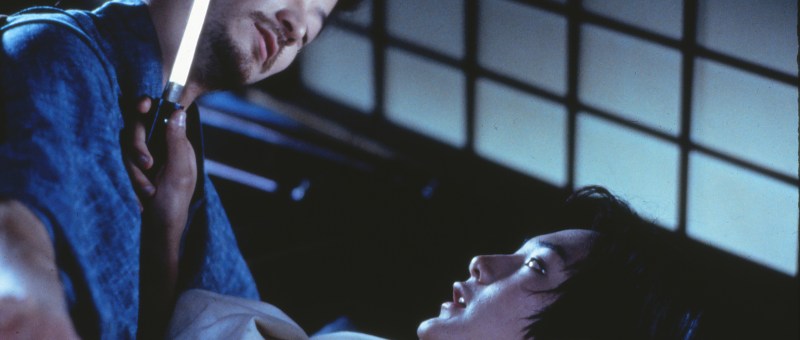
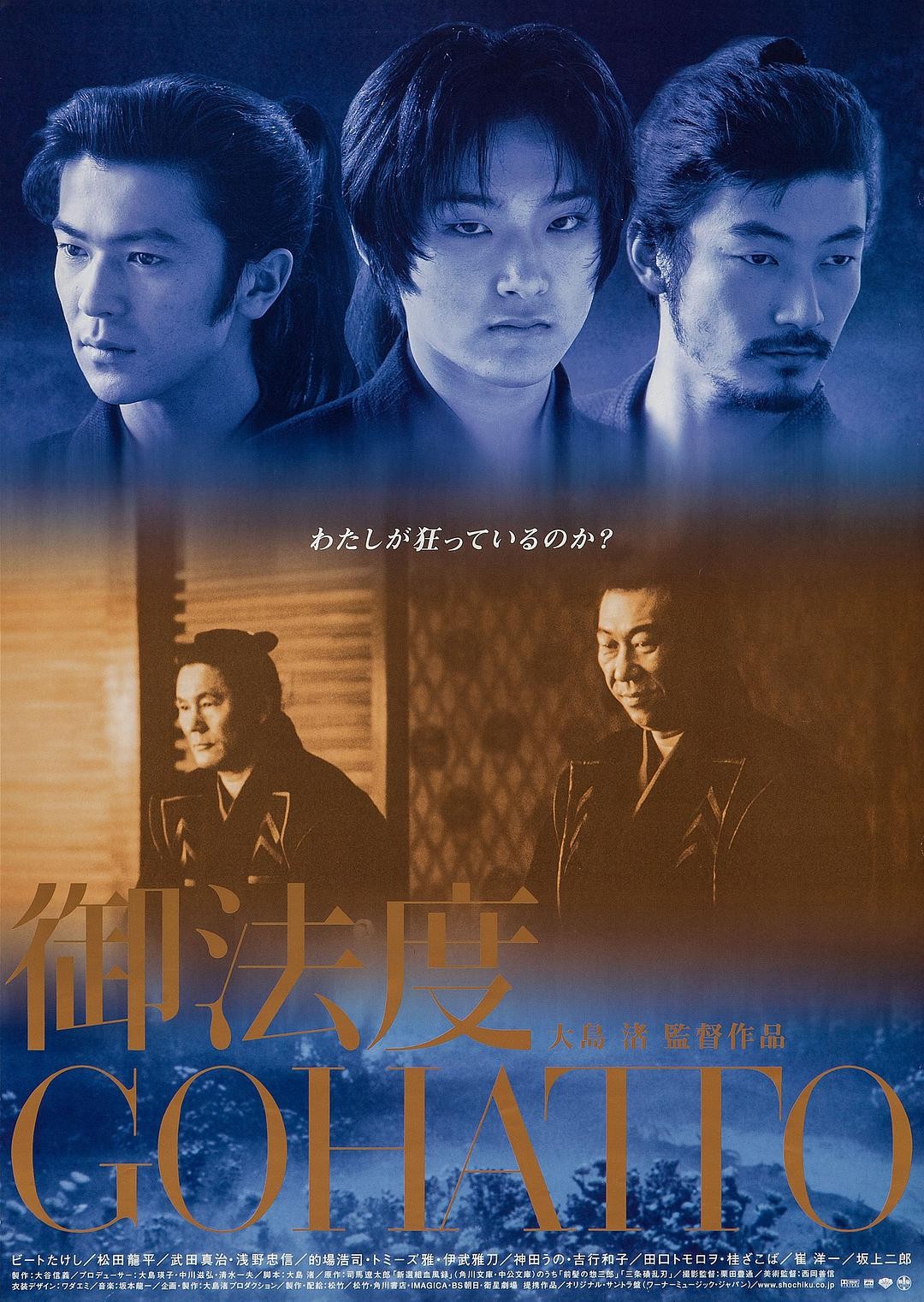
Gohatto (御法度, Nagisa Oshima, 1999)

Nagisa Oshima once said that his hatred of Japanese cinema extended to absolutely all of it, decrying the hackneyed nativism of “foggy beauty and stupid gardens”, yet his final film is filled with Mizoguchian mist and almost a paen to Japanese aesthetics which ends with a cherry blossom tree in full bloom cut down in its prime. Burdened by the slightly more salacious title “Taboo”, Gohatto is less about love between men in an intensely homosocial world even as it asks what it might mean by “forbidden” or “against the law” than it is about idealism and aesthetics as its band of contradictory conservatives unknowingly approach the end of their world in a coming modernity ushered in by dangerous beauty. 

Set in the Kyoto of 1865, a scant three years prior to the Meiji Restoration, the film opens with an audition of sorts as the Shinsengumi search for promising new recruits among talented swordsmen. Already a mess of contradictions, the Shinsengumi is, loosely, a kind of official police force dedicated to defending the Shogunate against the revolutionary forces set on restoring power to the emperor. Nevertheless, in an odd way and in contrast to the elite Mimawarigumi which was staffed only by direct retainers to the Shogun, the Shinsengumi was noted for its lowkey egalitarianism in that it made a point of admitting those of ordinary birth as well as lower level samurai and ronin. Of course, the notions of equality only went so far and perhaps only fuelled its reputation for merciless savagery, but also make it a strangely progressive force fighting against progress in defence of the feudal status quo. 

Only two of the hopefuls are thought to be any good, one a young ronin, Tashiro (Tadanobu Asano), and the other a beautiful boy, Kano Sozaburo (Ryuhei Matsuda), the third son of a wealthy merchant whose line were once samurai but are no longer counted among the noble retainers. A talented swordsman, Sozaburo’s dangerous beauty presents an existential threat to the Shinsengumi order, the steely Hijikata (Takeshi Kitano) looking on conflicted in witnessing the way his commander, Kondo (Yoichi Sai), looks at this vision of androgynous beauty remarking that he had not known him to be “that way inclined”.

Being that way inclined does not seem to be a particular issue within the Shinsengumi, it is not against their draconian rules and in fact appears to be tolerated at least as long as it causes no further problems. Kondo is however mindful of the chaos caused by a similar wave of homoerotic lust which took hold shortly before a climactic battle which would prove to be their last success. What Sozaburo seems to arouse in them is something more dangerous than the accepted patterns of love between military men which is in a sense sublimated as a mentor/student relationship, loyalty more than romance. Tashiro, who is of a similar age to the apparently 18-year-old Sozaburo, lets his desire be known, vowing to sleep with him before he dies ironically acknowledging Sozaburo for what he is, an angel of death. 

For his part, Sozaburo remains curiously passive in each of his encounters, aroused only it seems by the act of killing. Yet Hijikata discerns that he has indeed become Tashiro’s lover on witnessing them fight, Sozaburo losing clumsily despite being the more skilled in a dynamic that mimics their relationship in which Tashiro is the dominant partner. Aware of the danger in Sozaburo’s allure, Kondo suggests having a superior take him to the red light district to show him the delights of woman hoping to guide him back towards a less dangerous path, only the attempt backfires on several levels. Firstly, Sozaburo has no interest in women and continues to decline believing his commander is also hitting on him (like everyone else), thereafter determined to seduce him after all. Another retainer does indeed succeed in seducing Sozaburo, developing a mild obsession, but later ends up dead, Tashiro a main suspect in his murder with the motive of sexual jealousy though all of this additional violence is perhaps only an expression of Sozaburo’s dangerous beauty. 

As so often, sex if not love becomes the force which destabilises the social order only here it’s equated both with death and with an alternative mediation of male violence. Perhaps reflecting the way they look to the 18-year-old Sozaburo who makes a faux pas in accidentally suggesting at least one of them is of pensionable age, the ranking members of the Shinsengumi are played by actors already well into their golden years as if relics of a bygone era though in reality most were in their 30s. As Soji (Shinji Takeda), a filial figure like Sozaburo wearing long hair, puts it, there are no old men in their unit which is in essence an anti-revolutionary force. Nevertheless, the Shinsengumi is on the wrong side of history and already living in its end times, perhaps ushered towards its doom by the figure of the beautiful boy. “You were too beautiful”, Hijikata eventually laments as he finally perhaps understands the nature of the revolution he is witnessing. Perverse to the last, Oshima sets his ethereal finale in a stygian fog and pays an ironic tribute to the Mizoguchian classicism he so railed against in his youth, taking a sword to the cherry blossoms as he like Hijikata severs his own legacy in a moment of destructive beauty. 


Gohatto screens at Genesis Cinema on 25th September as part of this year’s Queer East

International trailer (English subtitles)

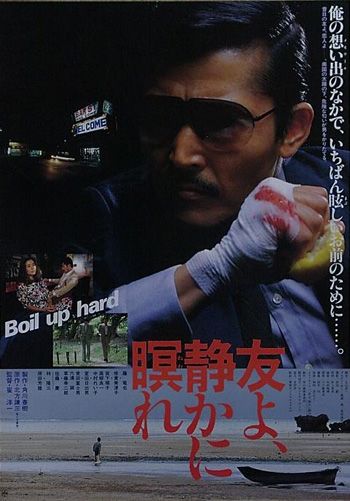
Let Him Rest in Peace (友よ、静かに瞑れ, Yoichi Sai, 1985)

“There are times when you need to stand for something” according to an ultra masculine avenger giving a few lessons in manliness to the already defeated teenage son of a friend. A noirish, stranger in town affair, Yoichi Sai’s Let Him Rest in Peace (友よ、静かに瞑れ, Tomo yo, Shizukani Nemure) locates itself in an awkward frontier landscape, moribund small-town Okinawa seemingly devoid of life now that the Americans have pulled out and moved on. The Americans have, however, been “replaced” by beefed up corporate thugs backed by yakuza muscle and corrupt police. Sometimes you have to take a stand, if only to show them that you won’t be pushed around because if you give in once you’ll never be free. 

Disgraced doctor Shindo (Tatsuya Fuji) has come to Okinawa in search of the Freein, but every time he tries to ask someone for directions, he is met with intense hostility, the last man even telling him “You shouldn’t go there, that place is no good”. This is not because the Freein is mostly home to a collection of brassy sex workers, but because its owner and Shindo’s old friend whom he has come to help has become a local pariah. Sakaguchi (Ryuzo Hayashi) is currently in jail because he apparently went crazy and started waving a knife around at construction magnate Shimoyama (Kei Sato). As Shindo quickly finds out, Shimoyama is in the process of buying up the whole town and Sakaguchi is the last remaining hold out. As such, he is hated by most of the other residents and the subject of persistent harassment by Shimoyama goons who have not only thrown bricks through the windows but gone so far as to kill his son’s dog, later kidnapping the boy to put pressure on the pair of them. 

What’s not lost on Shindo is the extent to which Shimoyama’s corruption has already seeped into the town. Meeting Sakaguchi’s son Ryuta (Makoto Mutsuura) by chance, Shindo takes the boy to see his dad but is again met with hostility by the local bobby, Tokuda (Hideo Murota), who tells him that “Shimoyama Construction is the savour of this town”. “There’s no other company that is so giving”, he goes on, “to have the employees of a company like that working here, I can’t have a wild man like Sakaguchi running about”. According to Tokuda, Sakaguchi is the odd man out, an inconvenience to all those around him who believe in Shimoyama and are trying to save the town. Tokuda looks sheepish when Shindo asks him why he’s so into Shimoyama, confirming the mild suspicion aroused by his improbably fancy watch. 

Tokuda’s warning is however borne out by the townspeople who continue to shun and ignore Shindo while the other kids mercilessly bully Ryuta, calling him the “craziest kid in Japan” and calling for his dad to get the death penalty despite the fact that all he seems to have done is aggressively wave a fruit knife at the wrong person. The local cafe owner describes him as an embarrassment and accuses him of holding out to get more money. After all there’s no future in this tinpot town which seems to exist in the ruins of the post-war era and Shimoyama is already offering triple the going rate so Sakaguchi is only being greedy and selfish. Komiya (Ryoichi Takayanagi), the bellboy, if you could call him that, at Freein, spins it slightly differently, explaining that no one supported Shimoyama in the beginning but they’ve all been harassed themselves and have long since given in. Shindo convinces Ryuta to talk about his kidnapping, but Ryuta tells him that on his return he told his father they should leave, that it was pointless to resist. Shindo asks him if he’s ever been in a fight, but the boy asks what the point is if you know you’re going to lose, “the strong are always strong”. 

That kind of defeatist thinking is anathema to Shindo’s conception of manhood. Despite his father’s incarceration, Ryuta is too afraid of being kidnapped again to go to school. Trying to be nice about it, Shindo calls him a coward for telling his father to leave even though he wants to stay because he allowed himself to be threatened into sumbmission. He tells him that he has to stand up for himself, report his kidnapping to the police. Ryuta tells him he’s crazy, the police are in on it, but Shindo counters that it’s worth trying to get his father out of jail because if they don’t they’ll never know. Ryuta snaps back that he knows already, and indeed bottles his chance when Shindo manipulates Tokuda into “helping” him oppose Shimoyama’s cult-like hold over the town.  

Shindo might not be that much better, he’s prepared to fight dirty, getting hard evidence of Tokuda’s corruption and trying to use it against him but even these methods prove ineffective against such a vast and entrenched mechanism of control. Shindo also realises that Shimoyama’s minion Takahata (Yoshio Harada) is another old university classmate, a member of the boxing club, bringing this widening drama down to the level of three men who went to the same prestigious university but all ended up here, pretty much at rock bottom. Though ironically enough Shindo’s broody silence and dedication to his friend have a few of the women wondering if he might be gay, his preoccupation is with a failure of masculinity. He doesn’t think Shindo was actually capable of threatening anyone, and knows that he had reasons that he might have wanted to try and sort this out sooner rather than later. His son’s words pushed him over the edge. He used his body as a weapon, tried to make Shimoyama damn himself, but his efforts were frustrated. Shindo acknowledges that “saving” his friend might look quite different than one might think, inadvertently teaching young Ryuta a few problematic lessons about what it means to be a man. Still, the town might have been “saved” in one sense at least in being freed of this particular oppressor. A stand has been taken, and a man’s self worth restored, but as Sakaguchi’s wife (Mitsuko Baisho) points out even while fully understanding the codes by which the men around her live, what is to become of those left behind?


TV spots (no subtitles)

The Lady in a Black Dress (黒いドレスの女, Yoichi Sai, 1987)

Lady in a Black Dress posterHaruki Kadokawa had become almost synonymous with commercial filmmaking throughout the 1980s and his steady stream of idol-led teen movies was indeed in full swing by 1987, but his idols, as well as his audiences, were perhaps beginning to grow up. Yoichi Sai’s first outing for Kadokawa had been with the typically cheery Someday, Someone Will Be Killed which was inspired by the most genre’s representative author, Jiro Akagawa, and followed the adventures of an upperclass girl who is suddenly plunged into a world of intrigue when her reporter father disappears after dropping a floppy disk into her handbag. A year later he’d skewed darker with a hardboiled yakuza tale starring Tatsuya Fuji as part of Kadokawa’s gritty action line, but he neatly brings to two together in The Lady in a Black Dress (黒いドレスの女, Kuroi Dress no Onna) which features the then 20-year-old star of The Little Girl Who Conquered Time, Tomoyo Harada, in another noir-inflected crime thriller again adapted from a novel by Kenzo Kitakata.

We first meet the titular “lady in a black dress” walking alone alone along a busy motorway until she is kerb crawled by a yakuza in a fancy car. Declaring she intends to walk to Tokyo (a very long way), Reiko (Tomoyo Harada) nevertheless ends up getting into the mysterious man’s vehicle despite avowing that she “hates yakuza”. The yakuza goon does however drive her safely into the city and drop her off at her chosen destination – a race course, where she begins her quest to look for “someone”. By coincidence, the yakuza was also heading to the race course where he intended to stab a rival gangster – Shoji (Bunta Sugawara), who makes no attempt to get away and seemingly allows himself to be stabbed by the younger man. Shoji, as it happens, is the temporary responsibility of the man Reiko has been looking for – Tamura (Toshiyuki Nagashima), a former salaryman turned bar owner with fringe ties to the yakuza. Putting on her little black dress, Reiko finally finds herself at his upscale jazz bar where she petitions him for a job and a place to stay, dropping the name of Tamura’s sister-in-law who apparently advised her to try hiding out with him.

Reiko is, after a fashion, the dame who walked into Tamura’s gin joint with the (mild) intention to cause trouble, but, in keeping with the nature of the material, what she arouses in Tamura and later Shoji is a latent white knight paternalism. Curious enough to rifle through her luggage while she’s out, Tamura is concerned to find a pistol hidden among her belongings but when caught with it, Reiko offers the somewhat dark confession that the gun is less for her “protection” than her suicide. Not quite believing her, Tamura advises Reiko not to try anything like that in his place of business and to take it somewhere else. Nevertheless, Reiko stays in Tamura’s bar, eventually sharing a room with melancholy yakuza Shoji who is also hiding out there until the plan comes together to get him out of the country and away from the rival gangsters out for his blood.

As it turns out, Reiko had good reason to “hate yakuza” but she can’t seem to get away from them even in the city. Tamura’s life has also been ruined by organised crime as we later find out, and it’s these coincidental ties which eventually bring Reiko to him through his embittered sister-in-law who had been the mistress of Reiko’s lecherous step-father. The codes of honour and revenge create their own chaos as Shoji attempts to embrace and avoid his inevitable fate while his trusted underling (the yakuza who gave Reiko a lift) tries to help him – first by an act of symbolic though non-life threatening stabbing and then through a brotherly vow to face him himself to bring the situation to a close in the kindest way possible.

Meanwhile, a storm brews around a missing notebook which supposedly contains all the sordid details of the dodgy business deals brokered by a now corporatised yakuza who, while still engaging in general thuggery, are careful to mediate their world of organised crime through legitimate business enterprises. Reiko, like many a Kadokawa heroine, is an upperclass girl – somewhat sheltered and innocent, but trying to seem less so in order to win support and protection against the forces which are pursuing her. Though the film slots neatly into the “idol” subgenre, Harada takes much less of a leading role than in the studio’s regular idol output, retaining the mysterious air of the “lady in a black dress” while the men fight back against the yakuza only gradually exposing the truths behind the threat posed to Reiko.

Consequently, Reiko occupies a strangely liminal space as an adolescent girl, by turns femme fatale and damsel in distress. Wily and resourceful, Reiko formulates her own plan for getting the gangsters off her back, even if it’s one which may result in a partial compromise rather than victory. Though Kadokawa’s idol movies could be surprisingly dark, The Lady in a Black Dress pushes the genre into more adult territory as Reiko faces quite real dangers including sexual violence while wielding her femininity as a weapon (albeit inexpertly) – something quite unthinkable in the generally innocent idol movie world in which the heroine’s safety is always assured. Sai reframes the idol drama as a hardboiled B-movie noir scored by sophisticated jazz and peopled by melancholy barmen and worn-out yakuza weighed down by life’s regrets, while occasionally switching back to Reiko who attempts to bury her fear and anxiety by dancing furiously in a very hip 1987 nightclub. Darker than Kadokawa’s generally “cute” tales of plucky heroines and completely devoid of musical sequences (Harada does not sing nor provide the theme tune), The Lady in a Black dress is a surprisingly mature crime drama which nevertheless makes room for its heroine’s eventual triumph and subsequent exit from the murky Tokyo underground for the brighter skies of her more natural environment.


TV spot (no subtitles)

Theme song – Kuroi Dress no Onna -Ritual- by dip in the pool.