Hoyaman (さよなら ほやマン, Teruaki Shoji, 2023)

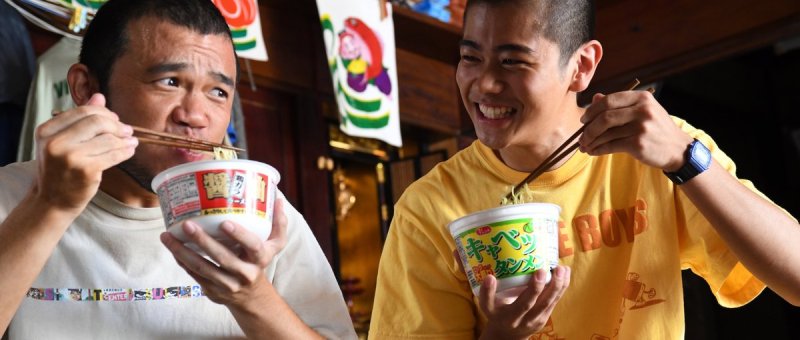
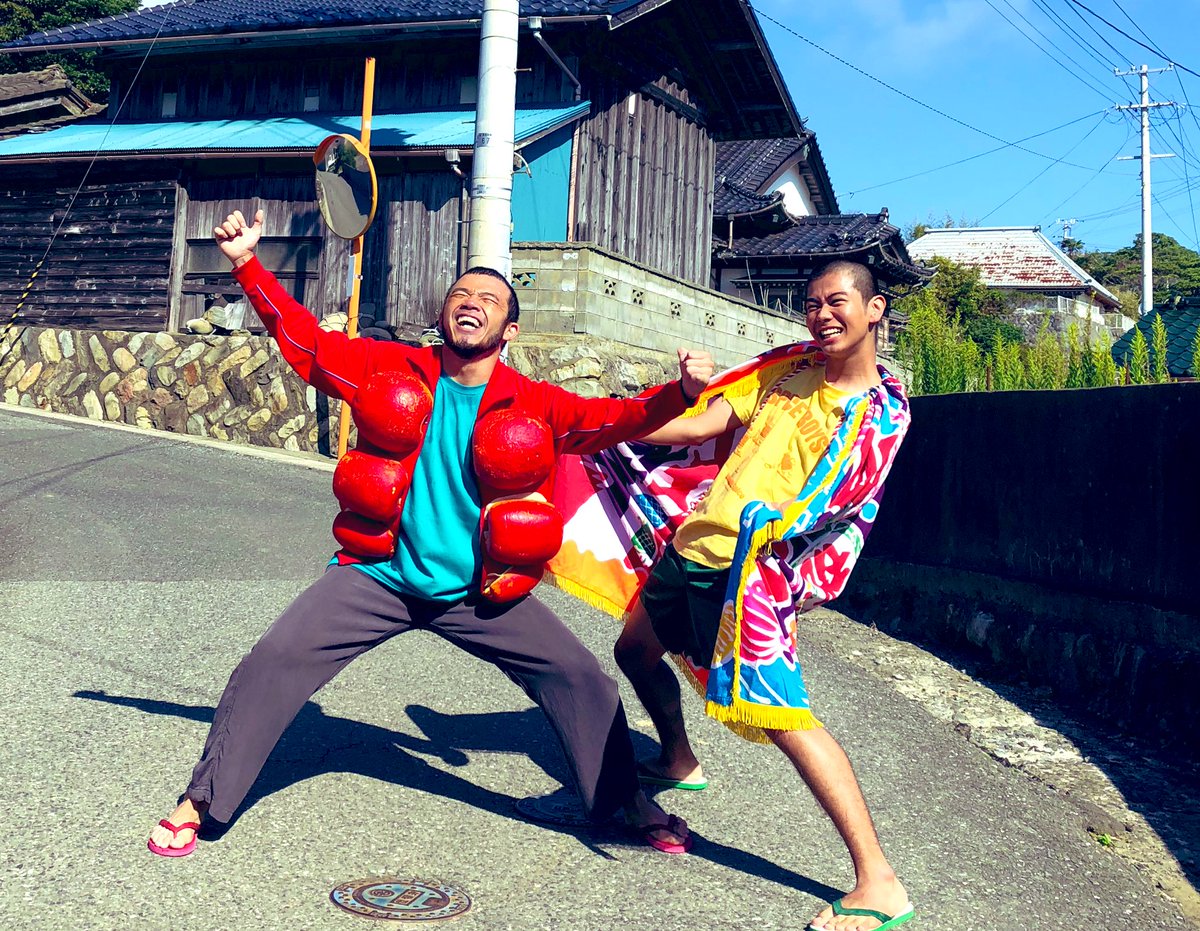
According to Hoyaman, a kind of superhero in the guise of a mutated sea squirt, the sea squirts’ lifecycle involves swimming around like tadpoles after hatching from an egg and then finding a nice rock to sit on at which point they lose their brains. This is what the hero of Teruaki Shoji’s quirky island comedy Hoyaman (さよなら ほやマン, Sayonara Hoyaman) is becoming afraid of, worried he’s about to lose his brain forever stuck in the home he inherited from his parents but also afraid to leave its safety to venture forth and explore some other rocks before it’s too late.

He’s jolted out of his sense of inertia by a mysterious woman, Mahiru (Kumi Kureshiro), who suddenly arrives and tries to buy his house off him though of course Akira (Afro) is not willing to sell despite being so heavily in debt he’s about to lose his fishing boat (and therefore his means of supporting himself) and he and his brother Shigeru (Kodai Kurosaki) are subsisting on a single pot of instant ramen a day. The house itself is like a kind of rock pool where the brothers are trapped in a protracted adolescence having lost their parents in the 2011 tsunami, thereafter floundering around unable to move on with their lives. As their bodies were never found, Akira hasn’t even got round to registering his parents’ deaths or dealt with any of the practical matters surrounding their living arrangements but now realises that he’ll have to something to secure a financial future for himself and Shigeru who seems to have some kind of learning difficulties and is unable to work.

That’s one reason he decides to accept the deposit from Miharu, a manga artist fleeing her life in Tokyo feeling all washed up as she too drifts onto the shore looking for a good rock to sit on. They are all looking for a kind of escape but unsure where to to find it, Akira wondering if it’s time to leave the island just as Miharu arrives. The old woman next door, Haruko (Yoneko Matsukane), who acts like a kind of surrogate mother figure to the boys, confesses that she would have liked to try living off the island and was resentful when their father mentioned the possibility of leaving. She encourages Akira to swim out into deeper waters but he continues to struggle with himself consumed by the trauma of the earthquake, his guilt, and complicated feelings about the responsibility of looking after Shigeru who likely would not be able to adjust to life outside of the island or remain behind on his own.

Madcap schemes ensue including an unlikely bid to become YouTube stars by resurrecting a mascot character created by their father to promote the island, Hoyaman. Miharu tries to explain to them that like everything else in the village they’re ten years behind the times, but the boys are naively excited about their prospects while simultaneously trying to recapture the past in the same way Miharu may be in admitting that she based her manga on her own younger brothers of whom Akira and Shigeru remind her. Well meaning gestures eventually backfire, but also lead to a kind clarity that allows each of them to realise who they are and where they want to be or at least what kind of rock they want to be sitting on when it’s time to jettison their brains. 

Even so, it’s not all rainbows on the island as Akira discovers when his bid for YouTube success turns sour and the villagers turn against him for embarrassing them on national scale while Miharu also has her fair share of haters along with a troubled past she’s struggling to overcome. What they rediscover is a sense of community and solidarity among those who wash up on the island whether by virtue of birth or some other happy accident. Meeting his trauma head-on, Akira is able to find an accommodation with his guilt and loss but also a way forward that might not necessarily be the one most would expect as does Miharu though buoyed by her serendipitous connection with the zany brothers, nice old lady, and the gentle rhythms of an island life.


Hoyaman screens Feb. 18 as part of Family Portrait: Japanese Family in Flux

Original trailer (no subtitles)
Tsugaru Lacquer Girl (バカ塗りの娘, Keiko Tsuruoka, 2023)

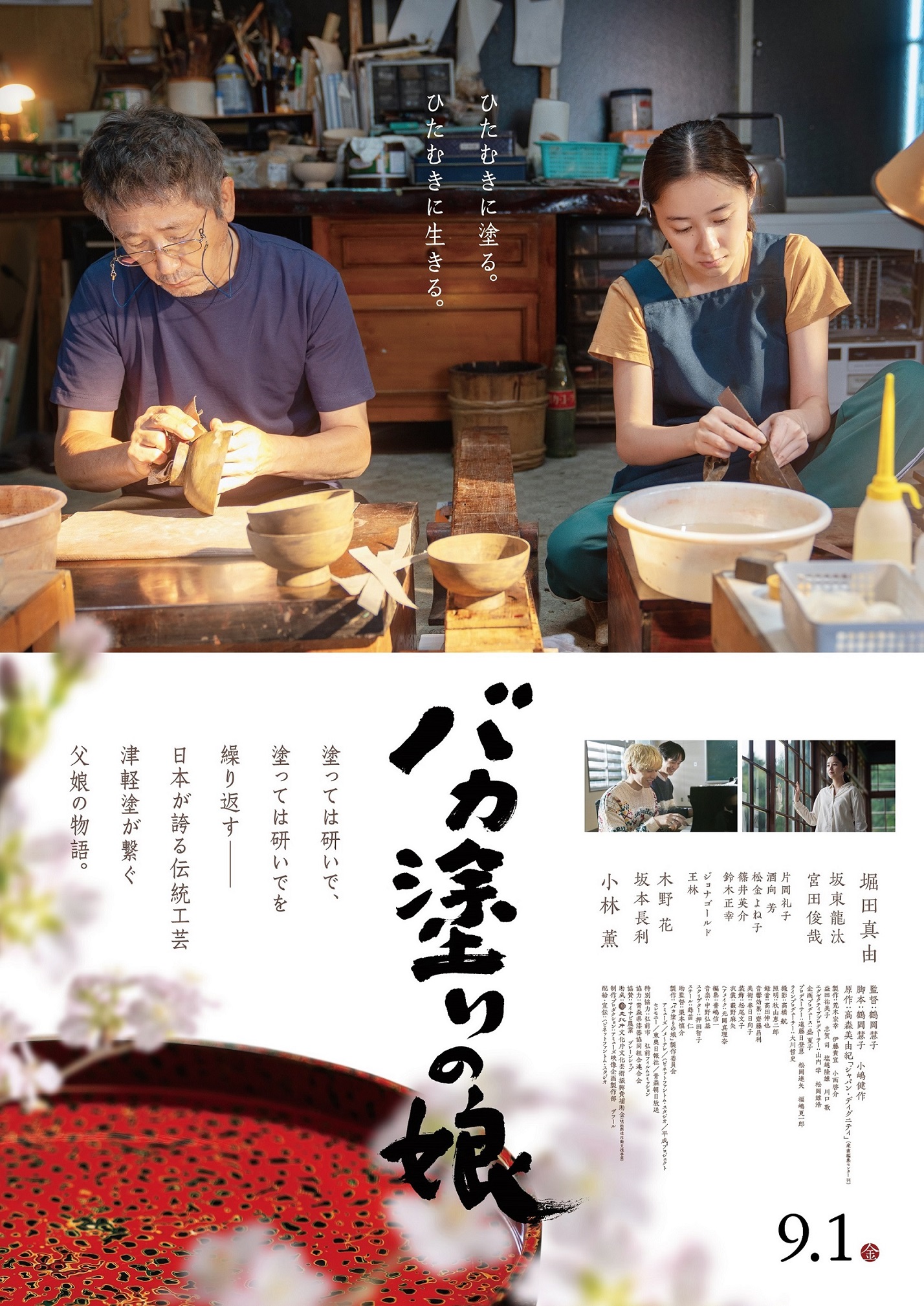
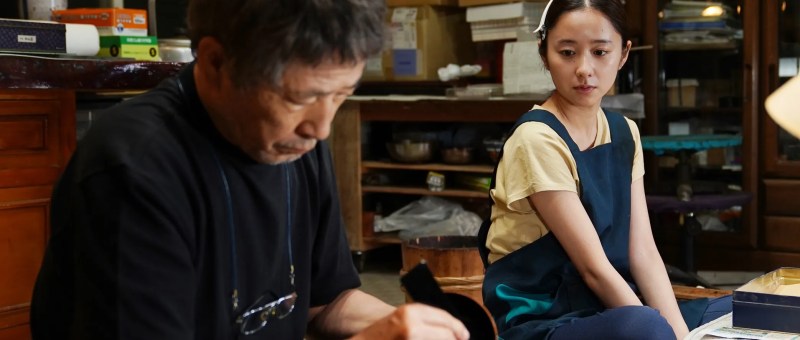
Which traditions should we keep and which should we lose? A young woman finds herself frustrated by outdated gender norms in her desire to take over the family lacquerware business in Keiko Tsuruoka’s gentle rural drama, Tsugaru Lacquer Girl (バカ塗りの娘, Bakanuri no Musume). While her family, save older brother Yu (Ryota Bando) who has already rejected lacquerware, do nothing but run her down and claim she’ll never be a success at anything all she wants to do is devote her life to a traditional craft her father no longer believes has any kind of future. 

Even so, Seishiro (Kaoru Kobayashi) is dead set on Yu taking over the business to the point that they have become semi-estranged. He calls Miyako (Mayu Hotta) “clumsy” and complains that she has no aptitude for anything unlike Yu who was always good at anything he tried. Miyako too later suggests that she was her brother’s opposite, while he was cheerful and outgoing she is shy and melancholy but then perhaps it’s hard to be cheerful when everyone’s always telling you you’re useless and doing everything wrong. In an interesting parallel, Yu is also trapped by outdated social codes in that he is gay and he and his partner have decided to move to London where they can legally get married and live their life out and proud in a way they feel they cannot do in contemporary Japan. 

Lacking other direction in her life, Miyako has been working a part-time job in a local supermarket which she hates while her father occasionally allows her to help him finish big orders though it’s clear her salary is now their main source of financial support. A local inn keeper who is a good customer of theirs explains to some of his guests that craftsmen rarely construct large pieces such as tables because they are no longer cost effective while fewer young people are willing to take up apprenticeships leaving the traditional art in danger of dying out despite the frequent remarks that everything tastes better out of a lacquerware bowl which is after all in the modern parlance “sustainable” in that it will last for many decades and can easily be repaired if damaged. 

Seishiro doesn’t seem to have a reason for rejecting the idea that Miyako might take over aside from basic sexism in preferring to hand the business over to his first born son. It might be tempting to think that he dissuades her because he thinks there isn’t a future in lacquerware, but if that were the case he could simply retire. Her mother (Reiko Kataoka), who left the family some years ago in part it seems because of her own animosity towards lacquerware and its lack of financial promise, seems to feel much the same comparing Miyako to a more successful cousin who has kids and a high powered job at an international trading firm, telling her that she should be settling down and getting married suggesting that she is simply incapable of becoming a successful lacquerware artist and should at best keep it as a hobby. 

Her mother had also shut down her desire to learn piano as a child by telling her there was no point because she’d never be good at it. Miyako’s decision to prove herself by re-laquering an abandoned piano in her disused school is then an act of rebellion against both parents showing them what she can and will achieve along with the direction she has chosen for her life. Not everyone respects it even if her father begins to come around but really it doesn’t matter because the decision is hers alone whatever anyone else might have said. Far from being insular, the embrace of traditional culture gives Miyako new opportunities and allows her to grow in confidence until she’s finally ready to set off along her own path. Even so, it seems there are some traditions she thinks it would be better to lose, such as her father’s sexism and the homophobia that has forced her brother to emigrate in order to live a happy life just as he is. They call it “fools lacquer” because no one but a fool would go to all this trouble to make a bowl but in many ways that’s the point. Miyako pours all of herself in to the lacquer, piling layer on layer dotted by handfuls of thrown rice that give it its pattern much as she herself is slowly tempered by the world around her.


Tsugaru Lacquer Girl screened as part of this year’s Camera Japan.

Original trailer (English subtitles)

Party 7 (Katsuhito Ishii, 2000)

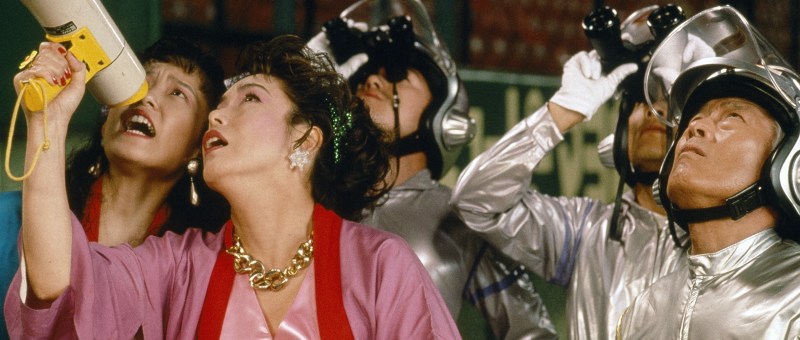
“This shit’s for real.” according to the front desk guy at Hotel New Mexico, an out of the way spot just perfect for those looking to lay low for a little while. Like a lot of Katsuhito Ishii’s work, Party 7 is essentially a series of self-contained vignettes which eventually collide following a series of bizarre coincidences revolving around some money stolen from the mob, a two-way mirror in a regular hotel room, and the receptionist’s tendency to almost literally shoot the shit. 

Following a brief prologue, Ishii opens with striking animated sequence which introduces each of the main players with an arcade game aesthetic and explains that Miki (Masatoshi Nagase) has stolen money from the mob and is currently on the run which is why he’s turned up at the infinitely weird Hotel New Mexico. The running gag is that Miki thinks he’s holed up somewhere no one will find him, but sure enough a series of “friends” soon turn up in part thanks to a loose-lipped travel agent. The fact that people can find it so easily dampens the impression of the Hotel New Mexico as some kind of interstitial space. It’s not so much existing in a weird parallel world as a bit run down and staffed by a series of eccentrics. It does however have a “peep room” hidden behind a two-way mirror where “Captain Banana” (Yoshio Harada) is attempting to pass his knowledge on to the young Okita (Tadanobu Asano), the son of a recently deceased friend who has been repeatedly arrested for voyeurism. 

Captain Banana’s insistence on his surreal superhero suit is in a way ironic, if perhaps hinting at the super empowerment of accepting one’s authentic self. “It’s your soul,” he tells Okita, “it’s screaming ‘I want to peep’.’” Meanwhile, Miki gets into an argument with his ex-girlfriend Kana (Akemi Kobayashi) who has turned up in the hope of reclaiming money that he owes her. Kana too seems to be less than rigorous with the truth if perhaps emotionally authentic. She’s now now engaged to a nerdy guy having somewhat misrepresented herself as the innocent girl next-door type. Her refusal to let her fiancé into her apartment perhaps hints at a more literal barrier to intimacy or at least that she is intent on preventing him from seeing her true self. What she doesn’t know is that her fiancé hasn’t been completely honest either, in part because he thinks she’s out of his league and is insecure in their romance. 

Miki too maybe somewhat insecure, having run off with the gang’s money after hearing them bad mouth his associate Sonoda (Keisuke Horibe) who has now been charged with killing him and getting the money back. But Sonoda too has reasons to doubt the boss’ affection for him after Miki and the others point out that gifts he thought were so valuable are really just cheap knock offs that suggest the boss thinks very little of him at all. Okita’s psychiatrist tells him that there are “no rules in making friends”, and maybe in a strange way that’s what everyone is trying to do. Kana wanted the money to overcome her anxiety about having no friends or family to invite to the wedding, while all Sonoda wanted was the boss’ approval and though Miki had deliberately gone somewhere he thought no one would find him nevertheless attracts a series of followers. 

Even the receptionists seem to be desperate for human contact with their strange stories of poo falling from the sky and bizarre approach to hospitality. “The point is whether you believe it or not,” one tells the other after spinning what sounds like a yarn but then again might not be. Ishii’s zany world has its own surreal logic culminating in a piece of cosmic irony and defined by coincidence as the otherwise unrelated stories begin to come together and slowly find their way to Hotel New Mexico but seems to suggest the point is in the serendipity of the meeting and its concurrent authenticity even if a literal shot in the arm is a less than ideal way of brokering a friendship.


Party 7 is released in the UK on blu-ray on 17th July as part of Third Window Films’ Katsuhito Ishii Collection.

Original trailer (English subtitles)

Organ (あの日のオルガン, Emiko Hiramatsu, 2019)

Emiko Hiramatsu is best known as a regular collaborator to the endlessly prolific Yoji Yamada. Though his repertoire is more varied than some give him credit for, Yamada is one of several veteran directors to have begun looking backwards with a sometimes uncomfortable nostalgia for the wartime era in tales of maternal suffering such as Kabei and Nagasaki: Memories of my Son, or its legacy of unfulfilled desire in the more complex The Little House, all of which were co-written by Hiramatsu. It’s to the war she returns in her second directorial feature Organ (あの日のオルガン, Ano Hi no Organ), once again chronicling female fortitude as an idealistic nursery school teacher defies governmental advice to evacuate the children in her care to the relative safety of a disused temple outside of the city. 

“Angry girl” Kaede Itakura (Erika Toda) is outraged by the news that the schools will soon be closed, not least because of it’s impracticality seeing as the parents of the children in her care have all been mobilised for the war effort and will not be able to look after them. Worried about the intensification of aerial bombardment, she’s considering taking the children somewhere safer but is struggling to convince others that she is right to reject the governmental line. Her greatest challenge is not, however, the authorities, but the children’s parents, many of whom have been quite thoroughly brainwashed and have no idea how badly the war is going. They find Kaede’s suggestion defeatist and are certain that they are in no real danger. Of course, no one wants to be separated from their children, but some begin to wonder if they aren’t being selfish in wanting to keep them close if they’ll be safer elsewhere. Experiencing a serious air raid, most parents ultimately decide that perhaps evacuation is for the best. 

The kids, though obviously distressed to be taken away from their parents, perhaps think of it as an extended school trip. The locals, however, are not universally pleased to see them. A farmer beefed up by militarist credentials, loudly complains about being forced to feed and shelter “unproductive” refugees. He’s only talked round when the sole male teacher explains to him that the children are important because they too are children of the emperor who will someday grow up to become fine soldiers fighting for imperial glory. 

Kaede bristles, but finally cannot argue. A neat mirror of macho male militarist ideology, her philosophy also has its patriotic quality in her constant insistence that they must save their “cultural identity” by teaching the children traditional arts such as flower arranging and folk songs which, while admired by the militarists for their essential Japaneseness, are also regarded as frivolous. She tries to maintain distance between herself and the children, clear that this a school and not a home, but is forced to accept a degree of maternity when it becomes clear that lack of human warmth is causing them to suffer. 

The teachers at the school, all of whom are necessarily unmarried and most of them young, are doubted by others precisely because they have no children of their own even if they are ultimately respected as educators. Caring for the children is also their way of serving, allowing their parents to devote themselves entirely to the war effort in the knowledge that their kids are safe. The country is, however, much more conservative than the city. Also viewed with suspicion is a man who’s come home from the war injured and now finds himself out of place, “unproductive”, and to a degree feminised. When he dares to talk cheerfully to one of the teachers after helping her fix her bicycle, the ultra militarist doesn’t like it, accusing the teachers of being a bunch of loose women in the habit of taking advantage of “vulnerable” men who are apparently both emasculated and infantilised by their inability to serve. The militarist’s complaint gets the teacher sent home, back to the city, and straight into the heart of danger where she may die simply for smiling at a lonely young man. 

Kaede once again doesn’t approve, but is powerless to resist. She is forced to compromise her principles for the greater good to keep the children safe. Her “angry girl” fortitude is directly contrasted with the ethereality of the bumbling Mitsue (Sakurako Ohara) who has a knack with the children but is not exactly a responsible adult. Yet Mitsue too is “serving”, if only as a morale booster, her cheerful attitude helping to carry others through tough times. It’s her organ from which the film takes its title, gathering the children to sing wholesome folk songs including the classic “furusato” with all its evocations of nostalgia for an idyllic pastoral innocence.

Meanwhile, Kaede wonders if she’s done the right thing in separating families, darkly worried that the parents might have preferred to die with their children rather than be glad they sent them away to safety. Many of the children in her care are orphaned, losing homes and family members in the fire bombing, and finally not even rural Saitama is safe, but she has at least saved something in her determination to carve out a space for peaceful innocence far away from the unfeeling chaos of militarist folly.


Screened as part of the Japan Foundation Touring Film Programme 2020.

International trailer (English subtitles)

Getting Any? (みんな~やってるか!, Takeshi Kitano, 1995)

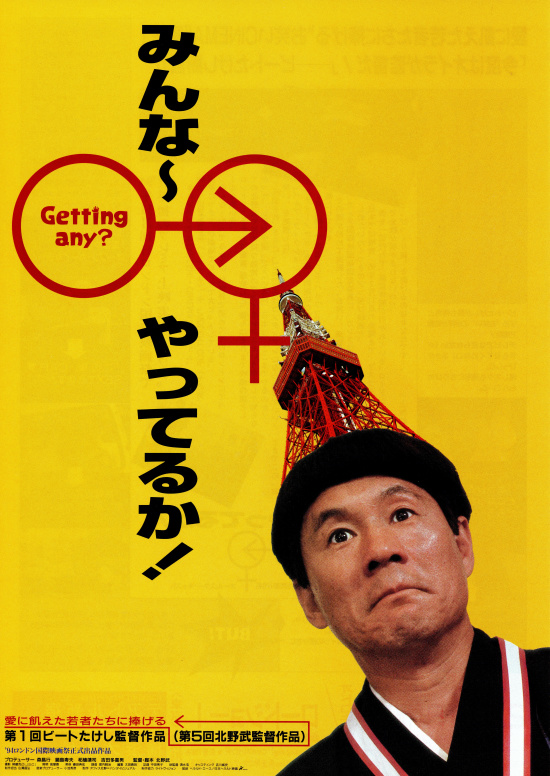
getting any? posterDespite his reputation for violent gangster dramas and melancholy arthouse pieces, Takeshi Kitano is one of Japan’s most successful comedians and began his career as half of an irreverent and anarchic “manzai” comedy double act. 1995’s Getting Any? (みんな~やってるか!Minna – yatteruka!) is his first big screen comedy and loosely takes the form of a series of variety-style skits in which a lonely, hapless middle-aged man tries on various different personas in the pursuit of his goal but remains an isolated bystander in the surreal events which eventually engulf him. Part bawdy, sleazy sex comedy and satire on the death of materialism in the post-bubble world, Getting Any? is a cineliterate journey through Showa era pop culture peppered with gratuitous nudity and absurd running jokes.

After watching a very 1980s “aspirational” movie in which a good looking, wealthy young salaryman type gives a young lady a lift in his flashy convertible in which they later end up having sex, Asao (Dankan), watching at home in his pants with his grandpa sitting behind him, decides the reason he hasn’t got any luck with women is that he doesn’t have a car. So, he goes and gets one from a very strange salesman but as he doesn’t have much money the car he gets is, well, it’s unlikely to get stolen, and he still isn’t getting anywhere. He tries a convertible too but that’s no good. Then he starts fantasising about air hostesses, decides to become an actor, gets mistaken for a top yakuza hitman, and comes into contact with a pair of mad scientists who want to turn him invisible.

Asao has only one goal – to have sex with a lady (preferably in a car), but he never stops to think of his potential partners as anything more than a receptacle for his desires. Consequently, he refuses to look at himself or consider the ways he might be getting in the way of his own needs, but constantly chases a quick fix thinking that the reason women don’t want him is because of something material that he lacks. He thinks the path to sexual success lies in cars, money, status, and finally technology, but none of these things really matter while Asao remains Asao.

As part of his journey, passive as it is, Asao does not always remain Asao, or at least the Asao he was for very long. Having failed to be the sort of man who can woo with car, he tries acting – literally playing a part, at which he seems quite good except for going “overboard”. An incident on an aeroplane sees him mistaken for a top yakuza which he is less good at but every mistake only ever works out in his favour. Thanks to his involvement with the mad scientists whom he allows to experiment on him so that he can go peeping in the women’s baths, Asao will finally become another kind of creature entirely, literally reduced to feeding off the excrement his nation has recently produced.

Kitano works in just about every element of almost “retro” pop-culture he can think of from the amusing soundtrack of Showa era hits and references to famous unsolved crimes to a hitman named “Joe Shishido” (star of Branded to Kill), the Zatoichi series, a Lone Wolf and Cub ventriloquist dummy duo, the Invisible Man, Ghostbusters, The Fly, and finally Toho’s tokusatsu classics culminating a lengthy skit inspired by Mothra including the iconic Mothra song given new lyrics and the same old dance performed by two full-sized ladies. Though most viewers will be able to spot the joke even without quite understanding it, some knowledge of Japanese pop-culture from the ‘70s and ‘80s will undoubtedly help.

The central joke revolves around Asao’s fecklessness as he repeatedly fails at each of his schemes, only occasionally succeeding and then by accident, and not for very long. A charmless literalist who lacks the imagination to achieve his goals in a more natural way, Asao fails to learn anything at all, engulfed by one surreal situation after another. It does however give Kitano the excuse to indulge Asao’s flights of fancy as his sexual frustration sends him off into a series of bizarre reveries involving topless women desperate to make love to the suave male stand-in Asao has imagined. Filled with silly slapstick humour and frequent nudity, Kitano’s subtle satire may get lost but even if the joke begins to wear thin just as “flyman” finally lands on his object of desire, there is plenty of amusement on offer for fans of lowbrow humour.


Getting Any? is released on blu-ray by Third Window Films on 16th October, 2017.

Original trailer (English subtitles)

The Little House (小さいおうち, Yoji Yamada, 2014)

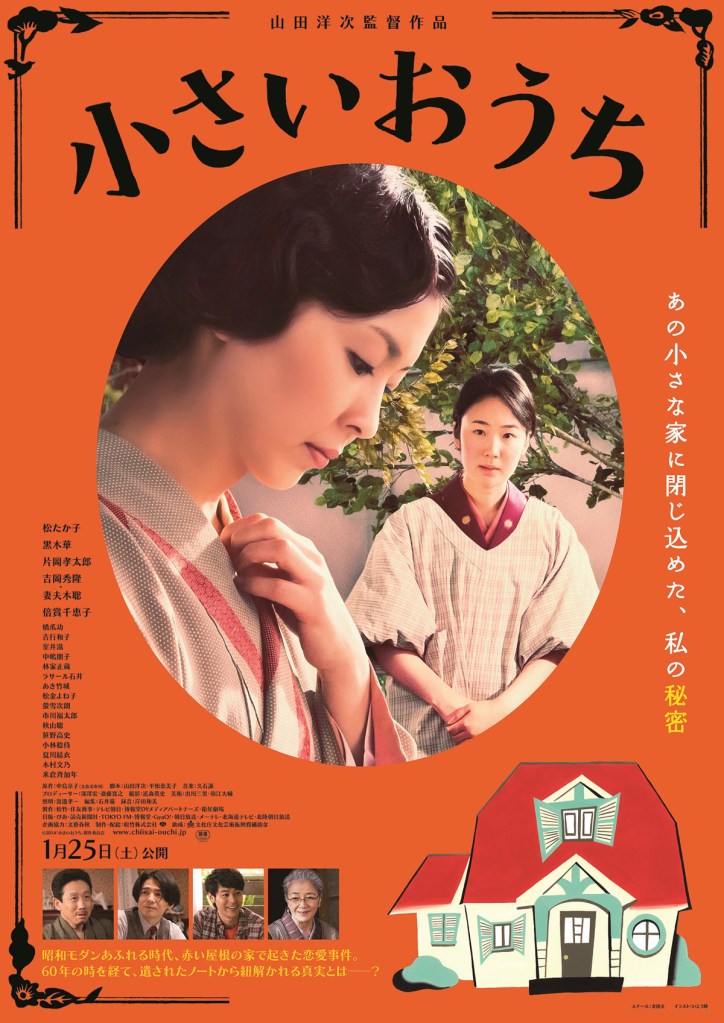
the-little-houseIf there is a frequent criticism directed at the always bankable director Yoji Yamada, it’s that his approach is one which continues to value the past over the future. Recent years have seen him looking back, literally, in terms of both themes and style with remakes of films by two Japanese masters – Ozu in his Tokyo Story homage Tokyo Family, and Kon Ichikawa in Her Brother. While he chose to update both of those pieces for the modern day, 2008’s Kabei sent him back to the traumatic years of militarism and warfare for a story of maternal sacrifice and national tragedy. The Little House (小さいおうち, Chiisai Ouchi) brings this recent meandering around the past full circle with its deliberately Ozu-esque aesthetic and flashback tale of atonement as one woman leaves the truth she could never bear to speak on paper as a last dying confession.

After the death of his great-aunt Taki (Chieko Baisho), who never married and has no other family besides himself, his sister, and father, Takeshi (Satoshi Tsumabuki) discovers a biscuit box with his name on it filled with keepsakes and the conclusion of a kind of autobiography he’d been encouraging Taki to write in the last few months of her life. Cutting back and forth between the contemporary interactions of the older Taki and her great-nephew, and the younger Taki’s (Haru Kuroki) life as a Tokyo maid from the mid-1930s to the end of the war, The Little House takes its cues from The Go Between as an innocent bystander becomes the unwilling guardian of a secret the holding of which will prove to be a lifelong burden.

An 18 year old girl in 1935 from a poor family in Japan’s frozen North, Taki’s options are few – early marriage, geisha house, or maid. All things considered, maid is the best option and Taki is thrilled to be travelling to the big city with all of its untold excitements. After a spell working for a famous novelist, Taki becomes the housekeeper of the “Little House” – a curiously cute Western style cottage with a bright red roof out in the suburbs. Her mistress, Tokiko (Takako Matsu), is an oddly flighty woman, fiercely independent of spirit but living within the confines of her time. Crisis approaches the family not with the onset of war but with the arrival of Mr. Hirai’s sensitive, artistic, colleague, Shoji (Hidetaka Yoshioka), whose softly spoken ways quickly find their way into Tokiko’s heart.

In fact, The Little House, is not a million miles away from an expansion of a similar narrative device previously employed in Kabei but this time Tokiko is no pillar of strength, singlehandedly upholding the traditionally saintly virtues of the Japanese mother but a flesh and blood woman caught in the storm of a turbulent era. Taki becomes our passive observer as she sits, almost invisibly, in the corner of every scene, unwilling chaperone or accidental accomplice. As she witnesses the growing attraction between Tokiko and Shoji begin to spark into something more dangerous she finds herself conflicted, not knowing the best way to help her mistress. Should Tokiko be discovered, it wouldn’t just be a scandal leading to the end of a marriage, but considering the stringency of the times the outcome could be far more serious for all concerned.

When Takeshi eventually meets Tokiko’s son Kyoichi (Masakane Yonekura), he echoes many of the older Taki’s sentiments but adds that it was an era in which everyone was “forced to make an unwilling choice”. Taki finds herself forced to choose between action and inaction and does something she thinks is for the best, but is then forced to live with the suffering of wondering if she did the right thing.

The film does not seem entirely clear on her motives for her choice – it half commits to a possible love triangle between Taki, Tokiko, and Shoji by emphasising Taki and Shoji’s shared Northern roots and by Shoji’s subsequent inclusion of both women in his artwork. Taki, however, seems to be looking more to her mistress than her suitor, wanting nothing other than to stay in the Little House with Tokiko and Kyoichi for evermore. A later scene featuring a “mannish” university friend of Tokiko seems to reinforce the directions of Taki’s unspoken desire, though if her declaration of loyalty to the Little House following a disastrous marriage proposal was intended to voice it, it falls on deaf ears.

This being the case, Taki and Shoji become almost mirrors of each other – each somehow on pause, still living inside the Little House long after it ceased to exist. The loss of the Little House is not just the destruction of a building but the obliteration of everything it stood for, not only in terms of Taki’s investment in the family who live there, but in its evocation of early Showa dreams, individuality and innocence.

As the well educated Takeshi points out, Taki’s memories are often too rosy to tally with the history books, but even given the grimness of the times as they seem in hindsight, she has a right to the romanticism of her youth. The increasingly difficult political circumstances rarely impinge on the female centred domestic environment, but are made felt firstly through the husband’s toy business which begins by chasing the Chinese market and then is reduced to making wooden toys only and trying to marry off its eligible employees to woo more investment, and through the family’s excitement about the upcoming Tokyo Olympic games which are subsequently canceled. Tokiko’s later exclamation of “Isn’t it awful everything’s disappearing” does not just refer to the sudden absence of luxury from soaps to previously ordinary foodstuffs, but to her whole bourgeois way of life suddenly brought crashing down by a series of events she has no control over.

Yamada channels Ozu with initially distracting obviousness both in the contemporary and period sequences, matching his famous compositions from the straight to camera dialogue to the mid level tatami mat view and propensity for shooting through corridors and doorways. The world of the Little House is a curiously artificial one as Yamada shoots on an obvious stage set complete with tiny twinkling lights for stars which both looks forward to the artwork at the film’s conclusion and signals its nature as an unreal, constructed, environment existing only within Taki’s memory. Were it not that the Ozu compositions creep into the contemporary sequences, it could almost be read as a representation of Takeshi’s internal dramatisation of Taki’s memoirs as mediated through classic cinema.

The Little House is, indeed, resolutely old fashioned. Far too subtle for its own good, The Little House is an exercise in restraint in which the central love triangle never even hits the simmer, let alone the boil. Given the well trodden nature of the narrative, even the most inattentive viewer will have correctly guessed the big reveal well before Takeshi puts two and two together, rendering the final explanatory segment entirely redundant. Never quite as affecting as it would like to be, The Little House is a muted experience, perpetually pulling back each time it approaches doing something more interesting with its material. Nevertheless, it does provide an interesting perspective on its period setting as its collection of tragically romantic heroes march forward blindly into a maelstrom of oncoming destruction.


HK trailer (English/traditional Chinese subs)

The Family Game (家族ゲーム, Yoshimitsu Morita, 1983)

TFG_DVD_jk_ol“Why do we have to make such sacrifices for our children?”. It sounds a little cold, doesn’t it, but none the less true. Yoshimitsu Morita’s 1983 social satire The Family Game (家族ゲーム, Kazoku Game) takes that most Japanese of genres, the family drama, and turns it inside out whilst vigorously shaking it to see what else falls from the pockets.

The “ordinary” middle class Numata family consists of the salaryman father Kosuke, the regular housewife mother Chikako and their two sons – older brother Shinichi and younger brother Shigeyuki. Right now the focus of attention is very much on Shigeyuki as he approaches the difficult period of sitting entrance exams for high school. To be frank, Shigeyuki’s prospects are dismal. He ranks near the bottom of the class and though certainly bright has little interest in studying. Therefore, the family have decided to bring in a home tutor to help boost his grades. They’ve already tried several to no avail but have high hopes for Mr. Yoshimoto, a local university student, but little do they know that he’s going to end up teaching each of them a little more than they cared to learn.

Morita breaks down the modern family into its component parts and finds only archetypes representing the kinds of roles which are rigidly enforced by Japan’s conformist society. Let’s start with the “father” who is supposedly the head of the household yet barely has anything at all to do with it. He believes his role is simply to go to work and shout commands which his “family” are supposed to follow unquestioningly. His realm is everything outside the house, everything inside is the responsibility of his wife and he won’t in any way get involved with that. When he has a problem with the kids (and this problem will only be that they aren’t performing to expectation), he will tell his wife and she is expected to take care of it on her own. Of course, his authority is hollow and dependent on his family falling in with his preconceived ideas of their “individual” roles.

The wife, then, is more or less a glorified housekeeper in charge of domestic arrangements and expected to remain within the home. Barked at by her husband and treated like a servant by her own children, her existence is often a fairly miserable one. She remarks that she wishes she’d had her children later – there were so many things so wanted to do that now are denied her because she’s forced to “play the role” that’s expected of her as a wife and mother.

Of the two kids, the older brother, Shinichi, starts the film as the one who plays his pre-ordained role to the level that’s expected of him. He’s a bright boy who studies hard and got into the top high school no problem. As the film goes on and everyone’s obsessed with Shigeyuki, Shinichi’s mask begins to drop as he encounters various typically teenage phenomenons which interfere with his role as over achieving big brother.

Shigeyuki, however, refuses to play the game at all. He just does not care. He loves to get under people’s skin and takes pleasure in annoying or outsmarting them such as when he cons his mother into letting him skip school (his pancreas hurts!) which she lets him do probably knowingly because she’s still playing her role as the worried mother. Finally he only begins to study when he realises it annoys a fellow pupil when his grades improve.

When tutor Yoshimoto enters the picture he tears a great big hole through the centre of this perfect family photo. He starts by behaving very strangely with Mr. Numata by grabbing his hand and calling him “father” whilst leaning in far too close for a casual acquaintance. Similarly when he first meets Shigeyuki he leans right in and then remarks that he has “a cute face”. He proceeds to invade Shigeyuki’s physical space by regularly touching him to a degree which is odd for a teacher/pupil relationship and is almost a prelude to molestation. When Shigeyuki tries to troll him by filling pages of his notebook with the same word over and over again, Yoshimoto reacts coolly before punching him in the face. From now on, when Shigeyuki isn’t pulling his weight, he’ll get a bloody nose.

Gradually Yoshimoto begins to take over the parental roles of the household firstly by instigating the masculine discipline through violence that Mr Numata is never there to deal out as well as offering the original role of teacher/mentor which might ordinarily be found in a grandfather or uncle. Later he usurps the big brother’s place by trying to talk frankly about sex and teaching Shigeyuki how to defend himself against playground bullies which also helps the boy cement a friendship with a sometime rival. Finally, he takes on the maternal mantle too when Mrs Numata asks him to go down to the school and talk to Shigeyuki’s teachers on her behalf. By the time that his original mission is completed he’s well and truly infiltrated the household allowing him to, literally, overturn its sense of stability.

Morita’s screenplay is witty affair full of one liners and humour born of unusual frankness. Family is a fake concept which forces each of its members into predefined roles and is largely divorced from genuine feeling. What matters is the appearance of normality and the acquisition of status – i.e getting into the better university, not so much as a path to success but as a way of avoiding the embarrassment of not getting there. An absurdist social satire, The Family Game is a biting critique of the social mores of the early 1980s which punches a gaping hole through the foundation of traditional Japanese society.