Sham (でっちあげ ~殺人教師と呼ばれた男, Takashi Miike, 2025) [Fantasia 2025]

After a couple of hundred years of corporatising culture, sham apologies have become an unfortunate phenomenon all over the world. Corporations in particular will often offer a fairly meaningless apology that acknowledges a minimal level of responsibility but does not bind them to recompense those they’ve wronged nor put right anything that their conduct has made wrong. The problem is that an apology has become a kind of sticking plaster that allows us all to move on but doesn’t really solve anything and may even prevent us from doing so because it turns us all into accidental liars who are primed to say “sorry” to make the situation go away even it wasn’t actually our fault.

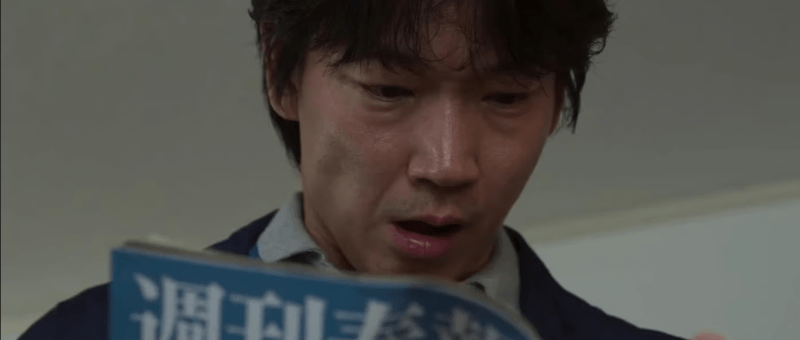
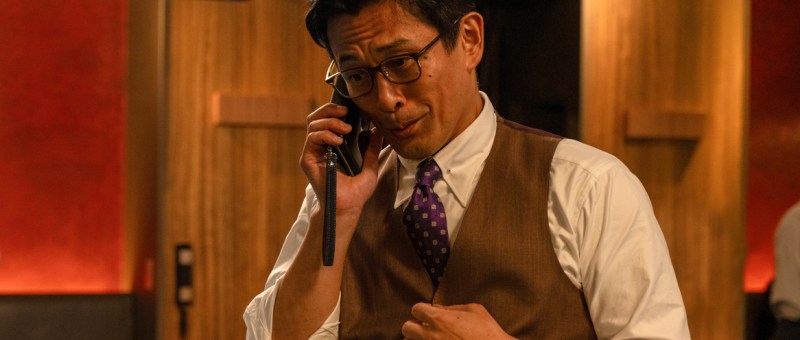
That’s essentially what happens to Seiichi (Go Ayano), previously an unremarkable primary school teacher with a teenage son of his own and an apparently happy home. Inspired by a real life case, Takashi Miike’s courtroom drama Sham (でっちあげ ~殺人教師と呼ばれた男, Detchiage: Satsujin Kyoshi to Yobareta Otoko) flirts with ambiguities but in keeping with its themes eventually descends into a defence of the well-meaning man as its hero becomes so embroiled in the injustice being done to him that he doesn’t see that he is not entirely blameless. Though we’re first introduced to him as the “homicidal teacher” the papers describe him as, the film’s title leaves us in no doubt that his account is the truer. But it remains a fact that during his conversation with Ritsuko (Ko Shibasaki), the mother of the boy Seiichi is accused of racially bullying, he did remark that Takuto’s American grandfather may explain his unique characteristics which is perhaps within the realms of thoughtless things well-meaning people say in awkward conversations but hints at a level of latent societal prejudice. In any case, that the fact his conversation with Ritsuko ended up drifting towards subjects like bloodlines and the Pacific War is not ideal, while Seiichi should probably have been more mindful of his politically neutral position as an educator. 

Likewise, he doesn’t dispute that he tapped Takuto lightly on the cheek to “educate” him that it hurt when he slapped another boy, Junya, who, according to Seiichi, he was bullying. He probably shouldn’t have done this either, even if some may see it merely as common sense in teaching the children that violence is wrong, as ironic as that may be. In any case, the film is on Seiichi’s side and insistent that he did not treat Takuto any differently on account of his non-Japanese ancestor nor spout off any of the racist nonsense that Ritsuko attributes to him. But the major problem is that Seiichi is mild-mannered and also a product of this society. He tries to protest his innocence, but is pressured by his headmaster to apologise anyway which is, of course, a form of lying, something they discourage the children from doing. In the end he goes along with it, because it’s easier to just say “sorry” and hope it goes away rather than address the real issues. 

It’s this sham society that the film seems to be critiquing, even if its message gets lost among its intertwining plot threads as Seiichi effectively finds himself bullied by an empowered tabloid media formenting mob justice against what it brands a far-right fascist teacher as a means of selling papers through generating outrage. While he is scrutinised and scorned, no one bothers to look into Ritsuko’s story which is already full of holes such as why, if she’s so protective as a mother, she waited for her son to be a victim of “corporal punishment” 18 times before complaining to the school. Little motivation is given for Ritusko’s actions, though Miike films her and her husband with an an almost vampiric sense of unease as they appear eerily in black on their way to the school. Unhinged herself, the answers may lie in Ritsuko’s own childhood and her yearning for a protective mother figure, not to mention the sophistication of being a child returning from abroad with good education and prospects for the future.

Seiichi refocuses his closing statement on Takuto, insisting that he doesn’t blame him for “lying”, but it’s perhaps also try that he is a kind of victim too whose own actions can only be explained by a closer look at his relationship with his mother and familial environment. But it turns out that it really is easier to just say “sorry” and move on. Even the psychiatrists seem more interested in treating Ritsuko like a customer whose wishes must be obeyed than earnestly trying to help Takuto even if his issues don’t seem to be as serious as his mother might have it. But according to Seiichi, telling a child off is the purest expression of love. If everyone carries on with sham apologies, nothing really changes and kids like Takuto get forgotten about as everyone falls over themselves to make the situation go away. No one really cares about the truth, and so it becomes an inconvenience to social cohesion in which those who insist on speaking it are hounded down until they agree with the majority and meekly say “sorry” while those in the wrong nod their heads and continue with their lives free of blame or consequence.


 Sham screened as part of this year’s Fantasia International Film Festival.

Trailer (English subtitles)

Young Black Jack (ヤング ブラック・ジャック, Kentaro Otani, 2011)

The Black Jack of Osamu Tezuka’s classic manga is a morally ambiguous figure who cultivates an image of callousness through asking for exorbitant sums to cure often desperate people, but in reality will usually treat seriously ill patients if touched by their plight or is content to collect the money from another source ensuring a kind of social justice is done. A spin-off manga written by Yoshiaki Tabata and illustrated by Yugo Okuma, Young Black Jack (ヤング ブラック・ジャック), was published from 2011 to 2019 and was set in the 1960s when Black Jack was gifted young medical student living through a politically turbulent era. 

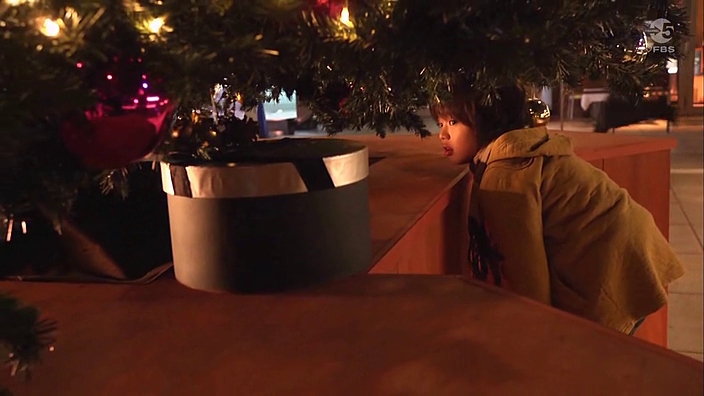
Broadcast in 2011, this television special meanwhile updates the action to the present day while acting as a kind of double origin story if one set in a more realistic world. As a nine-year-old boy, Black Jack asks his mother to meet him by the Christmas display in a local shopping mall. Not having had enough money to buy his mother a red rose, he patiently sits and draws one under the tree while otherwise oblivious to the news being broadcast on a large screen explaining that there has been a series of bombings in the city and the next target is this very mall. Black Jack’s mother has become mute after a traumatic incident but tries to call out to him only for the pair to be caught in the blast. Touched by their story, the genius doctor Honma (Masachika Ichimura) manages to save Black Jack by transplanting his organs and giving him a skin graft while his mother remains in a coma.

The story then jumps to the present day with Black Jack (Masaki Okada) a medical student with an underground lair where he keeps his comatose mother (who hasn’t aged at all in 15 years) and operates as a backstreet doctor treating undocumented migrants and yakuza. Aside from emphasising his contradictory nature as someone who both treats anyone who requires treatment no matter of their social status yet simultaneously demands incredible sums of money for doing so, associating with these kinds of people also places Black Jack among the lower ranks of society which is something that niggles at snooty doctor Naoki (Yukiyoshi Ozawa). Naoki is sort of betrothed to Yuna (Riisa Naka), the daughter of the chief doctor at a prestigious university hospital who is herself in the middle of taking her final exams to become a doctor. 

Familiar to fans of the manga, Naoki is Black Jack’s opposite number. As he tells Yuna, there are two kinds of doctors. Those who save lives and those who kill. In the manga, Naoki was a doctor traumatised by his wartime experiences who often wants to euthanise the patients that Black Jack is trying to save believing that there is no way to save them. Having encountered Black Jack cooly saving a patient who collapsed in the street, Yuna asks Naoki what he thinks makes a good doctor and he tells her it’s the belief that medical science has no limits and the doctor is omnipotent. Yet he later says just the opposite, telling Yuna that she is being childish and of course there are limits to what medical science can achieve so in effect he’s giving up. Black Jack meanwhile does believe in his own omnipotence, even if that’s not always such a good thing, and is confident he can save any patient even if in the end he cannot save the one most close to him (perhaps because she wanted him to stop trying). 

The film does not however go into very much detail and only gives brief snippets of backstory such as Black Jack’s mother going mute after a shadowy man enters and leaves their home while hinting at potential future stories in his opposition to Naoki who objects to him partly out of snobbishness, and a potential romance with Yuna who has now shifted away from the elitism that coloured her family towards a more altruistic kind of medicine represented by Black Jack even in his aloofness. Nevertheless, the film makes no real attempt to transcend its origins as a television movie, not that it has to, and is hampered by an uninspired script and low production values which contribute to its relatively more naturalistic setting yet sit awkwardly with the more outlandish parts of the narrative such as Black Jack’s keeping his mother in cryogenic status for 15 years or being able to transplant all of someone’s organs at once and in under 10 minutes. Still, as a minor outing for the iconic character it’s entertaining enough for fans of the franchise. 


Not Quite Dead Yet (一度死んでみた, Shinji Hamasaki, 2020)

©2020 Shochiku Co., Ltd. Fuji Television Network, Inc.

“What’s important is purpose, to live for something. Without it you’re as good as dead” according to the hero of madcap existentialist farce Not Quite Dead Yet (一度死んでみた, Ichido Shinde Mita). The feature debut from ad director Shinji Hamasaki pits a rebellious student against her overly literal, authoritarian dad as the pair begin to come to a kind mutual understanding only once he “dies” after being tricked into taking an experimental drug in order to unmask conspiracy within his own organisation. 

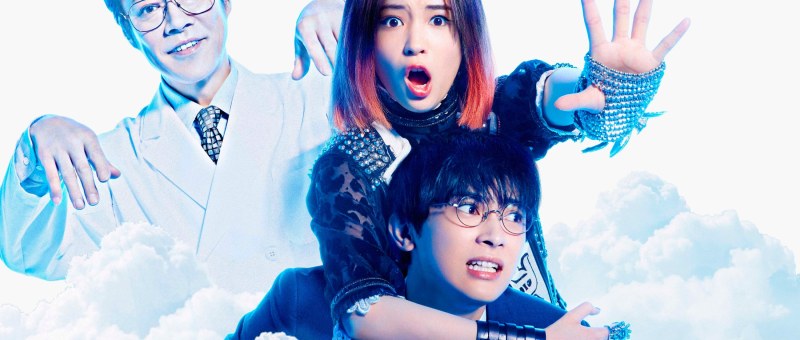
College student Nanase (Suzu Hirose) intensely resents her father (Shinichi Tsutsumi), the CEO of Nobata Pharmaceuticals which he has long been pressuring her to join. She’s currently the lead singer in death metal band Soulzz only according to a record scout at one of their shows their problem is that they’re all “zz” and no soul. Meanwhile, Nobata has assigned an underling, Matsuoka (Ryo Yoshizawa), to shadow her partly because Matsuoka too has very little presence and is in fact nicknamed “ghost” for his essential invisibility. The trouble starts with the escalation of a corporate feud as Nobata’s old buddy Tanabe (Kyusaku Shimada) starts manoeuvring to get his hands on the company’s research into an anti-ageing serum codenamed “Romeo”, planting a mole inside the organisation. As a consequence of his research another of the scientists nicknamed “Gramps” has stumbled on another drug which renders someone temporarily “dead” for a period of two days, naming it “Juliet”. Watabe (Yukiyoshi Ozawa), a consultant Nobata has brought in to streamline the business, convinces him to take the experimental drug in order to flush out the mole while secretly working with Tanabe to take over the company by forcing through a merger while Nobata is out of action. 

A typical socially awkward scientist, Nobata believes that life is about experiment and observation, a belief system which has thoroughly irritated his daughter who still lives at home but has divided the territory in half with clearly marked red tape. Nanase’s animosity towards her father apparently stems back to the death of her late mother Yuriko (Tae Kimura), angry with him that he never left his desk and didn’t make it to the hospital in time to see her before she passed away. “Life’s not a lab experiment” she sings, recalling her childhood during which her overly literal father took away life’s magic by patiently over explaining fairytales, scoffing that Prince Charming probably didn’t revive Sleeping Beauty with a kiss but a transfer of static electricity, while continuing to order her around in fatherly fashion now she’s all grown up. Perhaps still stuck in a petulant adolescence she started the band to vent her frustrations with the world in the form of a death metal “mass”, but she’s growing up. Her bandmates are getting jobs or getting married, she’s still stuck with no real clue about what it is she actually wants to do with her life except that she doesn’t want anything to do with Nobuta Pharmaceuticals.  

Once her father “dies”, however, she begins to gain a new appreciation for his life philosophy able to see but not hear his “ghost” while his body lies on a table in the office cafeteria. Nobata went into pharmaceuticals to help people, but has been led on a dark and vacuous path pursuing anti-ageing technology which is in itself a rejection of change and transience. Ending all her sentences with the word “death”, that’s not something Nanase can get behind. She believes in growing old gracefully, that they make drugs not to cheat death but to be able to spend longer with those they love. As her father had advised Matsuoka to do, she begins to find her purpose, rediscovers her soul, and figures out what it is she’s supposed to do with her life.

Matsuoka, however, seems to be permanently “invisible” despite the tentative romance that develops as he and Nanase attempt to subvert the conspiracy to stop them doing her dad in for good, brushing up against the venal Tanabe who seems set to muster all his corporate advantages against them partly because of an old grudge against Nobata. Of course, you have to wonder why the conspirators didn’t just poison him rather than having him go Juliet and then entering a race against time to cremate him before he wakes up, but as Nobata reminds us there are many things which science cannot explain. A cheerfully silly Christmas tale of rediscovering what it means to be “alive” in the presence of death, Not Quite Dead Yet is zany seasonal fun but with plenty of soul as its heroes learn to shake off cynical corporatism for a healthy respect of the values of transience.


Not Quite Dead Yet screened as part of Camera Japan 2020.

Original trailer (English subtitles)

Images: ©2020 Shochiku Co., Ltd. Fuji Television Network, Inc.

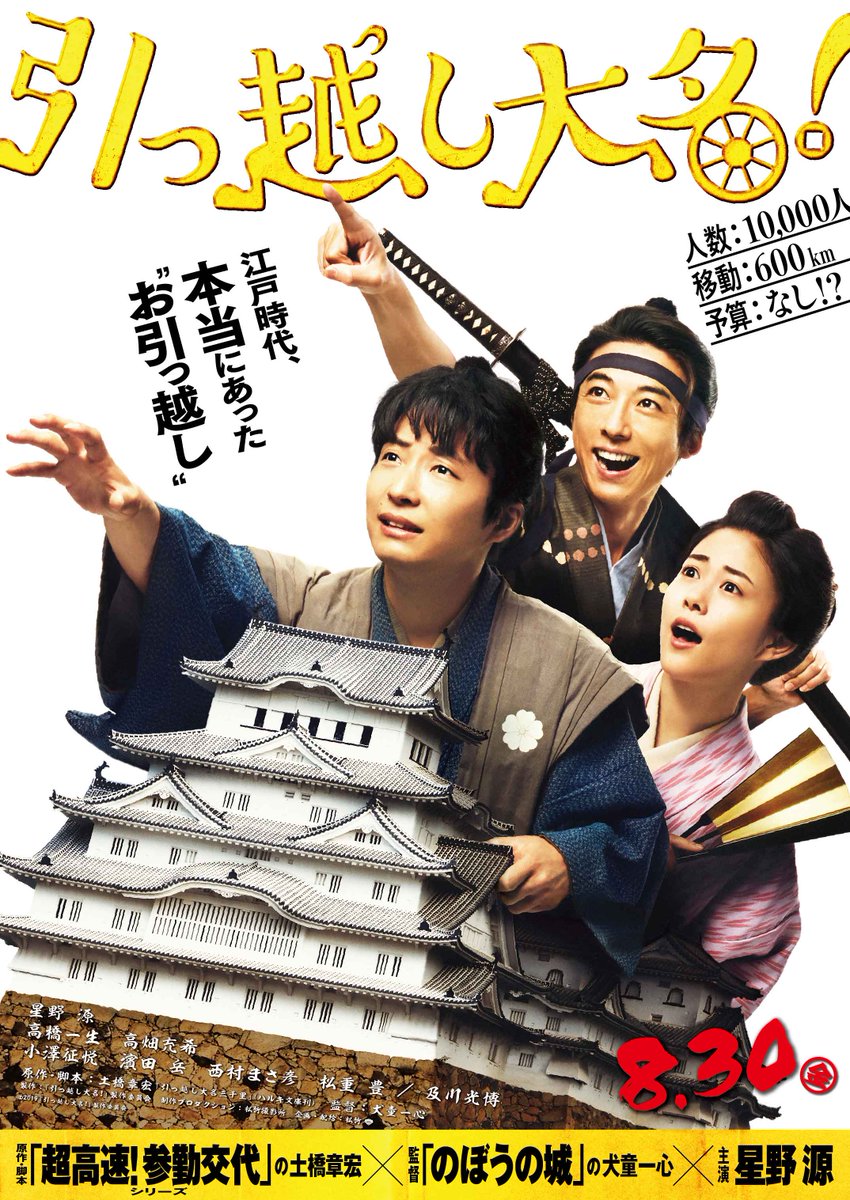
Samurai Shifters (引っ越し大名!, Isshin Inudo, 2019)

Samurai Shifters poster 1Forced transfers have been in the news of late. Japanese companies, keen to attract and keep younger workers in the midst of a growing labour shortage, have been offering more modern working rights such as paid parental leave but also using them as increased leverage to force employees to take jobs in far flung places after returning to work – after all, you aren’t going to up and quit with a new baby to support.

As Isshin Inudo’s Samurai Shifters (引っ越し大名!, Hikkoshi Daimyo!) proves, contemporary corporate culture is not so different from the samurai ways of old. Back in the 17th century, the Shogun kept a tight grip on his power by shifting his lords round every so often in order to keep them on their toes. Seeing as they had to pay all the expenses and handle logistics themselves, relocating left a clan weakened and dangerously exposed which of course means they were unlikely to challenge the Shogun’s power and would be keen to keep his favour in order to avoid being asked to make regular moves to unprofitable places.

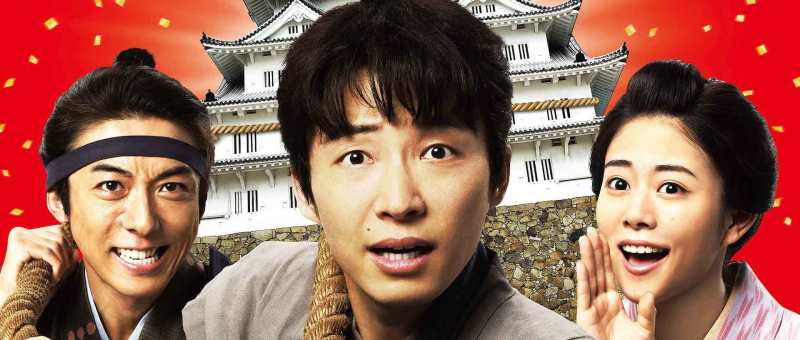
When the Echizen Matsudaira clan is ordered to move a considerable distance, crossing the sea to a new residence in Kyushu which isn’t even really a “castle”, they have a big problem because their previous relocation officer has passed away since their last move. Predictably, no one wants this totally thankless job which warrants seppuku if you mess it up so it falls to introverted librarian Harunosuke (Gen Hoshino) who is too shy refuse (even if he had much of a choice, which he doesn’t). Unfortunately for some, however, Harunosuke is both smart and kind which means he’s good at figuring out solutions to complicated problems and reluctant to exercise his samurai privilege to do so.

In fact Harunosuke is something of an odd samurai. As others later put it, he doesn’t care about status or seniority and has a natural tendency to treat everybody equally. When the head of accounts advises him to take loans from merchants with no intention to pay them back, he objects not only to the dishonesty but to the unfairness of stealing hard-earned money from ordinary people solely under the rationale that they are entitled to do so because they are samurai and therefore superior. Likewise, when he finds out that his predecessor was of a lower rank and that all his achievements were credited to his superiors he makes a point of going to his grave to apologise which earns him some brownie points with the man’s pretty daughter, Oran (Mitsuki Takahata), who was not previously minded to help him because of the way her father had been treated.

Harunosuke’s natural goodness begins to endear him to the jaded samurai now in his care. Though they might be suspicious of some of his methods including his “decluttering” program, they quickly come on board when they realise he is not intending to exclude himself from his ordinances and even consents to burn his own books in order to make it plain that everyone is in the same boat. He hesitates in his growing attraction to Oran (who in turn is also taken with him because of his atypical tendency to compassion) not only because of his natural diffidence but because he feels it might be selfish to pursue a romance while urging everyone else towards austerity.

Meanwhile, “romance” is why all this started in the first place. The lord, Naonori Matsudaira (Mitsuhiro Oikawa), is in a relationship with his steward (something which seems to be known to most and not particularly an issue). While he was in Edo, he rudely rebuffed the attentions of another lord, Yoshiyasu Yanagisawa (Osamu Mukai), who seems to have taken rejection badly and has it in for the clan as a whole. In an interesting role reversal, his advisor laments that perhaps it would have been better for everyone if he’d just submitted himself, but nevertheless a few thousand people are now affected by the petty romantic squabbles of elite samurai in far off Edo.

Bookish and reticent as he is, Harunosuke sees his chance to “go to war against the unjust Shogunate” by engineering a plan which allows them to reduce the burden of moving, reluctantly having to demote some samurai and leave them behind as ordinary farmers with the promise that they will be reinstated as soon as the clan resumes its former status. Asking the samurai to drop their superiority and carry their own bags for a change has profound implications for their society, but Harunosuke’s practical goodness eventually wins out as the clan comes together as one rather than obsessing over their petty internal divisions. A cheerful tale of homecoming, friendship, and warmhearted egalitarianism, Samurai Shifters is an oddly topical period comedy which satirises the vagaries of modern corporate culture through the prism of samurai-era mores but does so with a wry smile as Harunosuke finds a way to live within the system without compromising his principles and eventually wins all with little more than a compassionate heart and a finely tuned mind.


Samurai Shifters screens in New York on July 21 as part of Japan Cuts 2019.

Teaser trailer (English subtitles)

April Fools (エイプリルフールズ, Junichi Ishikawa, 2015)

april-foolsIn this brand new, post truth world where spin rules all, it’s important to look on the bright side and recognise the enormous positive power of the lie. 2015’s April Fools (エイプリルフールズ) is suddenly seeming just as prophetic as the machinations of the weird old woman buried at its centre seeing as its central message is “who cares about the truth so long as everyone (pretends) to be happy in the end?”. A dangerous message to be sure though perhaps there is something to be said about forgiving those who’ve misled you after understanding their reasoning. Or, then again, maybe not.

Juggling seven stories April Fools is never as successful at weaving them into a coherent whole as other similarly structured efforts but begins with an intriguing Star Wars style scroll regarding alien sleeper agents who can apparently go home now because they’ve accomplished everything they came for. Changing track, pregnant snack addict Ayumi (Erika Toda) decides to ring the still unknowing father of her child after witnessing an improbable reunion on TV only he’s in bed with someone else and assumes her call is a weird practical joke. Overhearing that he’s just arrived at a restaurant for a lunch date, Ayumi takes matters into her own hands and marches over there, eventually taking the entire place hostage. Meanwhile an older couple are having a harmless holiday pretending to be royalty and a grizzled gangster has “kidnapped” a teenage girl only to give her a nice day out at the fun fair. Oh, and the hikkikomori from the beginning who’s fallen for the whole alien thing has made a total fool of himself at school by taking out his bully, kissing his crush goodbye and racing up to the roof to try and hitch a lift from the mothership.

Importing this weird European tradition to Japan, the creative team have only incorporated parts of it in that they don’t call time on jokes at noon and it’s less about practical shenanigans and elaborate set ups than it is about wholesale lying which is frustrated by this famous non-holiday apparently created in celebration of it. All of the protagonists are lying about something quite fundamental and usually to themselves more than anyone else but at least their April Fools adventures will help them to realise these basic inner truths.

Then again some of these revelations backfire, such as in the slightly misjudged minor segment concerning two college friends who are repeatedly kicked out of restaurants before they can get anything to eat. One decides to “prank” his friend with an April Fools confession of love, only to find that his friend really is gay and is in love with him. Awkward is not the word, but then an April Fools declaration of love is about the worst kind of cruel there is and is never funny anyway, nor is the casual homophobia involved in this entire skit but that’s another story.

In fact, most of the other people are aware they’re being lied to, but are going along with it for various reasons, some hoping that the liars will spontaneously reform and apologise or explain their actions. Ayumi, who is shy and isolated by nature, always knew her handsome doctor suitor was probably not all he seemed to be but is still disappointed to be proved right, only be perhaps be proved wrong again in the end. Convinced to take a chance on an unwise romance by an older colleague who explains to her that many miracles begin with lies, Ayumi is angry with herself as much as with her lying Casanova of a baby daddy, and also feels guilty about an incredibly sight deception of her own. As in many of the other stories, now that everyone has figured out the real, important, truths about themselves and about the situation, they can excuse all of the lying. Sensible or not? The choice is yours.

Despite coming from the team who created some very funny TV dramas including Legal High, the comedy of April Fools never quite hits its stride. Weak jokes backed up with slapstick humour giving way to sentimentality as the “good reasons” for the avoidance of truth are revealed don’t exactly whip up the farcical frenzy which the premiss implies. The point may very well be that we’re the April Fools going along with this, but even so its difficult to admire a film which pushes the “lying is good” mantra right to the end rather than neatly undercutting it. Still, there is enough zany humour to make April Fools not a complete waste of time, even if it doesn’t make as much of its original inspiration as might be hoped.


Original trailer (English subtitles)