Iwane: Sword of Serenity (居眠り磐音, Katsuhide Motoki, 2019)

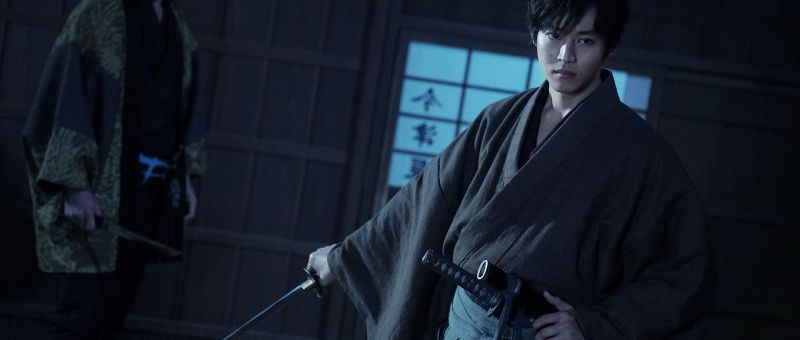
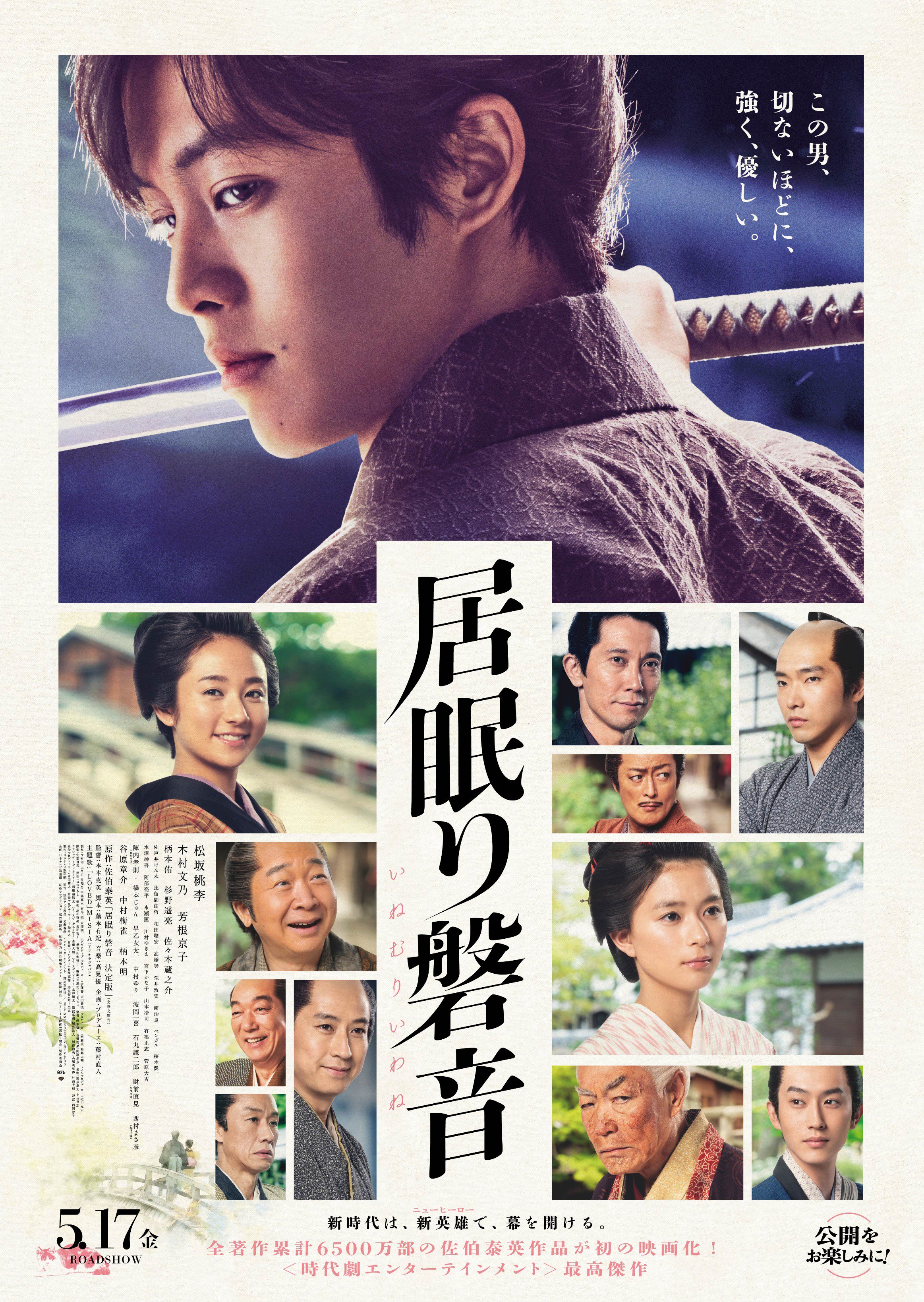
The contradictions of the samurai code conspire against one noble-hearted young man in Katsuhide Motoki’s adaptation of the long running series of historical novels by Saeki Yasuhide, Iwane: Sword of Serenity (居眠り磐音, Inemuri Iwane). Yet this truly serene samurai is a stoical sort, learning to bear his pain with fortitude while standing up for justice in an increasingly corrupt Edo where money rules all while an ascendent merchant class continues to challenge the fiercely hierarchical social order. 

Beginning in 1772 which turned out to be a disastrous year, the tale opens as hero Iwane (Tori Matsuzaka) prepares to return home after completing his three year rotation in Edo in the company of childhood friends Kinpei (Tasuku Emoto) and Shinnosuke (Yosuke Sugino). Shinnosuke is in fact married to Kinpei’s sister Mai, while Iwane will himself be married to Kinpei’s other sister Nao immediately on his return so close are they. As Iwane’s father tells him, there are great hopes for these young men that they can “turn our outdated clan around”, but events will conspire against them. Spoiling the happy homecoming, Shinnosuke is accosted by a drunken uncle who convinces him Mai has been unfaithful in his absence with the consequence that he kills her immediately on his return home. Unable to understand this turn of events, Kinpei confronts his friend but eventually kills him, while Iwane is then forced to kill Kinpei after he goes on murderous rampage in revenge for the wrong done to his sister. 

In trying to mediate the case, the argument is put forward that Shinnosuke acted rashly and should have brought his suspicion to the authorities rather than opting for summary execution. The lord however disagrees, condoning Shinnosuke’s actions under the rationale that to do so would have been considered “weak minded” while as Shinnosuke himself had claimed he acted in accordance with the samurai code in which female adultery is illegal and punishable by death. By contrast, he finds Kinpei’s rashness offensive, insisting that he also should have recognised the legitimacy of his sister’s murder and simply left quietly with her body. Having learned the truth in which his childhood friends became victims of clan intrigue, romantic jealousy, and tragic misunderstandings in this Othello-like plot, Shinnosuke and childhood sweetheart Nao are also consumed by the rashness of samurai law each exiled from their clan and cast adrift in Edo-era society. 

Edo-era society is however also itself corrupt. Some months later, Iwane has returned to Edo as a lowly ronin lodging with a kindly old man, Kinbei, who helps him find a job firstly gutting eel then as a bodyguard at a money exchange which has been receiving anonymous threats they assume are from rival broker Awaya who has hatched a nefarious plan to manipulate the currency market to stop the current Shogun introducing a new unit which can be used in both Edo and Kyoto which would understandably cut into his already corrupt business model. Luckily, Imazuya is an honourable man who backs the new currency plan and wants to do the right thing which makes him a perfect fit for Iwane’s innate sense of justice. “You don’t know the way of the merchant” Awaya snaps at him, suggesting both that the samurai are already on their way down as the merchants rise and that his unwillingness to play dirty will be his downfall. Nevertheless, Iwane is the type to adapt quickly, instantly coming up with a way to play Awaya at his own game and kick his destructive amoral capitalism to the curb. 

Meanwhile, he continues to pine for Nao while drawing closer to Kinbei’s earnest daughter Okon (Fumino Kimura). As we discover Nao is also a victim of an intensely patriarchal social order but through the tragedy that befalls them also finds strength and agency making a life changing decision that allows her to become independent while looking after her family if in the knowledge that the childhood romance she shared with Iwane is a thing of the past. Iwane too agrees that he is trapped in a living hell of guilt and grief, yet choosing to go on living anyway as calm and cheerful as he’d ever been while standing up to Edo-era corruption though uncomfortably enough this time against the destabilising influence of the rising merchant class and therefore in contrast to most jidaigeki reinforcing the legitimacy of the samurai order which has paradoxically also ruined his life with its rigid and implacable social codes. In any case, Motoki’s classic chanbara melodrama has a serenity of its own as the cheerfully laidback hero resolves to live his life by a code of his own free of samurai constraint. 


Trailer (no subtitles)

Ichiko (市子, Akihiro Toda, 2023)

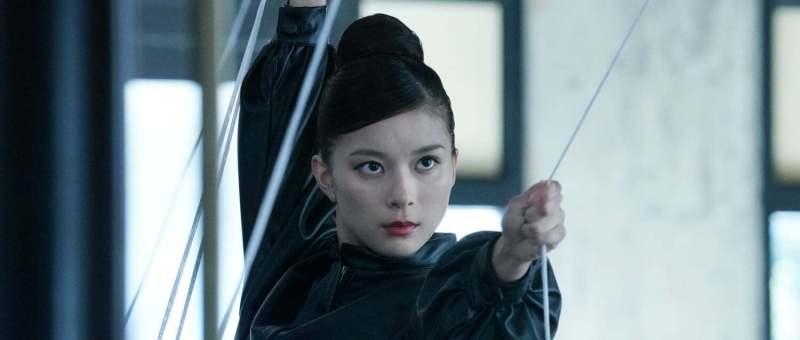
If for some reason your name were taken from you and it became much easier to live by some other person’s name that you were compelled to use, would you be content to be them or be prepared to go to extreme lengths to reclaim your own identity? Based on his own play, Akihiro Toda’s Ichiko (市子) explores similar themes to his 2018 film The Name as the absent heroine fights to reassert herself just as we try to piece her together to a create semblance of the whole being we may never truly understand.

In many ways, it’s absence that defines Ichiko (Hana Sugisaki) who like the mysterious spirit of a fairy tale must be gone as soon as she is seen. Or at least, you could forgive Yoshinori (Ryuya Wakaba) for feeling this way when his girlfriend of three years suddenly disappears soon after he’d presented her with marriage papers. It’s not until he’s visited by a policeman, Goto (Shohei Uno), sometime later that he’s forced to admit he actually knew very little about her. He assumed she’d had a difficult past, and neither of them said too much about themselves so he doesn’t know if her parents are still alive, where she was from, or if she has any family or friends she might have gone to. What shocks him most, however, is that Goto informs him that on paper at least the woman named Ichiko Kawabe does not exist.

Flashing back across several years from Ichiko’s childhood to the present day, we see people call her by another name which she often tries to correct telling them that her name is Ichiko but it isn’t originally clear to us if this is because she’s being forced to live under false name or if she merely dislikes the name she was given and wishes to be “Ichiko” instead. In any case, she appears to have developed a healthy fear of letting anyone in thanks to her incredibly disordered home life. At times, would-be friends attempt to visit, but are either kicked out or merely horrified by what they see there and leave soon afterwards putting an end to the friendship. That might in itself explain why she may wish to be someone else, but in fact what she wants is the right to be herself.

Gradually it becomes clear that because of the way Japanese society works, Ichiko has been forced to live two lives as one and can live neither fully. It’s not quite right to call it a double life or to say that she multiple personalities but more that she cannot quite locate herself within herself and is increasingly distressed in being forced to answer to a name which is not her own and live someone else’s life for them. Later she explains that all she wanted was a “normal” existence though this is the very thing denied her in part because she is denied her rightful identity though there is something quite poignant in her remaining innocence. Her touching description of finding happiness in the scent of miso soup wafting from ordinary houses at dinner time expresses her desire for the comfort and safety of a conventional family she never really had or may perhaps have experienced for a brief moment in early childhood. 

Ironically enough, she exclaims that she likes walking in the rain because it washes everything clean though for her it will spell disaster in quite literally revealing the skeletons buried in her past and with them exposing the precarious web of lies on which her adult life was based in an attempt solely to recapture the authenticity of her essential identity. A further irony may be that the identity she ends up with may not even be her own but that of someone else who decided they no longer wanted theirs, perhaps because the world had also been unkind to them and so they did not understand its worth. As the policeman says, she did what she had to do survive whether that be lying about who she was or otherwise burying her other self literally or metaphorically. Dark and melancholy, Toda’s twisty psychological mystery has its poignant qualities but ultimately asks whether living as your true self is worth the price or it’s better just to accept the name that fate and society have dealt you.


Ichiko screened as part of this year’s Nippon Connection

Original trailer (English subtitles)

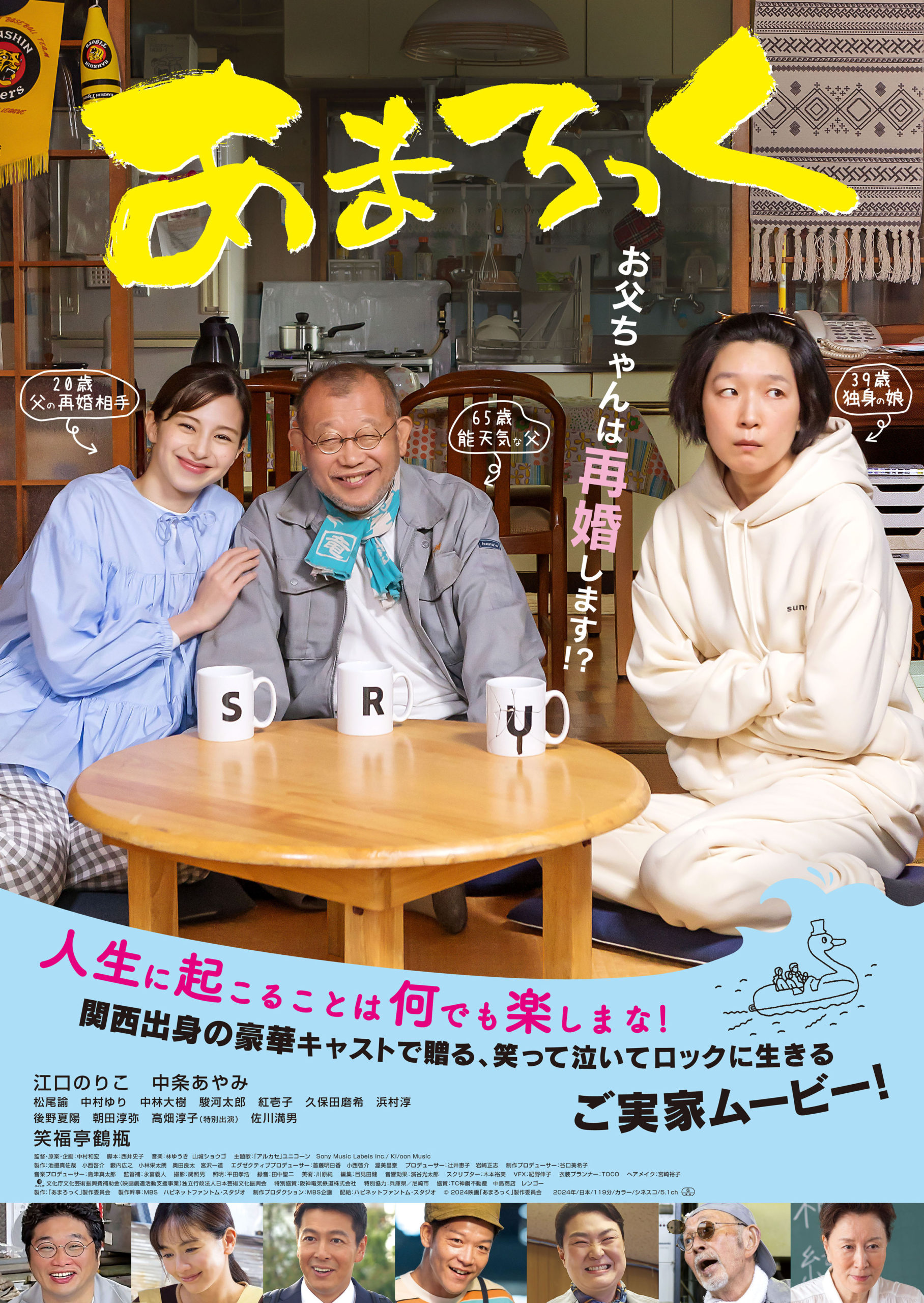
Amalock (あまろっく, Kazuhiro Nakamura, 2024)

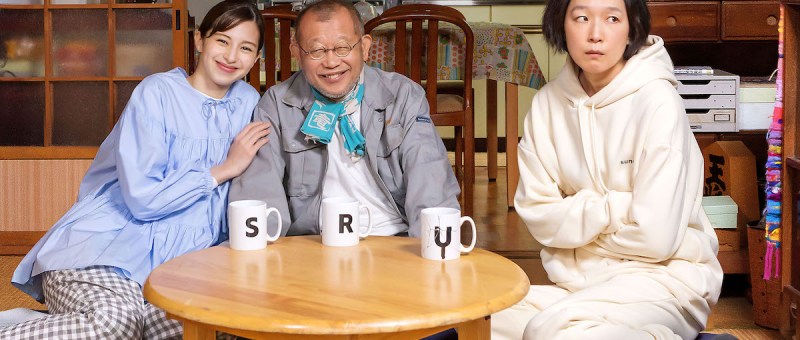
The purpose of a lock, at least far as those on water are concerned, is to keep everything on an even keel and protect the surrounding area from flooding. From the lock’s point of view it might be a thankless task, people never notice you’re there unless you’ve somehow failed at your job but the lock is ever present and always about its duty even if it might be difficult to understand. For all of these reasons, the heroine of Kazuhiro Nakamura’s gentle indie drama had come to think of her father as the titular Amalock (あまろっく) but often resented him for it, seeing him only as lazy and irresponsible.

For Ryutaro (Tsurube Shofukutei), meanwhile, laughter was the only way to make life bearable. His motto was to always enjoy the things that happen in life be they good or bad which is why he puts out a congratulations sign when his grown up daughter Yuko (Noriko Eguchi) returns home after being made redundant. Despite being good at her job and in receipt of several commendations for her work, Yuko is simply not pleasant to be around and creates tension in the office with her grumpy aloofness and tendency to make younger male members of staff cry in front of her. 

The implication is that Yuko became the exact opposite of the father she thought was feckless and of no use to anyone, yet mainly finds herself lying in front of the TV in a tracksuit mainlining snacks exactly as he had done when she was a child. Seemingly trapped in an intense depression, she makes no attempt to find new work for eight years, instead being supported by her father’s moribund ironmongers. The surprise news that he plans to remarry 20 years after her mother’s death to a woman barely 20 who works at the townhall sends shockwaves through her life and turns her into a petulant, resentful teenager who can’t accept her new stepmother.

The situation is of course ridiculous. Yuko is almost 40 and Saki (Ayami Nakajo), Ryutaro’s new wife, makes no attempt to wield authority over her beyond the well-meaning attempts to introduce potential husbands more because she thinks it would be nice for her to have someone than she wants her out of the house. Even so, Yuko’s problem is that she can’t understand the way her father works and that his cheerful attitude to life has value to those around him who are buoyed up by his friendliness and easy going nature even when times are hard. Like the Amalock, he’s always been there quietly supporting her despite her scorn and resentment, preventing her from becoming overwhelmed by the floodwaters of life tragedies.

In his way, he’s done something similar for Saki who ironically only ever wanted what Yuko could have had in a happy “harmonious” family having experienced a series of troubles of her own. Saki honours Yuko’s mother’s memory and includes it in her vision of the “family,” but struggles to get through to Yuko who remains difficult and resentful unable to see the value in the kind of life that Saki wants or in herself as human who might benefit more from interacting with others. The twin stressors of unexpected tragedy and a tentative marriage proposal from a man who turned out to know her little better than she thought begin to shift her perspective allowing her to see what it really was her father brought to the world and what she might bring to it too if only she were less serious about things that don’t really matter.

That is after all how you find your way to a harmonious life, becoming an Amalock for others who can also be an Amalock for you and might be willing to make a few compromises to make that happen. Set in the tranquil town of Amagasaki, Nakamura’s gentle tale captures a little of life’s absurdities along with the simple power of good humour to make life easier to bear. Rooted in tragedy as it may be, Ryutaro’s philosophy of making life a celebration has its merits and ones which are not lost on a newly enlightened Yuko becoming more and more like her father but also like herself at the heart of a harmonious family.


Amalock screened as part of this year’s Osaka Asian Film Festival.

Original trailer (no subtitles)

Baian the Assassin, M.D. (Part 1) (仕掛人・藤枝梅安, Shunsaku Kawake, 2023)

A traumatised assassin takes it upon himself to get rid of a few villains on realising there’s something not quite right with his latest contract in Shunsaku Kawake’s classic jidaigeki homage, Baian the Assassin, MD: (Part 1) (仕掛人・藤枝梅安, Shikakenin Fujieda Baian). The titular hero is the protagonist of a series of novels by Shotaro Ikenami which have spawned several previous adaptations on the big and small screens. Produced in celebration of Ikenami’s centenary the film, one of two, harks back to the golden age of period drama if with a more contemporary sensibility. 

Baian (Etsushi Toyokawa) is ostensibly an acupuncturist though by night he uses his needles to kill rather than to heal. Hired to take out the second wife an inn owner, Omino (Yuki Amami), his suspicions are raised on realising that he had also been the assassin who killed the man’s first wife two years earlier. He blames himself in part for having agreed to assassinate a woman in the first place, and remains conflicted even after accepting the job wondering if Omino is next in the firing line or if she was actually the one who had the other woman killed in order to usurp her place. 

The film makes clear from the outset what a difficult place Edo could be for a woman as Baian carries out an assassination on a boatman who had raped a samurai’s wife and then blackmailed her into further sexual favours only for her to hire an assassin and then kill herself confessing all. Omino had apparently been the stepdaughter of a gang leader who sexually abused her and then died leaving her with no support and nowhere to turn except to sex work. Maybe no one could blame her for taking advantage of a besotted client to escape her terrible circumstances though getting rid of his wife would obviously be a different matter. Omon (Miho Kanno), a maid Baian takes a liking to while investigating, admits something similar that as a widow with a young son realistically speaking there is nowhere else that could she work to support him except on the fringes of the sex trade. Then again, as she says the previous mistress was strict but it was because she cared, whereas Omino is just mean and self-interested. She’s fired all the old staff and brought in pretty young women who are quite obviously being expected to entertain their male customers in more direct ways. 

In any case, Baian soon finds himself drawn into a wider series of plots when his friend Hiko (Ainosuke Kataoka), a skewer maker who assassinates people with poison darts, is tasked with taking out first a lascivious carpenter and then a rogue samurai who has supposedly raped and kidnapped the daughter of his lord which obviously turns out not quite to be the case. Rape and kidnap are depressingly common in Edo-era society where it is largely women who suffer under a patriarchal society with intensely oppressive social codes that demand female purity. In a post-credits sequence, we come to understand that Hiko too is seeking vengeance for the death of a woman who killed herself and her child after being raped by bandits. Meanwhile, Baian reveals that he had a mild hatred of women himself born of pain in having been abandoned by his mother who left with another man and took only his sister with her after his father’s death. He had to overcome that resentment in order to fulfil himself as a doctor treating women’s bodies but struggles when he realises that someone involved in the case is closely linked with his own traumatic past and death may be the only way to save them. 

Both he and Hiko end up breaking the assassin’s code but only in defence of justice, which might sound odd considering the nature of their work. Nevertheless, they each have their scruples and don’t like to think of themselves as having been used or inadvertently killed someone who didn’t really deserve it. As Baian puts it, the greatest villains may really be “well-meaning weak cowards” though perhaps corrupt lords can’t really complain about falling victim to their own tactics. With noticeably polished production values and atmospheric cinematography, Kawake pays tribute to classic jidaigeki and eventually sets his heroes back on the road awaiting the next battle for justice in the distinctly unjust feudal era. 


Baian the Assassin, M.D. (Part 1) screened as part of this year’s Camera Japan.

Original trailer (English subtitles)

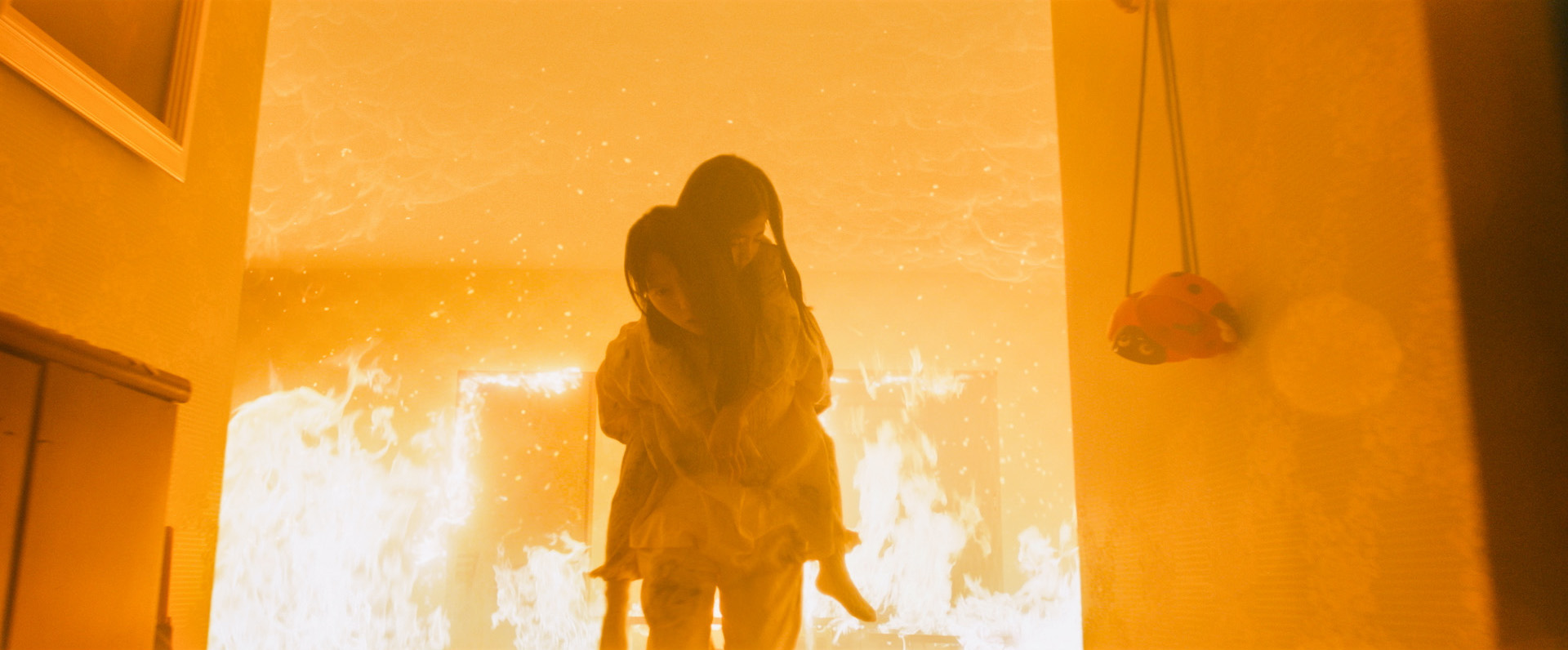
Motherhood (母性, Ryuichi Hiroki, 2022)

Is love ever really unconditional or are we all just chasing a sense of parental approval even after we become parents ourselves? According to a reporter late into Ryuichi Hiroki’s adaptation of the Kanae Minato novel Motherhood (母性, Bosei), there are only two types of women, mothers and daughters, and it is in some ways a confusion of roles that frustrates the relationship between two women who are never fully able to form a maternal connection. 

Asked by a colleague if she felt her parents loved her, the reporter answers that they were the kind who made her wear a frilly blouse with a big collar for the school play and got her new shoes for Sports Day suggesting that their love was in its way performative and they cared more about how other parents would judge them than they did about her feelings seeing as she actively hated filly blouses with big collars. Alternatively, it may have been another kind of misunderstanding in they got her these things because they thought they should make her happy and took her rejection of them as resistance. 

The little girl at the film’s centre, Sayaka whose name is only spoken in the film’s closing scenes, encounters something similar when she asks her grandmother for a Hello Kitty bag having been presented with one featuring a beautifully embroidered bird. Her mother, Rumiko (Erika Toda), finds this highly offensive thinking that Sayaka has rejected her grandmother’s lovingly handmade gift in asking for something shop bought featuring a popular character, but Sayaka treasured her grandmother’s embroidery and just wanted her to sew Hello Kitty instead. 

In her voiceover, Rumiko implies that her annoyance is also born of shame in that Sayaka has forgotten everything she taught her about consideration for the feelings of others, while in her own the pain in Sayaka’s eyes is clear. She feels slighted, almost threatened by her mother’s hushed reaction advising her that it’s better to stick with birds because then people will realise that’s what she likes and go out of their way to give her bird-themed presents. The irony is that, at least in the way Rumiko tells it, her mother Hanae (Mao Daichi) believed they were such a happy family because she accepted their love “straightforwardly” when really it was anything but. Fixated on Hanae, Rumiko lives her entire life to make her mother happy even down to her choice of husband despite warnings from all sides that they are otherwise not particularly well suited. 

The reporter makes a point of commenting on another diner’s poor table manners in a restaurant with the result that he gets up and leaves, feeling uncomfortable in the wake of her rude intrusion. She explains that she was brought up to feel as if she always had to get everything right as if being loved depended on being good much as Rumiko had felt. Little Sayaka is more or less the same, constantly chasing maternal affection though receiving little in return as Rumiko struggles to transition from the role of daughter to mother and continues to fixate on Hanae caring little for anything else. When the family are forced to vacate their cute forest cabin of a home to move in with father Satoshi’s (Masaki Miura) harridan of a mother (Atsuko Takahata), Rumiko tries the same tactic believing that if she can become “good” in her mother-in-law’s eyes then she will eventually accept her little realising that she is simply a difficult woman who will never be like her own mother and only finally embraces her as a daughter as she lovingly mothers her long after she has become bedridden and appears to be suffering from dementia. 

Then again, perhaps the constant nagging, a tendency to run people down and push them away, are also frustrated ways of showing love and ironically what the mother-in-law might have wanted was someone to fight back as Sayaka tried to do much to Rumiko’s chagrin as she accused her of ruining her attempt to curry favour. Sayaka finds a diary belonging to her father, Satoshi, which recounts memories of domestic violence which he rebelled against indirectly through taking part in the student protests little caring about the cause only channeling his rage and disillusionment into something that didn’t really matter to him so would make no difference if it failed. She calls him a weak man who hides behind women, forcing Rumiko to take care of his mother while otherwise unwilling to stand up for himself or take responsibility for his family. 

Perhaps men are only fathers or sons too and this one had little idea what to do with a daughter. Naively proposing on the third date, he said he wanted to build a “beautiful home” presumably to escape the one he grew up in attracted as much the genial atmosphere of Hanae’s upper middle class mansion as to Rumiko herself. Hiroki paints the forest-bound “dream home” in nostalgic shades of pastel, lending it almost an uncanny sense of fairytale bliss that the family can never live up to despite Rumiko’s Stepford-esque attempts to become the perfect housewife by essentially becoming her mother. Offering her version of events mainly through a confession to a priest, it’s clear that Rumiko has not been entirely honest before God, but neither of our narrators are really all that reliable even if relating how they felt something happened at the time leaving us less with one concrete version of the truth than a tragic tale of love frustrated by the codified roles of mother and daughter along with maternal jealously and anxiety. 

Nevertheless, they are united by a maternal legacy and the act of ensuring the line will continue connecting all of them to the future through the chain of motherhood. The reporter’s thinking may have a degree of internalised misogyny as she remarks on the societal prejudice that regards an unmotherly woman as hardly a woman at all while giving no recognition to women who are neither mother nor daughter in her contemplation of the maternal instinct which she otherwise regards as learned rather than innate. Asking for definitions, she comes up with the need to protect one’s child which is perhaps something her mother may have lacked when it counted but did not necessarily mean she had no love for her at all despite her fits of resentment. Shot with a degree of eeriness that dissipates in favour of a darkening realism in the later stages, Hiroki’s heightened drama nevertheless suggests that an equilibrium can be found in the maternal relationship even if it is painfully won.


Motherhood screened as part of this year’s New York Asian Film Festival

Original trailer (English subtitles)

Images: ©2022 “MOTHERHOOD” FILM PARTNERS

Arc (Arc アーク, Kei Ishikawa, 2021)

Does something have to have an ending to be meaningful or could eternity be the point? Inspired by Ken Liu’s short story, Kei Ishikawa’s near future tale Arc (Arc アーク) envisages a world without death if perhaps not for all in which bodily immortality has been achieved, but what would that mean for humanity no longer faced with mortal anxiety, how should it reorient itself in the absence of sickness or old age while the possibility of endlessness for the self has removed the urge for immortality through childbirth? These are all of course questions which have no one answer, though what the heroine finally discovers is that in the end it may be the choice itself of when to live or when to die that may lend her life at least its meaning. 

Even so, hers is a particular anxiety bound up with frustrated maternity having abandoned a baby she gave birth to at 17, too afraid of the responsibility to accept it. At 19, Rina (Kyoko Yoshine) is spotted at a club by a mysterious middle-aged woman, Ema (Shinobu Terajima), who runs a revolutionary cosmetics company which has pioneered a new way of preserving the bodies of the dead turning them into uncannily lifelike mannequins with a new process known as plasticisation. To Ema’s mind, true liberation comes from accepting transience, that once life has left it the body is just an object which might be repurposed for her art but then at the same time perhaps she is attempting to hold on to something that should be released, interfering in a natural process and while intending to offer comfort to those bereaved preventing them from letting go or moving on with their lives. Her much younger brother Amane, meanwhile, actively wants to stop time while alive utilising a similar technology to halt the ageing process and overcome the tyranny of death. 

In a strange way, Ema’s desire to restore a body which is no longer alive to ideal condition is also an acknowledgement of death which she believes is not the opposite of life but a necessary part of it. In overcoming the fear of death, she claims, a transcendental beauty will reveal itself. Amane meanwhile seeks to overcome death physically, but as Rina is warned his health revolution may not bring happiness to mankind not least because it exposes a persistent inequality in which eternal youth is available only to those with the means to acquire it, creating a new underclass not only of the poor but those whose bodies are not able to accept the treatment. Amane sees his creation as a dividing line in human history which will necessarily divide humanity into two groups, those who choose to join his revolution and those who do not (though interestingly he does not consider a third group who actively opposite it). Even so he sees it as a choice and accepts the right to reject immortality even going so far as to build a dedicated centre where those who choose to live a “natural” lifespan can do so in dignity and comfort. 

The concept of personal choice appears to be key, Ema too replying that her decision to stick with plasticisation rather than Amane’s treatment is her right though she too eventually hits a wall in the imperfection of her craft and the depths of her grief. She tells Rina to live her life freely encouraging her to live fully in the moment, while she too is quick to remind others that the decisions are theirs to make as regards their life and death. It’s not death nor the fear of it that are the problem, but the inability to choose as Rina finally acknowledges in remarking that the ability to decide its end point gives her the means to carve the arc of her life overcoming death through full existential control having in a sense closed a circle in facing her own sense of maternal failure. Shifting from the warmth and natural beauty of a beach in summer to the dark and brutalist environments of the BodyWerks lab, and from the muted colour of Rina’s youth to the black and white of her youthful old age, Ishikawa’s near future sci-fi-inflected tale suggests it’s not so much death that frightens you but helplessness and as in all things the answer lies in autonomous choice. 


Arc screens in Chicago on April 3 as part of the 14th season of Asian Pop-Up Cinema.

Original trailer (no subtitles)

Fukushima 50 (フクシマ50, Setsuro Wakamatsu, 2020)

The “Fukushima 50” (フクシマ50), as the film points out, was a term coined by the international media to refer to the men and women who stayed behind to deal with the unfolding nuclear crisis at the Fukushima Daiichi Nuclear Power Plant. Loosely inspired by Ryusho Kadota’s non-fiction book On the Brink: The Inside Story of Fukushima Daiichi which featured extensive interviews with those connected to the incident, Setsuro Wakamatsu’s high production value film adaptation arrived to mark the ninth anniversary of the devastating earthquake and tsunami which occurred on 11th March, 2011 and closes with a poignant callback to the plant’s role in Japan’s post-war reconstruction as the nation once again prepares to host the (now postponed) Olympics with a torch relay beginning at Fukushima as a beacon of hope as the country continues to rebuild in the wake of the disaster. 

Though inspired by real events Wakamatsu’s dramatisation is heavily fictionalised and while surprisingly frank for a mainstream film in its criticism of the official reaction to the disaster, is also quietly nationalistic while doing its best to pay tribute to the selfless sacrifice of the plant workers who stayed behind to do what they could many of whom had little expectation of surviving. Chief among them would be Izaki (Koichi Sato), an imperfect family man and veteran section chief, and the plant’s superintendent Yoshida (Ken Watanabe) who are both local men and old friends. Local, it seems, is later key with multiple appeals to the furusato spirit as each is at pains to point out that they stay not only to prevent a catastrophic meltdown that would leave most of central Honshu including Tokyo uninhabitable, but because they feel a greater duty to protect their hometown and the people in it. 

Meanwhile, they find themselves burdened rather than assisted by official support as government bodies’ political decision making undermines their attempts to avert disaster while the boardroom of TEPCO who operate the plant reacts with business concerns in mind. A few hours in the prime minister (Shiro Sano) decides to make a visit, in political terms he can’t not national leaders who don’t visit sites of crisis are never forgiven, but his presence actively hinders the recovery efforts. Referred to only as the PM, Wakamatsu’s film presents the man leading the nation as an ignorant bully overly obsessed with his personal image. He has little understanding of nuclear matters or the implications of the disaster, refuses to abide by the regular safety procedures required at the plant, and mostly governs through shouting. Beginning to lose his temper, Yoshida does his best to remain calm but resents the constant interference from those sitting in their offices far away from immediate danger while he does his best to contend with the increasingly adverse conditions on the ground, mindful of his responsibilities firstly to his employees and secondly to those living in the immediate vicinity of the plant who will be most at risk when measures taken to prevent meltdown will lead to an inevitable radiation leak. 

Yoshida’s hero moment comes when he ignores a direct order from the government to stop using seawater to cool the reactors, knowing that he has no other remaining options. Meanwhile, the government refuse offers of help from the Americans, who eventually make a strangely heroic arrival with Operation Tomodachi, discussing plans to move their families to safety while their commander reflects on his post-war childhood on a military base near the site of the nuclear plant. Japan’s SDF also gets an especial nod, granted permission to leave by Yoshida who is beginning to think he’s running out of time but vowing to stay and do their duty in protecting civilians in need. 

In essence, the drama lies in how they coped rather than the various ways in which they didn’t. The conclusion is that the existence of the plant was in itself hubristic, they are paying the price for “underestimating the power of nature” in failing to calculate that such a devastating tsunami was possible. They thought they were safe, but they weren’t. Perhaps uncomfortably, Wakamatsu mimics the imagery of the atomic bomb to imagine a nuclear fallout in Tokyo, harking back to ironic signage which simultaneously declares that the energy of the future is atomic while the plant workers reflect on the sense of wonder they felt as young people blinded by science back in the more hopeful ‘70s as the nation pushed its way towards economic prosperity. Frank for a mainstream film but then again perhaps not frank enough, Fukushima 50 is both an urgent anti-nuclear plea and an earnest thank you letter to those who stayed when all looked hopeless, suggesting that if the sakura still bloom in Fukushima it is because of the sacrifices they made.


Fukushima 50 is available to stream in the US until July 30 as part of this year’s Japan Cuts.

International trailer (English subtitles)

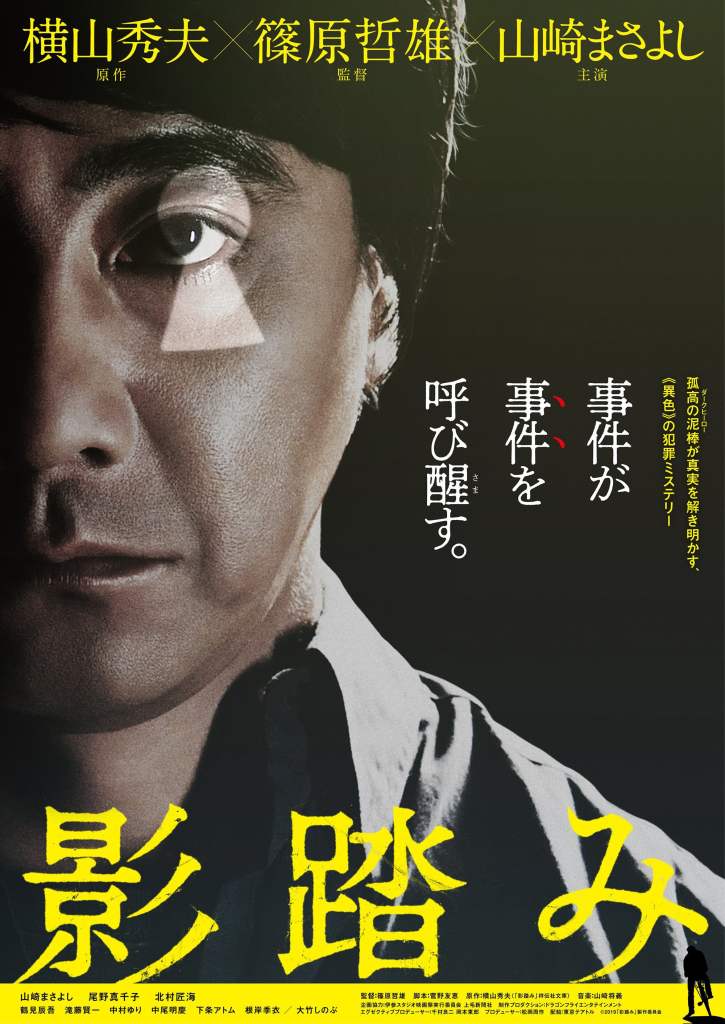
Shadowfall (影踏み, Tetsuo Shinohara, 2019)

Cinema has an odd preoccupation with twins. The uncanniness of seeing more than one person with the same face in the same frame injects a note of inescapable unease, not least because of the oddness of the techniques required to make one actor appear to be in two places at once. Shadowfall (影踏み, Kagefumi) adapted from the mystery novel by 64’s Hideo Yokoyama, places the “evil twin” motif at its heart but, perhaps a little uncomfortably, uses it as a metaphor for the shadow self as the conflicted hero attempts to find closure with past trauma and family legacy in order to reintegrate his two selves into one complete whole capable of living a life both spiritually and emotionally honest. 

As the film opens, ace cat burgler Shuichi (Masayoshi Yamazaki) is in the process of breaking into the home of a local politician. Whilst there, however, he discovers petrol pooled on the hall floor and the politician’s wife, Yoko (Yuri Nakamura), nervously grasping a cigarette lighter. He manages to snap the lighter shut before she can use it, saving her life (as well as that of the husband she was about to kill), but is then caught by a policeman, Sosuke (Pistol Takehara), who happened to be “just passing by” and is also, coincidentally, a childhood friend. Shuichi gets two years, and is met on his release by a young man, Keiji (Takumi Kitamura), dressed in incongruously old-fashioned, gangster-style clothes and adressing him as “Shuichi-ni” or “big brother Shuichi”. Together, the pair form a small crime fighting team determined to find out what became of Yoko while poking their noses into some conspiratorial corruption which links her with yakuza, police, and the judiciary. The situation is further complicated when Sosuke is found dead after a visit to Yoko’s bar, leaving Shuichi implicated in the possible murder of his old friend. 

Reflecting on the case, police detective Mabuchi (Shingo Tsurumi), who also knew Shuichi in his youth, remarks that twins are tied to each other like heaven is to hell. One will necessarily drag the other down. Later, he corrects himself, that if is that is true then the reverse must also be and one should be able to raise the other up. What we see, however, is largely the former. We discover that Shuichi had an identical twin who was “no good”, a petty teenage hoodlum always in trouble with the police where he was a top student preparing to study the law and become a prosector. Their mother (Shinobu Otake), a teacher, found herself a victim of social stigma as the mother of a criminal, asked to resign from her job because a woman who can’t raise her own son to be a law abiding citizen is not fit to educate those of others. Hisako (Machiko Ono), who had been friends with both the boys and is still carrying a smouldering torch for the “good” Shuichi, experiences something of the same when she’s targeted by a creepy stalker (Kenichi Takito) who leaks her “criminal associations” on the message board of the nursery school where she too teaches. 

Having waited for him all these years, Hisako is praying for the restoration of the Shuichi she once knew who was good where his brother was “bad”. Despite her deep and abiding love for him, she claims to have chosen Shuichi, rather than his brother, because loving the good is the safer, more responsible choice. Shuichi, meanwhile, describes himself as walking in his brother’s shadow, a darkened space into which Hisako wishes to be admitted but is wilfully denied. He tells himself he does this to keep her safe, but is in reality unable to step into that space himself and occupy it as a full and complete person. He claims that his criminality is an act of revenge when it is actually a kind of self-harm that ensures his two selves, the shadow self that is his departed brother, and the ghost self which is the cat burglar, will remain forever separate. 

Talking with another twin whose mirroring of his brother had even darker results, Shuichi confesses that to share a soul with another human being is a terrible curse and one he secretly longed to be released from. It’s this latent sense of guilt which haunts him, cleaving his soul in two. Only by dealing with the traumatic past, the memories inflamed by Yoko whose burden is a fear of an excessive “niceness” she too must learn to let go, can he reintegrate his two selves into one complete whole with only a single shadow. A noirish tale of haunting grief and unresolved regret, Shadowfall finds hope in the simple act of acceptance and the promised restoration of the imperfect whole. 


Screened as part of the Japan Foundation Touring Film Programme 2020.

International trailer (English subtitles)

The 8-Year Engagement (8年越しの花嫁 奇跡の実話, Takahisa Zeze, 2017)

8-year bride posterRomantic melodrama has long been a staple of Japanese cinema which seems to revel in stories of impossible love. The short lived boom in “jun-ai” or “pure love” romances which blossomed at the beginning of the century may have petered out gracefully after plundering every terminal or debilitating illness for traces of heartbreaking tragedy, but the genre has never quite gone away and is unlikely ever to do so. Takahisa Zeze’s The 8-Year Engagement (8年越しの花嫁 奇跡の実話, 8-nengoshi no Hanayome: Kiseki no Jitsuwa) is, however, a slightly different case in that it is inspired by a true story which became something of a hot topic in the relatively recent past. Romantic in a grand, old fashioned sense, the film shifts away from the melodrama of misery while praising the power of perseverance and the enduring potency of true love in bringing about unexpected miracles.

In 2006, shy and retiring car mechanic Hisashi (Takeru Satoh) tries and fails to get out of a party his chatty colleague is arranging for that very evening. Sullen and resentful at having been roped into a social occasion he was not mentally prepared for, Hisashi says barely anything and then manages to free himself when the others decide to go for karaoke. Just as he’s walking off mildly regretful, one of the other partygoers, Mai (Tao Tsuchiya), comes back to harangue him about his “attitude”. Hisashi explains that he’s sorry but he’s not very good at this sort of thing anyway and the truth is he wanted to go home because he’s got a killer stomach ache which being forced to eat fatty meat and down sake out of politeness has done nothing to help. Mai approves of this excuse, and even loops back after leaving to meet the others at the karaoke to hand him a heat pack she had in her bag in the hope that it might help with the stomach trouble. The pair start dating, become wildly happy, and get engaged. Three months before the wedding, Mai is struck down by a rare illness and winds up in a coma.

The romance itself is tucked up neatly into the first half hour or so and mostly conforms to genre norms – he is shy and extremely sensitive, she is extroverted and extremely kind. The love story proceeds smoothly, though there are signs of trouble to come in Mai’s increasing clumsiness followed by headaches which lead to memory loss and finally a painful hallucinogenic episode resulting in prolonged hospitalisation. Zeze wisely scales back on medical detail and focuses on Hisashi’s devotion and unwavering belief that Mai will one day open her eyes and return to him. Rather than cancel the wedding date, Hisashi decides to keep it open in the hope that Mai will be well enough to attend before booking the same date, the date of their first meeting, in every subsequent year just in case she should wake up and regret missing out on her dream wedding.

As the condition is so rare, no one is sure what the prognosis will be though the doctors admit there is a strong possibility Mai may never awaken or that if she does there may well be extensive brain damage and irreparable memory loss in addition to life long medical needs. Hisashi puts his life on hold and comes to the hospital every day, making short video messages he sends to Mai’s phone so she can catch up on what she’s missed when she wakes up. His devotion does however begin to worry Mai’s doting parents (Hiroko Yakushimaru & Tetta Sugimoto) who eventually decide to explain to him that as he’s “not family” there’s no need for him to feel obliged to stick around. They do this not because they’re territorial over their daughter’s care, or that they don’t like Hisashi, they simply worry that he’s going to waste his life waiting for a woman who will never wake up. As he’s still young and has a chance to start again, they try to push him away in the harshest way possible – through cool politeness, but are secretly pleased when he refuses to be pushed.

People making other people’s decisions for them as a means of reducing their suffering becomes a recurrent theme. Rather than say what they mean, kindhearted people say the things which they believe are for the best and will end someone else’s suffering through a moment of intense pain. Everyone is so keen to spare everyone else’s feelings, that they perhaps suffer themselves when there is no need to. Hisashi’s supportive boss remembers a rather odd comment he made during his interview – after replying that he enjoyed fixing things when asked what made him apply for the job, Hisashi’s boss asked him what he thought about while he did it to which he replied “love”. Love does it seems fix everything, at least when coupled with undying devotion and a refusal give up even when things look grim. A romantic melodrama with a positive ending The 8-year Engagement is a happy tearjerker in which love really does conquer all despite seemingly unsurmountable odds.


Screened at the 20th Udine Far East Film Festival.

Original trailer (English subtitles)

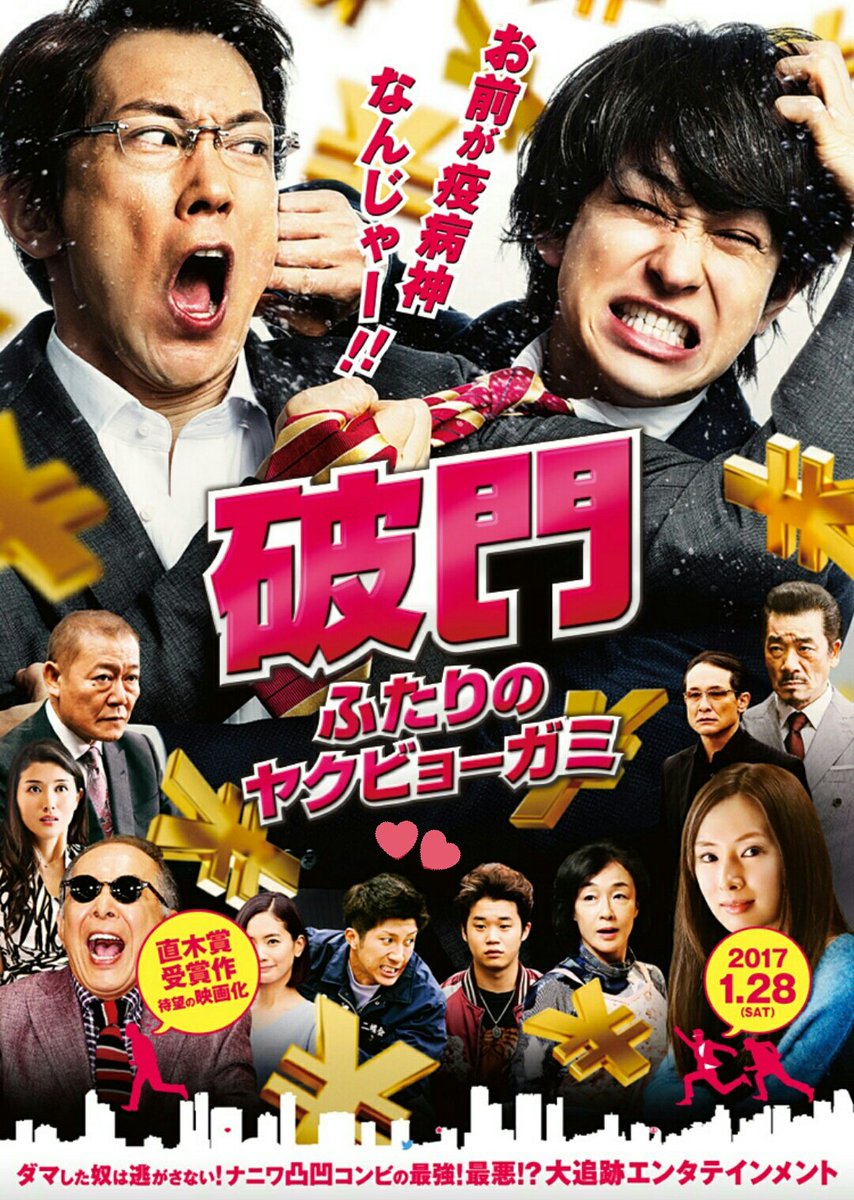
Hamon: Yakuza Boogie (破門 ふたりのヤクビョーガミ, Shotaro Kobayashi, 2017)

hamon posterConventional wisdom states it’s better not to get involved with the yakuza. According to Hamon: Yakuza Boogie (破門 ふたりのヤクビョーガミ Hamon: Futari no Yakubyogami), the same goes for sleazy film execs who can prove surprisingly slippery when the occasion calls. Based on Hiroyuki Kurokawa’s Naoki Prize winning novel and directed by Shotaro Kobayashi who also adapted the same author’s Gold Rush into a successful WOWWOW TV Series, Hamon: Yakuza Boogie is a classic buddy movie in which a down at heels slacker forms an unlikely, grudging yet mutually dependent relationship with a low-level gangster.

Ninomiya (Yu Yokoyama), a classic slacker, makes ends meet by acting as a kind of liaison officer between the normal world and the yakuza one. His contact, Kuwahara (Kuranosuke Sasaki), is a scary looking guy but as yakuza go not so bad to work with. Following the government’s organised crime crackdown, Ninomiya finds himself at more of a loose end and so when an elderly film director, Koshimizu (Isao Hashizume), comes to him and asks to meet a yakuza first hand, Ninomiya sets up a meeting. Yakuza and movies can be a dangerous mix but somehow or other Koshimizu manages to charm the pair and even gets Kuwahara’s boss, Shimada (Jun Kunimura), to invest some of his own money.

Unfortunately, this is when things start to go wrong. Koshimizu’s pretty “daughter” is really his mistress (as Kuwahara suspected) and the wily old bugger has taken off for the casino paradise of Macao with both the beautiful woman and suitcase full of yakuza dough. Kuwahara is now in a lot of trouble and ropes in Ninomiya to help him sort it out but in their pursuit of Koshimizu they eventually find themselves caught up in a series of turf wars.

Yakuza comedies have a tendency towards unexpected darkness but Hamon’s key feature is its almost childish innocence as Ninomiya and Kuwahara go about their business with relatively few genuinely life threatening incidents. Though the pair bicker and argue with Ninomiya always secretly afraid of his big gangster buddy and Kuwahara fed up with his nerdy friend’s lack of know how, the relationship they’ve developed is an intensely co-dependent one which fully supports the slightly ironic “no me without you” message. Eventually growing into each other, Ninomiya and Kuwahara move increasingly into the other’s territory before finally re-encountering each other on more equal footing.

These are less rabid killers than a bunch of guys caught up in a silly game. Shady film director Koshimizu turns out to be some sort of cartoon hero, perpetually making a sprightly and unexpected escape despite his advanced age while the toughened gangsters hired to keep him locked up find themselves one hostage short time after time. Ninomiya’s worried cousin Yuki (Keiko Kitagawa) keeps trying to talk him into a more ordered way of life which doesn’t involve so much hanging round with scary looking guys in suits, but Ninomiya is reluctant to leave the fringes of the underworld even if he seems afraid for much of the time. Kuwahara is a yakuza through and through, or so he thinks. This latest saga has left him in an embarrassing position with his bosses, not to mention the diplomatic incident with a rival gang, all of which threatens his underworld status and thereby essential identity.

Still, all we’re talking about here is having a little more time for solo karaoke, not being bundled into the boot of a car and driven to a remote location. Filled with movie references and slapstick humour this is a yakuza tale inspired by classic cinematic gangsters rather than their real world counterparts but it still has a few things to say about human nature in general outside of the fictional. An odd couple, Ninomiya and Kuwahara couldn’t be more different but besides the fact they don’t quite get along, they make a good team. No me without you indeed, solo stakeouts are boring, even if you do bicker and fuss the whole time it’s good to know there’s someone who’ll always come back for you (especially if you tell them not to) ready to take the wheel.


Hamon: Yakuza Boogie was screened at the 19th Udine Far East Film Festival.

Original trailer (no subtitles)