
Someone to Talk to (一句頂一萬句, Liu Yulin, 2016)

someone to talk to illustrated posterYouth looks ahead to age with eyes full of hope and expectation, but age looks back with pity and disappointment. Adapting her father’s novel, Liu Yulin joins the recent movement of disillusionment epics coming out of China with Someone to Talk to (一句頂一萬句, Yī Jù Dǐng Yīwàn Jù). Arriving at the same time as another adaptation of a Liu Zhenyun novel, I am Not Madame Bovary, Someone to Talk to takes a less comical look at the modern Chinese marriage with all of its attendant sorrows and ironies, a necessity and yet the force which both defines and ruins lives. Communism believes love is a bourgeois distraction and the enemy of the common good (it may have a point), but each of these lonely souls craves romantic fulfilment, a soulmate with whom they might not need to talk. The desire for someone they can connect with an elemental level becomes the one thing they cannot live without.

In the prologue, Aiguo (Mao Hai) is a young and dashing military officer about to marry the glowing Lina (Li Qian). The pair are blissfully happy and just so in love it might not be bearable. They can tell each other everything and they talk for hours. About to hand over their application to register a marriage, shaking with excitement, the new couple are interrupted by two extremely unhappy people there for the opposite reason – divorce. They’re in the wrong place, but someone asks them why they want to separate only for the woman to tersely reply that they don’t talk anymore. Aiguo and Lina look at them askance, they can’t envisage anything like that ever happening to them.

Flash forward a few years and Aiguo has left the military (along with its fancy uniform) far behind him to become a lowly cobbler in a rundown village. The marriage has obviously gone cold. Aiguo and Lina have a little daughter, Baihui (Li Nuonuo), but barely exchange a few words with each other and the ones there are are usually hot and angry. It seems to be an open secret in the village but eventually someone tips Aiguo off that Lina is spending too much time with a handsome local wedding planner, Jiang (Yu Entai). Not wanting to believe it, Aiguo brushes the rumour aside but then again it makes sense. Forcibly exposing his wife and her lover, Aiguo delivers an ultimatum but fails to repair the broken connection. When Lina leaves, he vows revenge, threatening to kill one or both of the illicit lovers but, unable to find her, is forced to address his ambivalent emotions in a more contemplative way.

Despite all of the hopes and expectations of Aiguo and Lina’s early romance, their life together has run its course, frustrated by a series of issues no one wants to talk about. No longer in the military, Aiguo’s economic status is low and unlikely to improve. Lina, perhaps, wants more than Aiguo can give her and the atmosphere in the house is tense and cold. Their daughter, Baihui, wants the latest toy car that her wealthier friends have but Aiguo, even if he could perhaps find the money, does not want to buy it for her, offering the excuse that it will distract her from her studies.

Told from Aiguo’s point of view the film is less kind to Lina who has found herself trapped in a marriage to a man she no longer loves. Her choice is not one of economic escape, though her equally married lover is clearly wealthier and better educated than Aiguo, but motivated by the simple desire to find “someone to talk to”. Jiang is married to a local baker whom Aiguo eventually tries to recruit into his revenge plot, cruelly ruining her happiness in enlightening her to the truth. In a much worse position than Aiguo, Xinting (Qi Xi) considers suicide not only out of the humiliation of being a betrayed spouse (turning violence on herself where Aiguo plans to turn it on others) but of the knowledge of the position that an abandoned wife finds herself in. Aiguo’s 39 year old unmarried sister Aixiang (Liu Bei) knows this pain well enough and has experienced a life of suffering and loneliness after herself attempting suicide following an unhappy love affair. Once married or not, prospects for women past the common age of marriage are not good and whatever anyone might have said about women holding up half the sky, it almost impossible to survive alone.

Everyone tells Aiguo to let Lina go but he stubbornly holds on to his anger and the pain of betrayal. After a while he decides to just forget about it but custom dictates he take some kind of revenge hence he plans to take a kind of vacation pretending to look for her. On his travels he finds more misery and heartbreak by re-encountering an old school friend whose marriage has also collapsed but she has learned to be much more stoical about it than Aiguo and gives him some valuable advice. Yes, everyone should talk more – especially about the things which are hard to discuss within the context of a marriage but equally the fact that Aiguo and Lina no longer talked was merely the manifestation of the unbridgeable gulf that had developed between them. There are no happy marriages in Someone to Talk to, perhaps love really is an unhelpful bourgeois distraction, but Aiguo at least still seems to believe in its potency even if it has betrayed him, finally realising he ought to be thinking about the future rather than living in the past. Perhaps no one is able to escape this particular kind of culturally enforced loneliness, but no one will ever find out by continuing to suffer needlessly trapped inside their own delusions.


Someone to Talk to was screened at the 19th Udine Far East Film Festival

International trailer (English subtitles)
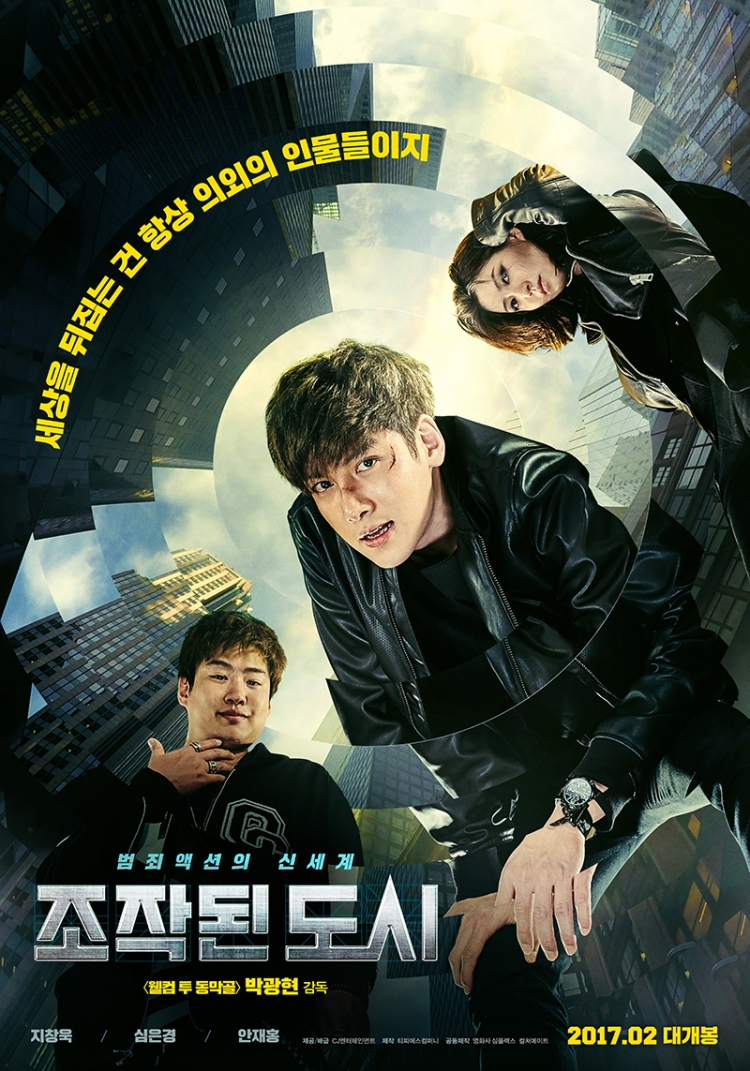
Fabricated City (조작된 도시, Park Kwang-hyun, 2017)

fabricated cityThe real and the unreal. In the era of fake news, it’s become ever harder to draw a clear line between the two but when you live online, the borders are even more permeable. Twelve years after the wartime comedy Welcome to Dongmakgol, director Park Kwang-hyun finally makes a return to the director’s chair with an action packed cyberpunk thriller which joins the ranks of recent Korean films bemoaning the country’s hardwired tendency to social inequality where the rich and powerful are free to run roughshod over the merely ordinary. Fabricated City (조작된 도시, Jojakdwen Doshi) refers to more than just the literally manufactured online world, but to the social reality in which unseen forces govern and define the lives of others, operating in secret behind a government backed curtain.
Kwon Yoo (Ji Chang-wook) was once a national athlete – a rising star of the Korean Taekwondo team. Starting fights when he wasn’t supposed to put paid to that dream and now Kwon Yoo is an aimless wastrel. Too sad and ashamed to have anything more to do with Taekwondo, Kwon Yoo spends all his time in gaming cafes, living a more successful life online. In his favourite game he’s known as the Captain, and the dashingly heroic leader of his party known as Resurrection.

One evening someone leaves their phone behind. It rings and Kwon Yoo answers it. Irritated, he’s about to hang up on the frantic sounding woman who wants him to bring the phone to her but her offer of money changes his mind. Kwon Yoo delivers the phone but the whole thing seems weird especially as the door was open and the woman in the shower when he arrived. Next thing he knows, Kwon Yoo is arrested for a brutal rape and murder. The police have a lot of evidence against him, and so Kwon Yoo winds up in jail where he’s branded a sex offender. Luckily a crazed serial killer realises this kid is no killer and helps him get out whereupon his loyal Resurrectionists valiantly come to the aid of their Captain in the real world, exposing the impressive fit up job that got him put away in the first place.

The deeper Kwon Yoo and his team dive the more corruption they discover. Kwon Yoo is not the only innocent sacrificed for someone else’s grand plan, there are others and the pattern is disturbing. Like Kwon Yoo, the other victims are usually people living on the margins – ones that no one would miss or the uncharitable might say were “unnecessary”, lives that can be exchanged for those of the rich and famous finding themselves in a fix. Kwon Yoo’s fate becomes an extreme version of that meted out to the young men and women of Korea unlucky enough to have been born without wealth, connections, or familial status – expendable and condemned to live without hope.

The fabricated city, in its more literal sense is the online world Kwon Yoo and his team have chosen and in part created for themselves in an attempt to escape the aspects of their lives and personalities which most disappoint them. Kwon Yoo, kicked off the Taekwondo team, has made a warrior hero of himself online, backed by a similarly escapist squad he doesn’t really know. His saviour turns out to be a shy computer genius who can only bear to talk via telephone even when in the same room yet has broken out of her self imposed isolation in order to save the life of her online friend. Other members of the team follow suit bearing similar backstories, attempting to live up to their fantasy selves for real with varying levels of success. Yet the fantasy world was all they had, locked out of all means of escape or advancement by the rigid social codes which make their present predicament possible, even if the fact remains that Kwon Yoo was doing a pretty good job of wasting his life all on his own.

Fabricated City’s biggest selling point is in its unusually well developed production design which takes its cues from the video game world with fantastical images from a prison carved into a mountain to the relatively more familiar cyberpunk influenced technological hybridity as floors become giant computer screens and everything really does exist online. Jumping genres from the classic wrong man to prison drama and eventually techno thriller, Fabricated City bites off more than it can chew but its well choreographed action and typically Korean sense of subtly ironic humour help to smooth over some of the film’s more outlandish moments.


Fabricated City was screened at the 19th Udine Far East Film Festival.

International trailer (English subtitles)

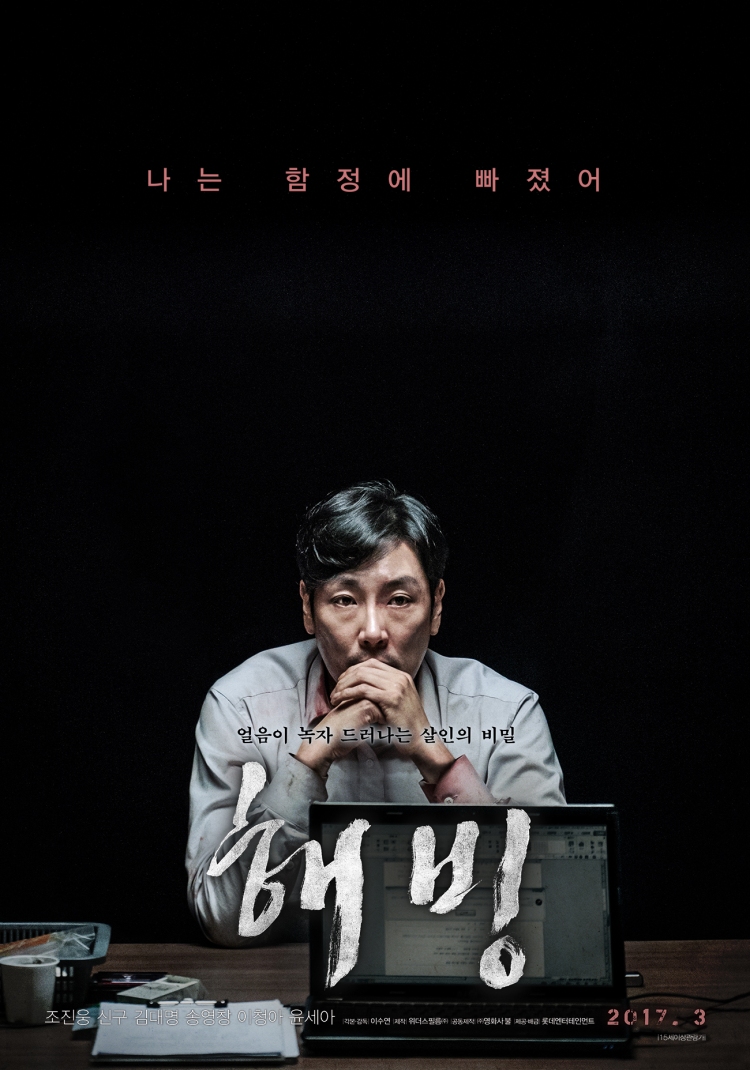
Bluebeard (해빙, Lee Soo-youn, 2017)

bluebeardIf you think you might have moved in above a modern-day Sweeney Todd, what should you do? Lee Soo-youn’s follow-up to 2003’s The Uninvited, Bluebeard (해빙, Haebing), provides a few easy lessons in the wrong way to cope with such an extreme situation as its increasingly confused and incriminated hero becomes convinced that his butcher landlord’s senile father is responsible for a still unsolved spate of serial killings. Rather than move, go to the police, or pretend not to have noticed, self-absorbed doctor Seung-hoon (Cho Jin-woong) drives himself half mad with fear and worry, certain that the strange father and son duo from downstairs have begun to suspect that he suspects.

Seung-hoon has only just moved into this very modest apartment after a recent setback in his career and personal life. Once the owner of an upscale practice in Seoul’s trendy Gangnam (not usually known for its doctor’s surgeries), Seung-hoon is bankrupt, divorced, and working as a colonoscopy specialist in a local clinic which just happens to be situated in a run down industrial town that everyone knows the name of because it’s that place where all those murders happened.

Used to better things, Seung-hoon finds his new job boring and annoying. Though members of staff at the clinic including pretty nurse Mi-yeon (Lee Chung-ah) do their best to make him feel at home, Seung-hoon spends all his time alone staring into space and eating snacks in the treatment room rather than enjoying proper meals with the others in a nearby cafe. Despite being a bookish looking guy, Seung-hoon hasn’t much taste for literature but loves his mystery novels. When his landlord’s family use him as a connection to get the elderly patriarch in for a scan, it sparks a crisis in Seung-hoon’s already strained mind. Midway through the treatment, the old guy starts muttering about dumping body parts in a lake. Is he just senile and dragging something up from the news or a movie, is Seung-hoon’s overactive imagination coupled with a steady stream of grisly police procedurals playing tricks on him, or is this diminished yet creepy old duffer really responsible for a series of brutal killings?

The original Korean title means something like “ice melting” which gives a better indication of Lee’s intentions as long-buried evidence is unearthed by changing weather both mental and physical. Bluebeard, for those who don’t know, is a creepy horror story told to children in which a horrible old man imprisons and then murders all his wives. Seung-hoon’s suspicions are further aroused by the fact that all of the women associated with the guys downstairs seem to disappear. Then again, they are quite strange, so perhaps their wives really did just leave without warning.

Seung-hoon’s wife appears to have left him high and dry preferring to stay behind in the city rather than accompany him to this grim one horse murder town. The couple’s son wants to go to summer camp in Canada but Seung-hoon can’t quite afford it in his present difficulties. Now afraid to go home because of his creepy neighbours, Seung-hoon spends his nights curled up in the office where he accidentally discovers another employee’s morphine pilfering habit. Pushed to the edge, Seung-hoon’s mind starts to crack. Less concerned with the murderer than Seung-hoon’s fracturing mental state, Bluebeard neatly frames its hero whilst blithely wondering if he’s accidentally framing himself. Presented with a series of alternate histories, Seung-hoon’s memories seem increasingly unreliable and his paranoid, irrational behaviour less justifiable. When the ice melts the truth will be exposed, but it looks like it might be a long, cold winter for Seung-hoon.

Lee takes her time but builds an eerie, dread filled atmosphere where everything seems strange, suspect, and frightening. Seung-hoon has already hit rock bottom and may not have been such a great guy in the first place, but his descent into psychotic desperation and terrified paranoia is at the heart of the story which hinges on whether his suspicions are correct or if he’s simply read too many detective novels and has too much time on his hands now that he’s all alone. Anchored by a stand out performance from Cho, Bluebeard is an intricately designed, fascinatingly complex psychological thriller which carries its grimly ironic sense of the absurd right through to the cynical closing coda.


Bluebeard was screened at the 19th Udine Far East Film Festival.

International trailer (English subtitles)

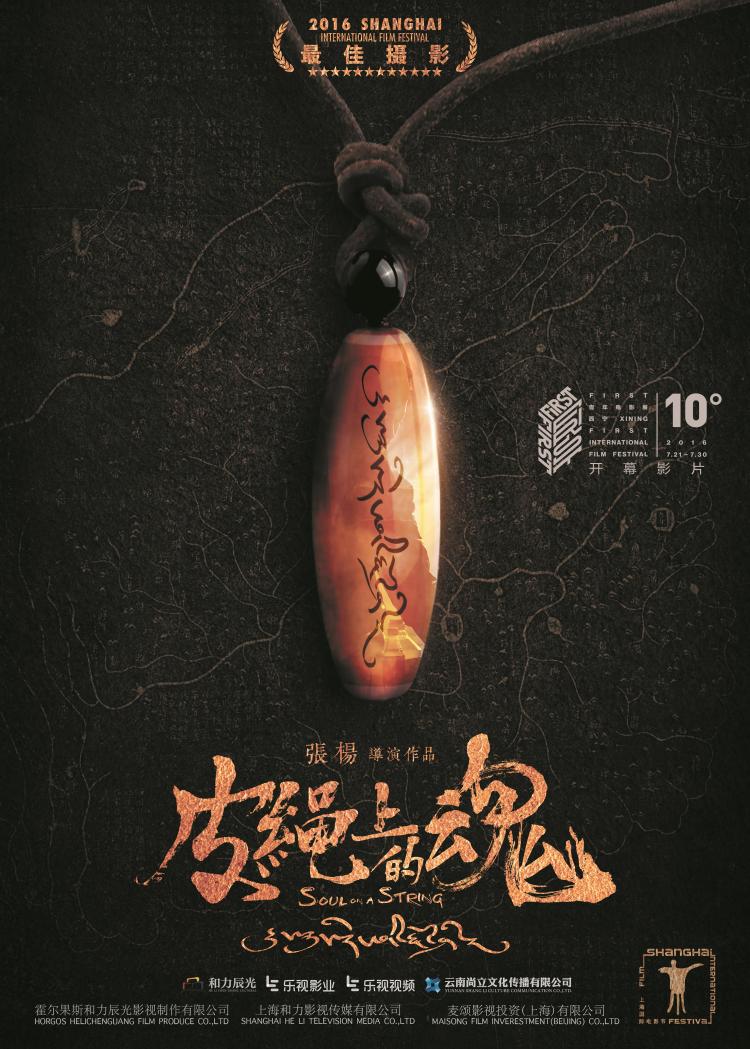
Soul on a String (皮绳上的魂, Zhang Yang, 2016)

soul on a string posterAt the end of Zhang Yang’s Shower, there’s a lengthy fantasy sequence taking place in a desert in which a young girl is about to enjoy the first and last bath of her life as a right of passage before she is married off. Intended to emphasise the importance of water, the need of which acts as the great leveller for all living things, the brief movement away from the struggles of two brothers and their soon to be torn down bathhouse acted as a kind of lament for a perceived decline in values and priorities in a period of intense economic development. Jumping on a few films and many years later, Zhang Yang’s desert odyssey Soul on a String (皮绳上的魂 , Pisheng Shang de Hun) again takes place in an arid land where values and humanity are in peril. Adapted from two novels by Tibetan-Chinese novelist Tashi Dawa (Tibet, The Soul Tied on a String, and On the way to Lhasa), Zhang’s Tibetan western marries the classic wandering stranger narrative with a Buddhism infused magical realism.

Ruthless loner Tabei (Kimba) kills a deer only to find a mysterious amulet in its mouth recently acquired from a little girl who fell off a cliff. Experiencing his first bout of divine retribution, Tabei is struck by lighting only to be mysteriously revived by a cryptic Buddhist priest who tells him it’s his job to take the amulet to the holy land where he will also be cleansed of his considerable sins. Taking his rebirth seriously Tabei takes off even though the priest’s only hints about the location of the holy land are that the distance is under his feet and that the road is on his back.

Meanwhile, hot headed youngster Guori (Zerong Dages) is on Tabei’s trail hoping to kill him in answer to a blood feud. Tabei has committed many sins of his own but the murder of Guori’s father in a pointless gambling dispute is not one of them. Tashi died at the hands of the father Tabei never knew but as custom dictates, sons may take vengeance from sons to satisfy their honour. Trudging on through his quest, Tabei will have to face the legacy of his past even if he doesn’t really want to. Acquiring a persistent follower in Chun (Quni Ciren), a young woman with whom he spent a night on the road, and later a mysterious child with strange powers, Pu (Yizi Danzeng), Tabei pursues his spiritual quest finding his soul becoming lighter all along the way.

The futility of a blood feud, perhaps more a feature of the spaghetti western than the classic Hollywood model, lies at the heart of the spiritual drama as the spectre of vengeance for a father’s crime has overshadowed Tabei’s entire life. Guori, young, tough, and angry is determined to avenge the father who left him in such a stupid and pointless way but only increases the depth of the debt. When we first meet him he thinks he’s met his target only for the man to explain to him that many men have the name Tabei and he’s looking for someone else. Guori doesn’t believe him and kills the man anyway. If this man had a son, there is now a blood debt on Guori’s head to equal that of his quarry.

Guori’s persistent failures cause nothing but consternation to his ambivalent mother who worries for her son but also wants to see him prove himself a man and avenge her husband’s death as honour dictates. Older brother Kodi (Lei Chen) is less committed to the idea of vengeance but eventually takes on its burden. Kodi, like Tabei, sacrifices much out of the necessity of achieving this pointless goal, abandoning a woman he loved and a happy future as the father of a family. Tabei offers this same excuse to Chun in explaining his reluctance to father a child – the blood curse will simply pass to him should he be forced to kill Kodi or Guori in defending himself. The cycle never ends, only perpetuating itself through successive acts of violence.

Yet as Tabei gets closer to the promised land, his soul begins to clear. No longer so gruff and unapproachable he allows Chun to travel with him, becoming a kind of father figure to a makeshift family completed by the strange little boy, Pu. Shot against the beautiful yet unforgiving Tibetan landscapes, Soul on a String is a tale of redemption, violence, love, and legacy shot through with ancient mysticism and obscure spiritual questioning yet for all of its inherent inscrutability Zhang’s return to the desert proves infinitely fascinating despite its necessarily epic dimensions.


Soul on a String was screened at the 19th Udine Far East Film Festival.

Original trailer (English subtitles)

Hamon: Yakuza Boogie (破門 ふたりのヤクビョーガミ, Shotaro Kobayashi, 2017)

hamon posterConventional wisdom states it’s better not to get involved with the yakuza. According to Hamon: Yakuza Boogie (破門 ふたりのヤクビョーガミ Hamon: Futari no Yakubyogami), the same goes for sleazy film execs who can prove surprisingly slippery when the occasion calls. Based on Hiroyuki Kurokawa’s Naoki Prize winning novel and directed by Shotaro Kobayashi who also adapted the same author’s Gold Rush into a successful WOWWOW TV Series, Hamon: Yakuza Boogie is a classic buddy movie in which a down at heels slacker forms an unlikely, grudging yet mutually dependent relationship with a low-level gangster.

Ninomiya (Yu Yokoyama), a classic slacker, makes ends meet by acting as a kind of liaison officer between the normal world and the yakuza one. His contact, Kuwahara (Kuranosuke Sasaki), is a scary looking guy but as yakuza go not so bad to work with. Following the government’s organised crime crackdown, Ninomiya finds himself at more of a loose end and so when an elderly film director, Koshimizu (Isao Hashizume), comes to him and asks to meet a yakuza first hand, Ninomiya sets up a meeting. Yakuza and movies can be a dangerous mix but somehow or other Koshimizu manages to charm the pair and even gets Kuwahara’s boss, Shimada (Jun Kunimura), to invest some of his own money.

Unfortunately, this is when things start to go wrong. Koshimizu’s pretty “daughter” is really his mistress (as Kuwahara suspected) and the wily old bugger has taken off for the casino paradise of Macao with both the beautiful woman and suitcase full of yakuza dough. Kuwahara is now in a lot of trouble and ropes in Ninomiya to help him sort it out but in their pursuit of Koshimizu they eventually find themselves caught up in a series of turf wars.

Yakuza comedies have a tendency towards unexpected darkness but Hamon’s key feature is its almost childish innocence as Ninomiya and Kuwahara go about their business with relatively few genuinely life threatening incidents. Though the pair bicker and argue with Ninomiya always secretly afraid of his big gangster buddy and Kuwahara fed up with his nerdy friend’s lack of know how, the relationship they’ve developed is an intensely co-dependent one which fully supports the slightly ironic “no me without you” message. Eventually growing into each other, Ninomiya and Kuwahara move increasingly into the other’s territory before finally re-encountering each other on more equal footing.

These are less rabid killers than a bunch of guys caught up in a silly game. Shady film director Koshimizu turns out to be some sort of cartoon hero, perpetually making a sprightly and unexpected escape despite his advanced age while the toughened gangsters hired to keep him locked up find themselves one hostage short time after time. Ninomiya’s worried cousin Yuki (Keiko Kitagawa) keeps trying to talk him into a more ordered way of life which doesn’t involve so much hanging round with scary looking guys in suits, but Ninomiya is reluctant to leave the fringes of the underworld even if he seems afraid for much of the time. Kuwahara is a yakuza through and through, or so he thinks. This latest saga has left him in an embarrassing position with his bosses, not to mention the diplomatic incident with a rival gang, all of which threatens his underworld status and thereby essential identity.

Still, all we’re talking about here is having a little more time for solo karaoke, not being bundled into the boot of a car and driven to a remote location. Filled with movie references and slapstick humour this is a yakuza tale inspired by classic cinematic gangsters rather than their real world counterparts but it still has a few things to say about human nature in general outside of the fictional. An odd couple, Ninomiya and Kuwahara couldn’t be more different but besides the fact they don’t quite get along, they make a good team. No me without you indeed, solo stakeouts are boring, even if you do bicker and fuss the whole time it’s good to know there’s someone who’ll always come back for you (especially if you tell them not to) ready to take the wheel.


Hamon: Yakuza Boogie was screened at the 19th Udine Far East Film Festival.

Original trailer (no subtitles)

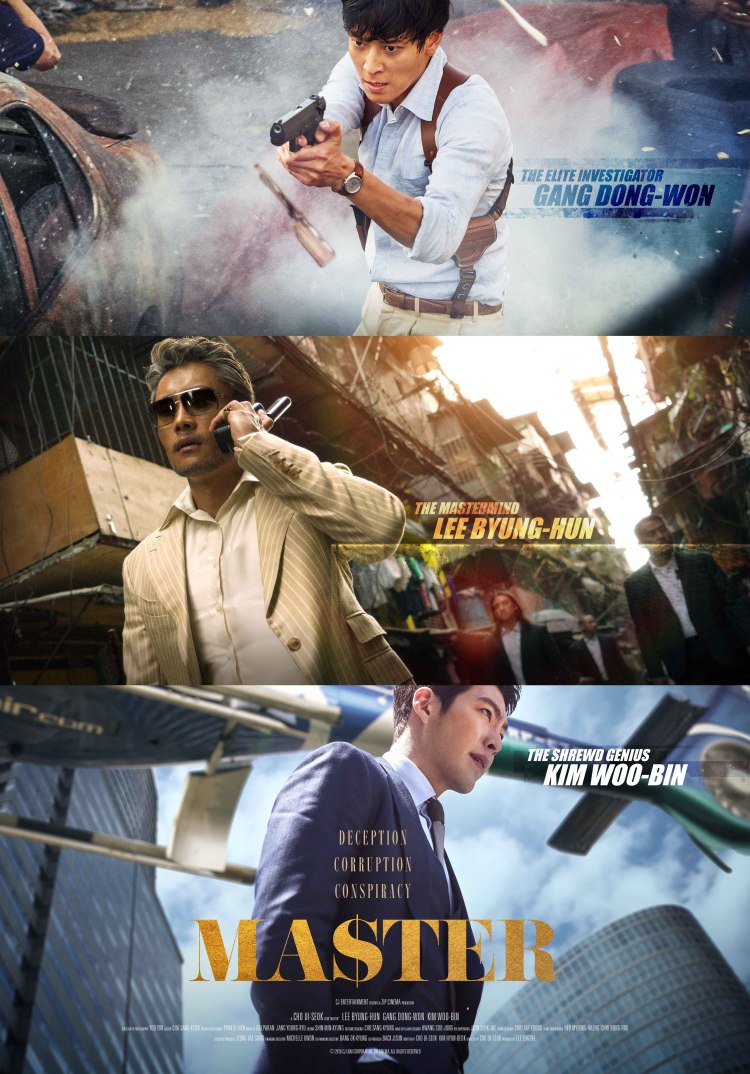
Master (마스터, Cho Ui-seok, 2016)

master posterCorruption has become a major theme in Korean cinema. Perhaps understandably given current events, but you’ll have to look hard to find anyone occupying a high level corporate, political, or judicial position who can be counted worthy of public trust in any Korean film from the democratic era. Cho Ui-seok’s Master (마스터) goes further than most in building its case higher and harder as its sleazy, heartless, conman of an antagonist casts himself onto the world stage as some kind of international megastar promising riches to the poor all the while planning to deprive them of what little they have. The forces which oppose him, cerebral cops from the financial fraud devision, may be committed to exposing his criminality but they aren’t above playing his game to do it.

“Entrepreneur” Jin Hyun-pil (Lee Byung-hun), CEO of the One Network financial organisation which is about to make an unprecedented move into investment banking, is in the middle of an energising speech to his investors. He’s booked a massive stadium with lighting and stage effects worthy of a veteran rock star and is doing his best snake oil speech to convince the ordinary people who’ve invested their life savings in his obviously dodgy pyramid scheme that he’s going to make banking great again by handing ownership back to the masses. Many are convinced by his inspirational attitude, but Captain Kim Jae-myung (Gang Dong-won) of the financial crimes division smells a rat. He knows there’s something very wrong here and is determined to bring Jin down before his exploits ruin the lives of even more innocent families just trying to make a better life for themselves.

Their way in is through Jin’s systems guy, Park (Kim Woo-bin), who’s been in on the scam from the beginning but is pretty much amoral and has been working his own angle on the whole thing. Spineless and opportunistic, Park is primed for police manipulation even if it takes him a few flip-flops before he picks any kind of side aside from his own. Kim is after Jin’s mysterious ledger which contains a host of information on his backers which would cause considerable damage to those involved and give the police the kind of leverage they need to expose Jin’s enterprise for what it really is. However, before they can spring the trap, Jin escapes with his ill gotten gains and goes into hiding leaving hundreds of innocent families who’ve fallen victim to his scams destitute, frightened, and humiliated.

Playing against type, Lee Byun-hun inhabits his sleazy, TV evangelist meets cult leader of a villainous conman with relish as he lies, cheats, steals and weasels his way out of trouble. After a potential liability is killed, Jin enjoys his crimson morning smoothie with unusual delight leaving a bright red bloodstain across his upper lip as he ironically mutters “what a shame” watching the news footage of his flunky’s death. Not content with the vast amount of money he stole by exploiting the innocent dreams of people with little else, Jin tries the same thing again abroad, taking his “wife” Mama (Jin Kyung) with him though even she seems to know Jin is not to be trusted and could turn on her at any moment. Cornered, the only words of wisdom Jin has to offer is that perhaps he made a mistake in trying to run to the Philippines, he should have tried Thailand instead.

Starring three of South Korea’s biggest actors, Lee Byun-hun, Gang Dong-won, and Kim Woo-bin, Master takes on an almost tripartite structure as the upper hand passes between the three protagonists. Systems analyst Park is mostly out for himself and switches between each side more times than can be counted before gaining something like a conscience and committing to a particular cause while Kim and Jin mastermind a cat and mouse game advancing and retreating yet stepping further into each other’s territory. The game is an ugly one. Master is a fitting and timely indictment of those who make impossible promises to vulnerable people desperate enough to take the bait in the hope of making a better life for themselves and their families, yet it also fails to capitalise on its themes, preferring to leave them as subtle background elements to the cerebral games of one-upmanship and fractured loyalties between Jin, Kim, and Park. Over long at 143 minutes, Master is unevenly paced yet picks up for its Manila set, action packed finale which is out of keeping with much of what has gone before but ends things on an entertaining, upbeat note as justice is served, wrongs righted, and the truth revealed.


Master was screened at the 19th Udine Far East Film Festival.

International trailer (English subtitles)

Teiichi: Battle of Supreme High (帝一の國, Akira Nagai, 2017)

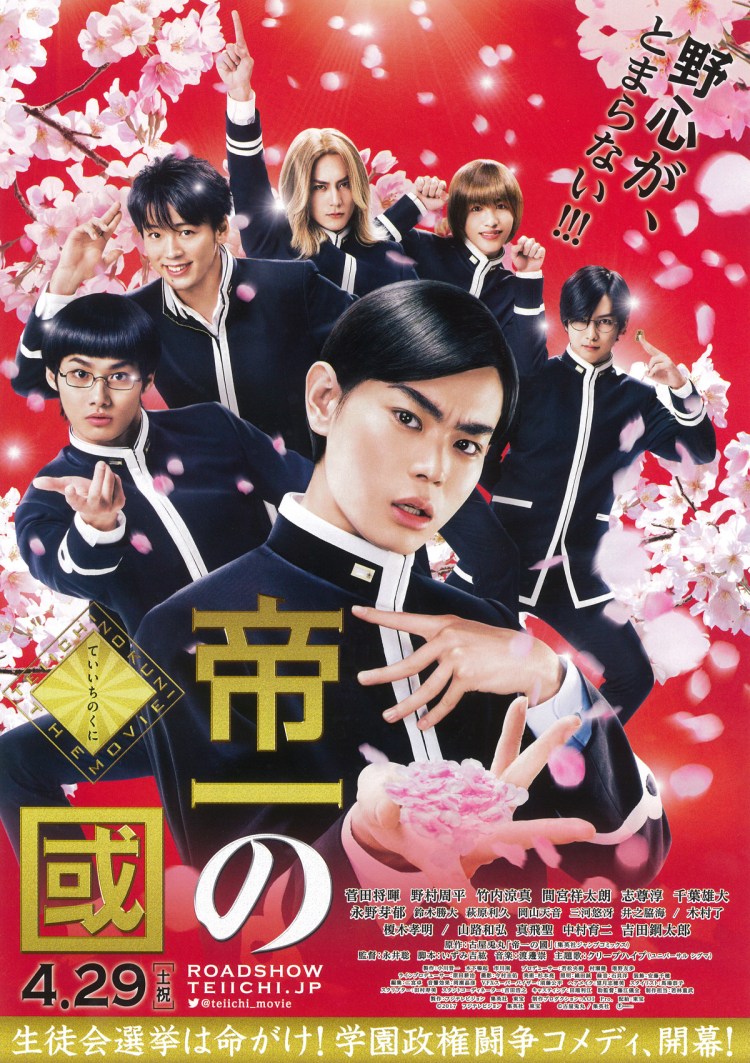
teiichiBack in the real world, politics has never felt so unfunny. This latest slice of unlikely political satire from Japan may feel a little close to home, at least to those of us who hail from nations where it seems perfectly normal that the older men who make up the political elite all attended the same school and fully expected to grow up and walk directly into high office, never needing to worry about anything so ordinary as a career. Taking this idea to its extreme, elite teenager Teiichi is not only determined to take over Japan by becoming its Prime Minister, but to start his very own nation. In Teiichi: Battle of Supreme High (帝一の國, Teiichi no Kuni) teenage flirtations with fascism, homoeroticism, factionalism, extremism – in fact just about every “ism” you can think of (aside from altruism) vie for the top spot among the boys at Supreme High but who, or what, will finally win out in Teiichi’s fledging, mental little nation?
Taking after his mother rather than his austere father, little Teiichi (Masaki Suda) wanted nothing more than to become a top concert pianist. Sadly, his father finds music frivolous and forces his son towards the path he failed to follow in becoming a member of the country’s political elite. Thus Teiichi has found himself at Supreme High where attendance is more or less a guaranteed path to Japan’s political centre. If one wants to be the PM, one needs to become student council president at Supreme High and Teiichi is forging his path early by building alliances with the most likely candidates for this year’s top spot. The contest is evenly split between left and right. Okuto Morizono (Yudai Chiba) – a nerdy, bespectacled shogi champ proposes democratic reforms to the school’s political system which will benefit all but those currently enjoying an unfair advantage. Rorando Himuro (Shotaro Mamiya), by contrast, is the classically alluring hero of the right with his good looks, long blond hair and descent from a long line of previous winners.

Teiichi follows his “natual” inclinations and sides with Rorando but a new challenger threatens to change everything. Dan Otaka (Ryoma Takeuchi) is not your usual Supreme High student. A scholarship boy, Dan comes from a single parent family where he helps out at home taking care of his numerous younger siblings. From another world entirely, Dan is a good natured sort who isn’t particularly interested in politics or in the increasingly tribal atmosphere of Supreme High. What he cares about is his friends and family. Principled, he will do what seems right and just at the expense of the most politically useful.

For all of its posturing and petty fascist satire, there’s something quite refreshing about the way Battle of Supreme High posits genuine niceness as an unlikely victor. Teiichi, a politician through and through, has few real principles and is willing to do or say whatever it takes to play each and every situation for its maximum gain. Finding Morizono’s old fashioned socialism naive and wishy washy, he gravitates towards Rorando’s obviously charismatic cult of personality but Dan’s straightforward goodness eventually starts to scratch away at Teiichi’s attempt to put up a front of amorality.

The fascist overtones, however, run deep from the naval school uniforms to the enthusiastic singing of the school song and highly militarised atmosphere. Played for laughs as it is, the school’s defining characteristic is one of intense homoerotism as pretty boys in shiny uniforms flirt with each other in increasingly over the top ways. Teiichi does have a girlfriend (of sorts) who protects, defends, and comforts him even while able to see through his megalomaniacal posturing to the little boy who just wanted to play piano but he’s not above exploiting the obvious attraction his underling, Komei (Jun Shison), feels for him as part of his grand plan.

Teiichi has its silliness, but its satire is all too convincing as these posh boys vie for the top spots, reliving the petty conflicts of their fathers and grandfathers as they do so. No one one has much of a plan or desire to change the world, this is all a grand game where the winner gets to sit on the throne feeling smug, but then Teiichi’s nimble machinations hopping from one front runner to the next rarely pay off even if he generally manages to keep himself out of the line of fire. Rather than cold and calculating politics, the force most likely to succeed becomes simple sincerity and the unexpected warmth of a “natural” leader.


Teiichi: Battle of Supreme High was screened at the 19th Udine Far East Film Festival.

Original trailer (no subtitles)

Confidential Assignment (공조, Kim Sung-hoon, 2017)

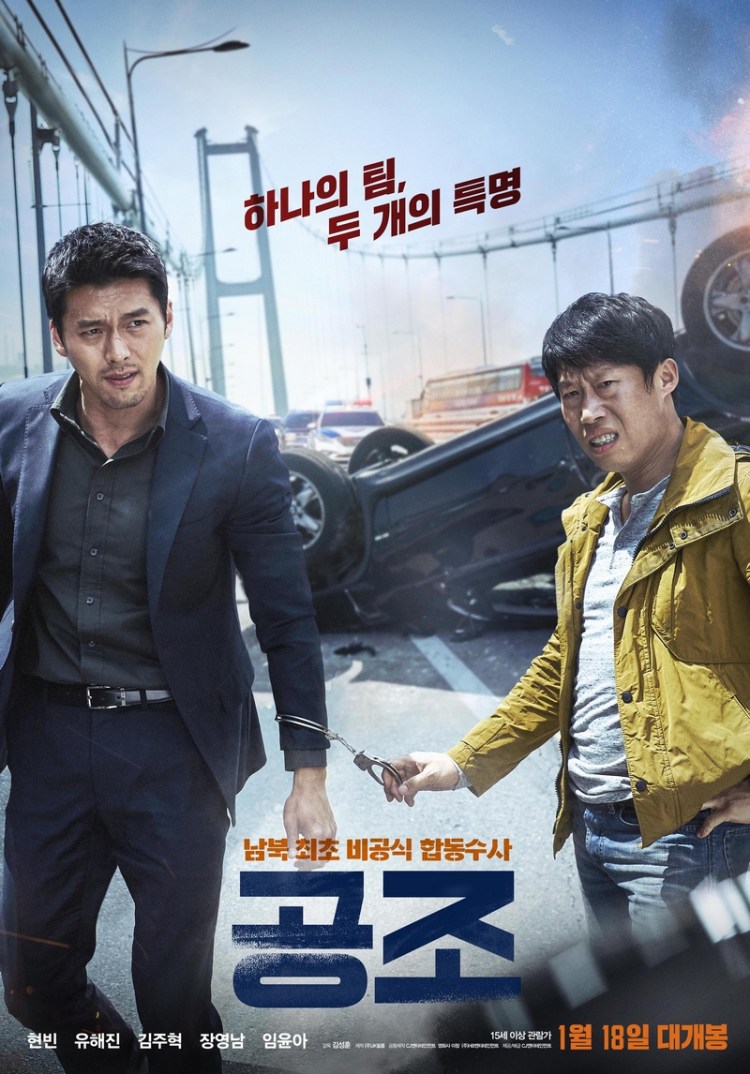
confidential assignmentSouth Korean cinema has a fairly ambivalent attitude to its policemen. Most often, detectives are a bumbling bunch who couldn’t find the killer even if he danced around in front of them shouting “it was me!” whereas street cops are incompetent, lazy, and cowardly. That’s aside from their tendency towards violence and corruption but rarely has there been a policeman who gets himself into trouble solely for being too nice and too focussed on his family. Confidential Assignment (공조, Gongjo), though very much a mainstream action/buddy cop movie, is somewhat unusual in this respect as it pairs a goofy if skilled and well-meaning South Korean police officer, with an outwardly impassive yet inwardly raging North Korean special forces operative.
In the South, Gang (Yu Hae-jin) is hot on the trail of a suspect he’s been chasing for quite some time but just as he’s finally about to catch him, his phone starts ringing. The cute ringtone featuring a little girl’s voice saying “daddy, pick up – don’t pretend to be working” is impossible to ignore and so Gang answers, chats to his daughter, and lets the suspect get away. In the dog house at work, Gang winds up with all the rubbish jobs before finally being saddled with a “special assignment” – babysitting a North Korean policeman as part of a collaborative detail chasing a possible defector/dangerous criminal the North are keen to drag back home for possibly inhumane treatment.

The Northerner, Lim (Hyun Bin), has his own reasons for chasing the criminal in that he is the only surviving member of a squad wiped out when a superior officer decided to go rogue and run off with a set of plates for printing counterfeit money. The North need the plates back, but Lim’s motives are personal more than merely patriotic and what he wants is vengeance for the death of someone close to him rather than protecting the embarrassing secret of North Korea’s counterfeit currency conspiracy.

For obvious reasons neither of the two men is able to trust the other but the confusion and suspicion is only increased by Gang’s total lack of knowledge about the case. All he knows is that they’re looking for a defector – no more, no less. Lim isn’t happy about having a South Korean cop getting in his way and quickly ditches him as soon as possible only for Gang to turn on his ace detective abilities and eventually end up at the same place through policeman’s instinct. Gradually a sort of grudging camaraderie builds up between the two as they’re forced to spend more time together and their odd couple buddy cop antics become the film’s main draw.

Lim, knowing nothing of life in the South yet suspicious of Gang, goes along with some of Gang’s goofier attempts to rein him in such as extended gag in which he gets him to put on an ankle bracelet by telling him that it’s a secret detective’s badge, reassuring him that his is in the cleaners, only for him to meet another suspicious type out on the road. So that he can keep track of him better, Gang’s superiors order him to take Lim home so he can watch him day and night much to the consternation of his wife but delight of his slightly younger sister-in-law who is instantly smitten by Lim’s chiseled features. Lim reacts to all of this with obvious vigilance but comes to like and respect Gang’s family who eventually welcome him into their home without reservation, even taking pains to try cooking North Korean food when he appears reluctant to join them at mealtimes.

Never quite engaging with the political subtext, Confidential Assignment is less about North/South co-operation than it is about complementary skills and the creation of an unexpectedly complete buddy cop unit. Gang is instantly impressed (and a little scared) by Lim’s obvious physical capabilities as he leaps from high balconies and fights off a whole room of bad guys armed only with soggy toilet roll, but Lim also comes to respect Gang’s bravery, kindness, and dedication to his family. Confidential Assignment might not be the most nuanced cinematic portrayal of North/South relations but its good-natured warmth, silly comedy, and impressively staged action scenes make it one of the most entertaining.


Confidential Assignment was screened as part of the 19th Udine Far East Film Festival.

Original trailer (English subtitles)

Japan Cuts 2017 Announces First Programme Highlights

over the fence still 1Japan Cuts returns for 2017 with even more of the best in recent Japanese cinema. Ahead of the full programme reveal the festival has announced a few early teasers for what promises to be another year of fantastic films from Japan.

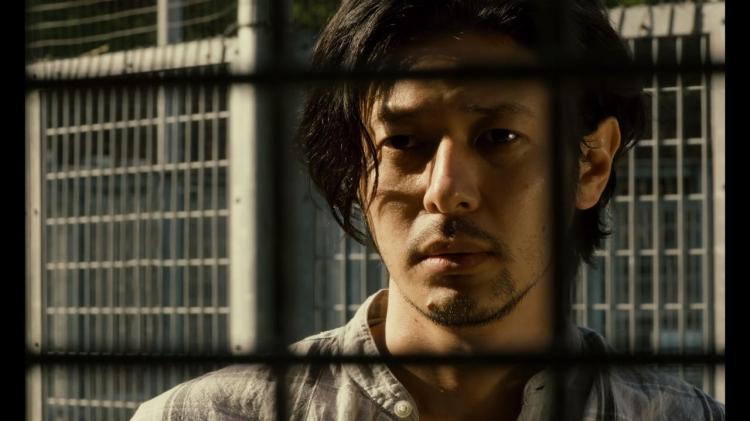
over the fence stillFan favourite director Nobuhiro Yamashita will once again feature in the festival with his installment in the trilogy of movies inspired by author Yasushi Sato, Over the Fence. One of Yamashita’s more melancholy efforts, Over the Fence stars Joe Odagiri as a recently divorced man trying but failing to start over in his home town. Meeting a cabaret girl with the improbably manly name of Satoshi (Yu Aoi) he finally begins to move forward but Satoshi has a few problems of her own. Joe Odagiri will also be attending the festival collect his CUT Above Award for Outstanding Performance in Film!


Anti-porno stillAnother festival favourite Sion Sono returns with his contribution to the Roman Porno Reboot Project, Anti-Porno.


daguerrotype stillKiyoshi Kurosawa’s first international production, Daguerrotype, also makes its way into the festival. Taking the director back to his psychological horror roots, this gothic European ghost story stars one of France’s best young actors, Tahar Rahim, as a photographer’s assistant caught up in both odinary and supernatural conspiracies.
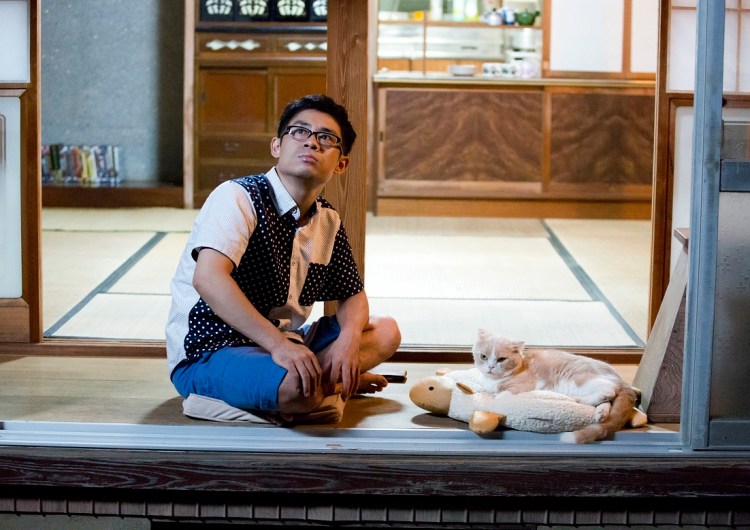

434_scr_5The one you’ve all been waiting for – Neko Atsume House! An adaptation of the popular smartphone game, Masatoshi Kurakata’s film stars Atsushi Ito as a novelist with writer’s block who moves house to stimulate himself only to be overrun with cute cats instead.


RESISTANCE AT TULE LAKE stillThe only documentary announced so far, Konrad Aderer’s Resistance at Tule Lake examines the case of 12,000 Japanese-Americans labeled “disloyal” for attempting to resist the government’s internment order.

Japan Cuts 2017 takes place in New York between July 13 – 23 and you can keep up with all the latest developments via the official website, Twitter account, and Facebook page.

Love and Other Cults (獣道, Eiji Uchida, 2017)

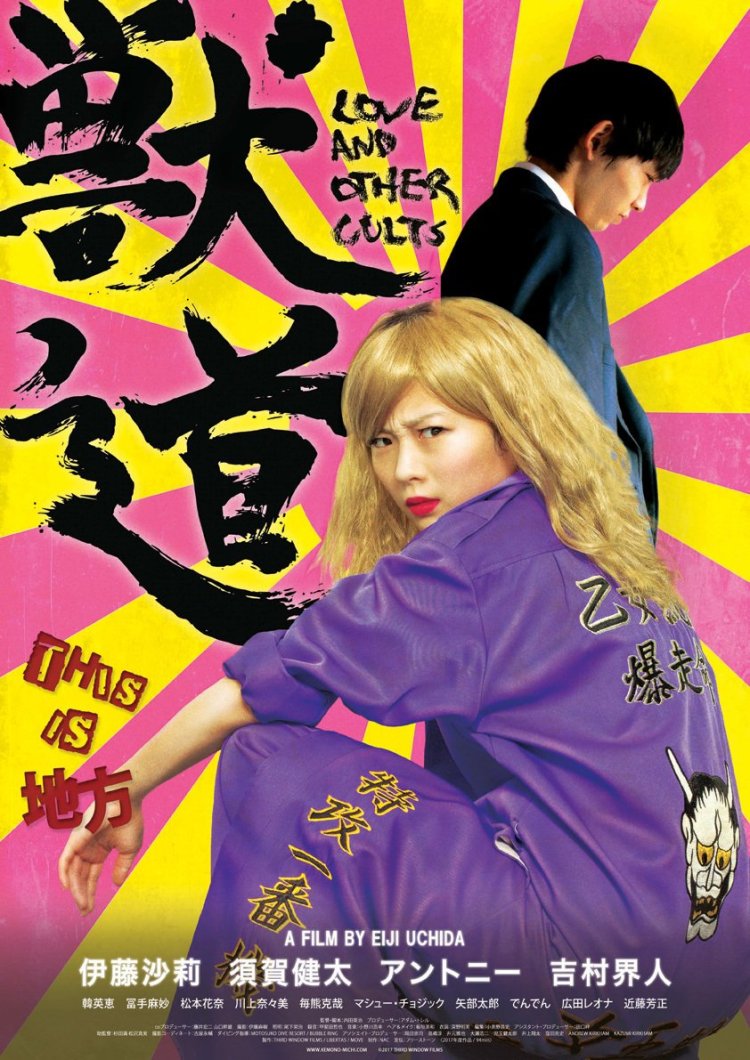
love and other cultsEiji Uchida’s career has been marked by the stories of self defined outsiders trying to decide if they want to move towards or further away from the centre, but in his latest film Love and Other Cults ( 獣道, Kemonomichi), he seems content to let them linger on the margins. The title, neatly suggesting that perhaps love itself is little more than a ritualised set of devotional acts, sets us up for a strange odyssey through teenage identity shifting but where it sends us is a little more obscure as a still young man revisits his youthful romance only to find it as wandering and ill-defined as many a first love story and like many such tales, one ultimately belonging to someone else.

Our lovelorn hero and narrator, Ryota (Kenta Suga), observes the heroine from afar as he tells us her story, which is also his story in a sense. Ai (Sairi Itoh), a neglected child, drifts aimlessly in an uncaring world forever seeking a place to belong but finding no safe space to drop anchor. Ai’s mother, as drifting and aimless as her daughter, attempts to find salvation through religion but her quest for self-fulfilment drags her from one spiritual fad to the next all the while pulling little Ai along with her. The pair finally end up in a cult commune where Ai is a favourite of the leader – a Westerner called Lavi (Matthew Chozick) who preaches free love but only for himself.

Eventually, the cult is raided by the police, Lavi flees, and Ai is “rescued” but the next stage in her odyssey is no less disruptive than the last as she finds herself adrift in the mainstream world. Dropped into a regular high school, Ai tries to play the regular high school girl but can’t shake the cult member inside her. Semi-adopted by an ordinary family, her life gains some normalcy but it is short-lived and before long Ai finds herself in another sort of commune altogether before ending up in teenage prostitution followed by the porn industry.

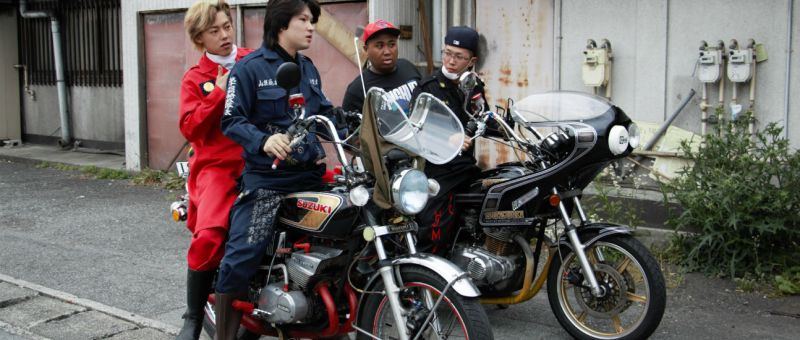
If girls like Ai end up in AV, boys like Ryota end up in gangs. So it is that Ryota gets mixed up with two equally lost wannabe gangsters in Kenta (Antony) – an outsider by virtue of non-Japanese heritage, and the blond-headed Yuji (Kaito Yoshimura) who’s watched too many movies. Kenta is the de facto head of a little band of petty delinquent kids but he’s getting bored with gangster stuff and yearns for something more real while Yuji trails around after the lollipop sucking local chieftain (Denden). Ryota looks on casually without striking out in either direction, pining for Ai but either unwilling or unable to install himself as a permanent part of her reality.

As Ryota puts it, they’re all just looking for a place to belong. They don’t care where or what that place is, but what they long for is a sense of belonging born of owning their own identities. What may be a typical teenage problem of figuring oneself out takes on a larger dimension given the general instability of the world these youngsters find themselves in. Another in the long line of recent films losing faith with the family, Love and Other Cults finds no room for a familial solution to social woes. Ai has been so definitively let down that her very idea of family is so hopelessly warped as to permanently remove the possibility from her future.

Neglected in favour of her mother’s ongoing and inconclusive search for meaning, Ai’s major attachment is to unclear spirituality but even this becomes horribly misused thanks to her involvement with a shady cult. Having become the favourite of cult leader Lavi, Ai is used to trading herself for affection and security and so when she finds herself semi-adopted by the kindly family of a friend she attempts to use these same familial mechanisms to secure her position only to end up ruining the whole thing. Re-encountering Lavi (now an AV producer) again as an adult, Ai is still unable to see the way that she has been used and misused, quickly resuming her childhood role but without the spiritual pretence.

Ryota and Ai meander aimlessly outside of each other’s orbit, neither finding the place they feel they ought to be. Tellingly, the only real story which obeys narrative rules is that of depressed thug, Kenta, who finds an unlikely soul mate in a chance encounter with a photography loving deep-sea diver, Reika (Hanae Kan). Kenta and Reika are kindred spirits whose place to belong presents itself randomly and without warning yet is found all the same. There is no cult in this love, only mutual salvation. Ai and Ryota, however, are each trapped in their respective quests for fulfilment, disconnected, visible to each other only in brief, fragmented episodes and set to drift eternally yet always in search of a place to call home.


Love and Other Cults was screened as part of the 19th Udine Far East Film Festival.

Original trailer (English subtitles)