Puppets Under Starry Skies (星空のマリオネット, Hojin Hashiura, 1978)

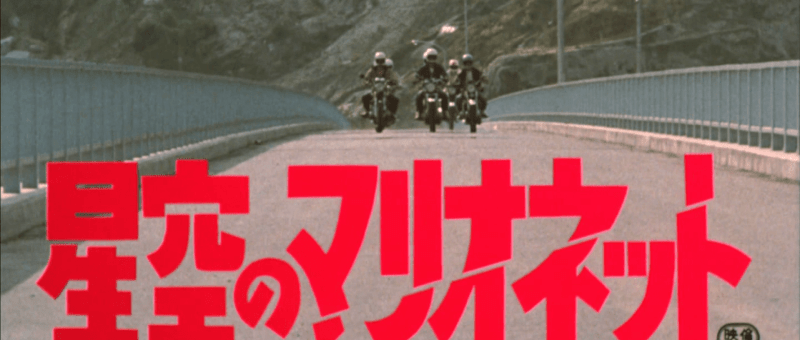
Puppets under starry skies posterThe youth movie had been the populist rebellion against the stately Japanese cinema of the golden age, but many of its representative directors had quickly tired of the restrictive studio system. Some had decamped into the “independent” arena which offered relative artistic freedom if without the resources and financial rewards of the commercial sector. The Art Theatre Guild had provided a valuable outlet for experimental film since it began to shift from distribution of foreign films into production of Japanese language art movies, but paradoxically the early 1970s saw it shift again as the studio’s “arthouse” aims fell by the wayside and more conventional youth films made a gradual return. Puppets Under Starry Skies (星空のマリオネット, Hoshizora no Marionette), the first of three films directed by Hojin Hashiura for ATG (aside from an earlier 16mm independent effort, the only films Hashiura would ever make), is very much a youth movie in the new ATG mould which is to say its tone is one of sadness rather than anger as its protagonists find themselves adrift in the changing 1970s society, unable to find their place in the world their parents have been building for them.

Hideo (Yoichi Miura), leader of small biker gang, is best friends with Hiroshi (Kazuhito Takei) – an effeminate young man from a wealthy family who likes to wear makeup and dress in (slightly) flamboyant outfits. The trouble starts when Hideo picks a fight with a rival gang boss and then charges in for a rematch to avenge his honour only to be set on by thugs, stabbed, and beaten so badly he winds up in hospital for over a week. Humiliated, Hideo loses all his gang member friends with only Hiroshi sticking by him. Later he takes up with a local bar girl, Akemi (Ako), who has a promiscuous past and is already pregnant with another man’s child. Together the three attempt to find a way forward into a more conventional adulthood but struggle to find a place for themselves within a rigidly conformist society which has already rejected them.

Parental disconnection seems to be a recurrent theme in the lives of each of the troubled youngsters. Hideo lost his mother young, not long after they’d moved into the town from the mountains. Never having been able to come to terms with his mother’s death he has a difficult relationship with his father and takes out his frustrations through meaningless violence and male posturing. Akemi too has a difficult family background but this time with a single mother who is a former sex worker turned publican. Working in a local bar (not her mother’s) Akemi is harassed by the customers but is well known for being open to casual sex, suffering a degree of social stigma both because of her liberated attitude and because of her mother’s former profession.

Hiroshi’s problems are perhaps of a different order. From an “elite” family, he feels himself entirely disconnected from normal family life and has been raised in an atmosphere of cold austerity rather than parental love. Hiroshi believes this is partly because he has “bad blood” and is cursed beyond redemption. He is not his father’s biological son but the child of a sperm donor enlisted to ensure an heir for his father’s bloodline. Hiroshi, however, is gay and will not be able fulfil the purpose he was born for, at least not in the way that was expected of him. He is also effeminate, something of which his family do not approve, and feels himself excluded from mainstream society because of his sexual orientation. To combat his feelings of intense alienation, Hiroshi has become a drug user, sniffing glue in order to send himself on psychedelic trips to outer space in which he merges with the deep blue vacuum free of all worldly concerns.

Hideo too gets in on the glue sniffing act but feels himself becoming one with the river of life and death, feeling it flow through him as he flows with it. The river itself, and the idea of passive resignation that comes of simply allowing oneself to float, becomes a grim symbol of the futility that faces Hideo as he struggles to reassemble an identity in a world which consistently denies him one. The future looks bleak for each of our protagonists, the only one with any sense of hope once again investing it in the system which has already betrayed her – the family. Youth looks for new models, new standards by which to live, but does not find them. Puppets of fate, the trio dance under starry skies until the sun comes up and they realise that the day holds nothing for them except the nihilistic desire for its end.
End of Summer (西小河的夏天, Zhou Quan, 2017)

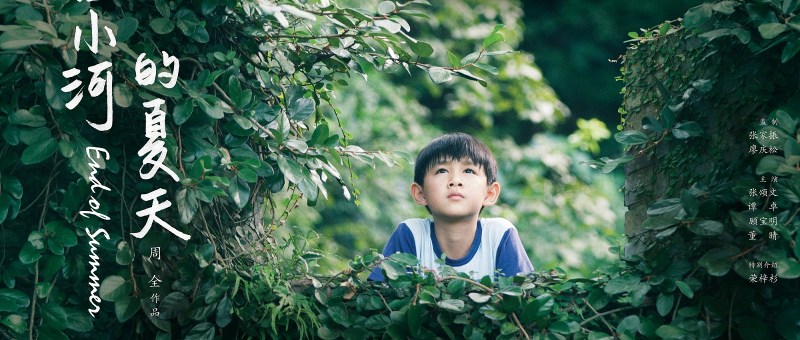
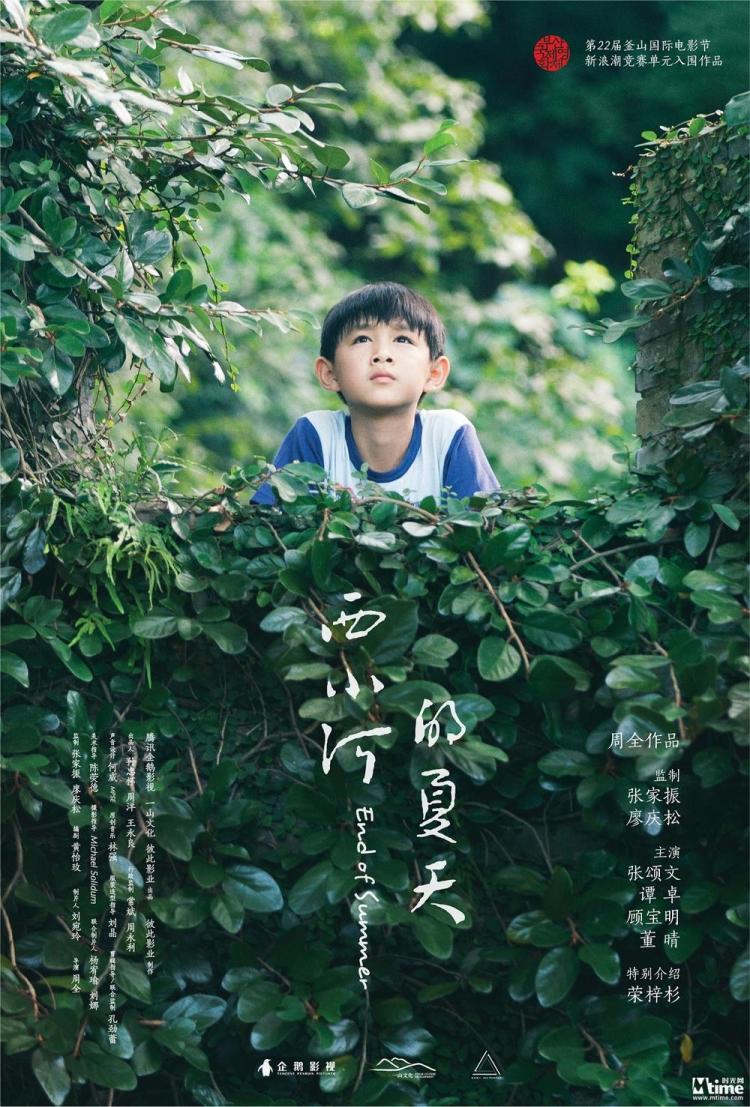
The End of Summer posterMany things were changing in late ‘90s China. For one little boy in the summer of 1998, however, nothing much mattered beyond the World Cup which was being broadcast in its entirety for the very first time. Part nostalgia fest for a more innocent world, Zhou Quan’s End of Summer (西小河的夏天, Xī Xiǎo de Xiàtiān) is, as the title implies, a story of befores as its various protagonists attempt to resolve a series of personal crises that will lead to great changes preceding the autumn of 1998.

Football obsessed little boy Xiaoyang (Rong Zishan) has to keep his love a secret because his dad, Jianhua (Zhang Songwen), thinks all sports are frivolous and has forbidden his son to play with the other children. Jianhua is also a high ranking teacher at Xiaoyang’s school and demands high levels of discipline and commitment from his family, even forcing Xiaoyang to dob one of his friends in under heavy questioning about a playground fight. Bored and lonely at home, Xiaoyang has begun to bond with an older man at their courtyard who also loves football and has promised to help Xiaoyang train for the upcoming school tryouts next term if only he can persuade his dad to sign the consent form.

Meanwhile, there’s trouble brewing on the home front. Xiaoyang’s mother Huifang (Tan Zhuo) is a successful Peking Opera performer whose career is skyrocketing now that she’s been nominated for a prestigious award. Jianhua has also been earmarked for a promotion at work and is covering for a sick colleague, but the arrival of a new teacher threatens to dangerously unbalance the carefully won equilibrium of the Gu family.

Miss Shen (Dong Qing) is indeed a harbinger of social change. The polar opposite of Huifang, Miss Shen is a hippyish free spirit who plays the guitar and sings folk songs in a local cafe with her boyfriend. She teaches the children English through singing songs and playing games, always cheerful and energetic with an adorable smile and easy going personality. Xiaoyang proves himself unusually astute for his years when he misinterprets an innocent scene between Miss Shen and his father, correctly guessing that Jianhua has developed a mild crush on the lovely young woman though perhaps not realising that Miss Shen is merely naive and entirely oblivious to her boss’ ulterior motives.

The camera first catches Xiaoyang caught between two football teams, standing motionless and staring vacantly ahead. He remains caught between two worlds while prompted a little early towards the compromises of adulthood as he experiences the moral outrage of realising his rigid, authoritarian father maybe breaking all the rules of conventional morality by stepping out on his mum. A victim of China’s one child policy, he is often intensely lonely, left alone at home with nothing to do but study while his mother is out rehearsing and his dad increasingly staying out late to offer “guidance” to Miss Shen.

Xiaoyang’s loneliness finds a mirror in the grumpy old man from across the way, Zheng (Ku Pao-Ming), who appears to have fallen out with his family and is missing his own absent grandson, Bao. Zheng picks up the fatherly responsibilities Jianhua has failed to fulfil – supporting Xiaoyang in his football dreams, giving him little bits of life advice, listening intently to his worries regarding his parents’ marital problems without trying to sugarcoat the seriousness of the issues or making a pretence of humouring a perspicuous little boy as they turn detective and catch Jianhua in the act but just miss out on his humiliating defeat and the epiphany which accompanies it as he is forced to confront the fact that he has become a sad old man. Jianhua’s major problems stem from an intense lack of self confidence as his growing son begins to reject his rigid authority and his wife’s increasing success punches a hole through his male pride. Temporarily boosted by the possibility of a promotion, he decides to try rebelling by chasing a younger woman who is very much not his type, little knowing that she sees him only as a venerable teacher and is shocked by his improper interest in her.

Meanwhile change is on the horizon everywhere. The courtyard is earmarked for “redevelopment”, and Mr. Zheng’s family are constantly trying to convince him to come and live with them in the city. By the end of the summer everything will have changed, some things for the better and some perhaps not but there will at least be a shift as each is forced into a reconsideration of their present circumstances. End of Summer is gentler than its title would suggest, a wistful look back one dramatic summer in the childhood of a sensitive little boy, but what it lacks in impact it makes up for with sincerity and a good deal of warmth.


End of Summer was screened as part of the New York Asian Film Festival 2018.

International trailer (English subtitles)

Interview with director Zhou Quan from the 2017 Busan Film Festival.

Break up the Chain (쇠사슬을 끊어라, Lee Man-hee, 1971)

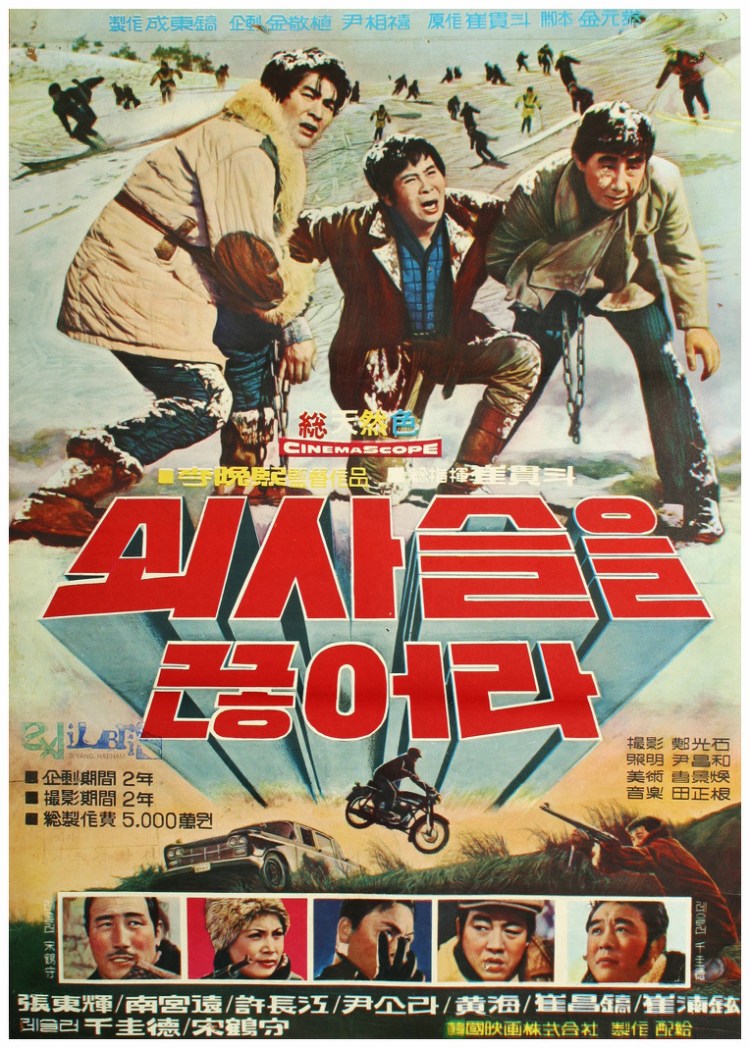
Break Up the Chain poster1970 had been a difficult year for Lee Man-hee. A conflict on the set of The Goboi Bridge in which Lee intended to star against the advice of his regular team resulted in the end of his creative relationship with screenwriter Baek Gyeol and cinematographer Lee Suck-ki. Meanwhile, he’d also suffered a crisis in his personal life after parting ways with actress Moon Jeong-suk who had been both a lover and a muse. To top it all off he also had some financial problems and didn’t work at all for the year following Goboi Bridge’s release – a significant period of time in the high-speed world of early ‘70s Korean cinema in which it was not unheard of for a director to make as many as 10 films in one year. Break Up the Chain (쇠사슬을 끊어라, Shwisaseuleul Geunheola) was intended to be something of a “come back” but it finds Lee defeated, doing what he does best but also playing the game he never really wanted to play in succumbing to the patriotism epic (albeit a little tongue in cheek).

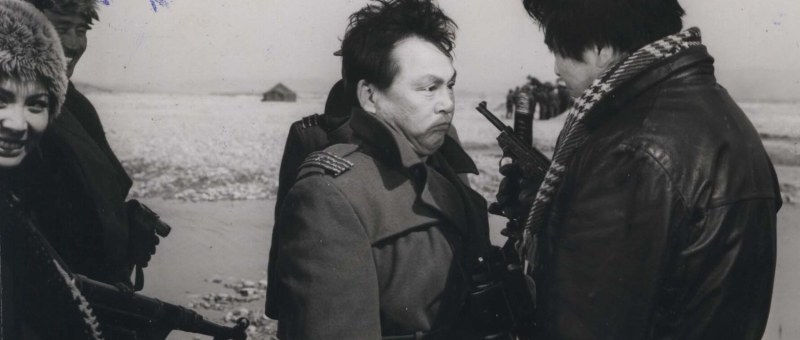
Riffing off Sergio Leone, Lee frames his resistance romp as a Manchurian western. A mysterious golden Buddhist statue has more than just monetary value as it also contains a list of the names of resistance operatives which can be revealed with the use of a special chemical formula. Three men are after it – Cheol-su (Namkoong Won), an adventurer for hire who might or might not be working for the resistance; Tae-ho (Jang Dong-hwi), a petty gangster; and Dal-geon (Heo Jang-kang), a collaborator working with the Japanese. The men are each interested in the statue for selfish reasons – Cheol-su for his reputation, Tae-ho for the money, and Dal-geon for the prestige. None of them is interested in the resistance movement itself, the statue’s importance in relation to it, or anything really beyond themselves and their day-to-day lives.

Of course, as this is a patriotism epic, the men eventually come round to the greatness of Korea as their individual quests converge and they find themselves alongside the resistance surrounded by the Japanese. The Japanese are largely a bumbling bunch who remain unaware of the statue’s “real” power even whilst holding it, thinking only of its monetary value as a lump of gold or work of art they could export abroad for financial gain. Confronted and faced with failure, the leader of the Japanese is firstly humiliated by his defeat at the hands of the resistance but then decides to show them the greatness of the Japanese army by committing Harakiri right there on the spot. Stripping off the captain begins to get cold feet, suddenly struck by the enormity of the moment when one of his lieutenants draws his sword ready for the beheading. The Japanese captain then seems to come down with “a cold” and resolves to visit the medical tent instead.

The early drama revolves around the interplay of the three self-interested outsiders as they scheme and plot to make use of each other and get the statue for themselves. Of the three, Cheol-su emerges as the most “noble” even though his quest is mercenary enough – his name is his business and thus he wants the statue to fulfil his contract and maintain his sense of integrity as a gun for hire. Tae-ho is merely interested in financial gain with a mild desire for social revenge and the thrill of outsmarting a rival, but both men are filled with an intense distaste for men like Dal-geon who have “betrayed” the countrymen they too have refused to serve. That aside, Tae-ho and Dal-geon begin to form a weak alliance of the opportunistic as they bond in their mercenary intentions, while Cheol-su lingers on the outside as his quest ties him more closely with the independence movement. Eventually the trio realise they have to work together to get the statue, even if their ultimate intention is to double cross the others and keep it for themselves. They do however suddenly rediscover their patriotic spirit, resolving to give the statue to the people who need to most while they ride off into the sunset in search of other ways to serve their country.

Set in dusty Manchuria (where the resistance movement operated in exile), Break Up the Chain is part of the short-lived boom of Korean “westerns” which were popular in the late ‘60s and early ‘70s. Lee abandons his experimental ambitions and aims squarely for the populist, reaching only for post-modern irony in his boys own adventure story filled with feats of daring do and flight on horseback. Yet he comforts himself with that sense of irony, pulling away from the absurd adventures of our heroes to show the faces of men dying in snow reminding us that their flight from the horror of war was perhaps a rational one rather than an act of cowardice or a failure of patriotism. Nevertheless, Lee seems to be at odds with himself as he gives in (to a point) and presents a silly story of amoral chancers suddenly rediscovering their “Koreanness” in the barren wastelands of Manchuria but does so with a sense of bitterness which conspires to rob the tale of its childish sense of fun.


Available to stream online via the Korean Film Archive’s YouTube Channel.

Golden Orchestra! (オケ老人!, Toru Hosokawa, 2016)

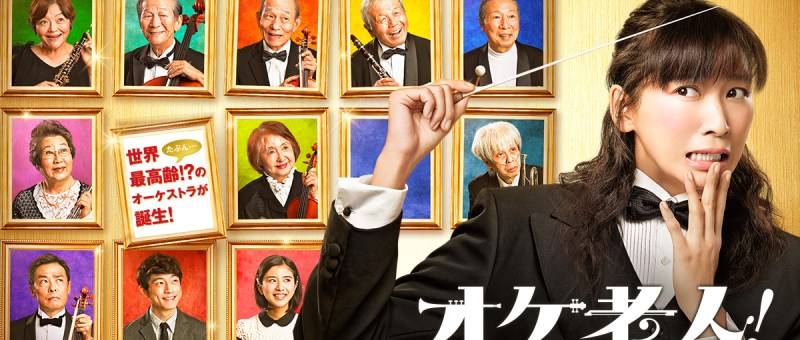
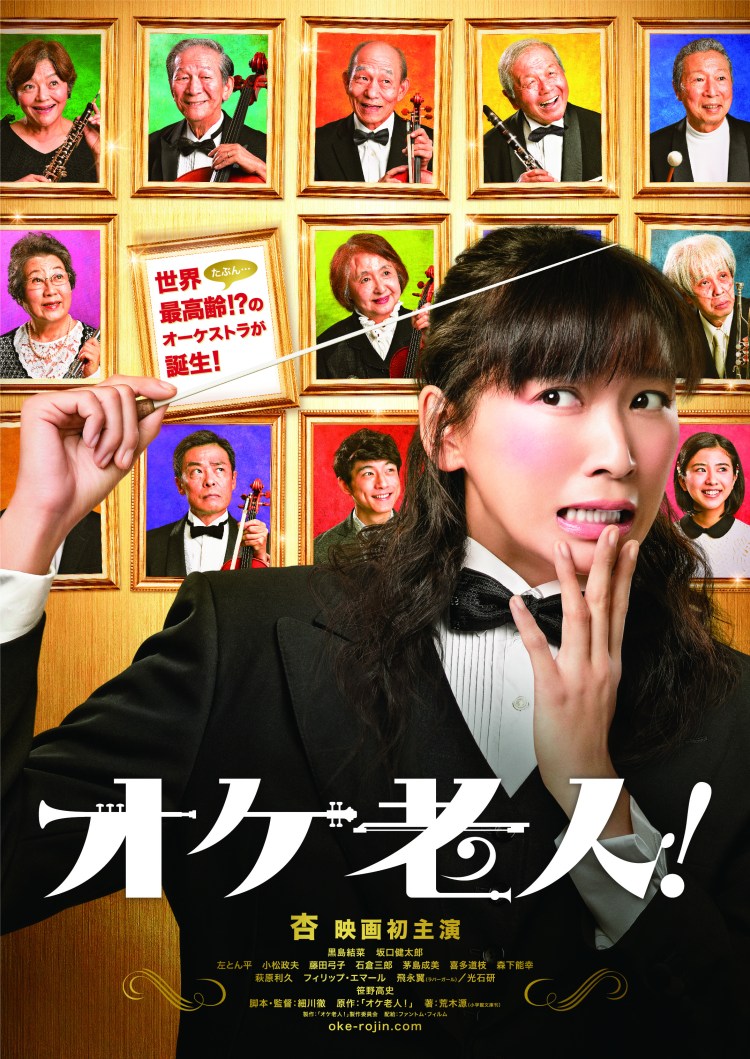
ƒIƒP˜Vl_ƒeƒBƒU[ƒ`ƒ‰ƒV•1C³_ƒAƒEƒg‚È‚µIt might never be too late to follow your dreams, but if following your dreams makes you very unhappy perhaps you need to spend some more time figuring out what they are. Golden Orchestra (オケ老人!,  Oke Rojin!) is one in a long line of Japanese fish out of water / underdog comedies, but addresses some very contemporary concerns from the ageing society to a perceived loss of community in the face of soulless commercialism. Our stuck-up school teacher is about to learn a few lessons, chief among them being that it’s much better just having fun with nice people than being caught up in a vicious and unwinnable game of elitism with a bunch of permanently scowling snobs.

20-something school teacher Chizuru (Anne Watanabe) harbours a longstanding dream of playing in an orchestra but gave up the violin when she got a job. A visit to a classical music concert in provincial Umegaoka reignites her musical passion and she quickly becomes determined to dust off her instrument and ask for an audition. However, as she was so excited she can’t quite remember the orchestra’s name and, assuming there couldn’t be two in this tiny town, signs up for the wrong one. Only realising her mistake when a bunch of old people turn up instead of the well turned out collection of musicians she was expecting, Chizuru tries to back out but the old people are so happy to have her that she can’t quite work up the courage to tell them no.

As it happens there’s a People’s Front of Judea situation going on between Ume-sym and Ume-phil. The conductor of Ume-sym, Nonomura (Takashi Sasano), is also the owner of a family-run electronics shop – a relic of a bygone era made all the more lonely by the flashy electronics superstore that’s been set up right next door. The owner of the electronics superstore, Osawa (Ken Mitsuishi), used to be a member of Ume-sym but stormed out to form his own orchestra – Ume-phil, so he’s betrayed Nonomura twice over and there’s bad blood between them which isn’t helped by Osawa’s constant overtures to Nonomura’s son about buying up the shop in order to close it down.

Chizuru is, it has to be said, a somewhat clueless woman approaching middle age who is also a bit of a snob. She’s harboured musical dreams ever since she can remember, giving them up because, after all, that’s what you’re supposed to do in order to accept a conventional, ordered life. If playing music was all she wanted to do, there was nothing stopping her doing it at home in her free time, but Chizuru wants to be among the best. She looks down on the old people in the orchestra – firstly because they’re “old” and therefore “bothersome” (as she notes turning off a tap left running by an absent-minded older lady), and then because they’re just not any good, and finally because their aim isn’t really becoming a successful orchestra so much as it is participating in a community activity. The old ladies have brought snacks which must be indulged and appreciated, while the old men all enjoy the after practice drinking sessions perhaps more than they do the music.

Turning her back on this anarchic friendliness, Chizuru practices night and day to get into Ume-phil, but Ume-phil isn’t about love of music either, it’s just about being superior and giving yourself an excuse to look down on people. Chizuru finds out for herself how stressful and unpleasant it can be as a “member” of just such a community when they grudgingly grant her a spot. Ume-phil runs on a survival of the fittest policy – not everyone gets to play, only whoever is deemed most worthy. When push comes to shove, Osawa buys himself success by hiring a world-famous French conductor for the biggest concert of the year. Only the professional conductor is true music lover and quickly quits Osawa’s ersatz orchestra, charmed by the down-home wisdom of Mr. Nonomura who manages to fix his treasured cassette player when Osawa advised him to throw it out and buy something more up-to-date. Some people just can’t see what’s really important.

As expected, Chizuru finally realises that it’s just much nicer (not to mention less stressful) having fun making music with the old people rather than putting up with the soulless rigour of the Osawa brigade for whom nothing will ever be good enough. In the end Ume-sym decides to practice Dvorak’s Largo which is, as anyone who’s seen a Japanese film knows, an instantly warm and nostalgic tune familiar as the inspiration for (in some cities at least) Japan’s five ‘o clock chimes (British viewers may well experience the same surge of wistful melancholy thanks to the same tune’s iconic use in a series of Hovis adverts from the ‘70s and ‘80s). It’s an apt choice for a film which harks back to a simpler time when people took care of each other and rejoiced in ordinary pleasures like home-made pickles and fixing things that were broken rather than throwing them out to buy new ones. In true community spirit, it’s not so much that one side wins and another loses, so much as that the joy of sharing a dream with others becomes infectious, producing a rapprochement between the old and the new which allows a peaceful coexistence of the two. Cosy cinema at its finest, Golden Orchestra may not offer anything new to a well-worn formula but in many ways that is the point and its harmonious charms prove hard to resist.


International trailer (English subtitles)

The original Hovis ad from 1973 (which was directed by Ridley Scott)

Gonjiam: Haunted Asylum (곤지암, Jung Bum-sik, 2018)

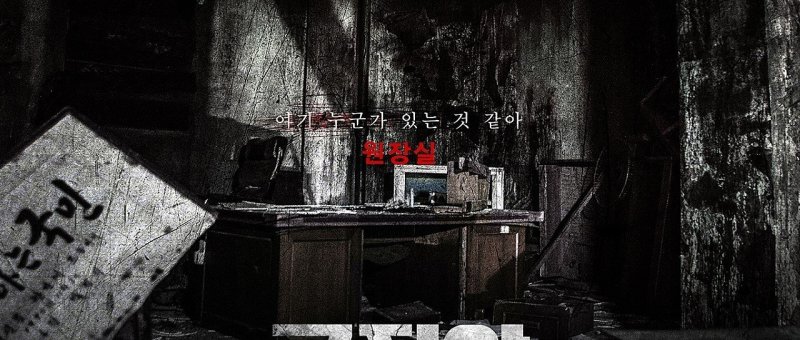
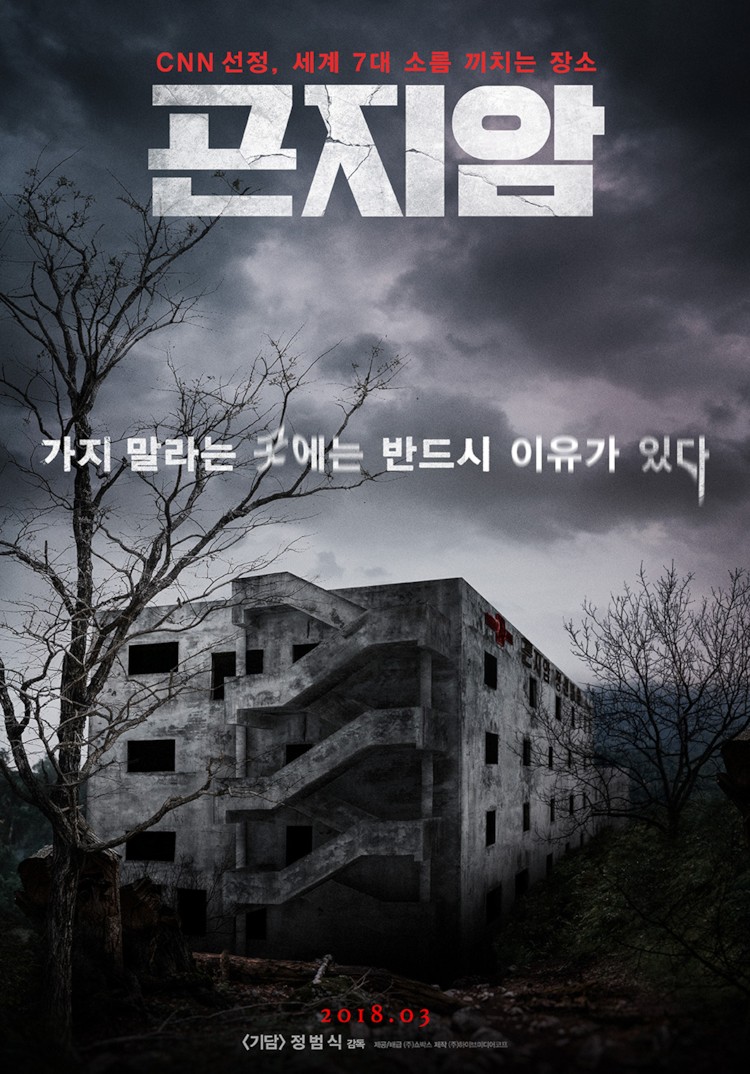
Gonjiam Haunted Asylum posterBack in 1992, all of the UK was scandalised by a strangely realistic “drama” starring three well respected TV personalities “investigating” poltergeist activity in an ordinary house. Screened as part of an ongoing anthology drama series, the show was presented as if it were live complete with a telephone number for viewers to ring in. Many were tricked into believing the events they were witnessing were “real” and that a genial children’s TV presenter they knew and loved had been dragged off by a malevolent supernatural entity. Fast forward 10 years and the nation was once again gripped by a “live” ghost hunting show presented by a dubious psychic and a (former) children’s television presenter but this time at least keeping up a pretence of “reality” even if the show’s appeal lay more in its exaggerated seriousness than it did a genuine interest in the paranormal.

The world may have been a more innocent place back in 1992, but ghost shows are still big business even in this comparatively more cynical age. Reality TV ghosthunters Horror Times decide the best way to pick up their flagging views is to go viral by going live inside a notorious disused sanatorium listed as one of CNN’s seven freakiest places on Earth. Rumour has it that Gonjiam Mental Hospital (a place all too real though here given a fictionalised history) was built by the Japanese over the top of a mass grave for resistance fighters though, according to our guides, it was also accounted one of the best psychiatric facilities in the country. Its director received numerous awards from the government of Park Chung-hee (which ought to tell you she was probably up to no good), but the hospital fell into disrepute after an incident in which all the patients mysteriously died and the director herself “disappeared”. Ever since then teenagers have been breaking in to try their luck, but anyone who’s tried to open the door to room 402 has met a sticky end.

Gonjiam: Haunted Asylum (곤지암, Gonjiam) is a found footage horror movie in the modern mould and like most, the crime our “heroes” are about to commit is one of extreme hubris. Cynical in the extreme, the Horror Times crew have absolute certainty in the non-existence of the supernatural and actively mock it through their exploitation of engineered “scares”. In an odd way, if you really thought about it, Horror Times would be quite an exploitative show if it involved “real” ghosts – perhaps you should let malevolent spirits lie rather than bullying them to fight you for the entertainment of others. Nevertheless, the Horror Times crew are about to find out just how wrong they are. While they bicker amongst themselves, hatching plans to wind up the most “expressive” of the team members, setting up bizarre “rituals”, and faking being “scared” to get more money, the Captain keeps a firm eye on the numbers from the safety of the editing tent and the horrors of Gonjiam begin to bubble quietly below the surface.

The thing is, there is clearly horror in spades in this version of Gonjiam where we are told the directoress excelled at treating not only the “distressed” but also “political prisoners”. The lab holds its share of bizarre discoveries including some kind of weird chicken in preserving fluid while the “collective treatment room” is filled with individual confessional boxes which are completely closed save one opening at the chest level. The spectres we later see have large scars running down their torsos and we can only image the true horror of whatever it was that was done here and to whom and on what grounds, but Horror Times aren’t interested in any of that despite their rather superficial “investigations” of the directoress’ office and her many photos of that time she got a prize off a dictator. By the time everyone starts speaking in tongues and getting trapped in strange underwater realms, it becomes clear the “truth” is going to remain buried. 

Maybe the other lesson the Horror Times guys should have learned is that the traumatic past is not your playground and it’s probably fair enough if those unable to pass on begin to feel upset about their personal pain being exploited for ghoulish thrills. Perhaps there’s a mild lesson in the unhappy fates of those who’d rather poke the ghosts than cure them, revelling in the darkness of another era rather than trying to expose it, but Gonjiam isn’t so much about lessons as good old fashioned scares. The abandoned hospital itself is atmospheric, as are the distant banging and doors opening of their own accord but there’s a glibness in its unease that undercuts the sense of dread and inevitability so essential to the genre. The biggest irony of all is that Horror Times’ viewers lost interest when the “real” ghosts showed up – reality TV never really was about “reality” anyway.


Screened as a teaser for the upcoming London Korean Film Festival. The next and final teaser screening will be A Tiger in Winter on 17th September at Regent Street Cinema at which the full programme for this year’s festival will be revealed.

International trailer (English subtitles)

For the curious, a clip from Ghostwatch (1992)

BFI London Film Festival Confirms Complete Programme for 2018

1272508_burning_924331The BFI London Film Festival returns for 2018 with a packed programme of the best in recent international cinema. As usual there are a fair few East Asian films on offer including the long awaited return from Lee Chang-dong, the latest from Jia Zhang-ke, and Bi Gan’s 3D followup to Kaili Blues.

Cambodia

the prey poster low res

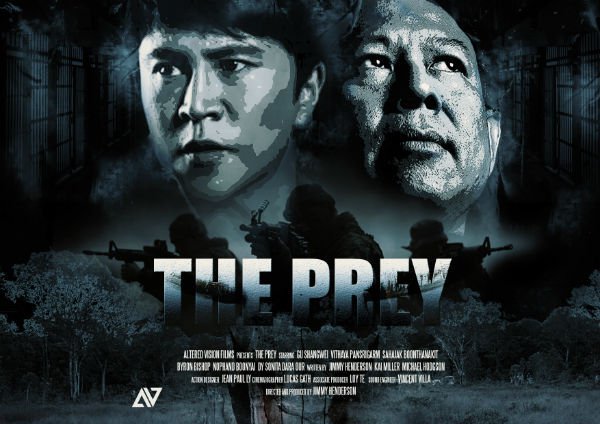
  • The Prey – Jimmy Henderson’s Jailbreak followup follows an undercover cop arrested during an operation who subsequently gets drawn into a corrupt prison warden’s sideline of sending prisoners out as targets for hunters while the Chinese military plan a rescue mission.

China

ashes08020203-r-c

  • Ash is Purest White – in the latest from Jia Zhang-ke, Zhao Tao plays a gangster’s moll who goes to prison on his behalf only to find that her loyalty has not been valued.
  • Dead Pigs – Cathy Yan satirises the modern Chinese economy through the tales of a collection of people caught up in the machinations of a shady real estate conglomerate.
  • Long Day’s Journey into Night – a man returns to his home village after many years for his father’s funeral and to look for lost love in Bi Gan’s Kaili Blues followup.
  • Shadow – Zhang Yimou returns to the world of period epics with a tale of proxy war as a great general (Deng Chao) makes use of a double to combat palace intrigue.
  • Suburban Birds – an engineer finds a diary of a boy with the same name giving way to a tale of adventure when one of the boy’s friends goes missing in Qiu Sheng’s debut feature.

Hong Kong

Family Tour still 1

  • A Family Tour – A Chinese director living in exile in Hong Kong travels to Taipei to present a controversial film banned in the Mainland, but also to see her mother who is travelling around the island on an old persons’ package tour. Not wanting to attract attention, she follows the coach around pretending to be a local.

Indonesia

May the devil take you still 1

  • May the Devil Take You – a young woman pays a long overdue visit to her estranged father who is dying. With doctors unable to identify a cause for his condition, the supernatural begins to raise its head.

Japan

Aasako 1 & II

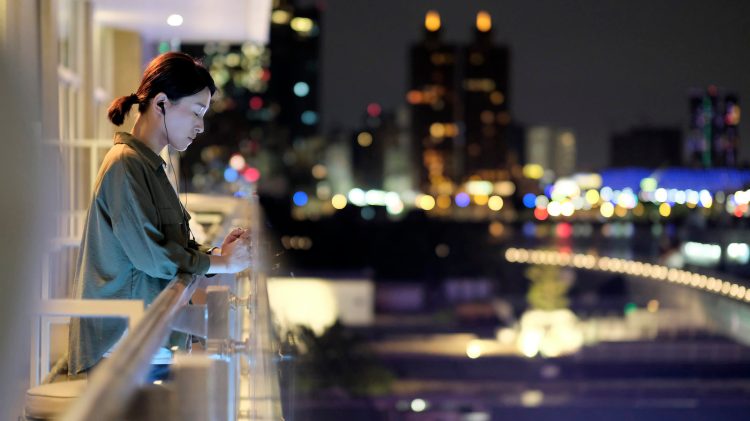
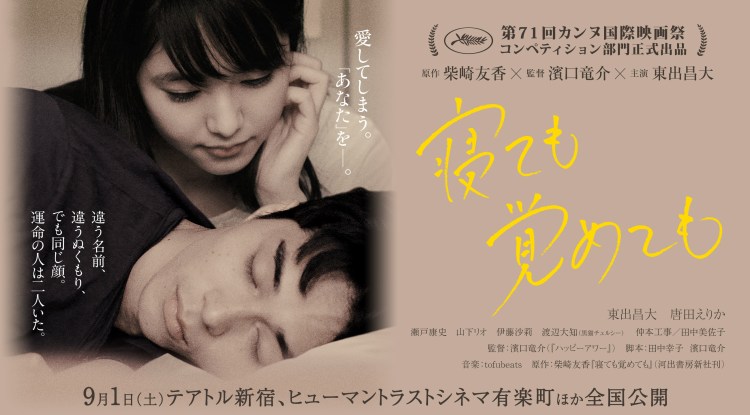
  • Asako I & II – Ryusuke Hamaguchi adapts Tomoka Shibasaki’s novel in which a young woman spots a man who looks exactly like her long absent lover in cafe, only he has a completely different personality.
  • Mirai – a little boy learns to cope with the arrival of his baby sister in the latest from Mamoru Hosoda.
  • Of Love & Law – Hikaru Toda reunites with Love Hotel’s Kazu and Fumi and explores their lives and work at an Osakan law firm specialising in minority issues. Review.

Korea

Last Child still 1

  • Believer – Lee Hae-young offers a Korean take on Johnnie To’s Drug War.
  • Burning – the long awaited return by Korean auteur Lee Chang-dong, Burning adapts a short story by Haruki Murakami and revolves around three people – a novelist, another man, and a fashion model, as they become embroiled in a strange incident.
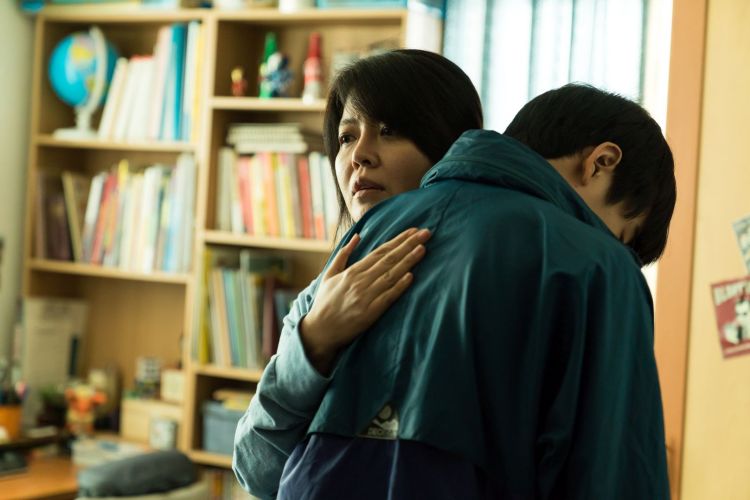
  • Last Child – moving drama in which a bereaved family takes in the boy their son died saving only to discover all is not as it seems. Review.
  • Little Forest – gentle tale in which a wounded young woman retreats to her country home to figure things out. Review.
  • The Spy Gone North – Yoon Jong-bin’s thriller follows a South Korean spy on an infiltration mission in the North.

The festival will also be previewing the first two episodes of Park Chan-wook’s BBC TV series, The Little Drummer Girl.

Events

  • Lee Chang-dong screentalk – director Lee Chang-dong will be taking part in a screentalk at the BFI on 20th October, 12pm

The BFI London Film Festival takes place at various venues across the city from 10th – 21st October 2018. Full details for all the films as well as screening times and ticketing information are available via the official website. Priority booking opens for Patrons on 4th September, for Champions on 5th September, and Members 6th September, with general ticket sales available from 13th September. You can also keep up to date with all the latest news via the festival’s Facebook page, Twitter account, Instagram, and YouTube channels.

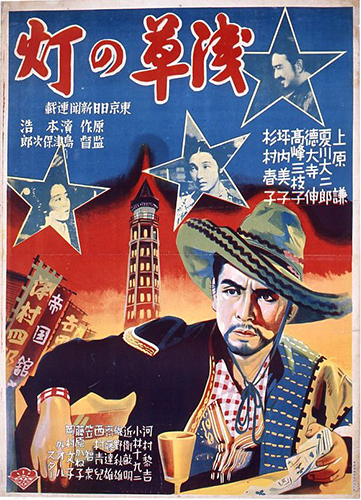
The Lights of Asakusa (浅草の灯, Yasujiro Shimazu, 1937)

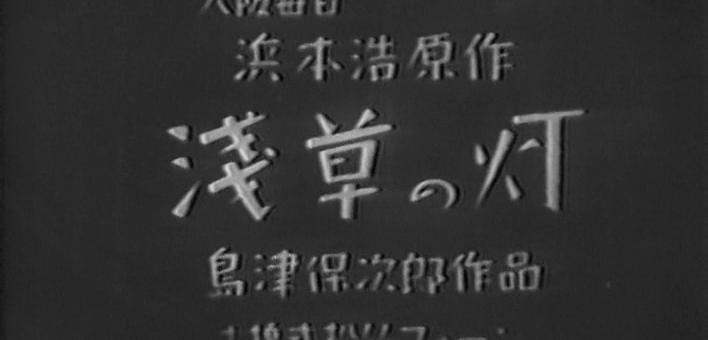
Lights of Asakusa posterThe lights of Asakusa (浅草の灯, Asakusa no Hi) still shone bright before the war. In this tiny corner of Tokyo well known for “low” entertainment, actors mingle with gangsters, lonely owners of amusement stalls, starving artists, bar girls, and wealthy industrialists each just trying to survive in an increasingly jittery city. Yasujiro Shimazu had been a pioneer of the “shomingeki” – stories of ordinary lower middle class people, and brings his characteristic wit and humanity to a tale of backstreet life where danger and ruin lurk on every corner and the only way to ensure one’s safety is to ensure you have the right defenders.

The main stage, if you will, is that of the Nippon-za “opera” company. This is, however, no great opera house but a run down little theatre presenting classical European opera for vaudeville audiences. The currently running show is Carmen, which will turn out to be appropriate for the events at hand. The trouble starts (or perhaps merely intensifies) when a young chorus member, Reiko (Mieko Takamine), begins attracting a range of wanted and unwanted male attention. Reiko, an orphan, had been taken in by a local bar mistress who later pushed her into the opera company but still expects her to make good on her investment by becoming a casual prostitute and taking on “customers” who present themselves at the bar (Reiko is around 16 or so, and therefore has just reached the age her foster mother thinks appropriate to join the business). The complication is that the man who’s taken a fancy to Reiko, Handa (Shunro Takeda), is a steel magnate who also finances the opera troupe meaning it’s not just the bar owner who’s coming under pressure but the financial security of the troupe too.

Being so young, Reiko finds her foster mother’s demands hard to refuse but is rescued by Sasaki (Seiji Nishimura) – the leading actor, married to leading lady Marie (Haruko Sugimura). The situation with Reiko exposes cracks already present in the group when Handa sends his goons in to disrupt the show, irking Sasaki to the point he takes off in a fit of artistic temperament. Meanwhile, another actor Yamagami (Ken Uehara), gets together with the rest of the troupe to ensure Reiko’s safety by hiding her with a feeble minded fan, Pokacho (Daijiro Natsukawa), so that she won’t be forced into a potentially life ruining situation.

Reiko’s plight is perhaps all too common on the streets of Asakusa. Having been orphaned she feels herself indebted to the bar mistress who took her in even if the relationship between them is not especially warm. She also feels grateful to have found a third family in the opera troupe and is afraid to lose her place there. Nevertheless, she is under extreme pressure to submit herself to this system of reciprocal arrangements and sleep with Handa solely to save making trouble for everyone else. Meanwhile her (sometimes) sympathetic roommate Beniko (Kayako Fujiwara) knows exactly what’s at stake through having been in a similar situation herself. She’s long been in love with the pure hearted Yamagami and is harbouring a degree of jealously in believing that Yamagami has a soft spot for Reiko, but she also half wants things to work out between them seeing as she has lost the “right” to love a man like Yamagami because she is no longer a virgin.

Shimazu had often been of a progressive mind, but sadly Beniko falls by the wayside, merely a sacrificial lamb prepared to give up on her dreams on Reiko’s behalf, so we never find out the limits of Yamagami’s justice loving heart or if he would be as bothered about Beniko’s past as she seems to fear he might be. Yamagami, brooding but righteous, would become one of matinee idol Ken Uehara’s best known roles though he too is teetering on the brink in Asakusa. Committed to defending the innocent, he tries to save Reiko’s honour but fails to declare a personal interest, entrusting her to the rather odd painter Pokacho who claims that his love for Reiko is of a spiritual, rather than carnal kind. Yamagami may succeed in his primary goal but still ends up in defeat, running away from the most important fight by retreating from Tokyo completely with a rebound girlfriend in tow, hoping to find kinder light in Osaka than he had on the dog eat dog streets of Asakusa.

Based on a novel by Hiroshi Hamamoto, Shimazu’s portrait of backstreet life sparkles with authenticity but also with a kind of hopelessness as each of these down on their luck “opera” stars laments their sorry fates and longs for a better gig somewhere less down and dirty. Meanwhile, the spectre of war lingers – when Carmen comes off the next show is to be “Two Honourable Soldiers”, filled with maudlin anthems of war which push the messages of patriotism and the glorification of offering one’s life for one’s country. The slimy Handa may have been defeated for now, but his kind are in the ascendent and the streets of Asakusa are unlikely to improve with only war and depression on the horizon.


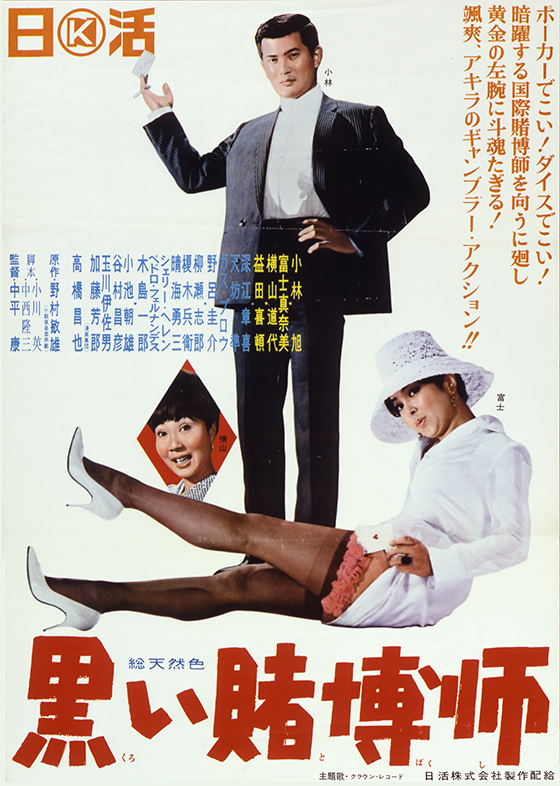
The Black Gambler (黒い賭博師, Ko Nakahira, 1965)

Black Gambler poster

Nikkatsu’s “Mighty Guy” Akira Kobayashi occupied a very particular space in the studio’s collection of leading men. Where Yujiro Ishihara was known for his roguish cheek, Tetsuya Watari for his bruiser nobility, and Joe Shishido for his detached efficiency, Kobayashi’s chief selling point was his gentlemanly charm and unflappable decency. The “Gambler” series which ran to eight films in all cast him as a James Bond-esque wandering cardsharp with a well tailored suit and keen intellect capable of defeating even the most devious of opponents. The sixth in the series, simply titled The Black Gambler (黒い賭博師, Kuroi Tobakushi), finds Koji Himuro (Akira Kobayashi) returning to Tokyo and straight into the middle of international intrigue as he gets mixed up with a global gambling syndicate hellbent on bringing its particular brand of funny business to the Japanese capital.

Himuro, renowned for his skills at the gaming table, is called to an exclusive gambling party where he entertains the French Ambassador and ruins a cheating rival in the process. Inumaru (Asao Koike), humiliated by his defeat, sends his mistress Reiko (Manami Fuji) to spy on Himuro and figure out all his secrets so they can get their revenge. However, Himuro gets himself mixed up in a bigger crisis when he comes to the rescue of a foreign woman in a park running away from a scary looking gangster. The woman, Nina, claims to be an air stewardess flown in from Hong Kong who has fallen foul of a Chinese gangster named Yang. Yang has apparently tricked her into amassing vast debts and thereafter attempted to recoup his investment in other ways. Himuro is a noble sort of guy and so decides to pay off Nina’s debt by defeating Yang in a game of cards, but Yang is a different kind of opponent than he’s hitherto faced and Himuro finds himself floundering unable to figure out Yang’s particular cheat.

Nikkatsu’s action line was famous for its “borderless” approach, making an international milieu one of its many selling points. This is not to say its vision of global Japan was altogether positive – in fact the reverse was often true. Once again, the Chinese have been designated the criminal element of choice with Yang painted as a villainous cheater complete with a horrible Fu Manchu beard and delirious cackle, sure that his unique method for ensuring victory cannot be beaten. Meanwhile, Himuro’s first engagement dropped him straight into a world of international diplomacy and it comes as no surprise to learn that Yang’s activities are merely a facet of a wider conspiracy which turns out to be run by a Jewish gambler who apparently used his ill gotten gambling gains to finance the Nazis during the second world war. Perhaps it’s wise not to even start trying to unpack that one.

Himuro’s upscale world of high stakes games played in well appointed rooms by men wearing tuxedos and drinking martinis may be a world away from the dirty backstreet shenanigans of Nikkatsu’s other gambling adventures, but there is bite in its defiant bid for frivolity. When Himuro first rocks up at the French Ambassador’s residence, his assistant doesn’t really want to let him in. He is infuriated that with a war going on in Vietnam his boss is taking time out to play silly games of chance rather than getting on the with real business of diplomacy. Vietnam is referenced again in the ironic closing freeze frame in which Himuro covers his face with a newspaper bearing the headline “America bets on bombing North Vietnam” – politics itself is now a game played by men in smart suits trying to stave off the boredom of being alive by using the lives of real men and women as gambling chips with little more feeling for them than for the tiny scraps of plastic which stand in for meaningless little bits of paper in the centre of a table covered in green felt.

Women, it seems, are a more immediate casualty of a gambler’s vice. Reiko, sent to spy on Himuro but drawn to his cardsharp’s acumen, was herself gambled away by her father who lost her to Inumaru in a bet. She holds no affection for the man who won her, but feels bound to him all the same and has vowed to become a top gambler as an odd kind of revenge. Nina too suffers at the hands of gangsters and criminals, drawn to Himuro because of his heroic nobility and unable to escape the underground world of grifters and chancers without the help of a seasoned player.

Sticking to a house style, Nakahira finds little scope to express himself in another B-movie adventure for the sophisticated gambling man. Nevertheless, there’s enough Bond-inspired silliness to keep the franchise fans happy from Himuro’s ball bearing loaded car to the gaming intrigue and intricate cheats that define it. The Black Gambler is a fairly typical example of Nikkatsu’s regular programme picture with little to distinguish it but it does what it sets out to well enough and with crowd pleasing style.


Opening scene (no subtitles)

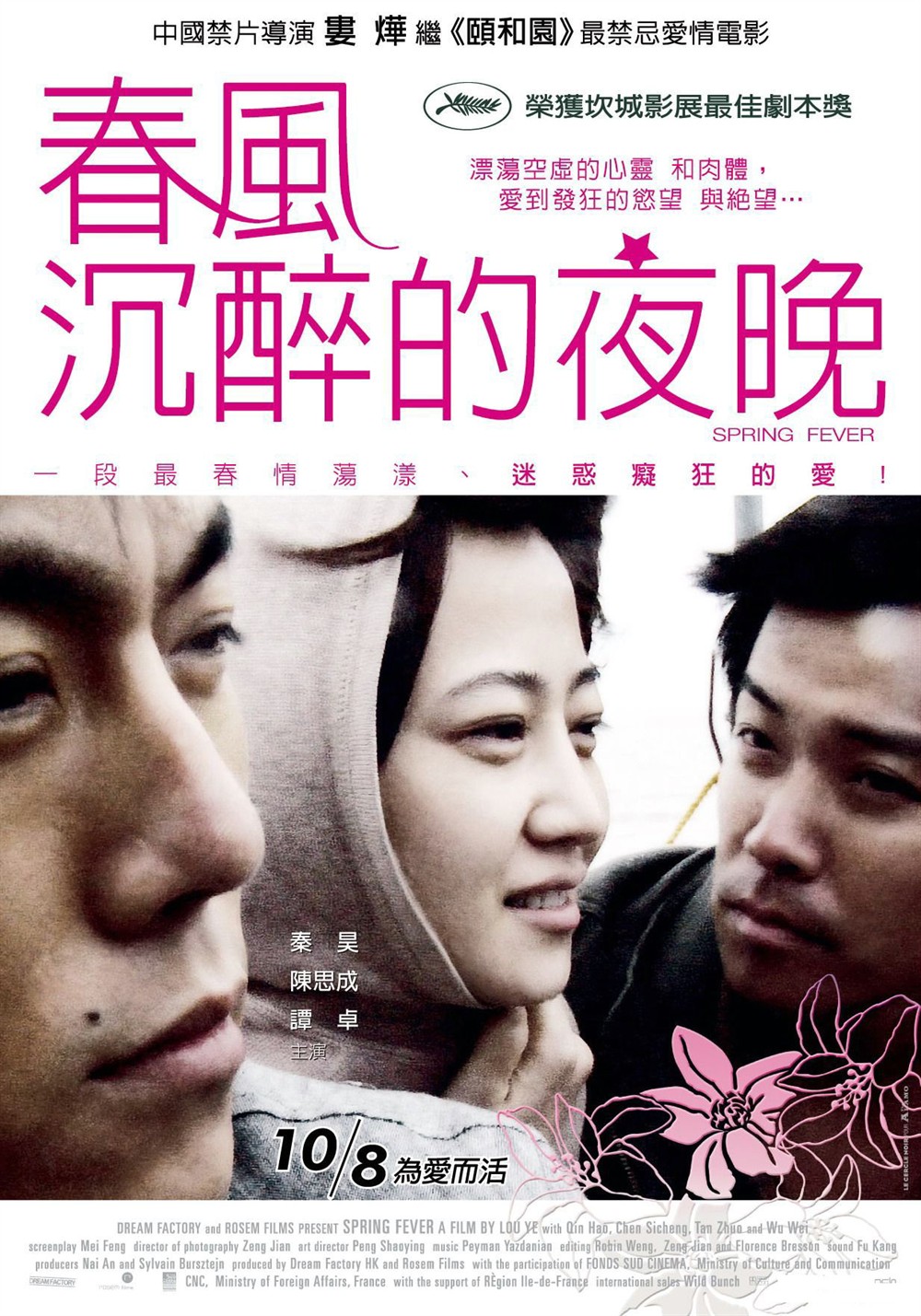
Spring Fever (春風沉醉的夜晚, Lou Ye, 2009)

Spring fever posterLou Ye has never especially cared for the views of China’s famously draconian censorship board. 2006’s Summer Palace earned him a five year ban for its scenes of full frontal nudity and references to Tiananmen Square Massacre (or, as later claimed, for “failing to meet appropriate standards for sound and picture quality”). 2009’s Spring Fever (春風沉醉的夜晚, Chūnfēng Chénzuì de Yèwǎn) was therefore shot on the fly in Nanjing in direct contravention of the director’s loss of official status – something he later got around by listing the film as a Hong Kong/France co-production so it could be entered in the Cannes Film Festival in a move which can’t have done him any favours with SARFT. Once you’ve been banned, you might as well go all in and there can be few better ways of reminding China’s “conservative” censors that you didn’t ask for their opinion than opening with a lengthy and extremely matter of fact love scene between two men.

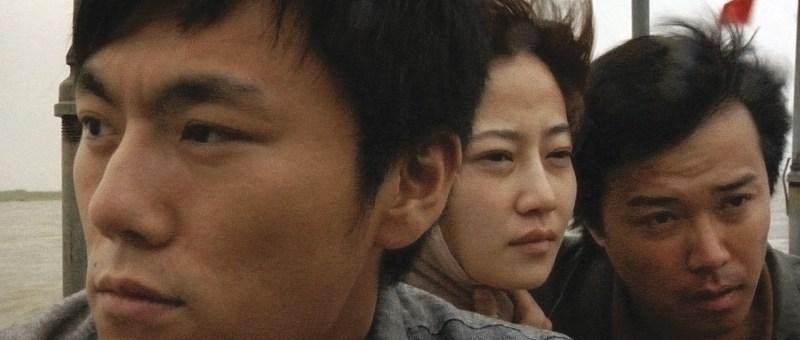
Lou opens with floating spring flowers giving way to two men in a car whose hands delicately brush as they approach their destination – a remote cottage in which they intend to have a secret tryst. The tryst, however, will not be so secret as they assume. Private investigator Luo Haitao (Chen Sicheng) has been tailing the men on the behest of a suspicious wife, Lin Xue (Jiang Jiaqi), who suspects her husband, Wang Ping (Wu Wei), is hiding a secret but never guessed it was another man, Jiang Cheng (Qin Hao). Luo dutifully reports his findings to Lin, but urges her not to look too closely at the photographs. Finally he points out her husband’s lover at his workplace, a travel agents with a conveniently large glass frontage. Wang Ping, in a motif that will be repeated, wants to introduce his wife to his lover, perhaps hoping to ease the blow or smooth a path towards maintaining both relationships simultaneously. Seeing as Lin Xue has already seen Jiang and knows perfectly well who he is, the plan goes wrong and provokes a confrontation which eventually sends Lin Xue storming into Jiang’s workplace to out him in front of his colleagues, at which point Jiang decides he’s had enough and breaks up with Wang. Wang, however, can’t seem to get over him.

Meanwhile, Luo has continued following Jiang even though the investigation is over. Through extended trips to drag bars and underground music venues, Luo eventually becomes involved with “the other man” but he too has a girlfriend, Li Jing (Tan Zhuo), who works in a factory and seems to have something going on with her shady, Cantonese-speaking boss.

Abandoning the overt political contexts of his previous films, Lou circles around two concentric love triangles each of which has Jiang Cheng in the centre. Though it’s unclear whether Jiang Cheng is living as an “openly” gay man – the reaction at his workplace to Lin Xue’s outburst would suggest not though it doesn’t seem to cause him any problems with his employment, he is the only one of the three men to exclusively embrace his homosexuality. He does not have a girlfriend, is well known as an artist at a local drag bar, and makes no real effort to hide who he is even if not making a particular point of it. Both Wang and Luo seem to struggle with the nature of their feelings for and relationship with Jiang, neither one quite able to give up on the idea of “conventional” life. Wang, apparently infatuated with Jiang and unable to live without him, still seems to want to remain within his marriage despite his wife’s increasingly possessive behaviour, dreaming of an arrangement where he could perhaps have the best of both worlds. Luo is less conflicted. He pursues Jiang while his relationship with Li Jing flounders, but feels himself responsible for her wellbeing and unable to abandon her entirely in the knowledge that she is in a fragile state.

Quickly fed up with all these girlfriend problems, Jiang never asks either man to make a choice even if he eventually feels there is no way either relationship can continue. As Jiang’s story, the women perhaps get short shrift with Lin Xue’s villainy eventually turning violent as she becomes the embodiment of a repressive society intolerant of homosexual relationships, berating Jiang for corrupting her husband, humiliating her, and ruining her marriage all in front of his gawping colleagues in an act intended to destroy his life completely. Li Jing, meanwhile, has a much more sympathetic reaction to discovering the true nature of the relationship between the two men, allowing the three to continue as a trio until she eventually decides she is probably a third wheel and needs to get on with her own life. Nevertheless, the three options available to our heroes appear to be suicide, violence, and melancholy. Jiang, remembering the painful poetry of Yu Dafu read to him by the now long absent Wang, laments that he has perhaps “missed the love” that was his “destiny” like a flower blooming in the wrong season.

Despite being among Lou’s most straightforward narratives, Spring Fever lacks the cohesion of the fractured Purple Butterfly and allows its minor political contexts to melt into a background of generalised melancholia as if in echo of a generation’s apathy and confusion, caught on the cusp of change but unable to decide on a direction. Jiang’s sadness endures as a romanticised notion of impossible loves, but floats away on a spring breeze, devoid of hope or purpose.


Available to stream on Mubi UK until 24th September 2018.

US trailer (English subtitles)

Summer Palace (颐和园, Lou Ye, 2006)

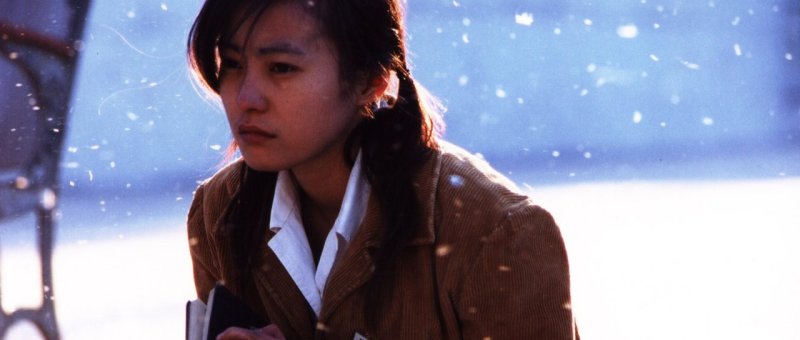
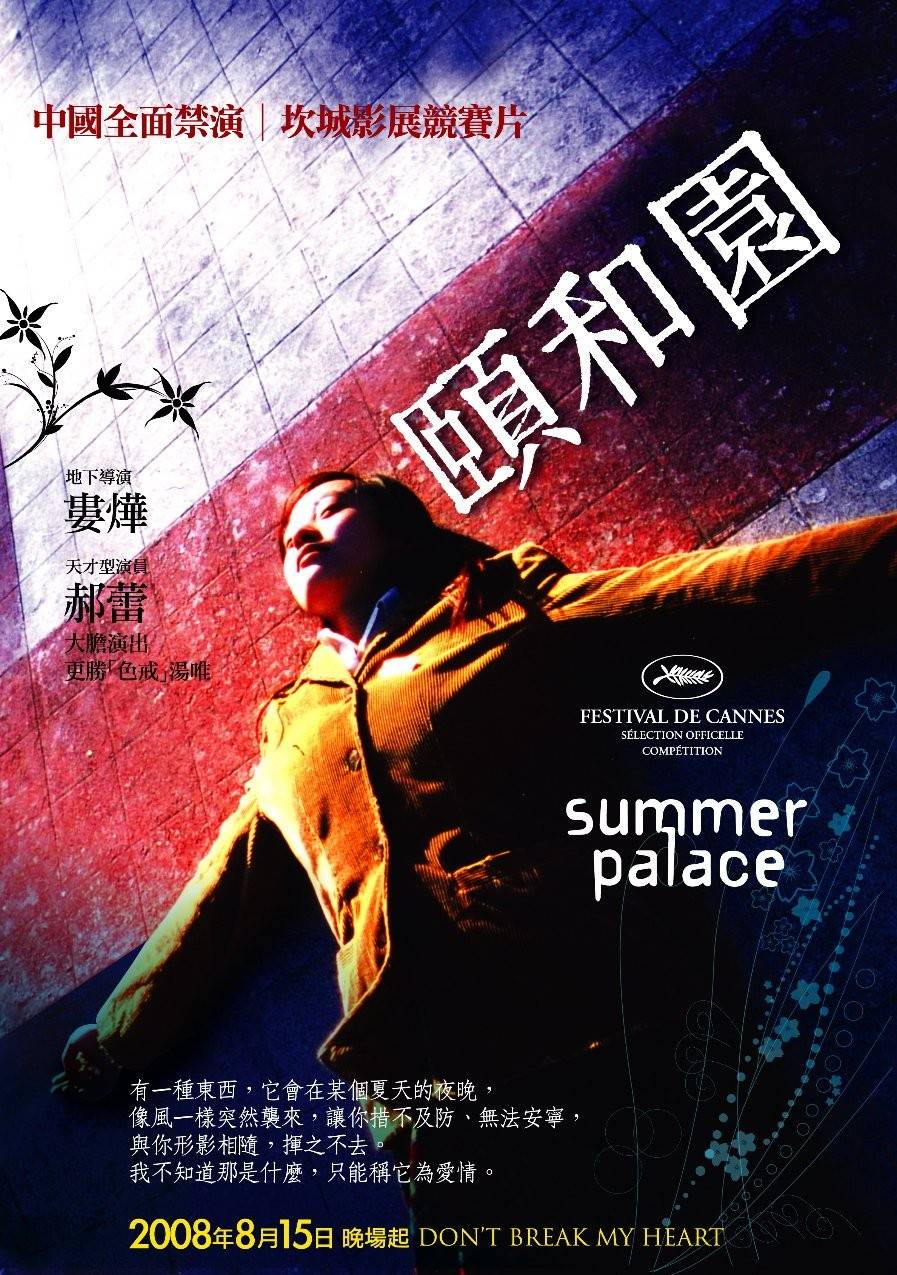
Summer palace posterThe personal is political for Lou Ye. Much as he had in Purple Butterfly, Lou paints love as a spiritual impossibility crushed under the weight of political oppression, though this time he leaves his protagonists breathing but wounded. Summer Palace (颐和园, Yíhé Yuán) is a member of a not exactly exclusive club of films deemed too controversial for the Chinese censors’ board. In truth, there are a number of reasons Lou’s wilfully provocative film might have upset the government, but chief among them is that he breaks a contemporary cinematic taboo in setting the Tiananmen Square massacre as the political singularity which causes the implosion of our protagonists’ youth, rendering them stunned, arrested, and empty. Personal and national revolutions fail, leaving nothing in their wake other than existential ennui and an inability to reconcile oneself to life’s disappointments.

In the late ‘80s, Yu Hong (Hao Lei) gets a scholarship to study in Beijing and prepares to leave her home in a small rural town near the North Korean border for the promise of big city life. Yu Hong craves sensation, she wants to live life intensely and the inability to connect on a true, existential level leaves her feeling progressively empty and confused. A chance meeting with another girl in her dorm, Li Ti (Hu Lingling), brings her into contact with Zhou Wei (Guo Xiaodong) – a brooding intellectual and latterly the love of Yu Hong’s life, though one she becomes too afraid to embrace.

Yu Hong’s personal revolution, her quest for spiritual fulfilment largely through physical contact, occurs in tune with the chaos of her times. This is Beijing in 1988. The air is tense, anxious, as if hurtling towards an unavoidable climax. Yu Hong is not particularly political. She sees the protests, perhaps she agrees with them, but when she boards a pick up truck full of students waving banners and singing songs she does so more out of excitement and curiosity than she does out of commitment to political reform. Her tempestuous love affair with Zhou Wei mirrors the course of her city’s descent into chaos. Everything goes wrong, her heart is broken, something has been damaged beyond repair. Tiananmen Square, referenced only obliquely, serves as the event which traps an entire generation shell shocked by the brutal obliteration of their youthful hopes for a better world, leaving them imprisoned in a kind of limbo which prevents the natural progression from the innocence of youth to seasoned adulthood. They want the world to be better than it is but had the belief that it ever could be so brutally ripped away from them, that they are left with nothing more than a barren existence in which they cannot bear to touch the things they desire because they cannot believe in anything other than their own suffering.

Yu Hong’s early college days, marked as they are by rising anxiety, are also jubilant and filled with possibility. She dances innocently, nervously in a disco with Zhou Wei while a cheerfully wholesome piece of ‘50s American pop plays in the background – it’s this image Lou returns to at the end of the film. Something beautiful and innocent has been destroyed by an act of political violence, ruining the hearts of two soulmates who are now forever divided and bound by this one destructive incident. Yu Hong drops out of university and goes back to the country, bouncing around small town China occasionally thinking of Zhou Wei as an idealised figure of the love she has sacrificed, while Zhou Wei goes to Berlin and occasionally thinks about Yu Hong and missed opportunities. When they meet again years later it’s not an act of fate, or faith, or love but a prosaic interaction that leaves them both wondering “what now?”. There’s no answer for them, the future after all no longer exists.

As in Purple Butterfly, Lou makes history the enemy of love. Yu Hong didn’t ask for Tiananmen Square, she wasn’t even one of its major participants simply a mildly interested bystander, but she paid for it all the same in the way that history just happens to you and there’s nothing you can do about it. The youthful impulsivity, the naivety and craving for new sensations and expressions of personal freedom are eventually crushed by an authoritarian state, frightened by the pure hearted desire of the young to take an active role in the direction of their destinies. The quest for love and freedom has produced only loss and listlessness as a cowed generation lives on in wilful emptiness, their only rebellion a rejection of life.


Available to stream on Mubi UK until 10th September 2018.

Short scene from the film featuring “Don’t Break My Heart” by Heibao (Black Panther) which is also referenced in the poster’s tagline.