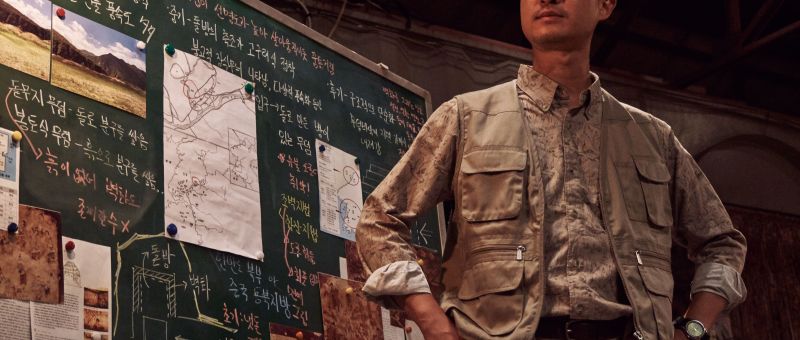
Shades of the Heart (아무도 없는 곳, Kim Jong-kwan, 2021)

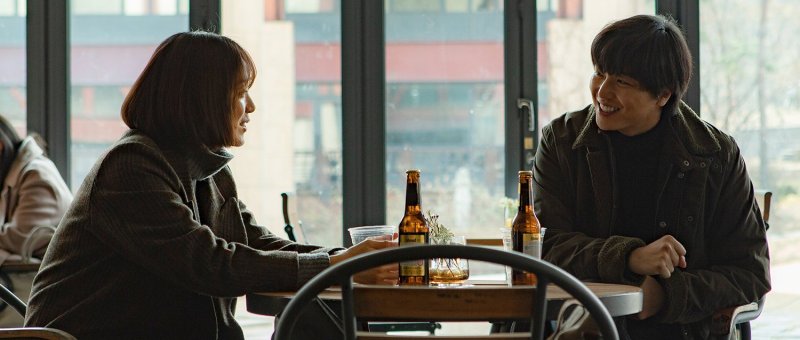
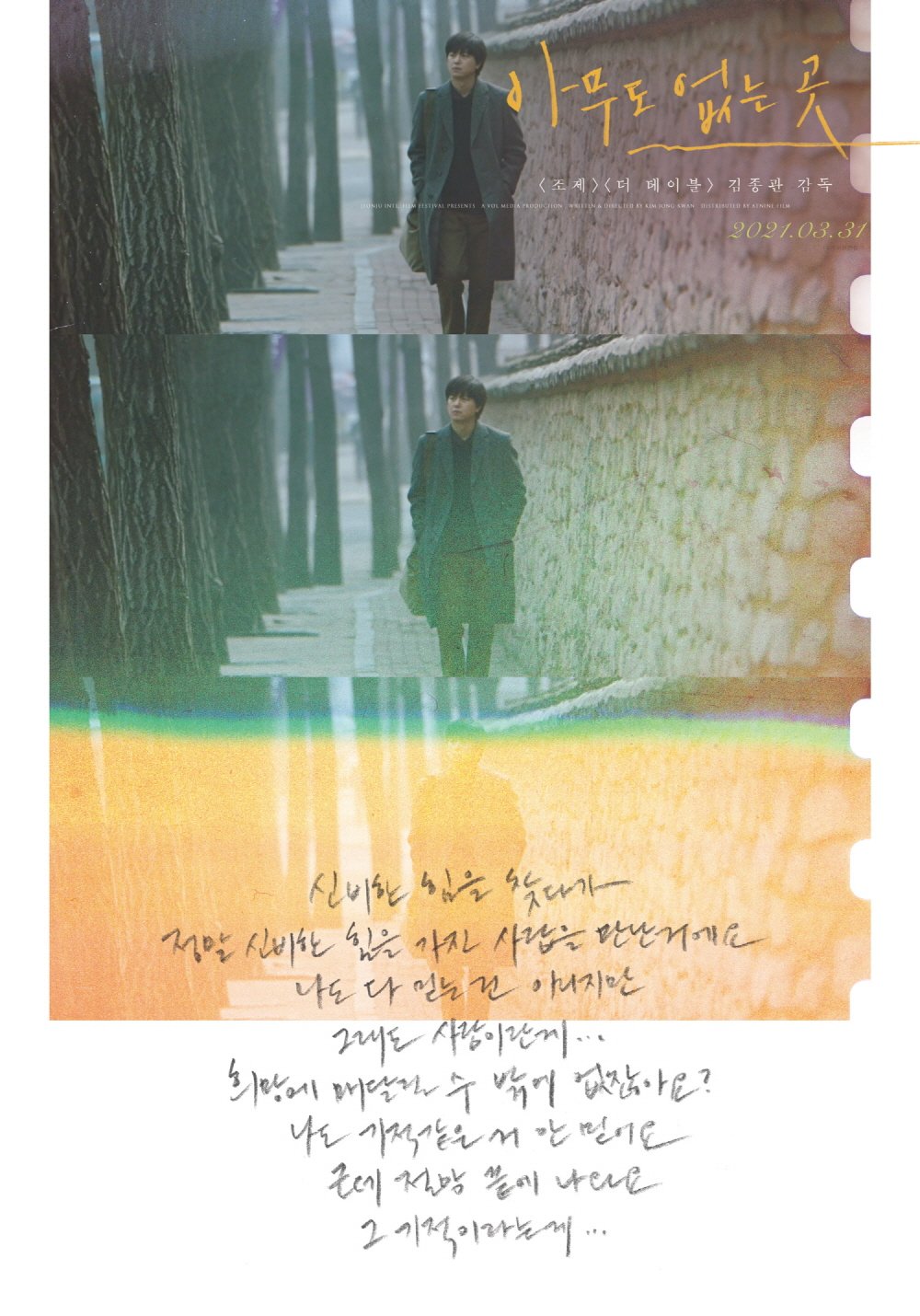
“I see hope! Let’s change direction” a distressed woman shouts in a park, “We should follow the wind, let’s hold hands that way you won’t get lost.” Her interjection is perhaps unexpected, in its own way sad, but also a sign offered to the melancholy protagonist of Kim Jong-kwan’s Shades of the Heart (아무도 없는 곳, Amoodo Eobneun Got), a man who has become without quite realising it “someone who waits” yet through encounters serendipitous and otherwise begins to see new paths in front of him, turning a corner into another story.

Novelist Chang-seok (Yeon Woo-Jin) has just returned to Seoul after seven years abroad following the breakdown of his marriage in the UK. He has begun to have strange dreams, seeing an older version of himself and presumably his wife walk away from him and eventually disappear. Yet each of the people he meets is also in someway burdened by a sense of loss or despair, his first meeting with his mother who appears to have some kind of dementia and does not initially recognise him thinking once again she’s on her first date with his father. Her sadness is the loss of past and present but also of future, telling her son on finally recognising him not to smoke so much so he won’t die young like his dad. 

Chang-seok had apparently given up smoking, but is motivated to start again perhaps seeing little point in extending his life, accepting some unusual Indonesian cigarettes from a former colleague now his editor who eventually tells him of her failed love affair with a young exchange student which apparently ended partly because he could not acclimatise himself to the harsh winters of Seoul. The other reason perhaps echoes something in Chang-seok’s own life though also tinged with a different sense of sadness. A serendipitous meeting with a former acquaintance meanwhile takes a turn for the strange, photographer Sung-ha (Kim Sang-Ho) somewhat manic in his ecstasy in having run into Chang-seok explaining that his wife is terminally ill yet a Buddhist monk had told him he’d run into someone he knew who would bring him luck. On the other hand, Sung-ha also shows him a vial of cyanide he’s managed to procure apparently planning to use it to take his own life after his wife dies but now filled with an almost certainly false hope in the strange power of religious mysticism. “I don’t believe in all that, but people.. they need to hang their hope on something” he explains.

Chang-seok may not have much of a sense of hope, but what little he has he’s hung on people or on art. He is forever “waiting” for someone who may or may not arrive or even exist, making notes in his notebook or wandering around the surprisingly lonely streets of Seoul after dark pausing by the now obsolete phone booths filled with the detritus of city life unsure whether or not to make a call. His final conversation is with a woman who tells him that she has no memories of her own, having been robbed of her past, and more, in an accident and now “buys” them off her customers swapping free drinks for personal stories while writing poems about their lives. “No one is coming, but he became someone who waits” she writes of Chang-seok, their meeting oddly mirroring his first in its mixture of fiction and reality along with relationships forged through the exchange of stories true or otherwise. As he’d said, sometimes a made up story can be the more truthful. 

“But they come in the depth of despair, miracles” Sung-ha had added hopefully seconds after saying he didn’t believe in them, each of Chang-seok’s encounters a tiny miracle in itself. Imbued with a deep sense of melancholy and loneliness, Kim’s delicately scripted ethereal drama is an exercise in grief and despair Chang-seok’s sense of fiction and reality beginning to blur even as he begins to find the urge to write again and with it perhaps to live again too. “I see hope!” the woman shouts once more, restored something as she takes her place in a new story, Chang-seok turning the corner and beginning once again to dream. 


Shades of the Heart screens 14th November as part of this year’s London Korean Film Festival.

Original trailer (English subtitles)
Hold Me Back (私をくいとめて, Akiko Ohku, 2020)

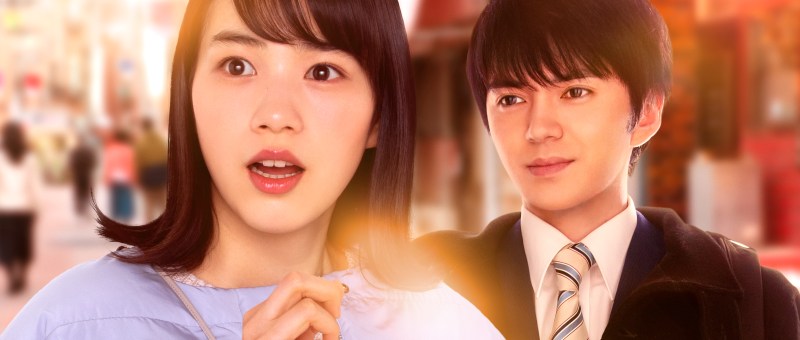
“Humans fly solo from the day we are born. You need to make an effort to be with someone” the heroine of Akiko Ohku’s latest chronicle of the contemporary woman’s inner loneliness, Hold Me Back (私をくいとめて, Watashi wo Kuitomete), is reminded. Like the heroine of Ohku’s mega hit Tremble All You Want, 31-year-old office worker Mitsuko (Non) is an introverted lonely soul through unlike the slightly older protagonist of My Sweet Grappa Remedies she is clearly much less happy with her single life than she likes to pretend often talking over her existential worries with an inner voice she refers to as “A” for “Answers”. 

As we first meet Mitsuko she’s taking part in a weekend workshop making fake food samples out of wax, later stopping off to pick up take out tempura on her way home because it saves stinking out her kitchen frying for one. She spends her free time thinking up things to do on her own on the weekends, but always seems to carry a degree of anxiety about her culturally taboo singledom. Having decided to try out a popular sandwich place, she finds herself leaving a nearby park because she feels awkward taking up a picnic table for four surrounded by couples and families on a day out. For similar reasons she nixes an idea to go to the beach, frightened she’d stand out as a lone woman. She finds herself asking A what she could do to make people like her more, clearly hungry for company but also afraid of it admitting it’s much easier to relax when she’s on her own and presumably free from the pressures of potential judgement.  

It’s potentially because of this awkwardness that she ends up in an ill-defined non-relationship with an equally diffident salaryman who often visits her office. The perfectly pleasant Tada (Kento Hayashi) is a young bachelor surviving off cutlets from a food stand in the neighbourhood where they both coincidentally live. Mitsuko tells a few fibs about her gourmet lifestyle but is actually a good cook though her probably made out of politeness invitation to make Tada dinner somewhat backfires as she finds herself cooking him “takeout”, preparing a meal while he waits awkwardly in her hallway before taking it home to eat on his own. A conversation with A reveals she does indeed have a crush on Tada and would like to ask him to stay but is fearful of ruining the non-relationship they already have if he should suddenly mention a girlfriend or refuse her invitation. 

Unrevealed even with her conversations with herself is a potential history of personal trauma, recalling a bad date with middle-aged dentist who told her he didn’t want to date a patient in public but had already booked a hotel room while getting handsy in the bar. On an onsen getaway she’s gifted by a friend who got it at wedding she doesn’t want to spend time thinking about, Mitsuko witnesses a comedian stage rushed by a pair of creepy guys and desperately wants to say something but finds herself unable. Talking it over with A she berates herself for her internal complicity with a patriarchal society, remembering all the times she let it go when a sleazy boss grabbed at her, an older co-worker who tried to convince her that it wasn’t OK eventually forced out of her job. She takes refuge in the fact her supportive female boss has managed to carve out a career for herself, believing she will eventually triumph over sleazy and incompetent men who take credit for the work done by their talented female subordinates but also assumes that Ms. Sawada (Hairi Katagiri) must be a lonely workaholic who sacrificed her personal life for the professional. 

An invitation from uni best friend Satsuki (Ai Hashimoto), meanwhile, who married an Italian and moved to Rome further deepens her sense of early life crisis, especially on discovering that Satsuki had neglected to mention that she was pregnant in any of their correspondence. It’s telling in a sense that A seems to desert her when she has someone “real” to talk to, absenting himself for the entirety of her time in Italy during which she realises that happy as she is Satsuki is also lonely living in an unfamiliar country and understandably anxious about the birth of her first child so far from home. Yet A’s frequent absences only exacerbate her fear of abandonment, after all if even her inner consciousness is jumping ship what possible hope is there for anyone else? 

But then as he tells her “You cannot escape being you”, her inner voice will always be there even if she doesn’t really need him anymore. “It was easier fighting loneliness alone” she exclaims in panic, suddenly getting cold feet about a possible step forward in terms of human intimacy, only later calming down after a final pep talk with A convinces her it’s worth the risk. Less surreal than Tremble All You Want while less rosy than My Sweet Grappa Remedies, Hold Me Back embraces its heroine’s internal vulnerabilities with a relatable realism as she tearfully asks the absent A “I’ll be OK this time, right?” before daring to find out come what may. 


Hold Me Back screens in Brisbane (Nov. 14), Melbourne (Nov. 20/24), and Sydney (Nov. 27 / Dec. 3) as part of this year’s Japanese Film Festival Australia.

Teaser trailer (English subtitles)

Cloudy Mountain (峰爆, Li Jun, 2021)

In recent years, Chinese big budget disaster extravaganzas have dedicated themselves to celebrating the selfless heroism of the undersung branches of the emergency services, firemen for example in Tony Chan’s The Bravest or the coast guard in Dante Lam’s The Rescue. Li Jun’s Cloudy Mountain (峰爆, Fēng Bào) features its fair share of fearless rescue teams, but is nevertheless dedicated to the rather unlikely source of pride, the Rail Soldiers whose lives, at least according to the closing credits, were sacrificed in large numbers to complete the infrastructure necessary for the expansion of the Chinese state yet in 1984 they were renamed “China Railway Construction Corporation” a development the film at least seems to regard with a surprising degree of ambivalence. 

This becomes most obvious in the conflict between the two heroes, an estranged father and son burdened by personal trauma, one a former Rail Soldier and the other a high tech engineer working for a commercial enterprise on the building of a high speed railway network through terrain known to be geologically volatile. Grandpa Hong (Huang Zhizhong) is set to visit his son Yizhou (Zhu Yilong) for New Year, though he doesn’t really want to see him knowing that his father will only criticise his work on the tunnel leading to another intergenerational argument. Meanwhile, Yizhou also finds himself unpopular at work for requesting additional safety checks many seem to regard as a pointless waste of time, and oddly they might have a point seeing as Yizhou’s monitoring fails to detect a shift in the rock formation which causes water to flood the almost complete tunnel during routine blasting. 

The fact is Hong was a Rail Soldier and is also one of those old men who think they know best about everything. He kicks off at a bored young lady at service station because she doesn’t want to accept payment in cash and has no change to offer confused as to why Hong can’t just pay with Alipay or WeChat like everyone else. Despite his years of hands-on experience, he no longer understands the modern high tech engineering industry and thinks his son is somehow unmanly with his scientific data and use of drones, believing that if you want to solve a problem you just get in there and do it. This causes a minor problem when a manmade earthquake strikes just after his arrival as he pushes rescue crews out of the way to set about rescuing everyone trapped underground on his own only to end up trapped himself. 

The film is almost on his side, definitely ambivalent about the state of modern Chinese infrastructure. Mrs. Ding (Chen Shu), the female manager of the tunnel project, is initially positioned as a villain, insisting that the tunnel must be completed on schedule and they can’t be wasting money on things like safety checks, hinting at the nation’s notoriously lax approach to public safety and widespread corruption in the construction industry. One might even ask if it was a good idea to build this tunnel at all given the geological volatility of the local area, yet Mrs. Ding later becomes something of a hero in finally agreeing to sacrifice 10 years of her own work when it becomes clear a nearby town cannot be evacuated before disaster strikes. Stepping into propaganda mode she advances that while Westerners may pin their hopes on Noah’s Ark, Chinese men move mountains convincing the workmen to blow up the tunnel they’ve been spent the last decade working on by reminding them that they can simply build it again. 

Meanwhile, Yizhou and Hong begin to sort out their father/son problems underground most of which go back to the death of Yizhou’s mother for which he blames himself but also his father for failing to return home when his wife was ill because he had important nation building work to do. This minor barb might hint at a conflict between selfless dedication to the State and familial responsibility, which would seem to run against the secondary message that unchecked capitalism is doing the same thing while also endangering public safety. One reason the crews didn’t want to fall behind through “needless” safety checks was because they’d already agreed to sacrifice New Year with their families to get the tunnel done on time. Nevertheless the only way to save both the tunnel and the town depends on father and son working together, a mix of Yizhou’s high tech data analysis and Hong’s hands-on experience as they perilously climb up the slide of a sheer rock face in torrential rain to blow up an entirely different mountain to create a protective shield. 

The major villain, if there is one, is personal greed born of irresponsible capitalism, and its only cure is, paradoxically, a recommittal to the State as Mrs Ding offers inspirational messages about the legacy of the Rail Soldiers while self-sacrifice for the public good is held up as the only moral responsibility. In any case, Li piles on the tension with a series of possible negative outcomes from the tunnel disaster not only swamping the town and killing off the local population but also endangering an adjacent chemical plant, never quite making the case for why the tunnel is so necessary in the first place even as it swaps its literality for the metaphorical in allowing the reconnection of father and son overcoming a generational divide to find an ambivalent accommodation with the demands of the modern China. 


Cloudy Mountain screens at ChiTown Movies Drive-in Chicago on Nov. 13 courtesy of Asian Pop-Up Cinema.

Original trailer (English subtitles)

Collectors (도굴, Park Jung-bae, 2020)

“Grave Robber” is ordinarily not a nice thing to call someone, let alone to be, yet the heroes of Park Jung-bae’s Collectors (도굴, Do-gul) are just that if in effect more like cultural Robin Hoods robbing the dead to reclaim the past than heartless thieves interested only in profit. Operating with a “this should be in a museum!” mentality, these grave robbers have a variety of motives, among them revenge both personal and national, as they take aim at lingering historical betrayals stemming back to the days of Japanese colonialism. 

As the film opens, intrepid thief Dong-gu (Lee Je-hoon) manages to trick a pair of Buddhist monks suspicious on the grounds that he’s a bit handsome for the religious life into letting him “guard” a pagoda that’s set for imminent dismantling in order to nab a precious miniature Buddha located inside. What puzzles the authorities is that Dong-gu leaves obvious evidence of the theft along with a trademark chocopie wrapper which suggests he wants everyone to know how clever he is. This may be true, Dong-gu is quite smug about his obvious abilities as a tomb raider, but he may also have ulterior motives in play. As a duplicitous broker points, out, however, it’s surprisingly difficult to make money trafficking artefacts because they are simply to famous to be sold openly meaning thieves and fences are all dependent on a small pool of super rich “collectors” with whom they have personal relationships or else are stealing to order. 

Stepping back a little, what this means is that not only are those like Dong-gu robbing the dead and selling their affects on the black market, but that they are in a sense traitors to their nation often selling these precious historical artefacts to foreigners and most problematically to the Japanese, ironically enough grave robbers themselves in having looted half the country during the colonial era. It will come as little surprise that the main villain Jin Sang-gil (Song Young-chang), a hotel entrepreneur and head of the Korea Cultural Asset Foundation, in fact owes his inherited wealth to his family having sold artefacts to the Japanese from 1910 onwards, and himself is keeping a large selection of plundered treasures in an ultra secure vault underneath his offices. 

The Buddha brings Dong-gu into Jin’s orbit, first made an offer by his gangster underling Gwang-chul (Lee Sung-wook) who is, perhaps conveniently, Chinese-Korean hailing from Yanbian, and then by his smart assistant Sae-hee (Shin Hye-sun) who is fluent in English, Chinese, and Japanese acting as a broker for wealthy Japanese clients which is how she finances Dong-gu’s upcoming operation to steal an ancient frieze from a grave located in what is now technically China but was then Korean. Dong-gu, meanwhile, despite claiming he got into grave robbing because he realised he’d never be able to buy a house working “like regular people do”, is remarkably uninterested in the money refusing Sae-hee’s “gift” of a fancy car, and instantly losing his fee in the hotel casino. As we later realise, what he seems to want is for the artefacts to be returned to their rightful owners, the Korean people. 

To complete his heist he recruits a series of “experts” including the slightly nerdy souvenir peddler nicknamed “Dr. Jones” (Jo Woo-jin) who even dresses like Indy himself, as well as a former miner recently released from prison renowned for his tunnelling abilities. Dong-gu’s methods are traditional in the extreme, locating the entrance to a burial mound by tasting the soil looking for traces of decomposing flesh, while his sister Hye-ri (Park Se-wan) is much more technologically advanced making frequent use of drones and angering her father and brother by drilling a tiny hole in the Buddha to insert a GPS tracker hoping to figure out what Jin is doing with the artefacts. In a touch of irony, the vault has itself been designed to mimic the security features of an ancient tomb if updated with biometric eye scanning and fingerprint technology topped off with a good old-fashioned key, but as it turns out there’s no security system that can protect you from betrayal especially if you’re generally unpleasant and no one trusts you anyway. 

Dong-gu’s target, however, is a royal tomb located in the centre of Gangnam from which he intends to steal the “Excalibur of Joseon” appealing to Jin’s sense of hubris, leaning into a kind of mythical prophecy in which he’d become a contemporary hero ruling over all Korea as the wielder of the sword. Taking in some additional social commentary in which the government has chosen to improve their approval ratings through spending money buffing up a tomb while when the guys try to rent a subbasement the flirtatious realtor admits the rents are low in this area because it often floods only to shake off some of her disapproval when they tell her they’re part of the restoration team, the central message is that the historical relics of Korea’s past belong to the Korean people, not to the shady businessmen further corrupting an already compromised economy, nor to former colonial powers. Sometimes, it seems to say, digging up the past is a necessary act of national reclamation. 


Collectors screens 13th November as part of this year’s London Korean Film Festival.

International trailer (English subtitles)

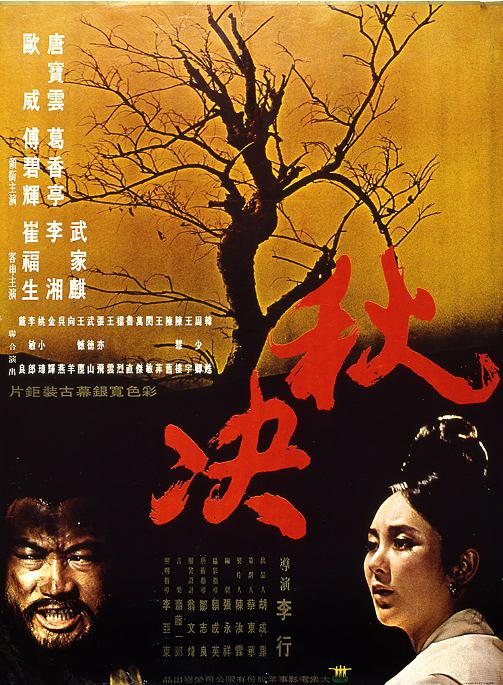
Execution in Autumn (秋決, Li Hsing, 1972)

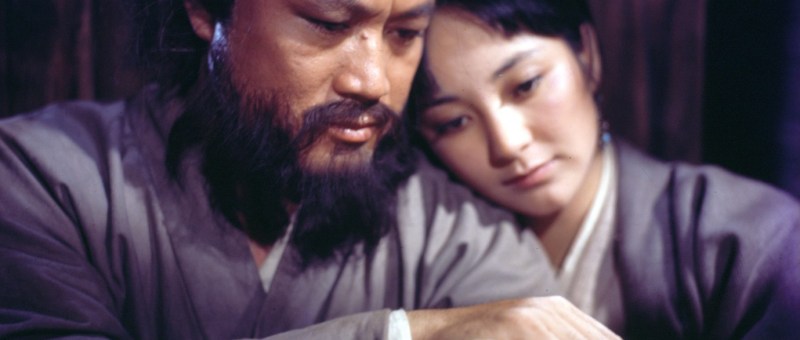
“We all have to die, but we must die in peace and honour” the hero of Li Hsing’s tale of spiritual redemption Execution in Autumn (秋決, Qiū Jué) finally realises, resigning himself to the cruelty of his fate. Partly an advocation for “responsible” childrearing, Li’s philosophical tale is also one of growing enlightenment as the boorish, entitled hero is cajoled towards a sense of social responsibility through the ministrations firstly of his cellmates and then of a good woman who finally learns to see the good in him if through a gentle process of emotional excavation. 

As the opening voiceover explains, at this time it was thought somehow offensive to conduct an execution during the seasons of life and rebirth and so they were relegated to the autumn amid its ominous mists. As we first meet Pei Gang (Ou Wei), however, he’s on the run, trying to make a break for it in refusing to accept the judgement which has been passed on him. The sole heir of a wealthy family, he has been convicted and sentenced to death for the murder of two men and a woman who claimed he was the father of her child (as for what became of the baby, no further mention is made). His grandmother (Fuh Bih-Huei) vows to get him out of jail, pulling every trick in the book and bribing a local official to engineer a good outcome at the upcoming retrial. But in an ironic indication of his buried goodness, Pei Gang refuses to lie to the court and freely admits his crime claiming he was “overcome with rage” believing the woman and her cousins intended to blackmail him but was otherwise in sound mind when he murdered her because he was “sick of being duped” and wanted to vindicate his family honour by taking vengeance on those who’d wronged him. 

Unable to save her grandson, Gang’s grandmother blames herself realising that her failure to discipline him in childhood has led to his immense sense of entitlement and conviction that the rules do not apply to him. Grandma promised that whatever sort of trouble he got into, she would get him out which is obviously a promise she wouldn’t be able to keep but also somewhat irresponsible. For these reasons, Gang regards his treatment as extremely unfair, unable to understand why any of this is happening to him or to accept that this is one fix grandma won’t be able to smooth over even with her money and the power of her name.  

The lesson would seem to be that you have to be cruel to be kind, a message later confirmed by Gang’s conflicted jailor (Ko Hsiang-Ting) who we learn had a son of his own he wrongly indulged which led to him becoming a wayward lad like Gang drowning in a river in the middle of a fist fight. Learning that his grandmother has passed away, Gang once again rails against his fate offering proclamations of hate which are really of love while blaming his grandmother for never having beaten him when he was a child recognising her problematic love for him, mixed as it was with his importance to her as the heir, but also his own abuse of her indulgence. Bad parenting may be the cause of Gang’s amorality, but he is not and never was blameless. He had a free choice to become a better person but did not take it, engaging in persistent boundary pushing even as an adult culminating in the murder of three people mostly out of spite. 

At first Gang can’t bear the mention of the word death, caught between the earthy philosophies of the street thief in the cell to him and the Confucianist scholar opposite serving a one year term as a proxy for his elderly, debt-laden father. Slowly he begins to come around the scholar’s way of thinking, coming to accept death as an inevitability of life as certain as the seasons. His second lessons begin on realising he cannot escape his sentence, his grandmother has given up on him and enacted her back up plan to ensure the family line continues by marrying him to his adopted “sister” Lian (Tang Pao-Yun). Other signs of his buried goodness manifest themselves in his initial reluctance to go along with the plan, not only resenting being used as a stud but unwilling to make Lian an instant widow. “I don’t want you to hate me the rest of your life” he adds in a moment of vulnerability, trying to convince his new bride to find someone more able to give her a happy life stretching further than the next autumn. 

Gang’s tragedy is, in a sense, that as he approaches his execution he experiences true happiness and is genuinely reformed but only by accepting the necessity of his death can he fully redeem himself. Though he tried to escape, he refuses to leave even when the jailor offers to let him go fearing both for the jailor’s fate and for that of his wife and child if he were to become a fugitive. Nevertheless he cannot prevent their victimhood, knowing that just as grandma and Lian had done he must sacrifice himself in order to protect his family accepting not just his moral and social responsibility but the filial. Taking place mostly within the claustrophobic confines of the prison, Li’s melancholy existential drama uses the rhythm of the seasons as a metaphor for life but also as a kind of ticking clock accelerating Gang’s remaining time as he lives out his glory days and twilight years in the span of months awaiting his execution as the first leaves fall. It might be tempting to draw the conclusion that they are each victims of a cruel and oppressive social system taken to authoritarian extremes though Li may have intended the opposite in reminding parents, literal and figural, that the moral education of their children through physical discipline is their primary duty. Nevertheless, Gang’s spiritual awakening and subsequent redemption prove profoundly moving even in their concurrent tragedy. 


Execution in Autumn screened as part of this year’s San Diego Asian Film Festival

Trailer (English subtitles)

Awoke (복지식당, Jung Jae-ik & Seo Tae-soo, 2020)

“Please let me live with dignity” the hero of Jung Jae-ik & Seo Tae-soo’s Awoke (복지식당, Bogji Sigdang) eventually pleads as a sole judge looks down on him from on high, advocating for himself but seemingly finding little support. Co-directed by Jung who is disabled himself and employing a mixed ability crew, Jung & Seo’s kafkaesque drama explores the vagaries of disabled life in the contemporary society in which there is still a degree of stigmatisation towards those with differing needs while the expanding welfare system also presents its own barriers preventing those with disabilities from leading full and fulfilling lives. 

This 34-year-old Jae-gi (Jo Min-sang) discovers when he suddenly becomes disabled after a traffic accident. As his mother died while he was in the hospital, he has only his cousin Eun-ji, who is a single mother to a teenage son, and an elderly landlord to look after him while it seems no one has fully explained the options he now has. His hospital roommate, Bong-su, seems to be an old hand, visited by a man in wheelchair, Byeong-ho whom he calls brother, who has evidently explained to him how to game the system which is why he is later rated level 2, the second most severe category of disability, despite being fully able to walk and perform everyday tasks with relative ease. Being an honest person, Jae-gi fully co-operates with the civil servant sent to assess his level of disability and as he is able to stand and make a few steps to transfer into a wheelchair independently he is put down as able to walk, and as the assessor is able to move his left arm which constantly tremors and has low functionality he is graded level 5 or “mildly disabled”. 

To anyone’s eyes, this is plainly ridiculous. Jae-gi needs an electric wheelchair in order to get around and can only manage basic every day tasks such as housework and laundry with assistance. He is also forced to move out of the flat his mother left him because it’s a walkup, meaning he has to rent an accessible room. He tries to apply for various schemes intended to help people like him so that he’d be able to use subsidised accessible taxi services and have access to a personal carer but is repeatedly told he doesn’t “qualify” because of his level five designation. Unable to claim for disability living allowance, Jae-gil wants to get a job but again on visiting a specialist service designed to help those with disabilities get into work finds himself falling between two stools. The first interviewer simply looks at him and explains he wants someone who can walk and lift heavy objects, which is incongruous with advertising jobs to people with physical disabilities. The second wanted to hire him right away only to rescind the offer on looking at his welfare card explaining her company only hires levels one to three. Byeong-ho, who happens to work there too, explains that’s because companies are given subsidies for hiring the “severely” disabled which on paper Jae-gil is not. 

Time and again, Jae-gil becomes the victim of officious bureaucracy. The services needed to help him exist, but he is prevented from using them because an over officious assessor was too literal with his form. He’s told that it’s difficult, perhaps impossible, to get one’s level changed, a claim which seems doubly unfair given that disability can of course change over time. Intensely vulnerable, he comes to over rely on Byeong-ho’s advice, little knowing that Byeong-ho is also exploiting him despite being aware that he has no money and is in danger of being evicted from his flat if he is not able to get his level changed to enable him to work, claim the assistance he is entitled to, and live a fulfilling independent life. 

Encouraged by Byeong-ho, Jae-gil is certain that he’s going to get his rating overturned, assuring his cousin there’s no need to sell his mother’s flat in which she is currently living after losing her house when her husband passed away from cancer because he’ll soon have a job and can pay the rent. Perhaps to a certain extent you can’t blame Byeong-ho for being the way he is given the way he has also experienced exploitation and discrimination not to mention violence at the hands of a father who couldn’t accept having a disabled son, but his almost sadistic glee in fleecing Jae-gil of the little he has is plainly unforgivable, reaching out in solidarity as one disabled person to another only to pass on his sense of oppression to someone even more vulnerable. Forced into a kafkaesque bureaucratic nightmare, all Jae-gil can do is repeatedly state his case only for those in positions of power to claim they are prevented from helping him because his card says level five despite the obvious evidence of their eyes. Nevertheless, through his traumatic experiences of betrayal and exploitation, he perhaps awakens to the injustice inherent in the contemporary society and is resolved to advocate for himself though the jury is it seems out on whether anyone is finally going to listen. 


Awoke screens 9th November as part of this year’s London Korean Film Festival.

Original trailer (English subtitles)

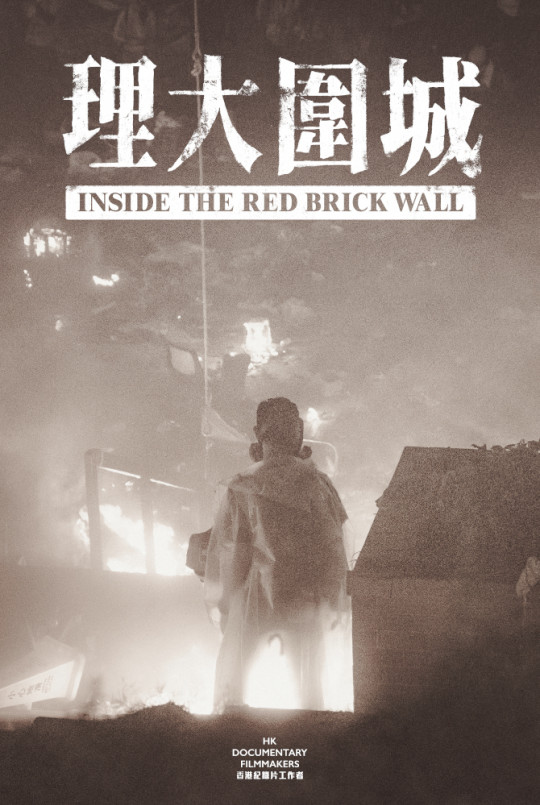
Inside the Red Brick Wall (理大圍城, Hong Kong Documentary Filmmakers, 2020)

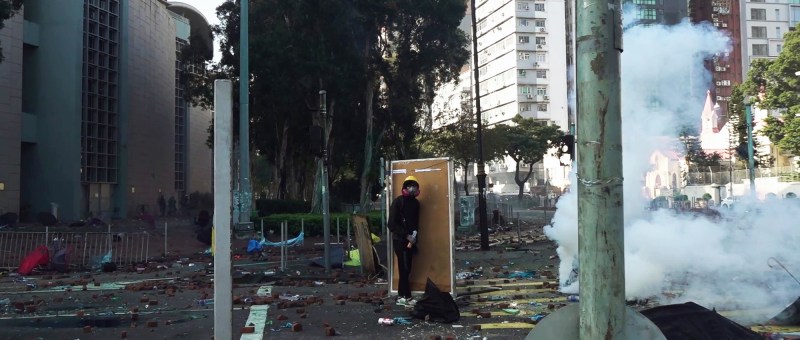
“We can’t afford to be afraid” insists a protestor trapped inside the siege of Hong Kong Polytechnic University during the 2019 protests sparked by opposition to the Extradition Law Amendment Bill. Credited only to the Hong Kong Documentary Filmmakers collective, its directors for obvious reasons choosing to remain anonymous, Inside the Red Brick Wall (理大圍城) is a visceral exploration of life behind the barricades as the trapped youngsters, some of whom are under the age of 18, grow increasingly frustrated and afraid, desperate for escape but fearful of police violence. 

The police, it has to be said, do not come out of this well. While the protestors blast local hip hop highly critical of law enforcement, the officers negotiating via loud speaker repeatedly troll them with ironic pop songs with titles such as “Surrounded” or “Ambush From Ten Sides” while otherwise taunting them with ridiculous insults and talking about going out to kill cockroaches. Such deliberate provocation at least giving the impression that they are merely looking for an excuse to storm the university does not endear them to the protestors trapped inside most of whom already want to leave but not if it means walking out into the arms of the police. With the mounting hysteria, it isn’t even the immediacy of the threat that causes the most anxiety but the possibilities of its aftermath, many fearing not just police brutality but sexual violence and that their mistreatment will not end with their arrest. This is one reason that many struggle to trust a cohort of high school principals who are permitted to enter the university in order to lead out some of the school-aged protestors, promising to protect them from the police batons in order to deliver them to their homes safely and directly. In return the protestors are asked to provide their IDs, leading many to fear they will simply be arrested the following morning. 

Nevertheless, as the situation inside begins to decline it becomes clear to many that they must leave by whatever means possible, some engaging in potentially dangerous escape attempts such as abseiling from a bridge to be met by friends on motorbikes, or exiting through the sewers. Others debate the wisdom of leaving at all, correctly as it turns out surmising that the police will eventually be forced to end the siege because allowing it to continue is simply far too expensive. Even so, these are extremely young people under intense strain, mentally and physically exhausted while also fearing for their lives. Remarking that many have made their wills, one young man insists it’s not death he fears, he’s prepared for that, but that he may die in here and no one would know.  

The necessity of hiding their faces, the documentarians are scrupulous in blurring even the faintest trace of identifiable features, adds to the sense of the collective which becomes in the eyes of some at least their best weapon of defence. Yet through repeated attempts to break through the blockade and the gradual shedding of those who cannot endure any longer deciding to accept the threat of arrest and surrender, the group necessarily weakened causing many to fear their reduced numbers leave them increasingly vulnerable. Some protestors loudly harangue their friends for leaving, while others offer only comfort as their fellow protestors tearfully apologise but can clearly remain no longer. A few pledge to wait it out while debating the ethical dimensions of leaving if it means abandoning those who are already too injured to make their own way out. 

In the midst of the action, the documentarians hover over blood-stained helmets and the aftermath of violence but are also relatively free to record police brutality seemingly ignored by officers otherwise pinning protestors to the floor and in some cases recklessly firing rubber bullets in close proximity even at one point appearing to fire directly at the back of a fleeing protestor’s head. Interrupting these scenes with shots of empty corridors – discarded clothing, a lone shoe inches away from the fire, all those battered umbrellas – the filmmakers evoke an almost apocalyptic atmosphere of total desolation offering little hope for the future in a society dominated by fear and authoritarianism. 


Inside the Red Brick Wall screened as part of this year’s San Diego Asian Film Festival

Trailer (dialogue free)

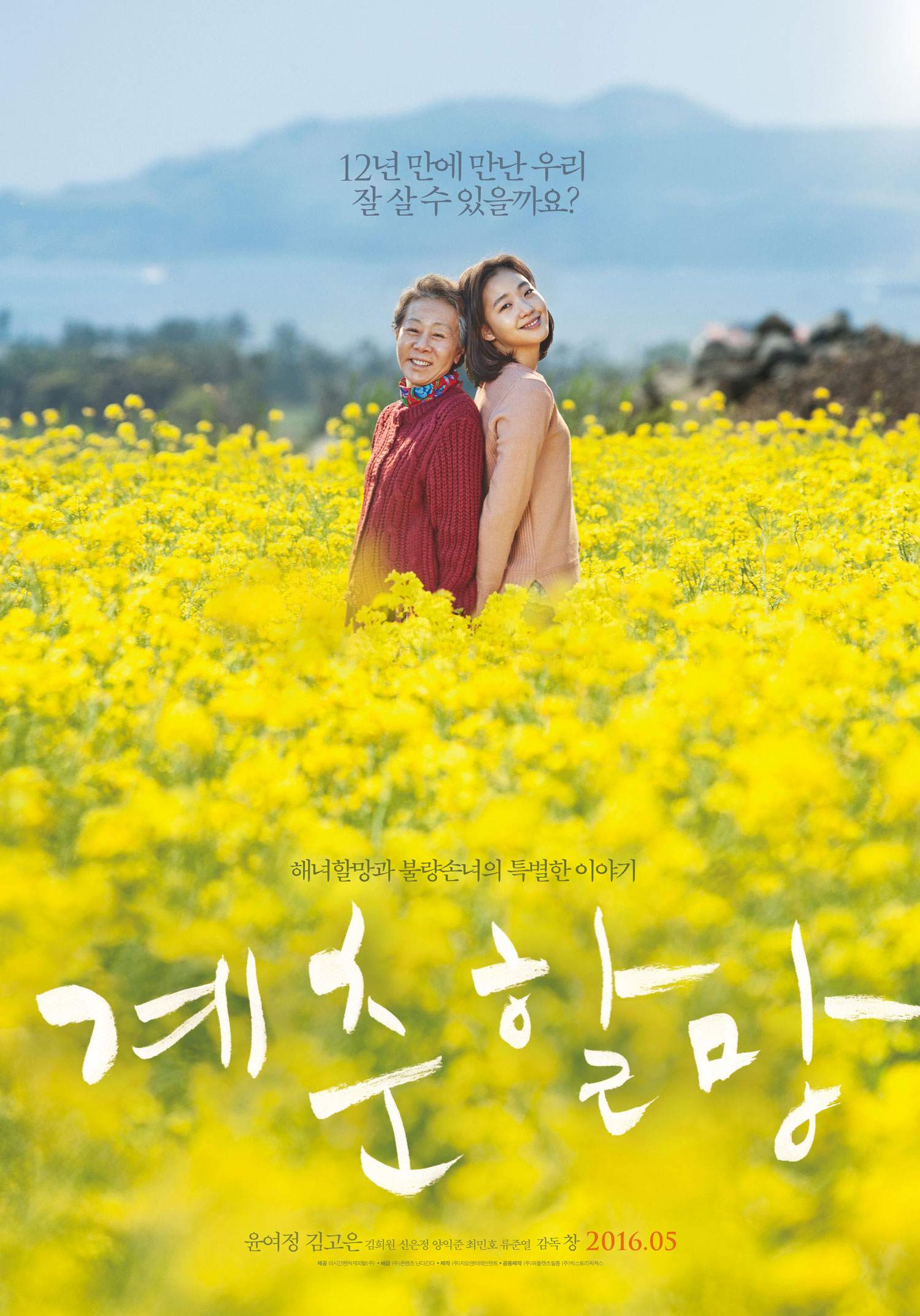
Canola (계춘할망, Chang, 2016)

“Even when life is hard…if someone’s on your side, it’s possible to go on” the selfless grandmother at the centre of Chang’s heartrending familial melodrama Canola (계춘할망, Gyechun Halmang) imparts, just something she learnt naturally in the course of her life. Partly a tale of familial disruption, dislocation, and the corrupting influences of modernity, Chang’s eventually uplifting tale is also one of interpersonal salvation in which gentle support from a welcoming community can overcome personal trauma and allow those who feared they’d never recover to become a more authentic version of themselves. 

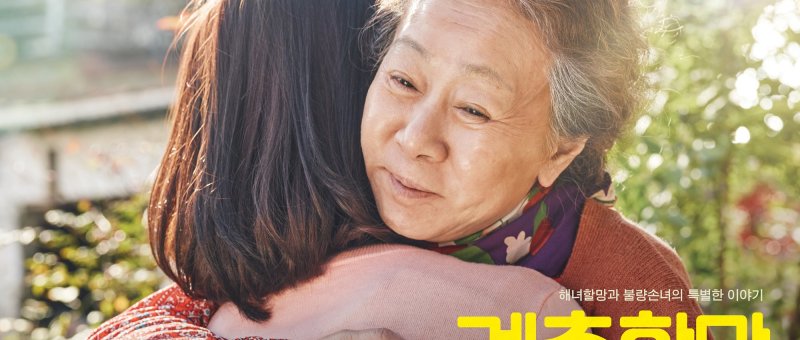
Granny Gye-chun (Youn Yuh-jung) is an ageing Haenyo diver on picturesque Jeju island currently raising her young granddaughter Hey-ji following the death of her son, his wife having left sometime previously. Clearly devoted to each other, tragedy strikes when the pair leave for the city to attend a wedding only to become separated in a crowded marketplace. Gye-chun frantically searches for Hye-ji, but is unable to find her. 12 years later, she’s still pasting missing child flyers all over town while refusing offers to sell her traditional home, which has no indoor plumbing, because she is afraid that Hye-ji may some day return and find her gone. And then a miracle occurs, a young woman (Kim Go-eun) telephones the missing hotline after seeing a picture on a milk carton and claims to be Gye-chun’s missing granddaughter, explaining that her birth mother abducted her from the marketplace and had her adopted by her step-father so she had a different name. Her mother later died and the step-father then callously placed her in an orphanage after which she ended up on the streets.  

Gye-chun is so happy to have her granddaughter back that she perhaps does not fully process the full implications of the situation, taking each of Hye-ji’s claims at face value while struggling to separate the idea of the child she lost with the young woman who has returned. On a shopping trip she buys her a colourful ribbon bow hair clip not entirely appropriate for someone of Hye-ji’s age while confused that she no longer needs her help to go to the outhouse in the dark and locks the door while having a bath. Nevertheless she also seems to worry about what her life might have been like during the time they spent apart, irritated by the other villagers’ disapproval in reminding them that they all reassured her Hye-ji was probably “fine’ when the evidence suggests that fine is something she hasn’t been for a long time. 

The fishing village is indeed a little more conservative than the city, many scandalised by Hye-ji’s short skirts and by the fact that she smokes, instantly labelling her a “delinquent” and possible troublemaker. There is then something uncomfortable in their insistence that she lead a “good life” needing to be guided back towards a more socially conservative path as if her fashion sense and minor rebelliousness make her a “bad person”, while only Gye-chun seems to appreciate that Hye-ji may have come back with trauma from which she will need love and support to recover while short skirts and smoking aren’t really much to worry about in the grand scheme of things. Letting Hye-ji know that she is always on her side, she tries to give her the gentle love and encouragement she needs to become her best self while Hye-ji both begins to feel a genuine connection to the older woman and consequently intense guilt for having kept something from her and perhaps unfairly taking advantage of her kindness. 

Nevertheless, in this more positive environment Hye-ji begins to blossom while Gye-chun begins to put the past to rest, the two of them finding in each other the means for salvation in which it ultimately no longer matters if they share a blood relation or not. Contrasting the beautiful Jeju landscape with its brilliant fields of yellow canola flowers, with the darkness of Hye-ji’s city life, Canola is keen to suggest the difference an environment can make to a quality of life while quietly stressing that in the end it’s people and the bonds between them that matter, just something you learn naturally as you grow. 


Canola screens 6th November as part of this year’s London Korean Film Festival.

Original trailer (English / Korean subtitles)

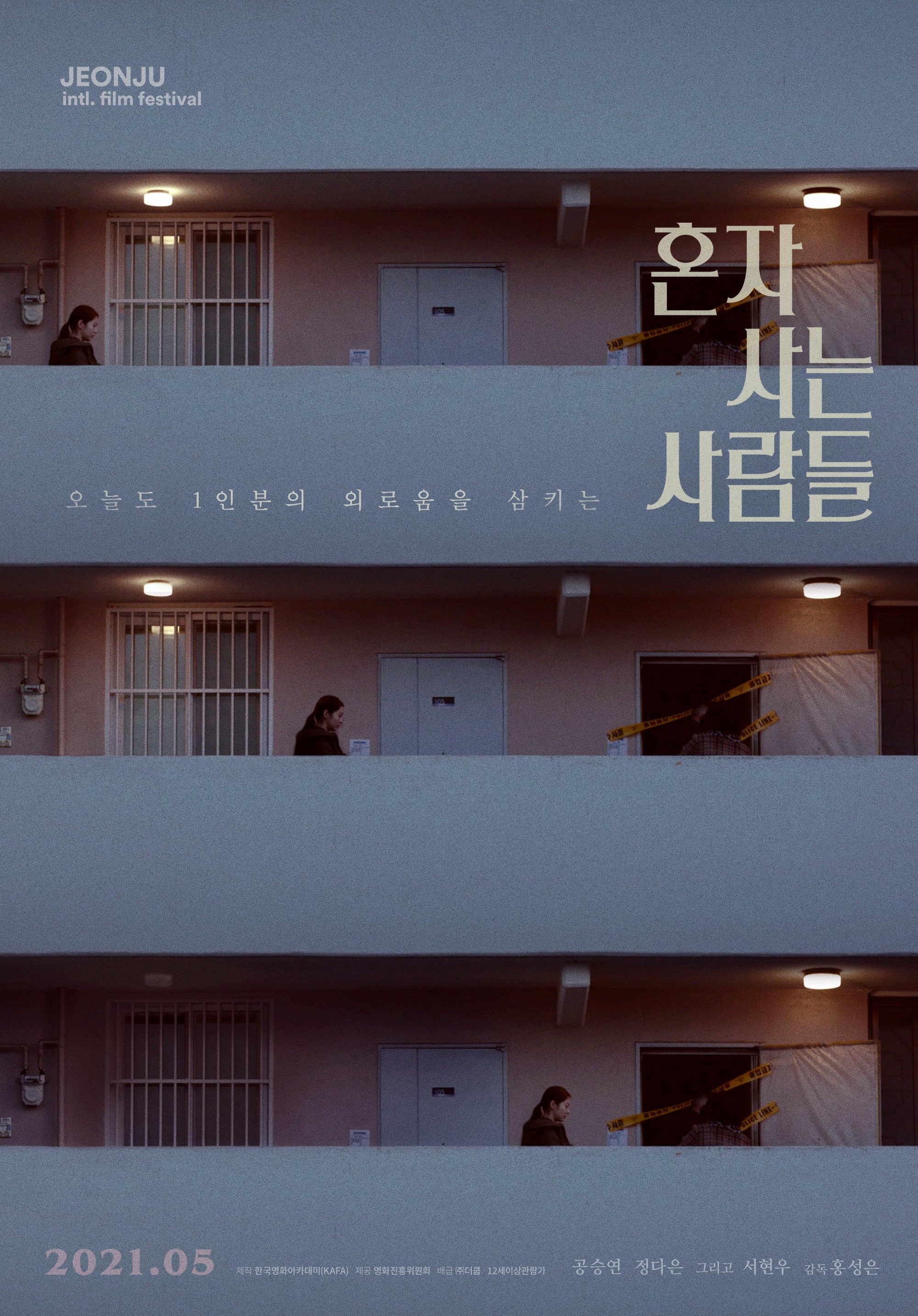
Aloners (혼자 사는 사람들, Hong Sung-eun, 2021)

“No one would notice your absence anyway” a belligerent caller ironically argues with an increasingly distressed call centre employee, as so many do in a hierarchical society attempting to bolster his sense of self-esteem by bullying others he perceives to be below him in this case a faceless young woman on the other side of a telephone divide. Hong Sung-eun’s Aloners (혼자 사는 사람들, Honja Saneun Saramdeul), or as the Korean title would have it, those who live alone, is in part a critique of urban alienation but also a deep character study in grief and loneliness in which a young woman’s fear of abandonment has ironically caused her to retreat from the world. 

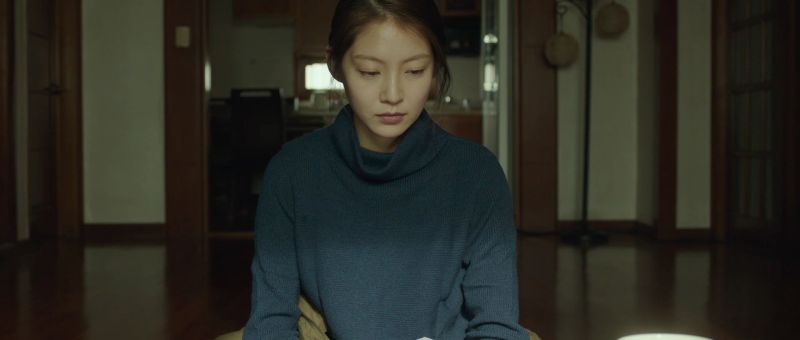
30ish Jina (Gong Seung-yeon) is the number one employee at a credit card call centre despite, as her boss (Kim Hae-na) reveals, having taken an extravagant two days off for her mother’s funeral hinting at the dehumanising nature of contemporary capitalism. Rarely deviating from the script, Jina has an especial talent for lending a sense of warmth and humanity to the otherwise robotic dialogue even playing along with a man who rings up often noted on his file as having a mental illness to enquire if he can get a retroactive credit card that would work if he time travelled to 2002. Mostly, she seems to keep herself to herself but is always staring at her phone screen, taking lunch alone at the kind of restaurant where you order via a machine while watching videos of other people eating. We see her return home to what we assume is a tiny one room apartment, curtains always closed with boxes piled up in front, while her fridge and microwave are right next to the bed. Wondering if there’s a bathroom somewhere seeing as this doesn’t look like the sort of building where you’d have to share, we begin to hear other people speaking assuming the walls must also be thin or else Jina just has noisy neighbours only to realise that she is in fact listening to a live feed of her father’s (Park Jeong-Hak) living room captured from a security camera she set up to keep an eye on her mum. 

She seems to see the same slightly strange neighbour (Kim Mo-beom) smoking on the balcony as she leaves and returns, only to discover after reporting a bad smell that he has in fact been dead for at least a week apparently crushed under a pile of magazines he’d been obsessively hoarding. This instance of “lonely death” of a person who is not elderly but in fact a similar age to herself forces Jina into a contemplation of the way she’s lived her life while a change in her working routine as her boss tasks her with training a new recruit pushes her back the other way. An extremely young woman alone in the city for the first time, Sujin (Jang Da-eun) is isolated in other ways struggling to make friends at the office and finding her attempts to bond with reluctant mentor Jina largely rebuffed. Claiming she prefers to be alone, Jina’s aloofness is almost aggressive but it’s Sujin’s empathy, a quality which makes her a bad fit for the call centre, that eventually causes a shift as she alone takes the time to ask the troubled caller why he wants to go back to 2002 only to hear that he is also intensely lonely and longs for the sense of communal happiness he experienced during the World Cup. 

Jina had claimed she enjoyed taking the calls, and as we realise she is never really “alone” in that she is always connected via her phone screen if with headphones to block out the outside world or else surrounded by voices in her apartment. The irony is that, as she later admits, Jina is alone because she fears becoming so and the best way to prevent becoming alone is to actively choose it. Fearing abandonment or rejection, she maintains only one-sided connections, a ghost surrounded by other ghosts in the centre of a city. “I hope you find a better place” Jina eventually offers during an awkward telephone apology, a slightly funereal sentiment as if she were seeing someone off not long for this world but also perhaps meant for herself as she begins to exorcise her sense of incurable loneliness willing to brave the risk of heartbreak for mutual connection. “More and more people failing to find their place in society” runs the tag line on the exploitative article about the lonely death, attributing his sense of alienation to a neglectful childhood and societal bullying as if implying it was up to him to fit in rather than for society to find a place for him. Jina meanwhile may in a sense have reassumed ownership over her environment, finally opening the curtains and perhaps no longer confined to a single room while, ironically, taking some time for herself redefining her boundaries with an often indifferent society.  


Aloners screens on 5th November as part of this year’s London Korean Film Festival.

International trailer (English subtitles)
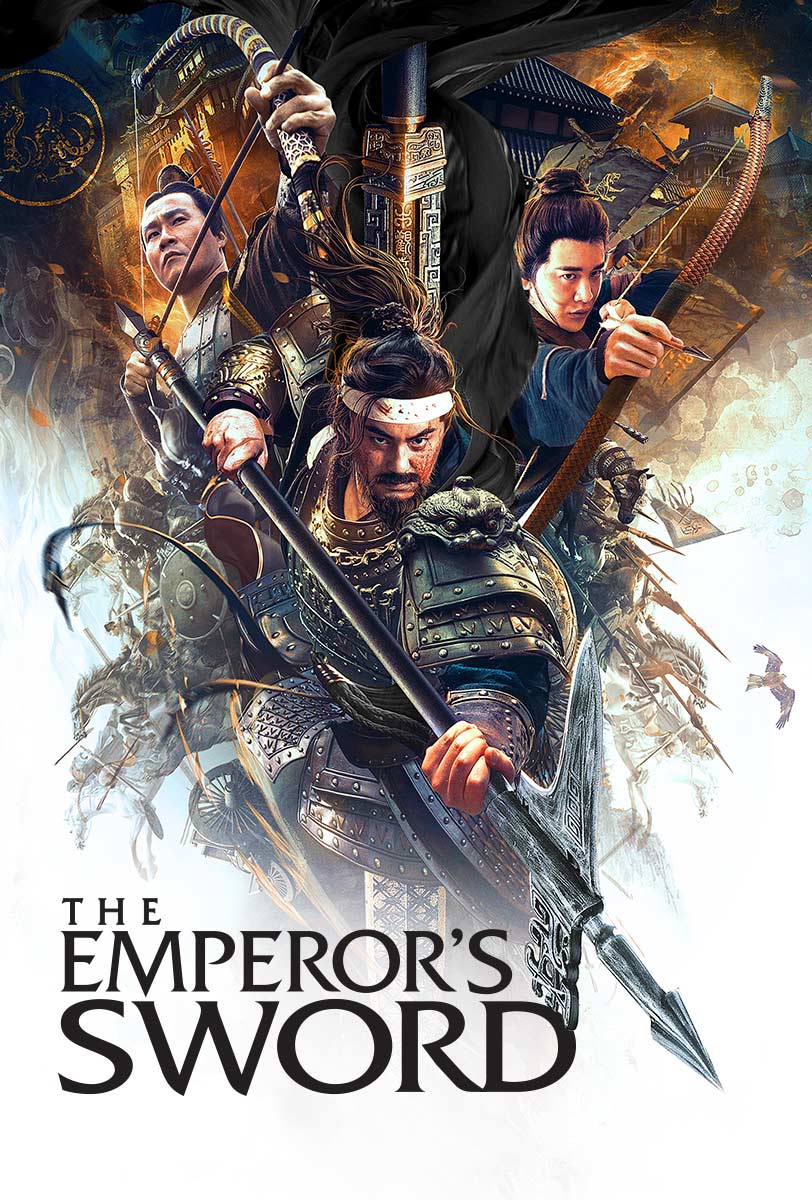
The Emperor’s Sword (乱世之定秦剑, Chen Hao-nan & Zhang Ying-li, 2020)

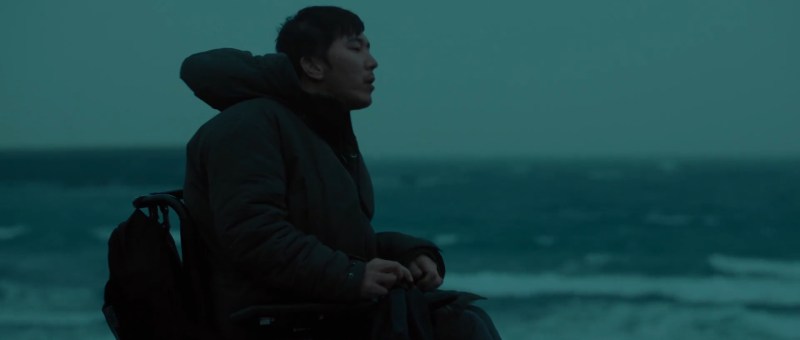
Can you ever truly preserve peace peacefully or will human greed and envy always triumph over a simple desire for comfort and safety? Chen Hao-nan and Zhang Ying-li’s wuxia drama The Emperor’s Sword (乱世之定秦剑, Luànshì zhī Dìng Qín Jiàn) situates itself at a moment of historical chaos in which the Qin Emperor, having ended the Warring States period through universal unity ten years previously, has died. In order to ensure peace throughout the land, his sword was melted down and recast as two with one residing in a palace and the other with trusty general Meng. Ambitious courtier Zhao Gao, however, has his mind set on usurpation having wiped out most of the previous regime hellbent on retrieving both of the swords in order to secure his grip on power. 

Unfortunately for him, Meng managed to send his daughter Xue away from the falling castle with the sword in hand instructing her to take it to the Tomb Keepers of Qin. Luckily for her, she runs into Jilian, one of the famed “Seven Gentlemen” who were once students of her father’s most of whom retreated to the Red Valley once the wars ended hoping to live lives of peace. Xue’s father brought her up to be kind and considerate, always thinking of others first, but she wonders if there’ll ever be a day with no more war when everyone is free to live happily together. The remainders of the Seven Gentlemen find themselves conflicted, some wanting to help Xue while others are reluctant to involve themselves in worldly conflict having had enough of war, but their belief that they could isolate themselves from external chaos turns out to be an illusion even if it were not also a contravention of their moral code not to stand for justice when the kingdom is threatened. 

A secondary dilemma is that the man hunting them down is in fact one of their former brethren who entered the service of usurping lord Zhao. Conflicted himself, Tian meets with Jilian each essentially asking the other to back off, not get involved in this particular fight, but that’s not something either of them can do leading to a series of emotional showdowns filled with tragic romance, betrayed brotherhood, and divided loyalties. In an echo of Xue’s advocation for a kinder world if one informed by the values of jianghu, Jilian claims he serves the Meng because they really care about the people, unlike Zhao it’s implied with his authoritarian lust for power. Yet in essence the two men have the same mission, not wanting anyone else’s life to be ruined by the chaos of war, only Tian has chosen the iron fist as a means of preserving peace while Jilian has opted for a less oppressive vision of a settled future. 

Still our heroes find themselves in a precarious position as they attempt to stop Zhao Gao completing his evil mission by getting his hands on both the swords. Making the most of their meagre budget, Chen and Zhang choreograph some impressive action sequences as Jilian becomes a veritable one man army taking on hordes of Zhao’s minions while making his way towards the man himself. Xue meanwhile does perhaps become something of a damsel in distress, largely unable to defend herself and reliant on the assistance of Seven Gentlemen foster son Han Jue, appointed to protect in a compromise measure though the expected romance never quite materialises even as she begins to push him towards a more mature contemplation of a better world of peace and justice. She is however pursued by a dogged female assassin with brotherhood issues of her own who remains hot on her trail despite the fecklessness of her evil middle manager boss Lord Wei who is every inch the cowardly wuxia villain. In true jianghu fashion, the good guys don’t always win and are heavily punished for the contraventions of their codes but eventually permit good to triumph over evil in successfully conveying the sword to a more just custodian. 


The Emperor’s Sword is released in the US on Nov. 9 on digital, blu-ray, and DVD courtesy of Well Go USA.

US release Trailer (English subtitles)